Tag: Speeches

  • Tobias Ellwood – 2022 Speech on Ukraine

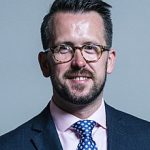
    Tobias Ellwood – 2022 Speech on Ukraine

    The speech made by Tobias Ellwood, the Independent MP for Bournemouth East, in the House of Commons on 22 September 2022.

    I also pay tribute to our armed forces, and their contribution to the incredible events that we saw play out on television over the past few days. It was no easy feat, and we can salute all our armed forces, but particularly those pallbearers who did such a magnificent job. I believe that a worthy way to immortalise Queen Elizabeth and what she did for our country as our longest-serving monarch would be to rename one of our bank holidays to Elizabeth day. That debate is for another day, but I hope we can return to it.

    It is an honour to follow the speech of my right hon. Friend the Member for Uxbridge and South Ruislip (Boris Johnson). He and I did not see eye to eye on everything, but in the case of Ukraine, I hope he recognises that I have always supported what he has done, and indeed, the nation can be proud of it. As I have seen on all my visits to Ukraine, the work Britain has done in stepping forward, more so than many other NATO nations, is recognised. Thanks are due to my right hon. Friend for leading that charge.

    I want to step back from what is happening in Ukraine for a second and look at the bigger picture. We must ask ourselves a fundamental question, one that I pose on a regular basis: is our world likely to become more or less dangerous over the next few years? I think the answer is very clear: it is the former. This is not just about Ukraine, but a worrying growth in authoritarianism versus democracy across the globe, and the emergence of a new alliance—one that is not so obvious yet—between Russia and China. They share a mutual disdain for not only our international rules-based order, but for the west and the United States in particular. They are challenging the status quo that we have enjoyed since the end of the cold war. We have enjoyed that relative peace for three decades, but we have become complacent in nurturing our democratic values, and authoritarian states are becoming bolder and more assertive in promoting their own agenda. Consequently, our world is becoming more siloed and more protectionist, and we have become more risk averse.

    Our actions now—what we do and how we handle Ukraine, given that the conflict is now moving into a darker chapter—will determine how the next decade plays out. China is watching our response carefully, given that it has its sights on Taiwan. Seven months on from Putin’s unprovoked invasion, the west is, I think, starting to wake up to the reality that state-on-state aggression is back, but our institutions built to constrain rogue actors are vulnerable, and new technology has given autocrats new forms of leverage. The art of conflict itself is consequently changing, with not just cyber-attacks, as mentioned already, but economic attacks, including the unprecedented use of international sanctions. All those things have global consequences for the way we do business.

    Mr Jonathan Djanogly (Huntingdon) (Con)

    Do we therefore need to look again at what constitutes going to war, not least because we can now destroy other societies without a single bullet being fired—through the use of cyber, for instance?

    Mr Ellwood

    This is moving into the area of Clausewitz and what exactly war is—whether it is simply the military on the battlefield, or the politics and the economics. We have not really woken up to that, but Putin is using politics and economics to harm the rest of Europe with oil and gas, as well as grain. There is an irony here: we will have a debate in this place tomorrow, as we absolutely should, about supporting people through the cost of energy crisis we are facing here, but many of our problems are actually in Europe. Sorting those out would be a huge step towards dealing with some of the local problems we are facing.

    We need to work more collectively and be less risk averse. We get spooked by some of the rhetoric that comes from Putin, and he has done it again by wanting to go down this avenue of using nuclear weapons. As has been touched on before, Russian doctrine includes the use of tactical nuclear weapons, and we need to understand that doctrine. The Minister refused to answer the question of my right hon. Friend the Member for Chingford and Woodford Green (Sir Iain Duncan Smith)—others are saying, “Quite right.”

    We need clarity on what our doctrine is because it needs to be confirmed with our allies as well. We could cross a threshold here and we would not necessarily know what to do. I am afraid that Putin has taken advantage of our risk-averseness and of the fact that we have put red lines in, such as over chemical weapons in Syria, and then not responded. People can shake their heads as much as they like. This is an awkward conversation that needs to be had as to what Britain, NATO and the United States will do if a low-yield tactical nuclear weapon is used in the Donbas region. I pose that as a question. We can take it behind the scenes and not discuss it, and then it will actually happen and we will look at each other and say, “What do we actually do?”

    Russia needs to know that we are willing to stand up to what Putin is doing, otherwise he will continue, as will other adversaries, to take advantage of our collective weakness. We have done well to provide the weapons systems to Ukraine to advance it in what it is doing. We now need to take it further and leverage that ability to push forward, as my right hon. Friend the Member for Uxbridge and South Ruislip said, to make sure that we can conclude what goes on in Ukraine. If we do not put out this fire in Ukraine, it will spread elsewhere.

  • Stewart McDonald – 2022 Speech on Ukraine

    Stewart McDonald – 2022 Speech on Ukraine

    The speech made by Stewart McDonald, the SNP MP for Glasgow South, in the House of Commons on 22 September 2022.

    I am grateful, Madam Deputy Speaker.

    I nodded along in agreement with much of what the former Prime Minister, the right hon. Member for Uxbridge and South Ruislip (Boris Johnson) said. I think it fair to say that when the February invasion took place, he and his Government, particularly the Defence Ministers on the Front Bench today, got the calls on Ukraine right. It is important to acknowledge that. Based on his remarks, I think he will do well in his new role as my warm-up act here in the Chamber.

    I pay tribute to the new Under-Secretary of State for Defence—the hon. Member for Wrexham (Sarah Atherton), who is not in her place right now—and congratulate those colleagues who have managed to stay in position amid the many changes. I also wish the right hon. Member for Tonbridge and Malling (Tom Tugendhat) well as the new Minister for Security. He was formerly the Chairman of the Foreign Affairs Committee, of which I am a member; I think we will be in for various auditions for his replacement as this afternoon’s debate goes on.

    Before I come to the crux of my remarks, I should also draw the attention of the House to my entry in the Register of Members’ Financial Interests.

    It was a pleasure, just two weeks ago, to be back in Ukraine and back in Kyiv—with some colleagues who I hope we shall hear from this afternoon—a country and a city that I have come to know and love over a few years now. On this occasion I was there to attend the annual YES—Yalta European Strategy—conference, which brings together civil society, political leaders, military leaders, academics, and others from around Europe to discuss Ukrainian and European security. There were many facets to the fascinating set of discussions that we had during the two days that our delegation spent there. It was also a real pleasure to meet members of Ukraine’s armed forces—who have so heroically not just fought for their country, but fought for what we all stand for and have cherished since 1945—and of course, the man himself, President Volodymyr Zelensky, who, as the former Prime Minister said, embodies everything that is noble in Europe right now.

    Here we are, seven months on from this wave of a war that started in 2014, in which we have witnessed a level of barbarism and butchery that few of us could have imagined. Hospitals, schools and people’s homes have been the targets. We have seen, in Bucha and also more recently, evidence of some of the most heinous war crimes imaginable.

    Wera Hobhouse

    I did not have the opportunity to ask the former Prime Minister about his commitment to treating sexual crimes as war crimes. Can we all, on both sides of the House—including the hon. Gentleman—come together in viewing sexual violence as a war crime like any other?

    Stewart Malcolm McDonald

    Yes, I think we can come together and agree on that. I am sure that other colleagues will want to discuss it in great detail.

    So here we are, seven months on from this invasion, and—as was mentioned by the former Prime Minister—much in the world has changed. Sweden and Finland have joined NATO, unity among western countries is something like never before, and, indeed, unity in this House is something like never before. In fact, we may have been only partly joking with our Ukrainian counterparts, during a recent visit, in saying that supporting Ukraine might well be the only issue that unites this House. Given the noises coming from the new Government, I suspect that that will be even more the case, but it is important for that unity to be maintained and developed in support of Ukraine.

    Back in February the German Federal Chancellor, Olaf Scholz, told us that not just his country but all of Europe was at a turning point: a Zeitenwende, as they say in Germany. Seven months on, however, it seems to me less like a turning point and more like Gramsci’s interregnum, in which the old is dying but the new cannot yet be born. At the moment, we are in a messy flux. While I think that the unity of purpose that we have is serving us well to get through the tumult that we are going through and Ukraine is going through, I also think that there is much in our own record—the record of all of us in the House and across the west—that we need to assess, going back, yes, to 2014, but also to 2008. I have to say to the former Prime Minister that we should consider the issue of how Russian money has been treated in this country.

    I think it takes a lot to admit it when one has got things wrong, and I think it only fair that we, as staunch partisans at times, give our opponents the space to make that admission. It is easier said than done, but if the new world that is incubating in the messy time in which we are currently living is to be born, that is the way in which I think we have to approach it.

    There is another important point to be made. As the winter bites and energy prices go through the roof, and as what in some quarters has been called “Ukraine fatigue” may start to settle in, there is a particular group of people in society of whom I think we should be mindful: those whom the Germans call the Putinversteher, the “Putin whisperers”, who would seek to apologise for, or contextualise, or somehow make excuses for Russian “legitimate” interests in Ukraine. They should be thoroughly ignored. Since the February invasion, they have, temporarily and rather embarrassingly, been silent, but they are undoubtedly starting to rear their heads again.

    Dame Nia Griffith (Llanelli) (Lab)

    Does the hon. Gentleman accept that many of those people are being fed by Putin’s cyber-warfare and that this country and our allies really need to invest in counter-offensive material?

    Stewart Malcolm McDonald

    Yes, I agree. The hon. Lady is absolutely spot on. One of the most insidious arguments from that particular group—and they can be found on the extreme left or the extreme right, in every country and in Parliaments, National Assemblies, the media, think-tanks and elsewhere—is that we should stop arming Ukraine. I am sure that I speak for everyone that I was in Ukraine with recently when I say that we could see and hear up close what a difference arming Ukraine is making.

    That support has to continue for three main reasons, which I will outline as briefly as possible. First, I do not believe that it is possible to negotiate with Vladimir Putin. We should look at his record not just in Ukraine right now but in Georgia and Syria. This is a Government who practise the famous double-tap strike, whereby the Russian armed forces hit an area, wait for the first responders to arrive and then hit it again. I do not think that it is possible to negotiate with a regime that carries itself in that way.

    The former Prime Minister is absolutely right to say—this is another important point—that anything we do going forward has to be on President Zelensky’s terms. Ukrainians do not want to negotiate with the regime in the Kremlin. We only have to look at the sheer joy on their faces when Ukrainian armed forces turn up in their towns and villages to liberate them and save them what has been experienced in Bucha, Mariupol and Kherson. The emotional scenes that we have seen and, I am sure, will continue to see tell us that we have got our support for Ukraine right. They should also put paid to the ideas of extremists—that is the only way to describe them—who would seek to divvy up Ukraine on a map. I would love to hear them tell me which towns they would like to see handed over to the Kremlin.

    When we were in Ukraine, we met a young 15-year-old guy and his father. I am sure that Members will have read about Andriy Pokrasa and his father. When Russians were surrounding his village, he had the bravery and ingenuity to launch his own drone into the air to take photographs of Russian positions and send them to the Ukrainian armed forces. Members can imagine what happened to those Russian positions soon afterwards. He is now back at school studying. It was an honour to meet him. I would love to see one of these armchair extremists tell him that he should instead have gone out and negotiated with the Russians at the end of his street. Imagine what would have happened had he been caught. They knew the danger, but still they did everything they could to defend not just their own hometown but their country as well.

    Lastly, the war is not just a war on territory. It is a war on values, liberalism, democracy, sovereignty and everything that we have cherished since 1945. I do not think that that is the kind of thing that can be negotiated away lightly. The Putin whisperers must be ignored. They must feel the complete contempt of those of us who want to see Ukraine win. The war could stop tomorrow if Russia stopped fighting, but if Ukraine stops fighting, the country will cease to exist. A Russian victory would be a disaster for everyone in Europe, and it is something that we should not even consider. Russian soldiers and now this latest group of conscripts will be fighting solely for their wages, while Ukrainian soldiers fight for their future and for ours. We all remain united in this House. Ukraine must win. We must continue to support them. And it is in that vein that I offer that support to the Government this afternoon.

  • Boris Johnson – 2022 Speech on Ukraine

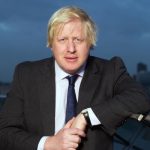
    Boris Johnson – 2022 Speech on Ukraine

    The speech made by Boris Johnson, the former Prime Minister, in the House of Commons on 22 September 2022.

    It is now seven months since Vladimir Putin launched his vile, illegal and unprovoked war against an innocent European country. In those seven months, his actions have cost almost as many Russian casualties as were sustained in the whole 10-year Russian invasion and occupation of Afghanistan. If he continues at this rate, it will not be that long before Russian losses in Ukraine exceed American losses in the 20-year Vietnam conflict. And that is before we have counted the Ukrainian losses in the past seven months and the catastrophic suffering that Putin has inflicted on those people: the torture, systematic rape, mass murder and deliberate targeting time after time of apartment blocks, schools, kindergartens and hospitals.

    In all those seven months of horror that this modern Moloch has personally unleashed, he has not attained a single one of his objectives in a war that, let us not forget, was meant to be over in days. He has not overturned the Ukrainian Government or captured the capital city. He has not even secured the Donbas—far from it. Instead of coming to terms with the reality of his mistake—I mean his complete misunderstanding of what Ukraine is and what really motivates Ukrainians, which is a simple love of their country—he has decided to double down on disaster. He announced the mobilisation of 300,000 more young Russians, a move that has caused such panic among people about to be fed into the meat grinder of Putin’s warzone that yesterday, in a single day, the price of a one-way air ticket from Moscow to South Africa went up to $50,000.

    Those potential conscripts can see that what began as a war to rebuild the Soviet empire has collapsed into a shameful war to save Putin’s face. They have no desire to be sacrificed on the altar of his ego. At the same time, as Members from both Front Benches have pointed out, he is threatening to hold sham referendums in the territories he has occupied and then to defend those territories with every weapon, as he says, in his arsenal, in words that he hopes will make our flesh creep and weaken our resolve. He will fail in that pitiful bluster, because he can see and we can see that he is escalating his rhetoric not because he is strong, as has been said, but because he is weak. He is transparently a problem gambler who takes more risks not because he is winning but because he is now terrified of losing.

    Chris Bryant

    Putin did exactly the same, of course, in 2014. He held a fake referendum in Crimea and, unfortunately, the will of the west weakened. How do we make sure that people such as Orbán in Hungary and those who are preaching disinformation in Italy do not win the day and that we maintain the united strength of the west?

    Boris Johnson

    I thank the hon. Gentleman very much for his point and I will come directly to what happened in 2014 in just a minute. He should not underestimate the continued unity of the west. That is one of the signal achievements of Vladimir Putin in the past seven months: he has seen a more coherent and unified western alliance, and a stronger NATO perhaps, than at any time in the last 20 years.

    Dr Luke Evans

    Will my right hon. Friend give way?

    Boris Johnson

    If I may, I will just make some progress, Madam Deputy Speaker, as you wanted me to keep within 10 minutes. I will do my best.

    Thanks to the heroism of the Ukrainian armed forces, thanks in part to the weapons we are proud to be offering —I congratulate the Minister for the Armed Forces and Veterans, my right hon. Friend the Member for Wells (James Heappey) on his description of the work of the UK armed forces and the huge list of weapons we are sending—and thanks, too, to the inspirational leadership of Volodymyr Zelensky, the Russian forces have, in recent days, been expelled from large parts of the north-east of the country around Kharkiv. They are under increasing pressure in Kherson in the south. I have no doubt whatever that the Ukrainians will win, because in the end they have the inestimable moral and psychological advantage of fighting for their country in their country against an enemy that is increasingly demoralised and confused about what they are meant to be doing in that country and what they can hope to achieve.

    At this turning point in the war, it is more vital than ever that we have the strategic patience to hold our nerve and ensure that Ukrainians succeed in recapturing their territory right to the borders of 24 February and, if possible, to the pre-2014 boundaries, because that is what international law demands. The hon. Member for Rhondda (Chris Bryant) is correct: it was our collective failure to insist on upholding international law eight years ago that emboldened Putin to launch his disastrous invasion this year.

    If Putin is going to double down on his aggression, we must double down in our defence of the Ukrainians, and we must be prepared to give more military assistance and more economic support, so I welcome warmly the announcements from the Government this week. We must work with our friends and partners, as well as the Ukrainians, to ensure that we provide that country with the long-term assurance they need on their security and defence that we have failed so far to provide in the 31 years since independence.

    If anyone has proved the absolute necessity of those guarantees, it is Vladimir Putin and his war. We must close our ears in the months ahead to the absolute rubbish he talks. This is not some nuclear stand-off between NATO and Russia, as he seemed to pretend yesterday; this is a war of aggression by Russia against an innocent neighbour. We are helping with equipment and training, as we might help a neighbour to fight a fire when their house has been attacked by an arsonist. NATO is not engaged in a war against Russia. We are not engaged in a war against Russia, let alone against the Russian people.

    By the way, we are not concerned here with regime change in Moscow, as Vladimir Putin egocentrically likes to claim. Whatever politics may hold for Putin may be the subject of an interesting debate, but that is not the issue at stake. There is only one objective: the sovereignty, independence and freedom of the people of Ukraine. That is our objective and we must acknowledge that the months ahead will be tough for Ukraine, Britain and the world.

    For all the latest Ukrainian successes, Putin is still the possessor of almost 20% of Ukrainian territory and it may well be time-consuming and costly to winkle him out. I have no doubt that in the hard winter months ahead, with the price of energy continuing to inflict hardship on people in this country and around the world, there will continue to be some who draw the false conclusion that the Ukrainians must be encouraged to do a deal, to trade land for peace, to allow Russian gas to flow to Europe. Even if it were politically possible for Volodymyr Zelensky or any Ukrainian Government to do such a deal—which I very much doubt—there is absolutely no sign that Putin either wants such a compromise or can be trusted to deliver it, because he would continue to remain in position and could invade that country in the future.

    As I have told the House many times before, any such deal or compromise would send a signal around the world that violence does pay off, that might is right and that when the going gets tough, the great democracies will not have the stomach to stick up for freedom. That is why we have absolutely no choice but to stay the course and to stay resolute. We should be confident because, with every week that goes by, our position gets stronger and Putin’s position gets weaker.

    Although times are tough for families now, we should be in no doubt that this country has the economic muscle not just to help people with the costs of energy caused by Putin’s war, but to provide the long-term resilience of a secure and independent UK supply—including more nuclear, much more wind in the transitional period and more of our own hydrocarbons—to ensure that we are never again vulnerable to Putin’s energy blackmail.

    It is a measure of Vladimir Putin’s giant strategic failure that he has not only united the west against him—the strength of that unity is remarkable, and by the way he has encouraged two hitherto neutral countries, Sweden and Finland, to join the NATO alliance, which would have been unthinkable a year ago—but decisively alienated his most valuable western customers from his most important Russian exports, oil and gas, with incalculable consequences for his people’s economic future.

    Stephen Kinnock (Aberavon) (Lab)

    Further to the right hon. Gentleman’s point about economic resilience, does he think that enough was done during his time as Mayor of London, and indeed during his time in this place, to deal with the issue that London has become a laundromat for dirty Russian money? Does he think that there are lessons to be learned from that period that he can share with the House?

    Boris Johnson

    I think the whole House will agree that since the invasion on 24 February the UK has led the world in imposing sanctions on Russia and in mobilising diplomatic, political and military support for the Ukrainians. I think that most impartial observers around the world—and I meet a lot of them—believe that if it had not been for the actions of the UK Government, things might have been different. I am delighted to see this Administration continuing with the commitments that we began; the financial commitments in particular are extremely important.

    Wera Hobhouse (Bath) (LD)

    Will the right hon. Gentleman give way?

    Boris Johnson

    I am just about to conclude.

    If it were not for Putin’s inability to see what is really happening—if he were not locked, as it were, in a windowless dungeon surrounded by bodyguards, spies and sycophants in a sort of Lubyanka of the mind—he would see the tragedy that he has unleashed. He would withdraw from Ukraine before he is pushed out—and he is going to be pushed out.

    In the past seven months, the sufferings of Ukraine have moved the world; I know that they have moved everybody in this House and in this country. We grieve for the people of Ukraine, and we open our hearts to them as few other countries have done. We know that, thanks to their bravery and sacrifice, their day of freedom is coming. When that day comes, we will rejoice with Ukraine, and that rejoicing will echo around the world. Until that day comes, I am sure that this House and this country will stand in unshakeable support for the people of Ukraine.

  • Tariq Ahmad – 2022 Speech on Improving Israeli-Palestinian Economic Cooperation as a Path to Peace

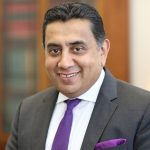
    Tariq Ahmad – 2022 Speech on Improving Israeli-Palestinian Economic Cooperation as a Path to Peace

    The speech made by Tariq Ahmad, Lord Ahmad, in New York, United States, on 22 September 2022.

    I am sincerely grateful to Norway for bringing us together and to the Government of Israel and Palestinian Authority for their participation.

    Let me begin by expressing our deep concern over the grave economic situation in the Occupied Palestinian Territories.

    If we are to achieve peace and stability in the region, it is of course vital that the Palestinian Authority and UNWRA are on a stable financial footing.

    The United Kingdom is committed to supporting this.

    We will continue to work directly with both parties to help boost economic development, trade and investment.

    This includes offering technical assistance to the Palestinian Authority and supporting Palestinian companies to boost exports, among other things.

    We were pleased to hear about the success of the E-VAT pilot and welcome Israel’s commitment to rolling out the system to all Israeli businesses.

    As we know, this has the potential to raise more than $100 million per year for the Palestinian Authority.

    It is a clear signal of the value of cooperation between the parties and the donor community.

    We also welcome the Government of Israel’s efforts to enable electronic payments to Palestinians working in Israel.

    And we are glad to see the positive steps taken by the Palestinian Authority, as outlined by Finance Minister Bishara, to reduce the public sector wage bill.

    Madame Chair,

    While we welcome commitments made by the parties and the spirit of cooperation they bring today, progress has not been as fast as we would have liked.

    We need much quicker progress on fiscal reforms, and efforts to reduce barriers to trade and investment in the West Bank, if we stand any hope of reviving economic growth in the Occupied Palestinian Territories.

    We call on the Government of Israel to undertake reforms to the clearance revenue mechanism and to renew efforts to tackle the restrictions and costs facing Palestinian businesses.

    We would also like Israel to take a decision on the handling fee on Palestinian Authority fuel purchases – which is disproportionate, in our view.

    We urge the Palestinian Authority to bolster work with partners, including the International Monetary Fund, on the reforms necessary to address the fiscal crisis and build a more stable future.

    We must also retain focus on the humanitarian situation in Gaza and the need for economic recovery and reconstruction.

    Only last month, we saw yet another escalation of violence on the strip.

    We welcome the increase in permits for Gazans to work in Israel but unemployment remains unacceptably high.

    We urge Israel to continue increasing work permits and reducing restrictions in order to create more jobs.

    Madame Chair,

    There is no hope of making progress on these issues without ministerial level engagement and dialogue, and we would like to see this stepped up.

    We welcome the parties’ commitments to re-establishing the Joint Economic Committee as the key body for decision-making, and call for this meeting to take place urgently.

    The UK will do all we can to support the parties to work together to address challenges and strengthen Palestinian Authority institutions for the future.

    Madame Chair,

    While we have rightly focussed on the economic situation today, I must also address the bigger picture. We are gravely concerned about the deteriorating security situation in the West Bank and the risk of instability.

    The UK calls on both parties to refrain from taking actions that undermine the prospect for peace.

    This includes all unilateral and provocative acts, and breaches of international law.

    These take us further from a negotiated two-state solution, and the long-term peace and stability that Israelis and Palestinians so deserve.

    The UK will do all we can to support progress towards that goal.

  • Tariq Ahmad – 2022 Speech on Supporting the UN’s Vital Work to Support Palestinian Refugees

    Tariq Ahmad – 2022 Speech on Supporting the UN’s Vital Work to Support Palestinian Refugees

    The speech made by Tariq Ahmad, Baron Ahmad, in New York on 22 September 2022.

    I am grateful to Sweden, Jordan and the UN Secretary-General for bringing us together.

    Let me begin by thanking UNRWA for your tireless work to support Palestinian refugees.

    You play an important role in helping to maintain stability in an increasingly fragile region, and the UK will continue to support you in every way we can.

    We announced a new multi-year funding agreement with UNRWA earlier this year.

    This year, we will provide £15m of funding to help you continue delivering high-quality services.

    I hope that all donors will consider similar predictable multi-year funding so that UNWRA can continue its vital work.

    We are, however, alive to the real financial challenges the agency faces.

    We commend your efforts to get on to a more viable financial footing and address the chronic funding shortfall.

    But these efforts alone will not be enough.

    We urge UNWRA to continue work on a robust and realistic plan for resource mobilisation, and on clear contingency plans to manage future financial challenges.

    Member States should continue to think creatively about opportunities to support UNRWA to resolve its perennial financial crisis and deliver on its mandate. This includes reviewing opportunities outlined in the 2017 paper by the UN Secretary General.

    Let me finish by reiterating that a negotiated, two-state solution is the only viable means of bringing the peace and stability that both Palestinians and Israelis deserve.

    Until that day, the UK will continue to support UNRWA and its vital work.

  • Graham Stuart – 2022 Speech to the Call to Action Plenary, Global Clean Energy Action Forum

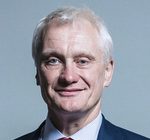
    Graham Stuart – 2022 Speech to the Call to Action Plenary, Global Clean Energy Action Forum

    The speech made by Graham Stuart, the Minister at the Department for Business, Energy and Industrial Strategy, in Pittsburgh, United States, on 22 September 2022.

    Good morning. It’s a pleasure to be here representing the United Kingdom.

    I want to thank our hosts for organising this important gathering – and Pittsburgh for welcoming us all.

    This city is a shining example of re-invention and innovation. We can all learn from its approach.

    Nearly a year ago at COP26 the then Prince of Wales, now our new King Charles III, implored the world to act – and act fast.

    Today, over 90% of global GDP is covered by some form of net zero target, up from just 30% when we first took on the COP Presidency.

    But targets are all well and good.

    The big question is how we deliver on them.

    The UK has always been a clean energy leader. We were among the first to make a legislative commitment to net-zero and I want to re-affirm my government’s commitment to deliver on that.

    We intend to get to carbon neutrality in the most efficient and business friendly way possible.

    Just recently the world’s largest offshore windfarm opened off the coast of Yorkshire, where my own constituency is.

    We’ve got the kit; we’ve got the capability.

    But we know that unilateral action is not enough. To meet our goals, we must harness the full power of collective action.

    That’s why, at COP26, 45 world leaders launched the Breakthrough Agenda. A commitment to strengthen international collaboration, so that clean technologies become the most affordable and attractive option in all regions by 2030.

    I am thrilled that this Agenda will continue under the Clean Energy Ministerial and Mission Innovation after COP27.

    And I want to thank the Breakthrough report authors for their clear analysis and firm recommendations for urgent coordinated international action.

    So how to respond?

    I’d like to pick out 4 key areas.

    Firstly, standards.

    Shared international standards, such as emission standards for clean hydrogen or steel or sustainability standards for battery supply chains, are vital for unlocking trade and investment.

    Secondly, market creation.

    Governments need to send clear policy signals and companies need to commit to procuring clean technologies to give suppliers the confidence to invest and scale production. We look forward to continuing this important work through the Industrial Deep Decarbonisation Initiative and First Movers Coalition.

    Thirdly, research, development and demonstration.

    We must coordinate our efforts to deliver transformational projects that showcase innovations, such as the 5 flagship projects under the Green Powered Future Mission.

    To signal our intent, I am pleased to announce a UK contribution of at least £1.5 billion to the US-led global Clean Energy Technologies Demonstration Challenge.

    Lastly, we must strengthen our collective offer of assistance to the Global South.

    By aligning, coordinating and reinforcing our assistance efforts, we can ensure clean technologies are affordable and accessible for all.

    So I want to invite every country here today to join me in responding to the recommendations in the Breakthrough Report by COP27.

    By doing so we can use the weight of collective action to accelerate a just and global transition for the benefit of everyone, driving jobs, growth and opportunity.

    The UK looks forward to working with you all to turn clean energy ambition into action.

  • James Cleverly – 2022 Speech to UN Security Council Meeting on Ukraine

    James Cleverly – 2022 Speech to UN Security Council Meeting on Ukraine

    The speech made by James Cleverly, the Foreign Secretary, in New York on 22 September 2022.

    Madame President, Mr Secretary General, Mr Khan, Thank you.

    Seventy seven years ago, UN members agreed solemn principles in the UN Charter, vital for international peace and security. They undertook to refrain from the threat or the use of force against the territorial integrity, or political independence, of any state.

    Yet 7 months ago, President Putin invaded Ukraine illegally and without justification he ignored the resounding pleas for peace that I heard in this Council on 17 February.

    Since then, Ukrainians’ spirit of defiance, in defence of the protection of their country, continues to inspire free peoples and nations.

    Every day, the devastating consequences of Russia’s invasion become more clear. UN agencies have confirmed more than 14,000 civilian casualties so far – and the actual total likely to be much higher more than 17 million Ukrainians in humanitarian need; 7 million displaced within Ukraine and more than 7 million Ukrainian refugees in Europe.

    We see the mounting evidence of Russian atrocities against civilians. Including indiscriminate shelling and targeted attacks on over 200 medical facilities, and 40 educational institutions and horrific acts of sexual violence.

    We see from the reports of the Office of the High Commissioner for Human Rights that in parts of Ukraine currently under Russian control civilians are subjected to torture, arbitrary detention, and forced deportation to Russia. And we have seen more grisly discoveries in Izyum.

    It is not just Ukrainians who are the victims. President Putin’s war has spread hardship and food insecurity across the globe plunging millions of the world’s most vulnerable into hunger and famine.

    And once again, as we’ve seen here today, Russia has sought to deny responsibility. It has tried to lay the blame on those who have rightly imposed sanctions on President Putin’s regime in response to his illegal actions.

    To be clear we are not sanctioning food. It is Russia’s actions that are preventing food and fertiliser getting to developing countries. It is Russia’s tactics and bombs that are to blame for destroying Ukraine’s farms, infrastructure, and delaying its exports.

    I sat here in February, listening to the Russian representative assuring this Council that Russia had no intention of invading its neighbour. We now know that was a lie.

    And today I have listened to further instalments of Russia’s catalogues of distortions, dishonesty, and disinformation. He has left the Chamber. I am not surprised, I don’t think Mr Lavrov wants to hear the collective condemnation of this Council but we saw through him then and we saw through him today.

    We have information which means that we know that Russia is about to hold sham referenda on sovereign Ukrainian territory with no basis in law, under the threat of violence, after mass displacements of people in areas that voted overwhelmingly for Ukrainian independence. We know what Vladimir Putin is doing. He is planning to fabricate the outcome of those referenda. He is planning to use that to annex sovereign Ukrainian territory. And he is planning to use it as a further pretext to escalate his aggression. That is what he plans to do.

    And we call on all countries to reject this charade and refuse to recognise any results. We are used to seeing Russia’s lies and distortions.

    But let us listen to the testimony of Ukrainians who tell us about the reality of President Putin’s war.

    Dr Olena Yuzvak, her husband Oleh and their 22-year-old son Dmytro, were abducted by Russian forces from their home in Gostomel, near Bucha, in March. The soldiers shot Oleh twice in the legs, before they were all blindfolded and bundled into an armoured personnel carrier.

    I want you to hear Olena’s story in her own words:

    First, they took us to a bombed-out house. The Russian soldiers kept saying they were going to kill us. My husband was left for hours lying on the floor in a pool of blood. I don’t know why. We’d done nothing wrong. Then they took my son away from us. I don’t know where. I don’t know if we’ll ever see him again. I just want my boy back.

    Olena’s story, and those of many others, tell us the truth, the real truth.

    This is a war of annexation. A war of conquest. To which President Putin now wants to send even more of Russia’s young men and women, making peace even less likely.

    Mr Putin must understand the world the world is watching and we will not give up.

    As members of the Security Council, we must unequivocally reject Russia’s attempts to annex Ukraine’s territory. We must make clear to President Putin that his attack on the Ukrainian people must stop, that there can be no impunity for those perpetrating atrocities and that he must withdraw from Ukraine and restore regional and global stability.

    If he chose to, he could stop this war, a war which has done untold damage to the Ukrainian and the Russian peoples. His war is an assault on Ukraine, an assault on the UN Charter, and an assault on the international norms that protect us all.

    So we stand with our Ukrainian friends for as long as it takes. Because Ukraine’s fight for freedom, is the world’s fight for freedom. It is our fight for freedom. And if Ukraine’s sovereignty and territory are not respected, then no country is truly secure.

    These are the reasons why Ukraine can, and must win.

    Thank you.

  • Alok Sharma – 2022 Speech to the Columbia University World Leaders Forum

    Alok Sharma – 2022 Speech to the Columbia University World Leaders Forum

    The speech made by Alok Sharma, the COP27 President, on 22 September 2022.

    Good morning everyone.

    And can I first start by thanking President Bollinger and Alex for the very warm welcome I’ve had today.

    I am now into the final weeks of my time as President of the 26th United Nations Conference on Climate Change, or COP26.

    It has been a near-three year journey in the thick of international climate politics and the maelstrom of wider geopolitics.

    And it remains an absolute privilege to have opportunities like this one,

    to speak as part of your World Leaders Forum,

    and to celebrate Columbia’s pioneering climate school, the first of its kind in the United States.

    Your school has had an auspicious start.

    Not least with your roundtable, at COP26, with President Obama.

    I understand the former President, and of course Columbia alumnus, noted the energy, and remarkable potential, of participating students.

    That is coming from a man who knows what it means to mobilise, and to inspire action.

    I have felt that same force when I’ve met youth climate activists around the world over the past few years.

    And I do understand the anger of young people.

    It is your future most at risk.

    You and your generation will have to live with the consequences of the actions, or inaction, of current world leaders.

    I have been directly challenged by young people on the need to push the world to go a lot faster to tackle global warming.

    I convened an international meeting for ministers, on implementing the Glasgow Climate Pact, in Copenhagen in May. We saw youth protesters make their feelings and frustrations plain.

    Every Minister saw that as they came into the meeting.

    And at the end of the meeting, I encouraged Ministers to leave the meeting with the voices of those young people ringing in their ears.

    Hearing those voices every time they made government decisions affecting the future of the planet.

    And that brings me to the focus of my address.

    You all know this, but it sometimes needs to be repeated.

    We are facing a climate crisis.

    The scientific evidence is absolutely clear, it’s unequivocal.

    We know that we are running out of time to avert catastrophe.

    The reality is that if we do not bend the curve of global warming downwards, in this decisive decade – eight and a half years left – we will go beyond the limits of our ability to adapt.

    Around the world, we are already seeing what that future could look like.

    And that future is absolutely terrifying.

    For some people across the world, it is here right now.

    In recent weeks, an area the size of the United Kingdom has been flooded in Pakistan.

    A monster monsoon bringing in its wake death, destruction and displacement of millions of people.

    Hurricane Fiona has barrelled through the Caribbean.

    This summer we have seen the US experience its worst drought in over a thousand years years.

    Europe has experienced its worst drought in 500 years.

    And China its worst ever drought, as record temperatures have dried up key parts of the Yangtze River.

    I could go on.

    You will all have examples as well.

    I was with the new UNFCCC Executive Secretary Simon Stiell earlier this week, and he made the point that the reality of these events is a cycle of disaster, rebuild, disaster, rebuild, for millions of people around the world.

    We need to do better.

    And we also know that the increasing frequency, and ferocity, of these extreme weather events is set to worsen.

    So, in the context of the pressing need for more urgent climate action,

    I want to talk about my role, and the COP Presidency.

    Our drive to implement the outcomes of the Glasgow Climate Pact.

    The ability of global coalitions of the willing, including the United States, to deliver change.

    And, most importantly, the capacity of the young climate leaders in the room this morning to hold governments and businesses to account.

    The primary role of the COP President is to oversee a COP Summit, deliver a negotiated outcome, and then drive its implementation in the post-summit Presidency year.

    I am proud that, when the world came to Glasgow last November, the UK Presidency shepherded nearly 200 countries to forge the historic Glasgow Climate Pact.

    But the outcome of that Pact was not an inevitability.

    There was huge scepticism in the international community at the start of the UK Presidency about whether we really could make progress on the road to, and at Glasgow.

    And personally, COP26 was my very first COP – I had never been to one before.

    But because of that, very early on, I sought the advice of past COP Presidents.

    And from my very first day as COP President Designate, I sought to meet world leaders, ministers, chief executives, youth and civil society groups, and communities on the front line of climate change, around the world.

    This was all about ensuring an open and neutral Presidency.

    Underpinned by the principles of transparency, inclusivity, consistency of message and trust,

    And trust, I have to say to you, is an incredibly fragile commodity in climate negotiations.

    I wanted to ensure that those four principles would be the foundation on which we built an ambitious COP26 outcome.

    But, having spent two years talking to governments around the world, trying to craft the key elements of the Glasgow Climate Pact, we almost fell short in the final hours of COP26.

    We had an opacity in those one-minute-to-midnight negotiations.

    China and India raised objections to key language on coal and fossil fuel subsidies.

    We went behind the stage to negotiate.

    As we negotiated, I wrote out word-by-word the minimum changes which China and India could accept.

    I can tell you it was fraught.

    I still have the marked up piece of A4 paper at home on which we wrote out the text.

    For me, that is an eternal reminder that things could have turned out very differently.

    Because there were critical moments in those final hours when I was really concerned that a global deal, effectively two years in gestation, was about to collapse.

    For anyone watching, you will have seen me crossing the plenary floor, showing the proposed revised text to the Chairs of the UNFCCC negotiating groups.

    Yes, I did become emotional, when I put the final text to the floor.

    I was disappointed that, after such effort to run a transparent Presidency, the COP26 negotiating process was ending in hushed and rushed conversations.

    But I was, and continue to be, incredibly proud of what my UK COP Presidency team achieved in delivering the Glasgow Climate Pact.

    Our overall goal, right from the start, was to garner enough commitments to ensure that we were keeping alive the prospect of limiting global warming to 1.5 degrees above pre-industrial levels.

    And we achieved that goal.

    Prior to the Paris Agreement, scientists were telling us that the world was on course for 4 degrees of global warming by the end of the century.

    Post-Paris it was 3 degrees.

    After Glasgow, we were able to say with credibility that we had kept 1.5 alive.

    And whilst 1.5 degrees was our North Star, we made critical progress on adaptation, on finance, on loss and damage, on empowerment, and on so many other issues.

    In fact the Chair of the Climate Vulnerables Forum recognised the steps we had taken “on all the priorities of the most climate threatened nations”.

    Yes, we achieved a Pact.

    But frankly, the Pact is nothing but words on a page.

    The pulse of 1.5 will remain weak until the Pact, every element of it, is implemented in full.

    And we have to be frank that implementation is very challenging.

    First, we did all sign up to an ambitious programme of work.

    And second, the world has changed markedly since last November, overshadowed by the Putin regime’s brutal and illegal war in Ukraine.

    Countries around the world are facing perilous economic and geopolitical conditions, and threats to energy security.

    We are grappling with soaring inflation, rising debt, and food insecurity.

    For many, climate has not been front of mind.

    But I do truly believe there remains cause for hope.

    I see climate leaders doing remarkable work.

    Take for example the Prime Minister of Viet Nam, who I saw again last month.

    He is utterly relentless in driving his country’s economic transformation, based on clean energy.

    And we as a G7 nation, and other developed nations, are supporting that effort with Viet Nam’s Just Energy Transition Partnership, which can be the gold standard for sustainable economic growth for developing countries around the world.

    Businesses and financial institutions are radically reimagining what it means to be a responsible, 21st century company.

    Bill Gates, who I spent time with earlier this week, rightly noted that COP26 was the COP where businesses came in force.

    And you will have seen, just last week, the founder of Patagonia, dedicating his company’s fortune to the climate cause.

    Now, where are we in this process?

    We will get a clearer sense that when the UNFCCC publishes its latest Synthesis Report.

    The deadline for countries to make submissions on their 2030 emissions reduction targets is tomorrow.

    I am sure that the report will make clear that the job is far from done.

    I was in Indonesia earlier this month at the G20 Climate, Energy and Environment Ministers Meeting.

    Unbelievably, our negotiators had to fight to simply restate commitments we have all previously signed up to.

    Inexplicably, there were debates about the unequivocal science of the IPCC reports.

    Some countries sought to push against language from the Glasgow Climate Pact, agreed just ten months ago, and the foundational Paris Agreement, on which that Pact is built.

    And there was even rowing back on the collective agreement that was reached by G20 leaders last year to lead on climate action.

    So my message here in New York this week has been frank.

    The Glasgow and Paris language must be the baseline of our ambition.

    We cannot retreat from that.

    And this is a critical moment to redouble our efforts, resist backsliding, and ultimately go further, and faster.

    Collectively, the world’s richest countries, and the biggest emitters, have looked too many climate vulnerable countries and communities in the eyes,

    and promised too much action,

    to step back now.

    To do so would be a betrayal.

    And the United States is a key player in all of these discussions.

    It is the second biggest emitter, and the largest by capita.

    The US therefore has a responsibility to lead on climate action.

    In all my travels as COP President, and all my time speaking with the world’s most vulnerable countries and communities, that is a firmly held view.

    They want to continue to see the US leading.

    Thankfully, the US also has unparalleled resources, and expertise.

    That was evident, as we all watched, with a mixture of hope and trepidation, the machinations surrounding the Build Back Better Bill,

    and the ultimate passage of the Inflation Reduction Act,

    the largest climate spending package in US history.

    I congratulate President Biden, and my very good friend John Kerry for their roles in securing that historic achievement.

    So now, I urge the Senate to now press home the advantage.

    Match the domestic ambition with international action.

    In particular, deliver the billions of international climate finance being asked of Congress for the coming years.

    Finance, my friends, is a key ask of climate vulnerable countries and we must all, including the United States, deliver on our promises.

    I want to turn now specifically to the role of the students in the room.

    I know there is much talk of the midterms right now, and of the partisan nature of climate policy at federal level.

    In fact because of this,

    I encourage you to run towards the heart of the climate debate, on both sides of the aisle, at national and subnational level.

    Of course I know that many of you will be considering the 30-minute hop on the 1 train, to Wall Street.

    That work will be pivotal too.

    All of the climate action I have talked about today, all the promises that have been made, has one thing in common: it requires us to turn the billions currently flowing in climate finance, into trillions.

    We need advocates like you in the boardrooms and on trading floors here in New York, and around the world.

    And there are similarly catalytic roles in civil society, particularly recognising climate justice is completely interlinked with economic and social justice for so many people around the world.

    In all of this work, I am heartened to know that you will be joined by colleagues from the increasing number of climate and sustainability schools,

    in the US and around the world.

    From the students who hosted me just up the coast at Tufts in March, to those I met last month at Can Tho University, in the Mekong Delta of Viet Nam.

    I had the privilege of attending on Monday, the State Funeral of our Late Monarch, Her Majesty the Queen.

    In a moment of quiet reflection in Westminster Abbey, I thought back to Her Majesty’s words, delivered to world leaders attending COP26.

    She said:

    “It is the hope of many that the legacy of this summit – written in the history books yet to be printed – will describe you as the leaders who did not pass up the opportunity; and that you answered the call of those future generations.”

    That history is still to be written.

    And I hope that the leaders of today, in my own country, in the United States, and across the world will heed the late Queen’s wise words.

    To those of you setting out on your own leadership journeys.

    Make them count.

    And whilst my formal role ends at COP27, I will be there with you, continuing to champion the cause of climate action, which is so vital.

    Thank you.
  • Vicky Ford – 2022 Speech to the Global Funds Replenishment Pledging Session

    Vicky Ford – 2022 Speech to the Global Funds Replenishment Pledging Session

    The speech made by Vicky Ford, the Minister of State for Development, at the United Nations General Assembly on 21 September 2022.

    Excellencies, colleagues, friends.

    What the Global Fund has achieved to date is nothing short of extraordinary.

    Saving 50 million lives, investing billions in healthcare systems and providing leadership on COVID-19. The UK was a founding supporter of the Global Fund, and we are its third largest ever donor having contributed more than £4.4 billion to date. This is just one important part of our contribution to fighting preventable diseases.

    We have invested over £2 billion in Gavi – the vaccine alliance – helping them to save 15 million lives and help countries prepare for the roll out of new malaria vaccines. UK expertise in R&D gives us a unique ability to drive forward innovation that can make a step-change in progress.

    We have invested around £400 million in Product Development Partnerships, harnessing the best of British scientific excellence to fight diseases of poverty.

    Our support for the Innovative Vector Control Consortium, helped it develop ground-breaking technologies which have averted up to 27 million cases of malaria including a novel type of bed net, that kills mosquitoes resistant to traditional insecticides.

    And our £500 million investment in Unitaid supported innovations that cut the cost of the best paediatric HIV medicines by 75%.

    This year, we set out our approach to strengthening global health in our International Development Strategy. As part of that we will continue to be a strong supporter and contributor to the Global Fund, helping to save lives, strengthen health systems and help countries prepare for and prevent pandemics.

    We will work with the Global Fund to fight for what counts, and make the world a safer place for everyone.

  • Andrew Bailey – 2022 Letter to the Chancellor of the Exchequer on Inflation

    Andrew Bailey – 2022 Letter to the Chancellor of the Exchequer on Inflation

    The letter sent by Andrew Bailey, the Governor of the Bank of England, to Kwasi Kwarteng, the Chancellor of the Exchequer, on 22 September 2022.

    [in .pdf format]