Tag: Speeches

  • David Simmonds – 2022 Speech on Ukraine

    David Simmonds – 2022 Speech on Ukraine

    The speech made by David Simmonds, the Conservative MP for Ruislip, Northwood and Pinner, in the House of Commons on 22 September 2022.

    I place on record my thanks to my two local authorities for the work they have done in supporting and resettling Ukrainians who have had to flee the war and find a new home in the United Kingdom. The work the Government have done to support them is fantastic, and I have heard good reports that the financial support, in particular, that has been made available has been enormously helpful. While there is clearly a little bit more work to do for those who are going to be settling in the UK in the long term, to ensure that access to education, healthcare and other services continues to be available in the time they are here, it is a success story despite some of the concerns that were raised at the time.

    I will focus on two points that emerge from what is happening in Ukraine at the moment, and from some of the points made by a number of Members about how we prepare for the future. Before being elected to this House, I was a member of one of the constituent bodies of the Council of Europe. Its meetings were always challenging, given that at that time, we had Ukraine—which had been invaded by Russia to the extent of Crimea—and Russia in the same room, debating their supposed mutual respect for human rights and the rule of law. But it is clear that with proposals such as the new European political community there is an opportunity for the UK and other countries that do respect the rule of law to bolster the position of politicians, civil society organisations and leaders in Russia who do not condone the actions of Vladimir Putin. He is by no means the only politician in Russia. Many of us who have been engaged in any sense in those international operations will know that there is internal opposition to him in that country. We hope that if the work being done by Ukrainians succeeds, and if the pressure brought to bear by the international community succeeds, we will have an opportunity to foster a relationship with a much more positive Russian Government than the one we have at the moment. It will bolster the efforts we are putting in to support Ukraine if we can strengthen the hand of critics of Putin at home, and that will lay the groundwork for a more constructive relationship in the future, which will be particularly important for the reconstruction of Ukraine.

    Finally, I wish to touch on the point about cyber. I had the opportunity to be a witness at the Home Affairs Committee before being elected here, and prior to my session a witness from GCHQ was asked at the height of the Brexit debates, “Do the Russians want the UK to leave the EU?” The answer was very informative: what the Russians were seeking was not a particular outcome, but division in the west. They wanted us in this House and us in the west to be arguing among ourselves about what was happening. That goes to the heart of the points made by so many Members, and I echo this one: the unity and consistency of purpose across the allies is so vital to the long-term outcomes for Ukraine.

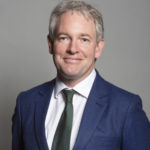
  • Martin Docherty-Hughes – 2022 Speech on Ukraine

    Martin Docherty-Hughes – 2022 Speech on Ukraine

    The speech made by Martin Docherty-Hughes, the SNP MP for West Dunbartonshire, in the House of Commons on 22 September 2022.

    I rise to speak not only as the Member for West Dunbartonshire but because, coming from a place like Clydebank, I am keenly aware of what it is like growing up in a place that had the worst aerial bombardment in these islands during the second world war, playing in the ruins and the bomb craters. That is why it is clear to me that just as planning for a new social settlement for people in these islands began right in the middle of the last great war—as we would call it—although it was not exactly a perfect settlement, that is something we must now do to help Ukraine build itself a prosperous and sustainable peace, integrated into the European Union and the mainstream of a free Europe, as it wishes.

    The challenge is stark. The Kyiv School of Economics has reported a 33% drop in gross domestic product, which is something that we will need to bear in mind, and a $200 billion bill to repair the damage done by the Russian Federation. That requires commitments from not only this Government but other allies—commitments that are not only financial, and to timescales that are measured not in weeks but, I am afraid, in decades. Although, as we have heard, there is a lot of support across the House for such measures, we need to hear a lot more from Treasury Ministers about what they plan to do. It is also something of a philosophical challenge for the Government: Ukraine is now a candidate country for the European Union and, contrary to the way things have often worked in military planning, long-term economic and social change will be delivered through its gradual and deepening alignment with the rest of Europe. I hope there will be nothing to stop this Government ensuring that Ukraine is able to do that to the fullest possible extent.

    If Ministers have not already done so, I urge them to begin the essential planning that is required for what will be needed in Ukraine when it wins the war—a very modern Marshall plan. I am glad to note that in the regular debates, it has become customary for many to repeat the couplet “Slava Ukraini, heroyam slava!”—glory to Ukraine, glory to the heroes! However, I am mindful of the old Gaelic proverb that translates as “To a man prepared for war, peace is assured.” Ukraine is prepared and peace can be assured, but its continued existence as a sovereign state requires more than heroic platitudes and, I am afraid, even proverbs uttered on the Floor of the House of Commons.

  • Danny Kruger – 2022 Speech on Ukraine

    Danny Kruger – 2022 Speech on Ukraine

    The speech made by Danny Kruger, the Conservative MP for Devizes, in the House of Commons on 22 September 2022.

    May I start by putting on the record my appreciation for the British troops based in my constituency of Devizes for the work that they have done in training our allies in Ukraine on Salisbury Plain, and, most of all, my appreciation for Ukraine for her leadership, her army and her people? They have resisted Putin, they have fought back, and they are winning.

    The question now is: what next? Members might be familiar with the famous story in Vladimir Putin’s memoir of him as a young boy chasing a rat with a stick. It got into a corner, turned on him and attacked. Putin is now that rat, driven into a corner by the heroic Ukrainians. The risk is that the rat now turns, does what he said he would and launches a nuclear strike on Ukraine or a NATO country, even including the UK. The lesson from the story of Putin and the rat is not that we do not corner him—there is no escape route for him that we can offer, except his defeat and humiliation. The lesson we must learn is that we must be ready for the rat to turn.

    I do not doubt Ukrainians’ determination to stand whatever happens, and I do not doubt the commitment of the British Government or, indeed, the wider alliance to stand with the Ukrainians. My concern is with our own preparedness in the event of a nuclear strike, either in Europe or here. I know that Ministers did not like it when the Chairman of the Defence Committee, the right hon. Member for Bournemouth East (Mr Ellwood), raised that point earlier, and I do not expect them to say anything other than that our defences and doctrine in the event of a nuclear strike are entirely up to date and ready. My concern is with our wider resilience, not just in the event of a nuclear strike but against the wider economic and military pressures that we might be under. I am concerned that our conventional defences should be as strong as possible. We have learned the critical importance of men and armour in this war, and I would like to see our Army grow. We also need to be concerned with our economic security and our social resilience.

    I echo the point made by my hon. Friend the Member for Rutland and Melton (Alicia Kearns) when she talked about the need for a whole-of-state approach. There is talk of a new integrated review; I echo the calls for that, and hope that it will include not just whole-of-state resilience, but whole-of-society resilience as well.

  • Nia Griffith – 2022 Speech on Ukraine

    Nia Griffith – 2022 Speech on Ukraine

    The speech made by Nia Griffith, the Labour MP for Llanelli, in the House of Commons on 22 September 2022.

    For years, countries in eastern Europe such as Poland and the Baltic states have been warning about Russia under Putin. We absolutely must recognise the gravity, scale and multifaceted nature of the threat and the lengths that Putin may go to.

    While we have some encouraging bits of news, with terrain retaken in eastern Ukraine, we must not underestimate the scale of the challenges that remain. There is still extensive terrain to reconquer, the war efforts are taking a toll both on military personnel and on civilians, and Putin continues in his efforts to sow alienation and give false legitimacy to his invasion through the so-called referenda. A huge effort is also required to rebuild ruined towns and devastated communities.

    Putin’s clear aim is to divide and conquer, so while the world is looking at the physical—the ground war and the threat of nuclear weapons—there is at the same time a huge propaganda war, sometimes more subtle and sometimes less so, trying to undermine the west’s unity and resolve, with internet users bombarded with clever false messages masquerading as the truth. I stress again to the Minister how important it is for the UK and allies to invest in combating internet warfare and mounting counter-offensives.

    We need renewed efforts at diplomacy and at fostering unity. It is very important that we are putting money where our mouth is and supporting efforts in Ukraine. It is absolutely vital that we stand firm on sanctions, but we must foster the most positive and unified response from other countries. That includes, of course, investing Foreign Office expertise.

    This is not just about Europe and NATO. In the wider world, how do we maintain world peace and deal with the bullies? First, we need to be strong and show strength. Appeasement does not work. In 2014, after the invasion of Crimea, the lack of action by the west was a monumental failure. We need to stand strong in the face of aggression. For all their imperfections, we need to rebuild our respect for international organisations such as the United Nations, and repair the damage caused by Trump when he belittled international organisations, tore up treaties and cut funding to important international programmes.

    An important part of that international work is the need to tackle the gap between richer and poorer nations. Nations across the globe need reason to buy into international organisations and to feel that they are being heard. Coronavirus has taught us how interconnected we are, but that is also true in respect of security. We need to build up resilience and prosperity in developing nations, to stop them being used and manipulated by the world’s tyrants.

    While continuing our direct support for Ukraine, we must also focus on fostering unity among our allies and taking a lead in world organisations to stand firm against Putin.

  • Bob Seely – 2022 Speech on Ukraine

    Bob Seely – 2022 Speech on Ukraine

    The speech made by Bob Seely, the Conservative MP for the Isle of Wight, in the House of Commons on 22 September 2022.

    It was a pleasure to lead the delegation last week. For anyone who is interested, I am organising another to take place later in the year, and it will be lovely to see colleagues on it.

    That weekend when we were in Ukraine heralded a new phase in the war. First, while there is still a long way to go, there is now a sense in Ukraine of a pathway to Ukrainian victory and Russian military defeat, probably within the next three to 18 months. Secondly, the partial collapse of Russian forces will compel it to commit reserves that it would have wanted to build up until the spring for the chance of a spring offensive. From now on, Russia’s war will almost certainly become a defensive war of digging in and holding on.

    It is clear that Russia’s weakness is on the battlefield, while Ukraine’s is economic and political. It has an almost total economic dependency on the west, and it has a dependency on our arms supply. It is clear that Putin will try to break this alliance and gain a political victory where he cannot seize a military one. In military terms, the umbilical cord between us and Kyiv becomes the centre of gravity for the Russians to attack. This explains, in part, Putin’s decision to threaten the use of nuclear weapons and to annex territory to Russia, and his decision on the mobilisation.

    Is nuclear weapon use likely? Not by any means, but I think we should speak with a sense of care and proportion. In the minute I have left, I will try to explain a slight difference with the Government. To minimise the chances of nuclear use, tactical or strategic, we have to assume that that threat is real and that at some point, probably as Russian troops face collapse in the south, Putin will have—again, this is a military term—a decision point to either use tactical weapons or not. We have to assume that he may well use them, and the purpose of making that assumption is so that we can plan. To say that he is bluffing means that we do not have a plan, and we will again, as we have been doing since 2007, be playing catch-up in a disastrous situation, with a fascistic Russian state.

    Hope is not a strategy. Keeping fingers crossed is not a policy. At every point, Putin has chosen to escalate and increase risk. There is no sign that he will do anything different now. In short, we need to maximise the chance of avoiding tactical use that will kill thousands by planning for it now. I have run out of time, but I will in due course write further on this and what the Ukrainians told us.

  • Marie Rimmer – 2022 Speech on Ukraine

    Marie Rimmer – 2022 Speech on Ukraine

    The speech made by Marie Rimmer, the Labour MP for St Helens South and Whiston, in the House of Commons on 22 September 2022.

    Vladimir Putin has called up an additional 300,000 reservists. On the face of it, that seems a large number of reinforcements, but the fact is that most of those men have completed a fraction of the training that a NATO member would require. When this war first began, Russia was sending in conscripts who had had only a few days of basic training. It appears that Putin has not learnt his lesson; or perhaps he has, and simply does not care. To Putin, his own people are cannon fodder. They are being sent to the frontlines owing to his personal delusions of grandeur.

    The reality is that the latest reinforcements are likely to suffer a worse fate than the original battlegroups. Owing to the failure of the Russian army and, more importantly, the success of the Ukrainians, there is much less equipment for these reinforcements. In Russia’s recent disorganised retreat from the Kharkiv region, a substantial amount of Russian equipment was destroyed or captured. That is testimony to the bravery, skill and tactical prowess of the Ukrainians.

    The way in which the people of Russia have reacted to Putin’s mobilisation announcement is interesting. Almost as soon as he had finished speaking, “how to leave Russia” topped the Google trends in the country, and flights leaving Russia sold out or prices skyrocketed. More than 1,000 people who were protesting against reinforcements were arrested on the streets. Putin is pushing his own people to the edge, but he has a huge security apparatus protecting him and his cronies in Russia. His grip on power is strong. It is no good expecting him no longer to be in control or to suddenly do the right thing, because neither will happen. That is why our support for Ukraine must not waver.

    The Ukrainians have shown Russia and the world that they are a fully capable fighting force. The Government must do all they can to continue our support, and that includes looking again at steps that can be taken here against Putin’s supporters. There is still too much dirty Russian money around our country, particularly in London. There is much more that we can do. The pressure on Putin’s supporters needs to be tightened.

    There is only one acceptable way in which this war can end, and that is with a democratic Ukraine having control over all its own territory. Now is the time for us to double down. As I said months ago when the conflict started, this war is our war: Ukraine and Ukrainians are fighting it on behalf of all of us. We must give the Ukrainians what they need, and the Government must do our bit at home as well.

    I echo the comments of, in particular, my hon. Friends the Members for Birkenhead (Mick Whitley) and for Putney (Fleur Anderson) about refugees. We must do much more. We cannot let these people down. Please, please let us listen to them. I also thank my hon. Friend the Member for Putney for bringing her news to us, and I thank her so much for going to Ukraine.

  • Geoffrey Clifton-Brown – 2022 Speech on Ukraine

    Geoffrey Clifton-Brown – 2022 Speech on Ukraine

    The speech made by Geoffrey Clifton-Brown, the Conservative MP for The Cotswolds, in the House of Commons on 22 September 2022.

    Thank you, Madam Deputy Speaker. I will try to adhere to your three-minute rule.

    The message should go out from this debate to Volodymyr Zelensky and the Ukrainian people that we salute their bravery. They have suffered grievously. In just seven months, the world has seen one of the biggest refugee catastrophes since the second world war, with more than 7 million people displaced within Ukraine, 7 million people displaced to the rest of Europe, and more than 14,000 people dead or wounded. Hundreds of people have suffered war crimes of torture and sexual crimes, as the hon. Member for Bath (Wera Hobhouse) made clear, and hundreds of innocent children have been kidnapped, as my hon. Friend the Member for Huntingdon (Mr Djanogly) said.

    Quite simply, we have to help the Ukrainian people to win this conflict, because if they do not succeed in driving the Russians out of Ukraine, no country in Europe will be safe. I therefore congratulate my Government on the support and help that they are giving to Ukraine, as the Minister for the Armed Forces outlined in his comprehensive statement today. I am delighted that the new Prime Minister has made it very clear that we will stick by Ukraine for as long as it takes. Contrary to what some speakers today have said, I do not think that there will necessarily be a quick end to the conflict. All sorts of twists and turns could happen. As other hon. Members have said, although we hope that Vladimir Putin’s threat of using a tactical nuclear weapon is just that, we cannot be sure.

    We are absolutely right to give help. I understand that the British people are suffering grievously with the cost of living because of the price of energy and food, but as their politicians we must point out to them that if we do not continue to support Ukraine throughout this conflict, they will suffer even more.

    The issue I really want to talk about is grain, which we have not heard anything about in this debate. At long last, with the United Kingdom’s diplomatic help, the United Nations has negotiated for some grain shipments to cross the Black sea and go out through the Dardanelles to some of the most vulnerable and poorest people in Africa. We must make sure that that programme continues: it is vital for some of the poorest people in the world, and we must do all we can to prevent the Russians from stopping it.

    To all my constituents who have so generously hosted the Ukrainian people—I have met some of them—I say, “Please continue. I know it is difficult in some cases, but please continue your generosity.” To the British people, I say, “Please bear with the privations caused by this war. It will be difficult this winter, but our Government will do what they can. I am sure that right will eventually come through and the Russians will be driven out of Ukraine.”

  • Wera Hobhouse – 2022 Speech on Ukraine

    Wera Hobhouse – 2022 Speech on Ukraine

    The speech made by Wera Hobhouse, the Liberal Democrat MP for Bath, in the House of Commons on 22 September 2022.

    I wholeheartedly join the cross-party support for Ukraine. I will mention an issue that has been touched on but debated less this afternoon.

    Women are casualties of war and conflict, but they are very often overlooked. Women, including those who fight alongside men, suffer in a uniquely gendered way. Ukrainian women have displayed incredible strength in defending their country and their families both on and off the battlefield. As more Ukrainian territory is liberated, more terrible stories emerge of atrocities committed against women. By June, the UN human rights monitoring team had received reports of 124 alleged incidents of sexual violence. The Secretary-General’s special representative has warned that the number of reports is rising fast.

    Wartime sexual violence is one of the oldest crimes known to people. It has long-term implications for individuals and communities long after war has ended. The Government recognise the problem of wartime sexual violence, but that must be fully matched with support for women on the ground. Too often, wartime sexual violence is viewed as inevitable, as part of war. That is totally unacceptable. The sexualised threats faced by women and girls must be confronted head on and prosecuted like any other war crime. I am grateful for the recommendation from the hon. Member for Rutland and Melton (Alicia Kearns).

    The Government, along with the international community, need to aid Ukraine to ensure that there is a robust response to gender-based violence. That must include post-rape care, access to abortion and mental health support. Our human response demands that we make sexual, reproductive and maternal healthcare a priority. Perpetrators must be vigorously investigated and adequately punished, and the UK must help by providing support for Ukraine to do that.

    The majority of people fleeing Ukraine are women and children. The response from communities in bordering countries and in the UK has been incredibly powerful, but we should not be blind to the ongoing risks for women and girls. Female refugees have always faced disproportionate risk, especially if they are travelling alone. Many of my constituents have contacted me on behalf of Ukrainians who are stuck in dangerous places waiting for visas. While they wait, their funds run low and they are at greater risk of trafficking and abuse.

    Refugees are safest when they have options. They need full legal protection and the right papers, and they need to be totally aware of their rights. The Government must equal the outpouring of compassion that has been shown by the British public and allow Ukrainian refugees to come to the UK without unacceptable bureaucratic delays. Otherwise, we are driving vulnerable women and girls into the arms of opportunistic abusers. It is a matter of basic safety. As the war continues and shows no signs of being resolved, the British Government must do better at protecting women and girls. I am sure that many colleagues across the House share my admiration for the courage of the women of Ukraine; we must match it with action.

    Although we hope that the war will be over soon, it probably will not. Just as important as speeding up the process now is making sure that support for our Ukrainian refugees is sustained. What are the Government’s plans for six months’ time and beyond? How will we help families to find long-term accommodation, jobs and financial support? We should not underestimate the substantial trauma that women and children will have suffered, especially if they have experienced sexual violence. Support services will need funding beyond this year to rebuild lives in the long term. The Government will have to show a lot of stamina in providing not just military help, but humanitarian help to deal with the human tragedy beyond the here and now.

  • Suella Braverman – 2022 Letter to Police Leaders

    Suella Braverman – 2022 Letter to Police Leaders

    The letter sent by Suella Braverman, the Home Secretary, to police leaders on 24 September 2022.

    Letter [in .pdf format]

  • Jonathan Djangoly – 2022 Speech on Ukraine

    Jonathan Djangoly – 2022 Speech on Ukraine

    The speech made by Jonathan Djangoly, the Conservative MP for Huntingdon, in the House of Commons on 22 September 2022.

    I, too, was very pleased to join the all-party trip to Kyiv a week ago. It will soon be represented in my entry in the Register of Members’ Financial Interests.

    If a deal involving peace for land had ever been possible, it is clear now that Ukrainians will not start to negotiate until all their land is free from Russia—and that includes Donbas and Crimea. That was the firm view of every politician, soldier and citizen I had the opportunity to meet in Ukraine. One can see why, as the vile outcome of Russian occupation is revealed in territory retaken by the heroic actions of the Ukrainian military. Sadly, the horrors of Bucha are not an isolated horrific incident. Indeed, it is becoming clear that looting, torture, murder, rape and intimidation is standard practice for the Russian occupiers. Horribly, Russia has deported tens of thousands of Ukrainian children, including 2,300 orphans to Russia. These crimes must never be forgotten or overlooked. I was very pleased to hear how UK prosecutors have been helping local agencies with evidence collection and advice.

    This war is about more than just helping a freedom-loving people fight against a bullying aggressor. As others have said, Russian aggression has been used time and time again under Putin, right from the invasion of Georgia in 2008. There is nothing to show that unless stopped Russia would stop at Ukraine. To that extent Ukrainians are also fighting the war on behalf of all of us who refuse to accept a Europe where barbarity and violence call the shots. With that in mind, we should now consider Russia a state sponsor of terrorism and, as such, it would be equitable for frozen Russian state and state-linked assets, including frozen sanctioned individual assets, to be seized for payment to Ukraine for its reconstruction. That would require legislation similar to that passed by Canada in June.

    John Howell (Henley) (Con)

    Is my hon. Friend aware that we have just heard the news that a young woman was killed in Moscow by the Russian police for participating in anti-war demonstrations? Will he condemn that?

    Mr Djanogly

    I certainly will condemn that and the many other deaths in Russia that we are hearing about all the time.

    The question recently came up as to whether individual oligarchs should be able to buy their way out of sanctions. I am doubtful that that could work without the international sanctions system being holed under the water line. However, if any deal is considered, it has to be co-ordinated and approved by Ukraine, not just the sanctioning country, and the restitution money involved should go to Ukraine. In that way, any decisions on the release of assets would be properly co-ordinated.

    Over recent months, there have been many pictures of Russian tourists swanning around Europe as though nothing was happening in Ukraine. That should stop and we should now ban Russian visas to the UK other than for exceptional circumstances. Certainly, at the very least, we should not allow into the UK any member of Putin’s United Russia party. Sanctions are a slow-burn approach, but they are increasingly effective. However, there are so-called holes in the bucket—Turkey comes to mind and there are others. Will the Minister advise what efforts are being made to isolate such countries?

    Battlefield victories are accentuating the size of the challenges yet to be faced. First, militarily speaking, Russia still maintains a powerful and vicious threat. Putin is an unpredictable enemy who is wounded and concerned to protect his Crimea legacy to Russia. He may yet become even less principled over civilian rights. Indeed, only yesterday he upped the ante by calling up Russia’s reserves.

    Secondly, retaking occupied territory is one thing but holding it is another. Police, courts, schools and civil society all have to be re-established. War crimes and collaborators have to be prosecuted. Infrastructure has to be rebuilt. The cost and administrative challenges involved are enormous and urgent.

    Thirdly, the military requirements are changing. In the early days of the war, basic equipment for soldiers and defensive weapons, such as anti-tank missiles, were the priority. Then, longer-range artillery to break down Russian defences was—and still is—required to enable offensive operations. Following reoccupation, the priorities then changed again and the need for anti-missile defence systems is now coming to the fore, as was highlighted very much during our visit.

    If Ukraine is to encourage its more than 10 million internally displaced citizens and millions of foreign-based refugees to return to their homes in Ukraine, security from air attack becomes key to restoring confidence. That point was very much reinforced by Russian retaliation against lost ground, taking the cowardly form of missile attacks against civilian targets. Electricity and water infrastructure has already been bombed and the cold winter is approaching.

    The challenges are immense, but one thing is for sure and came across very strongly during my time in Kyiv—namely, Ukrainian recognition of British support and the gratitude that was shown by everyone we met. Ukrainians feel that the UK is in this battle with them for the long term, that we were the first to speak up for them in the international community, and that we then backed that up with money, arms and valuable advice. The Government and virtually all Members of all parties in this House are to be commended for their support. History is on our side.

    I was left with the strong impression that out of this war, out of this horror and barbarity, will develop an immensely strong and lasting relationship between our two countries. In the meantime, we must redouble our efforts to ensure a speedy victory for Ukraine as soon as possible and enable its restoration towards the modern democratic country that I know it has the potential to be.