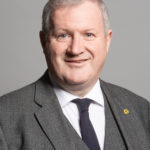
The speech made by Ian Murray, the Shadow Secretary of State for Scotland, in the House of Commons on 2 November 2022.
I congratulate the right hon. Member for Ross, Skye and Lochaber (Ian Blackford) and the SNP on bringing this debate to the Chamber. I also pass on my thoughts and best wishes to the hon. Member for Glenrothes (Peter Grant), who signed the motion. He is not with us today because he has lost his father, so our best wishes go to him. [Hon. Members: “Hear, hear.”]
When I learned of and read the motion, I got quite excited, because I thought that I might finally agree with one of my SNP colleagues’ motions. It starts off, rightly, by highlighting the disastrous impacts of this Tory-created economic crisis, but I am sorry to say that it ends in a rather familiar way, with their one-size-fits-all and only answer to any question: independence. I will come to that later, but let me go through the first part of the motion.
To start with the Secretary of State’s contribution, I did not hear an apology for what the Government have just done to the UK economy. The Conservatives once claimed to be the party of economic competence, but they have now created absolute chaos. Let there be no doubt that the Conservatives have crashed the British economy. Their now junked mini-Budget—well, partially junked, because they have kept the scrapping of bankers’ bonuses—which was mini only in its connection with reality, has exacerbated an already burgeoning crisis. That crisis was born from catastrophic decisions made over the past 12 years, including when the current PM was Chancellor.
As the motion outlines, the pound is at a record low, mortgage rates are through the roof and inflation continues to spiral out of control. I know that for many on the Conservative Benches, those are just indicators—numbers on a screen—but they show an economy tanking as a result of their incompetence. This is not just about numbers; it is about the quality of life of millions of people up and down the country. It is about the unimaginable stress caused to families, who were already stumped by how they would make ends meet. They find their mortgage rates shooting up and energy prices rocketing, and they are staring at their supermarket receipts, wondering at how few items they got for such a high cost.
Angus Brendan MacNeil
The hon. Member makes some great points about the catastrophe we are involved in due to being in the UK. On that basis, would he prefer an independent Scotland with a Labour or an SNP Government, or a Scotland inside the UK with a Tory Government? Which is it?
Ian Murray
I prefer Scotland in the UK with a Labour Government. What an absolutely ridiculous and pointless intervention from a ridiculous and pointless Member of Parliament. [Interruption.] Is that unparliamentary, Mr Deputy Speaker? Okay, I apologise. [Interruption.] I just said I apologise.
A family came to my surgery last week to say that their fixed-rate mortgage of 1.79% was expiring. Given the increases in interest rates, they were expecting to pay and had budgeted for 3.5%, but they were quoted more than 6.5% and they simply cannot afford it. What was it all for? To give unfunded tax cuts to the richest. Make no mistake: the Tories crashed the economy from Downing Street and it will be paid for by ordinary people, either through their pay packets or through austerity.
Angus Brendan MacNeil
On a point of order, Mr Deputy Speaker. When we ask a question of a colleague in Parliament who finds it difficult to understand, is it in order that he responds with insults?
Mr Deputy Speaker (Mr Nigel Evans)
The hon. Member did apologise immediately, Mr MacNeil. I think you should accept that with good grace.
Angus Brendan MacNeil
I did not hear it. Thank you.
Ian Murray
I did apologise, Mr Deputy Speaker, and I do so again.
Angus Brendan MacNeil
Accepted.
Ian Murray
I am glad that the hon. Member has accepted it, from whichever seat he is now sitting in.
As I was saying, what has happened will be paid for by ordinary people either through their pay packets or through austerity, because the Government U-turns and change of Prime Minister cannot undo what has been done to Britain’s reputation. Our institutions have been undermined, our standing on the world stage has been diminished, and our credibility as a place to invest has been damaged. The devastation will last for years, maybe decades. As the right hon. Member for Ross, Skye and Lochaber said in his opening speech—I will quote him as accurately as I can—that comes with “massive, massive costs”. But one of the other massive costs would be the break-up of the United Kingdom, because there is no doubt that this Conservative Government are as big a threat to the Union as any nationalist sitting by my side here.
Who have the Conservative party turned to to put out the fire? The arsonist himself. Let us not forget that even before this abject disaster, the now Prime Minister, as Chancellor, delivered the highest tax burden on working people in 70 years, the highest inflation in 40 years and the highest of any G7 country, the largest fall in living standards since records began in the 1970s, continued low growth and stagnant wages.
We have a Prime Minister who increased the tax for everyone else while he did not think his family should pay it; a Prime Minister who, while every single person in this country suffered under lockdown, was fined for partying in Downing Street; a Prime Minister who left a loophole in the windfall tax so that billions of pounds that could have been put into public services to help people with their energy bills were left on the table; a Prime Minister who lost tens of billions of pounds to covid fraud and shrugged his shoulders; a Prime Minister who was so weak in dealing with the cost of living crisis that he thought that the best and only response was to increase everyone’s national insurance; a Prime Minister who was, as a Member of Parliament, more of a US resident than a UK citizen; a Prime Minister who always puts his party first and the country second; and a Prime Minister without a mandate to govern. As the Leader of the Opposition so aptly put it, in the only competitive election in which the Prime Minister has stood, he was trounced by someone who was in turn beaten by a lettuce.
Alan Brown
The hon. Member is making our case for us, given the shambles of a Government that he is talking about. Does that mean that he will go back on his vow to do better together again and that Labour will not stand shoulder to shoulder with the Tories? Will he also call out Labour councils for working in coalition with the Tories, including in Edinburgh?
Ian Murray
Let me put it firmly on the record that there is not a coalition in Scotland between Labour and the Conservatives. In the Edinburgh example that the hon. Member talks about, which I know very well because it is my city, the Conservatives are an official opposition party. What SNP Members do not like is that they could not get their leader in as leader of the council.
Let me say to the hon. Member and to SNP voters that the best way to resolve the crisis at the UK level and to stop Scotland being ripped out of the United Kingdom against the will of the Scottish people is to vote Labour in Scottish constituencies at the next general election and have us replace the Government, rather than just shouting at them from the Opposition Benches.
Martin Docherty-Hughes (West Dunbartonshire) (SNP)
Will the hon. Member give way?
Ian Murray
I will make some progress because I am attacking the Conservative party and I think the hon. Member might like that.
If the Government had any shred of decency left, they would call this ridiculous circus to an end and give the British people a choice at a general election. The choice is between the people who caused it in the first place, and a credible Labour party, led by my right hon. and learned Friend the Member for Holborn and St Pancras (Keir Starmer), ready to give this country a fresh start. The reason that SNP Members do not want a UK Labour Government is that they know it shoots their independence goose. The UK Government’s reticence to offer such a choice at a general election shows what they think the outcome would be. They are an out-of-touch Government with no plan, no mandate and absolutely no idea of what misery they have inflicted on working people in Scotland and all over the UK.
Ms Anum Qaisar (Airdrie and Shotts) (SNP)
The hon. Member made an interesting point about the SNP not wanting a Labour Government. I joined the SNP a week after the referendum. One reason that tipped me over was that I remember, back in 2014, Labour joining hand in hand with the Tories to vote for air strikes while SNP MPs voted against them. I urge caution, because the fact is that the Labour party does not stand up for the people of Scotland.
Ian Murray
My recollection may be incorrect, but I am not sure we did in that instance.
This entire motion is predicated on the fact that we have a rotten, out-of-touch Conservative Government—and we do—and my contention is that the best way to resolve that is for Scottish voters to deliver Scottish Labour MPs so that we can become the UK Government in place of the Conservatives. The alternative is Members sitting on these Opposition Benches moaning about the situation rather than trying to change it.
Dave Doogan
I thank the shadow Secretary of State for giving way; he is very kind. He has given an excellent list of reasons why Scotland should not endure a UK Administration, but let me try to get him to focus on a particular point. We have heard a lot from the hon. Member for Chesterfield (Mr Perkins) in this debate. The shadow Secretary of State’s bairns in Edinburgh South are much better looked after by an SNP Scottish Government in Scotland than the bairns of the hon. Member for Chesterfield are looked after here. What does the shadow Secretary of State think about that? What does the Union mean to bairns in poverty in Chesterfield compared with those in Edinburgh South?
Ian Murray
The hon. Gentleman gets the phrasing of his question wrong. He says that we do not want to endure a UK Administration in Scotland. No: we do not want to endure a Tory UK Administration in Scotland. Perhaps SNP Members do, because it suits their cause.
The hon. Gentleman talks about child poverty. When Labour was in power from 1997 to 2010, we lifted millions of children out of poverty. All of that has been reversed in the past 12 or 13 years because of decisions made by the UK Government and the Scottish Government. And do not dare talk about children in my constituency when educational standards are going down the pan, nobody can get a GP appointment and inequalities are rising. Rising inequalities are the responsibility of both Governments in Scotland: the Scottish Government and the UK Government.
Sarah Owen (Luton North) (Lab)
SNP Members talk about children in poverty. Of course nobody wants to see children in poverty, so does the shadow Secretary of State agree that it is utterly shameful that one in four children under the SNP’s control are now growing up in poverty, and the numbers are increasing?
Ian Murray
I agree. I will be happy to correct the record if I am wrong, but I think the highest poverty rates among children in Scotland are in the First Minister’s constituency, Glasgow Southside. If its rate is not the highest, it is certainly very close to the top.
David Linden (Glasgow East) (SNP)
Will the shadow Secretary of State give way?
Ian Murray
I am happy to give way. Perhaps the hon. Gentleman will tell us about the poverty rates in Glasgow.
David Linden
The poverty rates in Glasgow are far too high, but that is because of the Tory Government who are controlling the economy: 85% of welfare spending is controlled by this place.
The shadow Secretary of State talks about the turgid record of the Conservative party. As we approach a general election, people will want to see the big difference that Scottish Labour MPs would make. What would be the biggest difference in immigration policy and Brexit policy, for example?
Ian Murray
The big difference will be having a stable economy. The big difference will be growth. The big difference will be a laser-like focus on child poverty. The big difference will be trade. The big difference will be making this country work. The big difference will be repairing our relationship internationally, including with our EU partners. Those are the big differences. We will have a constitutional settlement fit for the 2020s, instead of ripping Scotland out of the United Kingdom with all the problems that that may cause.
If my attack on the Conservative party has upset SNP Members, wait until they hear the next few pages of my speech. While I am speaking of having no plan, let me turn to the second part of the SNP’s motion, which I certainly disagree with: the prospectus for independence. The much-anticipated paper appeared a few Mondays ago, after years or even decades of no credible economic answers from the yes movement. Unfortunately, even with all these papers, the wait continues.
Let me turn to a few of the big themes. They may seem a little like déjà vu in this House, but we still have no answers. The first, and probably the most obvious and important, is currency. SNP Members have had more views on the currency of an independent Scotland than I have had fish suppers—and I can tell you I have had a few, Mr Deputy Speaker. Their latest wheeze was revealed last week. Immediately after having voted to leave the United Kingdom—in their hypothetical scenario—an independent Scotland would take back control with a radically different economic approach and keep the pound. So the Bank of England and the UK Treasury would still set the fiscal rules; all that would change is that we would have no say whatever over them.
The economic levers that SNP Members continually bleat about would be left in Westminster. Would that just be temporary, though? They say yes, because they would introduce a separate Scottish currency, the Scottish pound. We might ask how long that would take, but they do not tell us. At first, people would pay their mortgage in the same currency in which they borrowed it, but at some point during the lifetime of their mortgage, the currency would probably switch to one that does not currently exist. One thing I know from discussions with my own mortgage provider is that if people borrow in pounds, they will pay back in pounds, regardless of the value of any new currency.
The SNP chair of the Sustainable Growth Commission—a commission that has now been junked and barely mentioned—has said:
“The risk would be that the currency would come into being and then quickly devalue…That would have an effect on people’s income”.
Just listen to that sentence. After the mini-Budget, we know all too well what happens when a currency devalues so quickly. According to the eminent economist Professor MacDonald of Glasgow University, that devaluation could be as much as 30% on day one. That is a 30% reduction in income overnight, but everyone’s borrowing would stay in pounds.
If SNP Members will not listen to economists or experts, perhaps they will listen to someone they know better: the First Minister herself, who said that using the pound is in the long-term interests of Scotland. She said that for years. It has now been junked.
A new country and a new currency would also mean a central bank, but not one like any other central bank that exists in the economies of the world. At first, for an indeterminate period, it would be a central bank operating with another country’s currency. The First Minister claimed at the launch and the press conference that the central bank would be a lender of last resort and would stand by things like the Financial Services Compensation Scheme, which guarantees up to £85,000 in someone’s bank account if a bank goes into liquidation or disappears. So we would have a central bank as a lender of last resort, standing by things like the Financial Services Compensation Scheme in someone else’s currency, but with absolutely no control over monetary policy.
The Scottish Government paper says that a greater emphasis would be placed on fiscal policy to ensure the strength of the economy. Surely that is shorthand for greater austerity. I will come back to that issue later.
Angus Brendan MacNeil
Will the hon. Gentleman give way?
Ian Murray
Let me just finish this point, because it is really important and perhaps the hon. Gentleman will be able to answer it. According to the paper, when the new currency is established after an indeterminate period, the planned reserves will total just $14 billion—a fraction of what similar small nations require. In the Scottish Government’s first paper, they drew comparisons with lots of other small European countries, so let us compare some currency reserves. Denmark’s currency reserve is equivalent to $82 billion, Norway’s to $84 billion and Sweden’s to $62 billion, and those are all established currencies with a track record and a borrowing record. Perhaps the hon. Gentleman can tell us how that makes the case for borrowing to create massive reserves.
Angus Brendan MacNeil
The hon. Gentleman has just pointed out the reserves of independent countries, so he can obviously tell us the reserves of Scotland, if it is doing so well in the Union. If Scotland becomes independent, will Labour Members come forward with policies, or will they pretend they are like the Tories and refuse to play? Will he try to get into the House of Lords, or will he want to be a politician in Scotland after independence? What is his position? Under devolution, five parties come forward and present their views to the public. I imagine that that will be the same after independence—or are Labour and the Tories saying, “We’re taking our ball home—we can’t play any more”?
Ian Murray
Mr Deputy Speaker, honestly! We want a sensible debate, but according to the hon. Gentleman I am taking my ball home and going to the House of Lords. I suspect that the reason he is so animated is that his seat might become a Labour seat at the next general election. Let me tell him my prospectus for Scotland: my prospectus is that Scotland stays in the United Kingdom with a UK Labour Government. That is my policy. He seems to forget that this is his motion, not mine: I am replying to an SNP Opposition day debate on a motion tabled by SNP Members in their own terms.
I was talking about the reserves of other countries. The SNP’s approach to creating Scotland’s reserves, which would be a fraction of those of other countries, is to borrow. The SNP’s proposition for independence is to continue to use the pound while setting up its own central bank, being a Scottish lender of last resort and borrowing tens of billions of pounds to create reserves for a new currency. The very foundation of the new state would be built on unfunded, unforecasted borrowing. It is like someone trying to build up their savings by using a credit card. We know it is bonkers, because the UK Government have just demonstrated how bonkers it is, and SNP Members know it.
Sammy Wilson (East Antrim) (DUP)
I congratulate the shadow Secretary of State on demolishing the case for independence. Mind you, a feather could probably knock that case over; it does not need a wrecking ball.
The shadow Secretary of State is talking about the economic disaster that would come after independence. Does he accept that as part of the United Kingdom, even with the largesse that comes from Westminster, the Scottish Government have still failed to raise education standards, to have effective policing or to deal with the drugs crisis in Scotland? Indeed, they already have the lowest rate of economic growth.
Ian Murray
I agree with the right hon. Gentleman up to a point, but I wish he would not refer to the UK Government’s largesse or Westminster’s largesse. It is this Conservative Government’s largesse, and if we want to turn the UK around and keep the UK together, we have to replace this rotten lot with a UK Labour Government.
The right hon. Gentleman is right, however: the list of failures of Scottish Government policy is the length of your arm, and I would be here until 7 o’clock this evening if I went through them all. That includes the failures in my own constituency, where it is impossible to get a GP appointment. The Health Secretary tells me there is no problem, although NHS Lothian has said that health services and GP services in my constituency are failing—and I quote that directly from one of its reports.
Let me now turn to the subject of the European Union, because we have heard a lot about that. I remind the House—including my hon. Friend the Member for Chesterfield, who made some great points about the EU—that when the Division bell rang on our efforts to find a way through a deal with the European Union, we would have won on the customs union had the SNP not abstained. And let us not forget that when the Division bell rang on 12 December, after the general election, when the offer on the trade and co-operation agreement was “take it or leave it”, SNP Members voted for no deal. That is their record here: they talk a good game, but they do not deliver when they should be delivering.
Much like the experience of some Conservative Members in recent years, the response from Brussels has not fitted the preconceived fantasy. At the aforementioned press conference, the First Minister rejected the idea that Scotland would join the euro, saying it was
“not the right option for Scotland”.
Nonetheless, she added, Scotland would have no problem with joining the European Union. That is awkward, is it not, because the EU does not seem to agree. The law does not seem to agree. Officials have insisted, and the treaties state, that any country wishing to join the EU would legally have to commit to the euro. I wonder whether any SNP Members can shed any light on the Scottish Government’s position—but let me answer my own question, because I am more likely to get the answer than I would be if the SNP answered it.
The paper says that an independent Scotland would use the pound for an undetermined period, then borrow tens of billions—which may be an inadequate amount—to support a new currency, only to have to legally commit to joining the euro at some point in the future. The SNP has more currency positions in this paper than we have had Prime Ministers since the summer. If the mini-Budget has demonstrated anything, it is that the markets take a dim view of fantasy economics. What an economic catastrophe for Scottish people’s mortgages, borrowing, pensions and wages!
Before SNP Members start jumping up and down, as they have already, saying that some EU countries do not use the euro, let me repeat that every new member of the European Union must legally commit to joining the euro. That is written in an international treaty, which is international law. But here comes the conundrum for the SNP. The paper that has been presented by the First Minister does several things; are she and the SNP saying (a) that they are not willing to abide by the EU rules on the euro? They have already said that they would not join the exchange rate mechanism. They would play their games: they would say they would do it, and would not. Is that the policy, or is it (b)? If it is not joining the euro, they are essentially saying that a separate Scotland would sit outside the rest of the UK and the EU with a different currency.
Angus Brendan MacNeil
Got it in one.
Ian Murray
That position is surely not in the best interests of Scotland—but I hear someone shout, from a sedentary position, “Got it in one.” So SNP Members want to create a border with our biggest trading partner, and to create a currency border with what they say will become their biggest trading partner, and Scotland will be sitting with a separate currency, a different currency, outwith both. What they are doing—and this is key to the whole argument—is cherry-picking EU rules, which sounds more like Farage “cakeism” than a credible proposition for any country. They want to take all the good things but none of the bad, and they have no way of squaring that circle.
Mr Perkins
My hon. Friend is making a magnificent case. [Laughter.] SNP Members may well laugh. They appear to be so much more in touch with the view of the Scottish people, or so they tell us. Perhaps they can explain why only one of the last 19 opinion polls on Scottish independence showed the people of Scotland to be in favour of independence. The points that my hon. Friend is making demonstrate the reason: the inoperable difficulties of Scottish independence. That is why the people of Scotland not only voted against independence in 2014, but continue, in response to opinion polls, to say that they want to remain a part of the UK.
Ian Murray
My hon. Friend is right. SNP Members always cite opinion polls when they are in their favour, but they never cite them when they are not in their favour.
What I would say, in all sincerity, to those who support independence in Scotland is “Look at the proposition that is in front of you.” The best way to resolve this is not to take Scotland out of the UK and do Brexit on stilts—Scexit, if you like—but to vote Labour, deliver a UK Labour Government, and allow us to prove that Britain is a place that Scotland would want to be a part of.
Martin Docherty-Hughes
I congratulate the hon. Gentleman on his speech. May I introduce a constitutional element? The hon. Gentleman’s own party, when in government, fully supported the constitutional position of the people of Northern Ireland on whether to remain in the Union—as I know some of our friends and colleagues here wish to do—or to become once again a part of the Irish Republic. They believe that that position should be allowed if a unification referendum happens every seven years, I think; Members will need to correct me if I am wrong. The hon. Gentleman’s party therefore believes in the inalienable right of the people of Northern Ireland to determine their own governance and destiny. Does he believe that Scotland has the same right?
Ian Murray
I have a lot of respect for the hon. Gentleman—I genuinely have, and I say that with all sincerity—but I believe that comparisons between Scotland and Northern Ireland are not only unhelpful but, to some, offensive. The purpose of the Good Friday agreement is to create peace on the island of Ireland, and I think that trying to superimpose the Good Friday agreement on the issue of Scottish independence will be seen as it should be seen, as unhelpful and historically inaccurate. [Interruption.] All the SNP Members are shouting, but one of the Labour party’s proudest achievements in office was peace in Northern Ireland. If they think that the Labour party’s position is inconsistent with a position of wanting to keep the UK together, they are simply incorrect. We on the Labour Benches will do nothing—absolutely nothing—to undermine the Good Friday agreement.
As an adjunct and a footnote to that, what SNP Members are proposing in their proposition for an independent Scotland will create the same problems at the border at Berwick as we have in Northern Ireland with the Northern Ireland protocol, and they know that to be the case.
Joanna Cherry (Edinburgh South West) (SNP) rose—
Neale Hanvey rose—
Ian Murray
Let me make some progress. The time that I am taking is making you agitated, Mr Deputy Speaker.
Kirsty Blackman (Aberdeen North) (SNP)
Will the hon. Gentleman give way?
Ian Murray
I would prefer the hon. Lady to tell us about the SNP’s proposals rather than talking about the Labour party, but I am happy to give way if the SNP wants to continue this nonsense and charade.
Kirsty Blackman
The shadow Secretary of State is making the case, as a Labour politician would, for why Labour should be in charge. For two thirds of my lifetime we have had a Conservative Government for which Scotland has not voted. How does the hon. Gentleman expect the next 36 years to be any different from the past 36?
Ian Murray
As for the other third of the hon. Lady’s life, the UK Labour Government transformed it. That is why we want to create a UK Labour Government who can do things for the whole United Kingdom.
Several hon. Members rose—
Ian Murray
I will come back to hon. Members—I promise I will come back—but let me just make some progress.
All this brings us to deficit and debt, which is the great elephant in the room when it comes to independence. Let us talk about what independence would cost, and the scale of public service cuts that would be required. Very helpfully, These Islands—an organisation that believes that Scotland should stay in the UK—made the following comment, which I thought was quite interesting:
“We are waiting with trepidation about how the Chancellor will fill a £50 billion black hole”,
which, it said, equates to about 2% of UK GDP. An independent Scotland would have to fill a hole equivalent to more than 10% of Scottish GDP, so there would be five times the problem that has been created by the Tories at Westminster. As the First Minister acknowledged, the Scottish economy would be cut off from its biggest trading partner by a hard border. But before we even take account of the devastating impact of this, we just have to look at the Scottish Government’s own accounts.
Pete Wishart (Perth and North Perthshire) (SNP)
Will the hon. Gentleman give way?
Ian Murray
Let me just finish this point. I promise that I will give way in a moment.
We are not helped by the Scottish Government’s paper itself, which simply chooses to ignore the figures from Government Expenditure and Revenue Scotland and pretend that they do not exist. The paper says:
“No estimate of the fiscal starting point for an independent Scotland’s finances is included in this document.”
That is rather surprising, because the SNP has—along with Labour and other Opposition parties—rightly been demanding that the UK Government produce the figures from the Office for Budget Responsibility on the forecast for the UK economy on the basis of their botched mini-Budget. The SNP does not even mention its much-lauded growth commission, which it has now junked. That does not seem very reassuring.
Pete Wishart
Will the hon. Gentleman give way?
Ian Murray
Let me just finish this point. I will come back to the hon. Gentleman.
The starting point was always the Scottish Government’s own accounts—the GERS figures that the First Minister used to use as the starting point and bible have now been disowned. Every previous key document on their independence case had referenced those figures, and I have them here. Their independence referendum White Paper states:
“GERS is the authoritative publication on Scotland’s public finances.”
“Scotland’s Future: What independence means for you” cites its source as Government Expenditure and Revenue Scotland—that is, GERS. “The Economic Case for Independence” states:
“This report uses data published in the annual Government Expenditure and Revenue for Scotland (GERS) report.”
“Pensions in an Independent Scotland” also states:
“This report uses data published in the annual Government Expenditure and Revenue Scotland (GERS) report.”
“Your Scotland, Your Voice” states:
“The most recent GERS demonstrates that Scottish public finances ran current budget surpluses in each of the three years”.
Pete Wishart
Will the hon. Gentleman give way?
Ian Murray
I will give way to the hon. Gentleman before his knees give out.
Pete Wishart
I am genuinely grateful to the hon. Gentleman, but he need not worry about my knees. He is coming very close to saying that somehow the Scottish people, with all our resources and our history of invention and creativity, are unique in the world in that we would not be able to make a success of independence. What does he think is so lacking in the Scottish people that we, among all the peoples of the world, would not be able to make a success of being an independent nation?
Ian Murray
By the hon. Gentleman’s proposition, I could go into Barclays bank on Monday morning when my mortgage is due and say, “I’m not going to pay it” while waving the saltire. I wonder if the bank manager would accept that as payment.
This debate is not about the Scottish people; it is about the bust proposition that is being put to the Scottish people on independence. There is no doubt that the Scottish Government are now GERS deniers. These are their own figures; this is the crux of the issue. The Scottish Government’s own accounts show a deficit in Scotland of £23.7 billion, which is equivalent to 12% of Scottish GDP or 1.5 times the entire budget of the Scottish NHS. How do they plan to resolve that deficit? Where will the spending cuts land? If they are going to borrow tens of billions to support a new currency, what happens to the day-to-day spending deficit? Do they borrow that as well? At what cost, and in what currency? I am afraid that this paper makes the Conservatives’ mini-Budget look like an economic masterstroke.
Let me finish by talking about borders. For the first time, the Scottish Government and the nationalists have admitted that there would be a hard border between Scotland and England. Families and businesses who for three centuries have bonded and traded freely would be split up by a hard border, a different currency and a different country—[Interruption.] Members keep braying from a sedentary position, but they have no answers to these questions. In fact, the answers they are giving us make their position worse, not better. Let us be clear: Scotland trades more with the rest of the United Kingdom than it does with the rest of the world combined. The SNP’s response to the Conservatives’ damaging Brexit is to commit an act of economic folly that would be several orders of magnitude worse.
The SNP has no credible answers on pensions either. The right hon. Member for Ross, Skye and Lochaber claimed that the UK Government would continue to pay Scottish pensions after independence, having seemingly not read his party’s own policy from 2014. So who will pay? Will somebody clarify whose position on pensions is right? Is it the right hon. Gentleman, the First Minister or the papers that they have put into the public domain?
Let me finish with words from themselves—
Neale Hanvey
Will the hon. Gentleman give way?
Ian Murray
I said I would give way to my neighbouring colleague, the hon. and learned Member for Edinburgh South West (Joanna Cherry), but she is no longer here—
Angus Brendan MacNeil
She’s given up on you.
Ian Murray
She has given up; she has no answers to these questions either.
It is little wonder that the Institute for Fiscal Studies—much quoted by the First Minister in the last few weeks, and rightly, because of the mess this Government have made of the UK economy—has also slammed the SNP’s position. The IFS said:
“It is highly likely an independent Scotland would need to make bigger cuts to public spending or bigger increases to tax in the first decade following independence ”.
The IFS was right about the mini-Budget—indeed, everyone quotes it, including the First Minister—and it is right about this proposition as well. If SNP Members will not listen to the Institute for Fiscal Studies, why will they not listen to their own people on their own side? Robin McAlpine of the Common Weal foundation has been quoted already today, and he is somebody the SNP used to quote vociferously in here. He campaigned for independence alongside the First Minister—and alongside many Members who are now sitting here—in 2014.
Neale Hanvey
Will the hon. Gentleman give way?
Ian Murray
I will happily give way if the hon. Gentleman wants to talk about Robin McAlpine.
Neale Hanvey
I think it is important to point out to the shadow Minister that there is no single blueprint or proposal for Scotland. Those are decisions that the people of Scotland will take after independence, and there are other propositions on the table. That is what a democracy is. I want to pick him up on one point from some time ago, when he made the suggestion that democracy is allowed to prevail in Ireland and he supports it because it keeps the peace. Is he therefore suggesting— I hope he is not—that there needs to be violence—[Interruption.] No, this is important. I fled Northern Ireland when I was a seven-year-old boy because of sectarianism. Is that really the point that he is making about how democracy will prevail?
Ian Murray
I am going to treat that intervention with the contempt it deserves and utterly ignore it, if that is the kind of argument we are getting from the Alba party. The hon. Gentleman was elected as an SNP Member of Parliament, and the people of his constituency of Kirkaldy and Cowdenbeath should reflect seriously on what they do at the next general election.
Neale Hanvey
On a point of order, Mr Deputy Speaker. I just want to give the shadow Minister the opportunity to correct the record. I was not elected as an SNP MP. I was elected as an independent MP.
Ian Murray
Ah, yes, the hon. Gentleman did correct the record. I forgot that he was suspended for antisemitism. I am surprised he wants to put on the public record why he was thrown out of the Scottish National party, but I think that his second contribution probably sums up my disdain and the reason why I would not accept his first one about violence in Northern Ireland.
But I was talking about Robin McAlpine, who said of the economic position for independence that we have to get off the “mad bus” of the First Minister’s independence prospectus. He said:
“It could be because you think the government should have a lender of last resort. It could be because you realise they have no economic plan for Scotland. It could be because they failed to come up with answers on trade or borders. It could be because the whole thing is utter pish. Pick your reason, but for God’s sake get off this mad, mad bus”.
The Tories have lost all economic credibility by crashing the UK economy, and on the same day that they reversed their catastrophic mini-Budget, the SNP produced a paper that should have been entitled “Hold my beer”. It is a mad, mad bus indeed, and ordinary working people across the country will pay the price. It is time for a UK Labour Government.
Neale Hanvey
On a point of order, Mr Deputy Speaker. I know it may feel politically expedient for the shadow Minister to slur me in the way that he did, but he should be aware that I was reinstated into the SNP because the accusations of antisemitism did not stand. I have worked tirelessly with Danny Stone from the Antisemitism Policy Trust and other Members in this House to ensure that that scourge is not furthered. I am not an antisemite.
Mr Deputy Speaker (Mr Nigel Evans)
That is now on the record. I think we should move on. As “Erskine May” states, there should be good behaviour, but to be honest I am not seeing a lot of it in this debate. Let us try and change the tone.
Ian Murray
Further to that point of order, Mr Deputy Speaker. I accept the timeline, but I was accurate to say that the hon. Member for Kirkcaldy and Cowdenbeath (Neale Hanvey) was thrown out as the SNP candidate following accusations of antisemitism.