Tag: Speeches

  • Chi Onwurah – 2010 Maiden Speech in the House of Commons

    Chi Onwurah – 2010 Maiden Speech in the House of Commons

    The maiden speech made by Chi Onwurah, the Labour MP for Newcastle upon Tyne Central, in the House of Commons on 8 June 2010.

    Thank you, Mr Deputy Speaker, for giving me the honour to follow so many excellent maiden speeches.

    I would like to start by paying tribute to my predecessor. To be able to say on the doorsteps of Newcastle upon Tyne Central that I was the new Jim Cousins was a huge asset. Perhaps one in five constituents knew him personally, and had a tale to tell about how he had helped them. As a constituency MP, he could not be bettered. He was also a champion of Newcastle and the north-east, and his long service on the Treasury Committee was of great benefit to his country and his city. His role in saving Northern Rock will be long remembered.

    In the boundary review, Newcastle Central gained the wards of Elswick and Benwell and Scotswood from the old Tyne Bridge constituency. I want to thank David Clelland for his dedication to his constituents in those historic areas of my city.

    The Romans chose Newcastle as the lowest bridging point of the Tyne, and later built Hadrian’s wall, which runs through the constituency. In the centuries that followed, we guarded England from the attacks of Scottish raiders. How times change! But as a port, we were ever open for trade. Newcastle played a huge part in the major industries—wool, salt, shipbuilding, coal and engineering. We were at the leading edge of the first industrial revolution.

    If history is merely the story of great men, I need mention only some of Newcastle’s favoured sons to prove our place: Earl Grey, who has found such favour on the Government Benches; Armstrong, the great industrialist and founder of Newcastle university; and my own hero and fellow engineer, Stephenson, who built the railways.

    But I believe that it is the contribution of those whose names are not recorded that it is most important to remember. It was the unnamed, ordinary men and women of Newcastle who built the ships that enabled this small island to wield global influence. My own grandfather worked in the shipyards of the Tyne. The men and women of Newcastle built the trade union and Labour movements, to which we owe so many of our working and voting rights. They built the co-operative and the Fairtrade movements, which combined the best of international idealism and local realism. Closer to home, they fought to protect the unique environment that is the heart, or rather the lung, of Newcastle.

    Newcastle’s town moor is justly famous—a vast expanse of open moorland, kept in common and grazed by herds of cows. In London, cows in the centre of the city are considered installation art. In Newcastle, our councillors debate the future of our city within spitting distance of cowpats, an arrangement that I recommend to the House as ensuring a grass-roots sense of perspective.

    With this history and community, it is no wonder that I felt a huge sense of privilege growing up in Newcastle. Yes, we were a one-parent family on a poor working-class estate, North Kenton, but good local schools, great public services, great housing and the health service meant that I could fulfil my ambition of becoming an engineer. But just as I was deciding to enter engineering, the country was deciding to leave it behind. We were going to become a service economy. I believe in a strong service sector, but time has shown that an exclusive focus on services left our country weaker. Certainly, I had to spend much of my career abroad. Still, I saw first hand the devastation brought about by the loss of the great northern industries of mining, shipbuilding and steel—whole communities robbed of a purpose. Let us be clear, that loss was not just a north-east loss; it was the country’s loss. Although we remain the sixth largest manufacturing economy in the world, building and making things is no longer a part of our culture. That has to change.

    I know that I should not touch upon controversial subjects, which is why I am so glad that what I am going to say is entirely uncontroversial. During the election, all parties were in agreement that the economy needs to be rebalanced in favour of manufacturing. Newcastle, with our great universities, specialising in medicine, design and engineering, our industrial heritage and strategic assets, has an essential role to play. We can help the UK to meet two of the great challenges that face us—securing sustainable energy resources and supporting an ageing population. These sectors need to be part of the new economy. We need to build up our science and manufacturing base and foster the spirit of innovation that led George Stephenson to invent the steam engine and make his fortune.

    I know from my own experience that building a business takes vision, courage, blood, sweat and tears. But manufacturing is particularly difficult. It needs long-term investment. I recently visited BAE Systems and Metalspinners, two engineering firms in my constituency. I saw 60-tonne pressing and cutting machines that cost millions of pounds and are expected to last for decades. We must continue to help these companies invest. They need a strong public sector. They need apprenticeships, good transport links, a strong regional development agency and tax allowances for manufacturing and innovation.

    We are a small country and it is no longer our ships that set the boundaries of the world. But even as a small country, we can set the direction of the new industrial revolution if we equip ourselves to grasp those opportunities, and I will fight to make sure that the Government do just that. My career in Parliament will be dedicated to ensuring that Newcastle upon Tyne Central is an economically and culturally vibrant contributor to the UK and the world.

  • Mike Crockart – 2010 Maiden Speech in the House of Commons

    Mike Crockart – 2010 Maiden Speech in the House of Commons

    The maiden speech made by Mike Crockart, the then Liberal Democrat MP for Edinburgh West, in the House of Commons on 8 June 2010.

    Thank you, Mr Deputy Speaker, for giving me the opportunity to make my maiden speech. I want to pay tribute to the hon. Member for Wycombe (Steve Baker) for his considerable knowledge of the banking industry. I cannot wait to hear more about that in future debates. It is slightly difficult for me to follow the hon. Member for Edinburgh South (Ian Murray)—we are starting to become slightly Edinburgh-centric, with the hon. Member for Edinburgh East (Sheila Gilmore) hopefully still to make a contribution this evening—because I can no longer mention the Edinburgh Evening News. The journalist mentioned by the hon. Member for Edinburgh South wrote the same paragraph for me.

    My predecessor, John Barrett, is taking a well-deserved rest after more than quarter of a century of public service, having represented the many people of Edinburgh West on community councils, city councils and, latterly, as its MP for nine years. He was a local business man and entrepreneur. In that spirit, he sold this job to me as being the best in the world. It has certainly been the most exciting in the first four weeks—even more exciting than my first few weeks as a green probationer in Lothian and Borders police.

    In his time, John met many interesting people, including the Queen and Dolly Parton. I will let the House into a secret—it was the photograph of Dolly Parton that hung on the wall in the office. The seat has a well-established Liberal history, and I join a select but growing group, including my hon. Friends the Members for Orkney and Shetland (Mr Carmichael) and for Caithness, Sutherland and Easter Ross (John Thurso) by being a third—or perhaps even more—generation Liberal MP. We are joined, too, by my hon. Friend the Member for St Austell and Newquay (Stephen Gilbert). That Lib Dem legacy is established through the quality of service given to our constituents, in my case in Edinburgh West, and an absolute commitment to them.

    I have deliberately chosen this debate on economic affairs in which to make my first contribution. My constituency is immensely diverse, taking in areas of great affluence as well as areas of great poverty. Historic villages such as Corstorphine, Davidsons Mains and Cramond are now subsumed in the Edinburgh sprawl, as well as modern housing estates such as Muirhouse. Residential Barnton as well as rural Ratho and Kirkliston. The constituency is a key player in the powerhouse that is the Edinburgh economy, boasting within its boundaries some of Scotland’s most iconic and important brands and businesses, which have brought prosperity to Edinburgh and, indeed, to Scotland. Some of them, however, have been at the centre of the catastrophic events of the past two years and that has resulted in many thousands of people losing their jobs in Scotland.

    There are many, many community groups in Edinburgh West, from those conducting community litter picks in South Queensferry or on Cramond beach to those fighting to protect the integrity and boundaries of Corstorphine hill. The Carrickvale community centre provides services to older and young constituents, and the Gylemuir Community Association does a similar job. Thousands of people are actively improving their communities all over Edinburgh West.

    I am in the middle of the summer gala season—for the benefit of the English in the Chamber, I should explain that is a fête. On Saturday, along with thousands of others, accompanied, surprisingly for Scotland, by the sun, I attend the Corstophine fair—the largest community-run event in Edinburgh, and perhaps in Scotland. In it was a programme bursting with entertainment, kids’ activities and community displays, as well as the usual stalls to give people a chance to meet those behind the many community groups across the constituency. At the end of that, I officiated at the tug-of-war event, where two teams battled it out for victory. There was much name calling, shouting and huge efforts in blood, sweat and ultimately tears before both teams claimed a moral victory, at the very least. It reminded me a great deal of the past four weeks on this side of the House.

    Edinburgh West is also a centre for many varied Scottish, British and internationally renowned companies. I have already found that across the business sector too, there is unity and solidarity in the adversity that we face, and I am immensely lucky that in these difficult times, Edinburgh West has a shared aim and a sense of team spirit. So as we rightly place more emphasis on industries such as biotechnology and the engineering of exciting new marine energy solutions, we should not forget two other priority industry sectors in Scotland, which have contributed significantly to the success of the Scottish and UK economies in the past decade. I refer to tourism and the financial services, two sectors in which my constituency has flourished.

    Edinburgh airport, the gateway from mainland Europe not only for Edinburgh but for Scotland more generally, has 320 flights a day and 20,000 passengers, and those numbers are climbing. It is opening up new routes all the time—for example, to Marrakesh and many others announced in February. This is to be commended, as the more direct routes we have, the less wasteful travel we have through the London hubs of Heathrow and Gatwick. Add to this the potential for a much-needed high speed rail link with London, and we will see a continuing healthy picture for Scottish tourism and business, boosted by the year-round reputation of Edinburgh as a festival city.

    I must not forget Edinburgh zoo when talking about tourism. In his maiden speech my predecessor joked about representing more penguins than any other Member in the House, and I am proud to say that that is still the case, but I can now add to that list of animals and say that I am the only MP in the UK to represent koalas. Should present plans come to fruition, I hope to be standing here in five years’ time as the only person representing pandas.

    The financial services sector is a major sector in Edinburgh West, employing many people, but I shall move on as time is defeating me. Understandably, many of those working in the financial services sector and banking in particular fear the banking reform that must surely come. They should be reassured that the aim of that reform is to make their jobs more secure, not less. I will work closely with my right hon. Friend the Secretary of State for Business, Innovation and Skills to ensure that that happens.

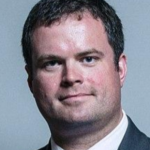
  • Gavin Williamson – 2010 Maiden Speech in the House of Commons

    Gavin Williamson – 2010 Maiden Speech in the House of Commons

    The maiden speech made by Gavin Williamson, the Conservative MP for South Staffordshire, in the House of Commons on 8 June 2010.

    It is a great honour to be called and to follow so many fantastic maiden speeches: when the bar is set so high, it is often easier to duck under it. It is a great honour to serve South Staffordshire. It is traditional for hon. Members to pay tribute to their predecessors, and that is easier for some than it is for others.

    It is easy for me to pay tribute not only to my predecessors for previous constituencies, such as Cannock and Brierley Hill—for example, Sir Fergus Montgomery and Jennie Lee, who were great parliamentarians—but to my immediate predecessor, Sir Patrick Cormack, a great parliamentarian whom we all greatly admire. Sir Patrick believed in and fought passionately for his constituency and constituents, but he also believed passionately in this House—in its traditions and its importance in our national life. He also believed in the importance of a strong House of Commons in holding the Government to account and ensuring good government. Those principles were close to Sir Patrick’s heart and will be close to mine.

    Over the weeks following my selection, Sir Patrick and I became good and close friends. We enjoyed spending a great amount of time campaigning together, and although our styles were sometimes a little different, that made it all the more enjoyable. I remember campaigning in the former mining village of Great Wyrley, where many constituents rushed up to Sir Patrick to wish him well in his retirement and thank him for the work he had done for them. They shook his hand and said, “Mr McCormack, Mr McCormack.” After about the 10th person had done so, I said to Sir Patrick, “Don’t you ever correct them?” He said, “Dear boy, after 40 years, it hardly seems worth bothering, don’t you think?” It is an honour to step into Sir Patrick’s very large shoes, but I hope that, over the years, I will gain some of his panache and style, which graced this Chamber, and that I will be an asset not only to the people of South Staffordshire but to this House.

    South Staffordshire is one of those constituencies about which so many people say, “Where is it? Which town is in it?” People probably travel through it many times when they go up the M6 or up the west coast main line. It is a beautiful constituency that does not have a single major town, but is built up around many small, and some large, villages scattered across the South Staffordshire countryside. Many of those villages were born out of the industrial revolution and coal mining traditions, and have settled in some of the most beautiful, pretty and gentle English countryside that one can imagine.

    The people are straight talkers, which, as a Yorkshireman, is comforting to know. As a straight talker myself, it is nice to have it blunt from others. South Staffordshire is a beautiful constituency that is criss-crossed by many canals and beautiful fields. However, it has its problems and issues. In South Staffordshire, compared with the national average, twice as many people work in manufacturing. That is important to me, because I have worked in manufacturing since I left university. I think it is fair to say that I am one of the few potters who sit in the House today. It is that experience of manufacturing that I hope to bring to the House, because far too often Governments of all colours have believed that we can build a strong, stable and vibrant economy on the twin pillars of financial services and coffee-shop economics. I have a great deal of respect for anyone who works in coffee shops and I even grudgingly admit that we might need bankers, but we cannot have a vibrant British economy without a strong and vibrant manufacturing sector.

    Far too often, young people who go into manufacturing or engineering are seen as taking a second-class career, whereas we reward and sing the praises of people who go into accountancy, the law or public relations. We do not sing enough the praises of our designers, engineers and manufacturers. We need to change that ethos and have a similar one to that of Germany or Japan. We will have a truly vibrant economy only when we recreate the Victorian spirit of ingenuity and inventiveness that made Britain such a vibrant country, as I am sure it will be again.

    I truly welcome the Prime Minister’s comments about the importance of manufacturing and I hope that the Treasury team listen well to his comments and do not spend all their time listening to bankers. They should also listen to manufacturers, because we often have a lot more common sense than bankers. I hope I can play my part in representing South Staffordshire and the people of a beautiful and lovely constituency, and that I can ensure their voices are heard loud and clear in this Chamber.

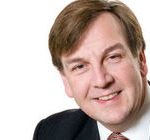
  • David Willetts – 2002 Speech to Conservative Future

    David Willetts – 2002 Speech to Conservative Future

    The speech made by David Willetts, the then Shadow Secretary of State for Work and Pensions, at the Conservative Future conference on 27 February 2002.

    Tomorrow I go to Birmingham for the first of our One Nation Hearings. Throughout the year Iain Duncan Smith, myself and other colleagues will be visiting some of Britain’s most hard-pressed communities. Our purpose is not to give a lecture on how people should behave but instead to listen to the experiences of our poorest fellow citizens. We will also meet the teachers, social workers, the faith-based groups and the local volunteers who are dedicated to helping these communities. We will listen and we will learn. We will be honest about the limits of what government can do but we will also see at first hand what works and what doesn’t so that our policies can be more effective.

    I will visit some of the poorest parts of Birmingham to see how people are being helped to overcome problems such as indebtedness, homelessness, drug addiction and family breakdown. My time in Birmingham will conclude with a meeting with professionals to learn from their experience of serving hard-pressed communities. It is just the first of a series of visits.

    Over the course of the coming year the Hearings will cover urban areas – both inner-city and much neglected out-of-town housing estates. We will also be visiting rural communities where the reality of poverty is different but often as deep. We will be going to all parts of Britain. The second Hearing will take place in Kent where the Conservative County Council is pioneering a strategy to reduce welfare dependency by intervening early and by strengthening civil society. The process will culminate in November at a special Hearing with Iain Duncan Smith.

    This exercise will get us back in touch with parts of our country which fear that politicians in general and we in the Conservative party in particular have forgotten about them. And they might have forgotten about us as well. After all, political relationships have to work both ways.

    The exercise will also get us back in touch with the finest traditions of our own party. We are calling this project One Nation Hearings as a reminder of the One Nation tradition in Conservatism. That expression goes back to a powerful, passage in Disraeli’s novel ‘Sybil’. It is worth reminding ourselves what he said. He describes:

    “‘Two nations between whom there is no intercourse and no sympathy; who are as ignorant of each other’s habits, thoughts, and feelings, as if they were dwellers in different zones, or inhabitants of different planets; who are formed by a different breeding, are fed by different food, are ordered by different manners, and are not governed by the same laws.’ ‘You speak of -‘ said Egremont, hesitatingly. ‘THE RICH AND THE POOR.’”

    That passage can still send a frisson of emotion through us today. It reminds us that throughout our history Conservatives have tried to tackle what used to be called the Condition of England question though it applies equally across the whole of the United Kingdom. We may have been the party of property, but we recognised the obligations to the community that property brought with it. We are the party of the free market but we understand that a free market does not operate in a vacuum. It is rooted in a society and that brings with it obligations to our fellow citizens which we must honour.

    At Lord Hailsham’s memorial service the other week I was reminded of his observation that economic liberalism is “very nearly true”. Free market economics may be valid but there is more to life – and to politics – than economics. Because Britain’s problems in the 1980s were above all economic, we shone an intense searchlight beam of economic analysis on them. We appeared to become the economics party. But economics, like patriotism, is not enough.

    Nowhere can we see this more clearly then when we reflect on poverty. It is in a way as starkly materialistic a question as you face in modern politics. When Governments set rates for benefits they are deciding how much our poorest citizens should live on. But it is no good just trying to tackle poverty in this way. It has to be part of a much wider debate about deprivation and social decay, family breakdown and the abuse of drugs and alcohol.

    Back in 1999, Tony Blair said: “Our historic aim will be for ours to be the first generation to end child poverty, and it will take a generation. It is a twenty year mission but I believe it can be done.” Since then the experts have warned, in the words of the Rowntree Foundation, that “The latest available data on the number of children and people living in poor households reveals little change, confirming the slow start for the Government’s policy commitment to eradicate child poverty within a generation”. But however admirable Tony Blair’s aim, there is another problem as well. His measure of success is exclusively a financial one. Eliminating poverty is defined by ministers as no children in families with less than 60% of median income. They appear to believe they will eliminate poverty with extra spending on welfare benefits. Of course, money is important. But all the evidence from all the post-war attempts at eliminating poverty by expanding benefits is that it can’t be done that way. And what if a family that does receive this extra money is unable to let their children out to play because there are used syringes on the stairwell outside their flat? And what if their children are unable to learn because of an endlessly changing cast of supply teachers at the local school? Isn’t that poverty too?

    This evening I am going to look at each of these issues – the financial and the social – in turn. Then we might also see some common themes between the two ways of thinking about poverty.

    It is easy to understand why we start by thinking of poverty in terms of incomes and benefits. There are millions of people in this country who are struggling to make ends meet on incomes that you or I would struggle to manage on. They face a relentless battle to get hold of what most people regard as life’s essentials. The figures are stark. 14 million people live on less than £151 a week or £7,850 a year.

    In the past we Conservatives got ourselves into the situation where we appeared to deny there was a problem. Well, there is a problem. There are millions of people in our country who are in need. They are our fellow citizens. We do have an obligation to our fellow citizens at times when their incomes are low. We should not begrudge people the help that they need then. The old ways of discharging that obligation through the traditional welfare state may have failed but that does not extinguish the obligation; it adds to it. Our further obligation is to think afresh about how we can help our fellow citizens. That must include tackling welfare reform, which Labour promised to do so emphatically but where they have sadly recorded one of their most conspicuous failures.

    The more than £100 billion a year, we spend on social security benefits is a very powerful intervention in the lives of millions of people. It affects their behaviour and their values. It can do good, not least in the simple and most obvious form of providing people with money when they otherwise wouldn’t have any. But it also has the potential to do harm. And one of the most pernicious ways in which it can do this is by trapping more and more families on means tests. There are now millions of British families who know that if they work a bit harder or save a bit more they will be barely better off. They feel the system is making fools of them.

    Labour ministers used to be clear about means-tests. In 1993 Gordon Brown said, ‘I want to achieve what in 50 years of the welfare state has never been achieved. The end of the means test for our elderly people’. But since Labour came to office means-testing has increased inexorably.

    When we entered office in 1979, 57 per cent of pensioners were on some form of means-tested benefit. By 1995, this had fallen to 38 per cent. This figure is now rising again. In fact, according to the House of Commons Library, once the Pension Credit has been introduced in 2003, we will be back to around 57 per cent of pensioners on means-tests. Eighteen years of progress will have been reversed in just six years.

    We are also seeing a big increase in the number of non-pensioners in receipt of means-tested benefits. According to the House of Commons Library, 38 per cent of all households will be on means-tests by next year.

    As means-testing becomes more common, the problems inherent within means-tests become more widespread. For example, take-up of all the main means-tested benefits is on the decline. This is precisely what the Prime Minister predicted when he admitted in 1998 that ‘there are problems if you move to too much means-testing, as you can see with pensioners who do not take up Income Support’.

    Gordon Brown has decided deliberately and consciously to go for means-tests that taper out very gradually and go further up the income scale than ever before. This has two consequences, which fatally undermine his war on poverty.

    First, you spend a lot of money on these more extensive means-tested benefits because you are paying them out to people on middle incomes who were not previously within the system. That means you increase spending on benefits by billions of pounds without getting much more money to the poorest people. That is why Gordon Brown has increased spending on benefits and credits by so much and yet has had such little impact on poverty.

    Secondly, means tests have corrosive effects on behaviour about which Frank Field has warned so eloquently. If you save a little, or study to get that extra vocational qualification, or work some extra overtime, you are barely better off. This is debilitating for precisely the people and communities we most want to help. It is exactly the wrong message. There must be a better way. And in our One Nation Hearings I want to explore what that might be.

    One person we can learn from is Beveridge. It was his great insight that you could target help on people who need it without means-testing if you define categories of benefit recipients carefully enough. Nowadays we tend to assume means-testing and targeting are synonymous. But they aren’t. Means-testing is just one way to target help. There are other ways. Another way to target help is by age.

    We know that poorer families tend to be families with young children. That is when a parent, usually the mother, may still withdraw from the workforce for at least a few years. The arrival of the first child in particular can be a real burden for the family finances, as they suddenly move from double income, no kids to one income and three mouths to feed.

    The same argument applies at the other end of the age scale. We know that older pensioners tend to be poorer. That extra 25 pence on the pension which you get when you reach the age of eighty causes great anger to pensioners because it is so small. But it is the last vestigial remnant in the system of recognition that older pensioners tend to have lower incomes and also higher expenses.

    One of the ideas which I want to explore in the Hearings is whether there is scope for targeting help on younger families and older pensioners as a way of tackling poverty without such heavy reliance on means-testing.

    It is easy to imagine Gordon Brown and Ed Balls poring over their computer screens in the Treasury as they fine-tune ever more intricate adjustments to the incomes of millions of people. In the end we all become like toys for them to play with as they fix our incomes down to the last penny. But the problem of Britain’s tax and benefit system is not that we lack enough tax and benefit instruments to fine-tune the income distribution. Our problem is the opposite. Our problem is that our poorest fellow citizens are trapped in a system that is so complicated that many of them do not get the benefits to which they are entitled. How can Gordon Brown expect a family to master the difference between the Working Families Tax Credit, the Childcare Tax Credit, the Children’s Tax Credit, the Baby Tax Credit, the Child Tax Credit, and the Working Tax Credit? And it’s not just complicated, it’s humiliating too. No wonder his tax credits have such a low level of take-up.

    That is why welfare reform is so important. But it is not enough on its own. Beveridge spoke very powerfully of the giants to be slain in his famous report of 1942: ‘Want is only one of five giants on the road to reconstruction … the others are Disease, Ignorance, Squalor and Idleness’. That powerful list, with what must have been its deliberate echo of Bunyan’s Pilgrim’s Progress, reminds us that social security cannot be tackled on its own as some technocratic subject. It has to be part of a wider social vision.

    One simple but little known fact about all these means-tested benefits shows vividly how they shape and are shaped by wider changes in society. The main recipients of these benefits are women. Female recipients of Income Support, the main means-tested benefit, outnumber men by two to one (2.7 million females and 1.3 million males). Poor pensioners are predominantly elderly widows living on their own. Poor families are disproportionately headed by lone parents. Lone parents in low paid jobs make up more than half of all recipients of the Working Families Tax Credit. Poverty in this country above all afflicts women and children.

    This must be related to massive changes in the family. In the past one of the many functions of marriage and the family was to transfer income from working men to non-working women. Take away the man and his income – either by death, or divorce or unemployment or abandonment – and many women find themselves in poverty. As the family has proved less able to support women and children so the tax and benefit system has nationalised some of these functions. Earners sustain non-earners via taxes and benefits instead of through a personal relationship. And in our poorest areas the two parent family has proved particularly fragile. This is not because people are bad. In fact, I applaud lone parents who are doing their best to bring up their children after the father has walked out on them. But we can’t be serious about the causes of poverty and how we tackle them unless we think about the family as well. It is difficult to envisage the renewal of our poorest communities without a strengthening of the family.

    The problem of poverty is increasingly a geographical one. That is why we have to think about communities and neighbourhoods too. Poor people often live in poor areas. It is no good simply handing over benefit payments if an area remains a breeding ground for poverty and decay. But equally there is no point spending lots of money on physical improvements to an area, including investing in new housing, if it doesn’t help the people who live there. Indeed there has been some very challenging research showing that sometimes urban renewal projects leave poor people worse off than they were before with higher bills for public services and in the shops as well. The challenge therefore is to help both poor people and poor areas. That is why successive governments have launched area-based initiatives. They have expanded enormously under this government. Here is a list of all the area-based initiatives which are in operation at present:

    · Action Teams for Jobs.
    · Active Community Programme
    · Children’s Fund.
    · Coalfields
    · Community Champions
    · Community Chest
    · Community Empowerment Fund
    · Community Legal Service Partnerships
    · Creative Partnerships
    · Crime Reduction Programme
    · Early Excellence Centres
    · European Regional Development Fund
    · Excellence in Cities.
    · Health Action Zones
    · Healthy Living Centres
    · Healthy Schools Programme
    · Neighbourhood Management
    · Neighbourhood Renewal Fund
    · Neighbourhood Support Fund
    · Neighbourhood Wardens
    · New Deal for Communities
    · Playing Fields and Community Green
    · Single Regeneration Budget
    · Spaces for Sport and Arts
    · Sports Action Zones
    · Sure Start
    · Sure Start Plus
    · Urban Regeneration Companies

    That adds up to thirty different area-based initiatives. What is your reaction to that extraordinary list? One response, which I am sure many people feel, is that at least Labour are trying. These schemes might not all work but at least some will some of the time. The commentators probably feel that at least this list shows Labour’s heart is in the right place.

    But now instead of responding to that list as an observer, imagine instead that you are a resident in one of our most deprived areas. Imagine that you are a lone parent in a run down estate who wants to set up a group for under fives, or you are a shop keeper fed up with vandalism and harassment who wants to know how to get CCTV installed. Then the sheer multiplicity of these schemes itself becomes yet another barrier. You don’t feel that this is a great example of innovative social policy. Instead as someone who has to navigate their way through them, it seems more like an obstacle course.

    You may think that I am exaggerating the size of the problem. After all, not every scheme applies in every part of the country, so in practice you can’t apply for every scheme – another source of confusion and unfairness incidentally. But I have asked the House of Commons library to calculate how many of these schemes apply in our most deprived wards. Here is their list of the number of schemes in our ten most deprived areas:

    Our poorest communities, which are desperately short of people to help them, have to sustain this elaborate structure of special projects. Are 21 separate initiatives the best way to help Tower Hamlets?

    Even the government knows that it has got a problem and that the growth of these area-based initiatives is out of hand. Let me quote Peter Mandelson in 1997 when he was a Cabinet Office Minister: “There is a proliferation of programmes with insufficient collaboration between the different agencies involved at national, local, and area level. As a result we are spending vast sums of money, often over and over again on the same people through different programmes, without improving their ability to participate in the economy and society.”

    He recognised that the splurge of activity in different departments after Labour won in 1997 needed to be co-ordinated. They set up the Social Exclusion Unit therefore. It was supposed to carry out a cull of these schemes and ensure that they were better focused. Two years later on there was another enquiry into the problem of area-based initiatives. The Performance and Innovation Unit reported in February 2000 as follows: “the clear evidence from those on the ground and from the PIU’s own analysis is that there are too many Government iniatives, causing confusion; not enough co-ordination; and too much time spent on negotiating the system, rather than delivering. … Area-based initiatives … have created a very substantial bureaucratic burden for those on the ground.”

    Then late last year, one of Peter Mandelson’s successors in the Cabinet Office, Barbara Roche, gave a speech in which she said: “Area-based initiatives are often necessary and can make a real impact. They allow for the introduction of new ideas and for deep-seated problems to be tackled. Yet they seldom represent a long-term solution. Too often a lack of integration between Departments has contributed to fragmentation and separation of initiatives.” More than four years on, this was precisely the problem that Mandelson had identified.

    The response is typical of New Labour. We get another unit – a new Regional Coordination Unit inside the Cabinet Office. But they keep the old unit, the Social Exclusion Unit, as well. Schemes multiply, reports on the multiplicity of schemes multiply, units to tackle the multiplicity of schemes multiply, and meanwhile the problems multiply as well.

    That is not the end of it. Much of this money is allocated by a process of competitive bidding. This is an imaginative idea but it is now out of control. All around the country decent people who want to be running youth clubs or caring for elderly people are instead putting all their time and energy into filling out pages and pages of forms to bid for penny packets of money under some special scheme. Our hard-pressed communities are often desperately short of dedicated people, volunteers or professionals, who will give their time and effort. The last thing they need is such an enormous diversion of their energies into this extraordinary time-consuming and dispiriting process.

    The other day I met someone whose job epitomises Labour’s style of government. No, he was not a spin doctor. But I think his job captures the spirit of Labour just as well. He was a bid writer. Day in, day out, his job was to write bids for money from special government schemes. Many local authorities have special units whose sole job is to bid for money under these schemes. The larger charities employ bid writers too. And a head teacher recently told me that if he bid for money under every Department of Education scheme, he could expect a 50% success rate. He would then spend the money in exactly the way he would have spent it had it been allocated as core funding. But putting in all the bids was taking up half of his time as head teacher.

    I asked the bid writer what his success rate was and he described it just like a professional gambler in Las Vegas. He said he had some good runs when a lot of his bids got through but then he went through a bad patch when he was off form and sometimes did not succeed in a bid for weeks. He said the secret of winning was to discover the key words that the people administering the bids wanted to hear. And how did you discover the key words? You went to lots of meetings. Once you got yourself in the network and were at meetings and seminars with the officials and consultants running the schemes you knew the right buzz words. But there is no link whatsoever between the likelihood of getting to the right meetings and actually having a good project for hard-pressed areas. The schemes that succeed are well-advised and well-connected. That means the larger agencies who can put in the time and effort to learning the rules of the game. The whole system is systematically biased against the small and the local, the innovative and the voluntary.

    There has got to be a better way. During our One Nation Hearings we will be asking people from our most deprived areas how we can construct a system that works for them better. One of the most exciting developments in social policy over the past few years has been the idea of social entrepreneurs. People with the skills of the entrepreneur – above all, inventiveness and vigour – turn them to tackling social problems. The Bromley-by-Bow Centre is at the heart of this movement. It is at the heart of the battle against the bureaucratisation of not just public services but the voluntary sector as well. That is a battle they are fighting on behalf of everyone who cares about decent services for people in our deprived areas.

    Earlier this month, during a visit to Glasgow, Iain Duncan Smith observed the work of a successful community project serving one of the poorest urban communities in Europe. The project operates out of previously hard-to-let council flats that had become heavily associated with drug abuse and crime. Local people reclaimed the flats and now operate youth, literacy and family support services from them.

    Let me give you now an indication of how I think we should set about reforming this extraordinary apparatus. The central principle must surely be that we fund institutions and professions not schemes and consultants. What happens now is that a shifting kaleidoscope of consultants appear in a deprived area in order to advise on schemes, and then when the money comes in it has to be doled out on very restrictive terms for special projects. But meanwhile the core funding for the most important public services in the area, health or education or police, does not grow much at all. And in order to get more money all these public services have to start playing the bidding game as well.

    The problem with all this is not just the waste of effort and the humiliating games that people have to play in order to get money. There is something else that gets to the heart of the problems in our most deprived communities. There have been so many schemes over the years, under successive governments, that many people in our deprived areas have become deeply cynical about all of them. They have seen consultants come and go. They have seen schemes come and go. They will extract some money from them if they can but they do not take any of them very seriously. What they respect and value is people who stick with them.

    We have got a very deprived council estate in my constituency, Leigh Park. Looking back on my ten years as the MP for Havant I am struck by how many changes there have been in the employers, the senior police officers, the health managers, the social services staff, the people running the social housing in our area. They all individually are behaving in a perfectly understandable way as their careers develop and they move on and move up. But what the community really needs is stability. What they really value is the teacher or head teacher who has not gone on a promotion to a new job but is staying with them year on year. They value the local policeman who has been out on the beat so long that he has real local knowledge. One of the strengths of our GPs is how many of them, once they become partners in a practice, will stay in an area for years.

    Even the teachers, the doctors and the police officers drive home in an evening away from the estate. Again I do not blame them for it. The strains and stresses of their jobs are so intense that they would get completely burnt out if they were there day and night. But that is why I have come to value particularly the quite extraordinary service to our deprived communities from the clergy. They do still live amongst their flock. They are often the only professionals who live day and night on our tough estates. The enduring presence of our Methodist, Catholic and Anglican priests in our most deprived areas is real Christian witness and something of which our churches can be proud. Many of Britain’s other faith communities demonstrate a similar level of commitment. They intuitively grasp something very important which has passed the Government by. Instead of innovation, change and instability our most deprived areas need constancy, commitment and stability.

    Now we are in a position to see the links between social security and financial policies to tackle poverty and the wider social issues as well. What we can see is that they both suffer from exactly the same problem of relentless experimentation on the very people and communities who are least able to sustain the pressures. How has this happened?

    I don’t want to question the motives of Labour ministers. Many of them are personally committed to attacking poverty. It is what many of them claim brought them into politics and I have no reason to doubt them. But I have to say that New Labour’s preoccupation with the media has deeply damaged their approach to poverty. The needs of the poor people in our deprived communities are exactly the opposite of the needs of media management. And it is the media agenda which wins. Ministers feed the media with new schemes and new announcements and new initiatives. Their obsession with the media is indeed the cancer at the heart of the Labour project. It is the stuff of tragedy – the behaviour they learnt in order to gain office is itself the biggest obstacle to a successful policy for tackling poverty once they are in office. What we must offer with the steady integrity of Iain Duncan Smith is to bring straightforward honesty into politics.

    The renewal of our approach to poverty is not just essential for people living in our most hard-pressed areas. It is also crucial to the renewal of Conservatism itself. It forces us to think afresh about how our principles can be made relevant to our poorest fellow citizens.

    They have been let down by the state. Indeed one of the most striking features of these areas is that they are highly dependent on the public sector for both money and services. It was an opportunity for the public sector to show what it could do. But the reality is that it has been a sad disappointment. I do not believe that ever more public sector involvement is the right solution. But we cannot leave people to sink or swim. Rolling back the state does not of itself solve an area’s problems.

    The Chief Rabbi has challenged us to break out of the stale market versus state arguments and think more freely: ‘The Right may blame the State. The Left may blame the market. But neither diagnosis is correct. The road we have begun to travel, of economic affluence and spiritual poverty, of ever more powerful states and markets and ever weaker families and communities, cannot but end in tragedy.’

    The fact is that the old policy levers are not enough. Hundreds of thousands of people living in hard-pressed communities are not being touched by rising stock markets, government initiatives and technological innovations. They lack the basic skills and confidence to take the opportunities presented by our times. They need a deeper more personal care that cannot be provided by the market or the state.

    The way ahead must surely be the revival of all those people-sized institutions which stand between the individual and the state. These are the institutions that provide people with personal care and challenge. They help all of us meet life’s greatest challenges. They provide us with our identity and a sense of belonging. We want to see stronger local communities and networks of neighbourliness. That is what society is all about. We have been busy preaching the virtues of civil society to the old Soviet Bloc whilst at the same time our own civil society has been enfeebled. It has suffered from twin attacks from an intrusive state and the remorseless spread of commercial values into every corner of life.

    I have long believed that the future for our party is as the party which stands for not just the individual on his or her own but the individual in voluntary association with others. Individuals need not just work together through the state or through a commercial enterprise. They can also do so through all the rich variety of civic institutions which have historically been one of the most distinctive features of our country. I called this Civic Conservatism. Oliver Letwin in his fine speech recently gave it the rather better name of the neighbourly society. That must be the way ahead for our party. It is the way ahead for our most hard-pressed neighbourhoods. It is the way ahead for our poorest and most vulnerable fellow citizens. It is the way ahead for our country.

  • David Davis – 2002 Speech at the Conservative Local Government Conference

    David Davis – 2002 Speech at the Conservative Local Government Conference

    The speech made by David Davis, the then Conservative Party chair, in Watford on 28 February 2002.

    Chairman, ladies and gentlemen, I am delighted to be here with you today at the beginning of the conference. A conference at which we have the opportunity to express our belief in the importance of local government, and to learn how we can build on the progress which we have made in local elections since our 1997 election defeat.

    In 1997, the Conservative Party was the third party in local government. By the end of the last Parliament we had made significant strides and gained 2,500 Councillors. We are now the second party in local government.

    It must now be our aim to restore our standing as the first party of local government by the end of this Parliament, and to become, once again, the natural party of local government.

    These elections will be the largest set of local elections since 1999. As such, they represent a major chance to continue our recovery. Not only will that ensure that more people benefit from Conservative local government, it will strengthen our organisation around the country and weaken the Labour and Liberal Democrat organisations. We know to our cost from our experience in the mid-1990s what damage the loss of experienced local councillors does to this Party’s organisation.

    As such, I could not be talking to a more important group of people. In those parts of the country that have few, or in some cases no, Conservative MPs, the people in this room and your colleagues who could not be here today are the only public face of the Conservative Party.

    As Chairman of the Party, I will ensure that you receive the support which you require from Central Office. We will ensure that you receive first class campaigning advice and that when the Party launches a national campaign you have the material you need to play a leading role in that campaign in your area. We are now in the era of joined-up campaigning.

    For example, we have talked to councillors and produced a crime campaign to highlight the Government’s dreadful record on crime – a campaign with leaflets, petitions and back-up material which you can order from Central Office.

    We will also be mobilising the entire Party to highlight Britain’s Crime Crisis on our April 20th Action Day.

    And, for those of you fighting the Liberal Democrats, there will be support from the new Liberal Democrat Campaign Unit I have set up at Central Office headed by Angela Browning.

    This Unit will work with you to ensure that you have the ammunition to deliver our message on the ground consistently, and with the intensity required to match and surpass the efforts of the Liberal Democrats. To make it clear that it is the Conservative Party which is aware of the issues that matter to people, and that it will work tirelessly to address them.

    The Unit will be visiting constituencies in the near future to discuss the needs of Associations. From these discussions, an action plan particular to each constituency will be formulated which will set out a timetable of campaigning work.

    Central Office will not then leave you on your own. It will work with you every step of the way, and provide support for the long-term effort which will be required. For it will not be easy.

    Related to our campaigning against the Liberal Democrats is the question of entering into coalition with them.

    I realise that sometimes you are faced with difficult decisions. Perhaps Labour have been running a particular council for years and services have reached rock bottom.

    As soon as Labour lose overall control it may be tempting to do a deal with the Liberal Democrats. When we are asked about the wisdom of doing so, we have in the past always advised against.

    We will be monitoring the election results in those areas where we have gone into coalition with one of our political opponents or tried to run a minority administration without the votes to pass our budget to see how they compare with results in other areas. By doing so, we will be able to provide an informed opinion about the reality and consequences of such coalitions.

    For we must never forget what the Liberal Democrats are really like. In Sheffield they licensed a Thai message parlour on the condition that it installed disabled access. This is a Party whose International Development spokeswoman sent out a press release claiming she was opening a hospice that had yet to be built.

    Their capacity for dishonesty is unparalleled, their habits of deceit are unbelievable, a party whose untrustworthiness is surpassed only by their hypocrisy. And, whilst they are invariably the first to claim credit for popular policies, it is a rare day when they actually do any real work for their constituents. They should be approached with extreme caution.

    So I will report back to you on our analysis of these results, so that you can make well-informed decisions about how to deal with these difficult situations.

    I am determined, then, to strengthen the relationship between the national party and our councillors, a relationship based on openness and mutual respect.

    And we are determined to practice what we preach. During this Conference you will hear from Theresa May and Iain Duncan Smith about how we intend to put councils and councillors in the driving seat of our public service reforms.

    You are the people closest to the communities you serve. You understand better than anyone what needs to be done to make life better for your residents. I can make you this promise. As we develop new policies on crime, health and education in the months and years ahead, we will be looking for ways to make that local experience count.

    With your help we can revive local government in this country and turn our councils into laboratories of democracy that will improve public services in this country. In the process we will redefine the relationship between local and national politics.

    During this Conference, you will be hearing more about the improved service Central Office will be offering, and from a number of Shadow Cabinet members. I would like to spend the rest of my speech talking about the key local elections that will take place in two months time.

    We should not underestimate the importance of extending the benefits of Conservative local government to more and more people. The evidence from the Audit Commission’s performance indicators show that Conservative councils deliver better quality public services while still charging lower council taxes.

    Labour and Liberal Democrat councils have the highest council taxes in England. Thirteen of the councils with the top twenty highest council taxes in England are Labour-controlled. None are Conservative.

    In contrast to the record of Conservative administrations, both Labour and Liberal Democrat controlled councils betray a wasteful and disdainful attitude which is far from the image they try to present.

    Like Labour-controlled Norwich City Council which decided to chop down a series of horse chestnut trees on the grounds that conkers could pose a hazard to children, despite the fact that the trees had been there for years.

    Like Labour-controlled Doncaster Council which sent its maintenance workers on half-day courses to teach them how to change a light bulb. The council also spent £5,000 to teach its workers how to climb ladders.

    Like Labour/Liberal Democrat-controlled Gloucestershire, whose Liberal Democrat Group Leader said that answering a question about the cost of refurbishing the County Council Cabinet Office would not be a good use of officers’ time.

    Like Labour-controlled Birmingham, which spent £85,000 on 193 trips abroad by councillors and officials in a single year, despite a supposed clamp down on globe-trotting.

    Though these examples may appear to be trivial, they betray the mind-set which leads to incompetence, and failure to deliver essential services to local communities.

    Such as the councils in Islington and Haringey. Both received damning OFSTED reports. In the case of Islington, the council lost control of school services, which were contracted out.

    The Government’s consultants, Capita, described Haringey’s education department as “dysfunctional”. As a result, Haringey was stripped of its core education services.

    It is little wonder that Labour have spent their five years in office centralising power at every turn.

    When they look at their record in local government they know they can’t trust their own Party in the dark.

    They were elected promising to combine the honesty of John Prescott with the subtlety of Peter Mandelson. Instead they have combined the subtlety of John Prescott with the honesty of Stephen Byers.

    Yesterday Labour announced they were dropping three major bills in Parliament on reforming the House of Lords, overhauling the criminal justice system and extraditing terrorist suspects. Why? So they could make way for a bill banning foxhunting.

    And why did they do that? To reward the left of their party for giving unanswering and unthinking support to Stephen Byers this week – despite the chaos in his Department, despite the lies, despite the bullying of civil servants, despite the pattern of disgraceful behaviour that did nothing to promote better transport, but did anything to promote the narrow interests of New Labour.

    It tells you everything you need to know about this Government. At the first sign of trouble, the unspeakable seeks to outlaw the pursuit of the inedible. Tony Blair practices politics without probity and power without priorities.

    It is his failure to deliver, his record of rising crime and failing transport, of increased council taxes and declining services that we will be running against in May.

    May’s elections are also the first nationwide electoral test for the Party since the General Election – a chance to put our General Election defeat behind us and start us on the road to victory at the next Election.

    They are not a battleground that we would have chosen – many of the seats up for election are in London, one of the few parts of the country where we did worse in 2001 than we did in 1997. Even outside London, the elections are largely being fought in Labour territory – the metropolitan areas around Birmingham, Leeds, Liverpool, Manchester, Newcastle and Sheffield. Nevertheless we are determined to do well.

    The media will judge our performance against three criteria – our share of the vote, the number of seats we win and the number of councils we win.

    Our strategy therefore has four key elements.

    First: to maximise our share of the vote by contesting as many seats as possible. In the equivalent set of elections four years ago, the Conservative Party fielded candidates for just over 93 per cent of the seats. Labour fielded candidates for just over 97 per cent and the Liberal Democrats for nearly 82 per cent. Next May, we must aim to field more candidates than Labour. Unless there are exceptional circumstances, we should field a candidate for every seat.

    Second: to maximise the number of seats we win by encouraging constituency associations to target their resources on marginal wards. Too many times in the past we have built up our majorities in the seats we already hold while missing out on neighbouring marginal seats by a handful of votes.

    Third: to maximise the number of councils we win by targeting Central Office resources on the most marginal councils. If you do not have local elections this year, it is vital that you help in one of these target councils.

    And, finally, to ensure that if we achieve a good result the media report it as such. Labour are already spinning that they are going to lose 500 seats so that if they lose a couple of hundred they can claim it as a triumph. We must not let them get away with it.

    The results of local government by-elections over the last few months show that where we work hard and follow the campaigning tactics you will hear outlined at this Conference, we can win.

    So we recognise that there is a great deal of work underway to improve the campaigning support that we provide to Constituency Associations, councillors and Party activists around the country.

    But this is going to be hard work and I want you to be involved. The rebuilding of our local government base brings huge advantages to our Party and I would like to see more involvement from our councillors at every level.

    As I have said, our first effort must be to get the best possible results this May. However, following these elections, we will be focusing on the important role which the Conservative Councillors Association should be playing in the future.

    So I want to talk about how the Conservative Councillors Association can be more involved in some important areas:

    In providing expert input to our policy review

    In helping us to build up a set of good news stories about successful Conservative policies in action

    In helping to resource and run our campaigning support for constituencies so that we can provide campaigning material and advice to rival and beat the Liberal Democrats.

    In providing a forum for activists as well as councillors to train as campaigners.

    I am serious about working with you to ensure that the Conservative Councillors Association is at the heart of our campaigning revival. It is an important priority for me and vital for the Party.

    We should be under no illusions about what we are up against. Anyone involved in a target seat during the last election knows exactly what I mean. Labour made up to 50,000 telephone calls in many of our target seats. In one seat we lost to the Liberals, in the last six months they delivered half a million leaflets, that’s 15 per household.

    We have to fight fire with fire. That does not just mean commitment and hard slog – though there will be plenty of that, it means smarter, more professional campaigning. That is why the CCA is so important. That is why these council elections are the top priority in Central Office over the next nine weeks.

    I hope that you will all find this conference enjoyable, interesting and, above all, useful. The coming local elections, and each one following, are enormously important in their own right. But each successful result is also one more step to removing this disgraceful government from power, and towards the next Conservative victory.

    Finally, before I finish, Mr Chairman, there is one more thing I have to say. I understand that this weekend you are standing down as Chairman of the Conservative Councillors’ Association after four years of distinguished service. On behalf of everyone here today and those who were unable to attend can I thank you for everything you have done for Conservative local government and for the Party as a whole.”

  • Keir Starmer – 2022 Article on Rishi Sunak and the Environment

    Keir Starmer – 2022 Article on Rishi Sunak and the Environment

    A section of the article written by Keir Starmer, the Leader of the Opposition, in the Observer Newspaper on 6 November 2022.

    Sunak is the latest person to attempt to govern an ungovernable party. He is unable to focus on Britain’s future because he’s plastering over the mess the Tories have made. Just this weekend, he used his first interview as prime minister to shrug his shoulders and say he can’t fix the problems we face. This tired, fatalistic, outdated approach is a recipe for more of the same. It has no chance of grasping a fairer, greener future.

    It is time for a fresh start. One that recognises the crises we face are linked and will only be solved by a new approach.

    The UK’s energy bills disaster was exacerbated by Putin’s grotesque invasion of Ukraine. But it was caused by 12 years of failure by Tory governments to unhook Britain from its dependence on fossil fuels.

    At the same time, we have an accelerating climate crisis, illustrated most recently by the devastating floods in Pakistan and Britain’s first 40C days.

    The truth of our age is that the solution to both of these calamities is adopting cheap, clean, homegrown power as fast as we can. We are lucky; our island nation has abundant natural resources of wind, water and solar. It is an act of national self-harm not to prioritise them over more expensive gas. I wouldn’t be dragged to Cop27 as prime minister, I’d be leading the way. My first objective would be to persuade world leaders that we need to get to clean energy as quickly as possible. It’s why I have set a world-leading commitment for Britain to be the first major economy to reach 100% clean power by 2030. The ambition of those plans is matched only by my determination to deliver them. Under my Labour government, the UK will become a clean energy superpower.

  • Suella Braverman – 2022 Article on Asylum Seekers for the Sunday Mail

    Suella Braverman – 2022 Article on Asylum Seekers for the Sunday Mail

    A section of the article written by Suella Braverman, the Home Secretary, for the Sunday Mail on 6 November 2022.

    It is not right that those who seek to undermine and abuse our system are jumping the queue, taking resources from the people who are in genuine need.

    While some critics provide only fairytale suggestions and the Labour Party champions open borders and has no desire or plan to crack down on illegal migration, I am working night and day on real, viable solutions. Our joint UK-France intelligence cell has dismantled 55 organised crime groups since 2020.

    In the coming weeks, we’ll take further steps to bear down on the people-smuggling gangs operating on French beaches. The French authorities, with our support, have stopped more than 29,000 illegal crossings since the start of the year – twice as many as last year – and destroyed more than 1,000 boats. My French counterpart, Gerald Darmanin, and I are working to build greater co-operation, and make better use of UK surveillance technology.

  • Oliver Dowden – 2022 Interview on BBC’s Sunday with Laura Kuenssberg on the Behaviour of Gavin Williamson

    Oliver Dowden – 2022 Interview on BBC’s Sunday with Laura Kuenssberg on the Behaviour of Gavin Williamson

    The interview with Oliver Dowden, the Chancellor of the Duchy of Lancaster, on BBC’s Sunday with Laura Kuenssberg on 6 November 2022.

    LAURA KUENSSBERG

    [Asked about the private messages sent by Gavin Williamson to Wendy Morton, the Chief Whip and whether they were acceptable].

    OLIVER DOWDEN

    No, it’s not. These were sent in the heat of the moment at a very difficult time. Gavin accepts that he shouldn’t have said these things, that he regrets it and we should all treat each other with respect and courtesy and that was not the case.

    LAURA KUENSSBERG

    [Asked why Rishi Sunak said his Government would have the highest integrity, but yet he appointed Gavin Williamson knowing that there as

    OLIVER DOWDEN

    Well, it was no secret that Gavin, and some others, didn’t enjoy a good relationship with the Chief Whip at the time. It was not the case, though, that the Prime Minister saw the detail. The complaint itself is ongoing and I don’t think it would be appropriate for me to prejudge that and obviously it has to be treated with confidentiality.

    LAURA KUENSSBERG

    [Said that we’ve seen the texts, there’s no dispute about it, why would viewers think a big investigation is needed?]

    OLIVER DOWDEN

    Well, on the facts of that that exchange, as I said, to you, that’s not acceptable. He shouldn’t have said it. He has said that he regrets doing so. He has given some context, which was that this was at the time of heightened frustration with him as a backbencher and the chief whip.

    LAURA KUENSSBERG

    [Asked if people can use language like that just because they’re in a bad mood?]

    OLIVER DOWDEN

    This is not acceptable, however, there is this complaints process ongoing and it was not the case that the Prime Minister had seen this exchange.

    LAURA KUENSSBERG

    [Stated that there would be no consequences for Gavin Williamson?]

    OLIVER DOWDEN

    This is ongoing and I don’t think you can say we’re going to have a complaints process and then have a minister come on this show and start to prejudge that. What is right for for me to say is that this is not acceptable, that is what Gavin himself has accepted.

  • Michelle O’Neill – 2022 Speech on Being First Minister for All

    Michelle O’Neill – 2022 Speech on Being First Minister for All

    The speech made by Michelle O’Neill, the First Minister Designate in Northern Ireland, on 5 November 2022.

    Míle buíochas do gach duine as bheith linn inniu. Tá fáilte mhór romhaibh uilig.

    It’s so good to be with you all here today

    We meet at a time of major change right across our entire island

    That change was demonstrated most loudly six months ago, when the people of the North voted in huge numbers in the Assembly election.

    It really was a defining moment.

    For the first time, the balance of power at Stormont shifted, and Sinn Féin emerged as the largest party, topping the poll with 27 seats.

    The electorate overwhelmingly endorsed our message of hope, optimism and of working in partnership with others to get things done.

    They voted for us to invest extra money in our health service and to help them through the cost-of-living crisis.

    They voted for us to build more homes and to create good quality jobs.

    I campaigned to lead a new Executive as a ‘First Minister for All’.

    And I meant what I said during the campaign.

    I will work every day as First Minister Designate to demonstrate through word and deed a spirit of partnership and respect towards everyone in our society.

    For politics to work it must be inclusive.

    That means the institutions of the Good Friday Agreement must work, serve and deliver fairly and equally for all citizens, and for all communities.

    My commitment is to make politics work for everyone and to lead an agenda for change through partnership, not division.

    I want to co-operate across party lines and deliver in government by working with others who want progress.

    Our mission is to deliver on health, housing, education and jobs.

    We need to put money into people’s pockets to help deal with the rising cost of living.

    To agree a budget and an extra £1 billion into the health service to reduce waiting lists.

    To support cancer and mental health services, and recruit more doctors and nurses.

    Since day one after the election Sinn Féin has stood ready to form a power-sharing government.

    We have been ready to work with other parties and to serve all communities.

    It is wrong that progress on the issues affecting the daily lives of people are being put on hold, because one party refuses to accept the democratic outcome of last May’s Assembly election.

    At any time, this would be unacceptable.

    But in the middle of a cost-of-living crisis it is utterly disgraceful.

    As you all know the DUP are using the Brexit Protocol as cover not to enter power-sharing.

    And the real reason is because as an Irish nationalist, I will be at the helm as First Minister.

    And everybody knows it.

    Last Friday, Caretaker Ministers were forced from their departments leaving civil servants in an impossible position.

    They are now expected to run our essential public services, with no budget and no powers.

    Not good enough.

    I want to thank our outgoing Finance Minister Conor Murphy; Communities Minister Deirdre Hargey; and, Infrastructure Minister John O’Dowd for their hard work and delivery.

    Back in May the people voted for change.

    Yet the DUP and Tories offer only disruption, dysfunction and chaos in Belfast and London.

    The British Secretary of State repeatedly stated he would set a date for an election should the DUP fail to restore power-sharing.

    Yet come the day and come the hour he backed down and failed to do anything whatsoever.

    He has left people in limbo with indecision and the dithering.

    He needs to step out a definitive pathway be restore an executive.

    Instead of fueling instability and uncertainty.

    If an election is called, we stand ready to refight a positive campaign.

    A campaign to deliver on the change you voted for in May.

    A campaign about a future built on inclusivity, togetherness, and respect.

    In the meantime, we cannot allow the vacuum to be filled by threats of violence or intimidation from loyalists who want yesterday.

    Let’s be clear, yesterday is not available to them!

    From this Ard Fheis today, I send our solidarity to James Nesbitt, and Professor Colin Harvey of Queen’s University, who have both come under attack from senior DUP politicians, and some loyalists.

    This attack on them is an attack on democracy and us all.

    This must stop.

    Earlier this week I was honoured to attend the funeral service of the late Baroness May Blood.

    I was privileged to join her beloved family and all those from the Greater Shankill community who mourn the loss of their greatest and deeply respected community champion.

    A mill worker.

    A trade unionist, a community worker, a campaigner for social justice and integrated education, and the founder of the Women’s Coalition.

    As First Minister Designate I wanted to pay my respects and go onto the Shankill because at the end of the day we all live together.

    Our battles are the same.

    To make our communities better.

    To offer families a secure life.

    To build a better future for our children.

    We have so much more in common than divides us.

    Reaching out the hand of friendship to advance reconciliation is our common ground.

    Where together, we can all build for the future and do so, in a way that reflects the diversity of our different but equally legitimate, Allegiances, Identities and Aspirations.

    That is why in September I attended the funeral of Queen Elizabeth II.

    I was being respectful to all of those of a British and unionist tradition from across our society who felt her loss dearly.

    It reflects maturity as a new era of change is ushered in where we can celebrate difference and diversity.

    A chairde, last week after decades of campaigning the Irish language was given official recognition in law in the north for the first time.

    Tá Acht Gaeilge againne/ anois!

    This will mean gaeilgeoirí will have guaranteed protections in law, and the legal right to access public services through Irish.

    Resistance to rights has failed.

    Let’s value, not diminish each other’s culture and identity.

    I am working to build a society not of Orange and Green, but a rainbow of colours and multi-culturalism which reflects who we are and what we stand for today.

    Since we last met some progress has been made on women’s rights.

    Finally, women in the North have the right to modern compassionate healthcare when they need it.

    Those services need to be put in place now.

    A new generation of women will not abide a repeat of the failures of the past, particularly when it comes to our healthcare.

    I want to address the issue of the Brexit Protocol.

    You see, it is an irrefutable fact that the Protocol is working, and that Jeffrey Donaldson is incapable of accepting that is the case.

    He has now been rebuffed on numerous occasions in the past week about his misleading claims.

    Including scaremongering about vital medical care.

    A chairde, Jeffrey doesn’t just need a fact-check, he needs a reality check.

    Most working people, businesses and key sectors I meet want the British Government to urgently reach a negotiated settlement with the EU around the Protocol.

    They want certainty and stability so they can invest for the future taking full advantage of our access to the EU single market and the benefits this brings to our economy.

    We welcome the unstinting support of the White House and Congress.

    This was reaffirmed in a call between President Biden and the British Prime Minister last week.

    We must defend and protect the gains of the Good Friday Agreement and the need to reach a negotiated agreement with the European Union.

    We welcome the new British Prime Minister Rishi Sunak meeting with European Commission President Ursula Von der Leyen.

    What we all want to see is a deal done to make the protocol work better.

    But for the avoidance of doubt.

    Neither the Assembly or the Executive has any mandate or role in these negotiations.

    So holding back power-sharing in the meantime is simply to punish the public.

    This is reckless and it needlessly polarises our society and politics.

    My call is for London and Brussels to Propel the Protocol Talks and for Downing Street to demonstrate the political will to get a resolution.

    As for the Stormont Leaders, now is the time for renewed unity of purpose and determination to deliver a stable power-sharing coalition that works, and delivers.

    Next April we will mark 25 years of peace and the signing of the Good Friday Agreement.

    And we will reflect on the transformation of our island over the last quarter century.

    We will also take the opportunity to look forward and to imagine the future.

    We are now in the decade of opportunity.

    Friends, let’s embrace it and let’s do better for all.

    Tá obair le déanamh againn ar son an phobail.

    We have work to do, and people to represent.

    The people want Government, and we all want change.

    I am firmly committed to both.

    Sin mo ghealltanas daoibh uilig.

    Go raibh míle maith agaibh.

  • Caoimhe Archibald – 2022 Comments on Interest Rates Increase

    Caoimhe Archibald – 2022 Comments on Interest Rates Increase

    The comments made by Caoimhe Archibald, Sinn Fein’s economic spokesperson, on 3 November 2022.

    Because of the economic chaos unleashed by the Tories, today there has been the single biggest hike in interest rates in three decades.

    It’s a scandal that ordinary workers and families will now pay the price as mortgage payments go up and people struggle to keep a roof over their heads.

    Our future generations also face being frozen out of owning their own home because mortgages will be unattainable and mortgage payments will simply be unaffordable.

    The Tories have lined the pockets of the rich and the bankers and ignored the disastrous ramifications for households already trying to get through a difficult winter.

    The £400 energy payment that was promised to people months ago and held up because of the DUP’s cruel boycott of the Executive, must be paid now with no more delays.

    We need investment in our public services, support for public sector workers and immediate help to ensure the most vulnerable survive through the winter months.

    Energy companies and shareholders are walking off with bundles of cash and profits in the billions. It’s time to bring them down a peg through a Windfall Tax and redirect the money into the pockets of hardworking families.