
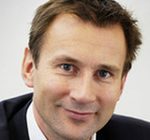
The full economic statement issued by HM Treasury on 17 November 2022.
Tag: Speeches
-
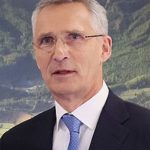
Jens Stoltenberg – 2022 Statement on the Attack on Poland
The statement made by Jens Stoltenberg, the NATO Secretary General, on 16 November 2022.
Good afternoon.
We have just finished a meeting of the North Atlantic Council.
We addressed yesterday’s explosion in the east of Poland, on the border with Ukraine.Our top military commander General Cavoli briefed Allies.
And the Polish ambassador updated us on the incident, and the ongoing investigation.Yesterday’s explosion took place as Russia launched a massive wave of rocket attacks across Ukraine.
Since the start of Russia’s illegal war in Ukraine, NATO has increased vigilance across our eastern flank.
And we are monitoring the situation on a continuous basis.An investigation into this incident is ongoing, and we need to await its outcome.
But we have no indication that this was the result of a deliberate attack.
And we have no indication that Russia is preparing offensive military actions against NATO.Our preliminary analysis suggests that the incident was likely caused by a Ukrainian air defence missile fired to defend Ukrainian territory against Russian cruise missile attacks.
But let me be clear.
This is not Ukraine’s fault.
Russia bears ultimate responsibility, as it continues its illegal war against Ukraine.In the meeting today, NATO Allies offered their deepest condolences on the tragic loss of life.
They expressed their strong solidarity with our valued Ally Poland.
And made clear that we will continue to support Ukraine in its right to self-defence.Russia must stop this senseless war.
Last night, I spoke with the Polish President Andrzej Duda and with US President Joe Biden.
We agreed that we need to stay vigilant, calm and closely coordinated.We will continue to consult.
And monitor the situation very closely.NATO stands united.
And we will always do what is necessary to protect and defend all Allies.NATO Secretary General Jens Stoltenberg:
And with that I’m ready to take your questions.NATO Spokesperson Oana Lungescu: Polish radio [indaudible]
Polish Radio:
Thank you. Polish radio public broadcaster [inaudible]. Secretary General what could be the outcome, concrete, in concrete terms of today’s meeting? Can we expect enhancing the Europe’s air defence; especially in the countries bordering Ukraine because as long as the war continues there will be Russian rockets striking Ukrainian citizen. There is a risk that such situation can happen again, thank you very much.NATO Secretary General Jens Stoltenberg:
In the meeting today, NATO Allies expressed their strong support and solidarity with our Ally, Poland. They also expressed their deepest condolences for the tragic loss of life. And NATO has significantly increased its presence in the eastern part of the Alliance, in particular since the invasion of Ukraine in February. With more troops on land, ground troops, but also with significant substantial air and naval power. And this has of course, both increased our air defence capabilities, but also our capabilities to monitor, to have a full picture of what’s going on, on the border between NATO Allies like Poland and Ukraine, and we are constantly assessing what more we need to do. We also have made important decisions at our Summit in Madrid to further strengthen our presence in the eastern part of the Alliance.NATO Spokesperson: BBC.
BBC:
Thank you, Jessica Parker for BBC News. I just wanted to ask, given the incident that happened last night, do you think this was perhaps the most tense moment for NATO? In this conflict so far? Thank you.NATO Secretary General:
I’m always careful to rank different incidents and situations. It demonstrates that the war in Ukraine, which is President Putin’s responsibility, continues to create dangerous situations. At the same time you have to remember that this happened at the same time as Russia launched a wave of new indiscriminate missile and air attacks on Ukrainian cities. Attacking critical civilian infrastructure, hitting civilian targets. Then it’s nothing strange, then, of course, that is in itself a very dangerous situation. And then, that we then also see that there may be also consequences on NATO territory is a consequence of the war that Russia wages against Ukraine
NATO Spokesperson: Then we go to the Ukrainian News Agency in the middle.Ukrainian News Agency:
Thank you for the floor, [inaudible] national News Agency of Ukraine. I just want to mention that Ukrainians do understand the pain now of the Polish people and have the greatest sympathy with them. My question is how that incident will be reflected on the assistance that Allies provided for Ukraine in air defence. Where will be some kind of new systems to cover the Ukrainian sky? Thanks.NATO Secretary General:
There will be a meeting today in the Contact Group for Ukraine to coordinate the support that NATO Allies and partners and others are providing to Ukraine. And the main focus of all our efforts over the last month has been on air defence. Especially since Russia started to launch these indiscriminate attacks on Ukrainian cities a few weeks ago. And I welcome that more and more Allies and partners are providing advanced air defence systems to Ukraine. NASAMS, HAWK batteries from Spain and others and I also know that Sweden has made the new announcement of additional support also with air defences to Ukraine. So we are mobilising additional support, especially when it comes to different types of air defences. NATO is also providing counter drones systems. We need many different systems to protect against cruise missiles, ballistic missiles, but also drones. We need a layered defence of Ukraine. That’s exactly what Allies are providing in different ways.NATO Spokesperson: Bloomberg.
Bloomberg:
Does this incident, will this for more air defence for Allies on the eastern border, I mean you said, there has been a step up since beginning of the war, but does more need to be done? Thank you.NATO Secretary General:
We’re constantly assessing our presence in the eastern part of the Alliance. We have significantly increased our presence on land, at sea and in the air, and that has significantly increased our air defence capabilities, especially in the eastern part of the Alliance. At the same time, we have no indication that this incident was a result of a deliberate attack on NATO territory. And we have no indications that Russia is planning offensive military actions against NATO Allies. I think this demonstrates the dangers connected to the ongoing war in Ukraine. But it hasn’t changed our fundamental assessment of the threat against that NATO Allies. It shows the importance of monitoring, of being vigilant, of the presence, and we made decisions for long term adaptation or NATO’s deterrence and defence at the Summit in Madrid in June, and that includes partly more presence in the east, partly more pre-positioned equipment, in particular in the eastern part of the Alliance and partly earmarked forces, so we can quickly scale up the battle groups we have in the eastern part of the Alliance. And of course all of this will also further strengthen our air defence capabilities. Then air defence is partly land based but air defence is also very often air-based, also aircraft and naval-based, based on our ships, and of course, Air Forces and Naval Forces is something we very quickly move in. SACEUR, Supreme Allied Commander in Europe has already authorities to move in additional forces, including air and naval forces to augment our air defences quickly if needed.NATO Spokesperson: Frankfurter Allgemeine.
FAZ:
Secretary General, a few factual questions if I may. First of all, the debris found near the border of Poland and Ukraine. Is this debris only from an Ukrainian rocket launched to intercept Russian missile? Or is there also debris of a Russian missile? Secondly, what is what was the likely trajectory of the Russian missile that was meant to intercept by Ukraine? And thirdly, did NATO forces present at the eastern flank, activate their air defence systems yesterday? Because they saw an incoming, potentially incoming, missile? Thank you.NATO Secretary General:
We have air defence systems in place, that are active 24/7, all the time. We have AWACS planes, we have aircraft, we have land based systems and we have naval-based systems. So we have air defences, which operate constantly throughout the Alliance. Then of course, we have a significant focus and in particular increased our presence in the eastern part of the Alliance and this also includes Poland. Then on the details of the findings and the ongoing investigation, it will not be right if I go into those details, but as I said, our preliminary findings are that this is likely caused by a Ukrainian air defence missile, and we have no indication that it wasn’t a deliberate attack on NATO.NATO Spokesperson: Politico.
Thank you very much. Just a brief question. Has there been any communication between NATO and the Russian authorities, even on a technical level over the past 24 hours regarding Russian activity close to NATO’s border? Thank you.NATO Secretary General:
We have major lines of communication, so we’re able to communicate with Russia in different ways as NATO and as Allies, but I cannot go into the details of exactly what kind of a contact there has been over the last 24 hours.NATO Spokesperson: Deutsche Welle.
Deutsche Welle:
I thank you. Does the fact that the Polish government, even after hours of assessing what had happened was still ready as of this morning, as I understand it, to possibly ask for Article 4 consultations. Does that indicate to you that they do not feel reassured despite all of these measures that have already been taken? And you said that you’re constantly assessing and you’ve got things on tap. Are military planners making any additional plans at this very moment? To send more to Poland to reassure them? Because obviously this is a credible scenario since they had an article four teed up, even after investigations were underway. Thanks.
NATO Secretary General:
So I spoke to President Duda last night, we agreed on the importance of waiting the outcome of the investigation. We don’t have the final outcome of the ongoing investigation, but all Allies agree on the assessment I just shared, That we have no indication that this was a deliberate attack and of course that has consequences for what kind of responses that we need to take. Since we have no indication of this was a deliberate attack or that Russia is planning any offensive military actions against NATO Allies. But we’ve also agreed that Russia bears the ultimate responsibility. They are responsible for the war in Ukraine that has caused this situation. And if it hadn’t been for the war, of course, we wouldn’t have been in this situation with the two casualties and the incident we saw in Poland yesterday, But Allies agree on the approach. There’s been no call for an Article 4 meeting. That’s based on the findings, based on the analysis and based on the results so far of the ongoing investigation.
NATO Spokesperson: Ok, Spiegel.Der Spiegel:
Secretary General, as you said that everything would be done to protect the allies. Now, the village where the missile hit yesterday was very close to the Ukrainian border. So in order to effectively protect Poland, from incidents like these in the future, would it not be conceivable or make sense from your point of view to extend the NATO air defense umbrella into Ukrainian territory in order to intercept missiles, which might be headed to potential targets near the Ukrainian-Poland border.NATO Secretary General:
NATO allies are not part to the conflict in Ukraine. NATO and NATO Allies provide support to Ukraine. We help Ukraine to uphold the rights for self defense. That is a right, which is enshrined in the UN Charter. And of course, Ukraine has the right to defend itself against Russia’s illegal war of aggression against Ukraine. And our main priority now, or one of the top priority now is to provide more air defense systems for Ukraine. Our air defense systems are set up to defend against attacks around the clock. But we have no indication this was the result of a deliberate attack and this incident does not have the characteristics of an attack. And that also explains why the reactions were as they were last night because this was not a deliberate attack and didn’t have the characteristics of a deliberate attack against NATO territory.NATO Spokesperson: ARD
ARD:
[inaudible] Two questions if I may. The first one is a more personal one. Everybody was very scared. I think yesterday evening everybody understood that could be potentially a very dangerous situation. How was your personal reaction when you first heard about it? And the second one is about, you said that debris that was found is probably from a Ukrainian air defense missile. The Ukrainian foreign minister said this is a Russian conspiracy theory and it’s not true. How do you judge that, that he made this judgement on the origin? Thank you.NATO Secretary General:
Last question?ARD:
Kuleba said is it is the Russian conspiracy theory that it is Ukrainian air defense missile, but your preliminary findings are apparently very different. Thank you.NATO Secretary General:
Well, the investigations are not finally concluded. But based on what is so far now, this is most likely Ukrainian air defense systems or missiles. But again, this is not Ukraine’s fault. Russia bears responsibility for what happened in Poland yesterday because this is a direct result of the ongoing war and the wave of attacks from Russia against Ukraine yesterday. And of course Ukraine has the right to shoot down those missiles that are targeting Ukrainian citizens and critical Ukrainian infrastructure. NATO is prepared for situations like this. We are exercising, we are preparing, for instance for accidents like this to first and foremost to prevent them from happening. But if they happen, to ensure that they don’t spiral out of control. So yes, of course we were concerned when we got reports yesterday, and especially, we were saddened by the fact that there were two casualties but at the same time, we are monitoring we are following very closely. And therefore we are prepared to handle situations like this in a firm, calm, resolute way, but also in a way that prevent further escalation.NATO Spokesperson: Agence France-Presse
AFP:
Thank you very much. Secretary General, you’ve said repeatedly that NATO has all the capabilities along the eastern front and that you’re ready for these sorts of incidents at any moment. So what’s this a failure of NATO’s defenses that this missile was able to hit Polish territory?NATO Secretary General:
Well the air defense systems, they are set up to defend us against attacks and attack missiles, cruise missiles, ballistic missiles, they have special characteristics, which we then follow up and we monitor and then we make a judgement whether it’s an attack or whether it is something else. As I said this was most likely a Ukrainian air defense missile [inaudible] and of course, that missile doesn’t have the characteristics of an attack. And therefore that explains also why the actions were as they were. And that doesn’t say anything about our ability to defend against deliberate attacks against the NATO territory.NATO Spokesperson: Wall Street Journal
Wall Street Journal:
Dan Michaels, Wall Street Journal. Just a couple more factual questions, if possible, if the analysis yet shows this. Do you know if there was a Russian missile in the immediate area that the Ukrainians were specifically trying to target? And do you know, if the Ukrainian missile exploded on the ground, if it exploded potentially in the air and in contact with the Russian missile and if what was on the ground was just shrapnel or debris from that? Thank you very much.NATO Secretary General:
Although there are relevant questions, I will not go into details, partly because there is an ongoing investigation. And, we had to decide later on how many details we can reveal. But anyway, there are ongoing investigations. So it’s an ongoing investigation that will look into those issues.NATO Spokesperson: TV2, lady over there.
TV2 Norway:
[inaudible] from TV2 Norway. Mr. Secretary General, the France president, Emmanuel Macron, he urged China to play a greater mediation role during this conflict. Do you see a greater role for you for China? And second question, do you see any possibilities for peace negotiations in the near future?NATO Secretary General:
First and foremost, I believe that China should clearly condemn the invasion of Ukraine, which is a blatant violation of international law and the sovereignty and territorial integrity of Ukraine and, for instance, in the different votes in the UN, China has not voted in favor of those resolutions clearly condemning the invasion. Actually, China is also sharing much of the Russian narrative about the war and that’s a narrative which is not correct. It is Russia and President Putin that are responsible for the war and they can also end the war. We have to remember this is this is a war of aggression, where one country, Russia, invades another country and tried to control and take territory from that country. And of course, Ukraine has right to defend itself against the invasion, against the Russian aggression. If President Zelensky and Ukrainians stop the fight, of course, then then then Russia will win and they will achieve their military goals. So the reality is that if President Putin and Russia stops fighting, then we will have peace. But if President Zelensky and Ukrainians stop fighting then Ukraine will cease to exist as an independent sovereign nation. They have the right to defend themselves as an independent nation. Most likely this war, whether that’s on stage and at the negotiating table. At the same time, we know that the outcome of those negotiations is closely and fundamentally linked to the strength on the battlefield. So the best way we can ensure, maximize, the likelihood for a peaceful negotiated solution is to support Ukrainians on the battlefield, because that will maximize the probability for them achieving an acceptable negotiated solution on the negotiating table. So yes, we all want peace. We all want this war to end. That’s the best way we can contribute to a peace which ensures that Ukraine remains a independent sovereign nation, is deployed the military support Ukraine, so there can be an acceptable negotiated solution at the end of this war.NATO Spokesperson: Ok one final question, TVN24 Poland.
TVN24 Poland:
Thank you, Secretary General, as you said, it’s too early to assess whether it was an accident or not. But for sure it was a stress test for the whole NATO. Could you assess that and the first reaction of the Polish government the channel of communications, and the reaction of the NATO. Any room for improvement and any lesson learned for future?NATO Secretary General:
NATO allies and Poland reacted in a calm and measured and well-coordinated way. We coordinate our responses. So we, we spoke together of course, during the evening yesterday, and also our military commanders informed. I spoke with the Supreme Allied Commander, both yesterday and this morning. And he also came to NATO Allies to the North Atlantic Council here in the NATO Headquarters this morning and briefed the Allies. So the coordination, the exchange of information, and then measured responses and also the message that we need to establish the facts before we draw any final conclusions on the incident in Poland, that shows that NATO Allies reacted in a prudent and responsible way. I think we have to understand that to manage this kind of incidence is partly about being firm and reacting quickly. But it’s also about being calm and preventing unnecessary escalation. And we always need to find that balance. Therefore it’s also important to have the best possible picture of actually what happened. Therefore, we actually said yesterday that we need some time to look into the incident. We did that over the course of the night. And then we have a clearer picture today. A picture that also stated that we have no indication that this was a deliberate attack and no indication that this was something that was targeted on NATO territory, and no indication that Russia is planning any aggressive military actions… but what we do know is that is that the whole incident is caused by Russia’s brutal war in Ukraine. So the best way of preventing anything like this from happening again, is for Russia to stop this war. -
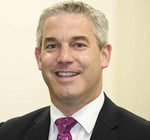
Steve Barclay – 2022 Letter to the NHS Pay Review Body
The letter sent by Steve Barclay, the Secretary of State for Health and Social Care, on 16 November 2022.
Dear Ms Hird,
I would firstly like to offer my thanks to the NHS Pay Review Body (NHSPRB) for their work over the past year on the 2022 report. The government appreciates the independent, expert advice and valuable contribution that the NHSPRB makes.
I write to you now to formally commence the 2023 to 2024 pay round and ask NHSPRB for recommendations for the Agenda for Change workforce from April 2023. This includes all non-medical staff groups in the NHS – nurses and health visitors, midwives, ambulance staff, scientific therapeutic and technical staff, support to all clinical staff, central functions, hotel, property and estates, managers and senior managers.
As described during last year’s pay round, the NHS budget has already been set until 2024 to 2025. Pay awards must strike a careful balance – recognising the vital importance of public sector workers while delivering value for the taxpayer, considering private sector pay levels, not increasing the country’s debt further, and being careful not to drive prices even higher in the future.
In the current economic context, it is particularly important that you also have regard to the government’s inflation target when forming recommendations.
The evidence that my department, HM Treasury and NHS England will provide in the coming months, will support you in your consideration of these factors, for example via the provision of details on recruitment and retention.
As always, while your remit covers the whole of the United Kingdom, it is for each administration to make its own decisions on its approach to this year’s pay round and to communicate this to you directly.
It is important that we make progress towards bringing the timetable of the pay review body round back to normal. We are hoping to expediate the process as much as possible this year and would welcome your report in April 2023, subject to ongoing conversations with the Office of Manpower Economics.
I would like to thank you again for your and the review body’s invaluable contribution to the pay round, and look forward to receiving your 2023 report in due course.
Yours ever,
Steve Barclay, Secretary of State for Health and Social Care
-
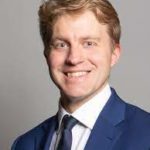
Ben Spencer – 2022 Speech on the Situation in Ukraine
The speech made by Ben Spencer, the Conservative MP for Runnymede and Weybridge, in the House of Commons on 14 November 2022.
It is always a great pleasure to follow the hon. Member for Rotherham (Sarah Champion), and I want to develop some of the points that she made so powerfully about the humanitarian response. I want to talk about the local response and about support for refugees.
It is hard to believe that, for almost the entire year, we have watched the horrors unfolding in Ukraine, unleashed by Putin, and have witnessed an absolutely awful war and senseless bloodshed and violence. We have seen an incredible response from constituents across the country, and I have seen that particularly in my community, where we have opened our hearts and our homes to refugees in their plight. That is something quite special. There is no more personal response than the support that so many people are giving in opening up their homes to refugees from Ukraine, and I think we should be very proud of that.
Alongside the “big stuff”—the amazing international leadership we have shown in terms of sanctions and the forming of a coalition to support the Ukrainians with military technology, kit and training—there is the domestic “small stuff”. In fact, I think that some of the most powerful support we have given is the opening up of our homes to refugees. I want to send a huge thank you to everyone in my constituency who has done that. I am sure many other Members across the country have thanked their constituents as well.
Dean Russell (Watford) (Con)
May I echo my hon. Friend’s comments? In Watford, we have seen an incredible burst of love and care for Ukrainian people who are over here. Yesterday in St Mary’s church, as part of the remembrance ceremony—supported by Luther Blissett, the Watford football legend, and his partner Lauren—a lady in the group read a beautiful Ukrainian poem from the pulpit. It was an incredible moment, bringing home to us the loss of her family back in Ukraine since she has been here, but also the incredible strength that these people are showing by being here and giving support from afar.
Dr Spencer
I thank my hon. Friend for his intervention. It builds on a point I was about to make about paying tribute to particular individuals and groups. It is always invidious to do this because there are so many people to single out and so many groups to thank for what they are doing, but I want to raise four areas in my constituency that deserve special attention, in among the work that so many individuals and community groups are doing. One is the Revive café in Chertsey, which has a coffee morning for refugees. One of the key players there is a lady called Lizzie Wayland, who is a member of the Beacon Church, which hosts the cafe. It gives incredible support to people locally.
I also want to draw the House’s attention to Lesia Scholey and Councillor Charu Sood, who have set up Weybridge Friends of Ukraine. They have been pivotal in leading support in Weybridge, alongside Elmbridge CAN and the Weybridge community hub. We also have a lady called Olena Melnyk, a refugee from Ukraine who now works in Runnymede Borough Council helping with translation for Ukrainian refugees. I would also like to thank my team in my office who have been incredible in supporting people going through the visa application process and in working on many pieces of casework supporting refugees once they have moved into my constituency.
Building on that spirit, I would like to give my thanks to the Right Rev. Kenneth Nowakowski, the bishop of the Ukrainian Catholic Eparchy of the Holy Family in London, who came to speak to community groups in my constituency last week. I do not know whether Members have heard him speak, but he is incredible. Without doubt it was one of the best community speech events I have ever been to. He has been central to the refugee response from the start and he spoke about the support he has set up and the lessons learned, and gave a cautious commentary on what he sees for the future. He made two points in his speech that I hope he will not mind me mentioning. One of them really sent a chill through me. When he visited Ukraine recently, he went to a school and a little boy came up to him, very excited to see him. He said, “Come, come—you have to see our bomb shelter. It’s really cool.” That sent a chill, but in a sense it is also quite sweet, because it shows the resilience of children and the excitement of how life changes and we have to adjust in the context of conflict.
The other thing the bishop reflected on in his talk was when people can start thinking about forgiveness. Given where we are now, that is very difficult to contemplate, but of course every war ends and things move on. One of the important things that we are talking about today is the rebuilding of Ukraine and what peace will look like. I say this cautiously to the House, because it is a difficult statement to make right now, given where we are and the pain that everyone is suffering, but perhaps these could be the early stages of thinking about the future that we want to have and the future that we can start hoping for as this awful conflict comes to an end.
I would like to thank all the people who came to the event in my constituency: the community groups, the elected representatives and the people who have supported refugees across my constituency. Our communities are precious, and my communities in Runnymede and Weybridge are without doubt the things that make my constituency the best place, in my view—I am sure my colleagues would say similar things about their constituencies—and we need to support them. We need to recognise the incredible work that they do.
Andy Carter (Warrington South) (Con)
I was not intending to intervene in this debate, but my hon. Friend is making some excellent points. I attended a meeting of Ukrainian family sponsors in my constituency two weeks ago, and the thing I took away from it was the message that we need to encourage the Government to do more to support our fabulous sponsors and encourage them to continue to provide that service. In many cases, they are coming to the end of the six-month initial term, and in parts of Warrington we have high levels of Ukrainian families who are thinking about where they can live next. The sponsors have given up six months and they are thinking about what they do next as well. Does my hon. Friend agree that the Government could take a more active lead in supporting and encouraging sponsor families to continue?
Dr Spencer
I thank my hon. Friend for his intervention. It is almost as if he had foresight of my speech—which I know he did not—because I am going to go on to talk about the challenges when sponsor-refugee relationships break down. I will come on to that in a moment.
We must all cherish our communities and the support that they are giving. There is something very special about that, and if we do not fight to protect, cherish and thank them, it will be too late and we will lose them. I am sure that that is something that we all share. For a few months now, sadly, we have been hearing in my constituency about breakdowns in the relationships between sponsors and refugees. This is getting more concerning as we approach Christmas. A lot of people, when they generously offered to take part in the scheme, saw it as only a six-month commitment. It is important to recognise that if some can continue after six months that is fantastic, but for those who cannot, it is fantastic that they have helped out. There should be no animus if people feel that they cannot continue beyond the initial six months.
I have had many conversations with the leader of Runnymede Borough Council, Councillor Tom Gracey, and its chief executive officer regarding concerns about the matching process. Some refugees are not able to be rematched, and Runnymede is going to give them homelessness support. It will help to rehouse refugees locally if they cannot be rematched. The concern is that this will put an additional burden on to the local authorities. I know that the Government have been very generous in their support to local authorities, but this will nevertheless be a challenge, especially in constituencies such as mine where the availability of affordable housing and affordable rents is very much at a premium.
I have a question for the Minister about cases in which a refugee’s sponsorship has broken down and they cannot be rematched, and the state effectively takes on the role of sponsoring them through homelessness provision. Under the Homes for Ukraine scheme as it currently stands, the sponsor gets a monthly payment of about 350 quid, so when the Government effectively take over in a state sponsorship role, could the Minister look at the possibility of local authorities getting that sponsorship payment in lieu of the sponsor getting it? That would seem to be a cost-neutral provision—those are at a premium at the moment—to support local authorities when those relationships have broken down so that the homelessness provision does not put them under undue pressure.
Sarah Champion
I am glad that the hon. Member has raised that point, because it is key. Is he also aware that the Home Office currently seems to be funding schemes such as these from official development assistance—foreign aid money—but it is able to attribute that only for the first year? I am very concerned that, come February, all the support that we are able to give to Ukrainian refugees here will come to an end. I am interested to see if the Minister has any information about whether the Treasury will step up and fund those people from that point forward.
Dr Spencer
I thank the hon. Member for her intervention. Looking back at the past year and the incredible support given to Ukrainians at all levels, I am absolutely confident that the Government will ensure that they are doing their part, but equally I too would be interested to know what the specific plans are. Unfortunately, given where we are at the moment, it seems that this is going to be a long war that will displace people for a long period of time, so it will be interesting to hear about the medium-term and long-term transition plans.
-

Sarah Champion – 2022 Speech on the Situation in Ukraine
The speech made by Sarah Champion, the Labour MP for Rotherham, in the House of Commons on 14 November 2022.
Let me begin by thanking the hon. Member for Isle of Wight (Bob Seely), who always speaks in a measured and informative tone. I always learn from listening to him.
We have seen horrors taking place in Ukraine throughout this year, but, sadly, there has been humanitarian need in the region for much longer. In 2014, Russia’s annexation of Crimea heavily affected the east of Ukraine. Since Putin’s illegal war began in February, it has led to an explosion in humanitarian need and to Ukraine enduring mass human rights violations. The United Nations Office for the Coordination of Humanitarian Affairs estimates that there are a staggering 17.7 million people in need of humanitarian assistance and an estimated 6.24 million people internally displaced within Ukraine. The United Nations Human Rights Monitoring Mission in Ukraine estimates that there have been at least 16,150 civilian casualties, with the majority in the east, but emphasises that the true figure is likely to be much higher.
Evident violations of international humanitarian law have taken place, with Russian forces clearly targeting civilian infrastructure, as we have seen with the bombing of children’s playgrounds and supermarkets. Russian forces have hidden landmines across the country, restricting refugees’ ability to leave through humanitarian corridors and complicating access for aid workers. In March, the Chair of the Defence Committee, the former Chair of the Foreign Affairs Committee, the right hon. Member for Tonbridge and Malling (Tom Tugendhat), and I wrote jointly to the former Prime Minister, the right hon. Member for Uxbridge and South Ruislip (Boris Johnson), to highlight these issues, and I continue to urge the current Prime Minister to ensure that organisations such as the HALO Trust and the Mines Advisory Group receive the funds that they need to clear mines on the ground.
The current picture is extremely bleak, but with winter fast approaching, it is more crucial than ever that aid reaches people who desperately need it. In December, the daytime temperature rarely reaches above zero degrees in Kyiv, so generators, blankets and warm clothes are essential. Women and girls are being disproportionately affected by the conflict, with the UN reporting that girls are at increased risk of child marriage and being forced to leave school as a result of their families’ simply trying to survive. The UK has pledged £220 million in humanitarian assistance to Ukraine since the conflict began, but I continue to express my concern that this aid is not being disbursed quickly enough. In his response to the debate, can the Minister guarantee that aid is reaching local charities and is being distributed in the most effective ways possible?
The conflict has been marked by mass human rights violations by Russian forces, including the widespread, despicable use of sexual violence as a weapon of war. In October, the UN Independent International Commission of Inquiry on Ukraine published damning evidence of war crimes, with Russian forces responsible for the vast majority of those crimes. They included the executions of civilians, torture and ill treatment, of which there were consistent accounts, and the use of sexual violence against women and children. The commission concluded that those violations continue to have a devastating effect on victims and survivors, who emphasised the essential role of justice and accountability.
Of the many human rights abuses, notable examples include the massacre in Bucha, during which civilians were rounded up by Russian troops for execution, and the siege of Mariupol, when Russian forces encircled the city, preventing humanitarian supplies from being accessible and bombing a maternity hospital. There have also been reports of rape and torture during the Russian occupation of lzyum. Those responsible for countless and horrifying crimes must be held accountable, and there must be zero impunity for war crimes committed during the conflict.
The events in Ukraine have pulled the importance of a rigorous approach to atrocity prevention into sharp focus. We cannot allow such violations of human rights to occur on this scale, both within and outside conflict. My Committee, the International Development Committee, recently published a report on preventing future mass atrocities around the world, highlighting the need for the UK to develop an atrocity prevention strategy. I urge the Minister to heed our report, and to take urgent action to prevent further atrocities.
We cannot underestimate the value of a strong position taken by the international community on war crimes, with those who have committed crimes being sufficiently held to account. Victims and survivors deserve our support in securing justice and ensuring that these contemptible crimes cannot go on any longer. The UK’s support in Ukraine has been crucial since the invasion, but the Government must ensure that we provide joined-up responses to the humanitarian situation in Ukraine, and prioritise assistance for local charities wherever possible. We cannot step away.
-
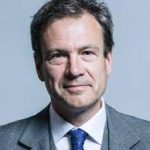
Bob Seely – 2022 Speech on the Situation in Ukraine
The speech made by Bob Seely, the Conservative MP for the Isle of Wight, in the House of Commons on 14 November 2022.
I will not try the House’s patience for too long; I just want to make some general points.
The Minister was completely right when he said that the Kherson victory was enormously important, regardless of whether it was significant in military terms or symbolically. He made the point that it is difficult for someone to invade a country if they are going backwards, as we can all agree. Although it is symbolically dreadful, I would say that it is not yet a military game changer.
To build on my question to the Minister, the current Russian strategy seems to be two-pronged. First, Surovikin, with his Syrian experience, has said to the Russian Ministry of Defence, “Give me a line that I can hold.” Because Kherson is on the western bank of the Dnipro, it was simply not holdable: it was a death trap and a disaster waiting for the Russian military. By pulling out of Kherson city and going over to the eastern bank of the Dnipro, Surovikin has effectively put the Dnipro river between himself and the Ukrainians.
I lived in Ukraine from 1990 to 1995. For those who do not know the geography of Ukraine, the Dnipro river from south of Kherson all the way up to Zaporizhzhia is 0.5 km at its thinnest. If we add the waterbanks, the Konka river, the marshland and the open grassland, it is a minimum of 3 km wide. Up at Zaporizhzhia, where the nuclear power plant is, it is more of a lake; it is 10 km to 12 km wide. By moving his forces to the eastern bank of the Dnipro, Surovikin has effectively made the Dnipro a considerable buffer between himself and the Ukrainian forces.
Realistically, a Ukrainian advance is not going to happen south of Zaporizhzhia, simply because of the geography—one might as well try to cross the channel. It cannot be done without phenomenal resources. It involves going across significant open territory. The casualty rate, even against forces as disorganised and demoralised as Russia’s, would simply not be acceptable. It would fail, and it would be a significant counter to the Ukrainians. By getting the Dnipro on the right side of him, Surovikin now has a defensible line all the way up to Zaporizhzhia.
The second thing that Surovikin has done is to prioritise the destruction of civilian morale. Sadly, those of us who followed him in Syria know that that is par for the course. One of the really awful and depressing things in Syria was that the Syrians and their backers from Russia, which is one of the five permanent members of the Security Council, prioritised the destruction of civilian targets. Most importantly and most tragically—I have talked to many Syrian doctors about this—the Russians targeted hospitals for destruction. Destroying the hospitals first destroyed popular morale. Men would fight as long as their women and their families stayed, but for that to happen they needed some kind of food supply and they needed hospitals. Destroying hospitals meant that women and children fled. Without the women and children, men were effectively pulled back as well. Destroying civilian infrastructure destroyed morale.
There was another thing that the Syrians and their Russian backers did. For four years Aleppo had been bombed, and for four years it had survived: civilian life, in bizarre and horrendous circumstances, continued. Then the Syrians and their Russian backers used chemical weapons for 17 days and cleared the city. There were four years of bombardment and there were attacks on hospitals, which took a few months to clear civilian populations, but what cleared the city pretty much overnight was the use of chemical weapons.
I raise that point because the Russians are still making accusations against the Ukrainians and the Americans about bioterrorism, and we know that they are still talking about nuclear. The Russians are still holding out the option of using chemical and nuclear weapons. We should not simply dismiss that as bluff. It may well be bluff, but we do not know that—we cannot tell.
Those are the two prongs of the Russians’ strategy: getting a line that they think is defensible, and destroying civilian infrastructure. The current phase of the war started back in September, when I was in Ukraine with several hon. Members present; it is good to see them in the Chamber today. We saw Zelensky on the Sunday, and the Ukrainians were overjoyed because of the collapse of the Kharkiv positions. We were there as it was happening. That was the beginning of the new phase, in which the Russians realised that they could not win. That was the weekend when the Ukrainians thought, “Actually, we can win this war.” It was a very important moment.
By having a defensible line and attacking civilian infrastructure, the Russians bought some time—they probably bought themselves a few months. The next phase of the war will probably take place in the spring, when Russian positions come under significant pressure. If my understanding is correct, they will come under pressure in the south between Zaporizhzhia and Donetsk or in the east around the Luhansk area. The Ukrainians may try a feint to the south while attacking Donbas, because that is where their best armour is. Either way, when the new phase happens, with a spring offensive or potentially a late winter offensive, what we will witness—if we do witness it—will be the collapse of Russian positions.
The critical point for the strategy in the war is not necessarily securing a defeat in Donbas, which would be great for the Ukrainians, but the collapse of the land corridor between Crimea and Donetsk. If that happened, it would be the beginning of the end for the Russians. They could continue to hold the area of Donbas that they seized in 2014, and it would not make much difference; they could keep hold of Crimea, which I think will be last to go; but the destruction of the land corridor will mean the final defeat, or entering the endgame. It will be the beginning of the end for the Russian forces if that land corridor goes.
At that point, Putin will face a series of very important decision points, to use a military term. Does he go nuclear? Does he not? Does he use chemicals? Does he not? Does he blow up the Zaporizhzhia nuclear power station? Does he not? Those questions will become critical, because Russian military defeat in war often signals the collapse of a regime. People like the KGB or the FSB—whatever they are calling themselves now—do not distinguish between collapse of the state and collapse of the regime. Collapse of the regime and collapse of the state are not identical, but they are much closer than they would be in our country.
Of the wars that the Russians have fought in the past 200 years, they won the Napoleonic war and world war two, but pretty much every other war they have lost, resulting in the collapse or significant reform of the Russian state. The Crimean war resulted in the end of serfdom. The Russian-Japanese war resulted in the 1905 revolution. The horrors of world war one resulted in the appalling disasters of the Bolshevik revolution. The Finnish war could have gone very badly wrong in 1940. The Afghan war heralded the end of the Soviet Union.
When this war is lost by the Russian state, we will have to start asking ourselves how desperate Putin will be and what will happen internally to Russia. On Wednesday morning, for those who are interested, Navalny’s chief of staff Leonid Volkov will be talking to the all-party parliamentary group on Russia about the potential for the collapse of the Russian state.
There are clearly some significant decisions to be made. Internally, Putin has arrested, murdered, killed off and imprisoned many of his opponents—most noticeably Navalny, whose health may or may not be slowly worsening in the penal colony where he is doing nine years. Putin does not face pressure from the democratic bloc, but he does face pressure from two groups and it is worth paying attention to them both.
One group is the nationalist-fascist military blogger community. These are people who have been very vocal; importantly, the state allows them to be vocal because they were significant supporters of the war. We know from reading sites such as Telegram, where they have half a million followers, that they are now despairing and calling for firmer, tougher action. Some public figures, such as Prigozhin, who runs the Wagner mercenary group, and the Chechen head, whose name I have temporarily forgotten, are also outliers in attacking bits of the military, various generals who displease them or the Russian Ministry of Defence. There is a problem building up in the nationalist-fascist community within Russia.
There is also a problem building up with the wives, mothers and partners of soldiers killed and injured. I have met on many occasions the mothers of soldiers in the Afghan war—a wonderful group of people. They fought very movingly for the memory of their kids; it was really sad to see. The number of Russians dead or seriously injured is probably pushing 100,000, which means 100,000 wives, partners, girlfriends, occasionally boyfriends, and mums and dads. That is a significant potential audience. The new soldiers’ mums and soldiers’ wives have not made common cause with the democratic faction, which is pretty much non-existent in Russia, and they have not yet made common cause with the nationalist-fascist blogger group, which I think would be difficult. Those are the two groups that I think Putin will be looking most nervously at.
Thank you for letting me speak for so long, Mr Deputy Speaker. Let me now sum up the position. We have to start thinking about the endgame, because it will probably begin in the spring. Then we will have to start thinking about what will happen with nuclear decision points, and then we will have to start thinking about, potentially, the failure of Russia and what the disaster of a chaotic nuclear-powered Russia looks like—so there is much to do. I congratulate the Government on almost all they have done. I would just say that I think a bit more integration across Government Departments is always needed and we still do not have that.
When it comes to diplomacy—I asked the Foreign Secretary about this earlier—the United States and the United Kingdom have the best diplomatic networks in the developing world, while Ukraine has very few such networks and they are modest, certainly by comparison with ours. There is much more that the US and the UK can do systemically across Asia and Africa to make sure that we partner with the Ukrainians so that they can make their case. Those are the nations that are receiving grain from the Ukrainians and they want to know where it is. We must ensure that they know it is the Russians who are the problem in that regard and not the Ukrainians, but those are also the people who are most neutral to what the Russians are doing. We have to start to get them onside and get that community built.
On Wednesday evening this week, the Magnitsky awards will be presented, in memory of Sergei Magnitsky, beaten to death 13 years ago on Wednesday by agents of the Russian state because he was exposed while trying to investigate a $250 million Russian fraud. We remember people like Magnitsky, but we also remember many of those human rights activists. It would be great to see more non-aligned and neutral countries, and countries in Asia and Africa, bringing in their own Magnitsky laws so that they can start prosecuting these bad people, whether they are in Russia, in Iran or, indeed, in China—but that is a discussion for another day.
-
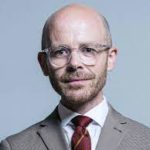
Martin Docherty-Hughes – 2022 Speech on the Situation in Ukraine
The speech made by Martin Docherty-Hughes, the SNP’s defence spokesperson at Westminster, in the House of Commons on 14 November 2022.
First, let me associate myself both with the Minister’s words about the armed forces supporting the training of the men and women of the Ukrainian armed forces, and with the words of the shadow Minister, the hon. Member for Plymouth, Sutton and Devonport (Luke Pollard), about Remembrance Sunday. I am very mindful that my brother, who is a veteran of Iraq and Afghanistan, attended the Cenotaph in Whitehall for the first time at the weekend with former comrades.
It is welcome to be standing here following the statement about the liberation of Kherson. Like so many people, it has been a joy to watch the videos and accounts of the liberation over the weekend. Unfortunately, there is a pattern in this conflict of the elation after the liberation of towns and villages being followed by revulsion and anger as we discover the litany of crimes committed by the Russian armed forces and administrators during their occupation. I shudder to think of what happened to those who were brave enough to resist the invasion during the early days of February, as was so memorably caught on camera for the world to see.
None the less, forcing the invading force off the west bank of the Dnieper should be celebrated for the triumph that it is, along with the liberation of the last remaining regional capital under renewed occupation. The decision of the retreating forces to blow bridges and mine the lines of the withdrawal demonstrates the direction in which they believe the conflict to be moving. We must hope, however, that it can move as quickly as possible in that direction to avoid Kherson facing the same sort of retribution that Russia has visited on the likes of Kharkiv and Mykolaiv.
The fact that the targeting and destroying of civilian infrastructure has become such a feature of the Russian military handbook again demonstrates the weakness of its position and its repeated inability to abide by, as I think the whole House will agree, the key tenets of the Geneva convention—namely, its failure to avoid unnecessary suffering and to distinguish between civilians and combatants. That is as damning an indictment of its “Russkiy mir”, which it claims to be defending, as we are ever likely to see. I am sure that the Minister and others across the House will join me in beseeching the Russian Federation to withdraw from the rest of the country that it has illegally occupied since 2014, so that the suffering does not continue.
The liberation of such a large port also brings into focus, as the Minister touched on, the global consequences of continuing this unnecessary conflict, not only because Kherson’s famous watermelons can now be exported, but because that applies to a whole host of other agricultural products of Ukraine’s famous black soil. Those grains and vegetable oils have effectively been held hostage by the Kremlin, by Vladimir Putin, as part of a strategy of resource terrorism that seeks to punish some of the poorest people in the world as a way of putting pressure on those who would support Ukraine. As the G20 summit comes to a close, overshadowed by this coercive diplomacy, I am sure we all hope that we will not face the same issue come the next summit.
As we talk about exports, we must also think about the health of the Ukrainian economy as a whole. Let us not forget the importance of providing, as the Minister mentioned, long-term economic guarantees to Ukraine to ensure that it can rebuild when the end of the conflict comes, as it must. The incredible potential that it has hitherto been unable to fully realise can be released only with a generous range of measures and with full integration into western economic networks—as Ukraine would wish—including the European Union.
Regardless of the military and economic support that we give Ukraine and its people, we cannot forget the human element in all this and the fact that those people are fighting for so much more than economic growth or European security; they are fighting simply for the right to exist—that is, the right to exist not only as Ukrainians, but as who they are as people.
I am glad to have the opportunity to acknowledge the contribution made by the LGBTQ+ Ukrainians in this conflict. Their struggle is emblematic of what it is at stake, and not only because Putin and other Kremlin talking heads have specifically made their increasing prominence in that society a major plank of their spurious rationale for invasion. We know very well in this country that the realities of a wartime society can bring about large-scale social change, as previously under-represented groups come forward to demonstrate the role that they can play in society. It is through this conflict that we have seen how LGBTQ+ Ukrainians—known as the Pride brigade—have come forward to serve in their droves at every level.
I am very grateful for the work done by people such as Maksym Eristavi, who has documented the contribution that those Ukrainians have made to the defence of their common homeland. There is evidence that that is changing Ukrainian society for the better. Thanks to Maksym, I found out this summer that almost 60% of Ukrainians now have more positive attitudes to their LGBTQ+ siblings, a massive increase since 2016 when they were last asked the question. These people know what it is that they are fighting for: the possibility to live in a country where they are free from the dystopian control and coercion that we see too often in Putin’s Russia.
Let me bring my remarks to an end by thanking Ministers and the Government for ensuring that Ukraine can continue to push the invaders out of their country. They can be assured of the support from everyone on the SNP Benches, and essentially everyone across the House, in making sure that that continues to be the case. Here is hoping we will be marking the liberation of Ukraine sooner rather than later.
-

Michael Heseltine – 2022 Speech at Heseltine Institute’s Inaugural Lecture
The speech made by Michael Heseltine, the former Deputy Prime Minister, in Liverpool on 15 November 2022.
A short time ago I argued that: ‘If Boris goes Brexit goes’. Johnson was not alone in souring our relationship with Europe. The Atlanticist prejudices of Rupert Murdoch and Conrad Black using a power over our media that would never be granted to foreigners in other countries, the populism of Nigel Farage and Paul Dacre’s nationalistic editorship of the Daily Mail all contributed to the propagandist exploitation of the consequences that followed from the implementation of the EU single market.
The harmonisation of the rules and regulations that governed the European economies was one of Margaret Thatcher’s greatest achievements. To introduce one European regulation in place of 28 involved a constant flow of forms. The blame game began. Boris Johnson led the charge to Get Brexit Done.
Well, not quite. Brexit was never going to get done. Brexit was based on an undeliverable set of promises:
Get our country back
New trade deals
Bonfire of controls
End of wealth destroying regulations
Immigration controls
No border in Ireland
That was 2016.
Four Prime Ministers, four Trade Secretaries, five Foreign Secretaries, six Chancellors, six Chief Brexit negotiators and an oven-ready Brexit later, we can see the worthlessness of those promises. I must be fair. The impact of Covid and Ukraine has seriously prejudiced our living standards and those of the Western World. We hope that the worst of Covid is behind us.
The vaccine developed under the regulatory discipline of the European Medicines Agency was the first to achieve clinical approval. The agency which provided hundreds of jobs in London has now been transferred to Amsterdam because of Brexit Ukraine enjoys the support of the Western World, and to its credit we all appear ready to pay a high price for it.
However damaging to us now, the effect of covid and the Russian invasion of Ukraine may be relatively short term. Brexit is not. It represents a permanent fracture of our relationship with our closest neighbours and our largest market.
It has led to queues in the hospitals and G.P.s waiting rooms, disruption to supply lines, increased prices and interest rates. It reduces our attraction as a gateway to one of the world’s largest markets and diminishes our ability to influence European decisions over great global challenges.
I followed every Conservative Prime Minister from Winston Churchill up to and including Theresa May in their support for our membership of Europe. You would expect me to be critical of Brexit but I am not alone. Recently the Daily Telegraph put the past six years into context. Under the headline “After six wasted years”.
Alistair Heath summarised the situation as follows:-
“It has been clear for years that our putrefying economy is in desperate need of shock therapy. Yet instead of addressing its many horrific pathologies, our ruling class, well served by the status quo, has stubbornly blocked radical surgery. The result has been catastrophic: Poland and Slovenia are catching up with us in terms of middle-class lifestyles, and our desperate young can’t afford to buy a home.
I quoted the first four words of the headline. Let me quote the whole headline. After six wasted years Truss is about to deliver a Brexit that actually works. The consequence of Liz Truss’ seven weeks in office has an eloquence
beyond the finest oratory. Let me set out the reality of Brexit.One pound sterling was worth 1.48 US dollars on 23 June 2016, the day of the referendum. The following day that value plummeted to 1.36 dollars. Yesterday a pound was buying 1.18 dollars. That amounts to a loss of over 20% of the pound’s value against the dollar since 2016. The pound has also lost over 12% of its value against the euro, falling from an exchange rate of over 1.30 before the referendum to 1.14 yesterday.
The London School of Economics has estimated that Brexit alone – before the effects of the pandemic and the war in Ukraine are accounted for – is responsible for a 6% rise in food prices. Put starkly, Brexit means that more people are unable to pay their mortgage or rent, are having to turn to food banks, or are unable to heat their homes.
The Resolution Foundation estimates that average real pay per UK worker will, by the end of the decade, be £470 lower each year – that’s a thousand pounds for an average couple. Normally, lower exchange rates have an important silver lining in that they make UK exports more affordable and increase their volume. But the signs are that – due to Brexit-induced trade barriers and red tape – this did not happen. Post-Brexit.
UK exports to the EU fell by 14% in 2021. The Centre for European Reform, has estimated that Brexit had, by the end of 2021, reduced trade in goods between the UK and the EU by 13.6% and left UK GDP 5.2% lower than it would have been had the UK stayed in the EU single market. The CER puts the Brexit hit to overall investment in the UK economy at 13.6%.
The Office for Budget Responsibility concluded that consequent upon the new trading relationship as set out in the Trade and Cooperation Agreement that came into effect on January 1 2021 British imports and exports would eventually be reduced by 15%. They further concluded that new trade deals with non-EU countries will not have a material impact on GDP. Little surprise that the Truss government did not consult them about the consequences of their budget.
I doubt if the government were consulted about the decision to build a new model of the Land Rover Defender in Slovakia. The queues in the Health service are of alarming proportions. The European doctors and nurses have gone home. The government is left trawling developing countries to replace them.
No one explained that a consequence of Brexit would be that our country – one of the world’s richest – would have to attract specialists trained by some of the world’s poorest.
The OECD in June of this year predicted that in 2023 the UK economic growth at nil would be the slowest in the G20 above only Russia. Three months later the dire energy crisis in Germany had a similar effect there. The three major credit rating agencies . crucial to UK’s borrowing costs – Moody’s, Fitch and S&P have this year all downgraded the outlook for the UK from stable to negative.
These are the judgements of independent organisations and markets and stand in stark contrast to the propaganda of Brexiteers. It was all too easy to promise a bonfire of red tape and demonise Brussels bureaucrats in a cynical exploitation of people’s anxieties and frustrations.
Only yesterday in the Times, Mark Littlewood, Director General of the Institute of Economic Affairs, a pro Brexit think tank, wrote ‘Nowhere has the failure been so stark as in the strange story of the almost complete absence of a so-called Brexit dividend.’
The simple truth is that six years on, the only significant example of that bonfire has been to allow unlimited bankers’ bonuses. Regulation is the difference between civilisation and the jungle. We can all enthuse at David Attenborough’s brilliant depiction of life red in tooth and claw where the only law is survival of the fittest.
Regulations are the codes and standards that hold modern societies together. That is why whenever the government has sought to dilute or lower the standards they uphold, civilised bodies like The National Trust, The Wildlife Trust and the Royal Society for the Protection of Birds protest at the legislative processes involved.
The Brexiteers told us new deals with faster growing markets would more than compensate for lost European trade. Six years’ later all but three of those new deals merely replicate those already negotiated by the EU. A deal with the United States has been scuppered by the government’s attempt to unilaterally override the Northern Ireland protocol.
India wants us to reverse our immigration controls as the price of a deal. There are new deals with Australia and New Zealand. The consequences for our farmers are so adverse that even a minister who helped negotiate it says the Australian deal is not good for the UK.
No wonder full implementation is delayed until the late 2030s! I am helped once again by the Sunday Telegraph – Jeremy Warner on October 30th. wrote “Brexit is irreversible, but we must strengthen economic ties with the EU”. I disagree with his irreversible gambit. Public opinion has already moved.
In October an IPSOS MORI Poll reported that 51% of the people thought that Brexit had damaged the economy whilst only 22% thought the opposite. Listen, however, to what Warner says about Brexit. He refers to Rishi Sunak’s commitment to building an economy that embraces the opportunities of Brexit.
He needs to get a move on and indeed articulate precisely what those opportunities are – for six years after Britain voted to leave the European Union all we’ve got to show for it so far is political, economic and financial chaos. From an economic perspective there has been zero payback and particularly in the area of international trade and reputation, considerable harm.
I do not accept that Brexit is irreversible.
The timescale may be unpredictable. The purpose is not.
We must start by rebuilding bridges.
We need a practical compromise over the Irish border that would restore devolved government.
We need to end the isolation of our scientists and researchers by rejoining the Horizon Europe research and innovation programme.
We should restore the right for our young people to participate in projects abroad under the EU’s Erasmus Plus programme.
In place of a Department for Exiting the EU we need a Minister with responsibility for Enhancing Relationships with the EU. That rescue operation could start with a veterinary agreement to reduce checks on food products entering the single market which would contribute to reducing tensions in Northern Ireland.
We should attack the restrictions on musicians and other UK service providers to work for short periods in the EU Each of the steps I have set out is realistic. Every step draws our self interests closer together.
The EU is still there, next door, with its market of 450 million people. We thrive only by working closely together. The question remains how to improve the governance of this country. Brexiteers said that Europe would disintegrate into its original nations.
The Euro was seen as the harbinger of civil war. The question today is whether the UK itself can survive. Sinn Fein is now the largest party in the Northern Ireland Assembly. The Scots Nats use identical arguments to break up the United Kingdom that underlie the Brexit case.
We need radical change in the way we govern this country. Devolution must be based on a meaningful partnership between London and the rest of England. It calls for a practical sharing of power between Edinburgh and Cardiff and the very different parts of Scotland and Wales. I want to set out what I mean. We must end the misrepresentation of the roles of public and private sector.
They are interrelated and of crucial support to each other. Some essential services such as education and health are provided by both. Some publicly financed programmes, such as Research grants, lead directly to job creation .Many quangos such as the Arts Council, or the Lottery, are critical to the success of our cultural activities and prowess on the sports field.
We need to recognise the Civil Service for the hard working, dedicated incorruptible machinery of government that it is. The widespread appointment of political advisers has contributed to public cynicism. Special advisers should bring expertise to public life not party politics. My relationship with this City was, without doubt, the most rewarding political experience of my life.
It taught me that we are overcentralised and that the baronies of Whitehall are specialist in their responsibilities with inadequate coordination. My time here opened my eyes to the local consequences. On the backbenches after 1986 I gained a fuller understanding of other countries’ more effective models.
In 1968 the Redcliffe-Maud report on the structure of local government in England looked at the 1300 local authorities that had been created when the only means of travel was by foot or horse. His report recommended their replacement by sixty-two Unitary Authorities.
It was the right judgement except in the eyes of all those with a stake in the status quo. Peter Walker – I was his deputy – steered an uneasy compromise through the Conservative government to reduce it to some 300 authorities.
The Greater London Authority and City Councils presided over London and Metropolitan boroughs with a two tier structure, based on counties and districts, elsewhere. This was the ground over which, as SoS for the Department of Environment, I led the Conservatives in the municipal elections of 1978. Labour was in trouble in the Winter of Discontent.
Operation Cleansweep was intended to drive them from power. Only Durham resisted our advance. I am not proud of my decisions about the local government restructuring when I was first responsible after 1979.
They are defensible only against the background of the divisive climate of the time. I got rid of the Greater London authority and the Metro counties that I had, only ten years earlier,
helped to create.I am however proud of the serendipitous collection of decisions related to Liverpool.
I agreed to continue the special partnership that my predecessor, Peter Shore, formed with the City.
I selected the banks of the Mersey for the site for an Urban Development Corporation.
I awarded Liverpool the first Garden Festival, to reclaim toxic land and turn it into attractive development opportunities.
Peter Walker had created a derelict land grant mechanism a decade earlier to eradicate the coal tips and ore extraction blemishes scattered over the countryside. The task largely completed, I used the grant to reclaim toxic urban sites for construction. Significantly I made the grant conditional on private sector partners developing the site.
Every pound of public money attracted private money.
The concept of gearing entered the political vocabulary. Human relationships evolved In place of the dialogue of the deaf from opposing mountain tops. Business people and officials became partners, enjoyed a drink together, developed friendships.
I listed the Albert Dock, an iconic part of Liverpool heritage that was thus saved from demolition. In 1981 several of our inner cities witnessed serious riots. Amongst the worst were here in Toxteth.
The maintenance of law and order is a fundamental of any Conservative conviction. I backed the police as they restored it. I felt, however, a personal responsibility. The riots happened on my watch. I thought I had begun a serious attempt to bring a new optimism to Liverpool.
I sought the Prime Minister’s agreement, instantly given, to leave the departmental routine to my very able colleagues Tom King and John Stanley whilst I was here. I held extensive meetings, talked to anyone with something to say, walked the streets, listened, and considered. My relationship with the city lasted until the end of 1982. It can be divided into three distinct phases.
For three days I listened. People were courteous but sceptical. You only came because of the riot. That was self-evidently true and I chose it as the title for my subsequent report to the Cabinet. There was one other clear impression.
Everyone had their idea of who was responsible for the riots. It was always someone else. Liverpool The ability to fund and make decisions lay in London and even there, there was no coordination of responsibility. There was no powerful local leadership.
The mood changed around day four. People began to ask “What are you going to do?” There was only one credible answer to that question however much it made a mockery of the concept of non-intervention associated with Mrs Thatcher’s government.
I spent the next couple of weeks preparing a list of ideas that, with the right determination, resource, and above all, local support could demonstrate a more optimistic destiny.
The third phase lasted eighteen months. The list was one thing but who could turn it into action. I am a practical man. Show me a problem. Show me the person in charge. No one was in charge. The answer was to turn a centralist, London based approach on its head.
I created a task force drawn locally from the public and private sector. Every Thursday the team would report progress. Every Friday I troubleshot the obstacles. We learned how to regenerate places.
We learnt that there are no short-term fixes. Creating and developing ideas, the processes of planning and consultation, land acquisition and contract negotiation have to happen before boots hit the ground. The joker in the pack, and the Treasury’s strongest card in opposing regeneration, is that it is often impossible to predict and cost its consequences.
If I had predicted Canary Wharf, Excel, City Airport in London or a major arena and conference centre, and contemporary shopping centre in Liverpool I would have been locked up.
The Development Corporation on the banks of the Mersey and its equivalent in London were my most important initiative in 1979. To understand why they succeeded it is important to look at their structure. They had a chairman, a chief executive and board-level representative of local stakeholders. They had planning powers, money to restore sites, improve infrastructure and acquire land – all essential characteristics.
They were thus able to reassure investors considering locating a new office, laboratory or factory that it was not going to be surrounded by sheds and that their staff would be safe and enjoy good communications with their workplace. Such Corporations transformed large parts of inner city Britain over the next fifty years.
Regeneration is usually led by the public sector. It has the resources to make derelict land competitive with green fields. Partnerships with Quangos, universities, government cultural and sporting programmes have endless potential to work with the private sector to create wealth.
Levelling up, however, will remain more slogan than policy until the government gives form. resource and structure to its devolution agenda. Examples from my early Liverpool experiences demonstrate the philosophy.
The preservation of the Albert Dock provided a home for the Tate of the North. The use of Derelict Land Grant persuaded Plessey and British Rail to create Wavertree Industrial Park. The Housing Corporation unlocked the development of the Anglican Cathedral Precinct. The Mersey Basin campaign was a major attack on urban pollution.
The recent decision by the Metro Mayor, Steve Rotheram to complete the job
can make Liverpool a world leader in an increasing global priority to raise the quality of urban water with huge environmental, leisure, tourist, sporting and the job creation that will flow.In the early 1980’s Cantril Farm was the despair of Knowsley Council. The Abbey National Building Society and Barclays Bank created the now thriving Stockbridge Village Trust. The Tate and Lyle site, abandoned by the company, was transferred to English Estates. The Eldonians campaigned to renovate their area. In 1987 the project, incorporating owner occupied housing, won the Times/RIBA award as the most outstanding example of community enterprise in the UK.
A Merseyside Special Allocation fund to enable this was spread over three years and deducted from the Housing Corporation budget. Pilkingtons in St.Helens were faced with redundancies. Bill Humphries, set
up an advisory service to help those losing their jobs.Step by step, this initiative led to the present Local Enterprise Partnerships of today. The urban fringe is often characterised by rubbish dumped by uncaring citizens. Groundwork UK was conceived in St Helens using volunteers to clean things up.. Today it is a federation of charities mobilising community action on poverty and the environment across the United Kingdom.
In 1990 I returned to the Department of the Environment for the third time. Ten years before, I had been preoccupied with the need to reclaim derelict land. The conversion of Cantril Farm into Stockbridge Village Trust gave me the confidence to tackle the human tragedy of urban slums.
City Challenge invited 30 local authorities to compete for one of only 10 packages of £35 million spread over 5 years to help them transform a slum estate. The idea of competition was highly controversial but right. The losers learnt from the winners in the second round. There were conditions.
The local Authority had to attract private or other public funds to add to the original offer. The project had to have a chief executive and a project team. Most importantly, the stakeholders, such as headteachers, social workers, the police and the tenants, had to be consulted.
One of the winning sites was here in Liverpool. I am grateful to Max Steinberg for the opportunity to study the historic documents he kept from his involvement at the time. The area covered 144 hectares within the eastern sector of the City Centre.
It links the centre with Everton, Granby/Toxteth and Cornwallis, with the campuses of the University, Polytechnic (now Liverpool John Moores University ), City Community
College and the Oxford Street, Myrtle Street and Catherine Street Hospitals.Some 4000 people lived in the area, and there was a working population of 18,000. The project was timed for five years and in 1997 the European Institute of Urban Affairs was asked to report on the outcome. I quote its concluding paragraphs.
‘Liverpool City Challenge has exceeded its original output projects in 18 of the 19 areas of activity. There was underperformance in the number of dwellings transferred to owner occupation, due to limited progress in the Canning area.
However, we achieved:
23% more jobs were created than anticipated
282% extra business start-ups
14% more new or improved business and commercial floorspace
35% more reclaimed land
20% more apprenticeships
29% more Housing Association dwellings
105% more childcare places
The report concluded and I quote: “The achievements, whilst evidence of the success of the initiative, may also reflect the fact that targets were cautiously set initially, to make them achievable. Nevertheless, taken as a set of indicators for the performance of Liverpool City Challenge, they certainly demonstrate significant success in delivering the plan.”
In Manchester, another City challenge was awarded. Richard Leese, Leader of the City Council, described Hulme City Challenge as the most important thing that has happened to Manchester over the past forty years. Virtually everything done since was with the skills, knowledge and ideas acquired through the City Challenge process.
Today it is called Levelling Up. In a sense even that slogan misleads. We are never going to create Mayfair in Middlesbrough. What we can do is to turn the vicious circle of decline, where the young leave, companies close, schools fail, and land lies deserted, into virtuous circles of hope where people stay, companies invest, and the environment attracts.
We know how to do it. The evidence is irrefutable. What is missing is a government determined to do it. After the 2010 election David Cameron invited me, together with Sir Terry Leahy, one of this City’s most distinguished citizens. to revisit my 1981 report ‘It took a riot’.
The contrast was stark. Liverpool was full of people with ideas and energy. Our task was to recommend the best and propose a framework within which to turn them into action. Our report – Rebalancing Britain: Policy or Slogan, published in October 2011 set out our recommendations.
A year later I published another report for the Prime Minister ‘No Stone Unturned in pursuit of Growth’. Uniting both these reports was the theme to give form and substance to devolution by creating powerful Mayors to lead the recovery of our cities.
George Osborne, as Chancellor, and Greg Clark, as the Minister responsible, began the first serious move in that direction after the Blair Government created a mayoralty in London in 2000. This is not a cry for increased Public Expenditure, although I believe markets would take a more benign view of borrowing if it was for investment and not consumption.
This is a cry to use existing public capital programmes to attract private expenditure. It is a policy to save public expenditure by replacing over 300 local authorities closer to the 62 designed fifty years ago. Scotland and Wales abolished District Authorities in the 1990s.
In England unitary counties Wiltshire, Dorset. Shropshire and Buckinghamshire for example, manage perfectly well without the waste, and duplication created by two tiers. We need to extend the local leadership provided by directly elected mayors.
The government should recreate the central pot of capital expenditure introduced by George Osborne and distribute long term funds, after consultation, to local partnerships depending on the quality of their plans reflecting the opportunities and problems in their very different locations.
We need to engage the remarkable reservoir of goodwill and cooperation that the Covid crisis revealed to be not far below the surface of our society.
It was a single honour for me to receive the Freedom of this City in 2012.
In looking forward then I concluded.
Liverpool is reasserting its place as a city recognised across a shrinking world as a place of culture, a font of enterprise, proud of itself, ambitious for its future.
Liverpudlians have done this.
Liverpudlians will build on this.
You must be clear.
Because you did. You can.
I would not change a word of it.
-
Jonathan Djanogly – 2022 Speech on the Situation in Ukraine
The speech made by Jonathan Djanogly, the Conservative MP for Huntingdon, in the House of Commons on 14 November 2022.
As we rejoice at the liberation of Kherson, we need to be mindful that Ukraine is still very much a country at war. As Russian Federation tanks rolled across the border on to sovereign Ukrainian territory on 24 February, the world bore witness to an attack against the post-second world war settlement of a magnitude and kind without precedent.
I congratulate the Government on the superb and consistent support the UK has provided to Ukraine, but the situation constantly changes and I believe we now need a rethink on sanctions. I frequently hear people, including UK Ministers, say that this is Putin’s war, not that of the Russian people, thereby laying the blame for an entire nation’s aggression at the feet of one man. This aggression, we must not forget, seeks to erase Ukraine from the map, destroy its culture, and turn back the clock to a period when the Russo-centric Soviet Union dominated eastern Europe and its peoples. Having had the opportunity to visit Ukraine, most recently in September, and speak with some of the brave men and women valiantly defending their homeland, the notion that this is solely Putin’s war is one that I reject. Of course, western-induced regime change within the Russian Federation is not a sound basis for the United Kingdom’s foreign policy, but even if it were I do not believe, as is mooted by some, that new leadership in Moscow would necessarily bring the war to an end. In fact, I believe that the opposite is possible: a new leader trying to burnish their nationalistic credentials by taking even greater destructive and indiscriminate military action. No Putin does not necessarily equate to no war.
Liam Byrne
I am grateful to the hon. Member for giving way and it was a pleasure to be with him in Kyiv earlier this year. He is making an incredibly important point, because sometimes we hear our allies say, “We have to make sure that Putin cannot do this again.” Actually, that is the wrong analysis. We have to make sure that Russia cannot do this again.
Mr Djanogly
The right hon. Gentleman is absolutely right, and I will try to prove that point further.
Many of those in leadership roles surrounding the current Russian President, such as the Chechnya leader, Kadyrov—who suggested using a tactical nuclear weapon against Ukraine—espouse rigid nationalist views. They should not, and cannot, be absolved from blame for the invasion, as the term Putin’s war may allow. It is also important to highlight that many towns in reoccupied Ukraine now have unmarked graves resulting from murders perpetrated by members of the Russian armed forces: the Bucha massacre is a poignant example that we all have a duty to remember and reflect on. Reports are also rife of mass rapes, looting, torture, removal of children and confiscation of vital food stuffs—again, all deeds done by soldiers and administrators of the occupying power. It is clear to me that many people of the Russian Federation are up to their necks in heinous crimes committed during the ongoing war against the Ukrainian people, and the individual perpetrators must bear full responsibility and be prosecuted.
A case against those actively engaged in the invasion is clear, but what about the wider Russian people themselves? The problem is that by using the term Putin’s war, it is possible to excuse, overlook or ignore that the war, in all its gore and injustice, remains very popular among most of the Russian population. It is not just Putin, his cronies and his oligarchs. Some Russians, a small minority, have laudably taken a stand, memorably and notably Marina Ovsyannikova, who staged an on-air protest in March denouncing the war. Such defiance has, however, been more of an exception than the rule. Indeed, polling from within the Russian Federation continues to indicate strong support of over 70% for both the war and Putin among the populace.
Bob Seely
My hon. Friend is making an excellent speech, as ever. The extent to which the Russians support the war is a complex issue. He is not wrong to say that it is still very popular, but I just wonder if there is a slightly more generous way of putting it. There is a hard core against—very brave people, as he has outlined. There is a hard core for—the military bloggers and the nationalist community, who are becoming increasingly concerned. But in the last 20 years, because of the amount of propaganda in Russian society, most Russians know to avoid politics as an issue; they let the people in power get on with things. Does he accept the point that, rather than the war being popular, the agnosticism towards politics means that it is kept away from as a subject?
Mr Djanogly
I accept that it is a subject we could go into in some degree, but I would make the point that of those Russians who have been leaving Russia and going to places like Armenia, Georgia or the more than 250,000 who have gone to Turkey, it is by no means proven that they are anti-Putin. In fact, a lot of research says they are going to those countries because either they want to pursue their business activities, which sanctions prevent, or they do not want to be called up on the reserve list, not because they do not like President Putin.
What I am suggesting is that at some point citizens and leaders need to take collective responsibility for the actions of the state and the armed forces that operate in their name. For Russians, I would argue that that time has long passed. If we agree that there should be collective responsibility, we can make the moral case for collective sanctions—economic and travel. Travel restrictions, like those implemented by six EU states, are a more practical way of reinforcing the message of collective responsibility than economic sanctions, which mainly apply only to wealthier people.
As the situation stands, at the end of the war, whenever that may be or indeed before, assets that have been frozen, across the west and other areas of the globe, will be reclaimed by their owners, including here in the United Kingdom. The public, including many constituents in Huntingdon who I have corresponded with about the situation in Ukraine, naturally assume that a frozen superyacht owned by a sanctioned individual will be sold, with the proceeds used for reconstruction. We are talking about some £18 billion of frozen assets, not including real estate, in the UK alone. That is not, alas, currently the case. If the situation is not remedied, an embarrassing political situation, not to mention a morally dubious one, beckons.
Ministers should be prepared to consider, working with our allies, how frozen assets can be legally seized, sold and the revenue put to work for Ukraine’s rebuilding. The World Bank’s assessment made in September is that Ukraine will need $349 billion for recovery and reconstruction. It is worth saying that it is not just a question of law changes, but adopting a more aggressive attitude within the existing system. For instance, when the FBI boarded Mr Kerimov’s yacht Amadea in Fiji, it looks like the United States used the oligarch’s maintenance of the yacht as a criminal breach of sanctions, thereby allowing confiscation. We could and should be more assertive than we are.
As for possible law changes to facilitate confiscation, the first is a revisiting of the Trading with the Enemy Act 1939. During the second world war, that Act allowed the Government of the day to confiscate assets owned by residents of enemy countries in British territories. It focuses squarely on the assets of any person or organisation of countries with which the United Kingdom is at war. Thankfully, there has not been much cause to review it since 1945. An amendment to the definition of war, however, could provide a valuable basis for considering how Russian assets could be seized for the benefit of Ukraine and its reconstruction.
Secondly, Canada’s Budget Implementation Act 2022, which was passed in June, includes amendments that allow for the forfeiture of property that is subject to a seizure or restraint order under the Special Economic Measures Act 1992 and the Justice for Victims of Corrupt Foreign Officials Act (Sergei Magnitsky Law) 2017. That is done under both regimes using forfeiture orders, allowing the relevant Canadian Government Minister to apply to a court to forfeit assets that have already been seized or frozen. A number of safeguards are rightly built into the legislation. For instance, any person who appears to have an interest in the property may be heard by the relevant court.
A further possible avenue that I wish to highlight is one proposed by the Washington DC-based New Lines Institute for Strategy and Policy, which formulated a multilateral action model on reparations. In the model, the institute draws 13 convincing conclusions that lay the basis for an international, effective and legal reparations and compensation scheme. The model builds on the relatively recent and practical example of the Kuwait compensation fund, which, together with the UN compensation commission, paid some $52 billion in compensation to 1.5 million claimants over 30 years following the Iraqi invasion in 1990. The establishment of the fund and commission was possible only due to the agreement of those nations with a permanent seat at the UN Security Council. Unfortunately, as Russia is an aggressor in the case of Ukraine, that exact road map cannot be followed. The institute therefore makes the argument for working through the UN General Assembly rather than the Security Council.
The avenues that I have highlighted are but a number that are worthy of wider consideration—there are others. It is crucial, however, that the conversation surrounding compensation and reparations now begins in earnest, because just to continue saying, “This is only Putin’s war” is no longer relevant or morally sustainable.
-
Luke Pollard – 2022 Speech on the Situation in Ukraine
The speech made by Luke Pollard, the Shadow Defence Minister, in the House of Commons on 14 November 2022.
Before I make my remarks, I would like to pay tribute to our armed forces and veterans who came together on Remembrance Day yesterday. I was on Plymouth Hoe yesterday morning, but wherever we were we saw a nation pause, thank those who served and remember those who did not come back and those who were forever changed by war and conflict.
We are now on day 264 of Vladimir Putin’s criminal invasion of Ukraine, and with each day it becomes clearer that he is failing in this misguided war. Putin has not achieved his objectives: indeed, he has strengthened the western alliance, and with each of his decisions he further strengthens our resolve.
The Ukrainian liberation of Kherson, a region Russia had illegally occupied for more than eight months, is a testament to the skill, bravery and fortitude of the Ukrainian military and is a significant blow to the Kremlin. The Ukrainian advance comes only weeks after a ceremony in Moscow in which Putin announced the “forever” annexation of Kherson along with the Russian-occupied areas of Donetsk, Luhansk and Zaporizhzhia.
Russia’s retreat from Kherson is a significant moment in the war, and the withdrawal shines a light on how badly the invasion is going for Putin. He has already forcibly enlisted more than 200,000 new recruits into the Russian army, and with around 100,000 Russian soldiers having been killed or wounded since the war began in February, the casualty rate of poorly trained, poorly equipped troops with low morale remains catastrophic. Body bags and burnt-out tanks are all Putin can offer his people.
As the Ukrainians continue to show incredible resilience in defending their homeland, we must continue to do all we can to support Ukraine both now and in the months ahead. The Minister will know that we on this side of the House fully support the help the Government are providing to our friends in Ukraine, and I want to put on record our thanks to the United Kingdom’s armed forces not only for their work supporting Ukraine and co-ordinating supplies of military aid and humanitarian support, but for reinforcing our allies on NATO’s eastern flank and training Ukrainian troops here in Britain through Operation Interflex.
On Britain’s military help to Ukraine, the Government have had, and will continue to have, our fullest support. We welcome last week’s announcement on the provision of further surface to air missiles to Ukrainian forces and welcome the announcement of support to protect and upgrade Ukraine’s civilian infrastructure, but given the parameters of the support we want to provide I wish to press the Minister gently but seriously on some of the uncertainties in that. The UK must support Ukraine for the long term, and I believe that there is cross-party support on that, but that means that we must move beyond the ad hoc announcements made by Ministers about donating weapons to being clear about a long-term strategy for military, economic and diplomatic assistance through 2023 and beyond.
Sarah Champion (Rotherham) (Lab)
And humanitarian.
Luke Pollard
And humanitarian support. In August, the Government announced that the UK and its allies would begin to establish a plan of action to support Ukraine into 2023, but we still have not seen one. Will the Minister say where it is and why there is a delay in producing the plan? We are running out of 2022—will the report and strategy be ready by the end of the year? What state is it in now, and is it a costed plan or just a set of ambitions? We ask those questions not to put the Minister on the hook or in a bad place but to press him, because we want to see the support gotten right, and scrutiny and clarity for the United Kingdom will help our allies to ensure that they are equally as robust in supporting Ukraine.
Even before the Russian tanks rolled into Ukraine, Labour had been making the case for an updated integrated review. The Defence Secretary previously argued against that, but now argues for it, which is a welcome U-turn from the Government. I know that the Minister has had a similar change of heart, and that is also welcome. However, the Government have given little signal as to what will be in the integrated review refresh and how it will be updated. I would be grateful if the Minister also set out what he believes needs to be updated in the integrated review. Does the review have clear terms of reference that can be scrutinised? Will he tell us which cuts to the armed forces he now wants to reverse and whether further Army cuts will be halted?
At the last Defence questions, my hon. Friend the Member for Barnsley Central (Dan Jarvis) asked a fair question about why the Government are pressing ahead with cuts to our armed forces before the integrated review reports. What happens if the integrated review says that we should have kept the capabilities and equipment that the Ministry of Defence is scrambling to scrap now?
It is no secret that next-generation light anti-tank weapons have been vital to the defence of Ukraine, but the Secretary of State has yet to adequately explain whether a new contract to replenish UK NLAW stockpiles has been signed, and with whom. NLAW production will require old production lines to be rebuilt and restarted. If an order was placed today, how long would it be before a new NLAW rolled off the production line? Would it really be two years away? If that is true, that delay is dangerous and one that the UK can ill afford.
I turn to a technical but serious area that has not been addressed: dual-use technology, which is civilian technology that can have a military application. Last month, the United States imposed a set of new sanctions on Russia targeting a network accused of procuring military and dual-use technologies from US manufacturers and illegally supplying them to the Russian war machine. The Royal United Services Institute, the UK defence think-tank, confirmed in August that UK components are appearing in Russian weaponry. That can include oscillators and standard crystals. No UK-produced equipment should end up in the hands of Putin and his generals, but it is especially difficult to be sure of that when it comes to dual-use equipment. The House has already passed sanctions on such equipment, but the concern is that western electronics and technologies are still reaching Russian weapon manufacturers. That will be concerning to colleagues, so we need clarity that British firms are not, in good faith, making materials or contributing to the supply chain of western manufacturers whose end products could end up killing Ukrainian civilians.
What steps are the Government taking to identify dual-use technologies that could be used by Putin? What steps is the Minister taking to stop those technologies from getting into the hands of Russia or its agents? Does he feel that the current dual-use technology sanctions are sufficient? What steps can he take, working with our allies, to monitor and shut off possible purchasing routes for Russia of western dual-use equipment like gyroscopes, wi-fi technology, ceramic chips, resistors and semiconductors? This is a complex area, and I realise that I have put the Minister on the spot, with his colleague, the Under-Secretary of State for Foreign, Commonwealth and Development Affairs, the hon. Member for Aldershot (Leo Docherty), replying to the debate, so if he cannot set that out, I would be grateful if he put a letter in the House of Commons Library. It is a difficult area but one that we must ensure that we are getting right.
Since the war began, Russian troops have been committing atrocities against Ukrainian civilians. Just as in Bucha, Izium and Mariupol, there is now evidence of Russian war crimes in the Kherson region. We will not know for some time how many civilians the Russians have butchered, but we must be unrelenting in our pursuit of those war criminals until each and every one of them has stood trial for their crimes.
As Ukrainians face the arrival of winter, it is becoming increasingly clear that Putin’s strategy is to target civilian infrastructure, including energy and water plants. The Minister set out some support that the UK Government are providing, but what additional missile defence is the UK providing to its allies to protect Ukrainian infrastructure from missile attacks by Russia? What plans does he have to deal with the potential for an additional flow of cold and hungry refugees this winter? The effect of Russian bombardment of civilian infrastructure is already degrading Ukraine’s ability to provide clean water and power to all of its population, and that will drive a further humanitarian crisis.
I turn to how we can afford the defence of the UK and our allies in Ukraine. The Government’s disastrous mini-Budget cost £30 billion—the equivalent of 60% of the UK’s current defence budget, which could have been better spent on hospitals, teachers and the cost of living crisis. That sheer amount of money—abused by the Government—is the cost of 23 brand-new Type 26 frigates. The MOD is the only Government Department in the current spending round with a real-terms revenue cut each year. New figures from the Institute for Fiscal Studies show that, adjusted for inflation, that is a £2.7 billion real-terms cut to defence spending. At the Defence Committee, the Secretary of State for Defence said that with additional defence inflation, he has £8 billion of additional costs on his budget. If we are to continue to provide support to Ukraine and ensure that we can afford an enhanced forward presence for our NATO allies and our other NATO commitments, we need certainty that funding will be available as required for our armed forces.
I have been re-reading the rather good “Shifting the goalposts?” Defence Committee report, which shows that Labour Governments have always spent more on our nation’s defence than Conservative Governments. Does the commitment to raise defence spending to 3% of GDP by 2030 still exist? Can the Minister see a point where Government defence spending will fall below the NATO 2% of GDP target? Given the Minister’s and Secretary of State’s previous comments on defence spending, can the Minister say whether he and the Secretary of State will still be in their places if Defence funding is cut in the Chancellor’s autumn statement on Thursday?
Catherine McKinnell
On defence spending—I do not believe that this has yet come up in the debate—Putin is clearly using propaganda as a serious weapon in this battle, and it is one that we all have an interest in countering. It would be helpful if the Minister, in summing up, could give some reassurance that the UK is committed to the counter-disinformation unit and working in collaboration with the Foreign, Commonwealth and Development Office to ensure that we play our part so that this propaganda does not win in Ukraine or elsewhere?
Luke Pollard
I thank my hon. Friend for her intervention. She is right. Putin has invested heavily in disinformation technologies and resources to spread misinformation and disinformation in social media news feeds right across the world, including here in the United Kingdom. That investment was not made on a whim. It was made against a clear strategy, with the wish being to divide, split and misinform western populations and use our democracy against us. To protect our democracy and our allies, we must be absolutely determined to tackle disinformation, misinformation and those dark cyber-activities online. We are talking about not just state-sponsored hacking and cyber-attacks—that is one end of the spectrum—but all our constituents seeing things on their Facebook news feeds that are deliberately deployed and shared to try to split and degrade public opinion and create the impression that the United Kingdom’s support for our friends in Ukraine is somehow coming from a dark place, when it is not. That means further action to strengthen our work on social media. It means looking at where Russia is investing in disinformation and how we can strengthen our civil society against that in future. I hope the Minister and his colleagues, for instance those looking after the Online Safety Bill, will take that seriously, too. It is not just military grade activity we need to look at; it is everything through to how each of us uses our social media.
To conclude, let there be no doubt that Labour Members share the Government’s resolve to support Ukraine for as long as is necessary to defeat Putin. As the Ukrainian countryside turns to mud and then freezes over, we are about to enter an incredibly difficult winter, as military doctrine normally suggests, with frontlines frozen and civilian populations suffering further. The Ukrainians are showing incredible resolve in standing up to Russia, but they cannot do it without continued western support. How we use the winter months to prepare for the expected spring offensives—ensuring our supply lines, commitment, resolve and technologies are available to our friends in Ukraine—will be crucial in keeping the pressure firmly on the Kremlin and ensuring that Ukraine wins.