Tag: Speeches

  • Vicky Ford – 2022 Speech on the International Day for the Elimination of Violence Against Women

    Vicky Ford – 2022 Speech on the International Day for the Elimination of Violence Against Women

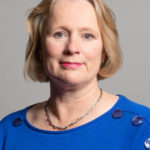
    The speech made by Vicky Ford, the Conservative MP for Chelmsford, in Westminster Hall, the House of Commons on 1 December 2022.

    In Chelmsford, we were very grateful to receive more than £500,000 from the Government’s safer streets fund. I thank Roger Hirst, our police, fire and crime commissioner, for his leadership. The Bunny Walks is a network of green footpaths that weave through Chelmsford, connecting homes, the university and the city centre, but the footpaths were overgrown, the lighting was terrible, drug dealers were frequently spotted in the undergrowth, and women, children and families felt unsafe. Now, the overgrowth has been cut back, lighting and CCTV cameras have been installed, and the paths are busy again because safety has returned. But there is so much more to be done.

    The Everyone’s Invited campaign, which went viral early last year, had shocking revelations of the abuse suffered by girls in our schools. As Children’s Minister at the time, I met the campaigners and we promised to shift the dial, so it is welcome news that the Online Safety Bill will come to Parliament next week, with children at its heart. The measures to protect children from online content that promotes self-harm and anorexia need to be implemented urgently, as do measures to prevent children from accessing online pornography.

    As my hon. Friend the Member for Redditch (Rachel Maclean) said, the VAWG strategy has done many great things, but I was really concerned to hear recently of two rape cases, one of a 14-year-old and the other of a 16-year-old, where the victims felt that if they went to the police, their stories would be smeared all over social media and they would not get justice. I have raised that with Essex police, because we must do more to support girls who have been victims of rape and help them to get justice.

    In Essex, the number of rape cases prosecuted has risen from just 22 cases three years ago to 70 last year. That is out of more than 2,500 reported. The proportion of cases taken to court is far too low. One major issue is the huge delays. Victims sometimes have to wait for two years, maybe even longer, and the waiting list for Essex courts is more than double what it was pre-covid. It is absolutely vital that these court delays are stopped.

    I, too, attended this week’s conference on preventing sexual violence in conflict. As Ukraine’s First Lady, Olena Zelenska, reminded us so bravely, a child aged as young as four years old was raped by soldiers in Ukraine. From Ukraine to Ethiopia and so many other countries around the world, rape is being used systematically as a weapon of war.

    During the conference, the Nobel laureate Denis Mukwege also came to Parliament to speak to MPs and Lords. He reminded us that we must not sacrifice justice on the altar of peace, because without justice, the peace will not last. I hope the conference does make a lasting difference to ending impunity and enabling survivors to get justice.

    Women and girls who have been raped also need access to healthcare. Rape is the cruellest of crimes, but forcing the woman who has been raped to have no choice but to carry the child of her rapist is also incredible cruelty. All too often in conflict-affected areas and humanitarian situations, a woman who has been raped has no choice, and no health support. Dr Mukwege said that if a woman can access health support in his country within 72 hours of that rape, they can have treatment to prevent them from getting AIDS and sexually transmitted diseases, and can take the morning after prophylactic, but all too often supplies are not available.

    The UK is one of the few countries that helped to fund access to contraception and women’s health clinics from its development budget. During my time as Minister for Africa, I visited 15 African countries and also visited many women’s health clinics. Many of the women I spoke to were in loving relationships and the clinics were giving women the chance to choose whether they brought another child into their family. I heard at first hand from women and men about how having that choice was life-changing not just for the woman but the family and the entire community, but it is even more important that we get support to the woman who has been raped.

    In October I visited Afar, the neighbouring province to Tigray in Ethiopia. Many women in Afar were raped when the conflict spilled out of Tigray earlier this year. At the hospital, I saw the clinic that the UK had quietly funded. That clinic offered abortions to the women who had been raped in that war. The lead doctor at the hospital told me the service was vital.

    There have been huge cuts in our development budget. So much of our overseas budget is being spent here in the UK, so it is devastating to think that around the world, in some of the poorest countries, the doors to women’s health clinics are shutting. Across the world, women’s rights to sexual and reproductive health are being rowed back. Roe v. Wade is just one example in one of many countries. We will not tackle violence against women and girls without also making sure that we stand firm in defending a woman’s right to health.

  • Rachel Maclean – 2022 Speech on the International Day for the Elimination of Violence Against Women

    Rachel Maclean – 2022 Speech on the International Day for the Elimination of Violence Against Women

    The speech made by Rachel Maclean, the Conservative MP for Redditch, in Westminster Hall, the House of Commons on 1 December 2022.

    It is a pleasure to serve under your chairmanship, Ms Elliott.

    Violence against women and girls is a problem not just for women and girls. Every woman or girl who feels scared to walk down a street, get on a bus, go on a date, go to school or college, or get in a car with a man she works with is a daughter, sister, mother, wife, partner or friend of a man or a boy. It is not unreasonable to believe that half the population have exactly the same right to take such things for granted as the other half.

    When the Government launched the multimillion-pound national broadcast media campaign Enough, we said that violence against women and girls should become as unacceptable as driving without a seatbelt. Many years ago, when seatbelt laws were first introduced, people said that it would never become engrained, no one would do it and people would not change. Those same people would say that violence against women and girls is inevitable and that we should stay at home, protect ourselves, not wear high heels, not go on the internet to look for dates, be more careful, not enjoy ourselves and definitely not get drunk at a festival. Those people were wrong then, and they are wrong now.

    This Government have driven a sustained focus on bearing down on the awful crimes of rape and domestic abuse. This Government have increased funding to projects all across the country to increase the safety of women and girls on the streets, in the night-time economy and in their home. This Government have passed new laws to keep sex offenders and rapists in prison for longer. We have outlawed many forms of the worst types of violence that women and girls suffer, such as coercive and controlling behaviour. We passed new laws to toughen the measures to be taken against stalking.

    There is of course a lot more to do. A lot of that work was done in response to the violence against women and girls strategy. Many actions are outstanding across the whole system—not just for the Home Office and Justice but for frontline health professionals, as my hon. Friend the Member for Thurrock (Jackie Doyle-Price) said so eloquently.

    Margaret Ferrier

    Will the hon. Lady give way?

    Rachel Maclean

    I am afraid that I have a lot to say, so I will not on this occasion.

    In my constituency, we have benefited from tangible differences, thanks to this Government, with more than £400,000 in funding for the community on the Greenlands estate. I thank my friend Councillor Emma Marshall for all her fantastic work for the residents near the Woodrow centre, and of Ombersley Close and Rushock Close, working with our local police and crime commissioner, John Campion. She said that the funding has made people feel safer, and I have heard it myself when talking to residents in Woodrow and Greenlands.

    I have been privileged to work with victims of spiking and those who campaign for them. We need to do more. I ask the Minister, through the good offices of his colleagues on the Treasury Bench, to speak to the Home Office and ask them to complete their review of the laws around spiking. That review was promised. There is an argument that we need a new offence, and I would like to see the results of the work that the Home Office policy officials are doing.

    I will close my comments by saying that when we talk about women and girls, we must be clear about what we are discussing. I have a science background: definitions and language matter. We must be precise in our terminology. We do not serve the needs of those who wish to change gender or have a different gender identity by forgetting all about or ignoring the needs of biological females—adult females and children, girls, who are female children.

    We have the privilege to stand up in this place and talk about these issues. There are many outside this Chamber who are looking to us to provide clarity. We have a duty to keep our citizens safe when they flee danger, when they flee abusive, predatory men and when they are fearing for their lives in their homes and need to reach a place of safety.

    The hon. Member for Bristol South (Karin Smyth) mentioned Karen Ingala Smith and her book “Defending Women’s Spaces”. She speaks with the benefit of her decades of experience, campaigning for and supporting women who are victims and survivors of rape and sexual assault. She says many women only feel comfortable talking about the devastating and intimate details of male violence in a safe environment. A safe environment means women-only. We can look to the guidance issued by the Equality and Human Rights Commission and make sure that that guidance goes to all those providing services to keep women and girls safe.

  • Fleur Anderson – 2022 Speech on the International Day for the Elimination of Violence Against Women

    Fleur Anderson – 2022 Speech on the International Day for the Elimination of Violence Against Women

    The speech made by Fleur Anderson, the Labour MP for Putney, in Westminster Hall, the House of Commons on 1 December 2022.

    It is a pleasure to serve under your chairship, Ms Elliott. I congratulate my hon. Friend the Member for Bristol South (Karin Smyth) and the hon. Member for Thurrock (Jackie Doyle- Price) on securing this very important debate at a very important time.

    I hoped, as I was growing up, that the world was getting better in every way. I just assumed that it was, I think as part of the post-war agreement of people. But I am constantly disappointed that my daughters are less safe than I was. When I was a student, I went out on the streets with Reclaim the Night, but my daughters, who have just left university, have been less safe at university, on the streets and online, and will be less safe at their workplaces, than I was at their age. That really depresses me. We are going in the wrong direction, so I am glad that this debate is pulling us up short and ensuring that we act to make the world better for my daughters and their daughters, as well as for women and girls not only in this country, but around the world.

    Violence is all-pervasive on our streets, in a way that we take for granted as women. When I realised that men do not have to worry about holding keys in their hands as they walk about—I have done it instinctively all my life—and that there would be a freedom if I did not have to worry as I walked around, it was an alarming moment. It showed me the difference that there should be in our world.

    I congratulate everyone who joined Reclaim the Streets in Roehampton just a couple of days ago, demonstrating against violence against women and girls by men. They marched through the streets of Roehampton all together. It started last year, and it was an even bigger demonstration this year, with men and women, standing together in our local community, speaking out about something that we want to see an end to.

    Violence is at an all-time high, and convictions for rape are at an all-time low. Women and girls feel unable to report rape and violence against them. That must change, as well. We need to address the culture of misogyny, sexism and predation.

    I will highlight specific issues where Refuge is calling for change. The first is the need for sustainable funding for specialist gender-based violence services, including accommodation-based and community-based domestic abuse services. Not everyone will go to the police, but more women are likely to go to those specialist services.

    The second issue is on tech abuse. I know that the Online Safety Bill is due to be discussed. I hope that Members will speak out in those debates in favour of making women safer. If the Bill could require Ofcom to develop a violence against women and girls code of practice, that would be a huge step forward.

    The third issue is about the cost of living, which was raised by my hon. Friend the Member for Bristol South. Refuge is calling for the creation of an emergency domestic abuse fund, because perpetrators are taking advantage of the cost of living crisis to increase their economic abuse and control. It will be worse than ever before this winter.

    Fourthly, Refuge is calling for all criminal justice practitioners, including the police, to be required to participate in in-depth training on domestic abuse. That happens in some areas, but not all; it is a postcode lottery. I would also add a requirement for the police to give back phones to rape victims after they have gathered the necessary evidence from them. I know of many women who have gone in and reported a rape but then had their phone taken and kept for months and months, which just adds to the abuse that they have suffered.

    Moving on to the international action that we can take, I attended the PSVI conference. I declare that I am a vice-chair of the all-party parliamentary group on PSVI and a member of the APPG on domestic violence and abuse. I am glad that the conference was held this week. It really put the international spotlight, from so many countries, on this issue. The scale of the issue—the number of women and girls who are suffering sexual violence, who are survivors and who are going through this right now—is extraordinary.

    I heard about the devastating effects from women from Somalia, the Democratic Republic of the Congo, Ukraine, Colombia and Bosnia—this is happening all over the world. They all said: “No more words only. No more speeches”—ironically, in speeches—and they were quite right: we now need actions. We need an increase in humanitarian relief funding for action on sexual and gender-based violence. Currently, that is at less than 1% of humanitarian relief. We need to increase funding to stop war in the first place—through the conflict prevention fund—but there have been enormous cuts, including of 60% to Somalia and 90% to Africa’s Sahel region. We cannot cut the aid budget and still expect that conflict prevention will continue, because it will not. We have to back up our words on sexual violence by backing our peacebuilding work. I hope to hear from the Minister what he will do now so that all women and girls, wherever they live, are safe.

  • Anthony Mangnall – 2022 Speech on the International Day for the Elimination of Violence Against Women

    Anthony Mangnall – 2022 Speech on the International Day for the Elimination of Violence Against Women

    The speech made by Anthony Mangnall, the Conservative MP for Totnes, in Westminster Hall, the House of Commons on 1 December 2022.

    I congratulate the hon. Member for Bristol South (Karin Smyth) and my hon. Friend the Member for Thurrock (Jackie Doyle-Price) on securing the debate. I also declare an interest as the chair of the all-party parliamentary group on the preventing sexual violence in conflict initiative, the co-chair of Conservative Friends of International Development, an ambassador for the HALO Trust, and a co-chair of the all-party parliamentary group for action on conflict and global Britain. To say that I am invested in this issue and in development matters would perhaps be a bit of an understatement.

    I would like to give more of an international focus, given that the UK has just held the conference on preventing sexual violence in conflict. In 2012, I was a junior researcher in the then Foreign Secretary’s office, and I watched William Hague, Arminka Helić and Chloe Dalton formulate the concept behind the preventing sexual violence in conflict initiative. I will go on to say a little more about its creation. I saw those early days as a halcyon moment—a British drive to ensure that we were leading the world in international development and tackling the issues that were so often overlooked, because when the United Kingdom stands up and leads the way on development, so many other countries follow us.

    In those early years, the UK demonstrated its ability to create and lead new international initiatives and encourage greater global action—whether on women’s rights, conflict prevention, healthcare or support for multilateral organisations based on the rules-based order, we led on it. Indeed, at every summit, conference and non-governmental organisation engagement, there were always British diplomats and politicians sitting around the table, writing the resolutions, helping to push the international community and securing international buy-in. Those activities continue—they are things that we need to champion in this place and within our Government Departments. However, the creation of the preventing sexual violence in conflict initiative in 2012 was one of the most extraordinary experiences of my life. To be privy to the creation of a movement that found domestic and international support and brought 150 countries together in unity was to behold true diplomacy, leadership and statecraft.

    PSVI came about because, as is so often the case, it was an overlooked issue. In every conflict and crisis zone around the world, the use of rape and sexual violence was always well documented, but justice and support for survivors went largely ignored. Horrendous accounts have been written—there are countless reports and books—including Christina Lamb’s book, “Our Bodies, Their Battlefield”, which I encourage all colleagues to read if they have not done so. It reminds us that this is not a modern-day phenomenon, but a continuous factor in conflict through the ages. In nearly every instance of conflict, rape and sexual violence is exhibited. It is used by the perpetrators as a free tool of war—used to intimidate, divide, ostracise and subjugate. For its perpetrators, it is enacted with an expectation of impunity—that, in the confines of war, these atrocious acts can be committed freely and without fear of justice or consequences. For its victims, it is an act that will live with them for the rest of their lives. They never forget it; it is often never treated; and, worst of all, they never see justice brought to bear.

    The prevalence of this important issue, and the lack of international action, meant that there was an opportunity to address that oversight and engage the international community. That is exactly what our team did, and in 2012 we set up the preventing sexual violence in conflict initiative. We held the first conference in 2014, and this week we held our second conference, albeit a few years delayed due to the pandemic. We have demonstrated our ability to lead on this issue, but—as is always the case in this world—we can go further.

    We made significant promises in 2014, with lofty goals. As the special envoy, Angelina Jolie, has said, we knew they were lofty goals, and

    “there has been some progress, including a few prosecutions at the national level, the adoption of the Murad Code and the establishment of the Global Survivors Fund. But it has not been nearly enough to meet the needs of survivors, or to deter perpetrators from using rape as a weapon of war in almost every new conflict in the past decade.”

    We now need to think about what we can do next. I welcome the Government’s decision to introduce a new three-year strategy and £12.5 million of new funding, and the continuation of funding to the Global Survivors Fund. On that point, could the Minister clarify how much money is going to be put into the Ukraine gender-based violence fund? However, we know that political will and economic interests across the world are preventing the meaningful action that is needed. We need to think about what survivors need, and I will make two very quick points.

    First, we must lead the charge and put more spending into preventing and responding to sexual and gender-based violence. To date, less than 1% of humanitarian relief is spent in that area. That funding gap is preventing the delivery of our ambitions, meaning that, while we might identify the problems, we are not solving them. Secondly, we must ensure a new international mechanism to lead on this specific issue, to specifically ensure that survivors are supported, crimes documented, and justice sought for those who have been raped. I will leave it there, Ms Elliott, because I am conscious of the time. Thank you.

  • Charlotte Nichols – 2022 Speech on the International Day for the Elimination of Violence Against Women

    Charlotte Nichols – 2022 Speech on the International Day for the Elimination of Violence Against Women

    The speech made by Charlotte Nichols, the Labour MP for Warrington North, in Westminster Hall, the House of Commons on 1 December 2022.

    It is a pleasure to serve under your chairship, Ms Elliott. I congratulate my hon. Friend the Member for Bristol South (Karin Smyth) on securing this vital debate, although it is shame that such an important debate is not taking place on the Floor of the House, in Government time.

    These annual debates are so important, not just so that we can hear the latest sad figures of violence and hold Ministers to account for the ongoing abuse and killing of women and girls, but so that we can speak about the wider context and to try to call for a better way forward.

    Locally, Cheshire police tell me that arrests for domestic abuse have increased by 76% this year, and that we have the highest charge rate for stalking in the country and the third highest charge rate for sexual offences and rape. Such statistics, even positive ones, are evidence of failure, not signs of progress, because they represent change from an unacceptably low baseline. Moreover, even with higher figures for arrests, charges, prosecutions and convictions, the sad truth is that far too many women will not engage with the justice system or report what has happened to them. Women will suffer domestic abuse many times before they go to the police.

    We have an appalling situation in which survivors of sexual violence can have their counselling notes read by police officers, prosecutors, defence lawyers and even the person who raped them, often in order to try to find something to make the survivor look untrustworthy or to discredit their testimony. Rape Crisis England & Wales is clear that counselling notes should be kept confidential; otherwise, survivors will continue to have to choose between the pursuit of justice—statistically futile though that may seem—and looking after their own needs and mental health. It is absolutely sick that we expect that from them, when they should be supported to see both justice and compassion.

    Specialist services for survivors are on their knees, and survivors suffering from conditions such as post-traumatic stress disorder—a condition more frequently suffered by survivors of child sexual exploitation and sexual violence than by veterans—find themselves in a postcode lottery, waiting years to access treatment, if they can access it at all. We cannot talk about support for victims without recognising that there needs to be vastly more funding for these services, including for support by independent sexual violence advisers and independent domestic violence advisers. I would welcome a commitment from the Minister in those areas.

    We need not only better policing and judicial processes, but to change our social culture itself. It is not enough to merely get better at prosecuting offences after the fact. We must ensure that we are using every legal and social lever to stop it happening in the first place. I commend the men speaking in this debate, because they recognise that violence against women and girls is a scourge that cannot be ended by the victims. We need men to work to stop this. I do not mean the small minority of men who are the perpetrators, but the majority of decent men who are horrified by the results of this violence and who can influence the behaviour of their peers.

    We need a renewed focus on sex and relationships education in schools, to insist on dignity at a young age, and clear expectations and behaviour codes in the workplace. I suggest we start here, by making sure all our colleagues in this workplace are modelling that, too. We also need adverts that put the onus on men, such as those promoted by the Mayor of London that say:

    “Have a word with yourself, then your mates”.

    Male role models need to front such campaigns in order to change expectations, so that when lads meet in groups, whether that is in the locker room, the pub or anywhere else, they can display character and object to reactive group misogyny, no longer being bystanders implicitly supporting such behaviour.

    We also need to ensure that women can no longer be financially trapped into abusive situations, or at risk of destitution when they seek to leave. Those are the kinds of holistic changes that we need to see if we are serious about ending violence against women and girls.

    I know that everyone in this Chamber wants to end violence against women and girls. Our challenge is to tackle the wider context of toxic behaviour that breeds it. I hope that by next year’s debate, we will have made more progress on that fundamental task.

  • Caroline Nokes – 2022 Speech on the International Day for the Elimination of Violence Against Women

    Caroline Nokes – 2022 Speech on the International Day for the Elimination of Violence Against Women

    The speech made by Caroline Nokes, the Conservative MP for Romsey and Southampton North, in Westminster Hall, the House of Commons on 1 December 2022.

    It is a pleasure to serve under your chairmanship, Ms Elliott. I will start where my hon. Friend the Member for Thurrock (Jackie Doyle-Price) finished: by talking about the pointy-elbowed, middle-class privilege that allows me to stand here and say that still, in 2022, we cherry-pick which victims we think are innocent and which we do not. That is why there is massive media coverage of some cases and not of others. We like our victims to be young, blonde and white, do we not? When police community support officers of my age are killed, it makes barely a headline, as in the case of Julia James. The murders of young women such as Bibaa Henry and Nicole Smallman, whose photographs were taken by police officers, do not gain the same number of column inches as the murder of Sarah Everard. When women such as Raneem Oudeh and her mother are murdered while the police are ignoring their calls for help, we must wonder what cultural element came into that.

    It is important that we stand up in this House and are prepared to use our pointy-elbowed, middle-class privilege to highlight that, in this country, on International Day for the Elimination of Violence against Women, we need to get our own house in order. We need to be prepared to legislate for things such as public sexual harassment. Let us face it: countries such as Morocco have managed to legislate for that, but we still have not.

    I have high hopes for my right hon. Friend the Member for Tunbridge Wells (Greg Clark) and his private Member’s Bill. I pay full credit to police forces such as Nottinghamshire police for collecting statistics on misogyny as a hate crime, but we need that to be rolled out to more police forces across the country. In this place, we have done some great work and every year the hon. Member for Birmingham, Yardley (Jess Phillips) stands up in the Chamber on International Women’s Day and reads that great long list—which is not getting shorter—of those women who have been murdered over the previous year. At her behest, a couple of weeks ago I met, virtually, Carole Gould and Julie Devey, the mothers of Ellie Gould and Poppy Devey Waterhouse—young women murdered by their partners. Carole and Julie have set up a new organisation, Killed Women, specifically to make sure that we listen to the victims and consider the aftereffects for those families who have lost a loved one in horrific circumstances. We all need to listen to those stories and understand the very profound impact that ongoing violence against women is having in this country.

    I will speak very briefly of the work that the Women and Equalities Committee is doing on this subject. I pay tribute to you, Ms Elliott, for having been a guest in a recent session. We are looking at sexual harassment, misogyny, violence against women, and sexism in all its forms across a variety of areas in this country, whether in schools, colleges and universities—I pay tribute to my hon. Friend the Member for Thurrock for the great work she did on that before she left the Committee—or in the music industry, where black women are overly sexualised. We know from the case of Child Q that black children are—I am not sure if this is even a word—adultified and treated as adults when they are still children. That still happens way too often. We heard of the horrors of being a young black woman in the music industry—they were truly horrific in the same way as the sexism in football that we heard about.

    Similarly, we hear time and again about how women at university are treated appallingly and how, in too many cases, the institution does not stand up for them. I will highlight Bristol University—apologies to the hon. Member for Bristol South (Karin Smyth) for referring to her city again—because it did not support a young woman who spoke to me yesterday on this subject. When she went to the police, she was told that she had to think of the mental health of the student she was accusing of sexually harassing her. That, to my mind, is absolutely unthinkable. How are we going to empower and encourage young women to have the courage to come forward, speak of their experiences and press charges when they are being told to consider the impact on the individuals they are accusing? We know that 97% of the accusations made are truthful.

    I want to pay tribute briefly, in 50 seconds or less, to—

    James Daly (Bury North) (Con)

    Will my right hon. Friend give way?

    Caroline Nokes

    That will not give me an extra minute. I pay tribute to former Ministers who have worked so hard on this issue, some of whom are sitting in this room today, including Ministers from across the Home Office who worked so hard on the tackling violence against women and girls strategy and on finally getting the Domestic Abuse Act 2021 on the statute book. My message to all of us is that there is more that we can and must do. We have to keep pressing forward. If we do not do that, we will not be able to look around the globe and wring our hands in horror at the actions that we see elsewhere, when our own house needs to be in much better order.

  • Jim Shannon – 2022 Speech on the International Day for the Elimination of Violence Against Women

    Jim Shannon – 2022 Speech on the International Day for the Elimination of Violence Against Women

    The speech made by Jim Shannon, the DUP MP for Strangford, in the House of Commons on 1 December 2022.

    I congratulate the hon. Members for Bristol South (Karin Smyth) and for Thurrock (Jackie Doyle-Price) on securing the debate. I am very glad to say that the hon. Member for Paisley and Renfrewshire North (Gavin Newlands), who is the spokesperson for the Scots Nats, and I never miss any of these debates. As men, we are very glad to be here.

    I welcome the news that earlier this week the UK hosted the preventing sexual violence in conflict initiative summit. The hon. Member for Congleton (Fiona Bruce) asked a question on this very issue at Prime Minister’s questions this week. At business questions today, I asked the Leader of the House a question along these lines. The Government have had the summit and they have shown, through the answers that the Prime Minister and the Leader of the House gave, that there is a commitment on this issue.

    It is important that the UK works towards recognising sexual violence in conflict as a line that is not to be crossed, with serious repercussions for the perpetrators of such an awful crime and the violation of a woman or child’s dignity. There are numerous factors that might put a woman at greater risk of violence, but there is one that I will focus on specifically; others will touch on other subjects. The factor I will focus on is women belonging to faith groups who face persecution on the grounds of their faith and the violence that goes along with that.

    Margaret Ferrier

    Sometimes a woman’s decision to wear a headscarf or modest clothing is described as oppression, but there are many women who say that their decision to display their faith in that way is not oppressing; they find it empowering. Does the hon. Member agree that respecting the choices that women make in expressing their faith is an important aspect of society empowering women and girls?

    Jim Shannon

    I certainly do; as always, the hon. Lady brings an aspect to the debate that truly helps to illustrate things.

    Persecutors target men, women and children in different ways and to different extents. Women invariably face a greater breadth of persecution, owing to the compounding factors of their faith and their sex, which unfortunately makes them an easy target for those who want to take advantage. It is probably no surprise that the targeting of women is strategic and malicious. Women are the ones who give birth to the next generation and bring up families. It is a great tragedy that their life-giving nature is violated by extremists and those with evil intent, as they take away their life of freedom and peace.

    A report by Open Doors on the persecution of Christian women and girls explains that in countries impacted by conflict in central and west Africa—Nigeria, the Central African Republic and the Democratic Republic of the Congo being key examples—women and girls are at high risk of abduction. The report states:

    “Once taken, they are then forced to marry militants and bear children, who are used to boost the ranks of militant groups”.

    Such “forced marriage” is rape by another name. Horrifically, the bodies of women and girls offer an extra dimension of conflict for extremists and perpetrators of violence to wreak their destruction and their dehumanising actions.

    One example of such gender-based persecution is Leah Sharibu, who was kidnapped along with 110 other students from her school back in 2018. The Islamic State of west Africa refused to release Leah when she did not renounce her Christian faith. Leah is still waiting for release. When some of us were in Nigeria in May, we asked about her and we were hopeful that something was going to happen, but it does not seem that anything has happened. I hope that the Minister can give us some indication of what is happening. Leah has been forcibly married and raped since the age of 14. She now has two children born of that forced marriage, with little hope of being able to pass on the Christian faith that she believes in to her own children.

    Regrettably, Leah’s case is just one of thousands of such cases. How is it that eight years after Daesh launched a genocidal campaign against the Yazidis, with 2,763 Yazidi women and children still missing, nobody seems to be interested in this issue? I am not being critical of the Minister or the Government, but can we be given some indication about what is happening to those Yazidi women? It seems that they are off the radar for nearly everybody who I can think of.

    My hope is that the Government ensure that any funding given to support women and girls around the world targets women and girls who face vulnerabilities due to their faith, with the Foreign, Commonwealth and Development Office recognising faith as a factor in such vulnerability. Defending women and girls should encompass all aspects of the UK Government’s overseas engagements. Therefore, the Department for International Trade should seriously consider any reports of gender-specific religious persecution as it negotiates trade deals and before it signs any new trade agreements. Our Government should take care about the human rights records of countries with which they trade. Turning a blind eye to the treatment of women in a country we benefit from is not something that I wish to hear about. I want to hear about how we are moving forward progressively and positively for women and girls.

    Finally—I am conscious of the time, Ms Elliott—increased efforts must be made to help women and girls who suffer violence and endure persecution because of their faith to reach safety. I will give another example: I am saddened that Pakistani Christian girl Maira Shahbaz is still in hiding after escaping her Muslim abductor in Pakistan. She is still waiting for the Home Office to grant her asylum claim. It is unbelievable. The facts are obvious; the evidence is there. The Right Rev. Philip Mounstephen, the Bishop of Truro, has said:

    “Tragic cases like that of Maira Shahbaz are a test case for the UK Government’s commitment to put freedom and religion front and centre in its foreign policy.”

    My comments today are a new call for the Government to do just that and make freedom of religion or belief a reality for everyone across the world.

  • Jackie Doyle-Price – 2022 Speech on the International Day for the Elimination of Violence Against Women

    Jackie Doyle-Price – 2022 Speech on the International Day for the Elimination of Violence Against Women

    The speech made by Jackie Doyle-Price, the Conservative MP for Thurrock, in the House of Commons on 1 December 2022.

    It is a pleasure to serve under your chairmanship today, Ms Elliott. I am very grateful to follow the hon. Member for Bristol South (Karin Smyth). I reflected on what she said, and I agree with every word. For a number of years, we have heard about how much emphasis this Government place on tackling violence against women and girls, but the statistics that she outlined show that so much of that is talk. It is about time that we started delivering, and making those interventions that challenge men and male behaviour.

    Let us not mince our words: this is male violence against women and girls; these are crimes perpetrated by men. In this place, men often take rather too much comfort in talk about great advances in equality, but the day-to-day lived experience of women is still poor. As the hon. Member for Bristol South outlined, we take decisions every day to protect our own safety. It is well documented that female Members of Parliament receive more abuse and harassment than their male counterparts. In 21st century Britain, that is not good enough, and we need collective action to tackle it.

    I am pleased to see that some male Members have chosen to participate in the debate. I am not surprised to see my hon. Friend the Member for Totnes (Anthony Mangnall), who has always shown some support for these issues, but I want to see a few more. It would be nice to know that more of our male colleagues are genuinely concerned about our day-to-day lived experience. I lay that down as a challenge. It is rather a substantial one for the Minister: it means that he perhaps has to compensate for the lack of interest among his colleagues. I hope that he receives my chastisement on their behalf.

    In the week that we heard in Parliament from Olena Zelenska about the atrocities committed by Russian soldiers in Ukraine, we are told that as many as 30% of the women of Ukraine have been victims of sexual crimes in the conflict. That is a clear reminder that rape remains a weapon of war. We talk about the preventing sexual violence in conflict initiative, which is good work, but what it rather euphemistically describes is the organised process of rape. We hear that in Ukraine the youngest victim is just four years old, and the oldest is 85. That is the brutality of war, but until very recently the experience of women in war was not routinely considered. I am pleased and proud that this Government have taken up that initiative—the conference was this week. However, it is all very well us telling the rest of the world and virtue signalling about the issue, but we still have to sort things out here. I am afraid that sexual violence remains a real challenge and a lived experience for everyone.

    It feels a bit “first world” to talk about some of the problems that we face here, but the trauma faced by any woman who is a victim of sexual violence is significant and lifelong. We must ensure that we deliver on our promises. We have enshrined in the NHS a commitment to a lifetime therapeutic care pathway for any victim of sexual violence. In practice, that does not happen. We know that very many women still wait for counselling months and months after an incident, and we know that is a barrier to bringing perpetrators to justice. When women relive what has happened to them, they re-traumatise themselves. They need support, but the NHS commitment is just words. Up and down this country, the local commissioning required to deliver it is not happening. We see victims of sexual violence as items of evidence. Their experience of trying to secure justice is utterly dehumanising.

    I could go on much longer, but I will obey your strictures, Ms Elliott. In this place, we too often approach these issues from the perspective of the pointy-elbowed middle classes, and the most vulnerable in our society are left behind. I will not stop beating up Ministers in debates like this one until we have proper protection for women in prisons. We are seeing sex offenders self-identifying as women and being able to enter women’s prisons; we had a rape only very recently. That has to be tackled. And I will not be happy, either, until someone engaged in sex work who is murdered receives as much attention as a nice, pretty middle-class girl. I will leave it there.

  • Karin Smyth – 2022 Speech on the International Day for the Elimination of Violence Against Women

    Karin Smyth – 2022 Speech on the International Day for the Elimination of Violence Against Women

    The speech made by Karin Smyth, the Labour MP for Bristol South, in the House of Commons on 1 December 2022.

    I beg to move,

    That this House has considered the International Day for the Elimination of Violence Against Women.

    It is a pleasure to see you in the Chair, Ms Elliott. I thank the Backbench Business Committee and the hon. Member for Thurrock (Jackie Doyle-Price) for their support in securing this important debate.

    This year, the UN’s 16 days of activism fall at the same time as the FIFA men’s World cup. FIFA decided to hold the competition in a country where women remain tied to their male guardian and need his permission for key life decisions on matters including work and travel. We also meet against the backdrop of war in Europe. As is all too familiar across the globe, women are being targeted through sexual violence. Thousands of women have been transported hundreds of miles from home and forced to build a life for themselves and their families in other countries. Our thoughts and solidarity are with them.

    In the UK, we are in a cost of living crisis and in the grip of an epidemic of appalling violence committed by men against women and girls. Those two facts are inextricably linked. The epidemic includes violence at home, violence in the playground, violence in the workplace, violence on the walk home from school, violence online and across social media, and violence brought to life through the grotesque barrage of freely available extreme pornography on every corner of the internet. The violence can be short, sharp and brutal; sexual and degrading; insidious and coercive; hidden behind closed doors or hiding in plain sight—it is everywhere.

    Our collective unwillingness to speak honestly about this epidemic is perhaps driven by the same thing that compounds the horrors visited on countless women and girls: shame. Unlike those women and girls, we should be ashamed—ashamed that women feel unsafe on our streets, ashamed that girls are unable to enjoy the same freedoms and experiences as boys, and ashamed that many of our public bodies are haemorrhaging trust as institutional misogyny blinds them to their basic safe- guarding obligations.

    The facts speak for themselves. The number of women murder victims is at a 15-year high—I repeat, a 15-year high. Rape prosecutions and convictions are at a historic low, and countless women victims are abandoning their trials due to delays that this Government created—delays in the Crown court are at a record high.

    Yet the collective response has remained essentially unchanged for generations. Instead of investing in things that would help prevent males from developing into perpetrators and improve women’s economic circumstances —education, policing, criminal justice and large-scale societal change around care—we focus on the result of that inequality, and women and girls remain reliant on “that chat”. “Don’t walk down the lane on the way home; stick to the main street.” “Keep your headphones off.” “Keep hold of your phone when you get off the bus and keep your house keys poking between your fingers.” “Don’t wear high heels. If possible, wear a big coat.” “Don’t go for a run tonight; it’s too dark.” “Stick the bins out in the morning.” “Oh, and if anything does happen, it will be your fault.” Women have to second-guess their safety on a daily basis.

    Although I say the facts speak for themselves, that is only because women have fought hard to ensure the accurate reporting and gathering of sex data. A woman is killed every three days. I commend Karen Ingala Smith and her work documenting the facts through Counting Dead Women, which is a phenomenal project. Data shows that domestic violence, already endemic across Britain, skyrocketed during the pandemic. There were 260,000 domestic abuse offences between March and June 2020 alone. Research by UN Women UK found that 71% of women in the UK have experienced sexual harassment in a public place, rising to 86% of 18 to 24-year-olds. In the first lockdown, a fifth of women and girls aged 14 to 21 were catcalled, followed, groped, flashed or upskirted, rising to 51% during the summer.

    Let us look at the causes. In Bristol, the 2020 mayoral commission on domestic abuse, along with the joint strategic needs assessment, reported the variation in domestic-related abuse and crime across my city, from 7.1 per 1,000 in Redland to 79.9 per 1,000 in Hartcliffe and Withywood in my Bristol South constituency. Analysis in the UK and internationally has consistently found vulnerability to domestic violence to be associated with low income, economic strain and benefit receipt.

    Earlier this month, the chief executive officers and directors of the End Violence Against Women Coalition joined more than 80 other organisations to warn that the cost of living crisis is having a devastating impact on women, putting them at greater risk of violence and abuse. It is a sobering report. Many women face the choice of staying in an abusive situation or experiencing financial hardship or destitution. Relocation to safety, disruption to employment, and access to legal advice all come with a hefty price tag. These circumstances are only worsening in the cost of living crisis, as women are dominant in low-pay, insecure work in the public sector, care, retail and hospitality. All those sectors are being squeezed, putting more and more women and children at risk of harm, destitution or even death.

    At exactly the same time as demand for support to escape abuse is increasing, already overstretched specialist services have been confronted with rising bills to operate their life-saving services. Frontline organisations, such as refuges, are facing steep energy bills, and staff are covering the cost of service users from their own pockets, including feeding women who have not eaten for days.

    I hope that the Minister has been listening carefully—I thank him for that—but we have had enough of listening. We do not want any more time for “that chat”. We need to raise women’s economic status up the political agenda in all our political parties. We need to help women to access paid work at decent pay levels, with access to affordable childcare. We need to ensure that benefits are made in such a way as to ensure that women do not become dependent on their male partners. We need to ensure that women are not penalised for non-contribution as a result of caring. We need to ensure that the issue of financial abuse as part of abusive behaviour is recognised in the Government’s strategy to address violence against women and girls.

    There are some first steps that would help. It would be helpful if the Minister would agree to implement some of the following: put a rape and domestic abuse specialist in the police force in England and Wales; overhaul the police standards system, including vetting, training and misconduct, to ensure that victims get the best possible service and support from the police; bring in a domestic abusers register, which would allow authorities to track perpetrators and prevent them causing harm to more women; and set up specialist rape courts, which would end the traumatisation of victims by the system. Let us make the UK a beacon of progress.

    Alongside that, we need a recommitment to the importance of empirical data as fact. Data must be accurately compiled and accurately sex disaggregated in order to fully understand the impact of all crimes on women and girls. To tackle endemic sexism and sex-based violence, we must count sex, just as it is vital to combat discrimination against other groups. The need to accurately record separate and additional data is obvious. The offending patterns of men and of women show the highest differential of all, so we need to monitor the sex of the victims and perpetrators of all crimes.

    My hon. Friend the Member for Gower (Tonia Antoniazzi) stated recently in this place that at least six regional police forces now record suspects’ sex on the basis of gender identity, following the advice of the National Police Chiefs’ Council. Data based only on self-identified gender is not accurate data on which to build a violence against women and girls strategy, or to effectively plan services that support all victims and target all perpetrators, whatever their sex and however they identify. I could not agree with my hon. Friend more. Data is key to protecting women and girls from violence, and I hope the Minister can confirm the need for sex to be recorded by police forces in England and Wales.

    We talk often in this place of equality. We often celebrate the very presence of women and girls in sporting teams, on boards, in leadership roles or in politics as an end point. It is not. For as long as every woman and girl lives in a society that remains in itself so unequal, and presents such dangers, we should perhaps pause and reflect.

    Margaret Ferrier (Rutherglen and Hamilton West) (Ind)

    Earlier this year, the UK ratified the gold standard set by the Istanbul convention, but it has decided to opt out of article 59, which protects migrant women. Does the hon. Member agree that this defeats the point of the convention? There should be equal protection for all women, and this creates a hostile and discriminatory environment for some of the most vulnerable women in the UK.

    Karin Smyth

    The hon. Member makes an excellent point; I agree. I am sure that the Minister, or my hon. Friend the Member for West Ham (Ms Brown), will address it later from the Front Benches.

    As we reflect, let us remember that the great feminist writer and thinker, Chimamanda Ngozi Adichie, once said:

    “Your feminist premise should be: I matter. I matter equally. Not ‘if only.’ Not ‘as long as.’ I matter equally. Full stop.”

    Let us hope that, when we gather again next year, not only have the statistics become slightly less depressing and the Government response slightly less dispiriting, but we have taken some steps, however small, toward empowering every woman and girl to believe that they have a right to live a life where they matter equally—full stop.

  • Elliot Colburn – 2022 Speech on Beddington Incinerator

    Elliot Colburn – 2022 Speech on Beddington Incinerator

    The speech made by Elliot Colburn, the Conservative MP for Carshalton and Wallington, in Westminster Hall, the House of Commons on 1 December 2022.

    I beg to move,

    That this House has considered permit variation processes for waste incineration facilities.

    It is pleasure to serve under your chairmanship, Mr Efford. I thank the Chairman of Ways and Means for selecting today’s debate, especially because doing so involved a change to the Order Paper at short notice. I appreciate the opportunity to bring this matter to Westminster Hall today. I also thank the Minister for attending; it is great to see her back in her place. She will have heard much of what I am about to say when she was in her role previously, not just in my speeches in Westminster Hall but in our many conversations. I am grateful that she is willing to listen to me talk on the topic once again.

    It will come as no surprise to colleagues that the topic of my speech is the Beddington incinerator in my Carshalton and Wallington constituency. The facility can currently process over 300,000 tonnes of non-hazardous residual waste a year. The waste is imported from four south London boroughs and further afield, as well as coming from my own borough, the London Borough of Sutton. Since the site completed commissioning in 2019, it has been bedevilled by problems, and to this day my constituents suffer because of a number of issues regarding the site.

    The first issue is that the incinerator is statistically the No. 1 polluter in the London Borough of Sutton. Emissions limits have been breached on literally hundreds of occasions, with more than 20 incidents relating to carbon dioxide and 40 incidents relating to volatile organic compounds, plus many more invalid reports. The promised Beddington Farmlands restoration project has been delayed again and again, and protected ground-nesting birds have been killed by predators because of failures to keep water levels from dropping. Local roads have been damaged, congested and polluted by regular waste vehicle movements. The rise in nitrogen dioxide from gas canisters and recreational drug taking has caused multiple explosions at the facility, which have risked the safety of the workers and pushed emissions up with every occurrence. In addition, recycling rates have fallen by over 6% in the London Borough of Sutton alone. I will delve into all those problems, and more, later.

    We were regularly reassured by the Lib Dem-run council—I note that not a single Liberal Democrat Member has turned up to the debate—that, following sign-off, the operator would not submit any future variations. Well, surprise, surprise: barely three years since the site was first developed, Viridor has indeed submitted an application to the Environment Agency to vary its environmental permit to enable enhanced operations at the Beddington site. In layman’s terms, that means that it wants to burn more waste at Beddington. That will mean more vehicle movements, which will mean more emissions, and more problems for my Carshalton and Wallington constituents.

    The application for the variation was submitted way back in January, but the Environment Agency has only in recent weeks launched the public consultation on it. Over the past 11 months, I have had various conversations with Viridor, the council, councillors, community groups and residents about the proposals. During that period, it has become clear that the application is totally inappropriate. Given that this is a live application undergoing consultation, the Minister is limited in what she can say, but I want to make some points. What sparked the need for the debate was not the content of the application and the proposals alone, as serious as those issues are; in addition, I have found that there is extremely limited community engagement and influence over the processes for determining these applications. I hope that we can discuss that in more detail.

    The regulation of incinerators in England is split between the Environment Agency and local authorities, with the EA regulating incinerators with a capacity greater than 3 tonnes per hour for non-hazardous waste and 10 tonnes per day for hazardous waste. That has been the case for the Beddington incinerator in my constituency. Incinerators below those levels are regulated by local authorities.

    The environmental permit sets conditions that limit the discharge to air, water and soil of specified substances. The regulations require public consultation on some permit applications, but do not prescribe the methods of consultation. That can cause inconsistencies in the level of engagement that communities are offered around the country. Once an operator has an environmental permit, changes in the operation of the facility may require it to apply to vary the permit. It must apply to the regulator to vary the permit conditions when proposing a change that would mean that a permit condition can no longer be complied with. The Environmental Permitting (England and Wales) Regulations 2016 require the Environment Agency to consult on any new application or applications involving a substantial change.

    Despite potentially significant cumulative impacts on communities following permit variation, there is no mechanism for local authorities to directly influence the determination. Unlike for initial applications for incinerators or other comparable major planning, environmental or licensing proposals or changes to conditions, communities are essentially frozen out of the decision-making process for permit variations for incinerators.

    The Beddington site was first given the green light by Lib Dem-run Sutton Council back in 2013. The environmental permit allowed for the processing of up to 302,500 tonnes of waste per annum. The variation was granted in December 2020 to allow for the processing of up to 347,422 tonnes of waste per annum, based on the increase in availability, but Viridor is now looking to increase capacity to 382,286 tonnes per annum. That is a 26% increase in waste at the site since it was originally approved at the application stage.

    In the past 12 months, slightly over 65,000 vehicle movements have been made to the incinerator. The draft proposed variations would increase projected vehicle movements to up to 76,000 per year. That is a 17% increase. Despite those shocking figures and the significant impact the variation will have on the community, there is a noticeable lack of discussion about the cumulative impacts of permit variations.

    Paragraph 47 of the Government’s planning practice guidance for waste highlights the importance of the cumulative impacts of intensifying existing waste management sites and the need to engage with communities:

    “The waste planning authority should not assume that because a particular area has hosted, or hosts, waste disposal facilities, that it is appropriate to add to these or extend their life. It is important to consider the cumulative effect of previous waste disposal facilities on a community’s wellbeing. Impacts on environmental quality, social cohesion and inclusion and economic potential may all be relevant. Engagement with the local communities affected by previous waste disposal decisions will help in these considerations.”

    Despite that, the increase in traffic generated by intensifying incineration at the Beddington site cannot be taken into account by the Environment Agency when determining whether the application is appropriate. Its website states that residents are not allowed to talk about vehicle movements and the impact their emissions will have when the application is determined because it is a planning matter. The irony will not be lost on Carshalton and Wallington residents that one of the Lib Dems’ arguments for building the incinerator in the first place was that it would reduce the number of vehicle movements needed on the site.

    The incinerator has been operational for barely three years, and this is the second permit variation application to land on the Environment Agency’s doorstep. If this one is approved, what is to say that there will not be another one and another one and another one years down the line? At what point does the intensification of the site and the cumulative impact that it has on the community at large warrant an entirely new permit or planning application?

    Residents in Carshalton and Wallington did not vote to burn more waste, then a bit more a few years later, then a bit more a few years later. They did not vote to expand the incinerator’s reach, with waste brought to our area from another borough, then another and maybe another. They did not vote for more vehicle movements, potholes and exhaust fumes—they were originally told that vehicle numbers would fall. They did not vote for an increase in air pollution when they were told again and again that incineration is better than landfill. They did not vote for Beddington Lane, the road where the incinerator is located, to seem permanently to have roadworks, causing massive traffic displacement across the constituency. And now here we are at the precipice of another attempt to vary the incinerator’s permit, a decision that will be taken out of local hands.

    Blame cannot be laid solely at the feet of the process or regulations that are being followed. Lib Dem-run Sutton Council birthed the incinerator into our borough and has been incubating it for years while turning a blind eye to scandal after scandal, betrayal after betrayal, until the grotesque expansion of the incinerator risks transforming Beddington into the dumping ground of south London. That was the Lib Dem vision for Carshalton and Wallington—one that never appeared in any election manifesto.

    There needs to be a mechanism to ensure that communities have greater influence—more than just a single written consultation—over these processes and the determination of repeated major permit variations. Communities need to be able to hold regulators and those who make these decisions, whether that is the local authority or the Environment Agency, to account.

    I have organised my own petition to oppose Viridor’s expansion plans and to call for them to be dropped. Already, almost 1,000 local people have signed the petition and said no to the expansion plans. I would hazard a guess that that is far more than will respond to the official consultation, because very few people are aware of it and there is no direct outreach engagement from Viridor or the Environment Agency. The application was submitted almost a year ago, but there has been hardly any promotion of the consultation. We are now firmly in the consultation period but, unfortunately, it falls in the middle of the Christmas period, when people will be distracted by other things.

    Oddly, I am pleased about something. The Environment Agency has understood that the Beddington proposals are of high public interest, and it proposes to hold a second consultation once the current one has closed. However, there are other ways to improve engagement with the community, such as holding multiple public information events in residential areas, and a public hearing, which would allow stakeholders to provide evidence in support of their views directly to the body that will make the decision. Although not perfect, those activities would at least help community awareness and mitigate the feeling that the decision is being made by a faceless organisation far away from the local area.

    Separate to the process of determination and consultation, there are other ways to mitigate issues with the content of permit variations. It is within the scope of the Environment Agency to assert conditions for permit variations. For example, a condition could be added to ensure the operator installs metal detectors and magnets to extract any recyclable or harmful metal materials before they are burnt.

    I mentioned the scourge of nitrous oxide canisters, which can be purchased legally, in many circumstances to achieve a so-called legal high. I am sure other hon. Members will share their experience of seeing such canisters littered across the streets. They have to be disposed of, so they get into our waste stream and end up being incinerated. When they make contact with high heat, they explode, potentially causing damage to the plant, massive operational difficulties, and danger to the people who work at or live near the site.

    Viridor has launched a public information campaign to make it clear that such canisters should not be put into residential bins. I support that campaign and welcome those efforts, and I hope we can send a message from the House today that we support efforts to ensure that gas canisters do not end up in bins. However, I would go a step further. Viridor is already using metal detectors and magnets to extract harmful metals at another site; the Environment Agency should stipulate the installation of similar technology in Beddington as a condition for the permit variation.

    On a similar note, I find it appalling that we still do not understand how much recyclable waste is sent for incineration in this country. There need to be clear, measurable recycling targets that operators must adhere to. The proponents of incineration often point to recycling as a metric of their success and evidence that incineration is better than landfill. While the latter is certainly true—no one disputes that, and no one wants to see a return to waste being put into the ground; that is, of course, the worst of all options—the same cannot be said for the effect of incineration on recycling rates. As landfill sites have begun to close and be phased out, incineration has picked up much of the demand, nearly quadrupling in the past decade from 12% to 44% of our waste management capacity. However, recycling rates have barely moved in that time, from 37% to 43%—just a 6% increase.

    That is not coincidental or unrelated. According to worrying research by the House of Commons Library, data from the 123 waste authorities shows a negative relationship between recycling and incineration. In other words, higher incineration means lower recycling, and vice versa. I saw that at first hand when I visited the incinerator in Beddington. Recyclable materials will always find their way into the wrong bin—of course they will—but there must be processes to filter them out.

    I have also been informed of investigations from other areas of England where specific recycling bin bags have been sent to incineration. Indeed, a local group in my constituency, and in boroughs in south London, put tracking devices in bins and found that they ended up in the incineration room at the incinerator. They were not being recycled but shoved straight in to be burned. That is an absolute scandal. Research from Zero Waste Europe reveals that more than 90% of materials that end up in incineration plants or landfill could be recycled or composted. Ninety per cent! That is huge.

    Even when waste is turned into energy, recycling is still the better option. It can save up to five times the energy produced by burning waste, which is not a renewable resource, creates toxic pollution, and potentially emits more carbon dioxide than some hydrocarbon-powered plants. In other words, incinerators need waste, whether it is recyclable or not, to have an effective business model. I do not think that we can call that recycling.

    However, there is some good news, which could help us phase out incineration and should be considered before expanded or future incineration sites are approved. That is, of course, the deposit return scheme, which has seen recycling rates rocket in more than 40 countries and is due to be rolled out here in the UK.

    The resources and waste strategy sets out the Government’s plans to reduce, reuse and recycle more than we do now. Their target is to eliminate all avoidable plastic waste throughout the life of the 25-year environment plan. The groundbreaking and world-leading Environment Act 2021 introduced powers to introduce a deposit return scheme for drinks containers. That will prevent billions more plastic bottles from going into landfill or being littered or incinerated. I believe that that will help to change consumer behaviours, with potential knock-on effects for other environmental activities, and will reduce the need for more incineration.

    The Department for Environment, Food and Rural Affairs has consulted twice on introducing a deposit return scheme in England, Wales and Northern Ireland, most recently in 2021. I understand that Ministers anticipate a scheme being introduced in England, Wales and Northern Ireland in late 2024 at the earliest, subject to the outcome of the second consultation. I would be grateful for an update from the Minister, but that represents a realistic yet ambitious timetable to ensure that DEFRA implements a DRS that is as effective as possible in achieving the UK’s objective of boosting recycling levels. It will offer greater opportunities to collect higher-quality, uncontaminated materials in greater quantities, thus promoting a circular economy and reducing the need for incineration.

    The UK Government plan to halve the amount of waste going to landfill or incineration in England by 2042. Proposals to expand existing sites, such as the one at Beddington, directly contravene that ambition. England currently has 15.6 million tonnes of operational incineration capacity. If consented capacity was built, that would grow to more than 28 million tonnes, while feedstock—the amount of waste to be burned—is expected to fall to around 13.4 million tonnes by 2042. That is less than the capacity we have now, and it would mean that we had 14.7 million tonnes of excess capacity in England—and that is without any of the further 3.7 million tonnes of capacity that is currently in the planning system being granted. Despite that, the Environment Agency is unable to take into account issues around national overcapacity when determining permit variations such as the one for Beddington.

    Another cumulative impact of these proposals, which is being swept under the carpet, frankly, is on Carshalton and Wallington residents. I could speak all day, as I think I have demonstrated, about the Beddington incinerator and its continued impact on my constituents. However, I will wrap up my remarks to allow colleagues to speak and to hear what the Minister has to say.

    I will just end by saying that Carshalton and Wallington has suffered as a result of continual failures by the Lib Dem council to hold the incinerator to account. The council forced it on residents in the first place and now it is doing nothing about it. Now, due to the processes that are in place, we are at risk of being on the receiving end of even more waste, more vehicle movements, more incineration and more emissions. There are alternatives to this and conditions that could mitigate the impact. I hope that the Minister can shed a little more light on the work that the Government are doing to phase out incineration and introduce other measures, such as the deposit return scheme.

    Carshalton and Wallington residents must have a voice in this debate and they should have a say on whether their community—our community—takes on more of south London’s rubbish to burn. The motion states:

    “That this House has considered permit variation processes for waste incineration facilities.”

    We need to consider the cumulative impacts of incineration and the impact of expanding incineration sites. The residents of Carshalton and Wallington have considered it, I have considered it, and I do not think that the process to vary environmental permits is working in the best interests of communities.