Tag: Speeches

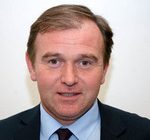
  • Kevin Hollinrake – 2022 Statement on Product Safety – Transitional Arrangements

    Kevin Hollinrake – 2022 Statement on Product Safety – Transitional Arrangements

    The statement made by Kevin Hollinrake, the Parliamentary Under-Secretary of State for Business, Energy and Industrial Strategy, in the House of Commons on 14 November 2022.

    I have today laid before Parliament the draft statutory instrument Product Safety and Metrology (Amendment and Transitional Provisions) Regulations 2022 and an accompanying draft explanatory memorandum. The instrument will provide businesses with additional time to transition to the post-exit independent UKCA regime, providing businesses with flexibility and choice on how to comply with product regulations.

    We are committed to doing all we can to provide flexibility for industry. These measures intend to reduce immediate burdens and costs for businesses, in light of current cost of living and global supply chain challenges, whilst maintaining high standards of product safety.

    The main purposes of this instrument are to:

    Extend acceptance of certain products meeting EU requirements and markings on the market in Great Britain for a further two years, until 31 December 2024.This intends to provide businesses with flexibility and choice on how to comply with product regulations.

    And, as previously announced on 20 June 2022, but with updated timelines:

    Provide that where manufacturers, or other relevant persons, have acted under EU conformity assessment procedures by 31 December 2024, that action will be treated as having been taken under the UK conformity assessment procedures until the expiry of the certificate, or until 31 December 2027, whichever is sooner. This is intended to reduce immediate costs associated with third-party retesting and recertification and make the transition to UKCA compliance easier for businesses.

    Extend existing labelling provisions for UKCA marking, importer information and responsible persons’ information until 31 December 2027. This is intended to reduce costs and burdens associated with fulfilling labelling requirements.

    There are different rules for medical devices, construction products, cableways, transportable pressure equipment, unmanned aircraft systems, rail products, cosmetics and marine equipment. There are also different rules for Northern Ireland.

    The statutory instrument will be made using powers under section 8 of the European Union (Withdrawal) Act 2018. Further details about the changes and their effects are contained in section 7 of the accompanying draft explanatory memorandum. The draft of this instrument and the accompanying draft explanatory memorandum can be found on gov.uk.

    My officials will continue to engage with industry closely to provide businesses with support, and to understand how to take a pragmatic approach to improving regulation to the benefit of businesses and consumers. This will include continuing to review the UK regulatory framework to understand how we could reduce costs and burdens for businesses in the longer term.

  • Volodymyr Zelenskyy – 2022 Speech to the G20 Summit

    Volodymyr Zelenskyy – 2022 Speech to the G20 Summit

    The speech made by Volodymyr Zelenskyy, the President of Ukraine, at the G20 Summit on 15 November 2022.

    Dear President Widodo!

    Dear colleagues! The world’s majority, which stands with us!

    I address you in Ukrainian, but in front of each of you on the table you will find our proposals. In your language. In demonstration of respect for you.

    I have just returned to our capital. Returned from the city of Kherson.

    Kherson is one of the key cities in the south of our country and the only regional centre that Russia managed to occupy after February 24.

    And now Kherson is already liberated.

    What does it mean? For Ukraine, this liberation operation of our Defence Forces is reminiscent of many battles of the past, which became turning points in the wars of the past.

    Those battles symbolized such changes, after which people already knew who will be victorious even though the ultimate victory still had to be fought for.

    It is like, for example, D-Day – the landing of the Allies in Normandy. It was not yet a final point in the fight against evil, but it already determined the entire further course of events. This is exactly what we are feeling now.

    Now – when Kherson is free.

    To liberate our entire land from the Russists, we still will have to fight for a while longer… To fight! However, if the victory will be ours in any case, and we are sure of it, then shouldn’t we try to implement our formula for peace to save thousands of lives and protect the world from further destabilizations?

    That is why I want to present our vision of the path to peace – how to actually achieve it. And not only for us, but also for all of you, your allies and partners.

    In my statement in September of this year at UN General Assembly, I presented Ukraine’s formula for peace. A formula of peace for the world.

    Just when the world was hoping to recover from the blows of the pandemic, the Russian war provoked a whole series of new global challenges. This must be stopped!

    There is a set of solutions that need to be implemented. And I want the conversation about it to be public, not behind the scenes. I want it to be discussed in specific terms, and not in broad strokes.

    Maybe I’ll go over the allotted time limit.

    But the issue of peace is worth it.

    I want this aggressive Russian war to end justly and on the basis of the UN Charter and international law. Not “somehow” – according to the apt formulation of the UN Secretary-General António Guterres.

    Ukraine should not be offered to conclude compromises with its conscience, sovereignty, territory and independence. We respect the rules and we are people of our word.

    Ukraine has always been a leader in peacekeeping efforts, and the world has witnessed it. And if Russia says that it supposedly wants to end this war, let it prove it with actions.

    Apparently, one cannot trust Russia’s words, and there will be no Minsks-3, which Russia would violate immediately after signing.

    If there are no concrete actions to restore peace, it means that Russia simply wants to deceive all of you again, deceive the world and freeze the war just when its defeats have become particularly notable.

    We will not allow Russia to wait it out, build up its forces, and then start a new series of terror and global destabilization.

    I am convinced now is the time when the Russian destructive war must and can be stopped.

    So, here are the proposals of Ukraine:

    The first is radiation and nuclear safety.

    No one has the right to blackmail the world with a radioactive disaster. This is an axiom.

    However, in front of the eyes of the whole world, Russia has turned our Zaporizhzhia Nuclear Power Plant into a radioactive bomb that can explode at any moment. Where will the radiation cloud go? Perhaps towards the territory of the EU. Maybe to Türkiye. Maybe to the Middle East. I consider as criminal even a hypothetical possibility of such a scenario!

    Radiation safety must be restored. The IAEA has already provided respective recommendations, confirming all the risks that we have repeatedly raised. Therefore, Russia must immediately withdraw all its militants from the territory of the Zaporizhzhia NPP. The station must be immediately transferred to the control of the IAEA and the Ukrainian personnel. The normal connection of the station to the power grid must be restored immediately so that nothing threatens the stability of the reactors.

    We proposed that IAEA missions are sent to all Ukrainian nuclear plants – four of them, 15 nuclear units in total. Plus the Chornobyl plant, which has been shut down and is under conservation. Such missions can verify that any hostile activity against Ukrainian nuclear facilities has indeed ceased.

    How long does it take to implement it? Russia can begin the demilitarization of the Zaporizhzhia NPP as early as tomorrow if it is really ready to restore the radioactive safety it violated.

    The same goes for the crazy threats of nuclear weapons that Russian officials resort to. There are and cannot be any excuses for nuclear blackmail. And I thank you, dear G-19, for making this clear.

    However, please use all your power to make Russia abandon nuclear threats. The basis for such efforts can be the Budapest Memorandum and respective capabilities of the signatory states.

    The second challenge is food security.

    Thanks to the strong participation of the UN, Türkiye and other partners, we have demonstrated how the cooperation of a few can restore food security for the many.

    I believe our export grain initiative deserves an indefinite extension – no matter when the war ends.

    The right to food is a fundamental right of every person in the world.

    Since July, Ukraine has exported over 10 million tons of food by sea. We can increase exports by several million tons per month. Thus for this I propose to expand the grain export initiative to our other ports – in particular, to the ports of Mykolaiv and “Olvia” in the Mykolaiv region.

    I also call on all countries – and in particular your countries, dear G-19 leaders – to join our initiative to help the poorest with food.

    We have already launched the initiative – “Grain From Ukraine”. And the first vessel – Nord Vind – leaves for Ethiopia with 27 thousand tons of wheat on board. This is the amount that can feed almost 100,000 people per year. There can be many such ships from Ukraine, and therefore there will be many people in poor countries who are saved from starvation.

    Ukraine can export 45 million tons of food this year. And let a significant part of it be directed to those who suffer the most.

    What do we propose exactly? Each country can join with a specific contribution and become a co-creator of the victory over hunger and the food crisis.

    The third is energy security.

    All of you can witness what the Russian terror is aimed at now. This is an attempt to turn the cold into a weapon. A weapon against millions of people.

    About 40% of our energy infrastructure were destroyed by the strikes of Russian missiles and Iranian drones used by the occupiers. Every week, Russia blows up our power plants, transformers, and electricity supply lines.

    A related goal of this terror is to prevent the export of our electricity to neighbouring countries, which could significantly help them stabilize the energy situation and reduce prices for consumers.

    Russia is interested in the energy crisis. And we should all be interested in ending terror.

    I thank all our partners who have already helped Ukraine with the supply of air defence and missile defence systems. This allows us to shoot down some of the Russian missiles and Iranian drones. But we must fully protect our sky. I ask you to increase respective assistance!

    We have already proposed that a mission of UN experts is sent to the objects of critical energy infrastructure of Ukraine to assess the scope of damage and the needs for restoration, as well as to prevent their further destruction. We need to speed up the dispatch of this mission!

    This will be a specific contribution of the international community to the stabilization of the energy situation in Ukraine and Europe, and therefore in the global energy market.

    However, regardless of the decisions of the world, any day Russia on its own can simply abandon strikes on Ukrainian energy generation and water and heat supply facilities. Let Russia prove by its rejection of terror that it is really interested in the restoration of peace.

    We must also take a fundamental step so that energy resources are no longer used as weapons. Price restrictions on Russian energy resources should be introduced.

    If Russia is trying to deprive Ukraine, Europe and all energy consumers in the world of predictability and price stability, the answer to this should be a forced limitation of export prices for Russia. So that the export price was not higher than the production cost. That’s fair. If you take something away, the world has the right to take from you.

    The fourth challenge is the release of all prisoners and deportees.

    Thousands of our people – military and civilians – are in the Russian captivity. They are subjected to brutal torture – this is mass abuse!

    In addition, we know by name 11 thousand children who were forcibly deported to Russia. They are separated from their parents in full knowledge that they have families.

    Apart from the children, whose data we know, there are tens of thousands of those who were forcibly deported and about whom we know only indirectly. Among them are many, whose parents were killed by Russian strikes, and now they are being held in the state that murdered them.

    Add to that hundreds of thousands of deported adults, and you will see what a humanitarian catastrophe the Russian war has caused.

    Add political prisoners – Ukrainian citizens who are held in Russia and in the temporarily occupied territory, in particular in Crimea.

    We must release all these people!

    I want to point out that we did not find support from the International Committee of the Red Cross. We do not see that they are fully fighting to gain access to the camps, where Ukrainian prisoners of war and political prisoners are held. Neither they are helping to find deported Ukrainians. This self-withdrawal is the self-destruction of the Red Cross as an organization that was once respected.

    We cannot wait.

    Therefore, we must unite for the sake of the only realistic model of the release of prisoners – “all for all”.

    And also for the release of all children and adults who were deported to Russia.

    I thank the partners for their efforts, which allowed the release of many Ukrainians and foreign citizens, who were captured by the Russians. And let your leadership and the sincere heart of other leaders, who are present now, help free other Ukrainians as well.

    The fifth – implementation of the UN Charter and restoration of Ukraine’s territorial integrity and the world order.

    Article 2 of the UN Charter defines everything very clearly. Everything that Russia violated by this war.

    Therefore, we must restore the validity of international law – and without any compromises with the aggressor. Because the UN Charter cannot be applied partially, selectively or “at will”.

    Russia must reaffirm the territorial integrity of Ukraine within the framework of the relevant resolutions of the UN General Assembly and the applicable international legally binding documents.

    It is not up to negotiations.

    The sixth challenge is withdrawal of Russian troops and cessation of hostilities.

    There is a clear understanding of how to achieve this.

    Russia must withdraw all its troops and armed formations from the territory of Ukraine. Ukraine’s control over all sections of our state border with Russia must be restored.

    This will result in a real and complete cessation of hostilities.

    Every day of delay means new deaths of Ukrainians, new threats to the world, and an insane increase in losses due to continuation of the Russian aggression – losses for everyone in the world.

    The seventh – justice.

    This is what stokes the greatest emotions.

    Everywhere, when we liberate our land, we see one thing – Russia leaves behind torture chambers and mass burials of murdered people.

    This was the case in Bucha and other cities in the north of the country after the occupation. This was the case in the Kharkiv region. The same we observe now in the Kherson region.

    As of today, we have a full information about four hundred and thirty children killed by Russian strikes. Only children! And only those about whom we know everything for sure.

    And how many mass graves are there in the territory that still remains under the control of Russia? What will we see in Mariupol?

    That is why the world should endorse establishment of the Special Tribunal regarding the crime of Russia’s aggression against Ukraine and the creation of an international mechanism to compensate for all the damages caused by this war. Compensation at the expense of Russian assets, because it is the aggressor who must do everything to restore the justice violated by it.

    We have already proposed a resolution of the UN General Assembly regarding an international compensation mechanism for damages caused by the Russian war. It is endorsed. We ask you to implement it.

    We are also preparing the second resolution – on the Special Tribunal. Please join and support it.

    Because there is no such nation in the world that does not appreciate justice.

    The eighth challenge is ecocide, the need for immediate protection of environment.

    Millions of hectares of forest were burned by shelling. Almost two hundred thousand hectares of our land are contaminated with unexploded mines and shells. Dozens of coal mines are flooded, including the mine in which an underground nuclear test explosion was carried out in 1979…

    This is the “Yunkom” mine in the Donetsk region. It is located on the territory occupied by Russia. It has been flooded for several years – precisely because of the occupiers. Everyone in Moscow knows what a threat it poses not only to the rivers in the Donetsk region, but also to the Black Sea basin. Only the de-occupation of our territory can provide the conditions for the elimination of this threat.

    It is impossible to accurately calculate the amount of atmospheric pollution from burnt oil depots and other fires… As well as from blown up sewage facilities, burned chemical plants, innumerable burial sites of slayed animals.

    Just imagine this – due to the Russian aggression, 6 million domestic animals died. 6 million! These are official numbers. At least 50,000 dolphins were killed in the Black Sea. Thousands of hectares of soil are contaminated with harmful substances – most of them are fertile soils. Were fertile soils.

    During the last week’s Climate Summit in Egypt, I proposed a platform to assess the environmental damage of war. We have to implement it.

    We must also find common responses to all environmental threats created by the war. Without this, there will be no return to a normal, stable life, and the reverberations of the war will remain for a long time – in the explosions of mines that will take the lives of children and adults, in the pollution of water, soil and atmosphere.

    I thank all the countries that are already helping us with demining. There is an urgent need for an increased number of equipment and experts for these operations.

    Funds and technologies are also needed for the restoration of water treatment facilities.

    This is not just a Ukrainian problem. This is a challenge for the whole world.

    The next – the ninth – is the prevention of escalation.

    A risk that still exists and will remain until our security is properly ensured.

    Ukraine is not a member of any of the alliances. And Russia was able to start this war precisely because Ukraine remained in the grey zone – between the Euro-Atlantic world and the Russian imperialism. Now we do not have any security assurances either. So, how can we prevent repetition of Russia’s such aggression against us?

    We need effective security assurances. That is why we prepared a draft agreement – the Kyiv Security Compact, and have already presented it to partners.

    Thus, we should hold an international conference to cement the key elements of the post-war security architecture in the Euro-Atlantic space, including guarantees for Ukraine.

    The main outcome of the conference should be the signing of the Kyiv Security Compact.

    We can do it any time – even this year. And we must do it.

    And the tenth – confirmation of the end of the war.

    When all the antiwar measures are implemented, when security and justice begin to be restored, a document confirming the end of the war should be signed by the parties.

    I would like to emphasize that none of the steps above can take long. A month for one step at the most. For some steps, a couple of days are enough.

    We already have a positive experience with the grain export initiative. How does it work?

    There is the UN – and two other parties to the agreements: on one side Ukraine, Türkiye and the UN, and on the other side Russia, Türkiye and the UN.

    Implementation of each of the points I have just presented can be worked out in a similar fashion. States ready to take the lead in this or that decision can become parties to the arrangement.

    Once again:

    radiation and nuclear safety; food security; energy security; release of all prisoners and deported persons; implementation of the UN Charter and restoration of Ukraine’s territorial integrity and the world order; withdrawal of Russian troops and cessation of hostilities; restoration of justice; countering ecocide; preventing escalation; and finally – confirmation of the end of the war.

    Dear leaders!

    I have outlined the paths each of you can choose for yourself – how to become a co-creator of peace.

    Please choose your path for leadership – and together we will surely implement the peace formula.

    What will it do?

    It will save thousands of lives. It will restore the validity of international law. It will revitalize the security architecture. It will return the global stability, without which the whole world is suffering. In essence – this is what the honest countries of the world are cooperating for.

    Peace is a global value. That, which is important for every person in the world.

    I am confident that it is likewise for each of you, leaders of G-19.

    I have outlined specific, practical solutions. They can be implemented. Quickly. They are effective.

    And if Russia opposes our peace formula, you will see that it only wants war.

    Ukraine is grateful to everyone in the world who helps us to protect freedom and to restore peace.

    Let our joint efforts be crowned with success as soon as possible and be reflected in the outcomes of this summit.

    Thank you for the invitation!

    Glory to Ukraine!
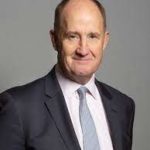
  • Alok Sharma – 2022 Speech at COP27 on Delivering on Ambitious Climate Commitments

    Alok Sharma – 2022 Speech at COP27 on Delivering on Ambitious Climate Commitments

    The speech made by Alok Sharma, the COP26 President, on 15 November 2022.

    Thank you Minister Samuda for your kind words and actually for a great explanation of what this partnership has achieved and continues to achieve.

    And it is remarkable.

    We’ve got 200 members, 120 countries – developing countries, developed countries – and 80 institutions, all working together.

    This is a unique platform and it’s about coordinating between donors and developing nations, ensuring they support the implementation of NDCs [Nationally Determined Contributions] across the world.

    Now from a UK perspective, we’ve been proud and honoured to co-chair with our friends and we’ve also put money behind this process. We’ve committed £27 million in core funding from 2019 to 2025.

    If I look back a year from now, we had almost 200 countries that came together and forged the Glasgow Climate Pact.

    And I was very proud of that. I was very proud of everyone who helped to deliver that.

    The Minister talked about the impact of climate change around the world.

    But it is the case that the chronic threat of climate change is getting worse.

    And that’s why countries came together at COP26, because they understood it was in their common self-interest to act and to deliver on the Glasgow Climate Pact.

    And one of the key elements of that was the ratchet.

    So, we went from NDCs coming forward every five years, to every country signing up to revise their NDC, to align it with the Paris temperature goal by the end of this year.

    Now we’ve had 33 countries that have come forward so far.

    We need more.

    It was a commitment we’ve all made and we need to deliver on it.

    And actually, if you look at the NDCs – that were delivered going into COP26 and those that have come forward since – and if you take into account the net zero commitments we’ve already got from countries around the world, particularly the G20, 19 of the G20 have committed to net zero.

    If you take all of that into account, what the IEA [International Energy Agency] and UNEP [United Nations Environment Programme] tell you is that we could be heading towards 1.7°C of global warming by the end of the century.

    It’s not 1.5 friends, it is not 1.5.

    But it is progress.

    And if you’re going to make this progress, you have to deliver on your NDCs and on your detailed commitments as well.

    That requires financial support, it requires capacity building in certain nations.

    That’s why we should be really proud that this partnership has supported 64 countries to raise ambition and to improve the quality of their NDCs.

    More than £1.4 billion in technical assistance has been provided.

    Minister Samuda has eloquently outlined a lot of the other things the partnership has done – the need for more finance, the need to double adaptation finance from developed nations that we agreed in Glasgow as well.

    This partnership has gone further. It’s about championing easier access to finance and much more transparency as well.

    We’ve got the new online hub that has been put forward. That will help as part of this process.

    What I would say to you all is that we can’t lose sight of why we are doing this.

    Yes, this is about cleaning up our environment. Yes, this is about delivering a better future for generations to come.

    But it is also about economic growth.

    This is about millions of new green jobs. It’s about billions, trillions of private sector investment flowing into the sunrise industries of today and tomorrow.

    That’s why the work that we do collectively is so vital.

    And I just want to end, friends, by saying that I think it is absolutely vital that we keep 1.5 alive.

    We cannot lose 1.5 at this COP.

    We can’t afford to go backwards.

    We cannot accept a weak outcome coming out of COP27.

    And I hope you’ll join us in making sure that we have ambition.

    Because what I want to see coming out of this COP is progress.

    Progress and building on the ambition that almost 200 countries delivered together in forging the Glasgow Climate Pact.

    So please join us in calling for more ambition at this COP.

  • Volodymyr Zelenskyy – 2022 Speech at 27th UN Conference on Climate Change in Sharm el-Sheikh

    Volodymyr Zelenskyy – 2022 Speech at 27th UN Conference on Climate Change in Sharm el-Sheikh

    The speech made by Volodymdr Zelenskyy, the President of Ukraine, on 8 November 2022.

    Dear colleagues!

    Dear Mr. President Abdel Fattah el-Sisi!

    Ladies and Gentlemen!

    At this Conference, like at other summits and high level meetings on catastrophic climate change, there is no lack of words. There is no lack of good definitions and no shortage of prescriptions for what the world should do. I listened to some of the speeches today – and I agree with many of the assessments.

    The world is on the brink. And beyond this limit – devastating changes that will forever change the usual life on all continents. Colleagues have described well what this means. No one can stay aside.

    And the poorer the person, the poorer the family, the poorer the country – the more painful the effects of climate change will be for them. However, this also applies to all rich nations – it is impossible to buy off the destruction of the climate.

    But why do we keep talking about it every year? Why instead of reports on what has been done, the same forecasts and appeals are made every year?

    I will be honest – there are still many who do not take the climate agenda seriously. And not only in politics, but also in big business.

    There are still many for whom climate change is just rhetoric or marketing or political ritual – whatever, but not real action.

    They are the ones who hamper the implementation of climate goals. They are the ones in their offices who make fun of those who fight to save life on the planet, although in public they seem to support the work for the sake of nature in every possible way. They are the ones who start wars of aggression when the planet cannot afford a single gunshot, because it needs global joint actions.

    You all know about the war that Russia started in Europe, trying to destroy the independence of my country. But what does this war mean?

    This Russian war has brought about an energy crisis that has forced dozens of countries to resume coal-fired power generation in order to lower energy prices for their people at least a little… To lower prices that are shockingly rising due to deliberate Russian actions.

    The Russian war brought an acute food crisis to the world, which hit worst those countries suffering from the existing manifestations of climate change – catastrophic droughts, large-scale floods.

    The Russian war destroyed 5 million acres of forests in Ukraine in less than six months! Not every country in the world has such an area of forests that were burned in Ukraine by Russian shelling.

    We have to check every day the situation at Zaporizhzhia nuclear power plant, the largest in Europe. If there is no radiation leaks? The Russian army has turned this nuclear power plant de-facto into a military training ground. They are constantly “playing” with connecting and disconnecting the plant and nuclear reactors from the power grid. This is a direct risk of a radiation disaster.

    Who will care, for example, about the amount of the greenhouse gases in the atmosphere if part of Europe or the Middle East, and possibly northern Africa, God forbid, are covered by a radiation cloud after an accident in Zaporizhzhia? Last year we could not even imagine that kind of question, but this year Russia has posed dozens of such questions to the world.

    Ladies and Gentlemen!

    World needs honesty.We must tell those who do not take the climate agenda seriously that they are making a catastrophic mistake.

    We must stop those who, with their insane and illegal war, are destroying the world’s ability to work united for a common goal.

    There can be no effective climate policy without peace on the Earth. Because, in fact, nations are thinking only about how to protect themselves here and now from the threats created in particular by the Russian aggression.

    Russia needs to shut the guns and hide its missiles so the world finally hears what we can all really do together to save ourselves from the climate disaster. All of us – in Europe, Africa, Asia, America, Australia.

    I invite you all to support our initiative presented here at the Conference – creation of a global platform to assess the Impact of military actions on climate and environment.

    We are all thinking about how to generate hundreds of billions of dollars to help developing countries protect themselves from the climate change. Under these conditions, how can anyone cause additional insane damage to the nature with their invasive military ambitions? Such ambitions deserve only punishment.

    Mr. President of Egypt said an important thing in his speech: we must meet expectations of the people all over the world – people who are suffering more than ever. I absolutely support this goal.

    We must ensure that suffering does not multiply because the world does not have time to respond to climate challenges. But to do this, we need joint effective actions. And for them to be, we need peace.

    And I thank everyone who works for peace! I thank everyone who takes seriously the need to protect life on the Earth for the benefit of all people – all nations, all classes, all cultures.

    I thank you for your attention.

    Слава Україні!

  • Sadiq Khan – 2021 Statement on the Removal of the Heathrow Free Travel Zone

    Sadiq Khan – 2021 Statement on the Removal of the Heathrow Free Travel Zone

    The statement made by Sadiq Khan, the Mayor of London, on 17 March 2021.

    I was disappointed by the decision by Heathrow Airport Limited (HAL) to suspend the bulk of its support for public transport services, including the Heathrow Bus Free Travel Zone. As soon as Transport for London (TfL) and I became aware of HAL’s plan, our concerns were relayed, both verbally and in writing. On 3 December 2020, TfL’s Director of City Planning wrote to the HAL Surface Access Director citing concerns that these changes may encourage more staff to switch to making journeys to and from work by car.

  • Volodymyr Zelenskyy – 2022 Speech at the 34th Award Ceremony of the National Constitution Center

    Volodymyr Zelenskyy – 2022 Speech at the 34th Award Ceremony of the National Constitution Center

    The speech made by Volodymyr Zelenskyy, the President of Ukraine, on 8 November 2022.

    Dear Friends!

    It is a great honor to be awarded with the Medal of Liberty, presented to me by senators Chris Coons and Rob Portman during their visit to Kyiv.

    This award really demonstrates how and what Ukrainian people are fighting for. Liberty is the main word for us and what really unites all Ukrainians.

    As in any democratic society, Ukrainians have different views on life and politics. As the case was in previous years, we felt divided arguing whether we would ever be able to stand together.

    But when Russia decided to destroy our freedom and wipe Ukraine off the face of the earth, we immediately got united and we keep this unity.

    All divisions are put aside. There is no place for political conflicts. Because when there is a mortal threat to freedom, everything else is not important.

    Millions of people are fighting and working to protect Ukraine. They are very different people. After the Russian full-scale invasion started, they all decided – “we are here” and we will never give up our freedom.

    And I believe that this Liberty Medal is for all men and women of Ukraine who, after the 24th of February, showed to the world’s largest autocracy that only defeat is what it can win in Ukraine.

    These are our soldiers and officers. This is a massive wave of our volunteers – those who provide our defenders with everything they need. These are farmers who stopped Russian armored vehicles on the roads to their communities and helped the Army. These are IT specialists, who build defense against Russian cyberattacks. These are companies that work despite constant Russian terror and keep jobs for Ukrainians. These are doctors who help always everywhere. These are school teachers and university professors who can read lectures even in bomb shelters and distantly from the trenches on the front lines, but they do not give up and teach children – teach them to believe in themselves, in freedom and in Ukraine.

    In less than nine months, more than thirty thousand Ukrainians have been honored state awards for their contribution to our national defense.

    First of all, they are our heroic soldiers. These are rescuers who do away with the effects of Russian shelling. These are energy workers who return electricity to people after Russian missiles and Iranian drones hit power plants – Russia wants to leave millions of our people without energy in the winter. These are transport workers who supply our defense, economy and communities. These are different people of various jobs who are all equally fight against the invasion.

    However, this Liberty Medal is an award not only for our people.

    When this war began, Ukraine heard something very important from the world – we heard that “the democracies are here.” And we see now what democracies are capable of when they act in unity.

    Every potential aggressor in the world sees the help that the United States and the free world is providing to us, and all the sanctions imposed against Russia – sees and believes that it is better not to start a war against freedom at all. In fact, this is one of the greatest contributions to the global peace and security during our lifetime.

    Together with our partners, we are developing a new security architecture – these are security guarantees for Ukraine and Europe which will not only re-empower the principles of the UN Charter, but will also become a model for nations in other parts of the world – a model to avoid new cruel wars.

    And that is why, I believe that this Liberty Medal is also to all friends of freedom in the United States and other countries. To all those, who are helping us to restore our territorial integrity, and thus to restore peace.

    This Liberty Medal is to those who support us with weapons, air defense systems, finance and diplomacy. To those who are helping to rebuild after the Russian strikes. To those who impose sanctions against Russia and its accomplices such as the Iranian regime.

    When after the beginning of the Russian invasion, I said – “the president is here”, when millions of Ukrainians decided at the same time – “we are here” and we will not surrender, and when the world supported us, saying – “democracies are here”, then it meant and still mean – “freedom is here “, “human dignity is here”, “law is here”. And one day it will definitely mean – “peace is here”.

    I call on you to maintain unwavering unity, as it is now, until that very day when we all hear those important words we have been dreaming of… Until we hear that peace has finally been restored. Democracies must not stop on their way to the victory.

    I thank you for your attention!

    Thank you for your support – President Biden, both parties of the Congress, and every American citizen! Please know that you support not just a country or its leader, you support millions of people who, like you, cherish freedom.

    And I decided to send the prize money of our Liberty Medal to help Ukrainian veterans – to rebuild and modernize the rehabilitation center for veterans in the city of Borodyanka, Kyiv region of Ukraine. Let everything bring our victory closer!

    Слава Україні!

  • Kemi Badenoch – 2022 Speech on Free Trade to the CATO Institute

    Kemi Badenoch – 2022 Speech on Free Trade to the CATO Institute

    The speech made by Kemi Badenoch. the Secretary of State for International Trade, in Washington DC on 14 November 2022.

    Thank you Ryan, that’s a fantastic and accurate introduction. So thank you, it’s a real pleasure to be speaking this evening at the CATO Institute. It’s lovely to see so many people who’ve come to listen to what I have to say on trade!

    So I’ve been in the role of Trade Secretary for two months now under two Prime Ministers, and there is a tendency when speaking to think-tanks to talk about the importance of free trade.

    But this is the CATO Institute, and if I have to explain to this audience why free trade is important then we have some very serious problems.

    So, instead, I’d like to talk very personally about what Free Markets and Free Trade mean to me.

    Many of you may not know, but I grew up in Nigeria and moved to the UK when I was 16.

    Where I did grow up had military governments and so I have a first-hand experience of authoritarianism and protectionism that I think is quite unique, and it’s unique not just in the UK, but in what we call “the West today”.

    I think it’s actually quite extraordinary that I’m standing here in front of you as the UK’s Trade Secretary but here I am, and here’s what I want you to know.

    When I talk about a belief in free trade, it’s not empty rhetoric. I’m speaking from personal experience about what happens when you don’t have it. I’ve seen what happens when a nation can’t trade or worse embraces protectionism.

    The result isn’t growth and the nurturing of local industries which is always the excuse that people give. The result is poverty, and the very best of a country’s talent leaving to find opportunities elsewhere.

    People worry about the free market and they talk about this as if it’s an uncontrolled experiment, but the market is people having the freedom to make choices to improve their lives. It does need good regulation, so that people don’t cheat the system, it needs good regulation to prevent unfair trading practices, monopolies and exploitation of consumers.

    So it’s not an untraveled free market, but you do need to have free trade and free markets because when you don’t, weird things happen.

    So I talk about things that I’ve seen growing up. For example when the government wanted to improve the tomato industry in Nigeria and so it banned tomato imports. And what didn’t happen was loads of farmers deciding to grow tomatoes, what instead happened was tomatoes becoming like diamonds in terms of how hard it was to get them.

    The supply dried up completely, the prices went up, big companies that used tomatoes as an ingredient cornered the market, and people who needed to use them to just make food—caterers, restaurants, people for whom that was almost the only vegetable they had, couldn’t access it because that’s not how you grow a local industry.

    And I saw it happen over and over again with finance, capital controls turning the currency into wastepaper effectively.

    Or, a story I love to tell about when the government banned rice imports and rice became a black market product.

    And when my mother came to visit me in London, her suitcase was not full of things from Harrods and Hamleys, it was full of Tesco value rice which she packed right up to fill her entire suitcase. For those of you who know what I mean by Tesco value rice it became a very, very precious commodity.

    That’s what a lack of free trade and free markets creates, and there’s dozens and dozens of examples that I could give but, like I said, at CATO I shouldn’t have to explain why that is.

    But the reason why I talk about it is because I’m fighting for something I really believe in. Free markets and free trade make the world a better place and that is the only purpose to becoming a politician. Nothing else matters.

    So why has the world become more protectionist? I think that’s a more interesting question rather than preaching to the choir about the benefits of free trade and free markets.

    Why has the world become more protectionist? Everyone here knows that protectionism is not the answer.

    The US and the UK have done a lot to expand the concept of free trade – especially in the last 75 years, we founded the multilateral trading system with our allies, and our transatlantic partnership embodies why free trade works and why it matters so much.

    But one of the many reasons I’m so frustrated by the trope that Brexit was the UK retreating from the world, is because it is completely untrue. I voted to leave the European Union and I saw Brexit as a once in a generation opportunity for the UK to embrace the world. And trade was – and still is – at the heart of that.

    So why does it feel like everyone is becoming more protectionist?

    And the answer is uncertainty. We live in uncertain times.

    A global pandemic that changed our understanding of the world, Russia’s war in Ukraine, and a more assertive China are just three of the things that are making people more fearful about the future.

    Relatively low economic growth in the West over recent decades compared to what people are used to has also caused a part of this problem. So what can we do? What do we need to provide more security for the people of the world. That relative low economic growth is absolutely terrifying, and for those people who saw the post war 20th century it makes a lot of our contemporaries feel poorer than they actually are. And if you compound that with the belief that their jobs are being taken away either by technology or offshoring, it is no surprise that the instinct is to protect what we have.

    So if we are going to make people feel less protectionist, we’re going to have to make them feel more secure first. And we need to show how free trade and free markets, when done properly, do provide security.

    So trade as a tool of security is at the very heart of the trade policy that I’m going to be pushing as the UK’s Trade Secretary. The US and UK can provide security and indeed certainty by doing three things:

    One, investing in the future, not just the present.

    Two, Securing and diversifying supply chains, which means more trade, not less.

    And three, deepening international partnerships, which is one of the reasons I am here.

    Here are some examples of how we’re doing this in the UK in just one area – so let’s talk about climate change as an example.

    Two weeks ago, I launched the UK’s Green Trade and Investment Expo securing millions of pounds that will grow our economy and create jobs across the industries of the future.

    We all know that climate change is a challenge for us all, wherever we live in the world. But we know that we can and should solve it by using free trade and investment to accelerate the technological progress that will protect the planet. And something that not enough politicians say, we must do this, we must protect the planet in a way that does not impoverish the UK, the US or let’s be honest any other country.

    I talked then about securing and diversifying supply chains. We will need this to improve energy security globally.

    So back home in Europe, Russia’s invasion of Ukraine has made it clear that relying on authoritarian regimes for energy is not sustainable. Doing so has made it harder and more expensive to heat our homes and the ensuing energy crisis has increased inflation to levels not seen in recent memory.

    So our trade relationships will help secure our energy supply. But it’s long-term investment in nuclear, in renewables in democratic countries that will reduce our dependence on fossil fuels and keep down consumer costs.

    And trade is more than selling each other goods and services, it’s also about foreign direct investment. Technological investment creates the jobs of tomorrow.

    I said to all those investors who came to the Expo from around the world, including the US, investment can future-proof the economy if we get it right.

    More importantly, as we’re seeing in the UK it drives economic growth and keeps communities alive. Communities such as Blyth in the North East of England which was a coal mining town once in decline, but is now thriving as it becomes one of the UK’s most important bases for offshore wind and is driving the clean energy revolution, funded by investors from across the world – including here.

    And that’s just on climate change.

    Now that we’ve left the European Union and have an independent trade policy what does this look like in practice?

    Well, we’re using our new freedoms to negotiate new trade deals and upgrade existing ones– deepening our ties with our allies while creating new economic partnerships.

    We’re joining the Comprehensive and Progressive Trans Pacific Partnership, or CPTPP as we call it – it’s a network of 11 countries, spanning from Asia to the Americas, it’s got Canada and Mexico in it, maybe the US someday – but it covers at the moment half a billion people.

    We’re strengthening our relationships with our partners and allies in the Indo Pacific, a region that will be responsible for half of global growth in the coming decades. We’re thinking about the future.

    We’re in talks on a free trade deal with India. India’s a country that’s going to be the world’s third biggest economy by 2050.

    We’re acting to protect global supply chains after Covid-19 and of course the invasion of Ukraine revealed so many vulnerabilities.

    And what do we want from the US?

    Well, we’ve made no secret that we want to deepen trade ties through a comprehensive free trade agreement. So those of you who want more free trade with the UK, please write to your Congressman. And I hear there’s some new ones this week.

    But the lack of an FTA is no barrier to boosting trade.

    Our trading relationship with the US was worth over $250 million over the past 12 months.

    So we are each other’s number one source of foreign direct investment. More than 1.2 million Americans work for UK companies in the United States, and every day just under 1.5 million Brits go to work for an American firm.

    So the UK has been nimble and innovative in finding other ways of working with you beyond free trade agreements.

    For instance, we’re signing Memorandum of Understandings on a state-wide level.

    In May, we signed one on trade and economic cooperation with Indiana – that’s a state that already buys $1.4 billion worth of UK goods every year. North Carolina followed in July.

    And my team is securing others and looking to sign even more.

    So as I said, I’m here to continue deepening our international partnership.

    Our trading relationship does not just build itself. We need to work at it. That doesn’t just mean giving speeches about how much we love each other, it also sometimes means fixing problems and offering challenge when required.

    So while I’m here, I’ll also be raising our concerns about the Inflation Reduction Act. We know this was a strategic step to protect the US economy and we also know that there’ll be many people in DC, and across the country who support it.

    But it’s important these measures don’t conflate long standing allies and partners like the UK, with those other countries that might want to damage US interests.

    So everyone here knows the ins and outs of the Inflation Reduction Act. However, you may not know that the substantial new tax credits for electric cars, not only bars vehicles made in the UK from the US market, but it also affects vehicles made in the US by UK manufacturers.

    So the investment and innovation taking place in the UK should be helping the US with tomorrow’s challenges.

    US businesses already have over $500 billion invested in our economy – that’s more than anywhere else in the world, and to put that figure into context it’s more than Sweden’s annual GDP.

    So it’s one thing if over the long term one country locks out its friends to compete with opponents, but it’s another if you’re locking out the investment made by your own companies.

    And those same opponents don’t hesitate to use strong arm tactics to create geopolitical divides and to threaten and coerce smaller economies.

    So if the US and UK are to future proof ourselves and our allies against a changing world, we need to approach trade in a more muscular way.

    As world leading centres for strategic industries, we need to develop trade policy that reflects how global commerce is evolving. And we need to use it to fight even harder for the ideas and values that underpin our democracies and economies.

    And we must help each other do that. So that means working together to shape the rules that govern global commerce before those who want to grab control and stifle free trade get there first.

    Protecting intellectual property rights is one example. Both our economies were built on the work of inventors and entrepreneurs.

    And intellectual property rights drive the innovation, they incentivise inventors, they protect and reward their ideas. And if we conflate these ideas of Intellectual Property with protectionism, we risk choking off innovation.

    So, it’s important that the UK and US work together to champion the multilateral rules-based system, uphold the international Intellectual Property rights framework – and with every trade barrier that falls and every contract that gets signed between businesses, opportunity and prosperity increases around the world. This means democracy flourishes and the case for autocracy diminishes.

    There is an exciting future ahead for us both in terms of UK-US trade cooperation. I’m thrilled to be part of that and to be working with you here in Washington and also across the US.

    And I look forward to a shared transatlantic future filled with even more friendship, economic cooperation and mutual success.

    Thank you.

  • PRESS RELEASE : President held another meeting of the Staff of the Supreme Commander-in-Chief [November 2022]

    PRESS RELEASE : President held another meeting of the Staff of the Supreme Commander-in-Chief [November 2022]

    The press release issued by the President of Ukraine on 2 November 2022.

    President of Ukraine Volodymyr Zelenskyy held another meeting of the Staff of the Supreme Commander-in-Chief on Wednesday.

    The Commander-in-Chief of the Armed Forces of Ukraine and the commanders of the troops of operational directions reported on the current situation at the front. The intelligence representatives informed about the defensive and offensive capabilities of the enemy. The next steps to restore the territorial integrity of Ukraine were agreed upon.

    At the meeting, the parties discussed the course of reconstruction of critical infrastructure facilities, in particular in the energy sector, which were destroyed the day before as a result of the air attacks of the terrorist state. The work of the air defense forces of Ukraine, which stopped another attack by enemy kamikaze drones at night, was noted.

    The President emphasized the need to speed up work in order to form an effective air defense system of Ukraine.

    The participants of the meeting also considered the issue of providing the units with ammunition and the course of preparation of the troops for the winter period.

    The meeting was attended by: Head of the Office of the President Andriy Yermak, Secretary of the National Security and Defense Council Oleksiy Danilov, Minister of Defense Oleksiy Reznikov, Commander-in-Chief of the Armed Forces of Ukraine Valerii Zaluzhny, Chief of the Main Intelligence Directorate Kyrylo Budanov, Head of the Foreign Intelligence Service of Ukraine Oleksandr Lytvynenko, Commander of the Ground Forces Oleksandr Syrskyi and the commanders of the operational directions.

    The meeting was also attended by: Minister of Internal Affairs Denys Monastyrskyi, Minister of Foreign Affairs Dmytro Kuleba, Minister of Infrastructure Oleksandr Kubrakov, other members of the government, heads of law enforcement and security agencies.

  • George Eustice – 2022 Speech on the UK Trade Deals with Australia and New Zealand

    George Eustice – 2022 Speech on the UK Trade Deals with Australia and New Zealand

    The speech made by Greg Hands, the Conservative MP for Camborne and Redruth, in the House of Commons on 14 November 2022.

    The current Secretary of State for International Trade had no role in the discussions on these deals, although my right hon. Friend the Minister for Trade Policy did and will recall some of them. The Secretary of State was not in the Cabinet at the time, nor in any of the Cabinet Committees, while the Minister has defended the position that was taken at the time.

    My position is obviously slightly different: I was in the Cabinet in 2021 and I was on the Cabinet Sub-Committee that argued over the Australian trade deal—for, yes, there were deep arguments and differences about how we should approach it—but since I now enjoy the freedom of the Back Benches, I no longer have to put such a positive gloss on what was agreed. I hope my right hon. Friend will understand my reason for doing this, which is that unless we recognise the failures the Department for International Trade made during the Australia negotiations, we will not be able to learn the lessons for future negotiations. There are critical negotiations under way right now, notably on the CPTPP and on Canada, and it is essential that the Department does not repeat the mistakes it made.

    The first step is to recognise that the Australia trade deal is not actually a very good deal for the UK, which was not for lack of trying on my part. Indeed, as my right hon. Friend pointed out, there were things that we achieved, such as a special agricultural safeguard for years 10 to 15, staged liberalisation across the first decade and the protection of British sovereignty in sanitary and phytosanitary issues. It is no surprise that many of these areas were negotiated either exclusively or predominantly by the Department for Environment, Food and Rural Affairs on behalf of the UK team, but it has to be said that, overall, the truth of the matter is that the UK gave away far too much for far too little in return.

    What would a good agreement have looked like? It would have been one having enduring TRQs on beef in particular, but probably also for sheep. The volumes would probably have started at about 10,000 tonnes per annum, raising after a decade to about 60,000 tonnes or perhaps 80,000 tonnes, which could have been manageable. We did not need to give Australia or New Zealand full liberalisation in beef and sheep—it was not in our economic interest to do so, and neither Australia nor New Zealand had anything to offer in return for such a grand concession. Let us not forget that, while we are about to open our market to unbridled access for Australian beef, Australia remains one of the few countries left in the world that maintains an absolute export ban for British beef. Not a single kilo of British beef can be sold in Australia since it maintains a protectionist ban, using the BSE—bovine spongiform encephalopathy—episode as a sham reason for doing so.

    The impact of full liberalisation is hard to predict; the reality is that, provided we maintain a ban on hormones in beef, volumes might remain quite low, but here is the big challenge. The CPTPP negotiation that is under way could mean accession and agreement to new dispute resolution processes that will undermine the UK’s sovereignty in SPS issues and actually undermine our approach when it comes to banning hormones in beef. If some foreign court or foreign mediation process were to say as a matter of treaty that the UK had to accept beef from Australia treated with hormones, that could change the nature of this agreement considerably; volumes could rise significantly, perhaps to more than 200,000 tonnes over time, and that would have a very severe impact on British beef.

    Anthony Mangnall

    I may be wrong, but it is my understanding that CPTPP dispute mechanisms are through the World Trade Organisation, and I am not sure that the WTO, as it stands, can override any one of our SPS standards. Does my right hon. Friend agree?

    George Eustice

    The CPTPP has provisions for its own dispute resolution and they are modelled on what happens in the WTO, but here is the thing: if we do not get the negotiation right with CPTPP it might undermine our ability to practise our own SPS regime and have independence in this area.

    If we were to have a significant increase in Australian beef, because we had been forced by a court or a dispute resolution service to allow hormones in beef—and there have been close challenges in the past, through the WTO—that would be intolerable for any British Government. The Government of the day would probably have to trigger article 32.8 of the agreement and give six months’ notice to terminate the FTA. In my view the best clause in our treaty with Australia is that final clause, because it gives any UK Government present or future an unbridled right to terminate and renegotiate the FTA at any time with just six months’ notice. Many Members will remember that we had hours of fun in the last Parliament discussing triggering article 50 of the treaty on European Union; I suspect we would prefer not to have to go back to that, but article 32.8 is the ultimate and final sanction, which, as things have turned out, is a critical safeguard given the size of the concessions made to Australia in the trade deal.

    What lessons should we learn? First, and most important, we should not set arbitrary timescales for concluding negotiations. The UK went into this negotiation holding the strongest hand—holding all the best cards—but at some point in early summer 2021 the then Trade Secretary my right hon. Friend the Member for South West Norfolk (Elizabeth Truss) took a decision to set an arbitrary target to conclude heads of terms by the time of the G7 summit, and from that moment the UK was repeatedly on the back foot. In fact, at one point the then Trade Secretary asked her Australian opposite number what he would need in order to be able to conclude an agreement by the time of the G7. Of course, the Australian negotiator kindly set out the Australian terms, which eventually shaped the deal.

    We must never repeat that mistake. The Minister and Secretary of State will currently be getting submissions from officials saying that we need to join the CPTPP in a hurry and that if we do not do so now we will not join the club early enough and will not be shaping the rules—they will be saying, “We might miss the boat, this is a crucial part of the Pacific tilt” and so on. But the best thing the Minister can do is go back and tell Crawford Falconer, “I don’t care if it takes a decade to do this agreement; we will get the right agreement—we will never again set the clock against ourselves and shatter our own negotiating position.”

    The second lesson is that we must look at making a machinery of government change. I believe all responsibility for agrifood negotiations, including relating to tariff rate quotas, should be transferred from the Department for International Trade to the Department for Environment, Food and Rural Affairs, because DEFRA has superior technical knowledge in this area. It is important to remember that DEFRA never left the world stage; the DIT is a new creation with people often lacking experience but doing their best to pick things up, whereas even during the EU era DEFRA maintained a presence in trade negotiations, advising and informing the EU’s position and dealing with matters such as market access around the globe. DEFRA is worldly and has deep technical knowledge in this area and it should, therefore, take full responsibility for negotiating TRQs in agrifood.

    The third change we must look at making is strengthening the role of Parliament in scrutinising and perhaps even agreeing the negotiating mandate. Countries such as Japan and the United States and the EU all use their parliamentary processes to their advantage. When we were negotiating with Japan and seeking to increase access for British cheese, I remember Japan said, “We would love to, but unfortunately we can’t because there is a parliamentary motion that we cannot breach. Therefore, we cannot retreat on this position.” The UK does not have that. We could use Parliament and a mandate agreed by Parliament to say to trading partners, “We’re not able to agree to what you’re asking for.” However, if they perceive that Crawford Falconer calls the shots and that he will always go through some back channel to get something agreed, we will not be in a strong position and our negotiating position will be undermined.

    That brings me to my final point. I have always been a huge fan of the British civil service; I was never a Minister or politician to level criticism at them. I enjoyed nine years of incredibly good relations with civil servants at all levels, but I do want to raise a comment about personnel within the Department for International Trade. Crawford Falconer, currently the interim permanent secretary, is not fit for that position, in my experience. His approach was always to internalise Australian demands, often when they were against UK interests, and his advice was invariably to retreat and make fresh concessions. All the while, he resented people who had a greater understanding of technical issues than he did. It was perhaps something of a surprise when he arrived from New Zealand to find that there were probably several hundred civil servants in the UK civil service who understood trade better than he did, and he has not been good, over the years, at listening to them. He has now done that job for several years, and it would be a good opportunity for him to move on and for us to get a different type of negotiator in place—somebody who understands British interests better than he has been able to.

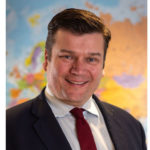
  • James Heappey – 2022 Statement on the UN Peacekeeping Mission in Mali

    James Heappey – 2022 Statement on the UN Peacekeeping Mission in Mali

    The statement made by James Heappey, the Minister for the Armed Forces, in the House of Commons on 14 November 2022.

    West Africa is an important region for the United Kingdom and our allies across Europe. And the UK is strongly committed to supporting the UN to deliver its peacekeeping commitments around the world. That is why since 2018 we had been supporting the French-led counter-terrorism mission in Mali with CH-47 Chinook helicopters under Operation BARKHANE and more recently, since 2020, through the deployment of a Long Range Reconnaissance Group as part of the UN’s MINUSMA peacekeeping mission.

    The House will be aware, however, that in February, President Macron announced the drawdown of French troops in Mali and was joined in that announcement by all other European nations, as well as Canada, that were contributing to the French-led Operations BARKHANE and TAKUBA. In March, Sweden announced that it would be leaving the UN’s MINUSMA mission.

    Today, Mr Speaker, I can announce that the UK contingent will also now be leaving the MINUSMA mission earlier than planned.

    Mr Speaker, we should be clear that responsibility for all of this sits in Bamako. Two coups in three years have undermined international efforts to advance peace. On my most recent visit last November, I met with the Malian Defence Minister and implored him to see the huge value of the French-led international effort in his country.

    However, soon afterwards, the Malian Government began working with the Russian mercenary group Wagner and actively sought to interfere with the work of both the French-led and UN missions. The Wagner group is linked to mass human rights abuses. The Malian government’s partnership with Wagner group is counterproductive to lasting stability and security in their region.

    Mr Speaker, this Government cannot deploy our nation’s military to provide security when the host country’s Government is not willing to work with us to deliver lasting stability and security.

    However, our commitment to West Africa and the important work of the UN is undiminished. We’ve been working closely with our allies to consider options for rebalancing our deployment alongside France, the EU and other like-minded allies. On Monday and Tuesday next week, Mr Speaker, I will join colleagues from across Europe and West Africa in Accra to co-ordinate our renewed response to instability in the Sahel.

    This will be the first major gathering in support of the Accra Initiative – a West African-led solution focussed initially on preventing further contagion of the insurgency into Cote d’Ivoire, Ghana, Togo, Benin and Niger and tackling the growing levels of violence in Burkina Faso as well as Mali – making this a very timely conference indeed.

    And of course, Mr Speaker, it is not just the UK military that will remain committed in West Africa – the UK will continue its commitment to Mali and the Sahel through our humanitarian, stabilisation and development assistance, working in close coordination with partners.

    Nor, Mr Speaker, is this a reduction in our commitment to the United Nations. The UK remains an important contributor of troops through Operation TOSCA in Cyprus, and staff officers across several missions, and provide training to around 10,000 military, police and civilian peacekeepers from a range of countries annually. We remain the fifth largest financial contributor and will continue to drive reform in New York. Indeed we are working with New York on developing a pilot – to be delivered through the British Peace Support Team based in Nairobi – to develop the capacity of UN troop contributing nations across Africa.

    Mr Speaker, we will of course co-ordinate with allies as we drawdown from Gao and have been sharing our plans with them over recent months. The Army will be issuing orders imminently to reconfigure the next deployment to drawdown our presence. We are leaving the MINUSMA mission earlier than planned and are, of course, saddened by the way the Government in Bamako has made it so difficult for well-meaning nations to remain there.

    The work of our troops has been outstanding, and they should be proud of what they’ve achieved there. But through the Chilcott Report and our wider experience in Iraq and Afghanistan, we – like so many allies – are clear that the military instrument should not be deployed on counterinsurgency or countering violent extremism missions unless there is a clear and compelling commitment towards political progress.

    We will work quickly with allies in the region and across Europe to support the Accra Initiative to deliver security, stability and prosperity in West Africa. Our commitment to that region is undiminished.