Tag: Speeches

  • Margaret Ferrier – 2022 Speech on International Human Rights Day

    Margaret Ferrier – 2022 Speech on International Human Rights Day

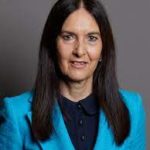
    The speech made by Margaret Ferrier, the Independent MP for Rutherglen and Hamilton West, in Westminster Hall, the House of Commons, on 8 December 2022.

    I beg to move,

    That this House has considered International Human Rights Day 2022.

    I thank the Backbench Business Committee for granting today’s debate to mark International Human Rights Day, which this year falls on Saturday 10 December, and I thank my parliamentary colleagues who supported the application, as well as those here to participate. As co-chair of the all-party parliamentary human rights group—PHRG—it is a great honour to open the debate. The APPG works cross-party to raise greater awareness, both in Parliament and more widely, of serious human rights violations taking place across the world; to press for reform and redress; and to amplify the voices of those at the grassroots, including victims—or, as many prefer to be called, survivors—and human rights defenders working on behalf of affected communities. I strongly believe in the importance of an annual international human rights day.

    Given the continued prevalence of authoritarian regimes and Governments who commit, facilitate or turn a blind eye to serious human rights violations, and of abuses committed by non-state actors such as terrorist entities and criminal groups, it remains as necessary as ever to highlight the universal applicability of fundamental rights—political, civil, economic, social and cultural—to everyone everywhere in the world.

    We can sometimes take our rights for granted, or underestimate the impact of human rights abuses on communities, families and individuals, the vast majority of whom are peaceful and simply wish to live a life free from fear. When I hear about people arbitrarily detained, harassed, persecuted, brutally tortured or disappeared for trying to exercise their right to free speech, to protest or to join a trade union, or who are being discriminated against because of their ethnicity or religion, I wonder: what if that had been me, a member of my family, a colleague or a friend?

    Sir Peter Bottomley (Worthing West) (Con)

    I want to support this debate, although I have a British-Irish Parliamentary Assembly meeting that will prevent me from contributing further. May I, through the hon. Lady, recommend that people go to the Upper Waiting Hall to see the display by PEN and Amnesty, and to learn about the journalists who were arrested and herded up 21 years ago in Eritrea? There, Members can see an illustration of how we cannot know what is going on in some countries, because those who could tell us—trade unionists, journalists, people in opposition and people in the Government who object to what is going on—cannot have a voice. We have to be a voice for them and watch out for them.

    Margaret Ferrier

    I thank the right hon. Gentleman for his intervention, and I will mention that display later.

    There are those languishing in a crowded, filthy prison after an unfair trial, those being prosecuted simply for peacefully protesting about Government policy, and those who have had someone close to them killed for their political or social activism. I want them to be offered the same help, support and solidarity that I would fight to have provided to someone close to me. Today, I hope that we can, using the parliamentary platform that we are privileged to have, provide some support to victims, and to human rights defenders across the world, who often risk their personal safety to champion the rights of their community. I want to take this opportunity to express my concern about the human rights situation in a number of countries on which I have been focused for some time—countries in the middle east and north Africa, as well as Zimbabwe.

    The situation in a number of Gulf Co-operation Council member states and Iran remains challenging. As I am sure colleagues are aware, I remain very concerned about serious human rights violations in Saudi Arabia by the state, which, according to the latest annual report from Human Rights Watch,

    “relies on pervasive surveillance, the criminalization of dissent, appeals to sectarianism and ethnicity, and public spending supported by oil revenues to maintain power.”

    I remain unconvinced by Saudi Arabia’s recent attempts to project a more modern and progressive image, including through glossy advertisements that try to entice tourists to holiday there. Most recently, since 10 November, while the Saudi regime thought that the world’s attention was elsewhere because of the World cup, the execution of those sentenced to death has resumed. Many of those killed were convicted of non-violent drugs offences, for which the Saudi Government had committed not to execute people. Some were Saudi nationals, but others were foreign nationals from Pakistan, Syria and Jordan. This latest wave of executions follows the execution of 81 people in a single day on 12 March 2022.

    Andy Slaughter (Hammersmith) (Lab)

    I am glad that the hon. Lady mentioned Saudi so early in her speech. Would she agree that one of the problems with taking action on Saudi is that the Government adopt double standards here? There was a perfect example of that last week. Responding to the right hon. Member for Leeds Central (Hilary Benn) on the case of Hussein Abo al-Kheir, the Under-Secretary of State for Foreign, Commonwealth and Development Affairs, the hon. Member for Macclesfield (David Rutley), said:

    “clearly torture was used. We find that abhorrent.”—[Official Report, 28 November 2022; Vol. 723, c. 673.]

    He then made a ministerial correction to Hansard, in which he changed that to:

    “in which torture has been alleged.”—[Official Report, 2 December 2023; Vol. 723, c. 12MC.]

    That is not a ministerial correction; that is tailoring one’s words to suit a barbaric regime.

    Margaret Ferrier

    I thank the hon. Gentleman for the intervention. We have to be strong when we speak out against human rights abuses; there is no doubt about it. The Government say that they speak privately with nations all over the world.

    Chris Bryant (Rhondda) (Lab)

    Before we move off this point, the worst of it is that the Foreign, Commonwealth and Development Office has now admitted that it made the ministerial correction because Saudi Arabia asked it to. We cannot have Saudi Arabia telling Parliament what to do about human rights, surely.

    Margaret Ferrier

    I could not have put it better. The hon. Gentleman makes an excellent point. We should not allow Governments other than the UK Government to say what the right response is. I thank him for the intervention.

    Over 50% of those executed were convicted on the basis of their participation in pro-democracy demonstrations back in March. As executions are confirmed only once the death sentence has been carried out, we do not know how many people are on death row in Saudi Arabia. That is also the case in China, North Korea, Vietnam, Egypt and Iran. I will speak about the latter two shortly.

    Jim Shannon (Strangford) (DUP)

    I understand that between 500 and 600 people have been executed in Iran in the past year, so if there is a country that is top of the league, and really has to be brought to book, Iran is that country.

    Margaret Ferrier

    I will come on to speak about Iran; the figures that we hear are shocking.

    I say this to the Saudi regime: the world is watching, and will continue to call it out on these executions, particularly when the offences are considered not to be the most serious, or are non-violent or involve juveniles, and when the sentence follows a manifestly unfair prosecution. This is, of course, a violation of the most fundamental right: the right to life.

    That brings me to the Saudi criminal justice system, which remains opaque. We know that international fair trial standards are not generally upheld there, and there are credible allegations that some of the accused are tortured to make them sign confessions. Of course, we must not forget the brutal and brazen killing of journalist Jamal Khashoggi inside the Saudi consulate in Istanbul in 2018, which US intelligence concluded, with a medium to high degree of certainty, had been carried out on the orders of Crown Prince Mohammed bin Salman. I truly hope that one day, there will be real accountability for that heinous murder.

    Lastly on Saudi Arabia, I highlight the case of imprisoned human rights defender Mohammed al-Qahtani, who is reportedly being kept incommunicado after his family filed a complaint about attacks on him by inmates. Al-Qahtani is a founding member of the Saudi Civil and Political Rights Association, which was dissolved in 2013. That year, he was sentenced to 10 years in prison for allegedly providing false information to outside sources, including UN human rights mechanisms.

    Like Saudi Arabia, Iran continues to be one of the world’s leading implementers of the death penalty, as we heard from the hon. Member for Strangford (Jim Shannon). The death penalty is used for such acts as insulting the Prophet, apostasy, same-sex relations, adultery, drinking alcohol and certain non-violent drug-related offences, although some drug-related offences are now meant to be exempt. Iranian courts, particularly revolutionary courts, regularly fall far short of providing fair trials, and use confessions likely obtained under torture as evidence in court.

    I am sure other colleagues will speak to my next point, so I will limit my remarks about the widespread protests in Iran, following the death in September of Jina Mahsa Amini in detention. She was arrested by Iran’s so-called morality police for not wearing her hijab properly. The UN High Commissioner for Human Rights highlighted that Iranian security forces,

    “notably the Islamic Revolutionary Guard Corps and Basij forces have used live ammunition, birdshot and other metal pellets, teargas and batons”

    against protesters. An estimated 300 people were killed and 15,000 arrested.

    Turning to human rights defenders at risk, imprisoned human rights defender Arash Sadeghi has been jailed on multiple occasions for his activities in defence of human rights, and was arrested again on 20 October 2022 for unknown reasons. He has been placed in indefinite detention, and his health is deteriorating. I echo the calls for his immediate release. One of the cases featured in Amnesty International’s “Write for Rights” 2022 campaign is that of Vahid Afkari, who remains in solitary confinement following unsafe and highly questionable convictions. His brother Navid was sentenced to death on similar charges and secretly executed in September 2020, sparking international outrage.

    I will continue with this focus on the middle east, but move on to Bahrain. In common with many others, I remain open to constructive engagement with the relevant Bahraini authorities and those in Bahraini civil society, who work under very difficult conditions. However, I am worried that in the longer term, the country’s stability will be undermined by increasing polarisation, due at least in part to multiple allegations of human rights violations, including against those widely deemed to be political prisoners. I remain concerned that despite some welcome releases under the alternative sentences law, a number of political prisoners, such as Hassan Mushaima, Dr Abduljalil al-Singace and Sheikh Ali Salman, remain in Jau prison. Quite simply, they should not be in jail, and I join calls for their immediate release.

    I urge the UK Government to play a more positive role that is not limited to giving support to oversight bodies in Bahrain, but that instead extends to encouraging and assisting the Bahraini Government in taking such confidence-building measures as, in particular, the release of political prisoners and the initiation of meaningful political dialogue.

    I also highlight the exploitative practices against migrant workers, which has come under the spotlight with the building of infrastructure for the World cup in Qatar. The kafala system is the framework that defines the legal status of most migrant workers in the Gulf region, Jordan and Lebanon. Workers are often recruited on time-limited contracts to work for a specific employer. Although there have been welcome changes to the conditions applicable to migrant workers in most Gulf Co-operation Council countries, such as a move to allowing workers to change employers more easily, these reforms can be hard to enforce, and worker protests may result in deportation.

    Workers also often still face poor working and living conditions, overt racism and debt bondage. Difficulties continue to beset many migrant domestic workers, who may not benefit from labour laws, including in Qatar, Saudi Arabia, Kuwait and Lebanon. They can reportedly face the most abuse, and can be victims of sexual violence. Many women choose not to report these serious violations for fear of losing their job or even being charged with a crime; some women have been prosecuted for having extramarital sex, even in cases of alleged rape.

    I am aware that my time is limited, so although I could speak about the middle east all afternoon, I will now briefly highlight concerns in north Africa, particularly in Egypt and Tunisia. Egypt is sadly yet another country where the death penalty is carried out, often after manifestly unfair trials, and many people are arbitrarily detained, often in very poor conditions. There was some media coverage of that in the run-up to COP27.

    I make a special plea to the Foreign, Commonwealth and Development Office to do all it can to secure the release of British-Egyptian dual national, Alaa Abd el-Fattah, as well as his lawyer, Mohamed el-Baqer, who are among thousands unjustly imprisoned in that country. I can only agree with Amnesty International that Egypt’s adoption of a national human rights strategy is completely disconnected from the reality on the ground. I trust that no one will be taken in by that cynical propaganda exercise.

    Turning to the country that was pivotal to what, at the time, was referred to as the Arab spring, it is very sad to see the democratic backsliding that we have witnessed in Tunisia in the last 18 months. It follows what was effectively a coup by President Saied, who suspended Parliament, removed the immunity of parliamentarians, dismissed the Prime Minister, removed other high-level officials from their positions and assumed oversight of the office of the public prosecutor.

    Although there had been political deadlock in Parliament and a deteriorating economic situation, which has not since improved, the way forward for Tunisia cannot be a return to authoritarianism, and President Saied cannot be viewed as the country’s saviour. According to the presidential road map, there are to be parliamentary elections next week, but they are very unlikely to be free and fair, the President having been given wide-ranging powers before, during and after the vote. It is feared that Parliament will be reduced to a consultative body at best, and will be there to effectively rubber-stamp decisions by the Executive.

    In addition, the Tunisian Parliament is going backwards when it comes to female representation. Whereas it had been a beacon for gender equity in the region, a new law introduced in September strips gender parity provisions from a previous electoral law aimed at ensuring more gender equality in elected assemblies.

    Finally, I come to the situation in Zimbabwe. I ask that the UK Government pay special attention to it in the run-up and aftermath of the elections that are due to be held next year, given that past elections have been the catalyst for violence and serious abuses. I continue to urge accountability for the assaults, mistreatment and ongoing persecution of three Opposition politicians from the Movement for Democratic Change Alliance: Cecilia Chimbiri, Netsai Marova, and Member of Parliament Joana Mamombe. They were abducted from police custody by suspected state agents for taking part in a protest in Harare, and are being prosecuted, unbelievably, for making false reports about their abduction. That is another case featured in Amnesty’s “Write for Rights” campaign 2022. Joana’s case has been taken up by the Inter-Parliamentary Union’s committee on the human rights of parliamentarians, which in 2021 dealt with the cases of more than 600 MPs from 44 countries whose rights had been violated.

    Though I have focused on the challenges we continue to face in ensuring respect for human rights globally, I would also like to take the time to highlight the positive impact on the ground of human rights defenders, whom the PHRG is privileged to meet regularly, and organisations such as the UN. Recently, we have been delighted to host the UN special rapporteur on human rights defenders, Mary Lawlor; the Council of Europe; Amnesty International; Human Rights Watch; Peace Brigades International; Reprieve; and Redress, among many others. Their work, and our work here, truly does make a difference. The arbitrarily detained, such as Nazanin Zaghari-Ratcliffe, Anoosheh Ashoori and other dual nationals in Iran, are released; those at risk are better protected; and miscarriages of justice are overturned.

    One of my small victories this year was the release on humanitarian grounds of a British national in a United Arab Emirates prison. He remained in detention even though he had received a pardon from the King and had served his original sentence. The resilience of this man is unparalleled, and his ability to remain optimistic despite all he went through during his detention is inspiring. I was delighted to finally meet him in person here in London following his release. It was a real reminder of why continued work in this space is so essential, and of the impact that can be had. That work would not have been possible without the help and support of Nicole Piché, secretariat for the PHRG, and the FCDO. That man is now fighting for better medical care for other foreign prisoners in the UAE, to give those he had to leave behind much support that is not otherwise available. I follow his work as he continues with this fight, and feel immensely grateful for the fact that, owing to his release, he is now able to lend his voice to the voiceless.

    I want to close by thanking both former and present FCDO Ministers and officials for their positive engagement with the PHRG, and their representations and action on human rights cases. They will be all too familiar with our regular correspondence on various cases, but there is always more that can be done, including on the many issues that I have raised today. I ask the Government to resume publishing their annual human rights report and releasing their human rights updates, as the last one appears to have been published in July last year. The reports provide a useful summary of the action undertaken by the FCDO and are a demonstration of the UK Government’s ongoing commitment to the international human rights framework.

    I have only spoken about a small number of countries with worrying human rights records. So many people across the globe—both those whose names we know, and those whose names we do not yet know—are relying on the support of those of us who have the freedom to speak out on their behalf.

    Andy Slaughter

    I want to add one further example, although we could add many: human rights in the Occupied Palestinian Territories, which are getting worse every year, particularly through state-sanctioned settler violence. I pay tribute to Yachad and B’Tselem, which brought an exhibition on that issue to Parliament this week. Occupation adds another level of illegality and abuse to human rights, and it is right that it be called out. I entirely agree with the hon. Lady that the Government have to publish their findings more regularly if people are to be held to account.

    Margaret Ferrier

    I attended that drop-in, and it was shocking. I advise all Members to look at the report.

    Every person, Member of Parliament, Government Minister and member of the public alike can take some form of action, be it by writing letters for campaigns such as Amnesty International’s “Write for Rights”, or just by raising awareness within our own social circles. I strongly encourage every person listening today to use their voice, so that those without can be heard.

  • Michael Gove – 2022 Statement on English Devolution

    Michael Gove – 2022 Statement on English Devolution

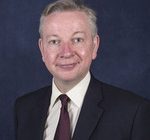
    The statement made by Michael Gove, the Secretary of State for Levelling Up, Housing and Communities, in the House of Commons on 8 December 2022.

    The levelling-up White Paper set out the Government’s ambition that, by 2030, every part of England that wants one will have a devolution deal with powers at or approaching the highest level of devolution and a simplified, long-term funding settlement. Stronger, more empowered, and more accountable local leadership is core to our levelling-up mission, to delivering on the ground, to growing our local economies and to improving public services.

    In summer 2022, the Government concluded devolution deals with York and North Yorkshire, and that part of the east midlands which includes Derby, Derbyshire, Nottingham, and Nottinghamshire. Subject to the ongoing local consultations and satisfactory completion of the statutory processes, including local consent by the councils and parliamentary approval of the secondary legislation to implement the deals, the inaugural mayoral elections are planned for May 2024. The east midlands deal is also dependent on the enactment of provisions in the Levelling Up and Regeneration Bill necessary for the establishment of the proposed East Midlands mayoral combined county authority.

    The Government have now concluded three more devolution deals with Cornwall, Norfolk and Suffolk. These are the first set of the new county deals that extend devolution to more of England. Each deal will result in the election of a Mayor or directly elected leader to champion the area with Government and business. These deals are subject to locally run consultations, resolution by each of Cornwall Council, Suffolk County Council and Norfolk County Council to change their governance models so that electors directly elect the council leader, and to the satisfactory conclusion of the statutory processes, including local consent from the councils and parliamentary approval to the secondary legislation to implement the deals. Inaugural elections for a Mayor or directly elected leader in each of the areas are planned for May 2024. They will have the choice of alternative titles to “Mayor” for these elections, subject to provisions in the Levelling Up and Regeneration Bill being enacted.

    These five new devolution deals will drive forward improved outcomes for the 5 million people that live in those areas. Taken together, they take the proportion of England now covered by a devolution deal to above 50% for the first time. They will deliver new funding including long-term investment funds to invest in local priorities that drive growth and levelling up, totalling over £3 billion over 30 years.

    The Government are also in advanced negotiations on a north east devolution deal that will supersede the current North of Tyne combined authority that covers only Newcastle, North Tyneside and Northumberland. A deal is expected to be concluded shortly and further details will be announced.

    Negotiations on trailblazer deeper devolution deals with the west midlands and Greater Manchester combined authorities are progressing well and expected to conclude early in 2023. These deals seek to devolve further powers in areas such as skills, transport, housing and net zero, alongside potential department-style single funding settlements and stronger accountability focused on outcomes. They will act as a blueprint for other areas to follow. We are interested in other MCAs coming forward with ideas for new functions. We will begin talks with other MCAs on deeper devolution from next year. The Government will set out more on plans for those talks soon.

    Effective devolution requires local leaders and institutions that are transparent and accountable. This is why the Government will be publishing the devolution accountability framework in early 2023, alongside a funding simplification plan, setting out the accountability mechanisms for MCAs, the Greater London Authority and other institutions that have agreed a devolution deal. It will set out how they are scrutinised and held to account by the UK Government, local politicians and business leaders and above all by the residents and voters of their area. This work will be supported by planned improvements to the broader local government accountability framework including the establishment of the office for local government.

    The Government will step ahead in extending devolution in England further. We will continue to work with local government in England to roll out further mayoral combined authorities, combined county authorities, and county deals. Discussions with places to identify potential candidates for the next set of new devolution deals will start in early 2023. The Government are particularly interested in exploring opportunities for devolution deals that will empower local leaders and communities where places want a directly elected leader, in line with the devolution framework published in the levelling-up White Paper.

    The above demonstrates strong progress towards achieving the 2030 local leadership mission, which is essential to levelling up. In these areas across England, more of the decisions which matter to people—on transport, housing, and skills—will be taken by locally elected, democratically accountable leaders rooted in their place and empowered to level up.

  • Julia Lopez – 2022 Statement on Telecoms Diversification

    Julia Lopez – 2022 Statement on Telecoms Diversification

    The statement made by Julia Lopez, the Minister of State at the Department for Digital, Culture, Media and Sport, in the House of Commons on 8 December 2022.

    I would like to inform the House that today the Department for Digital, Culture, Media and Sport is announcing a joint statement on telecoms diversification alongside the Governments of Australia, Canada and the United States of America. This further progresses His Majesty’s Government’s efforts to build global support for our approach to telecoms diversification and identify tangible opportunities for collaboration with a range of international partners as set out in the 5G supply chain diversification strategy in 2020, and following the recommendations of the telecoms diversification taskforce in 2021.

    The joint statement marks the one-year anniversary of the 2021 Prague proposals on telecommunications supplier diversity, to which our four Governments have reaffirmed our commitment. It also announces the endorsement of the UK’s open RAN principles by the Governments of Australia, Canada and the United States of America, which I would like to welcome.

    Collectively, these Governments hold a shared view that open and interoperable solutions could help to create a more diverse, competitive and innovative telecoms supply market. To support this we intend to work together across a number of areas ranging from sharing information on our respective policy approaches to supporting greater transparency in industry-led standard-setting processes. We also intend to seek ongoing support from other likeminded countries truly to realise the benefits of a diverse telecoms supply chain on a global scale.

    This announcement builds on the strong progress we have made to increase the resilience and security of the UK’s telecoms critical national infrastructure since the publication of the 5G supply chain diversification strategy, which is backed by the £250 million open networks fund committed at the 2021 spending review. The fund aims to accelerate the adoption of open RAN solutions as a means to diversify the market. It includes research and development interventions of up to £36 million for the Future RAN Competition, up to £25 million for the Future Open Networks Research Challenge, as well as funding for testing facilities such as the SmartRAN Open Networks Interoperability Centre, and the UK Telecoms Lab. HM Government has also previously announced a joint ambition with UK mobile network operators to increase the share of open and interoperable equipment in UK networks by 2030. Indeed, we are also seeing positive progress from industry, for example, Vodafone and Telefonica have now deployed their first live open RAN sites, with both using new market entrants.

    While there is still more to do, today represents a significant milestone in the Government’s efforts to grow international consensus on telecoms diversification. In order to support a lasting and meaningful change it will be crucial for the global community to work together. I am grateful to the Governments of Australia, Canada and the United States of America and look forward to working with them, along with partners around the world, to achieve our vision of a more innovative, competitive and diverse telecoms supply market. Full details of the announcement will be published on www.gov.uk today.

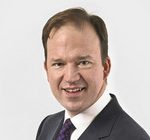
  • Jesse Norman – 2022 Speech on the Antisocial Use of E-scooters

    Jesse Norman – 2022 Speech on the Antisocial Use of E-scooters

    The speech made by Jesse Norman, the Minister of State at the Department for Transport, in the House of Commons on 8 December 2022.

    I thank the hon. Member for Newport East (Jessica Morden) for her speech, and for the resolute campaigning and interrogation that she has devoted to this issue for a considerable time. As she and the House will know, this country’s transport system is intrinsically a highly complex and evolving network. There is a constant stream of new vehicles and other technological transport innovations, and dealing with them is one of the continuing challenges for any Government, including this one. It is, however, clear—as the hon. Lady said—that the Government have a responsibility to ensure the safe use of new transport technologies, especially for the most vulnerable users. If those problems are not tackled head-on, and if antisocial and unsafe use is not addressed, the economic and social opportunities that everyone recognises derive from a properly functioning transport system may be lost.

    It is also essential, for reasons of public consent, to bring the public along with the policy so they understand that they are being kept safe, as well as being supported, by transport, and to reassure them as the pace and scale of these transport changes, which amount to something of a revolution in electrification and miniaturisation, accelerate. We recognise that the current lack of regulation is at odds with the increasing use of e-scooters. It is essential to ensure that the right regulation, designed to create proper accountability and responsibility, is in place. Regulation, as well as ensuring safety, should minimise burdens on the development of new innovations and new technologies wherever possible.

    There was a vivid demonstration of this when the pandemic struck, because there was a clear need to mitigate the impact of reduced shared public transport capacity and to provide a convenient, clean transport option that allows for social distancing. As a result, the Department for Transport accelerated and expanded plans for four e-scooter trials in 2021, in order to go further and faster in that direction. It fast-tracked the trials, launching them in July 2020, following a public consultation with more than 2,000 responses showing strong support for running trials to gather evidence. There were 17 trials in operation by October 2020, and today there are 27.

    Alongside this, the Government introduced clear rules from the start, stating in part that e-scooters must not be ridden on pavements, that e-scooters must be speed restricted to 15.5 mph, or lower where the local authority requires, and that users must have a full or provisional driving licence, and therefore that a minimum age of 16 applies. These rules are required to be communicated to users through an app before they use an e-scooter.

    From the start, it was also clear that discarded rental e-scooters would be a hazard to pedestrians, particularly those with visual impairments. The Department therefore empowered local authorities to encourage the responsible parking of rental e-scooters. It is fair to say that we have very successful working between operators and cities, which has helped to reduce the nuisance and obstruction that e-scooters can cause.

    Like the hon. Member for Newport East, I am grateful to organisations such as Guide Dogs UK, the Royal National Institute of Blind People and Sight Loss Councils, among others, for collaborating with operators and local authorities, and for the insights they have shared with the Department for Transport.

    The Government have extended the trials until May 2024 to ensure they can continue to gather evidence on what does and does not work, which is the reason for having such a wide range of trials and such a wide range of scope for regulatory and other innovations. The evidence and learning from these trials will be published shortly.

    I am mindful that technology and incentives alone cannot tackle antisocial use. There will always be some antisocial use of any mode of transport, which comes with the turf. As the hon. Lady knows, Wales chose not to participate in the trials, and so by default any e-scooter ridden on public roads in her constituency is illegal. Most micro-mobility vehicles, including e-scooters, are currently classed as motor vehicles and must meet the wide range of requirements built into the current legislation.

    The hon. Lady asked about the joining up of enforcement, and my Department is in regular contact with the National Police Chiefs’ Council and the Home Office to ensure a consistent approach to tackling this issue. We continue to support the police to ensure they have the tools they need. The House will recall that a full suite of offences can apply to e-scooters relating to speeding, dangerous driving and drink and drug driving, as well as to licensing and insurance. Users have been fined up to £300, had their vehicle impounded and had up to six points put on their driving licence, so a driver who recently passed their test could lose their licence if caught riding a private e-scooter.

    Martin Vickers (Cleethorpes) (Con)

    The Minister refers to the powers that the police have. Does he have any statistics available to show how many offences have been recorded and what punishment has been handed out? It is probably fair to say that that is rather limited.

    Jesse Norman

    As my hon. Friend will be aware, the police publish statistics on crimes and offences. It is important to say that this will differ by region and by the priorities for the police forces in question. We have devolved police forces and they are not accountable directly to Government; they set their own priorities. In Wales, they may choose to set priorities that decide that any e-scooter ridden on roads there is illegal and then fine people and take appropriate enforcement action on that basis. The same will be true in other parts of the country, depending on the specifics of the police force’s own priorities. The key point is that when they reach for those enforcement mechanisms, they will find one of most established and strictest regulatory suites of enforcement rules and requirements anywhere in the world.

    There is not a great deal of time left in this debate, so let me say that our current regulatory regime on micro-mobility is a symptom of the rapid evolution of the market. It is important to recognise that UK retailers also have a duty to advise their customers of the law and to ensure that those customers do not unknowingly take the law into their own hands. The hon. Lady gave the example of one particular online retailer, but this week I have written to retailers reminding them of the Driver and Vehicle Standards Agency’s continuing market surveillance work in this area, specifically in relation to the marketing that the retailers have put online, and their duties on advertising and the accurate provision of information. That, too, is an important way of assisting a crackdown on illegal and irresponsible use.

    Since setting up the trials, we have had 31 million journeys on e- scooters, with the vast majority being completed safely. It is important to see these in some form of context. Nevertheless, there have sadly been four deaths in the trials, the most recent of which was the tragic death in Birmingham on Tuesday morning. I am following the detail of that case closely and will be ensuring that we learn lessons from this terrible incident. I extend my condolences and those of the Department to the family of the person involved. I am sure that the House will understand that it would be inappropriate for me to comment further while the police investigation is under way.

    We have also already implemented some early learning from the trials. In February, the Government set out further guidance for the rental trials on minimum training, further encouragement of helmet use, mandating unique identification numbers and reducing illegal behaviour. Following that, the private sector trial operators have risen to the challenge and started to provide innovative solutions. They include things such as credits for ‘helmet selfies’, app-based safety quizzes or compulsory reaction tests after 10pm in an attempt to cut down on drink-riding. Outside the trials, we know that there are safety concerns surrounding the illegal use of private e-scooters on our roads too. Between July 2021 and June 2022, there were 1,437 casualties recorded in collisions on the public highway involving both rental and illegal private e-scooters, with 12 killed. That goes to the point raised by my hon. Friend the Member for Cleethorpes (Martin Vickers). We also know that it is not just e-scooter riders getting hurt; of those 1,437 casualties, 342 were other road users, and of the 12 fatalities one was a pedestrian. So the clear need for enforcement activity is evident.

    Let me wind up quickly. We need to find a balance between the conflicting requirements. No one wants an unregulated free-for-all, as that would be unsafe for our communities.

    Jessica Morden rose—

    Jesse Norman

    I just do not have any time. I cannot respond to the hon. Lady’s speech if I do not—

    Jessica Morden

    You have 12 minutes.

    Jesse Norman

    In that case, I am happy to take the intervention, of course.

    Jessica Morden

    I would be grateful if the Minister just addressed the issue of the transport Bill and any secondary legislation that is planned by the Government. Will he give us an idea of what is planned in a transport Bill and when we might see it, and of any secondary legislation relating to some of the things we have learnt from the trials?

    Jesse Norman

    I thank the hon. Lady for her question, but I do not think that I can do better than my colleague, the Secretary of State, in his comments to the Transport Committee, and I do not think that this would be an appropriate place for an impromptu announcement, even if I had one, in this area. I understand her concern and I share it. We, too, want to take vigorous action not just in this area, but in several other areas of transport. We recognise the public concern, and we also recognise the economic and business benefits from effective, early legislation.

    As I was saying, Mr Deputy Speaker, the point here is that we need to find a balance in the way that we regulate. An unregulated free-for-all is unsafe for communities, and, in the long run, bad for businesses, as public policy follows, potentially, a cycle of reactions to faltering consumer confidence and real-world safety impacts. We do not want to be in a position where laws trail behind, to the extent that UK businesses are forced to launch innovations abroad and our transport users’ needs and wants are unmet.

    Jessica Morden

    Does the Minister accept that other European countries are much further ahead than us in looking at what regulations we might need with e-scooters in a whole range of specifications, such as speed and so on? Does he accept that we are far behind them and therefore there is a need to legislate quickly, or to look at this quickly, rather than to leave it to drag on if there is no transport Bill?

    Jesse Norman

    I am afraid that I do not accept that, no. The facts of the matter are that some other countries have decided to change their regulations because they had launched the wrong set. They have re-regulated in certain cities, and some countries have not even permitted any trials of e-scooters, so I do not accept that. Indeed, in general in this country, we have a remarkably flexible, open and innovative transport sector. One can see that in the use and trial of autonomous vehicle technologies, in the use of zero emission vehicles, in the ways that electric vehicles are being brought into the market in the UK, and in the speed and development of that market. Therefore, I do not accept that point.

    However, we do need a flexible and fully enforceable regulatory framework that allows Government and agencies of Government to manage the balance that I have described and to handle the different challenges faced by cycles and motor vehicles. That is why we announced at the Queen’s Speech our intention to bring forward primary powers, as the hon. Lady has mentioned. However, this is a complex area, and the Government are still developing requirements for e-scooter use and are continuing to gather the evidence. There is an enormous amount of evidence being brought forward from the trials. The trials are diverse in the way that they address these issues. That is deliberate and it allows more testing of different contexts, different outcomes and different technological and behavioural responses, and that is a valuable thing.

    The goal throughout is to ensure that we tackle anti- social behaviour, learn from the trials, encourage take-up and also support the active travel and decarbonisation agendas. If we are properly able to manage that, e-scooters may well be able to take their place alongside the other technologies that are in place, but it is not appropriate to pre-judge the results of the consultation that we will be launching in due course.

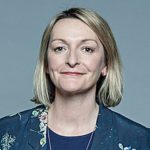
  • Jessica Morden – 2022 Speech on the Antisocial Use of E-scooters

    Jessica Morden – 2022 Speech on the Antisocial Use of E-scooters

    The speech made by Jessica Morden, the Labour MP for Newport East, in the House of Commons on 8 December 2022.

    Thank you, Mr Deputy Speaker, for allowing me to have this debate today. I understand it may be the first parliamentary debate on e-scooters in this place. I understand from friends in the other place that there have been a number of references down there. The rise of the e-scooter has been a worldwide phenomenon. The global market for the product has been valued at more than £15 billion a year and it has made its mark in the UK in recent years. It is estimated that there are now 750,000 private e-scooters in use in the UK, with the majority being used illegally. The Bicycle Association suggests that as many as 360,000 were purchased in 2020 alone, and we can expect further growth in their use and sales in the UK in the years to come.

    Today, I speak to draw attention to an issue that is a cause of much frustration to my constituents: the antisocial and illegal use of e-scooters. While not necessarily isolated to individual areas, Lliswerry, Ringland, Alway and St Julians in my constituency have been flashpoints for this activity. My thanks go to the councillors, residents and even a scout group who have discussed the matter with me. Groups of e-scooter and e-bike riders are careering between pavements and the road, breaking speed limits—I have witnessed that—running red lights, weaving in and out of traffic and causing other vehicles and pedestrians to take avoiding action. As one constituent put it to me,

    “the culprits are usually…clothed in black without any reflective items, and have total disregard for the Highway Code and pedestrians.”

    In the dark winter months, that is obviously even more of a hazard for other road users.

    Ahead of the debate, I received a lot of feedback from constituents sharing their experiences of e-scooters. I want to quote just a few examples. One constituent says:

    “They are dangerous, they are on the pavements, and as someone who has a mobility problem I have a problem getting out of there way quickly enough. I am worried that I will get knocked down.”

    Another resident said:

    “They weave in and out of traffic and scare me to death as they just suddenly appear!”

    Another said:

    “As someone who is hard of hearing and with no directional hearing, I don’t hear them…they are a menace when ridden on pavements.”

    Local residents feel intimidated, unsafe and annoyed, not least because the use of e-scooters on roads, pavements and cycle lanes is illegal everywhere in Wales, and there are no designated Welsh e-scooter trial areas. As a Welsh MP, I note that there is some crossover with devolved policy making. For example, any move to extend the UK Government trials to Wales would depend on working with the Welsh Government and Welsh councils and would require the Senedd to amend the Traffic Signs Regulations and General Directions 2016. However, it is important to point out that road traffic offences, driver licensing, vehicle insurance and vehicle registration are all reserved issues for the UK Government to address.

    E-scooters are rightly classed as motor vehicles when they are legally used in trial areas, which means that the rules that apply to motor vehicles also apply to e-scooters, including the need to have a licence, insurance and tax. At the moment, you cannot get insurance for privately owned e-scooters and as such you would not be eligible to make an accident or injury claim if you were involved in an incident while riding unlawfully on public roads. The Association of British Insurers has highlighted that, if uninsured e-scooter users cause collisions or injury, the Motor Insurers’ Bureau must pick up the liability for these claims. The MIB reports that it is already seeing a growing number of claims from the illegal use of e-scooters and there is the potential to incur significant costs, which ultimately may lead to increases in motor insurance premiums for other motorists, which is a really unfair situation. In short, unless they are on private land, no one in Wales should be using an e-scooter, nor should anyone in the rest of the UK unless they are renting an approved e-scooter in one of the 30 designated trial areas. To add to some of the confusion around the law as it stands, several of the trial areas are just over the other side of the Severn bridge from my constituency, in Bristol, Gloucester, Cheltenham and Bath.

    Gwent police are doing what they can to crack down on this and have had success in seizing a number of e-scooters engaged in antisocial and illegal activity around Newport. That includes e-scooters, and, indeed, e-bikes and e-motorcycles, being used in drug dealing, which is an alarming trend locally and across the UK. We know that the police cannot be everywhere and that resources are still stretched after 12 years of Tory cuts. Let us not forget that Gwent police saw their budget cut by 40% in the last decade and have been able to maintain a high level of service only by increasing the precept.

    From speaking to the police and other stakeholders, there is a real sense that the problem is not a lack of provision for enforcement action, but a widespread and dangerous lack of knowledge about what the law is, particularly among young people. The waters have been muddied further by leading retailers. This week, The Guardian reported that Amazon was advertising a new e-scooter model last week as a “commuter companion”. The promotion warned users not to travel on the scooter during thunderstorms, but failed to point out that its use on any British road would be illegal. Retailers need to behave more responsibly. Road Safety Wales and Gwent police have campaigned on that, and I totally agree with them that retailers should do more to ensure that potential customers are fully aware that illegal e-scooter use carries with it the risk of a £300 fine, six penalty points on their driving licence and the potential seizure of the scooter.

    The Home Office and the Department for Transport need to do more on awareness, too. It should not be left to individual police forces, whose resources are already stretched, to educate the public. That is one of my main challenges to Ministers: what are they doing to ensure that everyone living outside of a designated trial area knows that they should not be using an e-scooter on a road, cycle path or pavement?

    The use of e-scooters on pavements is also a particular concern for those with hearing loss and the visually impaired, who rely on clear, safe routes to travel independently. Research carried out on behalf of Guide Dogs earlier this year showed that 78% of people with sight loss had had a negative experience with an e-scooter, and that more than 50% had reported changing their behaviour due to e-scooters, including not going into some parts of town, changing their regular routes and doing what they can to reduce their risk of encountering e-scooters.

    Guide Dogs also reported that 12% of people with sight loss have had their mobility aid or cane hit by an e-scooter, 10% had been hit but not injured and 2% had been hit and injured by one. The virtually silent nature of e-scooters is undoubtedly a contributing factor. Guide Dogs and the Royal National Institute of Blind People are supportive of the introduction of an e-scooter equivalent to the acoustic vehicle alerting system on quiet hybrid and electric vehicles. This week, BBC News reported that the University of Salford is developing new technologies that might help with that, working closely with the RNIB and the micro-mobility company, Dott. I trust that the Government will monitor that closely and continue to consider options for the sound-related regulation of e-scooters in future.

    Sound is not the only problem. As private e-scooters are unregulated, there are no restrictions on their power, weight or speed. Indeed, the maximum speed for private e-scooters far exceeds the capped limit for trial e-scooters. Many privately purchased e-scooters are capable of travelling at 30 mph. Some models, such as one of the models highlighted as a cause for concern by Guide Dogs and which is currently sold out on the manufacturer’s UK website, can reach speeds as high as 68 mph. A report by Margaret Winchcomb of the Parliamentary Advisory Council for Transport Safety notes that even private scooters capped at 30 mph can be modified to reach speeds of up to 60 mph.

    Even the rental e-scooters used in the trial areas have a maximum power that is double that of e-bikes and a maximum weight of 55 kg that is roughly three times the average weight of a standard e-bike. The speed, weight and power requirements for e-scooters in trial areas in the UK are also much more lenient than those in place in equivalent schemes in other European countries.

    The combined effect of higher e-scooter speed, power and weight in the UK means that these vehicles are significantly more dangerous in a collision, so it is little wonder that there has been a marked increase in crashes involving e-scooters. There were 460 reported collisions involving e-scooters in 2020; DFT figures covering the year from June 2021 to June 2022 show that the number had risen to 1,349. Over the past year alone, the number of people seriously injured in a collision with an e-scooter has risen to 429, with 12 deaths, so there are issues that the Government need to look at now. There is a real need to improve awareness of existing laws among the public.

    Gwent police and other forces have taken a lead with social media campaigns, particularly around Christmas, making the public aware of the rules for e-scooters before they are purchased as Christmas presents. However, there seems to be little national steer from either the Home Office or the DFT to educate the general population.

    I also want to ask what the Government are doing to ensure that our police forces have all the resources they need to tackle antisocial e-scooter use. When I raised the subject in September with the then Home Secretary, the right hon. Member for Witham (Priti Patel), she told me that her colleagues in the Department for Transport were liaising with the College of Policing and the National Police Chiefs’ Council on the issue. It would be interesting to know whether there are any updates and whether there is a joined-up approach to enforcement action across the UK.

    On a related note, it is also worth asking what steps will be taken to ensure that efficient mechanisms are in place to report e-scooters that are being used dangerously or illegally. RNIB Cymru is just one of the organisations that have highlighted that as a nationwide issue.

    I recently tabled a written question on e-scooter specifications. The response from the Department for Transport stated:

    “The Department is currently considering options for construction and use regulations for e-scooters, which will likely include requirements for details such as power, weight and maximum design speed.”

    I understand that the Minister may not be able to provide a comprehensive answer today about specification regulations, but any updates on the timeframe within which we can expect an announcement or a consultation would be welcome.

    The lack of regulation and control over the sale of untested and potentially unsafe privately owned e-scooters is a real problem. As my right hon. Friend the Member for Exeter (Mr Bradshaw) highlighted this week at the Select Committee on Transport, the UK is “falling years behind” other countries because of its lack of regulation on e-scooters, as well as on issues such as pavement parking.

    There is also an ongoing issue with transparency and data reporting from the trial areas in England. It needs to be addressed quickly, because the Government have already announced that the trials can be extended until May 2024. After all, these trials are just that: they are tests. At the moment, it is hard to work out what metric the Government are using to decide whether the trials have been successful. It would be wrong for Ministers to press ahead towards legislation across the UK on the basis of scarce evidence from selected areas in England.

    As just one example, in its 2020 report on e-scooters, the Transport Committee called on the Department to

    “clarify how it intends to monitor whether e-scooters during the rental trials are being ridden on pavements and the number of users penalised for this offence, and that it has evaluated and identified effective measures to eliminate such antisocial behaviour.”

    Although the Government said at the time that they agreed with the Select Committee’s recommendation, there has been no meaningful update on how those issues are being monitored or whether the trials are working.

    It is also worth pointing out that several major European cities that initially embraced different forms of e-scooter trials—notably Paris, Stockholm and Copenhagen—have since partially reversed course and introduced more stringent regulation on their use. E-scooter schemes in Europe are generally far better regulated than the English trials, too: in Germany, for example, all e-scooter users need to be insured, display insurance stickers and use appropriate lights, brakes, reflectors and bells. In countries such as France, Austria, Belgium, Finland and Portugal, rules of the road for e-scooter users replicate those in place for cyclists.

    When I spoke about some of the antisocial behaviour that we have seen in Newport East, I also referred to e-bikes, which many of my constituents see as part of the same problem. Many complaints relate to what appear to be electric bikes, but are technically electric motorcycles—mechanically propelled vehicles with no pedals. It is possible to purchase legal electric bikes, but over the past two years Gwent police have come across only one in the region. The vast majority being used in residential areas cannot be used legally on the roads without a licence, tax, insurance and an MOT. As a result they can be seized under section 165 of the Road Traffic Act 1988, and the police can deal with the rider in relation to any offences found.

    Gwent police has had some success in seizing offending vehicles over recent months, but enforcement comes with challenges. For example, local residents have reported that it is difficult to build up an intel picture of those engaged in dangerous driving or criminal activity, given that culprits often wear similar dark clothing, wear face coverings and use bikes that look incredibly similar. All those factors make it much harder for the police to identify the offenders, let alone justify high-speed pursuits. Those are further issues for the Government to look at.

    I appreciate that there are other sides to this debate, and there will of course be advocates for e-scooters, especially at a time when we want to shift people from car use. One constituent said to me:

    “I do agree they provide very cheap & convenient forms of transport and as usual, it is the inconsiderate riders who spoil it for the genuine ones.”

    Another said:

    “I think e-scooters and e-bikes are great modes of transport and with zero emissions they are a step in the right direction. However, the way they are used at the moment is dangerous and there should be clear rules regarding whether they are for road use or not and make the users have proper lights and wear reflective clothing.”

    What is clear is that we are seeing a modal shift away from cars, a shift that we need to see, and I accept that there is a legitimate case for e-scooters to form part of that mix in the future. However, before pushing ahead with the expansion of their legal use, the Government should be aware of the strength of feeling that exists in communities such as the one that I represent: a view that is shaped by residents’ lived experiences of e-scooters as a nuisance closely linked to antisocial behaviour. Their stance—and that of charities such as Guide Dogs and the Royal National Institute of Blind People which represent the concerns of some of the most vulnerable people in our communities—is that the Government should not proceed with the legalisation of privately owned e-scooters on the basis of the limited evidence available from the designated rental areas alone. Instead, they should look at strengthening regulation, and put public safety first in all their decisions.

    Earlier this year the former Transport Secretary, the right hon. Member for Welwyn Hatfield (Grant Shapps), said that the Government planned to introduce measures concerning e-scooters in the Queen’s Speech. Those measures never came. A wider transport Bill was also promised, but we learned this week from the new Transport Secretary that it was unlikely to see the light of day in this Parliament. That sheds further light on the recent response to a written question from my hon. Friend the Member for Warwick and Leamington (Matt Western) on e-scooter regulation, in which the Minister of State, Department for Transport, the right hon. and learned Member for South East Cambridgeshire (Lucy Frazer) said that the Government would legislate on micro-mobility “when parliamentary time allows”.

    The Transport Secretary at least acknowledged this week that the merry-go-round of Ministers in the Department had contributed to legislative gridlock, but whichever way we look at it, it is not good enough. I should therefore be grateful if, in his response, the Minister could provide a more substantive update on the overdue transport Bill, as well as any necessary secondary legislation to introduce regulations on electric scooters as a defined form of micro-mobility.

    In its 2020 report, the Transport Committee said that the Government should be

    “developing and implementing a sensible and proportionate regulatory framework for legal e-scooter use, drawing on lessons from other countries, which ensures that potential negative impacts on pedestrians and disabled people are avoided.”

    That still has not happened, and it needs to happen now.

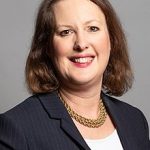
  • Victoria Prentis – 2022 Speech on the Legal Response to Russia’s War in Ukraine

    Victoria Prentis – 2022 Speech on the Legal Response to Russia’s War in Ukraine

    The speech made by Victoria Prentis, the Attorney General, in London on 9 December 2022.

    1. Excellencies, members of the London legal community, ladies and gentlemen – it is a real pleasure and a great privilege to address you at the beginning of this important legal conference, alongside my dear Ukrainian colleagues Ambassador Prystaiko which whom I’ve worked very closely this year and Deputy Justice Minister Mudra.
    2. London holds a special place in history for hosting discussions and gatherings on the most significant international legal debates. Some of the most influential international lawyers have and do practise here.
    3. Hugo Grotius, the Dutch jurist and early pioneer of international law came here in 1613 to negotiate the return of two Dutch ships captured by the British. I am pleased to say the Government lawyers of the day made sure he didn’t succeed and he went home empty handed.
    4. One of my personal heroes, and arguably the architect of modern international law, Herscht Lauterpacht, was born near Lviv, lived a few miles North-East of here and spoke up well before it was fashionable for human rights for all, for individual criminal responsibility and the need for an effective system of international law. His son Eli, whose lectures I attended and whom I later instructed, carried on his important work.
    5. And, of course, it was in London, in the summer of 1945, that the allies gathered to put in place one of the most significant cornerstones of international criminal justice of the 20th century – the framework for the tribunal that would ultimately take place in Nuremberg later that year, to try the perpetrators of the atrocities committed during World War II.
    6. It is in that spirit, and on the shoulders of those international lawyers, that this conference comes together – to again take up the heavy responsibility of justice and accountability. I, and the whole of the UK government, are keen to do what we can to ensure justice is done.
    7. Having seen the programme for today’s conference, it is clear that no-one in this room is shirking that responsibility. Nothing has been left off the table – and this is the right approach.
    8. It is an occupational hazard that lawyers disagree – we make our livings out of representing a position and arguing against those who have taken the opposing position. It is in our nature to find the risks, the drawbacks – and explain them to our clients, or a Court. States and policy makers will also, invariably, disagree. That is the nature of our work. We all each have our own national interests and perspectives. But settings like this one allow us all to interrogate the issues, which should in turn enable stronger strides forward together in due course.
    9. My view, and the view of the UK government, is that nothing should be off the table. We will carefully consider all options for accountability. You will see throughout the day my officials and civil servants from across Whitehall departments – kindly invited by our Ukrainian hosts – at the back of the room, noting all of your thoughtful comments and proposals.
    10. Let’s look, though, at what we have achieved so far. The international community’s response to Russia’s illegal invasion has been unprecedented.
    11. The UK played a leading role in gathering support for a State Party referral of the situation in Ukraine to International Criminal Court Prosecutor Karim Khan. This enabled him to launch an investigation immediately without seeking authorisation from the court’s judiciary. To date, 43 States Parties to the Rome Statute have supported the referral. It is the largest State Party referral in the court’s history.
    12. The UK is at the forefront of supporting the Court, by seconding national experts and making an additional £1million financial contribution, to help provide enhanced support to witnesses and survivors and for the provision of new technology in evidence collection. We will continue to discuss with the Court what support we might be able to help.
    13. I was in Berlin last week for the first-ever meeting of the G7 Justice Ministers. The focus was how we can better cooperate, and coordinate investigations and prosecutions. Our Berlin Declaration set out our conclusions, including establishing single points of contact in our respective countries.
    14. The work done in Ukraine’s domestic investigations and prosecutions has been extraordinary. Led by my good friend, Prosecutor General Andriy Kostin, Ukrainian prosecutors have opened files into almost 50,000 alleged international crimes. They have, and continue to, carry out trials in the course of an ongoing, live and brutal conflict. This is totally unprecedented – and we should recognise it as such. And crucially this is a unique opportunity to deter soldiers on the ground and their commanders from committing further atrocities.
    15. We are proud to have supported Andriy’s work through the Atrocity Crimes Advisory Group, together with our friends in the US and EU. And, even as I speak, today Sir Howard Morrison – the UK’s former judge at the ICC and now the UK-appointed Independent Advisor to Andriy and his office – is on his way back from the region, having completed the first of a series of training sessions for Ukrainian judges. These have been developed with the Ukrainian judiciary, to get them ready to try the cases that Andriy will be bringing in the course of the next months and years. Our funding will enable up to 90 Ukrainian judges receive intensive and extensive training on the full range of issues involved in conducting a war crimes case.
    16. Today’s discussion allows us the opportunity, in this peaceful setting, to think and discuss. But we should not let ourselves drift too far from the reality of what is going on in Ukraine. In March, Vika joined our family when she fled the shelling at home. Her grandparents are still living, mainly in their cellar, on the outskirts of Kherson. I know this is a fight shared by those here today, and many, many others around the UK and across the international community. Lawyers are always ready to fight – and there is no fight more serious than this one.
    17. So, may I conclude by thanking you all for your attendance; for all your skills that you are bringing to the discussions. I wish you a very fruitful conference.
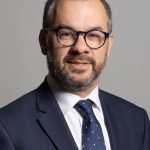
  • Paul Scully – 2022 Speech on BBC Local Radio

    Paul Scully – 2022 Speech on BBC Local Radio

    The speech made by Paul Scully, the Parliamentary Under-Secretary of State for Digital, Culture, Media and Sport, in the House of Commons on 8 December 2022.

    I thank my right hon. Friend the Member for Hemel Hempstead (Sir Mike Penning) for securing the debate and the Backbench Business Committee for supporting it. The BBC is a great national institution that has played a vital role in informing, educating and entertaining audiences since it was created 100 years ago. Its charter requires it to act in the public interest and provide distinctive content that reflects and represents people and communities from all corners of the UK. That includes providing, as we have heard, genuinely local content that is directly relevant to audiences.

    As we have heard, local services are a key part of the BBC’s public service remit and an example of how it can use its licence fee funding to provide services that may be underserved by the market. BBC local radio is one of its crown jewels and remains highly valued by audiences. We heard that testimony in the debate when my right hon. Friend the Member for Hemel Hempstead and my hon. Friend the Member for Watford (Dean Russell) talked about BBC Three Counties Radio; my hon. Friend the Member for Cleethorpes (Martin Vickers), my right hon. Friend the Member for Haltemprice and Howden (Mr Davis) and the right hon. Member for Kingston upon Hull North (Dame Diana Johnson) talked about BBC Radio Humberside; and my hon. Friends the Members for North Norfolk (Duncan Baker) and for North West Norfolk (James Wild) talked about BBC Radio Norfolk.

    My right hon. Friends the Members for Maldon (Sir John Whittingdale) and for Rayleigh and Wickford (Mr Francois) and my hon. Friend the Member for Southend West (Anna Firth) talked about BBC Essex; Mr Deputy Speaker and my right hon. Friend the Member for Pendle (Andrew Stephenson) even talked about BBC Radio Lancashire—well done to them for getting that in; and the hon. Members for Strangford (Jim Shannon) and for Foyle (Colum Eastwood) talked about BBC Radio Foyle, funnily enough. There are so many pairs there—I am wondering which are the Smashie and Nicey of the House in terms of their DJs.

    My right hon. Friend the Member for Wokingham (John Redwood) talked about BBC Radio Berkshire; my hon. Friend the Member for Worcester (Mr Walker) talked about BBC Hereford & Worcester; the hon. Member for York Central (Rachael Maskell) talked about BBC Radio York; the hon. Member for Easington (Grahame Morris) talked about BBC Radio Tees; and the hon. Member for Tiverton and Honiton (Richard Foord) talked about BBC Radio Devon. My hon. Friend the Member for Warrington South (Andy Carter) was greedy and talked about two—BBC Radio Merseyside and BBC Radio Manchester. Not surprisingly, the right hon. Member for Orkney and Shetland (Mr Carmichael) talked about BBC Radio Orkney and BBC Radio Shetland.

    The hon. Member for Barnsley East (Stephanie Peacock) talked about BBC Radio Sheffield. My hon. Friend the Member for Worcester talked about doing the regional round, and I remember talking to Toby Foster in the morning in Sheffield when I was hospitality Minister about the struggle of that sector during covid. I think I still owe him a visit to his comedy club. These things do stick in the mind and we are regularly tested at a local level.

    We also heard from the right hon. Member for Hayes and Harlington (John McDonnell) about BBC Radio London, which he shares with me and the Media Minister, my hon. Friend the Member for Hornchurch and Upminster (Julia Lopez), who is unfortunately in her sick bed with covid so could not respond to the debate. We have great presenters and journalists, such as Susana Mendonça, the great political journalist, and I enjoy sparring energetically and enthusiastically with Eddie Nestor often during drivetime.

    As we have heard, there are some fantastic examples that remain highly valued by audiences up and down the country. Those local services bring communities together and play a vital role in reflecting local experiences and delivering local news. Developed in the late 1960s and 1970s, the BBC’s 39 local radio services in England still reach 5.8 million listeners every week and collectively have a higher share than stations including BBC Radio 5 Live and BBC Radio 6 Music, even though coverage on FM and DAB is not universal across England.

    As we all know, BBC local radio is especially valued outside London and the south-east, where there tends to be less competition from commercial services. BBC local stations in places such as Derby, Stoke, Lincolnshire, Gloucestershire, Cumbria and Shropshire have a larger audience share and reach than the average for BBC local radio. The Media Minister has already made it clear to the House, in answer to an urgent question a few weeks ago, that she was disappointed—we are all disappointed—that the BBC is planning to reduce its local radio output. These are precisely the kinds of services that the BBC is uniquely well placed to provide.

    I was also disappointed that last week, as we have heard, the BBC announced proposed changes to its radio output in Northern Ireland, including cuts to BBC Radio Foyle’s output. BBC Radio Ulster, including Foyle, reaches nearly a third of radio listeners in Northern Ireland and is a vital part of Northern Ireland’s media landscape. Understandably, the BBC’s announcement has caused a significant reaction in Northern Ireland, as we have heard, and I know that it was raised by the hon. Member for Foyle with the Prime Minister at Prime Minister’s questions on 30 November—reaching the highest levels.

    We recognise that commercial local news providers have concerns about the potential impact of the BBC’s plans to increase investment in online news services. The charter requires the BBC to consider its market impact, and to seek to avoid unnecessary adverse impacts on competition that are not necessary for the fulfilment of its mission and public purposes. The Government are considering the regulation and governance of the BBC’s market impact as part of the mid-term review—my hon. Friend the Member for Warrington South raised this issue—and we will obviously bring that back to this place as soon as we can. Ofcom is also reviewing the BBC’s online news proposals, including an assessment of the concerns raised by the News Media Association and the BBC’s own analysis.

    We cannot ignore the considerable concerns that have been raised in response to the BBC’s recent announcement —not just today, but in recent weeks. Since the BBC’s announcement, my hon. Friend the Media Minister has met the BBC’s leadership, and she has expressed our shared concerns in this House. She made it clear that the BBC must continue to provide distinctive and genuinely local radio services, with content that represents communities from all corners of the UK. She also emphasised that we expect it to consider the views of this House when it makes the decision about whether to proceed.

    The Prime Minister also committed in this House to raising the changes to BBC services in Northern Ireland with the BBC. The Prime Minister has since himself met the director-general of the BBC, and they discussed the proposed changes to BBC Radio Foyle and the importance of the BBC considering the views of stake- holders when deciding whether to proceed. The Secretary of State wrote to the BBC earlier this week to remind it of its responsibilities under the charter, including the importance of transparency about changes to services.

    Last week, the Digital, Culture, Media and Sport Committee held an evidence session with the BBC on its planned changes to local radio, and I welcome the important role that the Committee plays in ensuring that the BBC is accountable for its decision making.

    Grahame Morris

    Would the Minister clarify what the current position is with Ofcom? My understanding is that the Media Minister was going to seek Ofcom putting pressure on the BBC in respecting its obligations under the terms of the charter.

    Paul Scully

    Indeed, and the Media Minister was actually due to meet Ofcom this morning, I believe, but unfortunately that obviously changed because of her illness. However, she will continue to work with Ofcom to make sure that the greatest pressure is brought to bear on this.

    Separately, we have asked the BBC for advice on how it would manage a major local incident—we have heard a lot about flooding today, for example—that requires a dedicated rolling news service, given the BBC’s important responsibilities under the charter and agreement to support emergency broadcasting. The latter is really important. At its best, for example during covid, BBC local radio is able to bring communities together. It plays a vital role in reflecting local experiences and delivering local news. It is a lifeline, as we have heard, for many older people living in rural areas, and it is a source of reliable information in emergencies, which is part of its public value.

    The Secretary of State also raised the BBC’s proposals with Ofcom last month, and it has confirmed that it is monitoring the BBC’s local radio proposals in England. In particular, it will scrutinise the BBC’s detailed plans for sharing programming on local radio. Ofcom has made it clear that it expects the BBC to continue to deliver for all audiences as it transitions to a digital-first organisation, and will hold it to account in areas where it needs to do more. As I say, we will continue those discussions with Ofcom to make sure that happens.

    I want to take this opportunity to stress that the BBC is, rightly, operationally and editorially independent from the Government, and decisions on service delivery are ultimately a matter for it. The BBC agrees with the Government on the need for the organisation to reform over the coming years, and recognises that there will be challenges as the BBC moves towards becoming a digital-first organisation and that those reforms will involve difficult decisions.

    Rachael Maskell

    I held something back from my speech because I wanted to put it specifically to the Minister. If the BBC were to put the question I suggested to local radio about making its own reforms, would the Minister and the Department step in if it was to build new partnerships, perhaps with universities and other community groups, to strengthen the local position of the BBC and to have further reach but also greater capacity for the future?

    Paul Scully

    The hon. Lady raises an interesting point, but I would not want to put words in the Media Minister’s mouth. I will certainly make sure that she reflects on that, because I do not want to be treading on her toes or to make her decision. I know she will have heard that. I am sure she will be flicking over from BBC Radio London, on her sickbed, to the Parliament channel to hear what is discussed today, so she will have heard what the hon. Lady said.

    The Government welcome the BBC’s plans, as part of the reforms, to maintain its overall investment in local services, and that includes £19 million from broadcast services being moved to online and multimedia production to adapt to audience changes. The BBC has also confirmed that it is protecting local news bulletins throughout the day and local live sport and community programming across all 39 stations. There will be fully local programming between 6 am and 2 pm, with neighbouring or regional sharing in most of the remaining listening hours. We have heard the difficulties that Members have with that regional sharing. In Northern Ireland, we understand that the changes will result in local investment in BBC iPlayer, which in itself is to be welcomed. But the recent announcements do appear to fundamentally change important BBC local services, particularly BBC local radio, which is an essential part of the public service remit.

    Andy Carter

    I heard what the Minister said about weekday services. The point I made earlier was that, on many stations, the peak of the week is Sunday morning, which is a fundamentally important point for audiences, yet that is when local radio is being shared and regionalised. Does he accept that that is a point in the audience day when local radio should be local?

    Paul Scully

    I totally agree. My hon. Friend has a background in radio and speaks with great experience. The BBC should not be salami-slicing its services. It should be responsive to local need, and that includes looking at the peak times my hon. Friend describes.

    We all agree the BBC has been entertaining and informing us for 100 years. We want the BBC to continue to succeed over the next century in a rapidly evolving media landscape and we are clear that BBC radio has a significant role to play in that success. In the light of the concerns raised in the debate, the BBC needs to clarify itself how it is going to manage those long-term tensions between modernising and becoming more sustainable while also maintaining its core public service function and output. I recognise that the BBC faces difficult decisions in reforming its services and becoming the digital-first organisation it seeks, but the debate has highlighted concerns shared across the House about the BBC’s proposals to reduce its local radio output.

    I stress again that the BBC is independent from the Government, but it is now for the BBC to reflect on the concerns raised in the debate and elsewhere on its proposals. It must also clarify whether it has other plans to change local radio services in future, particularly in Scotland and Wales.

    The Government are undertaking a mid-term review, as I said earlier, which will evaluate how the BBC and Ofcom assess the market impact and public value of the BBC in an evolving marketplace and how that relates to the wider UK media ecology, including with regard to commercial radio and local news sectors. That will take regard of the views of this House and the review is ongoing.

  • Stephanie Peacock – 2022 Speech on BBC Local Radio

    Stephanie Peacock – 2022 Speech on BBC Local Radio

    The speech made by Stephanie Peacock, the Labour MP for Barnsley East, in the House of Commons on 8 December 2022.

    I begin by thanking the Backbench Business Committee for granting this important debate, and I congratulate the right hon. Member for Hemel Hempstead (Sir Mike Penning) on securing and leading it.

    The BBC is a great British institution, a cornerstone of our creative economy and an important part of our day-to-day lives. From CBeebies to Bitesize to Radio 4, the BBC has something for everyone, providing round-the-clock news, education, entertainment and culture. It is absolutely right that institutions such as the BBC modernise in an increasingly digital world and keep pace with global media giants, but in doing so, we must protect the traditional yet vital services, such as the excellent local radio network, that make our BBC the world-leading service it is.

    Today’s debate has focused on the contribution of local radio across our country. From Easington to Worcester to Wokingham, there is agreement across this House that the BBC should review its decision to end local programming on weekdays after 2 pm and secure the future of the local radio network. Given the importance that local communities place on local BBC radio, and the fact that it is an intrinsic part of what their licence fee goes towards, there is concern that reducing local radio content will drive a wedge between the BBC and the public to its detriment. Indeed, BBC local radio contributes a huge amount to each area it serves, and I certainly know that BBC Radio Sheffield does that in my local area.

    Everyone across the Chamber has paid tribute to their local stations, particularly the hon. Member for Southend West (Anna Firth), who did so poignantly. The hon. Member for North Norfolk (Duncan Baker) and others shared the statistic that local radio reaches nearly 6 million people—that is 15% of adults in the UK. First and foremost, it provides truly local news. Although the BBC has provided assurances that local news bulletins and live sport will continue to run under its proposals, the National Union of Journalists has warned that the BBC’s erosion of local output could mark the beginning of the end for local radio. My right hon. Friend the Member for Hayes and Harlington (John McDonnell), the chair of the NUJ group, outlined its concerns passionately and in detail.

    Dame Diana Johnson (Kingston upon Hull North) (Lab)

    I am grateful to my hon. Friend for giving way, and I apologise for not being here; I was in the Westminster Hall debate, too. My hon. Friend might be able to help me with this. BBC management has said that the impact of its proposals would be the loss of 48 roles. However, in the Radio Humberside and Radio Lincolnshire regions alone, it wants to close seven staff presenter roles, plus around five other jobs may go in the planned restructure. That is around 12 jobs across two out of the 39 local radio stations. It may be that our area is being hit particularly hard, but if that is spread across all the areas, that would be a loss of around 200 jobs, would it not?

    Stephanie Peacock

    My right hon. Friend is absolutely right, and as we have heard in the debate, it is not just Radio Humberside; it is across the country, and I know that colleagues from Northern Ireland have made this case as well.

    This is a real concern to local journalists and to listeners, because local radio is such an important part of our lives. Whether it is local traffic updates, school closures or extreme weather events, the provision of trustworthy local news is vital, especially at a time when misinformation is becoming common but hard to spot in a digital world. BBC local radio’s news facilities, for example, provided a lifeline during the pandemic, giving reliable and localised case numbers, guidance and vaccination updates for each individual area.

    It is not just “breaking news” bulletins that keep people informed. Regular local programming gives people access to the arts, charities, education and cultural events that are truly relevant to them, helping to ensure that each area remains connected to its past and present. The hon. Member for North West Norfolk (James Wild) spoke about some of the programmes in his area. It is precisely that kind of programming that faces the axe under these proposals.

    The past few months have also shown us how BBC local radio can contribute to the healthy functioning of our democracy, enabling national leaders to be held to account on local issues and local leaders to be questioned by those they directly represent. Regional and national alternatives to such shows simply will not have the same effect, and once these local opportunities are gone, it will be extremely hard to get them back, as the hon. Member for Watford (Dean Russell) described.

    Local radio helps connect those at risk of digital exclusion to their communities. Although many people, and particularly the younger generation, now access a lot of their media online, there still exists a group who cannot access the digital world. Some cannot get a reliable fast connection due to their location; some were never taught the skills to navigate the online world; and others simply cannot afford the price of a phone bill or broadband. For people in that group—particularly older people or those living in rural areas—truly local programming matters, as the right hon. Member for Maldon (Sir John Whittingdale) described. In a period when loneliness is increasing, now is simply not the time to threaten cutting people off. My hon. Friend the Member for York Central (Rachael Maskell) rightly pointed out that many lonely people turn on the radio for connection and companionship when they are on their own.

    Of course, we understand the need to modernise our institutions, as outlined by the BBC in the four pillars it set out yesterday. Over the last 20 years, the media landscape has changed dramatically. Indeed, when the last remit for public service broadcasters such as the BBC was created, it was done through reforms to the Communications Act 2003. Back then, online platforms such as YouTube had not even launched, and nor had devices, such as the iPhone, that brought the internet to our pockets. Now global media giants such as Amazon have become major players, and phones challenge radio and TV for our attention. It is due to these changes that the media Bill must be brought forward as soon as possible, with the obvious exclusion of the privatisation of Channel 4, so that our public service broadcasters can continue to cater for British audiences in the modern world.

    In the meantime, the BBC has remained competitive in the digital space through BBC News online, iPlayer, BBC Sounds and more. Although these updates and changes are necessary to capture digital and young audiences, they do not need to come at the expense of traditional services that are still contributing to communities across the country. BBC local radio still has value in today’s society, and that must be taken into account. The hon. Member for Warrington South (Andy Carter) made that case very strongly.

    The News Media Association has warned that the BBC moving its content from radio to online could force competition with local written news from commercial providers, threatening their ability to generate sustainable revenue. The BBC needs to ensure that its modernisation plans continue its tradition of promoting local journalism rather than stifling it. The hon. Member for Cleethorpes (Martin Vickers) quoted his local NUJ rep, who articulated that.

    We recognise that the BBC, by its very nature, must remain impartial and independent, but that does not stop it from making its decision-making processes transparent, to ensure that its plans help create a BBC that caters for all its audiences. The BBC must be clear with the public on what analysis and consultation it undertook to prompt its decision to restrict local radio services and what assessment it has made of the impact this will have on its listeners.

    That is particularly important in the light of Ofcom’s fifth annual report on the BBC, which found that some audiences, such as those in lower socioeconomic groups, have been persistently less satisfied and are less likely to use its services. Like every other organisation, the BBC must be clear on its best practice for managing cuts to its workforce. Local journalists should not be finding out through the media that over 100 audio jobs will be cut, placing their livelihoods at risk overnight just before Christmas.

    Local radio has been at the heart of communities for generations, and this debate has highlighted how important it is for so many people up and down the country. I know that many across Barnsley enjoy and rely on Radio Sheffield. We hope the BBC can review its decision to cut local radio and support the network for many years to come.

  • James Wild – 2022 Speech on BBC Local Radio

    James Wild – 2022 Speech on BBC Local Radio

    The speech made by James Wild, the Conservative MP for North West Norfolk, in the House of Commons on 8 December 2022.

    What more could the House want than a playlist of Norfolk MPs speaking back to back? I join others in congratulating my right hon. Friend the Member for Hemel Hempstead (Sir Mike Penning) on securing this debate on the BBC’s proposals to cut local radio output. This debate is of great importance to my constituents and those of the Members across the House who have spoken, whose contributions have shown the damage the proposals would do to our communities. This is about the vital issues of local identity, community and companionship.

    During the pandemic, we became far more aware of the importance of our local communities, and local radio played a massive role in that, so it is staggering, frankly, that the BBC’s response to that growing sense of community is a plan to remove local content after 2 pm on weekdays and at weekends, apart from live news and sport. Instead, content on BBC Radio Norfolk would be shared across a much wider regional area including Norfolk, Suffolk, Northamptonshire and Cambridgeshire—all fine counties, undoubtedly, but how can that content be considered in any way local? On Sundays, after 2 pm, there would be only one national show across all 39 local stations. Which licence-fee payers want that loss of local content?

    As I said when I met BBC bosses, I do not believe that the proposals reflect the importance that the 147,000 people reached every week by Radio Norfolk place on listening to its output and having properly localised content. Indeed, my constituents from West Norfolk want to see more content about West Norfolk as opposed to Norwich and Great Yarmouth. That is particularly true of the elderly and people in remote rural areas who rely on the radio for companionship.

    Retaining only Chris Goreham’s breakfast show—on which I am always pleased to be interviewed, particularly about my campaign for a new Queen Elizabeth Hospital in King’s Lynn—and the mid-morning show is wholly insufficient. The proposals would lead to the loss of much-loved shows. My hon. Friend the Member for Southend West (Anna Firth) referred to Essex Quest, and my hon. Friend the Member for North Norfolk (Duncan Baker) mentioned Treasure Quest, which is a Radio Norfolk institution that shines a light on amazing people, places and events of which people would otherwise be unaware, and it is rightly valued by listeners. But, 15 years after it was first broadcast, Treasure Quest would go under these plans. I made those points to the BBC bosses at the DCMS Committee hearing on these proposals, and they acknowledged that Treasure Quest was a distinctive programme, so I very much hope that they will rethink their plans to scrap it.

    The Bishop of Norwich has highlighted the loss of Radio Norfolk’s flagship Sunday morning show with Matthew Gudgin and others, which carries important news, debate, and discussion about and from faith communities. I could go on by listing Stephen Bumfrey, Anna Perrot, the weekend quiz and many more important shows and local content, but I think the point is made.

    Of course, people are increasingly going online, and output needs to change to reflect that. I am not arguing against any change, but I encourage the BBC to drop the Aunt Sally argument that it has repeated in correspondence with me—that there will be some who believe that unless every hour of the day comes from each existing local radio base, we will be losing something special. Not everyone is shifting their listening patterns online, so the timing and scale of the cuts in local content are the issue here.

    Mr Alistair Carmichael (Orkney and Shetland) (LD)

    Like the hon. Member for Strangford (Jim Shannon), I have been in Westminster Hall, so I have missed most of the debate. Is not the fact that this goes beyond the local content and into the availability of well-trained and professional journalists in each community, like those I see regularly for Radio Orkney and Radio Shetland? They are then available to feed into network news or BBC Scotland, not just on radio but on television? If we keep pulling the BBC presence out of local communities, the news content of the networks eventually becomes ever more centralised and metropolitan.

    James Wild

    The right hon. Gentleman makes a very good point. We are fortunate to have such expertise in our local news and local radio stations, as well as the knowledge, passion and love for the area they are reporting on, which mean that they can come at it not only with understanding, but with an impartial eye, which is so important.

    The BBC enjoys a privileged position with licence fee income of nearly £4 billion a year. That is why it is under an obligation to provide content that is of particular relevance to the area and communities it serves. Ofcom has an important role to play here. Last month, it warned that the BBC

    “must not lose sight of the importance of local content.”

    It said it would keep

    “a close eye on programme sharing between local radio stations, to ensure the sustained provision of high-quality local content”.

    Frankly, that is far too passive, as any action would only come after the event, when the shows have gone and the redundancies have been made. Ofcom needs to act now and look at the operating licences of the BBC.

    As my right hon. Friend the Member for Maldon (Sir John Whittingdale) mentioned, Ofcom also has a role to play in preventing the BBC from crowding out commercial providers. In west Norfolk, we are fortunate to benefit from Your Local Paper, the Lynn News, Town & Around, as well as commercial local radio from Radio West Norfolk and KL1. The BBC should not use its guaranteed income—guaranteed for now—to undermine commercial organisations by shifting more resources online. The BBC is there to serve its audience—local people; our constituents—and it needs to engage, listen and respond by changing its proposals to protect more local content. These proposals cannot be the final answer. The BBC needs to think again and Ofcom needs to act according to its duties to protect licence fee-paying listeners. Local radio stations, including Radio Norfolk, are assets that we must protect.

  • Duncan Baker – 2022 Speech on BBC Local Radio

    Duncan Baker – 2022 Speech on BBC Local Radio

    The speech made by Duncan Baker, the Conservative MP for North Norfolk, in the House of Commons on 8 December 2022.

    It is a great privilege to speak in this debate, which was brought to us by the right hon. Member for Hemel Hempstead (Sir Mike Penning)—I thank him for that—and also to follow my hon. Friend the Member for Warrington South (Andy Carter), an hon. Member who actually knows what he is talking about on these matters.

    Mr Deputy Speaker, you can tell that this is an important debate, because there are two Norfolk MPs present in the Chamber this afternoon. We have been very competitive about who gets to go last, so I thank you for calling me now.

    Local BBC radio in my part of the world is like a cosy cardigan. When people put it on, they immediately have some familiarity. They feel like they know the presenters personally—there is that special connection. That is why my constituents in North Norfolk are so upset about these proposals. The decision to change their local radio programming has really affected the listeners. It is no secret that the older a person is, the more likely it is that they will listen to local radio. The BBC estimates that 58% of its local radio listeners are over 55 years of age, with a near perfect split between both male and female listeners.

    As the Member of Parliament with the oldest average age of any constituency in the country, it is clear that, in North Norfolk, we have a very special relationship with our local BBC radio station. A total of 148,000 listeners tune into BBC Radio Norfolk every week. However, that should not be taken as an indication that local radio is somehow just for people of a certain age. Although there are demographic trends, it is also clear that local radio appeals to people from all age groups and backgrounds. As we have heard already in the Chamber this afternoon, it is an astounding statistic that local radio stations, through the BBC in England, reach nearly 6 million listeners every week, which is an absolutely phenomenal number.

    From speaking to my constituents, I know just how important those local radio services are to them—whether they are schoolchildren or pensioners. I hear on the doorsteps time and again about how local radio is an invaluable source of knowledge for constituents. They get to hear what is happening, bespoke, locally in their own area, and the service provides an immense amount of satisfaction and joy.

    Let me just give an indication of how much Radio Norfolk is listened to. I can remember on my summer tour, at 10 o’clock in the morning, knocking on a door only to be met by a bemused-looking older lady in her Marigolds and with her hair curlers in. She looked at me and said, “You’re on my doorstep.” I replied, “Yes.” “But you were on the radio a few seconds ago,” she said. “You’re that nice young man with the refugees living with you.” She was absolutely right. I had just been interviewed on the radio from my car, and the first door that I had knocked on belonged to this lady who had heard me coming out of her radio as she did the washing up. I rather cheekily said, “That is the kind of service you expect from the Conservative MP from North Norfolk. You merely think about me and I appear.”

    When we get elected, we are told that journalists are not our friends, but, of course, we all build relationships with our local BBC networks. It is our duty to be accountable, to go on the air and face questions, as many have said this afternoon, and to ensure that we represent our constituents. Across the east, we are absolutely spoiled not only for our radio, but for our television as well. Andrew Sinclair and Deborah McGurran are consummate professionals and fair, hard-working journalists, as a number of hon. Members who have spoken this afternoon will know. The BBC is lucky to have them.

    Equally, on the breakfast show on Radio Norfolk, Chris Goreham and his team are superb. I like to think that all MPs for the region form a relationship with those local teams. There is no doubt that they are beloved in my patch, and I put on record my thanks for the way they have always treated me, that includes Chris, Richard, Tim, Paul and Emily, who I deal with regularly. If I am doing charity work, such as marathon running, raising money for local charities or running aid to Ukraine, as I did last month, they always let me go on the show to talk about the work we do in the constituency and I always get a platform to talk about the things I am doing.

    That is how the relationship should work with our local BBC. When I ran a North Norfolk promotion to get 100 new apprenticeships into my local area, the BBC breakfast show at the weekend, run by Kirsteen Thorne, set up an entire programme dedicated to getting work opportunities for young people. Again, that was something I never asked for, but we worked together on the project.

    I am worried to hear how our drive programmes may well be combined. It simply will not be local as we know it. Under the current proposals, we face having no local weekend breakfast shows, which is unthinkable. In my constituency, “Treasure Quest” is a beloved Sunday morning show that has been on the air for 40 years. If that goes, there is no doubt that the local BBC across my region will have a far weaker product. We know that BBC local music has helped to launch careers for such esteemed artists as Ed Sheeran—even I had heard of him, and I have not got past Dire Straits, so we know it can be a humongous help to local artists who make it big. I feel very strongly about those programmes that are currently on air, but may not be for much longer.

    At the end of the day, the BBC is editorially and operationally independent, and can decide how it will deliver its services, but I implore the BBC, which will be watching this debate, to listen to all hon. Members from across the House who have contributed. We have heard some real joined-up thinking and agreement. Digitising and taking away locality of services is not always best for all our constituents. There is immense affection and support for local radio.

    We have in Norfolk an extremely rich tapestry of media, and we are lucky to have excellent newspapers as well. I worry enormously about some of the changes and the impact that the dominance of the BBC will have on our local and regional print press, which is already struggling as times change. I do not think we have spoken enough about that this afternoon. I would not like to see those journalists, who work extremely hard, put under even more pressure, when there is a fair playing field at the moment.

    Jim Shannon (Strangford) (DUP)

    First, Mr Deputy Speaker, I apologise for the fact that I was in another debate and could not be here for this one—I had to withdraw my name to speak. In support of the hon. Gentleman, I want to make a quick plug for BBC Radio Foyle, where 36 staff will lose their jobs. Those are the journalists who have come through the ranks. The move will save £2.3 million, with further redundancies expected. The audience for Radio Foyle is almost half a million per week, which in a Northern Ireland population of some 2 million indicates the critical role it plays. Does he believe that there remains a duty of care to the smaller programmes and the smaller stations, to ensure that local people have a local voice?

    Duncan Baker

    I am grateful for the hon. Gentleman’s intervention. He is absolutely right that it is all about having a local voice and presence. For the constituents of the areas we represent around the country, it is absolutely right that they hear what has been said and re-echoed around the entire Chamber: the importance of that localised service to so many constituents, who want it to continue.

    I will sum up by saying that I understand that there is change and that it is even healthy occasionally, but media is a fluid landscape. People consume their information in different ways—that has been incredibly clear over the last couple of years—but there is, and I think there always will be, a very strong case for local radio. It commands an enormous following, as we have said many times, and it is, in many cases, absolutely integral to our local communities. We should not take it for granted, and I hope that the BBC hierarchy does not take it for granted. We should conserve and improve what we have, not rationalise it.