Tag: Speeches

  • Michael Gove – 2022 Statement on the Levelling Up and Regeneration Bill

    Michael Gove – 2022 Statement on the Levelling Up and Regeneration Bill

    The statement made by Michael Gove, the Secretary of State for Levelling Up, Housing and Communities, in the House of Commons on 17 November 2022.

    The Levelling Up and Regeneration Bill contains important powers to drive local growth, empower local leaders to regenerate their areas and ensure that everyone can share in the United Kingdom’s success. It underscores this Government’s continuing commitment to levelling up and securing better outcomes for communities. Yesterday I tabled a number of Government amendments which strengthen the Bill and deliver on our manifesto commitments.

    Strengthening devolution within England is a key component of levelling up. The amendments make it clear that there is no possibility of district councils in two-tier authorities having their functions taken away from them and given to combined county authorities. The amendments also enhance powers for mayors to manage their key routes networks to increase transport connectivity, and will enable stronger partnership working between police and crime commissioners and local government by removing a perceived barrier to commissioners participating in local government committee meetings.

    Levelling up also means improving access to high-quality and affordable homes across the country, and doing so in ways which meet the needs and expectations of local people. The planning reforms in the Bill will give communities more control over what is built, where it is built, and what new buildings look like, as well as greater assurance that the infrastructure needed will be provided. These reforms create stronger incentives to support development where it is needed.

    The reforms are based on five key principles. First, delivering high-quality and beautiful buildings, restoring a sense of community and pride in place. Secondly, enabling the right infrastructure to come forward, boosting productivity and spreading opportunities. Thirdly, enhancing local democracy and engagement by empowering local leaders, increasing accountability and giving communities a stronger say over development. Fourthly, fostering better environmental outcomes. And fifthly, allowing neighbourhoods to shape their surroundings, empowering communities to restore local pride in place.

    It is vital that the places we build are beautiful, durable and sustainable. I am already taking steps through the Bill to ensure that every local authority has a design code which can set high standards that reflect local views. National policy has also been strengthened to make it clear that development which is not well designed should be refused. I will announce more details shortly about how the Office for Place—our new body which will uphold high aesthetic standards in architecture—will support authorities in this important work.

    Development must also be accompanied by the infrastructure needed to support it. Alongside the proposals for a more streamlined and non-negotiable infrastructure levy which are already contained in the Bill, our amendments will introduce powers to allow piloting of community land auctions. These would give local planning authorities new powers to capture value from land when it is allocated for development, which can then be used to enhance local infrastructure and services.

    Strengthening local democracy is central to levelling up, and local communities rightly expect that permissions which they have democratically approved should be delivered. The amendments that I have laid add to the tools that local planning authorities can use to monitor and challenge slow delivery: by requiring developers to report annually on build-out of housing permissions, and giving them the power to decide whether to entertain future applications made by developers who have previously failed to build out existing planning permissions.

    I am also firmly committed to enhancing our natural environment while enabling sustainable growth—and will further update the House on my plans to do so in due course. We are also creating a power for the Secretary of State to give new charging powers to certain statutory consultees so that they have greater resources to engage more quickly with nationally significant infrastructure projects.

    We are giving local people more opportunity to shape their neighbourhoods by introducing an amendment setting out the full range of powers needed for street votes, giving residents the ability to vote for additional housing where they feel it is appropriate on their street. I have also tabled an amendment implementing a recommendation from Richard Bacon’s review into the self and custom-build sector, removing an ambiguity around the statutory duty to permission land for self and custom-built housing; providing further opportunities for those who wish to build or commission their own home, and for the small and medium-sized builders who are often part of this process, enabling communities to deliver the homes they want.

    Levelling up and restoring pride in place means we want to make communities feel safe where they live. That is why our commitment to repeal the Vagrancy Act has always been dependent on the simultaneous introduction of modern replacement legislation to ensure police and other agencies continue to have the powers they need to keep communities safe and protect vulnerable individuals. The responses to the consultation provide a useful basis to inform the shape of future replacement legislation, and we will publish the Government response to the consultation in due course. For now, we will remove the placeholder clause from the Bill and we will not be bringing forward replacement legislation in the Levelling Up and Regeneration Bill. In the meantime, this Government have made the unprecedented commitment to end rough sleeping within this Parliament. We remain steadfastly committed to that goal.

    Other amendments which have been laid make a number of technical improvements to the Bill. This includes making sure that development corporations can, where they are designated, take on certain supplementary planning functions where appropriate, so that their powers to drive regeneration and development are effective and up to date. The amendments also clarify the powers introducing high-street rental auctions, to make it harder for those landlords who are sitting on empty premises to avoid their property being subject to an auction, and make sure these powers can address the blight of empty high street shops. We will also make sure that regulations for the compulsory purchase regime in clause 150, which require authorities to comply with data standards, will be subject to the negative parliamentary procedure. The amendments also add a “pre-consolidation” clause to the Bill. This technical measure will enable the future consolidation of over 40 different Acts relating to planning and compulsory purchase law, making it much easier to access and understand for all users of the system.

    This Bill represents a significant opportunity to give local leaders new powers to reinvigorate their communities and spread opportunity across our country. I look forward to the further discussions that will take place as we take it forward.


  • Robert Halfon – 2022 Statement on Higher Education Investigations

    Robert Halfon – 2022 Statement on Higher Education Investigations

    The statement made by Robert Halfon, the Minister of State at the Department for Education, in the House of Commons on 17 November 2022.

    Today I am laying regulations under section 71 of the Higher Education and Research Act 2017. These regulations will enable the Office for Students (OfS) to charge a fee for the investigation of providers’ compliance with quality and other requirements, where the investigation results in certain regulatory action or specified outcomes. These regulations will come into effect on 8 December 2022.

    Improving the quality of higher education is a manifesto commitment, and one of my highest priorities. This Government are committed to ensuring that students and the taxpayer see returns on their investment and receive value for money. Accordingly, my Department is working with the OfS to implement a rigorous regime of investigations and in-person inspections that ensures robust action is taken where quality conditions of registration have been breached, or are at risk of being breached. I am also committed to ensuring the majority of providers, which are not in breach of the regulatory conditions, experience minimal regulatory burden.

    The OfS will identify providers for investigation using a range of information sources, including outcomes data, student notifications, and other monitoring. My predecessor asked the OfS to put “boots on the ground” where necessary, and investigate universities where there are concerns about the quality of provision. These investigations will examine a range of quality matters, including whether courses are sufficiently up to date and academically challenging; whether students receive enough face-to-face engagement; and the extent to which providers secure positive outcomes for students.

    Where the OfS finds that a provider’s performance just is not good enough, it may choose to take enforcement action. This could involve a sanction such as a monetary penalty or, if necessary, even go as far as the removal of a provider from the register. This work will effectively tackle pockets of poor-quality provision, and ensure all students, regardless of their background, can benefit from high-quality, world-leading higher education.

    In order to fund this regime sustainably, as well as deter against the growth of poor-quality provision, these regulations will allow the OfS to charge a fee for the investigation of providers’ compliance with quality and other requirements, where the investigation results in certain regulatory action or specified outcomes, such as the imposition of a specific ongoing condition of registration. Doing so will help to ensure that the costs of investigations will fall on those responsible for their necessity, and that those in good standing face a more proportionate regulatory burden than would be the case if we did not lay these regulations.

  • John Glen – 2022 Statement on Tax Credits and Child Benefit – Review of Rates

    John Glen – 2022 Statement on Tax Credits and Child Benefit – Review of Rates

    The statement made by John Glen, the Chief Secretary to the Treasury, in the House of Commons on 17 November 2022.

    The Tax Credits Act 2002 and the Social Security Administration Act 1992 place a statutory duty on His Majesty’s Treasury to review the rates of tax credits and child benefit each year in line with the general level of prices. There is a further statutory duty on the Treasury to increase guardian’s allowance in line with price growth. I have now concluded the review for the tax year 2023-24.

    I have decided to increase tax credits and child benefit rates in line with the consumer price index (CPI) for the year to September 2022. Guardian’s allowance will also increase by the same rate. This means that:

    The majority of elements and thresholds in working tax credit and child tax credit, including all disability elements, will increase by 10.1% from 6 April 2023. This means, for example, that the basic element of working tax credit will increase from £2,070 to £2,280 per year. In line with established practice and the Office for Budget Responsibility’s expectations in their welfare forecast, the maximum rate of the childcare element, the family element, the withdrawal rate and disregards in tax credits will remain unchanged.

    All rates of child benefit, plus guardian’s allowance, will increase by 10.1 % from 10 April 2023. This means, for example, that the child benefit rate for the eldest child will increase from £21.80 to £24 per week.

    The new rates will apply across the United Kingdom. I will deposit the full list of these rates in the Libraries of both Houses shortly.

  • Rishi Sunak – 2022 Speech to the CBI Conference

    Rishi Sunak – 2022 Speech to the CBI Conference

    The speech made by Rishi Sunak, the Prime Minister, to the CBI Conference held on 21 November 2022.

    Tony, let me start by saying thank you to you and your team.

    The CBI is a valued institution in this country…

    …and a powerful voice for business.

    And let me thank all of you…

    Because I know things are tough right now.

    You rightly want to know what you can expect from me.

    You saw what mattered to me when I was Chancellor, with policies like furlough.

    Acting with empathy. In the national interest.

    Above all, being bold, decisive, and radical.

    Now let me tell you what I want to do as Prime Minister.

    I said on the steps of Downing Street that I would put stability and confidence at the heart of this government’s agenda.

    And last week we did that…

    …with a plan to grip inflation and balance the books.

    I said I would bring fairness and compassion to help the most vulnerable.

    And we’ve done that too…

    …not just with record increases in pensions and welfare…

    ….and help for people’s energy bills…

    …but by controlling inflation.

    Because the best way to help people…

    …is by stopping mortgages, rents, and food prices from spiralling out of control.

    Re-establishing stability is the critical first step.

    But there’s so much more we need to do.

    I’m not just here to solve problems.

    I want to build a better country.

    Where we get inflation down and grow the economy.

    Where we cut NHS waiting times and improve the quality of care.

    Where we invest more in schools and give every child a world-class education.

    And critical to achieving all this…

    ….is innovation.

    That’s my theme today.

    And a defining focus of my government.

    Why innovation matters

    I sometimes worry that when people hear the word ‘innovation’, all they think of are the latest gadgets – a smarter watch, better tv, or faster car.

    But to me, innovation is much more about new ideas, new ways of doing things that drive economic and social progress.

    The product of creativity and ingenuity…

    …and what Roosevelt called ‘bold, persistent experimentation.’

    I want to lead a country where that mindset and that culture of innovation…

    …permeates every aspect of what we do.

    Where it’s at the heart of our economic policy…

    …and at the heart of our vision for public services.

    The question is – how do we do that?

    First, we need to harness innovation to drive economic growth.

    Second, we need to embed innovation in our public services – especially our NHS.

    Third, we need to teach people the skills to become great innovators.

    Harnessing Innovation to drive economic growth

    First, growth.

    Tony, you’ve rightly challenged us to be more ambitious for growth.

    Well, there’s one factor above all that drives growth.

    Over the last 50 years, innovation was responsible for around half of the UK’s productivity increases.

    But the rate of increase has slowed significantly since the financial crisis.

    This difference explains almost all our productivity gap with the United States.

    How do we fire up the innovation engine?

    We believe that the very act of creativity and exploration is itself a reward…

    …so it starts with government investment in basic science and research.

    In a challenging time, when we are making difficult decisions on public spending…

    …in last week’s autumn statement, we protected the budget for research and development.

    £20bn – almost a fifth of our entire capital budget, the highest level of R&D this country has ever seen.

    And we’re investing in high-risk, high-reward research with the new Advanced Research and Invention Agency.

    But more important than what government does is what you do.

    It’s private sector innovations that really drive growth.

    You’d expect me to say that, I’m a Conservative – but it’s true.

    That’s why the Autumn Statement cut taxes to encourage larger companies to do more research and development.

    Its why we’re going to allow businesses to claim R&D tax relief on pure maths and cloud computing.

    And its why we’re absolutely committed to using our new Brexit freedoms…

    …to create the most pro-innovation regulatory environment in the world…

    …in sectors like life sciences, financial services, AI and data.

    But any credible strategy also needs to support fast growing businesses…

    …those firms disproportionately responsible for our future growth.

    Turning million-pound businesses into billion-pound businesses and turning billion-pound businesses into ten-billion-pound companies

    …will create good well paying  jobs for the British people.

    But too often, those firms can’t access the finance they need.

    That’s why we’re radically reforming the regulation of our insurance and pensions sectors, as well as our listings rules…

    …to release a flood of new funding for exciting, innovative businesses.

    And we’ll need to go further.

    But this isn’t just about what large businesses and financial markets can do.

    We want to support small businesses to innovate, too.

    On every high street, in every market town, every day we rely on brilliant local businesses from the greengrocer to the dry cleaner to the local plumber.

    We should be ambitious for their future too.

    The real prize is supporting them to innovate.

    And that’s exactly what we’re doing with new initiatives like Help to Grow and Made Smarter.

    So make no mistake – our most pressing task when it comes to growth is stability and controlling inflation.

    But that will never be the limit of our ambition.

    The more we innovate, the more we’ll grow – and we have a plan for both.

    An innovation culture in our public services

    Second, we also need to create a culture of innovation in our public services.

    Now I grew up in an NHS family.

    It’s in my blood.

    And as your Prime Minister, I will always protect an NHS free at the point of use.

    And that’s why, in a budget where we had to make savings overall….

    …we didn’t cut the funding for health and social care….

    …we increased it.

    By £8 billion.

    So let no-one ever doubt our commitment to the brilliant men and women who work in our NHS.

    But our ambition for our country’s most important public service cannot be measured solely by the money we spend…

    …but by the quality of care every patient receives.

    We all want it to be easier for people to see their family GP.

    We don’t want our loved ones waiting so long for ambulances…

    …or for the operations they need.

    But better care requires innovation.

    Now In part that means new drugs and new technologies.

    And this country should be proud of how we are leading the way.

    Not just with that extraordinary Covid vaccine.

    But with robots assisting surgery…

    ….doctors being trained with Virtual Reality headsets…

    …and drones transporting prescription medicines to patients in remote locations.

    Medical technologies like these are only the most visible form of innovation.

    But we also need to radically innovate in how we do things.

    That’s how we will really improve the quality and speed of care and make the money we invest in the NHS go further.

    To do that, we’re opening Community Diagnostic Centres to deliver millions more tests, checks and scans…

    ….close to home and without having to arrange multiple appointments.

    And our new elective surgical hubs will offer hundreds of thousands of patients…

    …quicker access to the most common procedures.

    But we need to go further still.

    We want to give patients genuine choice about where and when to access care.

    And those choices need to be informed by radical transparency about the performance of our healthcare system.

    We’re also making sure the NHS has the workforce it needs for the future…

    …with the right numbers of doctors and nurses in the right places…

    …as well as thinking creatively about what new roles and capabilities we need…

    …in the healthcare workforce of the future.

    When it comes to the NHS, we all share the same ambition…

    …to give everybody in the country the best possible care, free at the point of use.

    But to deliver it, we need to be bold and radical in challenging conventional wisdom.

    And that’s what we’ll do.

    Giving the people the skills to become great innovators

    Now, third, there can be no innovation unless people have the skills to innovate.

    That starts with our schools.

    So last week we announced an extra £2bn in each of the next two years.

    But funding is not enough.

    There is no responsibility as Prime Minister that I feel more deeply, than how we develop a truly world-class education system…

    …giving every child in our country the best chance in life and preparing them to enter into a rapidly changing world.

    The Times were right to challenge us about what that looks like.

    And we are asking ourselves radical searching, questions.

    About the curriculum – because young people need to enter the modern economy equipped with the right knowledge and skills.

    And about technology – because we want to help children engage and learn better and save teachers’ time.

    We also need to end once and for all the mistaken idea that learning is something you finish at 18.

    So we will also deliver our Lifetime Skills Guarantee to help people of any age retrain and acquire new skills.

    I believe, in the very core of my being, that education is the closest thing we have to a silver bullet in public policy.

    It’s the most transformative thing we can do for our people…

    …something you as employers know all too well…

    …and I am determined to get this right.

    But to make this country a true island of innovation, we also need to attract the best and brightest from around the world.

    So we will unapologetically create one of the world’s most attractive visa regimes for entrepreneurs and highly skilled people.

    And one of the areas where we need to be most ambitious – is AI – Artificial Intelligence.

    Because this isn’t just another new technology.

    It’s a general purpose technology…

    …like the invention of the steam engine and the computer chip…

    …with the potential to transform every aspect of our lives.

    So we cannot allow the world’s top AI talent to be drawn to America or China.

    That’s why – building on the AI scholarships and masters conversion courses I instigated as Chancellor…

    …we are launching a programme to identify and attract the world’s top 100 young talents on AI.

    Less “build it and they will come” and more “let them come and they will build it”.

    But we must be honest with ourselves.

    Part of the reason we ended free movement of labour was to rebuild public consent in our immigration system.

    If we’re going to have a system that allows businesses to access the best and brightest from around the world…

    ….we need to do more to give the British people trust and confidence that the system works and is fair.

    That means tackling illegal migration.

    And that’s what I’m determined to do.

    So, to conclude – innovation matters.

    It matters because it creates more jobs, higher wages, and better opportunities for people.

    It matters because it improves our schools and NHS.

    And, over the long-term, by boosting growth and creating more productive public services…

    …innovation is how we will cut taxes for people and businesses.

    That’s why I am placing innovation at the heart of my governing agenda

    And despite the challenges we face – I am optimistic about the future.

    Because the golden thread of our national story has always been innovation.

    The idea that what’s yet to be discovered is surely even greater than all that’s come before.

    I want the United Kingdom to be a place of learning, discovery, and imagination.

    Of potential realised and ambition fulfilled.

    That’s how we’ll improve the lives of all our people.

    And as your Prime Minister, that’s what I’m going to do.

    Thank you.

  • David Alton – 1982 Parliamentary Question on the Christmas Bonus for Pensioners

    David Alton – 1982 Parliamentary Question on the Christmas Bonus for Pensioners

    The parliamentary question asked by David Alton, the then Liberal MP for Liverpool Edge Hill, in the House of Commons on 16 November 1982.

    Mr. Alton

    Following the Prime Minister’s statement last night that pensioners should not be reduced to penury, will she confirm that had the £10 Christmas bonus kept pace with inflation it should now be about £30? Does she agree with what a Liverpool pensioner said to me recently, that if she does not increase this pitiful sum it could reasonably be said that Scrooge is alive and well and living in Downing Street?

    The Prime Minister

    My comments last night referred to the savings of non-index-linked pensioners having been reduced by a policy of inflation over the years. I said that those days were over; the pensioners were abused disgracefully by a policy of inflation over a decade.

    It is easy for the hon. Gentleman to ask for increases in the bonus, but they must be met out of the pockets of the working population. Every time that we put extra burdens on them or on industry we make it more difficult for industry to be competitive. The hon. Gentleman knows of the increases in the national insurance contribution that we have had to make this year. It would not be wise to put an extra burden on the working population.

  • Leo Docherty – 2022 Speech Made to the Moldova Support Platform

    Leo Docherty – 2022 Speech Made to the Moldova Support Platform

    The speech made by Leo Docherty, the Parliamentary Under Secretary of State at the Foreign Office, in Paris on 21 November 2022.

    Thank you to the co-chairs for bringing us together again – in particular, our host, Foreign Minister Colonna and also to Minister Baerbock and Foreign Minister Aurescu. Thank you Deputy Prime Minister Popescu.

    I am very pleased to represent the United Kingdom today at this third Moldova Support Platform conference.

    As we witness unrelenting Russian aggression in Ukraine, and its devastating impact on the people of Ukraine, we also see the harrowing consequences it is having beyond Ukraine’s borders, in particular on Moldova. The resilience and solidarity demonstrated by the people of Moldova, under President Sandu’s leadership, are truly inspiring. For the UK, it is an irrefutable duty to join with our allies and partners in helping Moldova to overcome some of the worst impacts of Russia’s war. As winter arrives, we must continue to demonstrate our unity in standing with Moldova, its democratically-elected government and its people, and their right to choose their own future.

    In October I was honoured to visit Moldova. I saw and heard for myself how this small country with a big heart had welcomed hundreds of thousands of Ukrainian refugees, many of whom continue to be supported by the Moldovan people and their government. President Sandu, Foreign Minister Popescu and their colleagues explained the difficulties their country was facing, including energy insecurity caused by Russia’s deliberate disruption of the gas supply, soaring inflation and security threats, vividly illustrated by Russian missiles violating Moldovan air space with utter disregard for civilians and their safety.

    Your Excellencies, ladies and gentlemen, since the launch of this process in April, the UK has been pleased to co-chair, with Romania, the anti-corruption working group. Our coordination with the Moldovan Ministry of Justice and other key agencies in Moldova has been exceptionally valuable. We will present the working group’s latest report, focused on concrete results, this afternoon.

    I am pleased to report that the UK’s own contribution to anti-corruption and transparency work – an additional £12m over three years – is taking shape, providing support where it is needed the most and complementing the efforts of the Moldovan government and our partners.

    We also seek to assist Moldova in other sectors, including direct support for its humanitarian efforts. Our humanitarian contribution this year – including £29.45 million regionally and £10.8 million directly to Moldova – is helping crisis-affected refugees and their Moldovan host families, and has helped ease the pressure on the Moldovan government.

    Under the auspices of NATO’s Tailored Support Package we are delivering support that includes the NATO-sponsored Professional Development Programme, English Language Training, Strategic Communications and Military Engineering along with providing a range of training courses. Our other programmes are tailored to support Moldova in its hour of need, by helping increase energy efficiency, and by working alongside partners to support reforms and capacity-building that will help build Moldovan resilience.

    At his meeting with Foreign Minister Popescu in London a few weeks ago, the British Foreign Secretary James Cleverly reiterated the UK’s commitment to stand by Moldova. We will continue to take every opportunity we see to reinforce our support.

    We must clearly show that we are resolute and united in resisting Russian aggression and its efforts to defeat democracy.

    Finally, Your Excellencies, ladies and gentlemen, through the Moldova Support Platform and other fora, we will continue to play our part in a collective and coordinated response, both to bring about concrete short-term support and to identify long-term solutions to ensure Moldova’s stability and promote greater European integration. The people of Moldova deserve no less.

  • Alok Sharma – 2022 Speech at the COP27 Closing Plenary

    Alok Sharma – 2022 Speech at the COP27 Closing Plenary

    The speech made by Alok Sharma, the outgoing COP26 President, at Sharm El-Sheikh, Egypt on 20 November 2022.

    Thank you Mr President to you and your team for all your work. And I also want to thank the secretariat and the Chairs of the subsidiary bodies.

    It hasn’t been easy. But I want to begin by recognising the progress on loss and damage. This is historic.

    The decision that we have taken here has the potential to support and increase that support for the most vulnerable.

    And I very much welcome that.

    And the scale and the range of needs will require contributions from the widest range of sources and parties.

    Of course the critical work now lies ahead to ensure that potential is realised.

    But friends, and I have to say this, this is not a moment of unqualified celebration.

    Many of us came here to safeguard the outcomes that we secured in Glasgow, and to go further still.

    In our attempts to do that, we have had a series of very challenging conversations over the past few days.

    Indeed those of us who came to Egypt to keep 1.5 degrees alive,

    and to respect what every single one of us agreed to in Glasgow,

    have had to fight relentlessly to hold the line.

    We have had to battle to build on one of the key achievements of Glasgow.

    The call on all Parties to revisit and strengthen their Nationally Determined Contributions.

    We have ultimately reiterated that call here.

    And it is critical that commitment is delivered by all of us, including by the major emitters in this room who did not come forward this year.

    But we also wanted to take a definitive step forward.

    We joined with many Parties to propose a number of measures that would have contributed to this.

    Emissions peaking before 2025, as the science tells us is necessary.

    Not in this text.

    Clear follow-through on the phase down of coal.

    Not in this text.

    A clear commitment to phase out all fossil fuels.

    Not in this text.

    And the energy text, weakend, in the final minutes.

    Friends, I said in Glasgow that the pulse of 1.5 degrees was weak.

    Unfortunately, it remains on life support.

    And all of us need to look ourselves in the mirror, and consider if we have fully risen to that challenge over the past two weeks.

    Colleagues, I will not be in this chair at COP28, when our ambition, and our implementation, is tested in the Global Stocktake year.

    But I assure you, indeed I promise you, that if we do not step up soon,

    and rise above these minute-to-midnight battles to hold the line,

    we will all be found wanting.

    Each of us will have to explain that, to our citizens, to the world’s most vulnerable countries and communities,

    and ultimately to the children and grandchildren to whom many of us now go home.

    Thank you.

  • Michael Heseltine – 1982 Speech on Department of Environment Finances and New Enterprise Zones

    Michael Heseltine – 1982 Speech on Department of Environment Finances and New Enterprise Zones

    The speech made by Michael Heseltine, the then Secretary of State for the Environment, in the House of Commons on 15 November 1982.

    With permission, Mr. Speaker, I will make a statement about certain public expenditure programmes for the Department of the Environment. This follows the statement made by my right hon. and learned Friend the Chancellor of the Exchequer on 8 November. Details are being laid in the Vote Office. I shall also announce the designation of new enterprise zones.

    As my right hon. and learned Friend said, for the first time since 1977 a Government’s public expenditure plans have not had to be revised upwards from one year to the next. The total of planned expenditure for my own programmes has also remained broadly the same. However, as a result of the considerable success of the programme of sales of council houses and of other assets, significant additional resources are now being realised by local government. In 1983–84 these sales should be worth about £1,750 million. This allows for a marked increase in certain capital programmes.

    I deal first with housing. For the current year I have asked local authorities to accelerate their capital programmes in order to spend closer to the national provision. I have offered additional capital allocations for all authorities which need them. Local authorities can increase their expenditure on home improvement grants this year without limit. The Government agree with the proposal—endorsed by The House Builders Federation—that local authorities should buy completed, or nearly completed, low-cost homes direct from house builders for sale, under shared ownership arrangements, to first-time buyers and those on the waiting list. I urge local authorities to promote these schemes.
    I have also discussed with the Housing Corporation the effective use of additional resources this year. I have agreed an increase of £150 million in the corporation’s cash imit for 1982–83 to £680 million. This allows additional expenditure on fair rent, hostel and low-cost home ownership schemes and the refinancing of private borrowing guaranteed by the corporation.

    For 1983–84 the gross capital provision for housing will be increased from this year’s provision of £3,190 million to £3,243 million. This is about £340 million above the expected outturn for the current year, taking account of the forecast additional spend from my statement today. It will sustain a substantial increase in construction and improvement activity. I have already announced the continuation of the higher improvement grant rates until the end of 1983–84. I shall be taking additional steps to assist local authorities to meet the resulting demand.

    I deal now with other Department of the Environment programmes. For the current year, 1982–83, local authorities have been invited to seek any additional allocations they need for derelict land, urban programme expenditure, or other projects. The grant to the Sports Council is also being increased to allow increased capital expenditure, particularly in communities where the needs are greatest and where the development of small facilities can provide a basis for partnership between voluntary organisations and local government. The Minister for the Arts and I are making a further grant of £5 million to the national heritage memorial fund. I will also provide additions to the grants to the Nature Conservancy Council and the Countryside Commission.

    A breakdown of Department of the Environment programmes for 1983–84 is shown in the figures placed in the Vote Office. The external financing limit for water authorities will allow capital investment to be increased from £632 million to £677 million. Provision for gross capital expenditure on local environmental services will be £605 million compared with forecast outturn this year of £481 million. Within the smaller programmes there will be an increase in the heritage, conservation and sports budgets from £156 million to £165 million.

    I shall be concentrating further additional resources on the urban and derelict land programmes. The House will be aware that I recently launched a new initiative under the urban and derelict land programmes and invited local authorities to submit viable schemes, provided that they attract substantial funds from the private sector. The response from local government and the private sector has greatly exceeded expectations. We have bids of £275 million from the public sector put forward in conjunction with a potential further £900 million of investment from the private sector, spread over a number of years. Our initial appraisal shows that in the first year a public contribution of £85 million could be necessary. I have therefore increased accordingly the £70 million originally earmarked. Substantial private sector funds will flow as a consequence of this injection of Government support. The balance of both public and private expenditure will be invested over subsequent years.

    In addition, I am increasing the remaining special budgets for the urban and derelict land programmes. Including the £85 million for the joint schemes, the urban programme will be increased from an expected outturn of —280 million this year to —348 million next year, the derelict land programme will be increased from £59 million to £75 million; and the resources of the urban development corporations of London and Merseyside will be increased from £64 million to £67 million. In total, the public expenditure provision for these programmes next year will be £490 million—an increase of £87 million or 22 per cent. on the likely outturn for this year.

    As a further part of our efforts to restore economic health to rundown industrial areas, I can tell the House the Government’s decisions on the designation of new enterprise zones in England.

    My right hon. and learned Friend the Chancellor of the Exchequer announced on 27 July that the Government intended to designate 11 new zones, seven of them in England. More than 50 English authorities have submitted bids, many of high quality.

    As a result, the Government have decided that, in England, we should go ahead with nine new zones; in Allerdale and North-East Lancashire in the North-West; Rotherham and Scunthorpe in Yorkshire and Humberside; Telford in the West Midlands; North-East Derbyshire and Wellingborough in the East Midlands; Middlesbrough in the North-East; and in North-West Kent, including parts of Rochester, Gillingham and Gravesham. The Government have also decided to extend the existing zones at Speke in Liverpool and Wakefield in West Yorkshire. There will be further detailed discussions.

    These programmes give priority to capital expenditure. Significant additional resources arise from the success of local government—which I commend—in selling council houses to their tenants and in realising other assets. The announcements today underline our commitment to the inner cities and to the restoration and improvement of some of the most rundown and depressed industrial areas of our society, and there is an enhanced opportunity for capital investment by much of local government.

  • Richard Douglas – 1982 Parliamentary Question on North Sea Oil and Gas

    Richard Douglas – 1982 Parliamentary Question on North Sea Oil and Gas

    The parliamentary question asked by Richard Douglas, the then Labour MP for Dunfermline West, in the House of Commons on 15 November 1982.

    Mr. Douglas

    asked the Secretary of State for Energy if he will make a statement on the number of North Sea fields which he expects to be in production in 1984 and the anticipated aggregate flows of oil and gas.

    Mr. Gray

    It is expected that by the end of 1984, 25 oilfields and seven gas fields will be in production in the United Kingdom section of the North Sea. Projections of production for oil and gas in 1984 and beyond are necessarily subject to wide ranges of uncertainty. Projections of oil production in 1984 given in the 1982 Brown Book are 95 million to 125 million tonnes.

    Mr. Douglas

    I thank the Minister for that reply. Is there not a danger that, unless we get a reasonable and sensible policy, we shall become net oil importers by the late 1980s? Does he concede—his right hon. and learned Friend alluded to this matter a few weeks ago—that we must sort out the tax regime? What proposals on that matter does he envisage in the forthcoming Finance Bill?

    Mr. Gray

    The hon. Gentleman has been a Member long enough to know that at this stage there is no way in which I or my right hon. and learned Friend could comment on his thinking on tax matters. However, it is true to say that probably no other industry has a closer dialogue with the Government than the oil industry. The various representations made both within the industry and the House are carefully noted.

    The future prospects for the North Sea are extremely bright. The seventh round was probably the most successful that we have had, and we expect great enthusiasm for the eighth round of licensing. The fact that the North Sea is in such a politically stable area is encouraging to the private sector.

    Mr. Douglas

    Why, then, are the Government selling Britoil?

    Mr. Chapman

    I appreciate that any estimate of oil and gas reserves must be rough, but have such estimates been revised upwards or downwards in the past three years in the light of new or no discoveries?

    Mr. Gray

    The Brown Book, which contains most of the North Sea activities and predictions, is revised on an annual basis.

    Mr. Hooley

    Is it correct that we are rapidly moving to the production of 50 per cent. more oil than we need for domestic purposes? If so, is not that a dangerous depletion policy?

    Mr. Gray

    I do not think so. That reflects the success of exploration in the North Sea. The hon. Gentleman should always bear in mind that if we reversed this policy and restricted development in the North Sea that could have a serious effect on many jobs.

  • Bill Esterson – 2022 Speech on the Terminal Illness Bill

    Bill Esterson – 2022 Speech on the Terminal Illness Bill

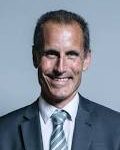
    The speech made by Bill Esterson, the Labour MP for Sefton Central, in the House of Commons on 18 November 2022.

    I start by congratulating my hon. Friend the Member for Stockton North (Alex Cunningham) on bringing forward an important and heartfelt piece of legislation. I hope, as the Minister said, that he is successful more quickly this time than he was with his private Member’s Bill on smoking in cars with children present, which he introduced some years ago. I remember it well, because I sat on the Children and Families Bill Committee and moved one of the amendments in his name, as he was not on the Committee. I spoke on it again on Report, and I was with him on the Delegated Legislation Committee where the legislation was implemented in the Smoke-free (Private Vehicles) Regulations 2015. I hope he is successful far more quickly, and I think the spirit of what the Minister said suggests that my hon. Friend can make enormous progress quickly.

    I add my thanks to Marie Curie and the TUC for the work they have done and the way they have informed this debate and for the evidence they have presented to my hon. Friend and the Minister. As my hon. Friend and the Minister said, the fact that 90,000 people die in poverty each year and that people of working age are dying, the effect that has on children and families and the challenges presented to people who are terminally ill mean that this issue must have our attention. I hope the Minister can convene other Ministers in the way that he said in short order and put in place some of the measures that he suggested can be done relatively quickly.

    In my hon. Friend’s Bill, he has proposed a series of pragmatic financial measures. The measures on the warm home discount and the energy company obligations speak for themselves in how the Bill is set out. He has told us about the high energy needs of people who are terminally ill, and clearly any help that can be given should be given. That brings me briefly to clause 3. The TUC’s Dying to Work campaign highlighted, as the Minister rightly said, that employers who do not act in the best interest of their workers need to be brought to account. I am grateful for his acknowledgement that the remedy of a tribunal is not an appropriate or practical way of addressing these problems. I am pleased that he said the objective should be for workers with a terminal diagnosis to be able to continue as long as possible, and that we will have that in Hansard, because it will form the basis of the discussions he mentioned.

    I welcome the Minister’s commitment, and I congratulate my hon. Friend the Member for Stockton North on bringing forward an incredibly important and powerful piece of legislation. I hope with all sincerity that he is successful in short order, and that the Minister is able to fulfil his promises.

    I welcome the Minister to his role as Science Minister, which he assured us earlier in the week he definitely is, and I believe it has now been confirmed.