Tag: Speeches

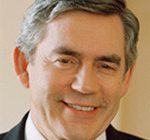
  • Gordon Brown – 1997 Speech at the Centrepoint Annual General Meeting

    Gordon Brown – 1997 Speech at the Centrepoint Annual General Meeting

    The speech made by Gordon Brown, the then Chancellor of the Exchequer, at the Centrepoint Annual General Meeting on 2 December 1997.

    Let me say what a privilege it is to be at this annual general meeting, to be here to discuss with you some of the great social and economic challenges we face together in Britain today.

    And I want to start by congratulating you, the staff and supporters of centrepoint, on this the twenty eighth anniversary of centrepoint – on all the work you do, the service you offer, the time and hours you give up and the dedication and commitment you show.

    If ever there was a confirmation that community involvement and social commitment is alive and well and thriving in London and in Britain, it is the work of centrepoint and all its sister projects to combat not only homelessness, but hopelessness.

    This year, tragically, centrepoint has lost a loved, respected and deeply committed patron – Diana, Princess of Wales.

    And I want to assure you that the committee to commemorate and continue her work that we are setting in being today and the charity advisory group that will be announced later will have a membership that reflects her life and her work as the people’s Princess.

    And our task will not only be to provide a lasting memorial to her work. It will also be to look at how, in very practical ways, we can help the work that she started continue and flourish.

    And I want to assure you at centrepoint also of the support of thousands of people, of all political persuasions and none, right across the social and political spectrum for your work. And I want to pay tribute to your sponsors who through their generosity, enable you to improve the lives of so many of our young people – their continuing support is vital, and I would encourage others too, to make a difference by giving their support.

    And in particular I want to congratulate you on the expansion of the work of entrepoint over the years

    The scale of your work is now such that with centrepoint’s 500 bed spaces, you help 3000 young people a year, half of them from ethnic minorities, a third of them under eighteen, and nearly half who have slept rough.

    the refuge for runaway children under sixteen;
    the emergency direct access shelter for teenagers;
    off the streets shelters for young rough sleepers;
    the young women’s hostels, one helping pregnant women and children;
    the intake house;
    Baffy house;
    Centrepoint kings cross;
    streets ahead, the recruitment agency linking the homeless to employers;

    And I would like to wish Centrepoint every success in running the admiralty arch winter shelter which will provide 60 bed spaces for young people.

    From work to provide immediate relief and emergency help to tackling the multiple causes of homeless and poverty

    And of course the network of foyers, starting in London, linking training to housing provision, now flourishing round the country – soon to provide 4,000 places, with a target of 16,000 by 2001-2002.

    And I am delighted to meet again young people here today from Centrepoint Camberwell foyer some of which I met back in may .

    You find unemployment homelessness and poverty an offence against standards of decency. So do I. And we must together tackle the problem

    What people remember of the in the 1930s is unemployed men Standing on street corners.

    What people identify with the eighties are youngsters begging and sleeping rough in our city streets.

    If the 1980s are remembered for social exclusion I want the 90s to be remembered for inclusion – when individuals, the voluntary sector, and government worked together with shared purpose for a common endeavour.

    Your aim is to tackle the causes of homelessness, worklessness and poverty, a blight on every community in the country and on a society that calls itself civilised .

    Homelessness and poverty not only means deprivation and isolation, it means: hopes crushed, aspirations stifled, potential wasted, indignities and miseries visited upon the poor.

    For 28 years you have been working as a voluntary group mobilising support.

    I can tell you today that tackling homelessness and poverty is no longer solely the ambition of voluntary organisations like you.

    It is now the ambition of the country’s government .

    And your values – to support the vulnerable and build a society in which everyone has a contribution to make – are now the values shared by this government.

    And let me say what that change means at a personal level.

    For years as a labour opposition, I and my colleagues were angered by the injustices we saw, but we were powerless to take the action in government that we knew was needed.

    Now we can take action and we recognise the responsibility that places upon us. But we will only achieve success if we work together.

    So I want today to discuss with you how our economic approach in government ties in with the work you are doing, and to explain how the common theme of empowering individuals through providing opportunity lies not only at the heart of your approach to tackling homelessness, but our analysis of the economic challenge our country faces.

    Of course our energies must ensure relief where there is suffering. But our ambition is not limited to bricks and mortar; it is to enable young men and women bridge the gap between what they are and what they have it in themselves to become. So we must
    not only deal with the consequences of poverty, we must tackle its causes.

    So I want to discuss with you how the government’s economic approach, for which I have responsibility, is aimed at tackling the root causes of homelessness and poverty in our country, and our shared task in doing so.

    Let me start with what I believe is common ground.

    Poverty diminishes not only an individual but the society which tolerates it. We are indeed our brothers and sisters keeper, and we must not walk by on the other side.

    So we start from the recognition that everybody needs decent and affordable accommodation and that no young person should have to sleep rough in Britain. Something close to the heart of centrepoint’s aim it is to ensure that no young person is at risk because they do not have a safe place to stay.

    that is why we have made a start with the phased release of capital receipts from council house sales: an additional 900 million pounds – over the next two years – which will increase the stock of housing for rent. And we encourage the foyer movement to seek assistance from local authorities which have access to more funds via the capital receipts initiative.

    and we have refocused the rough sleepers initiative to provide 20 million pounds for 13 rough sleeper projects outside central London. With 1 million pounds of pump priming funding over the next 18 months to support new rough sleeping strategies in six other areas. And 8.1 million pounds in the spring, specially targeted at single homelessness, particularly amongst the young;

    and we want to encourage more partnerships to help tackle homelessness and follow the example of crash – the construction industry group which encourages firms to provide materials for winter shelters provided through the rough sleepers initiative.

    But this is not enough. Only by tackling the cause of homelessness and poverty – in unemployment, the lack of opportunity and skills for employment – can we build a better future for the long term.

    So our anti-poverty strategy for this country, starts from the importance of providing opportunities for work.

    Its founding principle is that we must tackle the causes of poverty, not simply deal with its consequences.

    It is built around a new deal programme that offers new opportunities directly to young people.

    It rests on rights and responsibilities going hand in hand – rights to work: responsibilities to work – rights and responsibilities of government and people together, so that together we tackle the problems we face.

    So work is central to our anti-poverty strategy.

    And last night, in downing street, I met teenagers from Newham to hear from them what they thought had to be done to improve prospects for young people. They said jobs.

    The true scale of poverty, published in the last few days by the treasury, is a terrible indictment of the past and a call to action for the future. Despite an official rate of under 6 per cent unemployment 3 1/2 million households in Britain have no one in work.

    And in Britain today there are nearly 400,000 young people out of work – where there really should be no young person wasting their talent, doing nothing.

    And our strategy is built on recognising that poverty is caused from the workplace outwards – lack of job opportunities, inadequate skills, inadequate income to make proper provision for accidents, retirement and sickness. And the measures we propose include not just benefits reform, but tax changes, new learning and education measures and the introduction of a national minimum wage.

    In this way a new anti-poverty strategy for Britain is now being implemented.

    So what are our proposals?

    First everyone in need of work should have the opportunity to work – young people, lone parents, and disabled men and women who want to work.

    And for young people we are creating a new deal – four options:

    a job with an employer;
    work with a voluntary organisation;
    work on the environmental task force;
    and, for those without basic qualifications, full time education or training.

    From January these options will be available in 12 pathfinder areas to young people who have been unemployed over six months. And from April, the programme will go nationwide – available in every community in Britain.

    Our new deal recognises that some young people will require more intensive support to ensure that they are able to take up one of the four options on the programme and have a chance of benefiting fully from it.

    And I am very glad that foyers, who are already doing excellent work with young people throughout the country, are bidding for provision of elements of the new deal gateway. And I would also like to encourage foyers to bid as providers for the education and training element of the new deal.

    So we want to work in conjunction with Centrepoint, the foyers and other organisations to maximise the help given to our young people.

    And I am very pleased that the Camberwell foyer has been closely involved in designing the gateway to the new deal programme in the Lambeth pathfinder area, and I expect them to be heavily involved in delivering the programme too.

    So I believe it was right to tax the privatised utilities to raise the 5 billion pounds to help a generation of people – today excluded from the chance of prosperity – to have new opportunities.

    And I am pleased that some of the country’s best known businesses are now agreeing to take part in the new deal project:

    Allied Domecq, who have said they will offer at least a 1000 opportunities;

    Tescos, who have guaranteed an interview for all new deal clients who apply to work in their new stores.

    Ford, who have agreed to raise substantially the number of training places they provide for unskilled young people;

    Nat West, who have agreed that their small business advisers will promote the new deal to employers.

    And other companies are coming up with ways they can support the new deal – BAA, Radisson Hotel Group, Lloyds-TSB, Dixons, Marks and Spencer, Sainsbury’s, Unipart, Amersham International, Northern Foods, Grand Metropolitan, GEC, Rover, Jaguar, Peugeot, The Prudential, Tarmac – along with many others.

    But I want to emphasise that the new deal is just the first part of this government’s mission to create a more just and fair society – starting with jobs and the chance to gain work skills – but continuing by modernising a welfare state that too often stifles talent and denies opportunities to men and women.

    Our goal is not just to take people off the streets for a few months, but to make the unemployed fully employable and to rebuild the welfare state around the work ethic.

    So second we must ensure work is worthwhile and it pays.

    650,000 people in Britain face a poverty trap where the lion’s share of every extra pound earned goes in tax.

    So there is no solution to poverty that does not involve a fundamental restructuring of the tax and benefit system.

    That is why our pre-Budget statement proposed an integrated tax and benefit plan involving action at every level.

    To maximise the rewards from work, a 10p starting rate of tax and a reform of benefit tapers will be introduced when it is prudent to do so.

    To ensure that work pays for families with children, we propose a working families tax credit, backed up by affordable child care.

    And to ensure the rewards of these reforms flow directly to the employee, we are committed to a statutory national minimum wage.

    To improve rewards from work, to simplify administrative burdens on employers, and to encourage them to take on more people, we are considering the scope for bringing the national insurance structure for the low paid more closely into line with income tax.

    And to ensure parents can work, our national childcare strategy.

    But everyone who seeks to advance through employment and education must be able to make the most of their talents and potential. We will also create a new ladder of opportunity that will allow the many, by their own efforts, to benefit from opportunities once open only to a few.

    The relationship between skills, employment and wages is clear – half the unemployed under 35 have no qualifications worth their name, 75 per cent of those unemployed for five years or more have no skills.

    That is why we need to invest in our poorest communities with resources for education. It is why we put an emphasis on nursery education early on. It is why we want more young people to stay at school and more to go to college and university. It is why we place emphasis on lifelong learning with every employee entitled to an individual learning account and a university of industry which uses modern communications, satellite, cable and interactive technologies. To give educational opportunities to men and women in their homes and workplace.

    That is why in the pre-budget report we also announced our skills initiative – pilot projects nationwide under which any employer who takes on and trains a young or long-term unemployed person and keeps them on, can now receive up-front three quarters of their new deal allocation thus giving immediate help with training costs – in the case of young people about 1700 pounds and for the long-term unemployed, 1500 pounds.

    So we tackle homelessness, but we also tackle the causes of homelessness – and offer new opportunities in education, for jobs and for making work pay. Full employment is not, for us, a slogan; it is about providing employment opportunity for all.

    It will take time to right the wrongs. But let me say: not only have we made a start by working together, but we will do more year on year.

    But with 3 1/2 million households out of work, we do not deny the scale of the task we face, and the circumstances in which we came to power. I know more than anyone the cost the country has had to pay for 18 years of avoiding the problems, so I wont pretend solutions will be instant it will take time and none of our decisions will be easy.

    We have had to and will continue to have to make hard decisions about where our resources are to go. Our priority is to put the money that we have available into new job training and child care opportunities for lone parents rather than just on benefit. While we could have given even more tax relief to those who have already accumulated considerable savings, our priority is to put some of the 1 1/2 billion pounds resources we are spending on encouraging savings to do more to help those who do not at the moment save – up to 6 million new savers. Our priority is to encourage more people to attend college and university by sharing the costs of higher education, rather than continue to limit higher education to an elite of the country’s young people. And our priority is to put money into the new deal for the young through the cash we raised from a windfall tax on the privatised utilities.

    Difficult choices, but necessary choices. For we are starting out on a long journey with a route map and a clear destination – to make Britain a country where everyone, no matter their circumstances today, from wherever they come or whatever they have done, whoever they are – everyone has opportunity to make the most of their potential. That is my aim. And I believe that working together that can be our achievement: a new Britain where everyone has a contribution to make.


  • Martin Docherty-Hughes – 2022 Speech on Independent Inquiry into Afghanistan

    Martin Docherty-Hughes – 2022 Speech on Independent Inquiry into Afghanistan

    The speech made by Martin Docherty-Hughes, the SNP Defence Spokesperson, in the House of Commons on 15 December 2022.

    I am grateful to the Minister for advance sight of the statement. I declare a personal interest, given that my brother served two tours of duty in Afghanistan, but not in the special forces.

    I welcome the fact that the Minister said there is a credible requirement for the investigation. Although SNP Members might not agree with the hon. Member for Harrow East (Bob Blackman) about the overseas operations Act, I am glad the Minister, the Department and the Secretary of State for Defence at least believe that this inquiry needs to take place. However, I have a bit of a concern, which I am sure the Minister will seek to clarify. As a former member of the Defence Committee, and having sat on the previous Armed Forces Bill Committee, both of which, critically, discussed the treatment of women in the armed forces, I know there is grave concern that, when there is any type of investigation—especially if it is credible—the justice system does not view it properly.

    I therefore seek reassurances from the Minister that the right hon. Lord Justice Haddon-Cave recognises the complexity of the case and understands the lived experience not only of those making the accusations, but—the Minister is probably right about this—those in the armed forces as well. Lord Justice Haddon-Cave must understand the overall complexity of the issues being investigated and take on board the entirety of them in any conclusions, because previous investigations—notably around the treatment of women in the armed forces—give me grave cause for concern.

    I also want to put on record my commitment and that of my party to members of the armed forces, who play their role and put their lives on the line daily. On a personal note, I recognised that when my brother served two tours of duty in Afghanistan and one in Iraq. He and his comrades in arms put their best foot forward and did the duty they were asked to, but even they recognise that, sometimes, people make mistakes. If mistakes have been made, they need to be properly investigated, and the full weight of the law needs to be brought to bear.

    Dr Murrison

    I am grateful to the hon. Gentleman, and I pay tribute to his brother for his service. Justice Haddon-Cave is no ordinary judge; he is one of the most senior members of our judiciary, and he has been selected by the Lord Chief Justice for this task because of that. It therefore follows that he is perfectly capable of appreciating the complexity of this issue. I hope that that gives the hon. Gentleman the reassurance he seeks.

    As for the further conduct of the inquiry, that will now be a matter for Lord Justice Haddon-Cave; it certainly will not be a matter for me. I underscore that this is an independent inquiry, and it would be entirely improper for me, from this point, to comment further on its conduct. As I understand it, Lord Justice Haddon-Cave intends to issue a statement of his own shortly.

  • John Healey – 2022 Speech on Independent Inquiry into Afghanistan

    John Healey – 2022 Speech on Independent Inquiry into Afghanistan

    The speech made by John Healey, the Shadow Defence Minister, in the House of Commons on 15 December 2022.

    I thank the Minister for advance sight of his statement and the terms of reference for Lord Justice Haddon-Cave. We welcome the special inquiry, the Minister’s confirmation that its work will start early in 2023 and his commitment to provide full legal and pastoral support. We recognise the bravery of all those who served in Afghanistan and the dangers we asked them to face—none more than our special forces, who carry out the most extraordinary missions with extreme risks to defend us and our allies.

    Our British armed forces have a proud tradition of upholding the highest standards of military ethics, professionalism and international law. That is fundamental to a disciplined military force and to Britain’s standing and moral authority as one of the world’s leading democracies, so allegations of unlawful killings and cover-ups could not be more serious. This inquiry is essential to protect the reputation of our British special forces, to guarantee the integrity of military investigations, and to secure justice for those affected. The question is: will it do the job? Is it set up to succeed? Is the MOD—military, civilian and political—fully committed to making it succeed? Too often, it responds with denial and delay.

    Over the last five years, Defence Secretaries have had three reports with more than 148 recommendations on how to fix failings in military investigations, yet one essential recommendation—the Defence serious crime unit—was launched only last week. When confronted with the BBC “Panorama” reports about these allegations in July, the MOD immediately dismissed them as “irresponsible, incorrect” and jumping to “unjustified conclusions”. When pushed by all parties, as well as senior ex-military figures, journalists and the judiciary, the Defence Secretary signalled this independent inquiry two weeks later.

    On the terms of reference, can the Minister confirm that the inquiry will investigate to substantiate any allegations, not just investigate how the allegations were handled? Will the inquiry cover the full chain of command—military, civil service and ministerial? How can the inquiry’s independence be assured when it is housed within the MOD? On the declaration that the Secretary of State expects maximum co-operation from MOD personnel, will the head of the Army issue a similar statement or command to forces personnel?

    The Minister knows but does not mention that similar allegations were made from the same period against Australian special forces in Afghanistan. They were investigated thoroughly via a special inquiry commissioned not by Ministers, but by the head of the Australian army, because getting to the truth should matter most to military leaders. Has the Minister or any other Defence Minister met Justice Brereton to understand his inquiry? If not, why not? If so, why are key features of his successful inquiry missing from this one?

    In the Brereton inquiry, the judge had senior military not just judicial experience; he had legal immunities to get beyond the culture of silence; and he had legal powers to require documents and summon witnesses. If Judge Haddon-Cave considers that changes to his powers or terms of reference are required during the inquiry, will Ministers agree? This inquiry must succeed and we in the Opposition will do all we can to ensure that it does.

    Dr Murrison

    I am extremely grateful to the right hon. Gentleman for his comments. It is important to say that the inquiry is set up under the Inquiries Act 2005, which means that it will be a statutory inquiry under the control of Lord Justice Haddon-Cave. He will summon whichever witnesses he thinks fit and potentially compel them to give evidence under oath, as required by legislation.

    The right hon. Gentleman asks whether the inquiry will involve the full chain of command, the answer to which is yes. He also asks whether the inquiry being housed in the Ministry of Defence is an issue, to which I would say no. Lord Justice Haddon-Cave requested that his team be based in the MOD so that he can have full access to IT systems, some of which are at a high level of classification. However, it is important that only he has access to the accommodation that has been set aside for this purpose, to maintain the appearance and actuality of complete independence from the MOD, about which I can give the right hon. Gentleman full assurances.

    The right hon. Gentleman asked about Australia. The Australian investigations made it clear that there are no British persons of interest as a result of that inquiry. It is also important to say clearly that allegations made to a television production company are not the same as allegations made in court or, indeed, to a statutory inquiry. In the light of the “Panorama” report to which the right hon. Gentleman referred, service police, as I understand it, have contacted the BBC to ask for evidence. I am not aware of any new evidence having been provided beyond that which has already been investigated.

    It is important to underscore the fact that Lord Justice Haddon-Cave has been selected by the Lord Chief Justice because he is the most senior of judicial figures. With that, of course, comes the full knowledge and understanding that he is acting independently. I have no doubt that he will go wherever the evidence takes him, and that is the reason that such a senior figure has been appointed to this extremely important task.

  • Andrew Murrison – 2022 Statement on Independent Inquiry into Afghanistan

    Andrew Murrison – 2022 Statement on Independent Inquiry into Afghanistan

    The statement made by Andrew Murrison, the Minister for Defence People, Veterans and Service Families, in the House of Commons on 15 December 2022.

    I will make a statement on an independent inquiry related to Afghanistan. My right hon. Friend the Secretary of State for Defence has commissioned an independent statutory inquiry under the Inquiries Act 2005 to investigate and report on alleged unlawful activity by British armed forces during deliberate detention operations in Afghanistan in the period from mid-2010 to mid-2013, and the adequacy of subsequent investigations into such allegations.

    The decision has been informed by two ongoing judicial review cases known as Saifullah and Noorzai. The claimants in those cases assert that relevant allegations of unlawful activity were not properly investigated. The underlying events have been the subject of comprehensive service police criminal investigations, but the Ministry of Defence accepts that Operation Northmoor should have started earlier and that there may be further lessons to learn from the incidents, despite there being insufficient evidence for any prosecutions.

    My right hon. Friend has asked the right hon. Lord Justice Haddon-Cave to chair the inquiry, and Lord Justice Haddon-Cave has stepped down from his role as senior presiding judge for England and Wales to focus on this task. He has valuable experience: he chaired the Nimrod review into the loss of RAF Nimrod MR2 aircraft XV230 in Afghanistan in 2006 and served as the judge in charge of the terrorism list between 2017 and 2018.

    A copy of the terms of reference for this inquiry will be placed in the Library of the House. The inquiry will start work in earnest in early 2023 and will be fully resourced and supported so that it can carry out its work and report expeditiously. The Saifullah and Noorzai claimants have been consulted on the terms of reference but I will not comment further on ongoing court proceedings.

    The UK’s armed forces rightly hold themselves to the highest possible operational standards. Operations must be conducted within the clear boundaries of the law and credible allegations against our forces must always be investigated thoroughly. The service justice system is capable of investigating and prosecuting all criminal offences on operations overseas and here in the UK. Defence has worked hard over recent years to ensure that the processes in place to maintain justice in the armed forces are effective, and that allegations of criminal wrongdoing arising from any future operations are raised and investigated appropriately.

    It was a manifesto commitment of the Government to tackle the vexatious legal claims that have targeted our armed forces over recent years, but the Overseas Operations (Service Personnel and Veterans) Act 2021 was always designed to permit the investigation and follow-up of any serious allegations irrespective of time passed. We will of course ensure that all service personnel, veterans, and current and former civil servants who are asked to engage with the inquiry are given full legal and pastoral support.

    I hope that the whole House shares my pride in our armed forces. They are renowned throughout the world for their courage, integrity and professionalism. We are profoundly grateful for their service today, as we were while they were deployed at our behest in Afghanistan.

  • Patricia Gibson – 2022 Speech on the Infected Blood Inquiry

    Patricia Gibson – 2022 Speech on the Infected Blood Inquiry

    The speech made by Patricia Gibson, the SNP MP for North Ayrshire and Arran, in the House of Commons on 15 December 2022.

    We in the SNP pay tribute to those affected by the infected blood scandal—one in three infected with HIV were children—and their continued decades-long struggle for justice. Today’s announcement of a swift response to Sir Robert Francis’s final recommendations relating to compensation is indeed welcome, but the Minister will understand the widespread disappointment about his inability to commit today to a date for publishing a response to Sir Robert’s compensation framework report.

    The Minister will be aware that there is understandably a significant and remaining lack of trust between those impacted by infected blood, the UK Government and existing support schemes. Recommendation 16 of Sir Robert’s study calls for an arm’s length body to

    “administer…compensation…with…independence of judgement and accountable directly to Parliament”.

    I hope the Minister will tell us today that he will keep the House updated on the progress of that.

    Thousands of families across the UK have experienced great trauma after they have cared for loved ones suffering—or in many cases dying—due to contaminated blood. Does the Minister support the notion of the interim scheme being extended to families and carers who have cared for people with infected blood?

    Jeremy Quin

    There are two points in particular. On the arm’s length body, a persuasive case is made in recommendation 16. Looking at the principles of that, particularly on independence, we are not yet ready to commit to an ALB, but we definitely want to have a body that will have the trust and respect of those whom we are seeking to support. Work is going on as to how that will best be constituted, but recognition of independence is key behind the principles of the recommendation of an ALB. I look forward to updating the hon. Lady on other issues as the work progresses.

  • Peter Bottomley – 2022 Speech on the Infected Blood Inquiry

    Peter Bottomley – 2022 Speech on the Infected Blood Inquiry

    The speech made by Sir Peter Bottomley, the Conservative MP for Worthing West, in the House of Commons on 15 December 2022.

    I welcome the Minister coming to make an oral statement. We know that both he and the Leader of the House have been deeply involved in this issue over the months and years.

    The right hon. Member for Kingston upon Hull North (Dame Diana Johnson) is the most powerful advocate trying to hold Government to account and to get them to come forward. I think she will want to write—and I will happily join her—a whole series of detailed questions to the Minister, some of which he may be able to answer now. For others, he may have to say what conditions need to be met for them to be answered.

    One important thing to my mind is allowing those who are not yet registered as possibly entitled to compensation to preregister, so that, when the Government come out with their response to Sir Brain Langstaff’s report, they will be able to take that up fast and make up any missing medical records, which will be a problem for some people who have been infected or affected.

    The all-party parliamentary group welcomed the Government accepting the first point of Sir Robert Francis’s report about the moral case. I thank the Government for that. We are also grateful that Sir Robert is going to be invited to help Sue Gray to take forward the work she is doing. We should not underestimate the amount of work.

    As and when people get compensation, are they going to be protected from the scams and so-called financial advisers who may not protect their income and use of that money? Can the Minister consider whether he can answer whether inheritance tax will not be applied to someone’s payments if the household is within the inheritance tax limit?

    Jeremy Quin

    I should have said this in response to the hon. Member for Vauxhall (Florence Eshalomi) but, in response to the Father of the House, I have greatly appreciated spending time with him and the right hon. Member for Kingston upon Hull North (Dame Diana Johnson), who has been a tireless campaigner on this, as has the entire all-party parliamentary group on haemophilia and contaminated blood. I very much appreciated the time they spent with me.

    I absolutely recognise the point on preregistration, which is one of the issues at the forefront of our minds as we go through this. The Father of the House recognises that there are particular issues, including in relation to medical records that may have been lost over time, dating back decades. There needs to be a clear system so that people know how to take advantage of the scheme.

    On compensation and scams, I share my hon. Friend’s concern. I am not certain how we will be able to address that. It is obviously an issue that afflicts many of our constituents in many circumstances, but I am sure that it will not be impossible to deliver timely advice alongside the scheme.

    In terms of tax, the recommendation is clear that this should be tax free and should be disregarded for benefits. In relation to inheritance tax in particular, there are complexities that need to be examined. Whether we need to have legislation as part of that process is one of the issues that we are working on. If my hon. Friend or other hon. Members have detailed questions, they are more than welcome to write to me and I shall respond.

  • Florence Eshalomi – 2022 Speech on the Infected Blood Inquiry

    Florence Eshalomi – 2022 Speech on the Infected Blood Inquiry

    The speech made by Florence Eshalomi, the Shadow Cabinet Office Minister, in the House of Commons on 15 December 2022.

    I thank the Minister for the statement, which is welcome but long overdue. It is very disappointing that the Government did not find time for an oral statement in the House earlier this year when they published Sir Robert’s report. Ministers were dragged kicking and screaming to publish the report when it was leaked. That has been the pattern throughout this long painful process and it seems no different today.

    Victims of the contaminated blood scandal will be watching today with great interest. Heartbreakingly, many of those infected have not lived to see today’s exchanges and the prospect of proper justice at the end of the inquiry. My right hon. Friend the Member for Kingston upon Hull North (Dame Diana Johnson) has campaigned tirelessly to raise awareness of this issue, but throughout that time more than 3,000 people have died and statistics from the Terrence Higgins Trust show that, between the start of the inquiry in July 2017 and February 2022, some 419 infected people have died.

    I know personally how important this issue is and what it is like to have a loved one rely on a clean blood supply. My late mother suffered from sickle cell anaemia and because of that disease she required regular blood transfusions, which were vital. Without those blood transfusions, her life would have ended a lot earlier. I cannot imagine the pain and trauma experienced by families who were let down by basic failures of standards. The least they deserved was a prompt and thorough response from the Government. While we await the conclusion of the report and inquiry, one person dies every four days. Every day that we delay the compensation is justice denied to those people. The Minister owes it to those victims to provide real answers today.

    In a recent Westminster Hall debate, the Minister’s colleague, the Parliamentary Secretary, Cabinet Office, the hon. Member for Brentwood and Ongar (Alex Burghart), gave a frankly insulting response on the subject. He dodged the question and failed to give any certainty about the timeline for payment or the publication of the Government’s response to the report, which they have had for more than eight months. Victims will not accept empty gestures. It seems to families that the plan changes with every announcement.

    Can the Minister make a promise to the House today to publish a timetable for the compensation framework for those affected by the infected blood scandal? What plans does he have to work in partnership with the infected blood community to develop the compensation framework for those affected? When will he end the Government’s silence on the other 18 recommendations that have gone ignored? How will the Minister make sure that everyone who wants to respond to the proposals has the opportunity to do so? Rather than sporadic updates without any substance, will the Minister commit to more regular updates on progress and the direction of travel on this heartbreaking issue, ahead of the report next summer?

    The contaminated blood scandal had a life-changing impact on tens of thousands of victims who were promised the hope of effective treatment. It can only be right that they see the justice they deserve as soon as possible.

    Jeremy Quin

    I thank the hon. Lady for her remarks. She spoke movingly of the impact on those infected and affected. I concur that time is of the essence. I appreciate that, for family reasons, she knows how difficult it must be for the people who saw these things happening to their relatives, and how awful that process has been. I also appreciate that it is incredibly important, given all that has happened to this community, that trust is built and retained. I certainly commit that we will update the House regularly.

    I cannot commit to a timetable. The reason is that I do not want to say anything in this House that we cannot meet. There is a complex series of steps to be taken and work to be done across Government and with the devolved Administrations. But I assure hon. Members that it is my intention to update the House as we make progress. We must do so in order to ensure that those infected and affected are fully apprised of the progress we are making.

    I am grateful to Sir Robert and Sir Brian for how they have incorporated the views of those infected and affected in their work. My impression is that those infected and affected have appreciated the engagement they have had through the work undertaken. I hope that means that Sir Brian’s work is fully reflective of the thoughts of the community. I have said that I wish to meet members of the community. I want to ensure that our work is timely and ready to fully consider and respond to the work that Sir Brian produces during the course of next year.

  • Jeremy Quin – 2022 Statement on the Infected Blood Inquiry

    Jeremy Quin – 2022 Statement on the Infected Blood Inquiry

    The statement made by Jeremy Quin, the Minister for Cabinet Office, in the House of Commons on 15 December 2022.

    With permission, Madam Deputy Speaker, I will make a statement to update the House on our preparations for the infected blood inquiry, which is expected to conclude next year.

    I took over as the Minister sponsoring the inquiry on 25 October. While I have been aware of this issue for many years, as have so many of us who have been contacted by affected constituents, undertaking this role has further impressed on me its scale and gravity—not only the direct, dreadful consequences for victims, but the stigma and trauma experienced by many of those infected, by their families, and by those who care for them. I recognise that, tragically, we continue to see victims of infected blood die prematurely, and I also recognise that time is of the essence.

    I commend the work of the all-party parliamentary group on haemophilia and contaminated blood. I am pleased to have met the co-chairs, the right hon. Member for Kingston upon Hull North (Dame Diana Johnson) and the Father of the House, my hon. Friend the Member for Worthing West (Sir Peter Bottomley), and I am grateful for their insight.

    In July 2017 my right hon. Friend the Member for Maidenhead (Mrs May) established the infected blood inquiry, chaired by Sir Brian Langstaff. My predecessor as Paymaster General, the current Leader of the House, went further by commissioning a study from Sir Robert Francis KC, which is entitled “Compensation and redress for the victims of infected blood: recommendations for a framework”. The purpose of the study was clear, namely to ensure that the Government were in a position to fully consider and act on the recommendations. Sir Robert delivered it in March this year.

    The Government had intended to publish a response alongside the study itself, ahead of Sir Robert’s evidence to Sir Brian Langstaff’s inquiry. However, as the then Paymaster General explained, the sheer complexity and wide range of factors revealed in Sir Robert’s excellent work meant that when the study was published by the Government on 7 June, it was not possible to publish a comprehensive response. The Government remained absolutely committed to using the study to prepare for the outcome of the Langstaff inquiry, and that is still the case.

    On 29 July, in response to Sir Robert’s recommendations, Sir Brian Langstaff published an interim report on interim compensation. It called for an interim payment of £100,000 to be paid to all those infected and all bereaved partners currently registered on UK infected blood support schemes, and to those who registered between 29 July and the inception of any future scheme. The Government accepted that recommendation in full on 17 August. Quite rightly, a huge amount of work was undertaken across Government during the ensuing weeks to ensure that the interim payments could be exempt from tax and disregarded for the purpose of benefits, and that an appropriate delivery mechanism existed. This involved work across many Departments, and with the devolved Governments in Scotland, Wales and Northern Ireland. Interim compensation is just one part of our overall response, but it was important that we got it right.

    I fully recognise that interim compensation was but one of the recommendations in Sir Robert’s study. I want to stress to the House and to the many people who have a direct and personal interest in the inquiry that those interim payments were only the start of the process, and work is ongoing in consideration of Sir Robert’s other recommendations. I am pleased that all the interim payments were made by the end of October. Sir Robert recognised in his study that the Government could not give in advance a commitment on the exact shape that redress will take. Our comprehensive response must await the final report of the infected blood inquiry. However, I want to assure those affected that this Government, which delivered a statutory inquiry and interim compensation, remain absolutely committed to our intentions in commissioning the compensation framework study. Accordingly, and recognising the need to continue to build trust with the affected community, I want to share with the House the progress we are making.

    A cross-Government working group, co-ordinated by the Cabinet Office, is taking forward work strands informed by Sir Robert’s recommendations. A cross-departmental group at permanent secretary level has been convened, chaired by the Cabinet Office second permanent secretary, Sue Gray, to oversee that work. I am pleased to be able to say that Sir Robert has agreed to provide independent transparent advice to the group as work progresses. I am grateful to him for his continued input into our thinking. It is my intention over the coming months to update the House on progress and, where it is possible, to provide greater clarity on the Government’s response to Sir Robert’s recommendations prior to Sir Brian’s report being published.

    In the meantime, I wish to make clear one critical answer to a recommendation posed by Sir Robert. In the first recommendation of his study, Sir Robert sets out that there is in his view a moral case for compensation to be paid. The Government accept that recommendation. There is a moral case for the payment of compensation. We have made that clear in our actions with the payment of interim compensation. I now want to make it equally clear on the Floor of the House. The Government recognise that the scheme utilised must be collaborative and sympathetic, and as user-friendly, supportive and free of stress as possible, while being consistent with the Government’s approach to protect against fraud. The Government will ensure those principles are adopted.

    We have significant work to do to ensure we are ready for Sir Brian’s report. For example, Sir Robert makes detailed findings and recommendations about the delivery of the scheme, which must be worked through in discussion with the devolved Administrations. Work will need to be undertaken to ensure, in line with his recommendation, that final compensation can be made free of tax and disregarded for benefits purposes.

    We know, too, that the inquiry will make recommendations in relation to bereaved parents and children. In his interim report, Sir Brian made clear his view that the moral case for their compensation is beyond doubt. Sir Brian recognised that the approach to compensating this group of people is complex and the Government must be ready to quickly address recommendations relating to them. The work in consideration of the study will ensure that the Government are prepared to act swiftly in response to Sir Brian Langstaff’s final recommendations relating to compensation.

    Those infected and affected have suffered enough. Having commissioned both the inquiry and the report, the Government have further shown their commitment in our actions by the payment of interim compensation. Sir Brian and Sir Robert have both ensured that the voices of those infected and affected are front and centre of their work, and I, too, hope to be able to meet and hear from people directly affected as our work progresses. We have much to do, but I wish to assure the House—this is why I wished to be here today—that this is a priority for the Government and we will continue to progress it. I commend this statement to the House.

  • Tim Loughton – 2022 Speech on the Chinese Consul General and Attack on Protesters in Manchester

    Tim Loughton – 2022 Speech on the Chinese Consul General and Attack on Protesters in Manchester

    The speech made by Tim Loughton, the Conservative MP for East Worthing and Shoreham, in the House of Commons on 15 December 2022.

    I concur with everything the Chair of the Foreign Affairs Committee, the hon. Member for Rutland and Melton (Alicia Kearns), said. There was clear video evidence of outrageous violence by Chinese nationals, and the consul general admitted it. It is clear that the Government should have expelled the diplomats without having to wait for a police investigation. Any other person in this country guilty of such crimes would have been arrested at that stage. It is a clear admission of guilt that they have now scuttled off into the night back to China. At the very least, the Government must now retrospectively say that they are personae non gratae.

    Will the Minister invite the Chinese ambassador, without coffee and biscuits, for a serious lesson on what freedom of expression actually means in this country? Will he say that when China eventually builds its new embassy it will allow free and peaceful demonstration outside, because that is what we do in this country, and that we will not tolerate intimidation of the many Hong Kong British overseas nationals coming to this country who are still at risk of the tentacles of the Chinese Communist Government using these sorts of bully boy tactics?

    Anne-Marie Trevelyan

    I note the very colourful description in my hon. Friend’s request. I am pleased to update him with the fact that, in my new post, I have been able to meet the Chinese ambassador. Just last week, I went to pay my condolences on the death of President Zemin. I was able to sit and have a short conversation with the ambassador, during which I raised these issues, which at the time were ongoing. We will continue to meet, and I note the request for less of a welcome than perhaps one might otherwise give. It is really important to maintain those conversations and, as my hon. Friend says, ensure that every embassy accredited to the UK understands our values and our rights. All those who wish to demonstrate peacefully to raise concerns on any matter should be free to do so. We will continue to stand up to ensure that everyone across the UK understands that, and we will continue to support our police to allow that to happen.

  • Catherine West – 2022 Speech on the Chinese Consul General and Attack on Protesters in Manchester

    Catherine West – 2022 Speech on the Chinese Consul General and Attack on Protesters in Manchester

    The speech made by Catherine West, the Labour MP for Hornsey and Wood Green, in the House of Commons on 15 December 2022.

    I thank the chair of the Select Committee, the hon. Member for Rutland and Melton (Alicia Kearns), for the urgent question, and for her tireless work on this issue to date. We have heard of government by press release, but I think we now have government by urgent question. This is the third urgent question with the third Minister and the third slightly different version of events, and the impression is of dither and delay.

    Of course Labour Members believe that the right of free expression, including the right to protest and to speak one’s mind, is essential to our democratic way of life, and we thank Greater Manchester police for their intense efforts in this regard. However, I have three brief questions to ask the Minister. First, will the officials removed by the Chinese Government be declared personae non gratae, to send a clear message about our dissatisfaction with their unwillingness to engage with the investigation? Secondly, has there has been concerted engagement with international partners about the episode to prevent similar occurrences in New York, Canberra, Amsterdam or Ottawa? Finally, will there be fresh and concerted cross-Whitehall engagement to ensure that pro-democracy activists and Hongkongers are given the protection that they deserve here in the UK? Members of this House have spoken with one voice and I should like to hear a robust response from the Government.

    Anne-Marie Trevelyan

    As the Foreign Secretary said yesterday, the Vienna convention on consular relations allows states to withdraw members of a consular post at any point, and we were clear that we were asking the Chinese either to waive immunity or to do that. They have chosen that route. That is how the framework is set out. We are disappointed that these individuals will therefore not be interviewed, but it is absolutely right that those responsible will shortly be getting on to a plane and leaving the UK.

    As the hon. Lady will know, issues across posts are discussed regularly and forcefully, and the Foreign Secretary has ensured that all our embassies are fully up to date on his very clear directions. As I have said, I know all of us in the House agree that we value that freedom of expression—that freedom to protest peacefully—and, indeed, ask others around the world to demonstrate it as well. We will continue to ensure that our police forces are able to do what they need to do, independent of Government direction. This is a framework of which we are all extremely proud, and often, wherever we are in the world, other countries note and are impressed by our ability to maintain it. We will continue to protect the rights of all who wish to demonstrate and share their views peacefully to do so.