Tag: Speeches

  • Darren Henry – 2022 Speech on Shared Parental Leave and Pay (Bereavement)

    Darren Henry – 2022 Speech on Shared Parental Leave and Pay (Bereavement)

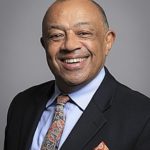
    The speech made by Darren Henry, the Conservative MP for Broxtowe, in the House of Commons on 20 December 2022.

    I beg to move,

    That leave be given to bring in a Bill to make provision about shared parental leave and pay in certain cases where one or both of a child’s parents has died; and for connected purposes.

    I want to start by telling the House Aaron’s story. I was visited at a constituency surgery in February by my constituent Aaron Horsey, who is in the Gallery today with his family. Aaron had his three-week-old son Tim in his arms. His wife Bernadette had sadly passed away in childbirth. Bernadette would no doubt have been the most loving, dedicated mother, and had ambitious plans for continuing a long career in the NHS. She is missed tremendously by her loved ones.

    While grieving the passing of his wife and looking after his new-born son Tim, Aaron discovered that he was not entitled to shared parental leave. That put the plan that Aaron had put in place with his wife Bernadette into jeopardy. Luckily, in Aaron’s case, he worked for an incredibly understanding employer, which gave him the leave he needed to look after Tim, but others are not so lucky. This Bill attempts to ensure that there is a right to leave and pay for individuals such as Aaron in the case of a spouse passing away. That right would be there regardless of the length of time that a person had been with their employer. This Bill would help not only employees in such circumstances but businesses that wish to give leave.

    During the process of securing this ten-minute rule Bill, I have been contacted by other individuals around the UK with similar stories to Aaron. It is my belief that we must work to close the gap and ensure that leave and pay are made available for those in circumstances such as Aaron’s. It is important to state that this issue does not affect thousands of people across the country, but for those it does affect, the consequences are huge. Changing the law to ensure that leave and pay are available to those who find themselves in situations such as Aaron’s will ensure that no parent is faced with the devastating position of raising a child and grieving in the shadow of avoidable job insecurity.

    Parental leave in the UK is something we should be proud of. Since the Employment Rights Act 1996 and the Maternity and Parental Leave Regulations 1999, entitlement and access to maternity leave and pay have been very straightforward. On a similar note, entitlement and access to paternity leave or shared parental leave, although more limited, are also fairly straightforward. When shared parental leave was introduced in 2015, the Government stated that they wished to

    “move away from the current old-fashioned and inflexible arrangements and create a new, more equal system which allows both parents to keep a strong link to their workplace.”

    Shared parental leave was established to allow parents access to their workplace and their family. That is precisely what is being prevented in cases such as Aaron’s. It seems that in such cases the people whom shared parental leave was created to help are often the ones missing out. When faced with this life-altering set of circumstances, Aaron was confronted with having to cope with the challenges of being a new parent and the prospect of new job insecurity, all while in the midst of extraordinary grief. That is more than many of us could handle.

    This Bill is not contentious. It simply seeks to allow individuals the right, under circumstances beyond their control, to take leave and be with their child. As I have mentioned, it would affect not a vast amount of our population, but a small number in our society who need the help of the Government and their employers.

    Aaron brought it to my attention that there are circumstances, in the event of the death of a child’s parent during childbirth, in which the surviving partner is not entitled to parental leave. To be eligible for shared parental leave and statutory shared parental pay, both parents must share responsibility for the child at birth and meet work and pay criteria. As the law stands, for the mother’s partner to take shared parental leave and shared parental pay, the mother must have been working for at least 26 weeks of the 66 weeks before the baby is due, and must have earned at least £390 in total across any 30 of the 66 weeks. The mother’s partner must have been employed continuously by the same employer for at least 26 weeks by the end of the 15th week before the due date. They must also stay with the same employer until they start their shared parental leave.

    Practically speaking, a surviving partner could be entitled to take shared parental leave but they would not meet the criteria I have just mentioned. Aaron did not. That means that, under this requirement, many will not qualify for shared parental leave and pay. This Bill seeks to correct that. It seeks a day-one right for a parent to access both leave and pay. It seeks to ensure that employees who have to raise a child following the death of their partner will not be left without support. As a father, I know that being a parent to a newborn is a huge undertaking at the best of times. I cannot imagine being in that position while facing the fact your partner has died during birth. I want to ensure that people such as Aaron are never in the position of being without support.

    I now come to why this Bill is needed. I truly hope that no one finds themself in the position that Aaron found himself in, unable to share the beginning of Tim’s life with his loving wife. The aim of this Bill is to ensure that people facing that situation do not find themselves without the law behind them.

    I thank all hon. Members who have supported the Bill. I have received overwhelming cross-party support on the issue. The Bill is not party political; it seeks to make a real impact to those in our society who find themselves in tragic circumstances through no fault of their own. As well as receiving support from colleagues, I have received a statement of concern from the Prime Minister. I have also had meetings with the Department for Business, Energy and Industrial Strategy, including with the Under-Secretary of State—my hon. Friend the Member for Thirsk and Malton (Kevin Hollinrake), who is in his place on the Front Bench—to discuss these much-needed changes.

    My last thanks go to Aaron. While he was dealing with all the hardship that I have set out, he was thinking not about himself, but about how to ensure that no one else finds themselves in his position. He is a truly selfless individual. I put on record my awe at the bravery and resilience that he has shown and continues to show.

    There is a gap in our law that means that parents and guardians face impossible circumstances. That gap must be closed. It is the responsibility of all of us to ensure that the tragic circumstances of losing a loved one and raising a child alone are made that tiny bit easier, and that employment is one thing that need not cause further turmoil. I ask, with much hope, that due consideration be given to passing the Bill. The change it would make may seem small, but its impact on the life of an individual could be incalculable.

    Question put and agreed to.

    Ordered,

    That Darren Henry, Jim Shannon, Tracey Crouch, Sally-Ann Hart, Brendan Clarke-Smith, Philip Dunne, Wera Hobhouse, Mrs Pauline Latham, Tom Randall, Stella Creasy, Dr Philippa Whitford and Sarah Champion present the Bill.

    Darren Henry accordingly presented the Bill.

  • Richard Holden – 2022 Speech on Bus Route Consultation

    Richard Holden – 2022 Speech on Bus Route Consultation

    The speech made by Richard Holden, the Parliamentary Under-Secretary of State for Transport, in the House of Commons on 20 December 2022.

    It is a pleasure to take the last Adjournment debate before Christmas. In addition to thanking my hon. Friend the Member for Watford (Dean Russell), I would like to thank the hon. Members for Strangford (Jim Shannon) and for East Kilbride, Strathaven and Lesmahagow (Dr Cameron), my hon. Friend the Member for Warrington South (Andy Carter) and my right hon. Friend the Member for Beckenham (Bob Stewart) for their contributions today. I congratulate my hon. Friend the Member for Watford on securing another opportunity to speak on the behalf of his constituents in Watford. I know he works relentlessly to champion the issues that matter to them, and local bus services are part of the suite of issues that he regularly brings to the House and to Ministers.

    I was fortunate enough to be able to visit Hertfordshire a couple of weeks ago, when I met Councillor Phil Bibby, the executive member for highways and transport, and experienced at first hand some of the great work that is going on within the county to improve bus services. I was delighted to see Arriva’s new depot in Stevenage, which will house its new zero-emission bus fleet just up the road, and to learn more about the HertsLynx demand-responsive transport service, providing vital connectivity for rural villages in the north of the county, although those are admittedly not so close to my hon. Friend’s constituency. These are things that could make a huge and positive difference in Hertfordshire and elsewhere.

    The Government are clear that bus services are vital to ensuring that people can access work and education, as well as crucial services such as healthcare, as my hon. Friend said. We also recognise the fundamental importance of ensuring that people can stay connected to their local communities. I would like to address one of the issues around late cancellations and poor communications from bus companies. I am supportive of the general public being better informed about changes to local bus services, and my Department is working with local authorities and operators to seek improvements in that area. We recognise that the sector is facing challenges at the moment, but we expect operators to provide the services that they have advertised. It is unacceptable when they do not do so, especially when they do not give proper notice of those changes. That is one reason why I am so keen to welcome this debate. Ensuring that passengers who rely solely on local bus services are easily able to provide their views to bus operators and local transport authorities when changes to services are due to be made is a key aspect of the reforms to bus services in England that we set out in the national bus strategy, one of a plethora of measures we are bringing forward.

    Crucially, we want local authorities to have greater oversight of bus service provision so that they can work more closely with bus operators to ensure the provision of bus networks that meet the needs of local people. That includes having an element of flexibility in respect of bus service plans. When things change, we need the operators to be able to change with them.

    My Department is ready and willing to work with local transport authorities and operators as they work together as part of their bus service improvement plans. I know that Hertfordshire County Council is looking forward to establishing an enhanced partnership with local operators. I am pleased that my hon. Friend the Member for Watford mentioned the £29.7 million that has already been allocated to the council.

    The issue of consultation is particularly important. I really do hope that through the enhanced partnership we will see the operators working more closely with the service providers. That will really help provision. I urge my hon. Friend to keep pressing the council and his local operators on that.

    In its guidance on enhanced partnerships and BSIPs, the Department has highlighted the importance of councils and operators working with bus-user groups and local groups when they consider how to improve services and make sure that passengers are well informed about changes to local bus routes. There will always be changes and, hopefully, improvements—that is what the plans are there to deliver.

    We have provided a capacity support grant to all local transport authorities to develop and deliver their enhanced partnerships. In addition, we are providing capacity funding to those areas that did not receive funding through the BSIP process, to ensure that they have better enhanced partnerships. Whether or not they have received the full large grant or have that working relationship, we are there for them in my hon. Friend’s constituency and in the constituencies of other Members. The Department will also provide guidance and training for teams through the planned new bus centre of excellence.

    The national bus strategy sets out a requirement for local transport authorities to create a new passenger charter—I think my hon. Friend will be interested in this —as part of developing their BSIPs. The charters are intended to give bus users the rights to receive certain standards of service, including in respect of punctuality, the proportion of services operated, information and, crucially, redress, an issue that many Members from all parties have raised with me since I took over this brief. I hope that other councils, as well as my hon. Friend’s, hear the call for better communication.

    One of the issues we face is the recovery from covid. In August, we confirmed that we would continue providing funding under the bus services recovery grant to help to protect bus services until the end of March 2023. We have also taken additional steps to prevent significant reductions to bus services. As a condition of receiving funding, bus operators are required to maintain a minimum service floor of 80% compared with pre-covid service levels. We are also working to get services and, crucially, ridership back up to provide the longer-term stability that people need.

    We know that driver shortages have been a major issue and we are working with transport industry bodies such as the Confederation of Passenger Transport. We recently held a summit on the issue that I was delighted to attend. Things like that are important. We must work to really drive home things such as the “Thank You Driver” campaign. We must encourage people to take up really important opportunities. I am really keen to continue to support such work. My hon. Friend mentioned the DVSA; I have already prioritised tests for bus drivers to help to speed up the process and provide us with valuable assistance in tackling some of the serious issues around driver shortages. I continue to ensure that that is prioritised, even as we face difficulties and strike action.

    I know that in Hertfordshire more broadly the enhanced partnership process is slightly different. The council has responsibility for the registration of bus services rather than the Office of the Traffic Commissioner. However, the statutory 42-day notice period is particularly important. I hope that those involved can look into more enhanced ways to communicate with local people.

    In closing, I congratulate my hon. Friend again. The BSIP is a major step forward, as is the £2 single fare that we are set to introduce throughout the country before the House returns in January. I look forward to that. There are undoubtedly challenges facing the sector, but we are committed to working with it to address them. I look forward to engaging with colleagues from all parties going forward.

    Finally, ahead of the Christmas break I thank my team in the Department, my team in Parliament, my team in North West Durham, the House staff, Members from all sides and you, Mr Deputy Speaker. I wish all Members a very merry Christmas and a happy new year.

  • Dean Russell – 2022 Speech on Bus Route Consultation

    Dean Russell – 2022 Speech on Bus Route Consultation

    The speech made by Dean Russell, the Conservative MP for Watford, in the House of Commons on 20 December 2022.

    Dean Russell (Watford) (Con)

    I rise today for the final Adjournment debate of the year. The topic I am discussing is buses, specifically cancellations and timetables. I am very conscious that I am keeping everyone late, just like some buses for my constituents. More specifically, recent changes to timetables in Watford have caused serious issues for my constituents in their daily lives, whether they are trying to get to work, hospital appointments, GP appointments, or visiting friends and family. My request for a debate follows engagement and correspondence with my local community, including two bus community meetings with constituents. They were held with Arriva, the prominent bus service provider I will be talking about today, but there are other providers and the issues are not limited to Arriva.

    Dr Lisa Cameron (East Kilbride, Strathaven and Lesmahagow) (SNP)

    I thank the hon. Gentleman for securing this extremely important and timely debate. Does he agree that bus services are perhaps even more vital in rural areas? I think about my own constituency and Lesmahagow, which has an extremely poor service. One of the new estates in East Kilbride does not have a regular service at all. Surely it is incumbent on us all to work together, across party and across Governments, to ensure that people have vital services, particularly the most vulnerable?

    Dean Russell

    I thank the hon. Lady for her comments. That is absolutely true in rural areas, but also in urban areas. Bus services provide a really important role for our communities. That role is not political. We do not catch a blue bus or a red bus or a yellow bus—we catch a bus. The reality is that we must all work together. We must find ways to ensure we serve our community in the best way we can.

    Jim Shannon (Strangford) (DUP)

    I congratulate the hon. Member on securing the debate. I did text him before he came in to ask if it would be okay to make an intervention. When I saw the title of the debate I immediately thought of my constituency of Strangford, which is similar to his constituency of Watford. Speaking as an active representative of the rural constituency of Strangford, I have attempted to fight many battles for those who are the victims of reduced services, often without prior warning. They are often cancelled without any consultation. Does he not agree that the duty of care to isolated communities should demand at least some consultation and that if bus companies are not prepared to do that voluntarily, then this place must be the place to take action legally?

    Dean Russell

    I thank the hon. Member for his comments. To be fair, he did not need to text me. I was hoping he would join the Adjournment debate—it would be very odd if he did not. I appreciate his comments and agree wholeheartedly. Surely the point of a timetable is to ensure that people know what time buses are coming. If that timetable changes, the people who use the bus should be consulted and asked about how it will impact them, not just seen as numbers on a spreadsheet. Having spoken to local residents, I was surprised to learn that there is not a Government or local government edict that bus users must be consulted before a change to the timetable, which would seem an obvious thing to do, so I wholeheartedly agree with his comments.

    I have been actively engaging, talking and corresponding with organisations, whether Arriva or local government, so none of them will be surprised about the concerns I raise today in the Chamber. This is a constructive opportunity to say that I will not give up on raising these issues, but will work with them to ensure they are resolved in the best way possible for my constituents.

    Andy Carter (Warrington South) (Con)

    I am delighted that my hon. Friend has secured this debate today. Warrington has recently seen about £42 million investment in its bus services. When I post on social media and talk about these issues, the overwhelming response is that it is all very well investing in the future, but if buses are cancelled and do not run that causes significant problems. Does he agree that there is a fundamental need to ensure local consultation is in place? People make decisions on where they buy their houses based on bus routes and timings for getting into work. If that all falls down, people’s lives are significantly impacted by decisions taken in a bus company office somewhere. Is consultation not fundamental when things change?

    Dean Russell

    I truly thank my hon. Friend for his intervention, because he allowed me to intervene in his debate about buses in Warrington. I recall, Mr Deputy Speaker, that you were in the Chair at the time and commented on the clear similarities between Warrington and Watford. My hon. Friend is absolutely right that timetables cannot just be looked at on a spreadsheet or on Google Maps, as they can have a detrimental impact on individuals. Bus routes can also have a really positive impact on opportunities to travel, whether for work or for leisure.

    I want to raise three key points. First, there are the timetable challenges, which are the common thread throughout this debate. Secondly, there is poor service—a real challenge—with timetable problems and buses not turning up making things infinitely worse for local residents. Thirdly, there are poor communications.

    It is worth noting that buses are used for twice as many journeys as trains, and stop at thousands of places across the country. Often, the transport debate is dominated by trains. My very first Prime Minister’s question after being elected was about the trains in Watford. Thankfully, those issues were resolved at the time but, unfortunately, the pandemic hit and the service changed again. The reality is that buses are used more. They have much more of an impact and are very important in rural and urban areas for what might be seen as shorter journeys but are harder when just walking, especially for those who might be infirm.

    Bob Stewart (Beckenham) (Con)

    In my area of south-east London, the buses are a godsend. More than that, the system allows us to check on the internet when buses are coming, with very accurate times at some bus stops. The more that happens, the more effective buses will be. I thank the local buses in my area because they hardly ever go on strike—I cannot remember a strike of the buses—but the trains do. We rely on the buses when the trains do not work.

    Dean Russell

    I thank my hon. Friend for his point on communications, which is one that I will raise near the end of my speech. Technology allows us to see where Ubers, taxis or online orders are, but that is not common across the board for buses, which makes it even harder if the timetables change and the service is not running on time.

    I have gained an understanding of the challenges with timetables by chatting to local residents. When I asked them how long they had known about the changes, they said no one had got on the bus and told them or left a leaflet. Bus users—the people who get on the bus and rely on the buses every day—are not being directly engaged when timetables are changed, but they should be asked whether the changes will have an impact on them.

    At the heart of this issue are people, not just numbers. People have the stresses of their daily lives: finishing a shift at work and needing to travel home; getting up in the morning to go to a hospital appointment; there are knock-on effects on all those things. As I will mention a bit later, I have had constituents almost in tears, telling me, “I can’t ask my boss again if I can come in late.” They say, “I’m having to cancel GP or hospital appointments or let them know that I’m going to be late, which might mean that it moves back a week or longer.”

    Bus timetables are not just about numbers; we need not just a quantitative review, but a qualitative review that asks people about the potential impact, the challenges and the importance of the route. Even if only a few people use the bus, there might be another way to support them. There are new services such as ArrivaClick that people can order for short journeys, but how can they plan for that if they do not know what sort of journeys they need to take?

    For registrations, variations and cancellations of community bus services in England, bus operators are required to give statutory notice of 70 days—28 days’ notice to the local authority and 42 days’ notice to the traffic commissioner—but there is no legal requirement for bus operators to inform passengers of the changes until the cancellation registration has been processed. That is absurd. How on earth can a service be cancelled without asking people? How can they be told only after the decision is made, even though other organisations in the process will have been told weeks or potentially months earlier? It seems very strange.

    I have made a request for the county council to review the cancelled service according to value for money criteria when it looks at bus services; I have asked it to look at how that can be supported through its own funding. However, it is not just about the funding of services, but about communications. I am aware that Hertfordshire has a website called Intalink that people can visit to see changes, but that is available after the services have been changed.

    As I understand it, Arriva reorganised its network in Hemel and Watford in April, which has resulted in a number of routes being combined. Again, it did not tell bus users or my constituents that that was happening. The Abbots Langley to Watford services were changed: they no longer service St Albans Road and now go via Newhouse Crescent on Woodside. That has meant a loss of access to St Albans Road, with longer journey times. From April, Arriva abandoned the northern section of the 8 service from Watford to Mount Vernon Hospital, meaning a loss of service for the Harebreaks and Maude Crescent areas of Watford. It was replaced and funded at a lower frequency by Hertfordshire County Council’s contract route 9 from Watford town centre to Leavesden Park. Leavesden Park also lost its daytime services into Watford on the 10 and 20 route, which were replaced by the 9 service. Those were major changes for people in my constituency, and they have been a challenge.

    I turn to poor service. A big issue in Watford has been the punctuality and reliability of bus services, which have been disappointing for the past year. The Minister may raise the fact that driver shortages have been a major issue; I will have some questions about that subject later. I believe that in this instance the services are about 20 drivers short. Such a large shortage has led to regular cancellations, with resultant overcrowding on the buses that do run.

    In my engagement with Hertfordshire County Council, it has been made aware that the Driver and Vehicle Standards Agency has contacted Arriva about its services and is working with it to improve punctuality and reliability. Following community engagement, I have written to the council and to Arriva about the matter. I understand that Arriva has given several contracted services outside Watford back to Hertfordshire County Council to free up some bus drivers for the west, which will benefit my constituents. I welcome that measure, which I understand should happen in January, helping the reliability of the services: I believe that it will free up 12 drivers.

    I appreciate that Arriva recognises the issues that have been caused by unreliable service and has been engaging with Hertfordshire County Council, but we need to ensure that we keep up the pressure on bus companies. We have had many debates in this Chamber about train services that have caused major issues for local residents. Issues with buses may not be as prominent in people’s minds, because they are very local, but when we are looking at the bigger picture across the country we have to ensure that they are addressed.

    Poor communication, which my right hon. Friend the Member for Beckenham (Bob Stewart) raised, is an issue that needs to be fixed much sooner.

    Sadly, as I said earlier, I have seen bus users at community meetings almost in tears because they simply cannot fathom how a service could be so bad—a service on which they rely so much just to get to work, or to get home at night. They may know that their kids, on the way home from school, are stuck at some bus stop in the dark, in poor weather, and may not be sure whether they will get home on time or whether they should try to leave work early and find a way of going to fetch them.

    This is an awful experience, and I have to say that it is not alien to me. I grew up not in Watford but in the west midlands, and many years ago I worked at Birmingham airport. I worked all sorts of shifts: 6 am to 2 pm, 2 pm to 10 pm, and, often, the night shift. This probably would not be allowed now, but back in the 1990s I worked 24-hour shifts. I have stood at bus stops at 9 pm, or 10 pm, or when a shift has finished early, in the dark, waiting for a bus that does not come, not knowing when the next one will arrive, and not knowing what decision to make. Have all the buses been cancelled, or will the bus arrive but drive on past the stop because it is too full to let any more people on?

    Anyone who has been a bus user understands that this is not a simple issue. It affects how people feel, it affects their trust in the system and the network, and it leads them to ask themselves, “Should I continue using the bus?” Every time there is an issue, bus use declines, which is why buses are not popular and why routes are not changed. This, as I have said, is not an isolated data-related point; it is about the people who are actually involved.

    In the modern era, by means of technology such as apps, websites and indicator screens at bus stops, it is possible to have much better information, via GPS, about where vehicles are. We see it all the time with taxis nowadays: we can physically see where a taxi is after it has been ordered. If we are at a bus stop and we know that there will not be a bus for an hour, at least we can plan around that, but standing for minute after minute wondering whether the bus is going to come and what is going to happen is a massive issue. The bus companies have an excellent opportunity to look at how they use their apps and other technology, and how they can ensure that timetables are better indicated.

    Dr Cameron

    This reminds me of a point that was raised with me just the other week by representatives of East Kilbride Visually Impaired Bowling Club, which relies on communications on buses as well as indications of when buses will arrive. They described the progress being made on “talking buses”, enabling visually impaired people to know which stop to get off at and where they are in their journey. Does the hon. Gentleman, who is making a fantastic point about communications, agree that progress on these vital issues is extremely important to inclusion in public transport?

    Dean Russell

    Absolutely, and it is important for accessibility as well. People with disabilities have spoken to me about their own concerns. All the buses are accessible, but if a bus does not turn up or stops in a place that is not itself accessible, the problems are exacerbated.

    I am conscious of the time and I want to hear the Minister’s response, so I will try to speed up and make sure that we arrive at our destination—the end of the Adjournment debate—before Christmas. I know that the Government are investing a lot in transport, and I am not trying to be political or to do nothing but criticise.

    Hertfordshire County Council has been given £29.7 million for the bus service improvement plan as part of the £3 billion bus back better strategy, which is great news. The allocation of funding has been broken up for the next three years across five towns including Watford, and I am very grateful for that. Half of it is capital to invest in the buses themselves, and the other half is revenue to invest in ticketing. I understand that funding can also be used for new services or to enhance current successful services, but I think we should look at the less successful services, and ask why they are less successful and whether we need to support them further. I realise that funding cannot be used to subsidise services that are non-commercially viable or withdrawn, but, again, if we know the reasons why they are not working, perhaps we can find ways to support them.

    We have had some other recent successes. The W19 bus route, which is mostly run commercially by Red Rose Buses, was set to be withdrawn on 26 December. but that was opposed by Carpenders Park’s Conservative county councillors Reena Ranger and Chris Alley and district councillors Rue Grewal, Shanti Mara and David Coltman, working with me. After listening to the views of residents, they submitted some great evidence to Hertfordshire County Council, asking it to save the W19 bus. I am pleased to say that they agreed to increase the funding fivefold to save the W19. The revised timetable is to be registered imminently and the details will appear as soon as possible on the Intalink website. For any residents who might be listening, the service will be renumbered as the 346 and 346A to denote the clockwise and anti-clockwise routings. The key point is that when we have engagement, we can have successes, and it is important that people are listened to.

    I will start to round up, as I am conscious of giving the Minister time to respond. When organisations change timetables, it has a major impact on bus users. What might be low user numbers on a spreadsheet could mean the loss of important routes for working people, hospital visits being missed, people being late, careers being impacted and people not being able to pick up their kids on time. There are so many impacts.

    I have several asks for the Minister. Will he consider implementing a legal requirement for all companies, commercial or public, that provide a public transport service to ensure local engagement before services are changed or cancelled? Will he highlight the importance of communication and reliability of service? Overall, residents would be happy in some instances with a reduced but reliable service rather than regular cancellations and unannounced diversions. Will he consider supporting the Driver and Vehicle Standards Agency to increase the availability of testing appointments for essential services such as the bus service and ambulance drivers, to address the driver shortages, as we saw with the HGV driver shortages? I know about that because my father was an HGV driver, and it is a noble profession.

    I am conscious that this is a debate for all areas, even though there can be local issues. I am grateful to the Minister staying late for this final Adjournment debate before Christmas. As I am the last Back-Bench MP to speak before Christmas, may I also take a moment to say thank you to all the staff, to all Members across the House, to the Speaker’s team, to my own team—Victoria, Abigail, Michelle and Jayne—to all the activists who work all year round to help to put us in this place, to my amazing constituents for putting me into this place and finally to my family and friends in what has been a challenging year for many. Hopefully we will have a much more successful new year.

  • Dave Doogan – 2022 Speech on Ukraine

    Dave Doogan – 2022 Speech on Ukraine

    The speech made by Dave Doogan, the SNP spokesperson on defence, in the House of Commons on 20 December 2022.

    Dave Doogan (Angus) (SNP)

    More than 17,000 civilians are estimated to have been killed in Ukraine, with increasing hybridisation displacing the failed kinetic offensive by Russia—failed but no less destructive for its want of just purpose. The figure seems destined to grow amid the missile attacks on civilian infrastructure in Ukraine’s harsh winter. The Odesa Oblast energy department advises that fully restoring electricity supplies could take as long as three months, confirming that Russia is deliberately bombing hospitals and other medical facilities to sow and cultivate terror in over 700 such attacks since February.

    Russian attacks on energy infrastructure on Sunday 11 December left 1.5 million people without power in Odesa in the middle of winter. Ukraine’s armed forces advised that Russia launched 15 Iranian-made drones in the region of Odesa and neighbouring Mykolaiv, 10 of which, thankfully, were shot down. Determined to engage the world in his conflict, Putin has weaponised not only energy, as we now see all across Europe in these winter temperatures, but the blocking and now consistent frustrating of the meagre ship traffic into and out of Ukraine, limiting food to the global south, impacting grain prices globally and challenging the storage of the 2022 harvest.

    This is hybrid hostile action against a global civilian community, designed to show the strength of the Russian nation but so woefully misguided and miscalculated that it reveals principally the unity of Europe, the steadfast shield of NATO and the indefatigability of the Ukrainian people fighting and suffering with just cause on their side and the world at their backs.

    Perhaps not surprisingly, the UK Government like to reflect on the help, support, training and other interventions given to Ukraine to date—I note the 900 generators detailed in the Secretary of State’s statement and the unity that he rightly refers to across the House. He can continue to rely on Scottish National party support in this one distinct area. Can he assure the House that he will be ever vigilant for cracks of fatigue in the international community as we continue to support Ukraine, and have a strategy to deal with those cracks should they ever—I hope they do not—appear?

    Mr Wallace

    I am grateful to the hon. Gentleman. Yes, the international community works collectively, including through the Joint Expeditionary Force. I invited his colleague, the right hon. Member for Ross, Skye and Lochaber (Ian Blackford), the former leader of the SNP, to JEF meetings when they were hosted in Rutland and Edinburgh recently. It is important that Opposition Members get to meet a number of our international colleagues: demonstrating that unity changes things and moves the dial.

    I have made 41 international visits over the last 12 months, mainly around Europe, although some were further afield. Defence diplomacy matters fundamentally; one thing to come from the defence Command Paper was that defence diplomacy is one of the ways to avoid wars, making sure that we are helping countries be resilient in their own defence so that war does not happen. It is a Cinderella part of defence, but incredibly important.

    On the wider area of humanitarian aid, it is important to remember the £220 million aid package. The support is not just about lethal aid; it is about helping the broader community and society. Economic failure in Ukraine would be another plank towards a Putin victory, and therefore we must help, including with a £73 million fiscal support grant and £100 million for energy security and reforms. A further list is growing around the work we have done, with things such as medical assistance from the Department of Health and Social Care, and others, and also with things such as grain. That is just as important as the military fight, helping Ukraine’s resilience through the winter and against the appalling attempts to switch off its energy, and helping to ensure that its economy survives in 2023.

  • Tobias Ellwood – 2022 Speech on Ukraine

    Tobias Ellwood – 2022 Speech on Ukraine

    The speech made by Tobias Ellwood, the Chair of the Defence Committee, in the House of Commons on 20 December 2022.

    Mr Tobias Ellwood (Bournemouth East) (Con)

    It is fair to say that there has been a bit of domestic turbulence in British politics over the past six months or so, but, as we saw in our Defence Committee visit to Ukraine, the support that Britain provides is so appreciated. That is largely down to the leadership, commitment and consistency from the Defence Secretary. It is important to put that on the record.

    Bearing in mind the huge contribution that Britain has provided in allowing a series of counter-offensives to take place, does my right hon. Friend agree that the threat from Russia remains? Putin is mobilising more of his forces and retooling many of his industries, potentially for a spring offensive. He is increasingly framing this conflict as, to use his own words, “a wider struggle against a hostile west”. Does my right hon. Friend agree that this is therefore not just a Ukraine war, but a European one? The longer it lasts, the more it will damage not just Ukraine but our own security and economy—all the more reason why it is important that we put this fire out.

    Mr Wallace

    My right hon. Friend and I totally agree that it is important that Putin fails in Ukraine, because if he were successful the consequences would be felt right here in the United Kingdom and right across Europe. Yes, it is a battle of European geography, given that Ukraine was invaded illegally, but it is also a battle of European values. From Putin’s point of view, the people of Ukraine seem to have had the cheek of looking towards Europe and wishing to share its values, and he felt that that was one of the reasons to invade.

    Of course, the west is not buying the almost monthly recasting of Putin’s reasons for invading, which have varied over time. At one stage, it was to denazify and get rid of gays, apparently; if that was the case, the gay people of Ukraine are doing a fantastic job of beating that view—more power to their elbows. Then the reason was that NATO was threatening Russia, although of course when Sweden and Finland chose to join NATO that no longer seemed to be the core issue. The latest narrative is that it is the US versus Russia, with all the rest of us between those great powers—I suspect that that is how Putin sees it. That moving narrative is a sign of Russian desperation.

    At heart, my right hon. Friend is absolutely right: Russia as a threat is not going away. It has exposed itself as having no regard for international human rights, for the rule of law, for minorities or for the respect of sovereignty—whether that of a neighbour or further afield. It seems to have no regard for the consequences on its own soldiers, who are being lost in their thousands because of incompetent generalship.

  • John Healey – 2022 Speech on Ukraine

    John Healey – 2022 Speech on Ukraine

    The speech made by John Healey, the Shadow Defence Secretary, in the House of Commons on 20 December 2022.

    I congratulate and welcome you to the Chair, Mr Deputy Speaker. I thank the Secretary of State for advance sight of his extended statement and for the Ukraine briefings that he has provided to the shadow Front-Bench team throughout the year.

    Today marks the 300th day of Putin’s illegal invasion of Ukraine. Winter has slowed the fighting, Russian forces are digging defensive lines and strikes on critical civilian infrastructure continue, but the Ukrainian determination to defeat Russia remains as strong as ever. Liberating more than half the territory that Russia seized after 24 February is a remarkable achievement; Ukraine is winning and western military assistance is working. As a Ukrainian MP said to me last month,

    “weapons are the best humanitarian aid”.

    Since the start of the invasion, there has been united UK support for Ukraine and united UK condemnation of Russia for its attacks and war crimes. On Britain’s military help to Ukraine, and on reinforcing NATO allies, the Government have had and will continue to have throughout 2023 Labour’s fullest support.

    Today also marks two months since the Defence Secretary last gave a statement to the House on Ukraine. Since then, multiple ad hoc announcements have been made through news headlines on ministerial visits—for example, £50 million in defence aid when the Prime Minister was in Kyiv; three Sea King helicopters when the Defence Secretary was in Norway; six armoured vehicles when the Foreign Secretary was in Ukraine; and yesterday, £250 million for artillery ammunition when the Prime Minister was in Riga.

    That is exactly the type of support that the UK should be providing, but the full 2023 action plan for Ukraine that the Secretary of State promised four months ago has still not been published. Can he explain why not? That would help to give Ukraine confidence in future supplies, gear up British industry, encourage allies to do more, and make it clear that things will get worse, not better, for Russia.

    The Secretary of State’s statement was largely backward-looking, so I have some questions. As winter sets in, what extra support is the UK giving to ensure that the Ukrainians can continue fighting? As reports suggest that Russia is preparing a big early spring offensive, what extra military assistance is the UK providing? As Putin continues to bomb Ukraine’s energy infrastructure, what support is the UK giving to help to repair and protect it? As Russia constantly breaks the Geneva conventions, the Defence Secretary said that he was “open-minded” about sending longer range weapons systems. Has he made up his mind yet about whether to send that support? As Putin reinforces his relations with Belarus, does he expect its more direct involvement in the conflict?

    Two weeks ago, on day 287 of the war, the Defence Secretary finally got the Ministry of Defence’s act together and announced that he had signed a contract to produce new next-generation light anti-tank weapons, which is welcome. Replenishing stockpiles is a matter of public and parliamentary concern, so we know that our armed forces can fight, fulfil our NATO obligations and continue to support Ukraine. That also sets a precedent. To meet the same standards of accountability, will he tell the House why he published a press release about the NLAW contract but stonewalled my questions about other contracts to restock weapons sent to Ukraine? Will he confirm that the Prime Minister has now ordered a data-driven review of military aid to Ukraine, and for what purpose?

    In 2023, NATO will be stronger, larger and more unified with new military plans. How will Britain’s NATO contribution change? How will the Defence Secretary ensure that the UK’s obligations are fulfilled? Since Putin’s brutal illegal invasion began in February, 22 NATO nations have rebooted their defence plans, yet it took six months for Ministers to accept the Opposition’s argument that the Government needed to do the same to its integrated review. That was first promised by the end of the year and then in the new year, but the Chief of the Defence Staff’s interview with The Sunday Telegraph suggested that the updated IR will not come out until April.

    The spring Budget is on 15 March. The Chancellor said in his autumn statement that before any decisions are taken on defence spending,

    “it is necessary to revise and update the integrated review, written as it was before the Ukraine invasion.”—[Official Report, 17 November 2022; Vol. 722, c. 848.]

    Where does that leave the Defence Secretary? How will he manage another year with real-terms cuts that he agreed to his revenue budget? Although the Kremlin maintains its declared hostility to the west and clearly prepares for the war in Ukraine to run long, 2023 could nevertheless become the turning point for this conflict as long as we and other allies maintain our ability, not just our will, to provide the military, economic and humanitarian assistance that the Ukrainians need to win.

    Mr Wallace

    I am grateful to the right hon. Gentleman for his questions and for the cross-party support across the political divide—from not just the official Opposition but the Scottish National party and Liberal Democrats, who have provided clear leadership. Britain has been at its best on this issue, which has helped to inspire other nations across Europe to lean in, whatever their politics. There have been many changes in the Governments across Europe—perhaps not as many as in ours, but a fair few—and whether they have gone from left to right or right to left, they have embraced the cross-party view that what is going on is wrong and that we should stand together.

    The biggest surprise to President Putin and his cynical calculations is that, funnily enough, across age groups and political divides, we all care about human rights and the values that we share across Europe as much as our grandparents’ generation did, and we are prepared to stand tall. I thank the shadow Secretary of State for his support and I will continue to give as many briefings as possible or give access to intelligence briefings. I know that he will have a briefing on stockpiles soon; I was told this morning that we are starting to arrange the dates for January, and I will make a similar facility available to other Opposition parties.

    That is part of the answer to the right hon. Gentleman’s question. We obviously keep some of our stockpiles secret, because it would benefit an enemy or adversary to know what we are strong or weak in. I have said, however, that I will happily share some of those details with Opposition Members, albeit not in the public domain. That is why we are prepared to talk about the replenishment of some weapons systems, such as NLAWs. With the gifting of more than 5,500 or 6,000 NLAWs, they need to be replaced, which is why we signed that contract on 7 December.

    The right hon. Gentleman made a point about getting my act together. One of the challenges for stockpile replenishment has been that when many of those orders were fulfilled 10 or 15 years ago, the supply chain switched off. I sat in on the previous statement about getting contracts right; when negotiating for new prices, history says that we should not give a blank cheque but make sure that we have the real prices that will be reflected in the contract. For the NLAWs, we joined forces with the Swedes and the Finns to place a joint order, and in the meantime, the manufacturer found that new supply chains could give us an accurate price. That is the reason for the delay—simply to get an accurate price, and not because we were scrimping and saving or trying to do anything differently. As soon as we could, we placed that order.

    The backfilling of the 155 mm artillery shells is already in an existing framework, and they are starting to be commissioned. In November, we signed a contract for the low-velocity anti-aircraft defence missiles that will replace the ones that we had gifted—we continue to supply some—to Ukraine. On top of that, in the autumn statement there was a £560 million increase for our own stockpiles.

    The right hon. Gentleman’s point about the action plan is valid. At the beginning of next month, I will seek to make sure, if possible, that we have a debate on the action plan for next year. I am disappointed that I do not have one for him. As he will understand, some of the issue is about different allies and different requests from Ukrainians—this is not always a static thing; it is a dynamic situation. Nevertheless, the right hon. Gentleman is correct. I totally support and agree with his observation that an action plan is a good signal to Russia, let alone our allies, about what we intend to do.

    The right hon. Gentleman also mentioned the Prime Minister’s review. It is understandable that, being new in post, the Prime Minister would seek an update on Ukraine and want to take a stock check of where we are. I can tell the right hon. Gentleman that that process in no way weakens or undermines the Prime Minister’s resolve to support Ukraine this year, next year and onwards. It is perfectly reasonable for him to have wanted to take stock. The media report was half right, let us say, rather than fully right, but let us not let facts get in the way of a good news story.

    On the integrated review, I have always tried to be honest about the problems that defence has. Defence has always had the problem of appetites being bigger than budgets and of strategy documents being written without the budget being known. The autumn statement has started to dictate what we could do in the short term, and that has had a clear and direct impact on the timeline of the IR. I hope that by March the IR refresh will be aligned to a Budget promise, as that would be sensible. Otherwise, we will be back to hollowing out or trying to produce a document that does not match that appetite or spend. It is regrettable that the refresh has not come earlier, but I would rather get it right. Then we can have a healthy debate about whether I am spending the money in the right or wrong place.

    I am happy to share with the House, if it wishes—perhaps in a written statement—the full list of supplies that we can talk about that we have put in over the past year. The most recent, obviously, was nearly 1,000 surface-to-air missiles to help deal with the Iranian kamikaze drones. We announced and put those in only last month, as a response to the current situation.

  • Dan Jarvis – 2022 Speech on Service Family Accommodation

    Dan Jarvis – 2022 Speech on Service Family Accommodation

    The speech made by Dan Jarvis, the Labour MP for Barnsley Central, in the House of Commons on 20 December 2022.

    I thank the Minister for his response. There will be complete agreement, I am sure, on the importance of looking out for those amazing men and women who serve in our armed forces and, critically, their families as well. The Minister will be well aware—he alluded to this in his statement—of the volume of concerns about the state of service family accommodation and single living accommodation. It is particularly concerning given the recent freezing weather and proximity to Christmas, but it is also at a time when our armed forces continue to be busy, not least, potentially, with commitments to Military Aid to the Civil Authorities.

    Some shocking recent accommodation cases include: recurring black mould causing viral infections in children; crumbling roofs leaving houses exposed to the elements; burst pipes flooding homes; and broken boilers in sub-zero temperatures. What is worse is that, currently, there is no reasonable way to report and resolve those problems, as there are waits of two hours on Pinnacle’s helpline, if callers can get through at all. Even when a report is lodged, there is no guarantee that a repair will happen urgently.

    Such are the concerns that have been expressed about the inaction of various contractors, there is evidence of soldiers signing out sleeping bags. No single contractor is responsible for repairs and maintenance, meaning that there is no central responsibility. However, there is central accountability, and, ultimately, that lies with the MOD.

    Those who step forward to serve deserve and expect better. I look to the Minister to act urgently, by which I mean today, to move heaven and earth to ensure that measures are being taken to alleviate this problem. Can I ask him to provide an update on whether the Secretary of State’s meetings with the Defence Infrastructure Organisation, Amey, Pinnacle and VIVO have taken place? If not, why not? Can he outline a plan for MOD intervention to ensure that the backlog of repairs is dealt with as a priority? Can he say more on how the Department will support service personnel and their families affected by these issues over the Christmas holidays?

    The current standards of service accommodation are just not good enough. We are a very long way away from homes fit for heroes. The Government must do better.

    Alex Chalk

    I thank the hon. Gentleman for those remarks, many of which I completely agree with. He asks whether we will act today. I can say that the Secretary of State has met the DIO, Pinnacle, Amey and VIVO and that some of these issues were becoming apparent quite some time ago. In fact, a rectification plan was imposed in the middle of September. There were 480 or so elements of that plan, of which 200 have been complied with. That does not mean that the situation has been sorted—far from it—because when the cold snap came, we saw that it revealed more difficulties.

    The hon. Gentleman asked about the backlog. I can say that the backlog of complaints peaked at a stunning 4,200 or so. That has come down to around 3,100, but I completely accept that that is far too many.

    The real issue, it seems to me, is there must be prevention in the first place. In other words, the quality of accommodation must be good enough at the point that service personnel go into the properties in the first place. There are some indications of improvement in that regard. First, in addition to the standard £176 million for accommodation, the MOD has allocated £350 million over and above that annual sum to get on top of the maintenance issues. In July of this year, when 1,276 service personnel went into properties, 4% turned out on the day to have non-habitable failures; by December that figure had gone down to 0.6%. This is about ensuring that the properties are fit for purpose at the outset.

    On the issue of mould, which the hon. Gentleman is right to raise, it is unconscionable to think that people should be moving into properties with any mould, and I am pleased to have had a clear assurance from DIO that that will not happen again. Now, if there is a report of mould, a fully qualified inspector should come in to do a proper report and alternative accommodation should be provided, if appropriate. I will end where he did: these are people who come to serve our country, and the least we can do is ensure that they have proper accommodation. I will do everything in my power to ensure that we honour that requirement.

  • Alex Chalk – 2022 Statement on Service Family Accommodation

    Alex Chalk – 2022 Statement on Service Family Accommodation

    The statement made by Alex Chalk, the Minister for Defence Procurement, in the House of Commons on 20 December 2022.

    I thank the hon. Gentleman for his urgent question.

    The provision of safe, good quality and well-maintained accommodation is an irreducible minimum when it comes to supporting our armed forces. It is essential to operational output, recruitment, retention, and morale, which is why providing such accommodation is a core priority of the Ministry of Defence.

    More than 96% of the MOD service family accommodation of 46,000 properties meets or exceeds the Government’s Decent Homes Standard. Only those properties that meet this standard are allocated to service families. However, it is unacceptable that some of our personnel and their families are not receiving the level of accommodation services—in the form of maintenance standards—from our suppliers that they deserve and, in particular, are suffering from a lack of heating and hot water. I have spoken to a number of our personnel, from a range of ranks and circumstances, and I share their indignation. It is not acceptable.

    MOD contractors are under a legal, but also a moral, duty to resolve heating and hot water problems. What are those duties? Emergency calls should be responded to, and the issue made safe within two hours. An emergency is an incident that threatens imminent risk of injury to persons, or that presents a high risk of extensive damage to property or the environment. Urgent calls should be responded to as soon as possible and within 48 hours. Those are the terms of the contract that were agreed, but our suppliers in too many cases are failing to meet those requirements. We expect and demand that our suppliers do better, and we will do everything we legally and properly can to force them to do so. Let me be clear: no home should be left without heating or hot water for more than 24 hours. Should it not be possible to resolve the issue quickly, alternative forms of heating and sources of hot water, or alternative accommodation, must be provided.

    Rectification plans were triggered by the Ministry of Defence earlier this year following concerns about contractor performance. Since then, access to temporary heaters for families without heating has been improved. A total of 1,500 additional heaters have been purchased, and they are being dispersed at various locations based on several factors, including where there is a high density of homes.

    Secondly, there is an increased use of temporary accommodation to support families with vulnerable people, or where some form of heating cannot be restored in a reasonable time. Thirdly, more staff are being recruited by Pinnacle, VIVO and Amey and, following a call to the National Service Centre about a heating or hot water issue, families will be contacted by a qualified engineer to support the diagnosis of faults, enable remote fixes if possible, and arrange an appointment if a remote fix cannot be achieved. All families will also be provided with temporary heaters, or offered alternative accommodation, should a fix not be possible.

    Fourthly, I can confirm that compensation will be paid to families to cover any increased energy costs caused by the use of temporary heaters. VIVO, Amey and Pinnacle are, I know, in no doubt about Ministers’ profound dissatisfaction at their performance. I have met them already and I am meeting them again later today. This is not any old contract. This is a contract to support the accommodation of British service personnel and their families—the people who answer the call of the nation to step up and defend us when required. These contractors must improve. They will improve, or they will face the consequences.

  • Peter Grant – 2022 Speech on the Annual Fisheries Negotiations with EU and North Atlantic States

    Peter Grant – 2022 Speech on the Annual Fisheries Negotiations with EU and North Atlantic States

    The speech made by Peter Grant, the SNP MP for Glenrothes, in the House of Commons on 20 December 2022.

    I am surprised to hear the Minister say that he could not make a statement on this before today, because there was a statement on the Government website on 9 December.

    I welcome the fact that we have got an agreement for the North sea that relies heavily on scientific advice. However, although an increase in catch quotas is welcome, certainly for the Scottish fishing industry, we also need seamless access to export markets. So will the Minister listen to calls from the industry for an improved deal for market access to the EU for Scotland’s fishing industry? The all-party group on fisheries recently reported that the fishing industry now takes a “principally negative” view of Brexit. In Scotland, that industry was almost the only voice for Brexit before the referendum. Does the Minister agree with the Scottish White Fish Producers Association Ltd that

    “Brexit failed to deliver any benefits of being a coastal state”?

    Given that Brexit red tape and paperwork alone cost the UK fishing industry £60 million in just the first 12 months, not including the cost of lost trade, when will the Government recognise the damage that Brexit has done to our fishing communities? When will they compensate them adequately for that loss?

    Finally, I note that one big increase in quota is for blue whiting, which has increased by 80%, against the strong wishes of the UK and Scottish Governments, who wanted a more cautious approach on that species. How much of the increased value of this deal for the UK fishing industry relies on that increased quota for blue whiting, which the UK Government fought against?

    Mark Spencer

    Clearly, this deal is better than what we would have negotiated had we been within the EU. I hear the hon. Gentleman’s comments about market access, and we continue to work with our colleagues in Europe to secure better access to those markets. That is all part of a long-term strategy to negotiate with our friends on the other side of the channel. Clearly, the 30,000 tonnes we were able to negotiate is a significant amount of fish, and better than we would have done as an EU member state.

    I also say gently to the hon. Gentleman that this time we have seen increases in cod; in whiting and in saithe in the North sea; in megrims and in anglerfish in the Irish sea; in nephrops in the Irish sea and the Celtic sea; in nephrops in the west of Scotland; and in hake and in spurdog in the western area. I could keep going down the list, but we secured a good deal for the UK. Scotland gets its fair share of that deal, and I would have hoped that he would be more positive, on behalf of his Scottish fishermen, than he has been.

  • Daniel Zeichner – 2022 Speech on the Annual Fisheries Negotiations with EU and North Atlantic States

    Daniel Zeichner – 2022 Speech on the Annual Fisheries Negotiations with EU and North Atlantic States

    The speech made by Daniel Zeichner, the Labour MP for Cambridge, in the House of Commons on 20 December 2022.

    I congratulate the hon. Member for Waveney (Peter Aldous) on securing the urgent question. I share the hon. Gentleman’s frustration that it took an urgent question to hear about the negotiations. I hear what the Minister said about the timeframes, but there was a convention under which each year the House had a proper discussion about the outcome of the negotiations. I hope the Minister will promise today to return to that convention so that we can have proper and full discussions.

    I pay tribute to the Royal National Lifeboat Institution and other charities, as well as the fishers, who last week intervened so effectively to save human life in the channel. I remind the Minister of the continuing anguish that is being caused to many in the inland fleet at the hands of the Maritime and Coastguard Agency; the Minister really needs to work with colleagues to get a grip on that.

    On the recent negotiations, it is clear that many industry players have welcomed the outcomes of the various sets of talks, and that is positive, but may I ask the Minister about the status of the Faroe talks? What efforts were made to ensure that the deals made with the EU and other coastal states included a commitment to keep Russia’s fleet out of their waters? Although we welcome the promise to stop the fishing of sand eels in our waters, will the Minister tell us when that will take effect and whether we have secured commitments from others during the negotiations?

    In general, we will, of course, want to see the detail of the outcome and understand the potential environmental impact, but not everyone in the industry is quite as happy as the Minister says. Therein lies a fundamental problem that we have identified in the new architecture, including in the latest version of the joint fisheries statement, something also recently published and not discussed in this House. Although the Minister speaks for the UK Government, the devolved Governments of Scotland, Wales and Northern Ireland also play an important role in fisheries management, so we ask again: who speaks for England?

    Labour has consistently pointed out that no one fights the corner for English fishing in these negotiations. The statement has been welcomed by the Scottish Government and fishing sector, but can the Minister explain how much of the increase in catch will be available to the hard-hit English fishing sector? What will be the overall impact on jobs and economic opportunities in our English North sea fishing ports and surrounding communities?

    The Minister mentioned the distant fleet. Jane Sandell, the chief executive officer of UK Fisheries Ltd, which is based in Humberside and operates in distant Arctic waters, did not react with any positivity about this outcome. She called it

    “yet another body blow for fishers in the North East of England. While the government is gloating over its ‘success’ in the Norway talks, we are having to make skilled people redundant in the Humber region. It’s an absolute travesty of fairness and common sense.”

    She also said:

    “The few extra tonnes of whitefish in the Norwegian zone won’t come close to offsetting the loss in Svalbard due to the reduced TAC. Defra knows this, and yet it simply doesn’t seem to care about the English fleet.”

    That was borne out at the Select Committee on Environment, Food and Rural Affairs a couple of weeks ago, when the Secretary of State appeared to be unaware of the problems facing the English distant fleet. So perhaps the Minister can explain today why the English distant fleet has fared so badly, and what he plans to do about it.

    Mark Spencer

    We have of course tabled a written statement; we did that as soon as we were able, give that we signed the deal this morning. Once again, it is a little disingenuous to say that we were not prepared to make a statement, as the deal was not signed until after the statement deadline.

    I am sure that the hon. Gentleman will be aware that the Faroe Islands has just concluded its general election and is in the process of forming a Government, so it is difficult to negotiate with its Fisheries Minister when that Minister has not been appointed. As soon as that Minister is appointed, we will be back around the table talking to them to try to sort out the challenges we face, particularly on the Russian fleet, which the Faroes has allowed access to its waters.

    I will write to the hon. Gentleman with the details on sand eels. He talked about the devolved Administrations, the north-east fleet and who represents England. We tried very hard on this. We work with our devolved Administration colleagues constantly and we worked very hard to get a fair deal for all parts of the UK. We get the best deal for the UK and we try to divvy that deal up as best as we can among the devolved Administrations and around the coastline. I think we have struck the right balance. It is entirely possible to increase quota for any part of the UK that we want to, but we have to take that off somebody else. If he wants to write to me to tell me from whom he wants to remove quota, we will give due consideration to that representation and consider his thoughts.