Tag: Speeches

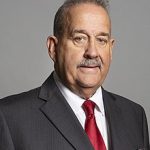
  • John Battle – 2000 Speech on the Falkland Islands

    John Battle – 2000 Speech on the Falkland Islands

    The speech made by John Battle, the then Minister of State at the Foreign Office, at the Royal Commonwealth Society in London on 12 July 2000.

    Today I want to talk about partnerships fit for the 21st century, partnerships for progress and prosperity. That is the essence of our relationship with the Overseas Territories, as expressed in our March 1999 White Paper on the Overseas Territories. This Forum’s theme, ‘Sustaining a secure future’, reflects this well.

    ELEMENTS OF A MODERN PARTNERSHIP

    First, a modern partnership with the Falklands needs to be founded on the idea that Falklanders can decide their own future. Self-determination was one of the best and most popular ideas of the twentieth century. With the entry into force in 1976 of the International Human Rights Covenants, self-determination gained the force of international law as a fundamental, collective human right. And these notions have been carried forward to this day. So that one of the fundamental principles of the modern partnership with the Overseas Territories is that people living there must experience the greatest possible control over their lives.

    Second, the partnership, like all partnerships creates responsibilities on both sides. For our part the most important of our responsibilities towards the Falklands are defence and foreign affairs. We are unequivocally committed to ensuring the security of the Falkland Islands. We will continue to station a strong garrison there, with resources from three armed services. Our Strategic Defence Review confirmed that the composition of the garrison was about right. It now stands at around 1,650 personnel not including naval crews. Our naval deployments in the South Atlantic include the Falkland Islands Guardship, her accompanying Royal Fleet Auxiliary and a Castle-Class Offshore Patrol Vessel. And the RAF will continue to operate their air-bridge between the UK and the Falklands and to carry civilian passengers and cargo on the route as well. Not an insubstantial presence, I think you will agree, as my colleague Geoff Hoon Secretary of Defence reaffirmed on his recent visit.

    In foreign affairs we represent and promote the interests of the Falklands wherever they are affected around the world. This might be directly with other countries, or in multilateral institutions such as the UN. In particular, negotiations to protect the environment or arrangements for air services or where our sovereignty over the islands is challenged.

    In our relationship with the Overseas Territories, Britain has the right to expect the highest standards of probity, law and order, good government and observance of relevant international commitments entered in to by the UK. As you know the British Government gives priority to the fields of environment and human rights in its foreign policy. In pursuit of our objectives we have signed up to a number of international agreements in these fields. I am delighted, and not surprised, that the Falkland Islands Government have worked hard to ensure that they have complied fully in implementing these, as a place leading the way in understanding the science of the marine environment, with unique natural habitats and far sighted resource conservation strategies.

    A third element of our modern partnership is the exercise of democracy. Falklanders have a proud record in this respect. The Legislative Council, composed of eight Councillors is chosen by Falklanders. They pass local laws, Ordinances. They also elect three of their number to sit on the Executive Council. The Falklands Legislature, with powers set in the constitution, is lively, governs the Islands efficiently and is a beacon of democracy. It reflects well on the political maturity of the Islanders the quality of Councillors and the professionalism of the Falklands Islands Government that the governance of the islands is so effective – it is a model of good governance.

    This is not to say that the situation is perfect. For all of us involved in politics a constitution is never finished. We need to improve, update, adapt and modernise our democratic processes and practices to meet new situations. One of the messages of our White Paper last year was to encourage Overseas Territories to let us have their proposals for democratic renewal and constitutional change. I am delighted that a healthy, open debate is gathering pace with the Falklands. The questions that Islanders have floated are many and diverse, ranging from the number of electoral constituencies, to how best to provide for independent scrutiny of Executive Council decisions. It is important that the debate on constitutional change is as full as possible, involves as many people as possible and be as wide ranging as possible, engaging all the people in democratic participation and renewal.

    The fourth element of our twenty-first century partnership is that Britain will continue to help the Overseas Territories that need it. The Falklanders do not receive any development aid from Britain now, and nor I suspect would they wish to. This is a mark of the economic success of the Islands over the past decade or so. Success which has meant that they now enjoy control, effectively, over their own resources, shaping the economic future.

    I have described to you some of the fundamentals that lie behind our modern partnership with the Falklands: self determination, responsibilities on both sides, freedom to exercise the greatest possible control over their own lives and the availability of help from Britain when needed. These fundamentals underpin any thriving modern market economy. That they are in place in the Falklands means a great deal. It means that the necessary conditions for further economic development are in place.

    ECONOMIC DEVELOPMENT

    I would like to turn to the economy and to look ahead. First the Falklands, like any modern economy can not operate in isolation. The Falklands are linked to the South American region, and to Europe and hence to the rest of the world. In June last year, at the request of the Falklands Councillors, we entered into groundbreaking talks with the Argentine Government on South Atlantic issues of common interest. The understandings reached were recorded in a joint statement signed by both Foreign Ministers and approved by the Falklands Councillors. Elements of the Joint Statement included strengthening co-operation on the conservation of fisheries, and the restoration of air links between the Falklands and the continent. The ban on visits to the Islands by Argentine passport holders was also lifted. I am sure that the benefits if these arrangements already apparent in the short term will prove to be of lasting value.

    I mentioned fisheries; this has been a vital source of prosperity for the Falklands. The most recent fishing season around the Falkland Islands has again been successful. This is very good news. Fishing lies at the heart of the Falklands economy, it generates much of government income and is a growing activity for the private sector. It is therefore crucial that we secure the long-term viability of the fishery. And that can only be done through a responsible, sustainable use of the resource. In 1986 the Falklands Islands Government and HMG announced the Falklands Islands Interim Conservation and Management Zone (FICZ). Since then the Falklands Islands Government and we have done much to promote the conservation of the fish stocks in the South West Atlantic. This has paid off. We have been able to operate a successful licensing regime and conserved fish stocks. We know the fish are no respecters of political boundaries; as I learnt last night from Jan – whole shoals change their mind on the way down which water to turn to. A particular renegade is the Illex Squid – the most lucrative resource around the Islands – that migrates between Argentina and Falklands waters. Clearly in these circumstances it makes sense to cooperate with Argentina on conservation of that and other key species of interest.

    A major part of the July Joint Statement with the Argentine government related to the long-term sustainable conservation of the fishery. Important here was the recognition that practical measure needed to be put in place to deal with poaching in the South West Atlantic.

    We agreed to these measures last September, when an ad hoc meeting of the South Atlantic Fisheries Commission (SAFC) took place in Madrid. There was a further meeting of the SAFC last month in London. Both sides agreed that the level of co-operation between the scientists is exemplary. Both delegations re-affirmed their commitment to the conservation of fish and squid stocks in the waters of the South West Atlantic and agreed to work even harder to reduce poaching.

    The Falkland Islands Fisheries Protection vessels now have the means at their disposal to be even more robust than previously about tackling illegal fishing within the Falklands fishing zones. I congratulate those involved in combating poaching in the South West Atlantic. They do an arduous job very well. I have to say that it is not only the Falkland Islands which have taken strong action against poachers, the Argentines too have been taking tough action against poachers especially so this season. And we welcome that.

    We have also been discussing with other Governments whose fishing fleets visit Falklands waters how to reduce the risk of poaching in coming years. I hope this dialogue will prove successful, and that the Falklands fishery will go from strength to strength. With all the hard work done by the Falklands Islands Fisheries Department I am confident that it will.

    The future is not just fishing – nor can it be in the need to diversify the economic base. The prospect of oil and gas development in the South Atlantic has been studied for some time. It is exciting, but it is also a long-term prospect. Exploration began to be a serious possibility with the signing of the Joint Declaration by Britain and Argentina in 1995. For the first time Britain and Argentina has a forum to discuss exploration, and to cooperate on its exploitation. The Joint Declaration committed the two governments to set up a Special Co-operation Area that straddles Falklands and Argentine waters. It is here that we plan to launch a joint licensing round. Our twice-yearly meetings with Argentina have brought us a long way towards doing so. We continue to negotiate the detail to get this ambitious project off the ground. The next opportunity is a meeting later this month.

    Meanwhile, could I add that the Falkland Islands Government continues to do an excellent job in promoting Falkland waters to the oil and gas industry, as somewhere worthy of serious exploration with a view to exploiting a potential resource in a world class, environmentally sound and responsible manner. The UK oil and gas industry, with its experience in developing the North Sea, as I know from my two years as Minister for Energy, is ideally placed to take an interest. There has been recent activity in the North Falklands Basin. The information to this date has been encouraging – for example in 1998 five out of six wells drilled showed traces of oil – but commercially viable deposits have still to be found. With the commitment of the islanders – in particular Phyllis Rendell, the Director of Mineral resources, who has done so much – and the industry I am sure that progress will continue to be made.

    More than anything else in the last three years our Government has emphasised the importance of education and skills training in any modern economy. The Islanders deserve to be congratulated on their far-sighted investment in education, having built a splendid secondary school with a first class record of achievement, helping students to attend sixth form and university in the United Kingdom, and recently I understand allocating funds to extend the junior school, all putting the Falklands in a strong position to participate in the new information based knowledge driven economies of the future where geographical isolation will be relatively unimportant.

    There are also cutting-edge agricultural projects under way in the Islands in order to improve the marketing of Falklands products. European demand for organic produce looks set to grow and grow, so the environmentally green agricultural practices used in the Falklands will prove to be a real and significant opportunity.

    Last but not least, the Islands are having considerable success in attracting tourists. They will never be a mass market. And Amen to that, I am sure you will agree. But for those who do visit and are looking for peace and tranquillity, the Islands offer warm hospitality and unbeatable opportunities to see some beautiful wildlife, up close and in its native environment – penguins most famously, but also sea lions, seals and a bio diverse array of species, bird and marine life unique to the Falkland environment.

    On a personal note, Michael Binyon of the Times last night suggested you have to really visit the place to get it into your system to begin to know the Falklands. When one of my staff returned from visiting the islands this year, I asked her to come and discuss her visit and bring her photographs and we poured over a large scale map. I was attracted and captivated and hope to visit soon and not just for the usual Ministerial day in day out visit.

    Tourism is, of course, one of several areas where co-operation and links with neighbouring countries can be crucially important. So I am delighted that the Joint Statement of last July has made such a positive contribution. It has restored and safeguarded regional air links, so tour operators and travel agents can now plan ahead with confidence. Stanley itself has become an ever more attractive port of call for the many cruise ships which tour the South Atlantic and Antarctica.

    Last night Councillor Jan Cheek in her speech described the Falklands as small and complex and uniquely interesting. Today’s forum ‘Sustaining a Secure Future’ I’m sure will not just be about recovery and consolidating from the difficulties of the past, but will be about a practical, implementable vision for the future – a quietly confident twenty-first century Falklands in partnership with a twenty-first century world.

  • Peter Hain – 2000 Speech on Diamonds for Prosperity, Not War

    Peter Hain – 2000 Speech on Diamonds for Prosperity, Not War

    The speech made by Peter Hain, the then Minister of State at the Foreign Office, in Antwerp on 17 July 2000.

    To anyone expecting me to ‘name and shame’ those responsible for using illicit diamonds to fuel wars in Africa, I am sorry to disappoint you. Today I come not to ‘name and shame’ but to ‘name and praise’. To praise the International Diamond Manufacturers Association (IDMA) for the leadership it is giving to the industry to tackle the problem. To praise De Beers for the steps it has already taken to block diamonds from conflict zones.

    To praise Antwerp’s leading diamond banks: ABN-AMRO, the Antwerp Diamond bank and Artesia Bank for deciding to terminate relations with any client dealing in ‘conflict diamonds’. Other banks may have made similar moves: all should do so. To praise recent moves taken by the Belgian, Indian and Israeli trade associations to clamp down on the small minority of rogue traders in conflict diamonds who discredit the vast majority.

    I hope we can all join together to find workable solutions and agree concrete ways forward. Because this will make all the difference in reassuring increasingly worried consumers. Everyone wants to be sure that that diamond ring for the finger of their loved one has helped create prosperity not war.

    It is vital that we take urgent action to stop this. Vital because that will help block the money that finances brutal rebellions in those countries. Vital because we must safeguard the prosperity and jobs of tens of thousands of people world wide dependent upon the legitimate diamond trade.

    BREAKING THE WAR-DIAMONDS LINK

    We can – and we must – work together to break the link between war and diamonds in Africa and deny these ‘conflict diamonds’ access to world markets.

    We have all been shocked by the brutality of the RUF rebels in Sierra Leone. They, like the UNITA rebels in Angola, finance their murder and mayhem with diamonds. Angola is the worst place in the world to be a child, yet it has the mineral and agricultural wealth to be the most prosperous place in Africa. We have a moral obligation to act. We also have a commercial obligation to protect the reputation of the industry.

    Because there is no necessary link between diamonds and war in Africa. Diamonds can, and should, mean prosperity for Africa. Botswana – with one of the highest growth rates in the world last year – is a shining example of the benefits that diamond wealth can bring.

    I was born in Africa and was involved in the anti-apartheid struggle. As Britain’s Minister of State for Africa I am determined that the resolution of the ‘conflict diamonds’ problem must in no way harm post-apartheid South Africa and Namibia.

    What we all want are prosperity diamonds: for Africa’s people to experience the prosperity that diamonds can bring. But to do so, we must first bloc the ‘conflict diamonds’ which fuel the suffering of people whose lives are being decimated by war in Angola, Sierra Leone and the Democratic Republic of Congo.

    I know that many of you feel it is unfair that politicians like me, and NGOs, have been vocal on the issue of ‘conflict diamonds’. And unfair in getting a strong media spotlight on ‘conflict diamonds’. After all it is not the diamonds that cause the wars, but the men who start them; who illicitly mine and trade diamonds in order to buy arms.

    And you are right that it would be unfair, if we focused solely on diamonds. But we are not. The British Government is actively supporting the United Nations in stopping those who break sanctions on the supply of weapons and fuel. And we are very actively involved in international efforts to stop the proliferation of small arms and leverage up standards on arms export controls. We would like the international community to go further and stop the supply of weapons to non-state actors.

    But this issue just cannot be wished away. The African producer countries had the wisdom to see that by launching the Kimberley process, in which Britain is an active member.

    The British Government has done the right thing in galvanising action on ‘conflict diamonds’. With the Americans, we have got the issue high on the agenda of the G8 countries, which represent the bulk of your market.

    We have engaged with the leading producers: Russia, Botswana, South Africa, Namibia, Canada and the war-afflicted states. We have supported the unprecedented activism of Canada’s Ambassador to the United Nations, Robert Fowler, in making sanctions against UNITA bite.

    A few weeks ago we convened a meeting of the importing countries in the British Foreign Office. I was able to welcome representatives of the trade from Antwerp, Tel Aviv, Bombay, Russia, the USA and Canada to discuss how to move forward together. Most recently we have led the way in the UN Security Council to get a ban on all uncertified diamonds from Sierra Leone, with the adoption of Resolution 1306 on July 5.

    The proactive stance which IDMA, and others in the industry, are now taking can only work to the long-term benefit of the legitimate trade. And I wish to pay tribute to the leadership of individuals in this room who have acted as the catalysts for change.

    I am struck by how the mood now contrasts to nine months ago. Then, I was told by some in the industry that the there was little prospect of a new approach, of promoting greater transparency and accountability, of starving the illicit diamond trade of its pickings. But look where we are today.

    The newly agreed UN Security Council resolution 1306 on Sierra Leone requires both governments and the industry world wide to enforce the ban on all uncertified diamonds. I am very keen to explore with representatives of the national associations and companies here how we best work together to enact this.

    How can we learn from the experience of imposing sanctions on UNITA diamonds? What can we do better this time and do more quickly to help deprive the Sierra Leone rebel RUF of the means to wage war?

    What can we do together to address the wider problem of ‘conflict diamonds’? I very much agree with your President, Sean Cohen, that it’s unrealistic to expect your members – the manufacturers down the supply chain – to resolve the problem by themselves. It is clear that you can not. You need action ‘upstream’ and you need governments to be prepared to introduce the necessary controls. I think you are right that we need to strengthen the ‘front line’ of the problem by tackling the trade in ‘roughs’.

    DIAMOND CERTIFICATION

    That is why my government is actively backing attempts to introduce a certification scheme for rough diamonds. I hope the G8 Heads of Government will endorse work on this at their summit later this week.

    We are active in the Kimberley process, where industry, governments of producing and importing states and representatives of civil society are developing proposals to stop the import of all uncertified roughs.

    I am delighted to learn that leaders of the IDMA have formulated their own proposals that closely follow our thinking on the need for controls on the import and export of roughs from the producer countries. I am impressed by what you propose and I hope we can work together to achieve workable and pragmatic controls. And avoid unnecessary bureaucracies, or loading unnecessary burdens on producing countries and industry. Let’s make it simple and effective and get it in place urgently.

    You are right to challenge governments to go beyond stating their concerns to taking action. Just as we are right to say that governments cannot crack this one alone. We need the industry. You need governments. Together we can work to get the best blend of government controls and industry self-regulation.

    Our thinking on how best to take forward a certification scheme is that:

    • Producer countries would agree not to export rough diamonds without a proper certificate of origin;
    • Importing countries would only agree to import roughs with such a document
    • A credible monitoring system – simple, effective, but not overly bureaucratic.

    I believe this is achievable and will ensure consumer confidence in the diamond industry. But we need to move fast. Building on the work done in the Kimberley Working group, we need to get agreement to an inter-governmental process to work out what such a scheme might look like and whether we are all willing to commit to it.

    I can assure that the British Government will be active in putting its best efforts into making this happen. Working with other key actors – IDMA, the African producers (led by South Africa), fellow G8 members: Canada, Russia and the USA and Belgium and other EU partners.

    I am delighted that IDMA is also pointing the way forward on what more the industry itself can do. The proposal that every diamond organisation adopts a binding code of conduct on conflict diamonds, labour practices and good business practices is excellent. Especially the proposal that the codes be given teeth, through the expulsion of any member who fails to comply.

    I very much hope that the diamond bourses are thinking along similar lines and that the World Federation of Diamond Bourses will act in concert with IDMA this week. To make this week’s Antwerp World Diamond Congress an even bigger success story for the diamond industry.

    A CREDIBLE AND EFFECTIVE CODE OF CONDUCT

    Might I suggest some pre-requisites for a credible and effective code of conduct, to build on what has been proposed in the industry?

    Firstly, expulsion from a manufacturing association, or diamond bourse, has little meaning if you can carry on trading regardless. I think the industry needs to decide that only licensed manufacturers and dealers can trade. In that way the threat of expulsion can be given meaning.

    I suggest you also need to benchmark clear minimum standards and encourage best practice. On the latter, I am encouraged by the move of companies, such as De Beers, to make affirmative statements on all sales invoices that they are not dealing in ‘conflict diamonds’. If we can get meaningful controls in place to allow only certified roughs into the leading and bona fide diamond trading centres which you represent, consumers will surely demand that the trade gives them confidence through a voluntary ‘chain of warranties’. I would welcome discussion on how this might best be taken forward, with the onus on the seller to make an affirmative statement to the buyer.

    It makes no sense to disrupt the normal pattern of the trade and the way that companies add value by mixing and selling on between the different marketing centres and traders. So we must go for workable ways forward.

    But the 21st century consumer increasingly demands the right to know. The voice of civil society cannot be ignored. If NGOs are demanding greater transparency and accountability, we should all welcome their wake up call. And, like IDMA, not act defensively, but engage to get the best outcome for the industry and the consumer.

    I believe that NGOs like Global Witness have earned their place at the table. Because they have been prepared to listen and learn. And because they have networked effectively and helped bring the different actors together. The Foreign Office has been happy to contribute funding to their research into identification and certification. But that does not mean we agree with all their conclusions. We do not.

    So, I welcome forward-looking thinking in the IDMA suggesting that if an international diamond council is to be considered, it should be a tripartite body with industry, government and civil society representation. But let us avoid heavy bureaucracies, inter-governmental procrastination and look instead to light and effective models of industry self-regulation backed by both full transparency and the support of government legislation.

    I am pleased to have been able to join you at what I’m sure will prove to be a successful conference for IDMA. I hope it will be an important milestone in our efforts to give a clean bill of health to the industry by eradicating the minority of war diamonds which discredit the overwhelming preponderance of prosperity diamonds.

  • Keith Vaz – 2000 Speech on Working to Advance Common European Interests

    Keith Vaz – 2000 Speech on Working to Advance Common European Interests

    The speech made by Keith Vaz, the then Minister for Europe, at Lancaster House in London on 18 July 2000.

    I’m delighted to be co-hosting this Forum today with the Local Government Association (LGA) and the Local Government International Bureau (LGIB).

    When I contributed an article to your ‘European Information Service’ publication in March, I resolved to do more – as Minister for Europe – with Britain’s local government representatives.

    That I stand before you today – in the splendours of the FCO’s Lancaster House, co-hosting this Forum with the LGA/LGIB – is testament to how far we have collectively come in this short time. But there is much more that we can do together – because we share a common interest in relation to European, and indeed wider international affairs.

    One of our key interests has to be – as the conference suggests – bringing Europe closer to the citizen, and that is a task that local government is particularly well-placed to do. Taking messages about Europe to the British public is also an objective which I am heavily involved with as Minister for Europe.

    Being so focused on the British public may not be traditional for Foreign Office Ministers, but it is an approach to which I attach considerable importance – hence my desire to co-host this conference, and speak to you today about Europe.

    GOVERNMENT POLICY ON EUROPE

    The Government came to power with a clear commitment to being ‘pro-Europe, pro-reform’ – and we have remained committed to it. We are ‘pro-Europe’ because EU membership is good for Britain – it is good for our economy, good for our citizens, good for our environment, and good for British jobs. Independent research has revealed that 3.5 million British jobs, one seventh of all UK income and production depend on sales to European countries.

    It is also good for Britain’s local communities: in the past, local links to Europe sometimes meant little more than symbolic ‘town twinning’. It is interesting that twinning itself has now in many cases taken on a more strategic dimension, being incorporated into European and international perspectives of the more forward-thinking local authorities.

    Today, Britain’s local governments have embraced European relationships in a more comprehensive way, ensuring that the interests of the communities they serve are taken forward in Europe – and above all ensuring that local interests are well served by Europe, whether in terms of structural assistance or funding for creative projects.

    However, often the general impression given is that many authorities are mainly interested in European relationships for the financial assistance that EU programmes bring, and in particular the monies available for regional structural funding. As such, local authorities often appear as supplicants to the Commission, (and indeed sometimes to central government), rather than stockholders in a richer, more egalitarian relationship.

    I am therefore extremely pleased to see that there is now a growing emphasis within local government on pursuing a dialogue on a programme of policy development with the European institutions, in areas as diverse as food safety to social inclusion, and from innovation policy to media, sport and related cultural and economic activities.

    Whilst some of this policy development work may indeed carry financial benefits, very often the relationship involves using the expertise within local government to influence European policies and legislation at source, as part as the wider process of serving the citizen. It is in serving the citizen that central and local government can develop a dialogue on shared interests with regard to Europe.

    In three short years, the Government has built on this ‘pro-Europe’ commitment, pursuing a step change in Britain’s relations with our EU Partners, and a sea change in Europe’s policies.

    And we have achieved these goals by engaging positively with our European partners – not by standing on the sidelines of Europe, simply complaining about our lot, but actively seeking to shape the agenda and our future in Europe. In many ways, such an approach is nothing new for local councils up and down Britain, who have known for a long time that positive engagement with Europe is an absolute necessity – we in central government now heartily agree!

    And central government’s engagement with Europe is paying dividends for Britain: let me take the recent Lisbon European Council as an example. In the run-up to this summit in March, we demonstrated the step-change in our relations with our EU Partners by agreeing bilateral policy initiatives with nine of our Partners. These nine policy initiatives in turn shaped the agenda that was to be discussed at Lisbon, the agenda of ‘economic reform’ which the UK had been advocating for over a year.

    The successful outcome from the summit was – to quote the Prime Minister – a ‘sea-change in European economic thinking – away from heavy-handed intervention… towards a new approach based on enterprise, innovation and competition’. Britain’s agenda on economic reform had become Europe’s economic agenda.

    Despite this progress, what then concerned me – as Minister for Europe – was whether the British public – bombarded with scare stories about Europe in the press – was aware of these solid British successes.

    YOUR BRITAIN, YOUR EUROPE

    That is where my information initiative – entitled ‘Your Britain, Your Europe’, under which today’s conference has been organised – comes in. When the Prime Minister appointed me Minister for Europe last year, he gave me a clear remit to take the message about the Government’s policy towards Europe to a wider British audience.

    The ‘Your Britain, Your Europe’ initiative is intended to take information about the benefits to Britain of EU membership to that wider public – to bring Europe closer to the British citizen.

    To date, my key ‘public diplomacy’ activities have included a week-long roadshow to eleven English cities late last year, a seminar for British businessmen and women at Canary Wharf on economic reform and Lisbon, an open day at the Foreign Office to mark ‘Europe Day’, and today’s conference with the LGA.

    I have also started a series of ‘city visits’ – with the help of numerous city councils – that take me to a new city every fortnight or so: we started with Leeds back in May, and have so far since been to Liverpool, Norwich and Southampton.

    On Friday, I shall be on a ‘city visit’ to Edinburgh with the Foreign Secretary, the Chancellor of the Exchequer and members of both the Scottish Executive and Edinburgh City Council.

    We – that is Central Government, the devolved administration and the local government council – shall all be taking the same message to a local audience at the same time.

    As such, we are breaking new ground for the FCO in terms of cooperation among the spheres of government in the UK – and all in the ‘pro-Europe’ cause of explaining to the public the benefits to Britain of EU membership

    PARTNERSHIP BETWEEN CENTRAL AND LOCAL GOVERNMENT

    Let me just say a word about that cooperation. Members of central and local government formally pursue issues of interest through the ‘Central/Local Partnership’, and those involved consider if a range of European and international matters could have a place within that very useful mechanism for dialogue.

    This is because we are in fact all part of a much wider, more informal network. Alongside central and local government, this network incorporates the UK’s new devolved administrations – including of course London, represented today by Mr Lee Jasper- and reaching over to the EU institutions in Brussels, Luxembourg and Strasbourg.

    As part of that network, our Permanent Representative in Brussels – I am aware – has for a long time valued his connections to representatives of Britain’s local governments, not least through the Brussels office of the LGA/LGIB, one of our co-hosts at this forum today.

    I know that our new man in Brussels – Nigel Sheinwald, who takes up his post in September – is equally keen to maintain these contacts. Such networks don’t require new and formal structures – but they do need dialogue, and if there is one message that I would like you to take away from today’s conference, it’s the following:

    on European affairs, I – as Minister for Europe – am also open for business, open to your ideas and open to dialogue: today’s conference could usefully mark the start of a joint commitment to such an informal partnership and dialogue, as I know that local government is equally open to sharing ideas with me on the European and international dimension.

    The same is true of our network of Embassies throughout Europe: they too stand ready to assist you in contacts with our European Partners, and I trust you’ll make use of them.

    LOCAL GOVERNMENT AND EUROPE: KOSOVO

    Such ‘partnership’ can never be a one-way process: let me give an example. Ten days ago, I held a conference with Chris Patten – Britain’s Commissioner responsible for external relations – on the Balkans, and how we are ‘Europeanising’ this area of South Eastern Europe.

    In the process, I have learnt much of British local government’s involvement in Kosovo. Following the crisis there last year, Britain’s local government representatives have been actively involved in the reconstruction of this corner of Europe.

    With the collapse of civil society in Kosovo, the need to ‘rebuild’ democratic life is proving as important as reconstructing the material infrastructure. Representatives of local government are ideally placed – and apparently well-respected on the ground – to advise their counterparts in the rest of Europe.

    In this sense, they have been ‘Ambassadors for Britain’ – and often fine ones at that too!

    LOCAL GOVERNMENT AND EUROPE: ‘SMART CITIES’ AND GOVERNANCE

    Such examples of our local government’s activism in Europe are crucial to correct some stereotypes, and in particular to correct the general impression, mentioned earlier, that relations with Europe are primarily about accessing EU money through the Structural Funds. Local authorities are not simply beneficiaries of EU regional funding: they are stakeholders in a much richer relationship.

    While I do not wish to belittle the benefits of structural fund spending in the UK – and I was recently in Liverpool, seeing the real benefits of its special Objective 1 status – we should highlight other aspects of the relationship with Europe, and in particular networking to influence the European policy and legislative processes, that I have referred to above.

    Let me leave you with two further examples:

    First, recently I visited Southampton, a great European city that is clearly prospering; it is not, therefore, a candidate for the obvious structural funding that many associate with Europe’s largesse. I was nevertheless struck by a particularly creative project that the city council had launched, and which had attracted a high level of European interest.

    It had also attracted some financial assistance, not from the Structural Funds but from the European Fifth Framework Programme for Research and Development, under the IST programme. Southampton city council won EU support for its launch of a ‘smart card’ that will give local citizens access to the full range of city services and facilities, and the ability to pay for them with the same card.

    Financial assistance from the IST programme, essential to the project, came about as a consequence of the Commission being convinced of the viability and the attractiveness of the idea.

    The ‘SmartCities’ project – a world-first! – is an excellent example to us all of how creative one can be in our relations with Europe, highlighting the innovation of our ideas and helping to influence pan-European initiatives in a very positive way. All regions and cities, whatever their economic condition, can similarly exploit their ideas, their diversity and their creativity within this broader European framework, not only to gain funds but to gain influence, credibility and partners.

    Second, a quick word on the issue of ‘governance’ within Europe, on which the Commission President will be producing a White Paper early next year. This is a serious issue: it’s about how the various spheres of government throughout the EU – local, regional, national and European – deliver ‘governance’ for their citizens.

    This issue is about how Europe functions, how it makes shared competences work, how Europe decides, how it legislates, how it allocates resources – the bread and butter issues for our citizens… Because, at the end of the day, all politics is local: the EU isn’t about what happens in Brussels – it’s about what happens in Bradford or Birmingham or Berkshire.

    Through the LGA and the Committee of the Regions, you are already making your ‘local’ voices heard in these debates: I would be interested in hearing more of your views on this subject, perhaps in the Question/Answer session that is about to follow.

    CONCLUSION

    In conclusion, let me draw out three strands from what I’ve said.

    First, Central Government is now committed to making a success of Britain’s EU membership, and explaining to the British people the benefits we get from that membership. We are making headway with our ‘pro-Europe, pro-reform’ agenda: now we need to disseminate that information.

    Second, Britain’s relationship with Europe operates through all the ‘spheres’ of government – from local government efforts in Kosovo to summits of the EU Member States. European governance is the better for it, as is the UK’s relationship with its EU Partners: the informal networks bring us together more successfully than mere institutions alone would.

    Finally, we need a true partnership among Britain’s spheres of government in pursuit of our European objectives, and in explaining to all our citizens the benefits we thereby gain: we have much to learn from each other, much to offer, and much to do.

    That is why I stand before you today and express my interest in dialogue and in partnership: I look forward to hearing from you, and working with you in the future to advance our common European interests.

  • Peter Hain – 2000 Speech on Britain’s Policy in the Middle East

    Peter Hain – 2000 Speech on Britain’s Policy in the Middle East

    The speech made by Peter Hain, the then Minister of State at the Foreign Office, to the Council for the Advancement of Arab-British Understanding on 17 July 2000.

    I am grateful to you, Mr Chairman (John Austin), and to Sir Cyril Townsend, for this opportunity to address the Council for the Advancement of Arab-British Understanding, and the many members of the Arab community in London represented here.

    You have invited me to speak on Britain’s policy on the Middle East. I hope, though, you will permit me to range a little further, covering – like CAABU – the whole of the Arab world.

    The Middle East and North Africa remain central to British Foreign Policy. The region is our neighbour, our trading partner, and a strategic priority. We are in regular contact with Ministers and parliamentarians in every country. In the last year I have been to Morocco, Tunisia, Algeria, the West Bank and Gaza Strip, Israel, Jordan, Syria, Egypt, Saudi Arabia, Kuwait, the United Arab Emirates, Oman, Bahrain, and Qatar. The Foreign Secretary has visited the region. The Prime Minister has seen President Arafat, Prime Minister Barak, King Abdullah, Prince Salman of Saudi Arabia, and the Amirs of Bahrain and Qatar. Lord Levy, too, has been extremely active on our behalf.

    PEACE

    The key to the Middle East’s development is peace.

    Over the past year we have seen Syria and Israel come desperately close to peace. We have seen Israel withdraw from Lebanon. And we have seen the Palestinians and Israelis edge closer.

    I wanted to let you know how the Israelis and Palestinians were getting on at Camp David, but the Americans took away their mobile phones. So let me leave that until later, and start with Lebanon.

    The end of the Israeli occupation of Lebanon was a major step towards peace. I hope that the Government of Lebanon will now take rapid steps to assert its effective authority in southern Lebanon, including by deploying the Lebanese Armed Forces.

    There were many who refused to believe that Israel would ever withdraw. They were wrong. Israel under Ehud Barak has worked hard to comply with the requirements of the United Nations to achieve full implementation of Resolution 425. Of course, it was high time.

    I look forward to the next step, also long overdue: implementation of UN Security Council resolutions 242 and 338, in Syria, and in the West Bank and Gaza Strip.

    Syria will emerge this week from its 40 day period of mourning for Hafez al-Asad. The transition to President Bashar Al-Asad, completed today, has been very smooth, and I welcome the emergence of another leader of the new generation in the Middle East. I believe that, over the past year, Britain and Syria have laid the foundations for a new relationship between our countries. I welcome President Asad’s commitment to social and economic reform, and to the strategic choice of peace. Britain will, as an old friend, seek to help Syria in both.

    As I speak, Yasser Arafat and Ehud Barak and their teams are meeting in Camp David. They both face enormous challenges. Britain recognises the pressures on both sides. President Arafat in particular bears the burden of many expectations, in the Islamic world and beyond. But I am very hopeful of a positive result, even if a full permanent status agreement is not achieved in the next few days. I look forward to the negotiations leading to the creation of a viable, democratic and peaceful Palestinian state. It has often been said that the consequences of failure – for both sides – are too great to contemplate. The prizes of success are also too great to be discarded.

    Our efforts towards peace extend well beyond the Middle East Peace Process. You will all be aware of the terrible suffering in Sudan caused by civil war – a war that has lasted 16 years in its current phase alone. You will also be aware of Britain’s long and close association with the Sudan. That link remains strong, as I see from my mail-bag each week.

    Only a negotiated settlement can bring sustainable peace to the Sudan. That is why we have been trying to bring the parties – indeed all stakeholders – to talks. We have provided political and financial support for a permanent negotiating secretariat in Nairobi and we are in regular contact with all the parties, pressing the case for talks and explaining the benefits that peace would bring to the civilian population.

    Tomorrow I shall be meeting the Sudanese Foreign Minister, Mustafa Osman, who I gather will be visiting you at CAABU later this week. We have seen a number of positive developments in Khartoum recently, and I look forward to discussing with him the prospects for peace, and how we and the international community can help.

    Nor will we forget the Western Sahara, sometimes called the ‘forgotten war’. We have supported the UN mission in the Western Sahara consistently and unswervingly, providing civilian administrators and peace-keeping contingents, and substantial funds to underpin them. We continue to believe that a just solution to the problem depends on the people of the western Sahara having the right to express their will at the ballot box.

    A solution also requires all parties to be constructive, flexible and committed to peaceful means. We have been happy to support James Baker, the UN Secretary-General’s Personal Envoy, providing facilities for him to hold talks in London in recent months. We urge all sides to respond positively to what he has to say. I have carried the same message to Morocco and Algeria.

    As you can see, much of our diplomatic and aid effort in the Middle East and North Africa is dedicated to promoting peace and understanding between communities. Another priority is promoting the observance of human rights.

    HUMAN RIGHTS

    Human rights are fundamental and universal. They are one of the foundations of the international community, which is why all members of the United Nations accept the Universal Declaration of Human Rights. How a state treats its citizens is a matter of legitimate concern to all states and all citizens, not just the West.

    So I am wholly unapologetic about our desire to promote human rights, in the Middle East and North Africa, and right across the world.

    There is real progress. The establishment of consultative councils in the Gulf, the elections in Iran earlier this year, and the formation of a human rights committee in Bahrain, all reflect changing attitudes. The increasing rights of women in a number of countries, and the development of the Arab media in the region, in particular Al Jazeera in Qatar, also reflect a more liberal and modern approach.

    We shall continue to promote progress, through political channels, and by financing programmes – the Palestinian rights programme, for example, was the largest UK-funded human rights programme in the world last year. And we shall continue to consult Non-Governmental Organisations before visits to the region, and to raise individual and collective cases when we meet leaders from the Middle East and North Africa.

    Increasingly we work on human rights in close cooperation with the countries of the region. We look forward to working with those recently elected to the UN Commission on Human Rights, including Saudi Arabia, Syria, Algeria and Libya; and with Qatar, which continues on the Commission. Together we can improve the human rights situation throughout the world.

    PROSPERITY

    In working together to achieve peace and secure human rights, we shall also increase prosperity. Because respect for individual freedoms and good governance permit the talents of individuals to flourish, and provide the secure environment needed for investment.

    I am convinced that the Euro-mediterranean partnership, in particular the Free Trade Area, offers the best prospects for economic development. It is the agreed objective of the EU and nearly all our Mediterranean partners. I look forward to Libya joining us soon.

    With the EU, the Mediterranean partners, and the countries which have applied to join the EU, the Free Trade Area will include more than 700 million people. That is more than one in ten of the world’s population, and a much higher proportion of its wealth – an incredible and diverse community and market which will benefit us all, and the Gulf as well.

    The building blocks are gradually falling into place. Of course, much turns on progress in the Middle East Peace Process. At present flows of state money to the region are large. But following peace I am confident that investment from the private sector will dwarf aid from states. We have seen the pattern – starting from a much lower base – in Central and Eastern Europe. If the investment environment is stable and attractive, international capital quickly follows. The companies that invest bring know-how and create jobs. And it is better for the countries of the Middle East and North Africa that investment should come from a wide range of private investors, rather than as aid from a few states.

    Britain’s bilateral trade relations with the countries of the Middle East and North Africa remain very healthy. Just a few weeks ago I was privileged to address the ‘Investing in Saudi Arabia’ conference, in the presence of Prince Abdullah bin Faisal bin Turki. The two pillars of British Trade International, Trade Partners UK and Invest UK, continue their efforts to promote investment in both directions.

    Last year, no doubt partly because of the strength of the pound, and partly because of the low oil price, UK exports to the region fell, while our imports from it increased. I am pleased to say that our exports to the region are now rising again, and in January to March of this year were 4% higher than in the equivalent period of last year. Imports were a remarkable 34% higher.

    The economic links between Britain and the Arab world are increasing steadily, a welcome trend which I am confident will continue.

    IRAQ

    Iraq is an issue of great concern to many of you, as it is to us. That is why we, the UK and the UN, intensified our efforts to look creatively at the situation, resulting in the Security Council’s adoption of the ground-breaking Resolution 1284.

    This resolution for the first time provides for the suspension of sanctions in return for progress by Iraq short of full compliance.

    It offers Iraq an unprecedented opportunity to make quick progress on sanctions – an opportunity we must all encourage Iraq to take. This does not mean the international community is going soft on Saddam’s aggression. 1284 makes clear that Iraq must allow the new monitoring organisation, UNMOVIC, full access to sites still of concern. That is an exacting requirement. But it is also necessary, if we are to prevent Saddam from once again threatening his people and Iraq’s neighbours.

    As the tenth anniversary of the invasion of Kuwait approaches, none here will need reminding of the deadly results of those threats in the past. But we need to be looking forward. Resolution 1284 clearly maps out the way to the lifting of sanctions, and is the only way of doing that. I urge the Iraqi government to accept it.

    The Iraqi government are fond of claiming that they have given up their weapons of mass destruction and that they have nothing to hide. If that is so, then they have everything to gain by seizing the opportunity offered by 1284.

    In the meantime we strive to help those suffering in Iraq. Resolution 1284 contains a raft of humanitarian measures, providing a bigger and better humanitarian programme – none of it conditional on Iraq’s behaviour on weapons of mass destruction.

    There has, for example, been no ceiling on the amount of oil which Iraq can export under the ‘oil for food’ programme since December 1999. That means that more than $10 billion should be available for humanitarian relief this year alone. This will make a real difference on the ground, prompting the UN Secretary General to underline recently that the Government of Iraq is in a position to improve the health status of the Iraqi people. 1284 has also streamlined the approvals procedures for exporting ‘oil for food’ goods to Iraq. More essential goods are arriving more quickly.

    We are doing all that we can to help the Iraqi people. We urge Saddam Hussein to do the same.

    Much too has been made of claims of a UK/US bombing campaign against Iraq. Let me say here categorically: there is no bombing campaign. Nor do current UK and US patrols in the No Fly Zones represent the continuation of Operation Desert Fox. That was a limited operation to diminish Saddam’s weapons of mass destruction capability. It ended on 19 December 1998. Our aircraft now patrol the NFZs, as they have for nearly nine years, to protect the Kurds, the Shias and others from Saddam’s attacks. The patrols are not without serious risk. Iraqi forces have attacked our aircraft on more than 820 occasions. Our aircraft only respond when they are attacked. If Iraq stops its aggression, we shall stop responding. But we continue the patrols because, as a visiting Kurdish delegation told us just last week, it is only these patrols which deter Saddam from repeating his past attacks on the Kurds.

    The states in the region know the reality. We are grateful for the support of so many of our oldest friends in the Gulf. We have acted to provide a path to achieve improvement. Saddam must decide to go down it.

    CONCLUSION

    I want to end on a positive note.

    The Middle East stands on the brink of a resolution to the Arab-Israeli conflict. We all hope that Yasser Arafat and Ehud Barak can find the strength to take the last leap to achieve it. We hope that President Bashar Al-Asad will soon be able to achieve the peace that eluded his father. And we look forward to the gains from Israeli withdrawal from Lebanon being consolidated through a Lebanese-Israeli peace agreement.

    Increasingly the importance of trade, human rights and good governance in increasing prosperity is understood.

    I look forward to closer cooperation between Britain and all our friends in the states of the Middle East and North Africa, in a world where, increasingly, the international interest, the national interest and the citizen’s interest are the same.

  • Robin Cook – 2000 ‘Guiding Humanitarian Intervention’ Speech to the American Bar Association Lunch

    Robin Cook – 2000 ‘Guiding Humanitarian Intervention’ Speech to the American Bar Association Lunch

    The speech made by Robin Cook, the then Foreign Secretary, at the QEII Conference Centre in London on 19 July 2000.

    Mr Chairman, Ladies and Gentlemen,

    I am glad that so many of you have crossed the Atlantic to be with us today. Those of us who live here were startled a couple of weeks ago to learn from Dan Rather and CBS that Britain had a higher rate of crime than the US, if we don’t count murders. So we must give a particularly warm welcome to you for leaving the relative safety of the United States for our dangerous island. On reflection, perhaps I should not be surprised that reports of a crime wave in Britain have been followed so soon by an influx of American lawyers.

    One friend who, unfortunately, could not be with us today, is Madeleine Albright. It would have been a pleasure and a privilege to share a platform again with Madeleine Albright. Since I took office in 1997, Madeleine and I have worked closely together on tackling some of the biggest foreign policy problems of our age. Continuing efforts to find a settlement to one of these, in the Middle East, have kept her in the United States today and I am sure we all support her in those efforts and hope for their success.

    Madeleine Albright has proved a steadfast ally to this country and a good friend to me. We have stood shoulder to shoulder in dangerous circumstances – I am thinking here of our joint appearance on Larry King Live.

    Her principled and courageous stand on a host of issues shows that it is possible to be an idealist and a realist at the same time. She has shown that the most powerful nation on earth should and can help the weak and the oppressed, wherever they are in the world.

    HUMANITARIAN INTERVENTION

    I would have welcomed hearing Madeleine address our topic for today – the conceptual and legal basis for intervention. How can the international community avert crimes against humanity while at the same time respecting the rule of international law and the sovereignty of nation states? The question of when it is right to use or threaten force is perhaps the most difficult issue with which political leaders have to grapple.

    No-one can claim any longer that massive violations of humanitarian law or crimes against humanity fall solely within a state’s domestic jurisdiction. The UN Charter itself was written after the Holocaust. It begins ‘We the Peoples’, not ‘We the States’. It explicitly recognises the importance of protecting and promoting the rights of individuals.

    And there is now a well-established body of international law on genocide, crimes against humanity and war crimes. The Tribunals for War Crimes in Rwanda and Yugoslavia operate in this context. So will the new International Criminal Court. They illustrate the growing international determination not to allow state sovereignty to act as a shield for war criminals.

    But it is not enough to react after the event. It is far better to prevent genocide than to punish the perpetrators after the grisly evidence and mass graves are discovered. It is not good enough to have UN Blue Helmets standing aside while acts of unspeakable cruelty are carried out. We cannot accept another Srebrenica.

    Exceptional circumstances demand an exceptional response. Just such circumstances arose in Kosovo. Regrettably, the threat of veto by two of the Permanent Members made Security Council action impossible despite majority support for our cause. But, under these exceptional circumstances, we were still justified, in every respect, in intervening as we did through NATO.

    CHALLENGE FOR THE NEW CENTURY

    Kofi Annan has said that the core challenge to the United Nations in the new century is ‘to forge unity behind the principle that massive and systematic violations of human rights – wherever they may take place – should not be allowed to stand’. He has challenged us all to ‘think anew’.

    My answer to Kofi’s challenge, and my contribution to this debate, is that we should set down guidelines for intervention in response to massive violations of humanitarian law and crimes against humanity. In doing so, I want to reinforce the Security Council’s ability to do what is right and to fulfil its duties. If we cannot do this, and the Security Council cannot respond to the most serious aspects of modern conflict, it risks becoming irrelevant. This is in no-one’s interest. The Security Council must continue to act in the interests of the members of the UN. It must do so on the basis of a common understanding that, when given circumstances arise, military action is justified and necessary.

    The stronger the likelihood that the international community will act, the more we deter future perpetrators of crimes against humanity.

    BRITAIN’S FRAMEWORK TO GUIDE INTERVENTION

    The international community is more likely to act if there are clear principles to guide us when to act. Britain has submitted to the UN Secretary General a framework to guide intervention by the international community. Today, I want to share with you six of the principles on which we can build such a framework.

    First, any intervention, by definition, is an admission of failure of prevention. We need a strengthened culture of conflict prevention. Last week I was in Japan for the G8 Foreign Ministers’ Meeting where we agreed that a ‘comprehensive approach’ integrating all the policies at our disposal is the right one for conflict prevention. We need to stop the trade in small arms, and the illicit trade in diamonds which often fuels conflict – and I am proud that Britain played a leading part earlier this month in passing a Security Council resolution aimed at doing just that. We need to use development policies to eliminate the causes of conflict – poverty above all. And we need to end the use of children as soldiers.

    Second, we should maintain the principle that armed force should only be used as a last resort. Intervention may take many forms, including mediation, as in Cyprus, sanctions, as in Angola, observer missions, as in Georgia, and international condemnation, as in more countries than I care to mention.

    Third, the immediate responsibility for halting violence rests with the state in which it occurs. Sometimes a state would like to act but cannot. Then the international community should be ready to help if asked, as we were in Sierra Leone. But other states refuse to halt the violence, or are themselves the cause of the violence – as with Milosevic’s Serbia.

    Fourth, when faced with an overwhelming humanitarian catastrophe, which a government has shown it is unwilling or unable to prevent or is actively promoting, the international community should intervene. Intervention in internal affairs is a sensitive issue. So there must be convincing evidence of extreme humanitarian distress on a large scale, requiring urgent relief. It must be objectively clear that there is no practicable alternative to the use of force to save lives. But we should act on the principle that a UN member state should not be able to plead its sovereign rights to shield conduct which is inconsistent with its obligations as a member of the UN. We need to strike the correct balance between the sovereign rights of states and the humanitarian right of the international community to intervene where necessary, as it was in Kosovo.

    Fifth, any use of force should be proportionate to achieving the humanitarian purpose and carried out in accordance with international law. We should be sure that the scale of potential or actual human suffering justifies the dangers of military action. And it must be likely to achieve its objectives.

    Sixth, any use of force should be collective. No individual country can reserve to itself the right to act on behalf of the international community. Our intervention in Kosovo was a collective decision, backed by the 19 members of NATO and unanimously by the 42 European nations which attended the Washington NATO Summit in April 1999. Our own preference would be that, wherever possible, the authority of the Security Council should be secured.

    The first and best way of dealing collectively with conflict remains the United Nations. When conflict prevention fails, the UN usually takes the blame. But failures of the UN are no more and no less than failures of the UN’s members – all of us. We need to do better if we are not to undermine the credibility of collective international efforts.

    The Security Council itself needs to be more representative of the membership of the United Nations. It cannot do its job properly in the 21st century if its membership still reflects the geopolitical realities of the 1940s. Britain has been advocating the enlargement and modernisation of the Council for some time, and I welcome the United States’ willingness to look at formulae which involve a Security Council of more than 21 members. A more effective and representative Security Council must be a key part of any strategy for modernising the UN.

    CONCLUSION

    As the world grows smaller, national interests and global interests are converging. The international community is moving towards the principle that when crimes are committed against humanity, it is in the interests of the whole of humanity to deal with them. During the dark days of appeasement that preceded the Second World War, one Prime Minister famously described Czechoslovakia as a far-away country of which we know little. In the modern world, there is no such a place as a far-away country of which we know little.

    Yet the international law under which we still operate dates from the aftermath of the Second World War. It was drawn up to deal with the threat to international order of the time – aggressive invasion by a foreign power of another country. In response, it gave central importance to the sovereignty of governments and non-interference across borders. These are vital concepts of international law and they have helped make aggressive invasion a rarity in modern times.

    But they do not help us address the more common threat to peace and stability in today’s world. Millions have died in conflict over the past decade, overwhelmingly civilians rather than combatants. They have been the casualties not of international war but of internal strife. We need new rules of the road to guide us on when to intervene to halt casualties within a nation which we would not tolerate between nations.

    When is it right for the international community to intervene and who decides that it is right? The United Nations Charter declares that ‘armed force shall not be used, save in the common interest’. But what is the common interest, and who shall define it?

    These are not questions which politicians can attempt to answer by themselves. We need a global debate on these crucial questions on how to develop international law to meet the needs of the modern world. And we need help to find answers that establish a new international consensus.

    Where better to turn for that help than to such a distinguished gathering of the American Bar. It is traditional for the speaker to end by answering questions from his audience. This time I am going to get my retaliation in first by putting those questions to my audience. And if you can help us get nearer to the answers, then I will regard my lunch break as time well spent.

  • Robin Cook – 2000 Speech on the Diverse Face of Modern Britain in Diplomacy

    Robin Cook – 2000 Speech on the Diverse Face of Modern Britain in Diplomacy

    The speech made by Robin Cook, the then Foreign Secretary, at Ealing Town Hall in Ealing, London on 19 July 2000.

    I spend most of my time selling Britain to the world. My job this afternoon is to sell the Foreign Office in Britain to you. I want to start by stressing why it is important to you, to everybody in Britain, that we do have a top class, world class Foreign Office.

    A GLOBAL VILLAGE

    Britain depends for its prosperity on our relations with the rest of the world. We are the fifth largest trading nation of any of the world’s nations. We export more per head than Japan or the United States. We need to have a good network of contacts around the world so that we can maintain and build on that source of our own domestic prosperity. We are the third largest investor in the other countries of the world, again per head way ahead of any other single nation. And in terms of receiving inward investment, we are the second largest recipient of inward investment in the whole of the world. The factories in Britain, the technology that they use, depend on us maintaining that strong, vibrant, dynamic relationship with the rest of the global economy.

    Those of course are some of the benefits we get from our participation in the world community. Of course as our Prime Minister properly reminds us, if you are going to take the benefits and the rights of being part of a world community, you also have to accept your responsibilities and duties, and Britain has a unique position from which to fulfil those duties and responsibilities. We are the only country in the world that is a member of the UN Permanent Membership of the Security Council, of the European Union, of the G8 and of the Commonwealth. No other country has such a broad or rich range of international representation or of better opportunity to influence the world for good, and if we want a world which is secure and stable, which respects the global climate and environment, which develops a healthy playing field for trade, then Britain through its membership of all these networks is in a powerful position to achieve that outcome.

    But I would not want you to think that the Foreign Office spends its time on issues which may appear remote, abstract to the ordinary member of the public. Famously back in the Middle Ages one of our earliest diplomats defined an Ambassador as an honest man who is sent abroad to lie for his country. That was 400 years ago. We have moved on since then. Most of the time the people who work in our Embassies and our posts abroad are people who are working for the people of Britain. The largest single activity of all our staff abroad is promoting commercial contacts. 40% of all staff time in foreign posts goes into promoting British exports and assisting in promoting British investment. That is of direct importance to people in Britain who work for the companies who export, who work for the companies who have received investment from abroad.

    One of the next biggest sources of activity, of demand of business for our posts abroad is our consular work, supporting British people when they travel abroad. And let me tell you from a Foreign Office perspective, you, the rest of Britain, are travelling abroad with now alarming frequency. Last year there were 50 million visits abroad by citizens of Britain – in my brief it actually said 50 million people in Britain visited abroad, but that is not strictly right because many of them are the same people doing it several times. For myself I think I account for the first several hundred out of that 50 million. But it gives you a glimpse of the enormous scale of travel undertaken by British people either for tourism because of community ties, for business ties.

    When they travel abroad they may get into trouble, they need to have the British consular service there to help them and much of our time now is helping those who may have lost their passports, may have been involved in a coach crash or some other accident, those people need members of the staff who understand them, with whom they can identify, who can give them advice that they will find sympathetic. One of our innovations in the past year is that we were the first predominantly Christian country to send a delegation to the pilgrimage in Mecca, Saudi Arabia. We helped 2,000 British citizens attending the recent Hajj.

    Another area of activity of course is helping those who want to come to Britain. Just as there are more people travelling out of Britain, there are more people wanting to travel to Britain. Last year we granted 1.25 million visas for people to visit Britain. 94% of all applications were cleared. It is very important that we make sure that we have the staff who can handle those applications without any conscious or unconscious discrimination or cultural discrimination against those applying.

    Now I mention all that to underline the extent to which now Britain, like all the other countries, are members of the same global village, in which our peace, our prosperity depends on our relations with all the other members of that community. I firmly believe that Britain could have a great advantage in making its way, and in making contacts, and in making friendships within that global village precisely because we are ourselves a multi-ethnic society, because we contain in our country citizens of different cultures, of different religions. Here in London there are 300 different languages spoken by communities around London. Indeed we have so many different languages here in this one capital city that Air France has just relocated its ticketing service to London because it can get access to so many different and diverse languages for people to handle the calls. And let me tell you, France is a proud nation. If Air France can relocate to London for commercial advantage it really does demonstrate the great asset of that diversity of our society.

    USING THE ASSET OF DIVERSITY ABROAD

    I would like us to use that asset abroad in the same way that it can be an asset to us in our own country and economy. I want a Foreign Office that shows to the world the true face of the modern Britain. I can only do that if I have a Foreign Office staff which is representative of that modern Britain. There are a number of distinguished members of the Asian community serving with distinction in the Foreign Office. It is an Asian officer who is handling our commercial links with Madrid; it is an Asian officer who has recently been recruited from a high street bank to help handle our billion pound budget for the Foreign Office. But I want more.

    That is why I have set for the Foreign Office the target of recruiting from the ethnic minorities within Britain 10% of all our total recruitment annually for the Foreign Office. And over the past three years we have come pretty close as an average to that target. But it is not by accident, it has been because we deliberately set out to increase the recruitment. We were the first department in the whole of Whitehall to appoint a Minority Ethnic Liaison Officer. With his help we have carried out a number of open days, which has opened the doors of the Foreign Office to people who might otherwise never have thought of applying for a career with the Foreign Office, and I know that some of them then went on to do so.

    We also pursued outreach to communities where we want to discuss and meet with leaders of the local communities who can provide guidance to the young people, who can help us dispel the idea that the Foreign Office is an old-fashioned bastion which is closed to ethnic communities in Britain. It is open to every community and I want it to be representative of every community.

    That is why I want to end by asking for your help in getting me to meet that target I have set myself of 10% recruitment per annum from the minority ethnic communities throughout Britain. You can help. I appeal for that help, confident in the knowledge that the Asian community has been very successful in so many of the professions in Britain, in the law, in medicine. I remember it well from the days when I was Health spokesman how many of our hospitals depend on Asian doctors in order to make the hospitals work and to maintain the high quality of service.

    In business and commerce there is a tremendous contribution for the Asian community of Britain to the British economy and to British business. I just pose the question – why not an equally significant contribution to Britain’s diplomacy? We can do it. I want your help and together we might be able to turn that richness and diversity of Britain to an advantage in Britain’s diplomacy to the world outside.

  • Patricia Scotland – 2000 Speech to the RCS Symposium [Baroness Scotland of Asthal]

    Patricia Scotland – 2000 Speech to the RCS Symposium [Baroness Scotland of Asthal]

    The speech made by Patricia Scotland, Baroness Scotland of Asthal, the then Parliamentary Under-Secretary of State at the Foreign Office, at the Royal Commonwealth Society in London on 20 July 2000.

    I was delighted to be asked by the Royal Commonwealth Society to open this important seminar and to speak on ‘The UK and the Commonwealth – A New Agenda.’ For this government does have a new agenda for the Commonwealth. We signalled it in our first few days in Robin Cook’s mission statement for the Foreign and Commonwealth Office. He said that one of our goals would be ‘to strengthen the Commonwealth and to improve the prosperity of its members and cooperation between its members’.

    And we meant it. Ours is the longest and closest association with the Commonwealth. As families grow over generations, so we have seen the Commonwealth develop and mature. Last year, we celebrated the 50th anniversary of the modern Commonwealth, the London Declaration. In 1949 the term ‘the British Commonwealth’ was formally consigned to history and the Commonwealth began its engagement with the challenges of the second half of the 20th century.

    We have new challenges today, some inconceivable in 1949.The Web, the ozone layer, AIDS. But we must also recognise the strengths that the last fifty years of the Commonwealth’s evolution have delivered. Our inheritance that we must now build on.

    We should be proud of what the Commonwealth has achieved. Its track record with its contributions to the liberation of Zimbabwe and South Africa. Its Declarations, especially Singapore, Harare and Millbrook. The effective work of the Commonwealth Fund for Technical Co-operation, year in, year out. The spirit generated by its Games. Its track record in making it unacceptable for a military government to be a member of the Commonwealth, its fundamental belief in democracy. One person, one vote, one voice in that society.

    But there were mistakes too, which we should be careful not to repeat. We need to acknowledge the sorrows of the past to chart a course for the future. The harsh memories of the bitter cruelty of apartheid, the deaths of men like Ken Saro-Wiwa, the senseless wars, famines, exploitation and expulsions and exclusions of minority groups.

    This is a crucial moment. So much has changed, been transformed in the last fifty years. The Commonwealth offers a partnership, a meeting of minds across cultures. An international organisation well-suited to the new demands of the 21st century. An association where the UK is one member out of fifty four, an equal voice, one that wants as Robin Cook stated to ‘strengthen the Commonwealth’. How?

    GOVERNMENT COMMONWEALTH INITIATIVES

    Since 1997 we have made strides in delivering on that commitment. I would like to mention just three initiatives:

    We hosted the largest ever Commonwealth Heads of Government meeting in Edinburgh in 1997. We also contributed to two initiatives which are now established features of CHOGMs and increasingly important Commonwealth concerns – a greater voice for the private sector and for civil society.

    First, building on our mission statement, we made the theme of that year’s meeting ‘Trade, Investment and Development – the road to Commonwealth prosperity’. We organised, with the Commonwealth Secretariat, the first ever Commonwealth Business Forum in London before the Heads’ meeting. We and the Department of Trade and Industry provided the seed-corn funding that led to the creation of the Commonwealth Business Council. I am delighted that only three short years later, the Council has become such a respected player internationally. Its impact has been considerable, its Forums world-class events. It has offered a voice to the private sector within the Commonwealth and contributed significantly to its debates, notably in the run-up to the WTO Ministerial in Seattle last year.

    Second, we backed this Society’s initiative in establishing the first ever Commonwealth Centre for Non-Governmental Organisations in Edinburgh in 1997.I would like to pay tribute today to the late Sir David Thorne, the Society’s former Director-General. His dynamism and vision contributed so much to that first Centre. He and his team created what was memorably described as ‘a networkers’ paradise’, which allowed for real debate and exchanges between members of the Commonwealth’s civil society. Sir David would have been delighted to see that these centres are now part of the established institutions at CHOGMs. It is a remarkable legacy.

    With these two initiatives the UK Government laid the groundwork for these important developments within the Commonwealth – a stronger voice for the private sector and for civil society. We would like to see these built on.

    Since 1997, we have continued to support the Commonwealth by our representation and participation at all Commonwealth ministerial and official meetings. We continue to pay our subscriptions to Commonwealth institutions. We play our part. Some may argue we should do more. Others remind us that it is no longer the British Commonwealth! I think we get the balance of our involvement about right.

    We continue to see the Commonwealth as an association that matters. But we are not complacent about it. It is not self-evident that the world needs more international organisations. Each of them must justify their existence and their hunger for limited resources. We want the Commonwealth to be an organisation fit for the 21st century. We want one which has clearly defined where it adds value internationally.

    COMMONWEALTH REVIEW

    And as part of that commitment, there has been a third UK initiative. During the Commonwealth Heads’ Retreat in South Africa in 1999, the Prime Minister called for a review of the Commonwealth so that all its members – both governments and peoples – could be convinced about why they should be stake-holders in a modernised Commonwealth. His call was taken up enthusiastically by his colleagues. President Mbeki agreed to chair what has become known as the High Level Review Group. The agreed aim is ‘to review the role of the Commonwealth and advise how best it could respond to the challenges of the new century’.

    Let me first outline how the review will be run. President Mbeki, as host of the most recent CHOGM, is now the Chairperson-in-Office of the Commonwealth for the next two years. He wants member countries to drive the review, and not rely on the Commonwealth Secretariat. He has set up a unit in the South African Foreign Ministry to administer the Review. President Mbeki and Mr Blair, with the heads of Government of Australia, India, Malta, Papua New Guinea, Singapore, Tanzania, Trinidad and Tobago and Zimbabwe and the assistance of the Commonwealth Secretary General, will make recommendations to their fellow Heads at the 2001 CHOGM in Brisbane, Australia on what the Commonwealth’s agenda should be. Heads of Government plan to have a first meeting in the margins of the UN Millennium Summit in New York in early September.

    We see the Review as an exciting opportunity to define why the Commonwealth still matters at the start of the century. The Commonwealth can and does make a difference.

    The last few months have seen an unprecedented period of turbulence in a number of member countries. This has demanded much of the Commonwealth and its Secretariat. It has also placed the association in the international media spotlight. Some commentators have questioned its value. Yet we have seen how the Commonwealth has continued, quietly but effectively, to demonstrate its commitment to promote its fundamental values. Let me give you three examples.

    First, Sierra Leone. The Commonwealth has given political support for international efforts to establish lasting peace and stability in Sierra Leone. It has played a leading role in helping to rebuild an effective police force. We attach importance to this work and see the police as playing a central role in Sierra Leone now and in the future.

    The Commonwealth does not, of course, have a mandate to intervene militarily. But individual Commonwealth countries have provided bilateral assistance or contributed under the United Nations umbrella to uphold democratic principles. The UK is, outside the region, the leading bilateral donor to Sierra Leone and is leading efforts to build a democratically accountable Sierra Leone Army. Other Commonwealth nations – India, Nigeria, Ghana, Kenya, Bangladesh – have contributed troops to the United Nations operation (UNAMSIL).

    Throughout its current difficulties, the Commonwealth Ministerial Action Group – CMAG has shown Commonwealth readiness to assist in practical ways the reconstruction of Sierra Leone and the consolidation of its democracy. Shared traditions and a commitment to the same values should not be under-valued in such situations.

    Second, Zimbabwe. In May, the Commonwealth Secretary General visited Zimbabwe to convey CMAG’s deep concerns over the loss of life, the violence, the illegal occupations of property, the failure to uphold the rule of law and the political intimidation in the run up to the elections. CMAG Ministers expressed their support for an environment conducive to free and fair elections within the prescribed constitutional timetable. CMAG welcomed the decision of the Zimbabwe Government to allow international observers to report on the election.

    The subsequent Commonwealth election observer team is to be credited with contributing to an election judged to have passed without any major disturbance with a poll and count that could be accepted, against the terrible background of the run-up to the elections. Indeed, the team’s report did not fudge its concerns about the run-up. And the Commonwealth remains engaged in dialogue with Zimbabwe as it enters the post-election period.

    Third, Fiji. The situation there remains complex and unclear. Having lapsed from Commonwealth membership once before, after the 1987 coups, Fiji knows what it is like to stand outside the Commonwealth family. On that occasion it took 10 years before a new Constitution, followed by legitimate elections created the conditions for return.

    Throughout that period the Commonwealth stood ready to help as it does again now. Following the recent hostage taking crisis, Fiji once more stands on the brink of unrest and dissension with an inevitable impact on the economy and the livelihoods and lives of ordinary people.

    CMAG in June unanimously condemned the use of armed force against Fiji’s democratically elected Prime Minister and Government, expressed concern over the imposition of martial law in Fiji and the abrogation of the 1997 Constitution which constituted a serious violation of the Commonwealth’s fundamental principles as enshrined in the Harare Declaration,

    CMAG took the decision to suspend Fiji from the councils of the Commonwealth, called for the release of hostages, the return of the rule of law, and for a timetable to be set for the restoration of constitutional rule. A CMAG mission visited Fiji, led by the Group’s Chairman. The situation as I speak remains tense, despite the release of the hostages. There are disturbing indications that a sector of the population will be excluded on nothing other than racial grounds. CMAG will review the situation at their next meeting in New York in September.

    These examples show that as the new century begins the Commonwealth continues to add value internationally through its unique character, its shared traditions and discreetly effective diplomacy. It has shown yet again that it can make a difference. It does matter.

    With the High Level Review we, all of us, have the opportunity to strengthen it further. It is vital that we seize this opportunity. I am glad that there are representatives from High Commissions here today. I trust you will communicate the importance we attach to the Review back to your capitals.

    THE UK’s APPROACH TO THE REVIEW

    How are we in the UK going to approach it?

    Last November in this building, Robin Cook in an address to this Society outlined the government’s approach. He argued that the key is globalisation, and the challenge and opportunity it offers the Commonwealth to play an important role on the world stage.

    He outlined an action plan based on the creation of a Commonwealth of prosperity, of sustainable development, of opportunity, of security and of rights.

    This was an initial framework, an indication of how we saw some of the priorities. But we recognise others may have different priorities and the Commonwealth operates by consensus. We want to listen to other governments’ views.

    And we also want to open up the debate here to members of our civil society and private sector, which is why this seminar today provides such a valuable occasion. We will reflect your priorities in the proposals we are preparing for the Prime Minister.

    And we don’t expect the debate to be concluded today. Today is just the beginning. We want an ongoing nation-wide debate here right through to the 2001 Brisbane meeting. To help that along, we thought it would be helpful to set up an electronic point of contact in the FCO for our Commonwealth organisations, associations, interested individuals to feed ideas into our thinking. We have established a dedicated e-mail address for contributions to the review. It is Modern.Commonwealth@mail.fco.gov.uk.

    I am afraid that I cannot today go into the details of the UK’s policy on the review. That will be the prerogative of the Prime Minister when he meets his colleagues in September. But we will take into account any contributions we receive. I would particularly like to attract comments from our young people, the next generation, to see what the Commonwealth might mean to them.

    But in broad terms, we want to see the Commonwealth playing a stronger role in defence of those values which it has already agreed, in the Harare Declaration, to be fundamental: democracy, human rights, the rule of law, good governance and sustainable development. We would like to add to those values. For example, there is nothing in Harare about freedom of expression, but that is a fundamental element in a free society.

    We would like to see the remit of the Commonwealth Ministerial Action Group expanded to enable CMAG to look at situations which, although they fall short of unconstitutional overthrow of the legitimate government, nevertheless give cause for concern that the Commonwealth’s values may not be being upheld.

    We would also like to see the role of civil society strengthened in the Commonwealth. We understand the reluctance of some governments on this, particularly those who equate civil society with the opposition. But it is worth recalling the Commonwealth Foundation’s report Citizens and Governance: Civil Society in the new Millennium, presented to Heads at the Durban meeting. Its foreword states, ‘it is only now becoming accepted that the only true definition of well-being can come from citizens themselves, because it is they who have to live with their problems, their needs, their hopes and their aspirations’. The report articulated powerfully the concerns of the peoples across the Commonwealth. We need to transform those concerns into actions which make a difference.

    For that to happen, this Government is committed to ensuring that we listen to your voices and reflect your concerns and aspirations in our contribution to the review. We want to include everyone. That is why this seminar is such a good launching pad.

    CONCLUSION

    Let me conclude by summarising why the Commonwealth matters to us in the United Kingdom and why this Review is so important.

    The Commonwealth is an important global network, remarkable for its diversity and commitment to democracy, human rights, the rule of law and sustainable development. It links both governments and peoples. Its citizens have made huge contributions to this country over the last fifty years. We want it to matter even more.

    We want the Review to give us the best informed choices about the Commonwealth’s future. We must get the policy right. We must learn from the past, take the best of received wisdom, respond to today’s challenges with imagination and courage and fashion a Commonwealth that the next generation will find worth inheriting.

  • Peter Hain – 2000 Speech at the Challenges for Governance in Africa Conference

    Peter Hain – 2000 Speech at the Challenges for Governance in Africa Conference

    The speech made by Peter Hain, the then Minister of State at the Foreign Office, at Wilton Park on 24 July 2000.

    Last year as the new Minister for Africa, I spoke at Wilton Park of my personal commitment born from my love of Africa to build a genuine partnership between the continent of my birth and my adopted homeland. I set out my policy commitments. We would back success and work in partnership with Africans to overcome failures. Britain would support Africans who stand up for democracy. We would help those who want economic reform. We would work with and support those who are striving for peace.

    Since then I have travelled the length and breadth of Africa – from Morocco to Mozambique, from Kenya to Namibia, from Ghana to Tanzania. It has been hard but exciting work – though I have spent too much time in Government buildings, airport lounges and High Commission residences – and not enough time experiencing the real Africa.

    A year ago, on the eve of the new millennium, there was a feeling of optimism in the air. The future looked bright. Africa had finally freed itself from colonialism and the divisive politics of the Cold War. It was ready to decide its own future. The talk was of an ‘African Renaissance’.

    But, since then – at least if we are to believe the British media – Africa has suddenly taken a nosedive. Afro-pessimism once again rules supreme. Commentators call Africa ‘the hopeless continent’, riven by conflict, bad leadership and economic failure. They seem almost relieved. Why? Because it lets the international community off the hook. If Africa is ‘hopeless’, then nothing can be done. With a shrug of the shoulders, attention can turn away.

    Of course it is hard to be an African optimist when Ethiopian and Eritrean armies battle it out pointlessly across barren land in scenes reminiscent of 1914 Europe. When there is a resurgence of brutal conflict in Sierra Leone. When conflict continues in the DRC and Angola, fuelled and sustained by the illegal trade in diamonds. When government-motivated political intimidation and violence mars elections in Zimbabwe. When there are devastating floods in Mozambique, drought in Kenya and forest fires in South Africa. When the terrifying plague of AIDS is engulfing the continent.

    It is easy to see why Afro-pessimism has dominated the headlines over the past six months. As President Mbeki has said, what happens in one part of Africa affects the continent’s image as a whole. Unfair it may be. But it is also true. During the crisis in Zimbabwe all the caricatures of Africa – tyranny, violence, corruption, and devastation of a beautiful and successful country – were bounced back into international public opinion. President Mugabe single-handedly did more to undermine both investor confidence and Africa’s reputation than anything else this past year.

    But what Africa needs is neither undue pessimism nor excessive optimism. It needs realism. I am an Afro realist. We need to look behind the sensationalist headlines of the moment. Africa is a huge, diverse and highly complex continent. The tragedies are great. The legacy is enormous: slavery, racism, colonialism, economic exploitation, crippling debt burdens and unequal trade terms. But the successes have not gone away. Britain’s policy of building on those successes is right. We remain committed to it. There is no place for complacency. But Africa’s future remains bright.

    AFRICAN SUCCESSES

    The truth is that 80 per cent of Africans are too busy fighting poverty to fight each other. Democratic pluralism is taking root. In 1973, only 3 African Heads of State were democratically elected. Last year the figure was 32 – ten times greater.

    African leaders have shown they now recognise that there is no longer a place at the table for dictators. Last year’s OAU Summit in Algiers barred from future summits unconstitutional governments who had seized power. Cote d’Ivoire and The Comores were accordingly not invited to this month’s Summit in Lomé. This is a clear rejection of coup d’etats and juntas in favour of accountable and transparent government. I applaud this.

    And there are many individual successes: Tanzania, Botswana, Senegal, Ghana, Mali, Uganda, Mauritius, to name but a few.

    In Tanzania, Mwalimu left a unified country free from the dangers of ethnic rivalry. Under President Mkapa, Tanzania continues on the path of political and economic reform, at peace with its neighbours and itself.

    Botswana and Senegal are models of democracy. Botswana has enjoyed 36 years of multiparty democracy since independence. In Senegal, after 40 years of one party rule, power passed peacefully to the new government on 19 March.

    Ghana is preparing for elections in December. For the first time since independence one democratically elected leader will hand over power to another. President Rawlings’ legacy is a democratic, economically sound state serving as an example to the continent.

    The Government of Mali is also quietly building a better future for its own citizens. It recognises that Africa’s future lies in regional and economic co-operation. As chair of ECOWAS and UEMOA, it is bringing the two organisations together. It is the author of the West Africa small arms moratorium adopted by ECOWAS. We have pledged £500,000 to help implement this far-sighted initiative. Taking its cue from Mali, the OAU is promoting an African small arms moratorium.

    In Uganda, President Museveni’s Government has led the way in fighting the scourge of AIDS. Uganda is now a model of how the threat of AIDS can be overcome. It is also a leader in poverty alleviation, working to develop an educational infrastructure to help children and the poor.

    I visited Mauritius last month and saw for myself how it continues to enjoy impressive economic growth. How it is taking advantage of its natural position as a trading route to develop a free port, along with value added services in finance and IT. And how firmly planted is democracy and the rule of law. Mauritius could be to Africa what Singapore and the other ‘Tigers’ are to China: a platform for high quality investment on the mainland. And then there are Nigeria and South Africa. Nigeria has finally emerged from 16 years of military misrule to take its rightful place as a leader in Africa and internationally. We applaud Nigeria’s peacekeeping role in Sierra Leone and the steadfast commitment Nigeria has shown to maintaining stability in West Africa. We also see Nigeria working closely with South Africa to promote democracy, peace and economic development across the continent.

    And the road of reconciliation that South Africa has travelled down since the dark days of apartheid remains an inspiration not only to Africa, but to the world. We all have much to learn from the South African experience. Cyril Ramaphosa, drawing on his experience as a chief negotiator in the peaceful revolution of 1994, is now playing a vital role in supporting the peace process in Northern Ireland. The United Kingdom is indebted to him. South Africa, not so long ago the pariah of the international world, is now a motor for African growth and a pillar of African stability and democracy.

    These success stories disprove the Afro-pessimists. Africa is not the hopeless continent. And even in those countries beset by conflict, there is hope. You can see it in the ordinary people. The civil society activists in Freetown who courageously work towards healing their society riven by civil war. The people in Zimbabwe who voted in large numbers despite the ruling party’s brutal intimidation. The sheer energy and entrepreneurial talent of market women and traders all over Africa. The resilience and ingenuity of people determined to send their children to school and work for a better future. The generosity of governments in sheltering and welcoming refugees. The continent may stand on the shoulders of its Nigerian and South African giants. But it is on the shoulders of its ordinary men and women that Africa’s future success will be built.

    THE WEST’S RESPONSIBILITIES

    The record of corruption, economic mismanagement and conflict that has marred many countries in Africa is well documented. But we in the West must also accept our share of the blame for Africa’s failings.

    Lack of access to rich markets is one of the main hindrances to African development. Agricultural subsidies among industrialised countries amount to $300 billion a year, equal to Africa’s entire gross domestic product. High tariffs, anti-dumping regulations and technical barriers to trade in industrialised countries cost sub-Saharan African countries $20 billion annually in lost exports – $6 billion more than they receive in aid.

    Despite this, Africa’s economy grew for over 30 years. And the more liberal economic policies adopted in recent times have helped some African economies achieve rates of growth among the highest in the world. In the past five years Ghana, Uganda, Cote d’Ivoire and Mozambique have recorded average growth rates of well over 5 per cent. Botswana, Senegal, Mali, Mauritius, Mauritania and, recently with its reform programme, Kenya, are successfully attracting foreign investment. These countries show that despite the challenges, wider and deeper economic success is achievable.

    But as an Afro realist I recognise that big problems remain: not only conflict, but AIDS and lack of skills.

    HIV/AIDS

    The horrifying scourge of AIDS kills 5,500 Africans every day. Of the 34 million people infected with HIV world wide, 24.5 million live in central and southern Africa. HIV/AIDS is already responsible for catastrophic falls in life expectancy. Behind each cold statistic there is a story of human tragedy. AIDS decimates families and communities. It leaves orphans. It leaves schools without teachers. It particularly hits the breadwinners and Africa’s productive sectors. It knows no boundaries – social or geographical. But – as Uganda and Senegal have shown – AIDS can be tackled and HIV infection rates lowered. Through public education. Through preventive measures. Through appropriate treatment.

    Britain is already engaged with Africa in the fight against AIDS. We are providing £14 million over five years to accelerate the pace of global AIDS vaccine research. Developing a vaccine that is safe, effective and affordable to developing countries within 10-15 years. With UNAIDS we have also played a prominent role in developing the African Partnership Against HIV/AIDS initiative. We remain ready to work with African governments to help fight this devastating disease.

    BUILDING ‘LION’ ECONOMIES

    Despite all this, and as I said at the World Economic Forum in Durban in June, Africa has the potential to produce ‘Lion’ economies able to rival East Asia’s successful ‘Tiger’ economies.

    A key lesson from the success of the Asian Tiger economies is the need to invest in people. As in Britain, that means education, education, education. Education must be one of top priorities. A continent which neglects its youth neglects its future.

    Anyone who visits Africa, knows the thirst for education that exists. Families go to great lengths and sacrifice to put their children through school. But the opportunities for many to do so are declining. In some countries in Africa, school enrolment and literacy rates are actually falling. Less than 1 in 4 rural girls attend Primary School. In five years time Africa could have over 50 million children out of education.

    This decline must be reversed. African Governments need to ensure that resources are allocated to education. So do donor nations. Education is investment. For those who think education is expensive, try ignorance. We, and the international financial institutions, need to define education as an investment not an expense. This is why more British development aid has been targeted towards schools.

    Globalisation is happening fast. Africa should not be wary of this. It should instead seize the very real opportunities offered. In this era of globalisation Africa should not, and must not, build a wall around itself.

    What are the opportunities? Global markets for goods and capital are considerably larger and more integrated today. Emerging African economies have a wider range of markets to export to. And they have a deeper pool of international capital – especially foreign direct investment (FDI) – to draw on. Governments must focus on delivering quality to international standards, and creating a political environment which attracts, rather than scares off, potential foreign investors.

    Much progress has already been achieved in promoting economic liberalisation. But it remains hard to do business in Africa. Bureaucracy, red-tape and corruption often deters. The rates of return for multinational investors in Africa are the highest in the world. But the foreign direct investment per head in sub-Saharan Africa in 1998 was just $6, compared with $123 in Latin America. The deterrents have to be broken down. Greater export opportunities drive economic growth. Free the traders. Let people sell and the markets buy.

    Africa is also well placed to exploit exciting new technologies. Somali pastoralists using mobile phones to price the cost of goats in Jeddah, allowing them to operate in the wider world outside the confines of inefficient state-owned fixed line systems, is a graphic illustration of the possibilities. Mobile phone use is growing faster in Africa than anywhere else in the world. Using mobile phones and battery-powered laptops, Africans – whether from an isolated rural village or from a town or city – now have the potential to link into, and be part of, the global market.

    Ten years from now the biggest difference between the world’s regions won’t be culture or climate, but participation in the knowledge economy. Africa must not miss this opportunity. Internet access is cheap and easy. African countries need to plan for their integration into the global e-economy, to create an e-Africa.

    The African climate provides its own opportunities. One thing Africa is not short of is sun. Photo-voltaic cells can be used to provide electricity for rural infrastructure provision, for water pumping, vaccine refrigeration, lighting for rural schools and domestic power systems. Solar power offers real potential for rural social and economic development by providing enough electricity for lighting, heating and communications – and refrigeration for drugs health centres in remote rural areas. BP Solar is leading the way. It has installed lighting and vaccine refrigeration systems in Zambian and Ethiopian health centres. Of course it is not cheap. But pre-payment systems being pioneered in southern Africa can help to avoid prohibitive capital costs, as a joint project by Shell and Eskom has demonstrated in the eastern Cape.

    The time is right for African economies to fulfil their economic potential. The opportunities are there. But the industrialised countries also need to rise to the challenge if the African lions are to roar.

    Greater access to rich markets must be opened up. At British urging the European Union is now committed to granting duty and quota free access for essentially all exports from Least Developed countries by 2005. The UK is calling for free access for all products from Least Developed Countries over the longer term. We also support the early launch of a new round of trade negotiations, which should be broad based and sensitive to developing countries’ concerns.

    On debt, 33 of the 41 countries classified as Heavily Indebted Poor countries (HIPCs) are in Africa. Debt is a heavy burden on African governments. We are working to ensure that the HIPC initiative is implemented effectively and quickly. But much more remains to be done. In the UK, we have taken the lead in pressing for debt forgiveness. Our pledge to provide 100 per cent debt forgiveness for the poorest countries which meet HIPC criteria, is now matched by all G7 countries. The world must not turn its back on Africa – Britain certainly will not do so.

    HELPING THE CAUSE OF PEACE

    Investment, development and aid will help. But Africa needs peace if it is to excel. Countries at war with themselves or their neighbours cannot move forward. Far too many sub-Saharan African countries are in conflict, causing an estimated 4,000 deaths per week.

    We are doing what we can to help the cause of peace in Africa. In Sierra Leone we have led the international response to the appalling tragedy of a vicious civil war. We helped the Nigerian-led West African force, ECOMOG, resist the rebel onslaught on Freetown. We helped broker the subsequent peace deal. We are now helping the UN and the Government of President Kabbah to restore peace once again. A lasting peace that delivers the security for which ordinary Sierra Leoneans yearn. We will help rebuild the country, including the Sierra Leonean army so that it can assume its proper role as the guarantor of the security of its own people.

    We have been active in supporting all those working towards a peaceful resolution in Africa’s continental war, in the Congo. We remain ready to support the Lusaka peace plan: with money, people, political support and a UN force.

    I visited Angola earlier this month, a country of immense natural resources that has been ravaged by three decades of war. The most urgent priority is the need for an end to the civil war. That is why I have pressed for tighter enforcement of sanctions against UNITA, and engaged the international community on tackling conflict diamonds. I have named and shamed sanctions violators. I have welcomed the Angolan Government’s new diamond certification scheme, and stressed the importance of ensuring its credibility so that it might form the model for schemes elsewhere in Africa. I have also welcomed the Angolan Government’s commitment to badly needed economic reform and the fact that it has agreed a Staff Monitored Programme with the IMF. This is vital to take Angola forward and to eradicate not just war but corruption too.

    Conflicts in Africa have been commercialised. Illicit diamonds are now bankrolling and fuelling wars in Angola, Sierra Leone and the Democratic Republic of Congo. We need to work to cut off the supply of conflict diamonds and deny the RUF and UNITA the means to wage war. But we also need to protect the legitimate trade in diamonds on which so many livelihoods depend, particularly in Botswana, South Africa and Namibia.

    That is why I hosted a meeting in London in June of representatives of the diamond industry and government officials of importing countries. We agreed plans for a global certification scheme for rough diamonds and a plan to attach warranties to all invoices stating that no ‘conflict diamonds’ are included in any shipment. There will be stiff penalties for dealers violating the code. There will be pressure on banks and insurers used by the diamond trade to push for compliance.

    The London meeting of importers complemented the African regional initiative and Working Group process set up at the Kimberley Diamond Forum. We will continue to work with African governments to find solutions to such problems and it is important that the Ministerial meeting of all the key players being held in Pretoria in September takes forward this agenda. The prospects look much brighter after the recent international conference of diamond manufacturers and traders in Antwerp. They agreed on tough measures against diamonds which fuel war whilst protecting the vast majority which fuel prosperity. The G8 countries, which import most of the diamonds in the world, have also just agreed a British initiative to tackle the problem together with a joint UK/Russian conference. Action must follow – and soon – so that rebel forces in Angola, Sierra Leone and the DRC are blocked from financing their wars by diamond sales.

    GOOD GOVERNANCE

    The theme of this Conference is the challenges for governance in Africa. A key plank of British policy towards Africa is the support and encouragement of good governance. This has been a consistent theme in my discussions over the last year with African leaders. Most recently I agreed with President dos Santos of Angola that if his country is to realise its huge potential it must promote democracy, human rights, transparency and the rule of law and pursue substantive economic policies.

    This holds true all over the continent. Yet I have been struck over the last year at the lack of urgency, sometimes even complacency, among some African leaders about the need to address Africa’s problems. I say to them, these problems exist. Let’s work together to overcome them. The rest of the world is moving on, economically and technologically. If Africa is not to get left even further behind, it must move on too, driving economic modernisation and good governance.

    So, I do not subscribe to the views of the prophets of doom on Africa. I recognise the problems. But my view is one of realism: Afro Realism. We will continue to support the success stories in Africa and remain ready to help those countries working to put behind them conflict and private greed in pursuit of peace and prosperity. If we can succeed, the 21st Century will truly be the African Century and Thabo Mbeki’s dream of an African renaissance will be fulfilled.

  • Robin Cook – 2000 Speech to the Hungarian Ambassadors’ Conference

    Robin Cook – 2000 Speech to the Hungarian Ambassadors’ Conference

    The speech made by Robin Cook, the then Foreign Secretary, in Budapest on 25 July 2000.

    Ladies and Gentlemen,

    I am grateful to my colleague and good friend Janos Martonyi for his invitation to address this Conference of his Ambassadors. I am also honoured to be asked to address the Ambassadors. I know that my failures are all my own responsibility. My successes as a Foreign Minister are all my Ambassadors’ achievements and therefore I know how important it is that we should make a success of today’s conference.

    I am privileged too, to address representatives abroad of a nation that has already shown so much courage at home. A few years ago, on a private visit, I called at the military museum in the citadel. I still remember how deeply moved I was at the graphic images from the uprising against tyranny in 1956. Then the people of Hungary showed great physical courage against impossible odds. It was here in Hungary that the Iron Curtain was first undermined.

    In the past dozen years the people of Hungary have shown immense intellectual and moral courage in facing up to the challenge of transformation to a market economy and a modern democracy. I am proud that in those dozen years British companies have helped the process by investing over a billion pounds in the economy of Hungary and now employ well over 20,000 of the workforce of Hungary.

    HUNGARY’S ACCESSION TO THE EU

    And as many of you will know, Britain and Hungary work together in many international organisations from the OSCE to the OECD. And we are joint allies in NATO. British and Hungarian troops support each other in Kosovo, where they are working together to establish freedom and stability.

    I want us soon to be partners also within the European Union. I spoke in Budapest three years ago when I addressed the National Assembly. I promised then that Britain would launch the accession negotiations with Hungary while Britain was President of the EU. I kept that promise. Today I promise you that Britain will be a champion of enlargement throughout the negotiations.

    I believe the greatest challenge the European Union faces today is to complete the Reunion of Europe. We must right the wrongs of the past century. I want to see a zone of peace, prosperity, stability and democracy from the Baltic to the Black Sea and from Portugal to Poland. Another of my predecessors as Foreign Secretary once said, ‘My foreign policy is to take a ticket at Victoria Station and go anywhere I damn well please’. Enlargement will make that freedom of movement a reality throughout our continent.

    The fall of the Iron Curtain ended the division of our continent by political systems. Enlargement will end the division of our continent by standards of prosperity.

    The EU has not only brought peace to its nations. It has made us more prosperous, created more jobs and liberated our citizens to live, work, and travel anywhere within the EU’s borders. I look forward to the day when Hungarian kalacs, Polish keilbasa and Czech knedlicky are as common in British shops as croissants, salami and pumpernickel already are. As a start, we could work make Bikaver as common as Beaujolais.

    I believe the people of Hungary, and of the other applicant countries, can benefit from EU membership in the same way that the British people already have. On average, accession to the European Union could add one and a half percent to the annual growth rate of each of the Central European applicants. You will gain more opportunity from membership of the world’s largest single market.

    EUROPEAN INTEGRATION FOR MUTUAL BENEFIT

    But I think it is important those of us who are existing members of the European Union should remember that enlargement is not a project which the EU is doing as a favour to the applicants. Enlargement is in the EU’s own interests. Accession of the Central Europeans will boost the GDP of the present member states by 11 billion Euros every year.

    It will make all member states richer – because it will create by far the largest single market in the world. With half a billion people, it will be more than twice the size of the second largest single market of the United States. It will make us all stronger: because the bigger the club the bigger the clout. It will remove tension in the halls of power: because EU member states settle their differences by discussion not confrontation. It will make our streets safer: because the threats to Europeans today – crime, terrorism, drugs, pollution – can only be addressed through joint action across the continent. All member states of the European Union have a strong incentive to count the benefits of enlargement.

    European integration has been a major force for security and freedom in Europe for the last fifty years. It has made partners out of France, Germany and Britain – countries who have found themselves at war twice in the last hundred years. It has laid the ghost of fascism in southern Europe by consolidating democracy in Greece, Spain and Portugal. Enlargement will help make our continent more stable by integrating more countries into a Union that promotes the principles of democracy, good governance, the rule of law and respect for human and minority rights.

    I am conscious those are fine words, but words alone will not turn the vision into reality. It will take hard work.

    PREPARATION FOR EU MEMBERSHIP

    Hungary has already shown its capacity for hard work in its preparations for, and adaption to, membership of NATO. Now you have expressed your commitment to the new European Security and Defence Policy. Britain is keen that candidate countries who are already members of NATO should have every opportunity to contribute to the new European security initiative. Your contribution to the military capabilities available for European-led operations will be welcome. Britain wants you to have a full opportunity to put forward the contribution you can make at the forthcoming Capabilities Conference.

    Your commitment also in meeting the requirements of membership has also been impressive. There is still a lot of work to be done to complete the task of transferring 80,000 pages of EU legislation into Hungarian law. There are high standards to meet in areas like tackling organised crime, developing your public administration, protecting the environment and meeting the acquis on food safety and animal health. But Hungary has shown sustained effort in rising to the challenge.

    I believe that the EU must treat each applicant country individually on the progress it has made. Each country should be eligible to join as soon as it is ready to do so, and is not delayed while others catch up. I have no doubt that Hungary is among those at the head of the queue. Only your efforts can ensure you remain there.

    I know that you are, rightly, impatient to make progress. EU accession is on the horizon, but horizons have a tendency to recede continually before you. You want to see a map of your road to accession, and to have a clear idea of how long it will take to travel down that road.

    Target dates have played an important role in galvanising previous accession negotiations. They are a useful spur on both existing members and on applicants to make progress. Britain believes that the time is approaching when the EU could concentrate minds by setting a target date for the conclusion of negotiations with those countries ready for membership.

    And in order to meet such a target, the EU has work to do as well. At Helsinki we committed ourselves to be ready to welcome new members by 2003. Britain believes that we must keep to that commitment. There is much work still to be done.

    We need to continue the process of reforming the Common Agricultural Policy. Its reform would release more room for enlargement within our present budget. But we need to reform it also for ourselves. In the medium-term the liberalisation of world trade will compel us to reduce the protectionism of Europe’s Agricultural Policy.

    COMPLETION OF THE IGC

    The most immediate task for the EU is to complete the Intergovernmental Conference by December. We must agree all of the institutional reforms we need to make, to be ready for a larger EU.

    I fully support the determination of the French Presidency to achieve a successful conclusion to the IGC in Nice in December. I do not pretend that the issues are easy. We ducked them at Amsterdam. I was there. I vividly remember, Janos, that we reached agreement that we could go to bed on the basis that if we could not solve these problems, we would put them off until the next time. This time we cannot put them off again.

    Democratic reweighting of votes in the Council, and a manageable size for the Commission are issues which will require member states to make tough choices. But they are choices which we can and must make to enable enlargement to happen.

    Nor is the present IGC the last word on the future shape of the EU. But that future shape cannot be a question for only the present member states. We cannot change the rules before you even begin to play the game. The new members of the club must play their part in making the club’s rules. The first new members should join us round the table before decisions are taken in another IGC. And work on future IGCs must not delay work on enlargement.

    CONCLUSION

    To bring that day closer when you sit around the table as equal members, the EU must be realistic about terms of accession. Britain believes that negotiations need to go through a step change. We need to enter a new phase of solving problems through negotiation, not only identifying the problems in negotiation.

    The history of the EU is full of examples where, with imagination and hard work, we have found solutions to the most intractable problems – from the problems of Arctic farmers in Finland to the use of snuff in Sweden. I am confident that with similar certainty and effort, we can resolve the negotiating difficulties that we face today. But it will require a constructive approach by the EU to the negotiations.

    We should be fair. Existing member states benefited from transitional arrangements when they acceded. The EU should be sympathetic to requests for transitional periods from the present applicants as it has been to past applicants.

    We must be realistic. It is clearly in your own interest to be full members accepting the whole acquis once any transitional periods have expired. But the obligations of membership will be costly to implement. The EU should not expect every expensive capital investment to be completed on the date of accession.

    We should be generous. Existing members of the EU have a huge economic advantage over the applicant countries. The EU can afford to open its markets rapidly to the new members. Britain has been a firm opponent of protectionism in the EU. Britain will also be a strong advocate of terms of entry that provide generous and early market access to the new members.

    And if we take that constructive approach to negotiations, then I believe we can maintain the timetable we have set ourselves in order to make Europe ready for enlargement to help the applicants to be ready for membership. Janos, in conclusion, can I recognise the immense contribution that Hungary has made in the past century to European life and culture. Bartok made his own distinctive contribution to our range of classical music. Solti influenced how we heard the classical music of our own nations. Biro made life easier for millions across Europe whenever they needed to jot something down. And Rubik drove demented the same number of millions with his geometric device. It is a measure of the scientific and artistic talent of this country that it has produced no fewer than 11 Nobel Prize winners.

    A country so rich in talent will bring added strength to the European Union. Britain wants your future to be inside the European Union. We want it so that the Governments of Hungary and Britain can be even closer partners. And we want it also so that the people of Hungary can say with pride that they are citizens of a European Union member state.

  • Peter Hain – 2000 Speech to the Welsh Centre for International Affairs

    Peter Hain – 2000 Speech to the Welsh Centre for International Affairs

    The speech made by Peter Hain, the then Minister of State at the Foreign Office, in Cardiff on 28 July 2000.

    Wales has never been an inward-looking nation. Wales has been active in support of democracy and human rights through the last century. Welsh miners supported the fight against fascism in Spain before the War. Welsh men and women supported the struggle against apartheid. Wales has always been an internationalist nation.

    Wales has traded internationally since the industrial revolution. Cardiff was one of the most cosmopolitan and multi-cultural cities in Britain in the early days of the last century – it remains proudly so today. International trade is vital for us. We do disproportionately well out of inward investment. Wales is part of the global economy. As the economic concept of globalisation grows in importance, engagement with the Government’s foreign policy becomes even more important for Wales. The four key objectives for our foreign policy are:

    • promoting British prosperity through free trade and international partnerships;
    • ensuring the security of the UK;
    • enhancing the quality of life through global diplomacy on the environment, drugs trade and cross border crime;
    • building respect for our values by supporting human rights, democracy and freedom.

    Our active involvement across the world becomes more and more important as the phenomenon of globalisation shrinks the world, increasing the impact on us of events and decisions taken many miles away. Critical engagement in the world’s affairs – the pursuit of political dialogue wherever it can produce benefits – is the business we are in. With some regimes (such as Iraq and Burma), this may require sanctions. With others (such as China), involvement without illusions: boycotting these may leave us with clean hands, but is unlikely to provide their people with better rights.

    Globalisation and new technology has had another impact on good governance. Regimes which govern by fear and repression will not achieve the creativity and innovation essential for successful knowledge-based economies. Respect for human rights is therefore not a luxury of growth, but the condition of that growth. Human rights make humans rich. Trade and investment require competition, transparency and the rule of law. Good governance wins international investor confidence.

    Our policy can be summed up in 20 words: to promote British interests and pursue British values by supporting democracy and human rights, wherever we can, however we can. Our policy of diplomacy for democracy is in the best British tradition of standing for democracy, free speech and the rule of law. We support human rights and democracy for other people because these are the values we demand for ourselves.

    And we reject the cynical view that, because we cannot make the world perfect, we should stop trying to make it better. We cannot put everything right, but we can make a difference. Because we cannot do everything, does not mean we should do nothing. Credit for our military intervention to protect freedom in Sierra Leone should not be withdrawn because we were unable to prevent atrocities in Chechnya.

    The global interest is becoming the national interest. In the global age it is in Britain’s national interest to promote British values of freedom, democracy and economic modernisation. Indeed, promoting our values enhances our prosperity and reinforces our security.

    Britain is uniquely able to pursue our national interests through our global interests. As the only state that is a member of the G8, the EU, NATO and the Commonwealth and with a permanent seat on the UN Security Council, we play a pivotal role.

    We are internationalists, not nationalists. That is why we support the United Nations, World Trade Organisation, NATO, and the European Union. We are multi-lateralists not unilateralists. That is why we support international treaties on nuclear, biological and chemical weapons and press all other countries to do the same.

    Promoting the international rule of law protects us. That is why we support the establishment of an International Criminal Court. We cannot protect Britain’s environmental interests without backing global action and international environmental treaties. It is through global engagement, not isolation, that we stand up for Britain and stand up for Wales.

    Globalisation requires greater humanitarian intervention: we believe that when faced with an overwhelming humanitarian catastrophe the global community should act. It is our duty to do what we can to deter aggression and defend our values, by whatever means will make a difference, whether that is by constructive engagement, or by creative diplomacy or indeed by military muscle.

    But this is not a perfect world. It is not a safe world. Nations have the right to protect their people and sometimes they choose to do that by buying British defence equipment. The British defence industry employs hundreds of thousands of people, many thousands of them in Wales. These are real people in real jobs in real places in Wales like Broughton, St Asaph and Sealand. We are not about to put them out of work by closing their industry down.

    But there are too many arms in the world and this Government has made our arms exports more accountable and transparent than almost any other country. We have established for the first time:

    • a tough code blocking exports of arms for either internal repression or external aggression.
    • a European Union arms code doing the same thing.
    • annual reports with 300 pages detailing the licences we have agreed – one of the most open exercises of its kind in the world. We have nothing to hide.

    Under this Government Britain is leading the way on arms control by:

    • banning landmines across the world.
    • banning the sale of torture equipment.
    • promoting a ban on small arms to conflict zones.
    • ratifying the nuclear Comprehensive Test Ban Treaty and seeking to strengthen the Non Proliferation Treaty.
    • promoting new international controls on chemical and biological weapons.

    EUROPE

    And on Europe, I don’t have to tell a Welsh audience that Europe is our continent. Welsh is one of the oldest European languages. The stronger Britain’s standing in our continent, the greater the leverage we will have in the other six. If Britain is stronger in Europe, we are stronger in the world. There is no point in being half-in, half out. A half-hearted Britain would deliver only half our interests in Europe.

    The European Union enables us to cope with an age in which nations are more interdependent than they are independent, more successfully than any alternative. That reality of interdependence is what underpins Objective One funding: the richer regions of Europe recognise their responsibilities to the poorer regions.

    We also have a unique, pivotal role as a bridge between Europe and America. Under this government, we are shaping not shunning Europe. Our attitude to Europe is wholehearted, not half-hearted, committed, not carping.

    Constructive engagement in Europe, as elsewhere, is best for us. Eurosceptics undermine our national interests. As we showed over Objective One, we have more influence at the heart of Europe than at the edge of Europe.

    A successful Europe means success for us. Pulling out of Europe would pull the plug on millions of jobs all over Britain. Europe is good for Welsh jobs. Out of Europe could mean out of work. Wales is better off in Europe than out.

    And, on a single currency, we could benefit from joining a successful Euro through:

    • much lower interest rates and lower mortgages
    • greater stability bringing greater growth
    • lower costs for exporters and importers
    • no need to change money so no commission charges for holiday makers
    • greater transparency for consumers to compare prices across Europe

    But under this Government we will only join if it is in our national interest, if it makes our economy stronger and more prosperous. The Euro will affect us whether or not we belong. It must be therefore in our interests to belong and be able to influence how it works and how it affects us. We would lose out by forever whinging on the fringe.

    Europe’s future is not a United States of Europe but a united Europe of interdependent states. However Europe is also becoming a Europe of regions and nations, and they need a democratic voice so that their interests can be effectively heard within the European Union’s structures.

    In the Foreign Office we are committed to ensuring that Wales’ voice is heard. We are determined we work closely with the elected authorities in Cardiff, Edinburgh and Belfast in exercising our role in the negotiation and agreement of treaties. In our dealings bilaterally or in international organisations. In our involvement in the regulation of international trade. In our provision of international development assistance. And in our promotion of Britain overseas.

    This is especially the case in Europe. Britain is a large and influential member of the European Union. By acting together Britain can use that strength to serve the interests of Wales, Scotland, Northern Ireland or England, which are sometimes distinct, but which often converge.

    Wales needs to be active in the EU too, establishing a high profile, advancing its interests, and supporting our effort for Britain as a whole. The Assembly’s exciting plans for establishing a presence in Brussels as part of the United Kingdom’s Permanent Representation – UKRep – will go a long way to achieve these aims. I understand that this new office will work in partnership with the Welsh European Centre, which has done so much for Wales in Brussels. Together the Assembly office, WEC and UKRep will enable the voice of Wales to be heard at the heart of EU decision making.

    And Wales must be active on the economic front too. Economic power might have gone global, but companies invest on a regional basis and a national-regional basis. They look to the European market and decide whether they wish to invest – not just in Spain or Italy or Germany or France or Britain – but in Catalonia or Lombardy or Rhone-Alps or North Rhine-Westphalia or Wales. So regional and national-regional economic strategies are necessary to attract capital and to allow regions and nations within states to be competitive.

    ENVIRONMENT

    But enshrined in the Assembly’s constitution is a commitment to sustainable development, and economic competitiveness does indeed need to be balanced with its environmental costs. Traditionally our foreign policy has been shaped by the fact that we need a stable world, for our security and to provide reliable markets for trade and investment. But accelerating environmental stresses – climate change, deforestation, competition for water and other increasingly scarce resources – also threaten world stability.

    So strong international environmental agreements protect our interests. This does not mean imposing first world environmental standards on third world countries. It means working with our partners to find sustainable solutions. It means that we put environmentalism at the heart of our foreign policy. Wealth today must not be at the expense of welfare tomorrow.

    OUR COMMITMENT TO WALES

    The Foreign Office is committed to serving the interests of the UK and all its constituent parts, including Wales. Indeed some of the most interesting and exciting public diplomacy opportunities to come the way of overseas posts have been courtesy of devolution, as host governments have been keen to question and probe the new constitutional arrangements. In Paris last year, our Embassy’s Queen’s Birthday party had a Welsh theme. Last November in Brunei, our High Commission – with the help of the British Council and the Welsh Higher Education International Liaison – organised a Welsh Festival of Culture and Education. In New Delhi, one of our more enterprising officers managed to organise a Welsh day at the High Commission with nothing more than a few leeks to add a Welsh flavour! And Rhodri Morgan has led very successful trade-oriented missions.

    Our posts overseas are assisting official visits by Assembly Secretaries, Scottish and Northern Ireland Ministers and by Committees. We are working together with Team Wales to promote exports and attract investors. Foreign Office resources will continue to promote the whole of the UK in all its diversity. Our extensive network of posts, 221 in all, will continue to provide commercial services for Welsh companies and identify and encourage investors to examine opportunities in Wales.

    Foreign companies wishing to use Wales as a platform for European exports will benefit enormously from the new Euro-freight terminal at Wentloog. One of my proudest achievements as a Welsh Minister was to have overcome the deadlock which had stopped progress on this for years. It will become a gateway into Europe for Welsh-based companies and both enhance competitiveness and bring environmental benefits in shifting freight off roads.

    I am however disappointed at the lack of progress on another key strategic project opening up Wales to the world. I had worked hard to achieve a proper transport link to Cardiff International Airport. After months of negotiations we achieved an agreement in principle between the airport’s owners, TBI, the Welsh Development Agency with Welsh Office funding of around £10 million matched by an equivalent commitment from TBI. This would have produced a new park and ride terminal at the M4 Llantrisant interchange, with an extra station on the main railway line, linking freight and passengers along a new widened road directly to Rhoose. I hope that this exciting project will be picked up again by the Assembly and by the WDA, TBI and Railtrack. It could transform Cardiff into one of Britain’s top airports, drawing custom from South West England as well (perhaps via a hovercraft or jetfoil link across the Severn Channel).

    To succeed, Wales has to think big and act big. As an outsider turned insider, I am continuously struck by the huge potential of Wales that is so rarely realised. We need more vision and boldness, not parochialism and caution. We have some of the most talented people in the world. But somehow that has not been collectively expressed across the nation in a way that could enable Wales to succeed in the way we deserve to.

    CONCLUSION

    I am proud to succeed many from Wales who have taken the world stage as British Foreign Ministers, including Geoffrey Howe, Selwyn Lloyd, David Owen, my friend Ted Rowlands and Peter Thomas.

    Today, our experience of reform and devolution in Wales, Scotland and Northern Ireland helps inform my foreign policy work all over the world. There are lessons for countries facing seemingly intractable problems of conflict resolution, from Kashmir to Sri Lanka to Western Sahara. None of these conflicts will be resolved without addressing the competing claims for maintaining territorial integrity on the one hand and devolution of power on the other. In Northern Ireland we have achieved peace and moved forward after one of the longest, most bitterly entrenched conflicts anywhere in the world. In Wales and Scotland we have achieved a constitutional revolution with different models for devolving power. These examples show how demands for devolution – and sometimes, full scale separation – were eventually resolved with their peoples remaining citizens of the United Kingdom while enjoying substantially increased rights. They are examples for the world.

    Over the past three years we have made bold and radical changes to the way Britain is governed. They strengthen, not weaken, our unity as a people. They are founded, not on a number of disparate nationalist ideologies, but rather on one fundamental commitment to spreading power and enhancing democracy, to involving people in the decisions affecting their lives, to giving them a voice. Devolution releases the potential for a strong Britain and a better Wales. A better Wales punching above its weight on the global stage for the benefit of all its people.