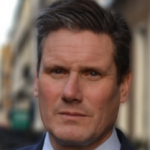
The speech made by Keir Starmer, the Leader of the Opposition, on 4 January 2024.
Thank you Claire, you will be a great candidate for Filton and Bradley Stoke, and in time I hope, an even better MP.
And it’s great to be here again looking at the next generation of aircraft wings. You can see some of the instruments behind me. This is the third time and I love it, and it features quite heavily in a number of my speeches.
On behalf of the Labour Party – thank you for being here this morning and Happy New Year.
Now – as a politician, you’ve got to be a bit careful with these new year messages.
We all remember Boris Johnson’s prediction of a “fantastic year ahead”. That was in 2020.
Then, last year, I stuck my neck out and occasionally predicted glory for Arsenal, so I’ll pass on that one today.
But look, there is one thing that we can be sure is coming this year and I’m ready for it. The thought of millions of people, right across our country, putting a cross on that ballot paper.
It’s what we’ve been waiting for, preparing for, fighting for. A year of choice.
A chance to change Britain. A clock that is ticking on this government, because whether it’s in the spring or later in the year, the moment when power is taken out of Tory hands and given, not to me, but to you. That moment is getting closer by the second.
So, if you’ve spent the last 14 years volunteering to keep your park clean, your library open, for children to have opportunities. If you’ve been breaking your back to keep trading, steering your business through the pandemic, the cost-of-living crisis, the challenge of Brexit and the chaos of Westminster. If you’ve been serving our country, whether in scrubs or the uniform of your regiment, and what you want now is a politics that serves you – then make no mistake, this is your year. The opportunity to shape our country’s future rests in your hands.
And that is a new year message of hope. The hope of democracy. The power of the vote. The potential for national renewal. The chance, finally, to turn the page, lift the weight off our shoulders, unite as a country, and get our future back.
Four years, I’ve been working for this. Four years, working for the chance to tilt this country, firmly and decisively, back towards the interests of working people.
It’s been a long, hard slog, and I won’t lie, I’ve hated the futility of opposition.
The powerlessness and yes, the pain, that comes from watching the Tories drive the country I love into the rocks of decline.
I didn’t come into politics for that. I didn’t expect a front row seat on this Tory performance art, a song and dance for your political attention, because they find performing so much easier than the hard graft of practical achievement.
No. I came into politics to serve, to get things done, to strive, each and every day, to make a difference to the lives of working people, that’s what gets me up in the morning.
And if you can put aside the reality of Westminster just for a moment, it’s why I still believe in politics.
I had a long career before this: at the Crown Prosecution Service, as a human rights lawyer, in my work with the Police Service of Northern Ireland. I’ve looked into the eyes of people I’ve served and represented, and I have seen reflected back the knowledge that government can make or break a life.
Literally, when it comes to work I’ve done with people on death row. Life and death decisions, in your hands.
Now there’s pressure that comes with that, of course there is. But that’s the responsibility of justice and public service, and it’s the responsibility of serious government.
This isn’t a game. Politics shouldn’t be a hobby – a pastime for people who enjoy the feeling of power. And nor should it be a sermon from on high, a self-regarding lecture, vanity dressed up as virtue.
No, it should be a higher calling. The power of the vote. The hope of change and renewal, married to the responsibility of service, that’s what I believe in.
And yes, I believe it’s still the best way to change our country for the better.
Its success or failure, written into the walls of every community in this country.
The hospital your children were born in, the home you live in, the wage in your pocket, the opportunities in your town, the sense of pride – or unease – when you walk down your street. That’s all politics.
So, this year, at the General Election, against the tide of cynicism in Westminster, the gauntlet of fear the Tories will unleash, and most of all – the understandable despair of a downtrodden country, I will ask the British people to believe in it again.
I will say, you’re right to be anti-Westminster, right to be angry about what politics has become. But hold on to the flickering hope in your heart that things can be better, because they can.
You can choose it. You can choose the hope of national renewal, the responsibility of service, what politics can and should be, and you can reject the pointless populist gestures, and the low-road cynicism that the Tories believe is all you deserve.
That’s all they’ve got left now, after 14 years, with nothing good to show, no practical achievements to point towards, no purpose beyond the fight to save their own skins, this is their only project.
They can’t change Britain, so they will try to undermine the possibility of change itself. Take Britain down to their level, kick the hope out of us all.
But I believe in this country, I believe in its spirit, I believe in its people, in its businesses, in its communities, and most of all, I believe that if the British people see respect and service in their politics – if they see a plan which matches the ambition and pride they have for their community, a path, finally, to an economy that rewards and respects their efforts – then yes, they will commit to the mission of national renewal, and will believe that Britain can get its future back.
But I am under no illusions. This is a huge test. We’re trying not just to defeat the Tories, but to defeat their entire way of doing politics, a mindset that seeks out any differences between the people of this country, and, like weeds between the paving stones, will pull apart the cracks, so ultimately, they can divide and rule.
I have to warn you all, they will leave no stone unturned this year. Every opportunity for division will be exploited for political potential. That’s a given. But do not doubt for a second that we’re ready for it, do not doubt that we will show the British people that the real risk is five more years of a Tory Government that would be even more entitled, even more self-serving, even more complacent that your vote can be taken for granted.
And yet, at the same time, we have to bring the country together, have to earn trust as well as votes, nurture a spirit of national unity. This is what’s distinctive about our job this year. To truly defeat this miserabilist Tory project, we must crush their politics of divide and decline with a new Project Hope.
Not a grandiose utopian hope. Not the hope of the easy answer, the quick fix, or the miracle cure. People have had their fill of that from politicians over the past 14 years.
No – they need credible hope, a frank hope, a hope that levels with you about the hard road ahead, but which shows you a way through, a light at the end of the tunnel. The hope of a certain destination.
That’s why the national missions we’ve set, the measurable goals. Whether it’s the highest growth in the G7, halving violence against women and girls, clean power by 2030 – they are unapologetically ambitious.
I know they will take hard-work, determination, patience – a true national effort. And for many people that invites a sharp intake of breath, a raised eyebrow, a question – can this really be done?
But look, what really keeps me up at night is a different reaction altogether, the biggest challenge we face – bar none. The shrug of the shoulder.
Because this is the paradox of British politics right now. Everyone agrees we are in a huge mess. Services on their knees, an economy that doesn’t work for working people even when it grows, let alone now when it stagnates like right now.
Everyone agrees as well – that it’s been like this for a while. That Britain needs change, wants change, is crying out for change. And yet, trust in politics is now so low, so degraded, that nobody believes you can make a difference anymore.
Also, that after the sex scandals, the expenses scandals, the waste scandals, the contracts for friends, even in a crisis like the pandemic, some people have looked at us and concluded we’re all just in it for ourselves.
A nation that is so exhausted, tired, despairing even, that they’ve given up on hope. A national mood which, if we aren’t successful with our Project Hope, the Tories will subtly seek to exploit.
Seriously, after failing to deliver change, after ludicrously pretending that they could represent change, they now sense the opportunity of a new strategy, an attempt to take the change option off the table altogether.
And not just at the next election. No – their strategy also has one eye on salting the earth of Britain’s future, a plan to make sure that if Labour does earn the right to serve, we will find it harder to bring our country together for the common good.
So I say to every voter in this country: know that all this is coming your way. Know that if we are to heal the wounds of the past 14 years and move forward, Britain must come together.
And that means we will need you. But also know that whether you’re thinking of voting Labour for the first time, whether you always vote Labour, or whether you have no intention of voting Labour whatsoever, my party will serve you.
That’s who we are now. A changed party. No longer in thrall to gesture politics, no longer a party of protest, a party of service.
Rebuilt, renewed, reconnected to an old partnership, a Labour partnership, that we serve working people as they drive Britain forward.
So this is what I promise – my side of the deal, the answer to the question why Labour?
I promise a new purpose. To drag politics in this country back to service, tilt our economy back towards the interests of working people. Reward their efforts fairly, once again.
I promise a new plan with new priorities, five national missions that will sweep away the era of Tory division, a plan for the long-term.
With higher growth, a reformed planning system no longer blocking the homes, infrastructure and investment we need.
Safer streets, more police in your town, cracking down on anti-social behaviour.
Cheaper bills, with GB Energy, a new public company, using clean British power not foreign oil and gas.
More opportunities for your children, new technical excellence colleges training our kids in the skills they need and businesses want.
Better mental health support in schools, expert teachers in every classroom, paid for – by removing tax breaks on private schools.
And our NHS back on its feet, with a plan to cut the waiting lists, paid for by removing the non-dom tax status. Two million more appointments every year in an NHS clearing the backlog, seven days a week.
And written through this new plan, I also promise this: a total overhaul in how we approach the economy and government.
On government, it means a new level of ambition and focus. I ran a public service for years and the clue is in that word – service.
What the Tories have done to our public realm over the last 14 years, not just the cuts, also the denigration of the people who serve this country, the total lack of respect, honestly there are no words.
But I also have to say this, I don’t see our job as going back to some kind of golden age, I don’t think that’s how working people look at things at all. Government in this country is too centralised and controlling, and because of that, too disconnected from the communities it needs to serve.
And yet despite hoarding all that power, it also lacks ambition. A view of the potential of government that is content just to mop up problems, after the fact, armed only with a big state cheque-book.
We have got to change this. It is vital for taking on the profound challenges of our era: the rising geopolitical temperature, climate change, terrorism, securing our borders, the revolutions in science, energy, technology that are reshaping everything we know about our world.
So I promise this: a new mindset – Mission Government. An understanding at the core of everything we do, that it is our job to tackle tomorrow’s challenges – today.
On the economy it means a deeper argument about who growth should serve, where it comes from, who it comes from, where is the great untapped potential?
And the answer to every one of those questions, the Labour answer, working people. Communities casually ignored and disregarded, passed over as sources of economic dynamism, subjected to the Tory argument that thinks growth comes from driving down their wages and security, while they, in turn, should be grateful for anything handed down from those at the top.
I’ve read that the Tories want to fight the election on this terrain, that they think their economic comfort zone still has some purchase.
But let me tell you, what used to be their strength is now their weakness. The so-called party of business which now hates business, that boasts about tax cuts, while raising taxes higher than any time since the war, that claim, even now, to be the party of sound finance, but that crashed the economy and made you pay.
They have nothing left on this anymore. Their credit rating is zero, and we have turned the tables with a plan for the growth Britain needs.
Only Labour will deliver a proper industrial policy and higher investment.
Only Labour will bulldoze through planning red tape and get Britain building.
Only Labour will transform our labour market with stronger workers’ rights.
We don’t just expect an election on the economy, we want an election on the economy, we’re ready for that fight, ready to close the book on their trickle-down nonsense, once and for all.
And finally, I promise this. A determination to bring our country together, not exploit its divisions. An understanding that Britain’s standing in the world can never be taken for granted, and a politics of respect and service that shows zero tolerance towards the darker side of Westminster.
Don’t get me wrong, there are good people in Westminster. People who love their country and want to change it for the better. And yet a basic principle of any organisation I’ve worked in outside of politics, that you should follow the rules you set for others, uphold the values you advocate, this just doesn’t seem to be followed or understood in Westminster.
Honestly, what does anybody think it looks like to the people of this country, to see people rewarded, honoured, for crashing the economy under Liz Truss?
If your mortgage is going up this year and you see those people swanning around the House of Lords, what do you think?
No. I say to all my fellow politicians – Labour and Tory – to change Britain, we must change ourselves.
We need to clean up politics. No more VIP fast lanes. No more kickbacks for colleagues. No more revolving doors between Government and the companies they regulate. I will restore standards in public life with a total crackdown on cronyism.
I’ve put expense cheat politicians in jail before and I didn’t care if they were Labour or Tory.
And I grew up working class, so spare me the self-serving excuses, they just won’t wash. This ends now. Nobody will be above the law in a Britain I lead.
But with respect and service I also promise this: a politics that treads a little lighter on all of our lives.
Because that’s the thing about populism, or nationalism, any politics fuelled by division.
It needs your full attention. It needs you constantly focusing on this week’s common enemy. And that’s exhausting, isn’t it?
On the other hand, a politics that aspires to national unity, bringing people together, the common good, that’s harder to express, less colourful, fewer clicks on social media. And, in some ways, it’s more demanding of you.
It asks you to moderate your political wishes out of respect for the different wishes of others. 45 million voters can’t get everything that they want, that’s democracy.
So no matter the road the Tories take this year, I believe that if people see the commitment to service is always there in politics. If they can see that people in power respect their concerns, then I think a lot of people across this country, after everything we’ve been through in the past 14 years, will find some hope in that.
It will feel different, frankly. The character of politics will change, and with it the national mood. A collective breathing out. A burden lifted. And then, the space for a more hopeful look forward.
Because the truth is, it’s this kind of politics and only this kind of politics that can offer real change. The energy needed for divisive politics is a distraction. You can see that with the SNP in Scotland or the Tories here in England.
I learnt this first-hand in Northern Ireland. Before the Police Service of Northern Ireland was set-up, the idea that the nationalist community would buy into it in any way was utterly unthinkable.
Now, there’s always more work to do on that, peace in Northern Ireland has to be won every day. And yet, with patient listening, with determination, with the people of Northern Ireland coming together, not only with those different to them.
Not only with those who disagreed with them, but who even took up arms against the, the unthinkable happened. Catholic men and women did step-up to serve.
So don’t listen to the siren voices that say we can’t change Britain. We can, and we will. Don’t listen when they say we’re all the same. We’re not, and we never will be. And don’t listen when they say politics makes no difference – because it does.
If you can’t get an affordable home in your town, but with Labour you can, that’s a difference worth fighting for.
If you can’t get a job with regular hours that will let you look after your family but with Labour you can, that’s a difference worth fighting for.
If you’re a care worker who saved lives during the pandemic and has been rewarded with poverty wages, but with Labour you can get a fair pay agreement, that’s a difference worth fighting for.
The same is true for our NHS. For our schools, climate change and energy security, securing our borders, restoring Britain’s standing, crime and justice.
Only Labour will make a difference.
Only Labour will drag our politics back to service.
Only Labour can lead Britain towards national renewal.
And you have the power to vote for it.
A party of service with a plan, versus a party with nothing to offer because it only cares about itself?
Hope or cynicism?
A new politics or the same old Westminster? Continued decline with the Tories, or national renewal with Labour?
Nobody in Britain thinks the years ahead will be easy. But this year is the chance, the only chance, to change our course.
The future of Britain in your hands, the power of the vote in your control, and we will fight every day to earn it.
Why Labour? Because we serve your interests.
Why Labour? Because we will grow every corner of our country.
Why Labour? Because we have a plan to take back our streets, switch on Great British Energy, get the NHS back on its feet, tear down the barriers to opportunity, and get Britain building again.
A partnership with you in pursuit of a new Britain with foundations built to last.
The value of hard work – restored.
Sticking plasters – rejected.
The Tory era of division – over.
A Britain standing tall again, looking forward again, believing again, that tomorrow will be better for your children.
That is our future. And this year, we get it back.
Thank you.