Tag: Speeches

  • Nick Gibb – 2016 Speech on Storytelling

    nickgibb

    Below is the text of the speech made by Nick Gibb, the Schools Minister, at St Andrew’s Primary School, Soham, Cambridgeshire on 3 February 2016.

    People of my generation will remember the late comedian Max Bygraves and his famous catchphrase, “I wanna tell you a story”.

    The reception Bygraves’s catchphrase always gained demonstrates the timeless pleasure of being told a good story. This is a pleasure that National Storytelling Week celebrates, and I am delighted to be a part of the events today.

    Over the years I have spoken a lot about the importance of initial literacy, and how all the evidence, both in this country and internationally, points to systematic synthetic phonics as the best way to teach young children to decode and read words.

    Learning to decode words is the vital first step in becoming a confident reader. It is a necessary condition without which children will spend years struggling with reading, but it is only a first step. Today, I want to talk about the importance of storytelling, of children being read to and told stories, not only in the years before they start school but throughout their education.

    A 2003 American study called ‘The early catastrophe’ by Professors Hart and Risley, found that an American child from a professional family will experience 2,153 words an hour by the age of 3. This compares to a child from the most disadvantaged background who will experience only 616 words an hour.

    That amounts to a 30-million-word gap between the least and most advantaged 3-year-old.

    Similar findings exist in the UK. According to Department for Education data on early years pupils, the widest attainment gap, when comparing pupils eligible for free school meals and all others, is in reading and writing.

    Why does this matter? Because conversation and storytelling widen a child’s vocabulary, and a wide vocabulary is decisive in becoming a confident reader. As the cognitive scientist Daniel Willingham has written, it is possible to read a text slightly pitched above your understanding, as the meaning of unfamiliar words can be deduced from the context. However, as the number of unfamiliar words increases, your ability to ‘get the gist’ drops rapidly.

    So, the more words a child knows at an early age, the greater their ability to read challenging texts. This in turn increases their ability to learn more words, and so on and so forth, in a positive feedback loop of vocabulary accumulation. The word gap which researchers identify amongst children aged 3, can be a gulf by the time pupils take their GCSEs.

    The reading expert Keith Stanovich has dubbed this positive feedback loop ‘the Matthew effect’, after the verse in the Gospel of Mathew telling the parable of the talents: “to those who have, more shall be given, but from those who have not, even what they have shall be taken away.”

    As a government, we are dedicated to improving the life chances of young people. All pupils should be given the best start in life by their schooling, irrespective of birth or background. If you believe in social justice then you will want state education to do all that it can to remedy the education gap between those from advantaged, and those from disadvantaged backgrounds.

    Nick Gibb at St Andrew’s Primary School, Soham, Cambridgeshire
    It is difficult to overstate the benefits of instilling a love of reading in a child. According to research by the OECD, reading for pleasure is more important than a family’s socio-economic status in determining a child’s success at school.

    This finding is supported by the work of Dr Alice Sullivan and Matt Brown at the Institute of Education. From analysing the educational outcomes of around 6,000 children who participated in the 1970 British Cohort Study, they found that reading for pleasure is more important for a child’s cognitive development between 10 and 16 than their parents’ level of education.

    Remarkably, the combined effect of reading books often, going to the library regularly and reading newspapers at 16 was 4 times greater than the advantage children gained from having a parent with a degree. These findings show that given the gift of reading, a child’s life chances need not be limited by their social or economic background. Deprivation need not be destiny.

    And let us not forget the immeasurable benefit that stories can have in widening a child’s imagination, transporting them to entirely new and unfamiliar places – geographically, historically and emotionally. Getting lost in a good story can allow you to discover more about the world, more about humankind, and more about yourself.

    We are living through something of a golden age of children’s books, with ‘Percy Jackson’ novels transporting young readers to mythology of ancient Greece, and ‘The Hunger Games’ landing them in a dystopian future. It is extremely reassuring that, according to the latest annual survey from the National Literacy Trust, enjoyment and frequency of reading amongst 8- to 18-year-olds are both at their highest levels for 9 years.

    Reading independently, being read to, and engaging in conversation are all vitally important for a child’s development. But today I would like to make a particular case for the importance of being read stories.

    Research has shown that the vocabulary of general conversation is surprisingly impoverished, compared to the vocabulary we find in written material. This was demonstrated by 2 American reading experts who ranked 86,000 word forms in the English language according to the frequency with which they occurred in written English.

    The word ranked first is ‘the’. ‘It’ is ranked 10th. ‘Amplifier’ is ranked 16,000th – you get the drift.

    Using this data, the researchers then measured different forms of written and spoken English. In children’s books, the average word is ranked 627th most frequent. The average word used in conversation between university graduates, however, ranks only 496th most frequent.

    In other words, even highly educated people use less sophisticated vocabulary when speaking than the words used in a typical children’s book. Which is why it is so important not just to talk to children but to read to them as well. Story time is a crucial part of any primary school’s timetable, as it has such power to build a child’s vocabulary. The type of story or book being read can be more challenging than a book the child chooses to read for him or herself.

    Of course, National Storytelling Week celebrates the oral tradition of storytelling: fables, folk tales and fairy lore. As long as human civilisation has existed, we have shared stories. For those looking to communicate a message, encapsulating it in a well told story has long been the most effective method.

    Would the teachings of the Bible have been so powerful had Jesus never told the story of the Good Samaritan, but simply instructed his followers to care for all humankind? Would children the world over know that ‘slow and steady wins the race’, had the ancient Greek slave Aesop not parcelled that message in his fable ‘The Hare and the Tortoise’?

    Aesop and Jesus were not just good storytellers, they were expert cognitive psychologists. Humans are hard-wired to remember stories, to the point that psychologists have referred to stories as ‘psychologically privileged’ in the human mind.

    The best teachers have always based their lessons, knowingly or unknowingly, on this insight. As some psychologists suggest, a good story encourages the listener to be continually making small inferences, working out how the narrative is going to develop and resolve, thus keeping their attention throughout.

    For mathematics teachers introducing pupils to the concept of volume, you can do a lot worse than retelling the story of Archimedes in the bath. Few children can forget the image of Archimedes running through the streets of Syracuse naked, exclaiming ‘Eureka!’.

    If a history teacher wants pupils to learn about the African-American struggle for civil rights, the stories of Emmet Till and Rosa Parks can capture attention and aid memory like little else. If a science teacher wants pupils to remember the properties of antibiotics, then the story of how Alexander Fleming first discovered penicillin is ideal.

    I understand that Snail Tales are currently undertaking their own controlled trial looking into the benefits of storytelling for long-term memory, and I look forward to hearing their findings.

    But to return to the question of ensuring all pupils become confident readers.

    Mastering the mechanics of decoding has to be the first objective – it is the gateway towards being a successful reader. This is best achieved through structured schemes of systematic phonics, with plenty of practice reading books that are consistent with the level of phonic knowledge the child has been taught.

    The second objective of the English curriculum is practice – encouraging children to improve the fluency and speed of their reading by reading large numbers of books. The more you read, the more vocabulary you acquire and the easier it becomes to comprehend.

    For this reason, I would like to see every pupil in years 3 to 6 of primary school reading at least 1 book a week. ‘A book a week’ should be the mantra for anyone hoping to eliminate illiteracy in this country.

    The third objective of the English curriculum is to help pupils read more challenging books. Teachers should set for their classes those books that are slightly more challenging than the ones pupils would elect to read on their own. And that too involves teachers reading to their pupils.

    From my own education I remember being read to throughout my time at school: from ‘Stig of the Dump’ at junior school, to Alastair MacLean, Hammond Innes, and L P Hartley’s ‘The Go-Between’ in the third year of secondary school. After the first couple of pages read to us by the teacher, pupils would take it in turns to read aloud the next sections. We did this, I remember, with ‘The Mayor of Casterbridge’ in the fourth year, ‘Great Expectations’ in the fifth year and even on into the sixth form where we read together as a class D H Lawrence’s ‘The Rainbow’ and Steinbeck’s ‘The Grapes of Wrath’.

    This process gave me the confidence to take on challenging books, that were much more difficult than those I would otherwise have chosen. And it worked – I went on to read many more MacLean, Dickens, Lawrence and Steinbeck books thanks to my teachers.

    I do question why, when I am on school visits, I see teachers in the first 3 years of secondary school already using English literature lessons to prepare for GCSE-style questions. Instead of GCSE-style analysis of the text, should those lessons not be used to spread the sheer enjoyment of reading, through introducing pupils to a wide and varied diet of English and world literature? I am sure this would be far better preparation for their eventual examinations than a premature obsession with exam technique.

    And this brings me to the fourth and final objective: the canon. It is important that schools introduce pupils to the great works of English literature, that lend pupils an intellectual hinterland to draw upon for the rest of their lives. Of course, the exact make-up of the canon will always be a matter of debate and disagreement, but the existence of the canon should not be.

    Through our reforms to the English literature GCSE, children are being encouraged to read more challenging titles in years 10 and 11. Prior to our reforms, around 90% of pupils in the English literature GCSE delivered by one exam board answered questions on a single text: ‘Of Mice and Men’. Now, John Steinbeck is a great author – ‘East of Eden’ is my all-time favourite book – it’s the Great American Novel – but even I doubt this short novella was deserving of such overwhelming attention.

    Since September, pupils have been studying the reformed English literature GCSE for the first time, including the study of both a 19th century novel and a modern book. Instead of a strict diet of Steinbeck, pupils can read George Orwell and Jane Austen, Kazuo Ishiguro and Charlotte Bronte – and they will be reading the whole novel, not just extracts.

    For now, the important point is – as Max Bygraves might have said – children wanna hear a story. If we are to deliver an education that closes the word gap, closes the reading gap, and thus closes the achievement gap, we need to introduce our children to as many stories as we can.

  • David Cameron – 2016 Speech on EU Renegotiation

    davidcameron

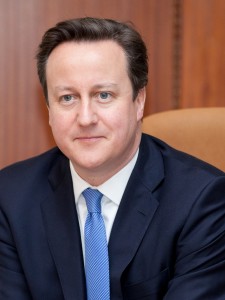
    Below is the text of the speech made by David Cameron, the Prime Minister, in the House of Commons on 3 February 2016.

    With permission, Mr Speaker, I would like to make a statement on progress of our renegotiation.

    The House has now had the chance to study the documents published by the European Council yesterday.

    I believe this is an important milestone in the process of reform, renegotiation and referendum that we set out in our manifesto and which this government is delivering.

    We have now legislated for that referendum and we are holding that renegotiation. So let me set out the problems that we are trying to fix and the progress we have made.

    Ever closer union

    First, we don’t want to have our country bound up in an ever closer political union in Europe.

    We are a proud and independent nation – with proud, independent, democratic institutions that have served us well over the centuries.

    For us, Europe is about working together to advance our shared prosperity and our shared security.

    It is not about being sucked into some kind of European superstate. Not now. Not ever.

    Mr Speaker, the draft texts set out in full the special status according to the UK and clearly carves us out of further political integration.

    And they actually go further to make clear that EU countries don’t even have to aim for a common destination.

    This is a formal recognition of the flexible Europe that Britain has long been arguing for.

    In keeping Britain out of ever closer union, I also wanted to strengthen the role of this House and all national parliaments.

    So we now have a proposal in the texts that if Brussels comes up with legislation we don’t want, we can get together with other parliaments and block it with a red card.

    And we’ve proposed a new mechanism to finally enforce the principle of subsidiarity – a principle dear to this House which states that as far as possible powers should sit here in this Parliament, not in Brussels.

    So every year, the EU has got to go through the powers they exercise, to work out which are no longer needed and should be returned to nation states.

    Competitiveness

    Second, I said we wanted to make Europe more competitive and deal with the rule-making and the bureaucracy that can cost jobs here in Britain and across the European Union.

    We asked for commitments on all the areas central to European competitiveness. We want international trade deals signed, the single market completed and regulation stripped back. All of these things are covered in the draft texts.

    There is a new proposal for specific targets to reduce the burdens on business in key sectors – this will particularly help small and medium sized businesses – and there is a new mechanism to drive these targets through and cut the level of red tape year-on-year.

    Single currency club

    Third, we are absolutely clear that Britain is going to keep the pound, in my view, forever.

    But we need to be just as clear, that we can keep the pound in a European Union that will be fair to our currency.

    Put simply: the EU must not become a euro-only club. If it does it would not be a club for us.

    So we called for a series of principles to protect the single market for Britain.

    We said there must be no discrimination against the pound. No disadvantage for businesses that use our currency, wherever they are located in the EU. And no option for Britain ever again to be forced to bail out eurozone countries.

    All of these principles are reflected in the draft text which is legally binding. And again there is a mechanism. Britain has the ability to act to uphold these principles and protect our interests.

    Now Mr Speaker, we should be clear British jobs depend on being able to trade on a level playing field within the European single market, whether in financial services or cars, or anything else.

    So this plan, if agreed, will provide ‎the strongest possible protection for Britain from discrimination and unfair rules and practices.

    For instance, never again could the EU try its so-called ‘location policy’. That the settling of complex trades in euros must only take place in eurozone countries. These principles would outlaw that sort of proposal.

    Now Mr Speaker, these are protections we could not have if Britain were outside the European Union.

    Immigration

    Now fourth, we want to deal with the pressures of immigration which have become too great.

    Of course, we need to do more to control migration from outside the European Union, we are doing that and we will be announcing more measures on that front.

    But we need to control migration from within the EU too.

    Now the draft texts represent the strongest package we have ever had on tackling the abuse of free movement and closing down the back-door routes to Britain.

    It includes greater freedoms for Britain to act against fraud and prevent those who pose a genuine and serious threat from coming to this country.

    It includes a new law to overturn a decision by the European Court which has allowed thousands of illegal migrants to marry other EU nationals and acquire the right to stay in our country.

    And it has been a source of perpetual frustration that we can’t impose our own immigration rules on third country nationals coming from the European Union.

    But now, after the hard work of the Home Secretary, we have a proposal to put that right.

    Mr Speaker there are also new proposals to reduce the pull factor that our benefits system exerts across Europe by allowing instant access to welfare from the day someone arrives.

    People said that Europe wouldn’t even recognise that we had this problem.

    But the text explicitly recognises that welfare systems can act as an unnatural draw to come to this country.

    Now Mr Speaker, our manifesto set out 4 objectives to solve this problem. I mentioned these at Prime Minister’s Questions. We had already delivered on 2 of them within months of the general election.

    Already EU migrants will no longer be able to claim Universal Credit – the new unemployment benefit – while looking for work.

    And if those coming from the EU haven’t found work within 6 months, they can now be required to leave. Now in these texts we have secured proposals for the other 2 areas.

    If someone comes from another country in Europe leaving their family at home, they will have their child benefit paid at the local rate, not at the generous British rate.

    And crucially, we have made progress on reducing the draw of our generous in-work benefits.

    People said it would be impossible to end the idea of something for nothing.

    And that a 4 year restriction on benefits was completely out of the question. But that is now what is in the text.

    An emergency brake that will mean people coming to Britain from within the EU will have to wait 4 years until they have full access to our benefits.

    And the European Commission has said very clearly that Britain qualifies already to use this mechanism.

    So with the necessary legislation we’d be able to implement it shortly after the referendum.

    Finally, let me be absolutely clear about the legal status of these changes that are now on offer.

    People said we would never get something that was legally binding. But this plan – if agreed – will be exactly that.

    These changes will be binding in international law, and will be deposited at the UN. They cannot be changed without the unanimous agreement of every EU country – and that includes Britain.

    So when I said I wanted change that is legally binding and irreversible, that is what I’ve got.

    And in key areas, treaty change is envisaged in these documents.

    So, Mr Speaker, I believe we are making real progress in all 4 areas. But the process is far from over.

    There are details that still need to be pinned down and intense negotiations to try and agree the deal with 27 other countries.

    It will require hard work, determination and patience to see it through.

    But I do believe that with these draft texts – and with all the work that we have done with our European partners – Britain is getting closer to the decision point.

    It is of course right that this House should debate these issues in detail.

    So in addition to this statement – and of course a statement following a Council later this month – the government will also make time for a full day’s debate on the floor of this House.

    Mr Speaker, as we approach this choice let me be clear about 2 things.

    First, I am not arguing – and I will never argue – that Britain couldn’t survive outside the European Union.

    We are the fifth largest economy in the world. The biggest defence player in Europe with one of the most of extensive and influential diplomatic networks on the planet.

    The question is not could Britain succeed outside the European Union, it is how will we be most successful? How will Britain be most prosperous? How will we create the most jobs? How will we have the most influence on the rules that shape the global economy and affect us? How will we be most secure?

    And I’ve always said the best answers to those questions can be found within a reformed European Union.

    But let me say again, if we can’t secure these changes, I rule nothing out.

    And second, even if we secure these changes, you will never hear me say that this organisation is now fixed. Far from it.

    There will be many things that remain to be reformed and Britain would continue to lead the way.

    We would continue to make sure that Europe works for the countries of Europe, for the businesses of Europe, for the peoples of Europe and crucially for the British people who want to work and have security and get on and make the most of their lives.

    So if we stay, Britain will be in there keeping a lid on the budget, protecting our rebate, stripping away unnecessary regulation and seeing through the commitments we have secured in this renegotiation.

    Ensuring that Britain truly can have the best of both worlds, in the parts of Europe that work for us, and out of those that don’t.

    In the single market. Free to travel around Europe.

    Part of an organisation where co-operation on security and trade can make Britain and its partners safer and more prosperous.

    But with guarantees that we will:

    – never be part of the euro

    – never be part of Schengen

    – never be part of a European army

    – never be forced to bail out the eurozone with our taxpayers’ money

    – and never be part of a European superstate

    That is the prize on offer.

    A clear path that can lead to a fresh settlement for Britain in a reformed European Union.

    A settlement that will offer the best future for jobs, security and strength for our country.

    A settlement which, as our manifesto promised nearly a year ago, will offer families in our country security at every stage of their lives.

    That is what we’re fighting for.

    And I commend this statement to the House.

  • Matt Hancock – 2016 Speech on Government Property

    Matt Hancock
    Matt Hancock

    Below is the text of the speech made by Matt Hancock, the Minister for the Cabinet Office, on 3 February 2016.

    Good morning, and thank you all for coming.

    Nearly a thousand years ago we made history in this country when William the Conqueror sent officials all over England to survey for the first time who owned how much land, property and livestock and what it was worth.

    I’ve seen the Doomsday Book myself. And the logic of what he did then still holds more than a millennium later. The principle still stands, that you can only manage what you can measure. Though he may not be flattered to hear me say this, in many ways, William the Conqueror was the forefather of the modern surveyor.

    But this is about more than just bricks and mortar – it’s about making sure we’re equipped with the environments and technology our people need to deliver excellent front line services. If we’re going to achieve this we need to find new ways to collaborate, new ways to make our estate work for us, and a new, more commercial mindset.

    And William the Conqueror had it easy – he managed what you might call a minimalist estate and built a few castles. We want to boost jobs and growth, boost the housing supply, all the while keeping tax low.

    But the opportunity is huge. We can not only make huge savings, but also make big improvements. We want more bang for our bricks. To do this we’re going to have to make some big changes, spearheaded by the efforts of the Cabinet Office’s brilliant Government Property Unit.

    It will involve a wholesale change of culture within government, focusing on 3 things: collaboration, a commercial mindset, and putting our estate to work for us as a country.

    Collaboration

    First let’s talk about collaboration. Today we’re presenting the progress we’ve made in making the central estate more modern and effective. The State of the Estate report we launch today shows that last year we saved over £840 million from selling empty buildings and exiting expensive rentals – money we can spend instead on front line services like health and police. Since 2010 we’ve exited 2.4million square metres of surplus property – an area larger than Monaco.

    We’re making the central estate leaner and smarter, with plans to release £5 billion in property over this Parliament, including unused airfields and barracks, surplus prisons and long-abandoned labs on which we can build the homes of the future. The average space per person in a government office building is now just 10.4 square metres – a 9% reduction in a single year. And we have an even more ambitious target to bring that down to just 8 square metres by March 2018.

    The government estate is under the microscope like never before. And I don’t think any department should be given special privileges when it comes to scrutiny – especially when they’re responsible for thousands of square kilometres of land.

    That’s why I can announce today that for the first time, we will be extending our reporting to include the vast Ministry of Defence estate, with the normal cross-government security considerations, making sure the same rigorous scrutiny is applied across the board and supporting the defence services in reaching their target of disposing of £1 billion of property and land over the next 5 years.

    And we’ll be asking local authorities to report on the utilisation of their assets in the same way, and both central and local government will have to publish details of their surplus assets when these have been sitting unused for more than 2 years – or 6 months in the case of housing.

    At a time when budgets are being squeezed more than ever, none of us can afford to hide empty rooms behind closed doors. We all need to pitch in to make our estate leaner and smarter, and to make our assets an opportunity, not a burden.

    We’ve already shown what we can do when central and local government work together. Since 2013 our One Public Estate programme has supported 32 of the largest land and property owning councils in England in boosting growth and designing more integrated services by collaborating on property. Over 5 years, in partnership with the Local Government Association, we’re set to create 20,000 jobs, 9,000 homes, raise £129 million in capital receipts and save £77 million on running costs through these existing partnerships.

    Like Place Partnership in the West Midlands, where 6 councils, police and fire authorities have grouped together to create the first property company of its kind. By pooling 1,000 buildings across 4 counties, they will save £110 million, as well as boosting economic growth and unlocking land that can be used for housing.

    With a small investment then we can unlock so much value by working together. But this programme can deliver even more – and we announced a £31 million funding boost in December that will allow us to triple the number of partnerships benefiting from One Public Estate. We want to extend the programme to cover all local authorities in England over the course of this Parliament.

    We are boosting One Public Estate. And to help local authorities more, we’ll introduce a new priority purchaser status for councils wishing to buy central government land, where there is a clear case for doing so. Giving planning permission is a transfer of value. So let’s keep the value for the taxpayer as we release this land.

    We all have to pull our weight. And to build an estate that works for us and is fit to deliver excellent public services that meet today’s demands, we need to take every opportunity to harness ingenuity, be dynamic and be open to constant improvement. I want us all to be part of this effort regardless of your sector or background, striving to make our country better as a common purpose.

    And we’re not ducking our own responsibilities in central government – through our Right to Contest and Government Property Finder website we’re inviting you all to challenge us. We’re not hiding away in our ivory towers and vanity buildings, you’re the experts and we want to hear from you – if there’s a site or a property you think is underused or surplus to requirements, we want you to tell us. If someone is blocking it, I want to know.

    Putting our estate to work

    We want departments to work closer together, but this isn’t just about reducing space – it’s about creating workspaces and an environment that facilitates discussion, collaboration and the delivery of excellent front line services.

    So through our government hubs, we’ll provide the Civil Service with more cost-effective and higher quality workplaces, and reduce our 800 office buildings to less than 200 by 2023, saving £2 billion over 10 years. In central London, where some of our most expensive buildings are located, we’ve already slimmed down the estate from 181 properties in 2010 to 54 now. We want to take this figure down even further to fewer than 20 efficient, fit for purpose buildings by 2025, supported by the latest in smart working technology.

    We’re going to be looking all over the country for strategic sites where we can build these hubs – If you think you’ve got a site that makes the grade, at a price we’ll find attractive, now’s the time to let us know about it.

    This programme will enable departments to break down silos and boost productivity, and attract and retain the best talent, all while boosting regeneration and economic growth by freeing up unneeded land throughout the country so others can put it to use for homes and jobs.

    I make no apology for putting technology at the heart of this reform through our smart working programme – The Way We Work. We’re right at the start of a revolution in the way people connect to one another. We can use new technology to do the old things for less money, sure. But we must also use it to completely redesign how we serve citizens, delivering faster, more accessible and more secure services. This agenda isn’t just about property, it’s about changing the whole way our people do their jobs.

    We’ll keep the historic core estate, but we’ve got no intention of keeping gems as the exclusive domains of civil servants. Take Blythe House in West Kensington – itself made famous in espionage circles as the MI6 headquarters in Tinker, Tailor, Soldier, Spy. By moving out we can release a fabulous site in prime London, with great potential for much needed housing, and open up the collections of the Victoria & Albert, Science and British Museums to the public once more.

    Or Admiralty Arch, no longer home to the presence of admirals, but to hotel guests from around the world. You’ll recognise it from the films Children of Men and Howard’s End – leasing it out has raised £60 million for the taxpayer and opened up a historic landmark to be brushed up and reopened to the public. We’re putting the crown jewels of public property on public display so that the public they belong to can enjoy them.

    It’s all part of our drive to make our estate work for us. Henry VIII is said to have rented out part of the modern-day Cabinet Office, now used for my private office, for use as tennis courts. We might not have an awful lot in common, but this is one area where we see eye-to-eye.

    Creating a commercial mindset

    So that’s how we want to collaborate more with our public and private sector partners, and how we plan to get the best possible value out of the estate. But we also need to up our game and be more commercial about our approach to property if we’re going to build an estate that’s right for the 21st century.

    To this end, we announced in the latest Autumn Statement that in 2017 we’ll be setting up a new central body to take ownership of all relevant government land and property. Not only will this new property model support departments’ operational and business needs, but it’ll allow us to take a more commercial, cross-government approach to managing our portfolio. It will incentivise departments to be as efficient as possible, and help us to see all the opportunities for alternative use and extracting value for taxpayers.

    We want to change the mindset from seeing property as an asset to seeing space as a running cost. And with this birds-eye view of the whole government estate we’ll be able to do even more to identify surplus sites, boost economic growth and release land for housing. We’ll also be drawing on the best and brightest from the public and private spheres – as a fine example of this we’re delighted that Liz Peace has agreed to be Shadow Chair of the new organisation.

    This is an agenda with huge potential. But we can’t do this alone. We can only lay out a blueprint for the future; to achieve our goals we need to be collaborating with all of you sitting here today.

    Times are moving forward. Gone are the days of William the Conqueror, and we’re doing away with departmental fiefdoms operating only within their silos. You can already notice the difference walking through government buildings and seeing colleagues from different departments working together. We do all this, in service of our country. Through collaboration, a commercial mindset and a cost-effective estate, we can achieve so much more.

  • Nick Clegg – 2011 Speech on an Open and Confident Society

    nickclegg

    Below is the text of the speech made by Nick Clegg, the then Deputy Prime Minister, on 3 March 2011.

    Today I want to talk about the UK as an open, confident society. It is by being confident – confident in ourselves, in our communities, and in our values – that we can remain an open, liberal nation.

    I am pleased to be delivering this speech in Luton. Luton has had to endure being associated in the national consciousness with some very grim imagery indeed. The ugly public posturing of Al Muhajiroun and the English Defence League. Memories of the train station where the 7/7 bombers boarded a train for London, before detonating horror in our capital.

    But I hope today to draw attention to a different Luton; Luton as the home of some of the most vibrant campaigns against racism, extremism and Islamophobia.

    In particular I would like to thank the members of the Luton Commission on Community Cohesion, which is a superb example of the way in which a community can work together. The town has remained true to its original vision of ‘sticking together’, working across age, religious and ethnic boundaries to promote a tolerant, strong, vibrant community. That is why I think Luton is the perfect place to set out my vision for an open, confident Britain.

    It is quite clear that this vision faces serious challenges. Most obviously, the grave threat of home-grown terrorism. One of the most important tasks for the Coalition Government is to guard against this danger. But we also face the potential rise of racist groups like the BNP – not only on the streets but in our democratic system too. The Prime Minister has recently argued that we need to assert confidently our liberal values. I agree. Politicians have a huge responsibility to lead by example, and engage in the often difficult arguments around immigration, multiculturalism and liberty. That is why I think the PM was absolutely right to make his argument for ‘muscular liberalism’.

    I also think the Prime Minister was right to make a sharp distinction between religious belief and political ideology. Religious devotion is completely separate from violent extremism. The overwhelming majority of devout people of all faiths reject violence and terrorism. There is some evidence that those Muslims who do turn to violence have a shallower understanding of Islam than Muslims who may have radical views, but reject violence.

    The enemies of liberty are those people who have closed their minds, closed off the possibility that there may be other valid ways to live, other than their own. They believe they have discovered the prescription for how to live – which everyone should follow. Closed minds can lead to closed communities, to extremism, and in some cases to violence.

    There are nationalistic or racist extremists, like the members of the English Defence League, or the BNP. There are black extremists like the Nation of Islam. There are Muslim extremists like the members of Islam 4 UK. Very often these groups have a symbiotic relationship with each other, maintained by the media: extremist Muslim groups giving birth to extremist white hate groups, and vice versa.

    My point is this. We need a perfect symmetry in our response to crime and violent extremism. Bigots are bigots, whatever the colour of their skin. Criminals are criminals, whatever their political beliefs. Terrorists are terrorists, whatever their religion.

    This means that those of us who want to live in a liberal society must confront hateful views and practices regardless of who expresses them. The Government is committed to tackling hate crimes against any group – gay people, Jews, women, black people or Muslims.

    Let me say something here about the specific issue of Islam and violent extremism. There is a corrosive tendency, not least in some parts of the media, to confuse the tenets of Islam with the actions of terrorists.

    As my colleague in the Coalition Government, Sayeeda Warsi has argued: ‘a worrying argument that forms the basis for justifying Islamophobia and anti-Muslim hatred is the idea that Islam is a particularly violent creed.”

    The core liberal values – freedom of speech and worship, democracy, the rule of law, and equal rights regardless of sex, race and sexuality – are as compatible with Islam as with any other religion.

    It is better to be a citizen of present-day Turkey – a Muslim majority country – than in one of the Communist-era countries that crushed both these values and religious life in equal measure.

    Of course, there are issues that many Muslims in this country feel strongly about: issues like Palestine, Iraq, Kashmir and Guantanamo Bay. I understand these concerns. And the Government takes them very seriously indeed.

    But let us be absolutely clear. No matter what criticism anyone has of British foreign policy, the way to express that criticism is through the ballot box, by raising your concerns with your MP, and by taking a public stand – never, ever, by violence.

    I would also like to pay tribute today to Shahbaz Bhatti, the Pakistani Minister for Minorities, who was murdered by violent extremists in Islamabad yesterday. Mr Bhatti was fearless in his pursuit of tolerance, and liberty, continuing to argue for freedom of religious expression even though he knew this would put his life in danger. A reminder, if one were needed, that liberty can extract a much higher price than most of us are likely to pay.

    We need to deepen our understanding of the roots of violent extremism. It is a difficult task. In a moment I will address the interaction of individual, community and ideological influences. But I want to deal first with the specific question of economic insecurity.

    As I have said, openness and confidence go hand in hand: remaining open to different cultures and attitudes is easier for people, communities and nations that are confident of their own position.

    This means that fear and insecurity are among the most dangerous enemies of openness and liberalism.

    There is also no question that insecurity – whether economic or social – creates more fertile ground for violent extremism. During these challenging economic times, we will have to work even harder to fight violent extremism in all its forms.

    Recent research by the Searchlight Educational Trust on attitudes towards immigration and multiculturalism shows that there is a minority at both ends of the scale with either straightforwardly positive or negative views about immigration and multiculturalism.

    But in the middle are groups who are either culturally fairly conservative or who are concerned mainly with the economic implications of immigration. This last group – labelled ‘identity ambivalents’ by Searchlight – is the most worrying in the current climate. Economic difficulty could tip some of them into the negative camp.

    At this point, the question becomes one of economic judgement. I strongly believe that acting decisively on the deficit is the surest way to restore economic confidence, relieve people of the burden of debt and put the country back on track. Delay will carry more cost, and more risk, than decisive action. Prevarication on the deficit will worsen economic insecurity, not alleviate it.

    But a turn to violent extremism cannot be explained simply in economic terms. There are much deeper and more complex forces at work. The scholar Louise Richardson describes the causes of terrorism as ‘a lethal cocktail containing a disaffected individual, an enabling community and a legitimizing ideology’.

    This is right. And it means that our response to violent extremism has to engage at all of these levels, too. So an open, confident society is made up of free, responsible individuals; strong, resilient communities; and a muscular, liberal ideology.

    At all three levels – individual, community and society-wide – it is vital to pursue ‘smart engagement’. This means calibrating Government action in the following ways:

    targeting resources in a way that clearly promotes liberal objectives
    maintaining a clear distinction between social policy and security policy
    distinguishing between violent and non-violent extremism
    supporting free speech, but taking the argument to the bigots; and
    implacably confronting violent extremism
    Let me start with the rights and responsibilities of individuals. In an open, liberal society, individuals are free to live in the manner of their choosing, so long as they do not harm others.

    And in today’s world, individual identity is much more fluid. With advancements in communications technology, more freedom of movement and greater economic interdependence between nations, there is a much wider palette from which identities can be drawn. The increasing complexity of questions of identity makes it even more important to balance individual liberty and collective responsibility.

    Freedom for individuals is one of the core values of the Coalition Government. That is why we have ended the injustice of 28-day detention without trial; why we have crushed the ID database; why we are ending the house arrest of Labour’s Control Orders; why we are giving people not charged of crimes the right to get their DNA off police databases; and why we are curtailing arbitrary powers of police to ‘stop and search’.

    We are, in short, rebalancing the relationship between the state and the individual citizen. But we are clear that individuals need to take responsibility, too. Freedom not only comes hand in hand with responsibility, it requires it. As the liberal leader Jo Grimond said: ‘Freedom entails the acceptance of responsibility. Responsibility is meaningless without freedom.”

    So while we will support the freedoms and human rights of individuals, we also insist that individuals meet their obligations towards wider society, and take their share of responsibility for the maintenance of liberal societies.

    And while we have an unquenchable commitment to individual liberty, we have an equal commitment to safety and security – and I think the results of our recent counter-terrorism review struck the right balance.

    Of course individuals do not live in a vacuum. We must always recognise that we are, in Bikhu Parekh’s words, “a community of citizens and a community of communities”.

    The role of peers and communities in acting against or cultivating violence is clear. So we need an approach that empowers individuals – but builds communities too.

    The former Foreign Secretary, David Miliband, said earlier this week that “we need to build the resilience of local communities to reject the politics of hatred.” I agree with him.

    That is why this government is working so hard to help build stronger communities. At times, national security considerations will still require national action. But unlike the previous Government, we do not believe that strong communities are built from Whitehall. That’s why we have removed the ring fences around Local Authority budgets, allowing for local discretion; why we are introducing elected police commissioners so that policy can be locally accountable; why we are, through community budgets, giving power to localities to determine their own priorities; and why we are putting public health in the hands of local authorities. Strong communities are communities with more power over their own destiny.

    But it is also crucially important to maintain a clear distinction between initiatives aimed at combating extremism and those focused on the broader task of community cohesion. The last Government’s conflation of social policy and security policy was damaging. It resulted in Muslim communities feeling stigmatised, and money being wasted.

    That is why the Government is currently reviewing the Prevent programme, to ensure that money to curb violent extremism is targeted in the right way, and on the right groups. By treating Muslim communities and organisations as homogenous lumps to be variously hectored, preached at, showered with praise and money, or ignored, the previous Government created negative perceptions among British Muslims and non-Muslims alike.

    We should ensure that public funds do not support any organisations promoting violence. We must engage with religious organisations in a smart way focusing our attention on those that support our essential liberal values.

    We will also challenge extremism across the board, ending the previous Government’s exclusive and unhelpful focus on Islam. It does not matter if you are a far-right extremist, someone who perverts a religious faith, or someone who uses violence in support of other ideological ends – we will challenge you, take you on and defeat you.

    The third battleground against violent extremism is at the level of ideas, values and ideology. The dangerous ideas that underpin violent extremism must never be allowed to go unchallenged.

    That is why I thought the PM’s argument in favour of ‘muscular liberalism’ was absolutely right. Liberalism is not a passive, inert approach to politics. It requires engagement, assertion. Muscular liberals flex their muscles in open argument. There is nothing relativist about liberalism.

    If we are truly confident about the strength of our liberal values we should be confident about their ability to defeat the inferior arguments of our opponents.

    Smart engagement means engaging in argument at public events, where appropriate and at the right level. Of course these are always difficult decisions to make. But to take one example, the Global Peace and Unity conference attracts around fifty thousand British Muslims each year and is an important opportunity to engage in argument – and so Andrew Stunell, the Government’s Communities Minister did this year. Simon Hughes, the Liberal Democrat Deputy Leader, also spoke at the event.

    Now there may well have been a small minority of organisations and individuals at that event with deeply unpalatable, illiberal views.

    But you don’t win a fight by leaving the ring. You get in and win. The overwhelming majority of the people attending this conference are active, engaged and law-abiding citizens. We don’t win people to liberal ideals by giving ourselves a leave of absence from the argument.

    Equally, smart engagement means being extremely careful about decisions to proscribe individual organisations. There are occasions when that is the right course of action. I have to say that, for me, agreeing to the proscription of the Pakistani Taliban was a straightforward decision.

    But proscription must always be a last resort, never a knee-jerk reflex. That is why the Pakistani Taliban is the only organisation we have proscribed since entering Government. And that is why, consistent with our agenda for smart engagement and as part of the Government’s review of Counter Terrorism powers, we decided against increasing the government’s powers to proscribe.

    Because of the requirement to engage in argument, liberal democracy means hard work. Open, liberal societies are not self-creating, or self-maintaining. Democracy, free speech and human rights have to be won – and tragically, often paid for in blood. We need only look to North Africa to see proof of that.

    Once established, liberal societies still need to be renewed and re-established, generation after generation. It has been said that the price of liberty is eternal vigilance. But it is also eternal labour – working to maintain the culture and institutions of liberal democracy.

    Liberal societies do not expect everyone to live in the same way, or believe in the same things; conformity can crush liberty. But in liberal societies, all of us must defend the freedoms of others, in exchange for freedom for ourselves. In an open society, values compete but do not conflict.

    This is the background against which we have to consider the issues of multiculturalism. We have to be clear what we mean here. Where multiculturalism is held to mean more segregation, other communities leading parallel lives, it is clearly wrong. For me, multiculturalism has to seen as a process by which people respect and communicate with each other, rather than build walls between each other. Welcoming diversity but resisting division: that’s the kind of multiculturalism of an open, confident society.

    And the cultures in a multicultural society are not just ethnic or religious. Many of the cultural issues of the day cut right across these boundaries: gay rights; the role of women; identities across national borders; differing attitudes to marriage; the list goes on. Cultural disagreements are much more complex than much of the debate implies. If you will forgive the phrase, they are not quite so black and white.

    So: smart engagement in defence of an open society. An unending determination to keep doing the hard work of maintaining our liberal society at home. Encouraging the birth and growth of liberal societies abroad. Smart engagement, appropriate and proportionate, to take on extremist ideas, alongside a ruthless determination to find and punish those who promote or take to violence.

    Maintaining a liberal, open nation also demands a fierce allegiance to shared values. The values of liberal citizenship. The values of responsibility, tolerance and openness.

    In the end, these values are the only weapons that can defeat the terrorists and hate-mongers, at home and abroad.

    Violent extremists of all kinds are the enemies of open societies. We will wage an unceasing battle against them. And we will win.

    Thank you.

  • Vince Cable – 2011 Mansion House Speech

    vincecable

    Below is the text of the speech made by Vince Cable, the then Secretary of State for Business, Innovation and Skills at the Mansion House in London on 3 March 2011.

    My Lord Mayor, Ladies and Gentlemen

    Thank you for the honour of inviting me to this important event. I recall my first political invitation to discuss the future of the City: a dozen years ago, as an unknown MP and a minor spokesman for a third party far removed from power, when I was sounding off about banks in the wake of the Cruickshank Report.

    I appreciated your courtesy then, as now, and also admired your capacity to finger potentially troublesome politicians at an early stage.

    You will have noticed that I have moved on and for the last 9 months I have been busy in government. Indeed, my department has completed an extraordinarily challenging spending review: our contribution to deficit reduction. We have succeeded where our predecessors failed with a clear programme to stabilise and privatize the Royal Mail. We have put in place unprecedented higher education reforms. I could go on. However, our central task is the one I set out in my very first speech: to put growth at the centre of the government’s work and growth to provide employment.

    Last autumn, we turned down the easy option of putting out yet another government paper about growth. The last administration churned out such documents every year or so, and failed to achieve anything resembling sustainable growth. We know business wants action, not words. That is why instead we embarked on a Growth Review, an exercise every bit as rigorous and challenging as its spending equivalent. It has challenged every department to get behind the growth agenda, critically examining every policy that might get in the way or hold back our vision for private sector recovery.

    It won’t be easy. We inherited some big problems: the biggest budget deficit in the G20; a badly damaged banking system; households as well as the state burdened with excessive debts; and our finest economic minds divided as to whether we are most threatened by inflation or deflation.

    And just to add to the challenges of government we now have the prospect of a fully fledged energy and commodity price shock squeezing real wages and pushing up inflation.

    In my more wistful moments I do see the continued attractions of writing books explaining how we got into this situation rather than being in government trying to dig our way out of it. But what defines this government is a collective willingness to make difficult decisions in pursuit of a wider, long term, national interest. If I am less popular in some quarters than a year ago that is some sign that I am doing my job.

    And let us not be under any illusions. Britain’s escape from the near-death experience of financial collapse and deep recession is not the same as recovery. That will be difficult even if we continue to behave sensibly. Indeed, I confess to a certain exasperation with commentators and opposition politicians who, for reasons of ignorance, amnesia or mischief, assume away the past and expect that the Government can somehow guarantee an immediate, miraculous, return to rapid economic growth through some all-encompassing plan. Developed market economies can’t be made to grow like Soviet style diktat. It isn’t like that.

    But what we can do is set out the principles and commitments that underlie our vision for the economy. Over the next few weeks leading up to the Budget you will hear the concrete, difficult steps this government is taking to ensure sustainable growth. We do this in the knowledge that there are good and bad ways for the economy to recover.

    Our central task- and mine in particular – is to strengthen a framework in which the private sector can grow the economy out of its current problems; and to do so without returning to credit-financed private consumption, a dangerous property bubble and unsustainable government deficit financing. As Einstein is meant to have said, the definition of insanity is doing the same thing over and over again and expecting different results.

    There is, however, no Delia Smith cookery book providing a simple recipe for producing growth, let alone in the abnormal post-crisis environment which we inhabit.

    In the short term, the main drivers are monetary and fiscal policy but these are necessarily constrained. We therefore have to work with the other policies open to us to stimulate private sector dynamism; encouraging what Keynes called the “animal spirits” of entrepreneurs.

    Fortunately, both parties in the Coalition have a commitment to liberal economic policy. The agenda I set out six years ago still applies and is integral to our growth strategy: free trade; deregulation; removing the barriers to investment.

    Trade & investment

    Let me start with openness and international competitiveness. Britain is a small part of a growing world economy and will prosper by exploiting growth opportunities in expanding markets. At present exports are doing relatively well mainly thanks to a 20% depreciation. But this cannot continue for ever, and instead we need to expand the areas where we are world beating – which currently include advanced manufacturing, creative industries, financial and professional services.

    In addition, we must retain our position as the destination of choice for international businesses: we are currently in the world’s top three recipients of FDI and the recent news of big investment in steel by SSI and in the car industry supply chain by Tata (Jaguar Landrover), Ford, GM-Vauxhall, Nissan and others is very encouraging.

    And openness relates to people as well as capital. This government has, successfully I think, got the balance right between providing reassurance to the public that borders are under control and providing a welcome to visitors be they businessmen, skilled workers, tourists or students. It can’t be said often enough that the vast majority of people who come here are good for Britain and good for London in particular.

    Being fleet of foot internationally also requires a recognition that the centre of gravity of world economic growth has shifted decisively from the developed world. Bizarrely our own trade with the BRICs remains less than our trade with Ireland. This is a glaring sign of our current patterns of trade being misaligned for future world growth.

    To rectify this anomaly, I’ve been part of five trade missions since becoming Secretary of State, to India (twice) and to China, Brazil and Russia. Each time we have celebrated successes – Pearson and Hawk aircraft in India, GSK in Russia, and deals worth more than £3.5bn with China, with major science collaborations and energy initiatives in Brazil. More generally we are building up long term relationships, and through the EU we are pushing hard on both the Doha agenda and for free trade agreements as with Korea, India and Japan.

    I am very conscious that one part of my job description is being President of the Board of Trade. The Trade & Investment White Paper, published last month, is an attempt to give definition to work in this field: talking to business, listening to their requests, and acting with a new package of support for exporters – especially SMEs with a bigger suite of short-term credit products.

    Deregulation

    A second and related part of our growth strategy is to prevent the government getting in the way of private sector recovery: reducing the burden of unnecessary regulation. Successive governments have made ritual commitments to reducing red tape but have added to it, inconveniencing businesses large and small.

    From the longstanding retailer who estimates that he spends ten times longer on form filling than twenty years ago, to the care worker who was bizarrely asked to train as a taxi driver in order to be allowed to drive the people in her care into town.

    There is of course often a powerful economic rationale behind some of the regulations that really bother business. The proposed rules giving shared parental leave and flexible working largely reflect good industrial practice and contribute to the flexibility of the labour force. Indeed, our employment laws stand up well to international comparison – our flexible labour markets are one reason for unemployment being so low relative to, say, Spain and helped us during the recession. We have to find a way nevertheless of ensuring that small business is not handicapped by tiresome form filling.

    Within my own department I have already taken action, to remove regulations which impede the ability of businesses to expand and take on people. This includes a review of labour market regulation specifically to stop cases reaching employment tribunals without a prior attempt at reconciliation and restricting access for unfair dismissal cases to the employed for two years rather than one.

    But the problem goes much further. In the past, Whitehall has rewarded people for coming up with new regulations, and never for scrapping them. While ‘One in one out’ is gradually changing this culture, I acknowledge that this is so far stemming the flow rather than reversing it. Another useful step forward has been the steps we have taken to stop ‘gold plating’ EU regulations and fight damaging regulatory impositions from the EU like the Working Time Directive. Working within Europe at an early stage is a labour the fruits of which will show over the long term.

    Above all, we are working to achieve the aims of regulation in a less burdensome way. For example, we inherited an Equality Act that in some ways is useful, by streamlining a mass of existing rules and laws. Without in any way compromising our clear belief that equality is not just right but good for business, we are, for example, not pursuing mandatory gender pay reporting but are developing a voluntary approach.

    SME exemptions

    But, to repeat, the most important reform to regulation must be to recognise that it is the smallest companies that bear disproportionately the heaviest burden from new rules. They can’t afford dedicated staff to measure and note down whatever the government demands. As Secretary of State for Business, I am targeting regulation which hampers small business in particular.

    For example, the UK gains a real advantage from upholding high standards in audit and accounting. But small company rules are stricter in the UK than in almost every else in the developed world. We will change the law to simplify small company audit rules, saving UK companies up to tens of millions in unnecessary audit fees. And we will reduce the costs for subsidiaries of larger companies.

    Small companies should also benefit from less complex financial reporting requirements; so we welcome the Accounting Standards Board consultation on the reporting requirements for 35,000 medium sized companies. If you agree with me about how important this is, now is your opportunity to speak up.

    Planning

    Another aspect of regulation in the UK is a particular impediment to growth. The planning system has been a major barrier not only to social mobility through its effect on house prices, but to business expansion. The market in land is dysfunctional, distorted both by a slow and prescriptive planning regime, speculative hoarding, and a less than effective tax system.

    Development, and in particular badly needed construction, is paralysed, often in parts of the country which need it most. I hear countless stories of perfectly reasonable developments being thwarted by bizarre planning rules.

    For example, I was recently told of a derelict barn that was denied the planning permission to convert into a bed and breakfast, because it lacked public transport. Now, until chickens start commuting, I don’t think barns will normally have bus links. But that is still no reason to let them rot as they are.

    Thousands of such small decisions add up to a huge missed opportunity for the economy. And sometimes obstruction prevents the transformative economic opportunity from taking place: the retailer that regenerates the town centre, or the international headquarters that instead decides to head elsewhere.

    That is why the government is bent on planning reform. Contrary to what you may read, Eric Pickles and I are at one on this. We want local communities to benefit from growth, and the standard answer to be Yes, not No. That is what we promise to deliver.

    Infrastructure and GIB

    But a growing economy isn’t just about government getting out of the way. Government has a major role even when slimmer and less intrusive. For example, there is a very large deficit in infrastructure provision – energy supply; transport; telecommunications; waste disposal.

    In particular, there is considerable evidence that the risks inherent in new low carbon investment are such that banks and financial institutions can’t fill the gap. This is why we are delivering a Green Investment Bank, capitalised initially with a billion pounds but evolving into a bigger institution, to tackle risks associated with green infrastructure which the market can’t currently adequately finance, and thereby unlock further billions from the private sector.

    The capital is there. Indeed, British institutional investors repeatedly express their frustration at their inability to fund infrastructure projects which will provide their clients with a good, long-term rate of return. They need the government to show the boldness required to facilitate this. We will do that.

    Skills and innovation

    The government’s long term plan for growth is reliant on skills and cutting edge innovation. Innovation is key to success in developed economies: turning scientific ideas into commercial technological applications. Against a really tough spending round we protected science from cuts, thereby ensuring that we did not cut off research vital to our long term future.

    We also recognise that scientific progress often happens through disruptive technologies which mean small firms and academics working in entirely new directions. And they often need help: with the technological infrastructure such as the Wave Hub in Cornwall for marine energy, or the Composites centre in Bristol. This is what our proposed Technology and Innovation Centres will be.

    If we want to match our competitors in advanced industries, we also need to address a massive challenge in skills. Around 15 per cent, that’s 5 million adults in England, are “functionally illiterate” a reading age of 12 or below. There is a mass of evidence unfavourably contrasting the performance of the UK economy in producing intermediate level skills with competitors like Germany, not helped by a damaging cultural mindset which says that vocational training is inferior to academic learning and that apprenticeships belong to a bygone era. We are reversing that prejudice and are investing heavily in apprenticeships by prioritising our spending.

    Finance

    And finally, there is one sector in which government and private sector have collided painfully: financial services, particularly banking. Anyone waiting for my banker jokes will have been disappointed. Rather, I have serious points to make.

    There were problems with balance sheets bigger than the British economy, and which were too big to fail. We discovered that banks are global in life but national in death, which is why their fate is now in the hands of national regulators and politicians.

    I have been working with the Chancellor to try and find a constructive way forward. My first priority was to ensure that the rapid deleveraging should not choke off, or make prohibitively expensive, the supply of credit to good British companies, especially SMEs. Supporting growth has been our overriding priority. I think the agreement which we reached three weeks ago is helpful in that regard.

    I was very pleased also to see also that the £2.5bn Business Growth Fund will fill a growth capital gap for large SMEs and mid-caps in financial markets first identified in the 1930s but never fully addressed before. We are also going to make pay systems more transparent. And the absolutely central issue of bank structure is being actively considered by Sir John Vickers and the Banking Commission. The issue was summarised well by the Governor of the Bank of England the other day: “our role is not to stop banks failing; it is to make sure that if they fail they do not contaminate the rest of the economic and financial sector”.

    I should say that in supporting this agreement I chose to disregard the advice of commentators and supporters who told me not to touch the agreement with a barge pole. Nonetheless I believe it was right to try; that we shouldn’t let the best be the enemy of the good; and that we have to take political risks in order to get the British economy moving.

    That is the spirit with which the Coalition, and my party in particular, approach the formidable task of economic management that we have inherited. Our Growth Review exemplifies this approach, and will continue to for duration of this. Vigorous, targeted action where the government can make a difference; combined with robust and unsentimental withdrawal of Government from unnecessary interference. This is what you should hold me and my colleagues accountable for.

    I would now like to propose a toast to the Lord Mayor and the Lady Mayoress.

  • Chris Huhne – 2011 Speech to CentreForum

    chrishuhne

    Below is the text of the speech made by Chris Huhne, the then Secretary of State for Energy and Climate Change, to CentreForum on 3 March 2011.

    A blueprint for our energy future

    In autumn 2000, more rain fell on England and Wales than at any time for 230 years. 10,000 homes and businesses were flooded.

    In 2003, a heatwave gripped Europe. Drought and wildfires put health services and national infrastructure under huge pressure.

    Thousands died. Forests were destroyed by fire, and crops by drought. Energy and transport were hit hard.

    We can’t say for sure that climate change caused these extreme weather events. But the science tells us that as our climate changes, the likelihood of these events increases.

    In 2004, research suggested human action had doubled the risk of a European heatwave.

    And now, for the first time, scientists have been able to say what role global warming played in a major flood.

    Using new methods, researchers found that human greenhouse gas emissions may have roughly doubled the chances of the autumn 2000 floods.

    That is a significant step up the ladder.

    We can now clearly link extreme events to the rise in man-made greenhouse gases. And we can put a number on how much more likely they are.

    Costs of climate change

    We can also see just how costly they will be.

    The floods in 2000 cost the UK insurance industry £1.3 billion. Since then, the cost of flood damage has tripled compared with the previous decade.

    In 2009, the Association of British Insurers said – and I quote – ‘our assessment of climate change convinces us that the threat is real and is with us now’.

    If there’s one thing insurers know about, it’s risk. When they say it’s time to take action, we should sit up and take notice.

    Global deal

    Of course, the UK is responsible for fewer than 2% of the world’s carbon emissions. But this does not let us off the hook. The consequences of climate change will not respect our borders.

    Food security, water shortages, environmental refugees; the potential knock-on effects are on a global scale.

    That is why we must do everything we can to secure a global solution.

    We are making good progress.

    The UN climate change talks at Cancun were the most important since Kyoto.

    For the first time, both developed and developing countries made a political commitment to cut emissions below their present path.

    We made good on the bellwether issues:

    – agreeing that the average global temperature increase should be kept below 2 degrees

    – strengthening the reporting of emissions reductions with a genuine peer-review process

    – establishing the Green Climate Fund to get resources to developing countries

    – moving forward on forests and land use

    The agreements at Cancun prepared the ground for a global deal on climate change. But we must be realistic: this will take time.

    And after the mid-term elections in the US, Senate ratification of any climate change treaty will be difficult.

    But a deal will happen.

    Why am I so confident?

    Because around the world, there is too much invested in tackling the problem.

    It would be crazy not to prepare for a low-carbon future.

    In fact, in many ways it is already here.

    The future is here

    In 2009, the world’s biggest energy consumer poured $34 billion into its low-carbon economy.

    China now leads the world in solar photovoltaic production. Six of the biggest renewable energy companies in the world are based in China.

    Last year, 1 million people sat the Chinese civil service exam. The most popular job was ‘Energy Conservation and Technology Equipment Officer’. 5,000 people applied.

    China will build 24 nuclear power stations in the time it takes us to build one. By 2020, their nuclear capacity will have increased tenfold.

    They will lay 16,000 kilometres of high-speed rail track in the time it takes us to go from London to Birmingham.

    They have the highest installed hydro capacity and the most solar water heaters in the world. And they are forging ahead on wind power.

    So China knows what’s coming.

    And despite what the mid-term elections suggest, so does the US.

    Last year, despite serious lobbying – and lots of money from special interests – the Californian public voted decisively to support the State’s ambitious climate change laws. The eighth-largest economy in the world is still committed to going green.

    And the Northeastern States are leading the way on renewables, on emissions and on energy efficiency. They’re investing in renewable heat, trading carbon, and legislating for clean energy.

    The US Navy will get half of its energy from non-fossil fuel sources by the end of this decade. They’ve already flown fighter planes powered by biofuels, and they’ve already launched their first hybrid power ship.

    President Obama used his State of the Union speech to call for a reinvention of energy policy. He challenged the best minds in America to come up with clean energy ‘Apollo projects’. And he set a new goal: for 80% of America’s electricity to come from renewable sources by 2035.

    Conventional wisdom has it that China and the US are not signed up to the green agenda.

    But if you look at what they do, not what they say, a different picture emerges.

    Policymakers around the world understand that climate change is real, is happening, and is worth defending ourselves against.

    Low-carbon future

    The best thing we can do to help adapt to climate change is to stop it happening in the first place. An ounce of prevention really is worth a pound of cure.

    So although we must keep pushing for a global deal on climate change, we must also do everything we can at home. We can’t expect to convince other nations of the need for change if we can’t change ourselves.

    That is why we have to move further and faster to a low-carbon economy.

    This makes obvious environmental sense. Today, I will set out why it makes economic sense.

    But first, let us understand our destination.

    What does a low carbon economy look like?

    Saving energy

    First, it does not waste energy.

    We have the oldest and least efficient housing stock in Europe. We use more energy heating our homes than Sweden, which is nearly 5 degrees colder on average.

    Our homes may be our castles. But they shouldn’t cost a king’s ransom to run.

    Across the country, boilers are firing up earlier than they need to. Burning more gas than they have to. Producing more emissions than they should do.

    And all because our homes leak heat and waste carbon.

    A quarter of the UK’s carbon emissions come from the home. Our housing stock is costing us the earth.

    That’s why the Green Deal is our flagship programme. It’s a self-financing home improvement scheme to bring our houses into the 21st century.

    Householders will pay nothing up front. Businesses will do that for them, getting their money back from the savings on energy bills not just from the present occupier but from the next tenant or owner as well. And the Green Deal will be targeted at trigger points – like when people move home and do lots of work anyway – to encourage uptake.

    Right across the country, homeowners and tenants will get deep energy efficiency improvements without having to front up the cash.

    From 2012 onwards, when the Green Deal begins in earnest, energy saving packages worth thousands will be installed in millions of homes.

    And there will be a subsidy for hard to heat homes, and those in fuel poverty. No-one should fear winter – or winter energy bills. We are determined to tackle the root causes of fuel poverty, not just stick plasters on the symptoms.

    And we are looking at how we can apply the Green Deal model to businesses, too – enabling them to cut carbon, and cut costs.

    It is the most comprehensive energy saving plan in the world. There has never been anything quite like it.

    Have no doubt: this can make a real difference. Heating is the second biggest driver of energy demand in Britain.

    And British Gas research shows that householders who put in energy efficiency measures cut their gas consumption – and their bills – by 44%.

    Better insulated buildings will do much of the work for us. But we must also look at renewable heat technology.

    More electric air and ground-source heat pumps, drawing warmth from the outside world to heat the indoors. More biogas boilers, and more solar thermal.

    Electric future

    So the first principle of the low-carbon economy is that it saves energy.

    The second is that it will be overwhelmingly electric.

    A century ago, the streets of New York were served by a thousand electric taxis. Since then, cheap oil and technological change drove electric cars off the roads.

    Now, the pendulum is swinging back.

    Every month, new electric cars are coming to market. The shift from the petrol pump to the electric plug is already underway.

    In the low-carbon economy, we will turn to the grid to heat our homes and charge our cars.

    Meeting demand

    That means a big increase in our demand for electricity. It could double by 2050.

    And that demand must be met with secure, affordable low-carbon supply.

    But our current energy system is not up to the job.

    We will lose a fifth of our generating capacity over the next 10 years, as our ageing power plants shut down.

    We cannot afford to replace them with more of the same.

    By the end of this decade, the UK must cut our carbon emissions by 34% on 1990 levels.

    We must generate 15% of our energy from renewables by 2020, up from 6.7% in 2009.

    With long lead-in times and high capital costs, we must act now to secure a low-carbon supply.

    Otherwise, we face an energy crunch.

    Three pillars

    Our plan for low-carbon electricity rests on three pillars.

    The first pillar is renewable energy. Like onshore and offshore wind, biomass, energy from waste, solar, marine and micro hydro power.

    The second is new nuclear – without public subsidy.

    Half of my Department’s annual budget is spent cleaning up after past generations of nuclear and coal. Next year, it will reach two-thirds.

    Never again. That is why we are passing the cost of nuclear liabilities on to developers, who will pay the full cost of waste disposal and decommissioning.

    And the third pillar is clean coal and gas, delivered by carbon capture and storage. Giving us flexible and reliable energy – without the carbon consequences.

    The portfolio approach

    Together, these technologies will power Britain to 2050 and beyond.

    So why haven’t we picked one or two?

    Because the future is uncertain.

    No-one knows what the most successful low carbon technology will be in thirty years time.

    The only way to keep the lights on and the skies clean at the lowest possible cost is to build an energy portfolio.

    It is exactly the same principle as a pension fund. When we’re planning for the future, we don’t put all our eggs in one basket.

    It would be equally irresponsible for us to try and play god with the country’s energy future.

    Prepared for the future

    So instead, we must create a policy framework that lets us discover and then use the lowest cost options.

    That means thinking about a range of scenarios.

    At one end may be a world where fossil fuel prices are exceptionally high. In that scenario, we could rely more on renewables and nuclear.

    At the other end of the spectrum, some argue that plentiful gas from unconventional sources will cause gas prices to tumble. Then we might need an energy mix with more clean gas, with carbon capture and storage.

    Open options

    Our policy is about keeping our options open between technologies, but ensuring that we are on the road to the low carbon economy. We have set a direction; we will let innovation get us there.

    So we will put our money on the table.

    Funding innovation and research, in DECC and in the business and transport departments.

    Through the Green Investment Bank – a new institution to fund the scaling up and deployment of green technology and clean energy projects.

    EMR

    And through our consultation on electricity market reform, which sets out how we will encourage low carbon investment, guarantee security of supply, and provide British consumers with the most affordable electricity.

    Under our proposals, all low carbon technologies will benefit from support by virtue of being low carbon. That is the compensation for what Nick Stern calls the greatest market failure of all time. A guaranteed feed-in tariff for all.

    There must also be a premium payment for early stage technologies. Pioneer technologies will benefit from extra support in the prices that we pay for electricity, just as they do now through the Renewable Obligation. Those furthest away from full commercialisation will get the most.

    Our consultation also proposes a capacity payment, to make sure we can meet peaks in demand – like the infamous ad break in Coronation Street, when everyone gets up to put the kettle on. This will support all four ways of keeping the lights on: Water pumped up hills off peak and released on peak, interconnection with European partners which have different peaks, demand management from companies arranging short-term switch-offs of freezers or fridges, and cheap gas and coal plant – with carbon capture and storage.

    We will also send out a clear signal with an emissions performance standard, to keep our power plants clean.

    And the Treasury is consulting on a carbon price floor, to underpin our signal to the marketplace – and to encourage low-carbon use of existing plants.

    Cost horizons

    Getting those signals right will be critical.

    It is difficult to overstate the scale of the investment challenge. Ofgem estimates we need £200 billion of new investment over the next decade to secure our supply as our ageing nuclear and coal power plants shut down.

    We need to make sure as much of that investment is low-carbon as possible. It will be a historic missed chance if we lock in a new generation of high carbon electricity plant.

    If we get the market framework right and give energy companies certainty, they will provide that low-carbon investment. But they are not the Salvation army. They will need to convince big investors – like pension funds – that the UK energy market IS not just stable, but also offers a good return.

    We must be clear about this: there will be a cost to the consumer.

    But it will still be cheaper than the alternatives.

    And in the long term, the fundamentals of the low carbon economy are not going to be expensive.

    Nick Stern estimated that the overall costs of avoiding dangerous climate change at no more than 2% of GDP by 2050. So if our economy doubles in forty years, that means a 98% increase instead of a 100% increase. It would barely be noticeable.

    Even that calculation depends on other factors.

    If we relied on oil and gas, and their prices were around $80 a barrel and its equivalent for gas, then consumers would pay more under our policies – about an extra 1% on their bills by 2020.

    But the oil price reached $100 a barrel in January, which just happens to be the point at which our economists calculate the British consumer breaks even. And the oil price, as we see, could well be higher.

    In the medium term, the US Department of Energy forecasts $108 a barrel by 2020.

    If oil prices continue on this trend, and gas prices rise to meet them, then our consumers will be winning hands down.

    Paying less through low carbon policies than they would pay for fossil fuel policies.

    Green economy

    There’s another economic advantage, one that makes a powerful case for the low-carbon revolution: insulation from oil and gas price shocks.

    I asked economists at DECC to look at how a 1970s-style oil price shock would play out today. They found that if the oil price doubled, as from $80 last year to $160 this year, it could lead to a cumulative loss of GDP of around £45 billion over two years.

    This is not just far-off speculation: it is a threat here and now. And the faster we move to a low carbon economy, the more secure and stable our economy will be.

    Opportunities too

    This transition to the low carbon economy does not just protect against the threats. It opens up a world of opportunity.

    The global low-carbon market is worth more than £3 trillion. It is projected to reach £4 trillion by 2015. The UK share of that market is currently worth more than £112 billion. It could be much larger.

    At home and abroad, the opportunities are huge. For jobs, exports, and growth, the future is green.

    We are already feeling the benefits.

    In the Humber, where Siemens have taken the first steps towards building wind turbines on British shores, with 700 jobs.

    And nationwide. Last year, British Gas announced its plan to ‘go early’ on the Green Deal, investing £30 million and creating 3,700 new jobs.

    As the Green Deal kicks in, it will bring a significant economic boost, driving growth in manufacturing and supply chains across the country.

    The number of people employed in insulation alone could soar; from 27,000 now, to 100,000 by 2015 – eventually rising to a peak of 250,000.

    Recovery from a deep recession is not a respooling of the same old movie. The old industries do not just bounce back. It’s about new industries leading the way – just as it was in the 1930s, when manufacturing of cars and electrical goods helped us fight our way out of recession.

    Britain can lead the way. Our scientific, research and engineering strengths will stand us in good stead.

    Look at our record on Carbon Capture and Storage, where British scientists top the tables when it comes to research.

    We can turn that laboratory lead into an economic lead.

    The International Energy Agency predicts the world will need 3,400 new coal and gas plants by 2050 if we are to keep global warming below 2 degrees.

    That’s why we must lead the way in demonstrating that CCS works on a commercial scale. It will be a major new export opportunity

    Low-carbon leaders

    And green growth is why we are pressing for greater EU ambition on emissions.

    The carbon price set out by the EU Emissions Trading Scheme is not high enough to drive the change we need. It must be higher.

    We want to see a much stronger emissions target. Instead of a 20% cut in emissions by 2020, we should aim for a 30% cut.

    Two years ago, we had already made it to 17%. Going to 30% will add just 11 billion euros to the costs that were originally estimated of going to 20%. In an economy the size of Europe’s, that’s small change.

    This is not to send some global signal. It is not negotiating by putting a new concession on the table. It is in our own economic interest.

    The faster we move, the bigger and better our low-carbon industries will be, and the greater the share of that expanding world market. Clear green signals will spark more green investment.

    A recent report from the Potsdam Institute for Climate Impact Research found that more demanding greenhouse gas targets could increase Europe’s GDP by more than €600 billion, creating six million jobs. Why? Because there is spare capacity and unemployed people. Green growth will fuel the recovery.

    Growth is going ex-carbon.

    Conclusion

    We must be realistic: rebuilding our energy infrastructure and rebalancing our economy will take time.

    Because the capital investments are so huge, and the replacement cycle so long, change will sometimes seem glacial.

    But it will come. And in the long term, getting off the oil hook will make our economy more independent, more secure and more stable.

    Because the cost of investing in low-carbon energy and security of supply pales in comparison to the costs of dangerous climate change and energy dependency. And there are real economic opportunities up for grabs.

    Already, we are making progress.

    Carbon emissions are down. The international negotiations are back on track. The Green Deal is on the way. We are rebuilding our electricity market. Green growth is here to stay.

    The transition to the low-carbon economy is underway.

    It is up to us to see it through.

  • Iain Duncan Smith – 2011 Speech to Age UK

    Ian  Duncan Smith
    Iain Duncan Smith

    Below is the text of the speech made by Iain Duncan Smith, the Secretary of State for Work and Pensions, to Age UK on 8 March 2011.

    Introduction

    I’d like to thank Age UK for the invitation to speak to you today.

    I want to use this opportunity to be absolutely clear about my priorities for the pension system.

    When we came into office we were faced with the challenge of securing the incomes of today’s pensioners.

    We acted immediately to introduce the triple guarantee, meaning that someone retiring today on a full basic state pension will receive £15,000 more over their retirement by way of basic State Pension than they would have done under the old prices link.

    We also committed to a permanent increase in Cold Weather Payments.

    And we protected other key areas of support for pensioners, including free eye tests, free prescription charges and free TV licenses for the over 75s.

    Having put incomes on a firmer footing, we moved to secure older people’s rights to work.

    We are phasing out the Default Retirement Age from April of this year, despite concerns from some in the business community.

    I believe this sends out a message that age discrimination has no place in modern British society.

    I’m proud to say that we fought for these reforms against the backdrop of the worst fiscal position in living memory.

    Our public debt alone is the equivalent of over £14,000 for every man, woman and child.

    We’ve had to take tough decisions, but I believe that we have managed to protect the areas that matter most to today’s pensioners.

    And I should use this opportunity to pay tribute to my colleague Steve Webb, Minister of State for Pensions, whose work since we entered office has been nothing short of remarkable.

    It is a real privilege to work closely with someone who is so passionate about pensions and the issues facing older people in this country.

    Next generation

    Of course we cannot be complacent.

    There is always more to be done to help the poorest in retirement.

    However, having worked to put incomes and rights for today’s pensioners on a firmer footing, we must also turn our focus to the next generation.

    The challenge is immense.

    A diminishing group of younger workers will have to work longer just to help fund the pension promises made to their parents, even before they invest in their own future.

    The comparison with previous generations is stark.

    When the State Pension Age was set back in 1926 there were around nine people of working age for every pensioner.

    Today, there are only three people working for every pensioner, and by the second half of the century it will be down to nearly two.

    For the first time in more than 30 years our children are expected to have retirement incomes which will fail to keep up with average earnings in the rest of the economy – despite our decision to restore the earnings link in the State Pension.

    This is our children’s legacy – unfunded obligations and insecurity in private pensions.

    Few will be able to look forward to a guaranteed income in retirement.

    The numbers saving in Defined Benefit pensions in the private sector have more than halved in the last 20 years and have been on an inexorable downward trend.

    There are currently only one million active members in open private sector Defined Benefit schemes, down from five million members in the mid 1990s.

    But, because the numbers in Defined Contribution schemes have so far failed to take up the slack, fewer people than ever are saving in any form of scheme at all.

    Indeed, less than half of the entire working age population is currently saving in a pension.

    Even those who are saving face an uncertain retirement.

    This is because contribution rates are weak, and annuity rates have fallen significantly since the late 1990s.

    They can only be expected to fall further as life expectancy increases.

    And the next generation will not be able to rely on bricks and mortar in the way their parents have been able to.

    While 70% of today’s pensioners own their homes outright, their grandchildren are struggling to even get a foot on the housing ladder.

    The average cost of property for a first-time buyer has increased by 40% in real terms in the last decade.

    It’s no wonder our children are increasingly cynical about saving.

    And they won’t be able to afford a stable and secure retirement unless we do something radically different.

    Acting in the long term

    So it is absolutely imperative that we take steps to secure the position of the next generation.

    It would be easy to shirk our responsibilities.

    But what will we say to the next generation if we don’t act now?

    That it was too difficult?

    That there were no votes in securing our childrens’ pensions?

    That attitude must be consigned to history.

    Otherwise we will bear responsibility for the burdens on our children.

    Surely we have to act now to secure their future?

    Parallels to welfare reform

    But this challenge isn’t unique.

    After all, this is, in many ways, the challenge that confronted us when we looked at welfare reform.

    We could have continued with the short term option – increasing child welfare payments at budget after budget and triumphantly announcing the number of children we had pushed just over the poverty line.

    But we knew that if we were going to make a real difference to people’s lives – transforming them rather than just maintaining them – we had to tackle the problem at its roots.

    In welfare this meant simplification of the system.

    And it meant getting rid of the perverse incentives which rewarded the wrong choices and meant that work didn’t pay.

    The challenge in pensions is exactly the same.

    We have to fundamentally simplify the system.

    And we have to make it crystal clear to young savers that it pays to save.

    Private Pensions

    We have made a start by pushing ahead with plans for auto-enrolment, building on the groundwork laid by Lord Turner back in 2005.

    By providing a low-cost and dependable pension scheme for those who wouldn’t otherwise put money aside, we can start to push up savings rates and move away from a culture of debt.

    This should ensure that between five and eight million people start saving or save more, and it will enable us to start the process of rebuilding confidence in private pensions.

    It will also challenge other providers to look hard at their service charges, at the way they communicate information to their customers, and at the quality of the product they are providing.

    Auto-enrolment is as much about cultural change as improving saving rates.

    All of those who have played such an important role in the development of the existing UK pension system have to recognise that the world is changing, and they need to start working in the interests of the next generation.

    They need to get their shoulders to the wheel and help make this new retirement system work.

    State Pension

    But this alone will not be enough.

    Auto-enrolment cannot solve the savings challenge on its own, and we have to be prepared to look at the other side of the equation.

    We now have to look at the State Pension.

    For the two go together, and what we do in one affects the other.

    Just like the chaos in the benefit system, piecemeal changes to state pensions have turned what started as a relatively simple contributory system into a complex mess.

    S2P, Serps, graduated retirement pension, the additional state pension – these are names designed to strike fear into the heart of a young saver and confusion in almost everyone else.

    The system is so complex that most people have no idea what any of this will mean for them now and in their retirement.

    And for those on the lowest incomes, the complex rules governing Pension Credit have been a barrier to claiming the money they so dearly need.

    That is not to mention the demeaning nature of the means-test, which we know puts people off from making a claim, as well as acting as a disincentive to save.

    Means-testing

    Too many people on low incomes who do the right thing in saving for their retirement find those savings clawed back through means-testing.

    When they reach pension age they discover that while they have foregone spending opportunities and made plans to be self-sufficient, others, who haven’t saved a penny, are able to get exactly the same income as them by claiming Pension Credit.

    Think about how this could affect auto-enrolment – low income savers will rightly be frustrated if they reach retirement and find they have paid in for nothing.

    Confused and uncertain, they may never even get that far, choosing instead to opt-out of saving altogether.

    We have to change this.

    We have to send out a clear message across both the welfare and pension systems – you will be better off in work than on benefits, and you will be better off in retirement if you save.

    Conclusion

    I seek a debate on the next generation of pension reform.

    Having acted immediately to protect the incomes of today’s pensioners, we have to turn our focus towards the next generation – tomorrow’s pensioners – and start working hard to secure their future.

    I want a State Pensions system fit for a 21st Century welfare system, which is easy to understand and rewards those who do the right thing and save.

    My Department has been working closely with colleagues at the Treasury on options for reform.

    As the Chancellor made clear late last year, he is keen to look at options for simplifying the pension system, and that is precisely what we are doing.

    We have worked together on this and he has been seized of the importance of this project from the start.

    The Chancellor is determined to lift the burden of debt from the shoulders of our children and our children’s children, and to enable them to pursue, at the very least, the opportunities we have been fortunate enough to avail ourselves of.

    Surely we cannot let this opportunity to put right the mistakes of the past pass us by?

    That is why we seek your support to get this right.

    Too often we forget that this isn’t just a system for those who are currently retired, but also for those who will need it in the years ahead.

    That is why, together, we must make it work not just now but down through the generations, and make sure we leave hope and stability for those generations to come.

  • Gillian Shephard – 1987 Maiden Speech to the House of Commons

    Below is the text of the maiden speech made by Gillian Shephard in the House of Commons on 23 October 1987.

    I am grateful to you, Mr. Deputy Speaker, for calling me to make my first speech in this House during a debate on health matters which are of prime concern to my constituents in south-west Norfolk.
    I am privileged to represent one of the most beautiful and certainly one of the most diverse of rural constituencies in my native county. I am no less privileged to follow in the footsteps of my distinguished predecessor, Sir Paul Hawkins, who won the seat in 1964 and whose wisdom, quiet courtesy and deep knowledge of all constituency and farming matters will be as much missed in Norfolk, South-West as in this House. In his maiden speech he described Norfolk, South-West as one of the finest farming contituencies, and, despite the many developments and changes since then, not least in boundaries, that fact remains true today.

    The constituency covers more than 1,000 square miles of varied countryside. It stretches from productive fen land west of Downham Market, where crops include fruit and vegetables, where profitable holdings on the Norfolk county council smallholdings estate can be as small as 30 acres and whose inhabitants are extremely proud to be known as fen tigers, through the large Thetford forest to the unique area of Breckland, which was recently designated as an environmentally sensitive area. In the east of the constituency the farming pattern changes to large arable undertakings.

    Such a large and diverse constituency is bound to have its problems, some of which I hope in due course to help solve. Obviously, there are current problems in agriculture: and there can be no part of my constituency which will be unaffected by policy changes. Indeed, the percentage of people statistically described as directly employed in agriculture masks a much larger number involved in haulage, mechanical and agricultural engineering, food processing and cider making. Their livelihoods depend on a prosperous agricultural sector.

    My constituents are not afraid of hard work, nor are they unrealistic, but they will look to the Government to provide a clear framework for agricultural policy within which to work and plan. They want that framework soon in a year which has seen the worst harvest weather for decades, the threat of rhizomania, flooding and a hurricane.

    The economy of my constituency is not now uniquely agricultural. Thanks to a productive partnership between English Estates and the relevant local authorities we have flourishing industries in our market towns; notably Thetford, where several large industrial companies are based.

    There is no shortage of enterprise in the area, but if our companies are to compete on equal terms with those elsewhere we need improved road and rail links. The completion of the dualling of the A11 and A47 and the electrification of the Liverpool Street to Kings Lynn line is essential. I hope that it will not be too long before Norwich ceases to be the only connurbation of its size— 250,000 people — that is approached by a medieval network of single track roads. I shall continue to campaign for improvements, some of which are now in hand.

    Much attention will rightly be paid in this Parliament, and no doubt in this debate, to the problems of the inner cities. No doubt we shall be hearing much of Watford and what lies to the north and south of it. From time to time, I shall remind the House that there are areas of the United Kingdom that lie to the east of it and that the particular concerns of scattered rural communities such as my constituency also merit attention. In an area such as Norfolk, South-West the delivery of services such as education and health requires a degree of ingenuity that is not needed in Bromley or Bradford.

    Norfolk, South-West is served by three health authorities that have so far benefited tremendously from the recent RAWP allocations, which took account of our growing population and increasing numbers of elderly.

    With regard to health promotion, I am delighted that East Anglia has experienced a 26 per cent. reduction in perinatal mortality since 1978 and a large increase in the numbers of children who have been vaccinated against whooping cough and measles. It is excellent that last July Norwich health authority introduced its computerised recall system for cervical cancer tests. The West Norfolk and Wisbech health authority is ready to start its breast screening programme. All those developments are particularly welcome to women of all social classes.

    The delivery aspect of health education and promotion is all-important. Unless health promotion messages are comprehensible to the individual, acceptable and workable for the health professional and affordable for the public purse they are worthless. I am delighted that the point about the delivery of the health promotion message has already been raised in the debate.

    I should like to commend to the House a scheme that has been devised by the Norwich health authority for localised community health care. Its main merit is the getting across to all sections of the community of the message of health promotion. The scheme is based on GPs’ practices or groups of practices and it serves population groups of 25,000. It is therefore comprehensible to patients, because in Norfolk, South-West, as in other parts of the country, almost everybody is registered with a GP. Each population group is served by a multi-disciplinary team of professionals and that team includes the GP, thus spanning the somewhat artificial divide that is not perceived by the patient between health authority and family practitioner committee provided services. The team includes community and psychiatric nurses, midwives, health visitors, a speech therapist, a physiotherapist, a clinical psychologist, dietician and occupational therapist. It fosters links with social services and the voluntary sector. The contribution that such a group can make to health promotion within the community on diet, exercise and looking after one’s heart can have an impact at local level, where it matters, by involving schools, adult education, commerce and industry, voluntary groups and the local media. It involves a group of health professionals as professional equals, so it can exploit and use to the full, in a way that amounts to more than the sum of the parts, the skills and knowledge of all members of that team to the enormous benefit of the community.

    I should like to congratulate my hon. Friend the Minister on her enthusiastic and successful support of health promotion at national level. At the same time, I emphasise that it is the delivery at local level that will ensure that her policies reach people.

  • John Major – 1995 Speech to Northern Ireland Mayors and Councillors

    johnmajor

    Below is the text of the speech made by John Major, the then Prime Minister, on 23 January 1995.

    I’m very glad you could all be here. I tend to spend most of my time concentrating on the political process in Northern Ireland, and I believe we are making progress. But the nuts and bolts of how we help the peace work on the ground is equally important. It is up to the politicians to make the peace. But it is up to the people to make the peace work. So I am really looking forward to your ideas.

    Economic progress will be essential. The prospect of peace of already boosting the local economy. I was struck by the sea change in attitudes when I visited Belfast last month. We have seen the sales rise in Belfast’s shopping malls by up to 90%, a CBI survey rating confidence in the Northern Ireland economy at the highest level since 1987, unemployment down and the number of jobs up. So a spectacular recovery is already underway. But Northern Ireland needs more investment, more prosperity and more jobs if the peace that we seek is to be successfully underpinned.

    That was why we held the Investment Conference in Belfast last month. This generated a tremendous response. It reflected the new mood of hope on the ground. This will bring more jobs to the Province. And it will change the way people look at Northern Ireland.

    Today, Northern Ireland is an exciting investment opportunity. Many of those at the Conference saw that potential. Already, I understand that nearly 20 possible new projects are now being explored. But in the end the prosperity of Northern Ireland depends on the people of Northern Ireland. And that is why I am so hopeful.

    As leaders of the District Councils, you have a major role both in local economic development and in helping to heal community division. You can help create the climate in which peace can take root. And if you succeed, we shall all look back on this time as an historic turning point.

    I see this meeting as the start of a process of close consultation. All the Northern Ireland team are here today to listen to what you say and then carry it forward.

    One of the issues we must discuss is how to deploy the welcome package of extra EU help. It won’t be possible to please everyone. But we want your views before we discuss with the European Commission how to allocate these funds. We aim to make the best use of them.

    But you also want greater resources to promote local economic development. So let me announce today two initiatives which I hope will help:

    – I know that District Councils would like to spend more of the District rate on local economic development. I have therefore decided that the Government will introduce legislation soon to double the present provision from 2p in the £ to 4p in the £.

    – Second, we shall increase the resource elements in your General Grant by £2 million from a total of £17.8 million to just under £20 million. This will help you exploit this unique opportunity to use your district rate for economic redevelopment.

    We have also allocated a further £5 million to the Community Regeneration and Special Programme (CRISP). This will enable a further 25 projects in disadvantaged towns and villages over the next three years.

    I mentioned earlier the crucial role of the District Councils in developing community relations. Because I see you as uniquely placed to promote this, I have decided to extend the District Councils Community Relations Programme for a further three year period up to March 1998.

    Before calling on the first speaker, let me say a word about something which is not on our agenda today – the Joint Framework Document.

    There has been a great deal of speculation about it, which can unsettle people.

    So let me stress four points:

    – First, the document has only one purpose, which is to help the political Parties themselves to find an agreed way forward in the talks process. It will indicate one set of ideas, drawing on the talks of the past four years, on how a settlement might be found which would gain the necessary wide support across the community. But, as we have repeatedly said, there will be no question of the two Governments imposing a blueprint on the Parties. These will be proposals for negotiation.

    – Second, our proposals are not yet completed. I want to complete them as soon as possible, so that we can then publish them. The people of Northern Ireland will then be able to judge for themselves all the suggestions – including our parallel suggestions for new arrangements within Northern Ireland. They will be able to comment on them to us and to the political Parties.

    – Third, when the proposals are published, you will find no provision for the British and Irish Governments to exercise joint authority over the affairs of Northern Ireland. That has never been our intention, and that will not be our proposal.

    – Fourth, the need for consent remains paramount. And agreed outcome will finally be put to the people of Northern Ireland in a referendum. The voice of the people will decide these matters.

    I am taking this opportunity to reassure anyone who has been concerned at partial interpretations of what many be in a very full and careful set of proposals. I cannot yet say when they will be completed. But when they are, I hope that people will read them with equal care before forming their own opinions.

    Let me now return to the business of this meeting.

    We have three agenda items, one in two parts:

    – economic growth

    – urban and regional regeneration

    – finance

    We have four speakers, who will give a brief introduction to each item. I shall then call for short interventions from others, so that we can gather in as many ideas and opinions as possible.

  • Lord Saatchi – 1996 Maiden Speech in the House of Lords

    Below is the text of the maiden speech made by Lord Saatchi in the House of Lords on 18 December 1996.

    My Lords, it is a very great honour to address your Lordships’ House for the first time. I must thank the noble Lord, Lord Chalfont, for giving me this opportunity to make my maiden speech in this important debate on the media which he has initiated. My remarks touch upon just one aspect of the matter; that is, the question of how best to communicate with the public at a time when the media are such a dominant force in our society.

    It could be said that in the Garden of Eden, in approaching the forbidden Tree of Knowledge, humans felt a need to know for the first time. Six thousand years after the Garden of Eden, the need to know has been replaced by the right to know and the media have inherited the role of asserting mankind’s democratic right to know.

    The media have brought into being a new form of democracy, a democracy of information where information is knowledge and knowledge is power; where information is for the benefit not only of the elite but is properly to be shared among all the people. Indeed, today there is very little that we do not know. We know the income of Her Majesty the Queen; we know the pension of the chairman of ICI; we know which schools produce the best A-level results; we know which hospital has the best record in hip replacements; we know how much tar and nicotine there is in a cigarette; and we know the precise contents of a packet of cornflakes.

    That is well and good but perhaps one of the unintended consequences may be that people have so much information that they no longer have time to listen to a long detailed argument. How then should the public be addressed in this “mediaocracy”? Winston Churchill once quoted Mark Twain’s letter to a friend which began: I wanted to write you a short letter but I didn’t have time”. Churchill understood that simplicity is all; but he knew also that to achieve simplicity is very difficult. It requires what Bertrand Russell called the painful necessity of thought. That is why it took longer.

    We should remember that the earlier forms of mass communication were not complicated; they were extremely simple. That is why they worked. When President Roosevelt wanted to persuade a profoundly isolationist America to help our country in its darkest hour, he invented one phrase of two words to help him to do that. He called his policy “lend lease”. He explained it very simply too; Your neighbour’s house is on fire. He comes to you, and asks if he can have your hose. You say, ‘I will not give you my hose. But I will lend it to you. You can borrow it to put out your fire. And when the fire is out, you will return it to me”. A simple image of a fire and a hose.

    The history of the world is built on such simple and precise use of language. Let us think of the most effective messages over the years. There was nothing long-winded about “Libertë, egalité fraternityé, nor about “Workers of the world unite. You have nothing to lose but your chains.” No one had to explain what it meant when they heard John Kennedy say: A torch has been passed to a new generation of Americans”; or when they read on the Statue of Liberty: Give me your huddled masses yearning to breathe free! When they said, “Go west, young man”, they did so in their millions. No one needed further elucidation when Jesus said: Do unto others as you would be done by”, or when Martin Luther King said, “I have a dream”.

    The great communicators in history have always made things simple: “Your country needs you”, “No taxation without representation” or, “One man, one vote”. These are not just slogans; they encapsulate whole philosophies, aspirations and political systems. In this media-driven world, which is the subject of today’s debate, the public expect and demand that those who come before them to express a view have, before they speak, eliminated vagueness from what they say and distilled their argument down to its essence. It is, in fact, a mark of respect for the listener—a modern form of good manners.

    This search for simple language actually has an excellent effect upon the idea being advanced. Its action is that of the threshing machine. It sorts the intellectual wheat from the chaff. It is more than a discipline, it is a test. It forces exactitude or it annihilates. It accelerates failure when a cause is weak, and it clarifies and strengthens a cause that is strong. And that is the best argument I know in favour of its use in all forms of public communication today.

    I shall always endeavour to apply that test, with what success your Lordships may judge, to my own contribution in this House. I am grateful to your Lordships’ House for giving me the opportunity to make my maiden speech today. I look forward greatly to the comments and ideas that we may hear during the rest of today’s debate.