Tag: Speeches

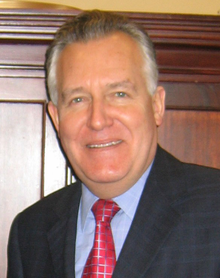
  • Alan Milburn – 2000 Speech on a Modern NHS

    Below is the text of the speech made by Alan Milburn, the then Secretary of State for Health, to the LSE Annual Health Lecture on 8 March 2000.

    It is a great honour to be here this evening to give the sixth annual LSE Health Lecture. Health secretaries don’t often speak at the London School of Economics. But there are powerful reasons – as I will set out in a moment or two – for seeing a new and closer relationship between the state of our country’s economy and the state of our country’s health.

    As a Cabinet Minister who has served in both the Treasury and the Department of Health people sometimes paint me as a gamekeeper turned poacher. This might make clever newspaper copy. But it assumes a dichotomy that I consider to be false. Treasury parsimony versus Health profligacy. It demonstrates a profound misunderstanding of the role of health and health care in the modern economy.

    Health care as social investment

    The conventional orthodoxy is that health spending is a debit, not a credit – a drain on the economy and a burden on the taxpayer. I want to demonstrate today that in the new global knowledge-based economy it is time to turn that thought on its head. I will argue that health is not only a good in its own right but that good healthcare is an imperative for improved productivity and national economic success. Put a different way, I am arguing that healthcare spending is not just a question of resource distribution, but is also linked to the physical and social organisation of economic production. In other words health care should be regarded not just as current consumption but as social investment. An investment that builds Britain’s economic infrastructure.

    But it can only rightly be so if two conditions are fulfilled. One, that it is organised efficiently to deliver the maximum health gain without generating undue economic burdens. And two, that it is organised so that it delivers preventative services and not just sickness services, intervening upstream as well as downstream.

    My contention is that the UK’s health service – modernised and reformed – will be better placed than most other systems of health care world wide to fulfil these conditions. In other words, the Government’s modernisation programme for the NHS has positive economic benefits for UK plc.

    That is not the traditional view. Indeed, over the past decade or so health care reform in the developed world has been driven by cost containment. In the USA, for example, new managed care systems have begun to make significant inroads into the spiralling costs of the American medical-industrial complex. Yet, despite this, in January this year, President Clinton had to go to Congress for $110 billion funding so that just 5 million uninsured Americans could get health care cover.

    Similarly, in Western European countries changes to rigid and, sometimes, bloated welfare systems have been fuelled by intense concern about national competitiveness in a period of rapid globalisation. This is perhaps not surprising given the structural inefficiencies intrinsic, for example, to the French and German social insurance health care financing systems.

    In the light of recent noises “stage right” in our country about moving away from a tax-based system, it is worth making the point that the funding system that we have in the UK is, from the perspective of enterprise and competition, arguably, the most efficient way of financing health services. Tax based funding relies on the whole tax base, so it reduces distortions in the economy. By contrast, social insurance tends to fall heavily on the employed and employers. That is why French employers are walking away from it. The Institute of Directors in the UK may wish to take note. Social insurance turns healthcare into a tax on jobs. It has distributive and incentive effects that are hard to offset. It can also make job switching more difficult, reducing labour flexibility.

    It’s worth noting too that a tax-based NHS as a model has competitive advantage over its Western European comparators for at least three other reasons. By virtue of its global budgeting, which controls healthcare inflation. By virtue of its low transaction costs, which means resources reach the frontline. And by virtue of its clinically managed care, which is provided by the GP gatekeeper role. Ironically, at the very time that some would urge us to abandon our model in favour of the continental health care model France and Germany are looking to import the very best features of the UK’s health care system.

    The truth is that the NHS, in the words of the OECD, is “a remarkably cost effective institution.” That is not to say that there is not variation in performance which needs to be tackled. There is more that we can get out for what we put in – but overall as the Prime Minister has rightly said, we need to invest more of our national income in the NHS.

    That is right, because as countries grow more prosperous they choose to invest more in health care. This is a perfectly rational thing to do, aggregating as it does the individual preferences of citizens in advanced industrial economies.

    It is of course also right that we only spend what we can afford. Any other route leads to economic ruin. Careful management of the public finances is one of the keys to economic stability. As previous governments have found to their cost, without it we will simply not get the growth, prosperity and employment that the country needs. That is why this Government has constructed a new macroeconomic framework to provide the stable foundations for economic growth. It is also why we seek to reshape public spending, as far as possible, so that it invests in future success rather than mopping up the costs of past failure.

    I want to argue today that health expenditure is such an investment for success. Health is, of course, an important goal in its own right – an intrinsic good. Its value is one of the truths that we as a society hold to be self-evident. As Halfdan Mahler, a former Director of the World Health Organisation has said, health isn’t everything – but without it you have got nothing. Good health is the route by which each and every one of us can properly fulfil our true potential. It unlocks life chances, and is a fundamental building block of wellbeing

    The link between health and economic success

    But such health investment is also of instrumental importance in improving national economic performance. As economic historians such as Fogel and others have concluded, perhaps one third of the per capita growth rate in Britain between 1780 and 1979 was as a result of improved health and nutritional status. And the World Health Organisation has reported that this figure is within the range of estimates produced by similar cross country studies for the last three or four decades.

    Just last month, a report in the Journal “Science” by Bloom and Canning noted the striking finding that real income per capita will grow at a third to half (0.3%-0.5%) a year faster in a country where life expectancy is five years longer than in another country which is comparable in all other respects. This is significant, at a time when growth rates over the past few decades have averaged only 2-3%, and when there is every prospect of life expectancy increasing by a further 5 years over future decades. The mechanisms underlying this relationship include the direct impact of health on labour productivity; the incentive that people living longer have to invest in developing their skills; the fact that longer lives and greater savings for retirement can lead to increased investment; and the existence of a healthy and educated workforce as a “magnet” for foreign investment.

    Another study by the Pan-American Health Organisation of an emerging economy found that for every one year’s increase in life expectancy there will be an additional 1% increase in GDP 15 years later. And as the importance of human capital grows in advanced economies, health status may have a greater and not a lesser impact on economic output.

    This is because, in today’s world it is no longer simply access to financial resources or to physical resources that make or break a country – any more than they make or break a company. In today’s world the raw materials of any country are the skills of its people. Now in the new knowledge-based economy labour is king. Today as never before our key asset is our human resources. Human skills are a precious commodity. They have to be nurtured and maintained.

    The contribution of healthcare

    In the knowledge economy, there really is a premium on good health. And on good health services. Even the Institute of Directors acknowledged just last month that:

    “The efficient provision of healthcare services is of vital importance for business. Sickness is a major cost for business, and, if an employee goes long term sick, this can be very disruptive, especially for small businesses.”

    Sickness is a hidden social tax on business, undermining competitiveness and reducing productivity. 47,000 working years for men alone are lost every year due to coronary heart disease, and the total lost to all disease is almost a quarter of a million years each year. That’s not just a health concern – it is an economic concern too. If you changed that sentence to “quarter of a million working years lost to industrial action last year” then business would be banging on Government’s door and demanding urgent action.

    The CBI estimates that temporary sickness absence costs business over £10 billion each year. As the IOD noted, these disease-driven inefficiencies in the economy can have particularly acute effects on small and medium sized enterprises. Here smaller pools of employees mean that the temporary loss of indispensible skills can spell disaster.

    And not just for the individual firm. There are wider implications for the economy as a whole. Ill health involves a major loss of productivity potential. It imposes costs on taxpayers and it has significant opportunity costs too. Ill health is a significant cause of unemployment and its attendant costs to the benefits bill. 15% of jobless people cite back pain alone as a reason for not working. It accounts for 119 million days of certified incapacity. It also consumes 12 million GP consultations and 800,000 in-patient days of hospital care. It costs the state almost £1/2 billion each year. These figures point to a clear relationship between ill health and labour market exclusion.

    Figures released just last week by the Office for National Statistics suggest that 29% of adults in workless households said their health was not good, compared with eight per cent in homes where someone worked. The number of people who are long term sick and disabled wanting a job but not presently looking has doubled in just a decade to almost 750,000.

    This level of ill-health causes a loss of productivity and a loss of potential skills that a human resource-led labour market can ill-afford. As we move towards the potential of full employment, that threat to growth becomes more real – there are already labour shortages in specific areas. This threat to growth and low inflation can be at least partly offset by growing the active labour supply. The feasibility of doing this is demonstrated by the fact that when this Government came to office, four and a half million adults lived in households where no-one was working, twice the rate of France and four times the rate of Germany.

    Worse still, worklessness is now the principal cause of poverty in Britain today. And the well-versed argument that poverty – principally through peoples’ exclusion from the labour market – is a significant cause of ill health is only one part of the equation. It is true that poorer people are ill more often and die sooner. The other part of the equation, however, is that poor health contributes to poverty, not least because it excludes people from the labour market. Studies of the effect of chronic mental health problems have shown this relationship, and it exists for other conditions too. The route between poverty and ill health then, is not a one way street. It is a two way street.

    Poverty finds expression in social division and in social exclusion. It is not just their victims who end up paying the price. We all do. The decent hard-working families who live in fear of crime. The loss we all feel from a declining sense of shared community. The taxpayers who pay the bills of social failure. This is one way that the cycle of ill-health and poverty imposes economic burdens.

    There are other ways too. Poverty cascades down the generations. Up to a quarter of all children are persistently in low income families. Babies born to fathers in social class five are more likely to be low birth weight. Low birth weight is a key fact in a child’s subsequent development and opportunity. Poor children are less likely to get qualifications and to stay on at school. Poor health then is linked to low educational attainment, distorting our future competitiveness in the knowledge economy.

    The vicious cycle of poverty, social exclusion, educational failure and ill health is mutually reinforcing. It needs to be broken. It can be broken. We know that good education is a route out of social exclusion and into prosperity. The time has come to recognise that health just like education is a route to economic fulfilment and personal fulfilment Just as good education is a route out of social exclusion and into economic prosperity so too is good health. By intervening in the poverty cycle, health services can effect what Giddens calls the “redistribution of possibilities”.

    Modernised NHS for a modern economy

    What, then, should be the response of the healthcare system? A modernised NHS can rise to these economic challenges by providing new interventions that actively help break the cycle of poverty and ill health, that are preventative as well as curative, and which are fast and convenient.

    First then an NHS that works with others to help break the cycle of poverty and ill health as a contribution to expanding the productivity potential of the wider economy. In the first three years of the last decade if all men of working age had had the same death rates as those in the top two social classes there would have been 17,000 fewer deaths each year. Action here is long overdue. The White Paper Our Healthier Nation sets out an ambitious programme not only to improve the health of the nation but to close the health gap between the worst off and the better off. SureStart is one of the key delivery mechanisms – putting extra resources into health and education services in deprived communities, targeted at the first three years of a child’s life. Similar action involving local authorities, voluntary organisations and others to tackle teenage pregnancy, or drug misuse, are other examples of the approach.

    But we also need to reverse the inverse care law that has dogged the NHS for fifty years – whereby those with the greatest health need get the least health care. You can see that in the way that those parts of the country that have the worst levels of heart disease often have the worst heart services. Two days ago I said I would break that cycle by targeting new cardiac services into those areas where they were most needed. Health Action Zones are another means to the same end.

    Second an NHS that is preventative as well as curative. That means intervening earlier rather than later. Our modernisation programme will help transform the NHS into a springboard for better health, not just a fix-and-mend service when people fall ill. So, for example, this winter the NHS became the first country in the world to introduce the Meningitis C vaccine.

    In our new blueprint for saving 20,000 heart disease lives a year we set out how improvements in heart surgery can make a real difference to survival rates. But the new smoking cessation services that we are providing for the first time on the NHS signal how it can stop just acting as a sickness service and start fully working as a health service. We are also expanding access to the most cost-effective treatments such as aspirin, beta-blockers and statins to help prevent the need for heart surgery in the first place.

    But all of these preventive activities have to be grounded in knowledge of what works and what does not. That is not always the case at the moment. We cannot afford well intentioned but ineffective programmes. That is why I have tasked the NHS R&D programme to provide a better evidence base for health promotion. Public health activity needs to demonstrate cost-effectiveness just as do other forms of health intervention.

    Even more fundamentally, the time has come to take public health out of the ghetto. For too long the overarching label ‘public health’ has served to bundle together functions and occupations in a way that actually marginalises them from the NHS and other health partners. Let me explain what I mean. ‘Public health’ understood as the epidemiological analysis of the patterns and causes of population health and ill-health gets confused with ‘public health’ understood as population-level health promotion, which in turn gets confused with ‘public health’ understood as public health professionals trained in medicine. So by a series of definitional sleights of hand the argument runs that the health of the population should be mainly improved by population-level health promotion and prevention, which in turn is best delivered – or at least overseen and managed – by medical consultants in public health.

    The time has come to abandon this lazy thinking and occupational protectionism. To do that we need to distinguish these three meanings of public health. The National Service Frameworks provide a way to do so. Take the Coronary Heart Disease NSF published this week as the model. It starts with an evidence-based analysis of the patterns and causes of heart disease. It then attempts a dispassionate look using the available evidence at the relative contribution to tackling heart disease that can be made by primary prevention, secondary prevention, hospital treatment and care. It seeks to identify the optimal cost-effective mix between them, rather than privileging one level of intervention for its own sake. And then it allocates responsibilities between agencies and professions on an entirely pragmatic basis, not on the basis of historical demarcations.

    In short, rather than define the NHS as healthcare delivery, and then assert that the NHS has very little do with health improvement, the time has come to reframe what we mean by the NHS and how it acts. The NHS has to encompass the full spectrum of intervention, and it has to get in to new ‘markets’ too – as a provider of information and lifestyle advice not just a provider of treatment and care.

    Which is not to understate the importance of health care treatment. Because the third method by which NHS modernisation can contribute to improved health and economic success is by providing treatment services that are fast and convenient. I believe that the principles of the NHS are right but that its practices have to fundamentally change. People wait too long for treatment. Faster waits for cancer treatment, new fast track chest pain clinics and services that are recast to design delays out of the system are all important. And they are on the way. Last year the NHS treated about 5 million working age adults as in-patients. Around three quarters of these patients waited under six months, but a fifth waited for between six and twelve months; and about one-in-twenty waited more than a year. We need to do further work to model the proportion of conditions that kept people off work or out of the labour market, and the proportion of treatment that succeeded in getting people back to work. But it is clear that faster and more effective treatment services will get people back to work more quickly.

    In these three ways – tackling health inequality, plus better prevention, plus faster intervention – the NHS is changing the way it works and what it does. In the process it is becoming better placed not only to meet the needs of individual patients but to meet the needs of the economy too. It is performing an economic function as well as a health function. It is good for patients and it is good for business.

    The health of workers

    Indeed I think that we need to look to see what more the NHS can do here. An obvious area of potential is the sphere known as occupational health. The growth of the knowledge-based economy and the premium on retaining skilled labour means that employers – whether in the public or private sector – will face higher opportunity costs from sickness absence. They will also have to find new ways of retaining and rewarding their staff. Pay of course will be a key determinant. But people’s career decisions are not simply crude financial calculations. Flexible working patterns will be important too, particularly for parents with young children. And so too will be facilities to maintain good health at work. As it is employees and their representatives are increasingly litigious about health and the workplace – so it is enlightened self-interest for employers to make sure that their own house is in order.

    In the past “occupational health” has tended to have a heavy health and safety bent to it. The Health and Safety Commission will shortly publish proposals to modernise occupational health so that it is better suited to the needs of small and medium sized businesses.

    The NHS has to make sure that its own house is in order on this issue. Healthcare is one of the biggest knowledge-based sectors of the economy, and we cannot afford to lose highly skilled staff. Quite the reverse. I want to expand the services that the NHS provides to make them faster and better for patients – and that relies on having more doctors, nurses and other health care professionals. Improving quality of working life in the health service is one of the factors that will help us expand staff so that we can expand services That is why I am examining how we can improve occupational health care services for our own employees whether in the primary, community or secondary care sectors.

    There are some real beacons of good practice in the NHS. The Walsall Hospitals NHS Trust’s Occupational Health Department for example looks after 6,000 staff at the trust as well as its neighbouring NHS organisations. Managers get pre-employment checks and staff get health checks, advice on health and safety, health information, risk assessment, environmental health advice and stress management. But what is unusual here is that Walsall is also successfully marketing its services to both the public and private sectors, selling its occupational health services to the local university and to 12 small factories. It gets back enough money to break even. The Royal Berkshire and Battle Hospital NHS Trust generates £100,000 a year looking after employees in a number of small businesses and public sector bodies.

    These two NHS organisations are making a tangible contribution to business. I am interested in exploring whether there is scope for the NHS more generally to provide similar occupational health services to employers. ‘NHSPlus’ if you like. A service of this sort might be particularly valuable for small and medium-sized firms which lack the size to organise in-house services but where ill health amongst key employees can have devastating consequences.

    Back pain and stress management services will be of particular relevance, as shown by the 19 ‘Back in Work’ pilots that are now operating. Sandwell Healthcare NHS Trust, for example, is now working with small and medium sized businesses to provide early assessment and intervention for workplace back pain. Salisbury Healthcare NHS Trust is working with 300 local businesses in partnership with the local Chamber of Commerce.

    And let’s be clear about two things. First – providing these new services will potentially be good for the NHS, not a burden. Intervening to prevent and avoid injuries and sickness will have downstream benefits for the NHS in avoided GP appointments, outpatient attendances and hospital treatment. And second – these new services hold out the prospect of net savings to employers, not extra costs. What’s more, as NHS waiting times come down for elective surgery, private employers will increasingly be able to free up the £1 billion-plus they currently spend on employee private health insurance, instead targeting that resource on more effective workforce health interventions of the sort that NHS Plus might provide.

    There is then an intimate connection between good health, properly targeted health services and economic performance. So far my argument has focussed on three groups in the population. One – potential workers currently outside the labour market as a result of mutually reinforcing processes of social exclusion. Two – future workers, namely our children, for whom health and educational attainment are the routes to prosperity. And three, existing workers – and their employers – affected by sickness absence.

    The health of older people

    But there is a fourth group – retired people – that is ex-workers – whose health status also has an impact on economic performance. If we look at the country’s demographic profile there are significant implications for the economy in the next few decades. The number of older people has doubled since 1931. The overall upwards trend is set to continue to about 2030, when the population will stop growing as a result of past falls in birthrates. Increasing numbers of people will survive well beyond the age of 85.

    We have to make the investment choices now about what those extra years of life are going to be like. If they are years of ill-health, disability and dependency that has clear economic consequences. It will mean not only that older people cannot contribute economically in their “third age”, but it means high costs for formal care, however it is financed. For those outside formal care, potentially productive labour will be taken out of the economy for informal care of dependent older people.

    So investment now to prevent ill-health and to promote fast and effective treatment and rehabilitation may be as important economically as it is socially. There is evidence to suggest that increasing years of life can be relatively healthy, or of only mild-to-moderate disability. But the extent to which that is the case will depend on, amongst other things, on the availability of good health services including active rehabilitation.

    The new aim of our care services here is to foster independence for elderly people just as it is to foster independence for working age people. We should no longer accept the so-called ‘dependency ratio’ (that is, the ratio of working age adults to others) as the principal prism through which we view these matters. Perhaps we need a new measure – perhaps we should call it the ‘independency ratio’ – to track the proportion of the post 65 population capable of active life and self care. Developing services to improve this measure is precisely what the Government intends to do. We are committed to a new set of intermediate care services specifically designed around the rehabilitation and recovery needs of elderly people. And for the reasons I have outlined, they will be beneficial both in human and in economic terms.

    Conclusion

    So to conclude – good health, good healthcare and good economic performance should no longer be seen as parallel universe. They are mutually reinforcing. You can’t have one without the other. It is time to look at the NHS in a new way.

    No longer just as a consumer of resource. But instead as a generator of wealth. No longer just as a provider of treatment services. But instead as a promotor of good health. No longer working in isolation. But instead working alongside others to foster independence and create opportunity.

    In short the NHS can make a major contribution to improving productivity and expanding the economy.

  • Alan Milburn – 2003 Speech to the World Health Assembly

    Below is the text of the speech made by Alan Milburn, the then Secretary of State for Health, in Geneva, Switzerland on 19 May 2003.

    The UK Government endorses the statement made by the Presidency of the European Union.

    I want in particular to record our thanks to Dr Brundtland for the successful role she has played over the last 5 years as Director-General. She has successfully led the World Health Organisation through a time of change and challenge for all health systems – in the developed world every bit as much as the developing world. I believe the World Health Organisation has been immensely strengthened by her period as Director-General.

    As events of recent weeks show, the world needs a strengthened World Health Organisation. The emergence of SARS in developing and developed countries, in the Northern and Southern hemispheres, has confronted all nations with a new public health challenge.

    Sadly, this is not the first time nor will it be the last that the global community has had to respond to new and emerging diseases. In the last 30 years we have been faced with the emergence of an average of one new infectious disease a year. As the new threat of bioterrorism signifies, infectious diseases are now a challenge to stability and security as much as to health and prosperity to this generation of children as well as future generations..

    If the WHO did not exist we would now surely have to invent it.

    The WHO has been at the forefront of combating the spread of SARS, using its global surveillance networks. The United Kingdom believes we not only need to maintain a strong WHO, but we need to strengthen those surveillance systems, to cope with old threats and new.

    Global trade and travel, environmental, land use and other changes, make inevitable the emergence of new infectious disease. Infectious disease recognises no international boundaries.

    Our best response is no more a fortress world, than it is a fortress Europe or a fortress United Kingdom. If the international community is to successfully resist calls for a world of closed borders and isolationist economies – with all the loss that would mean for developing and developed nations alike – then a new global resolve is now needed.

    First, the emergence of SARS demonstrates, were there any doubt, of the need to maintain and strengthen international vigilance. Our watchword must be to “expect the unexpected”. Where infectious disease in one part of the world can become within days, if not hours, a problem for another; each and every nation owes an obligation, one to another. To put in place the surveillance, the capacity and the planning to combat these new threats. And I hope the WHO will lead this new global resolve by preparing a nation by nation audit of our state of international preparedness. Nor, if necessary, should we shrink from strengthening obligations under international law.

    This is the agenda we wish to support the WHO in developing. Not only to defeat the major diseases that effect child and adult alike – TB, malaria, HIV/AIDS. Not only to successfully prevent disease like cancer and heart disease through measures such as the Framework on Tobacco Control which the UK supports and looks forward to seeing successfully concluded. But a renewed focus on strengthening our ability to combat new diseases as they emerge. We strongly welcome Secretary Thompson’s announcement of new resources to allow us to do just that. Just as in the UK we are continuously reviewing and strengthening our surveillance systems and contingency plans, I hope the WHO will help every country to do the same.

    For second, if we are to successfully combat infectious disease, we can only do so with public support. Resilient public health systems are the bedrock of public confidence. Without them public concern can all too easily overwhelm scientific sense. SARS shows the importance of developing such resilience. It also demonstrates the need to maintain a sense of perspective and proportion about risk. We need to examine better ways of informing and educating our publics about the nature of risk and relative risk in health. Not just to change behaviour in order to reduce risk but to be clear that panic and over-reaction can be as harmful to public confidence as complacency and inadequate preparedness. All the actions we take and the advice we give must be firmly rooted in the best scientific and clinical evidence.

    While we should never pretend that medicine is anything other than a human science – not an exact one – we cannot allow fear to dictate our response to the new threats we all face. I welcome the accent the WHO has put on patient safety. I hope together we can now consider how better to communicate risk to the people we all serve.

    The WHO is in a stronger position to pursue such an agenda because of the leadership of Dr Brundtland. There is much for which we have to thank her. We shall remember her many achievements with gratitude. We wish her well for the future.

    And we look forward to working closely with her successor as together, we work for a more healthy and more secure world.

  • John Reid – 2004 Speech to the Faculty of Public Health

    johnreid

    Below is the text of the speech made by John Reid, the then Secretary of State for Health, on 10 June 2004.

    We have launched the biggest and most comprehensive consultation, discussion and debate on Public Health that this country has ever seen. It has one objective – to encourage everyone in the country to achieve a longer, healthier life – by adopting a healthier lifestyle.

    For many people that may involve a changed lifestyle – changing diet, exercising more, drinking more moderately, or stopping smoking for instance.

    If we are to succeed in this all of us know we have to recognise one central reality. We want everyone to change, because everyone can benefit; but we recognise that not everyone will find it as easy as every one else to achieve change.

    This is not just because they are weak-willed or lack motivation or because they don’t want to be more healthy or live longer, but because each of us lives our life in different and unique circumstances.

    Of course men and women have free will. But they don’t exercise that willpower in the same circumstances as each other, or in circumstances of their own choosing. That is the central realistic point we have to address.

    So, if we really want to help people change their lives, then, for many, we will have to help them change their own social circumstances.

    That is why it has been so important for this Government to tackle poverty, poor housing, lack of family support and social exclusion.

    And we never forget either that when taking into account these different circumstances we are dealing with human beings, not social statistics or medical records.

    That is why our great consultation on Public Health is not primarily about what we want to achieve. We know what we want to achieve, what the consultation has been about is how we are going to achieve it and how we are going to balance the health outcomes we want to see, with the personal control and social freedoms that all of us want to maintain.

    So we need to discuss issues like obesity, for instance, with a sensitivity that recognises the possible hurt and embarrassment that people, especially obese young people, might feel. We don’t forget that a whole gamut of social, medical and psychological factors may underlie obesity as well as the more obvious factors, and may make combating obesity a greater struggle for some than for others.

    When we talk about healthy diets, about fresh fruit and vegetables, we always have to remember that low incomes, single parenthood, large families, or geographical immobility can constitute huge barriers to healthy eating for some people, barriers which simply do not exist for other people in more fortunate circumstances.

    And when we discuss smoking, drink or drugs let us never fail to recognise that social deprivation, straitened circumstances or lack of affordable alternative social horizons do make it much more difficult for some of us to kick the habit than it might be for others in more conducive circumstances with greater social alternatives.

    Sixty years ago we dedicated ourselves to equal access to health care in this country. We intended that there should be reasonable equity in health outcomes for everyone. And yet, here we are, some six decades later with the glaring differences in health between different sections of our population. One of our great failures has been the remaining inequalities in health, particularly among working class and ethnic communities. I very much want to see those inequalities eroded. But if we cannot even begin to discuss, question and honestly explore the circumstantial setting and cultural factors which might have led to those inequalities – honestly search for the barriers to our message getting through – without the sort of hysterical reaction we have seen in certain quarters in recent days, then it perhaps begins to explain why we have failed in the first place.

    So, above all, let’s all be grown up enough to understand that to take these circumstances into account – to try to understand other people’s position, motivation, and point of view – is not to urge people to continue unhealthy eating, excess drinking or smoking. Quite the opposite, because it is precisely by recognising these factors that we can spur ourselves to change social reality for so many, and it is the failure to recognise them which would ultimately condemn us to failure in our quest for better public health.

    I truly believe that if we were ever to make that mistake, or to try to proceed by uniform diktats rather than by carrying people with us wherever it is possible – then our campaign will inevitably fall short again – precisely because it will not reach those parts of our community and society that has so far had the worst health outcomes and where it is most needed.

    So the message is clear. In our style we should and will be encouraging, assisting, persuading, and supporting people wherever possible – not hectoring, condemning or didactic.

    It is my view that in a free society, dictation should always be the ultimate, default position, not an eagerly embraced starting point for everything.

    So our task is not to ask people to overcome insuperable social circumstances on their own, nor to dictate how they will live their lives, but to empower them to more easily change their own lives by changing these countervailing circumstances, combating poverty, homelessness or isolation as an integral part of our struggle for better public health in Britain.

  • John Reid – 2004 Speech on an NHS for the Future

    johnreid

    Below is the text of the speech made by John Reid, the then Secretary of State for Health, on 26 June 2004.

    It’s a year since I made my first major speech as Secretary of State for Health to the Confederation. I remember that very clearly – newly arrived, anxious about the detail and the acronyms that I didn’t know, but sure that I knew and was passionate about the values of the NHS. Those values inspire and invigorate us as we shape the vision for the continuing renewal of the health service in this country.

    You will know that this morning I made a statement to the House of Commons about the next steps in delivering the National Health Service Plan.

    My preface to the plan we published today starts by saying, “The NHS was founded on two fundamental principles. The first is that there should be equal access to treatment for all, based on clinical need and regardless of ability to pay. The second is that collective funding of the NHS, through national taxation, is the most effective way to ensure that quality care is available to all”.

    For me, these are not empty words. They are a real guide to our actions. And to carry them out, to bring them into reality we will all have to work very hard and very differently.

    Lets remember the context of 1997, we inherited public services in a state of widespread dilapidation – a claim almost no-one would deny. This wasn’t because public services and their staff were somehow inferior. The problem was too little resource, and therefore grossly inadequate capacity in terms of staff and facilities.

    By 1997 the hospital building programme had ground to a halt. Waiting lists were rising at their fastest rate ever. Nurse training places had been cut by a quarter. Training places for GPs were cut by one fifth.

    There was no maximum waiting time either for a GP appointment or for hospital treatment – although the hospital waiting lists stood at 1.1 million and many patients were waiting more than a year, with rates of death from cancer and heart disease amongst the highest in Europe.

    It was in response to those conditions that together we developed the 10-year NHS Plan launched by the PM with the words:

    “The challenge is to make the NHS once again the health care system that the world most envies.”

    I can report to you today that we are making good progress towards this goal, and that’s down to your work and your staffs’ hard work. I thank you most sincerely.

    In the last four years we have succeeded in expanding the capacity of the NHS. I hope you know these achievements off by heart, but just in case you don’t, there are now:

    – 67,500 more nurses working in the NHS compared with 1997
    over 19,000 more doctors

    – 68 major new hospitals built, underway or planned the largest ever hospital building programme.

    But these are just the means to the real end, improved services for patients. There are now:

    – over 258,000 fewer people on the inpatient waiting list compared with March 1997

    – virtually no waits of over 9 months for a hospital admission – down from over 18 months in 1997

    – over 97% of people can see a GP within 48 hours

    – almost 19 out of every 20 people seen, diagnosed and treated within 4 hours in A&E departments.

    We said that we would put in place reforms to ensure services improved. We have brought in new contracts, new institutions and new services such as NHS Direct and NHS Walk-in Centres and we have embarked on the world’s largest health related IT programme.

    Most importantly we said that outcomes for patients would improve as a result of this investment and these reforms. They have.

    – Cancer death rates are down by over 10% since 1997

    – Cardiovascular disease death rates are down by over 23% since 1997

    – It’s because of figures like that that I am sick and tired of hearing NHS staff constantly maligned as unproductive bureaucrats.

    The truth is that we are delivering more treatment, more quickly, to more people than ever before and there are thousands of people alive and well who would not have been even a decade ago.

    But I have always claimed significant progress, never perfection. That is why we are making a radical new set of proposals to develop the NHS plan. By 2007/8 we will be spending over 90 thousand million pounds of public money on the NHS. In return for such expenditure we must be ambitious.

    Our vision must be to meet the expectations and ambitions of people. We must provide a service that is fair to all of us and personal to each of us, offering the same access to, and the power to choose from, the widest possible range of services of the highest quality, based on equality of access, clinical need and not ability to pay.

    But, I want to start off by saying what there isn’t in this programme. There are no changes in structure; there are no changes of direction. What we will do is make the present structure work and move faster in the agreed direction.

    There are four main issues. We must ensure that we are able to transform the way patients experience the health service. With the continued increases in capacity and as waiting times come down, we are now in a position to aim for a maximum limit to the whole patient journey of 18 weeks, from GP referral, through outpatients and diagnostic tests, to treatment. The whole journey.

    Then, with dramatically shorter waiting times for treatment, “how soon?” will cease to be the major issue. “How?”, “where?” and “how good?” will become increasingly important. Patients’ desire for high-quality personalised care will drive the new system. Giving people greater personal choice will give them control over these issues, allowing patients to call the shots about the time and place of their care, and empowering them to personalise their care to ensure the quality and convenience that they want.

    Second, alongside this improvement in access, we want to give patients a greater degree of choice in where they access treatment. We want all patients to be able to choose from a range of services that best meet their needs and preferences.

    People will be able to book their hospital appointments for a time that suits them, from a choice of hospitals:

    From April 2005, patients who need a heart operation will be offered a choice of provider from the time they are referred for treatment

    By December 2005, all patients who need surgery will be offered a choice of 4 to 5 alternatives at the time they are referred for treatment by their GP.

    We want to go further. By December 2008, every patient will be able to choose to be referred to any treatment facility that meets NHS standards and which can provide care at the NHS price for the procedure that they need.

    That choice will be for all – not just for those of affluence or influence and will be available because of the extra capacity and lower waiting times.

    This is not a false choice such as the one advocated by some, which is available to those with the money to jump the queue. This is choice for everyone, paid for by the NHS, equally.

    Third, we will also extend the greater personalisation of patient care to people with chronic and long-term medical conditions. Some 17.5 million people – have their life dominated by conditions that cannot be cured – diabetes, asthma, heart failure, some mental health problems. Providing them with the personalised support and care that they need and deserve to live fulfilling lives will be a priority. We will do this by providing thousands of community matrons, rolling out the Expert Patients Programme across the country and ensuring that the new contract for GPs delivers the best care for patients.

    Fourth we also need to ensure that the NHS becomes more than just a sickness service. We have a duty as a Government to ensure that everyone has the chance to live a healthy life.

    The White Paper that I will publish in the autumn will set out in more detail our plans to tackle the major causes of ill health, including smoking and obesity. We have called that White Paper ‘choosing health’, because our policy is to encourage more people to make more healthy choices.

    We also want to work with people to improve the conditions that effect their choices – giving people a better chance to make those choices.

    These improvements will be underpinned by strong reform. By 2008:

    – The national IT programme will ensure that patients can make informed health choices and can increase the efficiency and effectiveness of NHS staff

    – NHS Foundation Trusts will have become the norm for hospital care, enabling local hospitals to respond more quickly to their patients’ needs;

    – PCTs will be able to commission care from a wide range of providers, including those in the independent sector;

    – The new system of payment by results will have been fully implemented, supporting patients as they exercise choice and ensuring that there are strong incentives for the NHS to make the best use of resources.

    The NHS University will ensure that NHS staff are given more help to train and learn new skills

    Fewer national targets will be set, ensuring a greater degree of local flexibility to respond to local health needs and reducing still further the extent of central involvement in the running of the NHS.

    I am also pleased to formally announce today that our plans to establish a new employers’ organisation under the umbrella of the NHS Confederation are coming to fruition and the new organisation will be in place in October.

    The employers’ organisation will provide an authoritative voice for NHS employers. Within the context of Government policy and resources, it will have responsibility for conducting national negotiations on pay and conditions. It will represent employers’ views and support them through guidance, advice, information and research.

    These are improvements that will re-define the service that patients can expect from the NHS. An NHS characterised by:

    – Commitment, not ambivalence

    – Investment, not cuts

    – Access based on need, not ability to pay

    – Queue cutting, not queue jumping

    – Fair for everyone, not just the rich few

    – Personal to each of us, not just those who can afford it.

    Conclusion

    Over the next four years we all have a big chance to develop an NHS which will meet the aspirations of today’s people. To secure the NHS as a part of the personalised world of today and to demonstrate that the greatest gift from the people of this country to the people of this country is able to meet the expectations of people in the 21st century.

  • John Reid – 2004 Speech on Health Inequalities

    johnreid

    Below is the text of the speech made by John Reid, the then Secretary of State for Health, on 23 September 2004.

    Philosophy, Policy and Priorities: The philosophy of health improvement

    I’d like to thank the Health Development Agency for the timing of this debate, since improving the health of the public has never had such a high-profile in the Government, in the media or in the public mind.

    As you are all aware, we will shortly be publishing a Public Health White Paper, which will bring about action to produce real change. I am not going to tell you the detail of that White Paper today, but I do want to describe the philosophy behind it and how that philosophy informs the new Labour Government’s attack upon inequalities.

    I don’t want to alarm you, but I would like to start with the Enlightenment. At that time it was recognised that mankind collectively and individually could make the world, rather than be made by it. Making things happen was not magic. It was nature, and we could all begin to fully understand nature, and then given that understanding we could control it.

    This is not abstract philosophy; in terms of health it is very concrete indeed. Over the last 200 years we have systematically understood aspects of health and disease and illness and then turned our attention to mastering them. Decade after decade, mankind has mastered more about health and disease and kept millions alive and in good health.

    In this country in 1900 most people died before they were 45 years of age. Now only 5% do. If control of nature by mankind means anything it means being alive longer. The speed of growth in our understanding and control of disease has been such that most interventions we carry out today were science fiction in my youth. Where a nation has the resources, humankind is winning the fight against disease. All of that is progress.

    Alongside our collective knowledge and mastery of disease there has been a growth in individual mastery. More people in our country have the resources and the knowledge to be more in control of and have more power over their mental and physical health than ever before. In terms of health and health policy, we know what to do to make us healthier and we know that both for ourselves and for the nation.

    As we approach the White Paper on health it is clear that knowledge is not our problem. So, given 200 years of the enlightenment, and all this knowledge, what is the problem?

    Put simply, it is that whilst we constructed an ever greater intellectual mastery, this intellectual power was developed in a society where the economic, social and political power was not equally distributed. This imbalance did not effect the creation of ideas but it has had a big influence on the application of these ideas – the way in which those ideas had an impact on society. One example of this is the way in which the people who developed the ideas conveyed them to the public. So, at the time the great philosopher Hegel was writing, only a very small part of the population could read and understand him. No one bothered to ensure that important ideas were distributed to the great mass of the people.

    Consequently, the conditions under which the mass of the population lived meant that these powerful ideas passed them by. Until people had more control over their lives, they could not use these ideas. And, unless the ideas were actually in the hands of people, they could only change a part of the world.

    Over time, of course, more people become better educated and therefore more powerful. More people became more affluent and therefore more powerful. And more people understood more about how to improve their health and became more powerful.

    Some of the more impatient amongst you may be beginning to ask “What on earth has this got to do with health improvement and inequalities”?

    Well, mastery is increasing in health. Now, more people are trying to control their health than ever before. Two thirds of smokers want to give up and struggle to do so. Millions of people try to go on a diet and millions more try to increase the amount of exercise that they do. People have got the ideas right. They know what the intellectual answer is. The problem is the doing of it.

    But still, many people are left behind in this mastery of their health environment. For too many, their environment masters them and overcomes their ability to act. Ideas do not by themselves give people the mastery of the world, or mastery of their health. To do that we have to work with them to change their environment.

    Therefore, men and women make their own health, but do not do so under conditions of their own choosing. So, whilst the engine of health improvement is the individual’s control over their own life, it is not enough to say to all the individuals in our society that you can choose to make your own health, because the different economic and social conditions under which we live either differentially hinder or help our choices. Those with more financial resources generally have more choices, as do those with more educational qualifications.

    So, the priority this Government has given to improving health and tackling health inequalities is rooted in the fact that health and life expectancy are linked to social circumstances in adulthood and childhood.

    Political, social and economic equality only improves when previously disadvantaged people work to change their position in society. Government and public services can and must assist this process, but people’s own motivation is at the core of change. The core of my philosophical approach is to increase the power that people have over their own lives and opportunities – to empower them and to enable them to effect changes in their circumstances. If people don’t do the hard work of taking up that opportunity, of exercising that power – very little happens at all and equality of outcomes does not improve.

    Work is a crucial part of the social and economic experience and to be excluded from it is a very serious inequality. Being unemployed can be bad for your mental and physical health as well as excluding individuals from society and benefits that others have access to. This is why we have very specific employment policies for very specific groups of unemployed people.

    Our employment policy does not come through diktat from the centre but through personalising policies for certain groups. 493,000 young people have moved from the New Deal into work and, without New Deal, long term youth unemployment would have been twice as high. New Deal 50 plus has supported 110,000 older workers in taking up work. And over 260,000 lone parents have been assisted to move into work through the New Deal. The proportion of single parents in work has increased by 8%.

    Each of these people has taken up a difficult opportunity to change their lives. They have each changed the conditions under which they live and have gained more control. This puts them in a better position to take more control over their health.

    Gaining educational qualifications are another area where people can gain more control over their lives. Some time ago, the Government introduced policies for the teaching of literacy and numeracy in primary schools. At the time, it was felt by some that if 11 year olds were being judged against a standard it would be bad for students who had disadvantaged backgrounds. The accusers’ expectation therefore was that this policy was NOT about improving equality, but that the pressure to achieve would make matters worse for disadvantaged children.

    It is interesting, even if with a few years of hindsight, to look at the outcomes. One of the proxies used in education for poverty and inequality is whether the child receives free school meals. A school where less than 8% of children receive free school meals would represent a school represented largely by better-off parents. A school where over 50% of them received free school meals would represent worse-off parents. If the first group of schools improve faster than the second group, then inequality can be deemed to be getting worse. If the second poorer group of schools improve faster than the first then by implication equality improves.

    In 1997 there was a gap in Key Stage 2 English achievement between the better-off and the worse-off schools of 35%. In the poorer schools less than half – 42% – achieved the required level with nearly twice as many in the better-off schools reaching that level. Over the 6 years from 1997 to 2003, under New Labour plans and programmes, both groups of schools improved. But the better-off schools improved by 8%, while the poorer schools improved by 17%.

    In short, since 1997 it is not just the fact that more 11 year olds can read and write, but it is the fact that children from poorer schools have been improving at twice the rate of children from better-off schools.

    In maths the rate of improvement of the poorer schools is nearly three times that of the better-off schools and in science it is two and a half times better.

    New Labour’s literacy and numeracy hours have reduced educational inequality despite all the initial criticism. They have done so by assisting pupils in schools with poorer backgrounds to develop the motivation and opportunities to learn.

    Let me return to my main theme. If we want people’s health to improve, then we have to unlock their motivation to gain more control over their health. If we want to achieve that for everyone then a prior condition for disadvantaged people is to unlock their motivation to improve their condition perhaps through work, perhaps through education.

    All of these policies for reducing health inequalities, either directly through addressing health, or indirectly through addressing the constraints on people’s ability to chose, recognise the importance of unlocking motivation.

    The Government needs to support disadvantaged people as they struggle to get motivated to either improve their health or take more control over their conditions, but it is their motivation that is the defining characteristic of change.

    Our philosophical approach is that our health and our inequality policies must be about empowerment. Getting a job improves the amount of power a previously unemployed person has over their life. Learning to read and write improves the amount of power that people have over their lives. Choosing the time you go for a hospital appointment and choosing the doctor you see, gives you power over your life, and yes, giving up smoking gives you power over your life. Government policies to reduce inequality must give you more power over your life. The Government that achieves this will enable people rather than just instruct them, hector them or try to dictate to them. In fact the Government that only instructs people takes away from the power of people and reduces their capacity.

    The problem with the enlightenment philosophers was that they thought that having the great ideas was enough to provide control of the world. What we learnt in the 19th and 20th century is that people needed to be economically, socially and politically emancipated to enable them to work to develop not just the idea of controlling their own life, but to make that idea a reality. Throughout the last 200 years it has been the people’s own struggle for improvement that has been the bedrock of economic and social progress.

    So I believe that the lessons for us in health improvement are clear. We know the ideas that need to be applied. Enjoy the good things of life, but in moderation. Cut out the bad things of life as much as possible. But the problem is in doing this. It is not just a matter of motivation. The millions of people trying – and failing – to improve their health are a signal of this. They know what needs to happen, they try and try, but it is just too hard.

    Given this philosophy the aim of Government is two fold.

    First, we need to provide clear leadership to our whole society about what are healthy choices and how important it is to struggle to gain control of your health. This leadership must recognise that these healthy choices are sometimes very hard choices for some individuals, but through clear and consistent information we must bolster and increase individuals motivation to improve and gain control of their health.

    Second, whilst this whole struggle depends upon individual motivation, Governments need to provide the support for people to improve their health. This involves the NHS in developing smoking cessation services that are convenient and are easily accessible. It involves ensuring that the services for sexually transmitted diseases can be easily accessed without shame. It involves the NHS recognising how important and how difficult health improvement is for patients and providing real and sympathetic help.

    So our philosophy is clear. Without people’s motivation very little health improvement will happen, but people have a right not to do this hard work on their own. They have a right to look to Government for practical support and we aim to provide it.

  • Michael Fallon – 2016 Speech on the Future of NATO

    michaelfallon

    Below is the text of the panel discussion with Michael Fallon, the Secretary of State for Defence, in Munich, Germany on 13 February 2016.

    How can conflicting threat assessments and divergent strategic priorities among NATO member states be reconciled in the run-up to the Warsaw Summit?

    This question is not new.

    Before Warsaw was a NATO capital it was the name of a pact the Soviets had made. And people who came to this very room had many different views about how to confront the threat that entailed.

    Today there’s a new urgency to our discussions.

    On our Eastern flank, we see Russia refusing to accept the territorial integrity and sovereignty of countries in our backyard and resorting to military intervention and subversion. To our South, Da’esh is delighting in terror and using social media to spread its vile message.

    And the migration crisis, fuelled in particular by the civil war in Syria, is challenging Europe’s commitment to free movement and testing our security services.

    So, I think these three factors now present Europe with its biggest security challenge in over a quarter of a century.

    Which problem do we prioritise?

    That’s the question we addressed in our Strategic Defence and Security Review. And our answer was simple, it was all of them.

    Where security is concerned, we can’t afford to make false choices.

    But in tackling these multiple threats, my view is that NATO has to change in three ways:

    PREPARED

    First, it has to meet threats from every direction.

    I know the very real concerns our Polish and Eastern allies have with Russian belligerence, just as our Southern allies are concerned about the chaos creeping close to their borders.

    So we need to create a 21st century doctrine of deterrence which fits for this more uncertain, and unpredictable age. Which doesn’t just strike the right balance between forward presence and the ability to reinforce. But enhancing our resilience to hybrid warfare, to deal with threats such as cyber that blur the line between military and civilian domains.

    Now when it’s in our interests, of course we have to pursue hard-headed engagement with Russia.

    But hard headed equally means being honest and clear about Russia’s behaviour.

    We called out Russia over its behaviour in Ukraine. Now in Syria we find Russian attacks not be targeted towards Daesh or Al Nusra, instead they appear to be deliberately bombing civilian areas.

    And I believe if that doesn’t stop, Russia should and will pay a price.Just as we now reject Russia as a proper partner in Europe, Russia now risks becoming a pariah in the Middle East.

    Now, properly calibrated, deterrence and engagement can be complementary not contradictory. But this is not a return to business as usual.

    FITTER

    Secondly, NATO must be fitter – able to react not just in weeks, or days but in hours.

    So we’re calling on all Allies to support the Secretary General’s Adaptation plan.

    Politically – to ensure the collective will to swiftly take decisions.

    Militarily – putting the onus on agile forces…like the Very High Readiness Joint Task Force, N.

    Institutionally – reducing the time to act and then re-allocate resources.

    WELL FUNDED

    Thirdly, NATO must be properly funded.

    We can’t deal with divergent threats with inadequate resources.

    We made a historic Investment Pledge at the Wales Summit.

    Since then, at least seven nations have agreed to increase their defence spending.

    We have committed to meeting the 2% of GDP target for the next five years.

    But we all want to see countries renewing that pledge and committing to halting or reversing defence cuts.

    CONCLUSION

    So my answer, as we take the road to Warsaw, is to deal with these threats, NATO needs to become fitter. That means quicker decision-making, more troops able to move faster, and above all increased spend on equipment those troops need.

  • John Kerry – 2016 Speech on the Future of the European Union

    johnkerry

    Below is the text of the speech made by John Kerry, the US Secretary of State, at the Bayerischer Hof Hotel, Munich in Germany on 13 February 2016.

    Thank you, Wolfgang. Thank you very much. Well, Wolfgang, thank you for reminding me that everything I’m doing now is a last. (Laughter.) It’s a little – depending on what I decide to do, so maybe not. (Laughter.) I am really happy to be back in Munich and I’m very happy to share thoughts with this, the 52nd edition of the Security Conference.

    And I think if you all think back, 1963, the first year of the Munich Security Conference, this forum has always been about the pursuit of peace. And back then, here in Germany as elsewhere, the Cold War actually felt pretty hot. The wall was a concrete indication of a new reality. Barbed wire was strung across the heart of the country – indeed the heart of Europe. And that was the year that President Kennedy spoke at Rudolph Wilde Platz, and said to all who doubted the courage and resolve of free people: “Let them come to Berlin.”

    Many of us here remember the starkness of that period of time very, very well. I was a kid. My dad was the legal advisor to the high commissioner of Germany in Berlin, then James Conant. And I was privileged to be dumped off at a school in Switzerland. I didn’t know where I was at age 11 or 12. And I saw firsthand what Europe was like in those years emerging from the war. Everything you talked about was the war and the remnants of the war. I used to ride my bike down Kurfurstendamm and see the church and the steeple and the burned our Reichstag. So I knew very well what that was about.

    And it is clear that today that, while the Cold War is long over, the need for the same qualities that brought people through that – for the courage and the resolve in defending liberty and in pursuing peace is absolutely as vital today as it was half a century ago.

    Now, obviously, everyone in this room doesn’t need a Secretary of State or secretary of state of the – of Great Britain or Frank Steinmeier, the foreign minister of Germany, or anybody else to come in here and do a long list of the litany of the crises we face. It’s pretty obvious that probably never in history have we been dealing with as many hotspots, as many failed or failing states all at one time, not to mention a Kim Jong-un and a nuclear program and other challenges all at the same time. So everybody here understands that. You wouldn’t be here otherwise.

    And Daesh’s campaign of terror now extends its reach well beyond Iraq and Syria. And the Syrian civil war, which has now claimed more than 250,000 lives, still rages. We are facing – we, together – the gravest humanitarian crisis in Europe since World War II, as innocent people – many of whom are just women and children – are either trapped inside a country without access to medicine and food, or they have been forced to flee.

    And the flood of desperate migrants has now spread well beyond the Middle East. As we know, 50 percent of the people now knocking on the door of Europe – with a whole industry that’s been created to try to help move them and some very perverse politics in certain places that turns the dial up and down for political purposes – half of them now come from places other than Syria. Think about that – Pakistan, Bangladesh, Afghanistan. So the burdens of Europe, which is already facing a complex economic, political, and social strain, is now even more intense. And I want to make it clear to all of you: We in the United States aren’t sitting across the pond thinking somehow we’re immune. We’re not sitting there saying this is your problem, not ours – no. This is our problem. The United States of America understands the near existential nature of this threat to the politics and fabric of life in Europe – and that is why we are joining now in enforcing a NATO mission to close off a key access route, and that is why we will join with you in other ways to stem this tide because of the potential of its damage to the fabric of a united Europe. ‎

    And the truth is that in every decade since its founding, the EU has been tested by forces –internal and external – that benefited from a house divided. We know many Europeans right now feel overwhelmed by the latest round of challenges, including concerns about the UK’s potential exit from the EU. Here again, however, I want to express the confidence of President Obama and all of us in America that, just as it has so many times before, Europe is going to emerge stronger than ever, provided it stays united and builds common responses to these challenges. Obviously, the United States has a profound interest in your success, as we do in a very strong United Kingdom staying in a strong EU. (Applause.)

    Now, let me underscore – let me underscore that those who claim that our transatlantic partnership is unraveling – or in fact, those who hope that it might unravel – could not be more wrong. They forget – or they never understood – why we came together in the first place: not to just to sail along in the best of times – but to have each other’s backs when the times are tough. They forget, as well, that the ties that bind us are not some kind of fragile strings of momentary convenience. They are rugged, time-tested cords of democratic values – liberty, decency, justice, rule of law.

    And nowhere is that more clear than in our joint, unwavering support for a democratic Ukraine. Our European partners, you, deserve enormous credit for showing the resolve you have shown and the common purpose you have summoned, in order to stand up to Russia’s repeated aggression. And I am confident that Europe and the United States are going to continue to stand united, both in sustaining sanctions for as long as they are necessary and in providing needed assistance to Ukraine until the sovereignty and integrity of Ukraine is protected through the full implementation of the Minsk agreement.

    Now, again and again, we have made it clear, and I make it clear again here today: Sanctions are not an end unto themselves. Witness what we succeeded in doing in the context of the Iran nuclear agreement. But we shouldn’t forget why they were imposed in the first place: to stand up for Ukraine’s fundamental rights – rights of international norms that have been accepted ever since World War II, that were part of what that great battle was about. Russia has a simple choice: fully implement Minsk or continue to face economically damaging sanctions. And the path to sanctions relief is clear: withdraw weapons and troops from the Donbas; ensure that all Ukrainian hostages are returned; allow full humanitarian access to occupied territories, which, by the way, is required by international law and by several United Nations resolutions; support free, fair, and internationally-monitored elections in the Donbas under Ukrainian law; and restore Ukraine’s control of its side of the international border, which belongs to it. Put plainly, Russia can prove by its actions that it will respect Ukraine’s sovereignty, just as it insists on respect for its own.

    By the same token, after two difficult years, Ukrainians still have work to do as well. And President Poroshenko who is here knows that and accepts that. Neither the people of Ukraine nor their partners in the international community believe that enough has happened in Ukraine either. Ukraine has responsibilities with respect to Minsk – and it’s critical that Kyiv upholds its end of the bargain. But Ukraine’s democratic potential is clearly far brighter today than it was when we met here several years ago, far brighter even than it was before the brave protests in the Maidan. And with our transatlantic support, 2016 has all the potential possible – all the groundwork laid through the good work of Germany and France and the Normandy format and though the support of other countries – to be able to make 2016 the year that Ukraine proves reform can triumph over corruption. And we call on all of the country’s elected leaders to demonstrate the unity, the integrity, and the courage that their people are demanding.

    Now, in addition to our joint focus on Ukraine, the United States has significantly upgraded our commitment to European security with a planned fourfold increase in our spending on the European Reassurance Initiative, from just under $790 million to $3.4 billion. This will allow us to maintain a division’s worth of equipment in Europe and an additional combat brigade in Central and Eastern Europe, making our support – and NATO’s – more visible and more tangible.

    Meanwhile – and I think everybody here knows this – that’s not the only way we have to approach the challenge of what is happening in Europe and in the rest of the world of failed and failing states, of millions of young people in countries where they don’t have hope and they don’t have food and they don’t have a job and they don’t have education and they don’t have a future. And if we leave that unattended to, then we are simply turning our backs on what we know is a responsibility for how we are going to stem the tide of violent extremism.

    So we will continue to build on our unparalleled economic partnership. We will support new jobs and spur growth on both sides of the Atlantic. And concluding negotiations on the Transatlantic Trade and Investment Partnership, my friends, this year will strengthen our economies, and let me be absolutely clear: Nothing in TTIP – T-TIP – nothing requires Europe to reduce or undo important regulations or weaken existing standards. That is false. On the contrary, the agreement will underscore our support for the inclusion of high environmental and labor standards in trade agreements, just as we have done in the Trans-Pacific Partnership, which encompasses 40 percent of the planet’s GDP. We have encompassed in that agreement, in the four corners of the agreement, the highest labor standards and the highest environment standards enforceable by law.

    So T-TIP can showcase the dynamism of our form of democracy, of our marketplace, of free markets, and demonstrate the preeminence in the global conversation about the economic standards and the defense of free trade.

    Now, perhaps most urgently, the United States and Europe are at the forefront of facing what has become the defining challenge of our generation: the fight against violent extremism.

    The terrible attacks in Paris, Brussels, Ankara, Beirut, the Sinai, San Bernardino, and so many other places have only reinforced our determination to defeat Daesh as soon as possible. And I am absolutely convinced we will do just that. Every day our military is meeting. Every day the coalition is working. Every day we are taking additional steps forward. And the global counter-Daesh coalition that we began some 17 months ago includes every NATO and EU state – and that, my friends, is the very definition of solidarity.

    We have known from the very beginning that defeating Daesh is not an overnight proposition. It’s going to take time. But I’ll tell you this, President Obama is determined that it will not take too much time. And he is every day pushing our military and every other sector – and there are many other sectors that are involved in this broad nine lines of effort. He is pushing them to come up with new propositions, new ways to push this fight. We welcome the announcement of countries in Europe that have decided, and other countries, to join this fight.

    We are going to defeat Daesh. I have no doubt about it. But even as we do that, there’s a lot of work that we have to do on a measurable – in a measurable manner.

    First and foremost, we are going after their fighters. Our coalition has launched more than 10,000 air strikes. We, the United States, and France, a couple of other countries, have put special forces on the ground in Iraq and Syria in order to better enable a number of operations, while also providing increased amounts of training and equipment to our local partners. Together, we have pushed terrorists out of about 40 percent of the territory that they once controlled in Iraq and 20 percent in Syria. We’ve liberated Tikrit – 100,000 Sunni have returned to rebuild their homes in Tikrit, an extraordinary story that doesn’t get enough attention or credit. We’ve liberated Sinjar, Ramadi, Hasakah, and Kobani. We’re hammering Daesh’s heavy weapons, its training camps, its supply routes, its infrastructure. And the military campaign to end Daesh’s terrorism is, in fact, expanding by the day.

    But it’s not enough just to knock them down militarily, which we are doing. You have to also ensure that they can’t get back up. And that’s why the second line of effort that we’re pursuing is also critical: destroying their economic lifeline. In recent months, we have learned more about Daesh’s sources of income, which has allowed us to be more strategic in targeting and hitting their oil production, their refineries, tanker trucks, cash centers, illicit banking facilities. For Daesh, lower revenues means fewer resources to finance military action, and smaller paychecks to lure and sustain new fighters. Already, we are seeing the results of this. They’ve had to cut their paychecks to their fighters by 50 percent – and in some cases, they’ve had to cut it off entirely. And they don’t have the ability, as a result, to continue this expansion.

    This also gives a boost to our third line of attack, which is to reduce the number of terrorist recruits. And because of tighter airport and border security, fewer terrorists are now getting into Syria and Iraq. And in fact, because of lower pay and constant danger, we know that more are, in fact, trying to get out.

    Meanwhile, with Arab states in the lead, we are doing more every day to minimize the impact of terrorist propaganda; to fight back against Daesh’s apocalyptic distortion of Islam and its rhetoric; to prevent the incitement of so-called lone-wolf attacks. In the United States, we recently opened the Global Engagement Center at the State Department, to help dispel extremist groups’ hateful lies in all forms of media, to take the people who were once the captives and exploited by Daesh and put them in the media to tell the stories to deter others from joining. We have a center opened up in Abu Dhabi. We have a new center that the Saudis – they will be starting and we will be working with them. And the Malaysians are following so that those who really can talk with authority about what Islam means in the languages and in the – each individual nation where it makes the difference, will have the opportunity to speak to people in ways that they haven’t yet.

    The global coalition has also reinforced our commitment with respect to the fifth effort: providing humanitarian relief to the millions who have suffered at the hands of Daesh as a result of the larger conflict in Syria.

    Now, the region, entire region, is responding to this challenge, my friends. And that is essential, because the needs are absolutely staggering. I see the prime minister of Norway here, others who were London the other day – extraordinary contributions by countries around the world to put $10 billion on the table. Tukey has taken in more than 2.5 million men, women, and children since the war began, and Lebanon and Jordan are giving refuge to a million people each.

    In Europe, you know better than anybody how the staggering humanitarian crisis is affecting the life, the daily life, of politics and of the social fabric of Europe – unprecedented challenges. And with characteristic resilience, I’m proud to say and grateful for the fact that Europe is stepping up to meet these challenges. Chancellor Merkel and other leaders have demonstrated remarkable courage – I know it’s difficult. Last night at dinner, I heard people telling me how it has cost her; we all understand. That’s the nature of political courage – in helping so many who need help. And across this continent, communities are taking in those who are fleeing violence, and saying “no” to the voices of intolerance and racism within societies. Now, I know how difficult it is to live our values. It is hard. But we do try. It’s one of the things that binds us together. It’s one of the great things that brings us here to Munich, is our common commitment to those values which in the end make the difference in defining what life is really all about. (Applause.)

    In the United States, we recognize that, while this crisis is not as real on our shores on a daily basis, we have a moral obligation to stand with our partners and to do more to assist in the relief effort. And that is why I was able to announce in London that we will contribute an additional $925 million to the already $4.5 billion we have contributed to Syrian refugees, making us, I think, the largest donor specifically to this plight of Syrian refugees – providing emergency care, education, and job help.

    And I think everybody understands, and this is perhaps the most important point, and this is what motivated us to go to Vienna twice with the great help of all the partners sitting here – the EU, Federica, others – everybody came together in commonality with the recognition that writing checks is not going to solve the problem. We can’t just endlessly be writing checks. We can’t be endlessly fighting about whether Schengen is alive or dead or what’s going to happen. We have to end this war. And the only way to do that is somehow to bring about the quickest possible political settlement, because almost everybody has agreed that if all one side does is escalate, the other side will to. And we could have an endless escalation between Iran, between Shia, between Sunni, between Saudi Arabia or Turkey or Qatar or – any country of interest has the ability to blow this apart – one country. It takes every country coming together in order to hold it together.

    So the war in Syria has now lasted for more than five years. And right now I have to tell you, even with the success we had the other day at the table, it doesn’t yet show the signs we want of burning out. And that is why we are so focused on this political track. If the international community and the Syrians themselves miss the opportunity now before us to achieve that political resolution to the conflict, the violence, the bloodshed, the torture, the images of children – women, children, the bombing, the anguish is going to continue. And all the talk that will take place here and has taken place to date will mean nothing except an increase in the cynicism of people of the world who look to their leaders to deliver. The tragedy is that if this flounders, the call to jihad will increase.

    And that is why the diplomatic initiative we launched in Vienna last year is so important. The 20-plus member ISSG includes every major country with a direct stake in Syria. Parties as diverse as Iran and Saudi Arabia sat at that table constructively trying to move forward. And they have agreed on a list of principles, unanimously reflected in the UN Security Council, and these principles reflect the way toward a stable, sovereign, inclusive, united, nonsectarian Syria that we all seek, but which the vast majority of people believe can never be achieved with President Assad at its helm. You cannot stop the war that way.

    Yesterday we made progress advancing two of the major components of the UN Security Council resolution: the burning need for humanitarian access not in months, not in weeks – now, immediately. And the trucks are lined up and the permissions are being granted and they should flow today or tomorrow.

    In the wee hours of Friday morning, we agreed that the sustained delivery of humanitarian aid will begin this weekend, first to the areas where it is most urgently needed, and then to all the people in need throughout the country, particularly in the besieged or hard-to-reach areas. And the UN has now said that the trucks are loaded, ready to go. And we also established a task force, which has met already for the first time in Geneva and will report regularly on the progress to be able to guarantee the delivery of this aid.

    The ISSG also agreed to implement a nationwide cessation of hostilities to begin in one week’s time. Why in a week? Why not yesterday? For the simple reason that the modalities have to be worked out and for the simple reason that people have to be communicated to in order to not have it start with failure. And this will apply to any and all parties in Syria with the exception of the terrorist organizations Daesh and al-Nusrah.

    Now, there is a lot of work to do before this effective cessation can commence, and to that end, we have established another task force with Sergey Lavrov – who is here, the foreign minister of Russia – and I will chair together with other ISSG members, and we will work on the modality of how we deal with this. And to date, the vast majority, in our opinion, of Russia’s attacks have been against legitimate opposition groups. And to adhere to the agreement that has been made we think it is critical that Russia’s targeting change. And the entire ISSG, including Russia, has agreed to work to make that happen.

    Now, let me be very clear about this. Foreign Minister Lavrov has said that we need to work together as a group to determine who should be attacked, who is qualified as a terrorist, who isn’t. And I will say bluntly that there is no way to properly put a humanitarian access as ambitious as the one we’ve embraced in place, and there is no way to adequately deal with the cessation of hostilities, unless we do sit down and work together on every aspect of this from the political to the humanitarian to the military also. And we are doing that now.

    So we’re not approaching this with some sense of pie-in-the-sky hope. We will work through where this targeting should take place, where it shouldn’t, how we work together in order to be effective so we don’t drive people away from the table, because obviously, if people who are ready to be part of the political process are being bombed we’re not going to have much of a conversation. So that’s what we’re working on.

    And the Security Council Resolution has demanded that “all parties immediately cease any attacks against civilians.” That, too, has not happened to date. And indeed, the violence by the regime, as we all know, went up. Free-fall bombs are being used, which are not precise. We all know civilians are being killed. So we hope this week can be a week of change.

    Now, some have argued that the reason humanitarian access has been denied and has – and there’s been this bombing is because Assad and his allies, including Russia, might believe that by defying the will of the international community, they can win the war. That is a proposition that is being discussed. If that is what Russia and Assad think, then I believe they would be missing the lessons of the last five years. The Syrians who have rejected Assad have endured four years of shelling, barrel bombs, gas, Scud missiles, chemical attacks, torture; and they may be pushed back here or there, but they are not going to surrender. I don’t believe there’s anybody who believes they will. And the countries that have supported Assad and the countries that have opposed him say they’re both committed to continuing that. That is not a recipe, obviously, for a resolution.

    So it is critical for all of us to take advantage of this moment to make this cessation of hostilities work. And one thing I would say is that the more successful people are in standing up Assad, at the same time, the more successful they will be in attracting more jihadis to the fight. That’s the perverse reality of what has happened there.

    So whether one side or another has an advantage today, this conflict will still require a political solution at some point in time in order to make peace, no matter what happens.

    This is the moment. This is a hinge point. Decisions made in the coming days and weeks and few months could end the war in Syria – or it could define a very difficult set of choices for the future.

    Everyone here knows what we have to do to get this right. Putting an end to the violence and the bloodshed is essential, but also providing Syrians with the humanitarian aid they need is critical. And ultimately, the end of this conflict will come when the parties agree on a plan for a political transition that was accepted as the standard for this in 2012 in Geneva with the Geneva communique.

    So let me just close by saying to everybody that at dinner last night, it was interesting. I was listening to a conversation, and I’ve listened and chatted with a lot of colleagues over the last few days. It’s pretty clear that the uncertainty, even the fear, of what’s happening to Europe with these refugees of Syria, of terrorism, it’s different. And everybody feels that. And as a result, in some quarters there is a pessimism in the air. I believe we have good reason, actually, to be optimistic about the future. And the reason is the size, the durability, the capacity, the talent, the extraordinary resilience of this alliance in one form or another that has been expressed not just in the formality of this alliance since it came into being since World War II, but throughout the last century.

    Yeah, there’s violence in the world; you better believe it. But you know what? It’s changed. The 20th century was defined by state-on-state violence and millions upon millions of people dying. There are actually fewer people dying in conflict today than ever before. And despite the challenges we face, between 1990 and 2015, remarkable things have happened that changed life for hundreds of millions of people. The rate of child mortality fell by over one-half. Life expectancy has increased dramatically around the world, particularly in developing countries. In 2001 there were less than a million kids going to school in Afghanistan and all of them were boys. Today there are almost 8 million kids going to school and 40 percent of them are girls. More than two-and-a-half billion people have gained access to clean water in the last few years and the number of people living in extreme poverty has declined by more than one-half. It is for the first time in history below 10 percent. I could run a longer list of things, and you know them, that we’re doing – productivity, the changes of technology.

    A century ago, the numbers of people brought into the near middle class or middle class in China and India and many other countries – a century ago this month, the battle of Verdun was just beginning – the most excruciating chapter of a horrific war that would cause 37 million casualties and kill one German and French man out of every five.

    Seventy years ago – seventy-five years ago, to be precise, millions of refugees were streaming not into Europe, but out of Europe – seeking refuge from a confrontation with fascism that would climax in unprecedented savagery and the Holocaust.

    Fifty years ago, half of Europe lived behind the iron curtain.

    A quarter of a century ago, Europe was witness to a brutal campaign of ethnic cleansing that would rage for years.

    My friends, we cannot come to Munich to a security conference and ignore the underlying message of this history. This moment is not as overwhelming as people think it is. We know what needs to be done, and most importantly, we have the power to do it.

    The transatlantic community is not strong because we’ve somehow been exempt from tragedy or strife. We’re strong because we are resilient; because in a decade after decade we have stood together to defend our security, our prosperity, our values; and because we have resisted attempt after attempt to divide and make us turn on one another; and above all, we are strong because of the core beliefs that hold us together.

    We need to heed the advice of President Kennedy on his trip to Berlin the year this Munich Security Conference began: “Lift your eyes beyond the dangers of today,” he said, “to the hopes of tomorrow.” If we do that – if we remember the values at the heart of our partnership, if we take the lessons of history, of what we’ve been able to accomplish and what this incredible alliance means – I have absolutely no doubt whatsoever we’re going to get this right, we’re going to get through this moment, and we’re going to build the prosperity and the security and the stability that every single one of us wants. We are going to do just fine.

    Thank you. (Applause.)

  • David Cameron + Nick Clegg – 2010 Joint Press Conference

    davidcameronold

    Below is the text of the joint press conference held with David Cameron and Nick Clegg on 12 May 2010.

    Prime Minister:

    Good afternoon, everyone, and welcome. On the steps of Downing Street yesterday evening, I said that Nick and I wanted to put aside party differences and work together in the national interest. Since I set out that aim, both our parties have given their full backing to our coalition agreement, a Liberal Democrat-Conservative Government that we have negotiated.

    This is the first coalition Government in Britain for 65 years. It will be an administration united behind three key principles: freedom, fairness and responsibility. It will be an administration united behind one key purpose. That is to give our country the strong, stable and determined leadership that we need for the long term.

    In the days and weeks ahead, we will together be setting out in greater detail the aims and the values of our partnership and the full policy programme of our coalition Government. Today, we want to say just a few words about how we plan to work together and the significance of what we have achieved in coming to this agreement.

    This morning, as part of the process of establishing the new Government, I have been working to appoint the Cabinet. Later today, I will be chairing the first meeting of our National Security Council and Nick Clegg will be at my side. There are five Liberal Democrat Secretaries of State in Cabinet working hand in hand with Conservative colleagues to address the big challenges that Britain faces. Starting with Nick Clegg as Deputy Prime Minister, Liberal Democrats will be represented at every level of government. I think this is a sign of the strength and depth of this coalition and our sincere determination to work together constructively to make this coalition work in our national interest.

    We have a shared agenda and a shared resolve to tackle the challenges our country faces, to safeguard our national security and support our troops abroad, to tackle the debt crisis, to repair our broken political system and to build a stronger society. We understand that we are not going to beat these problems overnight. In particular, no Government in modern times has ever been left with such a terrible economic inheritance. Today’s unemployment figures are another sign of the human cost of the economic mistakes of the past decade. So we know there will be difficult decisions ahead but, working together, I know we can take the country through those difficult times to the better times that I believe lie ahead.

    But today, we are not just announcing a new Government and new ministers; we are announcing a new politics. A new politics where the national interest is more important than the party interest, where cooperation wins out over confrontation, where compromise, where give and take, where reasonable, civilised, grown-up behaviour is not a sign of weakness, but a sign of strength. One of the major problems of the last few years has been a chronic short-termism in government. With this coalition Government and this coalition agreement that we have for five years, we can act for the long term and make the major decisions for our country’s future. That is the true significance of this coalition. It can be an historic and seismic shift in our political landscape. It can demonstrate in government a new progressive partnership, believing in enterprise, markets and fiscal responsibility, committed to civil liberties and curbing the power of the state, passionate about building a green economy, determined to build the Big Society where families and communities are supported and strengthened and eager to make sure that the Big Society is matched by big citizens, where power is taken from the politicians and put in the hands of people as we embark on a recasting of our political system.

    Our Liberal-Conservative Government will take Britain in an historic new direction, a direction of hope and unity, conviction and common purpose. I am delighted to be standing here with the new Deputy Prime Minister. The two of us together leading this historic, Liberal Democrat-Conservative administration. I would like, now, to invite him to speak to us on what I think is a remarkable and very welcome day. Nick.

    Deputy Prime Minister:

    Thank you, David. We have just been through an election campaign and now we have a coalition. Until today, we were rivals; now, we are colleagues. That says a lot about the scale of the new politics that is now beginning to unfold. This is a new Government and it is a new kind of government, a radical reforming Government where it needs to be and a source of reassurance and stability at a time of great uncertainty in our country too.

    David has spoken about many of the challenges we all face: the economy, still struggling to get to its feet; the public finances, in a mess; our troops, engaged in a difficult and lasting conflict that requires resolution; our society, still scarred by too much unfairness and inequality; our politics, not yet recovered from the hammer blows of recent months. At a time of such enormous difficulties, our country needed a strong and stable government. It needed an ambitious Government determined to work relentlessly for a better future. That is what we have come together in this coalition to provide.

    This is a Government that will last, not because of a list of policies, important though they are, not because it will be easy. There will be bumps and scrapes along the way. We are different parties and we have different ideas. This is a Government that will last despite those differences, because we are united by a common purpose for the job we want to do together in the next five years. Our ambition is simple and yet profound. Our ambition is to put real power and opportunity into the hands of people, families and communities to change their lives and our country for the better.

    For me, that is what liberalism is all about: ensuring that everybody has the chance, no matter who they are or where they are from, to be the person they want to be and live the life they want to live. You can call it ‘fairness’. You can call it ‘responsibility’. You can call it ‘liberalism’. Whatever words you use, the change it will make to your life is the same. You will have the opportunities you crave: fairer taxes; better schools; a fair, green economy with growth that lasts; clean, open, plural politics that I hope, once again, you can put your faith in to deliver the help and the change you need.

    I want this to be a bold, reforming Government that puts fairness back into Britain, a Government that restores our faith in what a healthy, strong society can achieve, a Government that takes power away from politicians, as David said, and gives it back to you, a government that hands back your liberties and your privacy, building a nation where parents, pupils and patients can shape our schools and hospitals, where fine words on the environment are finally translated into real action, where social mobility becomes a reality for all where the great British traditions of tolerance and fairness are restored. I came into politics to change politics and to change Britain for good. Together, that job starts today. Thank you.

  • David Cameron – 2010 Speech at the Department of Business, Innovation and Skills

    davidcameron

    Below is the text of the speech made by David Cameron, the Prime Minister, on 13 May 2010.

    Thank you very much. It’s great to be here. The very first Department of State I ever walked into as a junior researcher over 20 years ago was actually the DTI – I think I walked through that door over there. The ministerial team in those days included talents as diverse as Alan Clark and Eric Forth, so if that coalition can work together, this one certainly can!

    I wanted to come here first for some very good reasons. First of all, we face huge economic challenges, and I think it’s so important, as Vince has just said, that we really demonstrate that this country is open for business; that we want to promote trade overseas; we want to get our economy moving; and we want to get our banks lending. I see this as a big economic department with a huge task in front of it, and I want all of you to work together to help deliver that.

    In doing so, you’ve got an incredibly talented team of ministers. Vince Cable is an absolute star in terms of economic policy and economic thinking; he’s demonstrated that over the last few years in parliament. To bring him together with David Willetts, who is also known as ‘two brains’ – you’ve got two ministers so far, and there are more to come this afternoon I promise you. But you already have some of the top talent that is available in parliament, to make a great success of this.

    The more I think about the endeavour, on which we have embarked, the more excited I become. Because this coalition government, if we can make it work – and I believe we can – is a five-year government; and one of the things that everyone says about our economy is that we need to make more long-term decisions. I think we have an incredible opportunity to make long-term decisions for the good of our economy, for the good of our country. In doing so, I will try, as Prime Minister, to do something else that hasn’t always happened in the past, and that is to appoint good ministers and keep them in post for a decent period of time. The average length of ministerial life, I think, is around one year and three months; we have got to do better than that when we have these big challenges in front of us.

    Two last things. Yes, this is a coalition government, but in many ways, all governments are a coalition – a coalition between politicians and civil servants. I want us to do better than has been done before, in making sure that coalition really works. Part of that is about respecting the work that civil servants do. Having worked as a special advisor 20 years ago, having watched government over the last 20 years, I know that the British Civil Service is an incredible machine. It requires, of course, the right coordination, the right leadership, the right combination with politicians. But it is a great machine. Where else in the world can you see a transition to government be so smooth and so effective, even when you’re putting together a political coalition?

    I am expecting great things of you in this department. The economic challenge we face is the biggest we have faced over the last 40 years. We have two big economic departments, the Treasury and BIS; we have great political leadership, I believe, in both. I want you all to get down to work, to make sure we send out a big signal: this country is open for business. We want to get the economy growing, get the banks lending, and make sure that we build a strong and, as Vince said, a more balanced economy for the future.

    So today is a day to receive your new ministers; there will be three more talented ministers turning up very shortly. Tomorrow is the day to roll up your sleeves and get down to work, to help us build a strong economy here in the UK. Thank you very much indeed.

  • William Hague – 2010 Speech with Hillary Clinton

    williamhague

    Below is the text of the press conference with William Hague and Hillary Clinton, held in Washington, United States on 14 May 2010.

    Hillary Clinton: Some months ago so this is not the first time that we’ve had the opportunity for a substantive discussion about a, a very broad range of important matters. The election of a new Government in the United Kingdom and the smooth transfer of power this week were two powerful symbols of the enduring democratic traditions that our two nations share. And we’re very intrigued by and will follow closely the latest incarnation of this long democratic tradition. We’re reminded again that our common values are the foundation of an historic alliance that really undergirds our common aspirations and our common concerns.

    The Obama Administration looks forward to working with the new British Government, we will continue to build on the deep and abiding trust that has existed between the British and American people for a very long time. The Foreign Secretary and I had a lot to talk about today. We discussed our shared mission in Afghanistan and he reaffirmed his Government’s commitment to working with the international community and the Afghans to achieve long term stability there.

    The United States is deeply appreciative of the British contributions in Afghanistan and we honour the sacrifices of the British service members who serve their country with such distinction overseas.

    The United States and the United Kingdom are also firmly committed to the NATO mission in Afghanistan and we support the efforts by the Afghan Government to fight corruption and build a stable and secure Government and country. We will continue our very close consultations on these matters going forward.

    We also remain united in our insistence that Iran fulfil its international obligations and prove that its nuclear programme is for peaceful purposes only. Contrary to recent suggestions Iran has not indicated any interest in or accepted the standing offer of the P5 plus 1 to discuss international concerns over its nuclear programme. Rather Iran’s senior officials continue to say they will not talk about their nuclear programme with us. So we are working closely with our UK and other partners on a new Security Council resolution affirming that there are serious consequences should Iran continue to flout its international obligations and fail to comply with both IAEA decisions and UN Security Council resolutions.

    The Foreign Secretary and I also discussed the importance of finding a way forward in the Middle East peace process. Our countries will continue working together to encourage all parties to resume direct negotiations. We seek a two state solution to the Israeli Palestinian conflict with an overall goal of securing a comprehensive peace in the Middle East that requires everyone at the table.

    And, of course, there are so many other issues that we touched on. We share a mutual interest in restoring confidence in the financial sector in Europe and in the Eurozone as well as the global economy. We will continue working together to restore economic stability. So I look forward to a very strong working relationship with the Foreign Secretary and it is a great pleasure for me to have this opportunity to begin what will be a long, close and at times intense consultations over the months and years ahead.

    William Hague: Thank you. Well it’s an immense pleasure for me to be here today. I was here not so many months ago as a Shadow Foreign Secretary and we had a very good meeting then but it was always one of my hopes that we would have the opportunity to work together in Government and now we do have the opportunity to do so.

    It’s been an extraordinary week really in British politics, it’s only a week since the election results were coming in. Now we have a new Government created in a new way in Britain and one of the things that has struck the Prime Minister and I is the, the sheer warmth of the welcome we’ve had from the United States. The first person to call David Cameron when he entered 10 Downing Street was the President of the United States and the first person to call me when I entered the Foreign Office was Secretary Clinton and Vice President Biden has had an excellent chat on the telephone with our new Deputy Prime Minister Nick Clegg. And one of the reasons I wanted to come here so quickly and have our meeting is, is to show that we reciprocate that warmth and we are looking forward to exactly the relationship which the Secretary of State has been describing.

    This new British Government has some real ambition and energy and determination to rebuild our economic strength at home which is, of course, the foundation of any successful foreign policy, but also to deliver a distinctive British foreign policy abroad. And I’m aware coming in to this job that the, the challenges of foreign policy are uniquely tricky and that is why I’ve always had such huge admiration for Secretary Clinton. The leadership she has provided to the international community as Secretary of State, the energy, the ideas, her advocacy of women’s rights, education, development and effective diplomacy are in, an inspiring example to other Foreign Ministers and would be Foreign Ministers around the world and I pay tribute to her for that.

    And today we’ve had very productive talks that reflect this very wide agenda of issues on which the United Kingdom and the United States work in partnership on. We talked, indeed, about our joint effort in Afghanistan which the Prime Minister has made our top priority in, in foreign affairs where we will give the strategy, the NATO strategy and the agreements made at the London Conference, the time and support to succeed. We discussed the closely related situation in Pakistan where we and the United States share common goals and, indeed, have been, have already started discussing ways to enhance and strengthen our cooperation in the support that we give to Pakistan.

    We discussed Iran where we, of course, agreed on the need to send a strong and united signal about Iran’s nuclear programme to secure the passage of a UN Security Council resolution. And the United Kingdom will thereafter, of course, play a key role in ensuring that there is determined action by the European Union to follow up such a resolution.

    We spoke about the Middle East peace process where I expressed my firm and full support for the President’s efforts to re-launch negotiations and what we as a leading member of the EU can do to buttress these efforts. We’ll work together on the crucial issue of nuclear proliferation and the progress we hope will be made in New York and we discussed developments in Europe and I, I reiterated my determination that the European Union should be a strong partner with the United States in meeting our shared challenges and the determination of the new British Government to play a highly active and activist role in the European Union from the very beginning.

    And, finally, I just want to say a few words about what the President has called the extraordinary special relationship between Britain and the United States and we’re very happy to accept that description and to agree with that description. The United States is without doubt the most important ally of the United Kingdom, fundamentally it is a relationship rooted in strong alignment of our national interests and the scope of our cooperation is unparalleled; our, our military, our diplomats, our intelligence and security agencies work hand in glove together. It’s not a backward looking or nostalgic relationship it is one looking to the future from combating violent extremism to addressing poverty and conflict around the world. So I believe the UK and the US share common priorities to an extraordinary degree and we will continue to pursue these priorities in what I think we can confidently say is an unbreakable alliance. And it’s on that basis that I’ve so much enjoyed our talks today.