Tag: Speeches

  • Jeremy Corbyn – 2016 Speech to Commons on Queen’s 90 Birthday

    jeremycorbyn

    Below is the text of the speech made by Jeremy Corbyn, the Prime Minister, in the House of Commons on 21 April 2016.

    It is a pleasure to second the Humble Address. Many people across the country today will be wishing Her Majesty a very happy 90th birthday, and we on the Labour Benches send our warmest greetings to add to them. May I say, as a relatively young whippersnapper, that I am fully in favour of our country having leaders of a finer vintage?

    Today, we are talking about a highly respected individual who is 90. Whatever differing views people across this country have about the institution, the vast majority share an opinion that Her Majesty has served this country, and has overwhelming support in doing so, with a clear sense of public service and public duty, as the Prime Minister has indicated.

    Her Majesty has carried out that duty with great warmth. My dear friend Mildred Gordon, the former Member for Bow and Poplar, who recently died aged 92 and whose funeral is tomorrow, met the Queen at the opening of the docklands light railway. The Queen asked Mildred how she was getting on as a newly elected MP, and Mildred replied, with the devastating honesty with which she replied to everything, by saying that she felt she had very little power to help her constituents. The Queen took her on one side and said, with her customary wit:

    “Once they find out you lot can’t help them, they all write to me”.

    Her Majesty was born less than a month before the general strike. A first daughter, who would later unexpectedly become heir to the throne, she was born two years before all women in Britain got the vote, as the Prime Minister pointed out. Her childhood was during the mass poverty of the long slump of the 1930s and she had her teenage years during the brutal carnage of the second world war. At war’s end, she experienced people’s joy first hand, as the young princess walked through the streets of London; I am pleased that this morning Radio 4 replayed that very moving oral history of our time and lives—indeed, of before the time of most of us in the House.

    Her Majesty became Queen at just 25, following the death of her father, and has reigned for nearly 64 years. She is the longest reigning monarch in our history. In that time, our country has become a better and more civilised place. We have enacted equality legislation, ended colonialism and created the national health service, the welfare state and the Open University. As Head of the Commonwealth, she has been a defender of that incredible multicultural global institution. We are all very grateful for the way in which she has stood up for the Commonwealth; she has visited every Commonwealth country, I think. The Prime Minister was quite right to draw attention to her historic visit to Ireland in 2011, and her speaking in the Irish language at the reception held for her in Dublin during that visit.

    Today I am welcoming two nonagenarians from my constituency to Parliament. Both have a link with the celebrations that we are conducting today. They are Iris Monaghan and George Durack. Iris was born in what is now the Republic of Ireland, but was then part of Britain. She came to London in 1951, before the coronation, and was a Crown civil servant in the Inland Revenue. She has helped to collect taxes since 1951, keeping us all in the state to which we are accustomed.

    George fought in the second world war, serving in the 1st Battalion of the Rifle Brigade, attached to the 7th Armoured Division. He had a daily close affinity with Her Majesty throughout his working life, as he worked for the Royal Mail, delivering Her Majesty’s head through letterboxes all over north London.

    Yesterday, I was present at the graduation of a 91-year-old constituent who has just completed her third degree—a master’s no less—at Birkbeck, University of London. That proves that it is never too late to take up a new career and learn something else.

    It is their generation—that of the Queen and of my parents—that defeated the horrors of fascism in Europe, endured the privations of the post-war era and built a more civilised and equal Britain. We have much to be grateful to them for.

    On the day of her coronation in 1953, Her Majesty was driven through Upper Street in my borough. But her crowning achievement in Islington was to come some years later—you will enjoy this, Mr Speaker. In 2006, she was due to open the new Emirates Stadium in my constituency, but had to pull out due to an injury. Unfortunately, that is a fate that has afflicted far too many of Arsenal’s squad in subsequent years, so we must congratulate her on her prescience. My hon. Friend the Member for Hornsey and Wood Green (Catherine West) was then leader of Islington Council. As the Queen could not attend the opening, the whole squad was invited to Buckingham Palace to meet her, and my hon. Friend accompanied them. We know that the Queen is absolutely above politics. She may be above football, too, but many locals harbour a quiet, secret view that she is actually privately a gooner.

    In her reign, the Queen has seen off 12 Prime Ministers. I recently attended my first state dinner; she has received over 100 state visits, and, as the Prime Minister indicated, visited well over 100 countries on our behalf. I admire her energy and wish her well in her continuing and outstanding commitment to public life. I wish her a very happy 90th birthday.

  • David Cameron – 2016 Speech to Commons on Queen’s 90 Birthday

    davidcameron

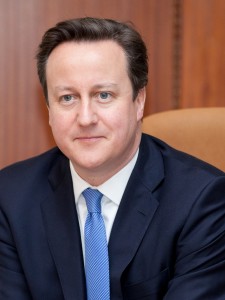
    Below is the text of the speech made by David Cameron, the Prime Minister, in the House of Commons on 21 April 2016.

    I beg to move,

    That an humble Address be presented to Her Majesty to offer the heartfelt good wishes of the House on the occasion of Her Majesty’s ninetieth birthday, expressing its deep gratitude for Her Majesty’s lifelong commitment to the service of the country and the Commonwealth, and praying that Her Majesty may long continue in health and happiness.

    That Mr Speaker, the Prime Minister, Chris Grayling, Jeremy Corbyn, Chris Bryant, Angus Robertson, Mr Nigel Dodds, Tim Farron, Hywel Williams, Dr Alasdair McDonnell, Danny Kinahan, Caroline Lucas and Mr Douglas Carswell do wait upon Her Majesty with the said Message.

    The motion stands in my name and those of the Leader of the Opposition and the leader of the Scottish National party.

    Today we celebrate the 90th birthday of our country’s longest reigning monarch. Her Majesty the Queen—our Queen—has lived a life of service that began long before her accession to the throne. In 1940, at just 14 years old, the then Princess Elizabeth made her first BBC radio broadcast, to bring comfort and hope to children who had been evacuated from Britain’s cities during the war. At 18, she became the first female member of the royal family to join the armed forces, joining the Women’s Auxiliary Territorial Service, training as a driver and a mechanic. At just 21, she made the exquisite and defining broadcast from Cape Town in which she uttered the famous words

    “my whole life whether it be long or short shall be devoted to your service”.

    Never has such an extraordinary promise been so profoundly fulfilled.

    As I said when we gathered in September to mark Her Majesty becoming our longest-reigning monarch, for all of us in this Chamber who seek to play our part in public service, it is truly humbling to comprehend the scale of service that Her Majesty has given to our country over so many years. If we think of the vital landmark in completing our journey to democracy when everyone over 21 was finally given the vote in 1928, it means that Her Majesty has presided over two thirds of our history as a full democracy. In that time, she has met a quarter of all the American Presidents since independence. She has provided counsel to no fewer than 12 Prime Ministers, and that is just in Britain. She has worked with well over 150 Prime Ministers in her other realms. If anyone can come up with a collective noun for a group of Prime Ministers, it is probably Her Majesty. I think I will leave it her to make some suggestions.

    I know that, like me, every Prime Minister has found Her Majesty’s counsel an incredibly valuable part of the job. Her perspective and length of experience are unique and utterly invaluable. Her first Prime Minister, in 1952, was Winston Churchill. Like him and all those who have followed, I can testify that she is quite simply one of the best audiences in the world. There is no one else in public life to whom any Prime Minister can really speak in total confidence, and no other country has a Head of State with such wisdom and such patience. There are some who suspect that, at times, I may have put her patience to the test. In the play “The Audience”, the character who portrays me goes on and on about Europe so long that she falls asleep, but I can guarantee that that has never happened. I may not have kept my promise not to bang on about Europe in every forum, but this is certainly the one where I try the hardest.

    As some have pointed out, Her Majesty is now entering her 10th decade and starting to take things a little easier, which is why in the last year alone she has only undertaken 177 public engagements. In 90 years, Her Majesty has lived through some extraordinary times in our world, from the second world war, when her parents, the King and Queen, were nearly killed as bombs were dropped on Buckingham Palace, to the rations with which she bought the material for her wedding dress; from presenting the World cup to England at Wembley in 1966, to man landing on the moon three years later; and from the end of the cold war to peace in Northern Ireland.

    Throughout it all, as the sands of culture shift and the tides of politics ebb and flow, Her Majesty has been steadfast—a rock of strength for our nation, for our Commonwealth and, on many occasions, for the whole world. As her grandson, Prince William, has said:

    “Time and again, quietly and modestly, the Queen has shown us all that we can confidently embrace the future without compromising the things that are important.”

    As Her Majesty said in her first televised Christmas broadcast in 1957, it is necessary to hold fast to “ageless ideals” and “fundamental principles”, and that requires a

    “special kind of courage…which makes us stand up for everything we know is right, everything that is true and honest.”

    In this modern Elizabethan era, Her Majesty has led a gentle evolution of our monarchy. From the first televised Christmas Day message, more than three decades before cameras were allowed into this House, to the opening up of the royal palaces and the invention of the royal walkabout, she has brought the monarchy closer to the people while retaining its dignity.

    Her Majesty’s role as supreme governor of the Church of England has also been incredibly important to her. She has often said that her life is inspired not only by her love of this great country but by her faith in God. As she has said,

    “I know that the only way to live my life is to try to do what is right, to take the long view, to give of my best in all that the day brings, and to put my trust in God.”

    In standing up for Christianity, she has been clear that the Church of England has a duty to protect the free practice of all faiths in our country.

    Her Majesty always performs her constitutional duty as Head of State impeccably, but as head of our nation she is held in even higher regard for the way in which she represents the United Kingdom. It has rightly been said by some constitutional experts that Her Majesty the Queen is the only person born in the United Kingdom who is not English, Scottish, Welsh or Northern Irish; she is all and none of those things and can represent all the nations of the United Kingdom on an equal basis in a way that no President ever could.

    The Queen has also constantly represented the nation when abroad. Foreign leaders from President Truman to Nelson Mandela and Ronald Reagan have all testified to her extraordinary ability both to represent this country and to understand the world. On her hugely important and healing state visit to Ireland in 2011, Her Majesty began her remarks in Irish and spoke about the history of the troubled relationship between the UK and Ireland. She did so with a kindness as well as an authority that went far beyond anything that would be possible for an elected politician.

    As a diplomat and ambassador for the United Kingdom, the Queen has represented our country on 266 official visits to 116 different countries. As I saw again at the Commonwealth Heads of Government meeting in Malta last year, she has made an extraordinary contribution to the future of our Commonwealth, growing it from eight Members in 1952 to 53 today. In doing so, she has helped to build a unique family of nations that spans every continent, all the main religions, a quarter of the members of the United Nations and nearly a third of the world’s population. The reach of Her Majesty’s diplomacy is without parallel—so much so that, as a result of a visit to Balmoral, she can claim to be the only woman ever to have driven the King of Saudi Arabia around in a car. I have that story sourced from both the participants.

    Through it all, Her Majesty has carried herself with the most extraordinary grace and humility. When people meet the Queen, they talk about it for the rest of their lives. She understands that, and she shows a genuine interest in all she meets. They can really see that she cares. As the constitutional historian Vernon Bogdanor has said, Her Majesty understands what might be called

    “the soul of the British people.”

    Her Majesty has done so much throughout her life that when it comes to her 90th birthday, there cannot be much that is new for her to try, but I am pleased to hear that she will be sampling the orange drizzle birthday cake baked by the winner of “The Great British Bake Off”, Nadiya Hussain.

    As she lights the first in a chain of 1,000 beacons, Her Majesty will be joined, as ever, by her family, including her son the Prince of Wales and her husband the Duke of Edinburgh, who has stood by her side throughout her extraordinary reign. They have both served this country with an unshakeable sense of duty, and their work, including the Duke of Edinburgh’s award scheme and the Prince’s Trust, has inspired millions of young people around the world. As we see in those delightful birthday portraits released this week, family has always been at the heart of Her Majesty’s long life.

    Mr Speaker, we are uniquely blessed in our country. Her Majesty’s service is extraordinary, and it is a joy for us all to celebrate, to cherish and to honour it. In June, the whole country will share in this special milestone, with a service of thanksgiving in St Paul’s cathedral and a wonderful royal street party. But today, I know the whole House and the whole country will want to join me in wishing Her Majesty the Queen health, happiness and, above all, a very special 90th birthday.

  • Greg Hands – 2016 Speech at Non-Executive Directors’ Conference

    Gregg Hands
    Greg Hands

    Below is the text of the speech made by Greg Hands, the Chief Secretary to the Treasury, on 21 April 2016.

    Good morning – it’s very good to be here today.

    For those of you who don’t know me, I’m Greg Hands, Chief Secretary to the Treasury – you may know me as the minister who gives your departments a hard time during the spending process!

    That is of course in the best traditions of the Treasury. And it’s particularly vital to meeting this government’s commitment to fixing the public finances.

    A responsible government should only spend what it can afford. And it is the job of the Chief Secretary to make sure that happens.

    As you will all be aware, the job has got a little harder recently. We have experienced a downturn in the economic forecast, largely due to factors outside of our control. That increases the need for government to keep the pressure up on public spending.

    So what I will be doing is searching for £3.5 billion of savings from public spending in 2019-20, on top of the existing savings plans set out at Spending Review 2015, in line with continuing action to ensure maximum efficiency from every pound of public spending.

    This is very much doable: the extra sum represents less than 0.5% of total government spending, or around 1% of departmental resource spending.

    These savings are smaller than those we have delivered before. Over the last five years government expenditure was reduced to 40%, from the unsustainable level of 45% of GDP (Gross Domestic Product), in 2010. That involved a fall in departmental spending of 1.7% in real terms per annum, from 2010-11 to 2015-16. Looking towards 2019-20, the projected savings are only 0.9% per annum in real terms.

    Perhaps even more importantly, at the same time as cutting the cost of government, we protected, and in many cases, improved core services:

    Crime has fallen by more than a quarter since 2010; there are more young people going to study full time at university than ever before; and record numbers of children are now taught in schools that are “good” or “outstanding”.

    So we have proven that we can do more with less.

    The challenge is that the electorate likes to say “more please”. The demand is always there for government to do more. That is invariably going to be an ongoing pressure.

    The situation is, therefore, that money remains tight, while expectations continue to increase. What this means for departments is that we all need to be even more alive to opportunities to become more efficient in everything we do.

    This is where the efficiency work initiated by the Cabinet Office creates real value.

    And there are some smart ways in which they have helped departments achieve further efficiencies:

    Whether that’s developing and using common platforms and services, to drive economies of scale.

    Rationalising our estates footprints, through property hubs, whereby departments share a smaller number of buildings in key locations…

    Or increasing the skills of the civil service, both generally, and among specific professions and functions, such as digital, commercial and change management.

    In addition, we are also merging the Major Projects Authority with Infrastructure UK, to strengthen the assurance and support afforded to departments and project teams, and you heard from Tony Meggs earlier.

    We’re introducing single departmental plans, to ensure that departments have the right resources and can deploy them where they are most needed, and you will shortly hear from John Manzoni more on that.

    We’re improving both our recruitment and training, to ensure that we have the right commercial and leadership skills in-house.

    And we’re undertaking a review of the government’s strategy for IT contracts, an area where I still think significant savings could be realised.

    So what can you, as non-executive directors, do to help drive efficiency forward?

    I would recommend five things:

    First, maintaining focus, within your departments, on the five cross-cutting priorities Sir Ian [Cheshire] has drawn up: talent, single departmental plans, arms’ length bodies, major projects and risk management.

    Second, making sure that your boards have sight of data on efficiency measures in the department, and scrutinise departmental programmes through the lens of efficiency.

    Third, ensuring that your departments have programmes that are in line with the work of the Cabinet Office’s efficiency unit: programmes to develop common platforms and services (where relevant); the rationalisation of estates,; and the upskilling of the workforce, particularly in relation to digital, commercial and leading and managing change.

    Fourth, ensuring robust engagement with the delivery of your Single Departmental Plan, particularly the commitments to drive efficiency.

    Fifth, making the most of your expertise, and getting involved in projects outside of your board – for example, taking a leadership role in departmental reviews on issues such as procurement, or advising specific programmes.

    I think what underpins all five actions is the need, across the Civil Service, to get a better understanding of costs and outputs.

    A lot of you will know about the transformation which took place in the prison service. They used their detailed understanding of the costs of running a prison, from meals, to staff, to building maintenance, to really drive down costs by holding service providers to account.

    But there is a lot of other good work going on in the public sector, looking at costs and productivity.

    In the Spending Review last year, we said we would establish a new Costing Unit to build a more forensic understanding of the cost of public services and drive productivity across the public sector’.

    This is now up and running, and using cost data to improve efficiency across government.

    The Costing Unit has done 11 projects so far, on a wide variety of topics such as the border, further education, criminal justice and mental health.

    To give you an example of the sort of savings which are up for grabs, the Border Force looked at their costs and outputs to think about their productivity and how they could achieve the same service for less. By looking at costs, they identified £200 million of potential savings out of £900 million, for instance by increasing the number of passengers using e-gates.

    That is the sort of saving which should be exciting all of us.

    And, to conclude, that is where your role, as non-executive directors, can really add value: by asking the tricky questions, suggesting solutions which you’ve seen work well elsewhere, and – to borrow a phrase from the founder of FedEx, Fred W Smith – making sure that your departments are “keeping the main thing the main thing”.

    Thank you for your work so far – and let’s keep up the pressure.

  • Queen Victoria – 1897 Queen’s Speech

    queenvictoria

    Below is the text of the Queen’s Speech given in the House of Lords on 19 January 1897. It was spoken by the Lord Chancellor on behalf of HM Queen Victoria.

    My Lords and Gentlemen,

    My relations with all the other Powers continue to be of a friendly character.

    The appalling massacres which have taken place in Constantinople and in other parts of the Ottoman Dominions have called for the special attention of the Powers who were Signatories to the Treaty of Paris. Papers will be laid before you showing the considerations which have induced the Powers to make the present condition of the Ottoman Empire the subject of special consultation by their Representatives at Constantinople. The conferences which the Six Ambassadors have been instructed to hold are still proceeding.

    The action undertaken by His Highness the Khedive of Egypt against the Khalifa, with my approval and assistance, has so far been entirely successful. His forces, supported by my officers and troops, have won back the fertile Province of Dongola to civilisation by operations conducted with remarkable skill, and the way has been opened for a further advance whenever such a step shall be judged to be desirable.

    My Government have discussed with the United States, acting as the friend of Venezuela, the terms under which the pending questions of disputed frontier between that Republic and my Colony of British Guiana may be equitably submitted to arbitration. An arrangement has been arrived at with that Government which will, I trust, effect the adjustment of existing controversies without exposing to risk the interests of any Colonists who have established rights in the disputed territory.

    It is with much gratification that I have concluded a Treaty for General Arbitration with the President of the United States, by which I trust that all differences that may arise between us will be peacefully adjusted. I hope that this arrangement may have a further value in commending to other Powers the consideration of a principle by which the danger of war may be notably abated.

    The rebellion in Matabeleland and Mashonaland has been repressed by the steadfastness and courage of the settlers, reinforced by my troops and by volunteers, both of English and Dutch race, from other parts of South Africa. I deplore the loss of valuable lives which these operations have entailed.

    The depressed condition of the sugar industry in my West Indian Colonies has seriously affected their prosperity, and I have appointed a Commission to investigate its causes, and, if possible, to suggest means for its amelioration.

    It is with much regret and with feelings of the deepest sympathy that I have heard that, owing to the failure of the autumn rains, scarcity and famine affect a large portion of my Dominions in India. My Government in that country are making every effort to mitigate suffering and to lessen the calamity. The development of railways and irrigation works, and the forethought given through a long series of years to the preparation of the most effective arrangements for alleviating distress caused by famine, make their task more hopeful than in previous visitations. My people throughout my Dominions at home and in India have been invited to second with their liberality the exertions of my Government. Tapers showing the extent of the famine, and the measures taken to relieve suffering, will be laid before you.

    Plague has also made its appearance in the seaport towns of Bombay and Karachi, and, notwithstanding the precautions adopted by the local authorities, shows no signs of decrease. I have directed my Government to take the most stringent measures at their disposal for the eradication of the pestilence.

    Gentlemen of the House of Commons,

    The Estimates for the year will be laid before you. While desirous of guarding against undue expenditure, I have felt that the present condition of the world will not permit you to depart from the spirit of prudent foresight in which you have during recent years provided for the defence of my Empire.

    My Lords and Gentlemen,

    A measure for the Promotion of Primary Education, by securing the Maintenance of Voluntary Schools, will be laid before you. If time permits, you will be invited to consider further proposals for Educational Legislation.

    It is desirable to make better provision for the compensation of workpeople who suffer from accidents in the course of their employment, and a Bill, having that object in view, will be submitted to you.

    Your consent will be asked to provisions which, in the judgment of the military authorities, are required for adding to the efficiency of the military defences of the Empire.

    A Bill will be submitted to you to improve the arrangements for water supply in this metropolis.

    In order to promote the interests of agriculture, which are of paramount importance in Ireland, you will be asked to consider a Bill for the establishment of a Board of Agriculture in that country.

    Further legislative proposals will be brought before you, if the time at your disposal suffices for the purpose.

    Bills for admitting the evidence of accused persons, for amending the law with respect to bills of sale and the registration of land, for revising the Acts with respect to the formation and administration of limited Companies, for the amendment of the Agricultural Holdings Act in Great Britain, for the exclusion of the goods manufactured in the prisons of other countries, for the establishment of Reformatories for Inebriates, and for amending the existing procedure with respect to private Bills coming from Scotland and Ireland, have been prepared, and, if opportunity for considering them should be found, will be laid before you.

    I heartily commend your important deliberations to the guidance of Almighty God.

  • Queen Victoria – 1896 Queen’s Speech

    queenvictoria

    Below is the text of the Queen’s Speech given in the House of Lords on 11 February 1896. It was spoken by the Lord Chancellor on behalf of HM Queen Victoria.

    My Lords and Gentlemen,

    I continue to receive from other Powers assurances of their friendly sentiments.

    An agreement has been concluded between my Government and that of the French Republic, having for its principal object the more secure establishment of the independence of the Kingdom of Siam. A copy of it will be laid before you.

    The Commissioners for the delimitation of the frontier separating my Indian Empire and the territory of Afghanistan from the dominions of the Emperor of Russia have agreed upon a line which has been accepted by myself and by the Emperor.

    The Government of the United States have expressed a wish to co-operate in terminating differences which have existed for many years between my Government and the Republic of Venezuela upon the boundary between that country and my colony of British Guiana. I have expressed my sympathy with the desire to come to an equitable arrangement, and trust that further negotiation will lead to a satisfactory settlement.

    The Sultan of Turkey has sanctioned the principal reforms in the government of the Armenian provinces, for which, in conjunction with the Emperor of Russia and the President of the French Republic, I have felt it my duty to press. I deeply regret that a fanatical outbreak on the part of a section of the Turkish population has resulted in a series of massacres in those provinces, which have caused the deepest indignation in this country. Papers on these transactions will be laid before you.

    A sudden incursion into the South African Republic by an armed force from the territories under the control of the British South Africa Company resulted in a deplorable collision with the Burgher forces.

    My Ministers, at the earliest possible moment, intervened to prohibit, through the High Commissioner, this hostile action, and to warn all my subjects throughout South Africa against taking part in aid thereof.

    The origin and circumstances of these proceedings will form the subject of a searching Inquiry.

    The President of the Republic, acting in this matter with moderation and wisdom, agreed to place the prisoners in the hands of my High Commissioner, and I have undertaken to bring to trial the leaders of the expedition.

    The conduct of the President on this occasion, and the assurances which he has voluntarily given, lead me to believe that he recognizes the importance of redressing the legitimate grievances of which complaint has been made by a majority of the persons now inhabiting the Transvaal.

    The condition of affairs in Ashanti, and the violation by the King of Kumasi of the provisions of the Treaty of 1874 in regard to the suppression of human sacrifices, the freedom of trade, and the maintenance of communications, have for some years past engaged the serious attention of my Government. All endeavours to induce the King to observe his engagements having proved fruitless it became necessary to send an armed expedition to Kumasi to enforce the conditions which he had been called upon to fulfil.

    While I rejoice to be able to announce that the objects of the expedition have been achieved without bloodshed, I have to deplore the loss from the severities of the climate of some valuable lives, including that of my beloved son-in-law, His Royal Highness Prince Henry of Battenberg, who voluntarily placed his services at the disposal of myself and his adopted country.

    I and my dear daughter are greatly touched and comforted in this heavy bereavement by the widespread sympathy that has been shown by my subjects throughout the Empire at home and abroad.

    I trust that the establishment of an efficient British control at Kumasi will put a stop to the barbarous customs which have hitherto prevailed there, and, by preventing the inter-tribal conflicts which have interfered with the development of the country, will tend to the benefit of the people, and to the interests of peace and commerce.

    Papers on the above subjects will shortly be laid before you.

    On the north-west frontier of my Indian Empire the measures taken last year to secure an effective control over Chitral have been successful, and the engagements entered into by the border tribes for the maintenance and protection of the road from Peshawur have been loyally carried out without molestation or disturbance.

    Gentlemen of the House of Commons,

    I have directed the Estimates for the service of the year to be laid before you. They have been prepared with the utmost regard to economy; but the exigencies of the time require an increased expenditure.

    My Lords and Gentlemen,

    The extension and improvement of the Naval Defences of the Empire is the most important subject to which your efforts can be directed, and will doubtless occupy your most earnest attention.

    I regret to say that the condition of agriculture is disastrous beyond any recent experience. Measures will be laid before you, of which the object will lie to mitigate the distress under which the classes labour who are engaged in that industry.

    Elementary schools under voluntary management are a valuable portion of our educational system, and their condition, which is in many places precarious, requires further assistance from public resources.

    The compensation to workmen for injuries received in the course of their ordinary employment has been under the consideration of Parliament upon several occasions. A measure dealing with the subject will be laid before you.

    Legislation will be submitted to you for the amendment of the defects which experience has shown to exist in the provisions of the various Land Acts, which have been passed in respect to Ireland.

    A measure for amending and consolidating the Law relating to public health in Scotland will be laid before you.

    Measures have also been prepared for the avoidance and settlement of trade disputes, for facilitating the construction of light railways in the United Kingdom, for the regulation of public companies, for checking the importation of destitute aliens, for amending the law with respect-to the supply of water to the metropolis, for the institution of a Board of Agriculture in Ireland, and for amending the Law of Evidence.

    I commend these weighty matters to your experienced judgment, and pray that your labours may be blessed by the guidance and favour of Almighty God.

  • Queen Victoria – 1895 Queen’s Speech

    queenvictoria

    Below is the text of the Queen’s Speech given in the House of Lords on 5 February 1895. It was spoken by the Lord Chancellor on behalf of HM Queen Victoria.

    My Lords, and Gentlemen,

    My relations with foreign Powers remain on a friendly and satisfactory footing.

    An Agreement has been concluded, after protracted negotiations, between my Government and that of the French Republic for the settlement of the frontier between my Colony of Sierra Leone and the neighbouring French possessions.

    I regret to say that the war between China and Japan still continues. I have maintained a close and cordial understanding with the Powers interested in those regions, and shall lose no favourable opportunity of promoting a peaceful termination of the contest.

    In consequence of reports which reached my Government of excesses committed by Turkish troops, regular or irregular, on Armenians in a district of Asia Minor, I thought it right, in conjunction with other Powers, to make representations to the Porte. The Sultan has declared his intention of severely punishing any of his officers or soldiers who have been guilty of such acts, and has sent a Commission to conduct an investigation on the spot. Delegates from the Powers which have Consuls at Erzeroum will accompany this Commission.

    Gentlemen of the House of Commons,

    The Estimates for the year will be laid before you without delay.

    My Lords, and Gentlemen,

    I am happy to observe the striking fact that in Ireland offences of all kinds against the law have sunk during the past year to the lowest level hitherto marked in official records.

    Proposals will be submitted to you for remedying defects which experience has brought to light in the working of the Law of Landlord and Tenant in Ireland; and for dealing with certain evicted tenants, whose situation still constitutes a peril to social order.

    A Bill will be presented to you dealing with the Church Establishment in Wales.

    Bills will also be laid before you having for their object the popular control of the Liquor Traffic; the abolition of plural voting; and provision for the payment of the charges of the Returning Officers at elections.

    The Commission which I issued in 1893 to report on the best means of unifying the Government of the Metropolis has presented its Report, and a Bill will be laid before you founded on its recommendations.

    I regret that Agriculture continues in a seriously depressed condition. This subject is still under the consideration of the Commission which I appointed in the Autumn of 1893. In the meantime, a proposal will be submitted to you for facilitating the construction of Light Railways, a measure which will, I trust, be found beneficial to the rural districts.

    Bills will also be presented for the promotion of conciliation in trade disputes, and for the amendment of the Factory Acts.

    You will be asked to consider measures for the completion of the system of County Government in Scotland, and for further legislation in respect of the Crofter population in that country.

    I pray that the blessing of Almighty God may rest upon your arduous and responsible labours.

  • Queen Victoria – 1894 Queen’s Speech

    queenvictoria

    Below is the text of the Queen’s Speech given in the House of Lords on 12 March 1894. It was spoken by the Lord Chancellor on behalf of HM Queen Victoria.

    My Lords, and Gentlemen,

    I regret, in view of the recent completion of your arduous labours, to have to summon you so soon to renew them.

    My relations with foreign Powers continue to be amicable and satisfactory.

    The negotiations between my Government and that of the Emperor of Russia for the settlement of frontier questions in Central Asia are proceeding in a spirit of mutual confidence and goodwill, which gives every hope of an early and equitable adjustment.

    Negotiations are also in progress with the Government of the United States for the purpose of executing the Award of the Court of Arbitration on the question of the Seal Fisheries in the Behring Sea.

    I have pleasure in also informing you that the protracted and intricate arrangements for fixing the frontier between my Burmese dominions and those of the Emperor of China have been brought to a satisfactory conclusion by the signature of a formal Convention.

    Two collisions, accompanied by a lamentable loss of life, have lately occurred with French colonial forces in West Africa. I await the result of the inquiry instituted with regard to these deplorable occurrences in the full confidence that they will be examined in the calm and dignified temper that befits two great nations on such an occasion.

    Gentlemen of the House of Commons,

    The Estimates for the Public Service of the year will be laid before you. They will be found to make full and adequate provision for the defence of the Empire.

    My Lords, and Gentlemen,

    The recent improvement in the state of Ireland has been continuous and marked, and agrarian crime has been reduced under the administration of the ordinary law to the lowest point that has been reached for the last fifteen years.

    The condition, however, of a considerable body of evicted tenants in that country requires early attention, and a measure will be submitted to you with a view to a reasonable settlement of a question deeply affecting the well-being of Ireland.

    Bills will be submitted to you for the amendment of registration, and the abolition of plural voting at Parliamentary elections.

    Measures will be laid before you dealing with the Ecclesiastical Establishments in Wales and Scotland.

    There will also be presented Bills having for their object the equalization of rates in London; the establishment of a system of Local Government in Scotland, on the same basis as that recently accorded to England and Wales, and the exercise of a direct local control over the liquor traffic.

    You will also be asked to consider measures for the promotion of conciliation in labour disputes; for the amendment of the Factory and Mines Acts; and for the reform of the present method of conducting inquiries into fatal accidents in Scotland.

    Upon all your labours and deliberations I humbly implore the blessing and guidance of Almighty God.

  • Queen Victoria – 1893 Queen’s Speech

    queenvictoria

    Below is the text of the Queen’s Speech given in the House of Lords on 31 January 1893. It was spoken by the Lord Chancellor on behalf of HM Queen Victoria.

    My Lords, and Gentlemen,

    I continue to hold friendly and harmonious relations with all foreign Powers.

    Their declarations in every quarter are favourable to the maintenance of European peace.

    In connection with the approaching evacuation of Uganda by the British East Africa Company, I have deemed it expedient to authorise a Commissioner of experience and ability to examine on the spot, with adequate provisions for his safety, into the best means of dealing with the country, and to report to my Government upon the subject.

    In view of recent occurrences in Egypt, I have determined on making a slight augmentation in the number of British troops there stationed. This measure does not indicate any change of policy, or any modification of the assurances which my Government have given from time to time respecting the occupation of that country.

    The Khedive has declared, in terms satisfactory to me, his intention to follow henceforward the established practice of previous consultation with my Government in political affairs, and his desire to act in cordial co-operation with it.

    In relation both to Egypt and Uganda, papers in continuation of those heretofore presented will at once be laid before you.

    Gentlemen of the House of Commons,

    The Estimates of Charge necessary for the Public Service in the coming financial year have been framed, and will be laid before you at an early date.

    My Lords, and Gentlemen,

    I have observed with concern a wide prevalence of agricultural distress in many parts of the country. It is to be hoped that, among the causes of the present depression, some may be temporary in their nature. But I do not doubt that you will take this grave matter into your consideration, and make it a subject of careful inquiry.

    The Proclamations recently in force, which placed Ireland under exceptional provisions of law, have been revoked; and I have the satisfaction of informing you that the condition of that country with respect to agrarian crime continues to improve.

    A Bill will be submitted to you, on the earliest available occasion, to amend the provision for the Government of Ireland. It has been prepared with the desire to afford contentment to the Irish people, important relief to Parliament, and additional securities for the strength and union of the Empire.

    Bills will be promptly laid before you for the amendment of the system of registration in Great Britain; for shortening the duration of Parliaments; and for establishing the equality of the franchise by the limitation of each elector to a single vote.

    There will also be proposed to you various Bills bearing on the condition of labour, among which are measures in relation to the liability of employers, the hours of labour for railway servants, and a Bill to amend the Law of Conspiracy.

    Your attention will likewise be invited to measures for the further improvement of Local Government, including the creation of Parish Councils; for the enlargement of the powers of the London County Council; for the prevention of the growth of new vested interests in the Ecclesiastical Establishments in Scotland and in Wales; and for direct local control over the liquor traffic; together with other measures of public utility.

    I humbly commend your labours upon these and upon all other subjects to the guidance of Almighty God.

  • Queen Victoria – 1892 Queen’s Speech

    queenvictoria

    Below is the text of the Queen’s Speech given in the House of Lords on 9 February 1892. It was spoken by the Lord Chancellor on behalf of HM Queen Victoria.

    I am persuaded that you have deeply participated in the terrible sorrow which has afflicted me and my family in the loss, at the moment when the prospects of his life appeared the happiest, of my dearly beloved Grandson, Prince Albert Victor, Duke of Clarence and Avondale.

    It has been a solace to us in our grief to have received from all classes and conditions of my subjects, from all parts of my Empire, as well as from all foreign countries, the most touching assurances of their deep sympathy under this grievous affliction, and the expression of their affectionate regard and appreciation for the dear young Prince whom they have lost by this great calamity.

    My relations with other Powers continue to be friendly. I have lost in the Viceroy of Egypt a loyal ally, whose wise government had, in the space of a few years, largely contributed to restore prosperity and peace to his country.

    I have an entire confidence that the same sagacious policy will be followed by his son, who has been named as his successor, in accordance with previous Firmans, by His Imperial Majesty the Sultan.

    An Agreement has been concluded with the United States, defining the mode in which the disputes as to seal fisheries in Behring’s Sea shall be referred to arbitration.

    Zanzibar has been established as a free port by his Highness the Sultan, with my concurrence. I trust that this measure will conduce both to the development of the Sultan’s dominions and to the promotion of British commerce on the East African Coast.

    Gentlemen of the House of Commons,

    The Estimates for the Public Service of the ensuing year will be laid before you. They have been prepared with a due regard to financial economy.

    My Lords, and Gentlemen,

    Proposals will be laid before you for applying to Ireland the general principles affecting Local Government, which have already been adopted in Great Britain; and I trust that it may be possible to consider the provisions as to English Local Government which, for want of time, it was necessary to omit from the former Bill.

    A measure for increasing the number of small holdings of land in agricultural districts in Great Britain will be submitted for your approval.

    You will be asked to consider a Bill for extending the advantages of Assisted Education to Ireland, and for other purposes connected with Elementary Education in that country.

    A scheme for modifying the existing, system of procedure on Private Bills, so far as it affects Scotland and Ireland, will be brought before you.

    A measure will be introduced for the improvement of the Legislative Councils. in India.

    A Bill will be laid before you for relieving Public Elementary Schools in England from the present pressure of local rates.

    Proposals for improving the discipline of the Established Church in regard to moral offences; for enabling accused persons to be examined on their trial; for revising the existing; Agreements between the Government and the Bank of England; and for amending the Law with respect to the liability of employers for injuries incurred in their employment, will also be commended to your attention.

    I pray that Almighty God may guide you in the performance of your weighty functions.

  • Queen Victoria – 1890 Queen’s Speech

    queenvictoria

    Below is the text of the Queen’s Speech given in the House of Lords on 11 February 1890. It was spoken by the Lord Chancellor on behalf of HM Queen Victoria.

    My Lords and Gentlemen,

    My relations with other Powers continue to be of a friendly character.

    An armed force under a Portuguese officer was dispatched during the autumn from the Colony of Mozambique into territory where British settlements had been formed, and where there are native tribes who have been taken under my protection. A collision, attended with bloodshed, took place, and acts were committed inconsistent with the respect due to the flag of this country. The Portuguese Government have now, at my request, promised to withdraw their military forces from the territory in question.

    A Conference of the Powers interested in the suppression of the Slave Trade has been convoked at Brussels by the King of the Belgians. I earnestly hope that the results of its deliberations will advance the great cause for which it is assembled.

    A Commercial Convention has been concluded with the Khedive of Egypt, and a Provisional Arrangement for the adjustment of pressing fiscal questions has been made with the Government of Bulgaria.

    Papers on all these questions will be presented to you.

    The Convention concluded by me with the Emperor of Germany and the Republic of the United States with, respect to the Government of Samoa will be laid before you, together with the Protocols of the Conference; as also a Treaty which has been concluded with the United States for amending the Law of Extradition between the two countries. The latter instrument still awaits the ratification of the Senate.

    The disordered condition of Swaziland having rendered it necessary to make provision for the better government of that territory, the independence of which was recognised by the Convention of London, I have, acting in conjunction with the President of the South African Republic, sent a Commissioner to learn the views of the Swazis and of the white settlers.

    I shall await with lively interest the result of the Conference now being held to discuss the important question of the federation of the Australian Colonies. Any well-considered measure which, by bringing these great Colonies into closer union, will increase their welfare and strength, will receive my favourable consideration.

    Gentlemen of the House of Commons,

    The estimates of the year for defraying the cost of the Government of the country will be laid before you. They have been drawn with a due regard to economy and to the necessities of the public service.

    My Lords and Gentlemen,

    The continued improvement in the state of Ireland, and the further diminution in the amount of agrarian crime, have made it possible very largely to restrict the area in which it is necessary to deal with certain offences by summary process. Proposals for increasing under due financial precaution the number of occupying owners; for extending to Ireland the principles of local self-government which have already been adopted in England and Scotland, so far as they are applicable to that country; and for improving the material well-being of the population in the poorer districts, will be submitted to you.

    A Bill for facilitating and cheapening the transfer of land in England will be again presented to you.

    Provisions will be submitted to you for diminishing the difficulty and cost which at present attend the passage of private legislation required for Scotland.

    A Bill for improving the procedure by which tithe is now levied, and for facilitating its redemption, will be laid before you.

    I have appointed a Commission to report upon the best means of improving the economic conditions which affect the inhabitants of some parts of the Western Highlands and Islands of Scotland.

    Your attention will be invited again to a Bill for ascertaining the liability of employers in case of accidents, and to a measure for improving the procedure in winding up insolvent Companies under the Limited Liability Acts.

    There will be laid before you Bills for the consolidation and amendment of the Laws with respect to public health in the Metropolis, and to the dwellings of the working classes; and also a Bill for the better regulation of savings banks and friendly societies.

    Your attention will be directed to the state of the accommodation now provided in camps and barracks, and you will be asked to make better provision for the distribution as well as for the health and comfort of my troops.

    I commend you earnestly in the discharge of your high responsibility to the care and guidance of Almighty God.