Tag: Speeches

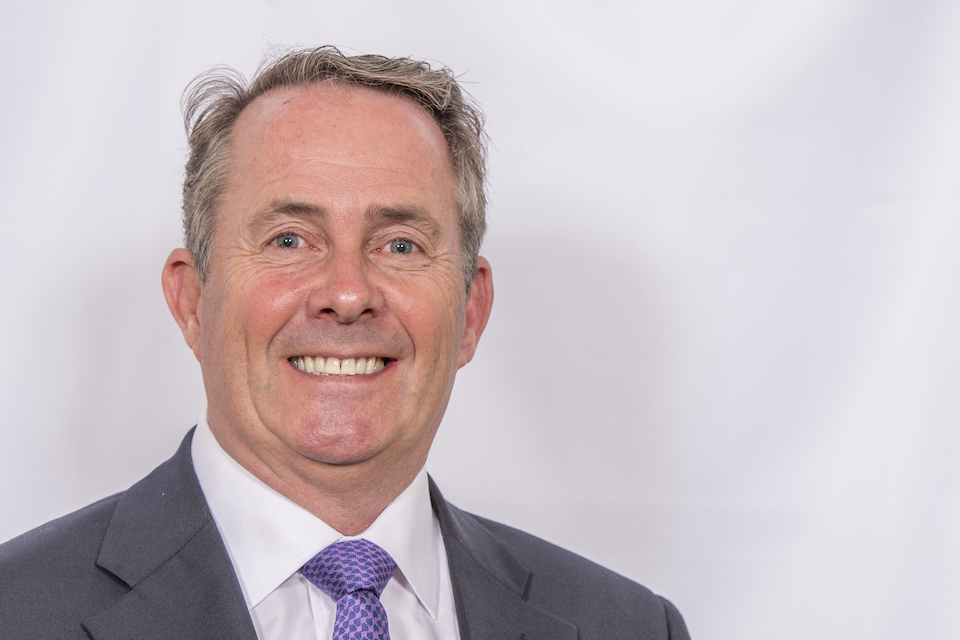
  • David Lidington – 2018 Statement on the Infected Blood Inquiry

    Below is the text of the statement made by David Lidington, the Minister for the Cabinet Office, in the House of Commons, on 8 February 2018.

    I am announcing today the appointment of Sir Brian Langstaff to head the public inquiry into the infected blood scandal. The inquiry will be established under the 2005 Inquiries Act, with full powers, including the power to compel the production of documents, and to summon witnesses to give evidence on oath.

    In relation to the appointment of the chair, the Lord Chief Justice was asked to recommend a judge who, in his view, would be best suited to the task. The Lord Chief Justice recommended Sir Brian Langstaff: a highly respected and hugely experienced High Court judge. I have accepted the Lord Chief Justice’s recommendation.

    Sir Brian will be the full-time chair of the inquiry from 1 May following his retirement from the High Court. However, in order that those who have been affected by this tragedy face no further undue delay, he will use the intervening period to conduct a further consultation on the inquiry’s terms of reference.

    The infected blood scandal of the 1970s and 1980s was an appalling tragedy that should never have happened. The victims of this tragedy who have endured so much pain and hardship deserve answers. It is crucial that their views are properly reflected in the inquiry’s terms of reference. Sir Brian will want to listen carefully to the voices of those that have suffered before making a recommendation to me on what the scope of the inquiry should be. I will return to Parliament with the final terms of reference as soon as this process has been completed.

    The Government will ensure that the inquiry has the resources that it needs to complete its work. The inquiry will, of course, also be independent of the Government.

    It is very important that the inquiry can identify why and how this tragedy occurred and provide answers for all the victims who have suffered so terribly, and can identify lessons to be learned so that a tragedy of this scale can never happen again.

  • Harriett Baldwin – 2018 Statement on Same-Sex Marriage in Bermuda

    Harriett Baldwin

    Below is the text of the statement made by Harriett Baldwin, the Minister of State at the Department for International Development, in the House of Commons on 8 February 2018.

    We are obviously disappointed about the removal of same-sex marriage in Bermuda. The Domestic Partnership Act, to which the Governor of Bermuda assented yesterday, ensures that Bermudians who have been legally married in Bermuda since the Supreme Court decision will retain their married status and enjoy the same legal rights as those in domestic partnerships.

    Less than a year ago, same-sex couples had no legal recognition at all under Bermudian law. While the Act withdraws the entitlement for same-sex couples to marry, it replaces it with a provision for domestic partnerships for all couples, regardless of gender. The intent of the Act is to provide domestic partners with the same benefits as married couples, including provision for pensions, inheritance, healthcare, tax and immigration.

    After full and careful consideration of Bermuda’s constitutional and international obligations, the Secretary of State decided that in these circumstances, it would not be appropriate to use the power to block legislation, which can only be used where there is a legal or constitutional basis for doing so, and even then, only in exceptional circumstances. It is important to recognise that the regime for domestic partnerships implemented by Bermuda in its Domestic Partnership Act can also meet the European Court of Human Rights requirement for legal recognition of same-sex relationships.

    The Government are committed to promoting lesbian, gay, bisexual and transgender equality globally through projects, partnerships and persuasion. In engaging with the British overseas territories, we have to respect that they are separate, self-governing jurisdictions with their own democratically elected representatives and the right to self-government.

  • Nusrat Ghani – 2018 Speech on Cleaner Buses

    Below is the text of the speech made by Nusrat Ghani, the Conservative MP for Wealden, on 8 February 2018.

    Opening remarks

    Thank you David [Begg, Chair] for that welcome.

    It’s a real pleasure to join you for today’s (8 February 2018) summit.

    This is my first formal speech since joining the Department for Transport in the recent reshuffle, and I was delighted to take on responsibility for government bus and coach policy.

    Importance of industry

    I’m a huge advocate for buses.

    Catering for over 5 billion passenger journeys a year.

    That’s two thirds of all public transport trips.

    Buses are the most effective and affordable way to keep busy towns and cities moving.

    And we’re very fortunate to have such excellent coach services in this country too.

    Providing a comfortable, reliable and great value alternative to long distance train and car travel.

    Put simply, this industry is indispensable.

    No other form of public transport offers anything like the benefits that you offer.

    Whether it’s capacity, geographical coverage, ease of use, cost, efficiency – I could go on.

    For me most importantly, buses provide a unique answer to most of the local transport challenges that we face.

    Yet so fundamental are they to British life that they’re often taken for granted.

    That’s something that I want to change, with your support.

    I want to champion buses and coaches.

    To shout about the benefits of bus travel.

    How they bind our towns and cities together.

    How they provide essential links for rural communities, such as the one I represent in Wealden, East Sussex.

    And how they’ll become even more vital in years to come.

    Congestion and air pollution

    Of course, one of the biggest obstacles to growth is road congestion.

    And that’s nothing new.

    Buses have been hampered by congestion since the days of the horse-drawn omnibus.

    But I want to use the Bus Services Act as a way of encouraging authorities and bus companies to make services more attractive, and create a shift away from car use.

    I know it’s a big challenge.

    But road transport is going to be revolutionised over the next 3 decades.

    New vehicle technologies.

    New infrastructure.

    The phasing out of fossil fuels.

    And digital communications transforming the way passengers plan and use transport….

    All of which provide an unprecedented opportunity for buses.

    We have to hammer home our message:

    That rather than contributing to the problem of nose-to-tail traffic and harmful pollution.

    Buses and coaches are a part of the solution.

    You’ll certainly have the government’s support.

    We have already committed £3.5 billion for measures to improve air quality.

    Last year we published plans to tackle traffic pollution, and announced a £220 million Clean Air Fund in the Budget.

    Later this year we’ll be unveiling our Clean Air Strategy.

    And hosting an international zero-emission vehicle summit.

    The opportunity here is to position the bus industry as a leader in environmentally friendly transport.

    As a catalyst for greener, smarter travel.

    And as the most practical answer to the long term mobility needs of our towns and cities.

    Low emission buses

    Britain is already a pioneer in low carbon buses.

    And the industry can be proud of what it’s achieved in recent years.

    We’ve got great companies like ADL, Wrightbus and Optare manufacturing green buses.

    We have almost 6,000 low carbon buses in service.

    The highest number of electric buses in Europe.

    And we also have the largest hybrid fleet of over 3,000 vehicles.

    And in 2015, our Low Emission Bus Scheme helped put more 300 green buses on roads across Britain.

    And that was followed in November 2016 with a further £100 million investment.

    We welcome further interest and participation in these schemes.

    The sooner we get more low emission buses on the road, the faster we’ll reap the benefits.

    So today I’m pleased to announce that we’ll be awarding nearly £40 million of that funding to 20 local authorities as part of the Clean Bus Technology Fund.

    This will be used to retrofit buses with technology to reduce tailpipe emissions of nitrogen dioxide.

    Originally we invited authorities to apply for a funding total of £30 million now and £10 million in 2 years’ time.

    But we received a large number of strong applications for this round.

    And we wanted to start realising the air quality benefits as quickly as possible.

    So we’ve made the full amount – just under £40 million – available now to fund two-year projects.

    It will enable older vehicles to meet the minimum standards in the Clean Air Zone Framework, particularly in areas exceeding statutory limits.

    And I am going to announce the successful bidders:

    West Yorkshire.

    Bristol and Bath.

    Gateshead.

    Leeds City.

    Transport for West Midlands.

    Leicester City.

    Oxford City.

    Coventry.

    Nottinghamshire.

    Transport for Greater Manchester.

    North Tyneside.

    Nottingham City.

    Transport for London.

    Sheffield City.

    Sefton MBC Air Quality.

    Southampton City.

    Derby.

    Essex.

    South Tyneside.

    And finally, Newcastle City.

    I’m grateful to all the bus companies who had a hand in the applications.

    Ultimately, we see dedicated ultra low emission buses as the long-term answer – but retrofitting offers a very attractive alternative for now.

    Not all local authorities were successful with their bids.

    But there will be further opportunities for councils to receive money for retrofitting through the Clean Air Fund.

    As local authorities prepare to set out their initial plans for reducing nitrogen dioxide concentrations by the end of March, retrofitting technology will help ensure that more buses help clean up the air in our cities.

    And as we look to the future, technology will give us other opportunities to improve the efficiency of buses.

    For example, if we know how much passenger demand there is for a particular route or service, we can look at providing the appropriate size of vehicle for the job…..

    Not just cutting the number of empty seats.

    But cutting costs and emissions too.

    Bus Services Act

    I’ve already mentioned the Bus Services Act, and how it’s designed to make bus services more attractive to the travelling public.

    That’s something I will be focusing on in the months ahead.

    New enhanced partnership powers will enable local authorities and bus operators to work together to improve services.

    And new franchising powers, replacing the existing Quality Contract Scheme, will also improve the management of buses in the regions where they apply.

    I’m keen to see the open data provisions in the act benefit passengers too.

    One of the existing barriers to passenger growth is that it can be difficult to obtain information on bus fares, routes or times.

    Where the information does exist – on the web, for example – it can be inconsistently presented, or be buried in unwieldy and hard-to-decipher timetables.

    But by making data open and accessible, software firms can create apps that package and deliver the relevant information to smartphones at the click of an icon.

    So the open data should make it easier for passengers to use the bus network.

    We published guidance on implementing the measures in the Act last November.

    And we’ll publish further regulations and guidance this year.

    Conclusion

    So – to sum up – I see the future as full of opportunity.

    If buses are crucial to our transport system today….

    Then as road transport is transformed over the coming decades….

    They will become more important than ever.

    And I’ll be doing everything I can to spread the message.

    I’ll be getting around the industry over the next few months, and meeting as many of you as possible.

    To hear your views on how we can best support growth.

    But one thing is absolutely clear.

    The key to success is partnership. Government and bus industry, local authorities and operators working together. For the benefit of the passenger, for the benefit of bus operators, and for the benefit of Great Britain.

  • Maria Caulfield – 2018 Speech on Autism

    Below is the text of the speech made by Maria Caulfield, the Conservative MP for Lewes, in the House of Commons on 6 February 2018.

    As a female MP, I am honoured to have secured this Adjournment debate on the 100th anniversary of women gaining the vote.

    Last week saw the launch in Parliament of the “Autism and education in England 2017” report of an inquiry, which was co-chaired by myself and my hon. Friend the Member for Bexhill and Battle (Huw Merriman), that formed part of the work of the all-party parliamentary group on autism. The report came about due to our first-hand experience as new MPs of listening to many parents who visited our surgeries to tell us their stories of the difficulty of getting support for a child with autism.

    The often invisible nature of autism means that it can be difficult for a child to get a diagnosis. The process can be long and difficult for parents, often taking years rather than months. Parents feel that the extreme pushing that they have to undertake to get a diagnosis for their child often means that they are labelled as bad or difficult parents who just cannot cope with a naughty child. As a result, a diagnosis can be missed or delayed by many years. Many parents tell me—I know that colleagues have had the same experience—that they often have to resort to paying for a private assessment so that their child can get a diagnosis and start receiving the support that they need.

    The problems for parents and autistic children do not end even once a diagnosis has been made. The lack of support that they receive in our schools and education system is shocking, and teachers, who desperately want to help these children, can feel inadequate and unable to offer support because they have had little or no training. I am pleased to say that that will change this year, because initial teacher training will include dealing with children on the autistic spectrum. However, that will not tackle the lack of training for existing teachers and headteachers.

    Jim Shannon (Strangford) (DUP)

    I congratulate the hon. Lady on securing this debate. We are all in the Chamber for the same reason: we know constituents who have faced such problems. A Northern Ireland Department of Health report confirmed that there has been a 67% increase in the number of school-age children across all trust areas in Northern Ireland who are diagnosed with autism. I am sure that the figure for the hon. Lady’s area is similar, so does she agree that that massive increase must lead to an increase in the support for such children in schools? If each class has a classroom assistant, it is a vital step towards improving educational outcomes for children with autism.

    Maria Caulfield

    I agree. Our report found that as many as one in 100 children attending our schools is on the autistic spectrum, which means that a significant number of children need our support.

    Our inquiry heard from teachers who told us not only how they struggle to support students in mainstream schools because of a lack of special educational needs provision, but about the difficulties they experience because they have not received training. That comes on ​top of a lack of specialist provision for children for whom mainstream education is not sufficient. However, such children are often placed in mainstream education, which just cannot cope with their needs.

    Dame Cheryl Gillan (Chesham and Amersham) (Con)

    I congratulate my hon. Friend and my hon. Friend the Member for Bexhill and Battle (Huw Merriman) on their first-class report, which will make a big contribution in this area and a big difference to people’s lives.

    Does my hon. Friend the Member for Lewes (Maria Caulfield) agree it is not just initial teacher training—autism awareness training is being included in that training for the first time this year—but the training of teachers who are already in place, such as by the Autism Education Trust, that is making a difference? In the light of her study, would she go further and say that school leaders, school governors and other people involved in educational institutions should also be trained in autism awareness?

    Maria Caulfield

    My right hon. Friend is correct, and one of our report’s findings is that the training needs to go wider than just teachers. I will touch on that when I come to our recommendations.

    Given the lack of support, children on the autism spectrum often end up in crisis. If they had received the support they needed in the first place, and if they had received a quicker diagnosis, such children would often thrive in school.

    Melanie Onn (Great Grimsby) (Lab)

    I commend the hon. Lady on the report of her inquiry, which she co-chaired with the hon. Member for Bexhill and Battle (Huw Merriman).

    Cora Leeson, who is a passionate campaigner and advocate for children with autism in my constituency, contacted me after the launch of the report to highlight her concern about the number of fixed-term exclusions from school of children with unidentified SEN, including those with autism. Does the hon. Lady share my concern about the educational attainment of children who are being excluded because they have not received a diagnosis or because, if they do have a diagnosis, they are not receiving appropriate support within mainstream schooling?

    Maria Caulfield

    The hon. Lady is right. Some 17% of children with autism have been suspended from school at some point. Of that number, 48% have been suspended three or more times, and 4% have been permanently excluded, so the current school system is not working for a significant number of children. That has consequences in later life because, as experts told our hearings, if these children have the right support, they should be doing well in school. Because of their educational outcomes, only 16% of autistic adults currently end up in full-time work, and only 32% end up in any type of work at all. That tells us that their experience in the early years of being excluded or suspended from school has an impact on their educational attainment, which has a long-term impact on the rest of their lives.

    Robert Courts (Witney) (Con)

    I declare my interest at the outset. My wife is a music therapist, and much of her work is with children who have autism, which gives me an insight into many of the challenges that families face.​

    I am listening to my hon. Friend with great interest. Does she agree that children with special educational needs have just as much right to be educated as every other child, and that that education can make a real difference to their ongoing lives? We must not forget them, but we must also not forget their parents, who can often feel very isolated. SEN provision in schools can make a real difference for parents, too.

    Maria Caulfield

    My hon. Friend is right. These children have not just a right, but a legal right. As the inquiry heard, the most frustrating thing is that existing legislation should be providing for such care in the education system. We have not only the Children and Families Act 2014, but the Autism Act 2009, which my right hon. Friend the Member for Chesham and Amersham (Dame Cheryl Gillan) introduced. The 2009 Act, which is the only disability-specific piece of legislation that we have in England, sets out how autistic adults should be supported.

    The problem is therefore not that the legislation is not in place, but that it is not being upheld. As the 10-year anniversary of the Autism Act approaches, we need a national autism strategy to help children and young people, to ensure that the current laws are upheld, and to make sure that all autistic children receive the help to which they are legally entitled. Without that, we will continue to hear these desperate stories of parents and their children who are not getting the support that they need.

    Bambos Charalambous (Enfield, Southgate) (Lab)

    Does the hon. Lady agree that there is also a need for speech therapists, child psychologists, occupational therapists and other health professionals to support the special needs of those children in being diagnosed with autism in the first place?

    Maria Caulfield

    I thank the hon. Gentleman for that intervention. This is absolutely about not just teachers, but the whole support staff. Our report calls on the Government to introduce a national autism strategy by the end of 2019, which should include training for school staff, the provision of a specialist curriculum for all pupils who need one, and measures to reduce bullying and promote inclusion in schools. We also ask for an understanding of autism to be embedded in the education system, and we want ongoing training for teachers, including headteachers.

    We are asking local authorities to collect data on children in their areas, because commissioners cannot plan a service if they do not know how many children are in need of it, and on what part of the autistic spectrum those children sit in. The needs of a high-functioning autistic child are very different from those of a child at the other end of the spectrum, so local authorities need to be collecting data so that they can adequately commission services.

    We ask that Ofsted is required to monitor the implementation of the 2014 Act. One of the most striking pieces of evidence we heard in our inquiry was the admission of Ofsted inspectors that they do not always assess how children with autism are supported in schools when they carry out their inspections. If that is not being enforced, it is no wonder that schools are not getting the resources they need to support these children.​

    We also ask that local authority staff—this point was made in an intervention—as well as teachers receive training about the requirements of the 2014 Act. This is about more than teachers, who know that they need training, because a range of individuals involved in supporting children could also do with such training.

    The Secretary of State came to our launch in Parliament last week. My hon. Friend the Member for Bexhill and Battle has met him since, and I know that my right hon. Friend is supportive of our report’s findings. He has asked us to list the aspects of our report that we could introduce into policy, so we will certainly follow up on that. As a society, we are failing autistic children and their families, and that has a key implication for a huge number of people in our society.

    During our inquiry on autism and education in England, we heard that too many families face an uphill struggle to obtain the help and support to which their children are entitled. Children with autism only have one childhood, so there is only one chance of getting it right. The impact of getting it wrong can be far reaching for the rest of their lives. We therefore urge the Government to look carefully at our report, and to develop a national autism and education strategy before the end of 2019 that will support local authorities to become more effective commissioners for children on the autism spectrum and ensure that schools are equipped to ensure that autistic pupils are supported in the way the existing law says they should be. In the words of a suffragette, Emily Wilding Davison, this is about “deeds not words”.

  • Theresa May – 2018 Speech at Vote 100

    Below is the text of the speech made by Theresa May, the Prime Minister, at Vote 100 at Westminster Hall, in London, on 6 February 2018.

    The 6th of February 1918 may not be as well-known or instantly recognisable as the dates of the wars, battles and coronations that have shaped our nation’s history.

    But there is no doubt it was a day that forever changed our nation’s future. A day when, for the first time, we went from being a country where most people could not vote to one where most people could.

    It was another decade before equal suffrage was achieved.

    But on that February day – seven centuries after Magna Carta, almost 90 years after the Great Reform Act – the Mother of Parliaments finally earned the right to call itself a true democracy.

    A 1909 postcard published by the Women Writers Suffrage League shows a woman being dragged from the feet of Justice by the masked thug of Prejudice. And so it was in real life.

    Because the right to vote was not handed over willingly. Rather it had to be forced, over many years of struggle, from the hands of those who held it for themselves. All around us here today are reminders of what that struggle looked like.

    Through that small door away to my right is the cupboard where Emily Wilding Davison hid on census night. Up the stairs is St Stephen’s Hall, where the statue of Viscount Falkland still bears the mark of Margery Humes, who chained herself to its spur.

    Outside, beyond the grand arched window, lie New Palace Yard and Parliament Square, scene of such brutality when suffragettes clashed with police on Black Friday. Now these stories now dwell in the history books, dusted off to share with visiting constituents and schoolchildren. Yet in this hall tonight we see the living legacy of the suffrage campaigners. Hundreds of female Parliamentarians, past and present.

    Women who serve or have served as ministers and shadow ministers. A female former Speaker of the House of Commons. A female Prime Minister.

    A century after women won the right to send MPs to Westminster, nearly all the parties represented here have a female leader or deputy leader.

    The women in this hall come from every corner of the country, indeed from right across the world.

    We represent many parties and almost every point on the political spectrum.

    None of us are exactly alike, none of our stories are the same.

    Yet every one of us is here today because of the heroic, tireless struggle of those who came before us.

    Women who led a campaign not just for themselves or their families, but for generations as yet unborn.

    Of course, women were not the only people brought into public life by the 1918 act.

    It also enfranchised, for the first time, more than five million working class men. Men who – for four, bloody years – had been expected to fight and die for their country, yet had not been trusted with the right to choose who governed it.

    So the granting of Royal Assent was a truly momentous moment in our history. Yet when it came, the celebrations were muted.

    In 1918, Europe was still at war. In the words of Emmeline Pankhurst – the founder of the Women’s Social and Political Union, who I’m proud to say was later adopted as a candidate for the Conservative Party – “the sorrows of the world conflict precluded jubilations”. A century on, we’re putting that right.

    And not just this evening. As we’ve heard, the celebrations and commemorations will run all year long, both in here in Parliament and across the country.

    In an age where millions around the world are denied the right to vote and millions here at home are apathetic about exercising it, it’s only right that we all learn more about those who fought so hard to extend the franchise.

    We don’t hear enough about these Edwardian radicals.

    In fact I think for many people, the first time many of us encounter the suffragettes is when we see Mrs Banks in Mary Poppins. It’s certainly an entertaining introduction to the “soldiers in petticoats”. But in terms of detail I think it leaves a little bit to be desired.

    We owe such a debt to the suffrage campaigners that they deserve greater recognition. And that’s why, later this year, a statue of Millicent Fawcett will be unveiled in Parliament Square, It’s why the government is also helping to fund a statue of Emmeline Pankhurst in her home town of Manchester.

    And it’s why the Government has put £5 million towards events marking this year’s centenary. Events that will recognise and celebrate not just the Pankhursts and the Fawcetts, significant though they were. But also the many other women whose roles are often overlooked. Marion Wallace Dunlop, the illustrator of children’s books who staged the first suffragette hunger strike. Sophia Duleep Singh, the Maharaja’s daughter who faced both sexual and racial prejudice as she played a leading role in the Women’s Tax Resistance League.

    Helen Ogston, the “woman with the whip”, who in 1908 was driven from the stage by an angry mob during a suffrage rally in Maidenhead – a town that, many years later, I have the privilege of representing in Parliament. And, of course, the thousands – tens of thousands – of ordinary women and men whose names are lost to history. Some risked arrest and imprisonment. Others were forced out of their jobs. All faced being shunned by family, friends and society.

    Yet each played their part in securing a right we should never take for granted – and a right that is still not secure today. Because a century after women were first enfranchised, some are still prevented from taking their place on the electoral roll. Many survivors of domestic abuse are unable to register for fear of revealing their address to an ex-partner. That effectively means the threat of violence is removing women’s right to vote, something that is simply unacceptable. That’s why just before Christmas, the Government laid a series of statutory instruments that will make it easier for those who are at risk of abuse to register and vote anonymously.

    Those changes will be debated in the House of Commons tomorrow. I’m sure that, in the week of this significant anniversary for women voters, MPs of all parties will set aside their differences to support this important change.

    The need to expand anonymous registration is a reminder that the Act we’re commemorating tonight was only one step on a long journey.

    I’m the 54th person to be Prime Minister of this country, but only the second to be a woman. Women make up half the population of this country, yet only a third of its MPs. I’ve long campaigned to get more women into public life at all levels. It’s not about appearances, or even just about giving women an equal chance to get on. I want to see more women in politics and government because greater female representation makes a real difference to everyone’s lives.

    The same is true of the many other groups who do not see themselves properly reflected in public life.

    People from minority ethnic groups, members of the LGBT community, people with disabilities, or those from less privileged backgrounds. At last year’s election, the proportion of MPs who were educated at comprehensive schools reached a record high – but it’s still just 51 per cent.

    So let us celebrate this centenary, and give thanks to those who gave their all so that we might be here today.

    But let us also commit ourselves to continuing their work.

    To carrying forward the torch they passed to us.

    To securing the rights they fought for and ensuring that everyone, regardless of background, is able to play a full and active role in our democracy.

    The brave women and men who came before us left us the most precious inheritance.

    Now let us all, through words and deeds, be their fitting heirs.

  • Theresa May – 2018 Speech on Standards in Public Life

    Below is the text of the speech made by Theresa May, the Prime Minister, in Manchester on 6 February 2018.

    One hundred years ago today British democracy was transformed. With the passage of the Representation of the People Act on 6 February 1918, most women aged over 30 and the 40% of men who did not own property gained the right to vote in Parliamentary elections for the first time, and with it, a say in making the laws of the land.

    It was a great expansion of democratic participation – tripling the size of the electorate and empowering voices and perspectives which for centuries had been excluded.

    Gender equality at the ballot box was not achieved for another ten years, and I am proud to say under a Conservative government.

    But with the 1918 Act, the die was cast.

    And it is wonderful to be here in Manchester to mark its anniversary. This great city was one of the centres of activism for women’s suffrage. It was the birthplace and home of one of the icons of the movement, Emmeline Pankhurst. I heard about the campaign for women’s votes from my godmother, whose parents were active in the cause and knew the Pankhursts.

    So I am delighted that this year, with funding from the government, a statue of Mrs Pankhurst will be erected in this city as a lasting monument to her courage and vision.

    And as Leader of the Conservative Party, and the co-founder of Women2Win, which works to encourage more women to stand for public office, I am proud that Emmeline Pankhurst was one of our pioneers, being selected as the Conservative candidate for the Whitechapel and St Georges constituency in east London in 1928. And the simple fact is that we don’t have nearly enough monuments to the great women of our country’s past – and I am pleased that we are now starting to set that right.

    Today we celebrate a huge and irreversible step towards creating a truly universal democracy, and the beginning of a representative public debate.

    But I also want to take this opportunity to reflect on the nature of our public life today.

    As we remember the heroic campaigners of the past, who fought to include the voices of all citizens in our public debate we should consider the values and principles that guide our conduct today, and how we can maintain a healthy public debate for the future.

    For while there is much to celebrate, I worry that our public debate today is coarsening.

    That for some it is becoming harder to disagree, without also demeaning opposing viewpoints in the process. I believe that all of us – individuals, governments, and media old and new – must accept our responsibility to help sustain a genuinely pluralistic public debate.

    Freedom of speech in a democracy

    In that task we build on the finest of traditions and the firmest of foundations. Britain’s liberal democracy has long been respected around the world for its tolerance and decency. It is defined by values which have a universal appeal. Freedom of thought and expression within laws which are democratically made. The competition of ideas leading to collective progress and improvement. Respect for those with different viewpoints.

    These principles have been at the heart of the British tradition of liberty for generations. From John Milton at the height of the English Civil War arguing against censorship and in favour of the ‘free and open encounter’ of different opinions, to John Stuart Mill in the nineteenth century, advocating ‘searching for and discovering the truth’ by way of free speech and debate, a philosophy of freedom of expression in an atmosphere of mutual tolerance has been one of this country’s great intellectual gifts to the world.

    In an open market-place of ideas in which different viewpoints can coexist and people are free to make the case for their own beliefs opinions can be changed, arguments won and progress achieved.

    Votes for Women

    Mill, working in collaboration with his wife Harriet Taylor, was a leading advocate of women’s rights. But the cause of women’s suffrage had to overcome entrenched opposition, just to be heard. As an early campaigner, Margaret Wynne Nevinson, wrote:

    Sometimes, the hostility of the people was so great that the police were alarmed. Occasionally, we were taken to the police station and kept there for safety till far into the night.

    Those who fought to establish their right – my right, every woman’s right – to vote in elections, to stand for office and to take their full and rightful place in public life did so in the face of fierce opposition.

    They persevered in spite of all danger and discouragement because they knew their cause was right.

    Eventually, through a free and open encounter with the opposing view, the truth of their arguments won the day. And we are all in their debt.

    Progress to be proud of

    A century on from the first votes for women, we can look back with pride on the enormous strides which we have taken as a society.

    A century ago women were forbidden the franchise, could not sit on a jury or be admitted into the professions. Today, I am proud to serve as Britain’s second female prime minister in a Parliament with more female MPs than ever before.

    In 2018, the United Kingdom’s most senior judge is a woman. The Commissioner of the Metropolitan Police is a woman. The Director of the National Crime Agency is a woman. Women serve as England’s Chief Fire Officer and Chief Medical Officer. The CBI and the TUC are both headed by women. At Holyrood, a female First Minister debates against a female opposition leader. In the National Assembly for Wales, a woman leads the third party. The two largest parties in Northern Ireland are led by women. And at Westminster, where suffragettes chained themselves to statues and hid in a broom cupboard on census night, the Leaders of the House of Commons and the House of Lords are women. Black Rod, whose predecessor ejected suffragettes from the palace precincts, is a woman. A century ago the Home Secretary and Director of Public Prosecutions were grappling with the direct action of suffragettes. Today, both those offices are held by women. And just like the movement for women’s votes, many other causes began as marginal and unpopular campaigns. They sent down their first roots into the stony ground of indifference and hostility.

    They were championed by courageous people from all parties and none who braved abuse and ridicule, violence and persecution in a tireless quest for justice.

    Sixty years ago, being gay was a crime and it was legal to discriminate on the basis of race.

    Fifty years ago firms could advertise the same jobs with different salaries for men and women.

    Thirty years ago, there was no legal compulsion to provide facilities for disabled people.

    Today there are more openly gay people in prominent positions in public life than ever before.

    More people from black, Asian, and minority ethnic backgrounds are in Parliament, in the media and business.

    And disabled people play a more active role in our society than they ever have.

    Real injustices still remain for women, for LGBT people, for black and minority ethnic Britons, for people from poorer families and for people with disabilities.

    But if we cast our eyes back to well within living memory, we can see just how far we have come.

    These improvements have been achieved through free and open debate leading to progressive, democratic change.

    Collectively, they have helped to create an ideal as yet still not fully realised, but closer today than it has ever been of a public sphere where wealth, gender, sexuality, race, and disability present no barrier to full and active participation on a basis of equality.

    A society where every voice counts. And when everyone has a say in the laws and policies of our country, everyone benefits. I have seen it in during my years in Parliament. As it has become a more diverse and representative place, it has better reflected the concerns of all sections of society. And in my experience, women often bring a different approach to politics than do men. For women, politics can be as much about listening and learning from others as it is about broadcasting your own views and opinions. And that is all to the good. Because when there isn’t just one way of doing things or one perspective on an issue, our understanding is enriched and we can achieve better outcomes.

    The threat to our public debate

    But today, the ideal of a truly plural and open public sphere where everyone can take part is in danger. A tone of bitterness and aggression has entered into our public debate. In public life, and increasingly in private conversations too, it is becoming harder and harder to conduct any political discussion, on any issue, without it descending into tribalism and rancour.

    Participants in local and national public life – from candidates and elected representatives to campaigners, journalists and commentators – have to contend with regular and sustained abuse.

    Often this takes the form of overt intimidation. Social media and digital communication – which in themselves can and should be forces for good in our democracy – are being exploited and abused, often anonymously.

    British democracy has always been robust and oppositional. But a line is crossed when disagreement mutates into intimidation. When putting across your point of view becomes trying to exclude and intimidate those with whom you disagree.

    Women in the nineteenth century had to contend with open hostility and abuse to win their right to vote in the twenty-first century it cannot be acceptable for any women – or any person – to have to face threats and intimidation simply because she or he has dared to express a political opinion.

    Sadly, that has all too often become the case.

    A hundred years after bringing all voices – male and female, rich and poor – within our Parliamentary democracy we now face the prospect of our country’s public debate becoming oppressively hostile and participation in it a risk which many are unprepared to run.

    We can all see this change happening and I know that many share my concern about it.

    Just last week, the Leader of Haringey council resigned, citing, ‘sexism, bullying, undemocratic behaviour and outright personal attacks’ which had left her ‘disappointed and disillusioned.’

    It is a depressing coincidence that in the week we are celebrating the first inclusion of women in the democratic process, one of the most senior women in local government has in effect been hounded out of office. In our universities, which should be bastions of free thought and expression, we have seen the efforts of politicians and academics to engage in open debate frustrated by an aggressive and intolerant minority. It is time we asked ourselves seriously whether we really want it to be like this. Whether we are prepared to accept a permanent coarsening and toxifying of our public debate, or whether, together, we will take a stand for decency, tolerance and respect.

    Whether we choose to be a society in which we define ourselves by our differences or whether we want to be members of a community of common interest.

    Those of us – the vast majority of all political persuasions – who want a healthy and pluralist public debate, where civility and tolerance are the default setting and abuse and intimidation have no place where every voice counts and no one is bullied out of speaking their mind have a responsibility to stand up and help deliver it.

    Action we will take

    Last year I commissioned the Committee on Standards in Public Life to conduct an investigation into intimidation following last year’s general election.

    Their report makes sobering reading.

    In this centenary year of votes for women its finding that ‘candidates who are female, black and minority ethnic or LGBT are disproportionately targeted in terms of scale, intensity and vitriol’ is a cause of deep concern. Such abuse risks undermining the diverse democracy which we have built in this country over succeeding generations.

    But the committee’s report also points the way forward.

    It presents a credible plan of action to help build a more civil public debate and I welcome its recommendations. All of us in public life have a responsibility to challenge and report intimidating behaviour wherever it occurs.

    We must all seek to uphold the highest standards of conduct.

    We must set a tone in public discourse which is neither dehumanising nor derogatory and which recognises the rights of others to participate.

    In word and in deed we should never engender hatred or hostility towards individuals because of their personal characteristics.

    And we must not allow disagreements about policy or questions of professional competence to lead to vitriol and hostility.

    These responsibilities fall on each of us as individuals, and collectively on the political parties.

    My Party has already put in place a new code of conduct for all representatives which puts respect and decency at its core.

    And we have proposed that the other political parties follow us in signing a respect pledge for all campaigning, and I hope that they will take us up on that suggestion.

    For its part, the government will act on the Committee’s recommendations.

    We will take action to make our electoral process more robust and offer greater protections for people taking part in elections.

    While intimidation is already a crime, we will consult on making it an offence in electoral law to intimidate candidates and campaigners.

    And because some candidates and their families have been targeted for abuse in their own homes, we will extend to candidates for local government the same protection which parliamentary candidates have to keep their home addresses secret.

    I can also confirm that the National Police Chiefs Council and the College of Policing will implement each of the recommendations in the report which refer to them.

    This includes ensuring a clear standard is set for the police when dealing with intimidation and online activity during an election.

    And it is online where some of the most troubling behaviour now occurs.

    Social media

    Social media is one of the defining technologies of our age. For millions of people, particularly young people, it is the means by which they engage with the world, express opinions and communicate with family and friends. In many cases this is clearly a force for good. More voices can find clearer and wider expression. Campaigns can gain publicity and traction.

    Through the ‘Me Too’ movement, victims of sexual harassment and assault have felt empowered to speak out using social media.

    But as well as being places for empowering self-expression, online platforms can become places of intimidation and abuse.

    This is true for children facing the daily misery of online bullying, where a smartphone allows their persecutors in effect to follow them home and continue to torment them even after school has finished. And it is also true for many adults. This squanders the opportunity new technology affords us to drive up political engagement, and can have the perverse effect of putting off participation from those who are not prepared to tolerate the levels of abuse which exist. The Committee on Standards in Public Life makes a number of recommendations for action which social media companies can take to address this problem.

    It sets them a clear challenge to do much more to ‘prevent users of their platforms from being inundated with hostile messages on their platforms, and to support victims of this behaviour.’ The social media companies themselves must now step up and set out how they will respond positively to those recommendations So far, their response has been encouraging, and I hope they will continue in that spirit. For its part, the government will publish our Internet Safety Strategy in the spring. It will set out details of a comprehensive new social media code of practice. It will cover the full range of issues we considered in our green paper – from enforcing community guidelines, to preventing the misuse of services.

    It will make it easier for people to report inappropriate, bullying and harmful content when they come across it and ensure that firms have clear policies for taking this content down.

    We will also establish a new Annual Internet Safety Transparency Report, to provide UK-level data on what offensive online content is being reported, how social media companies are responding to complaints, and what material is removed.

    And to ensure that the criminal law, which was drafted long before the creation of social media platforms, is appropriate to meet the challenges posed by this new technology, the Law Commission will conduct a review of the legislation relating to online offensive communications.

    The Committee on Standards in Public Life also called for the government to legislate to shift the liability of illegal content online towards social media companies.

    These platforms are clearly no longer just passive hosts of the opinions of others, so we will look at the legal liability that social media companies have for the content shared on their sites.

    The issue is far from straightforward, so we will consider carefully what approach we should take.

    We are already working closely with international partners and social media companies themselves, to understand how we can make the existing frameworks and definitions work better and assess whether there is a case for developing a new definition for these platforms.

    Press sustainability

    Changes in technology are also having a profound impact on one of the cornerstones of our public debate – our free press. Good quality journalism provides us with the information and analysis we need to inform our viewpoints and conduct a genuine discussion. It is a huge force for good.

    But in recent years, especially in local journalism, we have seen falling circulations, a hollowing-out of local newsrooms and fears for the future sustainability of high-quality journalism. Over 200 local papers have closed since 2005.

    Here in Greater Manchester, several local newspapers have closed, including the Salford Advertiser, the Trafford Advertiser and the Wilmslow Express.

    This is dangerous for our democracy.

    When trusted and credible news sources decline, we can become vulnerable to news which is untrustworthy.

    So to address this challenge to our public debate, we will launch a review to examine the sustainability of our national and local press.

    It will look at the different business models for high-quality journalism. And because digital advertising is now one of the essential sources of revenue for newspapers, the review will analyse how that supply chain operates. It will consider whether the creators of content are getting their fair share of advertisement revenue. And it will recommend whether industry or government-led solutions can help improve the sustainability of the sector for the future. A free press is one of the foundations on which our democracy is built and it must be preserved.

    Tolerance and decency

    But the action we need to take to secure our democracy goes far beyond rules and reviews. It goes to the heart of how we conceive of political differences and, more profoundly, how we treat each other. At its best, British public life is characterised by the values which we have traditionally been most proud of as a nation. Fierce rivalry, yes, but also common decency. A rejection of extremism and absolutism. We have seen that spirit most clearly at some of our darkest moments. We saw it during the Second World War, when Conservative and Labour politicians put their rivalries and political differences aside to unite in defence of our common values. And we saw that spirit again recently, when Tessa Jowell made her deeply moving speech in the House of Lords about her own experience of suffering from a brain tumour and what more we can do to help people live well with cancer. She held peers from all parties spellbound, and all responded to a speech of great courage with an acknowledgement of our shared humanity. Because while political differences may separate us, and while those differences may at times be profound, so much more unites us. When we forget that fact, when we harden our hearts against those with whom we disagree when we exaggerate differences, doubt motives, accuse others of bad faith we risk destroying genuine debate and we leave open the path to extremism and intolerance.

    We were reminded of that truth so tragically in 2016, when a politically-motivated extremist murdered the MP Jo Cox. Following that outrage, some inspirational words from Jo’s maiden speech rightly entered into our common political lexicon. Describing her experiences as a candidate, the new MP for Batley and Spen, said:

    While we celebrate our diversity, what surprises me time and time again as I travel around the constituency is that we are far more united and have far more in common than that which divides us.

    It is a lesson which we must never forget.

    Conclusion

    That sentiment chimes much more closely with how the public feel about politics than do shrill and tribal insults. Most people don’t view politics through an ideological prism. They want politicians to work together to improve their lives and our country. They expect disagreements and debate about the best way forward. But they also want practical solutions which will improve people’s lives. As the famous suffragette battle cry put it – they want ‘deeds not words’.

    And each day in Downing Street when I pass the framed portraits of my 53 predecessors, 52 of whom were men I focus not on what I can say but on what I can do to make our country a better place.

    Negotiating a Brexit deal that respects the vote of the people and delivers a prosperous future for everyone.

    Improving our schools, our colleges, and our universities, so every young person in this country, male or female, from every background, has the greatest chance to get on and do well in life.

    Tackling the injustices which still hold too many people back.

    And as the woman at the head of our country’s government, a century after my grandmothers were first given the right to vote, my mission is clear.

    To build that better future for all our people, a country that works for everyone, and a democracy in which every voice is heard.

  • Matt Hancock – 2018 Speech at Downing Street Charities Reception

    Matt Hancock

    Below is the text of the speech made by Matt Hancock, the Secretary of State for Digital, Culture, Media and Sport, at 10 Downing Street, London, on 5 February 2018.

    Hello and welcome to Number Ten.

    Firstly, I’d like to apologise that I’m not the Prime Minister…

    But it’s an honour to address so many people who do so much, working tirelessly every day, to make life better for the citizens of this country.

    For this I would like to thank you and this is a view that is shared by the Prime Minister and the whole Government.

    All of you in this room have made a valuable contribution to society, and have helped improve life in your communities through your charitable work.

    I applaud all our charities – not only those in the room here today.

    Every parliamentarian is aware of the amazing work you do. Just last Friday I was at a Cancer Research UK store in Newmarket in my constituency, where I heard about the fundraising and the research that they do.

    After the visit, one of my colleagues who was on the visit came up to me and said that without cancer research funding she wouldn’t be here today.

    You do a huge amount to help people in their communities, and respond to those in need wherever they find them.

    We all share a mission.

    Whether it’s in Government, the public sector or the charitable sector, we are all in our jobs to serve the public and to improve people’s lives. That is what gets us out of bed in the morning.

    We all want the same results, and we will achieve them so much more effectively, if we work together. There is so much we can do.

    I believe the future lies in greater collaboration, not only between charities and Government, but with business too.

    You have all played your part, whether it’s through fundraising, donating, volunteering or making a corporate contribution.

    My brilliant colleague Tracey Crouch announced in November that she intends to develop a Civil Society Strategy. I really hope that you will work with her to make this happen.

    And just like you found the door today open, my door is always open to you.

    Thank you so much again for all your work – this reception is the very least that we can do for you all. Have a wonderful afternoon.

  • Penny Mordaunt – 2018 Statement on Global Education

    Below is the text of the statement made by Penny Mordaunt, the Secretary of State for International Development, in the House of Commons on 2 February 2018.

    Developing countries have made huge strides in expanding schooling in recent decades, so that most children are now able to access primary education. The UK has contributed to this impressive achievement: between 2015 and 2017, we supported over 7 million children, including in some of the toughest places in the world.

    However, the world is still facing a learning crisis—half of the world’s children are expected to finish primary school without learning basic numeracy and literacy. This amounts to around 387 million children who will not be able to fulfil their potential.

    We have a moral obligation to help every child get a decent education—but it is also firmly in the UK’s national interest. Educated populations are an essential element of prosperous and stable countries which will be the UK’s future trading partners.​

    The UK is a world leader in support for education in developing countries and, together with France, we have designated 2018 as the global year of learning.

    DFID’s new education policy, which I am launching today, sets out my three priorities for action to ensure more children are learning the basics:

    We will support efforts to drive up the quality of teaching in developing countries. Skilled, reliable teachers need to be the norm everywhere.

    We will support education systems to stand on their own two feet, using resources effectively to ensure children learn.

    We will prioritise children with disabilities, children affected by crises and hard-to-reach girls. During this global year of learning, I will also be drawing attention to other aspects of the learning crisis. At the disability summit in July I will highlight the plight of children with disabilities; at UNGA in September, I will call on Governments to stamp out violence against children in school; and at the World Bank annual meetings in October, I will focus on the role that education plays in driving human capital and prosperity.

    Today I can confirm that the UK will boost its contribution to £75 million per year for each of the next three years to the Global Partnership for Education (GPE). This will be an almost 50% increase in our annual contribution to the GPE and demonstrates our determination to show leadership internationally to get children learning. This funding will provide quality education to 880,000 children each year. Our investment will be used to drive improved performance and efficiency and we have capped our investment at 15% of the overall GPE budget. This new commitment comes in addition to the vital work of DFID directly through its sizeable bilateral programmes on education.

    I am proud too of the role the UK is playing globally and proud to lead a Department which is dedicated to making a difference in children’s lives.

    A copy of the policy document will be placed in the Library of the House for the availability of Members.

  • Norman Lamb – 2018 Speech on the East of England Ambulance NHS Trust

    Below is the text of the speech made by Norman Lamb, the Liberal Democrat MP for North Norfolk, in the House of Commons on 2 February 2018.

    I want to start by making it clear that I recognise absolutely that there is intolerable pressure generally across the emergency care system, and there are serious issues that have to be addressed particularly around handover delays, and I include within that the sense that there is quite a variation from one hospital to another and we need to understand why it appears as though some hospitals are more successful than others in addressing this.

    I also want to make it clear that it is not my intention to focus on the adequacy of funding of the NHS in this debate; that is for another occasion. The question I want to address here is whether the East of England Ambulance Service NHS Trust is doing all it can with the resources it has.

    I also want to place on record my understanding that we have incredibly committed clinical staff in this trust, and I want to express my gratitude to them; they are often working under intense strain, frequently dealing with extraordinarily distressing and sensitive personal situations, and they do so admirably. I should also express my gratitude to the Minister for meeting me this morning to hear more about my concerns, and for the seriousness with which he listened to them.

    My reason for calling this debate is that I met a senior employee of the trust, who is a whistleblower in effect, and who came to me with deep concerns about what is going on in his service. I found the testimony to be very credible and I took the concerns extremely seriously. I have seen a list of 40 cases of potential patient harm associated with delays in response times, including 19 cases where patients lost their lives.

    Fiona Onasanya (Peterborough) (Lab)

    Simon and Michelle came to see me about this very issue. Their 999 call was downgraded, and as an unintended consequence, they lost their baby girl, Darcey, in what appears to be one of a catalogue of failures in the interaction between the ambulance trust in the hospital.

    Norman Lamb

    I am grateful for that intervention, and the hon. Lady is doing exactly the right thing in pursuing that matter on behalf of her constituents. They deserve answers to the concerns that they have expressed over that tragic case.

    Beyond the list of 40 cases, I understand that a further 120 incidents of potential patient harm and a potential 81 patient deaths have been associated with delays over this period of time. One case, which is not on the list of 40 that I have seen, concerns a constituent who does not want her family’s name to be mentioned. She has written to me as follows:

    “My Mum had been ill from Boxing Day and finally on New Year’s Day she deteriorated to such a level that I had to call an ambulance. When I first logged the call they advised me that as she was still breathing we would have to wait an hour before a team could get to us. Mum’s health deteriorated further to a point that I had to place another call to the ambulance call centre as she had suffered a stroke and then a heart attack and had stopped ​breathing. My sister and I had to perform CPR whilst waiting for the crew. When they finally arrived, although they tried, they said that there was nothing they could do and she was pronounced dead.”

    I should say that my constituent commends the crews that attended for the work that they did.

    Clive Lewis (Norwich South) (Lab)

    I have great respect for the right hon. Gentleman for bringing this debate to the House today. Does he agree that this is due to a systemic crisis, rather than to individual failings? Since publicising this issue in the Chamber some weeks ago, I have been inundated by cases of people from across the country, not just the east of England, who have experienced similar failings in the ambulance service. We must make it clear that this is not just about blaming managers at the East of England Ambulance Service NHS Trust; it is also about accepting that the Chancellor of the Exchequer and the Secretary of State for Health bear responsibility for what is happening to ambulance services across the country.

    Norman Lamb

    I thank the hon. Gentleman for his intervention. Ultimately, the Government are responsible for keeping the people of this country safe, with emergency services that work effectively. That is ultimately what we are debating.

    This is not something that just happened over the Christmas and new year period. Just last Friday, the 91-year-old mother-in-law of some close friends of ours in south Norfolk fell on to a cold stone floor. They called 999 at 8:45 pm, but the ambulance did not arrive until 4 am. It left at 4.45 to go to the hospital, but she had to wait in the ambulance until 6 am. She then had to wait on a trolley for two more hours. That is intolerable; she is 91 years old. This could happen to a family member of any of us; we all have a stake in this. We have to recognise that it is intolerable. Another constituent has told me about his 92-year-old mother who broke her leg. She had a nine-hour wait, during which she developed hypothermia. Then a car arrived, rather than an ambulance, and she had to wait another 40 minutes for the ambulance. That is simply intolerable.

    I am told that, according to the assessment of many people internally, the service over that period was unsafe, and that no assurances have been given that the trust would be able to provide a safe service in the future, if there were to be a period of very cold weather or a flu epidemic, for example. That is a matter of serious concern to the people of the east of England. On several occasions during the period, there were more than 200 999 calls that could not be responded to at the moment they came in, because no crews or ambulances were available.

    The Care Quality Commission told me this morning:

    “This is a service that is in crisis”.

    It also said:

    “Patients are at risk”.

    However, the CQC appears to have confidence in the leadership of the trust. I fear that it is being complacent in its attitude, and that it is not taking seriously enough the number of patient harm incidents that I have referred to. I have deep concerns about whether any family member of mine, any constituent, or anyone else across the east of England who has to rely on the service will get a service that will protect and safeguard them in ​their hour of need. I am told response times in North Norfolk are dire—not just that the trust is not meeting the target but that the long tail beyond the target is deeply concerning. I do not have the assurance that we need.

    The concerns appear to have been recognised because a risk summit was convened. According to the official guidance, a risk summit is normally triggered

    “if there are significant and serious concerns that there are, or could be, quality failings in a provider or system.”

    The guidance further states that a risk summit should be called

    “only as a last resort”.

    Well, we clearly have a last resort here.

    My central plea to the Minister is that we need an independent governance review, and I would like a specific response to that because I genuinely believe it is needed, but I would like to raise the following specific concerns. I understand there was a £2.8 million underspend in the trust in month nine of the financial year. How can that be justified? Is the Minister satisfied with that?

    I am told that more than 100 staff have been recruited but are currently on a waiting list to start. Some have been on the list for more than a year. I am told there has been no recruitment in Norfolk, which is where response times are at their worst. Staff have left without being replaced.

    There was an independent assessment in August 2016, never published, by Operational Research in Health, which said that hundreds more staff are needed across the region to run a safe service. Why has that never been implemented? The only area where there has been recruitment of late, according to adverts online, is in Bedfordshire and Hertfordshire, the best-performing areas. The impression I am left with is that it is all about hitting the national target, rather than ensuring that all parts of the region are safe.

    Interestingly, the online job advert has just been changed to include other counties, but the public board papers say there are no vacancies in those other counties. At the same time, lots of additional management posts have been created. There is a new deputy director of human resources, an associate director of HR, a deputy director of strategy and sustainability and other deputy director posts.

    The trust has also doubled its spend on lease cars, which in November 2017 was up from just under £500,000 to nearly £1 million, with directors and deputy directors making no contribution. I am told that directors and deputy directors drive around in Jaguars, Range Rovers, Mercedes and Audi A5s. Is the Minister comfortable with that? The policy allows discretion by the director but, with a service that is under such strain, for me it is a question of judgment and culture in this organisation.

    I am told there was a very late sign-off of the plan for the Christmas and new year period following the letter from Professor Keith Willett, so the trust was not better prepared than ever, which is the Government’s mantra. Did meetings take place between the trust’s chief executive and the chief executives of hospitals where the delays were at their worst in the run-up to the Christmas and new year period? We have a right to know.

    The trust issued a statement that it had not been made aware of any patient safety issues internally, but that is not true. I have a copy of an email from a constituent to the chair of the trust on 9 January ​specifically referring to the fact that someone in the trust had come forward to raise patient safety concerns. Is that acceptable? It is a wholly misleading statement to the public. Does the Minister feel comfortable with that?

    Is it acceptable that neither the chief executive nor the chair of the trust has been prepared to be interviewed publicly since the new year? When there have been so many patient safety incidents, surely they should be being held to account for that service on television and radio.

    There has been a big issue about director presence over Christmas and new year, with claims and counter-claims having been made, and we need to get to the bottom of it. Will the Minister ensure that we are told who was actually on duty all the way through the Christmas and new year period? By that, I mean on duty and in the region—not at home in some foreign country—leading the service in this region. It was new year’s eve before REAP 4— Resource Escalation Action Plan 4—was declared. That is the highest level. Many people in the organisation felt it should have been happened before that, so that mutual assistance could have been secured from surrounding trusts. Why did that not happen?

    A report was commissioned last year from SSG Health—a “phase 2 report”—on how the trust can save money. It has never been published. I have tried to get hold of it under freedom of information but my request has been refused. Will the Minister ensure that it is now put into the public domain? Given the scale of the crisis, which the Care Quality Commission has acknowledged, we have a right to know what that report says and what is being done about it. It cost more than £500,000 for this report on how to save money. That shows the scale of the culture problems that we face.

    On late finishes, staff regularly work 14-hour to 15-hour shifts, but no data has been available from the trust to the staff side since February last year. In September, the trust removed the staff support desk, which was there to provide support to staff who were working very long shifts. No data has been made available by the trust to the staff side on “tail breaches”—these very long delays in getting to patients. The trust claims an exemption under FOI. That is symptomatic of a trust that fails to be open with staff representatives and with the public it is supposed to be serving. A constituent of mine who has worked for the trust has been declared “vexatious” for making FOI requests about patient safety issues, for goodness’ sake. How about that for the culture of this organisation! The matter is now with the Information Commissioner.

    I believe, and I think the Government believe, that trusts should be entirely open; there should be an open culture, encouraging staff to speak out about patient safety issues. Will the Minister send a clear message to end the embargo on FOI requests, so that we can find out what is going on in this trust, rather than have it being kept from the public gaze? This is an issue of the utmost concern to the people of the east of England. People in this region need reassurance that they will be cared for and that the response will be there when they need it. It is frightening for anyone, but particularly for older people, to wait interminably for an ambulance to ​arrive when a loved one is very ill and potentially dying. This is intolerable in a civilised society and ultimately it is the Government’s responsibility to ensure that there is a service there to serve the people of this country.

  • Theresa May – 2018 Speech in Shanghai

    Below is the text of the speech made by Theresa May, the Prime Minister, in Shanghai, China on 2 February 2018.

    Thank you very much, Jack, and good morning everyone. And let me just say it’s a pleasure to see so many Chinese and British business leaders sitting side by side here today. I think It’s a very real expression of the golden era of relations between our countries.

    I’ve talked a lot with my Chinese counterparts about this growing partnership between our two countries, but it’s important to recognise that it isn’t just about governments. It’s about businesses. About people. About bringing the UK and China closer together so that we can all share in the benefits of growth.

    We meet today at a crucial time in the history and future of both our countries. Last year, at Davos, President Xi set out the case for globalisation and committed to a more open Chinese economy – a vision the UK is keen to help you bring to life.

    Meanwhile, the UK is preparing to leave the European Union. We’re seizing the opportunity to become an ever-more outward-looking Global Britain, deepening our trade relations with nations around the world – including China.

    Now this is my first time in Shanghai. On this side of the Huangpu, the eclectic old buildings speak to us of China’s history. On the opposite bank, the towering skyscrapers of Pudong say much about its future.

    More than that, the Bund itself is testament to the deep historical roots of the UK’s trading links with China. The very building we meet in today started life as the home of a British ship-builder, the historic lifeblood of global trade. The Custom House clock, the international symbol of Shanghai, was made in Shropshire; its bells were cast in Leicestershire.

    And just as the Bund says much about our trading past, the size of the audience today and the breadth of sectors represented, speaks volumes about the strength of our relationship in 2018.

    Trade between our nations is worth almost £60 billion and rising. Chinese investment is helping the UK develop infrastructure and create jobs. Nearly 50,000 British businesses import goods from China, while more than 10,000 sell their goods to customers here.

    And our businesses are already working closely with one another, real commercial partnerships that bring real benefits. Just look at Astra Zeneca and Alibaba, coming together to build a smart health system in Wuxi so chest patients get vital treatment more quickly.

    As I’ve travelled around China over the last few days, I’ve seen that we have the potential to do so much more together.

    In Wuhan, in Beijing and now here in Shanghai I’ve been struck by the level of enthusiasm for British brands, British culture, British goods and British services.

    And that’s why I am accompanied on this trip by a business delegation representing businesses of every size and shape, representing many different sectors and hailing from every corner of the UK.

    Some have long established contacts here in China.

    Others are visiting for the very first time.

    But all are completely committed to forging lasting relationships with businesses, investors and customers in your country.

    This week, they’ve been finalising deals in sectors as diverse as financial services, education, energy and healthcare. Aston Martin has announced that it will significantly increase its operations in China with a five-year export drive worth £600m, and will have more than 20 showrooms across China.

    And yesterday we unveiled a string of commercial deals in the cultural sector, increasing understanding and bringing our people closer together.

    And I was particularly pleased to see the Busy Bees nursery group taking its place in the delegation. Late last year I enjoyed a marvellous visit to a nursery in my own constituency. Now they’re bringing their 35 years of expertise to Shanghai, with plans for a 230-place international pre-school here.

    Now when people think of international trade I’m sure early-years childcare isn’t the first thing that springs to mind. But Busy Bees’ presence here shows just how diverse the British export offer is, just how much we have to offer in China.

    While the business leaders have been negotiating commercial deals, I have been meeting with President Xi and Premier Li and discussing with them the importance of removing barriers to trade between our nations.

    We’ve agreed on moves to bring more of the UK’s internationally renowned food and drink to China, to open up the market to some of Britain’s world-class financial services providers. And we have agreed a Trade and Investment Review, as a first step towards delivering ambitious future bilateral trade arrangements.

    On Wednesday, Premier Li and I attended the inaugural meeting of the UK/China CEO Council.

    Created with the full support of both governments, the council brings together 40 chief executives from some of Britain and China’s top businesses – many of them here today.

    It creates a forum in which ideas and insights can be shared. But it is also a platform from which views, problems and solutions can be communicated to the top levels of government, giving senior business leaders the chance to help shape the future of the UK’s trade and investment relationship with China.

    And it’s a future that excites me. Not just because of the possibilities for increased trade, impressive though they are. But also because of the possibilities for greater co-operation between our people.

    China and the UK both have proud histories of innovation stretching hundreds, even thousands of years. That spirit of invention is still very much alive today, and if we pool our talents further the results could be extraordinary.

    The fast-changing world we are in brings many opportunities for businesses in both our countries. And I support a partnership that allows us to exploit those opportunities, bringing together like-minded innovators and entrepreneurs to share knowledge, risk and investment.

    For example, as I said in Davos last week, we are establishing the UK as a world leader in Artificial Intelligence, building on the success of companies like Deepmind.

    I believe we have only just seen the beginning of what AI can achieve, something I discussed yesterday with President Xi. We agreed that prospects for collaboration in this area are ever-expanding.

    But that is not all. In November I launched the UK’s modern industrial strategy. We set an ambition for Britain to be the most innovative country in the world. And we are backing that up with £7bn of additional investment in research and development over the coming years.

    Then, in December we launched the UK-China Joint Strategy for Science, Technology and Innovation Co-operation. It brings together scientists and innovators to drive sustainable growth and tackle global challenges.

    The Strategy’s priority for 2018 is agri-tech, and that’s one reason why I was pleased to be able to visit the Chinese Academy of Agricultural Sciences in Beijing yesterday, seeing some of this cooperation first hand.

    Next month, we’re organising the Great Festival of Innovation in Hong Kong and the Bay area. Over four days, the Festival will offer a series of thought-provoking and lively keynotes, masterclasses, showcases, installations and performances involving industry leaders, entrepreneurs, and artists.

    With visitors from the UK and right across Asia, the festival will allow entrepreneurs to build partnerships and share the innovations that will drive the future of free trade. I hope that many of you will be able to attend.

    One thing that I hope will come from the festival is a higher profile for female innovators. The UK and China together have the capacity to play a huge role in advocating for gender equality. But all too often those good intentions don’t lead to positive outcomes, and that’s something we should all be working to tackle.

    Last year, the UK government signed a memorandum of understanding with the All China Women’s Federation, setting out our mutual resolve to improve gender equality. And I know this subject is also close to Jack’s heart. In 2015, Alibaba ran a global conference on women and entrepreneurship. And the company itself has a much larger female workforce, and more women on its board,than most international tech companies.

    Around the world, young women benefit from seeing that. From seeing role models and trailblazers. Women who have succeeded in their field and shown that progress is possible. And that’s why I’m proud to have brought many inspirational women in my business delegation.

    Women like Nancy Rothwell, who spoke to you earlier and whose university, Manchester, has excellent links with Wuhan, the first stop on my visit, as well as across China. And women like Heba Bevan, founder and CEO of AI company UtterBerry.

    I’m nearing the end of what has been a fascinating and productive few days in China. I’ve seen our businesses making new alliances and forging new partnerships. I’ve seen our people learning about the world through education and about each other through culture.

    And I’ve seen that China and the UK are determined to build on our deep and mature ties to promote national and global prosperity throughout the 21st century.

    As President Xi, quoting Shakespeare, said to me yesterday, “What’s past is prologue.” And I wholeheartedly agree. The UK and China are opening a new chapter in our Golden Era.

    Thank you.