Tag: Speeches

  • Anne-Marie Trevelyan – 2018 Speech on the Eider Duck

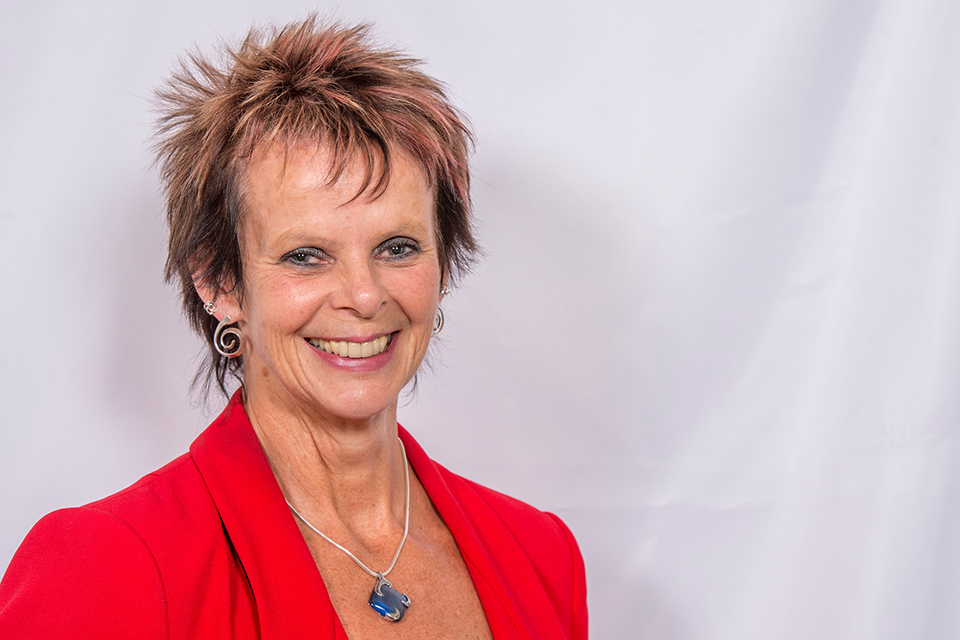
    Below is the text of the speech made by Anne-Marie Trevelyan, the Conservative MP for Berwick-upon-Tweed, in the House of Commons on 23 February 2018.

    After all that excitement, I hope now to take the House in a slightly different direction.

    We might think of St Francis of Assisi as the original saintly animal conservationist but, although St Francis preached to the birds, Northumberland’s own St Cuthbert is popularly believed to have taken steps way back in the 8th century to ensure that some of Northumberland’s eider duck population enjoyed his personal protection.

    There are a number of animal stories attached to St Cuthbert. A famous episode in Bede’s “Life of St Cuthbert” involved Cuthbert standing neck-deep in the sea and praying, after which two otters came and dried his feet with their fur. The animals were rewarded with a blessing and went on their way.

    Perhaps the animal most associated with St Cuthbert today is the eider duck, or Cuddy duck—Cuddy being a shortened form of Cuthbert. The first we hear of their association with Cuthbert is in the 12th century, some 500 years after his death. The monks had a small cell and chapel on the island of Inner Farne, one of the beautiful Farne islands in my constituency that are now visited by hundreds of thousands of visitors every year. The monks shared this island home with a large nesting population of eider ducks. Cuthbert is said to have tamed the ducks so well that they would nest everywhere, even next to the chapel altar, without fear.

    Cuthbert also placed the ducks under his protective grace, so that no one should eat or even disturb them. Every spring, on the many Farne islands and on Coquet island, all in my constituency, Mrs Eider and her babies can be found snuggled into a shallow hole in the ground, safe from predators thanks to island life and the careful and diligent work of the RSPB and the National Trust rangers who look after the island reserves.

    The ducks cannot have remained entirely undisturbed by the monks, as we note the appearance in inventories made of Cuthbert’s shrine at Durham of cushions made of “Cuthbert doun”—downy feathers from St Cuthbert’s eider ducks on Farne. Perhaps the sacred purpose of the plucked feathers excused the necessary disturbance to the ducks. Certainly, other monks who had eaten or harassed Farne’s eiders were struck down by Cuthbert’s curse, with one even dying after mocking the saint’s protection.

    So it is that the association with place is very strong and that I have the great privilege of being the eider duck’s advocate today. In St Cuthbert’s time, only the Cuddy ducks of Inner Farne were protected; the eider ducks on the other islands were not protected. Today, in modern protection terms, many other species of our spectacular island birdlife are protected but not the eider duck.

    The creation in recent years of 50 marine conservation zones by this Government, with more planned, would no doubt receive the approval of St Cuthbert, as the delineated zones along my constituency’s unique coastline provide protection for wildlife and our marine environment. The MCZs have been created to protect ​important marine wildlife and their habitats, and they form part of what is now popularly known as the “blue belt.”

    Our spectacular Northumberland coast is teeming with wildlife, from seabirds as rare as the roseate tern to my personal favourite, the delightful and slightly ungainly puffin—she flies like a fast jet—to porpoises, grey seals, dolphins and even the occasional whale. And that is just what can be glimpsed from above the water. Below the surface, Northumberland’s blue belt is a bustling city of crustaceans and molluscs, alongside an extensive and healthy fish population.

    It is wonderful that the creation of MCZs means that our rich and diverse sea life will now be further protected from the effects of dredging and trawling, so that many more future generations can enjoy, explore and learn about nature’s world under the waves. But St Cuthbert would be disappointed to discover that within the Coquet to St Mary’s MCZ lies the uninhabited—by humans, at least—Coquet island, which does not yet include the eider duck among its protected species.

    The common eider is a large sea-duck that is distributed over the northern coasts of Europe, North America and all the way to eastern Siberia. It breeds in Arctic and some northern temperate regions, but winters farther south, in temperate zones, when it can form large flocks on coastal waters. Our cuddy duck can fly at speeds of up to 70 mph. The eider’s nest is built close to the sea and is lined with eiderdown, plucked from the female’s breast. This soft and warm lining has long been harvested for filling pillows and quilts. Although eiderdown pillows or quilts are now a rarity, eiderdown harvesting continues and is sustainable, when it is done after the ducklings leave the nest with no harm to the birds.

    The common eider is both the largest of the four eider species and the largest duck found in Europe and in North America. The male is unmistakable, with his black and white plumage and green nape. The female is a brown bird, but can still be readily distinguished from all ducks. This species dives for crustaceans and molluscs, with mussels being a favourite food. The eider will eat mussels by swallowing them whole; the shells are then crushed in the gizzard and excreted. When eating a crab, the eider will remove all its claws and legs, and then eat the body in a similar fashion.

    Eiders are colonial breeders. They nest on coastal islands in colonies ranging in size from as little as 100 to up to 10,000 in some parts of the world. Female eiders frequently exhibit a high degree of natal philopatry, returning to breed on the same island where they were hatched. This can lead to a high degree of relatedness between individuals nesting on the same island, so I feel that those eider ducks from Coquet island and from the Farnes are very much part of our family. Breeding eider fly from Coquet island and across the sea to use the mudflats adjacent to the Coquet estuary as a feeding ground for their young. Eider is a true sea-duck and is rarely found away from coasts. Throughout the year, breeding eider from Coquet feed in the intertidal zone of the Northumberland Shore SSSI—site of special scientific interest—and later in the year non-breeding eider also migrate here to feed during the winter months.

    Although sea-bird and sea-duck colonies benefit from protection provided by the SSSI, these sites provide protection only on land. The site was designated in 1980 for about 500 nests, but by 2015 estimates of this ​number had dropped to about 300. The site is now being managed to address this long-term decline. The area is also an important winter feeding area for migrating eider from across Europe. Eider is a species listed as “near threatened” globally and “vulnerable” in Europe by the International Union for Conservation of Nature; a vulnerable species is one that has been categorised by the IUCN as likely to become endangered unless the circumstances that are threatening its survival and reproduction improve. These declines are thought to be driven by a range of threats, including the overharvesting of aquatic resources, pollution, disturbance and hunting.

    In Britain, eider are currently classified as “amber” on the birds of conservation concern in the United Kingdom list. Disturbance is the primary threat to our eider; it results in a loss of access to feeding areas and increased predation at breeding grounds. There are several studies considering the common eider in relation to human disturbances. The study of the effects of human disturbance at breeding sites found that when disturbed, some or all ducklings and sometimes the mother dived, and the breeding colony was temporarily dispersed. During this disturbance, attacks by predators such as greater black- backed gulls and herring gulls increased. The study found that predation of chicks by gull attacks was more than 200 times higher on disturbed breeding colonies than on undisturbed ones, and this resulted in significantly lower numbers of chicks fledging each year.

    The excellent Marine and Coastal Access Act 2009 seeks to address management issues, such as disturbance, by creating marine conservation zones—MCZs. MCZs can be used to protect biodiversity in UK seas and are intended to allow a wide spectrum of protection. They form a key part of a wider suite of management measures including marine planning, ecosystem objectives, licensing and fisheries management. However, the designation of protected areas is the best means of securing the necessary commitment from marine managers and sea users to ensure that activities can be restricted, where necessary, to protect biodiversity.

    Although the area used by eider around Coquet island and the Northumbria coast overlaps with an existing European marine site—EMS—eider do not receive any legal protection from the existing designation within the new MCZ. The Royal Society for the Protection of Birds has asked the Government to add the eider duck to the Coquet to St Mary’s MCZ list of protected species. Our friendly cuddies reside within this zone all year round, yet are not covered by the existing legislation. Our Northumberland coast’s resident eider populations have continued to decline steadily over the last few decades, so protection of their sea-based feeding and wintering habitats is essential.

    Across Europe, hunting, pollution and land disturbance means that other colonies are also in decline. The Coquet island colony is therefore all the more in need of protection. In so doing, the Minister would be allowing protection and management for these special birds to be put into place. Adding eider to the existing Coquet to St. Mary’s MCZ would enable proactive management to reduce and manage the threat of disturbance. The management requirements would be to carry out formal disturbance monitoring, management and enforcement, where necessary, such as by imposing speed restrictions or limiting boat traffic in sensitive areas.​

    The publication of codes of conduct increases public awareness of species of interest in an area, which may increase local tourism with benefits to the economy, so the proposals should include education and awareness of conduct in the MCZ.

    Are the Government willing to include eider ducks in the Coquet to St Mary’s MCZ? Will they go further and commit to giving them protection across the Farne islands, too, as these unique islands and surrounding waters become incorporated into the MCZ as it reaches further north in the months ahead? I understand that informal conversations are already taking place and urge the Minister to drive them forward, so that my constituency’s extraordinary coastline and her feathered residents, whom I consider constituents worthy of representation just as much as the human ones, can live in a place of safety and protection and so that their long-term future is assured.

  • Boris Johnson – 2018 Article on Fourth Anniversary of Crimean Annexation

    Below is the text of the article released by Boris Johnson, the Foreign Secretary, on 22 February 2018.

    On the night of 22 February 2014, the most powerful men in Russia gathered in the Kremlin and resolved to seize Crimea from Ukraine.

    They would later make elaborate efforts to give their decision a veneer of legitimacy – including by staging a bogus referendum – but that meeting between President Vladimir Putin and his security chiefs was designed to seal the fate of Crimea’s people.

    We know this because Mr Putin said as much. In a documentary for Russian television, broadcast in 2015, the President described the sequence of events.

    He decided to grab Crimea during that conclave in the Kremlin 3 weeks before the sham referendum. All those claims about how he acted to protect the region’s people or uphold their wishes were, by Mr Putin’s own account, utterly mendacious.

    So it was that Russia seized 10,000 square miles from Ukraine and broke the first principle of international law – that countries may not acquire territory or change borders by force.

    Mr Putin formally annexed Crimea into the Russian Federation on 18 March 2014. Four years after that event, we should remind ourselves of the enormity of what happened and redouble our determination to stand up for our values and uphold international law.

    Russia’s land grab in Crimea amounted to the first forcible annexation of the territory of a European country – and the first forcible redrawing of a European frontier – since 1945.

    In the process, Russia broke so many international agreements that listing them all is a challenge. To select a few examples, Mr Putin trampled upon Article 2 of the United Nations Charter, the Helsinki Final Act and the Russia-Ukraine Treaty of Friendship.

    He also broke Russia’s specific pledge, contained in the Budapest Memorandum of 1994, to respect the “existing borders of Ukraine” and “refrain from the threat or use of force against the territorial integrity or political independence of Ukraine”.

    And after annexing Crimea Mr Putin went still further, igniting and vigorously fanning the flames of conflict in eastern Ukraine. To this day, Russia continues to deploy troops and tanks in a conflagration that has claimed over 10,000 lives and driven 2.3 million people from their homes.

    Flight MH17 became another victim of this tragedy when a Russian missile launched from an area controlled by Russian proxy fighters blew this passing airliner out of the sky, killing 298 innocent people, including 10 Britons.

    All the while, reports have emerged from Crimea of the oppression of the indigenous Tatar population and the harassment of those opposed to Russian annexation. Despite repeated calls from the UN General Assembly, Russia has refused to allow international human rights monitors to enter the peninsula.

    In the end, the security of every nation depends on the essential principle that countries should not change borders or acquire territory by force. That is why the fate of Crimea matters to all of us.

    We all have an obligation to stand up to Russia in a measured and resolute way. That means sustaining our Crimea-related sanctions against Russia for as long as the region remains under Kremlin control, and keeping further sanctions in place whilst the Minsk Agreements in eastern Ukraine go unheeded.

    These measures are intended to demonstrate that no country, however large, can dismember its neighbour and break international law without consequence.

    Nevertheless, while holding fast to our principles, we should engage firmly and purposefully with Russia. We need to communicate with clarity and directness our concern over the Kremlin’s actions.

    There is no contradiction between dialogue and deterrence – indeed the one can reinforce the other – as I made clear when I visited Moscow in December. As permanent members of the Security Council, Britain and Russia also share special responsibility for international peace and security.

    Our motto with Russia must be to ‘engage but beware’ and both halves of the formula should be pursued with equal resolve. But we must never forget the terrible consequences of that late night gathering in the Kremlin.

  • Chloe Smith – 2018 Speech on Votes for Life for British Ex-Pats

    Below is the text of the speech made by Chloe Smith, the Parliamentary Secretary at the Cabinet Office, on 23 February 2018.

    Today (Friday 23 February) we’ll be debating the Overseas Electors Bill, introduced by Conservative Glyn Davies MP. I hope it will command cross-party support, alongside the firm support of the government.

    The Bill sets out to end the current 15-year time limit on British expats voting back at home in the UK. At the moment, British citizens who live overseas find themselves abruptly disenfranchised after they have lived abroad for 15 years, even where they still feel closely connected to our country and want to take part in elections that can affect them like any other citizen. To many, this has been a terrible injustice.

    As well as removing the time limit on the right to vote for UK citizens living abroad, we intend to enfranchise any British expats who were previously resident or registered to vote in the UK. Currently, only British citizens who were registered to vote before leaving the UK may apply to become overseas electors. The bill is seeking to change this. These changes are part of the Government’s wider ambition to strengthen the foundation of democracy and continually increase voter registration by ensuring every voter’s voice is heard.

    British expats – under existing laws – are estimated to have among the lowest level of voter registration of any group, with only around 20% of eligible expats registered to vote for the June 2017 general election.

    We think it’s right to encourage everyone to register to vote, and that’s why, last December, the government launched the first ever Democratic Engagement Plan to tackle democratic exclusion and outline how it will increase participation among under-registered groups. The Plan set out how we are launching National Democracy Week to promote democratic engagement and identifying the barriers faced by specific groups that are currently under-represented on the electoral register.

    In 2014, we introduced online electoral registration which has already made it much easier for overseas electors to register to vote – and they have done so in ever increasing numbers. The latest figures from June 2017 showed that the highest ever total of overseas citizens registered to vote but potentially around one million have not registered. So I am proud this government is doing more to enfranchise our fellow citizens overseas and make it easier for them to take part in our elections.

    Participation in our democracy is a fundamental part of being British, no matter how far you have travelled from the UK. Expats retain strong links with the United Kingdom: they may have family here, and indeed they may plan to return here in the future. Modern technology and cheaper air travel has transformed the ability of expats to keep in touch with their home country. Crucially, decisions taken by the UK government still affect them, such as pensions policy or foreign affairs choices. These are our fellow citizens and they have every right to be involved in our country and its choice of government.

    Of course, following the British people’s decision to leave the EU, we need to strengthen ties with countries around the world and show the UK is an outward-facing nation. Our expat community has an important role to play in helping Britain expand international trade, especially given two-thirds of expats live outside the EU.

    I am grateful to the many campaigners over the years who have asked for this rule to be changed, with dignity and passion. The Government pledged in our manifesto to make this change and I’m proud to deliver it. But it should be an aim we all share across parties. I will work closely with Mr Davies and everyone in Parliament, of any party, who wants to help every citizen of this country to register to vote and use their voice.

  • Nick Gibb – 2018 Speech to Conference for Commonwealth Education Ministers

    Below is the text of the speech made by Nick Gibb, Minister of State for School Standards, to the Conference for Commonwealth Education Ministers on 22 February 2018.

    Thank you Dr Mohamed. And thank you also to those fellow Education Ministers I have had the opportunity to meet over the last few days. I think this has been a very successful conference. I would like to congratulate the Secretary General and the Fijian Government for hosting a very successful conference. It has been wonderful for me to have had so many productive, interesting and warm conversations with fellow ministers, in meetings and at the very successful receptions that have been held throughout the course of the conference. I have really valued the opportunity to learn about other education systems and to discuss so many shared challenges that we all face across the Commonwealth. I am sure that many of us will stay in touch in future and continue to support each other where we can.

    The UK government is looking forward to welcoming your Heads of Government to the Commonwealth Heads of Government Meeting in April. We will discuss shared challenges, and move forward – I hope – renewed, and revitalised after that conference.

    These international gatherings are helpful in shaping shared policy objectives and working collectively to overcome challenges. For example, the Millennium Development Goals focused minds on universalising access to education. And now, the Sustainable Development Goals are going further.

    In recent years, great strides have been made across the world. It should not be forgotten that in 1990 there were 1.8 billion people living in absolute poverty. This has been reduced over those years since by a billion. But, there is still much more to do. As our Foreign Secretary wrote recently:

    Look at those countries where population is growing the fastest, where unemployment is highest, and where the tensions are greatest, and without exception you will find a common factor: female illiteracy.

    Boris Johnson was correct when he went on to state that this is both a moral outrage and ‘contrary to the interests of world peace, prosperity, health and happiness.

    Globally, 130 million girls are not in school. So I would urge member states to commit to work together and individually to ensure 12 years of quality education for all by 2030.

    But we must be more ambitious than seeking universal access. We must turn our attention to ensuring pupils receive the high-quality education they deserve.

    Of those pupils in school in low income countries, 90 per cent are not on track to master the basics of maths, reading and writing by the end of primary school.

    Raising school standards for pupils from all backgrounds has been the driving force behind the government reforms in my country since 2010. The government’s mission is to provide pupils with the knowledge-rich education that will prepare them for the rigours and opportunities of the 21st century.

    Core academic subjects have returned to the heart of the secondary curriculum and we have pursued evidence-based approaches to teaching, raising standards for all. At the same time, the attainment gap between disadvantaged pupils and their more affluent peers has narrowed both at primary and secondary schools in England since 2010.

    In education, there is nothing more important to spreading opportunity than ensuring all pupils are taught to read effectively. Figures from the UK show that pupils who are reading well by age 5 are 6 times more likely than their peers to be on track by age 11 in reading, and 11 times more likely to be on track in mathematics.

    But, in the years just before we came into government in 2010, we knew something was wrong with the way our primary schools taught reading. England was stagnating in the international league tables and the international data also showed a wider gap between top and bottom performers than in most other countries, leading to England being known for its ‘long tail of underachievement’.

    And data from 2012 showed that we were the only OECD country where the maths and reading abilities of our 16-24 year olds was worse than that of our 55 to 65 year olds. A misguided move away from evidence-based approaches to teaching children to read was stifling opportunity for too many children.

    For decades, the overwhelming weight of international evidence – including the influential longitudinal study from Clackmannanshire in Scotland – pointed to systematic phonics as the most effective way to teach children to read.

    Phonics teaches children to associate letters with sounds, providing pupils with the code to unlock written English. And despite the evidence in favour of this approach – a traditional approach – the government’s phonics reforms were controversial and met with widespread opposition from teaching unions and other vested interests.

    All primary schools in England are now required by law to use phonics as they teach pupils to read. But more controversially, the government introduced the Phonics Screening Check in 2012. This is a short test comprising a list of 40 words that 6-year-old children read to their teacher at the end of year 1.

    The proportion of pupils passing the Phonics Check has increased every year since it was introduced by us in 2012. In 2012, the first year of the Phonics Check, just 58 per cent of 6 year olds reached the pass mark of 32 out of the 40 correctly read words, so 40 per cent were failing. This year, 81 per cent of 6-year-olds reached that standard, with 92 per cent of children reaching that standard by the end of year 2.

    This year, 154,000 more 6 year olds were on track to be fluent readers than in 2012. Last year, 147,000 more 6 year olds were on track compared to 2012.

    And the success of this policy has been confirmed by the international PIRLS results (Progress in International Reading Literacy Study). The international study of 9-year-olds’ reading ability in 50 countries showed that England has risen from joint 10th place in 2011 to joint 8th place in 2016, thanks to a statistically significant rise in our average score.

    But more importantly, these tests show that we are dealing with the ‘long tail of underachievement’ that has stifled opportunity. The PIRLS results show that reading has improved for pupils from all backgrounds, but it is the low-performing pupils who are gaining most rapidly.

    The report found that performance in the Phonics Check was strongly predictive of PIRLS performance, vindicating the government’s drive to universalise this evidence-based approach to teaching. The PIRLS national report for England states that, and I quote:

    Pupils who scored full marks in the phonics check were also the highest scoring group in PIRLS 2016, with an average overall PIRLS score of 617. In contrast, pupils who did not reach the ‘expected standard’ in the Year 1 phonics check perform below England’s overall average, with lower phonics check scores being associated with decreasing average PIRLS scores.

    So that is why our government is determined to go even further and see more pupils reach the expected standard at age 6. And if I could just quote the New Zealand Minister’s earlier quote:

    We have gone so far, we’re going to go further still.

    The government has also faced-down much opposition to the drive to increase the proportion of pupils studying core academic GCSEs at age 16. The English Baccalaureate, that we introduced as a performance measure, requires pupils to study GCSEs in English, maths, at least two sciences, either history or geography, and a foreign language.

    Schools are measured now on the proportion of their pupils entering GCSEs in all 5 categories, and on the attainment of their pupils in these subjects.

    Since 2010 – following a long-term decline in pupils taking these core academic subjects – there have been sharp increases in most of these subjects. For example, the proportion of pupils taking the science component of the EBacc has risen from 63 per cent to 91 per cent, and the proportion studying history or geography has risen from 48 per cent to 77 per cent.

    Nationally, nearly two-fifths of pupils are entered for the EBacc. This is up from just over one-fifth in 2010. But again there is still much more to do, to reach the government’s ambitious target of 90 per cent of pupils studying towards the full suite of EBacc GCSEs by 2025.

    Since 2010, the proportion of pupils studying a language to GCSE has risen from 40 per cent to 47 per cent and we are determined to raise participation in languages much further in the years to come, particularly as Britain raises its eyes to the opportunities that await post-Brexit.

    Evidence supports the government’s desire to drive up participation in these core academic subjects. Evidence from the Sutton Trust found that pupils in a set of 300 schools that increased their EBacc entry, from 8 per cent to 48 per cent, were more likely to achieve good English and maths GCSEs, more likely to take an A level, or an equivalent level 3 qualification, and more likely to stay in post-16 education.

    And these findings were corroborated by work carried out by the Institute of Education in London examining the effect that GCSE choice has on education post-16, and I quote:

    Students pursuing an EBacc-eligible curriculum at 14-16 had a greater probability of progression to all post 16 educational outcomes, while taking an applied GCSE subject had the opposite effect. There were no social class differences in the advantages of pursuing an EBacc-eligible curriculum which suggests that an academically demanding curriculum is equally advantageous for working class as for middle class pupils.

    And this year more pupils from disadvantaged backgrounds entered the EBacc than at any point since the measure was created.

    Again, there is still much more to do. Disadvantaged pupils remain almost half as likely to be entered for these subjects than their more affluent peers. But it is essential that all pupils, particularly those from disadvantaged backgrounds, are given access to the core academic subjects that widen opportunities at post-16.

    But the government is making progress in widening opportunities, whilst raising standards for all. Recent figures from national assessments that are published on a school by school basis taken at 11 and 16 reveal that the attainment gap has closed since 2011 at both primary and secondary schools, by 10.5 per cent for primary and 10 per cent for secondary.

    Despite the controversy and claims from many in my country that the government’s standards-raising policies would hurt the performance of pupils from disadvantaged backgrounds, in fact universalising access to evidence-based teaching methods and widening opportunities to study core academic subjects has been to the benefit of all, particularly those most in need.

    There is more to do of course. There are still too many pupils not reading at the expected standard by age 6; and there are too many pupils – particularly from disadvantaged backgrounds – not being entered for the full suite of core academic GCSEs. But much progress has been made since 2010 and the government – in step with teachers – is ambitious and determined to go further in the years to come.

    Thank you very much chair for listening. I am very happy to answer any questions you may have on what has been a very controversial seven years of education reform in England.

  • Matt Hancock – 2018 Speech at the CBI Annual Chinese New Year Dinner

    Matt Hancock

    Below is the text of the speech made by Matt Hancock, the Secretary of State for Digital, Culture, Media and Sport, at the CBI Annual Chinese New Year Dinner on 22 February 2018.

    尊敬的刘晓明大使各位来宾大家晚上好!

    Or, as I hope translates to English: good evening Ambassador Liu and honoured guests.

    It’s a real privilege to be here tonight to celebrate Chinese New Year with you all and mark the arrival of the Year of the Dog.

    I was born in the Year of the Horse; apparently Horses like me ‘are either naturally good public speakers or have a habit of talking too much’.

    I’m not sure which one applies to me – let me know in a couple of hours after I’ve finished….

    It’s an exciting time for relations between our two countries. As we open the next chapter in our golden era, look at the breadth of the cultural, political and economic partnership just over the past two months.

    The V&A Museum has opened a brand new design gallery in Shenzhen, the first branch of a national British museum outside the UK.

    The historic Terracotta Warriors are on display in Liverpool.

    And the Prime Minister visited China to meet President Xi and Premier Li, signing over 9 billion pounds worth of commercial deals, building on the vast rise in trade over the past decade.

    And as we look forward to the Year of the Dog, I want to take a moment to look at this vital relationship.

    And especially, talk about how we can use the transformational power of new digital technology to make this golden era even more golden.

    Making the most of change

    The world around us is changing faster than ever before. And yet the blistering pace of change we’re currently seeing is probably the slowest that we’ll see in the rest of our lifetimes.

    And it’s down to the incredible potential of new technologies, especially AI, which are constantly learning and getting exponentially better every single day.

    Both China and Britain understand the potential of this fourth industrial revolution – and the need to relentlessly pursue new technology.

    This forward thinking approach has been at the heart of our strengthening relationship over the last decade, and we’ve seen some remarkable hi-tech success stories over the past few months.

    Huawei has recently announced a new commitment to 3 billion pounds of procurement from the UK. Gordon – thank you for your personal commitment and Huawei’s vote of confidence in our world-leading tech industry. You provide the sort of leadership which is crucial forging this sort of relationship.

    Cambridge-based Astra Zeneca and Chinese tech giants Alibaba have announced they’re coming together to build smart health systems, to help chest patients in China get vital treatment more quickly.

    And the futuristic driverless pods used at Heathrow’s Terminal 5 will soon be appearing in China thanks to a recently signed Memorandum of Understanding.

    And it’s not just tech firms and start-ups that are making the most of these opportunities.

    Tech is revolutionising all sectors, whether through autonomous vehicles helping us drive more safely or machine learning making it easier for doctors to find cancerous cells, saving and improving lives.

    The question that matters is how we can seize these opportunities of change to expand the potential to make both our nations more prosperous and better places to live.

    Looking forward

    We share this ambition and determination. AI pioneer and founder of Google China Dr Kai-Fu Lee recently said the UK is home to the ‘hottest AI companies in the world, producing breakthroughs of global significance’.

    Here, we’re investing heavily in AI and robotics and are working hard to attract the best and brightest research talent from all over the world.

    We are determined to be one of the leading places in the world for the development and deployment of AI. And we will share that global leadership with China.

    Our universities – the second biggest destination for Chinese students – lie at the heart of this revolution.

    But we cannot do this solely from our shores. To make the most of these opportunities we will need to reach common understanding and co-operate on a wide range of issues. We must do this together.

    And let’s be frank. China and the UK come at some of the questions around, for example data protection, from very different philosophical backgrounds.

    This makes it more important than ever that we understand each other – and respect each other’s point of view – so we can come to the right solutions and work together.

    We, for instance, have stronger protections for data and intellectual property. And while we ask China to respect these protections, we also respect China, and the progress we have seen in mutual understanding.

    I was delighted that in December, we partnered with you in the first bilateral science and innovation strategy that China has developed jointly with another country.

    This outlines, in the most advanced way yet, shared principles for intellectual property.

    Agreements like this are crucial to unlocking the vast opportunities of co-operation and harnessing this technology for good.

    We want to work ever closer with China, and other tech-minded countries around the world.

    And I was delighted that during the Prime Minister’s recent visit, agreements were signed on emerging technologies across the board – twelve in total, including space, smart cities and autonomous vehicles.

    For this is the future. Countries that work with, not against, technology, will be the ones that flourish.

    Flourishing as two vibrant, prosperous nations using technology to drive growth and make life better for our citizens and people across the world.

    For if we have learnt one thing this past generation, then we have learnt this.

    Free markets, in a proper framework, have been the most powerful force for good the world has ever seen – underpinned by the protection of property, openness to trade and sound finance.

    China’s journey is testament to this fact. Britain may have pioneered the market economy but, by God, China is proving it works.

    You have lifted people from poverty more quickly than ever before in human history. We salute you.

    And what’s more, the free market rests on an understanding that business, done right, is a force for good in the world.

    You can’t run a good business unless you’re solving problems for someone else. Solve them so well that they’re prepared to pay you.

    This is how prosperity is built. Our nations both understand this.

    Conclusion

    The UK and China are no strangers to changing history through our innovation and enterprise.

    And as we celebrate the Year of the Dog, let’s channel this spirit and just imagine what more we can do when we work together in the years ahead.

    恭祝各位中国朋友狗年大吉!

  • Jeremy Wright – 2018 Speech at the Modern Slavery Summit

    Below is the text of the speech made by Jeremy Wright, the Attorney General, at the Modern Slavery Summit on 22 February 2018.

    Thank you very much for inviting me to speak to you this morning. Firstly, I would like to take this opportunity to pass on my thanks to the CPS for organising and hosting this important summit on prosecuting Modern Slavery crimes.

    On behalf of the UK Government may I also pass on a very warm welcome to you all. Many of you have travelled a long way to be here, and I hope this summit will be an important step in improving international dialogue and combatting the crimes of forced labour, modern slavery and human trafficking.

    As we are all very well aware, modern slavery exists in all our societies. It respects neither borders nor jurisdictions and its victims are subject to the most appalling mistreatment and exploitation, this brings our task at this summit into sharp focus.

    I know you will be looking at identifying ways to better support victims and witnesses, and establishing a strong, active international network to tackle Modern Slavery.

    In the last 8 years, the UK has clearly demonstrated that with the right will and mind-set it is possible to transform our approach to Modern Slavery.

    The then Home Secretary, and current Prime Minister, identified modern slavery as a significant problem, and since then this Government has put in place an ambitious strategy and dedicated legislation to tackle it.

    Prior to 2010, there was no bespoke legislation and the law enforcement response was not sufficiently coordinated or effective to deal with this type of offending.

    Giving law enforcement agencies the tools to tackle modern slavery is paramount in achieving successful prosecutions, and at the same time protecting victims. The Modern Slavery Act 2015 does just that. The Act not only consolidates all modern slavery legislation into one Act, assisting both the police and prosecutors but introduces other equally important measures to improve the criminal justice response. For example :

    – the introduction of maximum life sentences for perpetrators;
    – the provision for civil prevention and risk orders’, which stop potential acts of trafficking or forced labour from taking place; and
    – the introduction of a statutory defence for those forced or coerced to commit crimes like cannabis farming – which will also help safeguard victims from abuse.

    These measures are now beginning to have a real impact and – we are seeing a real rise in convictions for new offences prosecuted under the Modern Slavery Act and at least 56 Slavery and Trafficking Prevention and Risk Orders to restrict offender activity are in place.

    In addition to these new measures and tools, training remains important. Investigators and prosecutors need to be well trained so they are readily able to identify elements of Modern Slavery in their cases. They also need to be aware of the new tools they have available to tackle these crimes and prevent further offending from taking place and to identify and protect victims.

    As well as a criminal justice response, it is important that there other powers and regulations in place to stop the exploitation of vulnerable victims and to disrupt potential crimes before they take place.

    The Modern Slavery Act established an Independent Anti-Slavery Commissioner. Their job is to work with law enforcement agencies, local authorities and third sector organisations to encourage identification, prevention, detection, investigation and prosecution of modern slavery crimes – across the UK and internationally. This role is essential in order to advise the Government on improvements to the system and to encourage joined up working across the UK.

    More recently the Government has used the Immigration Act 2016 to extend the remit and strengthen the powers of the Gangmasters Labour Abuse Authority. Its new mission will be to prevent, detect and investigate worker exploitation across the entire economy.

    The Modern Slavery Act also includes a world-leading transparency in supply chains measure requiring certain businesses to report how they are eradicating modern slavery from their organisation and their supply chains. By forcing business to report on this, it has made them much more aware of potential modern slavery crimes. Most importantly, the Modern Slavery Act has provisions to give protection to overseas domestic workers, a duty on public authorities to notify the Home Office when they come across potential victims.

    Crucially, we have found that where support for victims of this crime, who are typically extremely vulnerable and often reluctant, or fearful of engaging with law enforcement, is prioritised prosecution rates are higher and the chance of a successful prosecution much more likely.

    The National Referral Mechanism – the NRM – is the UK system for identifying and providing access to support to potential victims of modern slavery. The Modern Slavery Act ensued that this support was extended to all victims of Modern Slavery in England and Wales.

    The NRM should act as bridge – helping victims to be lifted out of situations of exploitation; providing specialist care and support to enable them to begin to recover and rebuild their lives; and facilitating their return to the relevant community.

    We recognise that the NRM does not always do this for victims, and that is why are committed to reforming it to ensure better results for victims.

    Having a regulatory environment which encourages collaboration between law enforcement agencies, first line responders and licensing authorities is essential in tackling such a wide ranging crime and our research reflects that this aligned approach produces better outcomes for victims. The global prevalence of Modern Slavery is significant, and whilst it is a largely hidden crime the International Labour Organisation and Walk Free Foundation in 2016 estimated that there are 40.3 million caught up in Modern Slavery globally. This is a conservative estimate and in reality there could be many more victims worldwide.

    No country can tackle modern slavery alone and I am proud to be part of a Government that is leading the fight against this horrendous crime internationally.

    To drive further progress and collaboration at the international level, the Prime Minister convened a group of world leaders at a modern slavery event during the UN General Assembly in September 2017. Leaders and senior ministers from 21 member states attended the event and 42 countries have now endorsed an ambitious Call to Action to End Forced Labour, Modern Slavery and Human Trafficking. This sets out the practical steps that countries will take to effectively respond to modern slavery and fulfil the commitments set out by the international community. At that meeting the Prime Minister also announced that the UK would double its aid budget spend on modern slavery to £150m.

    £33.5 million of this is set aside in a Modern Slavery Fund, managed by the Home Office, and of this £11 million has been allocated to an innovation fund to trial new approaches to tackle and reduce the prevalence of modern slavery and to identify interventions that could be scaled up.

    This £11 million fund is currently supporting 10 successful projects which are being taken forward by a range of organisations including NGOs, universities and multilateral organisations. These projects target issues such as tackling slavery in supply chains, supporting victims, exploring vulnerability to trafficking and exploitation and helping to share skills and expertise with overseas partners.

    It should not be surprising that the majority of the victims referred to us are from countries other than the UK. In the last year there has been a significant increase in referrals from Sudan and Ethiopia with the most referrals coming from Vietnam and Albania.

    In response, we are increasing bilateral engagement with and increasing the operational response in countries from which a high number of vulnerable people are exploited and trafficked into the UK.

    Building strong partnerships is the key to improving our understanding of the context that leads to vulnerable people being exploited and trafficked to the UK to better inform our approach and operational response so this can be disrupted. This conference is an excellent step in improving that collaborative approach.

    We are increasing law enforcement cooperation, including through establishing joint investigation teams and greater intelligence sharing, to tackle this crime and bring perpetrators to justice. Additionally we are working with international law enforcement agencies to improve the international operational response. For example, the UK has encouraged Interpol to strengthen its understanding of modern slavery and its enablers to better understand international law enforcement challenges and gaps.

    We all share a moral duty to end Modern Slavery, a duty that transcends party politics and country borders and which unites us in our determination to root out this dreadful crime from our society.

    I welcome the opportunity this summit brings to create a unified, international approach to tackling modern slavery and ensure that victims receive the support and assistance they need to begin the process of rebuilding their lives.

    The leadership we show at this summit is therefore important. The task of tackling modern slavery is an urgent one, so we need swiftly to put our words into practice and hold ourselves to account for the progress that can be made.

  • Sam Gyimah – 2018 Speech at Science and Technology Select Committee Summit

    Below is the text of the speech made by Sam Gyimah, the Minister of State for Universities, Science, Research and Innovation, on 22 February 2018.

    I was in Bulgaria two weeks ago, speaking to EU science counterparts about Horizon 2020, our continued participation in that but also Framework Programme 9.

    What struck me as a relatively new appointee is how respected and how valued our contribution is in our country in the European project but also science in general. And this is something I’m saying as a Member of Parliament, but also someone who has come in from the outside.

    We need to do more to make the public appreciate not just how much we punch above our weight in terms of impact, but the breakthroughs that impact real lives with UK based science behind it.

    This is why another visit I did was particularly interesting. I went to Imperial where I met Zeno the robot, a robot that could help with autism; there you could see scientific breakthrough, innovation and how it impacts real life.

    Science is key to our future and our success.

    The challenges we will face in the years to come – from clean growth and an aging population to the future of transport and the advancement of AI and robotics – will only be met by a concerted research and innovation effort as I’m sure you’re all aware.

    These are global challenges and so we need to operate in a global marketplace; and that requires investment today, if we are going to get ahead of the curve and we should be ready to provide the goods and services that the whole world will want tomorrow.

    That’s why we’ve put R&D at the heart of our Industrial Strategy committing to spend 2.4% of GDP on research by 2027 and initiating that with the biggest increase in public R&D funding for 40 years, which is something that we can be proud of as a country.

    I think meetings like this just serve to underline how much of society science and technology touches.

    I’ve mentioned Zeno the robot, and I appreciate the partnership between British and European researchers – Zeno came from just such a partnership.

    That’s no novelty; The UK has long been an international scientific force.

    Let’s take one specific metric. Many of you will already be aware of this but for me it’s a source of pride.

    For argument’s sake, if you look at Nobel Prizes for Chemistry, British researchers and institutions have been involved in a three year winning streak. But we’ve been winning the prize on our own since 1904 and through collaboration since 1929.

    By country of birth we have produced 95 Nobel Prize winners, a significant number of which were in the sciences and that’s before we consider those international researchers working within British institutions.

    It’s true that we sit behind the United States on this but considering their population is nearly five times as big as ours it becomes clear just how good Blighty is at scientific research.

    But we know that innovation doesn’t happen on its own; unless you’re Newton, ideas don’t just drop out of the sky.

    The best ideas arise when the best minds are able to work together, collaborating within a stable, long-term framework. Over the years, an ever-growing number of Scientific Nobel Prizes have been awarded to international teams and to ideas which have been developed in multiple countries.

    Sir William Ramsey’s 1904 Nobel Prize, for example, may have been awarded while he was working at UCL but his doctorate was earned in Germany.

    We draw in proportionally more internationally mobile R&D than other large countries, with a total of 17% of UK R&D investment financed from abroad.

    So it should be no surprise that, as time has gone by, the UK has developed some of its closest relationships with our European neighbours, supported by EU research funds.

    Nor that we have attracted around 20% of grant funding awarded through the European Research Council, such is the quality of our work.

    Since the start of the Horizon 2020 programme to September 2017, we have attracted more than two and a half billion euros in funding for our innovative universities and, under Horizon 2020, we are a top five collaboration partner for all EU27 countries.

    This has benefitted our international partners as much as it has benefitted us: for example, nearly half of all collaborations at the University of Barcelona are with UK partners.

    Moreover, there are benefits that reach beyond Europe and across the world.

    Under Horizon 2020, UK participants have played a major part in developing a faster test for Ebola. Working with EU academia and industry, we have developed a portable device which can determine whether a person is infected within 75 minutes. That could become a game-changer around the world with quicker diagnosis helping us to contain the virus more effectively saving lives and resources on a global scale.

    Other collaborative projects focus on innovative medicines decarbonising construction and gravitational waves.

    These are big, ambitious projects, built on collaboration.

    We want to see their like for years and years to come.

    The key question that some of you have asked me in private and I’m sure is on all of your minds is how do we ensure stability and continuity in the short term.

    I know how much of a concern this is for you.

    Through my travels and my correspondence I have been hearing from you directly.

    In particular, I know the concerns around uncertainty, notably around funding streams.

    This government wants to give you as much reassurance and clarity as we possibly can in these negotiations.

    As underlined in December by the joint report published by EU and UK negotiating teams, UK-based organisations and people will be able to bid for Horizon 2020 funding and lead and participate in consortia in 2019 and 2020.

    I’ve been speaking to Commissioner Moedas on some of the detail around this and how and when the detail can be worked out, in terms of being on the Committee and influencing the remainder of the Horizon 2020 projects that are there as well.

    The joint report states that UK entities’ right to participate in EU programmes will be unaffected by the UK’s withdrawal from the EU.

    It also outlines that no EU citizen currently in the UK lawfully, including staff and students at our Universities, will be asked to leave the country when the UK exits the EU.

    This means that there will be no change from the current arrangements for over two and a half years.

    To provide further reassurance, in addition to agreement of the joint report, our commitment to guarantee the UK share of Horizon 2020 funding stands no matter the outcome of negotiations so all successful Horizon 2020 bids submitted while the UK remains a member state will be able to continue with an uninterrupted flow of funding.

    And my message to all UK based scientists is to continue bidding into these programmes. As well as protecting UK beneficiaries from the impact of EU Exit and providing the certainty that those projects need to complete their work.

    So what will the future look like?

    Of course, with or without the decision to leave the European Union in 2020 the current EU research programme will come to an end. Horizon 2020 was always a time-limited project, and this continues to be the case.

    But you will want to know what comes next for the UK.

    I assure you that we are actively engaging, from inside the room, to make sure that the next generation of programmes build on the successes of Horizon 2020.

    And one of the things I needed clarity on certainly during my bilateral meetings at the Informal Competitiveness Council, was that future programmes focus as much on excellence as they have done in the past and I was given very strong reassurances on that.

    The Prime Minister and I have been clear that we would welcome an agreement to continue to collaborate with our European partners on major science, research, and technology initiatives enabling us to tackle the global challenges we face – as Europeans and as global citizens.

    This adds to our determination to focus on excellence, but also our intentions to be an open, international partner.

    The UK has always been a strong believer in the international nature of research, and will continue to encourage the EU and countries around the world to collaborate on global issues.

    I want the EU to flourish, and I want to see science tackle the big issues we are facing down.

    But I am the UK’s Minister for Science so, naturally, I want the UK to be the go-to place for scientists, inventors and tech investors across the globe.

    That means rest of the world as well, not just the EU.

    I’m very proud that the UK became the first nation to sign a formal Science and Innovation agreement with the United States in September 2017.

    We’ve also signed a similar agreement with Canada and have developed a joint Science and Innovation Strategy with China.

    These agreements provide new opportunities for our universities, institutions and businesses so that they can take on bold new challenges in some of the most dynamic research environments in the world.

    Through our Science and Innovation agreement with the United States, we’ve invested £65 million in the Long Baseline Neutrino Facility and the Deep Underground Neutrino Experiment.

    These are extraordinary projects so much so that some people call them “mega science”! Hardly the most scientific term, but you can’t deny it has a ring to it.

    And no wonder – these investigations are aiming to address the big questions about the origins and structure of the entire Universe. Participating in these projects will keep us where we belong: pushing at the outer limits of human understanding showing the rest of the world what we can do.

    We have achieved a great deal with our EU colleagues and I hope we will continue to do so.

    We are committed to establishing an ambitious science and innovation agreement with the EU so that we can maintain our close relationship.

    We have made a clear commitment to excellence and innovation and no country in the world would want to turn their back on that.

    An official agreement between the UK and the EU would be a win-win allowing ongoing collaboration through an established, effective mechanism provided that we maintain the shared focus on excellence.

    And if, as the Prime Minister referred to in her Florence speech, the UK continues to take part in specific policies and programmes such as those that promote science, education and culture, any ongoing contribution we agree to make should be proportional and designed to cover our fair share of the costs involved.

    We need your help to share these ideas internationally with your partners and collaborators, who can raise this issue with their national governments.

    Your actions will support us in securing the best deal for all.

    We are heading in the right direction embracing the opportunities and delivering stability and clarity wherever we can.

    Still, I know you will have other issues you want to see addressed.

    They are fixed in our minds as negotiations continue we will continue to welcome international talent to the UK and we will do all we can to maintain funding to support innovation across the UK.

    Our ambitions – and our hopes – are high.

    We know you want to keep collaborating and so too do your counterparts.

    From Sir William Ramsey’s Nobel in 1904 to Richard Henderson’s in 2017 we have built our scientific reputation on collaboration.

    Our relationship with the European Union is changing so now, more than ever, is the time to speak up for collaboration.

    That’s what I intend to do – here, in Westminster, throughout Europe and around the world.

    And just as a post-script, this week the government announced the Higher Education Funding Review and I’d like to assure you that I’m very focussed that sustainability of any funding system, any changes would have to have regard for sustainability by universities.

    With that in mind, I’m planning to stay for as much of the next session as I can, and I know the Committee in two weeks time will enable me to answer more detailed questions on our plan for the way forward.

    Thank you for having me and I look forward to working with you to ensure that our collaboration continues, but even more than that the UK generally becomes a place to go to for science and innovation post-Brexit.

  • Theresa May – 2018 Chinese New Year Speech

    Below is the speech made by Theresa May, the Prime Minister, for Chinese New Year on 21 February 2018.

    Good evening everyone, welcome to Downing Street, and a very happy Chinese New Year to each of you.

    It’s an honour to have you here this evening to celebrate not just the start of the Year of the Dog, but also the deepening links between the UK and China.

    As many of you know, I have recently returned from an important trip to China, strengthening the Golden Era of relations between our countries.

    I had the privilege of visiting three wonderful cities: Wuhan, and Beijing, and Shanghai.

    I had fruitful discussions with President Xi and Premier Li.

    And I saw first-hand the growing strength of the trade and investment relationship between our two countries.

    And I was delighted to take a 50-strong business delegation with me, and I think the visit helped to secure more than £9 billion of commercial deals that will benefit people here at home and in China. Those deals will create 2,600 jobs in the UK.

    But the ties that bind our two countries are about more than just business.

    They’re also about people. The 150,000 Chinese students currently studying in the UK. The growing number of young British people studying or working in China.

    The hundreds of thousands of tourists who travel between our countries each year.

    And of course the thriving Chinese community in the UK, who do so much to make the UK the country it is today.

    Confucius wrote that “Virtue is not left to stand alone – he who practises it will have neighbours.”

    I think it’s a powerful message for all of us seeking inspiration for the year ahead. And it exemplifies the contribution made by so many Chinese people in this country.

    I’m thinking in particular of people like James Wong from Birmingham.

    James chairs the committee that runs one of the UK’s largest Chinese New Year festivals, bringing tens of thousands of people together every year.

    And he’s also an absolute pillar of his local community, combatting loneliness by bringing elderly people together to enjoy free meals in the restaurant that he runs.

    And last year James was officially voted “Brummie of the Year”, which speaks volumes about the face of modern Britain and the contribution and integration of the UK’s Chinese community.

    And in January James also received a ‘Points of Light’ award to recognise his work.

    And he’s here with us today to help celebrate. Many congratulations James!

    Now, when I was in China President Xi, quoting Shakespeare, said of UK/China relations that “What’s past is prologue”. And I, like him, am committed to building on the progress of recent years to deepen our relationship yet further.

    For many years, many people have worked hard to bring the UK and China closer together – indeed, many of them are here with us tonight, including the Chinese ambassador.

    The result of their work is the Golden Era we are living through today.

    And, when I look around this room, when I see the passion, commitment and enthusiasm of so many people, I know for sure that the next 12 months will be another auspicious year for our businesses, for our governments, and above all for our peoples.

    Have a very happy and prosperous new year.

    Xin Nian Kuai Le.

  • Sajid Javid – 2018 Speech at Midlands Engine Investment Fund

    Below is the text of the speech made by Sajid Javid, the Secretary of State for Housing, Communities and Local Government, on 22 February 2018.

    Thanks, Nick, it’s a pleasure to be here.

    In the very heart of the Midlands Engine.

    And a nearly a year on from the launch of our Midlands Engine Strategy.

    We’ve achieved great things over the last 12 months, including:

    – announcing a new East Midlands Manufacturing Zone pilot
    – agreeing a second devolution deal with the West Midlands Combined Authority
    – launching an ambitious Industrial Strategy – with opportunities for the region to boost productivity and skills

    But there’s much more to come.

    We’re committed to making the Midlands a powerful engine for economic growth.

    When we say we’ll build an economy that works for everyone; we mean it.

    But, to just step back a bit, if you can put your money into anything, anywhere in the world – why would you invest in the UK today?

    Why the Midlands?

    Well, we all know that Midlanders are very grounded people.

    It’s where Sir Isaac Newton discovered gravity after all.

    And very sensible.

    It’s where John Cadbury invented my favourite chocolate.

    And if there’s anywhere that shows that something small can be mighty.

    It’s the Midlands.

    Where the Mini Cooper was invented.

    Where Tolkien dreamed up the hobbits.

    Where 27,000 Midlands business – many of which are small enterprises – exported £47.5 million of goods globally.

    It’s an exciting time for the Midlands Engine.

    In December, Coventry was awarded UK City of Culture 2021.

    And Birmingham announced as the hosts of the 2022 Commonwealth Games.

    Derbyshire, too, is set to showcase the marvels of Midlands’ manufacturing at a new museum where it all started…

    …on the site of the world’s first ever factory.

    We want to harness its huge potential and help give small firms across the Midlands that much needed boost to grow their business.

    To generate jobs to benefit the whole Midlands and, ultimately, the British economy.

    Which continues to confound the pessimists.

    With growth forecasts for 2018 and 2019 upgraded to 1.9%.

    More people in work than ever before.

    And interest rates remaining low.

    Giving British businesses a great opportunity to grow – and those who invest in them, a great return.

    Investing in the UK, and The Midlands Engine, is a no-brainer.

    Because the ‘heart of England’ is just that – the lifeblood powering this country’s prosperity…

    …not to mention innovation, culture and even cuisine.

    And I’m not just saying that because I’m a proud Midlands’ MP. It’s the land of Shakespeare and the steam engine.

    Charles Darwin and Rolls Royce.

    Newton and Nightingale.

    Wedgwood and Walkers Crisps.

    And, of course, that most English of dishes – the balti!

    Yet, too often these strengths go unsung and are overshadowed by our preoccupation with the North / South divide.

    But it’s Birmingham – where we are today – not somewhere in the North or the South – that is England’s second city.

    And it’s the Midlands’ regional economy that’s worth more than £230 billion – larger than countries such as Denmark.

    An economy that boasts over 14% of the UK’s high-growth businesses.

    That’s underpinned by a prime central location – within easy reach of London and the UK’s Northern heartlands.

    And by excellent transport links.

    A road and rail network that connects the Midlands with the rest of the country…

    …with the new HS2 route set to cut journey times dramatically.

    As well as 2 international airports that connect the region to Europe and the world.

    Then there are its many universities, with their cutting-edge research and teaching excellence.

    And with people under 20 making up a quarter of the region’s population, its young, dynamic workforce.

    So the economic case for the Midlands is clear.

    Which brings us to the Midlands Engine Investment Fund.

    Why this fund and why now?

    Because it’s not just the small businesses in line for funding who’ll benefit.

    The growth and the jobs they generate, as a result, will benefit the entire Midlands – and, ultimately, the British economy.

    So we all have an interest in supporting them and seeing them succeed.

    And ensuring that every single part of the UK can play to its strengths and spread prosperity …

    …something which is absolutely central to our Industrial Strategy and creating a country that works for everyone.

    The Midlands Engine Investment Fund is doing just that…

    …which is why, as the Midlands Engine Ministerial Champion, I’m proud to give it the government’s full backing.

    As you know, the fund is the result of investment and collaboration involving many players…

    – my department and the Department for Business, Energy and Industrial Strategy
    – the British Business Bank
    – Local Enterprise Partnerships (LEPs)
    – the West Midlands Mayor and business leaders
    – and also European funding

    And I want to thank everyone involved – many of you who are here today…

    …who have helped forge these strong partnerships at a national and local level.

    We can see these efforts starting to pay off…

    …with the first companies to receive small business loans and debt finance under phase one of the fund already reaping the rewards.

    These include Direct Digital Controls, in the West Midlands.

    A business that specialises in installing and maintaining energy and environmental control systems.

    Thanks to investment from the fund, it’s expanding. It’s now set to take on four new employees and train an additional apprentice.

    There’s Olberon, a medical devices company, based in Nottingham.

    Finance from the fund will have a huge impact on its international commercial sales…

    …by allowing the firm to develop existing links with distributors and market its products more effectively.

    And also BCME, owner of specialist education provider – Echo Factor – in Leicester…

    …which will use the fund’s support to maximise student numbers and become more self-sustaining.

    And, Renewable ON Ltd, a clean energy lighting specialist, from Milton Keynes.

    The loan funds it has received will go towards cash flow including stock, wages and marketing to fulfil initial orders.

    Many of these sorts of small companies struggle to access the financial support they need from mainstream lenders…

    …because they don’t meet conventional criteria on security or risk.

    The Midlands Engine Investment Funding ensures that they will finally get this help…

    …and be able to grow, generate jobs and realise their untapped potential.

    But, as I said earlier, these ripples of prosperity will spread far beyond those who receive the funding.

    And we can already see evidence of this, with an increased buzz around business start-ups…

    …stronger SME growth and improving business confidence.

    All of which are fuelling a greater demand for external finance.

    And I expect this momentum to build following today’s launch of the Fund’s remaining equity and proof of concept funds.

    Funds that will back the Midlands’ most innovative small companies – start-ups, scale-ups and everything in between – to succeed.

    That will support them to work with our top universities.

    That will help them develop and test pioneering technologies, processes and products and bring them to market.

    And provide venture capital to realise the ambitions of our high-growth companies.

    Having spent 19 years in finance – including in private equity and investments…

    …I know, first-hand, what a difference this investment in ground-breaking ideas and technology will make.

    Putting the Midlands on track to create the word-class companies of the future.

    So, with over £250 million now available – and these funds being matched pound for pound by investment from the private sector…

    …there’s a huge prize at stake.

    A boost for around 1,500 SMEs across the Midlands.

    An estimated 3,800 jobs created as a result.

    And, vitally, a return that will be ploughed back into the region to drive growth in years to come. I know that these companies’ ambitions – and those of the Midlands’ business sector, as a whole – know no bounds.

    And neither do ours.

    Which is why Sir John and I undertook a trade mission to China last November to promote closer business links with the Midlands Engine.

    This was a great success, with 18 Midlands’ companies from a variety of sectors taking part.

    And lots of interest and enthusiasm generated among Chinese businesses and potential investors…

    …some of whom are in active discussions about future trade and investment prospects in the Midlands.

    We’re now looking to follow this up with a Midlands Engine trade mission to India later this year.

    I know that you’re thinking…

    …but this is not a showdown between whether Birmingham or Mumbai does the best curries!

    There can only be one winner in that contest – clearly those that my mum makes!

    We’re going all out to spread the world overseas about the Midlands Engine and the endless opportunities it offers.

    Because the Midlands…

    …it’s dynamic businesses and talented, hard-working people…

    …are, without doubt, up there with the best in the world.

    With an illustrious past that few countries can match, never mind regions.

    And, with the Midlands Engine Investment Fund delivering more jobs, growth and productivity…

    …an even more exciting future ahead.

  • Greg Clark – 2018 Speech at NFU Conference

    Below is the text of the speech made by Greg Clark, the Secretary of State for Business, Energy and Industrial Strategy, at the NFU Conference on 21 February 2018.

    Ladies and Gentlemen,

    It’s great to be with you today. Thank you for inviting me.

    It is a great honour to be here for the first time at a National Farmers Union (NFU) Conference.

    As someone who has known all my life that farming is foundational not just to our economy, but to our country, it is a particular privilege to be here.

    Providing the food and drink we live on and stewarding the countryside that is so much part of our national and local identity means there is no more essential industry.

    As Guy said, I was born and raised in the food and drink business with my father and grandfather’s retail dairy delivery round supplying our neighbours in Middlesbrough with fresh Yorkshire milk seven days a week.

    When I talk about agriculture as an ‘industry’ that’s not to ignore the fact that farming and growing is more than just a sector of the economy. It’s a life. And its all-consuming.

    I was glancing through Farmers Weekly before Christmas and there was an interview with a young farmer from Wales called Tom Parry.

    The journalist asked him: “If you won the lottery… what’s the first thing you would spend the money on?”

    His reply? “More sheep.” But food and farming is an industry nonetheless and as Guy alluded to before, it’s one of our greatest.

    The agricultural sector is the biggest manufacturing sector in the UK. Employing almost four million people and larger than the automotive and aerospace sectors combined.

    And what that means in my view is that it deserves the same seriousness of engagement with all parts of government about the future that other successful industries like aerospace, automotive can count on, like life sciences and financial services expect to get with government.

    And for your unique role in stewardship and in feeding the nation, like any industry, you need to be profitable and we need to help make sure the right conditions exist right for investment in the future.

    Now, of course, you have a government department dedicated to farming and rural affairs and it is headed by one of the most innovative and effective Secretaries of State in government.

    But I’m determined, with Michael, that you should participate fully just as other industries do in the work that is being done by the whole of government.

    Including my department, the Business Department, as we work together to make Britain more prosperous in the future.

    I think we need to do a better job in emphasising the centrality of agriculture to our economy and to our economic future.

    If proof were needed of that, it can be found in the most recent agricultural exhibition in the London Science Museum.

    This started off with farming in the Iron Age and ended somewhere around 1952. 1952?

    That’s 15 years before I was even born. Imagine if the space exhibition ended in 1952. You’d miss all the good stuff.

    No moon landings. No space shuttle. No International Space Station. It’s the same with farming.

    So it’s fantastic that the Science Museum is planning a new £3 million exhibition to show the real face of modern British agriculture to the whole country and especially to the rising generation of people who may not have the knowledge or experience of agriculture, which should open later this year.

    I don’t know who farming’s Tim Peake is but it’s very important that the place of this industry at the forefront of innovation should be there.

    Because this is one of the most innovative of our industries and we need to ensure that the next generation need to see the opportunities for earning and advancement there are in a career in food and farming.

    And I think it is also important that other industries need to see that agriculture is a source of ideas that can drive new ways of working and using technology in their own sectors.

    There is a great translation and diffusion of learning across adjacent industrial sectors and I think we underplay the opportunities from the innovations that you have made into other industrial sectors.

    That’s why I was determined to place food and farming at the heart of our Industrial Strategy, both for this sector and because of the relevance to sectors across the economy.

    And why I’m so thrilled with the contribution and enthusiasm of so many people in this room. Of course the NFU, to the Country Land and Business Association (CLA), the Food and Drink Federation and so many others.

    The challenge for our Industrial Strategy is the same challenge for this sector. How can we become more productive and so more prosperous.

    I want to commend the excellent work that Tom Hind of the Agriculture and Horticulture Development Board (AHDB) has been carrying out on productivity in this sector. It has uncovered that since the mid-1990s productivity growth in agriculture and horticulture has fallen behind our principal competitors.

    In fact, it has grown at just one-third of the rate enjoyed by the Netherlands and the USA. Relatively slow growth in productivity in recent years has characterised much of the British economy.

    The Industrial Strategy set out a number of ways in which with a sustained national effort we can improve productivity.

    It seems to me they are relevant to this industry as much as others.

    The first is innovation.

    This is one of the most innovative sectors of our economy and the advantages of bringing together our best scientists with our most forward-thinking producers, is clear.

    I think most people would agree that the agri-tech strategy which launched five years ago has proved a success.

    The Catalyst, for example has helped fund projects fighting diseases in pigs, rearing lobsters off the Cornish coast and improving the efficiency of Strawberry production, to name but a few.

    But there is great potential for much more and so the Industrial Strategy commits to the biggest ever increase in public research and development investment. An extra £3 billion a year by 2021.

    It brings in a focus on four Grand Challenges, technological changes sweeping across the world in which Britain has a leading position.

    I am committed to making sure that agriculture plays a big role in many of these.

    One of these is Artificial Intelligence and the analysis of big data.

    Intelligent algorithms using data on atmospheric conditions and soil moisture has the real potential to dramatically reduce, for example the water needed for agriculture.

    Michael Gove and I have agreed that agricultural technology will be one of the priority sectors for the new Office of Artificial Intelligence announced in our Industrial Strategy.

    Through our Grand Challenges on the future of mobility, we know right around the world the way we are transporting ourselves, the way vehicles are powered and how we are connecting ourselves is changing, and we want to make Britain the go-to place in the world for the development of new autonomous vehicles.

    I am determined this won’t just be the vehicles you see on our road, and that agriculture will be a big part of that.

    Through the Hands-Free Hectare project Harper Adams University and York-based company Precision Decisions are planting, tending and harvesting crops using only autonomous vehicles and drones.

    This project was funded through Innovate UK and was the first in the world to farm a crop in this way.

    So I have insisted that our Connected and Autonomous Vehicles programme is making funding available to off-road driverless innovation, with a particular application to agriculture.

    And yet another challenge – in this country – we’ve often been better at the invention and discovery of new ways of doing things that the implementation of them.

    The AHDB was right in saying we need to put an increased emphasis on the ‘D’ in R&D, the development half of research and development.

    As part of the Industrial Strategy, we announced a Transforming Food Production Challenge. And I’m delighted to announce today that the government will invest £90 million to make this challenge a reality.

    It will include the creation of ‘Translation Hubs’ bringing together farmers and growers, businesses, scientists, and Centres for Agricultural Innovation, to apply the latest research to farming practice.

    It should be a big boost to the knowledge exchange that already takes place across food and farming. And with the technological revolution that is happening the skills of the farming workforce need to keep pace.

    New technologies require new abilities. Today’s modern British farmer is a Swiss-Army-Knife of skills.

    An engineer, an environmentalist, a data scientist, a biochemist, often an energy producer, a tourism entrepreneur, and always an investor too. All of these skills are essential to the jobs that you do.

    Yet at the moment, we under-invest in skills and training relative to many of our competitor countries.

    And if we are to take advantage of the productivity improvements that technology offers we need to have tailored programmes of skills, education and training to meet the needs of sectors, as well as more farmer-to-farmer learning, to demonstrate what works in practice.

    The Industrial Strategy emphasises new T-Levels which will provide an important opportunity for a new generation to start their careers in agriculture with relevant skills and we will work closely with the NFU to make them effective.

    Apprenticeships will be a crucial part of this. And our reforms to apprenticeships are intended to present high quality opportunities for individuals and employers alike.

    These reforms are some of the most substantial the government has ever made. But they are still young, and we are listening to feedback as the programme develops.

    I also hear loud and clear, the challenges you are experiencing in your workforce currently.

    As a West Kent MP, the Hoppers huts that can still be found in the fields around our coasts are a reminder that agriculture has always relied on seasonal workers whether from home or abroad.

    In particular, two-thirds of your workers born outside of the UK come from the EU. This is an absolutely crucial component that I know Michael Gove touched on yesterday.

    And as we move to a new relationship with the EU it is essential that you can get the workers you need.

    ‘A secure supply of skilled and seasonal labour’, is one of eight priority areas for our new Food and Drink Sector Council that has been created as part of our Industrial Strategy.

    That clear focus and commitment to make sure you get what you need to do the important job that you have, is vital. And the purpose of forming the Council is to not just talk about the issues, but to act on its advice.

    Upgrading our infrastructure is another way in which we can help improve productivity and as Guy mentioned earlier, I cannot recall an occasion on which I met the NFU branch in which the need for considerably better broadband and mobile coverage was not top of the list of improvements required.

    Michael was emphatic on it yesterday and I completely share his view. The imperative becomes even more pressing because many of the technologies that can transform agricultural productivity and things like Artificial Intelligence rely on the fast transformation of large quantities of data. It is becoming more important than ever.

    The Industrial Strategy commits an extra £200 million of investment in the Local Full-Fibre Networks Programme. As Michael said yesterday, 95% of the UK population can now access superfast broadband, a target which was reached last December.

    As is evidence, there is much further to go, including making super fast high-speed broadband a legal right to everyone.

    There is perhaps no industry in Britain in which local industry and the distinctiveness that one place has from another is as intrinsic as in farming.

    My longstanding view is that government policy has been too uniform in failing to take opportunities to recognise that what is needed for a northern city or a place like Birmingham to maximise its potential will be very different for a rural county.

    And around the world, we see that one of the most successful ways in which productivity grows is through clusters of adjacent businesses with particular local relevance each reinforcing the other.

    We see it all, from life sciences in Cambridge to elite motor manufacturing in Northamptonshire. Successful clusters attract ambitious followers creating expertise and jobs.

    Through institutes such as FERA outside York, which I know very well, to the Wellcome Trust’s Sanger Institute outside Cambridge, I think there are huge opportunities to gather businesses that can make the most of the proximity of our resources.

    A big part of our Industrial Strategy is to do what I know virtually everyone in this room does, and be leaders and participants in their local economies and to give more power to invest locally in other sectors and other industries, helping make the most of local opportunities.

    Finally, strengthening relationships are vital if we are to capitalise on the individual strengths of the sector.

    Food and farming has always been a diverse and some would say fragmented, sector. But that is not to say that the opportunities that come from working together don’t exist. In fact I think they are more plentiful in this sector than many others.

    The supply chain from farm to fork and indeed into farms is a crucial source of quality competitiveness and innovation.

    Fragmentation compared to other sectors simply emphasises the need to make a deliberate effort to come together effectively.

    That’s why I’m delighted that the new Food and Drink Sector Council met for the first time last month. I know Michael Gove spoke about this yesterday.

    It brings together government departments, farmers and growers, food and drink manufacturers the logistics industry, hospitality industry, retailers and others with a stake in a flourishing sector.

    I’d like to thank Sir Peter Kendall for representing the voice of farmers on the Council and its working groups.

    One of the Council’s early tasks is to propose a Sector Deal to drive forward each aspect of the Industrial Strategy as it reflects food and drink: innovation, skills, infrastructure investment, building up local strengths and getting the right business environment for start-ups and for growing businesses. Each one of these pillars of our Industrial Strategy, I’m absolutely determined will apply to the food and drink sector and should be represented in a strong and ambitious Sector Deal.

    I take it personally. Michael Gove and I will jointly lead for the government on negotiating this deal. I want this to be a totemic deal that shows to sectors that perhaps have not considered food and farming and agriculture to be part of the economic future of our country, in the way that it so clearly is.

    And I hope it will be a beacon to the British industry and the rest of the world that British agriculture is mustering its considerable strength to seize the opportunities before us.

    So ladies and gentlemen, Thank you for inviting me to be with you today.

    When I first set to thinking about the Industrial Strategy I had a clear vision that this strategy must be for the whole of our economy and for the whole of Britain. And so agriculture one of our largest and most innovation-rich industries had to be at the heart of it.

    I am so thrilled at the positive response that it has received from farmers, growers and those engaged in food production.

    And whether it is spreading innovation or building a workforce with the skills of the future. These are vital steps. Not all these steps can be taken all of them overnight.

    A short term strategy, after all, is a contradiction in terms.

    But I strongly believe that by acting deliberately now we can act together to create the future of farming.

    Thank you very much indeed.