Tag: Speeches

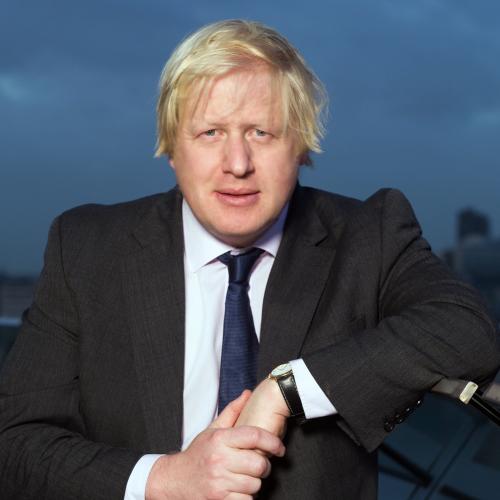
  • Boris Johnson – 2019 Speech on Becoming Prime Minister

    Below is the text of the speech made by Boris Johnson, the incoming Prime Minister, on 23 July 2019.

    I want to begin by thanking my opponent, Jeremy. An absolutely formidable campaigner, and a great leader and a great politician. Jeremy, in the course of 20 hustings or husting style events, it was more than 3000 miles by the way, it was more like 7000 miles we did criss-crossing the country, you’ve been friendly, you’ve been good natured, you have been a fount of excellent ideas, all of which I propose to steal forthwith.

    Above all I want to thank our outgoing leader, Theresa May, for her extraordinary service to this party and this country. It was a privilege to serve in her cabinet and to see the passion and determination that she brought to the many causes that are her legacy, from equal pay for men and women to tackling the problems of mental health and racial discrimination in the criminal justice system. Thank you, Theresa. Thank you.

    I want to thank all of you, all of you here today, and obviously everybody in the Conservative Party. For your hard work, for your campaigning, for your public spirit and obviously for the extraordinary honour and privilege which you have just conferred on me.

    I know that there will be people around the place who will question the wisdom of your decision, and they may even be some people here who still wonder quite what they have done. And I would just point out to you that nobody, no one person, no one party has a monopoly of wisdom, but if you look at the history of the last 200 years of this party’s existence, you will see it is we Conservatives that have had the best insights, I think, into human nature, and the best insights in how to manage the jostling sets of instincts in the human heart.

    Time and again, it is to us that the people of this country have turned to get that balance right, between the instincts to own your own house, to earn and spend your own money, to look after your own family. Good instincts, proper instincts, noble instincts. And the equally noble instinct to share and to give everyone a fair chance in life. To look after the poorest and the neediest, and to build a great society. On the whole, in the last 200 years, it is we Conservatives who have understood best how to encourage those instincts to work together in harmony, to promote the good of the whole country.

    At this pivotal moment in our history, we again have to reconcile two sets of instincts, two noble sets of instincts, between the deep desire for friendship and free trade and mutual support in security and defence between Britain and our European partners, and the simultaneous desire, equally deep and heartfelt, for democratic self-government in this country.

    Of course, there are some people who say they are irreconcilable and that is just can’t be done. And indeed, I read in my Financial Times this morning, devoted reader that I am, seriously, it is a great British brand. I read in my Financial Times this morning that no incoming leader has ever faced such a daunting set of circumstances, it said.

    Well, I look at you this morning and I asked myself, do you look daunted? Do you feel daunted? I don’t think you look remotely daunted to me. And I think we know we can do it, and that the people of this country are trusting in us to do it, and we know that we will do it.

    And we know the mantra of the campaign that has just gone by, unless you have forgotten it. You probably have… it is deliver Brexit, unite the country and defeat Jeremy Corbyn. And that is what we are going to do.

    I know some WAG has already pointed out that deliver, unite and defeat was not the perfect acronym for an election campaign since unfortunately it spells DUD, but they forgot the final E my friends, E for energise.

    I say to all the doubters, dude, we are going to energise the country. We are going to get Brexit done on October 31st, we are going to take advantage of all the opportunities it is going to bring in in a new spirit of can-do, and we are once again going to believe in ourselves and what we can achieve.

    Like some slumbering giant, we are going to rise and ping off the guy ropes of self-doubt and negativity. With better education, better infrastructure, more police, fantastic full-fibre broadband sprouting in every household, we are going to unite this amazing country and we are going to take it forward.

    I thank you all very much for the incredible honour you have just done me. I will work flat-out from now on with my team, which I will build I hope in the next few days, to repay your confidence. But in the meantime, the campaign is over, and the work begins.

  • Andrew Murrison – 2019 Statement on Nazanin Zaghari-Ratcliffe

    Below is the text of the statement made by Andrew Murrison, the Minister for the Middle East, in the House of Commons on 17 July 2019.

    Mrs Zaghari-Ratcliffe’s family have told us that she was admitted to a psychiatric ward in the Imam Khomeini public hospital on Monday. Her family have yet to be allowed to visit her or to make a phone call. We are lobbying the Iranian authorities to ensure that her family are able to visit as soon as possible, as well as continuing to lobby for consular access, so that we can check on her care as a matter of urgency. We remain in close contact with her family in Tehran and with Richard Ratcliffe in London.

    The Foreign Secretary spoke to the Iranian Foreign Minister on Saturday 13 July and raised Mrs Zaghari-Ratcliffe’s case and those of other dual nationals detained in Iran. The Foreign Secretary made it clear, as he has in public, that innocent people in prison must not be used as diplomatic leverage and called for their release. I also raised the case on a recent visit to Iran. The Foreign Secretary exercised diplomatic protection in March 2019, and we will continue to do all we can to reunite Nazanin and her family. The Government lobby strongly on the behalf of all our dual national cases, including Mrs Zaghari-Ratcliffe, at the highest levels. The welfare of British nationals in detention is a high priority for us. We have made it clear that Mrs Zaghari-Ratcliffe must be treated humanely and in line with international standards and norms.

    If I can say something on a personal note as a parent, this case has rightly gripped the hearts of the British people. I hope that this development is the first step towards a brighter future for Nazanin and her family. I hope that Iran will be generous and humane in their approach to this family, who have been separated for far too long, that we can rely on elements within Iran that we know are decent and civilised, that they will apply international norms and behaviours in respect of this sad case, and that Nazanin and her family can be brought together as soon as possible.

  • Nick Hurd – 2019 Statement on the Police Surveillance of Journalists

    Below is the text of the statement made by Nick Hurd, the Minister for Policing and the Fire Service, in the House of Commons on 17 July 2019.

    It cannot be said often enough that the Government are committed to protecting the free press and freedom of expression in this country. The Government agree—indeed, they forcefully advocates—that confidential journalistic material and journalists’ interaction with their sources must be protected. However, that does not mean that journalists should receive blanket protection from legitimate investigation simply because of their chosen profession. Our security and intelligence and law enforcement agencies will, in very limited circumstances, have a legitimate need to investigate a journalist or that journalist’s source, but there need to be protections in that regard.

    We believe that the Investigatory Powers Act 2016 provides strong protections in relation to the use of investigatory powers for the purpose of identifying or confirming a journalistic source and for the obtaining of confidential journalistic information. This ensures that protections are applied where they are required and that those who commit a crime or pose a threat to national security can be investigated regardless of their chosen profession, and it does so in a way that is compatible with all our ECHR obligations.

    For example, where a targeted communications data authorisation under part 3 of the Act is made with the purpose of identifying or confirming a source of journalistic information, section 77 of the Act requires that, other than in threat-to-life situations, the authorisation must be approved by a judicial commissioner before it can take effect. In deciding whether to approve such an authorisation the judicial commissioner must have regard to the public interest in protecting the sources of journalistic information and the need for there to be another overriding public interest before a relevant public authority seeks to identify a source.

    The codes of practice under the Act provide detailed and extensive guidance to public authorities when applying the powers in the Act, including extensive guidance on when those safeguards should be applied.

  • James Frith – 2019 Speech on Music Education in England

    Below is the text of the speech made by James Frith, the Labour MP for Bury North, in Westminster Hall on 17 July 2019.

    I beg to move,

    That this House has considered music education in England.

    It is a great pleasure to speak under your chairmanship, Sir George, and to open this debate—the first parliamentary debate I have led—on music education. I thank all those who contacted me about the debate, especially the schools in Bury North that told me about their experiences, as well as the all-party parliamentary group for music education, the House of Commons Library and the excellent sector organisations, including the British Phonographic Industry, PRS for Music, and of course UK Music. Those organisations demonstrate impressive leadership and make a powerful case for music education in their published works.

    As friends will testify, when getting to know someone I soon share with them my passion for music. Shortly after that, I will probably mention that I played at Glastonbury in 2003, on what is now known as the John Peel stage, on a Saturday at 11 o’clock—11 am. It is good to be here for this important debate in another early morning slot. Two simple ideas will guide my argument. First, music education must not fall victim to the tired old argument of traditional versus progressive education; it applies to both. Secondly, this debate must look to the future in the light of calls for music education based on current assessments.

    Kevin Brennan (Cardiff West) (Lab)

    I congratulate my hon. Friend on securing this debate and on being one of only two MPs to have played at Glastonbury. I am not the other. Does he agree that the Government could approach this issue without having to change all their assessments simply by stipulating that no school under inspection could be rated “outstanding” unless it had an outstanding creative offer, including in music education?

    James Frith

    My hon. Friend makes a powerful suggestion. I will come to Ofsted’s role later in my speech, as I believe it can be a friend in this mission.

    Music output from the UK remains world leading. Artists such as Stormzy are breaking new boundaries and contributing to the success of our £4.5 billion industry. In seven of the last 11 years, the biggest selling album in the world was by a UK act. The heritage of British music is celebrated worldwide, but we must focus on the future. We cannot afford to be complacent at a time of great economic and cultural change. Britain’s role in the world is under new assessment. The rise in automation means that we must emphasise what makes us human, not compete on learned behaviour with the machines we make. Our education system must emphasise what distinguishes us as human, and music education is ​a huge part of that effort. Creativity, expression and performance are instincts as important as what we feel from a beat of the drum.

    Last year, UK Music, the umbrella body for the commercial music industry, released its “Securing Our Talent Pipeline” report, which sets out in great detail the challenges beneath the success stories facing the industry. The report details evidence that 50% of children at independent schools receive sustained music tuition, while the figure for state schools is only 15%.

    Seventeen per cent. of music creators were educated at independent schools, compared with 7% across the whole population, and 46% of them received financial help from family or friends to develop their career. Growing inequality of opportunity underlines the problem. In that report, the CEO of UK Music, Michael Dugher—formerly of this parish—argues that a career in music must not become the preserve of those who can rely on the bank of mum and dad, and he is right.

    Alex Chalk (Cheltenham) (Con)

    I congratulate the hon. Gentleman on his excellent and passionate speech. Will he pay tribute to organisations such as the Cheltenham Festival for Performing Arts, which provide exactly those opportunities to people from all walks of life—private and state schools—and allow them to perform, build their confidence and, hopefully, build a lifelong interest in music and performing?

    James Frith

    The hon. Gentleman makes an important point, and I pay tribute to any organisation engaged in that endeavour. My argument is that we need a universal approach as opposed to an incidental one, but I absolutely support the work of that organisation.

    Our education system must support a deepening of the well of talent that we rely on. Music education is falling in the charts: there has been a drop of nearly 10% year on year for subjects not in the Ebacc, GCSE music entries have fallen by 24%, and since 2010, there has been a 17.8% reduction of music tuition in years 12 and 13. That is a worrying trend that Tom Richmond—a former adviser to the Department for Education and now director of the think-tank EDSK—says can “no longer be ignored.”

    There is huge variation between our state and independent schools. Access to music education, with opportunities to learn, play and perform music, remains too exclusive. That must change; we must give every child the opportunity to learn the best of what has ever been said and done. Of course, that means maths and English, literacy and numeracy, but the enrichment that music brings cannot be put to one side. Children should be given the chance to shine at both or either in formal education, whatever their socioeconomic background. They should be invested in with the cultural capital of music education. In March 2019, the BPI’s extensive teacher survey highlighted that just 12% of the most deprived state schools have an orchestra compared with 85% of independent schools, and that over the past five years, state schools have seen a 21% decrease in music provision compared with a net increase of 7% in independent schools over the same period.

    All our schools should turn with the natural and developing needs of every child and be more responsive, patient and dynamic, and show less rigidity and more agility. If schools do not have the time, resources or ​funding to do so, we must address those issues, rather than switching off the approach. Children can be better engaged in their education by expressing their natural creativity and curiosity. In fact, the argument for school tests and exams can be applied to the preparation for a musical performance as well—the idea, the studying, the rehearsal, the performance, and yes, the acclaim. Exam hall meets music hall. If we are to prepare our young people for the emerging landscape and an active, working and loving life, we need to pursue a balanced and expansive curriculum that recognises and hones skills and aptitude.

    The school accountability system has pushed music education to the fringes of the way that a school’s success is judged. Music is being squeezed out of the curriculum. The suite of EBacc subjects does not include music, and although the year 9 curriculum changes may attempt to include music and creative subjects more broadly, their carousel approach means that they dilute and reduce time spent learning the speciality that music education represents. That concern is supported by the BPI’s teacher survey, which says that 31% of state-funded schools have seen a reduction in curriculum time for music. In a recent Musicians’ Union survey, more than 90% of music teachers reported that the EBacc has had a negative impact on music education.

    The APPG for music education’s excellent report on the future of music education goes further:

    “Some schools perceive that they have permission to either ignore the curriculum or justify one-off end of year shows or projects as acceptable forms of music provision. Only weekly progressive music lessons can develop pupils effectively in musicianship skills.”

    My question for the Minister is: would the Government prefer to scrap the EBacc, or to include music in it? If students are not able to participate in music in compulsory education, they are far less likely to pursue it in further or higher education. According to Ofqual, over five years the number of students taking music at A-level has declined by 30%. However, I commend the Russell Group of universities for its decision to scrap the published list of preferred A-level subjects.

    There is of course good practice, which I do not overlook. Some schools in Bury make a difference to their children’s musical education by collaboration. That is innovative, energising and fulfilling, it promotes curriculum richness, and it gives the wider school lots of memorable musical experiences. Bury’s music service is terrific, but the national evidence is that provision is patchy. Studying that evidence, the indices of value all point the wrong way, with a lack of universal, readily accessed music education during formal education time, in school hours, away from the distractions of often complex lives.

    Recently, the Government announced that they will refresh the national plan for music education. What plans do they have to consult the industry? When will they be bringing forward recommendations? Does the Minister agree that a refresh of the national plan provides an ideal opportunity to reset the dial on music in education and to take on the challenge outlined in this debate? Will he consider providing creative education a criterion for achieving an “outstanding” rating from Ofsted, as suggested by my hon. Friend the Member for Cardiff West (Kevin Brennan)?​

    I know that the Minister for Schools recognises the need to get a grip on the issue. He established a music curriculum expert group, and a contract to write a new model music curriculum has been awarded to the Royal Schools of Music exam board. Will he update us on the progress of that work? Will he also assure us that the model music curriculum will work for non-music specialist schools, to ensure that reduced capacity or a lack of specialism in our schools is not a further barrier to progress? Will he explain how monitoring of the impact of any such guidance will be undertaken? According to the BPI, only 44% of music lessons in primary schools are delivered by a music specialist. Support is still needed alongside the model curriculum for teachers who want to specialise in music, whether through a teaching route or a conversion through the postgraduate certificate in education programme. Will the national plan therefore ensure that teacher training and support for music education is improved?

    I welcome recent news that Ofsted is to develop its focus on schools providing cultural capital for children. That is a step forward in ensuring that the role of music education is re-evaluated and reintroduced as a norm for all children in our schools. I note favourably that Ofsted will pick that up as part of its new framework. The Cultural Learning Alliance claims that music enhances cognitive abilities by 17%; does the Minister have a view on that proposition, or has he seen any evidence for it? Will the Minister develop the powerful cultural capital argument through his responsibilities at the Department for Education? Indeed, does he agree that one key goal should be for all children, regardless of socioeconomics, to have fair and free access to music education?

    My final suggestion is that the Government should renew the effort to put music venues at the heart of high street renewal and economic development. The industry business model has been flipped in the past 15 years by digital platforms, streaming services and self-publishing. Yes, all the industry went through a period of denial of the change.

    Kevin Brennan

    Does my hon. Friend agree that the Government missed a real opportunity when rate relief was offered to pubs, shops and other organisations on the high street, but the guidelines specifically excluded music venues from that list? Despite appeals to the Chancellor by me, UK Music and others, the Government refused to change that ruling.

    James Frith

    I agree with my hon. Friend. The Government seem to have a bit of a blind spot when it comes to music venues—or perhaps a tin ear is a better phrase.

    The industry business model has been flipped in recent years, as I was saying, but will the Government look, for example, at YouTube paying artists next to nothing per stream of their work? Some of the revenue that Google makes from that enormous imbalance could go to support live venues for emerging talent across the country and towards our efforts on music education, whether as a new tax or from a partnership.

    Building on the Government’s embrace of the superb agent-of-change campaign, with the protections that brought in, we need more new or improved music facilities for young people outside school hours. UK Music has a network of rehearsal spaces based in ​deprived and disadvantaged communities to offer improved access to music. What plans do the UK Government have to develop and enhance that scheme? Can Bury have one, please?

    Above the funding argument sits a bigger one. Funding plays its part, of course, but there is a bigger one even than that. It is one of choice and a question of priority. What do we expect from our schools and for all our children? If we recognise the value that independent schools place on music and music education, do we still opt to ignore that for the vast majority of all children, accepting the growing inequality of opportunity? Or do we—as I believe we must—ingrain into all our schools the rights of all children to have access to the same opportunities to learn, play, perform and enjoy music?

    The truth is, it is hard to do justice to or to outline in policy what is in fact a deep passion and love. Put simply, one’s faith in the power and possibilities of music, performed, recorded and live, is not just a belief in a light that never goes out; it is the knowledge that music makes life better. Music can still your senses or stir your heart, its message motivates and mobilises, it entertains and, given the chance, it educates us all.

  • Jesse Norman – 2019 Statement on EU Agreements with Third Countries

    Below is the text of the statement made by Jesse Norman, the Financial Secretary to the Treasury, in the House of Commons on 17 July 2019.

    The Government are undertaking a programme of work to replace EU international agreements with bilateral agreements ready for a UK exit from the EU either in the event of no deal or at the end of the proposed implementation period. This is essential preparation for the UK’s withdrawal from the EU to ensure that the UK can, where relevant and possible, maintain the benefits of these agreements, thereby providing continuity and stability to businesses and individuals.

    As part of this programme, officials in HM Treasury and HM Revenue & Customs are working with their international partners to replace EU Customs Co-operation and Mutual Administrative Assistance (CCMAA) agreements with UK-third country bilateral agreements. These agreements will provide a legal framework for the exchange of information between the UK and international partners on customs matters and continued co-operation between the parties’ customs authorities, both facilitating legitimate trade and supporting international efforts in fighting customs fraud. They also fulfil domestic legal requirements for Authorised Economic Operator Mutual Recognition Agreements (AEOMRAs), which deliver important trade benefits to some UK businesses.

    In cases where the other party’s domestic law allows, the “replacement” UK-third country CCMAA agreements will include provision for them to enter into force upon signature, often referred to as “definitive signature”. The parties would thus be bound by these agreements ​upon signature, although the agreements’ provisions would not have effect until the EU CCMAA agreements cease to apply to the UK. Use of definitive signature in this case would enable the UK and its international partners, in the event of EU exit without a deal, to transfer without interruption key customs agreements that are currently in place by virtue of the UK’s membership of the EU. This is because there will be no change in effect of the agreement due to it being a replication of the arrangement the EU currently has in place with the third country. While many international treaties are expressly subject to ratification, it is also common in both UK and international practice, where practicable, for treaties to enter into force upon signature; In UK law, where a treaty enters into force upon signature, it is not subject to the procedures for parliamentary scrutiny as provided in section 20 of the Constitutional Reform and Governance Act 2010. However, as CCMAA agreements are straightforward bilateral agreements, and rely on provisions in the Taxation (Cross-Border Trade) Act 2018, which has already been approved by Parliament, the Government consider that definitive signature is appropriate in these instances.

    The Taxation (Cross-Border Trade) Act 2018 provides the necessary powers for the UK to create a stand-alone customs regime once the UK exits the EU. In particular, section 26 of this Act allows for the UK to share information on customs matters with international partners and therefore provides the necessary legal basis from a UK perspective for the co-operation between parties outlined in the CCMAA agreements.

    Once signed by both parties, a copy of each UK bilateral CCMAA agreement subject to definitive signature will be laid before Parliament as a Command Paper in the treaty series for information in the normal way.

    Where third country partners’ domestic law does not permit them to be bound by signature, thereby requiring ratification by them, the CCMAA agreement will not use definitive signature but will be drafted to provide for consent to be bound by a two-stage process of signature and ratification.

  • Jeremy Hunt – 2019 Statement on International Criminal Justice

    Below is the text of the statement made by Jeremy Hunt, the Foreign Secretary, in the House of Commons on 17 July 2019.

    Today we mark the Day of International Criminal Justice, which provides an opportunity to update Parliament on the UK’s support for the principles and institutions of international justice in the previous calendar year.

    Support for international criminal justice and international humanitarian law is a fundamental element of the UK’s foreign policy. The UK believes that justice and accountability for the most serious international crimes is crucial to building lasting peace and security.

    The UK Government believe that the International Criminal Court has an important role in pursuing accountability, but only when national authorities are either unable or unwilling to do so. The UK has long ​provided political, financial, and practical support to the ICC. We are one of the largest financial contributors to the Court, contributing £9.7 million in 2018. An example of the UK’s practical support was the sentence enforcement by the Scottish Prison Service of Mr Ahmad Al Faqi Al Mahdi, who was convicted of destroying cultural heritage sites in Timbuktu.

    In 2018, the ICC considered situations from across Africa, the middle east, Europe, south-east Asia and South America, with 11 situations subject to formal investigations, and proceedings continuing in three trials: the Ongwen case (Uganda), the Ntaganda case (Democratic Republic of the Congo), and the Gbagbo and Blé Goude case (Ivory Coast). Al Hassan (Mali), and Yekatom (Central African Republic) were surrendered to the ICC.

    The ICC’s trust fund for victims plans to launch an assistance programme in the Central African Republic, to provide physical and physiological rehabilitation, alongside material support for victims and their families. The UK contributed funds to the TFV for reparations to victims in Mali.

    While the UK continues to support the role of the ICC, reform is required for the ICC to fulfil its mandate as intended under the Rome statute. The UK will work with other states parties, the Court, and civil society, to achieve this goal.

    The International Residual Mechanism for Criminal Tribunals (IRMCT) continued its mandate to fulfil the residual functions of the International Criminal Tribunal for the former Yugoslavia (ICTY) and the International Criminal Tribunal for Rwanda. The IRMCT delivered an appeals judgment in the case of Radovan Karadžić, the former Bosnian Serb politician convicted in 2016 of genocide in Srebrenica. Karadžić’s sentence, increased from 40 years to life, sends a clear message that those who commit atrocities will be held to account. The IRMCT continued to hear the retrial in the case of Stanišić and Simatović and issued a decision in the Šešelj contempt case.

    The UK supported the Extraordinary Chambers in the Courts of Cambodia and the Residual Special Court for Sierra Leone through a total contribution of over £500,000. The UK has also been at the forefront of international efforts to gather and analyse evidence of atrocities committed in the middle east. Since 2016, we have committed £950,000 to the UN International Impartial and Independent Mechanism (HIM) to support the preparation of legal cases for serious crimes committed in the Syrian conflict. The UK also led efforts to adopt a UN Security Council resolution establishing an investigative team to collect, preserve and store evidence of Daesh atrocities in Iraq, and contributed £1 million towards its operation. The first mass grave exhumation was in March 2019 in the Yezidi village of Sinjar.

    In reaction to the Rohingya crisis in Burma, the UK worked closely with the EU and the Organisation of Islamic Co-operation to secure a UN Human Rights Council resolution to establish a mechanism to collect and preserve evidence of human rights violations to support future prosecutions.

    We will continue to update Parliament on our support to international criminal justice through our annual human rights report.

  • James Brokenshire – 2019 Statement on Grenfell Tower

    Below is the text of the statement made by James Brokenshire, the Secretary of State for Housing, Communities and Local Government, in the House of Commons on 17 July 2019.

    Two years on from the Grenfell Tower tragedy, my priority is to ensure that everyone affected is receiving the support they need and deserve. The independent Grenfell recovery taskforce continues to provide challenge and advice to the Royal Borough of Kensington and Chelsea (RBKC) in its response to the Grenfell Tower tragedy. I recently received its fourth report, which I am today depositing in the Library of the House and publishing in full at gov.uk, alongside my response.

    The taskforce has outlined the progress that the council has made since their last report of November 2018. RBKC have published its Grenfell recovery strategy and committed £50 million over the next five years to develop services to support the recovery. The recovery strategy is also prioritised in the new council plan. The taskforce reports that the dedicated service for the bereaved and survivors is the successful result of the council co-designing the service with its users. I welcome these significant steps forward.

    On rehousing, the taskforce has again offered reassurance to Ministers that the council’s approach is appropriate and sensitive to the long-term needs of survivors. I am pleased that there has been further progress since I received the taskforce’s report with two more families moving into permanent accommodation. However, as I said in my oral statement on 10 June I remain concerned that households are still in emergency accommodation, including one in a hotel.

    The taskforce has also welcomed the council’s demonstrable appetite to modernise its governance procedures. It cites its implementation of recommendations by the Centre for Public Scrutiny, including establishing a programme of listening forums. The taskforce has also identified the beginning of a culture change initiated by the chief executive and leader of the council.

    The taskforce has highlighted developments in the council’s approach to community relationships and communications. RBKC has increased the number and means by which it engages with its residents including new meetings between the political leadership and some of those most affected by the tragedy. The taskforce also reports that it is seeing pockets of good practice pertaining to fostering good relationships with service users and the community.

    Whilst the taskforce has noted good progress in many areas it is also clear that the council still faces significant challenges. The taskforce has identified that the pace by which the recovery is being implemented is still too slow and that this needs to be addressed. The taskforce has highlighted that strands of the recovery strategy remain in development, as well as the community programme and economy strategy. The taskforce therefore remain concerned about the capacity and corporate capability of the council to drive sustainable change. Although the rehousing programme is nearing completion the taskforce states that the council still faces substantial wider housing challenges. Whilst there is a programme to support and ​develop all councillors, the taskforce has noticed occasions where member behaviour has caused it concern. There is a high degree of social capital that the council has yet to fully tap into and the taskforce calls for an innovative approach to harness this enthusiasm. The taskforce has also highlighted that the culture change has still not permeated all levels of the council and silo working remains an issue.

    The taskforce has set the bar high for RBKC’s recovery. It is important there is ambition and pace in the council’s recovery efforts over the next three to four months in responding to the taskforce’s recommendations, including:

    Urgently implementing its recovery strategy;

    Fostering a council-wide culture change so that everyone is working together;

    Clearly communicating its recovery plan and develop stronger communications skills;

    Ensuring that the senior team has the appropriate skills and resilience;

    Making a clear commitment to creating a better relationship with its community.

    I am assured the council has already set in train action to meet these recommendations. This includes a paper outlining its plans to implement organisational change at the council by 2020.

    I will review the process in September, by which point I hope the council will have made sufficient further progress. I look forward to continuing to work with the taskforce.

  • Sir John Major – 2019 Statement on the Conservative Leadership

    Below is the text of the statement made by Sir John Major, the former Prime Minister from 1990 until 1997, on 22 July 2019.

    I read Gordon Brown’s speech this morning with interest and agreement.

    It is a timely moment to note that whoever becomes our Prime Minister this week, he will be far more than Leader of the Conservative Party.

    As for every Prime Minister, he must act for our nation as a whole – not just one part of it. He must also remember that no-one born this century voted for Brexit – let alone a “no deal” Brexit.

    Words and actions have consequences, and never more so than when they are those of the Prime Minister. As the evidence mounts of the probable economic and social damage of a “no deal” Brexit – and of the rising opposition to it – the new Prime Minister must choose whether to be the spokesman for an ultra-Brexit faction, or the servant of the nation he leads. He cannot be both, and the choice he makes will define his Premiership from the moment of its birth.

    As the most powerful politician in the four nations of our United Kingdom, any Prime Minister has the right to expect support but – if he acts as the spokesman for one hard-line faction only – he cannot complain if he faces uncompromising opposition from those who believe they have had their views ignored.

    I hope our new leader understands this, and is fully prepared for the enormity of the task before him.

  • Sajid Javid – 2019 Speech at Coin Street Community Centre

    Below is the text of the speech made by Sajid Javid, the Home Secretary, made at the Coin Street Community Centre in London on 19 July 2019.

    Growing up in the seventies, looking like this, extremism was part of my life.

    I changed my route to school to avoid members of the National Front.

    I watched my mum time and time again scrub the word ‘Paki’ from the front of our shop.

    And – rightly or wrongly – as a child, I punched a bully who used the same racist slur to my face.

    Although perhaps it’s not a great idea to bring up my past indiscretions just before I get a new boss We’ve undoubtedly come a long way since my school days.

    I’m proud to say we’re now a more multi-racial, more welcoming, and a more tolerant society.

    But just last week I met schoolboy Jamal Hijazi, whose heart-breaking story took me right back to my childhood.

    A Syrian refugee who wasn’t just insulted by a classmate, he was attacked.

    Not in the 1970s, but just a few months ago.

    No one can hear his moving story and deny we still have a problem in this country.

    And it’s not just racism, with the blind hate of extremism showing its face in many ugly forms.

    In 2015 we published our ground-breaking Counter Extremism Strategy.

    Back then, the Prime Minister led the charge as Home Secretary, and I commend her pioneering work.

    But four years on, it’s time to take stock and to talk openly about the threat, and to admit it’s got worse.

    Yes, progress has been made.

    But when I hear what happened to that schoolboy, I know we have to do more.

    So we set up the Commission for Countering Extremism to help us do just that.

    I thank them for their work so far, and while I do welcome their first findings, they lay bare the ugly truth.

    Just over half of the respondents to their consultation had witnessed extremism in some way.

    One in five had seen it in their own area.

    Almost a quarter online.

    The targets are many and varied.

    And the top group identified by the Commission as most at risk of extremism? Everyone.

    When over half of us have witnessed extremism, it’s gone from being a minority issue to one that affects us all and the way we all live our lives is under unprecedented attack.

    People are getting angrier about more things – and extremists are quick to try and exploit that.

    In 2015, our focus was on extreme Islamists, particularly the lure of Daesh.

    While their physical stronghold has now been wiped out, that threat certainly remains.

    But now the fault lines dividing our society have splintered and spread.

    Reports of far-right extremism, antisemitism and anti-Muslim hate are on the rise.

    Women are being robbed of opportunities by religious extremists.

    The internet has further emboldened those that are inclined to hate.

    Angry words whip up a climate of fear and incite hate, violence, public disorder, oppression and segregation.

    Women beaten on a bus because they are gay, sledge hammer attacks on mosques, children being forced into marriage.

    Christians, Muslims and Jews being slaughtered in Sri Lanka, Christchurch and Pittsburgh.

    Public discourse is hardening and becoming less constructive.

    Around the world populism, prejudice – and even open racism – have catapulted extremists into power.

    Now I’m proud to say this has not happened in mainstream politics here.

    We’re naturally liberally minded people.

    We remain the most successful multi-racial democracy in the world.

    Thankfully, our politics has not gone down the same road as much of Europe and the US.

    But we must act now, to avoid sliding into the barely masked racism of nationalism.

    Because there’s one thing I know for sure about this country: we’re better than that.

    We won’t just accept rising anger.

    We won’t just slap ourselves on the back and talk about the success of the Counter Extremism Strategy.

    We won’t deny the threat is now worse than ever.

    That’s why I’m here to set out my three part approach to counter that threat.

    Because if we are to stop extremism in its tracks we must have the courage to confront it, the strength to take decisive action, and the foresight to tackle the root causes.

    Firstly, we all need the courage to confront this issue.

    Why? Because tackling extremism isn’t easy.

    People are scared to talk about it.

    This is a sensitive issue and sometimes it can easily cause offence.

    But I’m here regardless, because we desperately need a national conversation about extremism.

    I will not stay silent and create a vacuum where extremist views can fester and grow.

    So I want to be frank about some of the challenges we face.

    For a start, what exactly is extremism?

    Why have we struggled to come up with a definition?

    The threat is not black and white.

    There are countless shades of grey between a loaded comment, an online threat, and a terror attack.

    Extremism can be the thin end of a wedge.

    The unpleasant words that skate on the right side of the law, but stir up hate and drive violence in others.

    Of course, you shouldn’t arrest everyone with a suspect view.

    Of course not. I won’t be the thought police – people are entitled to hold and express their own views.

    But the challenge is being able to identify where an opinion crosses the line into extremism.

    When it goes from free speech to the corrosive spread of dangerous propaganda.

    When it incites harm and becomes criminal.

    At its heart, extremism is a rejection of the shared values that make this country great: freedom, equality, democracy, free speech, respect for minorities, and the rule of law.

    It attacks our society and tears communities apart.

    It turns us against each other and can lead to violence, discrimination and mistrust.

    But there’s a delicate balance between personal and religious freedom and protecting our shared values.

    In this country, everyone has the right to observe their cultural and religious practices without any fear of abuse.

    We celebrate differences and in part that’s what makes us great.

    Our shared values are not about forcing everyone to drink tea, eat fish and chips, and watch the cricket – although I hope they watched it the weekend.

    But cultural sensitivities must not stop us calling out extremism.

    To back away from a problem because of someone’s ethnicity is not liberal, it is weak.

    Of course, we need to be measured.

    But we must not be afraid to confront any problem in any community.

    Whether group-based child sexual abuse, or the oppression of women through FGM, forced marriage, so-called honour-based violence, I refuse to stand silently by.

    The protests at Parkfield and Anderton Park schools in Birmingham bring this balancing act, I think, into sharp focus.

    Earlier this week Panorama focused on the row over lessons on equality that include teaching about families with same sex parents.

    Sara hit out at the extremists who have hijacked the protests, distorting genuinely-held religious views of parents. It is entirely right that parents with legitimate concerns talk to their schools about what it being taught in a calm, constructive way.

    The right to protest and oppose government policy is one we hold dear, but where that spills over into intimidation of pupils and teachers, it is unacceptable.

    And I agree with Sara that it is entirely wrong if any situation is exploited by extremists.

    Of course, words alone are not enough.

    So the second part of my approach is showing strength with decisive action against extremism.

    As the threat comes in many forms, so must our response.

    So we need to combine the more gentle approach of working with communities and promoting shared values with an unashamedly tough approach to those who spread extremist poison.

    So our work embraces those we need to help fend off extremists:

    strengthening communities through our Building A Stronger Britain Together programme and the Integrated Communities Strategy

    protecting religious institutions from hate crime with our Places of Worship Protective Security Programme

    and boosting integration by committing to new British Values Tests and strengthened English Language provision

    But we’ve also been unafraid to be robust in our approach to the people and organisations that pose the highest threat:

    refusing to let the worst extremists into the country to spread their vile views –

    I’ve personally excluded 8 since I have become Home Secretary – from a far-right white supremacist, to a US black nationalist, and extremist hate preachers from a number of faiths

    removing British citizenship from dual nationals to keep dangerous individuals with the most extreme views out of the UK

    and launching our Online Harms White Paper, to ensure companies take more responsibility for harmful content on their platforms

    But we know that more needs to be done, and we know that we must keep pace with the changing threat.

    So, I can announce today that in anticipation of the Commission’s full report, I’ve asked my officials to start work on a comprehensive new Counter Extremism Strategy.

    And while we wait, I will continue, in that time, to call out extremism wherever I see it.

    We all have a role to play in stopping any normalisation or legitimisation of these views.

    Extreme views can be found on all sides of the spectrum, from Islamist organisations like Hizb u-Tahrir and IHRC, to far right groups like Britain First and Generation Identity.

    And those that spread intolerance and division from all corners are often given a platform by media and political figures.

    Supposedly mainstream groups can be guilty of that too – groups like MEND. They aren’t always as intolerant of intolerance as they may claim to be.

    One of the most prominent organisations that rejects our shared values is called CAGE.

    When challenged they claim the Government is anti-Muslim.

    Something they will no doubt say about me later today.

    I will act against those who seek to divide us wherever I can.

    So I have amended the guidance for sponsoring migrant workers.

    This will allow us to refuse or revoke a sponsor licence where an organisation behaves in a way that is inconsistent with British values, or that’s detrimental to the public good.

    I can tell you now that I plan to revoke CAGE’s licence on this basis, subject to representations.

    I will do all I can to ensure groups like CAGE are not trusted with the privilege of sponsorship and I will see it removed.

    Now the third part of my approach is having the foresight to tackle the root causes of extremism before it takes hold.

    I know what it’s like to be an outsider.

    I want everyone to have the opportunities that I had, to feel they belong to our brilliantly diverse Britain.

    But, sadly not everyone does, and that cultural separation can sow the seeds of extremism.

    The extremists set out to fracture our society, therefore we must unite to defeat them.

    We need fewer labels that divide, and more overlapping layers that draw us together.

    First, community – when people truly come together we build unbreakable local networks that extremists cannot breach.

    Second, language – I saw how hard it was for my own Mum when she came to this country speaking very little English.

    We estimate that 1 million people living here today that cannot speak English well or at all.

    And if we can’t communicate with each other, how can we build bridges?

    So, I’m making it my mission to ask for more money in the Spending Review to properly fund lessons and break down language barriers.

    Third, integration – A couple of years ago I visited a primary school in my home town of Rochdale where around 95% of the pupils were Asian. 95%.

    And only a mile or so down the road was another primary where around 90% of the pupils were white.

    If we want to see more social cohesion we must rally against segregation and have a more positive approach to integration.

    And finally, national identity – we must celebrate the qualities that define us as a nation.

    My parents were proud to choose to be part of this country and I want to inspire that same passion in others, to encourage citizenship and a sense of belonging.

    Of course, I understand that there are some concerns about immigration.

    Loose language is used at all levels.

    I’m from an immigrant family, I know what it’s like to be told to go back to where you come from – and I don’t think they mean Rochdale!

    Some worry that new arrivals will take over their communities – that our national identity will be diluted. I firmly reject that.

    I’ve seen how immigration can enrich our country and I welcome it.

    I know how much immigrants have contributed to our culture, our society, our economy and our public services. Just this week I was thrilled to meet three cricketers who helped win the World Cup for this country.

    One was born in Barbados, one was born in New Zealand, one was born in Ireland – all three of them English heroes.

    I recognize the huge benefits of immigration, but if people from different backgrounds are living separate lives in modern ghettos then it’s no good for anyone.

    To be truly pro-immigration we must be pro-integration too.

    And to do this, we must confront the myths about immigration that extremists use to drive divisions.

    We know the scale is exaggerated to stoke up fear and that they use immigration as a proxy for race. Sweeping plans to cut immigration as if it’s automatically bad can add to the stigma.

    In 2015 a survey of school children found the average estimate was that nearly half of people in the UK were foreign born. That’s what the children thought.

    The truth according to the 2011 census? 13%.

    A staggering 60% of the same group believed it was true that “asylum seekers and immigrants are stealing our jobs”.

    I won’t ignore that some people feel this way, but we must not be afraid to confront these issues with an honest and open public debate.

    Only by talking about this can we show how much integration enriches our communities.

    We all benefit, because an integrated society is a strong one, where different cultures form the layers of a watertight national identity: interlocking to form a united front. A united front so smooth there will be no footholds left for extremists.

    This multi-layered approach will help us tackle extremism.

    This is not just a job for the Government alone.

    But we will lead from the front.

    It takes the whole of society to challenge these vile views.

    Everyone has a part to play: *broadcasters who must not give platforms to extremists… *police who must swoop on the worst offenders… *and public figures who must moderate their language.

    And anyone can challenge the myths that are peddled by extremists that deepen divisions.

    So tell your friends and shout it loud and proud: people from minority backgrounds do not steal their jobs, they’re not terrorists, and that there is no global ‘Zionist conspiracy’.

    Extremism is a problem that isn’t going to go away so I’m here to redouble our commitment to tackle it head on.

    I will not flinch from confronting extremism.

    I will do everything in my power to stop those who seek to undermine our country.

    And I will tackle the root causes.

    To unite communities, to protect our fundamental values, to protect those most at risk.

    I’ve made this my mission and I’m asking you to do the same.

    Together let’s call out hate and unite our society and create a stronger, better, bolder Britain.

    Thank you very much.

  • David Lidington – 2019 Speech at CSSF Annual Report

    Below is the text of the speech made by David Lidington, the Chancellor of the Duchy of Lancaster, on 18 July 2019.

    Good afternoon, and thank you for having me here today to speak about the invaluable work the Conflict, Stability and Security Fund finances around the world.

    Over the last ten years, the very nature of conflict and instability has changed dramatically. The world is facing a rise in intrastate violence, complicated by insurgencies, terrorism, serious and organised crime.

    In addition to this, conflicts are lasting longer. And because they are increasingly international, these conflicts risk having an impact on the security of the UK as well.

    Complex conflict requires creative solutions. So four years ago, the government decided it needed a more agile, cross-departmental approach, to complement the long term work spearheaded by DfID, the FCO and the Ministry of Defence.

    Since its creation in 2015, the CSSF has enabled the government to work across departments, delivering support to fragile states at risk of instability, as well as states in the throes of complex conflicts.

    Four years later, this approach is seeing strong results, as we see in the Annual Report released today.

    It has contributed to halving the number of UN Peacekeeper casualties in Mali, Democratic Republic of Congo and the Central African Republic – the three most deadly UN Peacekeeping Missions.

    The CSSF has encouraged 3.1 million more women to register to vote in Pakistan.

    It has financed the retraining of more than 150 reformed Boko Haram soldiers giving them the vocational skills they need to establish a peaceful life.

    It has contributed to saving the lives of more than 3,000 vulnerable migrants in the Aegean and the Mediterranean seas.

    But these are just a few of the success stories you find turning the pages of the annual report, further demonstrating this country’s well-earned reputation as a global leader in managing conflict.

    Today, the UK retains its long-held role as a trusted voice on the global stage and the only permanent member of the UN Security Council to spend both 2% of GDP on defence and 0.7% of GNI on development. So it is unsurprising that no other country has a fund as large in scope or as ambitious as the CSSF.

    Its unique ability to spend both Official Development Assistance and non-ODA money means that the CSSF can be agile and responsive. It gives it the flexibility to trial new approaches, share UK expertise and leverage funding from other donors or government departments, to achieve long term change. And it builds on UK expertise in areas like policing, counter terrorism, defence and intelligence to save lives and improve security, both at home and abroad.

    With a budget of £1.26bn, the CSSF brings together 13 government departments and agencies to deliver 90 programmes in no fewer than 70 different countries. Guided by the National Security Council, this allows the fund to be responsive to new and emerging threats. These are the kinds of threats which directly affect the UK’s domestic security, like the rise of hostile state actors, the increasing challenge to the Rules Based International System, growing concerns over climate change, and the rise of Serious and Organised Crime.

    Serious and Organised Crime affects British citizens, more often, than any other national security threat, whether it’s online sexual exploitation or firearms offenses. And this crime comes at a cost – for the UK, at least £37 billion every year. So last year, under a new strategy, the CSSF launched a new £1.3m allocation to pay for a global network of advisers on serious and organised crime.

    This is an important area for both UK and global stability and security. For example, when presented with the name, the “Conflict, Stability and Security Fund,” one might not think of cracking down on illegal cigarettes. But cigarette smuggling in the Western Balkans has a direct impact upon the UK.

    It costs the UK economy £2.5 billion every year in lost tax revenues. But it also helps to perpetuate the abhorrent practice of people trafficking and illegal drug smuggling across Europe, providing income for serious and organised crime networks.

    And today, the UK’s National Crime Agency is working with the Kenyan authorities to crack down on international trafficking in the region and the sexual abuse of children. Since 2017/18, the Unit has rescued more than 90 survivors of these crimes.

    CSSF programmes are also supporting our broader global policy objectives. With ongoing Russian aggression at its borders, Ukraine remains vulnerable to attack. A strong and stable Ukraine has long been a top UK priority, and through the CSSF we are able to coordinate our diplomatic, humanitarian and defence and security efforts for a more holistic approach.

    For example, by educating school children and communities and clearing 1 million square metres of land, we have helped halve landmine casualties from 2017-2018.

    This comprehensive approach can be beneficial for the UK, too. We have provided military support and training to over 13,000 members of the Ukrainian Armed Forces in infantry skills, medical, operational planning and logistics – which in turn provides the UK with in-depth, on-the-ground insight into the challenges of defending against Russian aggression.

    And we are even using CSSF to act on this government’s commitment to combat climate change. In Columbia, the CSSF has helped maintain and implement the peace process since 2016.

    But peace – however longed-for – can sometimes have unintended results. An unfortunate effect in Colombia has been an increase in the rate of deforestation, as communities recover from conflict and former fighters return home to find limited economic opportunities. So we are working with the Government of Colombia to bring former fighters together with local communities to design jobs like eco-tourism and farming that offer alternatives, not only to violence, but to activities that damage the environment to protect Columbia’s natural resources.

    Its clear CSSF programmes are making a real difference in the lives and communities of those affected most by violence and instability. But it’s also demonstrated an ability to adapt as the nature of conflict continues to evolve.

    Now there are areas for improvement and change. By seriously considering external recommendations, like those from the Independent Commission of Aid Impact, the CSSF has significantly improved its programme management, transparency and monitoring and evaluation practices. And I was pleased to see in the ICAI follow up report published today an acknowledgment of these improvements.

    This progress should be applauded. As government comes to the end of this Spending Review period, the CSSF will need to ensure that it can continue to learn and adapt. And we will need to be clear about how a fund of this size and structure can be used most effectively.

    So as we celebrate the successes of this ambitious fund, with many of those who made them possible, I look forward to seeing what comes next.

    Because in a world of competing conflicts and challenges, the UK’s investment in global security, and its willingness to trial new approaches and respond to emerging threats, speaks volumes.

    It emphasizes that our leadership in this area is a responsibility we do not take lightly, whether that is financially or politically.

    And it sets the standard for countries everywhere as we work together to create a more peaceful and a more prosperous world.

    Thank you.