Tag: Speeches

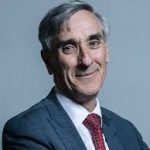
  • Jonathan Ashworth – 2020 Speech on the Covid-19 Response

    Jonathan Ashworth – 2020 Speech on the Covid-19 Response

    Below is the text of the speech made by Jonathan Ashworth, the Shadow Secretary of State for Health and Social Care, in the House of Commons on 18 May 2020.

    On symptoms, the right hon. Gentleman will know that many healthcare specialists were making these warnings eight weeks ago, so can he explain why there has been a time lag in updating the case definition?

    I note what the right hon. Gentleman said about social care, but he will be aware that more than 12,500 people have sadly died in care homes because of covid-19. Last week, he said that he had put a protective ring around care homes from February, but yesterday a care home provider wrote in The Sunday Times:

    “Elderly people weren’t a priority”

    They also wrote:

    “The government was asleep at the wheel.”

    Is the reality not that there was no early lockdown of care homes when needed, and there was no testing of people transferred from hospital to care homes until ​mid-April, seeding the virus? Personal protective equipment was requisitioned from care home staff and given to the NHS because of wider shortages. There was guidance suggesting that infection was unlikely, and that guidance was still in place when there was community transmission.

    We still do not have full testing of all residents and care home staff 12 weeks later. No wonder Age UK has said that this is “too little, too late”. I note that the right hon. Gentleman said that testing will be expanded. Can he bring forward the date by which all care home residents and staff will be routinely tested? The document last week says that it will be by 6 June. Why can the date not be sooner?

    Has this crisis not shown that our care sector is staffed by exceptional, dedicated people, and that migrant care workers are not low skilled but immensely able? Does the right hon. Gentleman agree that the Home Office should acknowledge that, and praise such potential workers, not penalise them?

    I welcome the wider roll-out of testing. The right hon. Gentleman did not mention the antibody test. Could he update the House on that front? It has also been reported today that 20% of hospital patients got covid while in for another illness. Two weeks ago, he suggested to me in the House that he planned to roll out screening of all healthcare workers, whether symptomatic or not. Can he update us on that front?

    On tracing, I have long argued that the safe way to transition out of the lockdown is by having a test, trace and isolation strategy in place, but it depends on a quick turnaround of test results. Can the right hon. Gentleman tell us the current median time for test results to be received by someone when carried out by the Deloitte and other private sector testing facilities, and how soon do directors of public health and GPs receive those results?

    The right hon. Gentleman knows that I believe he should be making better use of local public health services. None the less, he is pressing ahead with the national call centre delivered by Serco. Can he tell us by what date that tracing service will be operational? Will it be operational by 1 June?

    The right hon. Gentleman did not talk about isolation as one of his key elements of the test-trace strategy. Many poorer people will not be able to self-isolate. Will he look at providing facilities for such people, such as empty hotel rooms so they can quarantine? Will those in insecure work be guaranteed sick pay if they are asked to isolate for seven or 14 days?

    On the R number, will the right hon. Gentleman guarantee that every easing of restriction, such as asking children to return to school, is accompanied by a Government statement on the expected impact on the R number and the underlying prevalence of infection? If R rises to be greater than one in a region or local area, how will the Government respond?

    As the right hon. Gentleman says, this is Mental Health Awareness Week. We are very fearful of a growing burden of mental health issues, especially in children, as a result of the lockdown. What extra investment is he putting into mental health services, particularly children’s health services? NHS staff, who are threatened not only by exposure to the virus, but the trauma, emotional ​distress and burnout associated with working on the frontline, need support as well. They need PPE, they need fair pay, they need mental health support. Those care workers who are caring for us need us to care for them and we should thank them again in Mental Health Awareness Week.

  • Matt Hancock – 2020 Statement on the Covid-19 Response

    Matt Hancock – 2020 Statement on the Covid-19 Response

    Below is the text of the statement made by Matt Hancock, the Secretary of State for Health and Social Care, in the House of Commons on 18 May 2020.

    With permission, Mr Speaker, I will make a statement on coronavirus. This is the most serious public health emergency in 100 years, but through the combined efforts of the whole nation, we have got through the peak. Let us not forget what, together, has been achieved. We flattened the curve, and now the number of people in hospital with coronavirus is half what it was at the peak. We protected the NHS, and the number of patients in critical care is down by two thirds. Mercifully, the number of deaths across all settings is falling.

    This Mental Health Awareness Week is an important reminder that we need to look after ourselves, as well as each other. If someone needs support with their mental health, the NHS is there for them. This is particularly important for frontline staff, and we have supported all NHS trusts to develop 24/7 mental health helplines.

    Our plan throughout this crisis has been to slow the spread and protect the NHS. Thanks to the resolve of the British people, the plan is working, and we are now in the second phase of this fight. I will update the House on the next steps that we are taking as part of that plan. First, we are protecting the nation’s care homes, with a further £600 million available directly to care homes in England. We have prioritised testing for care homes throughout, we made sure that every care home has a named NHS clinical lead and we are requiring local authorities to conduct daily reviews of the situation on the ground, so that every care home gets the support it needs each and every day. All this amounts to an unprecedented level of scrutiny and support for the social care system, and a level of integration with the NHS that is long overdue.

    Secondly, the four UK chief medical officers have today updated the case definition to include a new symptom. Throughout this pandemic, we have said that someone who develops a new continuous cough or fever should immediately self-isolate. From today, we are including anosmia—losing one’s sense of smell, or experiencing a change in the normal sense of smell or taste—which can be a symptom of coronavirus, even where the other symptoms are not present. So from today, anyone who develops a continuous cough or fever or anosmia should immediately self-isolate for at least seven days, in line with the guidelines. Members of their household should self-isolate for 14 days. By updating the case definition in line with the latest science, we can more easily recognise the presence of the virus and more effectively fight it.

    Thirdly, we are expanding eligibility for testing further than ever before. Over the past six weeks, this country has taken a small, specialised diagnostics industry and scaled it at breathtaking pace into a global champion. Yesterday, we conducted 100,678 tests. Every day, we create more capacity, which means that more people can be tested and the virus has fewer places to hide.​

    Today, I can announce to the House that everyone aged five and over with symptoms is now eligible for a test. That applies right across the UK, in all four nations, from now. Anyone with a new continuous cough, a high temperature or a loss of, or change in, their sense of taste or smell can book a test by visiting nhs.uk/coronavirus. Anyone who is eligible for a test but does not have internet access can call 119 in England and Wales or, in Scotland and Northern Ireland, 0300 303 2713. We will continue to prioritise access to tests for NHS and social care, patients, residents and staff, and as testing ramps up towards our new goal of a total capacity of 200,000 tests a day, ever more people will have the confidence and certainty that comes with an accurate test result.

    Fourthly, I want to update the House on building our army of contact tracers. I can confirm that we have recruited more than 21,000 contact tracers in England. That includes 7,500 healthcare professionals who will provide our call handlers with expert clinical advice. They will help to manually trace the contacts of anyone who has had a positive test, and advise them on whether they need to isolate. They have rigorous training, with detailed procedures designed by our experts at Public Health England. They have stepped up to serve their country in its hour of need and I thank them in advance for the life-saving work that they are about to do.

    The work of those 21,000 people will be supported by the NHS covid-19 app, which we are piloting on the Isle of Wight at the moment and will then roll out across the rest of the country. Taken together, that means that we now have the elements that we need to roll out our national test and trace service: the testing capacity, the tracing capability and the technology.

    Building that system is incredibly important, but so too are the basics. We need everyone to self-isolate if they or someone in their household has symptoms. We need everyone to keep washing their hands and following the social distancing rules. We need everyone to stay alert, because this is a national effort and everyone has a part to play. The goal is to protect life and allow us, carefully and cautiously, to get back to doing more of the things that make life worth living. That is our goal and we are making progress towards it. I commend this statement to the House.

  • Thangam Debbonaire – 2020 Speech on the Housing Market

    Thangam Debbonaire – 2020 Speech on the Housing Market

    Below is the text of the speech made by Thangam Debbonaire, the Labour MP for Bristol West, in the House of Commons on 13 May 2020.

    Thank you Mr Speaker, and I thank the Secretary of State for an advance copy of his statement.​

    The Government said that they would do “whatever it takes” to get the country through the covid crisis and protect the most vulnerable. The Opposition want the Government to succeed. Lives, livelihoods and homes are on the line. In a spirit of constructive co-operation, we have scrutinised plans carefully and offered suggestions and challenges when appropriate, to try to help to bring down infections and the numbers of people who are infected or who are tragically dying, and to help people manage financially. Sometimes the Government have heeded our calls, sometimes not. I would like them to consider these.

    Today’s announcement provides welcome news for some—and of course we all want new homes to be built —but it leaves more unanswered housing questions, which urgently need Government attention to keep people safe at work and at home, as we do not have community testing, a cure or a vaccine and there are still problems with personal protective equipment. What protection will there be for people who rent, if a landlord or an estate agent wants to show a prospective buyer or new tenant around? What will the Government do to help those trapped by the cladding and leasehold scandals at this time? What discussions have the Government had with the trade unions? There was no mention of that in the statement. What advice do the Government have for anyone who feels that their workplace or construction site is not safe?

    This crisis has taught us that if anyone is struggling, we are all affected. The announcement focused on those who want to move home, but it ignored those who are at risk of being forced to do so. The Secretary of State talked about show homes, but not about people with no home. We have shown that when we work together we can virtually eliminate street homelessness in days. There must be no going back, but people in emergency accommodation face that. Will the Government work with councils and homelessness organisations on the issue of how to provide and pay for a “housing first” approach, so that we can end street homelessness for good this year?

    The Secretary of State said that he knew that homes were sanctuaries, but there is no plan for what happens when the temporary ban on evictions ends. We need to prevent people from falling into arrears, so will the Government heed Labour’s calls to fill gaps in the financial support schemes? Will he guarantee that the local housing allowance will stay at 30% of market rent? Will he consider raising it further until the crisis eases?

    People who are struggling with their rent are worried about what will happen when the ban lifts. The Government say that they are

    “working with the Master of the Rolls to widen the existing ‘pre-action protocol’ on possession proceedings for Social Landlords, to include private renters and to strengthen its remit”.

    That is not enough, so will the Secretary of State consider Labour’s proposal to halt section 8 evictions on the grounds of arrears caused by the lockdown?

    In March, Ministers said that they would provide

    “whatever funding is needed for councils to get through this and come out the other side”.

    That pledge has been repeated by the Secretary of State. This week, however, he told the Housing, Communities and Local Government Committee that councils should not

    “labour under a false impression”​

    that all costs would be reimbursed. Which is it? Will the Secretary of State honour his original commitment to councils?

    The Under-Secretary of State for Housing, Communities and Local Government, the hon. Member for Thornbury and Yate (Luke Hall), appeared to require local authorities to provide accommodation for people with no recourse to public funds but without funding, leading to confusion and people being left out. Will the Secretary of State ensure that there is specific funding for housing people with no recourse to public funds?

    Councils cannot borrow for revenue spending or run deficits. If they cannot balance the books they have to stop spending. They are currently £10 billion short—a fifth of council spending. They could close every library, leisure centre and children’s centre, turn off all the streetlights, and lock the gates to parks, and they would still be billions of pounds short. They would have to make cuts to social care and public health at this time. Will the Secretary of State ensure that councils are fully recompensed for housing and other costs in this crisis?

    Finally, during the crisis we have all become aware of people in overcrowded, unsafe homes, who are unable to self-isolate and worried about the rent. We know how bad it is for mental and physical health when families have no outside space. The Secretary of State says that he wants “more homes, safer homes, and higher quality, more beautiful homes”, but he does not say how he will ensure that they are higher quality, or safe, or beautiful. He could have decided to invest in high-quality, safe, beautiful, socially owned, zero-carbon, truly affordable housing. That would capture the national spirit and turn it into building our future.

    Instead, the Government have focused on private house sales and even today asked councils to allow developers to defer section 106, the community infrastructure levy, which is likely to reduce the numbers of new social and affordable homes. Will the Secretary of State please work with the Treasury, housing associations, local authorities and the building industry to invest in high-quality, truly affordable social housing?

    Our broken housing system has been brutally exposed. Key workers we applaud each week live in poor housing. They have been left behind too long. We must not go back to business as usual. We must solve the housing crisis for all our heroes and for our country.

  • Robert Jenrick – 2020 Statement on the Housing Market

    Robert Jenrick – 2020 Statement on the Housing Market

    Below is the text of the statement made by Robert Jenrick, the Secretary of State for Housing, in the House of Commons on 13 May 2020.

    Moving home can be a life-changing moment for many among us. For young families spreading their wings after a new arrival, for young people leaving their parents’ home for the first time, or for working people changing towns or cities to start a new job, moving home means planting your roots; laying your foundations. A home is more than four walls and a roof—it is a sanctuary, a form of protection, and a link to your community.

    We know that people’s homes are at the heart of their own personal stories, and throughout the course of this emergency, we have, by necessity, put many of those stories on hold, to protect our communities and to save lives. When the essential “Stay at home” message was announced, we changed the rules so that people could move home only if they thought it was “reasonably necessary”. For many people, this has put life on hold, with this most relevant and essential industry in a state of suspended animation. Over 450,000 sales have been stuck in the system, unable to be progressed—not to mention the substantial number of rentals that have not gone ahead. Every month, 300,000 tenancies come up for renewal, a proportion of which result in people moving home. The pressure to move has, for some, become acute, with profound legal, financial and health implications.

    We made that decision in order to keep the country safe, but as we move into the next phase of our covid response and embark on our path to reopen, restart and renew the economy, we recognise the need to let people get back to living their lives. That is why today I am announcing a comprehensive, clear, and coherent plan to reopen the housing market and to restart the construction industry. With immediate effect, we are lifting the temporary freeze on home-moving, meaning that, as long as they are not shielding or self-isolating, anyone can move, any time and for any reason.

    The industry is broad, and has many moving parts, so we want to be clear: each of the building blocks of the buying and selling process are now back in business, as long as it can be done safely. Here, then, is our plan for the reopening, restarting, and renewing of the housing market and the construction industry: estate agent offices can now reopen, removal companies can get moving again, surveyors, conveyancers and valuers can go back to work, and show homes on sites can reopen.

    It is crucial that these changes happen safely and that we continue to tread with caution, to control the virus and to protect the public. This means that as these businesses reopen they will need to adapt their practices—for instance, with virtual viewings where possible and cleaning thoroughly after viewings and when moving. I have published detailed guidance, informed by public health advice, to explain how this can be achieved, building on the existing safer working guidance, with all parties observing hygiene measures and social distancing guidelines.​

    For each of the other elements that make up the wider construction industry—a sector that employs more than 2 million people—the same applies. If people are self-isolating or have coronavirus, they should of course not be moving or going back to work. All parties involved in home buying and selling should prioritise agreeing amicable arrangements to change move dates for individuals in this group.

    This is the most radical restarting of an industry in the first phase of our national recovery road map. It was not an easy decision to make. With few, if any, transactions, there is no visibility and no precedent with which to accurately judge the state of the housing market, but I do know that in every economic recovery in modern British history the housing market has been key, so let me be clear to all who work in the sector, have started a business in it, have invested in it, or rely upon it: I am doing everything I can to help the industry bounce back.

    A healthy housing market means more than buying and selling houses; it requires building them too, but covid-19 has had a profound impact on housebuilding, with activity on sites down by around 90% since this time last year. I am delighted to see so many construction companies back at work already, and I am pleased to be supporting their efforts by today announcing the launch of a safe working charter with the Home Builders Federation. Those working on site should feel confident that their essential jobs are also safe jobs.

    I am taking further steps to support safe housebuilding by allowing more flexible working hours on construction sites, where appropriate and with local checks and balances. I am allowing sites to apply to extend their working hours, again with immediate effect. Varied start and finish times will make it easier for sites to observe social distancing, will take pressure off public transport, particularly in our core cities, and will keep Britain building.

    The planning system, too, must be able to operate safely and efficiently during this time, which means, as with many other sectors, making more use of digital technology. I want the Planning Inspectorate to be at the forefront of this work—it is good to see the inspectorate now undertaking its first virtual hearings. I am asking it to make all hearings virtual within weeks. We are going to get the planning system going again and bring it into the digital age at the same time.

    As we look to the future, we must remember that the prospects of Britain’s housing market is key to our economy: when this sector succeeds, we all succeed. This is what shapes our vision for the housing market: more homes, safer homes, homes of higher quality, more beautiful homes, homes of all types and tenures, for all people, rooted in and at the heart of their communities. Today, we reopen, restart and we renew the housing market and the construction industry to protect lives, save jobs and refresh and renew our economy.

  • Gavin Williamson – 2020 Statement on School Reopening

    Gavin Williamson – 2020 Statement on School Reopening

    Below is the text of the speech made by Gavin Williamson, the Secretary of State for Education, in the House of Commons on 13 May 2020.

    Mr Speaker, I am grateful to you for granting this urgent question. We had requested to make a statement this week, but Members will understand that there are restrictions on the number of statements, so I am grateful to the hon. Member for Oxford West and Abingdon (Layla Moran) for the opportunity to answer questions today.

    It is over seven weeks since we asked schools, colleges and childcare settings to close to all but vulnerable children and those of critical workers. This has been a huge ask of teachers and parents, but the greatest impact of all has fallen on children themselves. I am immensely grateful for the response of all those working in education, childcare and children’s social care, but we all know that the best place for children to be educated and to learn is in school, and it has always been my intention to get more of them back there as soon as the scientific advice allowed.

    As the Prime Minister has confirmed, we are now past the peak of the virus, and he has set out a roadmap for the next phases of our recovery. If progress continues to be made, we expect that, from 1 June at the earliest, we will be able to begin a phased return to school, college and childcare for children in key transition years, alongside our priority groups. Primary schools will be asked to welcome back reception, year 1 and year 6 children in smaller class sizes. Nurseries and other early years providers, including childminders, will be able to begin welcoming back children of all ages. Secondary schools and colleges will be asked to provide face-to-face support for years 10 and 12, who are due to take key exams in the next year.

    On Monday, my Department published initial guidance for settings on how to begin to prepare, and we will work with the sector leaders to develop this further in the coming weeks. This guidance sets out protective measures to minimise the risk of infection, including restricting class sizes and limiting mixing between groups. Crucially, all children and staff will have access to testing if they develop symptoms of coronavirus. This will enable a track-and-trace approach to be taken to any confirmed cases.

    We continue to follow the best medical and scientific advice, and we believe that this phased return is the most sensible course of action to take. I know that it will be challenging, but I know that nursery school and college staff will do everything in their power to start welcoming our children back to continue their education.

  • Jonathan Ashworth – 2020 Speech on Covid-19

    Jonathan Ashworth – 2020 Speech on Covid-19

    Below is the text of the speech made by Jonathan Ashworth, the Shadow Secretary of State for Health and Social Care, in the House of Commons on 12 May 2020.

    I am grateful to you for that, Madam Deputy Speaker. We have heard many fine speeches over two days, and I hope Members will forgive me for not being able to mention them all. Throughout this outbreak, our paramount concern has been to save lives and minimise harm. That means suppressing the virus, not managing its spread. We are tracking towards one of the worst death tallies in the world, with more than 40,000 deaths, every one a tragedy, and this House cannot ignore the disproportionate impact the virus is having on black, Asian and minority ethnic communities—a thorough inquiry is a necessity. Today’s debate is not an inquest. No doubt there will have to be, in the future, a full and proper public inquiry, with access to an abundance of material and data. However, the Government must understand the concern, grief and anguish of our constituents who have lost loved ones or suffered great harm.

    Ministers should expect searching questions. For example, did we enter lockdown too late? Ministers tell us they were following the science, but a SAGE paper from February on social distancing concedes:

    “It is a political decision to consider whether it is preferable to enact stricter measures at first…or to start with fewer measures”.

    As the Chair of the Health Committee, the right hon. Member for South West Surrey (Jeremy Hunt), said yesterday,

    “Ministers have to take responsibility for their decisions.”—[Official Report, 11 May 2020; Vol. 676, c. 59.]​

    This virus exploits ambivalence. It demands clear public health messaging. Points about confused messaging have been made eloquently throughout the debate, but fundamentally the point is that nobody should be asked to go to work or send their children to school without it being safe to do so, and many do not believe that the Prime Minister’s instructions on Sunday evening yet meet that test. The Government must work with the TUC to ensure that strict safety measures are in place. No worker should be forced to put their health at risk. I hope the Minister can tell the House what the impact of asking people to go back to work will be on the R0.

    The lockdown has been a powerful tool to bring down transmission, and easing lockdown too soon risks a dangerous second wave, with unacceptable further loss of life, so we support its continuation. But lockdown has a cost. It has an economic cost, certainly. It has a detrimental cost for children who spend months out of school; UNICEF has warned that children are not the face of this pandemic but risk being among its biggest victims. It also has a cost for health. We talk about protecting the NHS, but the extra surge capacity in the NHS has been built on the back of 2 million operations cancelled, cancer treatment delayed, unquantifiable mental health problems left to fester, and falling A&E attendance. There will indeed be long-term mortality and morbidity as a consequence of this lockdown. Ministers need to fund the NHS for that growing burden of unmet clinical need.

    However, we cannot leave the lockdown safely unless thorough public health measures are in place. We need case finding, testing, tracing and isolation, which have been vital to the success of nations such as South Korea, Australia and New Zealand. Testing and surveillance are crucial to properly understanding prevalence and the estimates of the R0.

    The former Business Secretary, the right hon. Member for Tunbridge Wells (Greg Clark), put it well yesterday when he said:

    “A lack of testing has caused a lack of data, which has meant that too many of our policy decisions have been taken with a self-imposed blindfold.”—[Official Report, 11 May 2020; Vol. 676, c. 84.]

    I agree. We were doing tracing in February, and then we abandoned it on 12 March. It took until 29 April for adverts to start appearing to recruit tracing call centre staff, a service that is to be handed over to the private sector. I do not believe that that tracing should be done by Serco. Instead, we must use the expertise in local public health services, our environmental health officers and our strength in primary care, and GPs should routinely be sent the test results of their patients.

    Given the levels of significant asymptomatic and pre-symptomatic transmission, we need a proper targeted testing strategy too. All healthcare workers must be screened regularly. A study by Imperial suggested that that would reduce transmission in healthcare settings by up to a third. Because Office for National Statistics data show higher mortality in more deprived areas, with those in lower-paid occupations at greater risk, inequalities in accessing testing must be stamped out, and people must be provided with the means to self-isolate. That should include making use of hotel rooms and providing decent, more generous statutory sick pay if people cannot isolate at home.

    We need to take other public health measures too. We support the quarantining of arrivals for 14 days at airports, but why did the Government not implement ​that earlier, and why is there still a lag in enforcing it? I am sure I am not the only Member struck by the curious irony that a party that promised to take back control of borders has conspicuously failed hitherto to enforce any border restrictions at a time of a devastating global pandemic.

    We need to minimise outbreaks in vulnerable settings. Exercise Cygnus warned about the risks in care homes. The Government document published yesterday proclaimed that

    “the Government will continue to bolster the UK’s social care sector”.

    Today we learned of 8,312 tragic deaths in care homes. Why did Government official guidance until 12 March say:

    “It remains very unlikely that people receiving care in a care home or the community will become infected”?

    Why were patients discharged from hospital and transferred into the hands of social care without a test? And why still today, when we know that all staff and residents should be tested, are the Government promising to deliver that testing only by 6 June, a month away? This is not swift action. In many ways it looks like utter negligence.

    Today is International Nurses Day and many will light a candle or shine a light from their windows at 8.30 pm to thank and pay tribute to every nurse. We will remember them and every health and care worker who has paid the ultimate sacrifice to this horrific disease. Our NHS staff and care staff, many of whom are exhausted and fearing burn-out, need more than Thursday evening clapping. They need our full support, safe staffing ratios, PPE and decent fair pay. They have been asked to give so much. They too often get so little in return. We hope that they are recognised for their true worth at the end of all this.

  • Wera Hobhouse – 2020 Speech on Covid-19

    Wera Hobhouse – 2020 Speech on Covid-19

    Below is the text of the speech made by Wera Hobhouse, the Liberal Democrat MP for Bath, in the House of Commons on 12 May 2020.

    I wish to put on record my warmest thanks to all our doctors, nurses and care workers here in Bath, to the police and emergency services, key workers and council workers, and to everybody else who has helped us keep going during lockdown.

    The covid pandemic has forced us all to change our lives in ways we would not have imagined only a few months ago. In all of the hardship and tragedy of this time, one of the brightest points has been the improvement in our air quality, because many fewer cars are on the road. As we have adjusted to lockdown, many people have commented that they have thought about the benefits of talking a walk or going for a bike ride, because it is much more relaxing and there is more time to reflect. Walking and cycling contribute greatly to our ​wellbeing. We have talked at length about social distancing measures and the space we need to give each other when we are socially distancing. In this country, safety has always been a barrier to cycling, but now, as our towns and cities are less congested, cycling has become a much safer option. Of course, we want to restart the economy as soon as it is safe to do so, but when we do we have a once-in-a-lifetime opportunity to look at our streets with fresh eyes. We need to think about what did and did not work before lockdown, and at what we want to achieve as we put in place the conditions for a new normal.

    For decades we have been overdependent on cars, and that must change. I have also spoken before about the need to tackle emissions from surface transport. We have been having these discussions in my city of Bath, which has suffered from severe air pollution, for many months now. As we slowly emerge from lockdown, we need to look at ways to avoid a dramatic resurgence in car use, particularly as many people may be nervous about using public transport. Other countries are already looking at ways to rebalance the priority given to cars over cyclists and pedestrians in urban areas, through segregated cycle lanes, speed reduction zones or new and widened pavements. I welcome the Transport Secretary’s new guidance to local authorities. Early action will be crucial, in order to embed changes in behaviour. This is a great moment for change, and we must ensure that our economic recovery is focused on the need to get to net zero.

  • James Sunderland – 2020 Speech on Covid-19

    James Sunderland – 2020 Speech on Covid-19

    Below is the text of the speech made by James Sunderland, the Conservative MP for Bracknell, in the House of Commons on 12 May 2020.

    Madam Deputy Speaker, thank you for the opportunity to contribute to this most important debate. Covid-19 is a devastating enemy and it is right that parliamentary time should be given to debate its causes and effects. Given that so many people remain on the frontline, I wish to pay my own tribute to key workers right across the UK and beyond who continue to serve others. I also wish to pay my respects to the families and friends of those who have been so gravely affected.

    In my constituency, I have been proud to witness the superb provision of life support to those in isolation. Within Wokingham borough, the hub at St Crispin’s leisure centre has been a beacon of community spirit, and I have been privileged to deliver food to families who cannot venture out. Well done to everyone at Wokingham citizens advice bureau, Link and all the volunteers, who have done so much. In Bracknell, many others have come together to support Healthwatch ​Bracknell Forest and involve Community Services. I say thank you to them and to both Wokingham Borough Council and Bracknell Forest Council for underwriting this vital provision, and for their fiscal responsibility.

    As for central Government, there has been a commendable and entirely conditions-based approach to the pandemic. The word “unprecedented” is often overplayed, but it is quite true that there is no policy precedent for covid-19 and the Government have rightly needed to feel their way on medical and scientific advice. Now is not the time for media hysteria, nor for political point scoring. Indeed, the time for a public inquiry will come and the benefit of hindsight is a powerful weapon, but it is time for an incremental approach to easing the lockdown, based upon common sense. As I stated yesterday, it is not down to the UK Government to regulate every aspect of people’s lives, nor is it for the media to seek definitive clarity on every permutation of what we can and cannot do. It is in fact for us as individuals to follow the guidelines, maintain social distancing, respect others and hence prevent further loss of life.

    In the short time I have left, I urge the Government to think carefully about further mitigation in key areas. First, the decision to impose 14 days of quarantine upon entry to the UK by air will have a devastating effect on individuals, businesses, our global ambitions and the airline industry, particularly in constituencies such as mine that are closely to major airports. At a time when we need the economy to start breathing again, we must consider whether testing before or immediately after arrival will suffice, and ensure that we do not disincentivise air travel. Getting our children back into schools and our staff back into work is also essential. For our country to pay for our public services and enviable support measures, we need to re-stimulate the wealth creation that comes from a vibrant economy. Although many in the Cabinet are conflicted, it is our duty to keep people safe, while we also ease lockdown, and I believe that social distancing remains the key. If people are given the personal responsibility to ensure that the virus does not spread, we will all be able to carry on with our lives as before.

    Lastly, formalised testing arrangements need to be rolled out more widely into care homes. Councils need to know whether they will be reimbursed in full for the expenditure incurred as a result of covid-19. We must find a reliable antibody test, and of course money can be no object in our exhaustive hunt for a vaccine.

  • George Eustice – 2020 Statement on the Coronavirus

    George Eustice – 2020 Statement on the Coronavirus

    Below is the text of the statement made by George Eustice, the Secretary of State for the Environment, Food and Rural Affairs, on 19 May 2020.

    Good afternoon and welcome to today’s briefing where I’m joined by Angela McLean, the deputy chief scientific advisor.

    I want to being by updating you on the latest data relating to the coronavirus outbreak.

    *2,772,552 tests for coronavirus have now been carried out in the UK, including 89,784 tests carried out yesterday; *248,818 people have tested positive, that’s an increase of 2,412 cases since yesterday; *10,025 people are currently in hospital with the coronavirus in the UK, that’s down 17% from the 11,716 this time last week; *And sadly, of those who have tested positive for coronavirus, across all settings, 35,341 have now died. That’s an increase of 545 fatalities since yesterday.

    And of course our thoughts are with the families of all of those who have lost their lives to this virus.

    Before I turn to some of the work that Defra is doing to ensure that we are able to harvest this year’s farm harvest I want to remind people of the details of the next phase of our fight against the coronavirus.

    Firstly on slide one, as you can see, in order to monitor our progress we are establishing a new COVID Alert Level System, with five levels, each relating to the level of threat posed by the virus.

    The alert level will be based primarily on the R value and the number of coronavirus cases.

    And in turn that alert level will determine the level of social distancing measures in place.

    The lower the level the fewer the measures; the higher the level the stricter the measures.

    Throughout the period of lockdown, which started on March 23rd, we were at Level 4.

    Thanks to the hard work and sacrifices of the British people in this lockdown, we have helped to bring the R level down and we are now in a position to begin moving to Level 3, in careful steps.

    Turning now to slide two, We have set out the first of three steps we will take to carefully modify the measures, gradually ease the lockdown, and begin to allow people to return to their way of life – but crucially do this while avoiding what would be a second peak that overwhelms the NHS.

    After each step we will closely monitor the impact of that step on the R value and the number of infections, and all the available data, and we will only take the next step when we are satisfied that it is safe to do so.

    So in step one, as the Prime Minister announced last week:

    *Those who cannot work from home should now speak to their employer about going to work. *People can now spend time outdoors and exercise as often as they like.

    Finally, turning to slide three, having taken the first step in carefully adjusting some of the measures and our advice to people on what to do, our clear advice is to stay alert, control the virus, and save lives.

    And staying alert means:

    *Staying at home as much as possible and working from home if this is possible. *Limiting contact with other people and where contact is made with other people, keeping your distance. *Washing your hands regularly and also staying at home and self-isolating if you or a household member show symptoms of the virus.

    My final point today relates to the availability of labour this year for the farming harvest. Every year large numbers of people come from countries such as Romania and Bulgaria to take part in the harvest, harvesting crops such as strawberries, and salads and vegetables.

    We estimate that probably only about a third of the people that would normally come are already here and small numbers may continue to travel. But one thing is clear and that is that this year we will need to rely on British workers to lend a hand to help bring that harvest home.

    Over the last couple of months we have been working with industry on a plan to support and help people taking second jobs, particularly those who are furloughed, and we have launched a new ‘Pick for Britain’ website that enables people to go online, check (what job issues there are) what job availability there is and to marry up job opportunities from growers and employers with those people seeking a second job, particularly those that are furloughed.

    We believe that those who are furloughed may be getting to the point that they want to lend a hand and play their part. They may be wanting to get out and they may be wanting to supplement their income with an additional job and if they do feel that way I would urge them to visit that website and to look at the opportunities that are there.

    I will now turn to Angela McLean who will give you further updates on the coronavirus.

  • Oliver Dowden – 2020 Statement on the Coronavirus

    Oliver Dowden – 2020 Statement on the Coronavirus

    Below is the text of the statement made by Oliver Dowden, the Secretary of State for Digital, Culture, Media and Sport, on 20 May 2020.

    Good afternoon, and welcome to today’s briefing. I’m pleased to be joined by Steve Powis – the National Medical Director at NHS England.

    First, I want to update you on the latest data on the coronavirus response.

    2,962,227 tests for coronavirus have now been carried out in the UK, including 177,216 tests carried out yesterday;

    248,293 people have tested positive, that’s an increase of 2,472 cases since yesterday;

    9,953 people are currently in hospital with coronavirus, down 13 % from 11,443 this time last week.

    And sadly, of those who have tested positive for coronavirus, across all settings, 35,704 have now sadly died. That’s an increase of 363 fatalities since yesterday. Of course, my thoughts are with everyone of the families of those people who have been affected by this.

    Before we begin questions from the public and from the media I just want to remind people of the details of the next phase of our fight against Coronavirus.

    First, in order to monitor our progress, we are establishing a new COVID Alert Level System, with five levels, each relating to the level of threat posed by the virus.

    The alert level will be based primarily on the R value and the number of coronavirus cases.

    And in turn that alert level will determine the level of social distancing measures in place.

    The lower the level the fewer the measures; the higher the level the stricter the measures.

    Throughout the period of lockdown which started on March 23rd we have been at Level 4.

    Thanks to the hard work and sacrifices of the British people in this lockdown, we have helped to bring the R level down and we are now in a position to begin moving to Level 3, in careful steps.

    We have set out the first of three steps we will take to carefully modify the measures, gradually ease the lockdown, and begin to allow people to return to their normal way of life – but crucially while avoiding what would be a disastrous second peak which overwhelms the NHS.

    After each step we will closely monitor the impact of that step on the R and the number of infections, and all the available data, and we will only take the next step when we are satisfied that it is safe to do so.

    Step 1 – as the PM announced this week:

    Those who cannot work from home should now speak to their employer about going back to work.

    You can now spend time outdoors and exercise as often as you like.

    You can meet one person outside of your household in an outdoor, public place provided that you stay 2 metres apart.

    Having taken the first step in carefully adjusting some of the measures and our advice to people on what to do, we have also updated what we are asking people to do, which is to Stay Alert, Control the Virus and Save Lives.

    Yes – staying alert, for the vast majority of people, still means staying at home as much as possible. But there are a range of other actions we’re advising people to take.

    People should Stay Alert, by:

    working from home if you can;

    limiting contact with other people;

    keeping distance if you go out – 2 metres apart where possible;

    washing your hands regularly;

    wearing a face covering when you are in enclosed spaces where it’s difficult to be socially distant – for example in some shops and on public transport;

    and if you or anyone in your household has symptoms, you all need to self-isolate.

    Because if everyone stays alert and follows the rules, we can control coronavirus by keeping the R down and reducing the number of infections.

    This is how we can continue to save lives, and livelihoods, as we begin as a nation to recover from coronavirus.

    Over the past months, we’ve all naturally been focused on the huge, life-or-death health implications of this pandemic.

    But I’d now like to provide an update on some of the crucial work taking place behind the scenes to support and protect the things that give our lives added meaning – such as sport, art, tourism and our charities, music and theatre.

    And when we look back on coronavirus, one of the things we’ll remember is the incredible contribution made by so many people.

    As a way of showing our national gratitude to these everyday COVID heroes, we are announcing today that we are delaying Her Majesty The Queen’s Birthday honours list until the Autumn so that they can be recognised and celebrated.

    And as the Prime Minister said today, I’m delighted that Her Majesty The Queen has approved a knighthood for Captain Tom Moore, in recognition of his outstanding achievement in raising nearly £33 million for NHS charities.

    Captain Tom set a marker for generosity, and the public have matched it.

    Incredibly, it looks as if British people and businesses have now contributed over £800 million – just through national fundraising campaigns alone – and a great deal more has obviously been raised at a local level.

    As the British people have generously given both their time and money, the government has sought to back them every step of the way. We promised to match every penny raised by the BBC’s Big Night In campaign and, after a fantastic public response, I’m delighted to announce today that over £70 million is now being distributed by Comic Relief, Children In Need and the National Emergencies Trust to charities on the frontline.

    This comes on top of the hundreds of millions of pounds we’ve already announced for charities doing vital work to support those suffering with poor mental health, to help victims of domestic abuse, and to make sure hospices can continue to care for families in these most difficult circumstances.

    And today, I am pleased to confirm that the Government’s dedicated support scheme for small and medium sized charities – the Coronavirus Community Support Fund – will open for applications this week.

    Initially there will be a £200 million tranche of government funding and this will be administered by the National Lottery Community Fund and will focus on those charities we may not know nationally, but are a lifeline to communities at a local level.

    On top of that I can also announce that we are releasing £150 million from dormant accounts to help social enterprises get affordable credit to people who are financially vulnerable and support charities tackling youth unemployment.

    Our charities, both large and small, have really been at the forefront of the national effort to defeat the coronavirus. And together this all amounts to a multi-billion pound boost for Britain’s charities.

    I know people are also eager for news on the return of live sports and arts. The last few months have felt odd without them, and our calendars strangely bare.

    Finding creative, crowd-free ways to navigate coronavirus is the biggest challenge for our recreation and leisure sectors right now.

    So this week I am setting up a renewal taskforce which will help them bounce back. It will be made up of the brightest and the best from the creative, tech and sporting worlds. These are experts in their fields and they’ll be advising me on how to find new and different ways to get their industries back up and running. They include:

    Alex Scott, a former Lioness and Olympian, and now an award winning broadcaster. She will help us think through how we can get sport back safely in a way that works for clubs, players and supporters alike.

    Similarly Lord Grade, a former Chairman of both the BBC and ITV, will provide an insight into how we can get our creative and media industries back up and flourishing again.

    Tamara Rojo, the English National Ballet’s Artistic Director, will give us ideas for how we start to get our arts scene back up and running.

    And Martha Lane Fox, well-known as the founder of lastminute.com, will advise on how tech can power the recovery of all these sectors, but particularly in tourism, as part of the much wider role it will play in driving our economy forward, as it has done already.

    Meanwhile, bit by bit, we are developing guidance that is helping some of the lighter bits of our economy return to a new normal.

    So we have supported the safe return of TV production, meaning our broadcasters are able to keep some of our favourite shows on the TV screens, whether that’s Corry or Eastenders.

    We’ve helped to reopen the country’s tennis and basketball courts, and guided elite athletes back into training safely – and that in turn will pave the way for the return of live sports behind closed doors in the near future.

    Normal life as we have known it is still a long way off, and the path to get there is a narrow one.

    But these things will return, when it is safe for them to do so, thanks to the same drive and creativity that makes a great performance or a great piece of art.

    And I really think that when they do, and when we have overcome this crisis together, we will appreciate them that much more.