
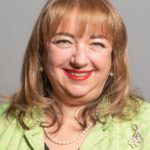
Tag: Sharon Hodgson

  • Sharon Hodgson – 2026 Statement on Meningitis B

    Sharon Hodgson – 2026 Statement on Meningitis B

    The statement made by Sharon Hodgson, the Parliamentary Under-Secretary of State for Health and Social Care, in the House of Commons on 15 June 2026.

    Today, I am announcing a meningococcal group B immunisation programme to protect those at highest immediate risk of MenB disease this autumn.

    Meningococcal disease is a serious but uncommon illness caused by meningococcal bacteria. It can lead to meningitis—inflammation of the lining of the brain—and sepsis. Meningococcal disease is life-threatening and can result in life-changing disabilities such as amputations, hearing loss, and brain damage. It is fatal in around 10% of cases. There are multiple strains of meningococcal bacteria, including MenA, MenB, MenC, MenW, and MenY. The NHS already offers the MenB vaccine to infants and the MenACWY vaccine to adolescents and young adults.

    Earlier this year, we saw the fastest growing and largest MenB outbreak ever seen in the UK in Kent and there have been more MenB clusters than normal this year, some of which have been larger than normal. There is therefore significant uncertainty about the level of risk MenB poses this year, with it being plausible that the bacteria are now more likely to cause disease. I have asked the department to undertake further work to better understand whether the clinical risk has changed.

    During the outbreak earlier this year, the Joint Committee on Vaccination and Immunisation, which provides expert independent advice on our vaccination programmes, was asked to re-examine eligibility for the MenB vaccination programme. As we await full JCVI assessment, I have decided to offer vaccination as a one-off, targeted programme to the group at highest immediate risk from MenB this autumn. In line with the JCVI’s assessment of the relative priority, I have made this decision now to ensure that vaccination will be available from July to mitigate risk from the start of the new academic year in September.

    People currently in the year 13 age group in England and Wales—those born between 1 September 2007 and 31 August 2008—will be eligible for vaccination. All people within this date of birth range will receive this offer irrespective of their education plans. Comparable approaches will be taken in Northern Ireland and Scotland for their equivalent school years, year 14 and S6 respectively.

    People under 25 years of age attending higher education or living at some residential further education settings for the first time in the 2026-2027 academic year will also be eligible for vaccination. Based on the available data, the UK Health Security Agency estimated that the relative risk of invasive MenB disease in first-year university students is substantially greater than in their peers. Postgraduates or those starting a second—or later—year will not be covered by this offer, as we are prioritising those at highest immediate risk this autumn. I am encouraging international students who are coming to the UK to study to have at least a first dose before travelling to the UK to ensure both doses can be received before the expected peak of disease in October and November.

    MenB vaccination protects only the recipient. The MenB vaccine is highly effective: vaccine effectiveness is estimated to be between 85% to 95%. MenB outbreaks will still occur, but vaccination will better protect those at the highest immediate risk.

    The JCVI is updating its assessment of the appropriate eligibility for routine MenB vaccination, which will be provided to Ministers in due course. I will consider that advice before making any longer-term decisions regarding MenB vaccination.

    Two doses of the MenB vaccination are required for protection. Further information on how to access the vaccine will be published in the coming weeks. I strongly encourage eligible people to come forward from late July to receive both doses before the new academic year. The offer will be available across all four UK nations.

  • Sharon Hodgson – 2024 Speech on Planning, the Green Belt and Rural Affairs

    Sharon Hodgson – 2024 Speech on Planning, the Green Belt and Rural Affairs

    The speech made by Sharon Hodgson, the Labour MP for Washington and Gateshead South, in the House of Commons on 19 July 2024.

    It is a pleasure to follow the hon. Member for Gordon and Buchan (Harriet Cross), who made an excellent maiden speech, which I enjoyed. I also have to mention the excellent maiden speeches from my north-east colleagues, my hon. Friend the Member for Cramlington and Killingworth (Emma Foody)—she represents a new constituency—and my hon. Friend the Member for Bishop Auckland (Sam Rushworth). I look forward to hearing more from them in the weeks, months and years to come.

    Having entered the House 19 years ago, I am honoured to have once again been elected to serve my constituents in Washington and Gateshead South—another new constituency name. It is fantastic to see so many new faces around the estate, and my door is always open if new Members, or indeed old ones, want to pop in for a bit of advice, a cup of tea, or just to see a friendly face.

    This King’s Speech ushers in a new era of government—one based on service of the people, and focused on building back trust in politics, which is greatly needed, by, as stated in the King’s Speech, adhering to

    “the principles of security, fairness and opportunity for all.”

    We will start that process by bringing in legislation to transform the rights of every worker in this country. As a trade unionist, I believe that workers must have the right to access trade union representation, as well as the repeal of the disastrous minimum service levels legislation, which failed to protect public service users and workers alike.

    We will ban all exploitative zero-hours contracts that leave people in uncertain and unstable employment. We will definitively ban fire and rehire practices, which my hon. Friend the Member for Brent West (Barry Gardiner) led the way on tackling with his excellent private Member’s Bill, which sadly did not make it. We will protect workers’ wellbeing by ending short-notice shift cancellations, and we will introduce the right to switch off, so that workers can enjoy a healthier, structured work-life balance—I think we could do with a bit of that sometimes as well. Finally, we will establish rights such as paternity pay and the right to challenge unfair dismissal as rights from day one. The basic rights of a worker are not a reward earned after years of service; they are rights from day one.

    The Government have already got the ball rolling, building on the excellent work of former Labour Governments to truly deliver devolved power. It was excellent to see that, just days after moving in, the Prime Minister welcomed all Labour and Conservative metro mayors—thankfully, they were mostly Labour—to Downing Street to discuss how to kick-start growth in all parts of the country. Nine times out of 10, local knowledge is superior to departmental control, so it is only right that we bring power back to communities.

    Among the mayors invited to meet the Prime Minister was our excellent new Mayor of the North East, Kim McGuinness, who I have worked with in my long-running campaign to reopen the Leamside line and extend the metro to Washington. I am sure that Members have all heard me say this, but Washington is one of the largest towns in the UK without a direct rail link. [Interruption.] It is. We see wasted opportunities, with people unable to travel easily for work, school or university or even to see loved ones. To quote the former Conservative Member for Sedgefield, with whom I co-chaired the Leamside line all-party parliamentary group, “Without physical mobility, there can be no social mobility”—now that he is not here, I am going to nick that line. I am pleased that, with a Labour Government and a Labour mayor, that project will at long last become a reality.

    I grew up in a council house, and my family was totally reliant on social security. Free school meals were a lifeline for us, but I know that, in many ways, it is more important to have a warm, safe and secure house; that is what saved my family more than anything else. That is why, throughout this general election campaign and when I was listening to the King’s Speech, I was so pleased to see Labour’s commitment to building 1.5 million new homes—not just houses, but social and affordable housing—based on five key principles that will enable those houses to turn into secure homes, and those homes to turn into stable and thriving communities.

    We will also deliver for our children, with policies intended to tackle childhood health and obesity head-on. Our plans to deliver free breakfast clubs in every primary school in England will ensure that kids can start school with a meal in their bellies, ready to learn. But we know that child feeding does not start and end with the school day, so we will also tackle the crisis of youth nutrition outside school by restricting the advertisement of junk food and the sale of high-caffeine energy drinks to children—both things I long called for when I was shadow Minister for public health for four years, and shadow Minister for children and families for four years, and as the chair of the all-party parliamentary group on school food from 2010. I could not welcome these developments more fervently. We cannot shy away from protecting our children’s health, which is why I also welcome our tobacco and vapes Bill—carrying on the work of the former Government, I have to say—to phase out smoking. That will ensure that our children live a healthier future.

    As we look to the coming years of our Government, I am excited not only to see these policies, and more, come to fruition and deliver the change that this Government were elected to bring, but to work with Members across the House to deliver these things together, because we need them for the benefit of all our constituents.

  • Sharon Hodgson – 2015 Parliamentary Question to the Department for Culture, Media and Sport

    Sharon Hodgson – 2015 Parliamentary Question to the Department for Culture, Media and Sport

    The below Parliamentary question was asked by Sharon Hodgson on 2015-11-13.

    To ask the Secretary of State for Culture, Media and Sport, what plans his Department has to assist and promote the UK video games industry in areas outside London.

    Mr Edward Vaizey

    The video games tax relief, launched in April 2014, is available to support video games productions based anywhere in the UK. Additionally, in October 2015 we launched our new £4m UK Games Fund to accelerate video games sector growth in all UK regions offering grants, mentoring and skills support for micro-businesses and SMEs. Of the first 24 successful grant applicants announced in February 2016, 18 were based outside London. Grant winning companies located in the North East of England for example included Coatsink Software in Sunderland, Nosebleed Interactive in Newcastle and Cardboard Sword and Double Eleven, both in Middlesbrough. The second call for applications is currently underway and closes on 18th April.

    The UK Games Fund’s talent programme, Tranzfuser, is currently in development and will be working with a UK-wide network of regional hubs including Vector 76 in the North East of England, The Digital Creativity Hub in the North West and Sheffield Hallam University in South Yorkshire.

  • Sharon Hodgson – 2015 Parliamentary Question to the Department of Health

    Sharon Hodgson – 2015 Parliamentary Question to the Department of Health

    The below Parliamentary question was asked by Sharon Hodgson on 2015-12-14.

    To ask the Secretary of State for Health, what steps he plans to take to increase the number of (a) clinical nurse specialist, (b) clinical oncology, (c) medical oncology, (d) medical physics and (e) therapy radiography training positions.

    Jane Ellison

    NHS England is currently working with partners across the health system to determine how best to take forward the recommendations in the independent Cancer Taskforce’s report, Achieving world-class cancer outcomes: a strategy for England 2015 to 2020, and has appointed Cally Palmer CBE as NHS National Cancer Director to lead on managing implementation. She is currently setting up a new Cancer Transformation Board to lead the roll-out of the recommendations of the new strategy, including on workforce, and a Cancer Advisory Group, chaired by Dr Harpal Kumar, Chief Executive of Cancer Research UK, will oversee and scrutinise their work.

    We announced in September that Health Education England (HEE) is developing a new national training programme for an additional 200 staff to get the skills and expertise to carry out endoscopies by 2018. The content of the next mandate from the Government to HEE is currently being determined.

  • Sharon Hodgson – 2016 Parliamentary Question to the Department for Education

    Sharon Hodgson – 2016 Parliamentary Question to the Department for Education

    The below Parliamentary question was asked by Sharon Hodgson on 2016-01-20.

    To ask the Secretary of State for Education, what data her Department publishes on the education achievements of children and young people with special educational needs, for each type of special educational need.

    Edward Timpson

    Information regarding the attainment of students with special educational needs (SEN) in England is broken down by type of SEN and published in the “Phonics screening check and key stage 1 assessment: England 2015”[1], “National curriculum assessments at key stage 2: 2015”[2] and “GCSE and equivalent results in England: 2015”[3] statistical first releases.

    A wider summary of available SEN information is provided in “Special educational needs – an analysis and summary of data sources”[4]

    Information on the average points score of students with a hearing impairment or the number that achieve three A* to A grades or better at A level is not held by the Department. The Department also does not hold information on the number of students with a hearing impairment who have not achieved a level 2 qualification in English by the age of 19.

    Currently, there are no plans for the Department to publish A-level data split by type of special educational need or to collect additional data on the outcomes achieved by students who have a disability but not an identified special educational need, although this is reviewed every year as part of the collection process.

    [1] Phonics and KS1 assessments for 2014/15: https://www.gov.uk/government/statistics/phonics-screening-check-and-key-stage-1-assessments-england-2015

    [2] KS2 for 2014/15: https://www.gov.uk/government/statistics/national-curriculum-assessments-at-key-stage-2-2015-revised

    [3] KS4 for 2014/15: https://www.gov.uk/government/statistics/revised-gcse-and-equivalent-results-in-england-2014-to-2015

    [4] https://www.gov.uk/government/uploads/system/uploads/attachment_data/file/472575/Special_educational_needs-_an_analysis_and_summary_of_data_sources.pdf

  • Sharon Hodgson – 2016 Parliamentary Question to the Department for Education

    Sharon Hodgson – 2016 Parliamentary Question to the Department for Education

    The below Parliamentary question was asked by Sharon Hodgson on 2016-02-29.

    To ask the Secretary of State for Education, pursuant to the Answer of 11 February 2016 to Question 25802, for what reasons her Department does not provide SEN or disability breakdowns in the revised A-level and other level 3 results in England statistical first release.

    Edward Timpson

    At present, this statistical first release only publishes data for A level and other Level 3 qualifications. Overall, the number of pupils with SEN and disabilities taking qualifications at this level is limited. Therefore, we have not deemed it appropriate to publish separate breakdowns for these groups given the small numbers involved. We will review this decision for future publications.

  • Sharon Hodgson – 2016 Parliamentary Question to the Department for Culture, Media and Sport

    Sharon Hodgson – 2016 Parliamentary Question to the Department for Culture, Media and Sport

    The below Parliamentary question was asked by Sharon Hodgson on 2016-05-19.

    To ask the Secretary of State for Culture, Media and Sport, when he plans to publish the responses received by the review on secondary ticketing as required by section 94 of the Consumer Rights Act 2015.

    David Evennett

    The plan is to publish responses to the Call for Evidence in due course.

  • Sharon Hodgson – 2015 Parliamentary Question to the Department for Business, Innovation and Skills

    Sharon Hodgson – 2015 Parliamentary Question to the Department for Business, Innovation and Skills

    The below Parliamentary question was asked by Sharon Hodgson on 2015-11-13.

    To ask the Secretary of State for Business, Innovation and Skills, if his Department will fund the NextGen Skills Academy higher apprenticeships in order better to support games employers.

    Nick Boles

    We are introducing a UK-wide levy for all larger employers to help fund the increase in quantity and quality of apprenticeship training in England. The levy will put employers in charge of how and where apprenticeship budgets are spent by creating a fund which they can use to pay for external training for their apprentices.

    As part of the apprenticeship reforms, employer-led Trailblazers are designing new apprenticeships to meet their skills needs. Over 1300 employers – including in the Digital Industries and Visual Effects sectors, such as Framestore – are currently involved in designing new apprenticeship standards. These include apprenticeships in occupations at a range of levels such as Digital & Technology Solutions Professional (L6); Software Developer (L4); Junior 2D Artist (Visual Effects) (L4); Games Quality Assurance Technician (L4) and Assistant Technical Director (Visual Effects) (L4).

    The NextGen Skills Academy links to Amersham and Wycombe College and was awarded £2.7m of Employer Ownership Pilot funding for a 3 year project focusing on the VFX, animation and games industry in September 2014. The project is now led by Framestore and managed by the UK Commission for Employment and Skills.

  • Sharon Hodgson – 2015 Parliamentary Question to the Department of Health

    Sharon Hodgson – 2015 Parliamentary Question to the Department of Health

    The below Parliamentary question was asked by Sharon Hodgson on 2015-12-14.

    To ask the Secretary of State for Health, what assessment he has made of the level of (a) current imaging capacity within the NHS and (b) imaging capacity required to meet the Independent Cancer Taskforce’s recommendation that all GPs have direct access to investigative tests by the end of 2015; and if he will make a statement.

    George Freeman

    The extension of direct access to diagnostic tests for primary care is an issue for clinical commissioning groups and local commissioners. Although the Independent Cancer Taskforce report did estimate that some additional diagnostic capacity was needed, it did not consider possible increases in capacity required specifically as a result of increasing general practitioner (GP) direct access to testing.

    The Taskforce’s five-year strategy recommends improvements across the cancer pathway, with the aim of improving survival rates, and we will work with the NHS, charities and patient groups to deliver it. We have already announced funding of up to £300 million a year by 2020 to increase diagnostic capacity to meet the new target that patients will be given a definitive cancer diagnosis, or the all clear, within 28 days of being referred by a GP.

    In addition, the recently updated National Institute for Health and Care Excellence referral guidelines for suspected cancer also recommend GPs refer direct-to-test in a number of different circumstances. The guidance is available at:

    www.nice.org.uk/guidance/ng12

  • Sharon Hodgson – 2016 Parliamentary Question to the Department for Education

    Sharon Hodgson – 2016 Parliamentary Question to the Department for Education

    The below Parliamentary question was asked by Sharon Hodgson on 2016-01-20.

    To ask the Secretary of State for Education, how many deaf students achieved three A* to A grades or better in their A-levels in 2015.

    Edward Timpson

    Information regarding the attainment of students with special educational needs (SEN) in England is broken down by type of SEN and published in the “Phonics screening check and key stage 1 assessment: England 2015”[1], “National curriculum assessments at key stage 2: 2015”[2] and “GCSE and equivalent results in England: 2015”[3] statistical first releases.

    A wider summary of available SEN information is provided in “Special educational needs – an analysis and summary of data sources”[4]

    Information on the average points score of students with a hearing impairment or the number that achieve three A* to A grades or better at A level is not held by the Department. The Department also does not hold information on the number of students with a hearing impairment who have not achieved a level 2 qualification in English by the age of 19.

    Currently, there are no plans for the Department to publish A-level data split by type of special educational need or to collect additional data on the outcomes achieved by students who have a disability but not an identified special educational need, although this is reviewed every year as part of the collection process.

    [1] Phonics and KS1 assessments for 2014/15: https://www.gov.uk/government/statistics/phonics-screening-check-and-key-stage-1-assessments-england-2015

    [2] KS2 for 2014/15: https://www.gov.uk/government/statistics/national-curriculum-assessments-at-key-stage-2-2015-revised

    [3] KS4 for 2014/15: https://www.gov.uk/government/statistics/revised-gcse-and-equivalent-results-in-england-2014-to-2015

    [4] https://www.gov.uk/government/uploads/system/uploads/attachment_data/file/472575/Special_educational_needs-_an_analysis_and_summary_of_data_sources.pdf