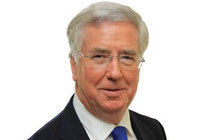
Tag: Michael Fallon

  • Michael Fallon – 2017 Comments on Diversity in the Armed Forces

    Michael Fallon – 2017 Comments on Diversity in the Armed Forces

    The comments made by Michael Fallon, the then Secretary of State for Defence, on 26 October 2017.

    We are working hard to ensure the Armed Forces, like our cadets, better represent the society they serve but there is still much more to do. We want more sailors, soldiers and airmen to come from minority and ethnic communities. More diverse armed forces are a stronger armed forces; that has to start amongst the junior ranks and work all the way up to chief of the defence staff.

  • Michael Fallon – 2017 Comments on A&P Tyne

    Michael Fallon – 2017 Comments on A&P Tyne

    The comments made by Michael Fallon, the then Secretary of State for Defence, on 30 October 2017.

    It is very encouraging to witness the renaissance of shipbuilding around the UK first hand. Having helped build our new aircraft carriers and the Astute Class submarines, A&P Tyne have the skills and expertise to bid for our brand new class of frigates.

    The whole industry is clearly excited about the opportunity to build cutting-edge ships for our growing Royal Navy, which will protect our nation and interests across the world.

  • Michael Fallon – 2017 Comments on Flexible Working in the Military

    Michael Fallon – 2017 Comments on Flexible Working in the Military

    The comments made by Michael Fallon, the then Secretary of State for Defence, on 30 October 2017.

    Keeping Britain safe means investing in our personnel as well as in new equipment. More flexible working is essential to a modern military, allowing us to recruit the best talent and retain those already serving, while always being ready to deploy as commanders require.

    The military must offer conditions of service that keep up with those available in other lines of work. This change will significantly make it easier for women with children.

  • Michael Fallon – 2017 Comments on British Soldiers in Estonia

    Michael Fallon – 2017 Comments on British Soldiers in Estonia

    The comments made by Michael Fallon, the then Secretary of State for Defence, on 30 October 2017.

    Nobody should be in any doubt of our unwavering commitment to the security of Europe through NATO in the face of Russian belligerence.

    In the face of intensifying threats, the UK has stepped up across Europe, with soldiers, tanks and Typhoons deployed from Estonia to Romania.

    Our enhanced Forward Presence is a strategic tripwire that we will maintain on an enduring footing.

  • Michael Fallon – 2019 Valediction Speech

    Michael Fallon – 2019 Valediction Speech

    Below is the text of the speech made by Michael Fallon, the Conservative MP for Sevenoaks, in the House of Commons on 5 November 2019.

    I was first elected to this place as the first Conservative for 25 years to sit for the constituency of Darlington in the north-east of England. I have never forgotten that particular weekend. I set off on a train on the Sunday afternoon down to London and the buffet bar was closed. Somebody must have told the steward that the new MP for Darlington was on the train—I had been on television a bit—and he suddenly appeared with a tray of tea and toast and said, “We can’t have the new MP for Darlington going off hungry to take on his responsibilities.” He then stood there, shook his head and said, “Mind you, what hope have you got with all those Tories?”

    Along with my right hon. Friend the Member for Derbyshire Dales (Sir Patrick McLoughlin), who made the most splendid speech today, I had the privilege of serving—perhaps unusually—four Prime Ministers. I first served Margaret Thatcher as her Schools Minister and then John Major in the same capacity. With my right hon. and learned Friend the Member for Rushcliffe (Mr Clarke), we set up the first proper independent inspection service of our schools, Ofsted, and we ensured that school exam results were published and available to parents. It is extraordinary to think now that the exam results of individual schools were locked away in the director of education’s safe and that parents were not trusted with that information.

    I later had the equally unusual experience of working as deputy to two Liberal Secretaries of State, in the Department for Business, Innovation and Skills and the Department for Energy and Climate Change. Not only was that interesting, but it turned out to be quite a constructive experience. When the history of the coalition Government is written, perhaps we will see some of the benefits of that working together.​

    That period had a rather unusual ending. The day after the 2015 election, around lunchtime, I was called by David Cameron and reappointed as Secretary of State for Defence. As I was leaving the Cabinet table, he said the Secretary of State for Industry had handed in his resignation and the permanent secretary wanted somebody to be in charge for a couple of days while the rest of the Cabinet was assembled, so for a few hours I was Secretary of State for Industry. As I was picking up my papers, he added, “The Secretary of State for Energy has also handed in his resignation”, so I said, “Fine, I’ll have a look at that as well”. Then, as I was leaving, he said, “And the Secretary of State for Scotland has resigned”. So for a day or two I held those four portfolios together.

    I then had the most enormous privilege of all: working with our servicemen and women at the Ministry of Defence for three and a half years, leading them in the campaign against Daesh, resisting the challenge of a resurgent Russia and playing an important role in NATO. There can be no greater privilege than serving in that Department with the many willing and brave servicemen and women who have committed themselves to the service of our country. I want to put on the record my thanks to them all.

    Jeremy Lefroy (Stafford) (Con)

    I would just like to thank my right hon. Friend for all he did in that role, particularly the way he kept Members of Parliament on both sides of the House so well briefed. When the history books are written, they will show how seriously he—together with his colleagues in the armed forces and his ministerial colleagues—took that incredibly important role. I thank him for that.

    Sir Michael Fallon

    I am most grateful to my hon. Friend. It seemed to me incredibly important to keep the confidence of the House, having won its support back in 2015 for airstrikes in Iraq and then for their extension to Syria. Of course, that we were able to keep that confidence was down in no small part to the precision of our pilots and their skill in difficult conditions in minimising civilian casualties.

    My successor will inherit a thriving and prosperous constituency. My constituents enjoy a good quality of life, remarkably low unemployment, a wide choice of schooling, frequent rail connections to the capital and the protection of the green belt—over 90% of my constituency is green belt—but there is still work to be done, including on the regeneration of Swanley, one of the other towns in my constituency, especially through new investment and the promise of a fast link service from Maidstone and Otford through Swanley to the city of London.

    We also need to ensure that boys in my constituency have access to grammar school places. Whether you like it or not, Kent offers an 11-plus system, but Sevenoaks was the only district in Kent that did not have any grammar school places. I was delighted that after a 15-year campaign we managed to establish a girls’ school annexe, which has been open now for a couple of years, but we still need to ensure provision for boys’ grammar school places alongside it. We also need to continue to protect our green-belt protections in Sevenoaks. The Government’s unrealistic housing targets will put ​pressure on that green belt, though I know that my hon. Friends on the Front Bench are conscious of the need to balance the demand for new housing with our commitments to protect the green belt.

    I hope that this election campaign will not ignore some of the longer-term challenges our country faces. We have spent an awful lot of time—perhaps rightly, perhaps wrongly—debating the withdrawal agreement. In the end, that agreement only dealt with Ireland, our payments into the EU budget and the rights of EU citizens; we have not started yet on the major negotiation that really matters for business and jobs in my constituency, which is our future trading relationship, and I fear we have not yet started to explain to our electors some of the trade-offs that will inevitably be involved as we come to deal with the challenge to agriculture, financial services, the aerospace and automotive industries and our fisheries, and accommodating their legitimate right and desire to trade freely with the European continent with the views of our partners.

    We will have to quickly put in place the security partnership that has long been promised in various documents the Government have issued—I fear we have spoken far too little about this—and make sure there is no cliff edge at the end of January or February in the policing and judicial arrangements that our constituents expect and in the way our agencies work with other agencies across the European continent to deal with terrorism and organised crime. We will also need to work with our former partners in the EU to continue to uphold the rules-based international order. We do not debate foreign affairs nearly enough in this House. When I first entered Parliament, in the ’80s, we had much more regular debates on international affairs.

    We are dealing with a resurgent Russia that is in breach of many international conventions, whether on nuclear arms, chemical weapons or the protection of sovereignty under the Helsinki accords. We are dealing with a very ambitious China that is flouting the law of the sea convention, which it has signed, and continues to steal—there is no other word for it—the world’s intellectual property. And we are dealing with a mercantilist United States that is degrading the World Trade Organisation and slapping sanctions even on its friends in pursuit of a policy of “America first”. When it comes to holding the rules-based international system together, there really is a role for the leadership among the western nations, and particularly for our own nation here in the United Kingdom.

    Let me end by thanking all those who have helped me so much over the last 31 years, particularly the staff in my office.

  • Michael Fallon – 2013 Speech to Npower Business Conference

    Below is the text of the speech made by Michael Fallon, the then Minister of State for Energy, on 6 June 2013.

    Introduction

    Innovation has always been the key to successful energy policy.

    It has never been as simple as rolling out one proven means of power-generation. On the contrary, we have always endeavoured to find new sources in new places, whether we look at the first generation of nuclear power stations in the 50s, or the opening up of the North Sea in the 60s.

    In the past, innovation has given us access to more – and therefore more secure – energy, and at lower cost.

    Today, it must also mean cleaner energy, so that we can move towards a low carbon economy and a sustainable, secure, affordable energy future.

    I am going to set out what Government is doing to set the framework for an innovative, diverse energy mix and I will talk about some particular technologies at the forefront of energy policy.

    Electricity Market Reform – Outline

    Electricity Market Reform is the framework which will deliver the cleaner energy and reliable supplies that we need, at the lowest possible cost.

    Set out in the Energy Bill, which reached the House of Lords this week, EMR will attract £110 billion investment in this decade alone – the amount needed to replace our ageing energy infrastructure with a diverse and low-carbon mix.

    This is essential to keeping our homes heated, our industries powered and our lights on.

    Renewables, fossil-fuel plant equipped with Carbon Capture and Storage, gas and nuclear will all play their part.

    Diversity will provide security for our electricity supplies and the low carbon mix will help us meet our emissions and renewables targets.

    It’s not only that this will power our economy – the investment will also directly create jobs and growth across the UK.

    Electricity Market Reform – detail

    EMR works with the market and encourages competition, thereby minimising costs to consumers as we attract the investment we need.

    Costs to consumers will fall only when the new plant start generating, with costs spread over the operational lifetime of the schemes.

    At the core of our reforms is a new mechanism, the Feed-in Tariff with Contracts for Difference.

    These long term contracts will provide long-term electricity price stability, and therefore revenue certainty, to developers and investors in technologies such as carbon capture and storage, renewables and nuclear.

    Competition will bring down overall costs and, eventually, provide a level playing field where low-carbon generation can compete without support with other technologies in the electricity market.

    We will also introduce a Capacity Market, to ensure that sufficient reliable capacity is available to meet electricity demand as it increases over the next decade.

    These new mechanisms will be underpinned by a robust and transparent institutional framework which will provide certainty for industry and investors.

    Energy Bill

    The Bill is making good progress through parliament. This is a reflection not only of Coalition consensus around our reforms, but also representative of cross-party agreement on our objectives for the sector.

    Discussion in the Commons has been wide-ranging – covering issues ranging from the setting of a decarbonisation target for 2030 to transparency. This debate is healthy and welcome – it is hugely encouraging that these discussions are around the fine-tune EMR rather than a disagreement with the underlying principles.

    We are on track to achieve Royal Assent of the Energy Bill by the end of this year, setting in law the framework for Electricity Market Reform, and allowing the first Contracts for Difference to be signed in 2014.

    Decarbonisation Target

    The new Government clauses added to the Energy Bill enable the Secretary of State to set a legally binding 2030 decarbonisation target for the electricity sector in 2016.

    These provisions enable the Government to set the world’s first legally binding target range for power sector decarbonisation and they do this in the right way by taking into account the needs of investors for clarity about the long term, the costs to consumers, and the transition of the whole economy to meet our 2050 target.

    A decision to exercise this power will be taken once the Committee on Climate Change has provided advice on the level of the 5th Carbon Budget and when the government has set this budget, which is due to take place in 2016.

    This timing ensures that any target would be set at the same time as the fifth carbon budget, which covers the corresponding period and within the overall framework of the Climate Change Act.

    This means that a target would not be set in isolation but in the context of considering the pathway of the whole economy towards our 2050 target, and making sure we do that in a way that minimises costs both to the economy as a whole and to bill payers.

    North Sea

    Last century, electricity generation was dominated by fossil fuels. Oil and gas will remain central to the UK’s energy mix as we make the transition to a low carbon economy.

    We continue to work closely with industry and we have a fiscal regime that encourages further investment, bringing forward new UK fields while the existing infrastructure is in still place.

    Working together, my two Departments have launched an Oil & Gas Industrial Strategy to maximise recovery, maintain competitiveness, and promote growth of the UK supply chain.

    Shale Gas

    Shale gas is a prime example of a new option available because of technological innovation. A combination of hydraulic fracturing and horizontal drilling have opened the possibility of exploiting fuel which were deemed too difficult or too costly to extract just a few years ago.

    It is true that shale has led to significant price falls in the US. However, we are still at an early stage in the UK and need to explore and prove the potential, safely and while protecting the environment.

    Despite some far-fetched claims in the media about the implications of shale gas for the UK, there is no doubt that it has the potential to add to indigenous energy supplies.

    We are building momentum – by setting up the Office for Unconventional Gas and Oil; taking forward work on a new onshore licensing round; and planning to incentivise shale gas development, as announced in the Budget.

    Carbon Capture and Storage

    Carbon Capture and Storage will have a critical role to play in reducing emissions in the UK and allowing gas and coal to continue to participate in our future low carbon energy mix.

    We want to see CCS deployed at scale in the 2020s, competing on cost with other low carbon technologies.

    To make this happen, Government has created a comprehensive programme, including a CCS competition with £1bn capital funding available.

    Our two Preferred and two Reserve bidders were announced in the Budget. We aim to sign FEED contracts in the summer; with decisions to be taken in early 2015 to construct up to two full projects.

    These projects offer us the opportunity to ensure that both gas and coal generation have a hugely reduced impact on our carbon emissions.

    Renewables

    We are strongly committed to a long-term future for the UK renewables – a commitment underpinned by a publicly-stated annual budget of £7.6bn for low-carbon electricity by 2020.

    However, our ambition extends beyond 2020. Our goal is to put renewables firmly in the energy mix over the period of the 4th carbon budget.

    To take marine energy, we have prioritised funding for the next big step for the industry: the move to the first arrays. Firstly through DECC’s £20m Marine Energy Array Demonstrator – MEAD for short; and secondly through prioritising marine energy projects in accessing EU NER 300 funding.

    As a result, a Scottish Power Renewables’ and a Marine Current Turbines’ projects were recently awarded around 40m € in total of NER 300 funding. This represents a tremendous opportunity for these two UK projects to demonstrate the sector’s future potential.

    New Nuclear

    The UK has everything to gain from becoming the number one destination to invest in new nuclear.

    We are in negotiations with NNB Genco about the potential terms of an Investment Contract (an early form of CfD) that might enable a decision on their Hinkley Point C project – for which planning consent has been granted.

    The last quarter of 2012 also saw the successful sale of Horizon Nuclear Power to Hitachi, regulatory approval of the EPR reactor design, and the beginning of site characterisation work at Moorside.

    Direct Innovation

    The government also invests directly into a variety of smaller projects across a broad portfolio of innovative technologies – in excess of £800m in this spending review.

    This will ultimately drive down the costs of new low-carbon technologies, making clean energy cheaper for householders and businesses.

    Business Consumers

    I know higher energy bills are hitting businesses hard.

    Competition is key to keeping prices as low as possible. Although there is more competition in the business supply market than in the domestic market, we need to see greater engagement from small business consumers.

    Ofgem’s non domestic retail market review proposals will provide greater protection and clearer information to small business customers to help them engage in the market.

    Ofgem plan to introduce new enforceable standards of conduct will mean suppliers will have to act promptly to put things right when they have made a mistake.

    And they will widen existing licence conditions to enable up to 160,000 extra smaller businesses to benefit from clearer contract information on their bills.

    Energy Intensive Industries are also critical to the UK economy and the Government is committed to ensuring that they remain competitive. We announced the £250 million package of compensation for these industries whose international competitiveness are most at risk from indirect costs of the Carbon Price Floor and the EU Emissions Trading Scheme.

    Conclusion / Energy Efficiency

    So, Government is legislating to put in place a framework which will see our energy supply diversified to meet our energy goals: secure, low-carbon, affordable.

    And work is underway across the board to facilitate the development or deployment of promising power generation technologies.

    One final area of innovation which may be of particular interest to businesses is energy efficiency.

    The Coalition Government has a mission to seize this opportunity. The Energy Efficiency Strategy sets out actions to exploit untapped, cost-effective potential.

    We estimate that we could be saving the equivalent to 22 power stations in 2020.

    And we have also brought forward amendments to the Energy Bill so that a financial incentive to encourage permanent reductions in electricity demand can be delivered through the Capacity Market.

    The Electricity Demand Reduction incentive would be available to a range of sectors and technologies and could target reductions at peak demand and so incentivise reduction at times when it is more valuable.

    As you will appreciate, doing more with less makes economic sense for businesses and for the country.

  • Michael Fallon – 2013 Speech to the Renewable UK Offshore Wind Conference

    Below is the text of the speech made by Michael Fallon, the then Minister of State for Energy, on 12 June 2013.

    Introduction

    Good morning.

    I’m very pleased to be here today speaking at this important event.

    This is my first speech to RenewableUK since I was asked by the Prime Minister to take on my energy role within DECC, whilst still retaining my responsibilities as Business Minister with the Department for Business Innovation & Skills.

    This is a wide portfolio but it makes perfect sense. I believe that my role offers the opportunity to ensure that two of Government’s top priorities are taken forward in a co-ordinated manner. DECC has the vital task of ensuring that we have clean and affordable energy and tackle climate change, whilst BIS are responsible for helping to deliver our growth agenda. In offshore wind there are large synergies between these areas which I’ll mention later.

    I haven’t come into my energy role totally cold as I have a personal history with the subject. Between 1987 and 1988 I was Parliamentary Private Secretary to the Secretary of State for Energy. A lot has changed since then particularly in relation to renewables, the realisation of focus on climate change, and changes in our energy self sufficiency as production of our oil and gas has declined.

    Offshore Wind – a UK Success Story

    Back in 1988 there was not an offshore wind industry anywhere. Now I’m speaking to you when the UK has more installed offshore wind than everyone else in the world put together.

    UK leads the world.

    The UK leads the world in offshore wind. This is a major success story and one we should all be proud of. One that you have helped contribute to.

    Not only do we have more installed offshore wind we also have the largest wind farms and a real knowledge base about how to build offshore windfarms.

    This year we have passed the 3GW mark for fully installed capacity. London Array, the largest offshore wind farm in the world, has become fully operational, Lincs and Teesside are nearing completion, Gwynt y Mor and West of Duddon Sands are installing at sea.

    These are signs of an industry which is driving forward and making a real difference to UK energy.

    So can I now stop there and say everything is obviously working well, exhort you to keep up the good work and leave it at that? Well no, I can’t.

    There are a number of areas where Government and Industry have to work together, constructively, to ensure the sector maximises its potential. I will now spend some time talking about these.

    The Economic Opportunity

    As a Government our priority is ensuring long term economic growth. The economy needs to get going again. And to do this infrastructure is critical.

    The scale of investment needed in energy infrastructure dwarfs that of any other area – including transport, telecoms or water. That’s because of a lack of investment to replace energy generation and energy networks that are now getting to the end of their normal lifetime.

    Between now and 2020, 20 per cent of our energy generation will go offline, some of the coal plants and some of the old nuclear plants are coming off line, so we have got to replace that just to stand still.

    And of course we need to invest in low carbon electricity generation in its many forms.

    Between now and 2020, outside oil and gas; we believe there is £110 billion of investment we need to attract.

    And we know if we are going to do that, to meet that challenge to upgrade the UK’s infrastructure, we have got to make sure that investors want to come to the UK. – This is one of the main reasons for our Electricity Market Reforms, and I am pleased to say the Bill received its 3rd reading in the House of Commons.

    EMR will provide certainty to investors with long-term electricity price stability in low carbon generation. This will be achieved through Contracts for Difference (CfDs) within a framework that will allow us to treble the current levels of support for low carbon technologies to £7.6bn per year by 2020.

    So our driving force is to make sure what we are doing creates a long term, stable, predictable framework backed by political consensus and a new legal framework.

    I am committed to helping investment to come forward in advance of the Contract for Difference regime. That is why the Government launched the Final Investment Decision Enabling for Renewables project in March. Further details on the second phase of the process will be published shortly.

    This will bring certainty to this transition period and will give investors the confidence to invest. And if they have the confidence to invest, the supply chain will have the confidence, in turn, to make investments and expand.

    Increasing UK benefit

    It’s not just about investment in generating capacity, we are determined to turn that investment into UK jobs.

    In offshore wind, whilst there have been notable successes across the UK, I think we all agree that we need to deliver greater growth and opportunities for the UK-based supply chain.. UK content levels are low and we must do more. Consumers support offshore wind through their bills and expect there should be economic benefit in terms of UK jobs and value.

    I share that expectation.

    I can assure you this is of vital importance to the Government. The opportunity for growth and jobs is the reason why offshore wind is one of the sectors in which Government is developing a long term partnership with industry, through the Industrial Strategy programme launched last September.

    The forthcoming Offshore Wind Industrial Strategy, which will be published later this summer alongside the EMR draft delivery plan which will set out draft strike prices, will set out how we will work together to deliver this growth, increasing investment in the UK supply chain and building a competitive advantage.

    I passionately believe that UK industry can compete on price and on quality. Through the Industrial Strategy, we will deliver a coherent programme to enable UK industry to take advantage of the opportunities on offer.

    Many of you here today have been involved in developing the proposals for action in the industrial strategy and I thank you for this.

    We are not waiting until the strategy is published to deliver these actions. Tomorrow’s programme includes a Share Fair where a number of developers will present details of their upcoming projects and procurement process – giving greater visibility to supply chains is one of the priorities identified by the industrial strategy partnership. I strongly endorse this initiative and encourage supply chain companies to go to the Share Fair and find out more about the business opportunities available.

    This concept is drawn from the oil and gas sector so this is an example of how we are sharing thinking between sectors through the industrial strategy programme.

    Alongside enabling companies to diversify into the offshore wind market, it is vital to attract inward investment into the UK. Our country is the most attractive in the world for investment in offshore wind. And by attracting investment from the top tier of the supply chain it will open up opportunities for the deeper supply chain.

    Today I can announce that we will be forming an Offshore Wind Investment Organisation to significantly increase the levels of inward investment to the UK. This Investment Organisation will be an industry-led partnership with Government, headed by a senior industry figure and complementing the work of DECC and BIS. It will be measured on tangible results and will focus on the offshore wind supply chain.

    So we are making real progress now to deliver the ideas being developed in the context of the industrial strategy partnership. And we won’t stop after the strategy has been published. The real value will lie in the long term partnership between Government and industry.

    The critical importance of cost reduction

    Efforts to build the UK-based supply chain and increase competition also have the potential to play an important role in helping to reduce costs.

    Offshore wind is currently more expensive than many other forms of electricity generation. This is a statement of fact. Whilst all of us here are well aware of the benefits of offshore wind we simply cannot ignore economic aspects.

    Offshore wind is still a relatively new technology and new forms of energy generation tend to be more expensive and require support to until they become established. The Renewables Obligation, which has served the sector well, and the new Contracts for Difference recognise this.

    But we should never lose sight of the fact that pressure on consumer bills is a real issue. Of course we all know that it has been rising gas prices that have been the main driver of increases to bills and that the costs of wind in an average household bill are relatively small. But it’s imperative that costs of offshore wind fall substantially.

    If I can sum this up frankly, the further costs can fall the greater the potential for more offshore wind to be built.

    So, can cost reduction be achieved?

    The easy answer is that it must. I am very encouraged the Cost Reduction Task Force concluded that costs can be reduced to £100MW/h by 2020 and that the Offshore Wind Programme Board is now actively addressing the recommendations made by the Task Force. I am very pleased to note that RenewableUK are publishing, at this conference, an updated version of the project timelines for future offshore wind farms, a key recommendation from the Task Force This will provide clarity and confidence to the supply chain and help to aid and inform investment decisions.

    Innovation in offshore wind also has the potential to deliver significant cost-reductions.

    I am therefore pleased to announce three innovation projects we are supporting as part of our Offshore Wind Components Technologies Scheme:

    Power Cable Services Limited, based in Kent, have been awarded a £540,000 grant towards their high voltage subsea cable jointing technology project
    Aquasium Technology Ltd with partners Burntisland Fabrications Ltd and TWI have been awarded a grant of £769,600 towards their cost-effective fabrication project

    Wind Technologies Ltd (Cambridge) have been awarded a £728,355 grant to design, manufacture and test an innovative 5MW medium speed drive train concept

    Ultimately our long-term vision is for low-carbon generation to compete fairly on cost, without financial support and delivering the best deal for the consumer. We must be clear on this point – we want the least cost approach to meet our climate change targets and offshore wind have to compete with other technologies.

    Post 2020 role of the sector

    Government also has an important role to listen, and I am well aware of the consistent messages you have given regarding the need to ensure there is a long-term market for offshore wind. This of course is very much linked to cost reduction and our industrial strategy.

    We fully acknowledge that investors take long term decisions and that it doesn’t all stop at 2020. After 2020 we will still need low carbon generation and offshore wind will be an important part of a diverse and secure low carbon energy mix.

    And last week Ed Davey announced that the UK has agreed to support an EU wide binding emission reduction target of 50% by 2030 in the context of a global climate deal and even a unilateral 40% target without a global deal. There is no doubt that we will need significant levels of renewable and other low carbon energy to meet such an ambitious target.

    2030 Renewables target

    I fully understand that many of you would prefer a binding 2030 renewables target. The government takes a different view. We want to maintain flexibility for the UK and other Member States in determining their energy mix.

    This demonstrates that cost reduction, together with growth and jobs in the UK-based supply chain, really is the key to the future of the sector. Deliver significant cost reduction and the potential size of the sector increases dramatically.

    Conclusion

    Offshore wind is already a part of our diverse energy mix and is growing fast. Our future is low carbon and this Government is committed to delivering the right framework to ensure we attract the huge investment needed, and we will soon be setting out our industrial strategy to ensure that we reap the economic benefits.

    I hope, by next year’s conference we can celebrate more supply chain successes and good progress towards cost reduction.

    These challenges – reducing costs and increasing UK benefit – are not easy. I’m confident we can overcome them together.

    Thank you.

  • Michael Fallon – 2017 Statement on Franklin Wrecks

    Below is the text of the speech made by Sir Michael Fallon, the Secretary of State for Defence, in the House of Commons on 23 October 2017.

    I have today laid before Parliament a Ministry of Defence departmental minute detailing a gift which the UK intends to make to the Government of Canada. This reflects our long shared history and the closeness of our current bilateral relationship.

    Sir John Franklin set sail from England in 1845 with two ships, HMS Erebus and HMS Terror, in search of a Northwest Passage through the Arctic. Sadly, the ships and all their crew were lost.

    In 1992, the wrecks were designated as a national historic site by the Canadian Government under the Canadian Historic Sites and Monuments Act—despite neither shipwreck having been found at that time. This significant step was taken as a result of the ships’ association with Franklin’s final expedition, and their role in the history of exploration of Canada’s north and the development of Canada as a nation.

    Recognising the significance of these ships to the people of Canada, a Memorandum of Understanding (MOU) was signed between the UK and Canadian Governments in 1997 assigning custody and control of the wrecks along with their contents to the Government of Canada (Parks Canada) with certain conditions should they be discovered.

    Many attempts were made over the years to locate the ships, but only artefacts were found. The ships remained undiscovered until September 2014 when an expedition led by Parks Canada discovered the wreck of HMS Erebus. In September 2016, HMS Terror was also found.

    Both wrecks are under relatively shallow Arctic Waters to the south of King William Island. The expeditions that located them brought together the Government of Canada as well as public, private and non-profit organizations. The use of state-of-the-art technology combined with Inuit knowledge made these historic discoveries possible.​

    During her recent visit to Canada, the Prime Minister made clear the importance of recognising our shared past. As the wrecks are of great historical and cultural value to Canada and recognising the historical significance of the Franklin expedition to the people of Canada, the Government believe the 1997 MOU should be replaced with an appropriate updated MOU, giving full ownership of the wrecks to Parks Canada. It is intended that the new MOU will include a clause to allow the UK to retain ownership of a small representative sample of artefacts. This exceptional arrangement will ensure that these historically significant wrecks and artefacts are appropriately conserved and allow items to be displayed for future generations in both Canadian and United Kingdom museums.

    The transfer of ownership is expected to be undertaken over the coming weeks, subject to completion of the departmental minute process.

  • Michael Fallon – 2017 Speech at Conservative Party Conference

    Below is the text of the speech made by Michael Fallon, the Secretary of State for Defence, at the Conservative Party conference held in Manchester on 3 October 2017.

    This week we set out plans for a Global Britain that stands up for our people and for our values.

    This city needs no reminding of the threats from extremists who want to destroy our way of life.

    When I became Defence Secretary, Daesh terrorists were at the gates of Baghdad, enslaving women, beheading British hostages, and throwing gay people off buildings. And when the democratic Government of Iraq appealed for help, Britain answered the call.

    At our conference three years ago, I announced the first successful RAF airstrike.

    As of last night there have been 1,600 airstrikes.

    The Army has trained 60,000 Iraqi forces.

    The Royal Navy has been guarding the United States carriers in the Gulf.

    Daesh is being defeated.

    The black flags have been torn down.

    Three million people have been freed from its murderous rule.

    So we should be very proud of the contribution of our Armed Forces to this success.

    And I am delighted to tell you that a new medal will be awarded to those servicemen and women who are doing so much to fight the evil of our time.

    I’m sure you’ll agree with me they deserve nothing less.

    Conference, terrorism is not the only threat to our security.

    Russian aggression with the highest level of submarine activity since the Cold War, thousands of troops exercising on NATO’s borders.

    North Korea firing ballistic missiles over Japan.

    Cyber-attacks on our national health service and on our Parliament.

    So we are stepping up our response.

    Today our armed forces are on operations in more than 25 countries, they’re helping to stop Afghanistan become a haven for terrorists. They’re training Ukraine’s Armed Forces to defend themselves against Russian aggression.

    They’re in Nigeria helping to tackle terrorists and they’re supporting United Nations peacekeeping in Somalia and South Sudan and we are leading in NATO – our Army deploying in Estonia and Poland; RAF Typhoons protecting the Black Sea skies; and the Royal Navy leading NATO’s maritime task groups.

    And our Armed Forces are also ready for anything.

    Look at our response to the most powerful hurricane ever to hit the Caribbean.

    RFA Mounts Bay was already on station to provide immediate assistance – helping our people, the people of the British Virgin Islands, Anguilla, Turks and Caicos.

    Within a week we had deployed 600 service personnel, 3 helicopters, and one Foreign Secretary. We even flew French supplies from Normandy to Guadalupe.

    From Asia Pacific, to the Middle East, to Europe we are deepening our defence ties with allies and partners. And we have no greater ally, Conference, than the United States.

    In Defence Secretary Jim Mattis we have a true friend of our nation with whom I work closely with on Russia, on North Korea, and on the campaign against Daesh. And here at home our Armed Forces are patrolling our skies and seas, every hour of every day.

    Every one of them deserves our gratitude.

    Conference, there is no better statement to the world of our ambition for Britain than our two new aircraft carriers. Weighing 65,000 tonnes, they each provide four acres of sovereign territory, deployable around the globe, to serve on operations for the next 50 years.

    Made in Britain, built in six ship yards, assembled in Scotland, they are a tribute to British engineering, British technology, British skills – the pride of our nation.

    And yes, there will be fighter planes on them.

    We already have 12 F35 jets with 120 pilots and ground crew training up in the United States, before the first Squadron arrives at RAF Marham next summer.

    And what does Jeremy Corbyn have to say in response?

    He’s asked “why do we have to be able to have planes, transport aircraft, aircraft carriers, and everything else to get anywhere in the world?”

    Well, you don’t get very far without them. He wants to slash defence spending.

    He wouldn’t authorise drone strikes on terrorists. He would abandon our NATO allies.

    We must never put the security of our country in the hands of a man whose warped worldview puts him side of those who threaten us. We are backing up our ambition with the fifth biggest defence budget in the world.

    A budget that our manifesto committed to increasing by at least half a per cent above inflation in every year of this parliament. Of course you’ll always find retired Admirals or Generals who like more.

    What matters isn’t just numbers: it’s power: stronger, smarter defence. We’re now investing £18 billion a year – by the way that really is £350m a week. In the last three years we’ve started building seven new ships and submarines for the Royal Navy. Now I want to see more of our ships out there patrolling the seven seas.

    So today, Conference, I am announcing £800 million of support contracts that will produce faster turnaround and improve the availability of the Royal Navy’s world class warships. The Army is getting new attack helicopters, and new armoured vehicles built in Wales.

    For the RAF, 16 new transport aircraft have joined our fleet, and 9 maritime patrol aircraft will start arriving in Lossiemouth. Under Theresa May’s leadership, we are also renewing our nuclear deterrent, building four Dreadnought class submarines.

    North Korea’s illegal testing underlines just how irresponsible it would be to scrap the deterrent that protects us. It is all very well Jeremy Corbyn saying he would never use nuclear weapons but Manchester and London are closer to Pyongyang than Los Angeles. Being prepared, in the most extreme circumstances, to use nuclear weapons is what separates a Prime Minister from a pacifist.

    As we grow our defence budget we must continue to modernise the way we work.

    To modernise how we equip our Armed Forces, everything from ration packs to medical kit, will save £600m.

    Improving how we run our test and training sites will deliver £300M of further savings.

    And as those threats intensify we are now looking across government to make sure we are doing enough, spending enough, to properly protect our country against all of them – cyber, hybrid warfare, rogue states, terrorist attacks.

    Spending 2 % of GDP on defence is the minimum NATO commitment. We meet it but we should aim to do better still.

    One of the privileges as Defence Secretary is meeting the outstanding people who make up our Armed Forces. Many of them started as cadets. This morning I visited Albion Academy in Salford, one of 150 new cadet units we have already set up. They are instilling values of resolve and service, discipline and loyalty – from which we can all learn.

    So today I am announcing the creation of a further 30 new cadet units in state schools.

    I also want to attract more ethnic minority and female recruits.

    I set a target for 10 per cent of recruits in future to come from a black, Asian, or minority ethnic background by 2020 – seven per cent now do.

    They’re joining some who have already reached the ranks of Brigadier, Commodore, and Air Commodore. We are also on track to meet our target that 15% of new recruits should be female – but I want to do even better.

    So I’m opening up every single role in our Armed Forces to women so that talent, not gender, determines how far you can go.

    And I will expect the next Chief of the Defence Staff – he or she… – to champion more diversity in the leadership of our Armed Forces.

    I will also lead a new Ministerial Covenant and Veterans Board to look after our servicemen and women better when they leave. Often the worst scars are the ones we can’t see, so we will deliver mental health services better tailored for veterans.

    Conference, I’m tackling other injustices too

    Thanks to our evidence, thousands of false legal claims against our Armed Forces have been dismissed, the solicitor involved has been struck off, and I’ve shut down the Iraq Historic Allegations Tribunal.

    And I am working with James Brokenshire to make sure that investigations into killings during the Troubles focus on terrorists, not those who protected our people.

    And I will ensure that our former servicemen are fully supported throughout.

    Conference, under this government we will go on increasing defence spending. Our magnificent armed forces will keep us safe.

    But as citizens of a truly Global Britain we have a wider, deeper responsibility.

    We must defend our values too.

    Britain, this great country, stands as a beacon to the world for our commitment to freedom, democracy, tolerance, and the rule of law.

    We face terrorism and aggression from those who hate not because those values are losing but because they are winning – values that have lifted millions around the globe out of oppression and poverty.

    With the fifth biggest defence budget in the world, we have the means. So we must always be ready to answer the call from further away, from fragile democracies, from the very poorest, from the hardest hit.

    That means deploying our ships, our planes, and yes, our troops on the ground where we and our allies are asked to help.

    Standing up for what we believe in – that is Global Britain.
  • Michael Fallon – 2017 Speech at Faslane

    Below is the text of the speech made by Michael Fallon, the Secretary of State for Defence, on 29 September 2017.

    It is a huge pleasure to welcome Permanent and Military Representatives of NATO to Her Majesty’s Naval Base Clyde.

    Our nation’s commitment to the Alliance – the bedrock of our defence – remains absolute.

    In the past year alone we’ve increased our NATO efforts: policing Black Sea skies, leading half of its maritime missions and upping our efforts to mentor Afghan officers. And today, our Prime Minister is in Estonia visiting the 800 UK troops who, supported by our French and Danish allies, are leading NATO’s Enhanced Forward Presence providing vital reassurance to our Eastern European allies.

    But there’s no greater illustration of our commitment to NATO which, after all, remains a nuclear alliance than our investment in the UK’s independent nuclear deterrent submarine force. And today, we mark the milestone of its 350th patrol at its home base.

    So, before I continue, I would like to thank our brave submariners and our submarine enterprise as a whole. For almost 50 years their efforts and those of their forebears have kept us safe every hour of every day. They remain the ultimate guarantors of our security.

    And this event offers us a unique opportunity to remind ourselves why our nuclear programme remains so significant.

    Protect Our People

    First, it’s about protecting our people. Our nuclear deterrent remains our only defence against the most extreme threats to our way of life.

    Those threats are intensifying whether they come from North Korea’s latest nuclear testing setting off a hydrogen bomb, launching ballistic missiles and reinforcing her reckless defiance of the international community. Or Russia, which not content with aggression in Ukraine and Crimea, has over the last few years repeatedly ramped up its nuclear rhetoric and in its latest exercise involving some 50,000 troops massed on the borders of Eastern Europe will also test nuclear capable ballistic missiles.

    Now the UK remains firmly committed to the long term goal of a world without nuclear weapons. As Secretary of State, I reduced the number of deployed warheads on each submarine from 48 to 40 and the number of operationally available warheads to no more than 120. Just as we remain committed to reducing our overall stockpile of nuclear warheads to no more than 180 by the mid-2020s.

    Yet, at the same time, we remain realistic. The total number of nuclear weapons in the world did not suddenly fall. Much as we would love to live in a world without nuclear weapons. We cannot uninvent them.

    Our deterrent ensures our adversaries are left in no doubt that the benefits of any attack will be vastly outweighed by the consequences.

    No credible alternative exists. And we see no reason to change our posture.

    Protect Our Alliance But this brings me back to the point at which I started. Our nuclear deterrent isn’t just essential for our security. it’s essential for NATO’s security as well. It forms one of the Alliance’s key centres of decision making that complicates the calculations of our adversaries.

    What is more, many nations, represented here today signed the Non-Proliferation Treaty (NPT) in the late 1960s, safe in the knowledge they were covered by NATO’s nuclear umbrella including the United Kingdom deterrent. Not only did that deal help halt the nuclear arms race at the time, it has helped to cut the world’s nuclear stockpile by 85%.

    It is no coincidence there hasn’t been a major conflict involving nuclear powered states since the end of the Second World War.

    Protect Our Future

    Finally, our independent deterrent is a promise to protect our future. We don’t know what threats lie around the corner.

    Yet by giving the next generation every means necessary – from the conventional though to the nuclear – to deal with whatever comes round the corner.

    We are strengthening their hand ensuring that they will have the means to deter potential threats into the 2040s, 2050s, 2060s and beyond.

    That is why today we’re building four Dreadnought class submarines which will enter service in the early 2030’s.

    That is why we’re continuing to spend £1.3 billion over the next three years on facilities here at Faslane. And that is why we are building on the incredible advanced manufacturing skills found across Scotland to transform this base into a Royal Navy submarine centre of specialisation a base for all UK submarines providing 6,800 jobs now and 8,200 in the future.

    Conclusion

    So I hope you find your visit instructive and informative.

    You can rely on the UK to remain not just 100 per cent committed to our NATO alliance but 100 per cent committed to our deterrent – a message Parliament confirmed overwhelmingly last year when it voted to maintain CASD. At the same time, we can never be complacent.

    As we look towards next year’s NATO summit and beyond we must not just ensure the Alliance’s political and military leaders continue recognising the importance of nuclear capabilities as NATO adapts and modernise but continues to make the case about the importance of nuclear weapons to a new generation.

    Our national safety the strength of our Alliance and the security of the world depends on it.