Tag: Maiden Speech

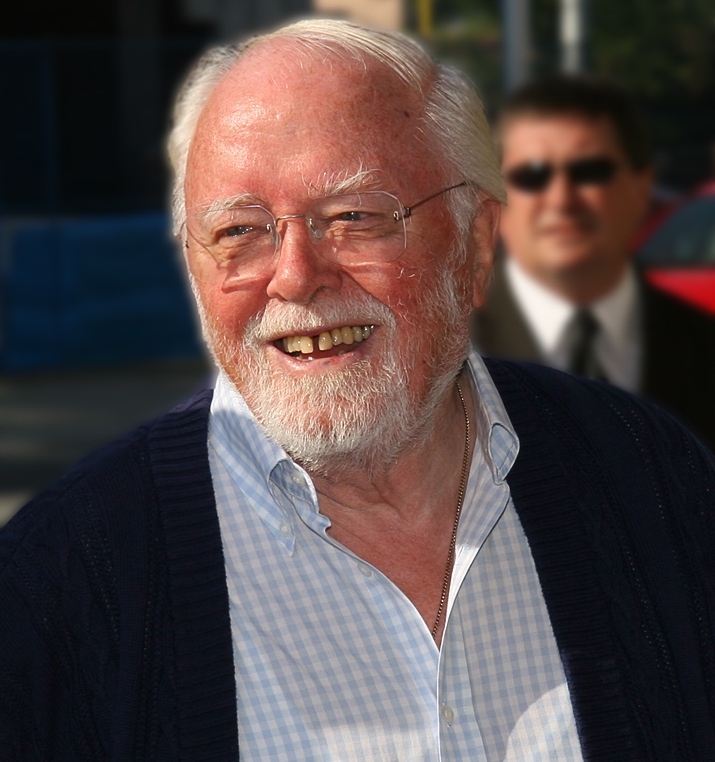
  • Richard Attenborough – 1994 Maiden Speech in the House of Lords

    https://commons.wikimedia.org/wiki/File:RichardAttenborough07TIFF.jpg
    https://commons.wikimedia.org/wiki/File:RichardAttenborough07TIFF.jpg

    Below is the text of the maiden speech made by Richard Attenborough in the House of Lords on 22 November 1994. The speech was in reply to the Loyal Address and was the only contribution Lord Attenborough made in the Lords.

    My Lords, it would perhaps have been more appropriate had I been able to deliver these few words during the arts debate last January when my noble friend Lord Menuhin made his impressive maiden speech but, sadly, a bout of ‘flu confined me to my bed. I also wish to apologise to my most kindly sponsors—friends of long standing; the noble Lords, Lord Cledwyn and Lord Walton—for the subsequent delay in making my own maiden speech; a delay occasioned by a lengthy professional commitment in the United States and a tour of South Africa on behalf of the United Nations Children’s Fund.

    Nevertheless, as possibly noble Lords may have surmised, my subject is the arts—the arts in their broadest sense; the arts as an essential element in what we are pleased to call our civilised society. I have it on the best of authority, from a not too distant relative, that we are related to apes, but it is, surely, not only the ability to stand on our hind legs that sets us so singularly apart from the animal kingdom. The crucial difference must lie in what we call soul and creativity. Our distant ancestors, the first true humans, started to communicate through language some 35,000 years ago and, almost contemporaneously, they began to create pictures on the walls of their caves.

    Is it not remarkable that those early hunters, balanced as they were on the very cusp of survival, should need to paint the creatures which surrounded them in their daily lives: that in the bowels of the earth and on bare rock they felt impelled to recreate the colour, form and movement that they witnessed in the forest outside? A cave painting tells us, surely, far more than the simple appearance of a bison or deer. Across untold generations it speaks of the painter, too; of his uniquely personal interpretation. It grants us a window into his mind. President John F. Kennedy once said: Art establishes the basic human truths which must serve as the touchstone of our judgement”. From the very earliest of times the arts have been an instinctive essential of our humanity. They are a miraculous sleight of hand which reveal the truth and a glorious passport to greater understanding between the peoples of the world. The arts not only enrich our lives but grant us the opportunity to challenge accepted practices and assumptions. They give us a means of protest against that which we believe to be unjust; a voice to condemn the brute and the bully; a brief to advocate the cause of human dignity and self-respect; a rich and varied language through which we can express our national identity.

    Today, as a nation, we face daunting problems—problems which are obliging us to examine the very fabric of our society. And the role of the arts in healing a nation divided, a nation in which too many lack work, lack self esteem, lack belief and direction, cannot and must not be underestimated.

    This is the first century of mass communication. We have now, as never before, the ability to disseminate the arts in all their forms, cheaply, quickly and qualitatively, to the widest possible audience. But art—any art form—can never rest upon its laurels. It was Winston Churchill who said: Without tradition, art is a flock of sheep without a shepherd. Without innovation, it is a corpse”. The arts in this country have a long and enviable tradition. Shepherds there are in abundance. But innovation which must, of necessity, entail the possibility of ridicule, even failure, is the life blood of continuing tradition. For the arts to continue to flourish we must underwrite both innovation and, of course, training.

    We have in the United Kingdom some of the finest academies of dance and drama in the entire world. Is it not, then, a supremely tragic irony that many of our most promising students are being denied access to those institutions for lack of a mandatory grant? As a result, hundreds of dedicated and talented young people are now being lost to their chosen professions as dancers, actors and technicians, with their places taken by those who can afford to pay. The loss of their talents, furthermore, is inflicting untold damage on our internationally acclaimed theatre, television and film industries.

    Film, the movies, as noble Lords may be aware, has occupied much of my life. It is now more than 50 years since I entered the industry. In that time I have seen it weather many storms and falter repeatedly from lack of concern on the part of far, far too many arts Ministers. Certainly, now that at last every aspect of our cinema industry is under the sole aegis of the Department of National Heritage, such pitiful inactivity can no longer be excused.

    Sadly, however, from my own particular viewpoint, cinema was scarcely mentioned during the arts debate to which I referred earlier—a fact I register with regret since I believe the vast majority of the British people generally accept that it is the art form of this century. My belief is borne out by recent figures which indicate that United Kingdom cinema attendances for 1994 will reach 120 million; the 10th successive year of steady increase from a base of less than half that figure. In fact, three times more people go to the movies than all those who attend concerts, opera, ballet and theatre put together and we currently spend, as a nation, nearly £2 billion a year on watching feature films, either at home or in the cinema. However, the sad fact is that only some 4 per cent. of that revenue will accrue to films of British origin.

    We, as indigenous film makers, are often accused of special pleading, of extending the perpetual begging bowl. That is not true. The fact is that the making of feature films cannot be compared with any other manufacturing process. Every film made is a prototoype, a one-off original, that must be packaged and marketed in its own distinctive fashion —a procedure that is extremely risky and very expensive.

    Since no one film can ever be guaranteed to make a profit, wise investors will spread their risk over 10 or 20 such prototypes in the knowledge that 50 per cent. will fail, 30 per cent. will break even and 20 per cent. will prove immensely profitable. If we in Britain are ever again to have a film industry worthy of the name, we have to persuade government to create conditions that will allow investors to spread their risk in that way.

    Some, of course, might argue that our film industry is not worth saving, that it should be allowed to go the way of shipbuilding or the manufacture of motor cycles. But I repeat that the making of feature films cannot be compared with any other industrial process, for they represent, as no other art form, as no other business activity, a crucial definition of our cultural identity, both here at home and throughout the world. Movies are the mirror we hold up to ourselves, the reflection of our codes and practices, our goods and services, our skills and inventions, our architecture and landscapes, our comedy and tragedy, our past and present. And they have the ability to grant us, as no other medium can, a worldwide showcase, generating immense returns—both tangible and intangible, visible and invisible—in every conceivable sphere.

    The novelist Julian Barnes wrote a decade ago: Do not imagine that Art is something which is designed to give gentle uplift and self-confidence. Art is not a brassière. At least, not in the English sense. But do not forget that brassière is the French for life-jacket”. Today we have need of that life-jacket as never before. The arts are not a luxury. They are as crucial to our well-being, to our very existence, as eating and breathing.

    A recent survey, undertaken for the National Campaign for The Arts, revealed that 79 per cent. of the population attend arts or cultural events, that the same high percentage believe that the arts help to bring people together in local communities and almost the same number are prepared to state, without equivocation, that the arts enrich their quality of life. In the face of such cogent endorsement, the role of the arts in all our lives—in health care, in social education and rehabilitation, in business, in the community—is, I profoundly believe, one that we underestimate at our peril.

    Some years ago, when I had the privilege of helping to prepare a report concerning the arts and disabled people, I was reminded of Somerset Maugham, who wrote: An art is only great and significant if it is one that all may enjoy”. “Exclusive” is a shameful word in the context of the arts. We have, as a nation, excluded far too many for far too long. Whether consciously or unconsciously, we have assumed that certain of our compatriots, most notably the disabled and the disadvantaged, have little to gain and little to contribute. Nothing could be further from the truth. In common, I am certain, with many Members of this noble House, I am encouraged by mention in the gracious Speech of the Government’s intention to introduce a new Bill to ameliorate the many inequities which confront the disabled. Mindful of the constraints placed upon those making their maiden speech, I will content myself with adding that I trust their present intention will ultimately result in a more productive and seemly outcome than that which befell the Private Member’s Bill earlier this year.

    The arts are not a perquisite of the privileged few; nor are they the playground of the intelligentsia. The arts are for everyone—and failure to include everyone diminishes us all.
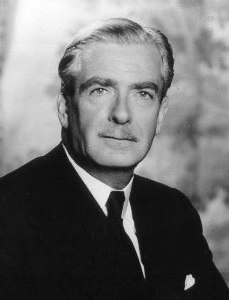
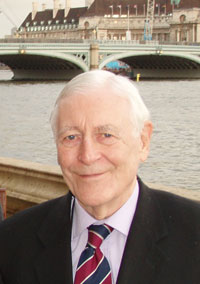
  • Anthony Eden – 1961 Maiden Speech in the House of Lords

    anthonyeden

    Below is the text of the maiden speech made by Anthony Eden in the House of Lords on 18 October 1961.

    My Lords, I hope that it will not be thought presumptuous in a newcomer if I say with what interest and pleasure I have listened to a number of the speeches in the debate in the last two days. My noble friend the Foreign Secretary, whose speech has just been referred to by the noble Lord opposite, gave us yesterday a survey of the international scene which I thought remarkable for its clarity and candour, two qualities eminently desirable in a Foreign Secretary. Also, I thought that, in the record he gave us of his stewardship, there was little that we could question. In fact, with his account I found myself almost always in close agreement.
    I also enjoyed yesterday, not for the first time in my political experience, a speech by the noble Lord, Lord Morrison of Lambeth, who seemed, as I recall, to be in characteristic form, and in a vein with which I am bound to admit I have not always been in agreement. Then to-day we have had the noble Marquess, Lord Lansdowne, who has given us a lucid report on the hazardous and useful journey which he made, and on the tragic circumstances which surrounded the last hours of Mr. Hammarskjoeld’s life and his lamentable death, as we all felt it to be.

    For the few moments during which I shall venture to detain your Lordships, I should like to come back to the European scene. It is about thirteen years ago that I stood where I am standing now, or a few paces to the left, to endorse, on behalf of the Opposition, the proposal made by the Labour Government of the day to take action on behalf of the Berlin Air-lift, a decision which I then thought, and still think, was both courageous and wise and, I agree with the noble Viscount the Leader of the Opposition, one for which the Labour Government were entitled to full credit.

    To-day, we once again discuss Berlin, as perhaps we could not have done, had the Labour Government not acted as they did then. But, of course, it is not only the fate of this great city with which we are concerned, any more than it was only the fate of that city with which we were concerned thirteen years ago, or only the fate of Danzig with which we were concerned in 1939. The Soviet purpose is to gain possession of West Berlin, either directly or through their satellite Government in East Germany; and to do this they will employ threats, cajoleries and blandishments, hoping to prise the Western Allies out of the city, or to scare them into making concessions which will further weaken their position.

    The Russians do not want war, as Hitler wanted war; but they want Berlin, or at any rate so large a measure of control in Berlin that it cannot live the kind of life which, by agreement, when the war was settled, it should live—its own life. Of course the Soviets have a great confidence in themselves, which could be dangerous to the world, and dangerous to them. It is based on a belief in their superior strength, and this may be exaggerated. The offer, already referred to, which was made in a speech yesterday at the Communist Congress in Moscow, of a respite in the settlement of the differences about Berlin and at the same time the announcement that they were to explode a 50-megaton bomb, is characteristic of a sense of overweening power. But for us, for the West, it remains an inescapable truth that if the Soviets, or their satellites were allowed to take over West Berlin, however much appearances might be saved, they would then be free to pass on to other demands, which would follow thick and fast and strong. And where should we then stop them?

    We must not burden our policy with make-believe. What is at issue is not the future of Berlin, but the unity of the will and purpose of the Western Alliance and its ability quietly but firmly to say “No” to unreasonable demands. We have done so before on occasions, and it has not always been without effect. We did so about Austria; we did so when the Western Powers created N.A.T.O.—also an achievement, so far as this country is concerned, of a previous Labour Government. To hold to the essentials of our positions in Berlin does not mean that we must refuse to talk—certainly not. But for discussion to be possible there must be something to negotiate, and so far all the Soviets have done is to grab and then show a willingness to talk about the next stage in their plan. That is not negotiation. It is to ask the West to ignore violent deeds and to enter into discussion as though they had not been done. I do not think that is possible. To accept such a course would be to connive at a progressive deterioration of international relations. At each backward step the West would be so much the weaker. That way lies disaster.

    This country, as my noble friend Lord Strang said last night, is not entirely a free agent in these matters. We have obligations. We played our part in the creation of N.A.T.O.; we played our part in bringing Western Germany into N.A.T.O., for which I accept, and do not regret, a personal responsibility. The N.A.T.O. partnership is the strongest political deterrent which exists to Communist world domination. But we must not think for a moment that the outcome of events in Berlin will be without its influence upon N.A.T.O. Germany’s N.A.T.O. partners have expressed opinions, as have Governments of all Parties in this country, about the future unity of Germany. They cannot go back on those decisions except by agreement.

    The hope in the minds of many in West Germany is that their country will one day have reunity. It is a perfectly legitimate hope and one that successive Governments in this country have many times endorsed. It would not be loyal to extinguish it; nor would it be wise. We must guard against a tendency to speak as though British Ministers were uncommitted in these matters; as though they could in some way arbitrate. That is not their position. If we did not stand by our N.A.T.O. partners we should commit an injustice and a blunder, because we could not then complain if West Germany were to seek other means to gain German unity. Another Rapallo is not an impossibility, and it had better not be our fault.

    For these reasons, my Lords, I submit that if there is to be a negotiated settlement, as I should like to see it. about the future of Berlin, it will have to contain some contribution from the Soviet side, of which hitherto, so far as I know, there has been no sign. The Soviets and their East German satellites have, in fact, already achieved a part of their purpose and have been scarcely challenged doing it. They have closed the mercy gate, which is a harsh deed. It is a deed contrary to the spirit, and I think the letter, of the Four-Power Agreement which we made at the end of the war. They are building a wall, a cruel wall, which in truth condemns them, because it is a prison wall, forbidding those behind it to reach physically to freedom. If I am right in my assumption that to build this wall is contrary to the international engagements we four Powers entered into, then this topic, I suggest, should be on the agenda when a Conference is held which includes the Soviet Power.

    The most important contribution the Soviets could make to-day, if they would, to a discussion would be to show a willingness to take decisions to allow East Germany a freer opportunity to lead her own life, and to put an end to that callous rampart they have just built. In other words, what we ask for is self-determination, which the Russians so often preach but forbid ruthlessly in the territories they control.

    The fact that such a settlement is so difficult for us to believe possible shows how far Moscow was challenged in taking forward positions to suit her policy. To stand firm over this issue of Berlin is not to invite war; it is the surest way to avert it. If we are firm, as I can see the Government have every intention of being firm, then we shall get negotiation. But we cannot accept a series of diktats, one after the other, nor the taint of being hostages, as I understand we have recently been described. The resumption of these atomic tests by Soviet Russia was intended to intimidate. There is no argument about that; they have told us so themselves. It was to shock the Western Powers into negotiation on Germany and on disarmament, presumably on Russian terms; and in this context Berlin and nuclear testing are closely linked. That is the reason why, though we will negotiate, and should, in certain conditions, the free world cannot yield to atomic blackmail and survive.

    Soviet Russia really ought not to object if we maintain the position that negotiations can take place only on the basis of existing engagements and mutual respect. Their literature is for ever complaining of the weakness which they allege the Government’s of France and Britain showed towards Hitler’s Germany in the years immediately before the war. They roundly condemn appeasement; they indict Munich in all their propaganda. It is surely rather illogical that they should now invite us to be appeasers in our turn, and bitterly revile the Governments of the West if, having learned their lesson, they are not prepared to negotiate a Munich over Berlin.

    When Her Majesty’s Government are considering whether or not there is a basis of negotiation, I should like to suggest to my noble friend a test which they might apply: it is whether the agreement for which they are working will serve only to relax tension for a while, or whether it is in the true interests of lasting peace. We must not perpetrate an injustice in order to get a little present ease; and the Government have to consider whether their decision gives peace, not just for an hour or a day or two, but in their children’s time. That is the difference between appeasement and peace. A long trail of concessions can only lead to war. I suggest to the Government four signposts as guides in these uncertain times though I admit how difficult they can be to follow: to stand by our Allies; to fulfil our obligations; to repudiate threats; and to probe for negotiation, while being beware of appeasement as I have tried to define it.

    My Lords, even as it is to-day the pressure upon Communist Powers is world-wide and continuous. Berlin is, at the moment, the focal point, but there are others. In Iran every method of intimidation and subversion, as it seems, is being unscrupulously employed. There the purpose is strategic and economic; the approach to the Persian Gulf, and the control of oil, to disrupt the economies of the other nations. In South-East Asia, particularly in South Vietnam, the area that strategically matters the most, fresh efforts are now apparently being made by extensive guerrilla activities to undermine the Government of the day; while in Tibet the conquerors are established, merciless and unchallenged.

    There is no reason to suppose that these pressures will subside. On the contrary, we must expect them to gather force as the Kremlin glories in the new power to intimidate, which its breach of the agreement to suspend nuclear testing is gaining for it. It may seem surprising that this action, which must to some extent imperil the future of the human race, has been so little condemned by what is usually called neutral opinion. I think the explanation is that its brutality—because it is brutal—was deliberate at that particular time in order to create fear, and in that it largely succeeded. The threat of nuclear war is for Moscow an instrument of policy.

    These events seem to me to show that the Free World is in a position of the utmost danger. I said a year ago that our peril was greater than at any time since 1939. Some thought that alarmist, though I do not think anybody would think so now. Yet we are still not realising the nature of the effort which is called for from us if we are to survive against a challenge of so much ruthlessness and power. Here I am not criticising any particular Government of any country, but posing the problem as it besets the Free World. Our methods do not yet match our needs. Admittedly, machinery is no substitute for will; but unless you have the machinery even the most purposeful will cannot achieve results.

    Many of your Lordships had experience during the war of the work of the Joint Chiefs-of-Staff. Without that organisation there would have been, as many noble Lords know, confusion and disarray; Allies playing their own hands in different parts of the world, often without understanding of the interests of others, sometimes regardless of them. That is exactly what has been happening often—only too often—between the politically free nations in the post-war world. We need a closer and more effective unity if we are sometimes to mould events and not only to pursue them.

    We have had two examples in the last few months of the consequence of not being prepared and agreed in advance for eventualities which were not very difficult to foresee. One was the building of the wall in Berlin, which I have just mentioned. The second has been recent events in the Congo, where opinion among the Western Powers seems to have been at odds and their actions uncoordinated, even within the United Nations. I do not want to argue about what the policy of the United Nations in the Congo should be, only to say this. While it seems to me a course of wisdom to encourage confederation in the Congo. I do not believe that it is defensible to try to impose federation by force.

    But however that may be, would not our policy in the Congo have been more influential if, even in the last few months, we and the United States and our other N.A.T.O. allies could have acted in unity? And should we not have had a better chance to do so if an international political General Staff had been at work to prepare joint plans in advance, as was done in war time, against a contingency which could be foreseen? I admit that to create such a political General Staff involves an act of will, overriding old jealousies and old prejudices which still exist between allies in the Free World, in what are nominally peace conditions. I therefore find it encouraging that this intention has received most support so far in the United States of America.

    In conclusion, my Lords, there is just one aspect of our affairs which, since I am now out of the stream of active politics, I think I can mention without being either patronising or partisan. There is another way in which this country can influence the international scene: by the image of its purpose which it creates in the minds of other people. I do not think we can, any of us, be altogether happy about that portrait just now. That is partly because of the theme of recurrent economic crises which have been endemic since the war and which, when they are temporarily surmounted, are so easily forgotten. Immediately after the war they seemed more readily acceptable. After the prodigous national effort that our country had made, and the unstinted expenditure of our resources, they seemed excusable. But now nothing would so much increase the authority of my noble friend the Foreign Secretary as the conviction in the world that we have put these recurrent spells of economic weakness behind us for good.

    I have no doubt that we can realise this, but only by a national effort in which every member of the community plays his part with a will to see the business through. This is something more important than the politics of any Party; it is our national survival as a great Power. If we can approach our economic problems in a spirit such as we have so often evoked in the past in the face of our country’s danger, selflessly, but with determination, we can solve them. We have to succeed, if our deliberations are to count for anything and if our country’s influence is to hold sway for justice and for peace.

  • Patricia Hewitt – 1997 Maiden Speech to the House of Commons

    patriciahewitt

    Below is the text of the maiden speech made by Patricia Hewitt in the House of Commons on 3 July 1997.

    Thank you, Mr. Deputy Speaker, for giving me this opportunity to make my maiden speech during the debate on the Budget. It has been a pleasure to listen to such fine maiden speeches this afternoon. I listened with interest to the speech of the hon. Member for Tunbridge Wells (Mr. Norman). Having spent many a pleasant weekend with friends in his constituency, I was sorry to hear that “Disgusted of Tunbridge Wells” remains disgusted. I hope that he will make good his offer to assist my right hon. Friend the Chancellor of the Exchequer by ensuring that Asda, the company with which he has had such a long association, participates enthusiastically in our welfare-to-work programme.

    This is, above all, a Budget for jobs and families, which is why it is being so warmly welcomed in the constituency that I have the honour to represent. I know that my pleasure in this Budget will be shared by my predecessor, Greville Janner, whom many right hon. and hon. Members will remember as an effective Chairman of the Select Committee on Employment.

    Greville Janner is remembered and known more widely for his lifelong opposition to racism in all its forms, for his distinguished presidency of the Board of Deputies of British Jews, for his sponsorship of the War Crimes Act 1991, and for his relentless pursuit of the secret repositories of Nazi stolen gold. In the constituency, however, he is remembered above all as an outstanding constituency Member of Parliament.

    I remember last year knocking on the door of one elderly woman, who told me most movingly how her grandson had died many years ago in a tragic accident swallowing the top of a biro pen, which, in those days, lacked the tiny hole that would have enabled him to breathe sufficiently to remain alive. It was Greville who led the successful campaign for that safety measure in product standards. It was that sort of campaigning on behalf of his constituents for which not only he but his father—his predecessor in this House—is remembered.

    Greville was one half of a unique father and son team, who between them represented my constituency for 52 years. Greville’s father, who subsequently became Lord Janner, did not announce his decision to retire until after the 1970 general election had been called. Greville used to tell the story of his selection with great amusement. He claimed—I am sure quite wrongly—that he was assisted by the fact that the election posters, “Vote Labour, Vote Janner”, had already been printed. I am sure that he would have been selected under any circumstances. He will no doubt forgive me if I say how grateful I am that his son decided not to follow in his footsteps.

    I also want to pay tribute to three other outstanding public servants who served my constituency. Councillor Paul Sood was one of the most outstanding fighters for the Asian community, not only in Leicester, but throughout the country. Tragically, he died last year, just a week after being re-elected to serve as the city councillor for Abbey ward in my constituency. It was an enormous loss, but I know how proud he would be to see his widow, Mrs. Manjula Sood, now serving in his place.

    All of us in the constituency were sad to hear last month of the death of Councillor Martin Ryan, who for many years was leader of the Labour group on the county council. He served, among other capacities, as the county councillor for the Mowmacre ward in my constituency. Just two days ago, I was also extremely sorry to hear of the death of the former councillor, George Billington, who had only recently retired as my predecessor’s parliamentary agent. I will do my best to live up to the extremely high standards of public service which they and my predecessors have set.

    I know that my hon. Friends the Members for Leicester, South (Mr. Marshall) and for Leicester, East (Mr. Vaz) will agree when I say that Leicester is a wonderful place in which to live and to learn. We are Europe’s first Environment City. We are home to two first-rate universities. Many of their students, especially those at De Montfort, live within my constituency.

    Although it may distress some right hon. and hon. Members to acknowledge this, now that Leicester holds the triple crown of sporting achievements in football, rugby and cricket, we are indeed Britain’s sporting capital. I am delighted to say that, now that the Millennium Commission has chosen the project for the national space science centre, to be sited within my constituency, as the landmark millennium project for the east midlands, we will shortly be the space capital as well.

    Leicester, West is a constituency of captivating variety. It stretches from the old industrial buildings along the banks of the River Soar and the Grand Union canal, which form part of the border of the constituency. It takes in a small part of the city’s old mediaeval centre—although, less happily, we also take in some of the inner-city ring road, built in the 1960s with a distressing lack of sensitivity for that old mediaeval heritage. It extends down the Belgrave road, which marks the border between my constituency and that of my hon. Friend the Member for Leicester, East, where the red brick cottages of 19th century weavers are now the heart of Leicester’s Asian community, and from there across to the new estate of Beaumont Leys and the longer-settled communities of Mowmacre, Stocking Farm, New Parks and North Braunstone.

    I know that residents, especially on those estates, will warmly welcome my right hon. Friend the Chancellor’s announcement yesterday that he would rapidly begin the release of council house receipts, which will make possible desperately needed repairs and renovations to their homes.

    Above all, Leicester is rich in its people. We are well known, and rightly so, for our cultural and racial diversity. By the year 2000, half the young people of our city will come from the ethnic minority communities. Leicester is fortunate to be home to many thriving businesses and to a variety of churches, temples, gurdwaras and mosques that are at the heart of the communities they serve. It is home also to a number of theatres, festivals and arts performances from a variety of different traditions.

    Like many of my constituents, I am a citizen not only of this country, but of another—in my case, Australia. In this Parliament, I am the only Member also to be an Australian citizen. Like many of my constituents, I know what it is like to have families in two countries, so I know how much many families in my constituency warmly welcomed my right hon. Friend the Home Secretary’s early decision to abolish the odious primary purpose rule.

    I must mention also the parks and open spaces with which my constituency is so richly endowed. Perhaps suitably for Europe’s first Environment City, Western park in my constituency is home to one of the country’s leading green charities and consultancies, Environ, along with the flourishing city farm on Gorse Hill—both of which will, I hope, play a considerable role in creating the environmental task force within the east midlands.

    I regret to say, however, that our enjoyment of some of our open spaces is all too often spoiled by the arrival of unauthorised travellers, who themselves have too few authorised sites to which to turn. I hope that my right hon. Friend the Deputy Prime Minister will be sympathetic to the case that I will be making on behalf of my constituents for a badly needed review of the previous Government’s law and practice in this area, which has proved so disastrous.

    Perhaps too often neglected in my constituency and others like it are the outer-city estates. Almost half of my constituents live on such estates. Listening to my right hon. Friend the Secretary of State this afternoon, I found myself thinking in particular of families struggling to bring up children in communities where anything up to one in four of working-age men are officially unemployed—and where, in reality, far more are out of work.

    Young men all too often turn to destructive or criminal activities, because no creative outlet is offered for their energy. Children are growing up, as one grandmother said to me in fury and frustration, to believe that the only way they can earn a living is to sign on for a giro.

    Those are the people whom the last Government locked into unemployment and poverty, and then derided as an underclass. The people I have the privilege to represent are no underclass. They want a chance of a job, a chance to earn a living, a chance to bring up their families decently, to live in safety and to retire with dignity. They want the same respect and opportunity’ as other people. That is what the Budget will begin to give them.

    Listening to today’s speech by my right hon. Friend, I thought of Betty, for example, who is a parent governor at Wycliffe community college, which is located on one of the estates in my constituency. Recently, Wycliffe community college was inspected by the Office for Standards in Education. One member of the inspection team asked Betty how the school coped with local parents and with families living on income support—”you know”, he said, “with the underclass.”

    Betty said, “I’m one of the people you’re talking about.” She told him, “I live on benefit—not because I want to, but because my husband lost his job and hasn’t been able to get another one, and because we bought our council house, just as the last Government encouraged us to do. Now we find that the only way we can pay the mortgage is to stay on income support.”

    Betty left school at age 15 with no qualifications, returned to school, through Wycliffe college, and got herself five O-levels, which in itself is no mean achievement. She would love to train and work as a classroom assistant, and that school would love to give her the job. She cannot take such a job, however, for the simple reason that, as things stand, her family would no longer be able to afford their mortgage. It is such poverty traps, which were created by the previous Administration, that force families such as Betty’s to choose between the job they need and the home in which they live.

    I know how much Betty’s family and families in a similar position will welcome the announcements made in the Budget, and today by my right hon. Friend the Secretary of State, about the Government’s welfare-to-work programme and their longer-term objective of creating a benefit system that will at long last reward rather than penalise hard work and effort.

    I thought also of Bill, who is a manager at one of the employment projects on a local estate. Bill was a construction worker—a roofer—until he was injured in a fall from the roof on which he was working. He now says, however, that that accident was the best thing that ever happened to him, because it gave him a chance to discover within himself gifts that he did not know that he had. He is now running an employment advice project, into which he has introduced some wonderfully sophisticated software that, with his guidance, enables people who are lacking not only a job but the most basic confidence to start exploring their own real aptitudes and aspirations before taking that first step into training or a job.

    Bill said, “I know how hard it is to change. But I also know that people can do it, because I’ve done it myself.” I believe that the Government’s welfare-to-work programme will mobilise community groups such as Bill’s, marrying the bottom-up energy and potential of millions of people across the country to the Government’s top-down strategy and vision.

    I thought also of the lone mothers in my constituency who began another group, which they called Turning Point, because that is what it was for them. Originally, those lone mothers met to support one another over a cup of coffee around a kitchen table, but now they are running their own thriving voluntary organisation.

    I thought also of the staff and parents—fathers and mothers—who run creches and playgroups that have been starved of funds, sometimes to the brink of closure, because of the previous Government’s local council budget cuts. They are able to offer not only child care places but—in response to yesterday’s very welcome announcement—training places for young unemployed people who wish to work with children.

    I am sure that, like me, those parents hope that my right hon. Friend the Secretary of State will ensure that lone parents under the age of 25 who have spent six months or more out of work and on income support will be able to access the opportunities created by the welfare-to-work programme in the same way and on the same terms as other young people who have been on job seeker’s allowance.

    After listening to yesterday’s Budget and to today’s debate, I thought also of the teachers working and living in my constituency. Their dedication was scorned by the previous Government. Our new unitary council shares the new Government’s determination to ensure that all our children have a chance to fulfil their potential, whether they live in inner cities, in suburbs or on outer estates.

    I know that my right hon. Friend the Secretary of State will not be at all surprised if I say that several Leicester schools—including Dovelands junior school and Bendbow Rise infant school, which is in my constituency, and recently did its best to celebrate an anniversary while the rain poured in through the roof—will be early in the queue for the very welcome new capital funding and private finance initiative announced yesterday.

    Finally, I thought of the hundreds of women and men, many of whom are retired, who are now volunteers in so many community organisations, such as social clubs, youth sporting groups, children’s bands and other organisations. I thought also of the sometimes wholly unrecognised individuals who, in their own homes, are looking after children and other relatives with profound disabilities. Our social fabric is woven from all their efforts.

    Those men and women, and many others like them, are the heroes and heroines of my constituency. They and thousands of other people across the country will be the heroes and heroines of the new Britain that we were elected to build, and for which the Budget lays such a magnificent foundation.

  • Eric Lubbock – 1962 Maiden Speech in the House of Commons

    lordavebury

    Below is the text of the speech made by Eric Lubbock (later Lord Avebury) in the House of Commons on 27 March 1962.

    I understand, Mr. Deputy-Speaker, that there are two conventions which are generally followed by hon. Members in making their maiden speeches. The first of these is that they should make some general references to their constituency. In view of the fact that a great many things have been written in the national Press about my constituency which hon. Members may have had an opportunity of reading, I think that I need not deal with that subject. Indeed, several hon. Members have paid visits to my constituency within the last few weeks. Some of them came away with some curious ideas.
    The right hon. Gentleman the Leader of the House, from his researches, concludes that there are—and I think that I have the figure correct—22,846 people out of an adult population of 55,000 who do not possess features. I happen to be an example of them, but I have, as you can see, Mr. Deputy-Speaker, a perfectly good nose and ears and I have, not only in the literal sense but also in the metaphorical sense, teeth—as the right hon. Gentleman may discover.

    The second convention which is generally followed by maiden speakers is that they should say nothing controversial. But we are speaking about nurses’ pay, which is a subject on which I feel very strongly—as, indeed, do many of my constituents—and, therefore, if it is necessary to transgress this rule slightly I am sure that hon. Members will understand.

    There is another factor, which is that I have already been attacked from the Treasury Bench before I had an opportunity of speaking and when I did not have an opportunity to reply. But this is a thing which I welcome. I hope that it will happen on many future occasions, because it proves conclusively to me that I have been saying the right things.

    In speaking about nurses’ pay, I would like to refer to a reply given on 12th March by the Parliamentary Secretary to the Ministry of Health to the hon. Member for Stoke-on-Trent, Central (Dr. Stross). The hon. Lady told him that it was mistaken to compare the salaries and conditions of nurses with those of ancillaries. It may be mistaken, but that is what I intend to begin by doing today.

    A male ward orderly in the London area receives £10 0s. 8d. basic pay for a 42-hour week, which was the figure the hon. Lady gave. He also gets 100 per cent. extra for Sundays; 25 per cent. extra for nights; 50 per cent. extra for Saturday afternoons; 100 per cent. extra for Bank Holidays, and, of course, if he works on a Bank Holiday, he has another day off in lieu as well. He also gets overtime for all hours over 42.

    A State enrolled nurse at the top of the scale receives £11 13s. 3d. for a basic week which is two hours longer, and does not receive one penny extra, no matter if he or she works round the clock. Two pay slips have been shown to me by a constituent, and they have been sent to the Parliamentary Secretary. I hope that she will have seen them by now. They were sent to her by a nurse in Orpington Hospital. One of them was the pay slip of the nurse. He received the maximum figure of £11 13s. 3d.—and he is a man with twenty-five years’ service in the profession. Also sent to the hon. Lady was the pay slip of a ward orderly who had been in the hospital five weeks, who worked for two hours less and who received £13.

    The hon. Lady also said that we should not compare these two because the nurses receive better conditions of service—among other things, better holidays. I can prove that that statement is false, because they work a greater number of hours in the course of the year than do the ancillaries. The nurse, indeed, has five weeks holiday. But if my arithmetic is correct, he or she is working 47 weeks at 44 hours a week. Multiply these, and the total is 2,068 hours. The ward orderly works 50 weeks of 42 hours, but he gets five Bank Holidays, each of eight hours, so that his total comes to 2,060 hours. In fact, there is hardly any difference, in spite of the fact that, on the face of it, nurses get longer holidays.

    In one respect, indeed, there should be no comparison between trained nurses and ward orderlies. The ward orderly has no responsibility whatever, whereas the trained nurse has the greatest responsibility which any person can possibly undertake—that of protecting human life.

    The consequences of this situation are much more grave than the Minister would lead us to suppose. I must talk about my own constituency in this because, obviously, I know more about it than I do about other parts of the country. But I think that the situation which we have in Orpington is a microcosm of the whole country, and many of the aspects of our situation are repeated in other places, as the hon. Member for Abertillery (Mr. L Williams) has already said.

    We have trained nurses who are leaving the service in Orpington and are going to industry—to Morphy Richards, or to Tip Top Bakeries, or whatever we have in Orpington—and there are nearly as many trained nurses in Orpington’s factories as there are in Orpington Hospital. This is because we have presumed on the spirit and devotion of the nurses for far too long. But if we want to look at this not from the point of view of equity, but from the point of view of how public money is spent, then the present policy is entirely wrong because public money is being spent on training these people. They take several years to acquire their skills and then leave to work at a factory bench.

    The hon. Member for St. Pancras, North (Mr. K. Robinson) said that 30 per cent. of those who enrol in the nursing profession fail to complete the course, but the Guardian of 12th October last gave the figure of 40 per cent., and in the same article said that 50 per cent. of the nurses who had completed their training had left for other work.

    The students are already doing a shorter week, and they spend less time in the wards nowadays than they used to because there are more lectures in the course. Therefore, it becomes all the more important that those who enrol remain in the profession, because the ward sisters have less time to give attention to the students in the wards, because there is a more rapid turnover of patients, and because there is a shortage of ward sisters. It is extremely important for those who enrol in the profession to complete the course and stay with it.

    What inducements are there? I have already quoted the figure of the maximum which a State enrolled nurse can attain. Also of interest is that a staff nurse’s maximum is £656 and a ward sister’s £840. This maximum of a State enrolled nurse of £578 per annum is after two years’ training and six years of qualified service.

    When one considers that this is £1 a week less, roughly, than a shorthand typist gets right at the beginning of her professional career, one can see how ridiculous these salary scales are. The Minister has been unwarrantably complacent about the staffing situation in hospitals. He sees the situation as being adequately covered in the nation as a whole. I can tell him that, in Orpington Hospital, there are 58 vacancies in its establishment of 168 trained people. In the country as a whole, there are 25,000 such vacancies.

    This is borne out by looking through the pages of journals such as the Nursing Mirror. I was looking through its issue for 23rd March, and I counted 56 pages of situations vacant. Someone asked the Parliamentary Secretary the other day how much money was being spent on advertising vacancies in the National Health Service. I therefore did a little sum and I found that the Nursing Mirror was receiving £150,000 a year in advertising revenue for nursing situations vacant—and this is not the only journal in which these vacancies are advertised.

    I have spoken of shortages of staff and the danger particularly as it refers to Orpington Hospital, which has three night sisters on duty for 23 wards, in which there are between 500 and 530 patients. As a result of this situation, first-year students are in charge of the wards after only nine months’ training and in other cases, nursing auxiliaries are in charge of the wards.

    That is not a situation about which the hospital authorities can do anything. They would like to be able to get the extra trained staff to which their establishment entitles them, but there are 74 part-time and 30 full-time auxiliaries working in the hospital and it would be impossible to function without them. They are not trained, however, to recognise an acute condition when it occurs. Moreover, even if they recognise it, they have to summon help in a crisis, because, obviously, they are not themselves allowed to give treatment. This constitutes a danger to human life.

    The danger is increased by the expansion of the geriatric side of the general hospitals. To ease overcrowding in the mental hospitals—this is an arrangement which dates back some years—a great many senile dementia cases were diverted to the general hospitals which took geriatrics and were rechristened cerebral arteriosclerosis cases. In Orpington Hospital, there are 350 geriatric patients in a total of 510, many of whom are totally incapable and require constant skilled attention. It may well be imagined that in these circumstances superhuman efforts are necessary to cope with any emergency.

    During the summer, accident cases are brought in nearly every weekend and this happens frequently even in the winter and spring. Nurses have to be recalled to duty in their time off and from their beds. I should like to quote an instance of this which happened on Sunday, 11th March. A particularly serious motor accident occurred at Badger’s Mount and the casualties were brought into Orpington Hospital. The theatre sister had already done two spells of duty that Sunday, from 7.45 a.m. to 1.15 p.m. and from 4.30 to 8.15 p.m. She was summoned back to the hospital, where she attended from 10 p.m. until 7 a.m. next day, having assisted at two major operations.

    That is not the end of the story. Monday is a busy day in Orpington Hospital and it was not possible to allow that sister to go home. She then had to do another spell of duty from 9 a.m. until 1.15 p.m., at the end of which time she had been on duty on and off for 22½ hours without sleep. How many professions or occupations are there in which people would not only stand for this kind of treatment, but would do so without asking for a penny extra?

    The 2½ per cent. which has been offered to those in nursing is an outrageous insult and is presuming on the noble ideals of service of the profession. The Minister knows of the reluctance of these people to take positive action by striking in defence of their legitimate rights. Perhaps he thinks, like the Minister of Aviation, that striking terror into the hearts of a potential enemy is a mission which should be fulfilled at the expense of those sections of the community who are least able to protest.

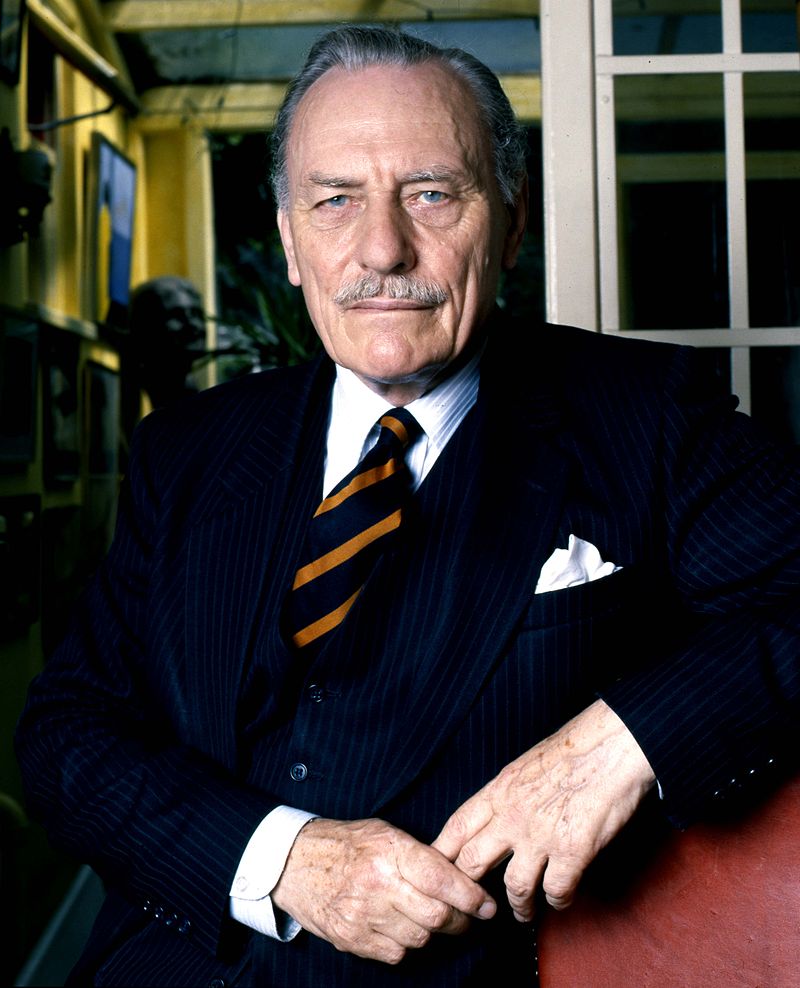
  • Enoch Powell – 1950 Maiden Speech in the House of Commons

    By Allan warren - Own work, CC BY-SA 3.0, https://commons.wikimedia.org/w/index.php?curid=13721986
    By Allan warren – Own work, CC BY-SA 3.0, https://commons.wikimedia.org/w/index.php?curid=13721986

    Below is the text of the maiden speech made by Enoch Powell in the House of Commons on 16 March 1950.

    There is no need for me to pretend those feelings of awe and hesitation which assail any hon. Member who rises to address this House for the first time, but I trust I shall receive the indulgence which is usually accorded to one undergoing that ordeal. I wish to address myself to the same problem as the hon. Member for Coventry, East (Mr. Crossman), but to address remarks to it expressed rather in the form of manpower than, as he did, in that of finance.

    To anyone who reads the White Paper on Defence, the one outstanding feature is the staggering burden in terms of manpower which this country is called upon to shoulder. How great that burden is may be seen by a simple comparison with pre-war commitments. Our Defence Forces are today approximately double the size they were in 1938, but it is an under-estimate to say that our burden has only doubled, for the difference between our pre-war manpower in defence and our present manpower is filled by the National Service man, or conscript. The expenditure of manpower in the form of conscript service is the least efficient and the most dislocating to the national economy of any use of manpower. Therefore, it is fair to say that in so far as we have been obliged to double our burdens by taking upon ourselves the burden of conscription, that burden has more than doubled and any hon. Member in any part of the House must seriously address himself to the question whether that burden can be borne in its present weight and otherwise in what way it can be diminished.

    In examining that, I wish to address myself particularly to the Army. There is good reason for doing so. The Minister of Defence concentrated attention on the Army requirement in manpower when dealing with this aspect of the question, and in any case two-thirds of our conscripted manpower are called for by the Army, so that if we focus our minds upon those causes which have doubled our commitments in respect of the Army, we may find some indication of the direction in which relief is to be sought.

    Upon a rough comparison, we may say that we had serving with the Colours in the Army in 1938 200,000 men—actually the figure was slightly lower. The figure at which the Government aim by April, 1951—which is a figure, one gathers from the White Paper, they do not expect will thereafter diminish, or at any rate will not rapidly diminish—is approximately 350,000. We have a contrast between a pre-war Army of 200,000 and a post-war 1951 Army of 350,000. It is not, however, correct to assume that the commitments which our Army is meeting have increased in that ratio, because the 150,000 or 160,000 conscripts serving in the Army are not doing the work of 160,000 Regulars.

    Approximately one-third of the service of a National Service man is not of practical utility because he is undergoing his initial training. There is the question of transport to his overseas station and transport back, and so forth. Besides that, we have an extra demand upon our Regular Forces for the training of the National Service man. I think it more than fair to say that the 150,000 or 160,000 conscripts in the Army are fulfilling the demand of approximately 100,000 Regulars, so that in broad terms the change which has taken place is an increase in our commitments of the order of some 200,000 to 300,000.

    Before analysing the reasons for that increase, may I point out that it is upon the commitment for troops with the Colours that we must fasten our attention. The Minister of Defence was right in saying that there are two grounds on which the case for a conscript force rests—the meeting of current commitments and the formation of a Reserve. But no one will assert that if our current commitments could be met with Regular troops, we could not find more effective methods, more successful and economical methods, than the present system of National Service for forming the Reserve forces which we need.

    We therefore have to ask what are these additional commitments which have enforced upon us the requirement of an Army of the equivalent of 300,000 as against 200,000 before the war. If we examine the distribution of our Army now and in 1938, we shall perhaps be surprised that the number of troops abroad, outside Europe, is no larger today—in fact it is rather smaller—than it was in 1938; but we should be very wrong to jump to the conclusion that therefore there had been no increase in our extra-European commitment for one simple reason. My right hon. Friend the Member for Woodford (Mr. Churchill) pointed out that in those 90,000 British troops who were outside Europe in 1938 were included the 55,000 British component of the Indian Army. Those 55,000 men were not merely, not even mainly, fulfilling an Indian commitment. They were a strategic reserve for the whole of the Middle and Far East and also, if need were—and on two occasions this was realised in fact—for Europe itself.

    Therefore, if we now find ourselves obliged to station outside Europe as many men as before the war, that means that we have an increased commitment of the order of 50,000 men for the Middle and Far East, and have at the same time lost the mass of manoeuvre, the strategic reserve of our British and Indian component of the lost Indian Army. So we find in these facts the first great change which has come over our position. It is a change which follows from the loss of the Indian Army and the intensification of the threat to the Middle and Far East.

    The remainder is attributable to the greater threat in Europe, which may be measured in numerical terms, perhaps, by comparing the small forces of occupation present in Germany five years after the First World War with the 70,000 or 80,000 stationed in Germany today. So we find that these two great changes, the loss of the Indian Army coupled with the increased threat to the Middle and Far East, and on the other hand the increased threat in Europe, are the reasons which entail upon us far more than anything else this doubling of our manpower commitment for defence.

    Is there any escape? As the hon. Member for Coventry, East, asked in other terms, must we continue to stagger under this burden until it weighs us down and breaks us, or is there some escape? I suggest that there are two directions in which we could look. The first has already been suggested in my analysis of the causes of our difficulties. We have lost the greatest non-European army which the world has ever seen, an Army which made possible, as did no other institution in the world, the active and affectionate co-operation of European and non-European. I do not intend to go into the reasons for or justification of that event, but it is lost.

    If we are an Empire defending the Empire, we must draw far more than we do on the vast reserves of Colonial manpower which exist within the Empire. The virtues which enabled British officers and British administrators to create the Indian Army are not dead. The virtues which made the Indian Army so great an instrument, although some of them are perhaps peculiar to the martial races of India, are paralleled in other parts of the world. Not only is it not impossible, it is imperative that we should create from the other parts of His Majesty’s Dominions a replacement for that which we have lost.

    Thinking in these terms, one is shocked to see from the Army Estimates that in the last 12 months there has been a decrease of 15,000 in the Colonial manpower serving with the Colours outside Europe, and an increase in the British manpower. Surely we are moving in the wrong direction. It is not to the point to say that this is also a question of finance. After all, Nepal does not pay for the Gurkhas but we are very fortunate indeed to be able to supplement our British manpower with the assistance of Nepalese manpower. Exactly the same argument applies to the manpower which can be afforded by our Malayan or our great African territories.

    That is the first direction in which we ought to look—the replacement of the Indian Army. The demand that we shall do so rests ultimately upon the conception that what we are defending, His Majesty’s Dominions as a whole throughout the world, are in reality a whole, and that the manpower of those Dominions has a right and a duty to come to their defence. I do not think that we are applying that principle to the maintenance of the European forces which defend His Majesty’s Dominions. It is far from my mind to criticise or appear to criticise the Governments of the Dominions, but it is the fact that the populations of Australia, New Zealand and Canada together amount to between one-third and one-half of the population of the United Kingdom, whereas the proportion of their manpower which is engaged in the tasks of defence is less than one-eighth of our manpower.

    If what we are defending is indeed a unity—and the Tory Party at all events asserts that it is a unity—the duty of this defence is equally incumbent upon what we call the Dominions and upon the United Kingdom. We require, instead of mere consultation, mere machinery of co-operation, usually left somewhat vague, a real recognition of a truly joint responsibility amongst all His Majesty’s Governments for the defence of His Majesty’s Dominions. I am well aware that such a demand raises far reaching political implications. I am not afraid of those implications, indeed I desire them, for I am certain that unless we summon to the defence of this worldwide Empire all its resources, be they European or non-European, we shall fall under the load which we are attempting to bear.

  • Suella Fernandes – 2015 Maiden Speech to the House of Commons

    suellaf

    Below is the text of the maiden speech made by Suella Fernandes to the House of Commons on 1 June 2015.

    feel a real sense of humility speaking after the hon. Member for Islington North (Jeremy Corbyn), who gave an accomplished speech in the best traditions of this House. I congratulate him.

    On a cold February morning in 1968, a young man, not yet 21, stepped off a plane at Heathrow airport, nervously folding away his one-way ticket from Kenya. He had no family, no friends and was clutching only his most valuable possession, his British passport. His homeland was in political turmoil. Kenya had kicked him out for being British. My father never returned. He made his life here in Britain, starting on the shop floor of a paint factory. My mother, recruited by the NHS in Mauritius as a girl of 18, passed her 45th year of service last year.

    My family had nothing but hopes and dedication. They were so proud to be British and so proud to make our country even better. If I succeed in making some small contribution during my time in this place, it will reflect only a fraction of my gratitude to this country for the abundance of education, culture and traditions that have made Britain great, for the tolerance and fellowship of the British people, and for the opportunity and liberty that we all enjoy.

    Before I turn to the subject of today’s debate, I should like to pay tribute to my predecessor, Mark Hoban. Mark served for 14 years in this House and during that time set an example as a conscientious constituency MP and a principled member of the Government. I have met many constituents for whom Mark was an indefatigable campaigner. He set a standard that it would be difficult to match. Mark played an invaluable part in the previous Government, initially as Financial Secretary to the Treasury and latterly as Minister for Employment. His brief covered financial services in the aftermath of the credit crunch and he embraced the challenge of banking reform. As Minister for Employment, he was responsible for Universal Jobmatch, an excellent service matching jobseekers and employers online.

    Following Mark is not only daunting but inspiring. I will be a strong voice for Fareham. More than 1,000 young people travel too far for A-levels, and I hope to see more sixth-form provision within the constituency. As an increasing and ageing population puts pressure on local GP services, schools and roads, I plan to be an advocate for all my constituents as we face the challenge of building more homes.

    Fareham is nestled on the Solent coastline between Portsmouth and Southampton. In the south of the constituency lies Titchfield, famous for its abbey. It is on the route to the Isle of Wight, and monarchs often visited. In 1625, Charles I, just married, arrived with his new bride, the French Princess Henrietta Maria. It was the 17th century equivalent of a honeymoon. However, all was not well between the newlyweds: instead of their enjoying the first days of a new life together, arguments that had been brewing between the French and English courts came to a head in Titchfield. Disputes about status, religion and money culminated in melodramatic outbursts between Charles and his new wife, altercations and even the attempted murder of the local vicar. It is fair to say that that European union was not going so well. Thankfully, all was lovingly resolved and the Hampshire honeymoon marked the beginning of a decade of marital bliss for Charles and his wife. No doubt the European renegotiation that this Conservative Government are driving forward will be judged successful if our marriage remains happy and prosperous in the decades ahead.

    It is fitting that I make my maiden speech during the debate about Britain in the world because if you take away only one fact about Fareham today, Mr Speaker, let it be the bravery of the men and women who gave so much in the name of freedom. Warsash on the Hamble river was the disembarkation point from which hundreds of British and allied naval and commando units sailed for the D-Day landings on the Normandy beaches. It was an ambitious operation. Just before he left for Normandy, one officer wrote:

    “the local rector arrived in the camp and there was a parade. We all attended and knelt in the main road coming into the camp, the rector stood on a box and gave a short speech ‘God teach us not to show cowardice, God give us the strength to face the enemy’”.

    At times of threat and in the face of evil, Fareham was courageous. We will never forget.

    As the new MP for Fareham, I hope to build on a legacy of enterprise, for Fareham is at the forefront of technology in the aerospace and marine sectors, with companies such as Eaton Aerospace, National Air Traffic Services and Raymarine headquartered locally.

    It is a stroke of luck to be born British, and my indebtedness goes to the heart of why I am a Conservative. Our party rewards endeavour, enables compassion and liberates people from the shackles of the state. Our party says, “It doesn’t matter where you start. You can make your life and that of others better by taking responsibility and through self-empowerment and generosity.” I will do all I can to serve the people of Fareham with humility, integrity and warmth.

  • Ann Widdecombe – 1987 Maiden Speech in the House of Commons

    Below is the text of the maiden speech made by Ann Widdecombe in the House of Commons on 28 October 1987.

    I am grateful to you, Mr. Deputy Speaker, for giving me the opportunity to make my first speech in the House in this important debate. In doing so, I pay tribute to my distinguished predecessor, Sir John Wells, who served the constituency with dedication and distinction for 28 years. His period of service will be remembered by his former constituents with respect and affection, as I am sure it will also be remembered by Members of the House. He earned respect for his exemplary chairmanship of many important parliamentary Committees and affection for the colourful way in which he sometimes drew attention to the needs of his constituents. On one occasion, he arrived for the day’s business on a horse. On another, he enlivened proceedings in the Chamber by eating an apple—a Kentish apple, of course—during the debate. I hope to follow his example in dedicating myself to the service of my constituents, but I shall not be eating any apples in the Chamber, as history attests rather strongly to the unfortunate results of ladies eating apples where they should not.

    My constituency has suffered badly from the recent wind storms. As a horticulturist, Sir John Wells would have understood all too well the misery and devastation suffered by many farmers, expecially the fruit farmers whose industry takes up such a large part of the constituency that I have the honour to serve. I hope that the Government will see fit to provide some compensation, in however cautious and measured a way, to those who have lost their livelihood not just in the immediate term but for years to come, because it will be some time before replanted trees can be expected to produce crops which will generate income.

    Leaving the country areas for the town of Maidstone, I am proud to have in that town concrete and tangible evidence of the Government’s firm commitment to the National Health Service in the shape of a large new modern hospital. I regret to tell the House, however, that, due to inequitable distribution of funds by the South East Thames regional health authority, that hospital is not being used as fully or as beneficially as it should be. On an appropriate future occasion, I hope to draw attention to the difficulties experienced by my constituents as a result of that inequitable distribution of funds.

    I address myself to the debate and to the Opposition amendments in the sure knowledge that I address myself to a subject of the utmost importance and interest to my constituents. I begin by congratulating the Government on the Defence Estimates and particularly on the sound basis on which they have drawn up plans for the nation’s security. I believe that the people of Britain will draw great comfort and reassurance from the fact that they are governed by a party which is wholly committed to an effective nuclear deterrent.

    I spent many hours yesterday and some today listening to Opposition Members decrying the Trident programme. I thought that they had been sufficiently effectively answered yesterday, but today we have heard the same tired arguments, based on the same flawed logic. Both in their amendments and in the many distinguished speeches that we have heard, the Opposition have claimed that the Trident programme is undesirable because it eats into conventional defence expenditure. There is a severe absence of logic in that statement. It is true that if we did not spend the money on Trident we could use it to purchase conventional weapons or, indeed, anything we liked — sacks of potatoes, biros, pounds of butter, or whatever. If we are to spend Trident money on something other than Trident, we must ask ourselves whether the optional thing that we are purchasing is capable of doing the job of Trident. If it is not capable of doing that job and fulfilling the aims of Trident, it does not matter that we could buy it with Trident money. It is totally irrelevant.

    The sole objective of Trident is to deter a potentially hostile force from launching a nuclear attack on this country, or to deter a hostile force with overwhelmingly superior conventional forces from attempting to use that superiority to launch a conventional attack. Therefore, if we are to give up Trident to buy conventional weapons, we must demand that those weapons are an equally effective deterrent.

    The statement on the Defence Estimates suggests that, if we devote all the Trident money to conventional weapons, we might be able to buy and maintain 300 tanks for an armoured division. I am sure that it is very laudable and worthy to buy 300 tanks for an armoured division but, when the Warsaw pact countries have a superiority of 30,000 tanks, it will not be a very effective deterrent. We can do the same arithmetical exercise for artillery, where we are outnumbered by 3:1, and in anti-tank guided weapons by 1.6:1. We can continue that exercise, but we shall not end up with a replacement that serves the same aim as Trident. We shall simply replace something designed to do one job with something designed to do a totally different job.

    Opposition Members were not terribly kind to the Government last night when summing up. The hon. Member for Knowsley, South (Mr. Hughes) said that he would not award a CSE pass to the Government for the reasoning behind their Defence Estimates but, after listening yesterday and for several hours today to the Opposition, I do not believe that they have reached a standard of elementary logic which would get them through the 11-plus. Perhaps that is why they have such an antipathy towards that examination. My nephews and nieces at the age of eight or nine, let alone 11, could have told Opposition Members that, if they are given the bus fare to get home and they spend it on a taxi ride, they will not get the same value because the bus will take them only a few yards.

    If we spend the Trident money on 300 tanks or whatever—frigates are much beloved of the Opposition —we shall find that we have gone not even a few yards or feet but only a few inches towards an effective deterrent, whereas Trident would do the entire job, so the logic is flawed. If we all took to the hills—as the Opposition came perilously close to suggesting not long ago—and invested our Trident money in bows and arrows, those bows and arrows might outnumber those of the Warsaw pact countries and would be about as useful as some of the arguments put forward by the Opposition.

    Opposition Members are trying to have it all ways when they argue that, if we are to have an independent deterrent, it must be truly independent. I am not quite sure what Opposition Members stand for. The distinguished and right hon. Member for Leeds, East (Mr. Healey) said that we do not have a truly independent deterrent because the Americans will do the servicing. We said very clearly—I am sorry that the Opposition did not understand the point—that we shall always have control over some of the missiles. Does the right hon. Gentleman seriously believe that, when he sends a suit to the cleaners, he has no clothes at all and must come into the Chamber in a state of sartorial dilapidation because he has no suit?

    Finally, in desperation, Opposition Members decided to try to claim that the conventional imbalance was a figment of the Government’s imagination, that it did not exist, and in support of that they triumphantly produced a document brought out by the International Institute for Strategic Studies and quoted it with the reverence normally reserved for Holy Writ. They said, “Look, this says something entirely different.” I have read that document and I find that within its figures there is ample evidence, which is clearly set out and not at all disguised, that the Warsaw pact enjoys an overwhelming numerical superiority of conventional weapons. I commend page 226 to the Opposition for further study. They may not have got that far.

    The amendment submitted in the name of the Leader of the Opposition is serious, because it exhorts the Government to take a headlong flight to abandon and abolish all battlefield nuclear weapons simultaneously with reductions on the conventional side. That is simply and solely the wrong timing. There must be no further reductions beyond the INF treaty agreements. There must be no further reductions in nuclear weapons until such time as the conventional imbalance — whether one believes the Government’s document or the IISS document—is eliminated.

    In that context, I should like to ask my hon. Friend the Minister for reassurance later. It is said that the statement on the Defence Estimates was drawn up at a time when the finer ramifications of the INF proposals, particularly the inclusion of shorter-range intermediate missiles, had riot been fully understood. Such are the massive implications for our conventional spending, not only for Britain, which already spends the third highest percentage of gross domestic product in NATO on defence, but for all our NATO partners, that we should be assured that not only will there be no simultaneous negotiations for the reduction of battlefield nuclear weapons, but that there will be a good long cool gap before any agreement that we may reach on conventional weapons while we assess the implications.

    So desperate were the anti-Trident Opposition that they said that there was supposed to be an escalation of the arms race. One sees such words in the amendments. That is interesting. An arms race implies that each side is trying to keep up with the other, but as I read it, the number of warheads on Trident is a lower proportion of Warsaw pact warheads than Polaris was when we first had it. So that is not an escalation.

    The Opposition used the worn-out argument that because the warheads were independently targeted, we had increased our numbers. However, if one is talking about an arms race, one must also look at what the other side is doing. Surely it is only prudent, when designing a system, to say that if one ever reached the highly undesirable state when one needed to increase one’s warheads, one should have the system to make that possible. The cost of the Chevaline operation that was forced upon the Labour Government can be interpreted as the cost of not having sufficient forward defence planning at the time of procurement.

    I regret that in this, my first speech in the House, I have had to devote so much time to the wild and woolly arguments of the Opposition. I am also rather surprised that they are still putting forward in the House the Alice-in-Wonderland reasoning that lost them the June election. I say to them: Come back from Wonderland. Do not go through the looking glass with Alice. Instead, stay in front of the looking glass and take a good long look. Do the Opposition’s policies reflect public opinion? No. But more importantly, do their policies have any bearing on the real world? Surely the answer must still be no. Thus the Opposition should stand at that looking glass and look in. But my belief is that the general public, as exhibited in poll after poll, have reason to be thankful and grateful to the Government who have drawn up their plans on a sound and effective deterrent rather than being able to offer no strategy and no alternative.

  • Harry Harpham – 2015 Maiden Speech in the House of Commons

    harryharpham

    Below is the text of the maiden speech made by Harry Harpham in the House of Commons on 17 June 2015.

    May I congratulate the hon. Member for Hertsmere (Oliver Dowden) and say what a pleasure it is to follow him?

    As the new Member for Sheffield, Brightside and Hillsborough, I stand here with a good deal of trepidation, knowing the tireless and dedicated service that my predecessor, David Blunkett, devoted to his constituents. From both the Front and Back Benches, David fought unceasingly to improve the lives of ordinary people. David is Sheffield through and through. He was born in the constituency he would go on to represent, became a councillor at the age of 22, and led the city through the turbulent years of the 1980s. He was elected to the Commons in 1987, moved swiftly into the shadow Cabinet, and finally became a Cabinet Minister in 1997. He fought ferociously for his point of view in Cabinet, and although he may not always have got his way, as a lifelong Sheffield Wednesday supporter he was well accustomed to taking the rough with the smooth.

    David carried the views of his constituents into Cabinet, and despite his heavy workload as Secretary of State for Education and Employment in Labour’s first term, and as Home Secretary dealing with the aftermath of the Oldham riots and the 9/11 terrorist atrocities in New York, he made a point of continuing to attend his constituency advice surgeries in person. He was relentless in his desire to drive up educational standards and improve the educational opportunities of all. Throughout his career, David was dedicated to the idea that for democracy to be worth the name, it should be a truly collaborative endeavour, and that politicians should reach out to the disaffected and the disfranchised. I pay tribute to the work of a man who has made an indelible mark on British politics.

    Sheffield Brightside and Hillsborough covers the north-east of the city and is dominated by the low-rise housing that was originally built for those working in the steel industry centred in the nearby Don valley. These days, employment patterns are more diverse, and many of my constituents work in the retail sector and in health and social care. There is an iron age hill fort at the eastern end of the constituency on Wincobank hill. This was built by the Brigantes tribe to keep out the Roman legions, so clearly our ancestors were against further integration with Europe. Perhaps if they had had the Prime Minister renegotiate the terms, they might have thought differently.

    Despite the fort, we are a diverse constituency, but we are a community that faces some stiff challenges. My constituency is ranked 19th highest in the country for the proportion of people claiming jobseeker’s allowance—6.4%, a rate well over double the national average—and the number of children living in poverty is double that found across the UK as a whole. Much of the so-called economic recovery in our area has come in the form of low-paid, zero-hours contract work, leaving families unable to budget from one week to the next. Despite the Chancellor’s crowing, far too many of my constituents are still struggling to make ends meet. There are 6,000 households in my constituency living in fuel poverty, 14% of the total in the whole of the Yorkshire and the Humber region. That is one of the issues I will take up vigorously over the coming weeks and months.

    Although I welcome the Government’s commitment to full employment and the creation of more apprenticeships, this by itself is not enough. We need not just more jobs, but better jobs. Our poor productivity is holding back our economy and holding down living standards. I am deeply concerned that the Government have no clear plan for boosting output. What we need is the investment in infrastructure and a properly thought out skills agenda that will not only lead to more stable, meaningful jobs but address the pressing problem of productivity that Britain is facing. Unless Ministers act on this, not only will UK businesses fall behind their international competitors, but working people will not see the improvement in their standard of living that Government rhetoric leads them to expect.

    In Sheffield, budget cuts have left the public services that so many of my constituents depend on struggling to cope. In spite of the innovative and dedicated efforts of the council, local NHS services and ordinary men and women in my constituency, people are turning to support that more and more simply is not there.

    I am originally from Nottinghamshire. At 15, I left school on a Friday and started down the pit on the Monday morning. I had no qualifications to speak of. It was moving to Sheffield that gave me a second chance at education. It is the city where knowledge that everyone’s chances can be improved has been found in the past, and where I will do my best to make sure that it can be found in our future.

    I got into politics because I know the good that can be done by public servants working in the interest of the communities they serve. From the Opposition green Benches, I will do what I can to protect those services from ideological attacks that would reduce them to a shadow and leave those they serve paying the price.

  • Iain Duncan Smith – 1992 Maiden Speech in the House of Commons

    ids2000

    Below is the text of the maiden speech made by Iain Duncan Smith in the House of Commons on 20 May 1992.

    I take this opportunity to congratulate you, Madam Speaker, on your election. As this is my maiden speech, I ask the House to bear with me if I make a series of mistakes.
    Earlier, the right hon. Member for Chesterfield (Mr. Benn) reminded the House of the great honour that our electorate bestow upon us in permitting us to represent their views and interests in a sovereign Parliament. I may point out that Chingford is officially part of Greater London, not Essex. Having heard the recent results in Basildon, I am sad that it is not part of Essex.

    The majority of the people who live in Chingford have striven for a long time to buy their own properties, take care of their own lives, and make the most that they can—to hand on to future generations—from hard work and the sweat of their own brows. Many of my right hon. and hon. Friends will immediately recognise those as key principles that have supported conservatism, and which my party promoted during the whole of the 1980s. Chingford represents those interests, and we represent Chingford’s interests.

    My hon. Friend the Member for Eastleigh (Mr. Milligan) mentioned that there is a factory producing Mr. Kipling cakes in his constituency. I cannot boast of such a place, but we do have the London Rubber Company in the middle of my constituency. That company is heavily linked to today’s debate. The House may recall the little problem that existed with the Italian regulations, on the size or width of certain items that London Rubber produces—so it has a keen interest in what goes on here.

    Few constituencies are so associated with a particular individual as Chingford. I refer of course to my predecessor, Norman Tebbit. Some may remember only the “Spitting Image” vision of a leather jacket, studs, and chains—but I am sure that all right hon. and hon. Members will keep in mind the image of a man of incisive wit, telling rebukes, and most of all, reforming zeal.

    If it were only for his political achievements, Norman would be remembered as one of the most important figures in British political history—but he is remembered for much more than that. The House owes him a great debt. On that terrible night in Brighton, the lives of Norman, Margaret, and their family were devastatingly and treacherously changed for the worst—yet at no time has Norman or Margaret complained, and they consistently serve as a great inspiration to me and many others.

    It is not overstating the case to say that Norman brought great honour to the House. I know that all right hon. and hon. Members will join me in wishing him great happiness in the future, in all that he does.

    So often in the past when Europe has been debated, there has been a knee-jerk level to the debates. It is said that there are those who are pro-Europe—the Europhiles—and those who are anti-Europe—the Euro-sceptics. If the issue is always polarised in that way, it will be impossible to have a rational debate. The question is rather, whether we want to interrogate certain aspects and regulations or not, the public have a right to know the detail, and it is important that we examine the detail of the treaty and put it before them. I will attempt to do that this evening.

    Let me begin by congratulating my right hon. Friends the Prime Minister, the Foreign Secretary and the Chancellor on their great negotiating skills, which have produced the treaty that is now before us. Their achievements in securing our exclusion from the social chapter protocol, and in reserving Parliament’s right to decide whether to enter currency union, are greatly appreciated by hon. Members on both sides of the House.

    As I read the treaty, however, I must confess to a growing disquiet. My chief worry is that, despite the Government’s considerable successes, we remain locked into what I see as a continuing progression towards a European super-state. I consider that neither necessary nor desirable.

    Maastricht—following, as it does, from the Single European Act and the treaty of Rome—embodies that movement; perhaps it is proceeding at a slower rate in this context, but it is a movement none the less. Let me explain—echoing what was said earlier by the right hon. Member for Llanelli (Mr. Davies)—that my reasons for believing that are based fundamentally on the ethos that exists in the institutions that the Community now contains. I refer chiefly to the European Commission and the European Court.

    In my view, successive Governments have failed fully to understand the way in which the Commission seeks constantly to advance its competence. In so doing, it will be supported by the European Court. The Commission is not just a bureaucratic body, as so many people seem to think; it has substantial law-making powers—very excutive powers. Beyond those powers, it exists as much to propose legislation to the Council of Ministers. Through its performance of both those roles, constant pressure will continue to extend the process of European integration.

    All too often, press and politicians talk about Delors as though he were an expletive. His role is quite clear to him; I believe that it is our understanding of that role that is unclear. Obviously, the European institutions hold the key to the concern that I feel over Maastricht—the Single European Act and, originally, the treaty of Rome.

    The European Court of Justice has the role of interpreting and applying Community law. Through the interpretation that it gives the treaties within the Community, it can and does fundamentally affect the balance between nation states and the Community. The Court, through its judgments, cannot be considered neutral by any means: it is part of those key institutions that consider it their duty constantly to push forward the concept of the Community, ultimately at the expense of the nation state.

    An example of that is provided by a judgment in a case brought by the Netherlands against the high authority. The power of the Court was defined by the Court as the ultima ratio enabling the Community interest enshrined in the Treaty to prevail over inertia and resistance of member states. Many other judgments also illustrate the point.

    The history of the European Court clearly shows, time and again, that it will be far from impartial, invariably finding in favour of what it perceives as the interest of the Community. Furthermore, the difference between the tradition of common law that exists in this country and the tradition of Continental law—based, as it is, so fundamentally on the code Napoleon—means, essentially, that the European Court will regularly fall back on the preambles to treaties, and will use them to interpret points, as it sees them, within the spirit of the agreement—the members. Every treaty that we have ever signed has given the Court greater scope to interpret.

    The preamble to the treaty of Rome raises general provisions urging member states to attain ever closer union with general objectives. To most common law lawyers, that might appear fairly general on the surface. However, it is a major signpost in continental law. The preamble to the Single European Act is full of references to the states implementing a union. Article I clearly refers to progress towards European unity—a major signpost for the European Court.

    Here we seem constantly to have disregarded the general wording of the preambles to the treaties. Under common law, they are not part of any agreement, but in the code Napoleon and continental law, they form a major part of any agreement. The treaty on European union sets out no less clearly in its preamble that defence, foreign policy, economic and social policies and the free movement of people are all set to converge in ways which on the surface may appear rather general but which will be critical to the functioning of the treaty. Therefore, across a full range of matters the Maastricht treaty extends further the areas to which Community law applies.

    Given the natural desire to the Community institutions constantly to push forward with closer ties and greater compliance, it is natural that they will seek to find areas that are open to extensive secondary legislation affecting our national life that have not yet been affected.

    That can be clearly seen in the proposals for a 48-hour working week. We never perceived under the Single European Act that that would necessarily be the case, but the Community—in the shape of the Commission, ultimately supported by the European court—pushes for that extra bit to be brought to the Commission, under majority voting. I know that my right hon. Friend the Secretary of State for Employment is doing all she can to sort this out, and I wish her the very best of luck. However, I remain a touch pessimistic about the outcome.

    Both sides of the House have made much of subsidiarity, probably because most people do not have a clue what the heck it means. I suspect that some hon. Members on both sides of the House also fall into that category. It is the devolving of power to a lower level, as perceived by the treaty—that of nation states. As a means of trying to retain control over our national identity, it should be given some approval, but if we look back we see that it is a two-edged sword. It very much cuts both ways.

    Originally it was a papal concept. That concept was about power that could flow downwards to the constituent parts of the papal dominion. The key factor was that that power had to be given, as judged by the central authority. In line with that, if we come forward to Maastricht again, we see that it could imply that anything that cannot be justified at national level should, therefore, be taken to the European level. That is the other edge of the cutting sword: that the Community could easily turn round and say, “Justify the fact that you have the right to retain control over that area; otherwise, we shall take it under our powers and competence.” It therefore follows that the European Court would ultimately find in favour of the Community. That is part of its ethos.

    Therefore, I propose some measure of reform which I believe we must undertake if we are to make sure that the sort of Europe that we want to see is the one that goes through and that we can control. First, I propose that we should repeal sections 1 and 2 of the European Community Act 1972 and replace them with clear statements about this Parliament’s supremacy over all European Community activities that affect the relationship between this House and the courts—and, in fact, all other constitutional matters.

    Secondly, we should set about reforming the Commission, starting with the European Court. We should position a constitutional court over the Community, I stress, to take an impartial position on questions which affect the competence of nation states.

    Thirdly, the Commission should be slimmed down, losing many of its existing portfolios. We should get rid of the position of the President and make the Commission more of a non-executive body. Those moderate suggestions are offered, Mr. Deputy Speaker, with some deference to your position.

    Most of all, we must therefore seek to refocus the Community as one of a group of nation states determined to seek co-operation on a defined but limited number of areas. That would greatly assist the inclusion of other states, which is proposed and with which I thoroughly agree, while keeping the flow of trade as free as possible through co-operation not coercion.

    From successive treaties, we have seen a growing erosion of the powers of the House to legislate, not to be overruled by the European Court. Much has been made about the exclusion of the word “federalism”. Having read the treaty time and again, I have to say that, even if we exclude it, the obvious signs are there for all to see—that is, that that is the inevitable march. After all, a bite from a rottweiler hurts just as much even if we insist on calling it a pekinese.

    We are asked to support the Government. There is no doubt in my mind of the Government’s intentions, and those I support. However, the problem is that far too much trust is expected of us in this House to be vested in the institutions in the Community. I do not believe that, if we notice how the general tendency is to move towards greater integration, that trust will be well placed.

    It has been ably pointed out several times that we have seen the Government and previous Governments fight rearguard actions to prevent the growing power of the Commission from encroaching. Those rearguard actions have been fought in the knowledge that we have signed up to something which has given the Commission powers to get in and take control of certain aspects of our lives.

    The treaty is therefore somewhat out of date. It reflects, sadly, concerns from the past which are no longer relevant. I hope that, if we consider the problems and changes that are going on in the Community, hon. Members will agree with me. The treaty keeps the door open to a federalist, centralist and uncompetitive Europe which is clearly moving us in the wrong direction from the rest of the world.

    I am not by any means anti-European. After all, Europe is a geographical expression. Therefore, being in the centre of Europe or supporting Europe is neither here nor there. The key is a European Community of nations trading and co-operating through sovereign Parliaments. There is no other time but now. I have talked to many hon. Members who have said, “Don’t worry, this matter will ultimately collapse; things will change and we will not have the problems.”

    If now is not the time to put the line in the sand and say, “Thus far and no further,” when are we to say that? This matter has caused me great concern and problems early in the Parliament, but I hope in the next 24 hours to show where my true attitudes lie.

  • Gillian Shephard – 1987 Maiden Speech to the House of Commons

    Below is the text of the maiden speech made by Gillian Shephard in the House of Commons on 23 October 1987.

    I am grateful to you, Mr. Deputy Speaker, for calling me to make my first speech in this House during a debate on health matters which are of prime concern to my constituents in south-west Norfolk.
    I am privileged to represent one of the most beautiful and certainly one of the most diverse of rural constituencies in my native county. I am no less privileged to follow in the footsteps of my distinguished predecessor, Sir Paul Hawkins, who won the seat in 1964 and whose wisdom, quiet courtesy and deep knowledge of all constituency and farming matters will be as much missed in Norfolk, South-West as in this House. In his maiden speech he described Norfolk, South-West as one of the finest farming contituencies, and, despite the many developments and changes since then, not least in boundaries, that fact remains true today.

    The constituency covers more than 1,000 square miles of varied countryside. It stretches from productive fen land west of Downham Market, where crops include fruit and vegetables, where profitable holdings on the Norfolk county council smallholdings estate can be as small as 30 acres and whose inhabitants are extremely proud to be known as fen tigers, through the large Thetford forest to the unique area of Breckland, which was recently designated as an environmentally sensitive area. In the east of the constituency the farming pattern changes to large arable undertakings.

    Such a large and diverse constituency is bound to have its problems, some of which I hope in due course to help solve. Obviously, there are current problems in agriculture: and there can be no part of my constituency which will be unaffected by policy changes. Indeed, the percentage of people statistically described as directly employed in agriculture masks a much larger number involved in haulage, mechanical and agricultural engineering, food processing and cider making. Their livelihoods depend on a prosperous agricultural sector.

    My constituents are not afraid of hard work, nor are they unrealistic, but they will look to the Government to provide a clear framework for agricultural policy within which to work and plan. They want that framework soon in a year which has seen the worst harvest weather for decades, the threat of rhizomania, flooding and a hurricane.

    The economy of my constituency is not now uniquely agricultural. Thanks to a productive partnership between English Estates and the relevant local authorities we have flourishing industries in our market towns; notably Thetford, where several large industrial companies are based.

    There is no shortage of enterprise in the area, but if our companies are to compete on equal terms with those elsewhere we need improved road and rail links. The completion of the dualling of the A11 and A47 and the electrification of the Liverpool Street to Kings Lynn line is essential. I hope that it will not be too long before Norwich ceases to be the only connurbation of its size— 250,000 people — that is approached by a medieval network of single track roads. I shall continue to campaign for improvements, some of which are now in hand.

    Much attention will rightly be paid in this Parliament, and no doubt in this debate, to the problems of the inner cities. No doubt we shall be hearing much of Watford and what lies to the north and south of it. From time to time, I shall remind the House that there are areas of the United Kingdom that lie to the east of it and that the particular concerns of scattered rural communities such as my constituency also merit attention. In an area such as Norfolk, South-West the delivery of services such as education and health requires a degree of ingenuity that is not needed in Bromley or Bradford.

    Norfolk, South-West is served by three health authorities that have so far benefited tremendously from the recent RAWP allocations, which took account of our growing population and increasing numbers of elderly.

    With regard to health promotion, I am delighted that East Anglia has experienced a 26 per cent. reduction in perinatal mortality since 1978 and a large increase in the numbers of children who have been vaccinated against whooping cough and measles. It is excellent that last July Norwich health authority introduced its computerised recall system for cervical cancer tests. The West Norfolk and Wisbech health authority is ready to start its breast screening programme. All those developments are particularly welcome to women of all social classes.

    The delivery aspect of health education and promotion is all-important. Unless health promotion messages are comprehensible to the individual, acceptable and workable for the health professional and affordable for the public purse they are worthless. I am delighted that the point about the delivery of the health promotion message has already been raised in the debate.

    I should like to commend to the House a scheme that has been devised by the Norwich health authority for localised community health care. Its main merit is the getting across to all sections of the community of the message of health promotion. The scheme is based on GPs’ practices or groups of practices and it serves population groups of 25,000. It is therefore comprehensible to patients, because in Norfolk, South-West, as in other parts of the country, almost everybody is registered with a GP. Each population group is served by a multi-disciplinary team of professionals and that team includes the GP, thus spanning the somewhat artificial divide that is not perceived by the patient between health authority and family practitioner committee provided services. The team includes community and psychiatric nurses, midwives, health visitors, a speech therapist, a physiotherapist, a clinical psychologist, dietician and occupational therapist. It fosters links with social services and the voluntary sector. The contribution that such a group can make to health promotion within the community on diet, exercise and looking after one’s heart can have an impact at local level, where it matters, by involving schools, adult education, commerce and industry, voluntary groups and the local media. It involves a group of health professionals as professional equals, so it can exploit and use to the full, in a way that amounts to more than the sum of the parts, the skills and knowledge of all members of that team to the enormous benefit of the community.

    I should like to congratulate my hon. Friend the Minister on her enthusiastic and successful support of health promotion at national level. At the same time, I emphasise that it is the delivery at local level that will ensure that her policies reach people.