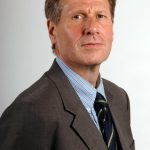
Tag: Kenny MacAskill

  • Kenny MacAskill – 2023 Speech on Health and Safety at Offshore Wind Farms

    Kenny MacAskill – 2023 Speech on Health and Safety at Offshore Wind Farms

    The speech made by Kenny MacAskill, the Alba MP for East Lothian, in the House of Commons on 6 March 2023.

    A just transition was proclaimed when COP26 was held in Glasgow in 2021. While that global jamboree may have underwhelmed in so many respects, it was at the forefront in one aspect, for as we transition from fossil fuels to renewables, not just countries but businesses, communities and workers were to be supported. Entire industries require to be run down or forsaken and decent jobs given up, even lifelong careers; however, financial support was to be given to assist nations in that journey. As for workers, assurances were made that in the transition to net zero, they would be protected and long-held rights would be assured—justice for workers, as well as for our planet.

    Those assurances were echoed outwith the global gathering, endorsed by the UK Government—they have since been championed by them in the green jobs taskforce—and chorused by the Scottish Government in their just transition commission. The rhetoric has been fairness and equity for those whose work would require to change. In Scotland and in the UK as a whole, the sector most affected is in the North sea. Though extraction of oil and gas is still required, we are on a journey to decarbonise and to transition to renewables; it is a transition, but it must be a just one. That sector has provided huge wealth and benefit to our society, and many who worked hard in those difficult and often dangerous conditions are now moving into renewables. Where once it was oil and gas, it is now becoming wind, wave and tidal—let us not forget that we recently had a Prime Minister who championed the UK as the Saudi Arabia of wind. It is a move that matters for our nations and will create wealth, as well as provide hope for our planet.

    However, recent events in the North sea have revealed that while there is a transition in the economy, there is no just transition for those working in that new and growing sector—primarily in the maritime sector, where minimum wage law does not apply consistently and immigration law is used as a crude instrument to profit from seafarer exploitation. That, though, is a debate for another day. Tonight, I want to raise the issue of employment rights, especially the effectiveness of health and safety legislation that is too easily avoided. The lack of consistent and effective offshore safety legislation has been brought to light by a recent tragedy. We must hope that from that sorrow there will come some solace, with the existing legislative gap being remedied.

    That legislative gap affects hundreds if not thousands of workers in the offshore energy supply chain, sailing out of not just existing offshore hubs such as Aberdeen or Dundee but Eyemouth, Montrose, Fraserburgh, Wick, Buckie, and other Scottish ports involved in delivering a successful offshore wind industry. It also affects those in England servicing energy installations in the North sea from Humberside, Tyneside, Teesside or East Anglia, along with those who will be embarking from Holyhead, Milford Haven, Mostyn and other ports in Wales. At present, the framework of statutory employment and seafarer rights on which that workforce will depend for their health and safety is not fit for purpose. A just transition was promised, and a just transition there must be for our maritime and offshore workers, as well as our planet.

    Let me detail the tragedy which brought those failures to light. On Sunday 22 January, a man went missing from Valaris 121, a mobile offshore drilling unit being towed to Dundee and located some 98 miles from Aberdeen. Police Scotland investigated and while satisfied that no criminal investigation was required, had concerns regarding wider health and safety issues, which they referred to the Health and Safety Executive. This is something that the HSE would not normally investigate. That it did so here is perhaps indicative of the concerns that the police had raised, for it is not the same as an industrial accident on land. Neither is it similar to that on an oil or gas rig on the UK continental shelf, or even on a fixed or floating wind turbine in the UK exclusive economic zone.

    HSE legislation has rightly been extended to cover workers’ rights, but it is incomplete and, as a result, workers are at greater risk. Mobile drilling units such as Valaris 121 are classified as a ship or a vessel when towed, meaning that they fall outwith HSE jurisdiction and within that of the Maritime and Coastguard Agency. Accordingly, while the HSE could and very likely would have carried out a full investigation had this incident been on land, a rig or even a turbine, it is restricted in what it can do in this instance. Likewise, a report that may have seen a fatal accident inquiry in Scotland or a coroner’s court hearing in England and Wales will not happen. Why is that? It is because it is not classified as a health and safety issue, giving the HSE authority. Instead, it is considered a maritime safety matter, and the MCA has authority and leads these investigations through the marine accident investigation branch.

    Jim Shannon (Strangford) (DUP)

    I commend the hon. Gentleman for bringing this matter forward. When it comes to health and safety, we are all concerned. Given the fact that the offshore energy created comes on land in Scotland and England, is there some role for the Health and Safety Executive, even though, as he has clearly outlined, the MCA takes precedence? If the energy is coming here and the workers work out of Scotland and England, is there not a responsibility?

    Kenny MacAskill

    As I will come on to say, the HSE does a good job onshore, on oil and gas and on turbines, but we require that its powers be extended. It is the agency. The MCA and the MAIB do a wonderful job in preserving life and ensuring wider maritime safety, but they are not qualified in industrial accidents; neither are employment laws within their remit. Fundamentally, and worsening that handicap in expertise, the MCA does not even have responsibility for the investigation, or jurisdiction over this incident. That is because it occurred outwith UK territorial waters, which extend to 12 miles. Beyond that distance, even when within the UK exclusive economic zone of 200 miles and on the UK continental shelf, incidents are subject to international maritime regulations, which prescribe that the investigating agency is to be from the vessel’s flag state. That is the country where the ship is registered.

    Valaris 121 is registered in Liberia, a flag state managed in Virginia, USA. Accordingly, we have the absurdity of responsibility for an investigation and jurisdiction in enforcement for an incident leading to the death of a UK worker resting not with police or Crown, HSE or MCA, or even with an organisation based in Edinburgh or London, but in the flag state of Liberia, a country located on another continent. That country is one of the world’s largest shipping registers and is categorised by the International Transport Workers Federation as a flag of convenience. That means that employment and safety standards are at the international minimum and ship owners pay no tax to the Liberian state. That alone is a concern, as questions are sometimes raised regarding registration, let alone supervision.

    Despite my asking numerous questions, the Government are unable to tell me how many vessels operating in the UK sector are foreign flagged. That should be a concern, as anecdotally it would seem that the vast majority are not registered under the red ensign, despite the Government’s obsession with wrapping things in the Union Jack.

    The Lord Advocate advised that a multi-agency meeting took place to discuss the incident; it involved representatives of the Maritime and Coastguard Agency, the Health and Safety Executive, Police Scotland, the Crown Office and Procurator Fiscal Service and the Republic of Liberia. They discussed who would have primacy in the various investigations. I do not know this, but I assume that it was a virtual meeting; likewise, I do not know who the representative from Liberia was, or what level of seniority they had. The Lord Advocate explained further that Police Scotland remains in charge of the missing person enquiry, though, sadly, the body may never be recovered.

    The Lord Advocate confirmed that the HSE remained the lead agency for the investigation in Scotland and the UK—but doing what, and enforcing which laws? Is that because there is no one here from Liberia to do it, and because the only folk nearby are from the HSE? Will we simply see a report filed and no further action taken? More importantly, how does this address the failure to extend health and safety legislation for the oil and gas sector to the new world of offshore wind, other renewable energies and nascent green technologies such as hydrogen, carbon capture and storage and liquefied natural gas?

    Leaving aside the good intentions of the Lord Advocate and the diligent work by the HSE, let us recall where jurisdiction and enforcement lie: with the flag state, Liberia. Let me again set out why that is—all this has been confirmed through repeated parliamentary answers from several Government Departments.

    Health and safety legislation applies to workers on land and operating in UK territorial waters, as the hon. Member for Strangford (Jim Shannon) mentioned; those territorial waters extend for 12 miles. The Health and Safety at Work etc. Act 1974 (Application outside Great Britain) Order 2013 applies to oil and gas, and even turbines, but that is insufficient for the new sector, as I shall detail. Valaris 121 is classified as a vessel or ship, which means that it is not subject to that legislation. As the tragedy happened outwith UK territorial waters, it is classified as a maritime incident—hence the involvement of the flag state, and the absurdity of Liberian jurisdiction. The issue of the absence of health and safety rights goes far wider than this incident or this vessel. It goes to the very heart of how the new sector to which we are transitioning operates.

    As disclosed in parliamentary answer 139284 from the Department for Work and Pensions, under the 2013 order, health and safety protection applies to those operating in the offshore wind sector when on a “structure or machine”; the provisions apply to

    “structures for the production of energy from wind”,

    and to

    “the operation of a cable for transmitting electricity from an energy structure.”

    All well, one might think, but no; the legislation goes on to specifically state:

    “Ships are not defined as energy structures for the purposes of this legislation.”

    Therein lies the injustice of this North sea tragedy. It also shows that current provisions are incapable of providing the protections required for workers in this new sector. There are two clear reasons for that. First, few people work on a turbine; it is accessing, maintaining and supporting turbines that matters. Workers do not live on them, as they do on oil and gas rigs—or at least not yet, and if that changed, living accommodation would likely be confined to flotels, special operation vessels and other entirely separate solutions. If protection is provided only when people are physically working on the turbine, that totally ignores the nature of both the job and the sector.

    Secondly, Valaris is classified as a vessel or ship, but she is not what most imagine a vessel or ship to be, as she is designed as a working platform. Some workers will be drilling, and others will be working while attached to a turbine. If they are physically attached to the turbine, then they are covered, but when they are travelling to the turbine or back, or even if they are proximate to it but not physically attached to it—that will likely be the bulk of the work—they are not.

    The current legislation fails to take account of the operation of and working practices in offshore wind. It is an expanding and developing sector, which means that people are being denied cover in aspects of the work that lack protections. The danger is that this tragedy might be replicated, and oft times more, given the expansion of the sector. Health and safety protections that apply for oil and gas must be available for offshore wind and other renewables.

    I have had discussions with Offshore Energies UK, which takes safety extremely seriously, as the House would expect, and it has indicated an acceptance of the gap and a willingness to assist in resolving the situation. To address it, the definition of energy structures under the 2013 order needs to be extended, and legislation to protect seafarers operating in the offshore wind sector needs to be enacted, but so far the DWP has failed to show any interest. Will the Minister agree to meet me and worker representatives to discuss this? There must be a just transition for our planet, but there must also be a just transition for workers, and this most certainly is not a just transition in the offshore wind sector.

  • Kenny MacAskill – 2022 Speech on Prepayment Meters

    Kenny MacAskill – 2022 Speech on Prepayment Meters

    The speech made by Kenny MacAskill, the Alba MP for East Lothian, in the House of Commons on 15 December 2022.

    I congratulate the hon. Member for Glasgow North East (Anne McLaughlin) and others who have contributed to the debate. I agree entirely with their comments and sentiments. I want to comment on two aspects: “self-disconnection” and prepayment meters.

    I am a child of the ’60s. Families of that era will all remember, because they were universal, the strictures to switch off lights and the directions to ensure that every appliance was switched off unless, like a fridge, it required to remain on. “Self-disconnection” was just never mentioned; that has arisen only in the energy crisis. Let us be clear: it is a euphemism that masks something that is frankly quite appalling.

    We have had other such euphemisms. The phrase “legitimate targets” has been used when civilians, civil servants, part-time police officers—usually farmers doing it in their spare time—or even customs officers have been murdered by terrorists. Describing them as “legitimate targets” takes away the horror of it. We see it even from Governments: we have had illegal wars with “collateral damage”. No, sorry: it was not collateral damage. It was the murder of families going to prayer, to a wedding or wherever else.

    Now we have “self-disconnection”. It sounds very benign: who could possibly disagree with self-disconnection? Where is the harm in self-disconnection, if somebody chooses to manage their budget in that way? What we are really talking about when we use the phraseology of “self-disconnection” is the financial circumstances imposed on people by the cost of living crisis and the energy price rises, which are all within the control and the domain of a Government who are causing hardship—albeit that people are doing it themselves because they have literally no alternative. We have to move on from “self-disconnection”. This is a Government choice that has to be changed and has to be addressed.

    Let me move on to prepayment meters. The cold snap that we are living through is affecting everybody. There will not be anybody who possesses a smart meter who will not be looking at it with some surprise. Many will be looking with horror, and some with abject misery, at just what their bill shows as the meter rises before their very eyes.

    Let us be clear. It is not simply a question of heating, which is fundamental during the cold snap at the moment, nor is it simply about the question that is always posed about the insidious choice that people have between heating and eating. It is also about access to power. If someone is on electricity and they have to self-disconnect, as the euphemism has it, that will also affect their ability to have the fridge on. Maintaining a fridge allows people to buy food more cheaply and keep it for longer, which affects quality of life. People who want to wash their clothes—the person going to their employment who wants to look smart, the mother who wants to ensure that her children are not picked on at school—are not able to turn on their washing machine, because anybody with a smart meter knows how fast it ratchets up when they put the washing machine on.

    It goes beyond even that. Access to power provides people with access to a phone or an iPad to allow their child to improve themselves. People require access to a phone to obtain employment; on some occasions, perversely, they may even require it to top up their prepayment meter. If they cannot even get access to a phone, how can they deal with that?

    As other hon. Members have mentioned, access to power also fundamentally affects life. There are people who require power for their health. The fundamental concern is dialysis: the numbers are few, but there should be no basis on which anybody with a health requirement should be required to have a prepayment meter. I know that word has been put about that that is not normally what happens, but we all know from the charities that it does. That has to change.

    What are the numbers that we are dealing with? We are not talking about a handful of individuals. In Scotland, there are 500,000 prepayment meters, which equates to almost a fifth of our people. The proportion is slightly less in the United Kingdom as a whole: it is 4 million there. We are not talking about the odd person in the odd street. We are talking about whole areas that are certainly in multiple deprivation and are being forced into this. That has to be dealt with.

    Smart meters should be liberated. Technology is meant to advance our society. In many instances, it has done so; access to the internet has been beneficial, even though social media has a downside, as we all know. But 13% of smart meters are now on a prepayment tariff. That is simply unacceptable: it is bringing in a wrong, and it is perpetuating a wrong. Technology that should simplify the system and make it fairer is making it worse. No smart meter should be going on to a prepayment tariff.

    I agree with the hon. Member for Glasgow North (Patrick Grady) that the issue is not prepayment meters per se, but the higher standing charges and higher tariff that apply. An argument could be made that there is a need for prepayment meters. Private landlords really do want them, and I can understand that in those circumstances they are acceptable. Some public landlords would also prefer them; that, in itself, is not an issue. Some people would even prefer them so that they can manage their own budget; I might advise or counsel them against that, but it is an option that they should be able to take if they so wish, after hearing such advice. What is entirely unacceptable is the higher standing charges and higher tariff that apply. It is simply perverse that those who have least and are most vulnerable, which invariably includes people on prepayment meters, should pay more. That must end.

    I have spoken to the major utility companies. Previously, with prepayment meters, they used to bung everything to Utilita, but now that we are moving on to smart meters it is all going much wider across the board. The companies accept that it would be perfectly reasonable and easily possible, with the technology we have, to change everybody to the same tariff. This is a separate issue for another day, but actually we should have a social tariff of the kind that applies in much of Europe and should apply to the poorest and most vulnerable here. There certainly should be no increased tariff for those with prepayment meters. It can be done with the current technology. At most, it would mean a very modest increase for the rest of us on credit. That is the maximum issue that would be faced by the companies that provide it. If that has to be, so be it. I am my brother’s keeper as we come to the festive period. We have a taxation system in which those who have most pay most, and if it means a very minor increase for those on credit, so be it. There are other ways that we can remedy it, such as through windfall taxes. That is what has to be done.

    This euphemism of “self-disconnection” has to be killed once and for all. That is not a phrase we should accept. It is enforced austerity, poverty, misery and sometimes even death. We have to ensure that higher standing charges and higher tariffs are ended for those on prepayment meters. It can be done—it is within the scope of Ofgem. I have asked Ofgem, and it says that it is a creature of statute; it can only act on the basis of a ministerial direction. How do we end the scandal of a higher standing charge and a higher prepayment tariff? The Minister writes a letter now to Ofgem and says, “Change it.” Ofgem would then invoke it, and this would be solved. I urge the Minister to do that.

  • Kenny MacAskill – 2022 Speech on Scotland’s Future

    Kenny MacAskill – 2022 Speech on Scotland’s Future

    The speech made by Kenny MacAskill, the Alba MP for East Lothian, in the House of Commons on 14 December 2022.

    I will happily support the motion. All efforts to ensure Scottish sovereignty and Scotland’s independence deserve to be backed, but I fear that the likelihood of seeking salvation through Westminster’s procedures is as likely to be as forlorn as the debacle in the United Kingdom Supreme Court. The reference there, especially without even the authority of a Bill having been supported by the Scottish Parliament, was supreme folly, compounded by the advocacy of a Lord Advocate who had all the passion and appetite for it of someone eating a bowl of cold sick.

    John Nicolson (Ochil and South Perthshire) (SNP)

    Has the hon. Gentleman noticed that since the supreme folly—as he describes it—of going to the Supreme Court, the polls have rocketed in the direction of pro-independence support across Scotland? If that is failure, I do not know what success looks like.

    Kenny MacAskill

    I very much welcome the increase in the polls, as I will come to, but we have to find a route and a method to get there. So far, the courts have ruled that out, and indeed, it looks like the political options—certainly in this place—are limited.

    The overreach in the dictum in the Supreme Court judgment that Scotland was neither a colony nor had resorted to violence was both absurd and perverse, which is why a route for Scottish independence needs set out, but that route must neither be subject to a UK court nor be beholden to a UK Parliament. Legally, historically and politically, the people of Scotland are sovereign, not a UK court or a UK Parliament. That has been part of our constitutional history, as other Members have mentioned: it was set out to me as a law student by Lord Justice Cooper’s judgment, which was passed on. It was the accepted wisdom—politically, it was the accepted position of even Unionist opponents of independence—that the Scottish people could achieve independence if they voted for it, but that is being denied.

    So what is to be done when—not if—this procedural wheeze fails to deliver independence, as the procedural wheeze of referring the matter to the UK Supreme Court failed to deliver the referendum? It is about taking back sovereignty to the Scottish people. On Saturday, as well as attending a political meeting in the afternoon, I went to a concert of the Proclaimers in Edinburgh on the Saturday night. The crowd fair enjoyed the song “Cap in Hand”:

    “We fight, when they ask us

    We boast, then we cower

    We beg for a piece of what’s already ours”.

    As support for independence rises, as the thermometers and temperatures plummet, and as energy costs soar in energy-rich Scotland and people go hungry and go cold, that absurdity must end. Now is the time Mr Nicolson might wish to be aware of: no more cap in hand, so what is to be done?

    First of all, we can endorse our historical claim of right. As Canon Kenyon Wright said—I paraphrase —“Some may say no, but we are the people, and we say yes.” I hope SNP Members will sign my colleague Neale Hanvey’s St Andrew’s day declaration, early-day motion 633.

    Mr Deputy Speaker (Mr Nigel Evans)

    Order. I gently remind the hon. Gentleman that there should be no mention of Members’ Christian names or surnames. Please refer to them by their constituencies.

    Kenny MacAskill

    My apologies, Mr Deputy Speaker.

    The independence convention requires to be supported. It is necessary to bring together the democratically elected representatives of Scotland, our MPs and MSPs, for two reasons: first, as a rebuttal—it is not the UK Supreme Court that is sovereign, but the democratically elected representatives of the people of Scotland—and secondly, to drive home the point when this motion fails and is defeated tonight that it is not this Parliament, but the elected representatives of the people of Scotland who are the democratically elected voice of the people of Scotland. I hope Members on the SNP Benches will support the call for an independence convention; after all, it was a call made and supported by the First Minister in February 2020. We are now approaching three years on, and it is time that convention was delivered.

    Thirdly, we should support the call for a plebiscite election, one that could be triggered next October and deliver us our referendum—the no ifs, no buts referendum that we were promised by Members on the SNP Benches. That can be achieved by collapsing the Scottish Parliament; a member of the SNP has already set out a way there. That could be done, and could deliver the referendum that the people of Scotland were promised would happen in October of next year by the First Minister and others. That must be done.

    Finally, support must be given to all demonstrations, all international legal actions, and all peaceful and democratic actions to drive forward the position that the people of Scotland are not prepared to accept diktats supinely, either from a UK Supreme Court or from a Tory Government unelected by the people of Scotland since 1955. The need is great; the time is now. I will support the motion, but this question needs to be answered by SNP Members when they are defeated: when will they actually stand up and take powers back for the people of Scotland, and ensure that it is Scottish sovereignty and Scottish democracy that rules, not the diktat of a Tory Government further impoverishing the people of Scotland?

  • Kenny MacAskill – 2022 Speech on Benefit Sanctions

    Kenny MacAskill – 2022 Speech on Benefit Sanctions

    The speech made by Kenny MacAskill, the Alba MP for East Lothian, in Westminster Hall, the House of Commons, on 13 December 2022.

    I congratulate the hon. Member for Glasgow South West (Chris Stephens) on introducing this important issue that it is very appropriate to debate at this time. I will start by saying what this debate is not about. It is not about benefit fraud, in case the Daily Mail or others thought it was. That is rare—far rarer than tax avoidance—but it is dealt with by criminal prosecution, and rightly so because it is about public funds.

    Equally, I do not believe that anyone is suggesting that there should be no sanctions. What is required is an appropriate form of sanctions in every walk of life, whether in a social club or a political party. If someone transgresses, there have to be repercussions. If we breach the rules here, we can rightly face sanctions. I am a former chair of the judicial panel of the Scottish Football Association; even in sport, if someone breaks the laws through misconduct on or off the park, they will rightly face some challenge. The issue is that the extent of it is far too great, certainly at a time of huge austerity.

    More importantly, it is about the reasonableness and proportionality of sanctions. Players do not get banned sine die for two minor yellow cards in a football match, yet people are facing something that would almost bring them to the end of their life. Equally, it is about the circumstances in which these sanctions are being imposed. There has to be some understanding of the individual we are dealing with and the circumstances in which they are living, as opposed to having draconian measures.

    It is well over 40 years since I graduated in law. I did welfare law as part of my law degree. At that stage, it was national insurance and supplementary benefit. Even then, when supplementary benefit was brought in in the Beveridge plan, it was set at a level that was the very minimum upon which someone could live. But our circumstances have changed since then. Not simply have we gone through mass unemployment; we have moved towards a gig economy and people in vulnerable occupations. We have moved away from the national insurance supplementary benefit scheme to universal credit. That has caused challenges and difficulties, but it seems that the moral compass has been lost. We have lost any element of compassion. Looking back, sanctions did apply to national insurance and supplementary benefit, but they were proportional, reasonable and certainly not to the extent that we have today.

    Three issues follow from that. As has been mentioned by the hon. Member for Glasgow South West and others, punishment is being exacted upon those who work in the Department for Work and Pensions. They are threatened with punishment, and potentially with dismissal, if they do not get their number of sanctions up. That is simply unacceptable. This should be not a target-driven system, but a welfare state and a welfare system. It should be about the individual and the circumstances, not any spurious targets.

    We know from PCS and other whistleblowers that many people worry that if they do not enforce a sanction against an individual, they will face consequences. That is simply unacceptable. That is not simply from the PCS; we know it from welfare rights officers. Any welfare rights officer in any constituency will tell a similar tale. It even goes beyond that. We see it in fiction on television and cinema screens. It is a few years now since “I, Daniel Blake” came out—an award-winning movie that highlighted the difficulties and, indeed, tragedy of the sanctions scheme. It is a few years past now, but the circumstances remain. I am fortunate to have been a friend of that film’s writer for over 40 years, and I know that although the movie was fictional, it was based on fact. As we would meet and discuss, he would tell me about the meetings he had had with people at food banks, trade union representatives and welfare representatives. He told me stories, such as that of the woman who had a miscarriage, who was unable to get to her appointment with the DWP and who was sanctioned, or the young father who rushed to the hospital to be at the birth of his child, whose sister phoned the DWP to say, “He cannot come; he’s gone to see the birth of his child. Surely that will be okay.” No, it wasn’t, because when he next turned up, he found himself sanctioned.

    Those stories are not fiction: they are fact, and that is simply unacceptable. That is why it was not Paul Laverty but Ken Loach, who filmed the movie, who described our benefits system as “institutionalised cruelty”. The sanctions system is institutionalised cruelty, because we are taking the most vulnerable people—those who have the least income at a time of inclement weather, rising costs and enforced austerity, when work can be hard to find as unemployment figures are going up—and treating them harshly.

    It is not even as if it works. As other Members have mentioned, many of these people, if not most of them, have significant challenges, whether with mental health, educational difficulties, or—as shown in “I, Daniel Blake”—simply being able to access IT. In some instances, it can be the inability to access the equipment; in other instances, it can be a generational gap. I am challenged by IT systems, and people of my age who do not have access to those systems will be even more challenged. Sanctions do not help those people; what they require is more of a mentoring scheme.

    In summary, what we have to do and what the Minister must try to move towards is a system that by all means contains sanctions for those who fundamentally breach it, because that is unacceptable to those who pay their taxes and abide by the law, but where an individual is challenged, they have to be supported. Where an individual has reasonable, proportionate circumstances and an explanation, they most certainly should not be punished, and we most certainly should not see people being treated harshly as a result of a tick-box system to get the figures up. That is fundamentally wrong. It would not apply in most private businesses, and it certainly should not apply in a welfare state.

  • Kenny MacAskill – 2022 Speech on Scottish Independence and the Scottish Economy

    Kenny MacAskill – 2022 Speech on Scottish Independence and the Scottish Economy

    The speech made by Kenny MacAskill, the Alba MP for East Lothian, in the House of Commons on 2 November 2022.

    It is a pleasure to speak in this debate, which covers the two crisis issues of our time: the collapse of the British economy and the kick-on effects on our society, and the vital need for Scottish independence. That is encapsulated in the perversity that Scotland is energy rich, yet Scots will be fuel poor this winter. The economy is faltering as a result of the Truss experiment, but the rot started before that. It started with a hard Brexit forced upon Scotland, and the situation has worsened and the pace has accelerated.

    As a consequence, we have another perversity in that, as we have been taking part in this debate in this Chamber, the Deputy First Minister of Scotland has been speaking in Holyrood imposing swingeing public service cuts that will have an impact on Scotland’s poorest. What a perversity that that has happened. Of course, the responsibility rests with the budgetary situation in the UK and the Scottish Government’s limited ability to react, but it is why we should be moving fast for independence, and that is why we have to ask, “What has been done?”

    Mandates have come and mandates have gone, just as mañana follows mañana. We are now told there is to be a referendum next year, just as I was told there was going to be a referendum next year ever since I first went into the SNP group in December 2019. Maybe there will be a referendum next year, but I do not see a great deal of preparation by the SNP or the Scottish Government to ensure that it will actually take place or that we are going to win it. That takes away from the need for Scotland to be sovereign. All the preparation we have had has been a few papers.

    I will not go further on that, but the reference to the Supreme Court, far from being a wizard wheeze by the Scottish Lord Advocate, is frankly a counsel of despair. We will see what the outcome of that will be but, at the end of the day, it is the right of the Scottish people to choose their own destiny, and that cannot be usurped either by a UK Supreme Court or by a British Parliament.

    The situation has changed as a result of Brexit. We did lose the referendum in 2014, but we came remarkably close. The UK had to call in favours from all and sundry, including President Obama, and just about did it, but we can do it the next time. The risk has also changed, because in 2014 the risk was that we would lose our EU membership. The risk was that people would lose their pension or the NHS that is so dear to us. The risk was having an unstable currency. The risk was not being part of a British force for good. But the situation is that we have had Brexit and been ripped out of the EU, sterling is plummeting, the NHS and our pensions are being privatised and undermined, and Britain, far from being a force for good, is an international laughing stock. What is so great about being British when people can see the turbines turning from their home but will not be able to heat their house this winter?

    What is being done? Where is the action? That question is why I have to move on to what needs to be done. First, the Bill for a Scottish independence referendum should be launched in the Scottish Parliament. If the Lord Advocate is not prepared to do it, get a Minister or another member of the SNP to do it. Launch it forthwith, so that when it comes before the Supreme Court for a decision, it will not be a simple referral from the Scottish Government, but have standing behind it the sovereign will of the Scottish people, decided by their Parliament. The Scottish National party still has the time to get out of the fire and ensure that Holyrood passes that Bill.

    Secondly, let us call a Scottish constitutional convention. At the end of the day, the people of Scotland are sovereign. As we have heard from speaker after speaker, especially on the SNP Benches, they should be sovereign through the Government that they elect, not one that they have not elected since 1955. Why do we need our Scottish countrymen? Let us look around. How many people do we have on the Tory Benches? Five. How many are sitting on the Labour Benches? Four. Will that make any difference? What matters is that the people of Scotland’s elected representatives should decide.

    In February 2020, the First Minister of Scotland said that she would call a constitutional convention. Let us call that convention and make it clear that it is the Scottish people, through their democratically elected Scottish representatives whether in this Chamber or other Chambers or as senior members of local government—

    Mike Kane

    Will the hon. Gentleman give way?

    Kenny MacAskill

    No, I am running out time. I am the only speaker from my party. The hon. Member’s party has undermined the cause of independence and sided with the Tories, which is why it paid the electoral price.

    As I was saying, we need a constitutional convention. We need the First Minister to lead from the front and get active in demonstrations in support of Scottish democratic sovereignty and the legitimate right of our people. We need to pursue this through not just the UK Supreme Court but international courts and aspects. This is a position on which we have to make a stand.

    The Scots will struggle this winter. That an energy-rich Scotland will probably see people dying as a result of a fuel crisis is simply perverse. We have had enough mandates; it is time to have our choice, as is our right. That has to be delivered through a referendum. If the Government will not give us a referendum, another route needs to be chosen. The Scottish people will not get any satisfaction from the Government or the Opposition in this Chamber, which is why we have to make sure that there is a convention and that the democratic right of the Scottish people prevails.

  • Kenny MacAskill – 2022 Speech on Energy Price Capping

    Kenny MacAskill – 2022 Speech on Energy Price Capping

    The speech made by Kenny MacAskill, the Alba MP for East Lothian, in the House of Commons on 8 September 2022.

    Although any help is welcome, this package is insufficient by far for the poor and generous in the extreme for the rich. The perversity of having an energy-rich Scotland and fuel-poor Scots remains, and it is clear that not only will people grow cold this winter but some may well die. There should have been a full freeze, and it should have been funded through a windfall tax. There should have been action on VAT, and there are other omissions that have not been addressed and where a lack of clarity remains. We need to change the dysfunctional energy market, not just accelerate nuclear or fracking, and address the iniquities that still exist and that have not been touched, or at least made clear.

    First, the injustice of prepayment meters remains: the poorest and most deprived, who are often most dependent on power and energy, are paying higher standing charges and higher tariffs. That has not been touched, while support has been given to the very wealthy, and it must end. It is easily done through a direction to Ofgem, and we all know the energy companies are capable of delivering it.

    Similarly, although there is a welcome announcement that some action will be taken on unregulated fuels, a discretionary fund would be inadequate. That is especially the case in the north of Scotland, but it is also the case in my constituency. People who are off the gas grid depend on heating oil, biomass and other fuels. Those fuels should not only be covered by a fund that people might be able to dip into; the fuels should be regulated. The Secretary of State should ensure action is taken, because people in the coldest areas are the ones who will suffer.

    Our dysfunctional electricity system remains. It is tied to the price of gas, yet 97% of Scotland’s domestic electricity supply is produced from renewables. We are paying sky-high prices that depend on foreign gas prices, as opposed to the price of the renewables on our doorstep and of which we have a surfeit. That is perverse, especially when, as others have said, Scotland is self-sufficient in gas.

    This package simply rewards the rich; it does not address the problems of the poor. It is inadequate, and enough is enough. This is not enough to end the crisis, nor is it enough to end the action that people will take.

  • Kenny MacAskill – 2022 Speech on the Cost of Living Crisis

    Kenny MacAskill – 2022 Speech on the Cost of Living Crisis

    The speech made by Kenny MacAskill, the Alba MP for East Lothian, in the House of Commons on 17 May 2022.

    All speeches, especially those outlining a programme for government, take place within a context and against a backdrop. I am talking about not just the rising cost of living, but the utter perversity of Scotland having a land that is energy rich while so many Scots are fuel-poor. Oil and gas, which in 2014 were said to be literally valueless and would soon be gone, are now worth a fortune and the UK sees them being exploited for decades to come. However, it extends beyond that, because we have renewables: we have not simply been blessed with hydro and with onshore wind, but we now have offshore wind coming—we are the Saudi Arabia of wind, with 25% of Europe’s resource being in Scotland.

    Where are the benefits to our community? Where is our version of the oil fund that Norway has, which we can only look at and lament? Where is the benefit from offshore wind, when the jobs are going abroad and the revenue is going south? There is a perversity in my constituency: people can see the energy wealth, yet they are unable to heat their own homes.

    This is not all the fault of Ukraine; of course it is a factor, but there are many more, including the profits being made. That is why I support a windfall tax, because there has certainly been a windfall for many of the corporate executives, while we suffer the absurdity and indignity of one third, and rising, of Scots now facing fuel poverty—it is more than half in the islands and in areas of deprivation.

    Let us be clear that we are not talking about the invidious choice between heating and eating, or the appalling euphemism “self-disconnection”. It is not self-disconnection; it is disconnection forced by political decision making and political choice. Those people have no alternative. It is not an accident, but a political decision.

    Let us also remember that it is not just a choice between heating and eating, because it goes beyond that. It is the person who wants to charge up and power their phone—we need a phone to live these days—because they want to be contactable for employment. It is the mother who wants to wash the clothes so her kids can go smart to school, even if the clothes had to be bought in a charity shop. It is the child who has been given an iPad because he comes from a deprived area and they want to try to level up, and his mum cannot put the power on. It is the person on dialysis who is sitting having to keep themselves alive and making the choice, if they keep their power on, about what they will not spend upon instead.

    That is the situation. Yes, there are things that have to be done that cost money, but there are other things that are remarkably cheap. What about unregulated fuel? We have seen the costs of electricity and gas rise, but what about liquefied petroleum gas, heating oil and biomass? Some 7% of Scots are on unregulated fuel. Why can that not be regulated and at least capped when a cap is imposed? Everybody knows the costs of heating oil have gone up far more than the costs of electricity and gas, and those people have been left behind.

    What about prepay meters? We have the ignominy in our country that those who have the least pay the most. Those who are dependent upon prepay meters are not simply those who are there by choice; many of them have no alternative because their private landlord insists upon it. Yet they pay a higher tariff and higher standing charges, and there is no reason for that. That is not a technical decision forced by the complexity of metering. It comes about because the Government will not direct Ofgem to enforce a change. The companies could change it.

    Equally, as my friend the hon. Member for Ceredigion (Ben Lake) said, it is time now for a social tariff and a disability tariff. Other countries do that—Belgium does it, and Portugal and Spain have actions so that those who have least are protected. That means that those who have more, such as myself and other Members here, might have to pay a slightly higher rate, but indeed that can be done, as well as having money coming in from a windfall tax. This is not a situation we find ourselves in by accident. It is a political decision and it has to change.

  • Kenny MacAskill – 2020 Speech on the Reading Terrorist Attack

    Kenny MacAskill – 2020 Speech on the Reading Terrorist Attack

    Below is the text of the speech made by Kenny MacAskill, the SNP MP for East Lothian, in the House of Commons on 22 June 2020.

    On behalf of my party, I wish to start by expressing our sorrow at the lives that have tragically been lost and extending our deepest sympathies to the families and friends, and to those who are currently ill and recovering in hospital. It is never easy to lose a loved one, but especially not in these circumstances or in these times. I echo the Secretary of State’s comments regarding our gratitude to those who served and showed great courage, and we will continue to prosecute and investigate.

    First, let me call for a calm response—to be fair, the Secretary of State has been clear on this. Sadly, we have had previous terrorist atrocities; it is a product of our time. We do not expect and should not have to live with it, but we have to recognise that they do occur and that we have to show calm judgment, not rush to an analysis or make a decision without knowing the full facts. Obviously, that has been commented on by you, Mr Speaker, as regards this being sub judice. There may very well be mental health or other aspects that we do not know about, and we await the outcome of an investigation. However, what we can be clear about—I seek the Secretary of State’s reassurance that we will make this clear—is that terrorist acts are not perpetrated by communities, but are carried out by individuals. They do not represent any faith, constituency or cause other than their own misguided, malevolent and wicked views, and we need to take that into account. We also need to remember that although we have suffered not just this recent tragedy but all too recent ones, including those involving Members very close to this House, what some people view as the epicentre of the areas that perpetrate terrorism suffer far more from it than we have done in our entire history—we need to take that account.

    On that issue, I seek reassurance from the Secretary of State that steps will be taken to ensure that reassurance and protection are given to minority communities, because I know from my experience in Scotland that there can be those who rush to judgment and seek to apportion blame, and will, through misguided views, or indeed their prejudice and dogma, seek to carry out attacks against minority groups. Therefore, I ask that steps on that, which are no doubt probably ongoing, are carried out. Equally, I seek reassurance that as well as contest, we will seek to prevent: we need not only to protect our minority communities, but to deal with issues that are bubbling under the surface there, so as well as contesting terrorism and rightly confronting it, we need to protect communities and address injustice, wherever it is.

  • Kenny MacAskill – 2020 Speech on Constitutional Law

    Kenny MacAskill – 2020 Speech on Constitutional Law

    Below is the text of the speech made by Kenny MacAskill, the SNP MP for East Lothian, in the House of Commons on 19 May 2020.

    The right hon. Member for Dumfriesshire, Clydesdale and Tweeddale (David Mundell) has pre-empted some of the comments that I was going to make. This legislation does go back to my time in office in a different Chamber—indeed, in a different lifetime. It has taken a considerable period of time for it to come through, and I do not know the reason for that. The right hon. Member was correct to say that the situation is likewise with the victim surcharge. However, I think we all know that in dealing with subordinate legislation—with very technical not only cross-border, but multi-departmental legislation—the devil is in the detail.

    I have no doubt that Ministers, especially those involved in drafting the legislation, would have found it very complex, as they would have had to engage across multiple jurisdictions and agencies, including the Department for Work and Pensions, never mind the police authorities and everything else. But we are where we are, and it is to be welcomed. It is rather regrettable that this matter should have been slightly politicised by the right hon. Member, as it should be welcomed and perhaps even considered south of the border.​

    It may be appropriate for me to mention the genesis of this legislation. The Minister pointed out some of the dreadful treatment experienced by officers during this time of crisis. As others have said, that should not be a matter of routine. It can never be accepted that it is just part of the job. No one’s job—a prison officer, a police officer, somebody working in the health service, or someone working in any other public or private sector organisation—should mean that they routinely have to put up with abuse and violence. It is simply unacceptable.

    That said, we are aware that the police are required to go to incidents and deal with people who can be threatening and violent, and on occasions they do suffer injuries. Ultimately, it has to be for the court to decide on the sentence to impose, and it is appropriate that it has as many options available to it as possible. It can deal with such behaviour with imprisonment, which will often be the case for very serious offences, but it can also issue a fine or compensation order.

    There is one other area that comes to mind, and that is the ability for police officers to receive treatment. The real genesis of this legislation came from a visit to the police treatment centre that is supported and sustained by individual officers. I believe that almost every officer in Scotland contributes voluntarily from their income to the upholding of the centre. There is one in Auchterarder, of which many Scottish Members may be aware. I understand that there is also one south of the border in Harrogate. Police officers can go to these centres to get treatment: to get them fit and well, to try to get them back to work, and to get their life on as even a course as possible. As I said, the centre is paid for by police contributions, and the cost is not insignificant. I do not think that a huge amount of public funds—if any—are put into it, because it is run on a charitable basis.

    The service at the centre is professional. There are treatments available that may be available in some towns or communities, but certainly not to the same level of expertise. Indeed, hearing about my visit to the centre would put the Minister in mind of a football team, because it has professional support staff such as osteopaths and other experts, and it has its own swimming pool. Officers come to the centre in Scotland not just from Scotland but from south of the border. It is sometimes easier for officers from south of the border to get taken there or to access it, depending on where they are based in the north of England.

    In summary, that is why we are here. This measure is not meant to take away from the right of a court to impose a prison sentence, a fine or a compensation order, but it is an opportunity for the court to impose a restitution order that would see some benefit. It would not simply—I do not mean to be disparaging in any way—be a penalty fine that might go into the public coffers, but one which can tangibly be put to use for the police service, and that can go to the benefit of the individual officer and of those more widely, because it will be used, in the main, to support the police treatment centres north of the border for officers from Scotland or elsewhere.

    As I said, although it has taken a long time, we welcome this measure. It should not be routine, but officers who are injured are entitled to receive the best possible service. They cannot and should not always have to do so by going to their own private physiotherapist or whatever; they should be able to obtain it as part of ​the service. They currently do so through their pay packet. This measure can provide some alleviation of that and further support for it. I simply ask the Minister to consider whether, as well as ensuring that we have the relevant restitution order, other support can come from Governments north and, indeed, south of the border to support not just the institution in Auchterarder but the one in Harrogate, Yorkshire.

  • Kenny MacAskill – 2020 Maiden Speech in the House of Commons

    Below is the text of the maiden speech made by Kenny MacAskill, the SNP MP for East Lothian, in the House of Commons on 15 January 2020.

    As is customary—and, I believe, correct—I will start with a tribute to my predecessor. Martin Whitfield and I disagreed fundamentally on Scotland’s constitutional situation, but in many other aspects we were at one. I am conscious of the fact that he was tenacious in opposing Brexit, and equally assiduous in representing his constituency, so I know the standards that he has set. He will continue to reside in the constituency, where I will no doubt bump into him.​
    It was the same for those who went before him. My own colleague George Kerevan was equally assiduous. Prior to that, the constituency was represented by Fiona O’Donnell, who continues to serve the county as a Labour councillor in East Lothian. It goes all the way back to the late, great John P. Mackintosh, who set the standards and template that everybody who has represented East Lothian since has sought to aspire to.

    As my colleague George Kerevan pointed out, I have a link to John P. Mackintosh because an assiduous campaigner for him—indeed, someone who has sought to keep his memory alive—is Arthur Greenan, who was also a tenacious campaigner for George Kerevan and an equally vibrant one for me, despite his age. Arthur is one of those to have made the political journey from being a Labour activist and voter to becoming an SNP activist and supporter. It is a journey made by many, and one that I tracked myself when I was privileged to write a biography of arguably Scotland’s greatest ever MP who never was, the late, great Jimmy Reid.

    My constituency has endured changes, but it has stayed the same in many ways. It continues to roll from the Lammermuir hills to the banks of the Forth. It contains fertile land, bonny beaches and, indeed, fine folk. Some industries, such as mining, have gone. Other industries, such as renewables, have come—which is why it is important and appropriate that I am making this speech at this juncture in the debate on the Queen’s Speech. We build around those new industries, but they are still based around the vibrant towns and villages of both the historic county and the wider modern constituency. East Lothian’s people remain undiminished in their grit, determination and decency, and indeed—as a new arrival, I know this—in their warm and welcoming nature, as thousands seek to move to the expanding county of East Lothian.

    There are historic links to my constituency in this institution, and not just through those who have been elected Members. When I first arrived here last month, I came across a statue of Oliver Cromwell, who is well known in my constituency, in the town of Dunbar. He is not viewed as the Lord Protector; far from it. He may not have been as brutal there as he was at Drogheda, but people still suffered at the Battle of Dunbar in 1650, when his English army killed thousands of Scottish soldiers and captured thousands more. Those who were captured were marched south, with many dying en route. They were taken to Durham cathedral, where thankfully a memorial now recognises what they suffered. Many died in incarceration there. Of those who were released thereafter, some were given by the Lord Protector to the army of France. Others were sent to do drainage work in the area of the Wash in southern England. Others still were transported to Barbados and to the Americas.

    But some good did come from this, because in 1657, seven years after serving their penal servitude, some of those Scottish soldiers banded together to form the Scots Charitable Society of what is now Boston, which is argued to be the one of the oldest such charitable organisations not just in the United States but in the western hemisphere. They keep contacts with the community in Dunbar, as indeed did the Scottish Prisoners of War Society—because such an organisation does exist, with many American members, and they had a re-enactment of the battle last year.​
    You can move along the A1 as well as you can move along the corridors here. Moving along the A1, after some 50 miles I come to the small town of Tranent, and equally moving along the corridors here, I came upon a recognition of the Earl of Liverpool—there is, I think, both a bust and a painting of him. The Earl of Liverpool is the third-longest-serving Prime Minister, but in the town of Tranent he is better recalled because he was a British military commander when the massacre of Tranent took place in 1797. Twelve men, women and children were slain because they opposed the imposition of conscription. He was then the military commander for east central Scotland. He was not responsible for the order to fire, but he was culpable, and indeed took the blame, according to the Lord Advocate—but he obviously went on to greater things and became Prime Minister in 1820.

    The Earl of Liverpool’s links with Scotland do not end there, because this year is not just the 700th anniversary of the Declaration of Arbroath, when my country’s nationhood was enshrined by those who cherish it and have it at its heart, but the year in which we will be celebrating the bicentenary—the 200th anniversary—of the 1820 uprising, or insurrection, when working people in Scotland campaigned for and demanded the universal franchise. Indeed, having seen what had happened just the year before at Peterloo, they pledged that they would not just take it lying down. We will remember them.

    The Earl of Liverpool is remembered because he signed the death warrant for John Baird, Andrew Hardie and James Wilson. He had them hanged and then beheaded—the last time such punishment was used in the United Kingdom. We will remember them in April because they fought for the universal franchise—for the right of working people, as hon. Members mentioned earlier, to have that vote. Nineteen others, including a child, were transported to Botany Bay, and only two made it home to their native land.

    Centuries on, of course, we have the universal franchise: not just working men but working women have the right to vote. It is for that reason that I and my colleagues are in this Chamber today. I have no doubt that if the situation was the same as it had been in 1820, it would have been a representative of the rich landlords because they were an oligarchy back then.

    But we do face challenges, because we have a Tory Government who are no more reflective of the people of Scotland now than, arguably, under Henry Dundas. That is why I will continue to emulate the good constituency work of those of my own party and, indeed, of others to represent the fine people of East Lothian. Equally, I will remember the memories of those who went before who struggled for our native land to retain its identity and to advance the interests of working people. Indeed, as I come to the conclusion of my speech, I remember that one of the banners under which those who went to their doom in 1820 marched was “Scotland Free or a Desert”.

    As we sit in a debate on a Queen’s Speech that talks about a transformative agenda, many in my constituency, especially the most vulnerable, fear what will happen to the welfare state and the NHS, and the gains made by our parents and our grandparents. We will, as with our forebears, defend the rights of working people and the gains that we are entitled to expect, and we will defend our nationhood. Thank you for your indulgence, Madam Deputy Speaker.