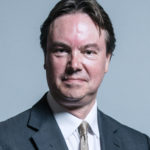
Tag: Jonathan Lord

  • Jonathan Lord – 2016 Parliamentary Question to the Department for Education

    Jonathan Lord – 2016 Parliamentary Question to the Department for Education

    The below Parliamentary question was asked by Jonathan Lord on 2016-10-07.

    To ask the Secretary of State for Education, what proportion of children who receive free school meals in (a) Woking constituency, (b) Surrey, (c) the South East and (d) the UK have studied A-Levels in each year since 2010.

    Edward Timpson

    The requested information on children who receive free school meals at A-Level in England is not held by the Department. The Department for Education produces statistics on England only. The responsibility for education statistics in Northern Ireland, Scotland and Wales lies with each devolved administration.

  • Jonathan Lord – 2016 Parliamentary Question to the Department for Transport

    Jonathan Lord – 2016 Parliamentary Question to the Department for Transport

    The below Parliamentary question was asked by Jonathan Lord on 2016-02-03.

    To ask the Secretary of State for Transport, if he will make an assessment of the potential merits of implementing the recommendations of Surrey County Council’s Surrey Rail Strategy: Crossrail 2 Assessment Final Report, relating to the extension of Crossrail 2 to Woking.

    Claire Perry

    No decisions on either further government investment in Crossrail 2 or the final route for Crossrail 2 have been made. The National Infrastructure Commission has been asked to provide advice to the government by Budget 2016 on the best approach to large-scale investment in London’s transport infrastructure and this will include consideration of Crossrail 2.

    Their advice will help inform decisions on any next steps for the scheme and therefore, prior to their advice, the Secretary of State is not in a position to make an assessment on the potential merits of an extension of Crossrail 2 to Woking.

    However, Transport for London and Network Rail analysis shows that Crossrail 2 would release capacity for additional services on the South West Main Line into Waterloo. This would mean that destinations across the region, including Woking and other towns and cities not on the proposed route, would benefit from more frequent and reliable services into London.

  • Jonathan Lord – 2016 Parliamentary Question to the Department for Transport

    Jonathan Lord – 2016 Parliamentary Question to the Department for Transport

    The below Parliamentary question was asked by Jonathan Lord on 2016-02-03.

    To ask the Secretary of State for Transport, what steps his Department has taken to improve transport links between Woking and London since 2010.

    Claire Perry

    In March 2015, I announced a £50 million investment to deliver improvements across the South Western franchise before the end of the current franchise in 2017. This package of improvements included an additional Monday to Thursday late night service from London to Woking, and new ticket machines at Woking and London Waterloo Stations.

    An additional 108 carriages are being added to the South Western franchise which should all be in passenger service by March of this year, with a further 150 carriages on order and due to arrive in 2017. These additional carriages provide additional capacity across a number of the routes operated, including those serving Woking.

    The Department is running a competition to award the next South Western franchise, which is expected to start in 2017. The detailed franchise specification will be finalised following analysis of the responses to the public consultation, which closes on 9 February. It is expected that bidders will be asked to make proposals to provide capacity where it is needed most.

    With regard to road links, Highways England is currently making improvements to the nearby M3 by constructing a smart motorway between junctions 2 and 4a (13.4 miles/21.6km). The aim of smart motorways is to help relieve congestion by using technology to control traffic flows, to assist in the management of incidents and provide information to road users. They deliver these benefits at a significantly lower cost than conventional motorway widening and with less impact on the environment during construction. This is achieved by converting the existing hard shoulder to a permanent running lane. Work started in November 2014 and is expected to be completed towards the end of June 2017.

  • Jonathan Lord – 2016 Parliamentary Question to the Department for Transport

    Jonathan Lord – 2016 Parliamentary Question to the Department for Transport

    The below Parliamentary question was asked by Jonathan Lord on 2016-02-03.

    To ask the Secretary of State for Transport, what steps his Department is taking to create additional capacity on peak weekday rail services on the South West Main Line between Woking and London Waterloo.

    Claire Perry

    In March 2015, I announced a £50 million investment to deliver improvements across the South Western franchise before the end of the current franchise in 2017. This package of improvements included an additional Monday to Thursday late night service from London to Woking, and new ticket machines at Woking and London Waterloo Stations.

    An additional 108 carriages are being added to the South Western franchise which should all be in passenger service by March of this year, with a further 150 carriages on order and due to arrive in 2017. These additional carriages provide additional capacity across a number of the routes operated, including those serving Woking.

    The Department is running a competition to award the next South Western franchise, which is expected to start in 2017. The detailed franchise specification will be finalised following analysis of the responses to the public consultation, which closes on 9 February. It is expected that bidders will be asked to make proposals to provide capacity where it is needed most.

    With regard to road links, Highways England is currently making improvements to the nearby M3 by constructing a smart motorway between junctions 2 and 4a (13.4 miles/21.6km). The aim of smart motorways is to help relieve congestion by using technology to control traffic flows, to assist in the management of incidents and provide information to road users. They deliver these benefits at a significantly lower cost than conventional motorway widening and with less impact on the environment during construction. This is achieved by converting the existing hard shoulder to a permanent running lane. Work started in November 2014 and is expected to be completed towards the end of June 2017.

  • Jonathan Lord – 2016 Parliamentary Question to the Department for Transport

    Jonathan Lord – 2016 Parliamentary Question to the Department for Transport

    The below Parliamentary question was asked by Jonathan Lord on 2016-02-03.

    To ask the Secretary of State for Transport, what steps his Department is taking to ensure that season ticket holders are fairly compensated for delays in rail services.

    Claire Perry

    Delay/Repay is already one of the most generous compensation schemes in Europe and we are committed to improving compensation for delayed rail passengers even further. As the Chancellor stated in his Autumn Statement, we are committed to reducing the time threshold for which passengers can claim from 30 minutes to 15 minutes.

    We have already changed the system to get compensation paid in cash, not travel vouchers, and we are putting new compensation obligations like automatic Delay/Repay into future franchise specifications.

    We will negotiate hard with rail operators to get even better compensation arrangements for passengers but also focus on ensuring that the trains run on time.

  • Jonathan Lord – 2016 Parliamentary Question to the Department for Environment, Food and Rural Affairs

    Jonathan Lord – 2016 Parliamentary Question to the Department for Environment, Food and Rural Affairs

    The below Parliamentary question was asked by Jonathan Lord on 2016-10-07.

    To ask the Secretary of State for Environment, Food and Rural Affairs, what steps she has taken to improve flood defences in (a) Woking constituency, (b) Surrey and (c) the South East since 2010.

    Dr Thérèse Coffey

    In the Woking constituency, the Hoe Valley Flood Alleviation Scheme opened in spring 2012 resulting in better protection to almost 200 properties.

    In Surrey, the Environment Agency together with the Lead Local Flood Authorities, are developing a range of flood schemes under the Government’s 6 Year Investment Programme.

    The River Thames Scheme for example, will seek to reduce the risk of flooding to 15,000 properties in Surrey and Berkshire. Schemes are also being developed in Guildford, Godalming, Leatherhead and Byfleet.

    In the South East the Environment Agency has better protected 42,000 homes between 2010 – 2015 and forecast to better protect nearly 80,000 more homes by 2021.

  • Jonathan Lord – 2022 Comments on Rishi Sunak Becoming Prime Minister

    Jonathan Lord – 2022 Comments on Rishi Sunak Becoming Prime Minister

    The comments made by Jonathan Lord, the Conservative MP for Woking, on Twitter on 21 October 2022.

    I’ve decided to back Rishi Sunak to be our next Prime Minister and I’ve just submitted a formal nomination to that effect. Fiercely intelligent and hard working, Rishi has the right skill-set and experience to be an outstanding PM – especially in these challenging economic times.

  • Jonathan Lord – 2021 Speech on the Obesity Strategy

    Jonathan Lord – 2021 Speech on the Obesity Strategy

    The speech made by Jonathan Lord, the Conservative MP for Woking, in the House of Commons on 27 May 2021.

    While I welcome many aspects of the Government’s obesity strategy, today I want to argue against the Government’s outlined proposals to restrict TV and online advertising for high- fat, high-sugar and high-salt foods.

    These proposals are blunt tools that will have little or no impact on obesity. The Government assess that both the TV watershed ban and the full online ban will lead to just a 4.5 daily calorie reduction among overweight children. That is completely inconsequential compared with initiatives such as The Daily Mile or Couch to 5K, which have the potential to increase calorific expenditure by about 100 calories a day, or targeted, community-based approaches, such as the Health, Exercise, Nutrition for the Really Young—HENRY—programme in Leeds or the Three Area Project in Wakefield. Those two programmes are based on a holistic approach. They address education, activity levels and food inequality, and have had measurable success.

    Commentators might argue that the proposed bans do not matter, but they have large adverse impacts on broadcasters, online news media, advertising and production companies, food and drink companies, retailers and the hospitality sector. Advertisers have made it clear that this ad spend and investment will not be rerouted back through other channels but could leave the UK market altogether. The bans will reduce the advertising revenue that media reinvest in programming and content. They will prevent food and retail companies and the hospitality trade from communicating with their customers. They will impact jobs and remove most incentives food manufacturers have to invest in healthier alternatives in this market, because the alternatives themselves may still fall within scope.

    The Quebec ban on advertising to children, introduced as long ago as 1980—incidentally, for reasons other than to tackle obesity—had no effect on childhood obesity rates in that province, compared with other provinces. Indeed, the prevalence of being overweight or obese among children in Quebec grew by 140% during the first 15 full years of the advertising ban—a faster increase than elsewhere in Canada, where those restrictions did not exist.

    The UK’s advertising restrictions, currently in place across broadcast and non-broadcast advertising, including online advertising, are already among the strictest in the world. They restrict the exposure of HFSS advertising to children under 16. Although TV restrictions have been in place since 2008 and have reduced child exposure to HFSS on TV by around 70%, this has made no measurable impact on obesity rates. These current plans are disproportionate and not evidence-based; they are not targeted at the problem that the Government say needs to be addressed, which is to protect children. Indeed, they are sweeping and comprehensive, requiring new laws and a new regulatory structure.

    I urge the Government to liaise much better with industry. The Committee on Advertising Practice, the advertising code body, has put to Ministers an alternative proposal to this online ad ban, which is targeted, workable, effective and enforceable. So, let us do that. Let us engage rather than have these damaging and over-the-top regulatory proposals.