Tag: Jeremy Wright

  • Jeremy Wright – 2018 Speech to Conservative Party Conference

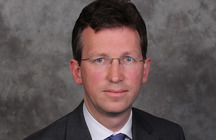
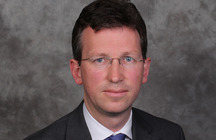
    Below is the text of the speech made by Jeremy Wright, the Secretary of State for Digital, Culture, Media and Sport at the Conservative Party Conference held in Birmingham on 1 October 2018.

    It’s a pleasure to be here in Birmingham, the city that gave me my first job, to talk about the job I am privileged to have now.

    The Department for Digital, Culture, Media and Sport is a very wide-ranging portfolio and I can’t cover all of it in this speech. To cover it in Government needs an exceptional team of ministers and I’m lucky to have just such a team in Margot James, Michael Ellis, Tracey Crouch and Henry Ashton, along with our whips Mims Davies and James Younger and our PPSs Nigel Huddleston and Andrew Bowie. I’d like to thank them for all they do.

    It may not be immediately obvious what connects the different elements of my Department’s title, but I think what connects them is what connects us – as individuals, as communities and as a country. The ties of Civil Society that bind us – the sports clubs and youth clubs, the churches and the charities, the arts projects, the libraries and the community groups of all sorts that bring people together and bind our nation.

    The ties that help us to reflect together as we do in the Centenary of the end of the First World War, and in commemorations that move us all.

    And of course there are the digital links needed to get the most out of 21st Century life. As Conservatives we should be proud of the fact that we have made superfast broadband available to 95% of premises as we said we would. But the truth is that is not much comfort if you are in the 5% not covered.

    So we can and we must do more. By 2020 everyone will have the right to minimum speeds of 10 megabits per second, and mobile coverage must expand further across the UK.

    But technology is changing all the time and we must have infrastructure that can support whatever we will need in the future. That’s why we are investing in 5G mobile technology and developing what it can do, including in an urban setting right here in the West Midlands.

    It’s also why our focus will now be on a fibre optic network for broadband that will really make us fit for the future. That is sensible planning.

    But we must also make sure that everyone can benefit from what these technologies offer. So as we build a fibre network, we will identify the places the market won’t reach on its own and we will connect them – not as an afterthought but in parallel with the places it’s profitable to connect.

    Because if technology has the power to connect us all, nobody should be left behind.

    Technology is changing our lives in many ways, and we can be proud of the fact that many of those changing the world are here in the United Kingdom.

    Our digital technology sector is worth nearly £184 billion and employs 2.1 million people.

    Last year, venture capital investment in London’s tech sector was more than in Germany and France combined.

    The internet is an amazing resource, and social media lets us reach others faster and more easily than we ever have before.

    But these things have a dark side too. There are those who use social media to bully or intimidate, to isolate rather than to include. And it is having an effect – 16 to 25 year olds are the most connected generation of all, but they are lonelier than the over 65s.

    There are also those who use the internet to abuse children or promote terrorism, and I don’t believe there is anything so special about the online world that the normal rules of human behaviour, and the law, should not apply there too.

    So the time has come to define those rules and how they should apply online, and if that needs new law, that is what we will do. Britain can lead the world on this, and we should.

    Of course, there are many other things that connect us – our heritage, our history, our art and performing arts, film and television. The creative industries more broadly add a huge amount to our economy and to our identity.

    They don’t just enrich our lives, they help to make us who we are – as individuals, as communities and as a nation.

    They are strengths we will celebrate in a festival of national pride and international impact in 2022.

    Our culture and heritage are vital aspects of the Britain we project to the world, the ingredients of the soft power we are so good at, and need to stay good at, through Brexit and beyond.

    And while we’re on that subject, some of you may have heard that I might be delivering this speech as a hologram. To those of you who have spent the last 5 minutes thinking this is the most realistic hologram you’ve ever seen, I should make it clear that I decided not to.

    At this moment, and especially on a subject like Brexit, I don’t think our political debate needs more virtual reality, it needs more actual reality. And the reality is we are leaving the European Union.

    We are leaving because Parliament decided to ask the people of this country as a whole to make this choice and they made it.

    However they voted in the referendum two years ago, I believe the vast majority of them now want us to get on with it.

    And to all those who can’t get over the referendum result, to those who seek to avoid it or ignore it, and to those who want to do it all over again, I say it’s time to move on.

    Leaving the European Union in a way that gives us the best possible platform for the future is something we can do, but it is one of the most complex and challenging things the United Kingdom has ever had to do, and we don’t have a single talent or intellect to waste in that effort.

    So however you voted then, help to build our future now.

    But we should recognise that the Brexit process has divided us, and recognise too those things that can bring us back together, as the England football team did with character, skill and real heart this summer.

    And they weren’t the only ones to lift our spirits this year. We have seen the best ever medal haul in a Winter Olympics, a wonderful European Championships in Glasgow and all 3 Grand Tours in Cycling won by Britons, not to mention the Ryder Cup.

    Sport has always had the power to inspire us, most of all when we can see our heroes and heroines do amazing things.

    That’s why, over 20 years ago, a Conservative Government legislated for a list of sporting events you shouldn’t have to pay a subscription to watch. That principle is just as important today, and making sure it still applies as viewing habits change is work the independent regulator Ofcom is doing now.

    But some of the finest sporting moments of the last few years have been in womens’ and disability sport – the Paralympics and Invictus Games, Netball Gold at the Commonwealth Games, and England and Scotland womens’ football teams qualifying for the 2019 World Cup.

    Equality means visibility, and I recognise the progress that has been made in broadcasting more of these events. But whoever we are, we have the right to be inspired by diversity in sport that shows the best in all of us. So we will work with sports bodies, broadcasters, and the wider media to do better. It’s 2018 and it’s about time.

    And we have the capacity not just to put in great sporting performances, but also to put on great sporting events. We showed the world that with the 2012 London Olympics and we will show them again with the 2022 Commonwealth Games here in Birmingham.

    And wouldn’t it be great to put on a World Cup in style in the UK and Ireland in 2030? If the FAs are ready to bid, we are ready to make it happen.

    Because we don’t just need to project the United Kingdom to the world, we need the world to come here and see it for themselves. Last year the UK attracted record numbers of visitors and we are predicted to do even better this year.

    And, crucially, tourists are going beyond London – record numbers for example going to Scotland, to the North West and here to the West Midlands.

    And as hosts of the Great Exhibition of the North and described by the Rough Guides as the number one place in the world to visit in 2018, Newcastle Gateshead welcomed more than 4 million visitors over the summer, including the Cabinet.

    But in truth tourism has gone almost unnoticed for years as a major employer and as a major contributor to our economy.

    For the sake of the communities up and down our country for whom tourism is essential, I intend to change that, and we will work with the tourism industry to find practical ways for Government to help.

    So for the international community, and for our local communities, our culture has a lot to offer. But it also has a lot to offer us as individuals.

    When I was 13, I was shy and didn’t much like being the centre of attention. I’ve changed. But that year I was persuaded to take a large part in a school play.

    The effect on my self-confidence, on what I felt I could do, was significant and long-lasting – so much so that I feel able to say to you that if I had not stood on that stage then, I would not be standing on this stage now.

    I want more young people to have that feeling.

    There are many schools and youth theatre groups doing a great job of providing those opportunities, but there are still too many young people, in too many places, who don’t have the chance to be part of a production, on stage or behind the scenes.

    So working with the Secretary of State for Education, we are going to give them that chance.

    In 5 different areas across the country, we will spend £5 million to give thousands more young people the chance to perform on stage at school.

    And what they perform matters too. Britain has a remarkable theatrical heritage, the names of our famous playwrights are known the world over. But there are also great British playwrights the world does not yet know, from different parts of the country and from different backgrounds.

    I want our young people to know their cultural past, but also to get to know their cultural future – to meet the people, who come from where they come from and who are writing great plays today. So we will help to promote the work of these new playwrights, and help young people to perform their plays.

    Because our culture belongs to us all and it is as strong as it has ever been.

    We are proud of our past, but we are prouder still of who we are now and of what we will do next.

    We Conservatives are in Government at this pivotal moment in our history. What a challenge, certainly, but also what an opportunity – the chance to design our future.

    For centuries Britain led the world in exploration, invention and imagination.

    For centuries in the arts, in the written and spoken word, the world looked to these islands for thought and feeling on what it means to be human.

    And now, in a century where success will be defined by innovation and creativity, we still lead the world in these things.

    So this is not a moment to lose our self-confidence. This is a moment, our moment, to show the world that just as Britain shaped the past, Britain can shape the future.

  • Jeremy Wright – 2018 Speech at Royal Television Society Conference

    Below is the text of the speech made by Jeremy Wright, the Secretary of State for Digital, Culture, Media and Sport on 18 September 2018.

    Good afternoon everybody and thank you to the Royal Television Society for inviting me here today.

    I feel very fortunate to have been in this wonderful role for three months.

    One of the many brilliant things about heading up DCMS is it provides an opportunity to play a part in the blistering advances in technology that are transforming all of our lives.

    As leaders in the media and creative industries you know about these advances better than most.

    In this rapidly changing and increasingly polarised world, the role of the media is evolving, and in my view becoming more important than ever.

    For the media, and for the television industry in particular, trust is a vital commodity.

    It may not capture the imagination in quite the same way as a new drama; be as immediately celebrated as an overnight BARB rating; or even be treasured quite as much as new revenue..

    But all broadcasters need trust to succeed.

    In an era of rapid technological change, infinite consumer choice, and spectacularly-resourced international competition – trust is something that is vital to the success of British media.

    So I want to talk today about what the TV industry – and public service broadcasters in particular – can do to maintain that trust, and help us address some of the most pressing issues in our society and democracy.

    Disinformation

    The most obvious aspect of trust is in relation to the accuracy of news.

    Disinformation, and misinformation, is one of the most significant issues of our age.

    We have all seen how it can sow discord and pose a risk to free and fair elections.

    And in my previous role of Attorney General, I saw firsthand how it can jeopardise our criminal process.

    As the digital revolution continues to transform our lives, the potential to disrupt our civil society and democratic institutions becomes greater than ever.

    An emerging example is how artificial intelligence can be used to manipulate audio and video content quickly and in ways that make it very hard for consumers to detect.

    Now while this has many potentially exciting benefits for the creative industries – such as re-dubbing films and television in different languages – it can also be employed in the creation of what are called ‘deepfakes’.

    That is to say very realistic, but nonetheless fake, audio and video content – for example the widely cited video of President Obama that I know you saw earlier.

    Given the speed of technological change, it is perhaps no wonder that according to Reuters, only 42 per cent of people trust the news they read.

    Crucially, however, 70 per cent of viewers consider television a trustworthy source of news.

    This is something for the industry to be proud of. But while TV is still where most adults in the UK turn for their news, this is not true for younger audiences. Indeed Ofcom found that for 82 per cent of 16 to 24 year olds, the Internet is their first port of call.

    And yet while people are increasingly turning to the online space for news, less than a third of people believe that most news apps and websites are trustworthy.

    As we all know, the Internet, once described by a former executive of Google as “the largest experiment in anarchy” – is not a place where fact and fiction can be easily distinguished.

    In our Digital Charter we set out a clear goal to tackle disinformation and misinformation here in the UK. One of the ways we will do this is by giving people the digital literacy and critical thinking skills needed to properly assess online content.

    This will add to the important work that has been done by The Times, the Guardian Foundation, the BBC and others in launching projects to improve media literacy.

    We are also developing a range of regulatory and non-regulatory measures to improve transparency and accountability online, and thus tackle a range of online harms.

    I would like to take this opportunity to spend a moment on one of the most egregious examples of inaccurate information online.

    Following the Salisbury incident, Russia has begun a blatant disinformation campaign: with misleading procedural questions and over 40 different official narratives, all false. Many of these were carried and promoted on Kremlin-backed media.

    Russia Today, funded by the Russian state, is a major concern.

    Ofcom has repeatedly found that RT has been in violation of standards; these include cases when Ofcom say RT’s coverage has been labeled “materially misleading”.

    Ofcom currently has 10 investigations into the impartiality of RT’s news and current affairs programmes. I welcome these investigations and I await their conclusions with great interest.

    It is true, the tech sector has been taking action, especially Twitter, to make mounting disinformation campaigns more difficult and costly.

    This has included the development of algorithms to spot fake accounts and the deletion of hundreds of thousands of suspect accounts, many linked to hostile states such as Russia.

    But of course, they can and should do more in this battle. Our democracy depends on it.

    And as well as tackling sources of inaccurate information, we want to strengthen and support high quality sources that people can trust. High quality and properly researched journalism is the best possible weapon in our battle against fake news.

    And so the sustainability of our high quality media is something that should concern us all.

    In March we launched an independent review, chaired by Dame Frances Cairncross, to look at how the production and distribution of high-quality news journalism can be sustained in a changing market, with a particular focus on the online space.

    The call for evidence closed just two days ago, and I look forward to Dame Frances’ report and recommendations early next year.

    Similarly, the PSBs and other trusted broadcasters have a vital role to play.

    As well as continuing to provide high quality news on linear TV, PSBs must also work to reach a wider audience.

    And we have seen a lot of success here – for example Channel 4 News: on Facebook they get sixty million views per month – the largest of any British news programme. And last year they had two billion video views across Facebook and YouTube.

    It is not for me to tell PSBs, or other major broadcasters, how to operate but I welcome these developments and I am sure we will see more of them in the coming years.

    Representation

    Of course, the accuracy of news is not the only way for PSBs to generate trust.

    Our public service broadcasters are national institutions. For decades, they have entertained, informed and educated; establishing a trust which was inherited from generation to generation.

    For a long time this was never in doubt – until 1997 most people only had access to four television channels.

    But, of course, the market is now changing rapidly.

    Competition for eyeballs, subscriptions, and most importantly time has never been more intense.

    Data has become key in the battle to produce the next hit – global media giants with vast audience analysis budgets are operating at a significant advantage.

    We often hear how our PSBs struggle to compete against these leviathans – and that may be true in part when it comes to some budgets.

    But for the same money that Netflix spent on the first two series of the Crown, the BBC made eighteen series, which were seen by 74% of the population.

    Our PSBs have so many unique advantages that they need to exploit to the full.

    But as national institutions in a multichannel world, they must also work to secure the trust of the whole UK.

    One example is making younger viewers just as engaged in PSB programming as their parents were.

    Younger viewers are more open to new technology and more receptive to new brands than any generation before them.

    This change in consumption habits is showing no sign of slowing down. So you must reach them where they want to be reached. And they must find you where they expect you to be found.

    I want to see the PSBs being nimble, working across platforms, innovating and collaborating. Internationally this has been a success: Britbox is showing the best of British to viewers in the US and Canada. PSBs should not be afraid of building on this success at home.

    To support this, we are launching a Contestable Fund pilot, of up to 60 million pounds, to stimulate the provision and plurality of original UK content for young audiences, both on linear TV and on demand.

    This will help create new funding avenues for creators of original content and bring new voices to the market.

    We will be publishing a policy paper shortly on the final design, and I strongly encourage the commercial PSBs and other free-to-air broadcasters to demonstrate their commitment to young audiences by supporting the fund once it is launched April next year.

    PSBs are national institutions and at their best, they have an innate ability to tap into the mood of the nation. This is their competitive edge.

    And so it is crucial that these organisations are made up of the people that they serve – both on and off screen.

    We all know that people want content that speaks to them and their experiences – this means people from different regions, ethnic backgrounds and social groups. Proper representation is vital to maintaining the trust of different audiences.

    83 per cent of viewers think it is important that PSBs portray their region fairly, however only 63 per cent think that they do.

    I am very pleased that the BBC and Channel 4 have agreed to increase their regional impact, and I hope other broadcasters will continue to do more.

    More than half of black viewers felt that there weren’t enough black people on TV, and when they are, 51 per cent feel that they are portrayed negatively.

    This means asking some searching questions too about the makeup of our media organisations. Because to know how to evolve to meet the needs of younger, more diverse audiences as they get older; it is easier if you employ them.

    This means providing genuine opportunities for those who have talent but may not yet be the finished product, or might not know the right people.

    Michaela Coel talked compellingly in Edinburgh just a few weeks ago about how in her early years in the TV industry she felt like a misfit or an outsider.

    As national institutions it is your job to invite people in. By doing so, you will not only create and solidify that trust: you will secure it for generations to come.

    So today I am asking you to go further in your efforts.

    By doing more to build trust in the accuracy of news through high quality journalism and reporting;

    By doing more to provide for diverse, young and UK-wide audiences, and exploring innovative ways to reach them;

    And by providing opportunities for under-represented groups both on and off screen.

    In exchange, the government will support PSBs to ensure they continue to thrive, and stay prominent, as part of a healthy, sustainable and dynamic media landscape.

    So I can assure you I will be looking closely at the results of Ofcom’s work on Prominence, and will work with the PSBs and the whole sector, to ensure the government is playing our part in supporting the future of public service broadcasting at the very heart of our vibrant media sector.

    Conclusion

    Broadcasting is one of this country’s greatest success stories. Our extraordinary content and talent are respected around the world.

    Indeed, the UK recently reclaimed top position in the Global Soft Power Index, driven in large part by our culture and creative industries, not least our superb broadcasting sector.

    Shows and formats such as Doctor Who and Bake Off are known and admired the world over, and one study found that among US readers four of the 10 most trusted sources of news are based in Britain.

    We need to build on this.

    Because a strong media means a strong democracy and a strong nation.

    And we cannot be complacent.

    Those sowing discord want to undermine this trust and the institutions upon which our liberal democracy relies.

    Trust is a precious commodity and bolstering it is vital to our future.

    Thank you for the part that you play in this and that you will continue to play; I will be on your side as you do so.

    Thank you very much.

  • Jeremy Wright – 2018 Speech to Edinburgh TV Festival

    Below is the text of the speech made by Jeremy Wright, the Secretary of State for Digital, Culture, Media and Sport, in Edinburgh, Scotland on 22 August 2018.

    It is an honour to be here at this very prestigious festival.

    As you say, I’m fairly new to this job and I recognise that I have a lot to learn, but I hope you will indulge me if I offer some preliminary thoughts on some of the things I have noticed so far.

    Today’s discussion is an important one. It is quite clear that the world of broadcasting is changing, with new channels and content producers transforming the media landscape.

    For me one fact brings this home loud and clear. Young people in Britain now recognise the name YouTube more than they recognise the name of the BBC.

    In these changing times, we must look at what our British broadcasters can do to adapt and thrive.

    One way to do this is to become more transparent, as the recent BBC Charter Review demonstrated with a huge step forward.

    Another way is to become more national.

    A media that is clustered in the capital can’t possibly reflect and represent the rich and diverse tapestry that is the United Kingdom.

    It is clear that the development of Media City Salford has been great for the BBC, great for ITV and great for an exciting cluster of tech and production companies in the region.

    But it has also been great for the UK as a whole, ensuring greater diversity and representation both on and off screen.

    I am delighted that Channel 4 has recently agreed to move 300 staff out of London, with more to come, and to increase spending on programmes outside London to 50 percent of what they do.

    I am looking forward to hearing the location of the new national HQ and creative hubs in October and I hope all broadcasters and producers will follow their lead and encourage the spread of jobs, prosperity, and opportunity beyond London.

    British broadcasting is having an increasing impact not just across the UK but across the world. UK TV programming sales are now at around a billion pounds a year.

    And Planet Earth 2, Midsomer Murders, and Sherlock have been sold to over 200 territories, with Sherlock, for example, being seen by 17 million viewers in China alone.

    From Baker Street to Beijing the reach of UK broadcasting is so wide. And it is getting wider.

    And although British television is changing, there are some long established characteristics that make it so impressive and important. Television, for example, has always been able to bring us together.

    It creates truly national moments through programmes like Planet Earth, Bake Off and even Love Island, helping to create common experiences and bind our communities.

    And public service broadcasters remain a vital part of the broadcasting landscape, with 85 percent of people in this country still watching them every week.

    Nine out of ten people in the UK think that programming and news coverage from Public Service Broadcasters is trustworthy, a vital asset in the era of fake news.

    And strong public service broadcasters mean a strong broadcasting sector as a whole.

    For example, they are vital in helping all broadcasters find talent, and one of the things I have heard loud and clear already is how important it is to find the right talent in this industry.

    This festival has recognised that for a long time – with the proceeds of ticket sales going to help provide an entry level route into the industry and to give talented individuals in the early stages of their careers a step up.

    I pay tribute to that work in helping so many people to have a brighter future in this industry.

    And talking about the future, I wanted to finish by saying just a few words about Brexit, which I know is on the minds of many people here.

    I know that there is concern about how talent will be able to move between the UK and the EU after our exit from the European Union.

    Although you will understand that the final outcome is still subject to negotiation, I can say that the government fully understands how important mobility is for this sector.

    As outlined in the recent White Paper on our future relationship with the EU, we are seeking to agree a framework for mobility with the EU.

    This will include reciprocal arrangements to allow UK nationals to visit the EU without a visa for short term business reasons, with equivalent arrangements for EU citizens coming to the UK.

    And we are working on a broader accord with the EU on culture and education that will, among other things, allow for the temporary movement of goods for major events, tours, exhibitions, and productions.

    Beyond that, as you know we have already reached an agreement with the EU on citizens’ rights, which will provide certainty to EU citizens currently living in the UK.

    And we will be developing a future immigration policy to welcome the people that we need and that we want to come here.

    We understand the importance of retaining European Works Status for the sector, and we were able to confirm this earlier in the year.

    I recognise of course that there are still issues to be resolved in this process and you have my assurance that I will make the case for the interests of this sector as we seek to resolve them.

    But regardless of our settlement with the EU, broadcasting will remain a vital part of what Britain offers the world.

    Because we have a broadcasting sector that’s really worth shouting about.

    Thank you for what you do to contribute to that, and I hope that you enjoy the rest of the festival.

  • Jeremy Wright – 2018 Speech at the Modern Slavery Summit

    Below is the text of the speech made by Jeremy Wright, the Attorney General, at the Modern Slavery Summit on 22 February 2018.

    Thank you very much for inviting me to speak to you this morning. Firstly, I would like to take this opportunity to pass on my thanks to the CPS for organising and hosting this important summit on prosecuting Modern Slavery crimes.

    On behalf of the UK Government may I also pass on a very warm welcome to you all. Many of you have travelled a long way to be here, and I hope this summit will be an important step in improving international dialogue and combatting the crimes of forced labour, modern slavery and human trafficking.

    As we are all very well aware, modern slavery exists in all our societies. It respects neither borders nor jurisdictions and its victims are subject to the most appalling mistreatment and exploitation, this brings our task at this summit into sharp focus.

    I know you will be looking at identifying ways to better support victims and witnesses, and establishing a strong, active international network to tackle Modern Slavery.

    In the last 8 years, the UK has clearly demonstrated that with the right will and mind-set it is possible to transform our approach to Modern Slavery.

    The then Home Secretary, and current Prime Minister, identified modern slavery as a significant problem, and since then this Government has put in place an ambitious strategy and dedicated legislation to tackle it.

    Prior to 2010, there was no bespoke legislation and the law enforcement response was not sufficiently coordinated or effective to deal with this type of offending.

    Giving law enforcement agencies the tools to tackle modern slavery is paramount in achieving successful prosecutions, and at the same time protecting victims. The Modern Slavery Act 2015 does just that. The Act not only consolidates all modern slavery legislation into one Act, assisting both the police and prosecutors but introduces other equally important measures to improve the criminal justice response. For example :

    – the introduction of maximum life sentences for perpetrators;
    – the provision for civil prevention and risk orders’, which stop potential acts of trafficking or forced labour from taking place; and
    – the introduction of a statutory defence for those forced or coerced to commit crimes like cannabis farming – which will also help safeguard victims from abuse.

    These measures are now beginning to have a real impact and – we are seeing a real rise in convictions for new offences prosecuted under the Modern Slavery Act and at least 56 Slavery and Trafficking Prevention and Risk Orders to restrict offender activity are in place.

    In addition to these new measures and tools, training remains important. Investigators and prosecutors need to be well trained so they are readily able to identify elements of Modern Slavery in their cases. They also need to be aware of the new tools they have available to tackle these crimes and prevent further offending from taking place and to identify and protect victims.

    As well as a criminal justice response, it is important that there other powers and regulations in place to stop the exploitation of vulnerable victims and to disrupt potential crimes before they take place.

    The Modern Slavery Act established an Independent Anti-Slavery Commissioner. Their job is to work with law enforcement agencies, local authorities and third sector organisations to encourage identification, prevention, detection, investigation and prosecution of modern slavery crimes – across the UK and internationally. This role is essential in order to advise the Government on improvements to the system and to encourage joined up working across the UK.

    More recently the Government has used the Immigration Act 2016 to extend the remit and strengthen the powers of the Gangmasters Labour Abuse Authority. Its new mission will be to prevent, detect and investigate worker exploitation across the entire economy.

    The Modern Slavery Act also includes a world-leading transparency in supply chains measure requiring certain businesses to report how they are eradicating modern slavery from their organisation and their supply chains. By forcing business to report on this, it has made them much more aware of potential modern slavery crimes. Most importantly, the Modern Slavery Act has provisions to give protection to overseas domestic workers, a duty on public authorities to notify the Home Office when they come across potential victims.

    Crucially, we have found that where support for victims of this crime, who are typically extremely vulnerable and often reluctant, or fearful of engaging with law enforcement, is prioritised prosecution rates are higher and the chance of a successful prosecution much more likely.

    The National Referral Mechanism – the NRM – is the UK system for identifying and providing access to support to potential victims of modern slavery. The Modern Slavery Act ensued that this support was extended to all victims of Modern Slavery in England and Wales.

    The NRM should act as bridge – helping victims to be lifted out of situations of exploitation; providing specialist care and support to enable them to begin to recover and rebuild their lives; and facilitating their return to the relevant community.

    We recognise that the NRM does not always do this for victims, and that is why are committed to reforming it to ensure better results for victims.

    Having a regulatory environment which encourages collaboration between law enforcement agencies, first line responders and licensing authorities is essential in tackling such a wide ranging crime and our research reflects that this aligned approach produces better outcomes for victims. The global prevalence of Modern Slavery is significant, and whilst it is a largely hidden crime the International Labour Organisation and Walk Free Foundation in 2016 estimated that there are 40.3 million caught up in Modern Slavery globally. This is a conservative estimate and in reality there could be many more victims worldwide.

    No country can tackle modern slavery alone and I am proud to be part of a Government that is leading the fight against this horrendous crime internationally.

    To drive further progress and collaboration at the international level, the Prime Minister convened a group of world leaders at a modern slavery event during the UN General Assembly in September 2017. Leaders and senior ministers from 21 member states attended the event and 42 countries have now endorsed an ambitious Call to Action to End Forced Labour, Modern Slavery and Human Trafficking. This sets out the practical steps that countries will take to effectively respond to modern slavery and fulfil the commitments set out by the international community. At that meeting the Prime Minister also announced that the UK would double its aid budget spend on modern slavery to £150m.

    £33.5 million of this is set aside in a Modern Slavery Fund, managed by the Home Office, and of this £11 million has been allocated to an innovation fund to trial new approaches to tackle and reduce the prevalence of modern slavery and to identify interventions that could be scaled up.

    This £11 million fund is currently supporting 10 successful projects which are being taken forward by a range of organisations including NGOs, universities and multilateral organisations. These projects target issues such as tackling slavery in supply chains, supporting victims, exploring vulnerability to trafficking and exploitation and helping to share skills and expertise with overseas partners.

    It should not be surprising that the majority of the victims referred to us are from countries other than the UK. In the last year there has been a significant increase in referrals from Sudan and Ethiopia with the most referrals coming from Vietnam and Albania.

    In response, we are increasing bilateral engagement with and increasing the operational response in countries from which a high number of vulnerable people are exploited and trafficked into the UK.

    Building strong partnerships is the key to improving our understanding of the context that leads to vulnerable people being exploited and trafficked to the UK to better inform our approach and operational response so this can be disrupted. This conference is an excellent step in improving that collaborative approach.

    We are increasing law enforcement cooperation, including through establishing joint investigation teams and greater intelligence sharing, to tackle this crime and bring perpetrators to justice. Additionally we are working with international law enforcement agencies to improve the international operational response. For example, the UK has encouraged Interpol to strengthen its understanding of modern slavery and its enablers to better understand international law enforcement challenges and gaps.

    We all share a moral duty to end Modern Slavery, a duty that transcends party politics and country borders and which unites us in our determination to root out this dreadful crime from our society.

    I welcome the opportunity this summit brings to create a unified, international approach to tackling modern slavery and ensure that victims receive the support and assistance they need to begin the process of rebuilding their lives.

    The leadership we show at this summit is therefore important. The task of tackling modern slavery is an urgent one, so we need swiftly to put our words into practice and hold ourselves to account for the progress that can be made.

  • Jeremy Wright – 2017 Speech on International Justice Day

    Below is the text of the speech made by Jeremy Wright, the Attorney General, on International Justice Day on 17 July 2017.

    Good afternoon all. I want to begin by thanking those at the Foreign and Commonwealth Office and the British Institute for International and Comparative Law for putting today’s conference together. The breadth and depth of experience of those at this event will, I am sure, be invaluable in developing all of our thinking on these incredibly important issues.

    At the outset I want to emphasise that these are issues that I feel strongly about – in December last year I spoke at an event at the United Nations in support of the Foreign Office led campaign to bring Daesh to justice; the focus of that speech was the importance of gathering and preserving evidence to enhance global accountability and today I want to reinforce that message.

    The challenges posed by the conflict in Syria are issues that I encounter day-to-day in my role as Attorney General. As many of you will know, I am Chief Legal Adviser to the Government and in that capacity I attend Cabinet meetings and am a member of the National Security Council. But I also superintend the main prosecuting authorities – the Crown Prosecution Service and the Serious Fraud Office – and have certain quasi-judicial functions which I exercise in the public interest. One of those functions is to decide whether prosecutions for some offences, which include terrorism, genocide, crimes against humanity and war crimes, should go ahead.

    What this means is that I hold a unique position at the interface of law and politics. So, I know first-hand the challenges faced by the Government and those faced by our domestic prosecutors.

    So in the short time I have, I want to give you a practical view of some of the issues likely to arise when prosecuting crimes committed in conflict areas in our domestic courts. One of the key messages I want to get across is that our prosecutors have the skills and experience to prosecute these invariably very challenging cases and we will pursue them vigorously where there is sufficient evidence to do so.

    All allegations of terrorism, war crimes and crimes against humanity are dealt with by a team of specialist prosecutors in the Counter Terrorism Division of the Crown Prosecution Service and you will hear from Deb Walsh, who leads the CPS Counter Terrorism Unit, a little later. That team is supported by a network of liaison prosecutors who are stationed abroad to work with our international partners. The CPS have obtained more than 90 convictions from more than 60 cases arising from the conflict in Syria and Daesh activities in that region. Whilst the Counter Terrorism Division’s caseload continues to increase significantly, conviction rates have remained high – for 2016 the conviction rate for terrorism was 86%. Rightly, the CPS Counter Terrorism Division has an excellent reputation both at home and abroad.

    To highlight some of the issues under discussion today I am going to talk about two cases that the Division has dealt with.

    In 2014 a man named Imran Khawaja was arrested by the police on returning to the UK from Syria. Khawaja had joined Daesh and was ultimately convicted of various offences including preparing acts of terrorism, attending a place used for terrorist training and receiving weapons training. Part of the evidence against him was a video promoting Daesh that had been posted on social media in which he was shown holding up two severed human heads from a pile of others as he spoke to the camera.

    Khawaja was, unsurprisingly, considered a danger to the public and given an extended sentence. He was not, however, given a life sentence with the Judge commenting that he had taken into account the absence of evidence of [Khawaja] having actually taken part in the combat itself, as opposed to its assistance and glorification.

    And, of course, on the evidence available, the Judge was right to reach that conclusion. The evidence simply did not demonstrate whether and to what extent Khawaja may have been involved in the killing of the men whose heads were shown or, indeed, any other of the many atrocities we know to have taken place.

    This case really encapsulates some of the challenges faced by domestic investigators and prosecutors dealing with offending that has happened in an area of conflict. If evidence is not available from the country where the offence has taken place they can, and do, build a case on the evidence that is available which may be, for example, communications data or material that can be retrieved from electronic devices or social media. However, if there is no evidence from the place where the criminality has taken place, there is a real risk that the most serious offending, in particular conduct that amounts to offences such as torture, crimes against humanity or even genocide, could go unpunished.

    I should also add that investigations based largely on digital material present their own challenges. We have found that huge volumes of data are recovered during investigations and prosecutions. In a terrorism case, on average, 4 terabytes of data is extracted in each investigation with larger investigations typically recovering more than 20 terabytes. To put this in context, a single terabyte is equivalent to roughly a million books of 500 pages each . Identifying relevant and incriminating material from all that is a mammoth task and is made more complicated where foreign languages, code or encryption have been used. Of course these challenges are not exclusive to terrorism cases but they highlight how important it can be to have other sources of evidence available.

    A different case dealt with by the Counter Terrorism Division highlights how effective in country evidence can be in ensuring accountability for the most serious crimes, even some years after an offence has taken place. In 2007 a US armoured vehicle was on patrol in the area of North Western Baghdad when it set off an improvised explosive device, or IED. Tragically, the explosion killed one of the soldiers inside the vehicle, a Sergeant Johnson.

    Military personnel recovered that device and many others that were used against coalition forces. Forensic examination of the device and three other similar devices was able to demonstrate that a British citizen named Anis Sardar had been directly involved in the construction and/or deployment of these bombs with the intent required for an offence of murder. It is not possible to go into all the details of the evidence now in what was a complicated case, but key features of it related to fingerprint marks taken from the devices, evidence of similarities between them, the unusual nature of their construction, and, the fact they had been deployed in a small area of Iraq over a short time period. Sardar returned from Iraq in 2007 and was arrested in 2014 after it had been established that his fingerprints matched those on some of the IEDs. In May 2015 he was convicted after a trial of the murder of Sergeant Johnson and conspiracy to murder. Ultimately he received a life sentence with a minimum term of 35 years.

    In conclusion I want to reiterate that prosecutors in this country can and will bring domestic prosecutions for offences committed during conflict where the evidence is available and our domestic courts have jurisdiction to do so. These cases will often present significant and sometimes unique problems but we have the skills and experience to build the strongest case possible with the evidence available. But, the fundamental precursor to all this work is the availability of reliable evidence and so the key to ensuring that the perpetrators are held to account and that victims receive justice, is gathering and preserving the evidence left behind. This requires the closest possible cooperation with those on the ground, and it is a huge challenge, but to achieve all we can in the delivery of international criminal justice, it is a challenge we must overcome.

  • Jeremy Wright – 2016 Speech at Lord Chancellor’s Swearing-In

    jeremywright

    Below is the text of the speech made by Jeremy Wright, the Attorney General, at the Royal Courts of Justice on 21 July 2016.

    It is an honour and a pleasure to be here today.

    Of course, this is not the first time I have played a part in swearing in a new Lord Chancellor.

    Last time I did so, it was 2015 – a year where we celebrated an anniversary of great importance to the justice system. I speak, of course, of the 700th anniversary of the first recorded use of the term “King’s Attorney” – the forerunner of the office I have the privilege of holding. The office itself is even older.

    2015 was also the 500th anniversary of the first recorded use of the term Solicitor General. The present incumbent of that office is here beside me today, and I know I speak for us both in saying how proud we are to continue to serve as Law Officers – 801 years on from Magna Carta.

    But there is one office of state – and the only one of which I am aware – that predates mine. That is the office of Lord Chancellor, to which I am delighted to welcome Liz Truss this afternoon.

    2016 is not, as far as I know, itself an anniversary of anything particularly auspicious. But perhaps in another 800 years from now, our successors will still be marking 2016 as a remarkable year for this country.

    In the last few weeks alone, we have seen the momentous decision to withdraw from the European Union. We have seen a change of government and only our second female Prime Minister. And now, courtesy of that Prime Minister, the oldest office in the land finally has its first female incumbent, at least in modern times. As someone who has sat at the Cabinet table with her, let me say something about her qualities, and how they relate to the qualities we seek in a Lord Chancellor.

    As the daughter of an academic and a teacher, it is not hard to see how she developed an inquiring mind and a willingness to challenge received wisdom.

    At Reform, a place designed for radical thinkers, she showed that while respectful of traditions, she is not afraid to embrace change. That is a combination of virtues which is most appropriate for a justice system that combines ancient principles of fairness with modernising ambitions in delivering the right service for the twenty first century.

    In seeing through reforms, she will also benefit from a career outside politics at Shell and at Cable and Wireless. While she will be well able to debate high principle, I know she will also be capable of grappling with the practical challenges of implementing lofty ideals in the real world.

    And there is one other quality that is less often talked about which is arguably just as important. Lord Chancellors do not just stand up to people, important as that is; they also stand up for people. A passion for justice, in all its forms, is at the heart of making a success of this vital role. This Lord Chancellor will be a passionate advocate, who will relish working with the passionate advocates up and down the land who populate our justice system, and from whose representatives we will shortly hear.

    So I wish you well in all your endeavours. If I can support you in any way within my gift, I will. And I look forward to working with you in the interest of justice in these momentous times.

  • Jeremy Wright – 2016 Statement on the European Convention on Human Rights

    jeremywright

    Below is the text of the speech made by Jeremy Wright, the Attorney General, in the House of Commons on 26 April 2016.

    I am answering this urgent question today on behalf of the Home Secretary, but my right hon. Friend will be making a statement to this House on the Hillsborough inquest findings tomorrow. Mr Speaker, I hope that it is in order for me to make a brief comment on that subject before I turn to the right hon. Gentleman’s question.

    As the House knows, the inquest jury has now returned its verdict. I am sure that the whole House will wish to join me in thanking the jurors for the considerable public service that they have performed. As a result, this morning I have written to Members advising that care be exercised when making public statements, to ensure that nothing is said that suggests that any individual or organisation has been found to be criminally liable. Ultimately, a jury in a criminal trial may need to decide that issue, and it is important that nothing is said that may prejudice the right to a fair trial, or make it more difficult to pursue appropriate prosecutions.

    On the subject of this urgent question, the United Kingdom is a founder member of the European convention on human rights, and lawyers from the United Kingdom were instrumental in the drafting of the European convention. We are signatories to the convention and we have been clear throughout that we have no objections to the text of the convention; it is indeed a fine document and the Government are firmly of the view that the rights that it enshrines are rights that British citizens and others should continue to hold as part of a reformed human rights framework.

    However, this Government were elected with a mandate to reform and modernise the UK human rights framework: the 2015 Conservative party manifesto said that a Conservative Government would scrap the Human Rights Act and introduce a British Bill of Rights. As with all elements of our manifesto, we intend to meet that commitment in the course of this Parliament. Members will be aware that we have set out our intention to consult on the future of the UK’s human rights framework both in this country and abroad, and that consultation will be published in due course. We will fully consult on our proposals before introducing legislation; in doing so, we will welcome constructive contributions from all parts of the House.

    The intention of reform is to protect human rights, to prevent the abuse of human rights law and to restore some common sense to the system. The Prime Minister has been clear throughout that we

    “rule out absolutely nothing in getting that done”.

    Our preference, though, is to seek to achieve reforms while remaining members of the European convention. Our reforms will focus on the expansionist approach to human rights by the Strasbourg court and under the Human Rights Act, but although we want to remain part of the ECHR, we will not stay in at any cost. We have been clear that if we cannot achieve a satisfactory settlement within the ECHR, we may have no option but to consider withdrawal.

    However, the question before the people of the United Kingdom in June—again, thanks to this Government—is not about our future membership of the European convention on human rights, but about our future membership of the European Union. It is important that, in taking that significant decision, people do not conflate those separate questions.

    Let me make one thing absolutely clear: the United Kingdom has a proud tradition of respect for human rights that long pre-dates the Human Rights Act—and, indeed, the European convention on human rights. Any reforms that we make will maintain that protection. Those are not just words. This Government and the coalition Government who preceded them have a strong record on human rights, both here and abroad.

    We brought forward the Modern Slavery Act 2015 to protect some of the most vulnerable and exploited people in our society and to punish those responsible for that exploitation. We have fought to promote and protect human rights internationally. We are one of the leading members of the UN Human Rights Council, leading negotiations to set up international investigations into human rights abuses in Syria and elsewhere. We have transformed the fight against sexual violence in conflict, persuading more than150 states to agree for the first time that sexual violence should be recognised as a grave breach of the Geneva convention. We have been leading the world on the business and human rights agenda: we are one of the first states to argue for the UN’s “Guiding Principles on Business and Human Rights”, and the first state in the world to implement them through a national action plan.

    That is a track record of which we can justifiably be proud, and it is that track record on which we will build when we set out proposals for the reform of the human rights framework in the United Kingdom.

  • Jeremy Wright – 2016 Speech on the Public Interest

    jeremywright

    Below is the text of the speech made by Jeremy Wright, the Attorney General, at University College in London on 8 February 2016.

    I welcome the opportunity to speak to you today, here at UCL.

    Ronald Dworkin, who challenged and entranced generations of students and colleagues here, said that law is a branch of morality.

    He was right.

    And although it may not always look like it, politics is another branch of morality.

    And today, without seeking to reach Professor Dworkin’s intellectual heights, I want to talk about one way in which the common purpose of politics and law is exemplified by the office that I hold: that of Attorney General.

    The aspect I want to focus on is my role, as Attorney General, in relation to the public interest.

    This is not a function of the job that receives much comment, even within the legal world.

    But I want to set out why I see it as an important part of my role.

    And I would go even further: it is what puts the Attorney General at the heart of our constitution.

    It is essentially a way in which the Attorney, occupying his or her unique position between and within both the political and legal worlds, upholds a well-functioning and fair justice system.

    That matters to government.

    But it also matters to the Courts, and the legal profession as a whole.

    I want to say why I think that is. And then to say something about who, in a well-functioning justice system, is best-placed to decide what the public interest is.

    So first, why does the role of the Attorney General matter?

    The Constitutional Role of the Attorney General
    The principal role of the Attorney, alongside the other UK Law Officers – the Solicitor General for England and Wales, and the Advocate General for Scotland – is to uphold and promote the Rule of Law through his or her constitutional functions.

    So let’s begin with some history.

    Last year, the common law world celebrated the 800th anniversary of Magna Carta.

    I was honoured to be part of those celebrations.

    The post of Attorney General must be one of very few which is almost as old as Magna Carta itself.

    Last year we also celebrated to slightly less fanfare 700 years since the first formal appointment recorded of a specially designated King’s Attorney, in the year 1315 – although there are records of individuals appointed to “sue the King’s pleas” as early as 1243, within living memory of Magna Carta.

    And the title of Attorney General is first recorded in the 15th century.

    All these centuries later, we are being told by independent observers that the Attorney General has an increasingly important role in relation to the Rule of Law in our constitutional arrangements.

    That is the view for example of the Constitution Committee of our House of Lords. The Law Officers are government ministers, the Attorney General being a cabinet-level appointment. I am the principal legal adviser to government at a ministerial level.

    The Ministerial Code provides that the Law Officers must be consulted before the government is committed to critical decisions involving legal considerations.

    Advising the cabinet, and participating in cabinet discussions, on legal and constitutional questions is the most direct way in which I ensure that the government understands its legal and constitutional obligations.

    I am also head of profession for lawyers within government, and as such have oversight for the legal advice given to government by all government lawyers.

    In other words, I am responsible, ultimately, for ensuring that the government’s decisions and actions respect and uphold the Rule of Law.

    The Law Officers’ public interest functions

    But that is not the only aspect of my role.

    I have other constitutionally significant functions, many inherent, others granted to me in statute, in relation to the public interest in the Rule of Law.

    I exercise these independently of my government functions.

    They include instituting proceedings for contempt of court, considering applications for fresh inquests and referring potentially unduly lenient sentences to the Court of Appeal for resentencing. I have a role in relation to charitable interests, and can intervene in cases before the High Court and the Charity Tribunal.

    These functions differ considerably in nature and scope.

    But their common feature is that they are exceptional and direct interventions in the functioning of the justice system in the interests of supporting the system itself, and maintaining public confidence in the administration of justice.

    They are not normal functions of the executive.

    But they are well-suited to be exercised by the Law Officers, who have a foot in both the legal and political worlds.

    As Sir Elwyn Jones, Attorney General from 1964 to 1970, said:

    The Attorney is the protector … of the public interest generally. This aspect of his duties had a very early origin. He has for long been the proper person to take legal proceedings where the interests of the public are endangered, or acts tending to public injury are done without authority.

    The judiciary have shared that view.

    Lord Wilberforce, in Gouriet v AG [1978], said:

    In all these matters the Attorney-General’s role is to seek a just balance between often conflicting public interests. The functions referred to above may be held by the Attorney as an inherent part of his ancient office or may have been conferred upon him by statute. Thus Parliament has again and again recognised his particular role in this sphere of seeking to balance the public interest in matters of the character which have been mentioned. In doing so it has reinforced his inherent powers.

    And these public interest functions are not amenable to judicial review. In 1902, in the case of London County Council v AG [1902], the Lord Chancellor, the Earl of Halsbury (no less) said:

    In a case where as a part of his public duty he has a right to intervene … the determination of the question whether it is a proper case for the Attorney-General to proceed in, is a matter entirely beyond the jurisdiction of this or any other Court. It is a question which the law of this country has made to reside exclusively in the Attorney-General.

    My superintendence of the independent prosecuting authorities is also a public interest function.

    It requires me to uphold a sensitive constitutional balance, supporting and defending the operational independence of the prosecutors, whilst at the same time consistently promoting their democratic accountabilities both in government and in Parliament.

    It also specifically requires me, in certain cases, to take responsibility for ensuring that the public interest is taken into account when deciding whether to bring or discontinue prosecutions.

    The unifying characteristic of all these functions is that they are a ‘backstop’ to prevent or remedy injustice in or pressures on other parts of the justice system.

    And that is something, as I have said, that the Law Officers are uniquely placed to do.

    A few examples will help to illustrate this point.

    The ULS scheme

    One of the functions of my office is the operation of the Unduly Lenient Sentence (ULS) scheme. In the event that someone (whether or not they have been involved in the case) feels the sentence awarded for a criminal offence to be too low, they are able to refer the matter to my office. If the offence is one of those in the ULS scheme and it is referred to us within the 28 day statutory time limit the Solicitor General or I will personally consider whether it is appropriate to refer the sentence to the Court of Appeal.

    These are public interest decisions, not political ones, and it is essential that Law Officers are trusted to refer what they should and not to refer what they shouldn’t – to make these decisions as lawyers, not as politicians. Of course, these days it seems anyone who is even part politician needs to offer more than just reassurance on a matter of trust, so let me offer some evidence.

    On the subject of referring what we should, let’s take a recent case – that of Sarah Sands, convicted of manslaughter for killing a convicted paedophile. Much of the public and political audience doubted she should have been convicted at all, let alone that her sentence of three and a half years should have been increased. My office received comments from members of the public that the sentence was too long, as well as those complaining that it was too short. As an offence within the scheme I was required as a lawyer to consider the sentence in law, and it seemed to me to be unduly lenient. So I referred that sentence and the Court of Appeal subsequently agreed and increased it to seven and a half years. If I was acting on the basis of political expediency, I may have done something different.

    On not referring to the Court of Appeal what we shouldn’t, our approach is clear from the outcomes of the cases that have been referred. Of 674 cases referred to my office in 2014 only 122 were referred to the Court of Appeal. That’s a fairly small percentage of cases brought to our attention. And that percentage has remained constant even as the volumes of referrals have increased.

    Of those 122, 117 were granted leave to be heard; and of those 117, the Court of Appeal agreed with the Law Officers and found in 109 of the cases that the sentence was unduly lenient. Were referrals made for reasons of political expediency, the outcomes may very well have been different.

    I am rather proud of those figures – they show we are exercising this power where it is really necessary to do so, and that we generally get our judgments made in the public interest right. But it is also worth saying that the power is there to rectify problem cases which are far better avoided in the first place. My ambition is for us not to have to exercise it nearly as much, because cases where it is necessary to challenge a sentence become fewer and fewer – and we work together to bring clarity to the sentencing framework and provide consistency in sentencing decisions.

    It is also important to mention that any decision to refer is part of a continuing process; it does not stop at the point of referral. When a case is referred to the Court of Appeal we write to those representing the offender to explain the process, and invite them to make submissions. On occasion, we receive information that even leads to the reference being withdrawn, as happened in a case very recently.

    Inquests

    The ULS scheme is an alternative to a more general right for prosecutors or victims to appeal against a sentence. As such, it represents a filter mechanism to prevent ill founded cases clogging up the criminal justice system. It helps the Courts and the judges by ensuring their time is spent hearing deserving cases. Other of my public interest functions fit this bill too.

    For example, the Law Officers consider requests by an interested party – often but not always the family of the deceased – who feels that an inquest should have been held but wasn’t, or that the inquest which did take place was in some way flawed.

    If I agree, then I will grant permission for an application to be made in the High Court for a fresh inquest.

    In considering sentences or inquests, the Law Officers are responsible for determining whether a case should be put before a Court.

    That is a question that in other areas might be considered by the Court itself, through a permission stage, as is the case in applications for judicial review, for example.

    But in these instances Parliament has said the Attorney General must grant permission before the Court can consider it. The decision the Law Officers take is not just whether previous sentencing decisions or inquests were legally flawed, we also look at whether there is a public interest in reopening matters.

    Let me emphasise again that we take these decisions extremely seriously and can only decide where the balance of the public interest lies by considering all aspects of it. These are executive powers to make rare exceptions to the important principles of legal certainty and the finality of court decisions. They are there for an important purpose. But they must be exercised circumspectly.

    So for example, in a request for a fresh inquest: we will consider the views of the person requesting the fresh inquest; we will seek and consider the views of the other interested parties, including the coroner; and we will then put the views of the interested parties back before the person making the request.

    Careful consideration is given to the representations of all concerned before I take a decision. And again, that decision is a public interest one, not a political one. And again let me offer some evidence of that.

    Recently, I granted permission to allow an application for a fresh inquest relating to deaths in Loughgall in Northern Ireland in 1987 potentially involving British soldiers, RUC officers, suspected IRA members and civilians. That decision was made at the height of fractious talks between unionists and nationalist parties, and so its timing was at the very least extremely inconvenient politically. Nevertheless it was the right legal decision, and it was the decision I took.

    Let me turn to one more example of public interest decisions for the Law Officers, again in the Criminal Justice sphere.

    Consents to prosecution

    There are certain offences which cannot be prosecuted without the consent of the Law Officers. The list is not obviously a logical one – the offences for which consent is required are many and diverse covering areas from agricultural credits to war crimes.

    Some of the offences are rarely prosecuted, others – such as terrorism offences – are sadly and increasingly far more common.

    Generally speaking, prosecutors are perfectly able to decide whether a prosecution should be brought and any consent required is that of the Director of Public Prosecutions.

    However, in some limited instances a further check is needed as to whether prosecution is in the public interest.

    Or it may be that a vexatious private prosecution has been launched and it is appropriate for the Law Officers to step in to prevent the Criminal Justice system from being abused.

    In acting as that check, the Law Officers bring consistency of approach. We are able to give consideration to the public interest. And because of our special position, we are able to consult colleagues in government when important issues of public policy or international affairs are concerned, for example in prosecutions for official secrets or hijacking offences.

    And of course we are also accountable to Parliament for the decisions we make.

    This underlines Parliament’s role in holding the government to account in relation to the public interest.

    Other useful backstops to secure proper functioning of Courts
    Finally, my office also has a series of functions in respect of the Court process itself, one of which is policing contempt of court.

    If an editor is planning to publish, or does indeed publish, an article or other piece of media which causes a substantial risk of serious prejudice to on-going court proceedings, then it is my office that will intervene.

    Another function is the appointment of an advocate to the Court; or amicus curiae. So if a novel and important point of law arises in proceedings in which the Court feels that it would benefit from the assistance of argument from independent Counsel, then it is my office that will consider whether independent Counsel should be appointed as an advocate to the Court. These functions are interesting because they frequently involve judges coming directly to me asking for safeguards to the trial process; an unusual intersection between the judiciary and the executive.

    In my view it is entirely right that there is some central oversight of decisions whether to instigate contempt proceedings, or to appoint advocates to the Court.

    Having that central oversight ensures both that a consistent threshold is applied and that questions of broader public interest can be considered.

    The Courts and indeed prosecutors may simply not have the information or expertise to come to a view where there is a difficult public interest balance to be made.

    There are a number of other public interest functions – I will spare you a recital of the whole list. I would though like to take some credit on behalf of the AGO for the unsung work we do in protecting the justice system, and the public purse, from vexatious litigation.

    But the list of functions is not set in stone, and as any minister must, I have to constantly review whether public money is being spent appropriately.

    My role in relation to charities is an important one.

    But we also now have a highly-regarded and professional Charity Commission. Some of my functions overlap with theirs. And I think there is scope for the Commission to perform more of its functions without interference from me where that is the right approach.

    A question for another day.

    Who decides?

    A question I want to raise today is one which occurs in many areas of my role, but has particular resonance given my public interest functions: within our constitutional and legal arrangements, who should decide what constitutes the public interest?

    This is a topical question.

    It goes to issues such as, “who should have the final say on whether information should be released under the Freedom of Information Act?”, or “who should approve warrants to authorise intrusive surveillance?”. I will come back to both of those.

    But first let me say that when it comes to matters of the public interest, there is a tone to the debate sometimes that government is partisan, making decisions for its own benefit. It is sometimes said that only judges are sufficiently detached to be able to take decisions which truly balance competing public interests.

    But the reality is more complex than that.

    There are both constitutional and practical reasons why it is not necessarily Courts that are best placed to take decisions involving matters of public interest.

    In my view there are circumstances where it is clearly right that decisions on matters of public interest should be taken by an elected, accountable politician, rather than by a Court. I hope we can all agree on where some of those areas lie – how to carry out the United Kingdom’s foreign relations for example. Or our national security. My question for today is how much further those circumstances might extend? I believe we should ask ourselves where else that logic might apply.

    Example 1 – Evans

    Let’s look at one possibility. The future of the Freedom of Information Act is especially topical at the moment.

    An Independent Commission on Freedom of Information (FOI) is considering whether the current legislation strikes the right balance between the public interest in transparency and accountability on the one hand, and the need for sensitive information to be robustly protected on the other.

    I won’t comment on that – the government will consider its position once the Commission has reported.

    But one of the reasons the Commission was set up was to look at the act following the case of Evans – the so called ‘Prince Charles letters’ case.

    In that case, the Supreme Court considered the operation of the power in the act for ministers to decide not to release information even if the Information Commissioner or tribunal said that it should be disclosed.

    Section 53 of the FOI Act gave cabinet ministers the power to use a ‘veto’ to prevent the disclosure of information.

    This ‘veto’ has been used very sparingly – only 7 times since 2005. To put that in context, there were some 263 appeals to the ICO in relation to central government FOI decisions in 2014/15 alone. The veto is a measure of last resort to ensure that sensitive information is not released in circumstances in which the government considers that it would be against the public interest to do so.

    This was at least how the position was understood prior to the judgment.

    Evans was a case in which, unusually, an Attorney General had exercised the veto, not as the holder of information himself, but because the material belonged in papers of a previous administration of a different political colour, and the Law Officers had a role as guardians of the public interest aside from their government functions. The key issue in the case was the constitutional one: who in the end decides what is in the public interest. The Supreme Court held that the act could not have been read as permitting the executive to take a different view of the public interest to that of a tribunal.

    I should make clear that of course, the government complied with the Court’s decision and released the letters in question.

    But in my view, Parliament intended that the exercise of the veto should be an executive function with democratic accountability for its use through Parliament. It constitutes a rare, but as I have set out far from unprecedented, recognition that the courts cannot constitutionally be the sole guardians of the public interest, and that there are important exceptions to the principle that Courts’ views are final. Of course, the exercise of the veto would always be subject to the checks and balances of judicial review, so the veto was no sort of ouster clause. But a proposition that complex balances of the public interest – which are after all the daily business of modern government – can only be done by courts is plainly wrong.

    The judgments in Evans, which the Supreme Court clearly found a difficult case, challenge all of us who have a part to play in maintaining the balance of our constitution, to reflect on the respective roles of judges, ministers, and indeed Parliament, in defining and defending the public interest.

    The respective roles of ministers and judges have also been much debated in relation to the approval of warrants. This brings me on to my next example in determining where the public interest lies: the Investigatory Powers Bill.

    Example 2 – The Investigatory Powers Bill

    Many of you will be aware of the Investigatory Powers Bill; it was published in draft form towards the end of last year.

    The bill contains a revised oversight regime including a novel authorisation model for the use of interception warrants.

    This model builds on recommendations made by David Anderson QC, the Independent Reviewer of Terrorism Legislation, in his June 2015 report: “A Question of Trust”.

    The model is just one of a number of safeguards designed to ensure that the powers in the bill are completely transparent and that the public can have confidence in their use.

    Under the authorisation model, a senior judicial commissioner would review warranted powers on judicial review principles. In all but a small number of urgent cases, the review will take place before the warrant is issued. Importantly, judicial commissioners would have the power to quash warrants where they see fit.

    This would mean that a warrant authorised by the Secretary of State must also be approved by a judicial commissioner, almost always in advance.

    This authorisation model strikes a balance between democratic accountability and independent judicial scrutiny of the exercise of the most intrusive powers. Secretaries of State will have the powers to grant warrants, and that must be right: ministers are ultimately accountable to Parliament and the public for national security matters. However, this ‘double lock’ mechanism retains accountability while also ensuring independent judicial examination of the government’s actions.

    And the system is a good example of where ministers and the Court can have different but complementary roles.

    Conclusion

    I hope I’ve shone a light on some of the areas where the Attorney General exercises public interest functions, designed to work with the Courts.

    And in some of those areas, I believe the Attorney is better-placed than the Courts, or indeed other ministers, to decide what the public interest is.

    I mentioned when I started this speech that I also wanted to say something about who is best placed to decide matters of public interest.

    As the examples I have given show, decisions on matters of public interest are not always straightforward.

    There is often a question of whether political accountability or judicial independence is the more appropriate safeguard.

    These questions have exercised Attorneys past.

    And they will continue to be relevant to problems confronted by me and my successors, I have no doubt.

    They illustrate that the role of Attorney General is a unique one in our constitution; they illustrate too that it can be difficult.

    But in my view it’s an essential one, and one that it’s a privilege to perform.