Tag: Jeremy Corbyn

  • Jeremy Corbyn – 2022 Comments on Austerity

    Jeremy Corbyn – 2022 Comments on Austerity

    The comments made by Jeremy Corbyn, the Independent MP for North Islington, on Twitter on 23 October 2022.

    A “tough choice” is deciding whether to feed your children or heat your home.

    Austerity is not a tough choice. It is a political choice to wage class warfare on the most vulnerable.

    The right choice is taxing the rich, public ownership, and a redistribution of wealth and power.

  • Jeremy Corbyn – 2022 Comments on Pay for Nurses

    Jeremy Corbyn – 2022 Comments on Pay for Nurses

    The comments made by Jeremy Corbyn, the Independent MP for North Islington, on Twitter on 21 October 2022.

    Nurses’ pay must rise with inflation. That is the bare minimum.

    Applause on our doorsteps rings hollow without solidarity on the picket line.

    If nurses go on strike, they will have my full support.

  • Jeremy Corbyn – 2022 Comments on the Resignation of Liz Truss

    Jeremy Corbyn – 2022 Comments on the Resignation of Liz Truss

    The comments made by Jeremy Corbyn, the Independent MP for Islington North, on Twitter on 20 October 2022.

    The debacle of Liz Truss’ short-lived premiership is a symptom of a broken economic system and a trashed democracy. We will continue to lurch from crisis to crisis — and ordinary people will pay the price — until we finally build a society for the many, not the few.

  • Jeremy Corbyn – 2022 Comments on the Resignation of Suella Braverman as Home Secretary

    Jeremy Corbyn – 2022 Comments on the Resignation of Suella Braverman as Home Secretary

    The comments made by Jeremy Corbyn, the Independent MP for North Islington, on Twitter on 19 October 2022.

    Two weeks ago, Suella Braverman told us her dream was to witness a flight sending refugees to Rwanda. Thankfully, she has now resigned.

    For the sake of humanity, we must ensure it’s the living dreams of refugees, not the dying dreams of Suella Braverman, that are actualised.

  • Jeremy Corbyn – 2022 Comments on Government’s Emergency Statement

    Jeremy Corbyn – 2022 Comments on Government’s Emergency Statement

    The comments made by Jeremy Corbyn, the Independent MP for Islington North, on Twitter on 17 October 2022.

    By announcing another wave of public spending cuts, Jeremy Hunt is not just blind to the scale of the cost-of-living crisis. He is blind to the very economic policy that created it.

    For 12 years, austerity stole wealth from the 99% and gave it to the 1%.

    We want it back.

  • Jeremy Corbyn – 2022 Comments on the Dismissal of Kwasi Kwarteng

    Jeremy Corbyn – 2022 Comments on the Dismissal of Kwasi Kwarteng

    The comments made by Jeremy Corbyn, the Independent MP for Islington North, on Twitter on 14 October 2022.

    As Liz Truss sacks Kwasi Kwarteng for implementing her own economic policies, millions of people are still waiting for a plan to tackle the cost-of-living emergency.

    It doesn’t matter how many Chancellors they get through, this Tory government is rotten to its very core.

  • Jeremy Corbyn – 2022 Speech on Iran’s Nuclear Programme

    Jeremy Corbyn – 2022 Speech on Iran’s Nuclear Programme

    The speech made by Jeremy Corbyn, the Independent MP for Islington North, in the House of Commons on 30 June 2022.

    I compliment the right hon. Member for Newark (Robert Jenrick) on obtaining this debate and I particularly endorse the last point he made about looking forward to the ultimate day when there will be no sanctions against Iran, because that surely is the place we would want to be.

    We should have a slight passing interest in the past British relationship with Iran, which is not much discussed in this country, but is discussed a great deal in Iran. There are memories of the Anglo-Iranian Oil Company, later BP, and the promotion of the coup in 1953 by Britain and the CIA together to get rid of the secular progressive Government in place at that time. It might seem a long time ago, but it is very real to people in Iran, and the arguments about it are rehearsed many times over.

    The 1979 revolution in Iran was obviously a massive event in every respect. It was a total revolution. A very authoritarian regime was installed. There was a massive killing rate by that regime and universal and total abuse of human rights. Many people from Iran came and sought asylum in this country and many others—indeed, a considerable number came to live in my constituency. In anything I say, I am well aware of the systematic abuse of human rights in Iran for many years. Any discussion with Iran must include a discussion of human rights. Obviously, that includes the dramatic horrors of executions and public executions, but the restriction on rights of assembly and freedom of speech are to me equally important.

    It is also worth remembering that the Iranian people have lost relatives and thousands and thousands of soldiers in conflict since 1979. The appalling and disastrous Iran-Iraq war, which ended up achieving hardly anything for either side, cost hundreds of thousands of lives on both sides, wrecked both economies and has led to a continued economic problem for both sides. In discussing the nuclear issues, one should have regard for the longer-term history of Iran and the relationship of this country with Iran.

    We are coming up to the non-proliferation treaty review conference this August in New York. Iran was a member of the non-proliferation treaty. Successive meetings that I have been to on the non-proliferation treaty have always concluded with the hope that there would be the declaration of a middle east weapons of mass destruction-free zone, which would give the opportunity for Israel and Iran to be included in the negotiations for a non-nuclear future for the middle east. While I fully appreciate that Iran clearly has developed centrifuges and enriched uranium almost to weapons-grade, two other countries in the region either have nuclear weapons or could. One is Israel, which clearly does have nuclear weapons, and the other is Saudi Arabia, which could quickly develop nuclear weapons if it wanted. The urgency of having a negotiation and a revamped version of the 2015 agreement, or something like it, is important if we are to try to preserve the peace of the region.

    I was part of a delegation from the all-party group on Iran in 2014, and it was a fascinating experience, because the members of the delegation were Lord Lamont, a former Conservative Minister and Chancellor, Jack Straw, a former Labour Home Secretary, the current Defence Secretary, and me. The four of us divided up our roles in the delegation very clearly early on. Lord Lamont talked about economic issues, Jack Straw talked about global issues and trade, and I relentlessly and endlessly raised a lot of concerns about individual and collective human rights cases with the people we met in Iran. We were quite well received at universities and so forth, and we had serious negotiations. It was clear to me not only that such negotiations are tough, but that, if the Iran nuclear agreement was to succeed—this was pre the agreement, by the way; that is why we were there—it had to be accompanied by two things: the lifting of sanctions, which were very severe, particularly the medical sanctions being imposed at that time; and a human rights dialogue. The Iranians made it clear that they were prepared to have a human rights dialogue with the EU, or with other parties.

    We have to strive for the lifting of sanctions, and that means there has to be a renewed effort to bring about an agreement with Iran to end the enrichment of uranium to anywhere near weapons-grade. I am not a great fan of nuclear power, but the Iranians are legally entitled to develop nuclear power if that is what they want to do. Personally, I do not think it is a great direction to go down, but obviously they can legally choose to do that. We should be well aware that, if we do not succeed in rejigging the 2015 agreement, we have problems ahead.

    Steve McCabe (Birmingham, Selly Oak) (Lab)

    Does the right hon. Gentleman seriously believe that a country with a secret nuclear programme that is hidden from the IAEA inspectors and a country that is obstructing those inspectors is serious about negotiations? Is that his genuine belief?

    Jeremy Corbyn

    Iran has to be serious about negotiations and we have to be serious about negotiations. That is the whole point of this debate and the whole point of the joint agreement. If my friend has a better alternative, I would be interested to hear it. We should be aware that the agreement with Iran was made with the support of the United States under President Obama and of this country and many others. It is an international agreement. It was Donald Trump who said it was a bilateral agreement and the US should walk away from it. That is essentially the situation we have reached at the present time.

    I hope that there will be strong negotiations with Iran. They will obviously be led by the US, the EU and other countries, including this one. That is an important way forward. Perhaps the non-proliferation treaty review conference is an opportunity to start to explore that way forward, because what is the alternative? The alternative is we increase the number of nuclear weapons within the region. I hope to goodness that Iran never develops nuclear weapons, as I wish other countries did not. We have to remember, though, that this country has nuclear weapons and this Government have just announced an increase in the number of our nuclear warheads, so it is not as if we are on the moral high ground when saying that nobody should ever develop nuclear weapons.

    There is added urgency because of the situation in Palestine, the occupation of the west bank and the siege of Gaza. There is also the war in Yemen, where thankfully there is now a ceasefire. I hope the ceasefire becomes permanent and that the people of Yemen are able to live in peace, but our supplying weapons to Saudi Arabia has made the situation much worse.

    We have to look towards a future in which there can be relations with Iran and a serious programme of improvement in respect of the human rights abuses in Iran, so that sanctions can gradually be lifted. That would allow the Iranian economy to develop and living standards to improve. Many people in Iran lead very poor lives, partly because of the sanctions and partly because of the level of resources taken up by the military, as was pointed out by the right hon. Member for Newark.

    In his intervention, my friend the hon. Member for Birmingham, Selly Oak (Steve McCabe) asked whether we were serious about negotiations. We were very serious about negotiations when we were trying to get Nazanin Ratcliffe released from her appalling detention in Iran. Eventually, she was released and the parallel agreement was made about the repayment of money by this country to Iran. However, other people were not released. I would be grateful if the Minister let me know, either when she responds or later in writing, about the situation facing Anoosheh Ashoori and Morad Tahbaz, both of whom should have been released with Nazanin but were not. They are still there and apparently the British Government are supporting their release. Those negotiations that were brought about for one person—a very special and wonderful person—had a good outcome, but there are other detainees who should be released.

    This debate takes place at a time of peril, with the appalling war between Russia and Ukraine, and the resulting loss of life, and the increase in arms expenditure, with NATO proposing a huge increase. If we succeed in re-engaging with Iran and have a good outcome, good work will have been done and we will have helped to bring about a more peaceful middle east. If we do not, the pressure of the militarist hawks in Iran will become even more enormous and even more resources will go into nuclear and other weapons technology, with obvious dangers for everybody in the region. Surely our whole focus should be on nuclear disarmament and peace through negotiation to bring about a better standard of living for the people of Iran and, indeed, of all other countries in the region.

  • Jeremy Corbyn – 2022 Speech on Fifth Anniversary of Grenfell Tower Fire

    Jeremy Corbyn – 2022 Speech on Fifth Anniversary of Grenfell Tower Fire

    The speech made by Jeremy Corbyn, the Independent MP for Islington North, in the House of Commons on 16 June 2022.

    I welcome this debate and the work done by many Members of Parliament to bring it forward and by the hon. Member for Leeds East (Richard Burgon) in particular to secure it. We had a debate in Government time in 2019, after the general election had been announced, and the Prime Minister spoke for the Government on the issue of Grenfell; it seems a bit strange that we now have to rely on Back-Bench Members to get a debate on the fifth anniversary of Grenfell. This debate should have been held in Government time.

    The fire was obviously appalling in every conceivable way. I went to Grenfell the day after the fire and met many of the firefighters and others who had risked everything to try to save life. Their trauma was palpable, as was the trauma of police officers, local people and many other community groups that, as my friends have pointed out, came forward to help and support people and to provide food and comfort for them. The horror has not gone away. The trauma of losing loved ones—children, parents—has not gone away and will never go away. We should pay tribute to all those who did so much to help and provide support.

    In particular, we should pay tribute to the firefighters who risked everything to try to save life. I remember just like it was two minutes ago their telling me, “We work to save life; it is not our job to carry dead bodies out of buildings.” They knew they had to do it and they did it. I have been on a number of the silent walks, and it was interesting that at the walk on Tuesday evening the silence was broken, as we walked under the bridge in Ladbroke Grove, to cheer and applaud the firefighters for the work they have done. That was absolutely the right thing to do because the firefighters are the absolute heroes of the occasion.

    Tuesday’s silent walk was silent, dignified and very respectful, and it was very moving, for that and many other reasons. But Ministers and local authorities should not take that silence as some kind of consent to what has happened. Underneath that silence there was a wave of anger through the crowd. Five years on, nobody has been prosecuted. Five years on, people are still suffering the trauma. Five years on, people feel they have not had the support that they should have had. The speeches at the end of the silent march indicated all that. People from Grenfell United spoke, but I think the most powerful speech was by Lowkey—he is from the area, in the area, of the area and part of the area—who gave the strong message that the people of Grenfell will not tolerate another five years of silent marches and waiting for something to happen.

    The only regulation that appears to have come out—the one that deals with those with disabilities—has not been properly implemented. Let me quote from an article written by Emma Dent Coad, the former Member of Parliament for Kensington. We should thank her for the huge amount of work that she did, just a few weeks after being elected to this place, to represent her people. Now, as a councillor and leader of the Labour group on Kensington and Chelsea London Borough Council, she is still doing great work. She wrote in Tribune that

    “the Fire Brigades Union have serious concerns about the government’s refusal to implement the Grenfell Tower Inquiry Phase 1 recommendations in relation to Personal Emergency Evacuation Plans”.

    She went on to say that it appears that somebody thinks people with disabilities are “a nuisance” that would get in the way of dealing with a fire rescue. A disproportionate number of people with disabilities died in Grenfell Tower. Saving life has to be an absolute priority, and those with mobility problems should have the highest possible priority in being helped and saved.

    I am sure that, eventually, the inquiry will show the many failings of the Royal Borough of Kensington and Chelsea, but I hope it will also recognise the strength of the community support that, as other Members have pointed out, came from churches, synagogues, mosques and temples. All came and did everything they could to provide support.

    After Grenfell, there were concerns throughout the country about flammable cladding around buildings. I am sure that every Member of this House has been contacted by residents who live in high-rise blocks wishing to express their concerns. My own local authority immediately inspected every single block and building in the borough and took remedial action where it was required on local authority-owned property. Generally speaking, across the country the response of local government to the cladding dangers has been far better and far more efficient than that of the private sector, and has shown far more concern about it.

    Many people in this country are now either very frightened or very frustrated by the situation in which they find themselves. As the hon. Member for Leeds East pointed out, 10,000 buildings around the country have cladding that needs to be dealt with. Many people live in private sector leasehold or shared ownership properties and thought they had bought or moved into a place that was safe, but the regulations now indicate that it is not. As a result, they are being saddled with very large bills and cannot move on, move out or do anything else. The Government seem incapable, unable or unwilling to bring some comfort to those people’s lives.

    I have in my constituency many fairly new developments where the cladding has been deemed unsafe. It was not deemed unsafe when the buildings were constructed, but it now is. Let me quote a letter from residents who live in Drayton Park in my constituency:

    “We need your support to push the developer Galliard homes to carry out what they have recently pledged the government to do in terms of removing inflammable materials and providing us with the EWS1 fire safety certificate. They have not confirmed to us what exactly they are going to do”.

    The letter goes on to point out that the insurance costs for the whole building have increased from £81,084 in 2016-17—pre-Grenfell—to £233,367 in 2021-22 and now £403,000 for 2022-23. The fire insurance for the individual writing on behalf of the residents has gone up to £600 per year. He cannot afford that and he cannot afford to remortgage, either. He is not alone in feeling completely stuck because of the situation he is in through no fault of his own and which is not of his own making.

    At the very least, we require Government action to deal with the issue of dangerous cladding on buildings and, if necessary, to pay for it and get the money back from the developers, the builders or the owners of the freehold, as appropriate. The worst thing is not to be able to give some comfort and security to people who live in those buildings.

    I spent some time in another building called Highbury Gardens, where the same issue has arisen. Many young people who moved in, bought leases on those flats and had children now want to move. They want a bigger place—they have more children and so on. That is all part of normal life, but those people are completely and utterly stuck. They cannot sub-let their flat. They cannot rent it. They cannot move. They cannot do anything, and this has gone on and on and on. Meanwhile, their insurance costs have become very, very high indeed.

    I hope that this debate will serve as an opportunity. I look forward to the Minister’s reply in which he can bring both some news for us on the progress of the Grenfell inquiry and what will come out of that, and some comfort to those people living in blocks of flats where, apparently, there is dangerous cladding.

    I will conclude by quoting from Emma Dent Coad’s article that was published in Tribune on the anniversary of Grenfell. She said:

    “While we suffer under a government with zero strategic vision, or indeed any vision whatsoever aside from its own survival, we must work towards a future where specialisms, professional organisations and industry do not compete, but work together positively. Only by listening to each other, between those categories”,

    can we look at the failure of fire safety

    “and the ongoing neglect of people with disabilities and social housing residents”.

    Surely, if anything, Grenfell was a wake-up call to the two Britains that exist—those who have, and those who live in social housing that is badly maintained, not very well looked after and badly designed, who are the ones who have suffered.

    The silent walk for Grenfell shows the unity of a community of people of all backgrounds, all ethnic groups and all languages coming together, wanting to see real justice within our society. We owe it to them. I do not want to be here in five years’ time, on the 10th anniversary of Grenfell, and say that we are going through the same thing. I do not think that there will be silent walks for another five years. By that time, people will be extremely angry, and those walks will become extremely loud and very noisy. Do not underestimate the anger and the frustration of the people of Grenfell for the way that they were treated then and for what has happened to them since.

  • Ben Bradley – 2022 Loyal Address Speech

    Ben Bradley – 2022 Loyal Address Speech

    The speech made by Ben Bradley, the Conservative MP for Mansfield, in the House of Commons on 10 April 2022.

    It is a pleasure to take part in today’s debate on the Queen’s Speech. There is a lot to welcome in the conversation and in the announcements we have heard today. The right hon. Member for Islington North (Jeremy Corbyn) very nearly said something I agreed with about schools at one stage in his speech, and I was about to stand up and say how I agreed with him, but as the sentence went on he ruined it and I did not agree any more. However, I did enjoy and agree with part of it, which I will come back to.

    I would like to welcome some elements in the Queen’s Speech. It is worth first identifying what the Queen’s Speech is, because we have talked a lot in the Chamber today about the need for short-term intervention, but the Queen’s Speech lays out the legislative agenda, which by its very nature is not short term. Legislation inevitably takes time: in this place, it takes a year or more to get any serious piece of legislation done. We all recognise and accept the need for short-term support and help for the most vulnerable. We all see it in our own constituencies—my own is one of the poorest and most disadvantaged in the country on many indicators.

    We all see the hardship and we all recognise the need for support. The Chancellor has said so overtly, and the Chief Secretary to the Treasury has been on the media round today making clear that that will happen and that more support will come. The Queen’s Speech, however, is about the long term and the legislative agenda, and as I said there is a lot to welcome, not least on the economy and levelling up, which I will focus on in more detail later in my speech.

    Starting with something that is perhaps relatively small in the grand scheme of levelling up and cost of living, I am pleased to see football governance included. Our clubs are not just businesses but the heart of our communities in many places, and I welcome the opportunity to look in more detail at sustainable support for them. I also welcome the opportunity to crack down further on the mass disruption and criminal damage that has often been allowed to masquerade as legitimate protest in recent years. That is not right or acceptable.

    I hugely welcome the schools Bill and the opportunity to do more on school standards. This is where I nearly agreed with the right hon. Member for Islington North, who has gone now. He obviously did not want to hear how we agreed, because that would only be damaging to his reputation, I am sure, or to mine—one way or the other. He talked about the need for more autonomy within schools, for a broader curriculum, and for the opportunity to prioritise and promote cultural capital as opposed to just exams in our schools system. On that, I totally agree with him. I would like Nottinghamshire County Council, which I lead, to take forward the schools White Paper as an early adopter. That would be an opportunity to drive the move to give our schools more autonomy, a clearer structure of accountability and more empowerment of teachers, schools and trusts to be able to do their own thing—what they think is best for their children. We would retain more teachers if we empowered them to do that. There is opportunity for that in the schools Bill, and I hope that Nottinghamshire will be an early adopter of some of the new provisions.

    I want to urge caution on a couple of things, not least the Online Safety Bill. The Bill is well-intentioned, in that we all understand why we want to seek to protect people online and why things that are illegal in the real world should also be illegal online. However, I am also concerned about the risk of allowing big tech companies to police our language and our speech. We see the debate and controversies that rage about Twitter and Elon Musk. It is a really difficult topic and a really difficult thing to get right. I urge the Government not to go too far in restrictions or in allowing anybody, frankly, to choose to police the language that we are allowed to use, because that can only end badly.

    Earlier in the year I welcomed the Chancellor’s commitment to move towards a lower-tax, small-state kind of economy where we can promote growth and allow the private sector to flourish and create jobs to support our constituents. He talked about a small state, and I would like the Government to consider putting that into practice in other legislation too. Not least, there are things like the obesity strategy where we are starting to talk about which adverts can be placed where, in which shops. That is madness and not something that the Government should be involved in. I hope that they might reconsider some of these things.

    I want to focus the majority of my comments on the economy and on levelling up. I was pleased to see the phrase “economic growth” repeated over and again. One of the most successful political campaigns of my brief career has been the long-term economic plan that we all remember and all heard about over and again. We used the same kind of language in those days and it proved to be very popular. My right hon. Friend the Member for Newark (Robert Jenrick) talked about the importance of growth in being able to fund our public services so as to give residents in our communities better life chances. Some of the Bills that will be brought forward in this Session are absolutely vital to that, not least the levelling-up Bill, which will be a key driver of that growth.

    Private sector growth, not Government spending, is at the heart of better opportunities for areas like the east midlands, where I come from, which have historically been at the bottom of all the charts for both public and private sector growth but where we have huge opportunities to get more of both. We already have projects in train that will allow us to free up the private sector to invest in our region to create the better-paid, better-quality jobs that are in short supply there. That is not about high spending; it is about promoting and creating an environment for business to flourish in our region. It is about delivery. We have talked for a long time about the funding that is going into the most disadvantaged areas. As I said, the east midlands is lowest on all the charts of what money, private and public, goes into these places. My own constituency of Mansfield is at the bottom end of that regional scale.

    However, we have really positive things in the pipeline that will come forward in future. We have seen capital investment such as the towns fund and the levelling-up fund. We have seen huge funding announcements. A few weeks ago, at Prime Minister’s questions, I asked the Prime Minister about delivery and outcomes, because we can only talk for so long about how much money we have secured for an area without residents being able to point to a thing that is new. A lot of what we will achieve, and a lot of what is most important in levelling up, is not visible. It is long-term things like skills, education and schools, where we will not be able to point to a shiny achievement within the life of one Parliament. But some of it is short-term: buildings and regeneration of town centres. Some of it is things that we have announced hundreds of millions of pounds for, getting on for two years ago now, that are bogged down in process, and often bogged down in Whitehall.

    If we are going to get to a position where residents believe us when we talk about the big things that we are doing around skills and education, and how that is going to benefit them in future, we need to show them the delivery of those short-term things about high-street regeneration—the towns fund and the money that we have promised. It is all in the pipeline.

    Karin Smyth

    I feel slightly disappointed for the hon. Gentleman’s constituents. I can point to things in my Bristol South constituency that were delivered by the last Labour Government—every single school rebuilt, a brand new hospital, and the investment that came there that those people deserved after the years under the previous Tory Government. That is what we delivered for them on the ground. His Government have had 12 years and he still cannot point to anything in his constituency.

    Ben Bradley

    I understand the point the hon. Lady is making, but she is not quite right given that the Labour Government had 13 years and there was a great amount of time for the delivery of a number of those projects. I was eight years old when the ’97 Labour Government came to power. Labour had a fair old while to deliver on some of those things. My constituency has been represented by the Conservatives for only five years in its entire history, and that has always been me. We have been working on a number of projects. This Government, this Prime Minister and this levelling-up agenda have been around for a very brief period of time.

    We have already talked about the hundreds of millions of pounds of investment that have been secured for my own constituency. We can talk about the towns fund, additional support and investment in skills, capital investment for our college that we have not seen before, and new capital investment in our hospitals. All that is in train. Some of is visible; some of it is not yet visible. We need to be able to point to those things not just in my constituency but across the country in some of the seats that we won only a matter of two years ago where new, talented Conservative MPs are making the case for that investment. We need to see outcomes across the board. It is no good standing up and saying that we have made promises of money because at some stage residents will say, “Where is that new town centre building, where is that new project, where is my shiny new town centre?”

    Lilian Greenwood (Nottingham South) (Lab)

    I well understand the concerns of people in Nottingham and Nottinghamshire, as the hon. Gentleman does, but are not many of those people saying to him, right now, “Why aren’t the Government doing something to put more money in my pocket?” I am sure he is hearing from his constituents, as I am from mine, that they are worried sick about paying their bills. At the moment, when they are really struggling, what he is talking about is not doing anything to help those families, or anything to help our high streets in Nottinghamshire either.

    Ben Bradley

    The hon. Lady is right that constituents are worried—they are in my constituency and I am sure they are in hers. They also recognise that the Government cannot flick a switch and fix everything, nor should anybody suggest that they can. We have the £22 billion package of intervention that we have already brought forward and a commitment to more in the pipeline and coming over the course of summer and into the autumn. The Chancellor has already made that commitment. Very few residents in my constituency come to me expecting the Government to have a magic bullet, and it is slightly false that so many Opposition Members seem to suggest that there is one when there is not.

    The levelling-up Bill is hugely important for our region —more so, perhaps, than for many—because it contains the mechanism for us to bring forward a devolution deal for the east midlands, Nottinghamshire, Nottingham, Derbyshire and Derby. That is the delivery mechanism for many of the things that we have talked about. The hon. Member for Wirral South (Alison McGovern), who is no longer in her place, talked about brownfield funding—the ability to bring forward sites and to have more clout over what we do with that funding. That is part of our devolution negotiations. She raised other examples, and I sat here thinking that we can do that if we bring forward this devolution arrangement and track on with the negotiation.

    The only thing that will slow down the course of that negotiation, which should be done by the end of the year, is the legislation, which will take longer. I call on the Government to prioritise that and bring it forward to let us get those levers and that additional funding. The west midlands, our partner that we often look to enviously, has had billions and billions of pounds of additional investment since it got its deal just six or seven years ago. We want that, and we can bring it forward quickly if the Government commit to bringing forward the legislation in a timely way in the spring. If it is May rather than March, we will probably have to wait 12 months before we can actually deliver on the outcomes that we want to see.

    I urge the Government to crack on and prioritise the devolution element of the levelling-up Bill and agenda, which is massively important to get these outcomes for my constituents. We need not just promises but outcomes to show residents who, in many cases, are in seats that used to be represented by Labour and who voted for this Prime Minister and this Conservative Government to deliver for them. They will need to see those outcomes. The mechanisms to deliver that are in today’s Queen’s Speech, so I urge the Government to bring them forward as quickly as possible.
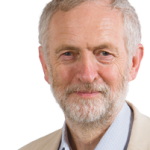

  • Jeremy Corbyn – 2022 Loyal Address Speech

    Jeremy Corbyn – 2022 Loyal Address Speech

    The speech made by Jeremy Corbyn, the Independent MP for Islington North, in the House of Commons on 10 May 2022.

    I will try to keep within the 10-minute limit that you have requested, Madam Deputy Speaker.

    The day of the state opening of Parliament is quite surreal. We have all the pomp, the gold coaches and the ancient Rolls-Royces out on the streets, and a Prime Minister who comes into the Chamber and tells us that he has got right all the big calls on covid and all the big calls on finance and then disappears. The reality is that we as a country have 4.2 million children living in poverty. Some 1.3 million babies—very, very small children— are being brought up in households in desperate poverty, often with not enough to eat and a heavy reliance on food banks and food co-ops merely to survive.

    Dealing with poverty and related issues requires wage rises, and, as the right hon. Member for Newark (Robert Jenrick) pointed out, a rapid increase in universal credit. It requires recognising the desperate state of poverty within Britain. It became very obvious during the covid pandemic that there is a whole generation of people who came together in mutual aid groups that now recognise that poverty and food hunger are unacceptable in our society and that the work that has been done on the right to food and so much else must be acknowledged and taken up. There is nothing in the speech that says anything that gives hope to those people living in desperate poverty at the present time.

    Many Members have spoken about the problems of energy costs. Some 6.3 million people in this country are living in fuel poverty, which is a nice sociological term, but what it really means is that those people cannot afford to put on the electricity, cannot afford to buy the gas, and cannot afford to heat their homes. If they are lucky, they can heat one room of that home, or they just go cold.

    I would have thought that quite a few Members who campaigned in the local elections last week came across houses with no lights on, even when it was getting dark. There was a reason for that: people in those houses could not afford to charge the key meter or to put the lights on in their homes. That is the reality of poverty in this country. That poverty, again, leads not just to unpleasant living, but to hypothermia and really serious problems for people just trying to survive. Why have this Government not done what the French have done and introduced an energy price cap? Why have they not taken the hit of the increased energy prices as a public good in order to protect people? Why are they not promoting public ownership of energy, rather than having the energy companies making massive profits during this period of crisis? We must look at all of those issues.

    Some 83% of adults say that they are noticing, or suffering from, a considerable increase in the cost of living, which means not just food poverty, but an inability to buy clothes and so much else as well. Those issues were not addressed in the speech.

    I was interested in the very thoughtful speech made by the right hon. Member for Newark just now, which addressed many of the housing issues we face in this country. The homeless people who were very obviously on the streets of this country when the covid pandemic started were housed, because there was Government intervention and sufficient funding given to local authorities to ensure that they were housed.

    Some local authorities leased hotels, some bought new places and a large number—I do not think all, but a large number—of rough-sleeping homeless people were housed during the pandemic. If we can do it during a pandemic, we can do it at any time. We can carry on doing it. It is simply immoral that anyone should be forced to sleep on the streets of this country at any time. However, that means addressing the issues of housing costs and housing stress.

    I represent an inner-city constituency with a large number of council properties, a considerable number of housing association places, a small and declining number of owner-occupiers and a fast-growing private rented sector. By and large, the council properties are well managed and well run and have reasonable rents, and to live in a council property gives people a considerable sense of security.

    I do not think housing associations are particularly well managed. I do not think by and large that they are good at doing repairs or good at management, and they are profoundly undemocratic in their behaviour and their frequent refusals to listen to tenants or allow what tenants want to have any bearing. We must hardwire into any housing legislation a sense of democracy in how housing associations manage their properties, and force them to listen to their tenants.

    It is in the private rented sector, however, that the worst problems occur. About 30% to 33% of my constituents live in the private rented sector, and the rent levels are horrendous. They are more than three times the level of council rents, and the local housing allowance is insufficient to help people who are mostly moving into the private rented sector. Those on universal credit moving into the private rented sector because of the insufficiency of council housing must either supplement the rent themselves or move away from their community, their schools, their families, their support networks and all the rest.

    We must understand that if we are going to have such a huge proportion of our population living in the private rented sector, they need certainty of an affordable rent, certainty of long-term tenancies, certainty that they will not be peremptorily evicted from that property and certainty that repairs will be done when they need them. Many local authorities, my own included, are innovative and creative in building some degree of protection and regulation in their communities, but it is this House that should build those protections and regulations within the private rented sector.

    There are a whole lot of things that ought to be in the Queen’s Speech. If the Government are proposing deregulation of the economy at the very time when we need an investment in the economy, if they are not doing anything about job protection, fire and rehire or the insufficiency of wages for many people, the gaping chasm of inequality in Britain will get worse. There is regional inequality, there is national inequality, there is social inequality and there is class inequality, and it is getting worse. This Parliament must address those issues.

    As my hon. Friend the Member for Hemsworth (Jon Trickett) said, social inequality is dealt with either by raising wages, raising public expenditure and so on, or by repressing the protests and the anger and trying to control people who want to demonstrate against it. The whole agenda of a law and order society, rather than dealing with the social divisions in society, is not an appealing prospect.

    The world is in an environmental crisis. COP25 said so, COP26 said so—although there was a lot of greenwash surrounding it—and there is a massive environmental disaster around the corner. The global refugee crisis of 70 million people around the world comes from wars, human rights abuses and oppressive societies, but it also comes from the environmental disaster we face. We cannot just close our doors on refugees.

    I absolutely and totally condemn the Russian invasion of Ukraine and I hold out my heart and my hand to the Ukrainian refugees who have come to this country, albeit with great difficulty and no thanks to Home Office processes and procedures. We should hold out the same hand and the same welcome to refugees from other conflicts and wars in Yemen, Syria, Libya, Palestine, Ethiopia, Eritrea and other places, and recognise that if we want good human rights for ourselves, those human rights should apply to others.

    That should also apply to people’s human right to express dissent around the world. The number of real journalists, very brave people, who have stood up against oligarchs and dictators and have paid the ultimate price as a result by being murdered should be recognised. Our Home Secretary should think carefully of the responsibility on her shoulders to decide whether somebody who has bravely reported on human rights abuses and military activities around the world, Julian Assange, should be removed from this country. I think he is a whistleblower and journalist who should be protected, not removed.

    My last point is that we should be building a world fit for the next generation. We are bringing up a generation of children in this country who are overstressed and over-tested in school; who are streamed almost out of sight in secondary school and are victims of the competitive culture between secondary schools; who are charged in college and heavily indebted in university; and who then, because their wage levels are so low, cannot afford any decent or permanent place to live.

    What message are we giving to the next generation? They will not have it as good as the current generation; they will have to pay the debts for the future. We should be investing, nurturing, cultivating and including all those young people. We should joy in their creativity, their art, their music, their science, their learning. They are the future. But what are we doing? Consigning them to stress and, in many cases, so much poverty. We can do things differently and very much better than we are. Sadly, the speech given today offers no hope whatsoever for any of the issues I have drawn attention to.