Tag: Jeremy Corbyn

  • Ben Bradley – 2022 Loyal Address Speech

    Ben Bradley – 2022 Loyal Address Speech

    The speech made by Ben Bradley, the Conservative MP for Mansfield, in the House of Commons on 10 April 2022.

    It is a pleasure to take part in today’s debate on the Queen’s Speech. There is a lot to welcome in the conversation and in the announcements we have heard today. The right hon. Member for Islington North (Jeremy Corbyn) very nearly said something I agreed with about schools at one stage in his speech, and I was about to stand up and say how I agreed with him, but as the sentence went on he ruined it and I did not agree any more. However, I did enjoy and agree with part of it, which I will come back to.

    I would like to welcome some elements in the Queen’s Speech. It is worth first identifying what the Queen’s Speech is, because we have talked a lot in the Chamber today about the need for short-term intervention, but the Queen’s Speech lays out the legislative agenda, which by its very nature is not short term. Legislation inevitably takes time: in this place, it takes a year or more to get any serious piece of legislation done. We all recognise and accept the need for short-term support and help for the most vulnerable. We all see it in our own constituencies—my own is one of the poorest and most disadvantaged in the country on many indicators.

    We all see the hardship and we all recognise the need for support. The Chancellor has said so overtly, and the Chief Secretary to the Treasury has been on the media round today making clear that that will happen and that more support will come. The Queen’s Speech, however, is about the long term and the legislative agenda, and as I said there is a lot to welcome, not least on the economy and levelling up, which I will focus on in more detail later in my speech.

    Starting with something that is perhaps relatively small in the grand scheme of levelling up and cost of living, I am pleased to see football governance included. Our clubs are not just businesses but the heart of our communities in many places, and I welcome the opportunity to look in more detail at sustainable support for them. I also welcome the opportunity to crack down further on the mass disruption and criminal damage that has often been allowed to masquerade as legitimate protest in recent years. That is not right or acceptable.

    I hugely welcome the schools Bill and the opportunity to do more on school standards. This is where I nearly agreed with the right hon. Member for Islington North, who has gone now. He obviously did not want to hear how we agreed, because that would only be damaging to his reputation, I am sure, or to mine—one way or the other. He talked about the need for more autonomy within schools, for a broader curriculum, and for the opportunity to prioritise and promote cultural capital as opposed to just exams in our schools system. On that, I totally agree with him. I would like Nottinghamshire County Council, which I lead, to take forward the schools White Paper as an early adopter. That would be an opportunity to drive the move to give our schools more autonomy, a clearer structure of accountability and more empowerment of teachers, schools and trusts to be able to do their own thing—what they think is best for their children. We would retain more teachers if we empowered them to do that. There is opportunity for that in the schools Bill, and I hope that Nottinghamshire will be an early adopter of some of the new provisions.

    I want to urge caution on a couple of things, not least the Online Safety Bill. The Bill is well-intentioned, in that we all understand why we want to seek to protect people online and why things that are illegal in the real world should also be illegal online. However, I am also concerned about the risk of allowing big tech companies to police our language and our speech. We see the debate and controversies that rage about Twitter and Elon Musk. It is a really difficult topic and a really difficult thing to get right. I urge the Government not to go too far in restrictions or in allowing anybody, frankly, to choose to police the language that we are allowed to use, because that can only end badly.

    Earlier in the year I welcomed the Chancellor’s commitment to move towards a lower-tax, small-state kind of economy where we can promote growth and allow the private sector to flourish and create jobs to support our constituents. He talked about a small state, and I would like the Government to consider putting that into practice in other legislation too. Not least, there are things like the obesity strategy where we are starting to talk about which adverts can be placed where, in which shops. That is madness and not something that the Government should be involved in. I hope that they might reconsider some of these things.

    I want to focus the majority of my comments on the economy and on levelling up. I was pleased to see the phrase “economic growth” repeated over and again. One of the most successful political campaigns of my brief career has been the long-term economic plan that we all remember and all heard about over and again. We used the same kind of language in those days and it proved to be very popular. My right hon. Friend the Member for Newark (Robert Jenrick) talked about the importance of growth in being able to fund our public services so as to give residents in our communities better life chances. Some of the Bills that will be brought forward in this Session are absolutely vital to that, not least the levelling-up Bill, which will be a key driver of that growth.

    Private sector growth, not Government spending, is at the heart of better opportunities for areas like the east midlands, where I come from, which have historically been at the bottom of all the charts for both public and private sector growth but where we have huge opportunities to get more of both. We already have projects in train that will allow us to free up the private sector to invest in our region to create the better-paid, better-quality jobs that are in short supply there. That is not about high spending; it is about promoting and creating an environment for business to flourish in our region. It is about delivery. We have talked for a long time about the funding that is going into the most disadvantaged areas. As I said, the east midlands is lowest on all the charts of what money, private and public, goes into these places. My own constituency of Mansfield is at the bottom end of that regional scale.

    However, we have really positive things in the pipeline that will come forward in future. We have seen capital investment such as the towns fund and the levelling-up fund. We have seen huge funding announcements. A few weeks ago, at Prime Minister’s questions, I asked the Prime Minister about delivery and outcomes, because we can only talk for so long about how much money we have secured for an area without residents being able to point to a thing that is new. A lot of what we will achieve, and a lot of what is most important in levelling up, is not visible. It is long-term things like skills, education and schools, where we will not be able to point to a shiny achievement within the life of one Parliament. But some of it is short-term: buildings and regeneration of town centres. Some of it is things that we have announced hundreds of millions of pounds for, getting on for two years ago now, that are bogged down in process, and often bogged down in Whitehall.

    If we are going to get to a position where residents believe us when we talk about the big things that we are doing around skills and education, and how that is going to benefit them in future, we need to show them the delivery of those short-term things about high-street regeneration—the towns fund and the money that we have promised. It is all in the pipeline.

    Karin Smyth

    I feel slightly disappointed for the hon. Gentleman’s constituents. I can point to things in my Bristol South constituency that were delivered by the last Labour Government—every single school rebuilt, a brand new hospital, and the investment that came there that those people deserved after the years under the previous Tory Government. That is what we delivered for them on the ground. His Government have had 12 years and he still cannot point to anything in his constituency.

    Ben Bradley

    I understand the point the hon. Lady is making, but she is not quite right given that the Labour Government had 13 years and there was a great amount of time for the delivery of a number of those projects. I was eight years old when the ’97 Labour Government came to power. Labour had a fair old while to deliver on some of those things. My constituency has been represented by the Conservatives for only five years in its entire history, and that has always been me. We have been working on a number of projects. This Government, this Prime Minister and this levelling-up agenda have been around for a very brief period of time.

    We have already talked about the hundreds of millions of pounds of investment that have been secured for my own constituency. We can talk about the towns fund, additional support and investment in skills, capital investment for our college that we have not seen before, and new capital investment in our hospitals. All that is in train. Some of is visible; some of it is not yet visible. We need to be able to point to those things not just in my constituency but across the country in some of the seats that we won only a matter of two years ago where new, talented Conservative MPs are making the case for that investment. We need to see outcomes across the board. It is no good standing up and saying that we have made promises of money because at some stage residents will say, “Where is that new town centre building, where is that new project, where is my shiny new town centre?”

    Lilian Greenwood (Nottingham South) (Lab)

    I well understand the concerns of people in Nottingham and Nottinghamshire, as the hon. Gentleman does, but are not many of those people saying to him, right now, “Why aren’t the Government doing something to put more money in my pocket?” I am sure he is hearing from his constituents, as I am from mine, that they are worried sick about paying their bills. At the moment, when they are really struggling, what he is talking about is not doing anything to help those families, or anything to help our high streets in Nottinghamshire either.

    Ben Bradley

    The hon. Lady is right that constituents are worried—they are in my constituency and I am sure they are in hers. They also recognise that the Government cannot flick a switch and fix everything, nor should anybody suggest that they can. We have the £22 billion package of intervention that we have already brought forward and a commitment to more in the pipeline and coming over the course of summer and into the autumn. The Chancellor has already made that commitment. Very few residents in my constituency come to me expecting the Government to have a magic bullet, and it is slightly false that so many Opposition Members seem to suggest that there is one when there is not.

    The levelling-up Bill is hugely important for our region —more so, perhaps, than for many—because it contains the mechanism for us to bring forward a devolution deal for the east midlands, Nottinghamshire, Nottingham, Derbyshire and Derby. That is the delivery mechanism for many of the things that we have talked about. The hon. Member for Wirral South (Alison McGovern), who is no longer in her place, talked about brownfield funding—the ability to bring forward sites and to have more clout over what we do with that funding. That is part of our devolution negotiations. She raised other examples, and I sat here thinking that we can do that if we bring forward this devolution arrangement and track on with the negotiation.

    The only thing that will slow down the course of that negotiation, which should be done by the end of the year, is the legislation, which will take longer. I call on the Government to prioritise that and bring it forward to let us get those levers and that additional funding. The west midlands, our partner that we often look to enviously, has had billions and billions of pounds of additional investment since it got its deal just six or seven years ago. We want that, and we can bring it forward quickly if the Government commit to bringing forward the legislation in a timely way in the spring. If it is May rather than March, we will probably have to wait 12 months before we can actually deliver on the outcomes that we want to see.

    I urge the Government to crack on and prioritise the devolution element of the levelling-up Bill and agenda, which is massively important to get these outcomes for my constituents. We need not just promises but outcomes to show residents who, in many cases, are in seats that used to be represented by Labour and who voted for this Prime Minister and this Conservative Government to deliver for them. They will need to see those outcomes. The mechanisms to deliver that are in today’s Queen’s Speech, so I urge the Government to bring them forward as quickly as possible.

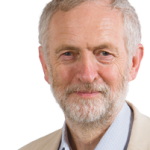
  • Jeremy Corbyn – 2022 Loyal Address Speech

    Jeremy Corbyn – 2022 Loyal Address Speech

    The speech made by Jeremy Corbyn, the Independent MP for Islington North, in the House of Commons on 10 May 2022.

    I will try to keep within the 10-minute limit that you have requested, Madam Deputy Speaker.

    The day of the state opening of Parliament is quite surreal. We have all the pomp, the gold coaches and the ancient Rolls-Royces out on the streets, and a Prime Minister who comes into the Chamber and tells us that he has got right all the big calls on covid and all the big calls on finance and then disappears. The reality is that we as a country have 4.2 million children living in poverty. Some 1.3 million babies—very, very small children— are being brought up in households in desperate poverty, often with not enough to eat and a heavy reliance on food banks and food co-ops merely to survive.

    Dealing with poverty and related issues requires wage rises, and, as the right hon. Member for Newark (Robert Jenrick) pointed out, a rapid increase in universal credit. It requires recognising the desperate state of poverty within Britain. It became very obvious during the covid pandemic that there is a whole generation of people who came together in mutual aid groups that now recognise that poverty and food hunger are unacceptable in our society and that the work that has been done on the right to food and so much else must be acknowledged and taken up. There is nothing in the speech that says anything that gives hope to those people living in desperate poverty at the present time.

    Many Members have spoken about the problems of energy costs. Some 6.3 million people in this country are living in fuel poverty, which is a nice sociological term, but what it really means is that those people cannot afford to put on the electricity, cannot afford to buy the gas, and cannot afford to heat their homes. If they are lucky, they can heat one room of that home, or they just go cold.

    I would have thought that quite a few Members who campaigned in the local elections last week came across houses with no lights on, even when it was getting dark. There was a reason for that: people in those houses could not afford to charge the key meter or to put the lights on in their homes. That is the reality of poverty in this country. That poverty, again, leads not just to unpleasant living, but to hypothermia and really serious problems for people just trying to survive. Why have this Government not done what the French have done and introduced an energy price cap? Why have they not taken the hit of the increased energy prices as a public good in order to protect people? Why are they not promoting public ownership of energy, rather than having the energy companies making massive profits during this period of crisis? We must look at all of those issues.

    Some 83% of adults say that they are noticing, or suffering from, a considerable increase in the cost of living, which means not just food poverty, but an inability to buy clothes and so much else as well. Those issues were not addressed in the speech.

    I was interested in the very thoughtful speech made by the right hon. Member for Newark just now, which addressed many of the housing issues we face in this country. The homeless people who were very obviously on the streets of this country when the covid pandemic started were housed, because there was Government intervention and sufficient funding given to local authorities to ensure that they were housed.

    Some local authorities leased hotels, some bought new places and a large number—I do not think all, but a large number—of rough-sleeping homeless people were housed during the pandemic. If we can do it during a pandemic, we can do it at any time. We can carry on doing it. It is simply immoral that anyone should be forced to sleep on the streets of this country at any time. However, that means addressing the issues of housing costs and housing stress.

    I represent an inner-city constituency with a large number of council properties, a considerable number of housing association places, a small and declining number of owner-occupiers and a fast-growing private rented sector. By and large, the council properties are well managed and well run and have reasonable rents, and to live in a council property gives people a considerable sense of security.

    I do not think housing associations are particularly well managed. I do not think by and large that they are good at doing repairs or good at management, and they are profoundly undemocratic in their behaviour and their frequent refusals to listen to tenants or allow what tenants want to have any bearing. We must hardwire into any housing legislation a sense of democracy in how housing associations manage their properties, and force them to listen to their tenants.

    It is in the private rented sector, however, that the worst problems occur. About 30% to 33% of my constituents live in the private rented sector, and the rent levels are horrendous. They are more than three times the level of council rents, and the local housing allowance is insufficient to help people who are mostly moving into the private rented sector. Those on universal credit moving into the private rented sector because of the insufficiency of council housing must either supplement the rent themselves or move away from their community, their schools, their families, their support networks and all the rest.

    We must understand that if we are going to have such a huge proportion of our population living in the private rented sector, they need certainty of an affordable rent, certainty of long-term tenancies, certainty that they will not be peremptorily evicted from that property and certainty that repairs will be done when they need them. Many local authorities, my own included, are innovative and creative in building some degree of protection and regulation in their communities, but it is this House that should build those protections and regulations within the private rented sector.

    There are a whole lot of things that ought to be in the Queen’s Speech. If the Government are proposing deregulation of the economy at the very time when we need an investment in the economy, if they are not doing anything about job protection, fire and rehire or the insufficiency of wages for many people, the gaping chasm of inequality in Britain will get worse. There is regional inequality, there is national inequality, there is social inequality and there is class inequality, and it is getting worse. This Parliament must address those issues.

    As my hon. Friend the Member for Hemsworth (Jon Trickett) said, social inequality is dealt with either by raising wages, raising public expenditure and so on, or by repressing the protests and the anger and trying to control people who want to demonstrate against it. The whole agenda of a law and order society, rather than dealing with the social divisions in society, is not an appealing prospect.

    The world is in an environmental crisis. COP25 said so, COP26 said so—although there was a lot of greenwash surrounding it—and there is a massive environmental disaster around the corner. The global refugee crisis of 70 million people around the world comes from wars, human rights abuses and oppressive societies, but it also comes from the environmental disaster we face. We cannot just close our doors on refugees.

    I absolutely and totally condemn the Russian invasion of Ukraine and I hold out my heart and my hand to the Ukrainian refugees who have come to this country, albeit with great difficulty and no thanks to Home Office processes and procedures. We should hold out the same hand and the same welcome to refugees from other conflicts and wars in Yemen, Syria, Libya, Palestine, Ethiopia, Eritrea and other places, and recognise that if we want good human rights for ourselves, those human rights should apply to others.

    That should also apply to people’s human right to express dissent around the world. The number of real journalists, very brave people, who have stood up against oligarchs and dictators and have paid the ultimate price as a result by being murdered should be recognised. Our Home Secretary should think carefully of the responsibility on her shoulders to decide whether somebody who has bravely reported on human rights abuses and military activities around the world, Julian Assange, should be removed from this country. I think he is a whistleblower and journalist who should be protected, not removed.

    My last point is that we should be building a world fit for the next generation. We are bringing up a generation of children in this country who are overstressed and over-tested in school; who are streamed almost out of sight in secondary school and are victims of the competitive culture between secondary schools; who are charged in college and heavily indebted in university; and who then, because their wage levels are so low, cannot afford any decent or permanent place to live.

    What message are we giving to the next generation? They will not have it as good as the current generation; they will have to pay the debts for the future. We should be investing, nurturing, cultivating and including all those young people. We should joy in their creativity, their art, their music, their science, their learning. They are the future. But what are we doing? Consigning them to stress and, in many cases, so much poverty. We can do things differently and very much better than we are. Sadly, the speech given today offers no hope whatsoever for any of the issues I have drawn attention to.

  • Jeremy Corbyn – 2022 Comments on Opposing NATO Expansion

    Jeremy Corbyn – 2022 Comments on Opposing NATO Expansion

    The comments made by Jeremy Corbyn, the Independent MP for Islington North, on 22 February 2022.

    The Russian forces that have entered Eastern Ukraine should immediately withdraw.

    The UK government should encourage a return to the Minsk-2 agreement to end the crisis and oppose further eastward NATO expansion.

    Diplomacy must resume.

  • Jeremy Corbyn – 2014 Comments on Military Base in Bahrain

    Jeremy Corbyn – 2014 Comments on Military Base in Bahrain

    The comments made by Jeremy Corbyn, the Labour MP for Islington North, on 7 December 2014.

    Absolutely shocking! Britain to establish first permanent Middle Eastern military base for 43 years in Bahrain.

  • Jeremy Corbyn – 2014 Comments on European Union Response to Migrants in Mediterranean

    Jeremy Corbyn – 2014 Comments on European Union Response to Migrants in Mediterranean

    The comments made by Jeremy Corbyn, the Labour MP for Islington North, on 28 October 2014.

    On CNN on need for human response to 3000 deaths already in Mediterranean this year. EU putting up barriers not saving lives of victims.

  • Jeremy Corbyn – 2021 Speech on the Budget

    Jeremy Corbyn – 2021 Speech on the Budget

    The speech made by Jeremy Corbyn, the Independent MP for Islington North, in the House of Commons on 3 March 2021.

    I am delighted to be able to speak in this Budget debate, but sadly this Budget does not reflect the reality of people’s lives. Just this morning I have come from a local food bank where people were queuing up to try to get enough food to get by. They are people who thought they would always be okay and have enough money to live on, but they do not and they therefore rely on food banks. To the tens of thousands of people who have volunteered in mutual aid groups all over the country, I think we should say a huge thank you. They have contributed, in a way that the Government have not, to the lives of so many people who would be in such great difficulty if those food banks were not there.

    The Chancellor talks about extending the furlough scheme and protecting people on those wages. I point out to him that the scheme includes no floor and that 80% of minimum wage is a lot less than the money people need to live on. It was my right hon. Friend the Member for Hayes and Harlington (John McDonnell) who proposed a year ago that we should have a furlough scheme. He sent substantial papers to the Treasury in order to bring that about. Sadly, I do not believe that the Chancellor read all of them.

    The scheme proposed by my right hon. Friend would have guaranteed everybody’s income and jobs, it would have had a floor, and it would have gone on to protect people’s conditions and wages, as well as those of people in all aspects of self-employment, including in the artistic sector. There are many people in work at the moment who are being threatened with fire and rehire, and there are companies trying to dismiss the whole workforce and rehire them on lower wages and with worse working conditions. British Gas and British Airways tried it on, and so many other companies are trying to do the same thing. Where is the protection for people’s living standards and jobs in this Budget? Sadly, it is desperately missing.

    On public sector pay, many are going to be hit by the pay freeze and by a stealth income tax rise through the freezing of the tax allowance. I remind the Chancellor that a previous Government—a Labour Government in the 1970s—came a cropper on that one when the Rooker-Wise amendment was passed to prevent the Chancellor from the freezing the tax-free allowance.

    Millions of public sector workers have contributed so much to dealing with the covid pandemic. Those working in our national health service, our care services and our local government have made super-human efforts to try to help people get through a desperate time, helping people through the mental health crisis and so much else. Their reward is going to be frozen pay and, for those working in local government, a continued underfunding of local government services.

    For pretty well everyone across the country, there will be a 5% rise in council tax, as local councils desperately try to balance the books and deal with the increased demands on their services because of the covid pandemic. I hope that the Chancellor will recognise that we need a proper funding formula for local services across the country, and not just claps for the NHS, the care service and delivery workers, but actual pay increases to recognise the massive contribution that they are making to our society.

    The Budget said a great deal about corporation tax and other business taxes, but it did not say very much about tax evasion or tax avoidance. From the Government’s statements, they propose to raise around £2.2 billion between now and 2025—in the next four years—from tax avoidance and tax evasion, yet the real figure is that something over £30 billion a year is lost to our public services through tax avoidance and tax evasion. If the Government were serious, they would have included measures in the Budget to deal with tax avoidance and tax evasion.

    I hope, by contrast, that the Government will recognise that not increasing statutory sick pay while at the same time doing nothing about tax evasion and tax avoidance says it all about Tory priorities. Statutory sick pay is £95 per week. The Secretary of State for Health and Social Care himself said he could not live on that; I do not think that any Member would want to try to live on that, so why are we expecting anybody else in our society to do so? It has to be increased, and we need a guarantee of at least the £20 rise in universal credit, which at the moment is still a temporary measure.

    The Chancellor had obviously read quite a lot of the proposals made by my right hon. Friend the Member for Hayes and Harlington before the last election, in which he pointed out that he wanted to move jobs to the north and ensure that the increase in public spending that we were proposing would help people across the north. The Chancellor made a big deal of about 750 jobs going to Darlington. Sadly, all that is cancelled out by the huge number of job losses in transport authorities across the north of England, particularly in Greater Manchester and Merseyside City Region. That is because the Government have not provided them with the funding package to support transport systems that they have in London and other places. This degree of unfairness between the north and the south will continue, and the degree of unfairness between the richest and poorest in our society will increase under this Budget.

    Towards the end of his speech, the Chancellor managed to provide a great deal of greenwash for his proposals. Of course, we all support a green industrial revolution. It was central to Labour’s manifesto at the last election, but where is the commitment to net zero emissions by 2030? Where is the commitment on protection of biodiversity to protect us all for the future? This Budget is such a lost opportunity. At the end of it, our society will be more divided than it is at the present time, there will be greater stress and uncertainty in so many people’s lives because of this Budget. We can, should and must do much better than this.

  • Jeremy Corbyn – 2013 Comments on Venezuela

    Jeremy Corbyn – 2013 Comments on Venezuela

    The comments made by Jeremy Corbyn, the Labour MP for Islington North, on 5 March 2013.

    Thanks Hugo Chavez for showing that the poor matter and wealth can be shared.

    He made massive contributions to Venezuela and a very wide world.

  • Jeremy Corbyn – 2020 Statement on Anti-Semitism

    Jeremy Corbyn – 2020 Statement on Anti-Semitism

    The statement made by Jeremy Corbyn, the former Leader of the Labour Party, on 29 October 2020.

    I will strongly contest the political intervention to suspend me. I’ve made absolutely clear that those who deny there has been an antisemitism problem in the Labour Party are wrong.

    It’s also undeniable that a false impression has been created of the number of members accused of antisemitism, as polling shows: that is what has been overstated, not the seriousness of the problem.

    I will continue to support a zero tolerance policy towards all forms of racism. And I urge all members to stay calm and focused – while this problem is resolved amicably, as I believe it will be – to defeat this awful government, which is further impoverishing the poorest in our society.

  • Jeremy Corbyn – 2016 Comments on Brussels Terror Attack

    Jeremy Corbyn – 2016 Comments on Brussels Terror Attack

    The comments made by Jeremy Corbyn, the then Leader of the Labour Party, on 22 March 2016.

    Today, our thoughts and sympathies are with the people of Brussels.

    We stand in solidarity with the victims of these horrific attacks, their friends and families, and the men and women of the emergency services.

    We must defend our security and values in the face of such terrorist outrages, and refuse to be drawn into a cycle of violence and hatred.

    We take pride in our societies of diverse faiths, races and creeds and will not allow those who seek to divide us to succeed.

  • Jeremy Corbyn – 2015 Comments on Winning in 2020

    Jeremy Corbyn – 2015 Comments on Winning in 2020

    The text of the comments made by Jeremy Corbyn, the then Leader of the Labour Party, on 31 July 2015.

    Labour has many challenges to win in 2020. But the first challenge we must meet is for us as a party. We need to be united in our identity and our values – proud of what we stand for, and confident and credible that we can deliver a better society.

    To do that, we have to be a movement again. Our party was founded to stand up to injustice, but too often we have lost our way, ignored our supporters or been cowed by powerful commercial interests and the press.

    We lose our way when we don’t listen to our people and our communities. Our local parties, trade unions branches, councillors, constituency MPs and members know their communities. They know the people and the issues they face. We need strong networks in every constituency, built from the bottom up, not dictated to from the top down.

    They are the people who will deliver our message. But because we are a movement they are also creators of our message too. Their wisdom, their insight is what will ensure we have the right policies to win.

    The more we exclude our people, the weaker we are. The more we involve them, the stronger we will be. So to win, our party must draw on its greatest strength: our people.

    A movement mobilises people and the most overlooked group within the electorate is those who, at the 2015 election, didn’t vote – 34% of the electorate. They are more likely to be young, from an ethnic minority background and to be working class – as are the hundreds of thousands who are not registered to vote at all.

    These are the people who would benefit most from the sort of Labour government I know we all believe in: that stands up against discrimination, that reduces inequality and poverty, that creates a fairer society for all.

    If we had convinced just one in five of those who didn’t vote then today we might have a Labour government. And I know too that we can win back the trust and support of many of those who left us in 2015 for the Conservatives, UKIP, the Greens or SNP.

    The endorsement of my campaign by so many people and by so many of our affiliates is not an endorsement of me, but of an approach: one that stands up for our values in an inclusive, participatory and democratic way.

    Electing a leader in September 2015 won’t win us the election in May 2020. What we need to do is build a movement that involves people in setting out a shared vision for a more prosperous future for all. The election will then be ours for the taking.

    If you share that vision then join my campaign.