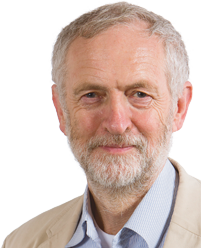
Tag: Jeremy Corbyn

  • Jeremy Corbyn – 2016 Speech on the EU

    jeremycorbyn

    Below is the text of the speech made by Jeremy Corbyn, the Leader of the Opposition, at the Senate House on 14 April 2016.

    The people of this country face a historic choice on 23rd June whether to remain part of the European Union, or to leave. I welcome the fact that that decision is now in the hands of the British people. Indeed, I voted to support a referendum in the last Parliament.

    The move to hold this referendum may have been more about managing divisions in the Conservative party. But it is now a crucial democratic opportunity for people to have their say on our country’s future, and the future of our continent as a whole.

    The Labour Party is overwhelmingly for staying in because we believe the European Union has brought: investment, jobs and protection for workers, consumers and the environment, and offers the best chance of meeting the challenges we face in the 21st century. Labour is convinced that a vote to remain is in the best interests of the people of this country.

    In the coming century, we face huge challenges, as a people, as a continent and as a global community. How to deal with climate change. How to address the overweening power of global corporations and ensure they pay fair taxes. How to tackle cyber-crime and terrorism. How to ensure we trade fairly and protect jobs and pay in an era of globalisation. How to address the causes of the huge refugee movements across the world, and how we adapt to a world where people everywhere move more frequently to live, work and retire.

    All these issues are serious and pressing, and self-evidently require international co-operation. Collective international action through the European Union is clearly going to be vital to meeting these challenges. Britain will be stronger if we co-operate with our neighbours in facing them together.

    As Portugal’s new Socialist Prime Minister, Antonio Costa, has said: ‘in the face of all these crises around us. We must not divide Europe – we must strengthen it.’

    When the last referendum was held in 1975, Europe was divided by the Cold War, and what later became the EU was a much smaller, purely market-driven arrangement. Over the years I have been critical of many decisions taken by the EU, and I remain critical of its shortcomings; from its lack of democratic accountability to the institutional pressure to deregulate or privatise public services.

    So Europe needs to change. But that change can only come from working with our allies in the EU. It’s perfectly possible to be critical and still be convinced we need to remain a member.

    I’ve even had a few differences with the direction the Labour Party’s taken over the past few years but I have been sure that it was right to stay a member some might say I’ve even managed to do something about changing that direction.

    In contrast to four decades ago, the EU of today brings together most of the countries of Europe and has developed important employment, environmental and consumer protections.

    I have listened closely to the views of trade unions, environmental groups, human rights organisations and of course to Labour Party members and supporters, and fellow MPs. They are overwhelmingly convinced that we can best make a positive difference by remaining in Europe.

    Britain needs to stay in the EU as the best framework for trade, manufacturing and cooperation in 21st century Europe. Tens of billion pounds-worth of investment and millions of jobs are linked to our relationship with the EU, the biggest market in the world.

    EU membership has guaranteed working people vital employment rights, including four weeks’ paid holiday, maternity and paternity leave, protections for agency workers and health and safety in the workplace. Being in the EU has raised Britain’s environmental standards, from beaches to air quality, and protected consumers from rip-off charges.

    But we also need to make the case for reform in Europe – the reform David Cameron’s Government has no interest in, but plenty of others across Europe do.

    That means democratic reform to make the EU more accountable to its people. Economic reform to end to self-defeating austerity and put jobs and sustainable growth at the centre of European policy, labour market reform to strengthen and extend workers’ rights in a real social Europe. And new rights for governments and elected authorities to support public enterprise and halt the pressure to privatise services.

    So the case I’m making is for ‘Remain – and Reform’ in Europe.

    Today is the Global Day of Action for Fast Food Rights. In the US workers are demanding $15 an hour, in the UK £10 now. Labour is an internationalist party and socialists have understood from the earliest days of the labour movement that workers need to make common cause across national borders.

    Working together in Europe has led to significant gains for workers here in Britain and Labour is determined to deliver further progressive reform in 2020 the democratic Europe of social justice and workers’ rights that people throughout our continent want to see.

    But real reform will mean making progressive alliances across the EU – something that the Conservatives will never do.

    Take the crisis in the steel industry. It’s a global problem and a challenge to many European governments. So why is it only the British Government that has failed so comprehensively to act to save steel production at home?

    The European Commission proposed new tariffs on Chinese steel, but it was the UK Government that blocked these co-ordinated efforts to stop Chinese steel dumping.

    Those proposals are still on the table. So today I ask David Cameron and George Osborne to to start sticking up for British steel and work with our willing European partners to secure its future.

    There are certainly problems about EU state aid rules, which need reform. But if as the Leave side argues, it is the EU that is the main problem, how is that Germany, Italy, France and Spain have all done so much better at protecting their steel industries?

    It is because those countries have acted within EU state aid rules to support their industries; whether through taking a public stake, investing in research and development, providing loan guarantees or compensating for energy costs.

    It is not the EU that is the problem, but a Conservative Government here in Britain that doesn’t recognise the strategic importance of steel, for our economy and for the jobs and skills in those communities.

    The Conservative Government has blocked action on Chinese steel dumping. It has cut investment in infrastructure that would have created demand for more steel and had no procurement strategy to support British steel.

    A Labour government would have worked with our partners across Europe to stand up for steel production in Britain.

    The European Union – 28 countries and 520 million people – could have made us stronger, by defending our steel industries together. The actions of the Conservative Government weakened us.

    The jobs being created under this Government are too often low skill, low pay and insecure jobs. If we harnessed Europe’s potential we could be doing far more to defend high skill jobs in the steel industry.

    And that goes for other employers of high skilled staff too – from Airbus to Nissan – they have made it clear that their choice to invest in Britain is strengthened by our membership of the European Union.

    Of course the Conservatives are loyally committed to protecting one British industry in Europe – the tax avoidance industry.

    The most telling revelation about our Prime Minister has not been about his own tax affair, but that in 2013 he personally intervened with the European Commission President to undermine an EU drive to reveal the beneficiaries of offshore trusts, and even now, in the wake of the Panama Papers, he still won’t act.

    And on six different occasions since the beginning of last year Conservative MEPs have voted down attempts to take action against tax dodging.

    Labour has allies across Europe prepared to take on this global network of the corrupt and we will work with them to clamp down on those determined to suck wealth out of our economies and the pockets of our people.

    On Tuesday, the EU announced a step forward on country-by-country reporting. We believe we can go further. But even this modest measure was opposed by Conservative MEPs last December.

    Left to themselves, it is clear what the main Vote Leave vision is for Britain to be the safe haven of choice for the ill-gotten gains of every dodgy oligarch, dictator or rogue corporation.

    They believe this tiny global elite is what matters, not the rest of us, who they dismiss as “low achievers”.

    Some argue that we need to leave the EU because the single market’s rules are driving deregulation and privatisation. They certainly need reform. But it was not the EU that privatised our railways. It was the Conservative Government of John Major and many of our rail routes are now run by other European nations’ publicly owned rail companies. They haven’t made the mistake of asset stripping their own countries.

    Labour is committed to bringing rail back into public ownership in 2020. And that is why Labour MEPs are opposing any element of the fourth rail package, currently before the European Parliament, that might make that more difficult.

    The Transatlantic Trade and Investment Partnership is also a huge cause for concern, but we defeated a similar proposal before in Europe, together when it was called the Multilateral Agreement on Investment, back in 1998.

    Labour MEPs are rightly opposing the Investor-State Dispute Mechanism opposing any attempt to enforce privatisation on our public services, to reduce consumer rights, workplace protections or environmental standards.

    The free market enthusiasts in the Leave campaign would put all those protections at risk. Labour is building alliances to safeguard them.

    We must also put human rights at the centre of our trade agreements, not as an optional add-on. We already have allies across Europe to do that. And the EU is vital for promoting human rights at home. As a result of EU directives and regulations, disabled people are protected from discrimination. Lifts, cars and buses need to be accessible, as does sea and air travel.

    And it was the Labour Government that signed the Human Rights Act into UK law that transferred power from government – not to Brussels – but to individual citizens.

    Climate change is the greatest threat that humanity faces this century. And Britain cannot tackle it alone. We could have the best policies possible but unless we act together internationally, it is worthless. Labour brought in the Climate Change Act, John Prescott played a key role in getting the Kyoto Protocols agreed. Labour has led the debate within Europe.

    But despite David Cameron pledging to lead the greenest Government ever, Britain still lags far behind most of Europe in terms of renewable energy production. We have much to learn from what Germany has done in particular.

    The Conservative Government has cut subsidies for solar power while increasing subsidies for diesel. It has cut regulatory burdens on fracking yet increased regulations on onshore wind. They say one thing, but do another.

    Again, it has been regulations agreed in Europe that have improved Britain’s beaches and waterways and that are forcing us to tackle the scandal of air pollution which will kill 500,000 people in Britain by 2025, unless we act.

    Working together in the European Union is vital for tackling climate change and vital in protecting the environment we share.

    No doubt debate about EU membership in the next couple of months will focus strongly on jobs and migration. We live in an increasingly globalised world. Many of us will study, work or even retire abroad at some point in our lives.

    Free movement has created opportunities for British people. There are nearly three-quarters of a million British people living in Spain and over two million living in the EU as a whole.

    Learning abroad and working abroad, increases the opportunities and skills of British people and migration brings benefits as well as challenges at home.

    But it’s only if there is government action to train enough skilled workers to stop the exploitation of migrant labour to undercut wages and invest in local services and housing in areas of rapid population growth that they will be felt across the country.

    And this Government has done nothing of the sort. Instead, its failure to train enough skilled workers means we have become reliant on migration to keep our economy functioning.

    This is especially true of our NHS which depends on migrant nurses and doctors to fill vacancies. This Government has failed to invest in training, and its abolition of nurses’ bursaries, and its decision to pick a fight with junior doctors is likely to make those shortages worse.

    As a former representative of NHS workers, I value our NHS and admire the dedication of all its staff. It is Labour’s proudest creation. But right now, it would be in even greater crisis if many on the Leave side had their way. Some of whom have argued against the NHS and free healthcare on demand in principle.

    And of course it is EU regulations that that underpin many rights at work, like holiday entitlement, maternity leave, rights to take breaks and limits to how many hours we can work, and that have helped to improve protection for agency workers.

    The Tories and UKIP are on record as saying they would like to cut back EU-guaranteed workplace rights if they could.

    A Labour government would instead strengthen rights at work making common cause with our allies to raise employment standards throughout Europe, to stop the undercutting of wages and conditions by unscrupulous employers, to strengthen the protection of every worker in Europe.

    Just imagine what the Tories would do to workers’ rights here in Britain if we voted to leave the EU in June. They’d dump rights on equal pay, working time, annual leave, for agency workers, and on maternity pay as fast as they could get away with it. It would be a bonfire of rights that Labour governments secured within the EU.

    Not only that, it wouldn’t be a Labour government negotiating a better settlement for working people with the EU. It would be a Tory government, quite possibly led by Boris Johnson and backed by Nigel Farage, that would negotiate the worst of all worlds: a free market free-for-all shorn of rights and protections.

    It is sometimes easier to blame the EU, or worse to blame foreigners, than to face up to our own problems. At the head of which right now is a Conservative Government that is failing the people of Britain.

    There is nothing remotely patriotic about selling off our country and our national assets to the highest bidder. Or in handing control of our economy to City hedge-funds and tax-dodging corporations based in offshore tax havens.

    There is a strong socialist case for staying in the European Union. Just as there is also a powerful socialist case for reform and progressive change in Europe.

    That is why we need a Labour government, to stand up – at the European level – for industries and communities in Britain, to back public ownership and public services, to protect and extend workers’ rights and to work with our allies to make both Britain and Europe work better for working people.

    Many people are still weighing up how they will vote in this referendum. And I appeal to everyone, especially young people – who will live longest with the consequences – to make sure you are registered to vote. And vote to keep Britain in Europe this June. This is about your future.

    By working together across our continent, we can develop our economies protect social and human rights, tackle climate change and clamp down on tax dodgers.

    You cannot build a better world unless you engage with the world, build allies and deliver change. The EU, warts and all, has proved itself to be a crucial international framework to do that.

    That is why I will be am backing Britain to remain in Europe and I hope you will too.

  • Jeremy Corbyn – 2016 Speech on Panama Papers

    jeremycorbyn

    Below is the text of the speech made by Jeremy Corbyn in the House of Commons on 11 April 2016.

    I thank the Prime Minister for advance sight of his statement—it is absolutely a master class in the art of distraction. I am sure that he will join me in welcoming the outstanding journalism that went into exposing the scandal of destructive global tax avoidance that was revealed by ​the Panama papers. Those papers have driven home what many people have increasingly felt: that there is now one rule for the super-rich, and another for the rest. I am honestly not sure that the Prime Minister fully appreciates the anger that is out there over this injustice. How can it be right that street cleaners, teaching assistants and nurses work and pay their taxes, yet some at the top think that the rules simply do not apply to them?

    What has been revealed in the past week goes far beyond what the Prime Minister has called his “private matters”, and today he needs to answer six questions to the House, and—perhaps equally importantly—to the public as a whole. First, why did he choose not to declare his offshore tax haven investment in the House of Commons Register of Members’ Financial Interests, given that there is a requirement to

    “provide information of any pecuniary interest”

    that might reasonably be thought to influence a Member’s actions? The Prime Minister said that he thinks he mishandled the events of the past week. Does he now realise how he mishandled his own non-declaration six years ago, when he decided not to register an offshore tax haven investment from which he has personally benefited?

    Secondly, can he clarify to the House and to the public that when he sold his stake in Blairmore Holdings in 2010, he also disposed of another offshore investment at that time? In particular, were any of the £72,000 of shares that he sold held in offshore tax havens?

    The “Ministerial Code” states that

    “Ministers must ensure that no conflict arises, or could reasonably be perceived to arise, between their public duties and their private interests, financial or otherwise,”

    and that all Ministers

    “must provide…a full list…of all interests which might be thought to give rise to a conflict,”

    including close family interests. So did the Prime Minister provide the permanent secretary with an account of his offshore interests and if not, did he not realise that he had a clear obligation to do so, when part of his personal wealth was tied up in offshore tax havens and he was now making policy decisions that had a direct bearing on their operation? For example, in 2013 the Prime Minister wrote to the President of the European Council opposing central public registers of beneficial ownership of offshore trusts. So, thirdly, does the Prime Minister now accept that transparency of beneficial ownership must be extended to offshore trusts?

    The Panama-based law firm Mossack Fonseca registered more than 100,000 secret firms in the British Virgin Islands. It is a scandal that UK overseas territories registered over half the shell companies set up by Mossack Fonseca. The truth is that the UK is at the heart of the global tax avoidance industry. It is a national scandal and it has got to end. Last year, this Government opposed the EU Tax Commissioner Pierre Moscovici’s blacklist of 30 un-co-operative tax havens. That blacklist included the Cayman Islands and the British Virgin Islands. So my fourth question is: will the Prime Minister now stop blocking European Commission plans for a blacklist of tax havens? It turns out that Lord Blencathra, the former Conservative Home Office Minister, was ​absolutely right when he wrote to the Cayman Islands Government in 2014 to reassure them that our Prime Minister was making a “purely political gesture” about cracking down on tax havens at the G8. It was designed, he said, to be

    “a false initiative which will divert other member states from pursuing their agenda.”

    Last June, Treasury officials lobbied Brussels not to take action against Bermuda’s tax secrecy. According to the European Union’s transparency register, the tech giant Google has no fewer than 10 employees lobbying Brussels. Bermuda is the tax haven favoured by Google to channel billions in profits. Conservative MEPs have been instructed on six occasions since the beginning of last year to vote against action to clamp down on aggressive tax avoidance. This is a party incapable of taking serious, internationally co-ordinated action to tackle tax dodging. Across the country and on the Opposition side of the House, there is a thirst for decisive action against global tax avoidance scams that suck revenues out of our public services, while ordinary taxpayers have to foot the bill. It undermines public trust in business, politics and public life. It can and must be brought to an end.

    We welcome the Prime Minister’s announcement today about new measures to make companies liable for employees who facilitate tax cheating, but it is also too little, too late. In fact, it was announced by the former Chief Secretary to the Treasury a year ago. People want a Government who act on behalf of those who pay their taxes, not those who dodge their taxes in offshore tax havens. Yesterday, my hon Friend the shadow Chancellor set out a clear plan for transparency. He is a Member of this House who has spent all his time in Parliament exposing tax havens and tax avoidance. His paper included a call for an immediate public inquiry into the Panama papers revelations to establish the harm done to our tax revenues and to bring forward serious proposals for reform.

    I say gently to the Prime Minister that a tax taskforce reporting to the Chancellor and the Home Secretary, both members of a party funded by donors implicated in the Panama leaks, will be neither independent nor credible. So will the Prime Minister back a credible and independent public inquiry into the abuses revealed by the leaks?

    Our task transparency plan called for a specialised tax enforcement unit to be properly resourced, which is key. Since 2010, there have been only 11 prosecutions over offshore tax evasion—a situation that the Public Accounts Committee described as “woefully inadequate”. Having slashed resources and cut 14,000 staff since 2010, will the Prime Minister today guarantee that resourcing to Her Majesty’s Revenue and Customs will increase in this Parliament?

    We support real action to end the abuses that allow the wealthy to dodge the rules that the rest of us have to follow. We need to ensure that trust and fairness are restored to our tax system and our politics and to end the sense and the reality that there is one rule for the richest and another for everybody else. The Prime Minister has attacked tax dodging as immoral, but he clearly failed to give a full account of his own involvement in offshore tax havens until this week and to take essential action to clean up the system, while at the same time ​blocking wider efforts to do so. There are clear steps that can be taken to bring tax havens and tax dodging under control—[Interruption.]

    Mr Speaker

    Order. There is a Minister standing at the Bar shrieking in an absurd manner. He must calm himself and either take a medicament if required or leave the Chamber.

    Jeremy Corbyn

    Thank you, Mr Speaker.

    I suggest that the Prime Minister’s record, particularly over the past week, shows that the public no longer have the trust in him to deal with these matters. Do he and Conservative Members realise why people are so angry? We have gone through six years—yes, six years—of crushing austerity, with families lining up at food banks to feed their children, disabled people losing their benefits, elderly care cut and slashed and living standards going down. Much of that could have been avoided if our country had not been ripped off by the super-rich refusing to pay their taxes.

    Let me say this to the Prime Minister: ordinary people in the country will simply not stand for this any more: they want real justice; they want the wealthy to pay their share of tax just as they have to pay when they work hard all the time.

  • Jeremy Corbyn – 2016 Speech at British Chambers of Commerce Conference

    jeremycorbyn

    Below is the text of the speech made by Jeremy Corbyn, the Leader of the Opposition, at the British Chambers of Commerce Conference on 3 March 2016.

    Decision Time: New Politics, New Economy, New Britain?

    I’d like to thank John Longworth, your director general, for that introduction, and Dr Adam Marshall, who is chairing the conference.

    It’s an honour to be asked to speak to you especially on the subject of a ‘New Politics, New Economy, New Britain’.

    Because those are almost exactly the three main pillars of the platform I was elected to lead the Labour party on, I’m sure that’s just a coincidence.

    But those three pillars are the foundations of everything we do.

    The first is about a new kind of politics: that aims to democratise our public life from the ground up, giving people a real say in their communities and workplaces breaking open the closed circle of Westminster and Whitehall.

    The second pillar is for a new economics: one that puts investment, productivity and sustainable growth first, instead of a self-defeating austerity aimed at shrinking the state for an economy fit for the 21st century that works for everyone, where prosperity is shared.

    Our third pillar is about a new relationship with the rest of the world: one based on trade, co-operation, human rights and conflict resolution, where war is a last resort.

    Today I want to set out today how that agenda can work for you and the tens of thousands of businesses you represent across the country.

    To shape that new economy we need to work together. It is only through effective co-operation between government and business, state and markets, public and private, education and enterprise. That we can build an economy for the future that delivers for all.

    It’s that spirit of cooperation that drives the work of local chambers of commerce across the country.

    St Helen’s chamber, for example, helps to train young entrepreneurs, equipping them with skills through the St Helen’s business school, and helping to make sure local business and enterprises have the information and workforce they need to grow and prosper.

    Many accredited chambers of commerce across the UK are working to bridge the gap between work and education.

    And I hope to be visiting more of your local chambers, including in Greater Manchester and the North East, in the months to come.

    Our shadow chancellor, John McDonnell, has started to lay out the framework of a new economics.

    As John has said many times, an economy that allows people to flourish and prosper in the 21st century will be a very different kind of economy from that of the 1990s, let alone the economy of the 1940s or 1960s.

    What’s clear is that this government is not creating the economy of the future we need. Six years ago George Osborne said austerity would wipe out the deficit and cut the debt.

    That didn’t happen. Instead, recovery only got going once the chancellor took the brakes off and pumped up housing credit to get through the general election.

    Osborne’s recovery is a house built on sand. But what Labour now stands for is far more than stopping the damage being done by this government.

    We want to see a break with the failed economic orthodoxy that has gripped policy makers for a generation.

    The idea that speculative finance would deliver for all that manufacturing could be run down and our strategic assets sold off that the 1980s catechism of deregulation, privatisation and low taxes on the well-off would produce balanced, high investment and productivity growth has been shown to be for the birds.

    That model of how to run an economy is broken crashed and burned in 2008 and not just in Britain.

    The results have been a lop-sided economy the rapid growth of insecure, low-paid jobs, sluggish private investment declining productivity and stagnating or falling incomes for the majority.

    Labour’s alternative will put investment first. We will only borrow to invest over the business cycle.

    We will put public investment in science, technology and the green industries of the future front and center stage.

    Only by driving up investment will we achieve the higher productivity we need to guarantee rising living standards for all.

    We want to see the reindustrialisation of Britain for the digital age driven by a national investment bank as a motor of economic modernization based on investment in infrastructure, transport, housing and technology. That provides a solid return.

    I want to change the way our party makes policy.

    When politicians and advisers sit round a table and devise policy, they rarely succeed in getting to grips with the real problems our country faces.

    We need to involve more people in decision-making and consult far more widely outside politics.

    I believe it’s essential to listen:

    To the growing army of the self-employed, often struggling to make ends meet, and falling through the cracks in our social security system;

    – to entrepreneurs seeking to innovate and create wealth;

    – to business people shaping a more dynamic, responsive economy.

    Only by engaging can we develop a comprehensive plan to forge a new economy and the kind of Britain we want to see.

    That is why John McDonnell is touring the country with a range of speakers discussing what the economy should look like in 2020, and why he and our shadow business secretary Angela Eagle are drawing on the ideas of advisers such as the Nobel Prize winner Joseph Stiglitz to help shape our policies for the future.

    We want to see a genuinely mixed economy of public and social enterprise along with long-term private business commitment that will provide the decent pay, jobs, housing, schools, health and social care of the future.

    An economy based on a new settlement with the corporate sector that, yes, involves both rights and responsibilities.

    Labour will always seek to distribute the rewards of growth more fairly. But, to deliver that growth demands real change in the way the economy is run.

    Change that puts the interests of the public, the workforce and the wider economy ahead of short-term shareholder interest.

    Only an economy that is run for wealth creators – the technicians, entrepreneurs, designers, shopfloor workers, and the self-employed – and puts in them in the driving seat… is going to deliver prosperity for all.

    Wealth creation is a collective process between workers, public investment and services, and creative individuals and businesses.

    It cannot be based on a race to the bottom in pay and job insecurity, or the subsidy of low wages with in-work benefits. That’s why we’re in favour of a real living wage and stronger trade unions.

    That will not only benefit employees, but help prevent good employers being undercut. As the evidence shows, collective bargaining boosts productivity as well as protecting workers.

    George Osborne and Sajid Javid think the solution to the problems businesses and workers face is to cut back government.

    But it wasn’t government that was the problem in 2008, when the banking sector drove the economy to the point of collapse.

    The political consensus at that time was to opt for ‘light touch regulation’ of finance – and sit back and collect the tax revenues.

    But you cannot base a decent social policy on an unsustainable economic policy.

    And we cannot outsource economic policy to the City of London. That has not served our economy well, and it has not served business well.

    The way that banks in Britain have treated small and medium-sized enterprises in particular has been a textbook failure.

    The banking sector has to be reformed. Finance must support the economy and not be an extractive industry that treats consumers, entrepreneurs and businesses as cash cows.

    We need a new ecology of finance. That means encouraging credit unions and small business support.

    We need a national investment bank at the heart of economic policy to target investment on key public and economic priorities, not just for quick returns.

    And we need to reform the major banks so that they serve the wider economy, not just themselves. That includes; using the public stakes in banks such as RBS to drive lending and investment and rebuild supply chains.

    For some politicians, the state is only a burden, to be reduced or removed.

    But we see a crucial role for the strategic state to create the conditions for people and businesses to thrive and deliver prosperity that is stable and shared.

    Look at some of the problems facing Britain today:

    The NHS is in crisis – there are record deficits in NHS trusts, and they come from two key mistakes by government.

    First, there is the legacy of PFI debt – an inefficient way of delivering necessary investment.

    The last Labour government lacked the confidence to make the argument to borrow to invest, and so it did what banks thought they could get away with before the crash, an off-the-books accountancy wheeze.

    In both cases, putting debt off the books did not work it came right back onto the books and helped trigger crisis.

    Secondly, we have not trained enough nurses and doctors – and the problem is becoming more acute.

    It means the NHS is spending £4 billion on agency staff to fill gaps.

    It also means we are reliant on importing nurses and doctors from abroad.

    The Government argues migration must be reduced, but then fails to fund training leaving us reliant on migrant labour to fill skills gaps.

    But the education and skills training gap goes far wider.

    Across the country, this is the one issue local business people most often raise with me.

    Yet this government has cut college funding and slashed the adult education budget.

    On the one hand; there are university graduates unable to find a graduate-level job. While large numbers of unemployed workers are unable to acquire the skills they need to work.

    And on the other; businesses in all regions are struggling to recruit workers with the right skills.

    As the BCC’s own Businesses and Education survey found 88 per cent of businesses think school leavers are unprepared for the workplace.

    That’s why I have been campaigning for lifelong learning; for a national education service to support workers throughout their lives in re-training and re-skilling.

    We will be consulting with the education sector and employers about how we can renew skills throughout our lives.

    And I want you to participate in that process.

    Apprenticeships have a crucial role to play and we must do more invest in vocational education and training.

    But some apprenticeships are clearly too low quality and look rather more like attempts to avoid paying the minimum wage;

    Secondly, the Government’s apprenticeship levy, hasn’t been properly thought through. The policy risks being simply, an additional tax on businesses, so that the Government can meet its arbitrary target.

    Apprenticeships should be about quality training for employees, to acquire the skills they need to help businesses grow and become more productive.

    Then there is the problem of infrastructure. Think about the creaking, underfunded infrastructure our country relies on.

    In a recent survey the CBI found that two-thirds of businesses are concerned about the slow pace of infrastructure delivery.

    The Centre for Economics and Business ranks the UK thirteenth on the value of its infrastructure, behind every other G7 country bar Canada.

    Enterprise and innovation cannot flourish when our roads and railways, ports and airports are lagging behind our competitors.

    But infrastructure means the digital economy as well.

    Our digital and communications market, as Ofcom recognised last week, is simply not working.

    Chile, Estonia and Iceland all have a higher percentage of premises connected to fibre-optic broadband.

    Businesses simply cannot expand, particularly in rural areas, without improvements to our digital economy.

    The evidence is clear that only the public sector and public investment can guarantee the super-fast broadband network in every part of Britain the essential low-cost connections people and businesses need in a 21st century economy.

    As it is, government foot-dragging and ideological dithering is holding digital Britain back.

    Finally, we lag alarmingly behind the rest of Europe on renewable energy.

    The transition to a carbon-free economy is essential because of the climate crisis but it’s also a massive opportunity for investment and growth.

    Yet Britain sits on the sidelines with some of the lowest production and use of renewables in the G7.

    It requires a strategic government to lead.

    If the state retreats and shirks its responsibility to provide the conditions for growth, rebalancing the economy will remain a pipedream.

    The Chancellor has already slashed public investment in infrastructure by over £20bn in real terms since the last year of the Labour government.

    And it is scheduled to fall by nearly £5bn more by 2018-19.

    Borrowing to invest in infrastructure makes economic sense.

    It helps businesses to grow and, as the OECD argues, will pay for itself.

    And as the OECD recommends, Labour will commit to spending at least 3.5 per cent of our GDP in infrastructure investment while the Tories will spend less than half that.

    We should be laying the foundations for a modern economy now.

    That applies not only within states but between states too; climate change, the refugee crisis, raising standards for workers and consumers and dealing with the minority of companies that seek to avoid their taxes

    These are all issues that can only be resolved by working with our partners in Europe, not ditching them.

    This is why we are campaigning to remain in the EU because we believe, like 60 per cent of businesses the BCC surveyed, that the EU is the best framework for trade and cooperation in the 21st century.

    But our failure to invest and our determination to sell off assets have left us with a current account balance that is forecast to be the worst of all the G7 countries this year.

    Britain should not be selling off our nation’s assets to pay our way in the world. You can’t survive for long paying the rent by flogging the furniture.

    Britain needs to be exporting high-tech, innovative products to the world not standing by and watching our exports stagnate or shrink.

    We cannot be satisfied that our growth is currently driven by low-interest rates, record low oil prices, property and debt. Those factors cannot be sustained indefinitely.

    All these economic problems are connected. Lack of access to finance constrains export growth. A failure to invest in our digital economy stifles productivity growth. A dearth of skills holds back innovation.

    In the twenty-first century the role of Government is to understand these connections and make policy to fit.

    You may not like everything we say or do. But when it comes to the big decisions on the economy, infrastructure, skills and investment, we are natural allies. Labour is committed to what is needed for business to expand and succeed.

    We expect business to put more back into the economy but we will do more to give the economy a stronger future.

    And if we’re going to shape a New Britain, it can only be done through cooperation; between public and private, state and market, government and entrepreneurs and workforce and employers.

    It is that spirit and practice of cooperation, which drives the great work of local chambers of commerce throughout Britain.

    Thank you.

  • Jeremy Corbyn – 2016 Speech to the Welsh Labour Conference

    jeremycorbyn

    Below is the text of the speech made by Jeremy Corbyn, the Leader of the Opposition, in Llandudno on Saturday 20 February 2016.

    It is a pleasure to be back in Llandudno in a Labour Wales where our party has been making a difference for the past 17 years.

    Let me run through just some of what you’ve achieved what Labour in Wales has achieved:

    A health service free from unnecessary top-down reorganisations and privatisation where your hospitals are not struggling with record deficits due to the legacy of PFI

    You in Wales funded investment on the books and this is delivering.

    The Tories are desperate to run down the NHS in Wales. But the record tells a different story.

    · The NHS in Wales is treating more people than ever before and 90% say they received good treatment

    · Free prescriptions for all

    · A new treatment fund being setup for life threatening illnesses

    · On cancer waiting times, Wales is doing better than England and cancer survival rates in Wales are improving faster than anywhere in Britain

    · You’ve protected the social care budget which has been slashed in England putting an increased burden on the NHS in England terrible for the people affected, and a false economy too.

    · And in Wales, you didn’t pick a fight with hard-working dedicated junior doctors there are good industrial relations in Wales no strikes provoked and no operations cancelled unnecessarily

    We strongly support the doctors who don’t want patient safety to be put at risk.

    Last week I had the privilege of spending a couple of hours with a group of junior doctors.

    Let’s be clear, they are not “junior” they are dedicated, highly qualified people on whom we all depend.

    They are alarmed at the direction the NHS is taking.

    As a parting gift they gave me this book “How to dismantle the NHS in 10 easy steps” which starts with an internal market and ends with an aim of introducing universal private health insurance.

    Quite bluntly our NHS is ours to keep forever.

    Labour cares and it invests in care.

    As Nye Bevan said: “Illness is a misfortune, the cost of which should be shared by the community”.

    The Welsh Labour and in particular the Welsh Minister Mark Drayford.

    In Wales you have built an education system that has just delivered the best ever GCSE results where new schools are being built where primary school pupils get a free breakfast where the poorest college students still get the education maintenance allowance (EMA) that was so cruelly scrapped by the Tories.

    And where Welsh students aren’t shackled by mountainous debt and where grants are being maintained.

    It is shocking that English students leave university with an average £22,000 more in debt than Welsh students that is a shocking burden that shackles young people as they start in life. It is no surprise that home ownership has collapsed

    Then there’s Jobs Growth Wales which has helped 15,000 young people into work and the Young Entrepreneurs Bursary that has helped young people to setup over 400 businesses in Wales and your plans to deliver 100,000 quality apprenticeships.

    We have invested in young people – in their education and their skills – and by doing so we are investing in our future.

    I visit colleges and universities all over Britain and I have to say I was really impressed with the Bay Campus at Swansea and the support given by the Welsh government to this development and it is already reaping the benefits of high tech jobs in the area.

    The Tories are not investing in young people but cutting their opportunities weighing them down with debt limiting their life chances we all know this is not fair Labour in Wales proves there is an alternative.

    There is so much that the UK Labour Party can learn from Labour in Wales and we will.

    I want to pay tribute to First Minister Carwyn Jones thank you for all you have achieved for Welsh Labour and the people of Wales and thank you too to all our Labour Assembly Members.

    You do a great job.

    I also want to pay tribute to Nia Griffith our shadow secretary of state for Wales her input at shadow cabinet and in the House of Commons means the voice of Welsh Labour is heard and respected in Westminster.

    In an age in which politics is treated with cynicism what an inspiring record of hope and achievement Labour in Wales has delivered.

    And you’re delivering despite the fact the Tories have cut your budget by more than £1 billion.

    But perhaps your greatest achievement won’t bear fruit until this summer your football team in international competition for the first time since 1958

    And, speaking as an Arsenal fan, watching the magnificent Aaron Ramsey in your red shirt will mean I have split loyalties this year.

    All eyes will be on Europe this summer not just for football, but for political reasons too.

    The EU referendum is now likely to take place in June and Labour will be campaigning for Britain to stay in.

    You in Wales know the benefits of our EU membership it has helped deliver jobs, growth and investment here in Wales as much as any part of the UK.

    It is due to the role Labour has played in Europe that we have delivered rights at work rights to minimum paid leave rights for agency workers paid maternity and paternity leave equal pay and anti-discrimination laws and protection for the workforce when companies change ownership.

    And it was Labour – our excellent MEPs in partnership with trade unions that made sure Cameron’s attempt to diminish workers’ rights was kept off his EU negotiations agenda.

    We will be running the Labour In for Britain campaign because our case for being in Europe is about delivering a better Britain for workers and consumers.

    “Despite the fanfare, the deal that David Cameron has made in Brussels on Britain’s relationship with the EU is a sideshow, and the changes he has negotiated are largely irrelevant to the problems most British people face and the decision we must now make.

    His priorities in these negotiations have been to appease his opponents in the Conservative party.

    He has done nothing to promote secure jobs, protect our steel industry, or stop the spread of low pay and the undercutting of wages in Britain.

    Labour’s priorities for reform in the EU would be different, and David Cameron’s deal is a missed opportunity to make the real changes we need.

    We will be campaigning to keep Britain in Europe in the coming referendum, regardless of David Cameron’s tinkering, because it brings investment, jobs and protection for British workers and consumers.

    Labour believes the EU is a vital framework for European trade and cooperation in the 21st century, and that a vote to remain in Europe is in the best interests of our people.”

    We want progressive change in Europe to make the EU work for working people.

    That includes the strengthening of workers’ rights. Putting jobs and sustainable growth at the heart of EU economic policy. Democratisation and greater accountability of EU institutions and a halt to the pressure to privatise public services.

    Cameron’s deal will do nothing to address those issues.

    His “emergency brake” on migrants’ in-work benefits is largely irrelevant too. There is no evidence that it will act as a brake on inward migration.

    And taking benefits off low paid migrants won’t put a penny in the pockets of workers in Britain or stop the undercutting of UK wages through the exploitation of migrant workers.

    The issue the Tories do not address is the low wages and the way employers systematically undercut industry wide agreements.

    We will be standing up to the xenophobia of UKIP attacking Europe or demonising immigrants doesn’t increase anyone’s pay, it doesn’t build a single home, it doesn’t treat a single patient, provide a single child with a free school breakfast.

    Theirs is a vision of despair a mantra of hate and fear and Labour will never pander to it.

    The NHS in Wales and the NHS in England both know the value of those thousands of migrant nurses and doctors dedicated to our NHS and anyone who has been treated by any of our magnificent NHS staff knows that commitment.

    But while Labour in Wales is working together with people to improve lives the actions of the Tory government in Westminster act against that at every turn.

    The Institute for Fiscal Studies says that tax and benefit changes in the last five years have left the average Welsh household £560 a year worse off. When the Tories get in power that is what they do. Tax cuts for the few, the super-rich and big business public service cuts and welfare cuts for the many.

    We have gratuitous inequality in this country the average pay of the top chief executives compared with the average worker has risen from 47 times in 1998

    to 183 times last year.

    For too many people in the UK who aren’t the super-rich elite and there are quite a few of them, life is wracked by insecurity, at work and at home, and the Tories are making it worse.

    Labour believes that we only succeed if we all succeed together.

    The impact of this insecurity on people’s lives can be huge, it affects people’s physical and mental health.

    I want to pay tribute to Luciana Berger, the shadow minister for mental health, who has campaigned relentlessly to ensure the rhetoric of ‘parity of esteem’ is matched by reality.

    The Tories have no plan for the economy, no strategy for industry and no wish to make the economy work for everyone.

    They stood by as the steel industry got into trouble as jobs were lost and communities suffered like in Port Talbot.

    Across Europe, other countries took action the Tories stood by and let jobs go.

    We have met with our European counterparts on this and I raised it with the Chinese President action is possible if you care.

    The Tories have failed to invest in modernising the economy, we are way behind other countries on our digital infrastructure, our transport, our energy system and our housing.

    Just this week, the OECD has downgraded its UK growth forecasts and told George Osborne it’s time to stop the austerity and invest in our country’s future.

    This confirms what our shadow chancellor John McDonnell and I have been saying since September, the Tories’ austerity is political choice not an economic necessity their cuts are both brutal and unnecessary

    In 2010 they said that their ‘long-term economic’ plan would sort all this out that the deficit would be eradicated by now.

    Their long-term plan has turned far longer than they imagined but subject to short-term revision when it fails again and again. It is a blueprint in deepest Tory blue to shrink the state, to shrink people’s security, stability and opportunity.

    Low pay and job insecurity are holding people back meaning too many families are struggling to make ends meet every month to pay the rent or the mortgage.

    A good job and a good home should be a source of security. For too many people their job and their home are a source not of security but of anxiety.

    Six million workers now paid less than the living wage in low pay Tory Britain.

    And what is the Tory response to this crisis? To weaken trade unions, the most effective way in which people stand up for better pay.

    And instead of backing the real living wage they’re bringing in a phoney living wage, lower of course and young workers are locked out from even this modest increase.

    There is a housing crisis. Under David Cameron, home ownership is down, rents are up, evictions are up, and homelessness is up.

    And what is the Tory response? The lowest rate of housebuilding since the 1920s. And to force councils to sell off council housing at a time when it has never been more vital. I know Labour in Wales is consulting in whether to scrap the right to buy because we need more not fewer council homes.

    When Labour’s Teresa Pearce put an amendment to the Housing Bill to ensure that homes for rent must be fit for human habitation the Tories voted against it

    And they don’t believe that the private rented sector needs to be regulated.

    Whether it’s the crisis of low pay or the housing crisis it is Labour offering solutions. Labour councils making a real difference in communities and a Labour government making a difference in Wales.

    It was a great Labour politician that described what Labour does.

    We build security, we build the institutions of fairness and we build them “In Place of Fear”.

    We are the party of social justice and of environmental justice.

    When it comes to rip-off energy bills it is Labour councils that are setting up energy companies – like Robin Hood Energy in Nottingham – to get a better deal for residents and to tackle climate change.

    We can reduce bills for people and we can tackle climate change. There is no contradiction.

    That is why 70 Labour councils have committed to eliminate all carbon emissions by 2050 – including major cities like Edinburgh, Manchester, Newcastle, and Liverpool and here in Wales in Swansea, Torfaen and Caerphilly.

    And Labour in Wales has set out a clear energy policy, Energy Wales: A Low Carbon Transition and is supporting decentralised energy production through the Local Energy Service.

    What have the Tories done?

    They continue to fail to invest in renewable energy cut subsidies for the nascent solar industry, but increased them for fracking and for diesel generators.

    On low pay on housing on energy and the environment the Tories just stand by, Labour is standing up.

    The message for the elections this May is clear. Labour is the best protection for your community against the onslaught of Tory cuts.

    We must expose all the Tory failures: class sizes up hospital waiting lists up homelessness up evictions up queues at food banks up child poverty up while services like social care, on which communities rely, are cut.

    They have failed to rebuild and rebalance the economy they are hoping that rising household debt will keep the economy afloat. We know how that turned out last time.

    Having Labour on your side is the best protection for your community whether that’s a Labour mayor or a Labour council or a Labour government, like here in Wales.

    Communities are paying the price for this government cutting corners in public services funding as the winter floods show.

    If the Tories had continued our investment in flood defences had kept on the senior staff employed to make decisions in these emergencies and had protected the emergency services who responded to save lives and homes during those difficult days and weeks we would not have seen the level of destruction and flood damage that caused such anguish to so many people as their homes were damaged and their belongings ruined.

    Transport infrastructure is absolutely crucial to industrial development and growth. I praise the Welsh government in its support in re-opening and improving valley railway lines, the plans for the improved metro links in the south west of Wales and the crucial need to improve the North Wales line and road links.

    The most beautiful railway line I have ever travelled on is the mid wales and coastal route. Growing up in Shropshire, my heart sang when I reached Machylnneth.

    And I’m coming back to Wales many times, but I will be back soon to deliver the Kier Hardy memorial address in Aberdare.

    Labour offers a much-needed alternative to this false economy.

    We have already challenged them and won on many important issues:

    1. We forced them to take a U-turn on cuts to working tax credits meaning 3 million families will no longer be hit this April with a £1,000 cut to their family income

    2. We made them backtrack on plans to further cut police numbers in their Autumn statement

    3. And we stood against the horrendous proposal that the UK would run Saudi Arabia’s prison system for them

    Labour is standing up, not standing by.

    We let people down last May all the horrors that the Tories are inflicting now are because Labour didn’t win.

    Since then the membership of our party has doubled.

    I was elected Leader because people want a new kind of politics; honest, straight-talking, forward-thinking.

    Our party is one of social justice every child deserves a good education every student the option to study at college or university everyone deserves a decent and secure home to live in nobody should ever be left destitute the grotesque levels of inequality are unjustifiable and must go.

    We are living through an era of the most grotesque deepening inequality in Britain and the West.

    In the USA this debate is now at last dominating much of the politics of the primary campaign as we are ensuring it dominates politics in this country.

    The cynics say that inevitably the next generation will be worse of that this, I say this is not inevitable and not necessary as socialist our duty is to expand the wealth but crucially to share it so the next generation is better off than this one, and our grandchildren will be better off than our children.

    It is the collective that delivers for us all.

    We are united in our determination to take on the Tories and to fight for the better country that Labour can deliver as you have delivered in Wales.

    You have a great record here in Wales and a great plan to deliver a better future.

    Together, we will deliver it and continue delivering for the people of Wales.

    Dioch.

    Thank you.

  • Jeremy Corbyn – 2015 Speech on the Queen’s Speech

    jeremycorbyn

    Below is the text of the speech made by Jeremy Corbyn in the House of Commons on 1 June 2015.

    I congratulate you, Mr Speaker, on your re-election as Speaker of the House. I also put on record my deep thanks to the people of Islington North for electing me to Parliament for the eighth time and for their support. I pledge to represent them on all issues, and I hope that in this Parliament we begin to see some justice for them, particularly on issues relating to housing and to the poverty levels that are sadly so rife and serious in much of inner-city Britain.

    This debate is on the sections of the Queen’s Speech covering international affairs, and I pay tribute to my right hon. Friend the Member for Leeds Central (Hilary Benn), particularly for the latter part of his speech in which he pointed out the issues facing the globe. The wars of the future will largely be about resources, water, food and food security. We have to face up to global inequality and the widening chasm between the wealth of the minority in the wealthiest countries and the poverty of the majority in the poorest countries of the world. If we are complaining about refugee flows at the present time—awful as the conditions from which those people are escaping are, and tragic as the deaths in the Mediterranean, the Andaman sea and elsewhere are—the situation will get worse as global inequality becomes greater, particularly on issues of food and environmental security. We have to be far more serious about how we approach inequality.

    The right hon. Member for New Forest East (Dr Lewis) and I have a slightly different view of the way in which the world should be run, as I think he would be the first to acknowledge. Is he, and anyone else who proposes this measure, really serious in saying that the most important thing facing Britain is not only to get up to spending 2% of gross national income on defence but, in some cases, to consider going above that level and to insist that every other NATO country does the same? We would then have a built-in accelerator of arms expenditure in a world that is already a very dangerous place. Can we not think of a way of solving the world’s problems other than more weapons and more wars, and more disasters that follow from them? Can we not pursue a serious agenda for peace?

    I heard on the radio this morning that the US Defence Secretary is very concerned about Britain’s position in the world and that we might be becoming a laggard—he wants us to boost our expenditure. Presumably, the US is giving the same message everywhere else, so that it can carry on influencing NATO policies, including in Europe, while building up its military might all over the Asia-Pacific region, which in turn encourages China to do exactly the same, just as NATO expansion eastwards has been paralleled by increasing Russian expenditure. Surely we need a world dedicated to disarmament and rolling down the security threat rather than increasing it. I see a huge danger developing in the current military thinking.

    My hon. Friend the Member for Ilford South (Mike Gapes) made a point about Labour’s strategic defence review, which largely included a foreign policy review. I agree that we do not just need a strategic defence review; we need a serious foreign policy review to apprise ourselves as to what our position and status in the world actually is. We once had an empire, but we no longer have one—that might be news to some Government Members, but I can let them know it in the confidence of this Chamber. Our influence in the world ought to be for good, peace, human rights, environmental protection and narrowing global inequality. We might delude ourselves that the rest of the world love us—they do not. They think we have a predilection towards arms, intervention and wars, as we did in Afghanistan, Iraq and Libya.

    Let us think about what influence in the world is about. Last week or the week before, I was in New York for the last two days of the nuclear non-proliferation treaty review conference. It was a desperately sad occasion, as Britain and the other permanent members of the Security Council lined up together to protect their expenditure on and the holding of nuclear weapons. They did not do anything positive to bring about a good resolution of that conference, and no good resolution has come out of it. A conference on a weapons of mass destruction-free zone in the middle east, first called for more than a decade ago, still has not happened. Because it has not happened, encouragement is given to proliferation by other wealthy countries in the region that could afford to buy nuclear technology and develop it. Why is the UK not helpful on this issue? Why do we not accept that, as my right hon. Friend the Member for Manchester, Gorton (Sir Gerald Kaufman) pointed out, the non-proliferation treaty is the most supported treaty anywhere in the world?

    That treaty has reduced the spread of nuclear weapons. It has not completely eliminated it, as India, Pakistan, North Korea and Israel have nuclear weapons outside that treaty, but the countries that gave up nuclear weapons have some clout in the world. The respect with which South Africa was listened to at the conference because it is the most industrialised country to have specifically given up nuclear weapons was interesting. Abdul Minty, its representative at the conference, was treated with enormous respect. He pointed out that the conferences on the humanitarian effects of war held in Vienna, Mexico and Norway had all shown exactly how dangerous nuclear weapons are. So why are we proposing to spend £100 billion replacing the Trident nuclear missile system when we could be doing something far more useful in the world?

    I do not have much time, so I shall briefly cover the other points I want to mention. I have talked about intervention and wars in Iraq, Afghanistan and Libya, and I ask the Foreign Secretary or, as he is not in his place, the Foreign Office to reply. When are we going to see the Chilcot report published? When are we going to know the truth of the Iraq war? This is the third Parliament since there was, tragically, a vote to go to war in Iraq, and we need to learn the lessons. We need to learn the lessons of the abuses of human rights in Afghanistan, Iraq and Libya and of the tragedy of the victims of war—all the wars—who have fled, tried to find a place of safety and been greeted with brutal intolerance in many of the places in which they have arrived. There is a refugee crisis around the world that has to be addressed very quickly.

    My right hon. Friend the Member for Manchester, Gorton talked about the situation in Palestine. Some of those people dying in the Mediterranean are Palestinians; they are the ones who have managed to get out of Gaza or the west bank. There must be serious concern that, after all the horrors that have happened in Gaza—I have been there a number of times—there is still no real rebuilding going on. What message does that send to the poor and unemployed young people of Gaza? They sit amidst the rubble of their existence, watching the rest of the world on their television screens or computers. Surely, real pressure must be put on both Israel and Egypt to lift the blockade of Gaza so at least the rebuilding can take place and there can be some sort of process there for the future.

    I want to draw the Foreign Secretary’s attention to two specific cases. I was on an all-party delegation to the USA—it was a very strange delegation because it included the right hon. Members for Haltemprice and Howden (Mr Davis) and for Sutton Coldfield (Mr Mitchell), my hon. Friend the Member for Hammersmith (Andy Slaughter) and me—to plead the case of Shaker Aamer. It was with some interest that we were received by Senator John McCain who realised that there truly was a breadth of agreement on Shaker Aamer if the four of us could enter his office, as we did the offices of Senator Feinstein and a number of other senators, and make the point that this House of Commons voted with no opposition that we should press for the return of Shaker Aamer to this country.

    Shaker Aamer has been in Guantanamo Bay since 2001. He was sold to bounty hunters in 2001, brutally treated in Bagram airbase, and taken by a rendition process to Guantanamo Bay. He has been there on hunger strike and been making other forms of protest ever since. He has never been charged, never been prosecuted and never been through any legal process. He has twice been cleared for release by President Bush and later by President Obama. He has never seen his 13-year-old son whom I had the pleasure to meet when he came to Parliament. I also met him last Friday evening at a meeting in Battersea, at which we called for his father’s return and release. The meeting was also attended by the hon. Member for Battersea (Jane Ellison). Will the Foreign Office undertake to follow up our visit with real vigour and press the Obama Administration to name the date when Shaker Aamer will be able to come home and join his family in this country? That is the least it can do at the present time.

    The other case involves my constituent, Andargachew Tsige, who was an opposition figure from Ethiopia. He was kidnapped at Sana’a airport in Yemen and taken to Addis Ababa and has been in prison ever since. He was tried in absentia, sentenced to death and is on death row in an Ethiopian prison. He could not have been extradited there because of the death penalty. No extradition process was ever sought or followed. He is an entirely peaceful person who wants to see peace, democracy and development in Ethiopia. I know that he has been visited by the British ambassador on a couple of occasions. I hope that the Foreign Office will be able to inform me that it is making real progress on his release.

    We live in a time when there are serious human rights abuses all around the world. I have been an officer of the all-party human rights group ever since I was first elected to this House. The abuse of human rights is legion all around the world; we know that because we all take up many, many such cases. If we as a country leave the European convention on human rights, which is the human rights system in Europe, what message will that send to the rest of the world—that we do not care about human rights and that we do not think they are important? How could we proselytise against human rights abuses or call on countries to improve their human rights process if we are walking away from the international process ourselves? We need a world of peace, not of war. We need a world of human rights and justice, not of injustice and imprisonment. We achieve those things not by greater militarisation but by trying to promote peace, human rights and justice all over the world.

  • Jeremy Corbyn – 2016 Speech to the Fabian New Year Conference

    jeremycorbyn

    Below is the text of the speech made by Jeremy Corbyn, the Leader of the Opposition, to the Fabian New Year Conference on 16 January 2016.

    The absence of fairness and the wish for more of it is what drives us into political activity. We want a fair treatment for all, a fairer society and a fairer world.

    Fairness is easily to claim but hard to deliver. David Cameron makes the argument that cuts are fair because it is not fair to burden future generations with debt.

    Superficially, a very compelling argument but how is cutting investment in, and opportunities for, tomorrow’s generation fair? It’s not. It’s deeply unfair.

    And today’s young people are already paying the price:

    The maintenance grant is being abolished – John McDonnell recently joined a demo against that – and nurses’ bursaries are being cut – Heidi Alexander joined the demo about that last week – housing is becoming less affordable whether as a renter or a buyer.

    David Cameron is burdening today’s young adults with more debt than ever. Shackling them with a lifelong fetter on their ability to live independently, to rent or buy their own home, to start a family.

    They don’t believe it’s fair but many people believe the economic crash means cuts have to be made. Not fair, but necessary.

    That is our failure. Our failure to offer a convincing alternative to people who already agreed with us that it isn’t fair. How was it that we couldn’t make a convincing case that fairness was necessary?

    Investing in our future, investment in new infrastructure, industries and jobs is guaranteeing fairness. Investing in housing, new railways, new digital infrastructure creates jobs, creates a social and economic return. Cutting investment, as this government has done, cuts opportunity and cuts fairness.

    Fairness isn’t just an abstract morality that we claim; it is something we together – as Labour – have delivered over decades in Britain.

    Labour governments only became possible when everyone had the vote; men and women, working class as well as the propertied classes. It was the labour movement, the trade unions, the Suffragettes and our Party that campaigned for that to happen.

    Universal suffrage is inherently fair and we used its electoral force to create a fairer Britain.

    Like Tony Benn said “Democracy transferred power from the wallet to the ballot. What people couldn’t afford for themselves, they could vote for instead”.

    We are the party that created the institutions that built a fairer and more equal Britain: we founded the NHS established the safety net of social security we implemented comprehensive education we built council housing we created the Open University we instituted the Human Rights Act and the Equalities Act and the minimum wage.

    And we are the party founded by trade unions – the organisations that deliver fairness in the workplace.

    Anyone can wrap their policies in the language of ‘fairness’, it is only Labour that has delivered fairness through institutions and laws.

    Today the Britain built by Labour fairness is under attack and we have to find new ways to institutionalise fairness in British society again.

    Now, the very basis on which those victories were secured – the vote – is under attack.

    Having narrowly won the general election, the Tories are now trying to rig the system to keep themselves in power, and weaken opposition both inside and outside parliament.

    Late last year they drove through a new voter registration scheme that will slash the number of young and inner-city voters. And later this Parliament they will cut the number of parliamentary seats. The Conservatives are gerrymandering the electoral system to benefit themselves.

    By directly attacking Labour’s funding through their trade union bill and by cutting public Short money support for opposition parties’ research, they are deliberately setting out to constrain democratic accountability.

    Add to that their “gagging law”, which prevents charities, unions and thinktanks from taking part in political debate near election time.

    Their threats to use the BBC’s charter renewal to hack away at its independence;

    Their packing of the House of Lords with Tory peers; their moves to restrict the powers of local councils, it all adds up to a serious attack on democratic rights and freedoms.

    Theirs is the party funded by hedge funds backed by a press owned by multi-millionaire or even billionaire tax avoiders

    Their concept of fairness is of a very different order to ours. Fairness for only a few is not fairness, but privilege.

    Hidden among the fake concern for ‘balancing the books’, is the same hoary old Tory ideology – to shrink the state, to shrink fairness.

    Look at the floods – flood defence schemes up and down the country cut back because of a political ideology that says the state must be shrunk.

    I saw the consequences of that. I met the families who had lost their personal possessions: their photos, children’s toys, family pets – in homes that now have the foul stench of sewage-polluted floodwater.

    I met too with the councils who told us about flood defence schemes cancelled or left unfunded. I met with Environment Agency staff who complained about the cuts to their staffing. I met with Fire & Rescue Service personnel whose numbers have been cut and who still don’t have the statutory responsibility for floods that would mean they had the equipment and kit to better respond.

    Just because the Tories are running the state into the ground, don’t think it’s our public services that are the problem.

    This is the same Tory strategy – they did it with the railways – underfund it, make cuts, run the service down, then offer up privatisation as the solution.

    Cynical dishonest and unfair.

    It’s not just public services though they see only a limited role for the state because they want fairness limited too.

    Their laissez-faire attitude to the steel industry could let a downturn become a death spiral in that sector. While other governments across Europe acted to protect their industry, the Tories let ours close, let jobs go, let communities suffer.

    That is not the Labour way I’ve raised the issue with the Prime Minister, discussed it with the Chinese President and Chinese ministers and diplomats Labour brought together industry, unions, MPs and communities to try to find a solution.

    I visited people in Scunthorpe they are proud of being a steel town, want to work and know how vital that industry is to their town’s prosperity.

    Look across Europe and the support was there – in some cases they took their plants into public ownership to protect vital industry they offered schemes to help with energy costs and they have an industrial strategy and procurement strategies. They don’t let whole regions sink into decline.

    Across Europe too – other countries’ investment in renewable energy leaves Britain languishing as one of the dirtiest, most polluting countries on this continent. This government is failing to invest in our future energy sources – its reckless negligence has seen the UK solar industry diminished.

    But what is even more unfair is the inheritance it leaves our children – a polluted environment and a country without long-term energy security. That too is not the Labour way.

    We are determined to build alliances across Europe for progressive reform to ensure the EU always works in people’s interests.

    Labour backs Britain’s continued EU membership as the best framework for trade and co-operation in the 21st-century along with the protection of human rights through the European Convention.

    But we need to make EU decision-making more accountable to its people put jobs and growth at the heart of European policy strengthen workers’ rights in a real social Europe, and end the pressure to privatise services.

    Most of all, we want a Europe of solidarity that works together to address climate change that doesn’t pull the drawbridge up on free movement that acts together to tackle the refugee crisis, and the causes of refugees – and deals with disgraceful situation in Calais.

    That’s the Europe that is possible and that Labour must work to deliver. I met last month with our sister parties to start to build those working relationships.

    A fairer society – whether in Europe or in Britain – can only be built by working together and by enshrining fairness through institutions and laws.

    This is about transforming our principles into practical policies – what Labour has always done when it has been successful.

    It is guided by this practical fairness that Labour must move forward together.

    I want to set out some of the ideas under discussion – policies to institutionalise fairness in Britain again:

    We are committed to a publicly owned railway, to bring down fares and to get investment in a modern railway – which would be governed not remotely from Whitehall, but by passengers, rail workers and politicians, local and national.

    To democratic control of energy, not as an end in itself, but to bring down costs and to transition to carbon-free energy. Do you know half of German energy suppliers are owned by local authorities, communities and small businesses? There are now over 180 German towns and cities taking over their local electricity grids, selling themselves cleaner, and cheaper, electricity they increasingly produce for themselves That is something we as Labour should want to emulate – and the most innovative Labour councils are starting to do so.

    To integrate health and social care recognising that if you cut social care – as this government has done – then that has a negative impact on the NHS with fewer beds available and longer waits at A&E. If we fund prevention fairly through an integrated strategy, we can save money in the long run without undermining fairness.

    Creating a lifelong education service, so that opportunity is available to all throughout our lives recognising that in the modern era we need to be able to re-train and re-skill our workforce as technology evolves, and industries change. Again this is in sharp contrast to this government’s unfair slashing of college funding and the adult education budget.

    Universal childcare – so that we build on the great Labour legacy of Sure Start and the 15 hours free childcare that has supported so many young parents into work and provided high quality childcare so that all children have the best start in life.

    In workplaces too we must ensure that fairness is hardwired the scandal of SportsDirect has shocked people. So as well as repealing the Tory Trade Union Act when it becomes law, we need a set of rights for all workers from day one to stop exploitation. It was Beatrice Webb who coined the term ‘collective bargaining’ – recognising that together we bargain, alone we beg.

    But we need to go beyond that and ensure that everyone benefits when companies succeed. One proposal is pay ratios between top and bottom so that the rewards don’t just accrue to those at the top of the G7 nations only the US has greater income inequality than the UK pay inequality on this scale is neither necessary nor inevitable.

    Another proposal would be to bar or restrict companies from distributing dividends until they pay all their workers the living wage. Only profitable employers will be paying dividends, if they depend on cheap labour for those profits then I think there is a question over whether that is a business model to which we should be turning a blind eye.

    Too much of the proceeds of growth have accumulated to those at the top. Not only is this unfair, it actually holds back growth – as OECD research has found. A more equal society is not only fairer, it does better in terms of economic stability and wealth creation.

    And a large-scale housebuilding programme – recognising the housing crisis that has been so recklessly exacerbated by this government we need homes that are for families not for investment portfolios. Our country cannot succeed unless everyone can live together in our towns and cities – the cleaner and the city trader the carer and the chief executive a new generation of council housing delivered by councils able to borrow prudentially.

    These are all only suggestions. You – Labour Party members, affiliates and supporters – in this Hall and beyond. You will decide what our policies are policy made by small cliques in small rooms often only brings small returns.

    The passion to change things, to make things better, is what drives us all. Labour needs to hear from all those fired by that passion.

    Ed Miliband expanded the vote to elect the Leader – empowering members and supporters. I want to do the same with our policy-making. We all have ideas; we all have a vision for a fairer Britain and a fairer world.

    Labour will be stronger and more in touch with our communities when it hears from its greatest strength our members, supporters and affiliates.

    Our party is changing our membership has doubled since that defeat in May our party is in a process of regenerating – a difficult process of adjustment for us all at times – but a huge opportunity to breathe life into all sections of the party and draw on the collective wisdom of all.

    Only Labour can offer a vision of a fairer Britain. Let’s work together to create and deliver that fairer Britain.

    Thank you.

  • Jeremy Corbyn – 2016 Speech at Unite Policy Conference

    jeremycorbyn

    Below is the text of the speech made by Jeremy Corbyn, the Leader of the Opposition, at the Unite Policy Conference on 16 January 2016.

    I’m delighted to be here at the first Unite Scottish Policy Conference.

    But I join you at a time when we are facing the greatest attack on the trade union movement and our democracy that we have ever witnessed.

    You will have already heard a lot about the Trade Union Bill, which has now passed through the House of Commons.

    Only the House of Lords stands in the way of the Bill becoming law next year.

    We already have the most restrictive labour laws in Europe they are now moving beyond restricting trade unions, they are trying to take away your voice for good.

    Labour opposed this Bill in the Commons and our peers are opposing it in the Lords I have to tell you in all likelihood, the Bill will become law – and we will have adapt to the new realities it brings.

    But amid those new realities, there is an eternal truth; Politics is about power.

    The word ‘democracy’ itself contains that concept. It is formed of two Greek words: ‘demos’ meaning ‘the people’, and ‘kratos’ meaning ‘to rule’ or ‘to have power’.

    So democracy means ‘the people have the power’. That is, ‘the people have power’, not the Tories in Westminster, not the suits in the boardrooms, not the billionaires ensconced in their tax havens. We, the people.

    But we only realise our power, when we stand together as one.

    Socialist politics is about forcing unaccountable power to be accountable and about stripping the unaccountable of their power.

    Millions of people face unaccountable power every day. At work in their workplace – the boss, the management. They’re not elected by the workforce, they cannot be voted out. They are appointed by those with money.

    They set your pay, decide on your pension, your working hours, your working conditions.

    Never was that more brutally on display that in the Grangemouth dispute and that showed why we must strengthen trade union and employment rights.

    The co-operative movement – the other historic part of our labour movement – was also established to say, ‘there is a different way’ that there is value in every worker and every voice in the workplace.

    People find it when they are sacked without reason, when they cannot afford a lawyer to defend them in court, or when they are sanctioned at the job centre.

    They want you to know your place to do what you’re told without thinking or questioning. To like it or lump it.

    They have the power and you must accept it. I know, I’ve never accepted that either.

    Our labour movement was formed to fight that powerlessness. To put power in the hands of worker, and of all people.

    It is not only at work that people feel this powerlessness.

    People feel it when they can’t get a permanent home because of a lack of council housing, or because buy-to-let landlords have turned housing into an investment opportunity for a few, instead of a home for the many.

    Education is a right not a privilege and it must remain so. We must protect our schools, our colleges and our universities. Education is about us liberating our minds and liberating ourselves.

    We built on our own institutions like the Workers’ Educational Association in 1903 – which still delivers over 14,000 courses a year in England and Scotland, and it was a Labour government that created the Open University.

    We founded the welfare state – the Attlee government inheriting a national debt four times the size that Osborne inherited in 2010.

    It created the NHS, built hundreds of thousands of council homes, and introduced the social security system.

    Today, those institutions of fairness and opportunity – built by our movement – are being systematically dismantled. In Scotland as in England, college funding is being cut, adult education budgets are being slashed. Taking away opportunities from thousands of people.

    If we look back in our history, it was the labour movement that fought for the right to vote – to extend to the working class, and to women.

    Today the Tories are trying to weaken those bonds they are trying to remove 1 million people from the electoral records by rushing through individual electoral registration.

    They know who this will affect: the young, insecure workers, BME communities, the people least likely to vote Tory.

    These gains were only built by Labour governments or the pressure of the labour movement.

    Today those bonds are being renewed and more people are coming back to Labour.

    But even as those bonds are being renewed, the Tories’ Trade Union Bill is trying to break them by cutting off trade union funding to the Labour Party.

    The Labour Party got a long wrong in the past, we let working people down – including here in Scotland ­- and we need to win back trust.

    The Labour Party has changed and is changing still the Labour Party standing at the May elections is a different party, with a renewed sense of social justice at its heart. There will be no support from this Labour Party for disastrous foreign wars.

    In Kezia Dugdale, we have a dynamic young leader in Scotland who is rebuilding our party. We are fighting the Tories attacks on social security we stopped their cuts to tax credits. We are resisting cuts to Scottish council budgets that pay for schools and social care and Labour councils across Scotland have pledged that they will refuse to implement the Tories’ Trade Union Bill. We appeal to the SNP to work with us to derail this Bill.

    Whether it’s the trade unions, the Labour Party, the welfare state or public services like colleges or the health and safety executive these institutions are under attack because they are the basis of our power.

    We as the labour movement have to take a new approach the labour movement – the trade unions and the next Labour government working together to eradicate the scourge of in-work poverty.

    By doing so we can tackle the exploitative casualisation of the workforce – and make work a source of security.

    I was elected on a platform of extending democracy in every part of the country and every part of society giving people a real say in their communities and workplaces, breaking open the closed circle of Westminster and Whitehall – and yes, of boardrooms too.

    We are setting up a commission for workplace rights it will be led by my shadow minister for trade unions, the former President of the National Union of Mineworkers, Ian Lavery MP.

    Not only will we repeal the Trade Union Bill when we get back in 2020 we will extend people’s rights in the workplace – and give employees a real voice in the organisations they work for.

    That means new trade union freedoms and collective bargaining rights of course because it is only through collective representation that workers have the voice and the strength to reverse the race to the bottom in pay and conditions.

    The Tories are determined to tip the scales still further in the direction of the employer. That same rigging of workplace power is what has led directly to the explosion in executive pay and boardroom excess while low wages and insecure employment have mushroomed under Cameron.

    Myself and Ian Lavery want your input as we draw up policy for the world of work fit for the 21st century.

    Over half of the 422,000 people who voted in the Labour leadership election, voted online and even the Tories used online voting to select their London mayoral candidate.

    But they don’t want us to have equal rights to do the same one rule for them and another for us.

    We will also modernise trade union balloting.

    Trade unions should be allowed to ballot their members online and securely in their workplace.

    The Tories boast that there are record numbers in employment.

    But don’t just look at the quantity of that employment, but the quality too.

    It is no coincidence that the quality of jobs has declined as trade union membership has also declined.

    It is also no coincidence that productivity has declined as trade union strength has weakened. Trade unions force employers to invest in their workplace and their workforce unionised workplaces mean greater job security, and if workers are staying then employers invest in them.

    We also need to redouble our efforts to promote equality – to reduce and eradicate the gender pay gap partly that is about stopping discrimination against women workers, and partially about ensuring an equality of status and pay for the sectors in which women workers dominate; care, cleaning and catering.

    It is our movement, the labour movement, that challenged this way of thinking that found practical solutions to this wielding of power.

    It was Labour’s Barbara Castle who started that process with the Equal Pay Act 45 years ago. It’s time it was implemented by all employers in the spirit in which it was intended.

    We founded trade unions to bring people together in their workplace to provide a counterweight to the power of the owners and to management.

    The Tory party was founded when working class people didn’t have the vote. The Tories’ purpose remains to keep power from the majority that the only wealth creators are billionaire tax dodgers.

    They believe they have a divine right to rule and they are currently stuffing the House of Lords with Tory peers to weaken opposition to their divisive agenda.

    After the travesty of the Poll Tax, the Labour government delivered devolution, which has meant you as a country can make different choices; over health, education and housing.

    Democracy means you can make your own choices based on your values. We as the labour movement always fight for the extension of democracy at every level and in every sphere.

    That is the historic mission of the labour movement to share power in more and more hands they want to restrict it in fewer and fewer hands.

    When you act together in solidarity when we realise our collective power, then we stop being individuals who get things done to us we become a force that can make choices and determine our own destiny.

    We say austerity is a political choice not an economic necessity because it is true and it is empowering. It is not inevitable, it is something that can be resisted and stopped.

    And when the Scottish Parliament receives more powers over tax and welfare, the Scottish Parliament should harness those powers to end austerity in Scotland.

    For workers and trade unions too, the rate of technological advance can be disorientating and a threat to jobs. But why should it be?

    Why isn’t it the case that making labour less intensive, making our work easier, is something we all share in? Why is it only the bosses who benefit by reducing costs or making higher profits?

    There is a better way.

    The best way to get job security, get a pay rise, or win equal pay is through well-organised unions in every workplace.

    You are the most effective opposition to the Tories’ austerity agenda and you also stand in the way of their plans for privatisation.

    This Tory government wants to sell the goods and services we have collectively built over generations.

    They want to row back every gain that we have made together. But we can resist and we can defeat them.

    I want to pay tribute to all the Labour led local authorities who have promised not to assist in the draconian attacks this Trade Union Bill represents.

    That spirit of resistance and rebellion is what won us democracy it is what built trade unions it is what will enable us to see off austerity and this Tory government.

    The slogans of our movement are not empty slogans they are truths learned in struggle. United we stand, divided we fall. Unity is strength. The workers united will never be defeated.

    We will defeat this government. We will defeat austerity when Labour gets back into power:

    We will repeal the Trade Union Bill and extend employment rights

    We will bring the railways back into public ownership

    We will democratise our energy so that communities are in control

    We will rebuild a social security system that is about support, not sanctions

    We will build a fairer society, together.

    Thank you.

  • Jeremy Corbyn – 2015 Speech at Whittington Hospital

    jeremycorbyn

    Below is the text of the speech made by Jeremy Corbyn, the Leader of the Opposition, at Whittington Hospital on 18 December 2015.

    The NHS is facing its worst crisis since it was founded. The NHS will be over £2 billion in debt by the end of the year.

    The government is failing to meet its own targets: on A&E waiting times, cancelled operations, and cancer treatment times.

    Add in the impact of George Osborne’s social care cuts, which result in longer and needless stays in hospital, and the human consequences are all too clear.

    This week we’ve learned there are some hospitals that are so broke they are having to borrow money to buy medicines for patients and pay wages over Christmas.

    Through all this, NHS staff are doing a fantastic job and I want to thank them for their hard work, dedication and incredible professionalism.

    The Labour Party I lead will hold this government to account for their shocking failure to support and protect the world’s best health care service – our NHS.

  • Jeremy Corbyn – 1984 Speech on Care of the Elderly

    jc-small

    Below is the text of the speech made by Jeremy Corbyn in the House of Commons on 22 February 1984.

    I shall attempt to be brief. It is a shame that so few hon. Members can participate in the debate. My hon. Friend the Member for Oldham, West (Mr. Meacher) pointed out that there was a link between Health Service cuts, the effects on local social services and the effects on the elderly within each community. The council in the area that I represent has just been told by the Government that its social services budget is being overspent by well over 30 per cent. and that it is spending too much money on providing for the needs of the elderly. Yet the services for the elderly provided by Islington council, excellent as they are in many ways, are insufficient and do not meet the demands and wishes of councillors, the director of social services and others.

    The council provides 900 meals on wheels. 1,700 elderly people’s holidays, 2,674 households with home helps and 285 places for elderly people in day centres. Obviously, the cost of those services is considerable. It is incredible that, considering the borough’s needs and the increasing dependence of elderly people on the council to provide services, the Government should be telling the council to make cuts.

    On a first look at the demographic pattern of arty inner city area Ministers and many civil servants would say that there is a continual outflow of population from the boroughs. In many cases, that is true. An increasingly elderly and single population is dependent on local authorities to look after it. A document produced in 1982 by Islington council’s social services programme plan working party states: The elderly now form a higher proportion of our population than they did 10 years ago, since emigration from the borough has been mainly by adults and children, leaving the elderly with less support from their families and neighbours. The number of single-pensioner households has decreased from 10,563 in 1971 to 10,170 in 1981. More importantly, the proportion of such households has increased. In 1971, single-pensioner households formed 13.7 per cent. of all households in the borough, while in 1981 they formed 16 per cent. In 1971, people over retirement age formed 15 per cent. of the total population; in 1981, they formed 17.3 per cent. It is important to emphasise that the great majority of the elderly do not require, or do not use local authority services; but when other support to the elderly becomes less available from family and neighbours then increasingly the Social Services Department is asked to fill the gaps, particularly when Health Service bed norms fail to reflect the significance of high proportions of single pensioner households. Local authorities are facing an increasing demand upon their services and a demand for better services and more imaginative use of homes for the elderly. Like my hon. Friend the Member for Wolverhampton, North-East (Mrs. Short), I have often been in old people’s homes. I have been profoundly depressed not just by the conditions within them — I am talking of homes throughout the country—but the attitude that leads us to force people to live in old people’s homes with a colour television blazing away in the corner as a piece of moving wallpaper and with people not participating in arty activity in the homes. That promotes and provokes senility.

    We need a more imaginative approach towards care for the elderly and a recognition of the growing needs of the ethnic minority elderly communities in many parts of London and the major cities. I am pleased that my area has formed an elderly persons’ luncheon club for retired West Indian people. The same is happening in many other places. It is incredible, and it makes me angry, that many old people in my constituency who rely entirely on the local authority to provide services for them do not have any relatives living nearby. They are not in a position to buy luncheon club facilities, to have meals on wheels delivered to them or to pay for maids or other people to come in to help. We do not have a huge, generous, middle class able to provide daily volunteers to do the work for the elderly. Unlike the case referred to by the hon. Member for Mid-Kent (Mr. Rowe), who spoke on behalf of Kent county council, the local authority and political system in my area is determined to provide for all our old people.

    We resent the Government’s attitude when they say that Islington is spending £9 million too much on its social services when there is clearly a demand for them. That figure has not just been thrown at Islington council; nearly every London social service department has been told that it is spending well over the Government’s grant-related expenditure assessment formula. This is a scandal. If Conservative Members are serious about caring and supporting the elderly in a decent and humane way, they would not be imposing spending cuts on local authorities or attempting to control their spending.

    Conservative Members have been quick to tell us that there have been no Health Service cuts. I challenge and refute that. A further £163 million is required for the National Health Service to provide for the elderly. As the motion points out, we are looking for a comprehensive policy on care for the elderly. That means an end to the attacks on local authorities that are trying to provide services, an end to the cuts and closures in the Health Service and a different attitude towards transport, mobility allowances and bus passes.

    Mr. Winnick Does my hon. Friend agree that one of the most unfortunate aspects of the Minister’s speech, and his sneering remarks about 1945, was his refusal to recognise that many advances have been made in the care of elderly people since 1945? With a Labour Government, with a large majority, 1945 was a watershed in the provision of services by the state and local authorities. Without such provisions the elderly would be far worse off than they are at present.

    Mr. Corbyn I thank my hon. Friend for that intervention. The Government’s policies of controlling local authority spending, cutting National Health spending and promoting private medicine and care for the elderly are a return to the workhouse. The only difference is that it is a capitalist workhouse rather than a discreet workhouse stuck away in the hills outside the town.

    Last week saw the culmination of a massive campaign by pensioners throughout London, who are determined not to lose their concessionary bus and train passes, and who are determined not to see the gains won for them by a Labour-controlled GLC in 1973 swept away by the London regional transport authority.

    We must recognise the other matters that are affected by the Government’s change in policy. If cuts are made in public spending on the elderly or people in the Health Service, many relatives will be forced to look after elderly people. That care is often inadequate because the relatives cannot do the work. Women are forced to give up work to nurse elderly relatives. The problem caused by women having to give up jobs to look after elderly relatives is growing. One hears of unpaid carers giving up their work to look after elderly relatives without support or recognition from the state, despite lectures about bounteous volunteers.

    I have heard of people in their sixties and seventies being full-time carers for elderly patients in their nineties. That will become worse unless the Government change their attitude towards the elderly and recognise the work done in homes for the elderly, by meals on wheels workers and home helps. I am sponsored by the National Union of Public Employees. The Government have said that those workers are not worth £100 a week for the jobs they do and the dedication they show. They are subjected to moral blackmail, in the way that Health Service workers were two years ago.

    In addition to forcing local authorities to cut their spending, we have the Government’s privatisation policy. There is a growing number of residential and nursing homes for the elderly. Conservative Members have asked what is wrong with them. I believe that there are two things wrong. First, I am not satisfied that the DHSS has the resources or the capability, or is prepared to provide them to enable local authorities to undertake the necessary tight supervision and inspection of those homes to ensure that they adopt progressive caring policies. Secondly, there is motive. If there is a local authority home with a caring policy for the elderly, the motive is clear. The people who work in that home, who manage and administer it, are doing so because they care for the elderly and wish to see them looked after.

    The motive in operating a private home—not from the point of view of the staff but from that of the owners —is simply to make money out of care for the elderly. I reject the idea that one can privatise care for the elderly, which is what Conservative Members in their arrogant way continually tell us.

    Mr. Boyes Does my hon. Friend agree with the Association of Directors of Social Services, which says that the system is unfair and that the Government are prepared to allow private money to be poured into these homes whereas local authority homes are continually monitored by expensively paid auditors? On the one hand, private owners can provide even poorer services and get away with it, while, on the other, local authority homes are continuously under pressure.

    Mr. Corbyn My hon. Friend has hit the nail squarely on the head. The Government are restricting money for publicly run, publicly owned and publicly administered homes for the elderly yet at the same time are encouraging the development of private homes for the elderly without imposing the same conditions on them.

    My own authority has been told that it is 33 per cent. over budget on social services. When the Minister kindly finds the time to visit my borough, or any other poor inner city areas, he might care to tell the people which home for the elderly should be shut, how many home helps ought to be dismissed from post and where exactly the cuts should be made.

    Mr. Kenneth Clarke The hon. Gentleman’s whole speech is based on the ridiculous claim that his borough is in trouble for overspending solely because of its caring policies for the elderly. It is in trouble because of the totality of its spending. Islington is notorious for the money that it pours into crackpot political groups and the curious hiring of fringe officials to perform unnecessary duties on behalf of the borough. Does not the hon. Gentleman accept that something must be done to tackle Islington’s wasteful expenditure so that it can maintain the services and reduce the rate burden for some of its elderly population?

    Mr. Corbyn The Minister, who is a member of a Government who are promoting the Rates Bill, which seeks to control local authority spending, shows a worrying misunderstanding of the way in which the GREA formula works. That formula is specified department by department. My borough, along with others, has been told that it is overspending on social services. I am not talking about the totality of its spending. Indeed, virtually every other London borough has been told exactly the same thing by the Minister and his Government colleagues. He ought to understand the way in which the Government’s policies operate on social services spending.

    Mr. Clarke With respect, targets are not based on GREAs, as the hon. Gentleman, as an experienced councillor, knows perfectly well. He makes a quite misleading use of GREAs by suggesting that that is the measure of overspending that the Government are taking into account. They are taking account of the inexorable year-on-year increase in Islington’s budget, because that borough spends its money in profligate, wasteful and sometimes downright foolish ways. That has got the borough into trouble and is threatening its services.

    Mr. Corbyn I do not know how long we shall be able to continue this discussion. The Minister ought to get a new brief on what the rate capping legislation means. The GREA formula is specific on each department, and it is specific that social services departments in London are overspending.

    Care for the elderly is an important issue. It cannot be left to volunteers, charities or to people going out with collecting boxes to see that old people are looked after properly. The issue is central to our demands for a caring society. That means an end to the cuts and an end to the policy of attacking those authorities that try to care for the elderly. Instead, there should be support for and recognition of those demands.

    Elderly people deserve a little more than pats on the head from Conservative Members. They deserve more than the platitudinous nonsense talked about handing the meals on wheels service over to the WRVS or any other volunteer who cares to run it. Instead, there should be a recognition that those who have worked all their lives to create and provide the wealth that the rest of us enjoy deserve some dignity in retirement. They do not deserve poverty, or to be ignored in their retirement, having to live worrying whether to put on the gas fire, or boil the kettle for a cup of tea, or whether they can afford a television licence or a trip out. They should not have to wonder whether the home help who has looked after them so long will be able to continue. The issue is crucial. The motion says clearly that care for the elderly comes before the promotion of policies that merely increase the wealth of those who are already the wealthiest in our society.

  • Jeremy Corbyn – 2003 Speech on George Bush

    jc-small

    Below is the text of the speech made by Jeremy Corbyn in November 2003.

    Tomorrow the streets of London will be filled with a cross-section of the entire community as we march from Malet Street to Trafalgar Square via Kingsway, Waterloo and culminating in a march along Whitehall. This itself is a product of weeks of negotiation with the Metropolitan Police, to try and protect the right of free speech and assembly in our capital city. Having been a party to all these talks I have always had the feeling that there were huge pressures being placed on the Police to try and prevent any access to London by anybody whilst Bush was visiting.

    Bush’s visit, the first state visit by a US President (as opposed to the lower status ‘Head of Government’ visits by Carter, Regan, Bush Snr and Clinton) is really bizarre for any observers of this scene. Refused an open procession in the State Landau with the Queen, Londoners will at least see a horse and carriage, with appropriate cycling outriders when the Stop the War Coalition put on this event later this morning.

    All visiting heads of state or Government visit the Palace of Westminster and make an address to an assembly of both Houses, and some even answer questions. President Mandela came twice and happily answered questions on one visit for over an hour; he led no one into war, showed the courage of the South African people to oppose, and defeat the vile apartheid system. His State visit was the most popular ever. Bush Jnr on the other hand has no history of ever standing up for anything, unless avoiding being drafted into a war which he claimed to support counts as principle.

    Since he is the centre of attention this week, and those of us who oppose his visit are being accused of “crude anti Americanism”, it is worth looking at his record.

    On Sunday evening I was privileged to meet Vietnam veteran Ron Kovic and introduce him to the audience at the Prince Charles Cinema in Leicester Square, and then watched the film with him. The film is really a journey of discovery of a young man growing up in a patriotic American household in the sixties. Convinced of his country’s rightness and opposition to the communist menace he joins the marines, and in his fervour, does two tours of duty. Almost killed and paralysed in 1968, he comes home to indifference and hostility and in time, becomes opposed to the brutality of the Vietnam War.

    Ever since that time Ron has devoted his life to opposing the military policies of the United States. On Monday morning he led a delegation to Downing Street to ask that Bush’s visit be cancelled.

    Tomorrow the march will be led by a group of United States citizens who are opposed to the war. Far from being anti-American, the peace movement has united the ordinary people on both sides of the Atlantic, in the cause of peace.

    George Bush, for the red carpet and £4 million worth of security and hospitality being spent, is the only US President to be elected by the Supreme Court, and as a result of the greatest ever expenditure, by Corporate America, on his campaign. Since then he has repaid with interest: tax cuts, welfare cuts, huge arms budgets, oil drilling and now contracts to rebuild Iraq to the same companies who provided the weapons to destroy it.

    Globally, his administration has opposed the Kyoto protocol, supported cruel World Trade Organisation conditions and methods, and continued dumping surplus US food on the poorest countries – destroying much sustainable agriculture.

    Post September 11th the US never took stock and looked at the world; war in Afghanistan followed; the Axis of Evil speech; and then the build up to Iraq. Afghanistan is presented as a victory, yet 8000 died and opium production is soaring, so it is hardly complete.

    In Iraq, the military ‘victory’ of May, and the premature celebrations have been brought to a halt, as the casualties mount, and the effects of cluster bombs and Depleted Uranium are felt by thousands of wholly innocent Iraqis and their children.

    Bush’s cabinet contains those who met and financed the Saddam Hussein section of the Ba’ath Party and they will be well aware of the problems that the unilateral and illegal war has created. Nobody who opposes the war ever supported the regime, but most people want to see a peaceful Iraq with an accountable Government.

    In his determination to go to war in Iraq, Bush flouted the UN, and now wants the world body to pick up the pieces, without any legal authority.

    Whilst the war in Iraq and Afghanistan gain all the publicity, we should not forget the on-going gruesome and grim conflict in Colombia, where the pro US Government is rapidly losing support as the US maintains its military presence on the pretence of being part of an anti drugs crusade.

    Whilst many issues unite the peace and anti-war movements in this country, the Government’s support for the Bush-inspired National Missile Defence system has mobilised many members and supporters of CND; we opposed the US inspired cruise missiles in the 1980’s; NMD is equally as dangerous to world peace.

    Amidst all the opposition to Bush we should reflect on one positive aspect: the world, as John Pilger reminds us, is divided into one superpower and world opinion. The unwanted visit of George Bush has helped to create a huge Trans Atlantic movement for peace and justice. Merely being allowed to hold the march tomorrow shows the strength of public opinion and the power of peaceful protest.