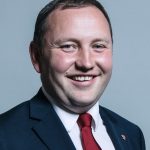
Tag: Ian Murray

  • Ian Murray – 2014 Parliamentary Question to the Department for Business, Innovation and Skills

    Ian Murray – 2014 Parliamentary Question to the Department for Business, Innovation and Skills

    The below Parliamentary question was asked by Ian Murray on 2014-04-28.

    To ask the Secretary of State for Business, Innovation and Skills, when the stabilisation period in respect of the privatisation of Royal Mail, as detailed in the engagement letter between his Department and the underwriting banks, ends; and how that period has been defined.

    Michael Fallon

    The stabilisation period, also known as a "greenshoe" or "over-allotment" option, is a market-standard provision that allows the Initial Public Offering’s (IPO) stabilisation manager to provide share price stabilisation (if required) for up to 30 days post-commencement of conditional dealings. In the case of the Royal Mail, the stabilisation manager was UBS and the stabilisation period ended on 8 November.

    In the engagement letter, the payment of the discretionary fee was linked to the ending of the stabilisation period. However, we informed the banks involved that a decision would not be taken in the timeframe set out in the engagement letter given the volatility of the Royal Mail share price after the IPO.

    We have not set a rigid timetable for the decision on the payment of the discretionary fee which remains unpaid.

  • Ian Murray – 2014 Parliamentary Question to the Department for Business, Innovation and Skills

    Ian Murray – 2014 Parliamentary Question to the Department for Business, Innovation and Skills

    The below Parliamentary question was asked by Ian Murray on 2014-04-28.

    To ask the Secretary of State for Business, Innovation and Skills, what the default rate has been on each of the Government’s export guarantee funds since May 2010.

    Michael Fallon

    UK Export Finance (UKEF) supports UK exports, principally through the provision of guarantees to banks extending loans to overseas buyers and insurance to UK exporters against the risk of non-payment. From 1 May 2010 to 31 March 2014, the percentage of guarantees and insurance policies issued by UKEF that have subsequently defaulted resulting in a claim being paid, or where a claim is currently under examination, is 0.2%.

    Given the tenor of transactions that UKEF typically supports, which can be up to 15 years, an in-year default rate does not give a clear indicator of the performance of UKEF’s portfolio. In accordance with the financial objectives and risk measures agreed with HM Treasury, UKEF measures the Expected Loss of its portfolio. Expected Loss is the statistical estimate of the amount of UKEF’s contingent liability which could be expected to turn into claims that are irrecoverable. Full details of UKEF’s performance and risk management can be found in its Annual Report and Account which is available in the libraries of the House.

  • Ian Murray – 2022 Comments on Government Whips During Fracking Vote

    Ian Murray – 2022 Comments on Government Whips During Fracking Vote

    The comments made by Ian Murray, the Labour MP for Edinburgh South, on Twitter on 19 October 2022.

    I’ve never seen scenes like it at the entrance to a voting lobby. Tories on open warfare. Jostling and Rees Mogg shouting at his colleagues.

    Whips screaming at Tories.

    They are done and should call a general election.

    Two Tory whips dragging people in. Shocking.

  • Ian Murray – 2022 Speech to Labour Party Conference

    Ian Murray – 2022 Speech to Labour Party Conference

    The speech made by Ian Murray on 26 September 2022.

    It’s a pleasure to speak to you today.

    Everyone says how great Liverpool is, but coming from a Scot, you know I really mean it.

    Because the connection between this incredible city and my country runs so deep – shared values, the same weather, and the feeling that a meal isn’t a meal without something that has been deep fried.

    Even just walking around Liverpool, you could be mistaken for thinking you’re in Glasgow.

    And for a guy born and bred in Edinburgh I think that’s a compliment.

    Of course, the footballing success of this city has been in partnership with some fantastic Scots.

    None more so than Bill Shankly, born in Ayrshire, but made at Liverpool FC.

    Kenny Dalglish, and Alan Hansen, legends of the game – even the current Scotland national team captain.

    Despite what Ally McGovern might say, there is another team in this city, especially with the Scottish internationalist heroes from the past like Alex Young and Nathan Patterson from today.

    But there’s something else both Scotland and Liverpool have in common.

    The desire to kick out this corrupt and out of touch Tory government.

    Our Shadow Chancellor Rachel Reeves in her wonderful speech earlier spoke about the Tories disastrous record.

    Her big announcement that Labour would fund the ACORN carbon capture and storage project in Scotland is absolutely transformative.

    There are few better demonstrations of “just transition”, with 20,000 high quality jobs at its heart, than supporting this technology.

    It is something the Tories have relegated to a reserve list.

    And at the last Scottish conference, I called on the SNP government to use their own Just Transition Fund to support the cluster but all we got were warm words.

    Instead, the SNP continue to be more interested in stoking grievance than storing carbon.

    Conference, I want to touch on just one of the many ways in which the Tories are failing our country.

    And that is by failing to protect its very existence.

    Because the biggest threat to the Union today is not the SNP – it’s the Tories.

    And what was Liz Truss’ first priority? Cutting bankers bonuses and huge tax cuts for the richest.

    Her administration is the most unfair, unjust and divisive government in our lifetime.

    When she was elected Tory Leader, Liz Truss tweeted she would hit the ground – promise delivered.

    They give money to those that don’t need it and nothing to those that do – paid for by those who can’t afford it rather than those who can.

    So, it’s little wonder that many Scots see Westminster as beyond repair.

    And make no mistake, the SNP thrive off of such disdain.

    They don’t want to make devolution work.

    They don’t want a Labour government.

    Conference, let me be very clear – the SNP are not our friends – they exist for one reason only – to rip Scotland out of the UK.

    And don’t forget, at the last election Nicola Sturgeon encouraged people in England to vote Green, not Labour.

    So let me reiterate Keir’s message – No deals with the SNP.

    None.

    No, nay, never.

    The only deal we want to make is directly with the Scottish people.

    Our party was founded by a Scot.

    Scotland has been integral to our movement.

    That will never change.

    Of course, we can’t resolve the imbalances in our country overnight.

    There is a lot of work to do.

    But it will be work that will be at the heart of the next Labour Government.

    That’s why Keir Starmer asked Gordon Brown to oversee a commission into the UK’s future.

    The commission is tasked with clearing up and clearing out the centre, so that the United Kingdom works for every part of it.

    It will be a plan for reinvigorating economic devolution where we unleash the talents and contributions of all parts of the country. Growth for everyone, everywhere wherever you are.

    Part of its purpose will not just try to convince Scotland to stay, but to make Britain such a good place to be that everyone, in all corners of our country, will want to be part of it.

    I’m pleased to announce that Gordon Brown’s critical work is nearing completion and will be launched in the coming months.

    Conference, let’s thank Gordon Brown in his own words ‘thanks for all you do’.

    There is a clear message from this Labour Party to Scottish voters.

    If you want rid of this Tory government then help us do it.

    If you want a UK Government that works for Scotland then help us elect it.

    If you want away from binary choice of separation versus the broken status quo then help us deliver it.

    Over the last 18 months, the change that has taken place in Scottish Labour is remarkable, and unprecedented.

    In the Scottish Parliament election, we overshot expectations and managed to prevent an SNP majority.

    This May, we beat the Tories and got back into second place.

    And I believe, at that election, Scotland will help elect a Labour government across the UK as we have done so with every Labour government since 1945.

    At least then, I’ll have some friends on the train to London.

    Conference, the person that has made that happen deserves every ounce of praise he receives.

    He is the most popular politician in Scotland and is exposing the utterly deplorable record of Nicola Sturgeon every day. It’s my great pleasure to introduce my friend and the Leader of Scottish Labour, Anas Sarwar.


  • Ian Murray – 2022 Tribute to HM Queen Elizabeth II

    Ian Murray – 2022 Tribute to HM Queen Elizabeth II

    The tribute made by Ian Murray, the Labour MP for Edinburgh South, in the House of Commons on 9 September 2022.

    It is a great pleasure to follow the “buttocks” of the right hon. Member for Dumfriesshire, Clydesdale and Tweeddale (David Mundell)—it will be the first time he has heard that, as well.

    I am very grateful for the opportunity to pass on my condolences to the royal family and also to pay tribute to Her late Majesty the Queen on behalf of my own family, constituents in Edinburgh South and people all over her beloved Scotland. Her Majesty Queen Elizabeth was a mother, a grandmother and a great-grandmother to her own family, but she was also a mother, grandmother and great-grandmother to the nation. We will all remember where we were when we learned of her death yesterday. We will always remember that it was in Scotland that she spent her last weeks and days and, as we have heard already, she loved being in Scotland and particularly on the Balmoral estate—the tranquillity, the great outdoors and the complete absence of any speed limits.

    The Queen loved Scotland and Scotland loved the Queen. The ties between Scotland and our longest-reigning monarch are plentiful, from her very first public speech as a young princess in Aberdeen at the opening of the British Sailors Society, to the yarn of her wedding dress being woven in Scotland, Royal Yacht Britannia being built on the Clyde and retired to the Forth, as well as the opening of the first Forth bridge and the second one 53 years later. She always looked forward to the royal week in Edinburgh each year. Scotland was, as she described it, her “special place”. She said at the opening of the Scottish Parliament in 1999 that,

    “if I may make a personal point”

    Scotland occupies

    “such a special place in my own and my family’s affections.”

    I remember my own childhood and the traditions that revolved around Her late Majesty. Every Christmas, she was as much a part of our family as the rituals of the tree and the turkey as every generation of our family crowded around the television for her 3 o’clock Christmas address. She transcended every generation all the way to my two-year-old daughter, who now knows who that was drinking tea with Paddington. I have yet to explain to Zola that Paddington’s friend has passed away.

    Over the past 24 hours, I have tried and struggled to find the language to describe her, but the one word that a constituent said to me late last night was “iconic”. She was the very definition of iconic. She was on every pound I ever spent—admittedly fewer than many others because I am a Scot—and on every letter that I ever sent. Her name is on dozens of plaques and buildings all over my constituency and tens of thousands all over the country. She embodied what it means to be British and epitomised public duty, decency and dignity. She picked us up when we were down and when our children and grandchildren look back at this time, it will be Elizabeth II above all else who they will remember as the thread through every part of our post-war history. She was truly our greatest monarch.

    I would love to tell a humorous anecdote—I hope that somebody else will tell it—about the visit to Balmoral that she had with Dick Griffin, one of her former protection officers, but there is no time to do that. Somebody else might do so shortly. I never met Her Majesty but we all think we did because she was such an integral part of and influence on our lives. Everyone thinks they did meet her, because anyone who did never stops telling the story. That is the impact she had on each of their lives.

    I can only imagine the pain and grief the royal family feel today and that pain and grief is compounded by the duty that King Charles III now has to lead this nation. I, the people of Edinburgh South and the people of Scotland simply say thank you for everything, Ma’am, rest in peace, and God save the King.

  • Ian Murray – 2021 Speech on HRH The Duke of Edinburgh

    Ian Murray – 2021 Speech on HRH The Duke of Edinburgh

    The speech made by Ian Murray, the Labour MP for Edinburgh South, in the House of Commons on 12 April 2021.

    I am incredibly grateful for the opportunity to say a few words on behalf of my constituents in tribute and condolence this afternoon. As has been said already in the House and will no doubt be repeated throughout these tributes and for months and years to come, on Friday we lost an extraordinary public servant who dedicated his long life to our country, transformed the lives of millions of young people across the world and promoted the issue of global conservation well before it was widely understood by the vast majority of the population. For more than seven decades, he was a constant at the Queen’s side. We know from all that has been said and written how much the Queen cherished the support, counsel and love of her husband.

    Prince Philip, of course, had a long association with Scotland that dates back to his schooldays at Gordonstoun in the mid-1930s. But it is on my city—the city of his title, Edinburgh—that I would like to say a few words in tribute this afternoon. He was the patron of around 30 charities and educational institutions based in Edinburgh alone, not to mention the many thousands across the whole country that we have heard about today, including Heriot-Watt University, the Royal College of Surgeons of Edinburgh, the University of Edinburgh Graduates’ Association and the Botanical Society of Scotland; he was patron and a freeman of Edinburgh itself; Edinburgh chamber of commerce and enterprise, the Edinburgh Indian Association, the Edinburgh press club and, of course, the Edinburgh Royal Navy club—how could it not be? His beloved Royal Yacht Britannia, which he helped to design, is retired in Leith in Edinburgh.

    He was a friend of the Royal Scottish Academy of Art and Architecture and the Honourable Company of Edinburgh Golfers, a patron of the National Galleries of Scotland, the Rotary Club of Edinburgh, the Royal Society of Edinburgh and the University of Edinburgh athletics club, and of course, he was chancellor of Edinburgh University for nearly 60 years from the 1950s—a position that he accepted with the joke that

    “only a Scotsman could survive Scottish education”;

    I am not sure whether that was born of experience at Gordonstoun. He was heavily involved in all aspects of the university. He would preside over special graduation ceremonies. He would help to induct new professors. He attended long service awards for senior staff. He would attend the installation of the rector by students. He enjoyed the uproar of the rector’s ceremony and complained to former Professor O’Shea that he had made the event “too orderly”. He partook in the granting of fellowships to postgraduate students at the University of Edinburgh undertaking advance and complex research. However, he never shied away from engaging with the students on their complicated topics—everything from particle physics to Dolly the sheep. In fact, one recipient said afterwards:

    “I feel I’ve just been put through another exam, except it was much harder than the last one.”

    He had an official Edinburgh colour, Edinburgh green, which his team wore and which lined his private car, and his own official standard, featuring the lions and hearts of Denmark, a white cross on blue for Greece, two black pales on white for the Mountbatten family and the coat of arms of the city of Edinburgh. We have heard much this afternoon about the founding of the Duke of Edinburgh Awards in 1956, which he chaired until his 80th birthday. He regularly attended the gold ceremonies hosted at Holyroodhouse in Edinburgh. For many young people, those awards were the closest they would get to a traditional high school graduation, so the Duke of Edinburgh always took the time to individually speak to as many of the awardees as he could. It is a scheme that transformed the life chances of young people across the world, from the prince’s own school at Gordonstoun all the way to the school that I attended in Edinburgh.

    Many people recall anecdotes of his sharp wit and humour. Everyone who has paid tribute since Friday has talked of him as a funny, engaging, warm and loving man. He once joked, while stuck in a lift during a visit to Edinburgh’s Heriot-Watt University, that it

    “could only happen in a technical college.”

    He was not just the Duke of Edinburgh in name but the Duke of Edinburgh in his actions and public service too. His legacy to the UK, the Commonwealth overseas territories and the wider world will be celebrated and will live on for many generations. His contribution to my city of Edinburgh will be unmatched.

    Losing a loved one is always so hard. I lost my own father when he was just 39. His grandchildren will only know him by the stories that we tell and the anecdotes that we recall. But it does not matter whether you are 39 or 99, a duke or a cooper; the hurt and loss to those loved ones and friends never diminishes. On behalf of my constituents in Edinburgh South and the city of his title, we send our heartfelt condolences and thoughts to Her Majesty the Queen, his close and extended family and all who will miss him so much.


  • Ian Murray – 2020 Comments on Boris Johnson Calling Devolution a Disaster

    Ian Murray – 2020 Comments on Boris Johnson Calling Devolution a Disaster

    The comments made by Ian Murray, the Shadow Secretary of State for Scotland, on 17 November 2020.

    This confirms that Boris Johnson doesn’t believe in devolution and would put the future of the United Kingdom at risk.

    His Government should have been working in partnership with the devolved governments during this crisis. Instead, people across the UK have been paying the price for his failings.

    Devolution is one of Labour’s proudest achievements and we will always fight for a strong Scotland in the UK.

    Scotland deserves better than two governments obsessed by division – Labour will work to bring our country together.

  • Ian Murray – 2020 Comments on New Restrictions in Scotland

    Ian Murray – 2020 Comments on New Restrictions in Scotland

    The comments made by Ian Murray, the Shadow Secretary of State for Scotland, on 7 October 2020.

    It should never have come to this. Under the SNP Government’s watch, Scotland now has the highest R rate in the UK following a complete failure to tackle the spread of the virus.

    The SNP took too long to set up Test and Protect and ignored warnings about the return of students to university. Businesses and livelihoods are now at risk as a result of the SNP’s incompetence.

    While public health is the priority, people’s jobs must now be protected and there is an urgent need for both the UK and Scottish governments to put their differences aside and work together on the economic impact.

  • Ian Murray – 2020 Comments on Margaret Ferrier’s Statement

    Ian Murray – 2020 Comments on Margaret Ferrier’s Statement

    The comments made by Ian Murray, the Shadow Secretary of State for Scotland, on 1 October 2020.

    This is astonishing recklessness from an SNP MP, which has put people’s health at risk.

    Through her irresponsible actions, she very possibly has passed on the virus to a vulnerable person, who may now have COVID-19 and be in danger. She has put passengers, rail staff, fellow MPs, Commons staff and many others at unacceptable risk.

    To breach the rules twice is simply unforgivable, and has undermined all the sacrifices made by her constituents.

    Nicola Sturgeon must come out and condemn her MP’s actions and tell the Scottish people what disciplinary action she will be taking. There cannot be one rule for Margaret Ferrier, another for everybody else.

  • Ian Murray – 2020 Speech on Constitutional Law

    Ian Murray – 2020 Speech on Constitutional Law

    Below is the text of the speech made by Ian Murray, the Labour MP for Edinburgh South, in the House of Commons on 19 May 2020.

    I thank the Minister for his warm welcome at the Dispatch Box. I would rather that we were debating the debacle of Scottish football today, given his experience, which I am sure would be more amenable to our constituents. Perhaps we will get to one of those debates in future when we are back to normal.

    My hon. Friend the Member for Ogmore (Chris Elmore) and I appreciate the Minister’s warm welcome and his words about my hon. Friend the Member for Rochdale (Tony Lloyd), who had a very serious bout of coronavirus. He is now out of hospital and I have spoken to him. You will be pleased to hear, Mr Deputy Speaker, that he has not lost any of his dry wit and sense of humour. We look forward to him being back in this place as quickly as possible.

    I also thank the Minister’s wife. I had not realised that she was a serving police officer. I thank her and her colleagues for all that they are doing to keep us safe during the crisis, and not just during the crisis; police and other support staff keep us safe at all times, across not just Scotland but the rest of the UK.

    We will work constructively with the Minister, his team and the Secretary of State when they agree with us and we will be a ferocious Opposition when they do not. We will work genuinely constructively when it is in the interest of the people of Scotland, but we will certainly scrutinise and hold both Governments to account for their decisions, because that is what they get paid for.

    There is no disagreement this afternoon with regard to the order, which facilitates the retribution orders that the Scottish Government have put in place. It is disappointing that it has taken a bit of time to get here, but there is no better time than now to reassess how we punish those who assault our police officers physically, mentally or, as the Minister said in his opening remarks, by spitting during the coronavirus pandemic. It is time to get the legislation in place.

    Retribution orders are useful tools for punishment and deterrence, and the fund that is developed is there for victims in the police service, and other associated people within the police, to seek retribution and have support. It is right for them to get that. We wish only that we did not have to have that kind of support for our police personnel, but we do, and we hope that it will reduce over the years.

    It is also important, at this time, to look at the people who might be given a retribution order and how the legislation might affect them. There has been a massive increase in the uptake of universal credit. The unemployment figures released today are not a surprise, but will be a concern to us all. For people in receipt of a retribution order, this order will allow the retribution order to be deducted from their benefits.​

    I have big questions to ask the Minister with regard to that. How will he ensure the affordability of those orders for benefit claimants, particularly when people are stretched, so that they will not be made destitute by them? Figures released by the Department for Work and Pensions last year revealed that a quarter of a million people across the UK had been sanctioned on universal credit, and 5% of those had been sanctioned for longer than six months.

    Can we be sure that any deductions from benefits will be taken into account if someone is sanctioned, in order for them and their families not to be put into destitution? That does not in any way dilute the seriousness of why they were given a retribution order, but it is important that it does not put families into destitution. How can the Minister and the Secretary of State ensure that any changes in legislation at the Scottish Government level are analysed and assessed on the basis of how the order will now work, if people are having deductions from their benefits and pay?

    As I said, we do not disagree with the order. Ultimately, compensation for the victims of any crime goes further than its simple monetary value, particularly for crimes of assault on police officers. It can be of great significance as a real recognition of the crime that has been committed against the victim, as well as acknowledging the suffering as a result of any offence. Therefore, this is a necessary statutory instrument that will allow the justice system to work for victims by allowing them to see that the perpetrator’s actions have serious consequences, and will play an important role in victims’ recovery. We are therefore happy to support the order.