Tag: Holocaust

  • Sheryll Murray – 2021 Speech on Holocaust Memorial Day

    Sheryll Murray – 2021 Speech on Holocaust Memorial Day

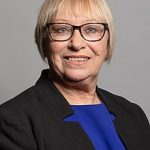
    The speech made by Sheryll Murray, the Conservative MP for South East Cornwall, in the House of Commons on 28 January 2021.

    I thank the Backbench Business Committee for selecting this timely debate. It is important that we as politicians learn as much as we can about what happens when politics goes wrong, as they did in Germany in the late 1930s and early ’40s under Adolf Hitler’s Nazi party.

    I have joined students from my South East Cornwall constituency on a visit to Auschwitz concentration camp in Poland, organised by the Holocaust Educational Trust. There cannot be a starker reminder of the terrible atrocities man can visit upon man. The new museum displays prisoners’ mugshots and substantial amounts of hair, suitcases and shoes taken from murdered prisoners. It is an educational journey I will never forget, and I know the impact it had on the visiting students.

    I have also visited Israel with the Conservative Friends of Israel, as declared in my entry in the Register of Members’ Financial Interests. Along with colleagues, I visited Yad Vashem, Israel’s holocaust memorial. It was an incredibly moving visit. I found the hall of names particularly poignant. The ceiling of the hall displays 600 photographs and fragments of pages of testimony. Over 2 million of these pages are stored around the hall, a room for the 6 million men, women and children from the diverse Jewish world who were murdered by the Nazis. On the same visit, I attended the national ceremony of Yom HaShoah—Holocaust Remembrance Day.

    I have also visited the holocaust exhibition in our own Imperial War Museum, with my husband Bob. The photograph displays and artefacts show dramatically the mass executions carried out as part of the Nazi final solution policy.

    At this time of the pandemic, when we cannot travel and should stay at home, it is important that we continue to remember and that we ensure that people can still learn about this terrible time, so that it does not happen again. The Holocaust Educational Trust has a lot of resources on its website—het.org.uk—and I recommend this important resource.

  • Mark Tami – 2021 Speech on Holocaust Memorial Day

    Mark Tami – 2021 Speech on Holocaust Memorial Day

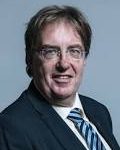
    The speech made by Mark Tami, the Labour MP for Alyn and Deeside, in the House of Commons on 28 January 2021.

    It is nearly 76 years since the end of the second world war in Europe, but the lessons that the world needs to learn from the events that culminated in the holocaust remain as relevant today as they were then. The holocaust did not begin and end with Auschwitz and the other extermination camps; its roots lay in the falsehoods and hatred that festered for centuries before and continue to exist today.

    In the 1920s and 1930s, that hate and antisemitism was whipped up at rallies, and pamphlets were published that transformed Germany from an advanced liberal democracy into a vicious dictatorship. Today, that poison and those lies have not gone away. We rarely see the mass rallies and events, but the battle has moved online, where hate speech and holocaust denial can be found at a disturbing level. There are those who hide behind the idea that somehow this should be allowed, under some perverse idea that it is free speech.

    The other night, I re-watched the excellent David Baddiel documentary in which he made contact with holocaust deniers. I was particularly struck by his concerns about what he termed to be “soft” holocaust denial—the idea that, yes, something may have gone on, but that it has been exaggerated and somehow blame lies on all sides. This is extremely dangerous. We see today populist Governments in Poland and Hungary seeking to rewrite history, to airbrush out the involvement of their countrymen and women in terrible crimes.

    I believe that the holocaust is not just a terrible one-off event that happened in our history, carried out by a madman and his thugs. The truth is very different. Before the establishment of mechanised extermination in death camps, Einsatzgruppen squads followed the German advance into eastern Europe and Russia, shooting over 2 million men, women and children. These groups were led not by so-called thugs but by a university lecturer, a theologian, a doctor. These should be warnings to us about how this can take over.

    History teaches us the events of the past, but it is also a warning for our future. The holocaust is a fact. There are no alternative facts, and we should never allow that to be said.

  • Andrew Mitchell – 2021 Speech on Holocaust Memorial Day

    Andrew Mitchell – 2021 Speech on Holocaust Memorial Day

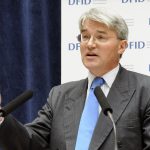
    The speech made by Andrew Mitchell, the Conservative MP for Sutton Coldfield, in the House of Commons on 28 January 2021.

    Three years ago, I stood with the wonderful Susan Pollack, the Auschwitz survivor, at the Kigali memorial site in Rwanda, the largest burial ground in the world. We were mourning the million who were slaughtered in a 90-day frenzy of killing and brutality in Rwanda. Most of those who took part have been brought to justice, through either the Arusha international tribunal or the Gacaca courts, which have processed hundreds of thousands who have returned to Rwanda from the hills of the Kivus because they see that the process is decent and fair.

    The death penalty in Rwanda has been abolished and most countries—including the United States, Canada, Belgium, Sweden and others—have extradited people back to Rwanda. As John Adams said, “Facts are stubborn things”. Living free in Britain today are five alleged Rwandan genocide perpetrators: three were senior Government officials in the 1994 genocidal regime and one of those was allegedly heavily involved in the notorious massacre of 45,000 Tutsis at Murambi—the worst massacre since the Second World War.

    On 14 September 2006, the British and Rwandan Governments agreed a memorandum of understanding; I first raised this matter in the House on 5 December 2006. Extradition warrants were signed the same month. In 2015, a British district judge ruled that even though there was a prima facie case of genocide made out against the five individuals, it could breach their human rights to send them back to Rwanda, and that ruling was upheld on appeal. The Rwandan judicial authorities have given up on British justice and extradition and requested that Britain undertake prosecution here. The authorities indicated that the collection of evidence already laid out in the court papers and filed in the UK via the war crimes unit would take up to 10 years to process.

    These are the facts. Living in this country today, free and at large for more than 14 years now, are five people accused of the most heinous of crimes: genocide participation—crimes against humanity. Four out of five are living at the taxpayer’s expense and more than £3 million of taxpayers’ money has been spent on meeting their legal fees. Is it any wonder that in Africa, and in the UK, too, people accuse the British establishment of hypocrisy? To them, it looks suspiciously as if crimes against white Europeans are taken more seriously than those perpetrated against black Africans.

    I call upon all those who care about the holocaust, genocide and justice to take up this cause. The souls of the slaughtered Tutsis cry out for justice, but Britain has turned a deaf ear. We should all be ashamed.

  • Lisa Cameron – 2021 Speech on Holocaust Memorial Day

    Lisa Cameron – 2021 Speech on Holocaust Memorial Day

    The speech made by Lisa Cameron, the SNP MP for East Kilbride, Strathaven and Lesmahagow, in the House of Commons on 28 January 2021.

    I begin by thanking my honourable colleagues and co-sponsors of this vital debate, all honourable colleagues who are speaking today, those who have been marking Holocaust Memorial Day, and of course the Backbench Business Committee. Thanks must also go to the Holocaust Memorial Day Trust for its inspirational work; to the Holocaust Educational Trust, led by Karen Pollock, for teaching future generations; to the Community Security Trust; and to Danny Stone and the Antisemitism Policy Trust.

    It is crucial that, in remembrance, we do not picture atrocities of genocide perpetrated during the Holocaust as historical events. It is important to reflect on the reality that the seeds of antisemitic distrust, prejudice and hatred were spread years prior to armbands being worn, ghettos being built, trains being loaded and gas chambers being filled.

    A recent briefing from the Antisemitism Policy Trust found that throughout history Jewish people have been blamed for diseases and pandemics. Indeed, since the start of the coronavirus pandemic, these age-old tropes have re-emerged in updated forms, on our social media channels and popular antisemitic online forums, such as 4chan and Gab. It did not take long for the virus to be named “the Jew flu”—part of a Zionist agenda to start world war three—or for antisemites online to encourage people deliberately to try to infect Jewish people, as part of the “holocough”.

    In its latest report, the Community Security Trust recorded 789 antisemitic incidents that took place across the UK in the first six months of 2020. It would be easy to dismiss the instances outlined as the actions of a deluded fringe, but that would also be foolish and could be deadly. An article published in The Guardian last April found that referrals to prevent online radicalisation had fallen by 50% since the start of lockdown, which has created ideal conditions for online predators and trolls to spread hate and lies.

    We must do more to stamp out antisemitism on online platforms, call on the social media giants to do more to police such content, and introduce more stringent barriers in the forthcoming online safety Bill. We disrespect the memory of millions who died in the holocaust if we fail to take action to stamp out the recurring lies that culminated in such widespread destruction of life 80 years ago. We are, indeed, arrogant to presume that stereotypes of the past can find no audience in the future. We would therefore do well to live out the theme of this year’s Holocaust Memorial Day—light the darkness—in our approach to antisemitism going forward.

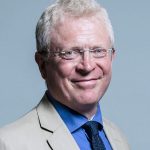
  • John Howell – 2021 Speech on Holocaust Memorial Day

    John Howell – 2021 Speech on Holocaust Memorial Day

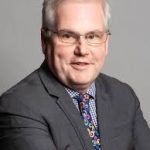
    The speech made by John Howell, the Conservative MP for Henley, in the House of Commons on 28 January 2021.

    Like the hon. Member for Hampstead and Kilburn (Tulip Siddiq), I am a trustee of the Holocaust Memorial Day Trust, which, as we have heard, is responsible for putting together Holocaust Memorial Day. I hope that Members logged on for last night’s ceremony and the national moment. If they did not, they are in a minority, because people logged on in their tens of thousands. I hope that, like me, they found it a very moving and emotional experience.

    Last year, which marked 75 years since the liberation of Auschwitz, I was asked to remember one person in particular who was a victim of Nazi persecution. I decided not to do that. Putting on a yarmulke, I decided to remember all 6 million victims of Nazi persecution, and I remember them all today.

    The horror of this genocide has been repeated subsequently. What brought it home to me was when I visited the concentration camp just outside the Polish town of Lublin, and saw an enormous number of plants and flowers growing. They grow so magnificently there because they are all growing on the ashes of human burials. Just think about that: all that beauty coming out of such a tragic and momentously horrific situation.

    The hon. Member for Hampstead and Kilburn and I wrote an article for the Daily Mirror online yesterday, in which we said:

    “Speaking as a Christian and a Muslim, respectively, we both know that marking Holocaust Memorial Day is more important than ever. Commemorating the millions of people who were murdered in the Holocaust, under Nazi persecution and in the genocides that followed in Cambodia, Rwanda, Bosnia and Darfur is vital for us to learn where persecution based on faith and identity can lead.”

    As the Chief Rabbi said last night:

    “If we are all the light in the darkness, think of what a wonderful world we can achieve.”

    Let us, in participating in this debate, aim to be that light in the darkness.

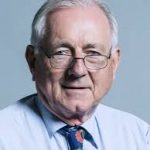
  • John Cryer – 2021 Speech on Holocaust Memorial Day

    John Cryer – 2021 Speech on Holocaust Memorial Day

    The speech made by John Cryer, the Labour MP for Leyton and Wanstead, in the House of Commons on 28 January 2021.

    I would like to pay tribute to all the Members who secured this debate. We really should have an annual debate to mark Holocaust Memorial Day.

    The indications are, and the figures back this up, that antisemitism is on the rise not just in Britain but across Europe and perhaps elsewhere. For many of us, our own personal experiences, for example those just recounted by my right hon. Friend the Member for Barking (Dame Margaret Hodge), back that up. Our personal experiences support the notion that antisemitism is on the rise in this country and elsewhere. The question is why is that?

    I suspect that the reason is at least partly because the events of the holocaust of the 1930s and 1940s, and of World War Two, are slipping from memory and into history. I am thinking of all the Holocaust survivors who spent their lives touring schools and colleges, writing and speaking, such as Leon Greenman, who lived most of his life in Ilford, close to my constituency. After world war two, Leon spent his life writing and talking about the holocaust. That generation is passing into history.

    We know that historically racism often starts with the Jewish community and then spreads to other communities. Even in the middle ages, the crusades started by massacring Jewish communities across Europe before they started their genocidal mayhem against Muslims in the Holy Land. We also know that holocaust denial, or perhaps not so much holocaust denial but a tendency to say, “Well, there are a number of interpretations you can make of the holocaust,” is a sort of academic approach to moral relativism. There is a tendency, which is more widespread now than it was a few years ago, to put forward that pseudo-academic view. The question is: is that acceptable? The answer is no, it is not acceptable. The fact is that the holocaust was about one thing: the attempt to wipe an entire race off the face of the planet. It was not about anything else. It was simply that: genocide on a scale that has not been seen before or since. The crucial thing is that every time someone takes a moral relativist approach to the holocaust and its memory, it chips away at its historical integrity and undermines the beliefs of people such as those speaking today who want to remember how it really was.

    I pay tribute to the Holocaust Educational Trust and its work in widening and deepening the knowledge of the holocaust. We all have a duty to widen that knowledge and to make sure that in the hearts and minds of future generations that collective memory is carried forward.

  • Peter Bottomley – 2021 Speech on Holocaust Memorial Day

    Peter Bottomley – 2021 Speech on Holocaust Memorial Day

    The speech made by Peter Bottomley, the Conservative MP for Worthing West, in the House of Commons on 28 January 2021.

    I bow in respect to the first two speeches, and I expect they will be matched by those that follow.

    “We remember those who were murdered for who they were. We stand against prejudice, hostility and division in the world today. We learn from the tragedies and horrors of the past. We work towards a better future.”

    Those were the words put out with the photograph of the candle we lit last night. Had I been born in the Dutch Jewish line of my family, I could have died at Bergen-Belsen with many of the other 113 members of grandfather’s extended family.

    The purpose of the holocaust memorial and education centre is for us to know, to care and to act, whatever our heritage. It may be that the Secretary of State will announce that if the proposed national heritage memorial and learning centre is built—whether it is built in Victoria Tower Gardens or not—then entry will be free. We have always assumed it would be free, but the Government were not able to say that. What the Government did say through its agency is that the bulk of the money should be spent on education, not on construction.

    The proposal in September 2015 was that the centre should be completed by 2020, a year ago, that it should have the support of the local authority wherever it was to be built, and that it could be built anywhere within 3 miles of London on a suitable site. Page 10 of the publication showed that and included: west of Regent’s park; Spitalfields; most of Southwark, including the Imperial War Museum—

    The Secretary of State for Housing, Communities and Local Government (Robert Jenrick) indicated dissent.

    Sir Peter Bottomley

    The Secretary of State may shake his head. He will have his chance to speak. I want him at the moment to listen, if I may. I respect him and I respect what he tries to do, but I ask him to publish the analysis done before 2016 of the sites at the Imperial War Museum and Victoria Tower Gardens. I will publish what I know. He will need to consider what he is putting forward and his deputy needs to say whether he can seriously make a decision on the Secretary of State’s behalf when the Government are so implicated in an inappropriate scheme in an inappropriate place, with a design not accepted in Ottawa.

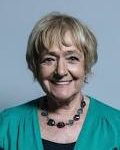
  • Margaret Hodge – 2021 Speech on Holocaust Memorial Day

    Margaret Hodge – 2021 Speech on Holocaust Memorial Day

    The speech made by Margaret Hodge, the Labour MP for Barking, on 28 January 2021.

    I congratulate the right hon. Member for Preseli Pembrokeshire (Stephen Crabb) on his very good contribution. It seems incomprehensible that so many people were complicit by their action or inaction in the uniquely horrific extermination of 6 million Jews, yet the holocaust is not an isolated genocide. Today, Uyghurs and Rohingyas are living through the nightmare of persecution, segregation, imprisonment and murder. Only by acting together, confronting prejudice and hate and being the light in the darkness can we conquer this evil.

    I recently read my grandfather’s diaries, written when he escaped to Britain from Austria. Old and ill, he was interned in Huyton because he was deemed an enemy alien. His diaries reveal the trauma, the constant worry about relatives and the challenges faced by refugees. An eternal optimist, his diaries also describe the talent imprisoned with him—musicians, artists and academics—and that made me realise how many brilliant philosophers, musicians and scientists were lost because they were murdered by the Nazis.

    As holocaust survivors inevitably die, it falls to us to keep the knowledge of what happened alive. My grandmother’s letter, written nine days before she was killed, in which she says twice, “Don’t forget me completely”, sealed my determination to fight racism and antisemitism wherever and whenever I meet it.

    When I was first an MP, I was a Labour MP who happened to be Jewish, but when antisemitism moved to the mainstream of my party, I became a Jewish Labour MP—my identity interwoven with my work. The last five years have been difficult, long and lonely. I did enjoy support from the brave activists in the Jewish Labour Movement and from those colleagues who did call out antisemitism, and I will never forget the friendship and support between the four Jewish Labour women: Louise Ellman, Ruth Smeeth, Luciana Berger and myself. It was the women who stood together, worked together and simply would not give up. The tragedy is that they are no longer MPs. I salute their brave contribution, and I miss them.

    A year has made a huge difference. By his actions, our party’s new leader is demonstrating zero tolerance of Jew hate, not just suspending and expelling individuals but transforming our culture and re-establishing trust with the Jewish community, who were hurt and genuinely frightened. As a party, we are finally focused on eliminating antisemitism, responding to the shameful findings of the Equality and Human Rights Commission report and restoring our core values.

    The history of the Jews and our knowledge of present day genocides tells us that if we ignore prejudice and hate, it can deepen and destroy. I came into politics to fight racism, so I will always do all I can to nurture the light and conquer the darkness.

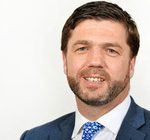
  • Stephen Crabb – 2021 Speech on Holocaust Memorial Day

    Stephen Crabb – 2021 Speech on Holocaust Memorial Day

    The speech made by Stephen Crabb, the Conservative MP for Preseli Pembrokeshire, in the House of Commons on 28 January 2021.

    I beg to move,

    That this House has considered Holocaust Memorial Day 2021.

    It is a privilege to open this important debate to mark Holocaust Memorial Day, which took place yesterday, 27 January, the anniversary of the liberation of Auschwitz-Birkenau, which remains one of the most dark and horrific crime scenes of world history. I would like to thank in particular the right hon. Member for Barking (Dame Margaret Hodge) and the hon. Member for East Kilbride, Strathaven and Lesmahagow (Dr Cameron) for co-sponsoring this debate.

    Over the past 20 years, Holocaust Memorial Day has become an important part of our national life, with the numbers of events growing every year. That is largely down to the incredible work of the Holocaust Memorial Day Trust, and the Holocaust Educational Trust, which both work tirelessly to ensure that the collective memory of the holocaust is renewed and strengthened with every passing year. The pandemic has meant that this memorial day has been marked in different ways, but nevertheless thousands of activities have taken place across the country, using resources that the HMDT developed to support online commemorations.

    Normally, Members from across the House would have had the opportunity to sign a book of commitment organised by the Holocaust Educational Trust, in which we remember the victims of the holocaust, and pledge to fight against hatred, racism and antisemitism, wherever we see it. Last night we were all able, wherever we were in the UK, to participate in the first fully digital national holocaust commemorative ceremony.

    Holocaust Memorial Day is when we remember the millions of people murdered under Nazi persecution, and in the genocides that followed in Cambodia, Rwanda, Bosnia, and Darfur. The theme this year is “Be the light in the darkness”, and at the close of the ceremony last night we lit candles. Those candles symbolised the lives of those who were murdered in the death camps and subsequent genocides, as well as the lives of the survivors who still live and walk among us, and those who have passed away.

    The candles also represented hope—the hope that comes from a collective determination never to allow such atrocities to take place again; the hope that comes from standing together against antisemitism and all forms of prejudice. As the years pass by, the number of men and women who witnessed and survived the holocaust sadly gets smaller, and it is an incredible privilege to meet those survivors and hear their extraordinary testimonies. They are stories of courage, survival, hope, and forgiveness, in the face of unthinkable horror and suffering.

    A few years ago I had the privilege of meeting Lily Ebert, now aged 97, who survived Auschwitz. Lily is a remarkable woman, a true survivor. Just last week she went for her first walk, having recovered from covid-19. Susan Pollack moved many of us to tears at the Conservative conference in 2018, by recounting her experiences as a young girl in both Auschwitz and Bergen-Belsen. Many have said this before, and it is so true, that meeting these survivors is an unforgettable experience. I am always left stunned and humbled by their capacity for forgiveness, and the choice to love those who showed them only hate and violence. That is light in darkness.

    I pay tribute to the work of the Holocaust Educational Trust, which enables young people to understand the past, and empowers them to stand up against antisemitism and prejudice in all its forms. In March last year, due to the pandemic it was forced to suspend its overseas projects and in-person educational programmes, but the trust has quickly adapted to ensure that its work is continued at an impressive scale online, with survivors using video calls to share their testimonies. The responses shared on social media afterwards show how strikingly powerful those sessions are, especially for young people.

    Holocaust Memorial Day is about remembrance, but it should also be a moment that moves us to consider the darkness still around us today. I am talking about the cancer of antisemitism that even now eats away inside some of our institutions, and that spawns and thrives on social media, and casts dark shadows across our own society and those of some of our closest neighbours.

    Take, for example, the Halle synagogue attack in Germany in October 2019. The synagogue was targeted in an antisemitic attack, and the armed attacker unsuccessfully tried to enter the synagogue, before fatally shooting two non-Jewish victims and injuring two others. The perpetrator espoused radical far-right views. He was an antisemite and holocaust denier. He live-streamed his actions so that they could be celebrated in dark places online.

    Even closer to home, we could look at what is happening in our universities. I am sure that some colleagues will want to raise that this afternoon. How can it be that Jewish students in this country do not feel protected by our institutions, places of openness and learning turned into dark corners where Jewish young people experience fear? The adoption of the International Holocaust Remembrance Alliance modern definition of antisemitism should merely be the first step in tackling rising levels of antisemitism, yet even that is seen as too much to ask for from some universities, whose academics spuriously claim that the definition would shut down legitimate debate about Israeli Government policies.

    We must not shy away from the reality that modern antisemitism invariably morphs into anti-Zionism and the demonisation of Israel itself. The late Rabbi Lord Sacks, a man of extraordinary wisdom and kindness, once said:

    “One of the enduring facts of history is that most anti-Semites do not think of themselves as anti-Semites. ‘We don’t hate Jews’, they said in the Middle Ages, ‘just their religion’. ‘We don’t hate Jews’, they said in the 19th century, ‘just their race’. ‘We don’t hate Jews’, they say now, ‘just their nation state’.”—[Official Report, House of Lords, 13 September 2018; Vol. 792, c. 2413.]

    I have had the privilege of visiting Yad Vashem, Israel’s holocaust memorial, on numerous occasions, and I find each experience deeply moving. On leaving the museum, visitors walk out on to a balcony overlooking a vista of Jerusalem, and it is impossible not to reflect on the place of sanctuary and refuge that the nation state of Israel continues to provide for Jews still fleeing persecution today.

    Holocaust Memorial Day is also about remembering the other genocides the world has witnessed. I think about the people I met in 1998 in the Bosnian town of Foča, a town described by Human Rights Watch as a “closed, dark place”, which saw the systematic removal of its Muslim population by Serb forces in a brutal campaign of ethnic cleansing. It saw forced detention, rape, expulsions, murder on a horrific scale, and destruction of historic mosques and other cultural sites.

    I think too of the victims and the survivors of the Rwandan genocide, which happened right under the noses of the international community in 1994. I, along with numerous colleagues in my party, used to spend part of my summer recess in Rwanda with Project Umubano, which was founded by my right hon. Friend the Member for Sutton Coldfield (Mr Mitchell). On each of those visits, we would visit the genocide memorial in Kigali, where we would lay a wreath. We had the opportunity to hear the testimonies of survivors—people such as the wonderful Freddy Mutanguha, who was one of the 95,000 children and teenagers in Rwanda orphaned during those terrible three months between April and July ’94. In Rwanda, the dark places of genocide were the beautiful green hillsides, the churches, the sports grounds.

    One of the lessons of those visits is that genocides do not happen by accident. They follow a pattern. They require planning. It requires powerful people to deliberate and take calculated decisions to persecute and, ultimately, visit death upon entire communities. Weapons and implements of torture and murder need to be bought, acquired, constructed. Genocides require ideologies to flourish that focus on differences between people and groups—ideologies that glorify strength and superiority, that systematically dehumanise minorities. Those ideologies infect school rooms, universities, bars and individual homes. They are ideologies that create those dark places where the unthinkable somehow becomes justifiable and even normal.

    It requires methods of mass communication and propaganda—radio, television and, in our own age, the unregulated channels of social media—to turn communities against each other. Most of all, genocides require people to turn a blind eye—neighbours, work colleagues, friends, even family members. Genocides require people to turn away. They require good people to do nothing.

    I believe that darkness threatens every new generation. Old hatreds resurface time and again. Maybe they never fully go away and are just waiting for vehicles to emerge to legitimise and breathe new life into them at opportune moments. Being light in darkness means staying vigilant against that, it means having the clarity to identify it, and it means having the courage to confront it and push back wherever possible—in our national institutions, in our own political parties, on social media, in our own constituencies. None of those is an easy thing to do, but on Holocaust Memorial Day we take renewed strength from being able to stand together, reflect on the events of the past and pledge to honour the memory of those whose lives were taken, by doing more—by doing what we can—to stand up against prejudice, antisemitism and hatred in all its forms.