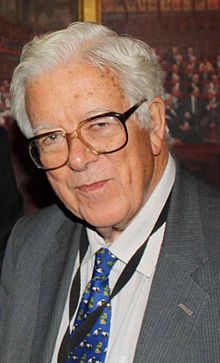
Below is the text of the speech made by Geoffrey Howe, the then Foreign Secretary, in the House of Commons on 8 November 1985.
I intend to concentrate most of my remarks today on the important issues of East-West relations and arms control, and on the contribution that a stronger Europe can make to that. My right hon. Friend the Member for Aylesbury (Mr. Raison) will deal with further points raised in the debate.
Before I turn to the main subjects, I should like to bring the House up to date on three other important areas where the Government have recently been active in international affairs. My right hon. Friend the Prime Minister has already drawn the attention of the House to the wide range of the discussion and the extent of common ground achieved at the meeting of Commonwealth Heads of Government at Nassau last month. That meeting showed again the unique scope and nature of the Commonwealth. We reached wide agreement on measures to increase the security of small states and on the need to devise more effective action to counter international terrorism and to halt drug abuse. Britain played a major part in securing those significant, practical agreements. We shall now work hard to put them into practice.
The discussions at Nassau were dominated by developments in Africa, and in particular the growing crisis in South Africa. The House has had the opportunity to debate the Commonwealth accord on South Africa. Nobody in this country or overseas who has read the reports of that debate could fail to be impressed by the broad measure of agreement—indeed, by the profound feeling on both sides of the House—on the evils of apartheid and, in the words of the Gracious Speech, on the need for “peaceful, fundamental change.”
The Commonwealth agreed to establish a group of eminent people, who will seek to promote a dialogue between the South African Government and representatives of the black community. As the House will be aware, the British nominee for the group is my right hon. and noble Friend Lord Barber of Wentbridge. The right hon. Member for Leeds, East (Mr. Healey) will recognise that Lord Barber is a man well known to the House by virtue of his distinguished career in public service, including, of course, a term of office as Chancellor of the Exchequer. He belongs to the moderately exclusive club to which the right hon. Gentleman and I belong. He is equipped beyond that, by virtue of his more recent experience in working with many African countries, to make a knowledgeable and comprehensive contribution to the work of the group.
The 60 nations of the Commonwealth and the European Community have together given a plain political signal of the need for fundamental peaceful change in South Africa. As the Commonwealth accord acknowledged, it is not for outside countries to prescribe specific constitutional changes for South Africa. It is important to acknowledge that some significant legislative and other changes have been announced there, but the whole House wants to see from the South African Government more movement, more quickly. Above all, there is a need for effective dialogue with genuine black leaders. We urge the South African Government to take the earliest possible steps in that direction. In that connection, it is a matter of considerable concern that, since the Commonwealth meeting, they have introduced further sweeping restrictions on the press. These can do nothing to promote the essential objective of rapid peaceful change, which we all seek.
Peaceful change in South Africa is essential for the wider stability and prosperity of southern Africa as a whole. We have strongly condemned South African incursions into Angola. We equally deplore attempts to undermine security in Mozambique, and we shall continue to work for implementation of United Nations Security Council resolution 435 on Namibia and the withdrawal of foreign troops.
The Commonwealth Heads of Government also discussed international economic issues, especially the urgent measures needed to deal with the related problems of debt, exchange rate instability and protectionism. As we reaffirmed at Nassau, the Government remain committed to a substantive aid programme. That is true both for emergency relief—where our record on famine relief to Africa and earthquake relief in Mexico has demonstrated our firm and continuing commitment—and for long-term development. We shall also continue to support the invaluable work of the voluntary agencies. My right hon. Friend the Minister for Overseas Development will have more to say about this subject.
The report of the Select Committee on Foreign Affairs on famine in Africa, published in May, was a characteristically useful contribution to the House’s consideration of this pressing and difficult topic. I take this opportunity, on behalf of the House, to pay tribute to the invaluable work of that Committee, under the distinguished chairmanship of my hon. Friend the Member for Stroud (Sir A. Kershaw.)
Another issue of great importance on which we have received heartening support from members of the Commonwealth is our commitment to the people of the Falkland Islands. As the Gracious Speech makes plain, we shall continue to honour that commitment. We shall also continue to work for more normal relations with Argentina. Since 1982 we have taken a series of initiatives designed to open the way to practical co-operation with Argentina. So far, however—although some Members of the House in their contacts with the Argentines have appeared to ignore this fact—there has been almost no response.
Nowhere is a co-operative approach more necessary than in the conservation of the south-west Atlantic fishery. The need to conserve the fishing stocks is universally accepted. It is plain common sense that conservation can best be achieved by co-operation among all those with an interest in orderly fishing in that region. That is why we have supported the initiative by the Food and Agriculture Organisation to put in place a multilateral fisheries regime. The first need is to establish the facts. To help in that, we have commissioned a study of the south-west Atlantic fishery from Dr. Beddington of Imperial college. This has now been completed and has been placed in the Library. We shall make it available to the FAO and the other fishing nations.
Our approach to this issue is wholly practical. We want an effective multilateral regime, entirely without prejudice to our position on sovereignty. I was encouraged to see recent press reports suggesting that the Argentine Government may be thinking on the same lines. The recent victory in the elections of Senor Alfonsin’s party is a sign that democracy is being strengthened in Argentina. We welcome that, and we regard it as all the more reason for the Argentine Government to adopt our approach of looking for ways of reducing tension and co-operating together in a practical and sensible way.
Mr. Tam Dalyell (Linlithgow)
That electoral victory having been won, is it not all the more reason for the Government at least to recognise that sovereignty must be discussed—albeit very low down the list of topics—or they will get nowhere?
Sir Geoffrey Howe
There is no reason to change our position on that. We are approaching this practical matter without prejudice to the different positions held on sovereignty. We made clear our view on it when we attempted to establish a basis for talks in Berne more than a year ago. I have nothing to add to what we said then.
Obviously, I cannot discuss in great depth all aspects of the middle east, but the House will recognise that the depressing cycle of violence and retaliation has underlined the urgency of a negotiated settlement of the region’s problems, and yet has at the same time made progress in that direction more difficult.
In the Gulf, we fully support the efforts of the United Nations Secretary-General. They remain the best hope for peace there, and we urge all those involved to work with him to find an early settlement.
The hijacking of the Achille Lauro, and the brutal murder of an innocent American passenger, reminded us of the ever-present alternative to Arab-Israel peace talks: a new wave of extremism in the region. The Prime Minister and I had hoped that my planned meeting last month with a joint Jordanian-Palestinian delegation would carry forward King Hussein’s brave initiative for peace in the region. Unfortunately, and as King Hussein made clear, that meeting did not take place because of a last-minute change of mind on the part of the Palestinians. That was an opportunity missed, but we shall continue the search for ways to support the peace process. In the meantime, we look forward to the visit to Britain of Israel’s Prime Minister, Mr. Peres, early next week.
We shall maintain our support, too, for UNIFIL—the United Nations Interim Force in Lebanon. This force is a contribution that the international community can make to stability in that tragic country. Our ambassador and his staff in Beirut are also working to secure the early release of the British United Nations official held hostage in Lebanon, Mr. Alec Collett. Such personal cases are among the most difficult and distressing problems that a Foreign Secretary must consider. The safe release of Britons detained in several countries, often for long periods without any or sufficient justification, is a subject of daily concern to me and my colleagues. We know the agonising uncertainty that families must endure. I know, too, that the plight of such people can often be made more difficult by public discussion, which is why I have mentioned only one name. We try to keep those Members who are directly concerned with these cases closely informed. The House will understand why, in the interests of those people, I think it best to say no more about individual cases here.
I referred to the efforts of our ambassador in Beirut, Sir David Miers. He returns to Britain very soon after representing Britain with distinction in an especially dangerous post. He is one among many members of the Diplomatic Service who, in today’s increasingly violent world, risk their lives in the service of our country, and to whom the House will wish to pay tribute.
I said at the outset that one of the main themes I wished to tackle today was the task of improving East-West relations. In this, as in other areas of our foreign policy, our voice has been immeasurably strengthened by our ability to speak with the joint authority of our European partners. That is why we have proposed, as the Gracious Speech makes clear, that Community co-operation in foreign policy should be strengthened, by placing political co-operation on a more lasting foundation. I am glad to report that discussions on that proposal—based mainly on the original United Kingdom text—are making good progress.
Europe is central to Britain’s foreign policy. Unlike the Labour party, we have a clear and unequivocal position. The Community provides much of the framework for Britain’s relations, not just with most of the European democracies. but with our other allies and trading partners. If the United States stands as one pillar of the Western alliance for peace, the other pillar of the Atlantic arch stands right here in Europe.
Today, more than ever, Britain’s influence in the world is linked to our place in Europe. That is why we have been committed, since we acceded to the Rome treaty in 1973, to its goal of
“ever closer union among the peoples of Europe”.
My right hon. Friend the Prime Minister joined other European Heads of Government at Stuttgart two years ago in defining that aim as being to deepen and broaden the scope of the Community’s activities so as to cover a growing proportion of member states’ mutual relations and their external relations.
European unity is not a question of constitutional theory; it is about practical realities. It is about improving the prospects of economic success and of success in the fight against unemployment; breaking down the barriers to trade; easing the burdens on business and exploiting our common technological strength; and working together, in internal and external policy alike, for objectives which no single member state can achieve on its own.
The outcome of the inter-governmental conference, set up at the last Milan European Council, must be measured against those yardsticks. One of the questions being discussed at the conference is whether or not to change the Treaty of Rome. The treaty is not immutable, but if we are to consider change, it must be change for a purpose.
We shall judge any proposals which come for consideration by Heads of Government in Luxembourg in December by the extent to which they correspond to the objectives that my right hon. Friend the Prime Minister set out in Milan. How far will they make a real difference to completion of a genuine common market? How far will they strengthen political co-operation? How far, in other words, will they make a real contribution to European unity?
We in Britain can take particular satisfaction in the forthcoming accession to the Community of Portugal and Spain. As the Gracious Speech makes plain, the Bill providing for enlargement will be brought forward shortly. Enlargement is being accompanied by important and positive developments for Gibraltar, based on our firm commitment to respect the wishes of the Gibraltar people.
This is the basis on which I shall pursue these and other questions when I hold a round of discussions with my Spanish colleague in Madrid next month.
I told the House in March that the search for mutual security between East and West would be a long haul. Nothing in the past six months has altered my view, nor my belief that progress can be, and is being, made.
The House has given welcome and broad-based support to the efforts which the Government have been making over the past two years to improve our relations with the East. Most recently, we have continued that process with the important visit to this country of the general secretary of the Hungarian Socialist Workers party, Mr. Kadar. I have had further extensive discussions with the Foreign Ministers of Eastern Europe and the Soviet Union. Dialogue is not an end in itself, nor will it change people’s minds overnight, but it is an essential part of the steady process of building trust and understanding.
In pursuing that approach, we shall certainly not turn a blind eye to those aspects of Soviet and East European conduct that cause widespread anxiety in the House, and, indeed, throughout the country regarding Afghanistan and human rights.
On the many occasions when I have met Mr. Gromyko, and now Mr. Shevardnadze, I have urged them to take practical action on particular cases. The recent news that the Soviet Union intends to release for medical treatment in the West Mrs. Yelena Bonner, the wife of Dr. Andrei Sakharov, is at last a step, but only a step, in the right direction.
There have been reports that the Soviet Union may be thinking of some liberalisation of its policy on Jewish emigration. Let us wait and see. I am sure that the whole House will join me in urging them to take that action, for which we have long pressed and which is long overdue.
As I made clear to Mr. Shevardnadze in New York in September, we seek a constructive long-term relationship with the Soviet Union, but not at the expense of national security, nor of speaking our minds on the points where we disagree, nor of being ready to stand up for democratic values. There should be no doubt in Soviet minds of the seriousness of our purpose. Arms control is an integral part in that relationship, and the Gracious Speech reaffirms in clear terms the commitment of the Government to arms control.
Along with all our allies, we are determined to achieve balanced and verifiable measures of arms control, covering a wide range of weapons and activities. We are pressing particularly hard, in the negotiations in Geneva, where we shall be in the Chair next year, for a total verifiable ban on chemical weapons. We also look for real progress in the CDE and MBFR negotiations at Stockholm and Vienna.
The House will, I am sure, wish to appreciate the importance of the part the Government have been playing in helping to shape the arms control strategy of the West as a whole. We have been able to do that because of the essentially democratic nature of the North Atlantic Alliance. Between the NATO democracies, and within them, there is a give and take of views. As the arms control debate has unfolded, this Government have played a leading part in securing an agreed position within the alliance.
The ministerial meetings of NATO, which my right hon. Friend the Secretary of State for Defence and I attend, have been particularly important in underlining the commitment of the alliance as a whole to stable, balanced arms control, based on enhanced deterrence and scrupulous observance of treaty obligations. My right hon. Friend and I have been able to play an extremely active part in those debates.
Mr. Denis Healey (Leeds, East)
Will the Foreign Secretary tell us whether at last week’s NATO council meeting Mr. Weinberger revealed the proposals which President Reagan announced two days later? Were they the proposals to which the council gave its support?
Sir Geoffrey Howe
There was a discussion of the proposals. In that context, the NATO council gave its united support to the approach.
Mr. Healey
Were they the new proposals?
Sir Geoffrey Howe
I think I am right in saying that the proposals were discussed then. There has been a great deal of discussion since then, and two days later there followed a broadcast by President Reagan.
My right hon. Friend the Prime Minister has also made an important contribution in her personal meetings with President Reagan and other Western Heads of Government.
Even the right hon. Member for Leeds, East will by now have come to appreciate the importance of the four points agreed between my right hon. Friend the Prime Minister and President Reagan at Camp David last December. That meeting, with its emphasis on the need to adhere to existing treaty obligations, can now be seen to have laid the basis for what has since become the strategy of the whole North Atlantic Alliance. It was on that foundation of respect for existing obligations that the June meeting of the North Atlantic council was able to confirm to President Reagan the alliance’s view of the importance of observing the constraints of the Salt II treaty regime.
That process of consultation within the alliance, in which my right hon. friend the Prime Minister has played such an important role, will not stop with the summit that is to take place in a couple of weeks time. She and I will meet President Reagan immediately after the summit to discuss the way ahead.
There is another fact that needs to be recorded about the part played by Her Majesty’s Government within the Western alliance. The one certain way of diminishing our influence and of destroying the role of the British Government overnight would be the adoption of the defence and foreign policies of the Labour party.
Britain’s voice is heard in this debate, not because we have opted out of Western defence, but because we have been pulling our weight. The alliance has remained united, from the deployment of cruise missiles in Great Britain just two years ago to this week’s welcome decision on INF deployment by the Netherlands Government, precisely because of our determination to stay together. President Reagan goes into the final stages of preparation for his meeting with Mr. Gorbachev confident that he has the free, full and united support of his NATO allies. It must be said plainly that the Government have played a full part in shaping and sustaining that support.
A large part of the discussions to which I have been referring has been focused on President Reagan’s strategic defence initiative. Far too little attention has been paid to longstanding and comprehensive Soviet activities in the same area. As I pointed out in my speech to the Royal United Services Institute in March, that lack of balance has distorted the debate.
Mr. Healey
“But when they seldom come they wish’d-for come, And nothing pleaseth but rare accidents.”
Sir Geoffrey Howe
I am always glad to welcome the right hon. Gentleman’s support for the wisdom that I occasionally manage to utter, and he has endorsed that particular speech many times.
I remind the right hon. Gentleman and the House of the key facts. The Soviet Union is alone in having deployed a sophisticated localised defence against ballistic missile attack, which it is now upgrading. The Soviet Union is also alone in having deployed an anti-satellite system capable of threatening important Western targets. Those activities, technically legitimate as they may be, demonstrate the hollowness of the Soviet claim that the threatened “militarisation of space” arises purely from American research.
That is not all. For a number of years now the Soviet Union has been carrying out an extensive programme covering high energy lasers, particle beam weapons, kinetic energy weapons, and all the associated paraphernalia for rapid progress towards a major expansion of its capability against ballistic missiles. It has begun to develop a new and significant ability to transport into space the massive equipment which would be necessary for a defence system beyond the atmosphere. It is also working to improve its ability to detect and track ballistic missile targets.
What have we heard from the Russians about such activities? Until now, we have heard virtually nothing. It is only the persistent disclosure by the West of the scale of Soviet research that has forced them belatedly to admit their own involvement in these areas. Even now, they have refused to acknowledge its true extent.
That discussion, too, is taking place upon the basis of the Camp David four points agreed between President Reagan and my right hon. Friend the Prime Minister. One of those four points, of the highest importance in this context, is that the strategic defence initiative should be pursued in full conformity with existing treaty obligations.
The importance of that has been expressly reaffirmed by the US Government. Secretary of State Shultz has confirmed, too, that their position is based upon a restrictive interpretation of the ABM treaty. President Reagan has made it clear that if success in research suggests further steps are desirable the US will be ready to consult its allies and discuss and negotiate on them with the Russians.
Each one of those points is a vital component of the Western position to which we and other European Governments attach high importance. Discussions of the kind suggested should be devoted to reaching agreement on how existing treaties apply to new technologies developed since they were signed.
As my right hon. Friend the Prime Minister said in New York, it is desirable for both sides to engage in an attempt to clarify ambiguities. We hope that they can seek a firm basis of understanding, while research programmes continue over the years, on what is and what is not permissible in the way of research.
The latest Soviet ideas relate to strategic and intermediate nuclear forces.
They are a response to earlier US proposals. For many months we have urged the Russians to abandon their megaphone diplomacy—to stop relying on minority opinions in the West as a substitute for serious negotiations with the Americans— and to put forward their own ideas in detail. This they have now done, and it represents a tribute to the steadfastness of the alliance in pressing our case.
I shall not go into detail on the Soviet offer. I certainly endorse the judgment of NATO Defence Ministers that it is one-sided and self-serving. The West will never accept a Soviet definition of strategic nuclear forces which attacks the very core of alliance defence policy and preserves Soviet advantages in areas vital for our security.
I acknowledge, however, some positive elements in the proposals on which we can build, such as the proposals for significant cuts in the number of weapons systems and warheads, the prospect of independent agreement on INF, separated from the artificial linkage which the Russians have created with other aspects of the negotiations, and some recognition that UK and French forces are not an appropriate subject for bilateral negotiation between Moscow and Washington.
Mr. Gorbachev has also made a formal offer to the British Government of direct talks on nuclear forces and arms control matters. In the Prime Minister’s reply delivered yesterday, she welcomed the prospect of a deeper dialogue. We agree that it is important for European Governments to talk to each other about the issues affecting the future of our continent. My right hon. Friend has made it clear that our position in respect of our own forces remains the same. There are essential conditions to be fulfilled if we are to review our position. We must first see radical reductions in the super-power arsenals without any significant change in Soviet defensive capability. We have made it clear that in those circumstances we should be ready to look afresh at the whole question.
We are ready and willing in future contacts to explore with the Russians the wider aspects of arms control, including the need for increased confidence and greater stability in the East-West relationship.
In her reply to Mr. Gorbachev’s message, my right hon. Friend the Prime Minister proposed that this dialogue on the wider aspects of arms control should be pursued by the Soviet Foreign Minister, Mr. Shevardnadze, and me. I hope that he will be able to take up my invitation to visit this country before too long. Meanwhile, the US-Soviet negotiations in Geneva will continue to be the right place for arms control talks on nuclear weapons.
The United States Government have very recently put forward fresh proposals involving deep cuts in offensive weapons. These build upon their earlier approach. They respond to concepts in the Russian counter-proposals on which progress might be made, while rejecting other obviously one-sided features to which I have referred. The latest American proposals reaffirm NATO’s willingness to halt, reverse or modify its deployment, provided that reductions can be agreed on the basis of principles to which all allies subscribe. The Government have given their full support to this new United States move.
The talks are still at the beginning of what may turn out to be an extended process of negotiation. It would be unrealistic to expect detailed agreements to emerge from the meeting between the President and Mr. Gorbachev, but if the will to seek agreement is there, that meeting could set the negotiations on a new path. It is the Government’s profound hope that they will be the first purposeful, determined steps towards balanced arms reductions. We shall continue to ensure that our objectives, and our concerns, are fully reflected in the Western position.
When they meet in Geneva, President Reagan and Mr. Gorbachev will be taking part in the first US-Soviet summit for seven years. That is the culmination of a steady process of dialogue between East and West. Britain has played an active and, at some stages, a vital role. We have been able to make this contribution because we are a loyal member of NATO, firmly committed to the defence of Britain, and playing a central political role in Europe. We are proud that we have helped to create an historic opportunity to begin again the long and testing journey towards better understanding and greater trust between the two giants of East and West.
I am sure that the whole House will join me in wishing President Reagan and Mr. Gorbachev a productive and successful first meeting.