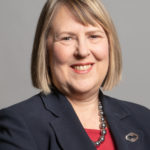
Tag: Fiona Bruce

  • Fiona Bruce – 2015 Parliamentary Question to the Department of Health

    Fiona Bruce – 2015 Parliamentary Question to the Department of Health

    The below Parliamentary question was asked by Fiona Bruce on 2015-10-13.

    To ask the Secretary of State for Health, what assessment his Department has made of the level of unmet demand for palliative care beds for patients in the last six months of their lives.

    Ben Gummer

    The Department has not undertaken an assessment of unmet demand for palliative care beds for patients in the last six months of their lives.

  • Fiona Bruce – 2015 Parliamentary Question to the Department of Health

    Fiona Bruce – 2015 Parliamentary Question to the Department of Health

    The below Parliamentary question was asked by Fiona Bruce on 2015-10-13.

    To ask the Secretary of State for Health, whether doctors performing surgical abortions are prohibited from altering the procedure (a) in order to maximise the amount or quality of fetal tissue obtained for research and (b) for other non-clinical reasons.

    Jane Ellison

    In England and Wales, medical research using fetal tissue requires the consent of the woman who donates the tissue and is subject to the requirements of the Human Tissue Act 2004. It should be conducted in accordance with the Codes of Practice published by the Human Tissue Authority,which contain specific guidance on consent to the use of fetal tissue in Code of Practice 1, Consent.

  • Fiona Bruce – 2015 Parliamentary Question to the Department of Health

    Fiona Bruce – 2015 Parliamentary Question to the Department of Health

    The below Parliamentary question was asked by Fiona Bruce on 2015-10-13.

    To ask the Secretary of State for Health, what procedures are in place to ensure that women agreeing to donate foetal tissue are not coerced, pressured or hurried into doing so and that they understand fully what it is that they are being asked to do.

    Jane Ellison

    In England and Wales, medical research using fetal tissue requires the consent of the woman who donates the tissue and is subject to the requirements of the Human Tissue Act 2004. It should be conducted in accordance with the Codes of Practice published by the Human Tissue Authority,which contain specific guidance on consent to the use of fetal tissue in Code of Practice 1, Consent.

  • Fiona Bruce – 2015 Parliamentary Question to the Department of Health

    Fiona Bruce – 2015 Parliamentary Question to the Department of Health

    The below Parliamentary question was asked by Fiona Bruce on 2015-10-13.

    To ask the Secretary of State for Health, what structures are in place for (a) staff in primary care settings and (b) other healthcare professionals to raise concerns about sex-selective abortions if they believe these are occurring.

    Jane Ellison

    All healthcare organisations registered with the Care Quality Commission (CQC) should have procedures in place to allow staff to raise concerns. Staff can also raise concerns with the CQC.

    The Department has also been clear that any specific allegations about gender-selective abortions being undertaken should be reported to the police.

  • Fiona Bruce – 2015 Parliamentary Question to the Department of Health

    Fiona Bruce – 2015 Parliamentary Question to the Department of Health

    The below Parliamentary question was asked by Fiona Bruce on 2015-10-13.

    To ask the Secretary of State for Health, whether foetal tissue derived from abortions is used in medical research in the UK; and if he will make a statement.

    Jane Ellison

    In England and Wales, medical research using fetal tissue requires the consent of the woman who donates the tissue and is subject to the requirements of the Human Tissue Act 2004. It should be conducted in accordance with the Codes of Practice published by the Human Tissue Authority,which contain specific guidance on consent to the use of fetal tissue in Code of Practice 1, Consent.

  • Fiona Bruce – 2015 Parliamentary Question to the Home Office

    Fiona Bruce – 2015 Parliamentary Question to the Home Office

    The below Parliamentary question was asked by Fiona Bruce on 2015-10-13.

    To ask the Secretary of State for the Home Department, what assessment her Department has made of the prevalence of elder abuse by family members in England and Wales.

    Karen Bradley

    We recognise that people of all ages may be subjected to domestic abuse. We are committed to ensuring the police and other frontline agencies have the tools they need to respond effectively. On 3 March 2015, domestic abuse and coercive and controlling behaviour became specific offences under the Serious Crime Act.

    In October 2015, new guidance on investigating domestic abuse was published by the College of Policing which includes abuse of older people. New training for the police on domestic abuse has been developed and piloted in Hertfordshire; and the College is reviewing risk assessment tools used by officers. In addition, for the first time all police forces must flag all domestic abuse incidents as crimes.

    The Crown Prosecution Service updated its domestic abuse legal guidance in December 2014. This includes advice for prosecutors on elder abuse. E-learning is also being finalised for prosecutors on this issue.

    In addition, the Care Act 2014 heralds a significant step change for adult safeguarding in England by placing it on a statutory footing and providing a greater focus on the prevention of abuse and neglect and on the desired outcomes of the individual in question.

  • Fiona Bruce – 2015 Parliamentary Question to the Department of Health

    Fiona Bruce – 2015 Parliamentary Question to the Department of Health

    The below Parliamentary question was asked by Fiona Bruce on 2015-10-13.

    To ask the Secretary of State for Health, if Ministers or officials of his Department will meet Jeena International, Karma Nirvana and other organisations representing women who have been the victim of coerced sex-selective abortion to discuss the implications of his Department’s assessment of the evidence of termination of pregnancy on grounds of gender.

    Jane Ellison

    Officials are happy to meet with these organisations and have already offered to meet Jeena International.

  • Fiona Bruce – 2015 Parliamentary Question to the Department of Health

    Fiona Bruce – 2015 Parliamentary Question to the Department of Health

    The below Parliamentary question was asked by Fiona Bruce on 2015-10-13.

    To ask the Secretary of State for Health, what estimate his Department has made of the likely annual cost of health and social care provision for people aged over 65 during the present Parliament.

    Alistair Burt

    Based upon latest available data (2012/13) the proportion of National Health Service spend on people over 65 was approximately 42.6%. If this same proportion is applied to the 2015/16 budget of £115.4 billion, this would indicate a total spend of around £49.1 billion.

    In 2015/16 the overall spend on adult social care was £14.1 billion. Of this total figure, £4.9 billion would be spent specifically on people aged over 65. The remainder of the adult social care budget, although not specifically spent on people over 65, includes significant expenditure on services which benefit them – for example support for carers and mitigation of social isolation.

    In addition, the Government has implemented the £5.3 billion Better Care Fund, which provides much needed investment in better integrated care through locally developed plans and putting resources where the local NHS and social services identify requirements. Much of this spend relates to people aged over 65. However, a more detailed breakdown is not available.

    Funding decisions for 2016/17 onwards, including spending on health and social care, are subject to the forthcoming Spending Review. This will establish the Government’s spending plans for the next five years.

  • Fiona Bruce – 2022 Speech on Religious Education in Modern Britain

    Fiona Bruce – 2022 Speech on Religious Education in Modern Britain

    The speech made by Fiona Bruce, the Conservative MP for Congleton, in Westminster Hall on 1 November 2022.

    It is a pleasure to serve under your chairmanship, Dame Maria. It is also a pleasure to participate in this debate called by my hon. Friend the Member for Cleethorpes (Martin Vickers), and I commend him for his speech. It is a particular pleasure to follow the hon. Member for Plymouth, Sutton and Devonport (Luke Pollard), my co-officer on the all-party parliamentary group on religious education. I have rarely felt more in agreement when listening to a speech by an Opposition Member—I am almost concerned about that. I absolutely agree that RE should be taught more in schools.

    It is important that today’s generation, who will grow up to be tomorrow’s citizens and leaders, should have a knowledge-based understanding of religion and religious beliefs. It is important that that is taught in schools because, as we have heard, it is often the only place in today’s increasingly secular society where it will be heard by young people.

    As we have also heard, understanding religion is critical to understanding so much of what is happening in the world today. Modern Britain is a global-facing Britain, and hate speech is on the rise—often much more so even than in this country. I will turn to the international perspective in a moment, but it is critical that we give our young people an opportunity to understand the religious context and content of society today and ensure that they have mutual respect for, and understanding of, those of different faiths or beliefs.

    In that regard, RE does work. A pupil from Manchester spoke movingly about how studying RE helped him to be a better friend to a classmate during local repercussions following the bombing at the Ariana Grande concert. We hear, too, of how often other faiths are now shared in our schools. Nursery children at a Catholic pre-school have enjoyed a series of lessons on Eid, Diwali, Hannukah, Christmas and Chinese new year. It is vital that we continue to rigorously teach content-based and knowledge-based religion in our schools.

    Understanding different religions is critical if our young people are to navigate the international scene that they are growing up and living in. My hon. Friend the Member for Cleethorpes mentioned the percentage of people across the world who regard religion as important, but there is also the increasing disturbance affecting different religious groups across the world. The Pew Research Centre assesses that 83% of the world’s population lives in countries where there are high or very high restrictions on those living with religious beliefs. Yet the issue is profoundly under-recognised and under-addressed compared with many other global concerns.

    Sadly, hate is on the rise across the world. People are losing their jobs, education, homes, livelihoods, families, freedom, access to justice and even their life itself simply on account of what they believe. People are being discriminated against, marginalised, beaten, threatened, tortured and killed, often by their own authoritarian Governments—the very Governments that have a duty to protect their freedom of religion or belief.

    I have the privilege of serving for a year and a half now as the Prime Minister’s special envoy for freedom of religion or belief. It is distressing to see how, in the year and a half since I was appointed, religious disputes across the world have escalated. Putin is weaponising Orthodox Christianity in the war against Ukraine. We have seen the military coup in Myanmar exacerbating the persecution of religious minorities, such as the Rohingya Muslims. We have seen the Taliban takeover of Afghanistan, with every religious group there, other than those willing to succumb to the Taliban’s ways, now oppressed and living in daily fear. In Russia, Jehovah’s Witnesses are now being imprisoned as criminals, simply for being pacificists and for being unwilling to serve in the army. We see daily disturbances in Iran, where the Baha’is cannot own land and are restricted from going to university. Elsewhere, Ahmadiyya Muslims cannot vote and, in Nigeria, tens of thousands of Christians and moderate Muslims have been massacred by Islamic extremists. That is the world our young people are growing up in.

    Even in what we might call peaceful countries, religion is a key issue and motivating factor in people’s lives. This week, in the elections in Brazil, religious views were a key factor when people decided how to vote. They will also be a factor in the US mid-term elections next week. To deny our young people an understanding of different religions and their importance in people’s lives is to do them a disservice as they grow up and mature. Those who wish to water down the content of religious education are doing our young people a disservice.

    We cannot have RE watered down so that it is just an opportunity to have a chat or to discover oneself. How can young people discover and understand anything unless they are given information and knowledge-based academic teaching, so that they can make informed decisions about their way in the world? They have plenty of opportunities in this country to understand the secular environment they live in, but few opportunities to understand the importance of religion to so many others and, hopefully in time, to themselves.

    In closing, I would like to pay tribute to the report on religion and world views provided by the Independent Schools Religious Studies Association. It contains some excellent comments and content, which I will not go into, because I am conscious other colleagues need time to speak. However, the report states:

    “Religion is more than a worldview—it is a way of life, which involves community, shared values and the sense of the transcendent.”

    That is critical; it is so important for young people to be given an opportunity to understand that in the world today, when so many of them are often questioning and looking for answers.


  • Fiona Bruce – 2014 Parliamentary Question to the Department of Health

    Fiona Bruce – 2014 Parliamentary Question to the Department of Health

    The below Parliamentary question was asked by Fiona Bruce on 2014-04-29.

    To ask the Secretary of State for Health, what assessment his Department has made of the meta-analysis by Huang Y et al. published in the journal Cancer Causes Control in November 2013, investigating the link between termination of pregnancy and breast cancer.

    Jane Ellison

    The Royal College of Gynaecologists and Obstetricians (RCOG) reviewed its evidence based guidance on abortion (The Care of Women Requesting Induced Abortion) in 2011 in which the issue of a link between abortion and breast cancer was given careful consideration.

    When the RCOG carries out the next review of its guidance, consideration will be given to all relevant research and evidence available that has come to light, to help inform the guidance and recommendations.