
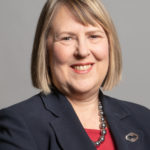
Tag: Fiona Bruce

  • Fiona Bruce – 2023 Speech on Holocaust Memorial Day

    Fiona Bruce – 2023 Speech on Holocaust Memorial Day

    The speech made by Fiona Bruce, the Conservative MP for Congleton, in the House of Commons on 26 January 2023.

    This week, holocaust survivor Manfred Goldberg spoke movingly in the Foreign, Commonwealth and Development Office about the “hell on earth” he experienced under the Nazis. The tragedy is that there have been a catalogue of horrors since the Nazis perpetrated their genocidal acts. In the ’70s there was Pol Pot’s terror in Cambodia. In the ’80s there was Saddam Hussein’s desecration of Kurds in Iraq. In the ’90s there were attempts to systematically exterminate Tutsis in Rwanda, while Bosnian non-Serbs suffered a similar fate.

    There have been atrocities inflicted across the world, including in Asia, the middle east, Africa and Europe, and on victims from a range of religions and races—Muslim, Buddhist, Jewish, Christian and others. Still, in the 21st century, we see further atrocities where elements of the definition of genocide are present, including targeting of the Rohingya Muslims in Myanmar, of the Uyghur Muslims in Xinjiang, and of the Hazaras in Afghanistan. In my work as the Prime Minister’s special envoy for freedom of religion or belief, I have heard many survivors speak of unspeakable suffering. They relay the same message as survivors of the holocaust: we must not only call out evil, but act to prevent it from happening again.

    One way we can act is by formally recognising the genocide against the Yazidis and Christians in Iraq and Syria by Daesh, as the lower house in Germany did just last week. Recognition of genocide is one of the most significant things we can do as part of the UK’s atrocity prevention strategy. Another is to identify where there is risk of genocide. We must equip our diplomatic teams across the world to spot the early warning signs where a nation is at risk of genocide. The UK can be a leader among our allies and partners in setting up early warning mechanisms, and in using our diplomatic reach—a reach that is still much regarded internationally, as I know from my work as the Prime Minister’s special envoy—to resolve disputes and tensions where we are able to do so.

    The International Development Committee’s recent report, “From Srebrenica to a safer tomorrow: Preventing future mass atrocities around the world” sets out a road map for the Government to follow. I welcome the Government’s positive response, not least the development of the mass atrocity prevention hub, and look forward to further progress to fulfil our manifesto commitment to implement the Truro review fully, including recommendation 7, which states:

    “Ensure that there are mechanisms in place to facilitate an immediate response to atrocity crimes, including genocide, through activities such as setting up early warning mechanisms to identify countries at risk of atrocities, diplomacy to help de-escalate tensions and resolve disputes, and developing support to help with upstream prevention work.”

    I highlight Nigeria as one country with close links to the UK where I fear the risk of genocide is growing. Around 90 hon. Members attended the Open Doors 2023 world watch list launch here last week and heard how Nigeria is now the sixth highest country for persecution of Christians; indeed, it would be top if the list were based just on the number of recorded deaths. We must condemn in the strongest possible terms the ongoing attacks against Christians and moderate Muslims by Islamic extremists in that country, and call out the Nigerian Government’s repeated denial of any such targeted religious persecution and their failure to act adequately to address it and protect the targeted.

    Finally, we must do more work on educating the next generation about the importance of freedom of religion or belief, so that “never again” becomes a reality for their generation in a way that, sadly, as I have said, it has not for ours. This is the ultimate upstream prevention work, and it is vital. One of the main takeaways from last year’s ministerial conference on freedom of religion or belief, which I was privileged to co-host, was the inspiration of the development of education toolkits for teachers to use in primary schools, to give even the youngest children an understanding of freedom of religion or belief and of the vital importance—

    John Cryer (Leyton and Wanstead) (Lab)

    Will the hon. Member give way?

    Fiona Bruce

    Certainly.

    John Cryer

    In the context of what the hon. Member is saying about education, will she join me in congratulating the HET, the CST and other organisations on educating people and also on combating antisemitism, including, sadly, in my own party and in other institutions?

    Fiona Bruce

    I thank the hon. Member for his intervention. I will indeed congratulate the Holocaust Educational Trust later in my speech.

    It is vital that we teach even the youngest children about the importance of not discriminating against others on account of their beliefs, just as they understand so well the importance of not discriminating against others on account of disability.

    I have the privilege of chairing the International Religious Freedom or Belief Alliance, a growing group of 42 countries whose Governments, like ours, have formally committed to protecting and promoting freedom of religion or belief around the world. It is our aspiration to see the toolkit that I mentioned, when it is developed, used in schools across our 42 countries. I am proud that the toolkit is currently being piloted in the UK, including in a school in my constituency.

    As the years go by and our brave, inspirational holocaust survivors, with their testimonies, diminish in number, we must ensure that their voice is sustained, not least with young ambassadors. I pay tribute to the Holocaust Educational Trust for the excellent work that it does in that regard.

    The alliance I chair is promoting the connection of young freedom of religion or belief ambassadors around the world. We are working towards a 2023 virtual global conference engaging young FORB ambassadors, and we want to involve three groups of young people: first, young people from democratic societies like our own who have not personally experienced persecution but care about the issue and want to do more; secondly, young people in the diaspora here in the UK with ties in countries such as Nigeria and direct concerns to relay; and, thirdly and critically, young people who live in countries where there is persecution and are experiencing it themselves—places such as Myanmar, where there is already strong interest from young people, and Hong Kong, where oppression on account of religion is an increasing concern.

    As we plan this virtual global conference, I would welcome contacts from colleagues, all-party parliamentary group country chairs and others with young people from across the world who may be interested in engaging with the event late in 2023. This is a way in which we here can act. Indeed, we can all do something to make “never again” a reality for the next generation, and it is so heartening that, in this Parliament, elected Members right across the political spectrum are determined to do so.

  • Fiona Bruce – 2015 Parliamentary Question to the Home Office

    Fiona Bruce – 2015 Parliamentary Question to the Home Office

    The below Parliamentary question was asked by Fiona Bruce on 2015-11-04.

    To ask the Secretary of State for the Home Department, what training and experience advisers who received calls to the NSPCC human trafficking and modern slavery helpline between July 2014 and June 2015 had; and what the cost to the public purse was of providing such training.

    Karen Bradley

    The NSPCC-run modern slavery helpline was launched in July 2014, as part of a wider awareness-raising campaign, to better support potential victims of modern slavery. For the period July 2014 to July 2015, £50,000 was made available to the NSPCC to run the modern slavery helpline. To support the launch of the helpline, training was provided by existing staff in the NSPCC child trafficking advice centre, the Metropolitan police’s human trafficking unit and the Modern Slavery Unit to NSPCC call-handlers at zero cost.

    The NSPCC helpline routinely records the number of contacts made each month, how they are made, and by whom. The helpline also records the gender, age and nationality of potential victims, where that information is known or presumed. Between 31 July 2014 and 31 July 2015 the NSPCC modern slavery helpline received, in total, 849 contacts. These were comprised of 491 referrals, 107 advice cases and 251 enquiries. During the period 31 July 2014 to 31 July 2015 the helpline received a total of 57 contacts from potential victims themselves and in that same period the NSPCC made 272 referrals to the police. The NSPCC does not hold data on the number of contacts referred to the helpline by the police and other agencies that were subsequently referred back to those agencies.

  • Fiona Bruce – 2015 Parliamentary Question to the Home Office

    Fiona Bruce – 2015 Parliamentary Question to the Home Office

    The below Parliamentary question was asked by Fiona Bruce on 2015-11-23.

    To ask the Secretary of State for the Home Department, how many people were charged with drink-driving in each of the last three years.

    Mike Penning

    The below table provides the published figures on the number of people who were charged with drink driving in each of the last three years.

    Offence

    2012

    2013

    2014

    Driving with alcohol in the blood above the prescribed limit

    45,841

    41,798

    38,866

    Other offences related to drink- or drug-driving

    7,915

    9,421

    9,421

    This and other data on, for example, the number of prosecutions for drink driving offences is published by the Ministry of Justice and can be found at the following link:

    https://www.gov.uk/government/statistics/criminal-justice-system-statistics-quarterly-december-2014

  • Fiona Bruce – 2016 Parliamentary Question to the Department for Education

    Fiona Bruce – 2016 Parliamentary Question to the Department for Education

    The below Parliamentary question was asked by Fiona Bruce on 2016-01-11.

    To ask the Secretary of State for Education, with reference to her Department’s consultation, Out-of-school education settings: call for evidence, published on 26 November 2015, what definition her Department uses for (a) supplementary schools, (b) tuition centres, (c) intensive education and (d) the eight hours threshold for inspection.

    Nick Gibb

    The Government wants children to be educated in a safe environment where they are not exposed to hateful and extremist views that undermine British values.

    The call for evidence on out-of-school settings described:

    (a) Supplementary schools as settings which offer support or education in addition to mainstream or core learning, and which operate after school hours and on the weekends; and

    (b) Tuition centres as settings which could often be used in place of mainstream education and support home education, and which can operate at any time of day.

    The proposals are about making sure that where there are concerns raised by parents and others about issues of extremism, child cruelty or inappropriate teaching in unregulated settings, the Government can take action to protect children and empower parents.

    The call for evidence defined intensive education as anything which entails an individual child attending a setting for more than betweensix toeight hours a week. Such settings would be required to register with their local authority and be eligible for inspection where concerns were reported.

    Settings providing ad hoc classes or regular classes below a specified time threshold would not be captured by the proposal. One-week holiday clubs and Sunday schools would not, therefore, be covered. The proposal is intended to capture settings where children receive intensive education, regardless of faith or whether provided by a community group.

  • Fiona Bruce – 2016 Parliamentary Question to the Home Office

    Fiona Bruce – 2016 Parliamentary Question to the Home Office

    The below Parliamentary question was asked by Fiona Bruce on 2016-01-21.

    To ask the Secretary of State for the Home Department, if the Government will hold a formal public consultation on proposed extremism disruption orders which makes reference to issues of free speech before bringing such proposals to the House.

    Karen Bradley

    The Government has engaged widely on the Counter-Extremism Strategy and will continue to do so. This includes on any proposals to prevent and disrupt extremist activity.

    The Government will continue to protect freedom of speech and the right to practice any faith or none. These are two of the values that the Counter-Extremism Strategy is designed to uphold.

  • Fiona Bruce – 2016 Parliamentary Question to the Foreign and Commonwealth Office

    Fiona Bruce – 2016 Parliamentary Question to the Foreign and Commonwealth Office

    The below Parliamentary question was asked by Fiona Bruce on 2016-02-11.

    To ask the Secretary of State for Foreign and Commonwealth Affairs, what steps he is taking in cooperation with his international counterparts to pursue criminal responsibility of the leadership of the Democratic People’s Republic of Korea.

    Mr Hugo Swire

    We remain deeply concerned about the human rights situation in the Democratic People’s Republic of Korea.

    The British Government supports the principle that there must be no impunity for those accused of human rights violations and that crimes against humanity are appropriately investigated.

    We will continue to work with members of the international community through multilateral fora, including the UN Security Council and the UN Human Rights Council, to ensure the regime is held to account for its appalling human rights record.

  • Fiona Bruce – 2016 Parliamentary Question to the Foreign and Commonwealth Office

    Fiona Bruce – 2016 Parliamentary Question to the Foreign and Commonwealth Office

    The below Parliamentary question was asked by Fiona Bruce on 2016-05-19.

    To ask the Secretary of State for Foreign and Commonwealth Affairs, what reports he has received on violence perpetrated against albino children in Malawi; and if he will make a statement.

    James Duddridge

    We are concerned by reports of a rise in human rights violations against persons with albinism in Malawi. Our High Commissioner to Malawi discussed the issue during a meeting with the Malawian Foreign Minister on 27 April and also with United Nations Independent Expert on the rights of persons with Albinism Ms Ikponwosa Ero, during her visit to Malawi on 29 April. Malawian President Mutharika has condemned the attacks and ordered the perpetrators to be brought to justice.

    UN research recorded a total of 66 incidents in the last 14 months, 40% related to exhuming graveyards to collect body parts and 24% the sale of body parts by perpetrators including traditional healers.

    In a recent press conference he said attacks on albinos are barbaric and ordered security agencies to intensify actions against perpetrators. So far 69 suspects have been arrested, awaiting prosecution.

  • Fiona Bruce – 2016 Parliamentary Question to the Department of Health

    Fiona Bruce – 2016 Parliamentary Question to the Department of Health

    The below Parliamentary question was asked by Fiona Bruce on 2016-06-07.

    To ask the Secretary of State for Health, if he will take steps to ensure that NHS staff receive religious literacy training.

    Ben Gummer

    Religion or belief (or lack thereof) is a protected characteristic under the Equality Act 2010. Public authorities, including all National Health Service organisations, must have due regard to the need to eliminate discrimination, harassment, victimisation and other conduct prohibited under that Act towards people sharing that protected characteristic in discharging their public functions. Employers have a responsibility to ensure that their employees do not behave unlawfully and should take all reasonable steps to prevent unlawful acts from happening. Employees can also be personally liable for any unlawful conduct.

    NHS organisations are subject to duties under the Equality Act in their own right. They are also directly subject to regulation by the Equality and Human Rights Commission. To help them meet their statutory equality duties, NHS England published an Equality Delivery System for the NHS (https://www.england.nhs.uk/about/gov/equality-hub/eds/) which became part of the NHS Standard Contract from 2015.

  • Fiona Bruce – 2016 Parliamentary Question to the Department of Health

    Fiona Bruce – 2016 Parliamentary Question to the Department of Health

    The below Parliamentary question was asked by Fiona Bruce on 2016-09-15.

    To ask the Secretary of State for Health, what measures are in place to ensure that (a) vulnerable women and (b) under 18s who undergo abortions receive follow-up support.

    Nicola Blackwood

    The Department’s Required Standard Operating Procedures (RSOPs) for termination of pregnancy providers approved by the Secretary of State, state that all women requesting an abortion should be offered the opportunity to discuss their options and choices with a trained counsellor. In addition, protocols should be in place for onward referral to specialist services. All independent providers of termination of pregnancy providers must comply with these RSOPs.

    Pathways to further post-abortion counselling should be available for any woman who may require additional emotional support or whose mental health is perceived to be at risk.

    The Royal College of Obstetricians and Gynaecologists guideline on the Care of Women Requesting Induced Abortion (2011) recommends that services should identify issues which make women particularly vulnerable, and refer them on to relevant support services in a timely manner.

  • Fiona Bruce – 2015 Parliamentary Question to the Home Office

    Fiona Bruce – 2015 Parliamentary Question to the Home Office

    The below Parliamentary question was asked by Fiona Bruce on 2015-11-04.

    To ask the Secretary of State for the Home Department, what information her Department holds on the nature of enquiries received by the NSPCC human trafficking and modern slavery helpline between July 2014 and June 2015; and how many such calls were from survivors of human trafficking.

    Karen Bradley

    The NSPCC-run modern slavery helpline was launched in July 2014, as part of a wider awareness-raising campaign, to better support potential victims of modern slavery. For the period July 2014 to July 2015, £50,000 was made available to the NSPCC to run the modern slavery helpline. To support the launch of the helpline, training was provided by existing staff in the NSPCC child trafficking advice centre, the Metropolitan police’s human trafficking unit and the Modern Slavery Unit to NSPCC call-handlers at zero cost.

    The NSPCC helpline routinely records the number of contacts made each month, how they are made, and by whom. The helpline also records the gender, age and nationality of potential victims, where that information is known or presumed. Between 31 July 2014 and 31 July 2015 the NSPCC modern slavery helpline received, in total, 849 contacts. These were comprised of 491 referrals, 107 advice cases and 251 enquiries. During the period 31 July 2014 to 31 July 2015 the helpline received a total of 57 contacts from potential victims themselves and in that same period the NSPCC made 272 referrals to the police. The NSPCC does not hold data on the number of contacts referred to the helpline by the police and other agencies that were subsequently referred back to those agencies.