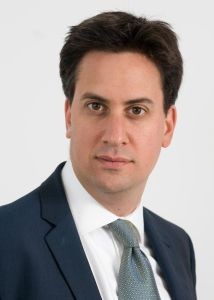
Tag: Ed Miliband

  • Ed Miliband – 2012 One Nation Speech in Cardiff

    edmiliband

    Below is the text of the speech made by Ed Miliband, the Leader of the Opposition, in Cardiff on 11th October 2012.

    After three weeks of the party conferences, one thing is clear. Labour has defined the central question for the next election: who can make us One Nation?

    At our party conference, I set out the future for our country as One Nation and my party as a One Nation Labour Party.

    One Nation is a country where everyone has a stake, prosperity is fairly shared and we protect the institutions that matter.

    That is both the country we need to be and the only way we can succeed.

    David Cameron spent much of his speech yesterday trying to respond.

    But he failed. He failed because his government and his party is taking us away from One Nation.

    David Cameron can’t be a One Nation Prime Minister when he is leaving young people without work for one year, two years, three years.

    He can’t be a One Nation Prime Minister when he is cutting taxes by at least £40,000 a year for 8,000 millionaires and raising them for pensioners.

    He can’t be a One Nation Prime Minister when he fails time and time again to stand up to the banks, the energy companies and the pension companies.

    And he can’t be a One Nation Prime Minister when he insists on a top down reorganisation of the NHS which nobody wanted, has cost billions, while we have 5,500 fewer nurses in our NHS.

    He can’t be a One Nation Prime Minister because he has the wrong answers, answers that aren’t One Nation answers.

    He really believes that cutting taxes for the richest is the way to make our economy succeed.

    That too many rights for people in work is what is holding our economy back and that making it easier to sack them is the answer.

    And that as long as government gets out of the way – cutting as far and as fast as possible – the economy will automatically succeed.

    David Cameron believes we have a choice between being One Nation and paying our way in the world.

    But he’s wrong.

    It is as One Nation not as a ‘sink or swim’ society that Britain will succeed. To survive in a competitive world, we need to be One Nation: come together as a country and use the talents of all.

    We must change our economy so that banks work together with businesses to create the wealth and jobs we need in the future.

    To compete with China and India, we can’t function as a low skill, low wage economy leaving out the forgotten 50%, so we need a transformation of vocational skills and apprenticeships in this country.

    And to be a truly competitive economy, we need all parts of our United Kingdom contributing to economic growth and playing their part – not neglecting whole regions and sections of the population as this government does.

    Between now and the general election Labour will be showing across all major areas of policy what One Nation means in practice, building on the big reforms in banking, skills, energy, pensions and housing that we announced at party conference.

    The fight is on for One Nation. It is a fight we intend to win between now and the next election.

  • Ed Miliband – 2012 Speech to Unite Conference

    edmiliband

    Below is the text of the speech made by Ed Miliband, the Leader of the Opposition, to the Unite Conference on 28th June 2012.

    I want to thank Len McCluskey and Tony Woodhouse for your invitation to be here.

    Away from the headlines, across the country, your union often plays a vital role helping working people and their firms to succeed.

    That is what we’ve seen at Ellesmere Port.

    Unite working together with General Motors to bring 700 new skilled jobs to Merseyside.

    Working together to secure the long-term future of the plant.

    Working together to secure a potential future until 2020 and beyond.

    Without Unite, Ellesmere Port would not have been saved.

    Let us all pay tribute to all of those involved in the work at Ellesmere Port.

    And at thousands of other workplaces around the country.

    Through your community membership, you are reaching out.

    Through initiatives like the Unite Jobs board, which helps people find jobs in their area.

    Showing that trade unions can help not just those in work, but also those looking for work.

    That is the modern future for trade unionism.

    And I applaud this work.

    And I also want to pay tribute to Diana Holland.

    While the Government were making the oil tankers dispute worse, ramping up the rhetoric by talking about jerry cans, she was trying to resolve it in a dignified way.

    Your job is to represent your members.

    My job is to lead the Labour Party.

    Of course we will have differences.

    I will be candid about them and so will you.

    But we have to find new ways of working together for Britain.

    That should be true of any Government.

    That’s why today I want to talk about our economy, its present, its future, and how we can work together to change it.

    I want to start by talking about the revelations about Barclays.

    Nine months ago in my Conference Speech I talked about irresponsible, predatory capitalism.

    Today we see one of the worst cases yet.

    Millions of pounds being made by bending the rules, rigging the system to the cost of ordinary borrowers and savers.

    The banks told us they had cleaned up their act.

    But this shines a light on what has really been going on.

    Three things need to happen:

    First, this cannot be about a slap on the wrist, a fine and the foregoing of bonuses.

    To believe that is the end of the matter would be totally wrong.

    When ordinary people break the law, they face charges, prosecution and punishment.

    We need to know who knew what when, and criminal prosecutions should follow against those who broke the law.

    The same should happen here.

    The public who are paying the price for bankers’ irresponsibility will expect nothing less.

    Second, the Government should urgently look at the regulation of this area of banking.

    We need to change the way things are run so that this can never happen again.

    Third, there is a much wider issue about the culture of parts of the banking industry.

    This shines a light on a swaggering culture which is not about serving the public, but serving itself by whatever means necessary.

    Too many people in the banks clearly think they were big to fail, too powerful to be challenged.

    They clearly believed they could do anything they liked and were above the law.

    This is yet another example of some of the rich and powerful having their own moral standards, just as we saw during phone hacking.

    We cannot have a country where this happens.

    That is why we need the strongest punishment, a change in regulation and a change in the culture of our banks.

    We need banks that serve a more responsible capitalism, working for the majority of the people and enabling us to pay in our world.

    The failure of our banks is part of an economy that does not work for the working people of this country.

    Stopped working for the people whose living standards are being squeezed.

    Stopped working for young people like the young couple I met on a train recently.

    She was working long hours at a hospital to pay her way through university.

    And he had studied aerospace engineering for five years at Cranfield University.

    He’d been looking for a job in aerospace for nearly two years.

    This country had made an investment in him by subsidising his university fees.

    Now we are wasting his talent, that investment.

    That’s a tragedy for him and a tragedy for our country.

    It’s why the next Labour Government will need to rebuild our economy.

    Because instead of rebuilding our economy, this Government is tearing out its foundations.

    They have turned a recovery into a recession.

    We have a double-dip recession made in Downing Street.

    And still David Cameron says ‘you call it austerity, I call it efficiency.’

    Who is he trying to kid?

    He says Britain is ‘headed in the right direction’.

    What planet is he on?

    Why are the Tories so out of touch?

    Because they are listening to the wrong people.

    They are listening to those who already have power and influence and not to the working people of this country.

    They make policy with cosy kitchen suppers for the privileged.

    Cosy country suppers for the powerful.

    But in Tory Britain there is no place at the table for the decent hardworking families of this country.

    We know it’s wrong.

    And it would be different under a Labour Government.

    But they are not just out of touch because they listen to the wrong people.

    But also because they have the wrong ideas.

    The wrong ideology.

    Cutting taxes for millionaires while raising them for millions.

    Trickle down economics.

    Giving money to those at the top while taking it away from the rest of the country.

    And making it easier to fire people when they should be making it easier to hire people.

    It’s wrong and it doesn’t work.

    Let’s call it what it is.

    Old-fashioned Tory economics.

    Wrong.

    Inefficient.

    Unfair.

    And making the problems of our country worse not better.

    Ask the workers at Coryton oil refinery.

    Where hundreds will now lose their jobs.

    The Government had a clear choice:

    Do all it could to help save the refinery.

    Or stand aside and do nothing.

    The Government said their hands were tied because of the European Commission.

    But they didn’t even ask the Commission.

    If other governments can fight to keep their refineries open, why can’t ours?

    Why can’t our Government even try?

    It’s yet more proof that this Government doesn’t stand up for the working people of Britain.

    And Britain doesn’t just need a change of government.

    It needs a change of ideas.

    And a change of mindset.

    Because what is the other problem with this government?

    It is that they really do believe that there is no alternative.

    They really do believe the 1930s idea that when you’re in a global downturn there is nothing that can be done.

    And so we have the spectacle of the powerful saying to the powerless:

    ‘We’re in for a few bad years and there’s nothing we can do to change it.’

    They’re not the ones who will suffer but they say it all the same.

    The G20 Summit comes and goes.

    The European Summit will come and go.

    But what do we get from the British Prime Minister?

    No leadership.

    The same old mantra:

    ‘There is no alternative.’

    The same mindset that has been failing us for these last two years.

    Friends, you know and I know:

    Of course there is an alternative.

    There is always an alternative.

    If Labour was in Government, we would get our economy growing again.

    Cutting VAT.

    Encouraging businesses to take on new workers.

    Investing in our infrastructure.

    And putting our young people back to work.

    It’s just wrong that so many young people like the aerospace engineer I met are on the dole for one year, two years, three years.

    Long-term youth unemployment has more than doubled in the last year alone.

    It doesn’t have to be this way.

    I say, we say:

    Tax the bankers’ bonuses and guarantee jobs for those young people.

    A Labour Government would get our young people working again.

    But we don’t just need change in the short-term.

    We need to rebuild our economy from the ground up.

    We need to look further back than the current crisis or the current Government.

    For too long, we have had an economy that doesn’t work for most working people.

    An economy where industry too often serves finance rather than finance serving industry.

    An economy where too many young people leave school without hope of a real career.

    And an economy where people are in poverty even though they working hard.

    We need to change all that.

    That will be the task of the next Labour Government.

    And this task will be even more important because of the mess the Government has made of things.

    The hard truth is this:

    Whoever wins the next election will inherit a deficit.

    And because there will be less money around, the best route to social justice will be through changing our economy so that it works for working people.

    And let me tell you about my vision of the economy for the future.

    It’s an economy where real engineering is as important as financial engineering.

    Where every young person, whether they go to university or not, feels that they have the skills and training they need for a successful career.

    Where we encourage companies to invest not for the short-term but for the long-term.

    And where nobody who works is in poverty.

    So how do we build it?

    It can’t be built simply on the basis of old-style free market economics.

    It can only be built on government, employers and unions understanding their role and playing their part.

    Government needs to back the sectors that will succeed in the future.

    That means a modern industrial strategy with a vision and a plan of how we can succeed as a country.

    It means backing small businesses and addressing the financial barriers they face, with ideas like a British Investment Bank.

    And it means taking skills seriously.

    That’s why the next Labour Government will say:

    ‘You won’t get a major Government contract unless you offer apprenticeships for the next generation.’

    For employers and unions, it will often mean working together.

    At times, there will be conflict between workers and employers.

    You will stand your ground.

    And employers will stand theirs.

    But you show every hour of every day, up and down the country in the work you do, that cooperation is the best way forward for the people you represent.

    Sometimes this is difficult.

    Like over the London bus dispute.

    We all want the Olympics to be a success.

    The eyes of the world will be upon us.

    The best way to resolve this dispute is by all sides getting round a table and negotiating a solution.

    I know you believe that and have called for that again in the last twenty-four hours.

    But we cannot let industrial action disrupt the Olympics, and damage this special moment for Britain.

    And all sides must ensure that doesn’t happen.

    And we must make sure that every employer in the country fulfils their obligations to their workforce.

    But we have not won that battle yet.

    Friends, the minimum wage was one of Labour’s proudest achievements.

    But far too many people in this country are still not paid the minimum wage.

    Only seven companies have ever been prosecuted for not paying it.

    Is there anyone here who believes that only seven have broken the law and exploited labour?

    We all know the realities. The Labour Party and the Unions campaigned together to establish the minimum wage in law.

    Now we must campaign together to make sure it is enforced.

    I talked last week about the fact that we have some recruitment agencies in this country employing migrant labour and closing their books to workers from Britain.

    So that they can bring in workers who are unorganised and unprotected.

    Unite works to recruit workers from all backgrounds into the union, so that they get the protection and representation they deserve.

    We didn’t do enough in Government.

    Including on agency workers, where we acted too late.

    We need to do more.

    More to make sure that everyone is paid the minimum wage – no matter where they come from.

    More to stop a race to the bottom on building sites, in hotels and kitchens, in food processing plants up and down this country.

    And we’re not going to wait until we’re back in power to do this.

    We’re starting now.

    We’re launching a campaign to highlight cases of exploitation of working people in Britain – wherever they are from.

    A campaign to gather that information to help us build the case for change.

    So businesses can say “I know something’s not right in my sector of the economy.”

    “Some of my competitors are breaking the rules.”

    So workers can safely say “I am being exploited”.

    “I am being paid less than the minimum wage.”

    But it’s not just about the minimum wage either.

    The “minimum” should never be the summit of our ambition for the working people of this country.

    That’s why we are working with representatives from trade unions – including Unite – local authorities and civil society to campaign for the next step.

    For a decent living wage.

    Starting in local government.

    You know a couple of weeks ago I met somebody, a cleaner, who said to me that she’d taken the step of writing to the leader of her council to thank him.

    And I asked her why.

    She said she was writing to thank him for starting to pay her the Living Wage.

    So let us congratulate Labour councils like Birmingham for committing to paying the Living Wage to every one of their workers.

    That’s how we start building a better economy for the future.

    Because we will never rebuild Britain’s economy if it is based on the wrong foundations:

    If it based on low wages, low skills, fast buck, and take what you can.

    The best employers know this.

    Labour knows it.

    You know it too.

    So we have to change our economy, but we have to change our politics as well.

    You and I know that people don’t think politics can make a difference.

    They don’t believe that politicians keep their promises.

    They think that whoever is in power, things will be the same.

    Including some of your members.

    We won’t change that overnight.

    But we do need to change it.

    With a politics that is realistic about the promises it can keep.

    A politics that stands up for the many not just for the powerful few.

    And we need a politics where politicians look like the constituents they represent.

    That’s not what Westminster looks like today.

    That’s why I say we should not rest until 50 per cent of Labour’s MPs are women.

    We should not rest until many more of our Trade Union leaders are women.

    That’s why I say we should not rest until ethnic minorities are properly represented in our party.

    And we should not rest until we deal with one of the most glaring omissions:

    The lack of working class representation in our politics.

    That’s why I have asked Jon Trickett from our Shadow Cabinet to lead our work on this issue.

    I knew when I became leader of the Labour Party that our party should have one clear mission.

    To ensure we are a one-term Opposition.

    Not for ourselves.

    But because of what this Government was going to do to Britain.

    Two years on I feel that more strongly than ever.

    I believe in a more equal, fairer, more just Britain.

    We’re not the public economy and the private economy.

    We are one economy.

    We’re not the north and the south.

    We are people from right across Britain who share aspirations, hopes and dreams for the future.

    And we’re a country that succeeds or fails together.

    At the elections in May the British people gave Labour a platform.

    I intend to seize that opportunity.

    To show how we will rebuild our economy so it works for working people.

    To create a society that is united not divided.

    And build a politics that people can believe in.

    There are entrepreneurs and trade union members, builders and teachers, and working people across the country who all share this vision.

    Let’s work together to make it happen.

    Let’s rebuild Britain.

  • Ed Miliband – 2012 Speech to Scottish Labour Party Conference

    edmiliband

    Below is the text of the speech made by Ed Miliband, the Leader of the Opposition, to the Scottish Labour Party conference on 2nd March 2012.

    Friends,

    It’s good to be back in Scotland.

    And let me pay tribute to our new leader.

    Someone who has dedicated their whole adult life to working for Scotland’s people.

    Johann Lamont.

    Johann – I am proud to call you a colleague. Thank you for your leadership in these important days for Scotland.

    Let me also pay tribute to our Shadow Secretary of State for Scotland.

    She is tough, determined, and steadfast in her values:

    Margaret Curran.

    I also want to praise someone who is a rising star in our party.

    Our Deputy Leader: Anas Sarwar.

    And let me also thank someone else for his service, Iain Gray. Your steady hand on the tiller during the Leadership contest has allowed us to move forward together.

    Let us also thank the excellent Scottish Labour staff we have at John Smith House and across Scotland.

    Thank you.

    But let’s face facts: we lost very badly in the Scottish 2011, and the General Election in 2010. Why did we lose? Too many people thought:

    We were a party for somebody else.

    We wouldn’t stand up for them.

    Above all, we didn’t have a sufficient vision for the future which answered the challenges they faced in their lives.

    And so our challenge is to renew ourselves here in Scotland as we have been doing in the UK since the 2010 General Election.

    But we don’t have the luxury of simply looking inwards. People need our voice, including in the May elections.

    And today I want to show how we can beat a Tory-led government across the UK and the SNP government here in Scotland.

    And to do that, we must start by answering one call above all. Building an economy which works for the working people of our country.

    Wages not rising for the many, runaway rewards at the top, household bills causing monthly heartache. And a younger generation asking why its prospects are worse than their parents’.

    My case to the people of the United Kingdom is that old-fashioned Tory politics cannot answer this call. And my case to the people of Scotland is that the SNP cannot either. The Tories because they are wedded to the old ways that got us into the banking crisis.

    The SNP, because while they award themselves the title of progressive beacon, it is neither what they are doing in practice in government nor what separatism would bring.

    In the end, only a renewed Labour Party can do it.

    A renewed Labour party that understands that we must deliver fairness in tough times.

    That we must make different choices. We must have different priorities in a fiscally responsible way.

    And the most urgent task is employment.

    Conference, we know:

    Nothing strains a family like a mother or father out of work. Nothing scars a community like a generation of young people with no hope, nothing holds back a country like the wasted talent of hundreds of thousands of Scots who don’t lack the ability to work, but just the chance.

    Unemployment rose faster in Scotland than in England over the last year.

    On the most recent figures, 1 out of every 3 jobs lost across the whole of the UK was in Scotland.

    1 in 5 young people are out of work in Scotland. Last time I was in Scotland, a few weeks ago, I went to the Co-op distribution plant in Newhouse.

    One of the people who works there there told me that he had always told his children that if they worked hard in school they would get a good job.

    But now that they’re out of school and there are so few jobs, he honestly doesn’t know what to tell them.

    And with 13,000 young people out of work for more than six months, how many parents around this country must feel the same way.

    It is the price of Tory economic failure.

    It is the price of an approach to the deficit that goes too far and too fast.

    But it is also the failure of an SNP government too.

    Alex Salmond came to England to brag about how he would turn Scotland into a progressive beacon.

    There’s just one problem.

    He forgot about what he is doing in Scotland.

    When George Osborne handed him the plans to make cuts to job-creating public investment of 11%, he didn’t just make those cuts.

    He almost doubled them.

    Thousands of jobs building roads, bridges, and infrastructure ripped out of the economy, not just by the Tories in Westminster, but by the SNP in Holyrood.

    He forgot about the people of Scotland when he cut the budget of colleges by a fifth, harming the training chances for young people.

    Whatever the failings of the Tory government, he should be using the powers he does have to make a difference to young people, like the Labour government in Wales.

    You cant be a progressive beacon if you stand by as youth unemployment rises.

    Scotland needs a Labour government that would stand up for jobs in this country.

    We would tax the bankers’ bonuses.

    We would spend the money on 100,000 jobs for young people.

    That’s the difference with Labour:

    Unlike the SNP:

    We would never stand by, and leave young people out of work.

    We would get Scotland working again.

    Conference,

    It’s true on youth unemployment

    And it’s true on every part of building an economy that works for working people.

    The challenge is so fundamental.

    You can only do it with an overriding, single-minded determination to make it happen.

    That’s the difference between us and the SNP.

    Johann and I came into politics to make Britain fairer.

    Alex Salmond came into politics to change Britain’s borders.

    It’s not by chance that that the SNP have failed the young people of Scotland it’s their choice to make separatism the priority.

    But to create an economy that works for working people, it’s not just about jobs, it’s about creating good jobs.

    Let’s face it: we know too many of the jobs in our country are low wage and low skill.

    You know a year or so ago, I was at the Govan shipyard, I met some apprentices doing four year apprenticeships.

    What sticks in my mind is the enthusiasm they expressed for the opportunity they had been given.

    And their sense that they were lucky ones—most of their mates were out of work or doing low wage jobs.

    We must celebrate, nurture, and support successful companies that train their workforce.

    That’s why I say that one of the first acts of the next Labour government will be to say that if companies want major government contracts they must offer apprenticeships for the next generation.

    And we have to reform the way our banks work as well.

    When I was in Glasgow last month, I spoke to a man who ran a small wind turbine company.

    He said he wanted to expand, take on more employees and create more jobs, but his bank had turned him down for a loan.

    You know the Tories said it was anti-business when I spoke out about massive bonuses.

    But one of the reasons I did is that they’re not meeting their targets on small business lending.

    That’s not anti-business, it’s pro-business.

    I want banks which help to create more successful entrepreneurs, more profit making businesses, and more good jobs.

    I want to reform the way our banks work so that instead of industry serving finance, finance serves industry.

    That’s why we must plan for a British Investment Bank to properly serve small business in this country.

    That’s not anti-business, it’s pro-business.

    And we are determined to encourage long-term investment.

    That’s why we are looking at the rules on takeovers so that people invest in a firm to build it up not to strip its assets.

    That’s not anti-business, it’s pro-business.

    What does the SNP offer?

    Ask the employees of the Dalzell steelworks.

    Who should be hard at work right now on the steel for the New Forth Road Bridge, only 38 miles down the road from where it’s being built.

    A contract from the Scottish Government which went instead to China.

    At a time when we need to do everything we can to encourage businesses to grow,

    Alex Salmond’s government doesn’t have an industrial policy to speak of.

    That’s because they don’t have a singleminded focus on how to create an economy that works for working people; they’re too busy trying to change our borders.

    Vested Interests.

    So an economy that works for working people must see fair rewards, and not just for the few.

    Even before the crisis, growth was not translating into higher wages for the squeezed middle.

    On current forecasts, the average worker will be earning the same in three years’ time as they were ten years ago.

    That in itself should shock us: no change in wages for more than a decade.

    And this Tory-led government is making it worse.

    – Higher VAT

    – Cuts to tax credits

    – The freezing of child benefit

    From this April, a family with children will lose £580 a year.

    What’s my priority? To relieve that burden on middle and low-income families.

    What’s the SNP’s priority?

    What is the tax cut they want to make?

    Not lower VAT to help put money in the pockets of families

    Not higher tax credits to help those at work.

    Not higher child benefit to help families with children.

    Nothing to relieve that burden.

    What do they propose?

    A 12 percent corporation tax.

    Not a targeted tax cut for small businesses as we are recommending as part of our five point plan.

    But a tax cut whose most significant benefit will go to the banking industry.

    And with separatism, that would lead to a race to the bottom between Scotland and the rest of the United Kingdom.

    At the same time the SNP are saying Scotland can be a progressive beacon offering Scandinavian levels of investment.

    But you can’t have Scandinavian public services on Irish rates of corporation tax.

    It’s not progressive and it’s not credible.

    And we know costs are rising.

    The weekly shop costs more.

    It costs a lot more to keep the house warm.

    It costs more to take the train.

    And we have a Conservative-led government standing by, not standing up to those vested interests.

    They promised that rail fares would only go up by 1% above inflation.

    But they allowed a loophole in the law.

    A Cross Country ticket from Birmingham to Edinburgh has gone up more than 8% this year alone.

    On train fares – it’s not good enough just to let prices go up and up.

    I say the next Labour government would close that loophole and provide a proper cap on rail fares.

    That’s what I mean by an economy that works for working people.

    Energy prices will rise over time as we tackle climate change.

    And we do need more private investment in energy.

    But that makes it all the more important that the most vulnerable get the best deal.

    It’s not good enough to say to the most vulnerable shop around, go online.

    The 350,000 over 75s in Scotland should all get the cheapest tariff.

    We would make sure the energy companies gave them the cheapest tariff – by law.

    Just as in the first half of the twentieth century, government used its power on behalf of working people for basic rights to conditions, hours and safety.

    So in the twenty-first century, government must use its power on behalf of citizens to protect their basic rights too.

    And is that what the SNP offers?

    Not a bit of it.

    On the vested interests at the top of our economy, the SNP say business as usual.

    Even as the company put up fares, the SNP government waved through an extension of their franchise for ScotRail.

    That’s not being a progressive beacon, that’s letting down the working people of Scotland.

    They oppose bus regulation which would make them work for working people.

    And who else does? Brian Souter and the Tories.

    That’s not being a progressive beacon, that’s letting down the working people of Scotland.

    And the biggest vested interest of all?

    Rupert Murdoch.

    This week’s revelations represent a new low—corporate corruption on an unprecedented scale.

    For all those, like me, who believe in a free press, the revelations have done profound damage to the reputation of British journalism.

    And what was Alex Salmond doing?

    Was he making a speech calling for change?

    Was he saying that News International needed to clean up its act?

    Was he supporting the Leveson inquiry?

    No.

    He said nothing about these issues.

    He was too busy cultivating his relationship with Rupert Murdoch.

    His Twitter friend, his follow Friday, his Sun on Sunday: Rupert Murdoch.

    If you want to make Scotland a progressive beacon,

    If you want to be a progressive beacon you have to speak truth to power.

    And Alex Salmond:

    You have comprehensively failed that test.

    So on jobs, on creating a new economy, on living standards, on tax, on vested interests, the SNP are not the progressive voice.

    And their commitment to separatism means they cannot be a progressive force.

    What can they offer the man worried about his kids finding a job?

    What can they offer the man who wanted a loan for his wind turbine company?

    What can they offer the millions more around the country worried about how much it costs to keep warm in winter or take the train?

    To every problem, the Nationalists’ answer is the same.

    – Separation

    – Division

    – Isolation

    Throwing up a new border across the A1 and the M74 isn’t going to help them.

    New passports to travel from Scotland to the rest of the United Kingdom aren’t going to help them.

    New taxes to fund new embassies aren’t going to help them.

    But throwing up new borders won’t build an economy that works for working people, we have to do it together.

    The banks on your high street are the same as the banks on my high street.

    If we are going to reform them, we can only do it with stronger rules together, not weaker rules apart.

    If we are going to create a fairer tax system, we must avoid the race to the bottom on tax rates that separation would import.

    And if we believe in the idea of Scotland as a progressive beacon, why would we turn our back on the redistributive union – the United Kingdom?

    I believe, and I believe that people across the United Kingdom believe,

    That we owe obligations to each other.

    That the successful Scottish entrepreneur owes obligations to the child born into poverty in London, and the pensioner in Wales.

    Right now, every nation of the UK, every child in poverty, every young person out of work, every small business struggling, needs solidarity not isolation.

    And the only argument Alex Salmond has left is to tell you that Scotland is left-wing and England is right-wing.

    That Scotland is the land of Keir Hardie, and England is the land of Margaret Thatcher. I believe that the concern to build an economy that works not just for the few at the top but for working people is shared all across the United Kingdom.

    The parent in Nottingham is as worried about their kids getting a job just as the worried parent I met in Newhouse.

    The small business in Southampton is as worried about getting a loan as those in Stirling.

    There are pensioners in Dudley who want the government to stand up to the energy companies just as much as pensioners here in Dundee.

    The way to beat the Tory-led government and the SNP government is not different, it’s the same: to show how our values can make our country work for the working people of Britain.

    Friends, let me tell you something:

    I was brought up by parents who came to this country and saw a new world built after 1945. Parents who saw the power of politics to build houses for everyone, a health service which served everyone equally, to maintain full employment. Politics ran through their lives. And they taught me never just to be angry about injustice, but to do something about it.

    Sometimes you have to dream bold dreams to change the way our country works. Alex Salmond’s version of boldness is to split up the United Kingdom. We must respond with a different type of boldness:

    To reform an economy which works for the few into an economy which works for all the working people.

    To transform our country so we don’t betray the promise of Britain but fulfil it.

    And to change people’s lives so that the next generation feels they have hope for a better future.

    A society which fulfils the promise of Britain.

    – Built on my values

    – Your values

    – Labour’s values

    – Scotland’s values

    – Equality

    – Justice

    – Responsibility

    – and Community.

    Those are the values which brought me into politics

    Those are the values which bought us here today.

    Those are the values which will rebuild Scottish Labour.

    Those are the values which will win back trust across the United Kingdom, across Scotland and will win the next general election.

    Those are the values which will transform this country.

  • Ed Miliband – 2012 Speech on Defending the Union

    edmiliband

    Below is the text of the speech made by Ed Miliband, the Leader of the Opposition, on 7th June 2012 at the Royal Festival Hall in London.

    It is wonderful to be here in the Royal Festival Hall.

    Built for the Festival of Britain in 1951, just a year before Her Majesty the Queen ascended to the throne.

    1951 and the Festival of Britain and the Coronation in 1953 were landmark events for our country.

    They helped to shape its modern identity.

    2012 is a year when once again that identity is in the spotlight.

    This week we commemorated the Queen’s Diamond Jubilee.

    It was a fantastic celebration.

    I thought it spoke to so many qualities of our country:

    Our sense of community.

    Our gentle sense of patriotism.

    Our stoicism and sense of humour in the face of terrible weather.

    And the Union flag flying everywhere.

    In two days time things will be a bit different.

    The European Football Championship will start.

    England is there.

    But not Scotland, Wales or Northern Ireland.

    It won’t be about the Union flag so much any more.

    Here in England, the cross of St George will go up.

    It will fly from houses, cars, shops and pubs.

    Then, before we know it, the Olympics and Paralympics will be upon us.

    And we will be back to Team GB and the Union flag once more.

    This is an incredible year to live in this country.

    It is a once in a generation summer.

    But these multiple allegiances, the coming and going of flags, raise serious questions too.

    What does this summer say about the United Kingdom?

    What does it say about our identity as a people in 2012?

    The irony is that in one part of the United Kingdom, Scotland, the debate about who we are is in full force.

    To stay in the United Kingdom or to leave?

    To be Scottish or British or both?

    But this debate about nationhood and identity should not simply be confined to one part of our country.

    Those of us who believe in the United Kingdom must make the case throughout our country.

    That’s why today, as we stand between the Jubilee, the European Championships and the Olympics,

    I want to reflect on who we are as a country, and where we should be trying to go.

    My case is this:

    First, we are stronger together as a United Kingdom and that essential strength comes from our ability to embrace multiple identities.

    The nationalist case, wherever we find it, is based on the fallacy that one identity necessarily erodes another.

    I believe we can all be proud of our country, the United Kingdom.

    And of the nations that comprise it.

    Second, that means England too.

    And those on the left have not been clear enough about this in the recent past.

    We must be in the future.

    We should embrace a positive, outward looking version of English identity.

    Finally, we should also proudly talk the language of patriotism.

    It is part of celebrating what binds us together and what we project outwards to the world.

    Let me start with my own story.

    All my life I have had cause to be grateful to our country.

    Neither my Mum nor my Dad came from Britain.

    As I have said on other occasions, they arrived here as refugees from the Nazis.

    My Dad was 16 when he caught one of the last boats from Ostend to Britain.

    He was a Jew.

    German soldiers were moving through Belgium.

    His very life under threat.

    Britain took him in.

    He joined the Royal Navy, trained for part of the time in Scotland, and then settled in London.

    My mother arrived in Britain having spent the war in hiding under a false name, sheltered by heroic people.

    Her father was murdered because he was Jewish.

    Britain took her in too.

    It offered them both not only refuge but a new home.

    And it gave them a place to raise a family.

    That was a wonderful gift.

    But Britain offered my mum and dad more than that.

    Our country allowed them to stay true to who they were.

    They did not have to hide their past.

    They did not have to pretend they were someone else.

    Jewish but not religious.

    I am a Londoner by birth.

    I lived in Leeds during formative years growing up.

    And became a long-suffering Leeds United fan.

    I spent time in America and taught at Harvard for a while.

    Added the Boston Red Sox to my sports teams.

    I got elected as MP for Doncaster North.

    Fell in love with Justine, not Jewish, from Nottingham and we had our two boys.

    So you could say my family have not sat under the same oak tree for the last 500 years.

    This is who I am.

    The son of a Jewish refugee and Marxist academic.

    A Leeds supporter, from North London.

    A baseball fan.

    Somebody who looks a bit like Wallace from Wallace and Gromit.

    If spin doctors could design a politician, I suspect he wouldn’t look like me.

    But I know what I am proud of.

    I am proud to represent the people of Doncaster North.

    I am proud to lead the Labour Party.

    I am proud to be Jewish.

    I am proud to be English.

    And I am proud to be British too.

    Now I grant you, this is not an entirely typical story.

    I am one of only quarter of a million Jews in Britain.

    I have lived abroad, even if only briefly.

    And being a politician is not a normal job.

    But I think that my story is a British story.

    To me, Britain is a country where it is always possible to have more than one identity.

    More than one place in mind when you talk of home.

    A Welshman living in London regards himself as Welsh and British.

    Someone born in London living in Glasgow remains a Londoner still.

    This is the reality of modern day Britain.

    Why does this matter to the debate about the United Kingdom?

    In my view, it is absolutely central.

    Of course, there are economic and political arguments advanced for Scottish separatism.

    But even though they often don’t admit it, the logic of the nationalists’ case goes beyond politics and the economy.

    It insists that the identification with one of our nations is diminished by the identity with our country a whole.

    After all, they want to force people to choose.

    To be Scottish or British.

    I say you can be both.

    This came home to me the other day when one of my neighbours in London, a Scot, made clear his wish to have a vote in any independence referendum.

    It’s not going to happen, but his point holds:

    His Scottish identity is real, along with his identity as a Londoner and someone who is British.

    London has one of the biggest population of Scots of any city in the UK.

    Bigger than many in Scotland.

    Having to say:

    Scottish or British

    Welsh or British

    English or British

    I don’t accept any of that.

    It’s always a false choice.

    And a narrow view of identity would mean concern for the young unemployed in Scotland does not reach Newcastle.

    Or that we in England would care less for the pensioner in Edinburgh.

    What a deeply pessimistic vision.

    It’s a mistake wherever you find it.

    We know that when we think about this summer of celebration.

    You won’t have to be Scottish to wish Sir Chris Hoy well as part of Team GB.

    And I guess there’ll even be some people in Scotland who’ll be supporting England in the football next week.

    Nor is this unique to our present summer.

    Throughout our history we’ve been improved by each other.

    Think about our recent politics.

    The poll tax.

    The Scots led the way in rejecting the injustice of Mrs Thatcher’s policy.

    And the rest of the UK followed.

    And with devolution, Scotland and Wales have led the way from the smoking ban to free pensioners’ bus travel.

    Think about our culture.

    It has been continually reshaped by our shared conversations throughout history.

    Our great musicians, poets, actors, artists, scientists constantly moving across national boundaries.

    And think about our economy too.

    There are more people in Scotland working for large companies headquartered in the rest of the UK, than there are working for companies headquartered in Scotland.

    We have prospered and suffered together.

    And it’s not just about the present.

    It’s about the future too.

    Alex Salmond says that his nationalism is a progressive, internationalist position.

    He says he has a vision of Scotland moving forward, in Europe.

    I know he means what he says.

    Scotland does need to be a fairer, stronger, richer society than it is today.

    On that the SNP and I agree.

    But whatever peoples’ views on Europe, economic and social progress can best be achieved by the United Kingdom staying together.

    Our identities, our economies are too intertwined for anything else.

    Change will come when we in the United Kingdom work together, not when we pull apart.

    Yet if we are committed to enabling a vibrant Scottish identity to work within the United Kingdom as we are, so too surely we must do the same for England.

    And that brings me to my second point.

    We in the Labour Party have been too reluctant to talk about England in recent years.

    We’ve concentrated on shaping a new politics for Scotland, Wales, and Northern Ireland.

    And this was one of the greatest achievements of the last government.

    We have rightly applauded the expression of Scottish identity within the United Kingdom.

    But for too long people have believed that to express English identity is to undermine the United Kingdom.

    This does not make sense.

    You can be proudly Scottish and British.

    And you can be proudly English and British.

    As I am.

    Somehow while there is romanticism in parts of the left about Welsh identity, Scottish identity, English identity has tended to be a closed book of late.

    Something was holding us back from celebrating England too.

    We have been too nervous to talk of English pride and English character.

    For some it was connected to the kind of nationalism that left us ill at ease.

    In the 1970s and 1980s, the Union flag was reclaimed from the National Front.

    Since Euro 96, English football fans have helped to reclaim the flag of St George from the BNP.

    Now more than ever, as we make the case for the United Kingdom throughout the United Kingdom, we must talk about England.

    Because people are talking about it and we cannot be silent.

    And because if we stay silent, the case for the United Kingdom in England will go by default.

    There are people like Jeremy Clarkson who shrug their shoulders at the prospect of the break-up of the Union.

    Others will conjure a view of Englishness which does not represent the best of our nation.

    Offering a mirror image of the worst aspects of Scottish nationalism.

    Anti-Scottish.

    Hostile to outsiders.

    England somehow cut off from the rest of Britain, cut off from the outside world.

    Fearful what is beyond our borders.

    Convinced our best days behind us.

    I don’t think like that.

    I love the nation that we have.

    And I am optimistic about the future we can build together.

    Of course, political leaders should be cautious about simplifying our national qualities.

    As George Orwell wrote in the Lion and the Unicorn: “Are we not forty-six million individuals, all different?… How can one make pattern out of this…”

    But I know what I love about England.

    What I remember when I think about English identity.

    What I love is the spirit of quiet determination in the face of adversity and the sense of common decency that goes with it.

    My father – as so many parents did —talked about the spirit of the Blitz.

    I saw a modern version of it in Toll Bar, the part of my constituency that was horribly flooded, as many parts of Britain were, in 2007.

    I saw neighbours being rescued by neighbours in canoes.

    A community determined to rebuild its life together.

    By the irony of modern Britain, Abraham, a Zimbabwean opposition activist, ended up in Toll Bar, just before it flooded.

    I will never forget talking to Abraham afterwards.

    He told me that despite the tragedy of people losing their homes, it was such a positive time to be in England and live in Toll Bar.

    Because of the spirit of a community coming together.

    I see a similar spirit now, in this summer of 2012, in my constituent, Sarah Stevenson from Bentley.

    Sarah is one of our great sportswomen.

    A tae-kwon-do World Champion with a real chance for a medal in the Olympics, perhaps even a Gold.

    That’s heroic enough.

    But Sarah is so much more than that.

    But even while she was training every hour she could, Sarah was also caring for her mum and her dad who were living with cancer and a brain tumour.

    Taking time, to look after the people she loved.

    Staying out of the spotlight when the world was at her feet.

    Putting others before herself.

    Caring as well as competing.

    That’s Sarah Stevenson’s story.

    And to me that will always be the best of England.

    Now, there are so many stories of Sarah’s kind in other nations too, of course.

    There are many heroes in Wales, Scotland, Northern Ireland as in England.

    And beyond our borders too.

    Celebrating national characteristics does not mean claiming they’re unique.

    Or that we’re necessarily the best.

    But we can still celebrate Sarah’s story.

    A quiet determination.

    A generosity of spirit.

    A willingness to do things for others.

    Without recognition or reward.

    A sense that the people we love matter more than anything.

    That we don’t need applause all of the time.

    All of that always stays with me when I think about England.

    Even if Labour has been too quiet about England in recent years, it has not always been so.

    As my colleagues Jon Cruddas and John Denham have done so much to remind us, there are great Labour traditions that can help us think about England.

    These are the traditions of the early trade unionists and co-operators.

    Of the great Victorian visionaries like William Morris and John Ruskin.

    Whose writings on England inspired the founders of my Party.

    At the core of our traditions are three sets of ideas.

    First, that those looking for the best of England should always begin with its people.

    The essence of English identity is not found with the grandeur of public office or in Westminster and Whitehall.

    But in the courageous communities across our land.

    Wherever people come together to struggle to improve their lives and the lives of others.

    From those who campaigned for universal suffrage, for equality and for gay rights.

    To those who tirelessly give up hours of their spare time to organise Sunday league football, meals on wheels, or to put on a Jubilee street party last weekend.

    That’s where the best of England is to be found.

    Second, a belief that we should always come together to conserve the very best of our nation.

    And we can do so without being Conservatives.

    We’ve seen that over this last year in the battle to protect the NHS.

    Just as we saw it in the campaign to protect England’s forests from being sold off to the highest bidder.

    We know that the greatest of our institutions save us from the worst of the market.

    Protecting us from the continual calculation of pounds and pence.

    Reminding us that there is more to life than money.

    These institutions and values make us who we are.

    Third, a belief in the ability to adapt, while still keeping our sense of ourselves.

    England is a nation built from the start on trade with outsiders.

    It has great cities that are world cities.

    We must always debate the right approach on immigration.

    And never run away from the issues it throws up.

    Our villages and towns have always been mixtures of locals and newcomers.

    At their best, these are places where people come together to make something new.

    A common good.

    Learning to live together, not separately, in new ways that serve us all.

    These three beliefs –

    – in the dignity of the people,

    – in the necessity of conserving the things we value,

    – and in the possibilities of progress

    Underpin my thoughts about England.

    It runs throughout my politics.

    I have talked about the need to secure our poorest a living wage.

    Because that recognises the dignity of work.

    It’s an idea that came from working people.

    I have spent much of my leadership talking about the need for a ‘responsible capitalism.’

    An economy that works for working people.

    That preserves the sense of justice and fairness that people value against an unregulated market.

    And I have talked too about the need to restore hope among people that politics can bring the change they so desperately want to see.

    All of this speaks precisely to the English Labour traditions I have described:

    A politics that starts with people.

    That builds a sense that we really are all in it together.

    That getting through tough times requires a common spirit.

    And that a better tomorrow will be built on the solid foundations of our past.

    There are some people who say that this English identity should be reflected in new institutions.

    But I don’t detect a longing for more politicians.

    For me, it’s not about an English Parliament or an English Assembly.

    The English people don’t yearn for simplistic constitutional symmetry.

    Our minds don’t work in spreadsheets, just like our streets don’t follow grids.

    But there is a real argument here which does unite England, Scotland and Wales:

    And that is about the centralisation of power in London.

    This resentment is felt in many parts of England.

    A sense that our politics is too distant.

    Too detached.

    I believe—and this is part of our policy review—that the best reflection of devolution to Scotland and Wales in England lies in taking power out of Whitehall and devolving it down to local authorities.

    But when we think of England and English identity, we must never drift into just a technocratic discussion.

    This isn’t simply about which powers to devolve to which local authorities.

    Important though that is.

    I believe that reflecting on what is best in our stories of English identity is about much more than that.

    It helps us think about what we should really value in our nation.

    What our priorities need to be.

    And it guides us towards our future.

    Let me end with this thought.

    What you might call the paradox of patriotism, growing up in the household I did.

    At one level, although he would never have described himself as such my dad was a great patriot.

    He loved his time serving in the Royal Navy.

    He loved Britain for the home it had enabled him to build here.

    The end of a foreign holiday would always be punctuated with the words: “It’s so good to be home.”

    At another level, he was very suspicious of narrow nationalism.

    Scarred by wartime experience.

    An avowed internationalist.

    As I have grown up, I have realised that the two emotions are not in contradiction.

    We must celebrate the great things about our country.

    All parts of our country.

    Labour has always been the party of the whole union.

    Our very first MP was a Scot, Keir Hardie, who represented a Welsh constituency in a Parliament based in England.

    It was a Labour Welshman, Aneurin Bevan, who gave our whole country the NHS.

    It was an Englishman, Clement Attlee, who led the famous government of 1945.

    And an Englishwoman, Barbara Castle, who brought equal pay legislation to all of the nations of Britain.

    But our commitments don’t stop at our borders.

    Britain is at its best when it looks out to the world.

    Here at the Royal Festival Hall, they are currently celebrating “the Festival of the World.”

    What could be more appropriate when the Olympic and Paralympic Games come to our shores?

    The eyes of the world are on the United Kingdom this summer.

    People outside our country know that many people here are facing tough times.

    But they also know that we have a country of which we should be enormously proud.

    They see a country comprised of individual nations with their own heritage but a shared history.

    They saw it in the Jubilee celebrations.

    They will see it again in the Olympics and Paralympics.

    These strengths should evoke more patriotism, not less.

    A progressive patriotism.

    Celebrating our differences but drawing us together.

    Remembering our history.

    But building a shared future.

    Honouring our people.

    And learning from their stories.

    This is what I have learned from my own story.

    This is what I am learning from our summer of national celebration.

    And this is what I believe we all need to learn by reflecting on our country.

  • Ed Miliband – 2012 Speech on Banking

    edmiliband

    Below is the text of the speech made by Ed Miliband, the Leader of the Opposition, at the Thomson Reuters Building on 3rd February 2012.

    This has been a turbulent week for the British banking industry.

    On Sunday, Stephen Hester gave back his bonus, and on Tuesday, the forfeiture committee revoked Fred Goodwin’s knighthood.

    But these moments do really not change anything in themselves.

    This is about more than one man, one bonus, or one knighthood.

    These are symbols – and symptoms – of public discontent with a system that is not working as it should.

    For our economy.

    And for our society.

    That is why these moments do not and should not signal the end of the debate.

    Because, three years on from the collapse of Lehman Brothers, the debate is really only just beginning.

    We need a banking system that serves a more responsible capitalism, working for the majority of people and enabling us to pay our way in the world.

    Everyone can agree that the kind of tug-of-war we have seen in the past fortnight over bonuses is bad for the reputation of the banking sector.

    Nobody in this country – neither the banks’ most staunch defenders nor their most outspoken critics – believe that a public argument between executives, shareholders, politicians and the public is the best way for any sector to set pay.

    London is one of the world’s great financial centres and Britain’s banking sector is one of our most important employers.

    It is in all our interests to find a better way forward.

    But if things carry on as they are, I believe the same row over pay and bonuses will erupt again.

    So how do we make sure that that does not happen?

    We need to learn the most important lesson of the week: we cannot have a banking sector so divorced from the rest of the economy and the rest of society.

    We succeed or fail together.

    It is not about the politics of envy.

    It is about a culture of responsibility.

    We need what you might call ‘one nation banking’.

    We need banks that serve the real economy.

    We need banking serving every region, every sector, every business, every family in this country.

    And we need banks run in a way that people believe are consistent with their values – the values of Britain.

    It is something I have been talking about for months: responsibility – from the benefits office to the boardroom.

    But to understand how we get there, we must understand how we got here.

    On almost any measure you choose, banking and finance is going through exceptional times.

    Everywhere you look, pillars of the conventional wisdom which have stood solidly for thirty-odd years are crashing to the ground.

    Until 2007, it was hard to imagine that: light touch financial regulation would be so thoroughly discredited; financial instruments designed to make each bank safer would make the banking system as a whole riskier; we would be facing interest rates lower than we have seen for decades without lending rising as a result; bank bonuses could be in the billions even as banks’ share price fell; all the banks in this country would be backed by an implicit government guarantee; and two of the biggest would be largely owned by the Government.

    We all know this has happened because something has gone deeply wrong.

    My party has accepted responsibility, along with governments round the world, for not doing more to prevent the crisis with regulation.

    We now must ask questions about the future of banking which have not been asked for a generation.

    The banking sector can choose either to continue down the path which led us to big bonuses, busts, and bailouts.

    Or it can take a different path.

    Today, I want to talk about that different path.

    Banking has to change.

    Throughout most of our parents and grandparents’ lives, banking was not prone to wild swings in value.

    It directed lending towards businesses and entrepreneurs efficiently and soberly.

    And the idea of a vote in the House of Commons to affect the pay of an individual banker would have been as outlandish as the idea of a vote to censure the pay of an individual doctor or lawyer.

    Thirty years ago, the word ‘banker’ was often used as a compliment to suggest solidity and reassurance.

    Since then, however, the sector morphed from something our parents and grandparents would have recognized into something else, with the rise and increasing dominance of investment banks.

    We can’t turn back the clock.

    This mustn’t be about recreating a bygone era of banking.

    But if the rules and norms of banking have changed before, they can change again.

    And they must change.

    After the crisis and the bailout, we are left in a situation which nobody would have wanted.

    Where thanks to the crisis, ten per cent of this country’s tax receipts fell away between 2007 and 2008 alone.

    Banks have accepted they bear the burden of responsibility for helping to cause the crisis.

    The consequences of their reckless irresponsibility in that era are felt every time a library closes.

    Every time a school can’t afford a new book.

    And every time a policeman or policewoman is taken off the beat.

    Those consequences are being felt by everyone in society.

    The banking sector needs to understand this.

    People who did not cause the financial crisis are paying the price.

    And many feel that those who did cause the financial crisis are not.

    When most people see their incomes stagnate, their bills go up, their public services cut, and their jobs increasingly become insecure, pay and bonuses at banks seem to carry on as if the crisis never happened.

    The public services we rely on to educate our kids, look after us when we are ill, or help us afford a lawyer if we’re in trouble, cannot go back to normal any time soon.

    So when people see the pay of those who caused the crisis continuing to be so abnormal, they are understandably angry.

    This is a call for banking to recognise that continuing on its current path will lead to further isolation from society, greater public anger, more years in which each payday is a newspaper headline.

    This is a call on banking to recognise that it should take the path of change.

    To recognise that it is not isolated from the economy or society.

    To recognise that we succeed or fail together.

    We have a proud history of banking in this country.

    Banking has performed an invaluable service to the economy from Midland Bank’s role restructuring the cotton industry in the 1930s, to Barclays’ role in financing high tech start-ups in Cambridge in the seventies and eighties,

    And since the crisis, we have seen some welcome steps.

    Notably, the Independent Banking Commission’s recommendations about the ring fencing of retail and investment banking.

    And more recently, the way HSBC, Barclays, Lloyds, RBS and Standard Chartered have put up £2.5 billion for a business growth fund focused on British firms.

    But there is still a long way to go before we achieve one nation banking.

    Public discontent is, if anything, on the rise – as the long lasting impact of the crisis in living standards becomes clear.

    For all the reform of the way bonuses are paid, they remain on a scale beyond the imagination of the vast majority of the population.

    Although the Government has welcomed the Vickers proposals, their implementation remains a distant prospect.

    And most importantly, business frustration with the banks they rely on is as high as ever.

    Still, too often, they see the bank, not as a partner in a shared project, but as a problem to be overcome.

    I saw this only on Monday in Scotland when a wind turbine manufacturer complained that while he had employed 20 people in his factory it could have been 30 if only he had got the loan he needed from a leading British bank.

    Similar stories can be heard from thousands of other businesses around the country.

    Banks must not be isolated from the rest of the economy.

    Banks must lend to small businesses so we can get the growth and jobs we need for the future.

    That is how Britain will compete in the world.

    As things stand, that is still not happening enough.

    Lending was down £10.8 billion last year.

    There are two reasons why not enough capital currently reaches the small and medium sized enterprises in this country which are crying out for it.

    The first is that it’s always hardest to get credit when the economy is in a downturn, even though that’s when small and medium-sized firms need finance the most.

    And the second is that it is cheaper for banks to lend to big companies than small ones. Particularly when credit is already being rationed, lending to small firms is often deemed not worthwhile for banks.

    The market on its own does not work for small businesses.

    All the most successful economies around the world recognise this: from Asian capitalist states like Singapore, through active industrial states like Germany, to supposedly free market states like the USA.

    And they make sure that the state helps finance to reach the small and medium sized enterprises which need it.

    This isn’t about picking winners.

    It is about the state getting the market moving, like our most successful competitors have been doing since the fifties.

    It’s no coincidence that in Britain we haven’t done as much to develop a Mittelstand like Germany.

    Or fast-growing young companies like Apple and Intel – both of which got growth funding from the US government’s Small Business Investment Company programme.

    When it comes to competing internationally, our small and medium sized companies are fighting with one hand tied behind their back.

    One nation banking means the private sector and the state need to work together in partnership to get the system working for small business.

    It means we will need a much more diverse and competitive banking system which is more rooted in our communities.

    And it means looking at the case for a British Investment Bank which would provide government backing for entrepreneurs when the market fails.

    How we achieve these goals is at the core of our business policy review.

    But one nation banking is not just about banks serving the economy.

    It also means that banks cannot be isolated from the rest of society either.

    They cannot expect their decisions to be immune from public debate.

    There will always be some who see public criticism of private decisions, like excessive bonus payments, as illegitimate.

    It is an argument I want to tackle head-on.


    I believe it is right to address these issues.


    Firstly, for economic reasons.


    The economy relies on banks to lend to small businesses.


    If banks show greater restraint on pay, there will be more money left over for them to lend to businesses.


    This is a point forcibly made by the Governor of the Bank of England.


    And in the aftermath of a crisis worsened by excessive leverage, if they show restraint on pay, there will be more money left over too for them to repair their balance sheets.


    The second reason is because banks have been taking one-way bets which have affected us all as taxpayers.


    Banks which were too big to fail were able to take positions in the knowledge that if they profited they could keep the gains, but if they didn’t, the taxpayer would absorb the losses.


    I believe in rewards for entrepreneurs and wealth creators.


    Exceptional rewards for exceptional performance.


    But even banks in this country which are not publicly owned still enjoy an implicit taxpayer guarantee whose value is estimated as at least £10 billion.


    That means that many of the bets they make are one-way bets, backed by an implicit taxpayer-funded safety net.


    Thirdly, we need change is because banks have a responsibility to society.


    Because at the core of one nation banking is the idea that as a country, we succeed or fail together.


    We are not isolated individuals, and however affluent we are, whatever the world we inhabit, we owe responsibilities to each other.


    So what does that mean in practice?


    What are the steps that banks need to take if they to reflect better the values of the British people – the values of their customers.


    It starts with transparency.


    That means that banks should publish the details of all their large bonuses.

    Pay packages at the top should be simpler, so that we can easily understand who is paid what, and shareholders can hold them to account more easily.

    We have called on the Government to implement rules we legislated for to make banks reveal how many employees are earning over one million pounds, so that shareholders can hold them to account.

    It is absurd for David Cameron to claim this simple effective measure is too onerous for banks and will make British banks uncompetitive.

    It is the very least the public has a right to expect and demand.

    The next priority is to improve accountability at the top.

    That means accountability to employees so that companies put some of their ordinary workers – maybe a teller normally at high street bank window – on the committee which sets executives’ top pay.

    If you can’t look a member of your own staff in the eye when you receive a huge bonus, you should not get it.

    We need to simplify the current rules on pay packages so that say that executives get just one salary and just one bonus.

    When banks are majority owned by the taxpayer, the Government must exercise some shareholder oversight on top pay.

    All I ask is that the Government should practice what it preaches to other shareholders and take some responsibility for the pay and bonuses of publicly-owned banks.

    But – after transparency and accountability – must come the recognition that executives have a responsibility to wider society.

    Of course, there is an international market in banking. But there is also a national imperative: that everybody, from top to bottom, reflects our values of responsibility.

    The kind of responsibility shown by the chairman of RBS, Sir Philip Hampton, who recognised that taking his bonus at a time when families are feeling the pinch was wrong.

    The kind of responsibility which others in the banking sector could learn from manufacturing in this country: when the crisis hit, managers took pay cuts to save jobs and retain talent for the long-term.

    Responsibility means ending the culture of excessive bonuses.

    This bonus culture has ultimately been corrosive.

    It has enriched individual bankers, but weakened the banking sector as a whole by encouraging a form of risk which crossed the line into sheer recklessness.

    Exceptional rewards for exceptional performance means million pound bonuses should not be handed out to people for just doing their job.

    It means that performance-related pay should be related to your performance.

    It should be earned, not expected.

    A reward for exceeding expectations, not meeting them.

    I am not talking about the couple of thousand of pounds that employees, including bank tellers, might receive.

    I am talking about the couple of millions of pounds which too many people seem to receive as a rule, not as an exception.

    The first step towards tackling this problem is recognising it.

    Some will argue that the best remedy is the discipline of the free market.

    But this argument was proven wrong the day the sector collapsed and had to be rescued by the taxpayer.

    Anyone who looks at recent history will find it hard to believe that the discipline of the market will prevent runaway bonuses.

    The answer is to change the rules and change the culture.

    That is what the House of Commons will debate on Tuesday.

    We will say that that too many are getting bonuses which are too big, too often.

    All companies must show responsibility, but banks have a particular responsibility because they are either directly or indirectly supported by the taxpayer.

    We will give MPs the chance to vote on having another bank bonus tax to get 100,000 of our young people back to work.

    But we will also ask MPs to vote on ending a bonus culture based on one-way bets rather than genuine reward for exceptional performance.

    It will not be legislation and it will not be binding.

    But it will be another step towards hearing the voices of millions of people up and down this country who do a fair day’s work for a fair day’s pay without seeking any extra reward on top, let alone one worth millions.

    Because the alternative to this path of one nation banking is a banking and finance sector which continues on its current path.

    The path which it has been on for the last decade or so.

    The path which leads to a gradual separation from the rest of society.

    We are once again at risk of becoming a country separated economically, geographically, and socially.

    We are once again at risk of becoming two nations in this country.

    That is not the kind of society in which I want to raise my children.

    And it is not the kind of society in which the vast majority of people in this country – including bankers – want to raise theirs.

    It is over 160 years since Benjamin Disraeli wrote his novel, Sybil, in which he warned of:

    “Two nations, between whom there is no intercourse and no sympathy; who are as ignorant of each other’s habits, thoughts and feelings as if they were dwellers in different zones or inhabitants of different planets.”

    For the banking community and the rest of us, that is how it has felt this week.

    That is not good for Britain and it is not good for banks.

    We need a healthy and successful banking sector, creating jobs and wealth, helping the real economy and connecting to the rest of society.

    Responsible capitalism can only be built with a successful banking sector. I believe we can achieve this by changing the rules of the system and the culture of our banks.

    That is how we will have a fairer society and an economy which pays its way in the world.

    That is how we will create one nation banking.

  • Ed Miliband – 2012 Speech on the Living Wage

    edmiliband

    The below speech was made by the Leader of the Opposition, Ed Miliband, on 5th November 2012 at Islington Town Hall.

    I want to thank everyone gathered here, councillors, representatives of Citizens UK, Labour Party supporters, businesses, trade unions and people who are just passionate about the living wage.

    As we start Living Wage Week, there are almost five million people in Britain who aren’t earning the living wage.

    People who got up early this morning, spent hours getting to work – who are putting in all the effort they can – but who often don’t get paid enough to look after their families, to heat their homes, feed their kids, care for their elderly relatives and plan for the future.

    I heard from some of them in Manchester on Friday.

    Five million people in Britain who are doing the right thing and doing their bit.

    People helping to build the prosperity on which our country depends.

    But people who aren’t sharing fairly in the rewards.

    That’s not how it should be in Britain today.

    That’s not how we will succeed as a country in the years ahead.

    We must turn that around.

    We must rebuild our country as One Nation.

    And that’s why I am delighted to join with you in reaffirming my commitment to the campaign for the living wage.

    The living wage isn’t an idea that came from politicians.

    Or from academics in think tanks.

    It came from working people themselves.

    People who recognised that they were giving their all for organisations that could afford to pay just a little bit more to give dignity to them.

    But who weren’t doing so.

    People who recognised that their firms might be more likely to succeed if they did.

    And this campaign was the result.

    A campaign that is doing so much to change attitudes to our economy.

    Bringing together politicians, with businesses, trade unions, councils, and voluntary groups to insist that the living wage is an idea whose time has come.

    And recent evidence tells us more clearly than ever how necessary the living wage is for our country.

    The Resolution Foundation report published last week, showed the way in which our economy is not working for working people.

    But just for a few at the top.

    A few taking ever-more of a share of the national cake.

    While other people struggle more and more to make ends meet.

    And the prospect into the future of stagnating living standards for millions of people.

    Therefore one of the big questions for our country is who will answer this living standards crisis?

    Who will just say it is business as usual and who will be bold enough to change things?

    The Labour Party I lead is determined to bring about change.

    Just as in the 1990s, the minimum wage was a signature achievement of the last Labour government.

    So in the coming years, the living wage will be central to our work.

    I want to tell you today why I became so passionate about the living wage.

    Just before the General Election, Citizens UK came to see me with a cleaner from the Treasury who wasn’t being paid the living wage.

    I thought then that if our common life was to mean anything, it should mean that this hard-working woman, who cleaned the office of the Chancellor of the Exchequer, should be paid at least the living wage.

    So our last manifesto committed, as a small but important step, to pay the living wage in Whitehall departments.

    And it was this experience that inspired me to put the living wage at the centre of my Labour leadership campaign.

    Then after I became leader, about a year ago, Citizens UK came to see and said only a couple of councils, both Labour, were recognised as living wage employers.

    And we needed to move beyond that.

    I am proud to say that since then, Islington and Lewisham have been joined by Labour councils in Birmingham, Hounslow, Lambeth, Camden, Oxford, Preston, Southwark and Hackney, all living wage employers.

    And soon by other Labour councils in Ealing, Enfield, Brent, Cardiff and Norwich.

    With Glasgow, Newcastle, York and Leeds starting along that path as well.

    That’s 19 Labour councils across the country moving to pay their employees and their directly contracted staff at least the living wage.

    I congratulate all the councils here on what they are doing.

    This is an important step for workers across the country.

    But we know it is not enough because the vast majority of those being paid less than the living wage are in the private sector.

    Some people will say that in a harshly competitive world, nothing can be done.

    I don’t agree with that.

    And nor do many of our leading British businesses.

    At least one hundred have now joined the living wage campaign led by Citizens UK.

    Of course, for some firms, particularly small and medium-sized enterprises, it is not affordable in current circumstances to pay the living wage.

    That’s why the minimum wage of £6.19, is an important national legal standard for wages.

    But that should not the summit of our ambitions.

    Either for our workforce, our employers or our country.

    Or the limit of our responsibilities.

    There are sectors of our economy, where some firms are choosing to pay the living wage and others are choosing not to.

    And I believe we can learn from the best British businesses that are paying the living wage.

    Businesses which have introduced it tell us that it saves them money.

    In reduced turnover of staff.

    And lower sickness absence.

    Let’s congratulate Barclays that has been paying the London living wage since 2007 and rolled it out nationally this year.

    In cleaning, they keep 92% of their workers against 35% across the industry.

    So it makes business sense.

    I urge businesses to examine whether they can afford to pay the living wage, and if they can to move to do so.

    And as the Labour Party continues with its policy review, we need to see what the next Labour government can do to help as well.

    It’s not about making spending commitments.

    It’s about learning from our experience in local government.

    It’s about listening to the best businesses in the country.

    So these are some of the proposals we are looking at:

    First, we should recognize that if firms pay the living wage, it has a saving for government.

    In my leadership campaign, I worked with the Institute of Fiscal Studies.

    Their evidence showed that for every £1 spent in the private sector on getting workers up to the living wage, around 50 pence of that would come back to government in savings on tax credits and benefits and in higher tax revenue.

    We are looking at whether it is possible to encourage more firms to pay the living wage by sharing some of those savings that come back to government.

    There are lots of ways it could be done.

    But it should be locally led.

    Focused on what you might call Living Wage Zones.

    For example, local councils could come together with groups of firms that want to move from the minimum wage to the living wage.

    And central government could offer up some of the savings from the taxpayer to be used as a financial incentive to make it happen.

    That incentive could take many forms.

    But it is a One Nation solution with local people, councils and business coming together.

    Secondly, we should seek to learn from the local government experience with procurement to see whether central government can use its power to insist that large firms that get major government contracts commit to being living wage employers.

    We know how some councils have done this for contracted out services.

    Here in Islington, the company that delivered ground maintenance moved to pay the living wage, without extra cost to the local taxpayer or any job losses.

    We will look at whether we can apply this lesson to central government procurement.

    Thirdly, we will examine the case for greater transparency: large firms publishing the number of employees paid less than the living wage, as proposed by the Resolution Foundation.

    This is not because we think every employer can pay the living wage but it will encourage, sector by sector, all to aspire to the ambitions of the best.

    So these are some of the ideas we are examining.

    I promise today that at the next election, we will present a manifesto that explains how we can help to make the living wage a part of our strategy to make Britain’s economy work for working people again.

    Two and half years ago, David Cameron came into office promising to bring change to Britain.

    Promising to care for the low paid.

    He said there would be at least a £250 pay increase for the 1.7 million lowest paid workers in their first two years.

    But it is a promise he has failed to keep.

    And it’s not an accident.

    It’s because the change we need goes far deeper than David Cameron and his Conservative Party is capable ever of admitting.

    It is good that Boris Johnson is supporting the London living wage today, building on the work of Ken Livingstone.

    But he is the only Conservative local authority leader to run an authority paying the living wage.

    It is striking that while 19 Labour councils are already living wage employers, not a single Conservative council is yet accredited.

    The problem is this Government is stuck in the old mindset: saying nothing can be done and making it worse with tax cuts for millionaires and tax rises for everyone else.

    It is only a Labour government that will address the living standards crisis faced by so many.

    We need to build an economy where everyone has a stake.

    Not where millions of people feel they never have a chance for a decent life however hard they work.

    An economy where prosperity is fairly shared.

    Not where the rewards for success are passed to some who play their part and not to others.

    And an economy where we all come together as a country to overcome the challenges we face.

    We need an economy that would help us to rebuild Britain as One Nation.

    Not where we live apart, in two nations.

    Building that economy won’t be easy.

    It will require us all to play our part.

    Shareholders and workers.

    Public sector and private sector.

    Business, trade unions and government.

    The campaign for a living wage is a central part of it.

    That is why I am so pleased to be here today.

  • Ed Miliband – 2012 Speech in Glasgow

    edmiliband

    Below is the text of the speech made by Ed Miliband, the Leader of the Opposition, in Glasgow on 30th January 2012.

    Thank you Johann.

    And thank you Margaret and Anas for everything you’re doing.

    Let me start directly by talking about the developments on the issue of RBS bonuses.

    Stephen Hester has done the right thing.

    I welcome his decision not to take his bonus.

    But I am sorry we have a Prime Minister so out of touch with the British people that he did not act to stop it earlier. He failed to be a responsible shareholder.

    It took Labour’s threat of a parliamentary vote for the right thing to happen.

    Nobody will think the events of the last few days are a good way to set pay in our banks.

    But we can only avoid this kind of story repeating itself if there is a decisive shift in rules and behaviour.

    We need a proper debate now about executive pay and responsible capitalism.

    My challenge to the Government is to show they understand they got it wrong on RBS and can act differently in the future.

    First, the bonus merry go round looks set to continue for a while. They cannot stop bonuses in the private sector banks but they can introduce a bank bonus tax.

    They should do so.

    This could raise £2 billion a year.

    Second, they must now act to change the rules on executive pay so that an ordinary employee sits on every single remuneration committee of every public company.

    If the executives cannot look the ordinary worker in the eye and justify the salaries being paid, then they shouldn’t be paying them.

    Third, we should change the rules on corporate governance so that bonuses are not for just doing your job but for exceptional performance.

    And introduce rules which say one salary, one bonus.

    These are three immediate steps the Government must take.

    But there is a challenge that goes beyond this Government.

    What the RBS issue has shown is the gap between the lives and behaviour of a few at the top and the deep commitment to fairness and responsibility among Britain’s working families.

    It is this gap which has led directly to today’s events.

    The gap between the squeezed middle and the very top.

    Successful economies depend on public consent.

    People are not against rewards for outstanding success or risk.

    But they want to live in a country where there is fairness when it comes to the fruits of success and fairness when it comes to the need for sacrifice.

    This isn’t happening and hasn’t been happening for a long time.

    So I’m not saying we got this right in Government.

    But if one good thing is to come out of the RBS fiasco, it must be this.

    We must relearn the lesson that we have forgotten:

    As a country, we succeed or fail together.

    We are not isolated individuals.

    However affluent we are, whatever the world we inhabit, we owe responsibilities to each other.

    That is the country I stand for.

    That is the country I believe in.

    That is the country my Labour Party will fight for.

    But tackling this wider inequality, this injustice, this unfairness is the mission for politics.

    Today I want to make that case.

    The case for a fair, just and equal United Kingdom, with Scotland part of it.

    Not a case based on fear of separatism.

    But a case based on hope.

    Hope for a more equal, more just, more progressive future for Scotland and the United Kingdom.

    I come here with humility about the scale of challenge for Labour – nine months after we lost the Scottish elections.

    And I come here to stand shoulder to shoulder with you Johann, our new Leader of Scottish Labour.

    You have already shown you understand the scale of the challenge for our party, and that you have the determination to make the positive case for the United Kingdom.

    I have no doubt, even as we speak, that the SNP are getting ready to say how dare I, as someone born and living in England, come here and join this argument.

    And when they ask, what has it got to do with me, let me address this head-on.

    Not just as leader of the Labour Party, but on the basis of my personal history, as someone who has a deep reason to appreciate the strength of the United Kingdom.

    My parents came to our island as refugees from Nazi terror.

    My father joined the British Navy.

    He did his training aboard HMS Valorous, on the Firth of Forth.

    A Belgian, he fought Fascism with people from every part of the United Kingdom.

    As I was growing up, he didn’t talk to me about coming to England, then moving to Scotland.

    He talked about coming to Britain; the country that gave him and my mother shelter.

    He was proud of the country that had adopted him, proud of this country.

    My story is repeated a million times across the United Kingdom.

    My story shows that this country has been a refuge to many and a cause to fight for.

    And therefore, if the people of Scotland decide to separate, as they can, it would not affect Scotland alone.

    It will affect all of us in the four nations of this country.

    That is why I am here today.

    So as this campaign begins, we need to understand the stakes.

    Some people, including the First Minister, will tell you it is a battle between him and the Prime Minister, between the Government of Scotland and the Government of the United Kingdom.

    So let me say clearly:

    It is right that the people of Scotland decide the rules and timing of this referendum.

    But it must be the people of Scotland, not just Alex Salmond.

    It is right that the decision in this referendum is made in Scotland.

    But as Johann has said, it is right that it is based on one fair question and one clear answer.

    Every time you hear a Nationalist politician talk about the process of the referendum, it is because they want to avoid talking about the substance of separation.

    Today, I want to concentrate on the substance of the argument.

    About one part of the positive case for the United Kingdom.

    In the past, Labour has warned about the dangers of separatism and we will continue to point to the evidence.

    There are vital questions around the possible costs and benefits of a separate Scotland that deserve to be explored.

    But I support Scotland as part of the United Kingdom, not because I think Scotland is too poor or too weak to break away.

    But for a profoundly different reason:

    Because I believe that Scotland as part of the United Kingdom is better for the working people of Scotland, and better for the working people of the United Kingdom as a whole.

    Let’s start by asking the question that Labour at its best has always asked about this country: what are the injustices facing working people and how do we overcome them?

    What is the most urgent priority for the people of Scotland?

    We are living through some of the toughest times in recent history.

    Unemployment at its highest in 18 years.

    Rising food and energy prices.

    And more than that:

    We know in our heads and in our hearts that there are deep problems about the way our economy has been run.

    When I meet working families who have been struggling, year after year just to earn enough to get by and put food on the table, I know we need to change things.

    When I meet people who have the will to work but who keep getting turned down because they are up against hundreds of others, I know we need to change things.

    When I meet parents who worry profoundly about their sons or daughters’ prospects in this world, I know we need to change things.

    So when I look around, I see a country crying out for change.

    Inequality.

    Injustice.

    And talent betrayed.

    These are the problems facing people in every part of the United Kingdom — England, Scotland, Wales, and Northern Ireland.

    And so what is the most urgent task facing us today?

    Putting up a border across the A1 and M74?

    Or the task of creating a more equal, just and fair society?

    I say let’s confront the real divide in Britain.

    Not between Scotland and the rest of the United Kingdom.

    But between the haves and the have-nots.

    So I am not here to tell Scots that Scotland cannot survive outside the United Kingdom.

    I am here with the same call of Labour leaders down the ages, to say that we need to make the United Kingdom a fairer, more just place to live.

    And we can do that best, together.

    I believe it firstly because it is the lesson of history.

    Our story, as a party and as a country, is not what we achieved separately but what we achieved together.

    The story of the Scotsman, the Englishman, and the Welshman is not just the start of a good joke.

    It is the history of social justice in this country.

    It was a Scotsman, Keir Hardie, who founded the Labour party a hundred and twelve years ago,

    An Englishman, Clement Attlee, who led the most successful Labour Government in history.

    And a Welshman, Nye Bevan, who pioneered that Government’s greatest legacy, our National Health Service.

    These are the achievements of our nations working together.

    And that’s not all.

    Before we passed the Provision of School Meals Act together, children from Lands End to John O’ Groats would go hungry just because their family was poor.

    Before we built the NHS together, if you fell ill, you would only be treated if you could pay for it.

    Before we passed the Equal Pay Act together, a woman could do exactly the same job as the man sitting next to her and still only be paid half his salary.

    And before we established the minimum wage together, someone could work every day until their muscles ached and still be paid less than £1 an hour.

    These progressive achievements do not belong to one nation of the United Kingdom. They are British achievements.

    Our history is that we have made this country fairer, together.

    And the challenges of today demand that we once again respond together.

    We live in the shadow of the banking crisis.

    The young person joining a dole queue behind a million others.

    The small business which wants to grow but can’t get a loan.

    And the father who lies awake at night worrying about how to pay the bills.

    That is the real priority for all of us who want to make this country fairer.

    That is what I mean when I say that we need to build a more responsible capitalism.

    That is the true project for social justice in our United Kingdom.

    It is a big challenge, and one I believe we can only overcome together.

    Why?

    Not only because together we are stronger; sharing the risks and rewards in an uncertain world.

    But because we are not separate economies, Scotland and the United Kingdom.

    We are one economy.

    The banks serving Glasgow are the same as the ones serving Gloucester.

    The shops on your high street are the same as the shops on my high street.

    And decisions made by British companies like BAE will affect their employees in Govan as much as their employees in Barrow.

    We can make our economy work for the majority. We can make capitalism more responsible.

    But I tell you this:

    We can only do it together.

    We must reform our financial services; its rules, its culture, its institutions.

    But if we change the rules separately, banks would move wherever the rules were weakest.

    We need stronger rules together, not weaker rules apart.

    We can change our economy so that there are more and better jobs by encouraging businesses to think long-term, in years not quarters.

    But we can only do it together.

    Because our economies are as connected as they are: more people in Scotland are employed by large companies based in the rest of the UK than in Scotland.

    So reform in one country and not in another would simply mean companies moving a few miles north or south to where rules are easiest for them.

    Rather than advancing fairness together, the risk is a race to the bottom on bank regulation, on wages, and conditions at work.

    We can achieve more progress together.

    Take another great progressive challenge of our time, climate change.

    Every nation is now making efforts to tackle this but separation creates the danger that we compete on where companies should go to be able to produce more carbon.

    We should tackle climate change together.

    That’s why I say that the best way to make this country fairer is to do it together, as one country.

    Mr Salmond, you can’t build fairness in Scotland by giving up on fairness in the United Kingdom.

    And I don’t believe either, that people in Scotland want to give up on fairness in the rest of the United Kingdom.

    For the basic reason that we care about each other.

    Alex Salmond claims to want to set a progressive example.

    Let me tell him, there is nothing progressive about a brand of politics which is based on dividing people with the same needs, living on this same small island.

    There is nothing progressive about a vision which says a pensioner in Liverpool is no concern of his, a child growing up in poverty in East London is no concern of his, a disabled person in the Midlands is no concern of his.

    That isn’t a progressive vision.

    That is shutting the door on the problems of your fellow citizens.

    I believe he is wrong.

    Because Britain is united in its diversity.

    By shared values and common interests.

    Not an island divided by borders on the basis of nationalities or nationalisms.

    But one brought together with the strength drawn from multiple identities.

    Bound together by common ties.

    Nearly half of all Scots have English relatives.

    When a Scotsman who works in the shipyards of Govan meets an Englishman who works on the docks in Merseyside, he doesn’t see a foreigner, he sees a fellow countryman.

    The pensioner from Aberdeen or Ayr has more in common with the pensioner in Bristol or Bolton than with a pensioner in France or Belgium.

    When the Olympics are on next year, nobody in the pubs in Newcastle will cheer any less loudly for Chris Hoy, wearing the Union flag, just because he was born in Edinburgh.

    Because over hundreds of years, we have written a story of four nations forging a country together.

    Of defending that country against fascism.

    And of fighting to make it fairer for working people.

    Today, that struggle for social justice,

    That spirit of solidarity.

    That fight, together, is what we need now more than ever.

    So Alex Salmond wants to tell you a very particular story.

    In this story, England is conservative, while Scotland is a progressive beacon.

    Of course, the Scottish people have always stood out for their strongest ideals of social justice,

    Shown by the history of educational opportunity for all,

    Shown by the campaign down the years for the right to work.

    And the opposition to the poll tax.

    But my case is that these ideals for Scotland can best be realised in the United Kingdom.

    And that the progressive ideals of the people of Scotland are more ambitious than Alex Salmond would claim.

    He ran in 2011 on the slogan ‘be part of better.’

    I passionately believe people do want to be part of better – a better United Kingdom.

    So let’s reform our banks together.

    Let’s create prosperity together.

    Let’s tackle inequality together.

    Let’s build a sustainable country together.

    Let’s pass on the right opportunities for the next generation together.

    I stand here today as a challenger against a Government in Westminster which is wrong on the economy, and has no vision for the United Kingdom.

    And as a challenger against a Government in Holyrood with a plan for separation which will not help the working people of Scotland.

    A challenger, determined to fight to make this whole country fairer.

    Because I am proud of what our nations have achieved together.

    And because I know that our best, our fairest, our most just days lie ahead of us, together.

  • Ed Miliband – 2011 Speech at Reading the Riots Conference

    edmiliband

    Below is the text of the speech made by Ed Miliband, the Leader of the Opposition, to the Reading the Riots Conference on 14th December 2011.

    It is a privilege to be here today and I want to congratulate the LSE and the Guardian for their work on understanding the causes of the riots.

    I talked in my Party Conference speech about how we needed a different set of values by which our country should be run.

    Since then, I have been talking about what that means for our economy both today and in the future.

    Today, I want to say how I think this argument speaks to the issue of our society and the riots.

    My argument is this:

    If we are to prevent the riots re-occurring, we must understand the causes and act on them.

    In your study, half of those who rioted said they would do it again.

    And the vast majority – fully 80% – said they thought it proba bly would happen again.

    We owe it to the victims of these terrible events, often the poorest and most vulnerable in our society, to make sure that doesn’t happen.

    But that is not the only thing we must do.

    The riots have also been a window on deeper issues facing our country.

    Indeed, every place I went to in the aftermath of the riots, people would say why did it take a riot for anyone to come and listen to us?

    My big fear was that politics, then media would arrive in a flurry and then move on.

    I believe there is still a real danger that that is going to happen.

    Last Friday I went to Brixton to meet some people who I’d met straight after the riots.

    There I heard from was a young man called Steve, and I want to tell you the story.

    He told me about growing up on an estate.

    About how many said that nothing good had ever come out of his neighbourhood.

    He told me about one of his teachers who told him that he would either end up working in a dead end job, or going to prison.

    And for a time he believed it, yet he also used to say to himself:

    ‘What about Ian Wright, the footballer, he came from my area, he went to my school, how did he do it?’

    Today, Steve, having been helped by an organisation called XLP dedicated to combating youth violence, having got qualifications, now works with young people on the power of sport to change their lives.

    His life has been turned round.

    Why do I tell this story?

    Because the story of Steve is not the story of someone who rioted.

    Even when he felt that he didn’t have any hope.

    The vast majority of young people like Steve didn’t riot in the summer

    And it is very important to hold onto that.

    It tells us, contrary to what David Cameron says, that Britain is not broken.

    The vast majority of people have decent values.

    That said, a minority rioted, looted and did the wrong thing.

    What should our response be to that?

    What people told me time after time in communities affected by the riots is that nothing could excuse or justify what happened.

    They said we have to punish those who commit wrongdoing. And they’re right.

    But they also wanted us to explain.

    Now some will give the easy answer: this is criminality pure and simple and it only needs a criminal justice response.

    Now it’s right to say that we have a responsibility to ensure we have policing that is able to react quickly to sudden outbreaks of widespread disorder.

    It is equally right to say, and I know this has been highlighted in your research, that we also need policing which is rooted in local communities, and that recognises the issue of stop and search.

    And all these issues will be looked at by the former commissioner Lord Stevens in his independent review over the next year.

    But all this is very different to saying that the answer is only to be found in the criminal justice system.

    I was never convinced that the answer was as simple as that, and that is why I pressed for a Commission to look at the causes of the riot.

    Its interim report and that of the Reading the Riots project tells us that this will address the deeper causes.

    That is one simplistic answer we can reject.

    But there is another answer which says that this should be an easy problem for governments to fix. It recommends another programme or a new raft of initiatives – targeted at gangs or families who need help.

    Again, there is a place for these kinds of measures like Family Intervention Partnerships.

    But when you hear people say those things alone are the answer, I believe we need a bigger response.

    More comprehensive, and yes more complex.

    I reject the arguments of those who say opportunity doesn’t matter. And I believe it will take a bigger change in Br itain to create the opportunities which our communities need.

    And I reject as well the arguments of those who say values don’t matter. I believe that as a country we have got to acknowledge that too often the good values that the vast majority of people hold are not the values being rewarded or encouraged.

    First, opportunity.

    It was David Cameron who said in 2006 that: “of course not everyone who grows up in a deprived neighbourhood turns to crime….But there are connections between circumstances and behaviour.”

    And both your research, and the Riot Communities and Victims Panel, uncovered the importance of young people having hopes and dreams.

    Look through the evidence of the Panel and you don’t need to be a rocket scientist or social scientist to see the figures on the background of the young people who rioted: low qualifications, excluded from schools, and two thirds with special educational needs.

    Circumstances matter. Opportunity matters.

    And when I was talking to those who didn’t riot, who came out to join the clean up, whose shops were affected, who were fearful of their safety. They said the same thing. There must be a better way.

    Why do we allow these young people to waste their lives and damage their communities?

    Too many people felt they had not much to lose and something to gain from doing what they did.

    And what struck me visiting different areas affected was that so often the choice between on the one hand going into the gang, into drugs, doing the wrong thing, and on the other, staying on the right path, can seem very narrow.

    I was the first to say at the time of the riots that it was far too simplistic to blame Government cuts.

    Nothing can excuse what happened, and we should hold those who did the wrong thing responsible.

    But your work shows that it is our responsibility to make sure that young people have more to aspire to than nicking a pair of trainers or a widescreen TV.

    If we are to do right by our young people we must take opportunity seriously.

    Today’s unemployment figures show a further rise in youth joblessness.

    Still more than 1 million young people out of work, out of hope.

    And youth joblessness is just the tip of a bigger iceberg. The bit we see most clearly.

    Under the surface is a much greater set of problems facing our young people.

    For generations parents have able to raise a family in Britain knowing that they could pass onto their children a better future than they had.

    I’ve talked about it as the promise of Britain.

    Today parents can have no such confidence. From getting on the housing ladder to the kind of job available, to the huge level of impending student debt, our children face a more insecure future than we had, with fewer opportunities and finding it tougher to get on.

    No wonder we hear our communities asking for big change.

    But opportunity is the not the only thing that matters.

    In his recent book on the riots, my Labour colleague David Lammy tells the story of a young constituent of his.

    On the night of the riots, he found Blackberry messages pouring in, telling him where to go for the next outbreak of looting.

    He had a choice.

    The same choice faced by tens of thousands that night.

    He passed the information to his parents, who passed it to the authorities.

    Like the majority, he decided not to get involved.

    And the left should not shy away from it: these were individual ethical decisions.

    And if we are to stop the riots happening again, we need to care about how these values are learned.

    Families matter.

    Many young people didn’t riot because their mums saw it on TV and made sure they were home.

    Male role models matter too

    Institutions matter.

    Schools, churches, mosques, youth clubs, fo otball clubs, and so on.

    Would Steve, the young man I talked about at the beginning, have rioted if his life hadn’t taken a different path thanks to the youth group?

    Anyone can say they care about values.

    The question that politicians need to answer is what are we doing about them.

    Clearly we need to support and strengthen families. But I don’t think the answer is the marriage tax break that David Cameron talks about.

    Equally it’s not enough simply to say there should be financial support for children even though I believe passionately in the tax credits and benefits system doing so.

    The truth is that the challenges facing many parents are changing and as a country we need to catch up

    We have an economy where people work two or three jobs and don’t have time to be at home with their kids.

    Britain has some of the longest working hours in the world.

    If we are serious about parents teaching the right values to their kids, parents need to have time to do it.

    We need to build a different economy and one which better reflects the needs of our families.

    And when countries like Sweden or Finland have more family friendly working hours, better childcare and higher national income than Britain I challenge anyone to explain why that new economy is not possible in Britain.

    It’s because values matter that I am a passionate believer in the importance of Britain having world-class schools.

    World class not just in teaching and learning but also teaching about the values we want to see in our young people.

    Schools and family life are just two areas where I believe we can strengthen our society’s ability to encourage and reward the right values which the vast majority of us share.

    But it shouldn’t stop there. We should be taking every opportunity to demonstrate to our young people that if you work hard and do the right thing the opportunities will be there for you.

    It’s true in the benefits system – it’s why I say if you are a good neighbour and contribute to your community you should be rewarded.

    And it’s true in the boardroom – which is why I say big payouts can only be justified if they are really in return for jobs created, real business success.

    Too often we are guilty as a country of sending a message that something for nothing rewards are OK whilst looking like we don’t care about people who work hard and don’t get enough out of it.

    That can’t carry on.

    But at the same time as challenging those who don’t take values seriously, I want to challenge anyone who wants to spend their time stigmatising the values of poor communities.

    Last Friday, in Brixton, one lady shouted out: ‘what about the MPs who fiddle their expenses’?

    Let’s be honest: when people in society see those at the top taking what they can, it has an effect on what people think is right and wrong.

    You have bankers selling securities they know are risky, and crashing the global financial system.

    You have top executives taking pay rises of 4,000% over the last thirty years.

    You have journalists listening to private voicemails, in the hope that they will sell more papers and make more money.

    That too is a culture of take what you can.

    Everywhere I went after the riots, this was mentioned.

    Not just the offences themselves, but the sense that people got away with them.

    If we are to take values seriously, we have to take the values of those at the top seriously because it influences the rest of society.

    It’s no good the powerful just lecturing the powerless.

    And this is where we all need to take responsibility for the culture we inhabit and nurture.

    And when you have young people looting shops and trying to excuse it by talking about MPs’ expenses and bankers’ bonuses, it is time to worry abo ut who is setting the standards for society.

    The decent majority?

    Or an irresponsible minority?

    Let me end on this thought:

    This is a time of unprecedented challenge.

    At times like this, people tend to succumb to pessimism about what is achievable.

    Despite the difficulties, we must be optimistic about the power of politics to change things.

    The task is this.

    To understand that in the last three years we’ve seen a crisis of our major financial institutions, we’ve seen a crisis in our economy, and a crisis of faith in Britain’s major institutions, from politicians to the press, and this crisis of the riots in our cities.

    The values of the vast majority are the right values.

    The danger is people lose faith in the power of politics to change these things.

    The answer cannot be more of the same.

    We must rebuild our economy and society in a different way in the future.

    With a different set of values.

    Where the young person who works hard knows they can get on.

    Where every institution of the country promotes the values of something for something, responsibility and looking after each other.

    And those at the top set the right and not the wrong example to everyone else.

    If we act not only on opportunity but on the values of our country, we can not only prevent another riot, but build the kind of society we want to see.

  • Ed Miliband – 2011 Labour Party Conference Speech

    edmiliband

    Below is the text of the speech made by the Leader of the Opposition, Ed Miliband, at the Labour Party conference in Liverpool on 26th September 2011.

    Thank you Conference.

    It’s great to be in Liverpool.

    Labour Liverpool.

    A generation ago a Labour leader came to Conference to condemn the behaviour of a Labour Council in Liverpool.

    Today I come to Liverpool, proud to hold our Conference in this great city.

    Proud of the work our Labour council is doing.

    Conference, it’s been a busy year for me.

    There’s one person I want to thank more than any other.

    For her love, her support, for her encouragement.

    My wife Justine.

    Ask me the three most rewarding things I’ve done this year.

    Being at the birth of our second son Sam.

    Then getting married.

    It is 2011 after all.

    And starting to tell Daniel, my older son, the stories my Dad used to tell me.

    My kids, Daniel and Sam.

    A new generation of Miliband brothers.

    I know what you’re thinking.

    But just to reassure you.

    We’re really hoping they become doctors too.

    And of course one other big event happened in my life, one that the media was really interested in:

    My nose job.

    July 27th.

    They called it Ed Nose Day.

    In case you wondered listening to me, it was a great success.

    I had a deviated septum and it needed repositioning.

    Typical Labour leader.

    He gets elected and everything moves to the centre.

    A year ago I was elected your leader.

    And I want to thank one colleague in particular for her support over that time.

    For her help, her advice, for her friendship, and her commitment to equality and social justice.

    Harriet Harman, our fantastic deputy leader.

    Conference, let’s get down to business.

    This is a dangerous time for Britain, and for Britain’s economy.

    The Government’s austerity plan is failing.

    You can sense the fear that people have as we watch the economic crisis that stalked our country in 2008 threatening to return.

    Stock markets round the world falling.

    The United States in difficulty.

    The Eurozone struggling.

    And people in Britain losing their jobs.

    Now is not the time for the same old answers.

    From us, on the issues that lost us your trust.

    From this Government, on the growth crisis we face.

    You need to know that there is an alternative.

    You need to know that it is credible.

    So people need to know where I stand.

    The Labour Party lost trust on the economy.

    And under my leadership, we will regain that trust.

    I am determined to prove to you that the next Labour Government will only spend what it can afford.

    That we will live within our means.

    That we will manage your money properly.

    As someone who believes that government can make a difference, I have a special responsibility to show you that every pound that is spent, is spent wisely.

    The next Labour Government will still face tough decisions.

    We won’t be able to reverse many of the cuts this Government is making.

    And let me tell you, if this Government fails to deal with the deficit in this Parliament, we are determined to do so.

    It’s why we will set new fiscal rules to bind government to a disciplined approach.

    And it’s right, as a down payment, to tell you that we would use every penny of the sale of bank shares to pay down the debt.

    But I have to tell you frankly.

    I have a fundamental disagreement with the Government.

    They believe Britain can address our problems of debt without addressing our problems of growth.

    They are wrong.

    Think of how you pay off the credit card bill.

    You need to make savings in the household budget.

    But if you lose your job and the money stops coming in, you can’t pay off the bill.

    People in Britain are losing their jobs.

    They aren’t spending.

    Government is cutting back.

    And the recovery has stalled.

    Of course, the world economy is suffering.

    But our Government is making it worse.

    Because the current plan to raise taxes and cut spending more dramatically than any other country is not working.

    A year ago, lots of people thought the Government was taking the right course.

    The Governor of the Bank of England.

    The International Monetary Fund.

    But one person in particular stood outside the consensus.

    Labour’s Shadow Chancellor, Ed Balls.

    He was right.

    But he is not interested in being proved right.

    And nor am I.

    I am interested in the Government doing the right thing by the British people.

    So there is a big choice facing the country.

    Whether to stick on the current plan or to change course?

    There is an alternative:

    For Britain and other countries to act together to get our economies moving.

    Like a VAT cut now to put more money in people’s pockets.

    And action to put our young people back to work.

    I say to David Cameron.

    Put the politics aside.

    Look at the facts.

    Recognise what is staring you in the face.

    And understand that protecting our economy matters more than protecting your failed plan.

    So I’m going to tell it straight.

    That’s the lesson I have learnt about this job and myself over the last twelve months.

    To be true to myself.

    My instincts.

    My values.

    To take risks in the pursuit of that.

    And to stand up for what is right.

    The moment it came home to me most was when I heard the terrible news that Milly Dowler’s phone had been hacked.

    Someone had hacked into the voicemails of a missing teenager.

    Deleted them from her phone.

    Given her parents false hope.

    As Justine said to me that morning, it was sick that someone could do that.

    That’s why I had to speak out.

    I knew when I said what I did that I was breaking rule number one of British politics.

    Don’t mess with Rupert Murdoch.

    I did it because it was right.

    That’s the lesson I have learned most clearly in the last year.

    The lesson that you’ve got to be willing to break the consensus, not succumb to it.

    You know, I’m not Tony Blair.

    I’m not Gordon Brown either.

    Great men, who in their different ways, achieved great things.

    I’m my own man.

    And I’m going to do things my own way.

    That is what it means to lead.

    And I know this.

    Nobody ever changed things on the basis of consensus.

    Or wanting to be liked.

    Or not taking risks.

    Or keeping your head down.

    It’s a lesson for me and it’s a lesson for my party too.

    Don’t believe this stuff about governments losing elections, rather than oppositions winning them.

    It sounds to me like a consolation prize for opposition leaders that have lost.

    I’m not interested in consolation prizes.

    I’ll tell you what I’m interested in.

    Winning back the trust of the British people.

    Winning the next general election.

    My message to the public is this:

    We know waiting for the Tories to fail won’t win us back your trust.

    And we won’t deserve your trust if that’s what we do.

    Paying homage to past leaders won’t win us back your trust.

    And we won’t deserve it if that’s what we do.

    Asking to carry on where we left off in government won’t win us back your trust.

    And we won’t deserve it if that’s what we do.

    My top demand of my Shadow Cabinet, my party, my team, is this:

    Ambition.

    Ambition to change our country.

    It’s why we were founded.

    It’s in our souls.

    It’s the only point in doing the jobs we do.

    And it’s the reason I stood to be the leader of this Party.

    And it is urgent, at this moment, in Britain 2011.

    In every generation, there comes a moment when we need to change the way we do things.

    This is one of those moments.

    And I believe from our conversations over the past year that you, the British people, know it.

    You’ve seen a series of crises hitting our country over the last few years.

    This summer’s riots.

    Not the first time we’ve seen decent people with the right values losing out to those with the wrong ones.

    The banking crisis, MPs’ expenses.

    Journalists hacking phones.

    From them all a something for nothing culture.

    Take what you can.

    Fill your boots.

    Who cares as long as you can get away it.

    And these are just the noisy scandals which grab the front pages.

    But you know there’s a quiet crisis which doesn’t get the headlines.

    It’s about the people who don’t make a fuss, who don’t hack phones, loot shops, fiddle their expenses, or earn telephone number salaries at the banks.

    It’s the grafters, the hard-working majority who do the right thing.

    It’s a crisis which is happening in your town, your street and maybe even in your home.

    It is a crisis of the promises made over the last thirty years.

    The promise that if you’re in work, you will do better each year.

    The promise that if you work hard at school the doors of opportunity will open up to you.

    The promise that if you teach your kids the difference between right and wrong and bring them up properly, they will get a good job, and a decent home.

    These crises point to something deep in our country.

    The failure of a system.

    A way of doing things.

    An old set of rules.

    An economy and a society too often rewarding not the right people with the right values, but the wrong people with the wrong values.

    So the task of leadership in this generation is no ordinary task.

    It is to chart a new course.

    And strike a new bargain in our country.

    That’s what I want to talk to you about today.

    Let’s be clear about one thing.

    The problem isn’t the people of Britain.

    I saw it when I met our troops in Afghanistan.

    Brave men and women.

    Called to serve our country.

    At this moment, as we meet in the comfort of this hall, hundreds, thousands of our troops are risking their lives.

    In harm’s way, so far from home.

    We should think of them today and every day.

    Let’s all thank them and acknowledge the heroism they show on behalf of our country.

    And as always in our history, we see the true British character in moments of crisis.

    We saw it during the riots.

    It was a terrible moment for Britain.

    People looting shops, burning cars.

    It even happened right by my old school.

    But for every person that looted, there were hundreds, thousands who said this will not stand and came out to help with the clean up.

    I saw it in Manchester, people of all generations, who came out the next morning to get the city back on its feet.

    Those young people with the brooms.

    Those young people who join us at Conference today.

    And let us celebrate what they did.

    Let us celebrate too those brave police officers who worked day and night to bring order to our streets.

    They put themselves in harm’s way and we should thank them for it.

    Citizens and public servants alike.

    Theirs are the true values of Britain.

    They are the true face of Britain.

    And when we talk about the places where the riots happened, let’s remember that the vast majority of people who live there are decent, law-abiding, community-spirited.

    We must punish those who do wrong.

    But I’m not with the Prime Minister.

    I will never write off whole parts of our country by calling them sick.

    We are not a country of bad people but great people.

    Great people in a great country.

    Ready to celebrate the Olympics next year.

    Olympic Britain 2012, ready to light up the world.

    But with such great people, how have we ended up with the problems we face?

    It’s because of the way we have chosen to run our country.

    Not just for a year or so but for decades.

    Now there are hard lessons here for my party which some won’t like.

    Some of what happened in the 1980s was right.

    It was right to let people buy their council houses.

    It was right to cut tax rates of 60, 70, 80 percent.

    And it was right to change the rules on the closed shop, on strikes before ballots.

    These changes were right, and we were wrong to oppose it at the time.

    But while some of it was right, too much of what happened was based on the wrong values.

    That’s where New Labour came in.

    The rebuilt schools, new hospitals, more police.

    The minimum wage, tax credits, the new deal.

    Half a million children lifted out of poverty.

    Britain with Labour: the only country in Europe where poverty was not going up, but was going down.

    My party is proud of that record.

    And so am I.

    But good times did not mean we had a good economic system.

    We changed the fabric of our country but we did not do enough to change the values of our economy.

    You believe rewards should be for hard work.

    But you’ve been told we have to tolerate the wealthiest taking what they can.

    And what’s happened?

    Your living standards have been squeezed by runaway rewards at the top.

    You believe we owe duties to each other.

    But in our economy you’ve been told that duties to each other come second.

    And so while many companies do the right thing and train their workforce, others do not.

    And what’s happened?

    You’ve seen your sons and daughters not getting an apprenticeship, stuck in a job where they can’t progress.

    And we have seen immigration policy which didn’t work for the people whose jobs, living standards and communities were affected.

    You believe in the values of the long-term.

    But in our economy, you’ve been told the fast buck is ok.

    And what’s happened?

    We’ve ended up with a financial crisis and you’ve ended up footing the bill.

    You believe in a society where everybody is responsible for their actions.

    But you’ve been told that if companies are big enough or powerful enough they can get away with anything.

    And what’s happened?

    Big vested interests like the energy companies have gone unchallenged, while you’re being ripped off.

    So you have been told for too long that the only way our economy can succeed is if we reward not your values, but a totally different set of values.

    Trickle-down economics.

    The triumph of finance over industry.

    The victory of vested interests over the public interest.

    And who’s been rewarded in this economy?

    Take Fred Goodwin, who ran the Royal Bank of Scotland.

    He was at the heart of the banking crisis.

    Compare him to Sir John Rose, former Chief Executive of Rolls Royce, a great British business leader.

    Creating wealth and keeping jobs in this country.

    He is the true face of British business.

    The vast majority of our businesses that have the right values and do the right thing.

    Rooted in their communities.

    Committed to their workforce.

    And creating real, lasting value.

    But at the time of the financial crisis, Fred Goodwin was paid over three times more than Sir John Rose.

    I tell you something, Fred Goodwin shouldn’t have got that salary.

    And I tell you something else:

    We shouldn’t have given Sir Fred Goodwin that knighthood either.

    You know what your values are.

    You believe in looking out for each other.

    You believe we are stronger together.

    Weaker on our own.

    But we have allowed values which say take what you can, I’m in it for myself, to create a Britain that is too unequal.

    The people at the top taking unjustified rewards isn’t just bad for our economy.

    It sends a message throughout our society about what values are ok.

    And inequality reinforces privilege and opportunity for the few.

    You know what your values are.

    You believe whether you get on shouldn’t depend on where you come from but what you have it within you to become.

    Those are Britain’s values.

    Reward linked to effort.

    Something for something.

    But as the rungs of the ladder grow further and further apart, the chance of climbing up, become harder.

    Think of some of the kids at school today in my constituency, in Doncaster.

    Or in your town.

    Ask yourself, what are their chances, however bright, of getting into one of the top universities, competing against people with all the chances in life?

    Of having the network of connections that will set them up for their career?

    21st century Britain: still a country for the insiders.

    What’s my story?

    My parents fled the Nazis.

    And came to Britain.

    They embraced its values.

    Outsiders.

    Who built a life for us .

    So this is who I am.

    The heritage of the outsider.

    The vantage point of the insider.

    The guy who is determined to break the closed circles of Britain.

    And as young people confront the choices they have in life, they see routes to success today based on a wrong set of values.

    The something for nothing of celebrity culture.

    The take what you can of the gangs.

    And in parts of some of our communities, a life on benefits.

    You know what your values are.

    But they are not the values being rewarded in our benefits system.

    We must never excuse people who cheat the welfare system.

    The reason I talk about this is not because I don’t believe in a welfare state but because I do.

    We can never protect and renew it if people believe it’s just not fair.

    If it’s too easy not to work.

    And there are people taking something for nothing.

    And if at the same time people who have paid into the system all their lives find the safety net full of holes.

    No wonder people are angry.

    It’s my job, my Party’s mission

    To say: no more.

    It’s all got to change.

    We need a new bargain.

    Based on Britain’s values.

    Britain’s values in our economy, in our society, and in the way our country is run.

    Let’s confront head on the big challenge we face of building a new bargain in our economy.

    Built on values of hard work, something for something, the long-term.

    We need a new era of wealth creation in this country.

    But it will not happen with the old set of rules.

    And we can’t spend our way to a new economy

    We are competing not just with Germany and Japan, but with China, India and Brazil.

    Don’t believe those who would tell you that the kind of economy we have now will help us to compete in that world.

    We can’t pay our way unless as a country we invent things, make things, and sell real services and products.

    Britain’s future will be built not on credit default swaps but on creative industries.

    Not low wages and high finance, but low carbon and high tech.

    Not financial engineering, but real engineering.

    Of course, the banks and financial services are important to Britain.

    They employ people right across the country.

    They will still be important to Britain in the future.

    But they must change so that they are part of the solution to our economic future, not part of the problem.

    You’ve been told all growth is the same, all ways of doing business are the same.

    But it’s not.

    You’ve been told that the choice in politics is whether parties are pro-business or anti-business.

    But all parties must be pro-business today.

    If it ever was, that’s not the real choice any more.

    Let me tell you what the 21st century choice is:

    Are you on the side of the wealth creators or the asset strippers?

    The producers or the predators?

    Producers train, invest, invent, sell.

    Things Britain does brilliantly.

    Predators are just interested in the fast buck, taking what they can out of the business.

    This isn’t about one industry that’s good and another that isn’t.

    Or one firm always destined to be a predator and another to be a producer.

    It’s about different ways of doing business, ways that the rules of our economy can favour or discourage.

    Look at what a private equity firm did to the Southern Cross care homes.

    Stripping assets for a quick buck and treating tens of thousands of elderly people like commodities to be bought and sold.

    They may not have sold their own grandmothers for a fast buck.

    But they certainly sold yours.

    They aren’t the values of British business.

    It must change.

    It must never happen again in the new economy we build.

    We must learn the lesson that growth is built on sand if it comes from our predators and not our producers.

    For years as a country we have been neutral in that battle.

    They’ve been taxed the same.

    Regulated the same.

    Treated the same.

    Celebrated the same.

    They won’t be by me.

    We need the most competitive tax and regulatory environment we can for British business.

    But when I am Prime Minister, how we tax, what government buys, how we regulate, what we celebrate will be in the service of Britain’s producers.

    And don’t let anyone tell you that this is the anti-business choice.

    It’s the pro-business choice.

    Pro-business on the side of the small businesses who can’t get a loan.

    Pro-business on the side of high value manufacturing that can’t build its business because of the short-termist culture.

    Pro-business on the side of the British company losing out to its competitors abroad when their government steps in and our government stands aside.

    And that includes companies like Bombardier and BAe systems.

    Being sold down the river by this Government.

    Just like Sheffield Forgemasters before them.

    Having Nick Clegg as the local MP didn’t help much.

    You know, the boundary review means his seat will be represented by a Tory after the next election.

    No change there then.

    Supporting the producers, that is what it means to be pro-business today.

    That is why I say all major government contracts will go to firms who commit to training the next generation with decent apprenticeships.

    And none will go to those who don’t.

    And it is also why I say, the new bargain in our economy must be built on co-operation not conflict in the workplace.

    Raising productivity, working together, helping firms to compete.

    That is the most important future for the trade unions in this country.

    And we must challenge irresponsible, predatory practices wherever we find them.

    We need investment in energy here in Britain.

    But our energy companies have defied the laws of gravity for too long.

    Prices go up but they never seem to come down.

    I believe our environment and climate change is a crucial issue for our future.

    An essential part of the new bargain.

    Responsibility, commitment for the long term:

    That’s what my kids will want from us on the environment when they grow up and ask whether we were the first generation to get it or the last generation not to.

    So over time there is going to be upward pressure on energy prices.

    But that makes it all the more important we get the best possible deal for customers.

    So let’s break the dominance of the big energy companies.

    Let’s call a rigged market what it is.

    And get a fairer deal for the people of Britain.

    But as we challenge the predators let’s celebrate Britain’s producers.

    Wherever we find them.

    If people make money and profit through hard work, hard graft, something for something, let’s praise them.

    And let me tell you what the problem is with these Tories.

    They don’t understand who the real wealth creators of this country are.

    Or the values our economy needs for them to succeed.

    They talk as if the CEOs and the executives are the only people who create wealth.

    Of course great business leaders make a huge difference to our country, and I applaud them.

    But the small businesses that are the lifeblood of our economy are also the wealth creators.

    The scientists and innovators are also our wealth creators.

    And the young apprentices are also the wealth creators.

    The wealth of our nation is built by the hands not just of the elite few but every man and woman who goes out and does a day’s work

    The Tories aren’t building a new bargain that supports the right people with the right values.

    Young people, doing the right thing, wanting to go to higher education are going to find that their hard work and ambition will be punished with tens of thousands of pounds of debt.

    And yet at the same time, George Osborne plans cuts in corporation tax for the banks.

    It’s the wrong choice.

    Now some of you would like no fees at all.

    I understand that.

    But it wouldn’t be responsible to make promises I can’t keep.

    That’s Nick Clegg’s job.

    Let me tell you what I would do.

    If we were in government now, we’d be cutting the costs of going to university from a maximum of £9,000 to £6,000.

    To the young people who want to get on and contribute to our country my message is simple.

    I won’t let you be priced out of your future.

    Labour is on your side.

    We can’t afford to carry on with so many young people locked out of opportunity.

    Three thousand of our brightest young people, at state schools, get the grades to go to our most competitive Universities.

    But they never go.

    That can’t be right.

    It creates a sense that there is no something for something deal.

    I went to a fantastic local school.

    It was a tough area but it was a school that changed lives.

    But the truth is that the problem in some of our schools is not just investment.

    It’s also about values.

    Of bright children held back when aspirations are low.

    Or when closed circles at the top of society shut them out.

    In any one year more than a quarter of our schools don’t even send 5 kids to the most competitive universities.

    Is anyone seriously telling me that there aren’t pupils at any of those schools who are good enough to go?

    It’s got to change.

    And we will change it.

    Here is my challenge to those schools and Universities.

    Raise your game.

    To the schools not doing enough I say:

    Lift your ambition, lift your sights.

    To the Universities not opening up I say:

    Open your eyes, open your doors.

    Say to the very brightest children at every school: if you get the grades, you’ll get a place.

    And it’s not just in our schools that I want to change the values that get rewarded.

    It’s right across society.

    The new bargain must demand responsibility from all.

    We’ve got to put an end to the idea that those at the top can take whatever they can, regardless of what they give back.

    It’s why we must end the cosy cartels of the way top pay is set in our economy.

    So every pay committee should have an employee on the board.

    And the something for something deal requires that sacrifice as well as prosperity is fairly shared.

    Have you noticed how uncomfortable David Cameron is when he has to talk about responsibility at the very top?

    He found it easy to be tough on you.

    VAT went up.

    He called it a tough decision.

    Tax credits were cut.

    He said they couldn’t be afforded.

    Help paying for childcare was hit.

    He said it was the only thing he could do.

    When you have had to pay, it’s always necessary, it’s always permanent, it can never be reversed.

    And yet at the same time they are straining at the leash to cut the 50p tax rate for people earning over £3,000 a week.

    Only David Cameron could believe that you make ordinary families work harder by making them poorer and you make the rich work harder by making them richer.

    It’s wrong.

    It’s the wrong priority.

    It’s based on the wrong values.

    How dare they say we’re all in it together.

    So we need a new bargain at the top of society, and in our benefits system too.

    So it rewards the right people with the right values.

    But it isn’t delivering that.

    And we’ve got to fix it.

    If you think putting it right means just stripping away welfare then you are better off with Iain Duncan Smith and David Cameron.

    But at the same time we have to face the truth.

    Even after reforms of recent years, we still have a system where reward for work is not high enough.

    Where benefits are too easy to come by for those who don’t deserve them and too low for those who do.

    So if what you want is a welfare system that works for working people then I’m prepared to take the tough decisions to make that a reality.

    Take social housing.

    When we have a housing shortage, choices have to be made.

    Do we treat the person who contributes to their community the same as the person who doesn’t?

    My answer is no.

    Our first duty should be to help the person who shows responsibility.

    And I say every council should recognise the contribution that people are making.

    David Cameron likes to talk tough on welfare, but do you know who the big losers are from his changes?

    Time and again it’s those who work hard, who try to get on.

    It’s the cancer patients who have worked all their lives but now lose their support

    It’s the couple who have put money aside and saved, but now lose their tax credits

    And it is the single mum working as a dinner lady who loses help with her childcare.

    It’s wrong.

    And we have got to change it.

    And while those who do the right thing are hit hard, the demands on those who don’t work aren’t tough enough.

    Gone is the something for something requirement that every young person out of work for six months will be required to work.

    This Government won’t make the commitment to help our young people back to work.

    It’s wrong and we would change it.

    Decency, fairness, helping those who do the right thing.

    I believe in a benefits system with values.

    And I believe in the value of work.

    Labour.

    Think about that word.

    The party of work.

    Now under my leadership, we will be the party which makes welfare work too.

    And it’s not just in our benefits system that I want to change the way government works.

    It’s in our public services as well.

    Millions of public servants deliver a fantastic service every day of every week.

    But we all know that sometimes powerful organisations can become unaccountable.

    Work not in the interests of those who need them but in their own interests.

    That’s what vested interests are.

    My task, our responsibility, is to make government work better for people.

    The patient frustrated when they can’t be seen by the person they want.

    The victim of crime who just wants their case properly investigated.

    You know what it’s like.

    You stand in the queue.

    You hang on the phone.

    You fill in the form.

    And then all you get?

    Computer says no.

    We need to change that.

    To give power to the public.

    Like the power to the elderly couple to choose whether they are cared for in a care home or in their own home.

    Or the parents I know struggling with their council on their child’s special needs who want to know who else is facing the same challenges.

    So I will take on the vested interests wherever they are because that is how we defend the public interest.

    And there is no greater public interest than our National Health Service.

    Cherished by all of us.

    Founded by Labour.

    Saved by Labour.

    Today defended by Labour once again.

    Why does Britain care so much for the NHS?

    Because, more than any other institution in our country, the values of the NHS are our values.

    It doesn’t matter who you are.

    Or what you earn.

    The NHS offers the highest quality care when we need it

    I saw it this year with the birth of our son, Sam.

    Like millions of other families, mine had the best of care from doctors, nurses.

    And nobody asked me for my credit card at the door.

    And when I look at everything this Tory Government is doing, it is NHS that shocks me most.

    Why?

    Because David Cameron told us he was different.

    You remember.

    The posters.

    The soundbites.

    David Cameron knew the British people did not trust the Tories with our NHS.

    So he told us he wasn’t the usual type of Tory.

    And he asked for your trust.

    And then he got into Downing Street.

    And within a year – within a year – he’d gone back on every word he’d said.

    No more top-down reorganisations?

    He betrayed your trust.

    No more hospital closures?

    He betrayed your trust.

    No more long waits?

    He betrayed your trust.

    And the biggest betrayal of all?

    The values of the NHS.

    Britain’s values.

    The values he promised to protect.

    Betrayed.

    Hospitals to be fined millions of pounds if they break the rules of David Cameron’s free-market healthcare system.

    The old values that have failed our economy now being imported to our most prized institution: the NHS.

    Let me tell David Cameron this.

    It’s the oldest truth in politics.

    He knows it and now the public know it.

    You can’t trust the Tories with the NHS.

    And let me tell the British people:

    If you want someone who will rip the old rules so that the country works for you, don’t expect it from this Prime Minister.

    On the 50p tax rate, on the banks, on the closed circles of Britain, on welfare, on the NHS, he’s not about a new set of rules.

    He’s the last gasp of the old rules.

    The wrong values for our country and the wrong values for our time.

    You know Britain needs to change.

    Every day of your life seems like a tough fight.

    To make ends meet.

    To do the best by your kids.

    To look after your Mum or Dad.

    And it will be a tough fight to change Britain.

    But I’m up for the fight

    The fight for a new bargain.

    A new bargain in our economy so reward is linked to effort.

    A new bargain based on your values so we can pay our way in the world.

    A new bargain to ensure responsibility from top to bottom.

    And a new bargain to break open the closed circles, and break up vested interests, that hold our country back.

    I aspire to be your Prime Minister not for more of the same.

    But to write a new chapter in our country’s history.

    The promise of Britain lies in its people

    The tragedy of Britain is that it is not being met

    My mission. Our mission.

    To fulfil the promise of each so we fulfil the promise of Britain.
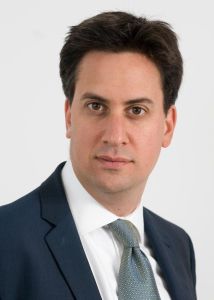
  • Ed Miliband – 2011 Speech on Responsibility in the 21st Century

    edmiliband

    Below is the text of the speech made by the Leader of the Opposition, Ed Miliband, in June 2011 at the Coin Street Neighbourhood Centre.

    Thank you for coming this morning.

    The issue I want to talk about today can be summed up in a couple of stories.

    While out campaigning during the local elections, not for the first time, I met someone who had been on incapacity benefit for a decade.

    He hadn’t been able to work since he was injured doing his job.

    It was a real injury, and he was obviously a good man who cared for his children.

    But I was convinced that there were other jobs he could do.

    And that it’s just not right for the country to be supporting him not to work, when other families on his street are working all hours just to get by.

    The other story is about people in a very different world from that man.

    The story of Southern Cross care homes – where millions were plundered over the years leaving the business vulnerable, the elderly people in their care at risk and their families feeling betrayed.

    Those elderly people were treated simply as commodities.

    This story shames our country.

    And there is a link between the man on incapacity benefit and those executives at Southern Cross.

    What is that link?

    That these are people who are just not taking responsibility – and the rest of us are left picking up the pieces.

    It’s not about responsibility to the state, or the government, but responsibility to your neighbours, your friends and many others who you may never meet but who are affected by your actions.

    For my party, these two stories point to some hard truths about what people think about us and what we must do if we are to win their trust again.

    For too many people at the last election, we were seen as the party that represented these two types of people.

    Those at the top and the bottom, who were not showing responsibility and were shirking their duties. From bankers who caused the global financial crisis to some of those on benefits who were abusing the system because they could work – but didn’t.

    Labour – a party founded by hard working people for hard working people – was seen, however unfairly, as the party of those ripping off our society.

    My party must change.

    We were intensely relaxed about what happened at the top of society.

    I say – no more.

    We must create a boardroom culture that rewards wealth creation, not failure.

    To those entrepreneurs and business people who generate wealth, create jobs and deserve their top salaries, I’m not just relaxed about you getting rich, I applaud you.

    But every time a chief executive gives himself a massive pay rise – more than he deserves or his company can bear – it undermines trust at every level of society.

    We cannot and we must not be relaxed about that.

    We did too little to ensure responsibility at the bottom.

    I say – No more.

    We will be a party that rewards contribution, not worklessness.

    If you believe in wealth creation and the welfare state like we do, we must acknowledge the only way to protect both of them is through responsibility.

    We must be once again the party of the grafters.

    And these stories are not just important for Labour. They are important for the country, too.

    When I think about the kind of country I want my sons to grow up in, it is a country where they—and millions of their generation—can do better than their parents.

    It’s what I call the ‘promise of Britain’ – that the next generation does better than the last.

    But what does a better life mean?

    Better in terms of jobs, housing and the material things that matter. Of course.

    But better for me, and indeed I think all of us, is not just about the material – not just about earning money and owning things.

    Because that doesn’t tell us anything about the feel, fabric and character of our country – or about the most important thing in life, which is about our relationships with each other.

    That’s what I want to talk about today.

    We need to understand the value of responsibility to each other and what it really means.

    We need to understand why Labour in government talked about fixing it but didn’t.

    Why the Conservative-led government’s approach is woefully inadequate.

    And what the way forward is if we are to build a greater sense of responsibility and national mission for our country.

    Let me start by talking about why these values of responsibility, of duty to each other, matter.

    One of my earliest memories is listening to my father talk about his experiences of Britain during and after the Second World War.

    He talked about his life in the Navy—how it brought people together from all backgrounds and walks of life in a common spirit.

    He talked of the sense that they all looked out for each other, despite all the things that could have kept them apart.

    He remembered most the deep fellowship that helped win the war and build the peace.

    When I think about my children, I want them to grow up in a Britain like that.

    I want them to understand what makes this country special.

    I want them to live in a country where people look after each other, look out for each other, care for each other, where compassion and responsibility to one another are valued.

    Tony Blair once said he wanted a country ”where your child in distress is my child, your parent ill and in pain is my parent, your friend unemployed or homeless is my friend; your neighbour my neighbour. That is the true patriotism of a nation.”

    This patriotism is all around us. We see it every day.

    The unsung heroes who make such a difference to the lives of others.

    The people who will give up every Friday night so young people have somewhere to go and something to do.

    The volunteers who help out the local hospitals at all hours of day and night.

    The young men and women who risk life and limb in the armed forces for our protection.

    Care, common-feeling and compassion are all around us.

    But let’s be honest. We also look around and see how those ties which bind us together have become frayed.

    In my father’s war-time generation, people had a deeply-held feeling of responsibility to others.

    Today, the overwhelming majority of people – at every level of society from rich to poor – still play by the rules.

    Working hard. Paying taxes. Obeying the law. Caring for others.

    Good citizens.

    But they feel others are not doing the same. They are having to pay the price for the behaviour of an irresponsible minority.

    They feel that while they stick to the rules, others are getting one over on them.

    It’s part of the squeeze on the middle.

    The services on which they rely are being cut by an austerity government after a global crisis caused by bankers who still get multi-million pound bonuses.

    The gap grows every wider between the rewards for those at the top and the squeeze on the living standards of everyone else.

    And they still have to pay taxes to fund the bankers and to fund some people on benefits who aren’t bothering to work.

    People who act responsibly – people who do their duty – are getting angry. And I understand why.

    That irresponsibility is not only unfair on everyone else; it is bad for the economy.

    And people feel the consequences of irresponsibility in different parts of their lives.

    The rubbish fly-tipped by the roadside.

    The throb of loud music, played by the neighbour in the small hours.

    The overgrown and litter-strewn front garden.

    And every time someone acts with casual indifference to the lives of those around them, it undermines the trust of others and frays the bonds which bind our society together.

    We should not demonise people anywhere in society.

    I do not accept the Conservative characterisation of those on benefits as being feckless and worthless.

    The man was I talking about earlier cared about his children and wanted to bring them up right, but the system neither demanded nor encouraged him to do the right thing.

    We have a responsibility to provide people with opportunities to improve their lives and escape poverty.

    And we have a responsibility to look after the vulnerable.

    But those who can work have a responsibility to take the opportunities available.

    The same is true of high earners.

    It is vital that we reward and nurture wealth creation.

    But too often we see people getting pay and rewards which are not linked to what they have achieved.

    This isn’t just unfair – it’s bad for business, jobs and our economy.

    Take an example. Rolls Royce is a great British business, world -leading, innovative.

    Sir John Rose who recently retired as their Chief Executive was a great British business leader – creating wealth and keeping jobs in this country.

    In contrast Fred Goodwin, who ran the Royal bank of Scotland, was at the heart of the irresponsibility which led to the collapse of the banking system.

    He helped bring our country’s banks to their knees.

    And yet at the time the financial crisis hit, Fred Goodwin was being paid over three times more than Sir John Rose.

    What greater evidence could there be of the failure to link pay and performance in our boardrooms.

    Back in the 1970s, very high rates of taxation put people off creating greater wealth.

    The link between pay and performance was broken.

    There can be no going back to that.

    But the danger today is that pay and performance have become detached again.

    Over the last twelve years Chief Executive pay in Britain’s top companies has quadrupled while share prices have remained flat.

    And according to the recent High Pay Commission report, just in the last 10 years, the pay of someone at the top of a company has gone from 69 times the average wage to 145 times.

    Things haven’t always been this way.

    It is worth recalling that JP Morgan founded his financial company on the idea that the ratio of pay between the highest and lowest paid employee should be no more than 20 to 1.

    It isn’t for government to set maximum ratios but we do need change to encourage the responsibility we need.

    To carry that out, my party needs to understand where New Labour succeeded and failed.

    Those who founded the Labour movement were motivated to do so by the idea that they could achieve more together than as isolated individuals just looking out for themselves.

    We continued that tradition in government.

    Repairing the fabric of society through investment in schools, hospitals and the police.

    But we did not do enough to change the ethic we inherited from the 1980s – ‘the take what you can culture’ of those Conservative governments.

    New Labour in office talked about rights and responsibilities.

    So, why didn’t we succeed in changing the ethic of our society in the way we wanted?

    Because we were not consistent enough in applying these values across our society.

    We were too slow to recognise the need for greater responsibility among those on benefits.

    And we saw responsibility as only applying to those on benefits, because they were getting something from the state.

    That meant the responsibilities of others were ignored – the business executives, the bankers, the Chief Executives.

    Just because they – or anyone else – weren’t getting something from the government it doesn’t mean they don’t have responsibilities.

    Because the most important responsibility is not to government, it is to each other.

    Whether it is not abusing the trust of your neighbour by claiming benefits when you can work….

    Or not paying yourself an inflated salary to the detriment of your company, your shareholders or your staff.

    So we sent out the wrong message to those at the top of society.

    And we all know what happened: the banks acting as if there was no tomorrow and causing the worst financial crisis in a century.

    And even after that happened the Confederation of British Industry, the Financial Services Authority and even the Governor of the Bank of England sounded more willing to speak out on top pay than we did.

    And we did not do enough either to acknowledge the difficulty in creating a responsible society when there is a huge gap between the rich and everyone else.

    When people lead parallel lives, living in the same town but different worlds, we should not be surprised that it’s hard to nurture a sense of responsibility and solidarity.

    That is why we have to tackle the new inequality in this country between the top and everyone else.

    Now what about the current government and its approach?

    On the surface, our responsibility to each other is a big concern of theirs and indeed we hear repeated tirades against people on benefits.

    But because of their values—and true intentions— they cannot build the kind of responsibility that I have been talking about.

    Just take their current welfare reform bill.

    We support their attempts to build on our plans to make those who can work do so.

    But their bill will make it harder for people to be responsible.

    It undermines childcare support for those seeking work.

    It punishes people in work who save, denying them the help they currently get through tax credits.

    It cuts help for the most vulnerable, those living in care homes, who receive support to get out and about.

    And, it takes away money from those who are dying even though they have contributed to the system all their lives.

    None of this will help people show more responsibility. In fact, it does the opposite.

    Nor are they ensuring there is the work available for people who are responsible.

    And when they talk about the Big Society, and people showing responsibility through volunteering, they don’t seem to get that you can’t volunteer in your local Sure Start centre or library when it has been closed.

    You cannot create a good society – or even a big one – simply with pleas for more volunteers.

    Finally we will never encourage a sense of responsibility if society is becoming more and more unfair, and more and more divided.

    The idea that we’re all in it together under this government is just a cruel joke.

    So what are the lessons we should learn to build the kind of society we want to see?

    Above all, it is that responsibility and duty to one another must apply across our country.

    We cannot lecture people on benefits about responsibility if we do not also address the problem at the top—in the public and private sectors.

    It is why it is right that proper action was taken against MPs who defrauded our nation through their expenses.

    It is why corporate tax avoidance and evasion are so wrong and need to be tackled relentlessly.

    So how do we change things to ensure a better link between top pay and performance?

    As other countries require, we need companies to justify and explain what they are doing.

    On pay, companies should publish the ratio of the pay of its top earner compared to its average employee.

    If it can be justified by performance, they should have nothing to fear.

    We need shareholders to better exercise their responsibilities to scrutinise top pay.

    And we also need to recognise – as many great companies do—that firms are accountable to their workers as well as their shareholders.

    Some companies already understand that having an employee on the committee that decides top pay is the right thing to do.

    We should debate whether this requirement should be extended to all firms.

    And of course the same should be true in the public sector.

    So we need responsibility at the top of society, but we also need it at the bottom.

    Again, the principle should be that we reward those who make a contribution.

    I strongly believe in a welfare state that looks after those in need, including those suffering from ill health.

    That principle of compassion should always be at the heart of what we do.

    That is a view shared by people right across this country.

    But if we are to improve the British welfare state, we must reform it so it genuinely rewards people who are responsible and contribute, as well as protecting those in need.

    One area where people’s sense of fairness is under threat is social housing.

    There is a terrible shortage of social housing in this country.

    It will be one of the key tests of the next Labour government that we address this issue.

    But we also need to do so in a way that commands public support and respect.

    Need is and will remain a crucial test of who gets a house.

    But across the country, there are examples of how we can also encourage people to display the responsibility that our society needs.

    In Manchester, as well as helping the most vulnerable with housing, they give priority to those who are giving something back to their communities – for example, people who volunteer or who work.

    They also look to reward people who have been good tenants in the past and who have paid their rent on time and have been good neighbours.

    This approach means that rather than looking solely at need, priority is also given to those who contribute – who give something back.

    It’s fairer and it also encourages the kind of responsible behaviour which makes our communities stronger.

    It is not about punishing people. It is about rewarding people who do the right thing in their communities.

    We are looking at all these issues in our policy review – but this is a principle we will seek to apply so that, as far as possible, the benefits that people receive also encourage them to do the right thing.

    Let me end on this thought.

    What builds a community and a country is a sense of shared responsibility, common endeavour and big national ambitions.

    The Tories have no vision for our country.

    No sense of national mission.

    No vision for how we can deliver on the promise of Britain for the next generation.

    We need a culture in our country which marks a real break with the ‘take what you can’ ways of the past.

    I know that there is a yearning for that different culture.

    A more responsible economy.

    A more responsible society.

    And a sense of common life that offers meaning and purpose.

    That is the mission for our party.

    That too should be the mission for our country.