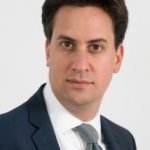
Tag: Ed Miliband

  • Ed Miliband – 2026 Speech to Labour Party Conference

    Ed Miliband – 2026 Speech to Labour Party Conference

    The speech made by Ed Miliband, the Foreign Secretary, in Liverpool on 28 September 2026.

    Thank you friends and can I thank you for your support.

    And let me start by echoing Wes’ words earlier. Events at RAF Fairford yesterday are a reminder of the threats our country faces.

    I want to thank our security services, Armed Forces and police for the work they did yesterday and they do all year round to help keep our country safe.

    Friends, we will always stand up for our security against those who would do us harm.

    And friends, I am so proud to be your Labour Foreign Secretary, and to support Andy Burnham, our Prime Minister, who has put Labour values back at the heart of our Labour Government.

    I want to start today by telling you about the spirit that animates my work as Foreign Secretary, driven by two refugees a world away from us here today.

    The first of them walked 100km from Brussels to Ostend with his father, leaving behind his mother and his sister, to take one of the last boats to Britain to flee the Nazi invasion.

    He learned English, he joined the Royal Navy and fought fascism. You know, he would tell stories of being at sea watching the lights of the D-Day landings and he would say it softly, but I know he always felt an incredible sense of pride that he had played his part in defeating the Nazis.

    The other refugee spent her childhood in hiding in Poland. She faced experiences that no child should face – the loss of her father in a concentration camp, as well as separation from her mother and her sister.

    She only survived because, unlike 60 family members, she was saved by the heroism of the bravest people. Ordinary people who did extraordinary things.

    Then she got to Britain after the war as a teenager, learned English and built a life.

    Friends, I am sure you have guessed this, those two refugees were my father and mother. My dad and my mum. And I want to start today by saying their history, my family history, means it is the honour of my life to be your Labour Foreign Secretary.

    My parents found sanctuary in Britain, but they also found something else. As fascism engulfed Europe, they found in Britain a country that was a beacon of light against the darkness.

    A country that stood for fundamental values – freedom, democracy, the rule of law. A country that was rebuilt after the war by the 1945 Labour Government, and with other nations, that government built the world anew.

    Think what that generation achieved. That Labour Government led the way in holding the Nazis responsible for their crimes. That Labour Government helped create NATO. That Labour Government ratified the convention on human rights. And that Labour Government led the way in establishing the United Nations – an international system built by our values, Labour values, British values.

    Friends, we should be all proud of that legacy.

    And I come to this conference today to tell you it is time to roll up our sleeves all over again. Because once again the world order needs rebuilding anew.

    We need to be honest about the world we confront. War has returned to Europe. Democratic norms are under threat as they haven’t been for generations. The international rule of law is being brazenly flouted. New threats have emerged from the climate crisis to AI.

    There is only one response to these challenges – to fight for our values. The values my parents saw in Britain. Values which today are more important than ever.

    Fighting for those values of democracy, the rule of the law, protection for rights and freedoms, is essential to tackle injustice and suffering.

    But hear me well when I say this, it is also the only way to fight for our interests as the only real route to stability in the world and therefore peace and prosperity.

    You see, what we understand is we fight for our values and our interests as a country together. So just like in 1945, now it falls to this generation, this Labour Government, to play our part defending and advancing Labour values, Britain’s values, the values this party has always fought for.

    And friends, this must begin by confronting the fact that war has returned to Europe with Russia’s full-scale invasion of Ukraine. A war which has already seen more than 100,000 Ukrainian civilians and soldiers killed, as well as hundreds of thousands of Russians.

    A war on our doorstep. The worst conflict in Europe since World War Two.

    And here’s the thing, this is not just a war which is killing innocents. It is a war of terror.

    The Kremlin says it wants to “freeze” the Ukrainians into defeat. Last winter temperatures in Kyiv reached minus 25 degrees and power was interrupted almost every day. Drone warfare leaves people afraid to go out onto the streets.

    Friends, this war matters to all of us. If our values mean anything, they mean standing firm against this invasion.

    The future security of all of Europe is on the line in this fight. If Putin wins, we would have allowed war and force to beat sovereignty and self-determination on our continent.

    Now, I am proud that since 2022, under successive governments, Britain has stepped up. Stepped up our military aid, stepped up our humanitarian support, and the British people have stepped up too, taking in Ukrainian refugees.

    Friends, I say today we will never, never give in to Russia’s threats that we must stand aside and abandon the people of Ukraine. And we will always, always stand up to Russia’s threats wherever they are.

    Today I salute the courage of the people of Ukraine. We send our solidarity to President Zelenskyy and his government. And we say with one voice we will stand with the people of Ukraine until they prevail.

    We are part of this fight as humanitarians, but also as proud Europeans. This is our continent. And if there is one lesson that I have seen demonstrated to me again and again in this job, it is this – Europe is not just our geography but so much more.

    It is how we pursue our values, from climate to the Middle East. It is how we pursue our interests, from trade to defence. It’s where we build and protect our alliances, so it is not simply Britain acting alone but Britain with others.

    And on economics, on defence, on security, I say to this conference, our future lies in a stronger, deeper partnership with the European Union.

    Of course, our alliance with the United States in trade, defence and security remains essential, including as part of NATO. But Europe also needs to do more to defend itself.

    That is why investment in our defence is an absolutely core part of this government’s foreign policy. And as we speak, British forces are deployed across the globe, from Cyprus to the Falklands, Estonia to Somalia.

    Let me take this opportunity to pay tribute to the men and women of our Armed Forces, serving in operations across the world to maintain our security, keep the peace, and uphold our values. Friends, let us all applaud them today.

    And we must be prepared to confront all the security threats that Europe and the world faces.

    We will stand up to prevent a nuclear Iran through economic sanctions. We will act against the proxies of Iran. And we will continue to isolate Iran so that they reopen the Strait of Hormuz, which is so essential to tackling the cost of living crisis here at home.

    We also face new threats in today’s world. This summer’s heatwaves and wildfires in Europe are just the latest wake up call about the climate crisis.

    Friends, we know the longer we wait the greater the costs. We know the effects will spread across borders. And we know that future generations will hold us in infamy if we leave them with climate disaster unaddressed.

    So let us therefore ask each and every party, where do you stand on tackling the climate crisis? Where do you stand on defending our way of life?

    And I say to those parties that deny, delay, and dissemble on the climate threat, your position would leave our country unsafe and threaten our national security.

    And I pledge to you, we will lead the efforts across the world to put climate at the heart of national security.

    And friends, we will also confront the urgent risks we face from AI. The technological progress offered by AI as we see in our daily lives is inspiring. But the threat it poses, according to its own inventors, is daunting.

    Now some are calling for us to act, but other tech companies are saying we should leave it all to them.

    But friends, the lesson of history is that we cannot leave it to corporations to put in place the guardrails to serve the public interest. It is neither their purpose nor their motive. Theirs is to maximise profits. Friends, we cannot and will not allow that to come at the expense of our children or indeed humanity.

    That is why as part of our G20 presidency next year, this country will lead the efforts to manage AI so we keep our country and our world safe, and I say no tech titan should stand in our way.

    And as we think about our role in the world, we will never be silent about injustice and suffering.

    Let us state the reality about the Middle East. The only route to peace is two states, a secure Israel and a secure Palestine, with freedom, dignity and self-determination for both peoples.

    We all know how far away we are from that.

    Hamas’ murderous attack on October 7th united the vast majority of the world in rightful condemnation.

    We stand, I say, against antisemitism wherever we find it and in whatever form. And this party will always recognise the threats Israel faces and stand emphatically against those who seek its destruction.

    But this cannot justify the suffering the Netanyahu government has inflicted in Gaza and the West Bank. This suffering is a stain on the conscience of the world.

    And I want to say to the millions of people in this country, and indeed elsewhere who have been moved and outraged by the plight of the Palestinian people, we hear you. You were right. And under Andy’s leadership, we have reset our approach.

    We call out ethnic cleansing by the settler terrorists in the West Bank. We call out the evidence of war crimes In Gaza. We call out Israel’s illegal occupation of Palestine. And we match words with actions.

    We will ban the import of goods from illegal settlements. We will disrupt the supply lines of British finance, British construction and British services for illegal settlements.

    And when it comes to the attempt to destroy the two-state solution, this party, this movement, this government, says we will not let you succeed.

    And friends, our argument is not with the people of Israel, but with the actions of its government.

    My grandmother was given shelter and sanctuary after the Second World War by Israel.

    And the bonds of solidarity between the British people and those who yearn for peace in Israel and Palestine are too strong to be broken. And our decision to act mobilised the international community, country after country.

    And you see, there is a lesson here. This is how we make change happen in today’s world. Doing what is right and galvanising others to act too.

    And there is also a wider lesson for our party from Israel and Palestine about how we have changed our approach. As a government we can, must and we will succeed because of, not in spite of, our progressive values.

    We are proud to be Labour. Proud to believe in changing the world for the better. Proud to believe in international solidarity.

    We stand up for what is right. We act on what we believe. We are not here to accept the status quo, but to change it.

    And that confidence, that belief in boldness, is the change that Andy has brought to our party and our government and it is why I am so proud of his leadership.

    And we will apply our principles to other conflicts in the world, including the worst humanitarian crisis there is – the conflict in Sudan. Millions displaced, tens of thousands killed, malnutrition rampant.

    Friends, we will use every diplomatic and political tool to address the suffering of its people. And we will use our leadership to reform the international financial system so it properly serves the developing world.

    So many countries you know, and I meet this when I meet foreign ministers, so many countries face the triple challenges of climate breakdown, debt burden – unsustainable debt burden – and poverty.

    In two weeks time, I will attend the annual meetings of the World Bank, where I will use Britain’s seat on the board to drive change.

    And friends, I promise this. We will use our G20 presidency next year to meet our responsibilities and mobilise the world, building on the great achievements on debt and development of the last Labour Government.

    Friends, from security and defence to Israel and Palestine, to Europe, to climate, to AI, this is our foreign policy. Stronger in our values, bolder in our action, building alliances across the world.

    Now friends, I began by talking about my parents. And after my Mum died at the end of May of this year, I received a letter from a friend. It said she had a special quality that he recognised from his own family. Resilient idealism.

    Resilient idealism. I love that phrase. Resilient because, let’s be honest, it is hard to change the world. You get knocked down – don’t I know it – you get knocked down and you have to pick yourself up.

    Idealism because for all the world’s complexities and compromises, Labour exists to stand up for what is right.

    Labour is here to defend the principles that my parents admired about our country and that means so much to me now.

    You see my parents didn’t just observe a country fighting for values, they taught me that I have a responsibility to fight for them too.

    There is this phrase that people use about Holocaust survivors – survivor’s guilt. I think my parents had something else. Survivor’s responsibility.

    Survivor’s Responsibility to pass on the message to the generations that come next that we are here to leave the world a better place than we found it. To never walk by on the other side. To never be bystanders to oppression and injustice.

    Those are the reasons I joined this party and so many of you did too.

    You know, they say that as you age, you become more cynical. Why? Not me. Not you. Not us.

    I believe in our ability to change our country and the world for the better now more than ever.

    And I promise you, I promise you that every day as Foreign Secretary, every day as your Labour Foreign Secretary, I will fight for your values. Labour values. Britain’s values.

    Thank you so much.

  • Ed Miliband – 2026 Speech on the Two State Solution

    Ed Miliband – 2026 Speech on the Two State Solution

    The speech made by Ed Miliband, the Foreign Secretary, in New York on 24 September 2026.

    As the son of two Jewish refugees, I speak to this gathering as somebody with profound gratitude for the state of Israel for looking after my grandmother after the Second World War, after she lost her husband at the hands of the Nazis.  

    I speak as someone that, I think everyone in this room would agree, was appalled by the attacks of October the seventh by Hamas and the murder that they perpetrated.  

    But I can speak equally as somebody appalled by the suffering of the Palestinian people in Gaza and the West Bank.  

    There is only one route to security, freedom, and dignity for the Israelis and Palestinian people, and that is the two-state solution. But the truth is that we all now have belief in the two-state solution, but it is being destroyed by the facts on the ground. The latest being the E1 tender that took place in August of this year.  

    That is why the UK government, alongside France and Canada, following the fantastic example of countries like Ireland and Spain, the Netherlands, and Norway, took the decision to not only declare that the occupation of the territories was illegal, but to take action on the basis of our economic relationships with the illegal settlements: the banning of the import of goods, and the attempt to break off the supply lines of finance and construction to settlement expansion.  

    These are necessary steps, but they are not sufficient.  

    It is good that we acted with others.  

    It is important that we say that the work of the Palestinian Authority to provide a single legitimate Palestinian framework is important.  

    It is important that we say that Hamas will play no role in the future governments of Gaza, but it must decommission weapons and must irradicate terrorism.  

    It is important also that we support the U.S.-led 20-point plan.  

    But let us be absolutely honest in this room, that the biggest danger we face is in a year’s time, we are sitting here again talking about the importance of the two-state solution and the facts on the ground that only got worse.  

    So, what is it that we need to do?  

    I think there are two things that will make all the difference, and I think all of the countries in this room and those not in this room to consider this.  

    First of all, moral clarity about what is happening. If we are silent, if we avoid the truth, then we cannot hope to make progress.  

    And secondly, political pressure on the government of Israel. This is absolutely crucial to making a difference. I chaired with Jordan this morning a meeting about the humanitarian situation in Gaza. The humanitarian situation in Gaza, the blocking of basic medical supplies, children dying waiting for operations, waiting for treatment, should shame us all. It should shame the whole international community, and indeed, I think it should shame members of the Israeli government, who are letting this happen.  

    So I appeal to everybody in this room. Let us think very, very hard about what we can do in the weeks and months ahead, so that we do not meet again in a year’s time with more suffering, more tragedy for the people of Gaza and the West Bank. Thank you, Council.

  • Ed Miliband – 2026 Speech on Sudan

    Ed Miliband – 2026 Speech on Sudan

    The speech made by Ed Miliband, the Foreign Secretary, in New York on 21 September 2026.

    Excellencies, colleagues, friends,

    Let me start from the stark truth: More than three years into this conflict, Sudan is the worst humanitarian crisis this century.

    I see three pillars for urgent action:

    Diplomatic: Pushing for a ceasefire and a future transition to civilian government.

    Humanitarian: Working to ensure aid reaches the most vulnerable.

    Civilian protection: Pushing for restraint and protection of civilians together with accountability to tackle impunity and deter further abuses.  

    I think it is important though to begin with the context.

    Right now, over 33 million people require humanitarian assistance – more than the population of London, New York City and Paris combined.

    And unfortunately El Nino is set to worsen hunger in Sudan – driving the numbers people starving ever higher.

    Worse – and I think we need to be frank about this – warring parties are deliberately destroying life-saving aid and attacking humanitarian workers – this month’s attack on a World Food Programme Convoy is but the latest shocking example.

    And I want to highlight that the conflict is evolving in even more lethal ways. 

    Nowhere is this more clear than in the growing use of drones.

    What was once a war concentrated around active frontlines, is increasingly being fought from the air, vastly expanding the deadly terrain.

    It is a sobering fact that in the first five months of this year alone, drone strikes reportedly killed more than 1,000 civilians.

    Hospitals, markets, fuel depots, power stations and humanitarian supply routes have all come under attack.

    Sudan is already amongst the most dangerous places on earth to be a humanitarian worker. Drones are making it more perilous still.

    And of course the consequences are not only humanitarian.

    They are also feeding the illusion – and other have referenced this – that military means can end this war.

    We must be clear that they cannot.

    There can be no military solution in Sudan.

    No amount of new weaponry, new technology, or new external support will change that fundamental reality.

    This growth in drone warfare and the continuing humanitarian crisis demands a step change in our response.

    New drone capabilities do not appear by accident.

    They are procured, financed, transferred and sustained through the networks of multiple countries outside Sudan that continue to fuel this war.

    That is why the renewal of the UN sanctions regime is so important.

    We welcome the efforts of the United States to strengthen the regime and ensure it reflects the realities of today’s conflict.

    And we should all support that ambition.

    The UN Fact Finding Mission Report of 3 September is unambiguous. It points to how external support ‘sustains operations involving serious violations and international crimes’.

    And the Mission ‘calls on states to enforce the Darfur arms embargo and suspend transfers of weapons, drones, components or military assistance’.

    And it further ‘calls on the Security Council to extend the arms embargo throughout Sudan’. 

    So a simple rollover of the embargo is not enough.

    We must use this opportunity to increase the scrutiny, pressure and consequences for those supplying, financing and enabling this war.

    And we must be united in pressing the parties to protect civilians, comply with international humanitarian law and facilitate safe and unhindered humanitarian access.

    In practice, this means an end to the competing visa requirements, work permits and taxation on aid imposed by both sides.

    It means opening key humanitarian routes permanently, including the vital Adré border crossing due to expire this month, and routes into El Obeid and El Fasher, so aid can flow at scale.

    Colleagues, we came together as an international community earlier this year to sound the alarm around El Obeid. That attack did not happen as we feared. But we cannot be complacent.

    The people of Sudan cannot afford further escalation. They cannot afford another year of bloodshed.

    And they cannot afford an international community that fails to deliver and fails to adapt to the new reality of this war.

    We can all issue words of concern – as I am doing – and appeals for peace at grand international gatherings. But they matter little unless backed up with action.

    So let us strengthen practical efforts to de-escalate the conflict, support a ceasefire, and advance a civilian-led political process that reflects the aspirations of the Sudanese people.

    Let us apply real pressure to protect civilians…

    To expand humanitarian access…

    And also to hold to account those who profit from and perpetuate this devastating conflict.

    Thank you.

  • Ed Miliband – 2026 Speech at Accra Reset Event

    Ed Miliband – 2026 Speech at Accra Reset Event

    The speech made by Ed Miliband, the Foreign Secretary, in New York on 21 September 2026.

    Can I just start by saying what a privilege it is to join this incredibly important conversation, and I want to pay particular tribute to President Mahama for this incredibly important initiative with the Accra Reset.

    If you will allow me, I also want to recognise, as I think a number of speakers have, the amazing contribution that former Prime Minister Gordon Brown still makes on these questions. I am incredibly proud to be here alongside him. He is a fantastic asset to the United Kingdom.

    So the Accra Reset begins from a fundamental value that we in the UK believe in, which is international solidarity, and it is based on a partnership of equals, a solidarity based on a partnership of equals.

    It must mean countries shaping their own priorities, their own institutions that reflect the world they serve, and a responsibility shared by all of us.

    And the UK has overhauled its approach to reflect these realities.

    We are moving from donor to investor, and from funding piecemeal service delivery to strengthening whole systems.

    We’re moving from grant funding to much wider plans centred on finance, expertise, science, and technology, and moving from international intervention to backing local leadership and innovation, and that set of shifts speaks to the agenda before us today.

    And the programme today rightly connects health reform with negotiating capacity, investment, private enterprise, and stronger South-North cooperation.

    But to make real progress together, we need change in the following areas, and I just want to briefly set those out.

    First, we need finance at greater scale and on fairer terms.

    There is no shortage of capital in the world. The challenge is enabling it to flow into productive investment, infrastructure, stronger public services, and sustainable growth.

    So the UK will continue to support reform of the multilateral development banks, the smarter use of guarantees and private capital, and action on unsustainable debt and illicit finance.

    And indeed, I will be going to the annual meetings in my role on the board of the World Bank to pursue this agenda.

    Second, we need institutions with greater legitimacy.

    Countries most affected by global decisions must have a stronger voice in making them. The World Bank, the IMF, the United Nations, and the wider development system must better reflect the world of today.

    And third, reform must be measured by real results.

    New initiatives should reinforce effective institutions and strengthen coordination.

    And as the United Kingdom looks towards its G20 presidency, we want to work with Ghana and indeed others represented here to turn shared ambition into practical cooperation.

    Ghana’s leadership of the Accra Reset is already an important contribution, and I do want to say the United Kingdom comes to this conversation not with a finished answer, but with a clear commitment to listen, to build genuine partnerships, and to put our diplomatic, financial, and technical strength behind reforms that are locally led, mutually beneficial, and capable of delivering at scale.

    And if I can end on this note, the real test is not to describe the world differently, but to change it for the better, and that’s precisely the spirit that I approach my role as Foreign Secretary.

    I am clear that Britain needs to be stronger in its values, bolder in its action, and relentless in pursuing alliances with our friends across the world.

    So I conclude where I started with a message of solidarity and with the UK’s unwavering commitment to work with you in a spirit of true partnership and a true partnership of equals.

    Thank you very much.

  • Ed Miliband – 2026 Speech at New York Climate Week

    Ed Miliband – 2026 Speech at New York Climate Week

    The speech made by Ed Miliband, the Foreign Secretary, in New York on 21 September 2026.

    It is really fantastic to be back here at NY Climate Week, I can honestly say to you, this is my second favourite Climate Week in the world, after London of course.   

    No really, it is fantastic to be here, and look, I think the first thing I want to say is to sound a note of optimism, because despite challenging political times, it is set to be the case that in 2026 we’re going to see $2.2 trillion dollars in clean energy against $1.2 trillion in fossil fuels.  

    I think that deserves a round of applause, ladies and gentlemen.  

    I was here last year as the Energy Secretary. I’m now the Foreign Secretary of the United Kingdom, but I come here as passionate about the cause of New York Climate Week, the cause that we are all fighting for.  

    And I want to make a simple argument to you today, which is that climate and nature loss represents an urgent national security issue and demands action equal to the scale of the challenge, and that it demands a shift in our thinking and a shift in who in government takes an interest and cares about these issues and puts them front and centre.  

    And I think the history on this is instructive, like many people in this room, I’ve been at this some time for the better part of two decades.  

    Because for many years when I was the Climate Change Secretary in 2008, climate change and the destruction of nature were treated as peripheral environmental issues. Yes, they were seen as important, but they were separate from the core business of economic growth, or indeed energy security.   

    And over these last two decades, the penny has dropped about the opportunity that the energy transition offers in terms of the good jobs at good wages that so many people in our different countries want to see.   

    And Russia’s invasion of Ukraine underlined the dependence that so many countries face on fossil fuel markets, the fossil fuel roller coaster, as we call it in the UK. And the situation with Iran, the Iran war has underlined that again. And I think people now see the energy security imperative, the energy independence imperative of clean energy.  

    But having understood the jobs opportunity and the energy security imperative, my argument to you today is: we need to take the next step and recognize the national security imperative too.   

    And I think you all know the picture, and it is gloomy, I warn you, but I’m just going to say some of it to you today because we need to be truth-telling about this.  

    Over 150 million hectares burned globally in the first four months of 2026 alone.  

    Record extreme heat causing widespread loss of life.  

    Nepal’s devastating floods happening due to glacial collapse and the coming El Nino, as Prime Minister Albanese said, is already forecast to be the strongest in living memory.  

    And the nature loss crisis is just as acute, with ecosystems being degraded in every region of the world. 

    That is the conclusion of the UK’s recent nature security assessment, which you can all read.  

    This is why. These facts. What is happening in our world. Is why climate breakdown, in my view, must be an issue for foreign ministers and prime ministers, as well as energy and climate ministers. The security community, not just the activist community, the generals, not just the green campaigners. 

    And once we accept this, several implications follow.  

    First, we must change how we assess risk. Climate and nature must be embedded in national security systems, in threat assessments, and contingency planning. Countries need to pool information because a shock beginning in one country can rapidly travel through supply chains, financial markets, and migration patterns to other countries.  

    Second, we have to become better at managing shocks. These shocks that cross borders, better forecasting and early warning systems, more resilient infrastructure, health and food systems, more effective disaster risk finance and insurance. Acting before the crisis hits, rather than simply picking up the pieces afterwards.  

    Third, and in some ways this is the most important point of all, we cannot avoid some of these effects which we’re already seeing unfolding in our world. But it is up to us how severe they become.  

    That’s why we all have a responsibility, if we care about national security, if we care about keeping our populations safe, to act as countries against the threat of the climate crisis. 

    Since we met last year, the UK has passed world-leading and 1.5 degree-aligned carbon budgets for an 87% reduction in emissions by 2040.  

    We recently announced our intention to invest £400 million in the Tropical Forest Forever facility to support international action to protect tropical forests.  

    We are driving forward with our world-leading clean power plan for clean power, clean power system by 2030.  

    These are just some of the things that we are doing.  

    For us as a government, clean energy, the clean energy mission, is front and centre to our economic policy, our energy security policy, and indeed our national security policy too.  

    And my pledge to you is that the UK will pursue this national security imperative, and I see my work as Foreign Secretary as being about using our extensive embassy network, our expertise to work with others, starting here at New York Climate Week and at UNGA, at this autumn’s annual meetings at the World Bank and IMF at COP31, and in our G20 presidency next year.  

    Let me make three points to end on. First, we can do this, and it’s really, really important to say this. If we don’t say it, nobody else is going to.  

    When I left the Copenhagen climate summit, which didn’t go so well for those of you from your memories, in in 2009 we were heading for a four degree world.  

    Now we’re heading for something like a two and a half degree world, that is still fierce, fearsome, and deeply, deeply worrying, but it shows that the world has made progress. So we can do this.  

    Secondly, we must do this because for our generation we have a unique responsibility, and the unique responsibility is this. Which is we know the scale of the problem, it’s not some theoretical future thing that might happen as it was 20 years ago, we see the climate crisis unfolding, but we have time to do something about it. That is why we must do this. We must act.  

    And finally, we will do this, in my view, because I believe that actually countries all around the world now recognize this threat, and they recognize that we can only solve it acting together.  

    Last year, when I was here, I said, “don’t give up on multilateralism”, and I think the countries across the world are not giving up on multilateralism. So many countries, I mean, so many foreign ministers and others, I mean, know that no country can tackle climate change on its own, but we can do it together.  

    So, friends, this is about what makes our country safe. This is about what makes our economies strong, and this is about what will sustain our planet and our people for future generations to come. Please enjoy New York Climate Week. Thank you so much.

  • Ed Miliband – 2026 Statement on Israel-Palestine

    Ed Miliband – 2026 Statement on Israel-Palestine

    The statement made by Ed Miliband, the Foreign Secretary, in the House of Commons on 8 September 2026.

    Madame Deputy Speaker, with permission, I would like to make a statement on Israel and Palestine.

    I do so as a proud British Jew, someone with the deepest gratitude to the State of Israel for giving a home to my grandmother after she lost her husband, my grandfather, and 60 other family members at the hands of the Nazis.

    I remember visiting her in the 1970s in Tel Aviv and seeing the life and the sanctuary Israel had provided. Indeed, some of my most joyful childhood memories were picking oranges as a kid on the kibbutz where my cousins lived.

    Madame Deputy Speaker, my personal story and that of thousands of British Jews is one of the many reasons why I say to anyone here or around the world who questions Israel’s right to exist as a homeland for the Jewish people: you are wrong and we will call you out whenever you engage in this attempt at the erasure of Israel.

    Madame Deputy Speaker, I know what the trauma of Hamas’s terrorist atrocity of October 7th meant and still means to people across Israel and to Jews across the world. It was a murderous act by a murderous terrorist organisation designed to massacre and instil fear across a whole population.

    October 7th makes plain the grave threats that Israel faces. And it has every right to defend itself.  We should not only condemn those threats but act against those who carry them out.

    Iran continues to threaten Israel and Jews across the world.

    We have already designated Iran’s IRGC and we will do more today on Iran’s proxy groups. So today I can also announce we are sanctioning Lebanese Hezbollah’s financing arm, Al-Qard Al-Hassan.

    Iran must never have a nuclear weapon. So we are also acting this week to report Iran to the UN Security Council for its nuclear violations, alongside our allies. And I can announce today that we are also reimposing major economic sanctions on Iran in line with the European Union and the United States.

    Madame Deputy Speaker, tackling these threats is just one of the important, shared national security interests we have with Israel, on which we will continue to co-operate.

    I know too that so many members of the Jewish community now live in fear in the face of rising antisemitism, including here in the UK.

    Last week we commemorated the anniversary of the Heaton Park attack—Jews murdered at their place of worship simply for their religion.

    An outrage that was followed by antisemitic attacks in Golders Green, including on the Hatzola ambulances.

    And the everyday life of Jews in Britain is deeply affected by the climate that such hate creates.

    When I went to school in the 1980s, I did so without fear.

    Today we need to face the truth: that is not the case for thousands of Jewish children across the UK, children who have to go to school with security guards outside their school.

    Mr Speaker, no child should have to go to school facing this. And no teacher should face antisemitism either.

    Whether it happens in our schools, universities or workplaces or online or on our streets, antisemitism is a scourge and an evil.

    We are rightly putting in place an additional investment of £250 million for community security. But we all have a responsibility to do more.

    As part of this, I will in October host representatives of the J7, the countries with the largest Jewish populations from across the world.

    We will meet in the UK to discuss the different ways we can work across borders to tackle antisemitism, including tackling online hate.

    So Madame Deputy Speaker, I am proud of my Jewishness and unwavering in my support for the State of Israel.

    And there is absolutely no contradiction between this and my support for the State of Palestine. Indeed quite the opposite.

    The two state solution is based on an explicit belief that the only route to security for both peoples is to live side by side in peaceful co-existence with freedom, security and self-determination.

    Securing the two-state solution in its fullest form is the North Star of this government’s policy, and indeed of successive British governments over decades.

    And it is precisely this belief in the rights and freedoms of the Israeli and Palestinian people that leads many, including me, to a deep sense of shame about what has unfolded in Palestine under the eyes of the international community.

    In Gaza, the most unimaginable trauma and suffering in the last three years – death, destruction and dehumanisation on an appalling scale.

    A stain on the conscience of the world and of this country too.

    And in the West Bank, the clear attempt to – in the words of Israeli Finance Minister Smotrich – and I quote – “bury the idea of a Palestinian State”.

    So Madame Deputy Speaker, there is a deeply painful contrast between our professed commitment to a two state solution, and the reality on the ground in Gaza and the West Bank.

    I pay tribute to my predecessors, the current Health Secretary and the Right Honourable Member for Tottenham, for their tireless efforts on this issue as well as my Right Honourable Friend the Member for Lincoln.

    We should always be proud that it was a Labour government that took the historic step of recognising the State of Palestine. 

    But the Prime Minister is right to say that the Labour government has not done enough in the face of what is happening.

    So today marks the beginning of a new approach.

    An approach that not only calls out injustice and suffering but acts.

    And in taking this stance, I make a very clear distinction – which is crucial for all of us in this debate:

    Our argument is not with the people of Israel, with whom the UK has unshakeable bonds. Our argument is with the conduct of its government.

    And I also want to say emphatically to people in Britain and across the world:

    Holding British Jews responsible for the actions of the Israeli Government is antisemitism, plain and simple.

    What we seek today is to salvage the only course for peace and security for Israelis and Palestinians – the two state solution.

    Let me start with the situation in the West Bank.

    Madame Deputy Speaker, at the time of the Oslo peace accords in 1993, around 270,000 settlers lived in the occupied Palestinian territories. Today it is some 770,000.

    More settlements have been approved under the four years of this Israeli government than in the previous twenty years. 

    Let us spell out what this has meant for Palestinian communities.

    Houses bulldozed. Roads and public infrastructure destroyed. Families displaced from their homes.

    Community by community.

    Family by family.

    Person by person.

    Madame Deputy Speaker, sixty-five Palestinian communities completely expelled since 2023 – a total of over 4,000 Palestinians evicted from their homes due to settler violence and state actions.

    And in August, the crossing of a long-standing red line: the issuing of E1 tenders for over 1,200 homes.

    I visited a community in the area covered by E1 in 2014. The Bedouin communities I met in Khan Al Ahmar had lived on that land for generations.

    E1 proposals would evict them and place settlements directly between East Jerusalem and the West Bank cutting through the heart of Palestine.

    Let’s be clear what this means: the creation of a set of facts on the ground to make the two state solution unviable.

    And on top of official state policy, settler terrorism is rampant.

    The UN reports an average of six violent settler attacks against Palestinians per day this year, the highest on record.

    Take one example

    In Al Mughayir, twenty miles north of Jerusalem, settlers have encircled the village and mounted a campaign of intimidation, largely under the protection of the Israeli military.

    Families in the village are increasingly cut off from accessing their land, squeezed into ever smaller areas and have olive trees uprooted and livestock stolen.

    In the same community, just last week, two teenagers were shot when settlers entered the village under police and military escort. Both died before reaching hospital. Madame Deputy Speaker five teenagers have now been killed from their school this year.

    Ehud Olmert, the former Israeli Prime Minister, has described what is happening as – I quote – “a violent and criminal effort to ethnically cleanse territories in the West Bank’.

    The former Minister of Health and retired Brigadier General from the IDF, Ephraim Sneh has said – and I quote again – “this is ethnic cleansing to put it simply”.

    Ethnic cleansing is defined by the UN as ‘a purposeful policy designed by one ethnic or religious group to remove by violent and terror-inspiring means the civilian population of another ethnic or religious group from certain geographic areas.’

    The British government agrees that there is ethnic cleansing of Palestinians in areas of the West Bank – perpetrated by settler terrorists.

    And all too often the Israeli government has turned a blind eye to this and worse, members of it have made statements and taken actions to support the forced displacement of Palestinians.

    Now Madame Deputy Speaker, I recognise the gravity of saying this but the truth is, it is the least the people who face such suffering deserve. And it should be the prelude to justice.

    Now for a long time, the British government has rightly said settlements are illegal.

    But we have remained silent on the question of the legality of the occupation as a whole, which in 2024 the International Court of Justice concluded was unlawful.

    Today I announce that the official view of the British Government is that the occupation is unlawful.

    Because of Israel’s entrenchment of its control, its intention to extend permanent sovereignty, and its expansionist agenda via illegal settlements.

    Madame Deputy Speaker, our position is not just an overdue statement of reality.

    The government believes the unlawfulness of the occupation should be reflected in the economic relationships we choose to have with the occupied territories.

    I do not believe that the British people want us supporting the occupation by accepting products from settlements in our shops and supermarkets.

    So I can announce today that we will introduce an import ban on goods from illegal settlements in the occupied territories.

    To do so, we will introduce a new comprehensive sanctions regime working with my Right Honourable Friend the Business Secretary, with appropriate religious exemptions.

    And as part of this regime, we will go further.

    We will take action against specific companies and individuals who provide services such as construction, infrastructure, financing, or real estate for settlement expansion.

    So to those who finance or facilitate illegal settlements, let me say this, you will face the full force of UK sanctions.

    Settlements are illegal. They should not be promoted in our country.

    Earlier this year, shamefully, just a few miles from here, we saw an expo advertising illegal settlement land. 

    We must and we will ensure this never happens again, so we will ban the advertising in the UK of illegal settlements.

    The sanctions regime will target illegal settlements and settlement expansion, not Israel.

    We will continue to support important and valued trade with green line Israel precisely because we support the two state solution, including security and prosperity for Israel.

    For this reason, I wholeheartedly oppose the Boycott, Divestment, Sanctions or BDS campaign.

    The legislation I have announced today will be in place within 6 to 9 months and we will also take more immediate steps.

    Today we are sanctioning a further set of extremist settlers who have supported or incited acts of violence against Palestinian communities.

    And I can also announce that we are extending the existing global human rights regime such that it will enable swifter action to deter settlement expansion, including crucially seeking to present the development of E1.

    I also want to address the question of arms sales. We have already suspended over 30 arms licences used by the IDF in Gaza. That suspension remains fully in place.

    We will now also refuse all licence applications for arms and other exports that materially contribute to the occupation, in effect a double lock against arms sales.

    This means the ban on such exports will now remain as long as the occupation persists. 

    To advance the two state solution, we also need viable and effective Palestinian governance.

    So I urge the Palestinian Authority to accelerate reform and I urge Israel to lift its withholding of revenues that is financially crippling the provision of essential services in the West Bank.

    The set of measures I have announced represents a clear message to the government of Israel, to the Palestinians in the Occupied Territories, and to the world that we will not acquiesce in the destruction of the two state solution.

    I turn now to Gaza.

    The horror of October 7th appalled the world and had terrible echoes of the centuries of persecution of the Jewish people.

    Men, women, children and babies killed, mutilated, and tortured by Hamas terrorists. People murdered whilst seeking to protect their families. Young people massacred at a music festival. People abducted from their homes.

    As the 20 point peace plan for Gaza sets out, this is one of many reasons Hamas can play no role in the future governance of Gaza, it must decommission its weapons and must dismantle its terrorist infrastructure.

    Israel has the right not to live in fear of vile terrorism, and the Israeli State has the right to protect its people and defend its territory.

    But Madame Deputy Speaker that cannot justify what has happened in Gaza.

    Over 70,000 people have been killed, at least 20,000 of them children. 20,000 children.

    The vast majority of the population is now displaced – nearly two million people – who are now penned into just one third of the territory.

    Life-saving humanitarian aid and access has been routinely blocked.

    Hospitals and clinics have been destroyed.

    Over 60% of homes are in ruins.

    Mr Speaker, international humanitarian law imposes clear rules for states fighting wars – including to ensure access to food and medical supplies, to avoid mass displacement of civilians, and to avoid the targeting of civilians.

    Serious and intentional violations of this law, if proven, amount to war crimes.

    What has occurred, including the actions of the IDF, have been examined in depth by a number of organisations, including the UN Independent International Commission of Inquiry.

    The conclusions of these reports represent increasing evidence that war crimes appear to have been committed.

    And we support legal processes to determine this.

    On the question of genocide, the UK has always supported full, robust and fair judicial processes to consider allegations, with final determinations made by competent courts before the British government reaches a conclusion.

    This has been the case for all of the genocides since the 1948 Genocide Convention: Rwanda, Srebrenica, Cambodia, and acts against the Yazidi people.

    This will remain our policy. It is right that this issue has been brought before the ICJ and I want to make it clear that we support the Court in coming to its determination.

    So accountability for what has happened in Gaza matters.

    But even more urgent is action to address the ongoing crisis. 

    Because today in Gaza, the death and suffering continue.

    Nearly a year ago, Madame Deputy Speaker, a ceasefire was declared. Yet over 1,200 Palestinians have been killed since.

    And the people of Gaza are experiencing a totally avoidable humanitarian catastrophe, I am afraid, driven by decisions of the Israeli government.

    Last week I talked to courageous doctors and humanitarian aid workers who have served in Gaza. It was a heartbreaking conversation.

    They recounted:

    Children dying waiting for medical treatment.

    People forced to live next to open sewage and without shelter.

    And food insecurity rampant.

    I’m sure the whole House agrees, this is unconscionable.

    So I pledge we will continue to do everything we can to provide all the humanitarian support possible to help the people of Gaza.

    UK-supported hospitals in Gaza will enable around 800,000 medical consultations this year and essential health services for patients. 

    UK expertise will deliver care to over a thousand child amputees.

    And we recently welcomed another wave of students from Gaza coming to study in Britain and we will welcome more.

    But in truth, unless Israel changes course, the situation will remain dire.

    So we are taking further steps – both ourselves and with others. 

    Our extension of the global human rights sanctions regime will enable us to target those responsible for violations of international humanitarian law, whether in Gaza or anywhere else in the world.

    And we will at the UN General Assembly in New York later this month shine the clearest and harshest spotlight on what is happening and what must change.

    And with Jordan, we will convene countries across the world to lead a call for action on health and humanitarian access.

    We will also lend the UK’s voice to the growing global alliance of countries – led by Arab partners in the region – calling for the full implementation of the US-led 20 point plan, the rejection of extremism, and for a lasting end to the cycles of violence.

    As we implement the policy measures I have announced today, we will continue to assess the government of Israel by its actions. We want to see a new approach – in both Gaza and the West Bank.

    Madame Deputy Speaker, today we refuse to be bystanders to further suffering and to the destruction of the two state solution.

    We call out what is unlawful.

    We act on the import of goods from illegal settlements.

    We ban advertising of illegal settlements

    We act on services to prevent new settlement expansion.

    We act on settler violence.

    We support accountability for what has happened in Gaza.

    And we pledge to galvanise the international community to confront the ongoing and urgent humanitarian crisis.

    Above all, we say: Britain is not silent in the face of deep injustice and nor is it powerless.

    And today we act in concert with others in a broad international coalition.

    I can tell the House that today France and Canada are announcing, alongside Britain, that they will also ban the import of goods from illegal settlements. 

    Joining the Netherlands, Ireland, Belgium, Spain and Norway – which have either banned goods or are in the process of doing so.

    With many other countries – Denmark, Finland, Iceland, Poland, Portugal, and Sweden – pledging today they will support further action.

    Madame Deputy Speaker, this is what Britain can achieve leading with others.

    And this is in our fundamental national interest because if there is one lesson of recent decades, it is that we will never have stability in the Middle East without a two state solution.

    And it is also the case that if we fail to stand up for the values that this country has long held and fought for, we lose credibility and influence in the world.

    Madame Deputy Speaker, my parents came here as Jewish refugees and found sanctuary and a country that stood up for the rule of law, freedom and self-determination.

    Those are the values this government is standing up for today.

    And I truly believe that the vast majority of the British people, including in our communities with ties to the region, are united in their desire to see humanitarian suffering end, and all sides commit to a durable peace process.

    And just as we want Israelis and Palestinians to live side by side, so we have to live out those values in Britain.

    Jews in Britain, Muslims in Britain, people of all faiths and none have a right to live without prejudice or fear.

    Madame Deputy Speaker, a Britain that upholds its values at home and around the world.

    A Britain that fights against oppression and suffering wherever it occurs.

    A Britain that stands up for what is right.

    And I commend this statement to the House.

  • Ed Miliband – 2026 Comments on Appointment as Foreign Secretary

    Ed Miliband – 2026 Comments on Appointment as Foreign Secretary

    The comments made by Ed Miliband on 21 July 2026 following his appointment as Foreign Secretary.

    It is a great honour and privilege to have been appointed by the Prime Minister to serve as Foreign Secretary. 

    My parents came to Britain as Jewish refugees from the Nazis. To them, Britain was both a sanctuary and a beacon of hope in the global fight against fascism. I will carry my parents’ faith in that spirit of Britain to my role representing our country. 

    I will be a Foreign Secretary who fights for Britain’s interests and our values of democracy, freedom and the rule of law on the world stage. 

    Today, as we face a time of greater instability and threat to international law and democracy than at any time since the Second World War, these values are more important than ever.

    From Russia’s illegal war in Ukraine to conflict in the Middle East, time and again we have seen the consequences of a more dangerous world in the cost of living crisis that families and businesses face.

    For Britain, that means we must work with others to defend the principles that we cherish, because it is in our national interest to do so, building on the excellent work of my predecessors and friends, Yvette Cooper and David Lammy.

    I will seek to deepen and strengthen our strategic alliance with the European Union which is so important for our prosperity and security and at the same time nurture our strong, enduring and essential alliance with the United States. I will uphold our commitment to multilateral institutions from NATO to the UN as well as working with global partners, particularly in the Global South.

    Pursuing our interests and values means continuing to stand shoulder to shoulder with the people of Ukraine against Russia’s illegal invasion, as Britain has done for the last four years. It means playing our part to seek to end the conflict in Iran and fully reopen the Strait of Hormuz. It must also mean working tirelessly to seek a sustainable peace in Palestine and Israel, including an end to the terrible suffering of the people of Gaza and security for the people of Israel. 

    The FCDO I lead will also be at the forefront of issues which pose profound and substantial threats to justice and equality in Britain and across the world. We will work with others on tackling the climate crisis, strengthening our partnerships for international development, and reforming our international institutions so they deliver for all countries, including the world’s poorest people.

    FCDO is a great British institution filled with talented, expert, and committed staff who do crucial consular work for our country and have reach across the world. I look forward to working with Britain’s world-class network of embassies, diplomats, civil servants, businesses, and cultural organisations to represent and promote the interests and values of our great country.

  • Ed Miliband – 2026 Comments on Clean Energy

    Ed Miliband – 2026 Comments on Clean Energy

    The comments made by Ed Miliband, the Secretary of State for Energy and Net Zero, on 2 June 2026.

    As Britain faces the second fossil fuel shock of the decade, the only way to protect family and business finances is to drive for clean homegrown power that we control.  

    What has been achieved so far by businesses and communities across the country is a great British success story – cutting costs by upgrading homes, backing British businesses, supporting one million good jobs according to new analysis from CBI Economics, and protecting our beautiful countryside.  

    Some people want to stick their heads in the sand and let our children face the consequences of climate breakdown – but this government believes in the timeless British value of protecting our country for generations to come.

  • Ed Miliband – 2025 Speech to the Energy UK Conference

    Ed Miliband – 2025 Speech to the Energy UK Conference

    The speech made by Ed Miliband, the Secretary of State for Energy Security and Net Zero in London on 14 October 2025.

    Let me start by offering sincere thanks for Energy UK for hosting this conference.

    And I want to thank Dhara [Vyas] for your leadership over the last year as CEO, can you join me in giving this tribute.

    You are a brilliant champion of this industry.

    Coming here today I am once again reminded that it is an incredibly exciting time for the energy sector.

    Wherever you work, there is a sense of huge possibility for the future—and I want to thank you all for the work you are doing.

    And I am incredibly proud of everything we have achieved together over the last 15 months, it has only been possible because of our work together, including:

    Consenting record amounts of clean energy, enough to power the equivalent of more than 7.5 million homes—including just today Tillbridge solar farm, which alone will power hundreds of thousands of homes.

    We are ending the first come first served grid connections queue.

    Introducing the biggest reform of planning in a generation.

    Setting up Great British Energy.

    Investing in the biggest nuclear building programme in half a century.

    And kickstarting our carbon capture and hydrogen industries.

    None of this would have been possible without your advice, support and delivery.

    All these achievements speaks to a wider purpose, which I believe unites so many people in this room.

    Building our country’s clean energy future as part of a bigger vision of a fairer, more prosperous economy.

    Soon we’ll publish our Clean Energy Jobs Plan, which will show not just the hundreds of thousands of good jobs that already exist in this sector, but also the hundreds of thousands of new jobs we expect to be created by 2030. This making a difference.

    But of course, we also know that creating an economy for the many involves tackling the long-running cost of living crisis that so many people face.

    And that’s what I want to focus on today.

    We will be judged on the success of our mission in delivering for consumers, and rightly so.

    My case today is this:

    First, our exposure to fossil fuel markets remains the Achilles heel of our energy system, keeping bills high and giving us no long-term certainty over price.

    Second, that we face further challenges of historic under-investment in our energy system and growing electricity demand. The choice for the future is therefore what kind of energy system we want to build, not whether we want to build it at all. 

    Third, building clean energy is the right choice for the country because, despite the challenges, it is the only route to a system that can reliably bring down bills for good, and give us clean energy abundance.

    Fourth, as we build this new infrastructure, the government is determined to work with you to bring the benefits to families and businesses as quickly as possible.

    First, memories can be short in Westminster.

    But we should never forget the huge damage to family finances, business finances and the public finances caused by the energy shock we have been through in recent years—a shock that still reverberates today.

    And the reason for this damage is because the UK was and is so exposed to international fossil fuel markets due to our dependence on gas across the economy.

    Even today, wholesale gas costs for households are still 75% higher than before the energy crisis.

    If they were at pre-crisis levels, bills would be more than £200 a year lower than they are today for families.

    The same story applies to business.

    Industrial electricity prices soared at the start of the energy crisis and have remained stuck at high levels.

    So while it is true we have inherited a system of paying for network and other costs which is less weighted towards public spending than other countries, a large part of the issue facing industry in the UK is our exposure to fossil fuels.

    As UK Steel said earlier this year when talking about why energy intensive industries like theirs pay higher electricity prices in the UK than our European competitors:

    “The main driver of the price disparity is now wholesale electricity costs, driven by the UK’s reliance on natural gas power generation.”

    Going back further, this has been a long-standing weakness at the heart of the British economy and society, with half of our recessions since 1970 caused by fossil fuel shocks.

    And looking forward it remains a massive risk, particularly at a time of global instability.

    According to the Office for Budget Responsibility, if gas price spikes occurred even once every decade, it could cost the UK between 2 to 3% of GDP annually.

    So anyone who tells you we can solve the issues of energy security and affordability without addressing our reliance on fossil fuels seems to me to be ignoring the evidence before our eyes and this country’s painful recent experience.

    Second, this of course is not the only challenge we face in our energy system.

    In the years ahead, we expect a massive increase in electricity demand—around 50% by 2035 and a more than doubling by 2050.

    This is a massive opportunity for us.

    We want as a country to seize the opportunities of electric vehicles that are cheaper to run, new industries such as AI, and the benefits of electrification across the economy.

    But this task is made harder by the legacy of decades of under-investment in energy in this country to overcome.

    Whatever power sources they favour, people need to confront this reality.

    Much of the UK’s current nuclear fleet began operating in the 1980s and we haven’t brought a new nuclear power station onto the system since Sizewell B 30 years ago.

    At the same time, according to NESO, half the existing gas fleet has already been operating for over 20 years.

    To listen to some people talk, you would think there was a free pass to just carry on using unlimited gas from existing stations for the next few decades, but that is simply not the case.

    Of course, we could decide to stop building renewables and just rely on a whole new fleet of gas-fired power stations, but we need to be candid that this would involve the costs of building not just operating these plants.

    And the underinvestment we face isn’t just about generation:

    Much of the electricity grid was built in the 1960s and hasn’t been upgraded since.

    So the reality is there is no alternative to investment in both generation and the network to keep the power system running and seize the opportunities and meet the needs of the future.

    If the question therefore is not whether to build but what to build, the third part of my remarks is about why the government believes clean power is the right choice for the country.

    Let’s be absolutely clear what the cheapest sources of power are in this country, according to levelised cost estimates.

    Solar power and onshore wind.

    Strike prices for solar and onshore wind in our last auction, AR6, were nearly 50% cheaper than the levelised cost estimate to build and operate a new gas plant.

    Offshore wind, despite global cost pressures, was also cheaper than new gas.

    At a systems level, the prize of a renewables-based system, supported by nuclear and other technologies, is clear:

    It gets us off the fossil fuel rollercoaster, reducing our exposure as a country. Clean power 2030 will mean volatile gas sets the wholesale electricity price much less often than today.

    It is homegrown clean energy, which cannot be weaponised by dictators or petrostates, giving us much greater energy sovereignty.

    And it will significantly lower the wholesale costs of electricity, which will benefit heavy industry and has the potential to bring down consumer bills for good.

    At the same time, of course, wholesale prices aren’t the only costs paid for by consumers, and we need to fund investment in energy infrastructure—including in the upgrade that is now sorely needed because of previous neglect.

    In 2023 the previous government estimated four times as much transmission infrastructure needed to be built by the end of the decade as had been built since 1990.

    That network infrastructure is what is now being delivered under this government.

    Even taking this investment into account, the independent Climate Change Committee was clear in its Carbon Budget 7 advice:

    “As the electricity system decarbonises, with wind and solar displacing unabated gas, the underlying costs of electricity supply are expected to fall over time.”

    Of course, in this majority renewables system we are building, we will need a mix of energy technologies.

    That is why we are driving forward on renewables, nuclear, storage, CCUS, hydrogen, and gas will continue to play an important backup role for some time to come.

    Now as I have said, people are entitled to advocate for more fossil fuels and less, or even no more renewables as part of this mix.

    But here is the reality:

    They would leave us more exposed because we don’t control the price.

    They are more expensive to build and operate.

    They would leave us losing out in the global race for the jobs, investment and industries of the future.

    And they would drive a coach and horses through our efforts to tackle the climate crisis.

    That is why we believe that clean power is the right choice for the country.

    And the task ahead is to bear down on the costs of building, which face significant upward pressures, and work relentlessly to translate the lower wholesale costs of clean power into lower bills for consumers.

    As we face these challenges, we are looking at all the tools at our disposal:

    How public investment can help reduce costs, as we are doing through Sizewell C, for example.

    Using Reformed National Pricing to plan and build a more efficient system, which provides the right incentives to build the right generation in the right places. This is crucial to reduce constraint costs.

    And relentlessly focussing on value for money in each and every decision, as we have done for example by halving the subsidy for Drax power generation.

    And this approach will be what we apply to the upcoming auction round, AR7, and beyond, where delivering value for money is our top priority.

    We have made reforms to the auction to maximise competition between bidders and reduce the costs to consumers.

    And there are multiple pathways and technology mixes that can get us to clean power 2030.

    I want to be clear:

    We won’t buy at any price and if specific technologies aren’t competitive, we will look elsewhere.

    We will take the long-term decisions to secure the right amount of capacity at the right price for the country.

    In the coming weeks I will set the initial budget for AR7, working with the Treasury, and we will only go beyond it if it delivers clear value for money.

    As we drive towards clean power, we know that many are struggling with their bills now.

    And that takes me to the fourth part of my remarks about what we are doing to help families and businesses.

    This winter we are expanding the Warm Home Discount to give nearly three million more families on the lowest incomes £150 off their energy bills.

    We are increasing support for 7,000 energy intensive businesses.

    And we will shortly publish our Warm Homes Plan, kicking off Britain’s biggest programme of home upgrades in generations.

    Backed by £13.2 billion of public investment to upgrade up to 5 million homes over this parliament.

    The Warm Homes Plan will help families with the costs of solar, batteries, heat pumps and insulation to lower bills and tackle fuel poverty.

    In this room, we all know the potential this has to bring the benefit of clean electricity to people and lower their bills.

    This is something consumers with the means to do so are already taking advantage of.

    We want to spread those benefits much more widely so that this is not just a privilege for those who can afford it.

    Alongside this, we will reform the system of consumer protection and advice to help families make the choices that work for them and ensure the highest standards of installation.

    We also want to go further.

    That is why we will ensure new homes are built with solar and clean heating as standard.

    A common-sense policy which has been demanded by the public, championed by this industry, and will be delivered with the Future Homes Standard.

    And we don’t just want to stop at new homes.

    Solar power offers a cheap and quick way for people to generate their own energy and cut their bills by hundreds of pounds a year.

    Currently just 1.5 million homes—around 1 in 20—have solar panels installed.

    This is a massive opportunity to cut bills using the free resource of the sun.

    I am determined to extend this possibility to millions more families and I want to work with you to do it.

    So this is our plan: pursuing clean power by 2030 and bringing the benefits to families as quickly as possible to help with the pressures of affordability that so many face.

    The final point I want to make is this.

    There are two roads opening up for Britain, in a way that hasn’t been true for the last two decades.

    One road, a sprint to clean power—a partnership between industry and government.

    The other road, doubling down on our exposure to fossil fuels and turning our back not just on the progress in clean energy of the last 15 months but on the partnership of government and business over many decades.

    Going down this road would lose:

    The good jobs from the best economic opportunity of the 21st century.

    The energy security and sovereignty within our reach.

    And of course, our efforts on the climate crisis.

    Indeed, waving the white flag in the climate fight would mean we were rightly held in infamy by future generations.

    Now of course the breakdown of this consensus poses a challenge to our shared agenda.

    I am really confident we can persuade people that the road we have chosen is the right one.

    Because the country wants a positive vision and hope for the future and you are all in the hope business. I spoke to an apprentice at Sizewell C and he was buzzing about the opportunity and there will be many others.

    This country wants hope and optimism. 

    Because it is in our economic interests as a country.

    And because it is the answer to the affordability challenges that families and businesses face.

    I feel humbled to be Energy Secretary.

    Together I am determined we will make the right decisions in the months and years ahead to show the British people how our shared agenda can deliver for them.

  • Ed Miliband – 2025 Speech at Global Offshore Wind Conference

    Ed Miliband – 2025 Speech at Global Offshore Wind Conference

    The speech made by Ed Miliband, the Secretary of State for Energy Security and Net Zero, at the ExCel Centre in London on 17 June 2025.

    Thank you, Jane [Cooper]. I just want to say how brilliant it is to be here today, it’s a real privilege. I read my old speech from a year ago, about 15 days before the general election, and it holds up reasonably well to history.

    I felt an incredible sense of excitement back then about having a chance to be Secretary of State, and today I feel an incredible sense of privilege. One of the reasons I feel that sense of privilege is because of all of you, because of the incredibly inspiring things you are doing for energy security, for jobs, around the country, and to tackle the climate crisis.

    I also want to pay tribute to Jane, you are doing an absolutely brilliant job championing this industry – you and the RenewableUK team are truly outstanding.

    Can I say at the same time we are delighted to have secured our superstar signing Dan McGrail as interim CEO of Great British Energy – it’s fantastic to have him and Juergen Maier both here, as well as my colleague Michael Shanks, Minister for Energy who many of you will have met and is doing an absolutely brilliant job, and it’s a privilege to work alongside.

    As I walked into the conference today and saw the banner ‘Mission: Possible’, I felt a real sense of excitement.

    Because when I look around the exhibition hall and this room, I feel that overwhelming sense of possibility, as the slogan suggests.

    Huge economic and industrial opportunities for Britain, huge chances to transform our country. Challenges of course, but as I say I am incredibly proud of this industry, and for 5 years we have worked together on a shared agenda.

    For energy security, lower bills, good jobs and climate.

    I think it is an inspiring and exciting vision of a new era of clean energy abundance for Britain, getting off the rollercoaster of fossil fuels – and we’re reminded by geo-political events all the time how important that is.

    And at the Spending Review last week we committed to the most significant programme of investment in homegrown clean energy in the UK’s history.

    On Tuesday, we announced the biggest nuclear building programme in a generation, creating jobs in Suffolk, Nottinghamshire and across the UK.

    On Thursday, investment in kickstarting carbon capture in Aberdeenshire and the Humber.

    On Friday, half a billion pounds of funding for Britain’s first hydrogen network to help drive industrial renewal.

    And today we go further with a genuinely transformative package of investment in offshore wind supply chains and jobs.

    I truly believe we are witnessing the coming of age of Britain’s green industrial revolution as we build this new era.

    I think it demonstrates above all what an active and strategic government working in the closest partnership with industry can achieve.

    So I want to talk today about the clarity of mission we’re seeking to provide, the way we’re breaking down the barriers to success – barriers you talked a lot with us about when in opposition – the role of catalytic public investment – which is partly about the announcement I’m making today – and then a bit about what I would ask from you as an industry.

    First, I know it has been a tough time for the industry.

    Offshore wind is not immune from the global economic challenges we have seen in the last few years, many of which remain present today.

    My response and my responsibility is to ensure that you have the clarity and certainty you need to make future investment decisions, because I know the biggest enemy of investment is uncertainty.

    We want Britain to be a safe haven for investment.

    That is why from day one we have offered a clear sense of direction, with our goals to deliver clean power by 2030 and accelerate to net zero across the economy.

    Just 6 months after we came to office we published our 2030 Clean Power Action Plan.

    Setting out for the first time the different pathways for deployment of different technologies.

    Offshore wind, onshore wind, solar, nuclear, batteries, hydrogen, CCUS.

    To give developers and investors clarity about the direction of travel.

    When we came to office we also took decisions around AR6 to make it a record-breaking auction.

    But we have also listened hard to the industry about how we can improve the auction process – particularly for fixed and floating offshore wind.

    And we will shortly confirm key decisions for the AR7 auction. I want to say to you very clearly, as far as that decision is concerned and all other decisions, my overriding priority is to give you confidence and certainty because I know these are essential ingredients for you to make the long-term investments we need.

    Second, for years clean energy projects have been held back by barriers and blockages.

    You told us we needed to deal with them.

    So over the last 11 months, that’s what we have gone about doing.

    On planning, we lifted the onshore wind ban within 72 hours of coming to office.

    We’ve introduced the Planning and Infrastructure Bill – the biggest reform of planning in a generation.

    And we’ve sped up planning decisions, including consenting enough clean energy to power the equivalent of almost 2 million homes.

    On grid, we’ve ended the first come first served connections queue which wasn’t serving our country well, prioritising the power projects we need.

    And we’ve brought forward plans to ensure communities benefit from hosting clean energy infrastructure.

    We’re also working with Defra on improving environmental consenting.

    On radar, we’ve worked with the Ministry of Defence to resolve funding issues that have plagued this sector for years.

    On skills, we’ve backed industry’s skills passport for oil and gas workers.

    And set up the Office for Clean Energy Jobs to ensure we have the skilled workforce we need and to do that planning with our colleagues at the Department for Education.

    In addressing these long-standing issues, we are trying to break down those barriers, which again get in the way of your investment and try to make progress step by step and demonstrating each day what a mission driven government means.

    My observation from the first 11 months in office is having this as one of the Prime Minister’s 5 missions makes all the difference in driving through Whitehall and working with others.

    Third, alongside clarity, certainty and breaking down the barriers we are delivering catalytic public investment to secure jobs and supply chains as part of our long-term industrial strategy.

    This is the right choice for Britain because we want those jobs, it’s also the right choice for our energy security and resilience – and the right long-term way I believe to deal with some of the pressures the industry faces.

    I think it’s fair to say we know that for too long governments have not focused enough on ensuring our success in offshore wind generation leads to the jobs our country needs.

    This government is different.

    There is a global race for these jobs, and we are determined to create them in Britain.

    You told us public investment could unlock funding from the private sector – and you’re right.

    With Great British Energy that is what we are committed to do.

    And today we are announcing a truly historic partnership between public and private investors.

    Hundreds of millions of public funding from Great British Energy crowding in many hundreds of millions more from the offshore wind industry and The Crown Estate.

    Enabling us to today announce a total of £1 billion of supply chain funding to bring offshore wind jobs to Britain.

    It’s designed, this fund, to turbocharge the brilliant work of the sector’s Industrial Growth Plan to invest in ports and factories, so we make turbine towers, blades, foundations and cables here in the UK.

    Helping to drive the clean energy rollout at home and capture a growing export market abroad – including seizing the opportunities of being an early mover in floating offshore wind.

    And this is just the start, with Great British Energy bringing together a wider group of public and private investors to build our offshore wind supply chains and I am incredibly excited about the work that Juergen and Dan are doing at GBE.

    Today I can also confirm we have released the results of the first Clean Industry Bonus round.

    Again here, you told us that the private sector would step up, if we showed the importance of building supply chains here in the UK, and again you were right.

    We were delighted by the response of developers to this scheme.

    Showing that when government leads with ambition, industry is ready to match it.

    We calculate that every pound of public money could unlock up to £17 of private investment.

    The Clean Industry Bonus unleashing the potential of billions of private investment in factories and ports from the North East to East Anglia to Scotland.

    When we talk about catalytic investment, this is what we mean.

    Public investment crowding in, not crowding out, the private capital we need.

    And giving you the confidence to build a long-term industrial base for Britain.

    So look, these are some of the steps we’re taking. Government doesn’t get everything right, but what we are seeking to do is deliver on the promises we made to you in opposition about how we can work together – a true partnership.

    Now often the industry asks me, how can we help you to deliver this mission? Let me just give you a few thoughts on that.

    On jobs, you have a crucial role in reversing decades of failure to invest in our industrial communities and creating a new generation of good jobs at decent wages.

    You have shown your commitment to building supply chains in Britain.

    And my ask of you is to ensure you deliver the 95,000 jobs this industry says it could support in the UK by the end of the decade.

    On trade unions, there is important work on union recognition in some renewables companies.

    But I want to be clear: this government considers trade unions as an essential part of a modern workplace and economy.

    So I ask you to recognise the huge value of partnering with trade unions in all parts of the industry.

    And finally, I would say this:

    I am one of your biggest champions because I know that this mission is the route to building a more secure energy system that can bring down bills for good.

    As we consider the multiple pathways to clean power, my mandate to Chris Stark as head of our 2030 Mission Control, is to deliver at least cost to billpayers and taxpayers and the most economic benefit to the country.

    So in AR7, AR8, AR9 and beyond, value for money for billpayers is our priority, recognising that while the market needs to make a return, we also need to deliver a fair price for consumers.

    Once again, this must be a partnership between us.

    We are doing everything we can, as I have set out, to help the industry continue its strong record in bringing down costs.

    And I urge you to continue to drive forward with innovation and competition to deliver for the country.

    Let me end with this before we get into questions.

    I think over the last 11 months we have shown that Britain is back in the race for the jobs and industries of the future.

    And above all we have shown one thing fundamentally, which is we are serious about delivering. When we said it, we meant it. When we said becoming a clean energy superpower would become one of the Prime Minister’s 5 missions, we meant it. I have my regular meetings with the Prime Minister about this issue and he is incredibly inspired by what you are delivering.

    What we’re seeking to do is have a plan to deliver.

    Clear and consistent leadership.

    Breaking down the barriers.

    Catalytic public investment.

    A true partnership between government, trade unions and industry.

    We believe this is how we build the age of clean energy abundance.

    This is how we boost our energy independence and bring down bills for families and businesses.

    This is how we seize the economic and industrial opportunity of our time.

    And this is how we face up to the greatest long-term challenge we face as a country and as a world, the climate crisis.

    My final thought is this: of course, the industry faces challenges that I am aware of. Nobody believed this was going to be easy, the kind of transformation we are talking about in our economy and in our energy system.

    The thing I feel above all, after 11 months in this role, is more of a sense of optimism about what we can achieve together, more of a sense of optimism that this is the right path for energy security, more of a sense of optimism that this can be the jobs driver of the 21st century for our country.

    Going round the country, there’s nothing more inspiring than seeing those jobs being created and the opportunity for young people doing apprenticeships and being part of this industry.

    I am more certain than ever this is the right path to tackle the biggest long-term threat to humanity, the climate crisis.

    Thank you so much for what you do for our country, thank you so much for your partnership with government.

    And I look forward to continuing to work together to do great things in the months and years ahead.

    Thank you.