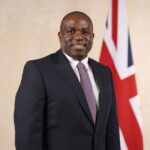
Tag: David Lammy

  • PRESS RELEASE : The UK is working with partners around the world to prevent global health threats like AMR – UK statement at the UN General Assembly [September 2024]

    PRESS RELEASE : The UK is working with partners around the world to prevent global health threats like AMR – UK statement at the UN General Assembly [September 2024]

    The press release issued by the Foreign Office on 26 September 2024.

    Statement by the Foreign Secretary, David Lammy, at the UN General Assembly High-Level Meeting on antimicrobial resistance.

    The world faces tremendous challenges, so many of which are connected. Connected challenges require of course connected solutions.

    And the new UK government is determined to renew relationships with allies, especially in the Global South, and to modernise our approach to development, rooted in a spirit of genuine partnership.

    We cannot hope to achieve any of our development goals without being able to prevent global health threats like AMR which, unless we act, will take almost 40 million lives by 2050.

    That is what we learnt from COVID, and we’re determined to play our role in addressing the lessons of the last pandemic.

    Central to that will be tackling the injustice of inequitable access.

    New UK-funded data shows that 92 million lives – mainly of course in Global South countries – will be lost by 2050 due to a lack of access to both health care and to antibiotics.

    This is intolerable and it must not continue.

    This ambitious Political Declaration shows that we can achieve so much when we work together for the common good.

    To those who say that the world is too divided to agree on anything meaningful – we have shown how wrong they are.

    But this is only the beginning. We must now swiftly translate today’s commitments to strong collective action on the ground in the service of our fellow citizens

    The UK is working with partners around the world, including through our existing Fleming Fund network in low- and middle-income countries.

    And we are now working to improve access to antimicrobial drugs in Africa, to strengthen AMR capabilities in the Caribbean, and to support a new independent science panel that has the strongest possible buy-in from the countries of the Global South and which I hope will be located in the Global South.

    So let us get to work. Let us, together, ensure that future generations, no matter where they are born, look back at this moment as the time we collectively resolved to secure this incredible life-saving gift for all humanity.

  • David Lammy – 2024 Speech at the UN Summit of the Future

    David Lammy – 2024 Speech at the UN Summit of the Future

    The speech made by David Lammy, the Foreign Secretary, in New York on 23 September 2024.

    Mr President, I stand here as a man of multiple identities.

    A Londoner.  A patriotic Brit.  A lawyer.

    Proud of my African, Guyanese, Caribbean and Indian heritage.

    A committed multilateralist, who believes in the importance of the United Nations.

    I agree with my great predecessor, Ernie Bevin, when he said in 1945:

    “Our eyes should be fixed upon the United Nations… All nations of the world should be united to look that way.”

    The purposes and principles of the UN remain as indispensable today as in Bevin’s time.

    Our task is to recapture that founding spirit so that when we reach the UN’s centenary, their legacy endures.

    But we cannot ignore the challenges we face. More conflicts than at any time since 1945, costing the global economy over 900 billion dollars, and creating the most refugees and displaced people on record.

    Geopolitical tensions arising. Progress against the Sustainable Development Goals stalling. Trust in multilateralism faltering.

    The Pact for the Future and this Summit offer a chance for Member States to show responsible global leadership, to engage with the rapid changes of our age, and go further in meeting the needs of everyone – especially the most vulnerable.

    As I know all too well, countries of the Global South suffered great injustices in the past. And I have heard repeatedly how frustrated partners are by the unfairness of the global system.

    We cannot ignore these frustrations. We must act.

    First, as the Secretary-General has said, we need greater collective efforts to prevent and end conflict. For Britain, that means upholding Ukraine’s sovereignty, urging an immediate ceasefire in Gaza and Lebanon, and supporting an end to the fighting in Sudan.

    It means robustly challenging Member States who violate the Charter, rejecting a world in which might makes right.

    It means a more representative Security Council.

    It means supporting the international rule of law, and applying it equally and fairly which is why Britain has proposed the outstanding Professor Dapo Akande for election as a judge at the International Court of Justice.

    Second, we need urgent action on the climate and nature crisis.

    With this new Government, Britain is renewing our ambitions at home, aiming to deliver clean power by 2030.

    And I am determined that we also reconnect abroad, building a Global Clean Power Alliance, championing creativity and reforms to unlock international climate and nature finance, particularly from the private sector, and bolstering efforts to protect at least thirty per cent of the planet’s land and ocean by 2030.

    Third, countries like Britain must modernise our approach to development.

    This Government believes partnership, not paternalism, is the way to deliver the Sustainable Development Goals.

    Making best use of technology and innovation. Putting indigenous people and local communities, including women and girls, at the centre of decision-making on development programmes.

    Driving faster reform of the global financial system to strengthen the voice of the most vulnerable and tackle unsustainable debt.

    Friends, action on conflict, climate and poverty. Delivered by a reformed multilateral system. This is the path to peace and prosperity on a liveable planet.

    All over the world, in every war zone, every refugee camp, the UN is there. A beacon of hope and humanity to which, as Bevin said, the gaze of all nations should turn.

    This Summit must direct the world’s eyes towards that beacon once again. And Britain is proud to support it.

    Thank you.

  • David Lammy – 2024 Speech at Labour Party Conference

    David Lammy – 2024 Speech at Labour Party Conference

    The speech made by David Lammy, the Foreign Secretary, on 22 September 2024.

    Conference, everyone in this room has their own story.

    My story starts in place called Dongola Road, in the shadow of Tottenham’s Broadwater Farm Estate.

    Life was not always easy. My mum struggling to put food on our table.

    Skinheads shouting abuse as we walked by.

    My father leaving when I was 12.

    He didn’t leave me very much.

    But he did leave me a map, an atlas of the world which I put on my bedroom wall. And from this map, I learned about the countries my ancestors had come from. Transported from West Africa to Guyana as part of the Transatlantic slave trade. Long before my parents moved from Guyana to Britain to help rebuild Britain after the Second World War.

    Conference, I can’t tell you how it feels to stand here today. A Black working-class man from Tottenham; a child of the great Windrush Generation.

    Now back on this stage as the Foreign Secretary in a Labour Government.

    My job is to tell a new story about the United Kingdom abroad.

    A story of openness. A story of the future. A story of hope that will reconnect Britain with the world once more.

    Conference, when I stood in this room last year, I said we had a once in a generation chance to get Britain’s future back.

    The chance to win back the public’s trust. To turn the page on 14 years of Tory decline.

    Well Conference, we did it.

    And when I say we did it – I mean you did it.

    Every party member who walked dozens of miles knocking on doors.

    Every activist who convinced a young person to register to vote.

    Every supporter who endured the failing private train networks to campaign in an unfamiliar town.

    Every single one of you who supported our leader – our Prime Minister – Keir Starmer.

    You are the greatest advocates of our values, our missions, and our purpose.

    We are forever grateful to you for the greatest electoral turnaround in our party’s history.

    From electoral oblivion less than five years ago, to a Labour majority today.

    Thank you, thank you.

    Of course, you, the party members in this room, did not just change the fate of our party. You changed the fate of our country.

    Now, together, let’s work to change the fate of our world.

    Conference, for 14 long years, the Conservative Party misused the British state.

    Handing out crony contracts to their mates. Crashing the economy with their delusional ideology.

    For 14 long years, the Conservative Party damaged our reputation abroad, threatening to break international law.

    Threatening our European friends and treating them as our as foes.

    For 14 long years, the Conservative Party abandoned our values.

    Tearing up climate commitments.

    Threatening to leave the European Convention on Human Rights.

    On my first weekend as Foreign Secretary – when I travelled to Germany, to Poland, to Sweden in less than 48 hours – I was proud to say: Britain is back.

    When Keir Starmer, and my dear friend John Healey and I flew to Washington DC a few days later to meet with world leaders and commit unshakeably to NATO, we were proud to say: Britain is back.

    When the Labour government hosted 45 European leaders at Blenheim Palace, to reset our relationship with Europe, we said: Britain is back.

    When we restored funding to UNRWA for their work in Gaza, what did we say Conference? Britain is back.

    When we stood up for international law when it was not easy: what did we say? Britain is back.

    In my first four months, I visited 10 countries, engaged over 20 world leaders and 40 foreign ministers and what did I tell them? Britain is back.

    And when, unlike Rishi Sunak last year, the Prime Minister and I travel later this week to the UN General Assembly later, what will I say?

    Britain is back. Britain is back. My friends, Britain is back.

    Conference, unlike the Tories, We understand Britain needs to work with its neighbours to flourish.

    We know that Britain’s strength is founded on its alliances.

    That is why we are resetting our relationship with Europe. Since July, we have launched negotiations on a wide-ranging bilateral treaty with Germany. I have been on a joint visit with the French Foreign Minister, the first of its kind for more than a decade. I have welcomed the Spanish and Polish Foreign Ministers to London.

    We will reduce trade barriers to help boost business, jobs and economic growth, and we will seek a new broad, ambitious new UK-EU security pact to strengthen cooperation on shared threats that we face, enshrining a new geo-political partnership.

    Because Britain is back. A leading nation in Europe once again.

    Earlier this month I was in Kyiv – the frontline of the defence of European democracy – meeting with President Zelenskyy, two and a half years into Putin’s full-scale invasion.

    I took an overnight train with Anthony Blinken, the US Secretary of State, to send a clear message. If the West does not demonstrate it can outlast Putin, it does not only threaten Ukraine’s democracy, it threatens us all.

    We need to show Putin that Britain and its allies are not going anywhere.

    Which is why this government has increased support to Ukraine and we have committed £3 billion per year in military aid for as long as it takes. And it is why I told Zelenskyy; this Labour government will always stand with his courageous people.

    We need to send another message to Vladimir Putin: your interference in our democracy; promoting disinformation and encourage disorder on our streets; encouraging kleptocrats to store their ill-gotten gains in our property market must end.

    And that is why I am proud to tell Conference, together with two of our closest allies – the United States and Canada – and the rest of the G7, we are taking action against Russian disinformation. Exposing their agents, building joint capability and working with the Global South to take on Putin’s lies.

    Conference, last year, as we boarded trains up to Liverpool, we read the horrific news that Hamas terrorists had murdered around 1200 Israelis and kidnapped 250 others.

    What has followed those atrocities is a horrific war. Tens of thousands of Palestinian women and children killed and injured. Their homes turned to rubble, leaving Gaza a vision of hell on earth.

    Meanwhile dozens of Israelis remain cruelly held captive and Israel faces threats from all angles with Iran and its proxies seeking to wipe Israel off the map.

    Conference, I know, like me, you are desperate to see the conflict in the Middle East come to an end. And this Labour government has already made clear Britain’s principles.

    In my first weeks of government, I went to Israel and the Occupied Palestinian Territories to call for an immediate ceasefire. Words no previous Foreign Secretary had even used.

    We have used the full weight of Britain’s diplomacy to push to protect civilians, now. Get all the hostages out, now. And unrestricted aid into Gaza, now.

    We have provided millions to fund field hospitals in Gaza. We brought the Security Council together to demand polio vaccinations for Palestinian children.

    We have respected the independence of the international courts and we have made the right decisions to stand up for international law.

    We have called out the violent settlers in the West Bank. We have continued to fight for the hostages and to support their families.

    We have never lost sight of the end goal: an irreversible pathway towards a two-state solution.

    I believe in the right of Israel to be safe and secure. I also believe in the justness of the Palestinian cause.

    And it is only once Palestinians and Israelis have the same fundamental rights – sovereignty, security and dignity in their own independent, recognised states – that we can achieve a just and lasting peace for all.

    In recent days, we have seen a worrying escalation between Israel and Lebanese Hizballah.

    This is in nobody’s interest.

    Our message to all parties is clear: we need an immediate ceasefire from both sides so that we can get to a political settlement.

    So that Israelis and Lebanese civilians can return to their homes and live in peace and security.

    And to British nationals still in Lebanon, let me say clearly: for your own safety, leave now.

    Iran is not only destabilising the Middle East but providing support to Putin’s barbaric war through exporting ballistic missiles.

    That is why we put new restrictions on Iran Air that will stop it entering the UK and new sanctions against the IRGC.

    Conference, in a world filled with conflict it is easy to take our eyes off the most fundamental threat that our world faces. The climate emergency.

    Treated by the last government with a cynical disdain that we cannot afford.

    With Keir Starmer and Ed Miliband, I will help restore Britain’s climate leadership, for British jobs, opportunity and growth. And because climate matters.

    The climate and nature crisis will be central to all the Labour Foreign Office does. Because climate matters.

    With Labour, Britain will lead a new Global Clean Power Alliance. Because climate matters.

    With Labour, Britain has founded Great British Energy. Because climate matters.

    We will accelerate onshore wind. Why? Because climate matters.

    We will appoint new climate and new nature envoys. Because climate matters.

    We have pledged to end new oil and gas licences while guaranteeing a fair transition in the North Sea. Why? Because climate matters

    And Conference, the Conservatives abandoned our leadership on international development too.

    With my dear friend Anneliese Dodds, we will strengthen development leadership, capability and expertise, and support faster reform to the global financial system.

    Our goal is nothing less than a world free from poverty on a liveable planet. That’s what a Labour government will achieve.

    Conference, the world we face is filled with disorder. Conflict in Europe, Africa and the Middle East; great power competition, an increasingly assertive China and a climate emergency.

    But together we have a once in a lifetime opportunity to make the change we want to see.

    Not just in Britain, but in Europe and in the world.

    Just as Clem Attlee’s 1945 government rebuilt the country after the second world war; just as Harold Wilson’s government in the 1960s seized the white heat of technology to face the future; and just as Tony Blair and Gordon Brown’s government transformed our public services, we in Keir Starmer’s Labour Party, have the opportunity to make history.

    With a decade of national renewal. Our Prime Minister has laid out five missions for this purpose.

    Five missions that will give our country the growth it needs and the security it deserves.

    Five missions that will allow Britain to return to the top table of international diplomacy.

    A Britain Reconnected.

    Britain back where it belongs.

    Conference, thank you. Thank you very much.

  • David Lammy – 2024 Kew Lecture on Climate Change

    David Lammy – 2024 Kew Lecture on Climate Change

    The speech made by David Lammy, the Foreign Secretary, at Kew Gardens in London on 17 September 2024.

    Thank you Kew Gardens, for hosting my first set piece speech as Foreign Secretary.

    Just after hosting the Colombian President of this year’s Nature COP in Cali this morning.

    Conflicts in Ukraine and the Middle East have dominated my time in office so far. But I was very clear in Opposition that, in this job, I would focus on the most profound and universal source of global disorder – the climate and nature emergency.

    Over my political career, it has become clearer to me how this crisis defines our time. As a young backbencher, I admired Robin Cook making climate a geopolitical issue for the first time – he was a pioneer, ahead of his time.

    Four years ago, I spoke about the essential link between climate justice and racial justice. And as Shadow Foreign Secretary, I set out how our response to this crisis both can create unparalleled economic opportunities and is the central geopolitical challenge of our age.

    Time and again, it is the most vulnerable who bear the brunt of this crisis. From Ella Kissi-Debrah – a nine-year-old Londoner killed, in part, by unlawful levels of air pollution near her home, to communities in the Caribbean, whose leaders tell me they feel neglected, as they struggle with stronger, more frequent tropical storms caused by a crisis not of their making.

    So our goal is progressive – a liveable planet for all, now and in the future.

    But we need a hard-headed, realist approach towards using all levers at our disposal, from the diplomatic to the financial.

    And I say to you now: these are not contradictions. Because nothing could be more central to the UK’s national interest than delivering global progress on arresting rising temperatures.

    My argument to you today, is that demands for action from the world’s most vulnerable and the requirements for delivering security for British citizens, are fundamentally aligned. And this is because this crisis is not some discrete policy area, divorced from geopolitics and insecurity.

    The threat may not feel as urgent as a terrorist or an imperialist autocrat. But it is more fundamental. It is systemic. It’s pervasive. And accelerating towards us at pace.

    Look around the world. Countries are scrambling to secure critical minerals, just as great powers once raced to control oil – we cannot let this become a source of conflict.

    In the Arctic and Antarctic, global warming is driving geopolitical competition over the resources lying beneath the ice. And in the Amazon, there have been the worst droughts ever recorded, partly as a result of deforestation. In the Caribbean, I saw on day one in this job the devastation caused by Hurricane Beryl – the earliest-forming Category 5 hurricane on record. And in places like the Sahel, South Sudan and Syria, rising temperatures are making water and productive land even scarcer.

    These are not random events delivered from the heavens. They are failures of politics, of regulation, and of international cooperation. These failures pour fuel onto existing conflicts and regional rivalries, driving extremism, displacing communities and increasing humanitarian need. And it would be a further failure of imagination to hope that they will stay far from our shores. That we can keep them away.

    Let’s take migration. We are already seeing that climate change is uprooting communities across the world. And by 2050, the World Bank’s worst-case estimate is that climate change could drive 200 million people to leave their homes.

    Or we could take health. The World Health Organisation says climate change is now the biggest threat to human health.

    We saw in the pandemic how quickly an infectious disease could spread from animals to humans, and then from a city the other side of the world to here in Britain. This becomes only more likely as the climate and nature crisis grows. And this crisis threatens the things we take most for granted, from the food that we eat to the air that we breathe.

    But despite all of this, there remains a tendency for climate and nature policy to end up siloed. Too often, it has felt the preserve of experts and campaigners. Fluent in the sometimes impenetrable dialect of COPs. But distant from others working on foreign policy and on national security. And that has to change.

    Don’t get me wrong – we absolutely need campaigners like those in this room, or experts like those working here at Kew. And I am grateful to them all.

    But today, I am committing to you that while I am Foreign Secretary, action on the climate and nature crisis will be central to all that the Foreign Office does.

    This is critical given the scale of the threat, but also the scale of the opportunity. The chance to achieve clean and secure energy, lower bills and drive growth for the UK, and to preserve the natural world around us, on which all prosperity ultimately depends.

    The truth is that in the last few years, something went badly wrong in our national debate on climate change and net zero. I take no pleasure in saying that.

    That’s why the Prime Minister is resetting Britain’s approach to climate and nature, putting it at the centre of our cross Government missions, approaching 100 days in office and we can already see the difference which this has made.

    We have seen with the Inflation Reduction Act in the United States, the Green Deal, in the European Union, and the accelerating transition in China, foreign policy, economic and industrial policy becoming increasingly intertwined.

    That is why the Prime Minister is resetting Britain’s approach to climate and nature, putting it at the centre of our cross-Government missions.

    Approaching 100 days in office now, you can already see the difference this has made. Lifting the de facto ban on onshore wind in England. Pledging to end new oil and gas licenses while guaranteeing a fair transition in the North Sea. Switching on Great British Energy to crowd investment into clean power projects. Launching a rapid review of the Environmental Improvement Plan, for completion before the end of this year, so that we can clean our rivers, plant millions more trees, improve our air quality and halt the decline in species. And with over 90% of the UK’s biodiversity within our Overseas Territories, looking to expand the Blue Belt programme to increase marine protection.

    This domestic programme is not just essential to our economy, but to restoring our international credibility. We are bringing an end to our climate diplomacy of being “Do as I say, not as I do”. But this domestic ambition on its own is not enough.

    That’s why this issue has been on the agenda for nearly every meeting that I’ve had with another Minister in my early weeks, from our closest friends in the G7, to the world’s biggest emitter but largest renewables producer in China, to India, and to members of ASEAN, with whom I announced a new joint Green Transition Fund in the first few weeks in office.

    With Ed Miliband and Steve Reed leading COP negotiations on climate and nature, we have a pair of experienced, determined negotiators. And with Anneliese Dodds as Minister for Development, we will be a united Government team, all drawing on the FCDO’s diplomatic and development heft to push for the ambition needed to keep 1.5 degrees alive.

    To drive forward this cross-Government reset even further, I am announcing today that we will appoint new UK Special Representatives for Climate Change and Nature. These will support me, together with Ed Miliband and Steve Reed respectively, as we reboot internationally, showing that whether you are from the Global North or the Global South, we want to forge genuine partnerships, to tackle this crisis together.

    And I want this diplomatic effort focused particularly on three priorities.

    First, we will build a Global Clean Power Alliance.

    This Government has set a landmark goal – to be the first major economy to deliver clean power by 2030. We will leverage that ambition to build an Alliance committed to accelerating the clean energy transition. And today we are firing the starting gun on forming this new coalition.

    The International Energy Agency forecasts consumption not just of oil, but of all fossil fuels, will peak this decade. We are rapidly discovering new, more efficient ways to reduce emissions. Global investment in clean energy is now almost double the investment in fossil fuels.

    But while some countries are moving ahead in this transition, many are getting left behind.

    Without clean power, it will be impossible to decarbonise vast sectors of the economy, such as transport. We therefore need to accelerate the rollout of renewables across the globe in a way that this Government is doing at home.

    Now, of course there are different obstacles for different countries. But despite several other valuable initiatives pushing forward the energy transition, there is no equivalent grouping of countries at the vanguard of the transition, reaching across the Global North and the Global South together, dedicated to overcoming these barriers.

    So the Alliance needs to focus on scaling up global investment. Emerging market and developing economies outside China account for just fifteen per cent of global clean energy investment. The cost of capital in the Global South is often triple that in the Global North. And almost 700 million people have no access to electricity at all.

    We must unlock global finance on a far, far, larger scale, so we can back ambitious plans from those moving away from fossil fuels – as Anneliese Dodds has just been doing in Jakarta, discussing Indonesia’s Just Energy Transition Partnership, and close the clean power gap by helping more countries to leapfrog fossil fuels to renewable power systems.

    The Alliance should also focus on diversifying the production and supply of critical minerals. Copper and cobalt. Lithium and nickel. The lifeblood of the new economy. We need to bring these commodities to market faster. While avoiding the mistakes of the past, by helping developing countries to secure the economic benefits while promoting the highest environmental standards for mineral extraction.

    The Alliance could inject impetus into expanding grids and storage as well. The IEA assesses that the world needs to add or refurbish the equivalent of the entire existing grid by 2040.

    And we are working on a global energy storage pledge at COP29. We have to plug the gaps in meeting these targets.

    Finally, the Alliance can increase deployment of innovative clean energy. There is huge demand for affordable clean technologies from green hydrogen to sustainable cooking and cooling. And we have got to progress commercialisation of the tech with the greatest potential.

    And we will take a phased and inclusive approach to building the Alliance, listening to those leading the way on clean power and those who share our ambitions.

    But the shared goal is clear – making Net Zero Power a reality, everywhere.

    Second, we must unlock much, much more climate and nature finance. This is critical to my progressive realist approach to the crisis.

    Tackling this crisis requires global consensus – that is the principle at the heart of the COP process. And we can only reach a consensus by heeding others’ concerns as well as our own. As I know all too well, countries of the Global South suffered great injustices in the past.

    But I have heard repeatedly our partners’ frustrations at the unfairness of the global system today – particularly how difficult it is for them to get international climate finance.

    As my good friend Mia Mottley argues so powerfully, the problem is systemic.

    For example, Africa is on the climate frontline. Natural disasters alone have affected 400 million Africans this century. Yet Africa receives just over three per cent of climate finance flows. And debt servicing alone averages ten per cent of Africa’s GDP.

    Change is critical. There is no pathway to countries’ development aspirations without climate resilience, action on the nature crisis and access to clean energy, and no pathway to a sustainable future without development that leaves no one behind.

    The agreement on loss and damage at the last COP was an inspiring example of what the world can achieve by working together. That was the same spirit in which developed countries committed in 2009 to 100 billion dollars a year in international climate finance.

    Ahead of the Spending Review, we are carefully reviewing our plans to do so. And at the same time, we are pushing for an ambitious new climate finance goal focused on developing countries at COP29 in November.

    Because that is the right thing to do. But, especially in times of fiscal constraint, we need to become more creative in unlocking private sector flows for the green transition, and especially adaptation, across the Global South.

    London is the leading green global financial centre. And I have been delighted to learn how UK experts have been developing more effective financing models. For example, Britain helped establish the Caribbean Catastrophe Risk Insurance Facility back in 2007, the first such fund that pays out after a specific trigger such as earthquakes or tropical cyclones.

    And after Hurricane Beryl, it once again proved its worth, paying out over 76 million dollars as the region began to rebuild.

    I am determined to restore Britain’s reputation for commitment and innovation in the world of development finance. This starts with the multilateral development banks.

    And that’s why, subject to reforms, we support a capital increase for the IBRD, the world’s largest development bank and a key source of climate finance.

    And that’s why next month I will lay before Parliament a UK guarantee for the Asian Development Bank, which will unlock over 1.2 billion dollars in climate finance from the Bank for developing countries in the region.

    But impact is not simply a question of more creativity. To tackle systemic problems, we also need to reform the system itself.

    So, for example, we are co-chairing with the Dominican Republic the Green Climate Fund this year and driving forward reforms to speed up developing countries’ access to it.

    But I have also heard our partners calling for international tax rules to work better for developing countries, for unsustainable debt to be tackled more rapidly, and for obstacles that inhibit the flow of private capital to be addressed.

    My ambition here is clear: for the UK to lead the G7 debate on international institutional reform.

    Third, we must not just halt, but reverse the decline in global biodiversity.

    Sometimes we become numb to the scale of the nature crisis. One million species facing extinction, including one third of both marine mammals and coral reefs. And wildlife populations fallen by 69 per cent since 1970, mostly due to a staggering 83 per cent collapse in freshwater species.

    Biodiversity loss is as much of a threat as changes to our climate. And with nature loss undermining progress towards the Sustainable Development Goals, action on nature is also pivotal to genuine partnerships with the Global South.

    We need to bolster the global effort to protect at least thirty per cent of the planet’s land and ocean by 2030. So we are completely committed to ratifying the High Seas Treaty, and to securing agreement on a Plastics Treaty. And here I pay tribute to a predecessor Zac Goldsmith.

    And I have been looking hard at the successes of our development programmes on nature. One programme has mobilised well over a billion pounds to protect and restore forests across nearly 9 million hectares of land. And in the future we plan to expand this programme in the Congo Basin rainforest, the second largest on the planet.

    Some of our funding has also been used for incredible research. Few would believe that, thanks to the FCDO, a South African business is trialling new biodegradable nets that, if lost, leave no toxins or micro-plastics behind. I want many many more examples like this.

    The FCDO spends around five per cent of its development budget on research. And I am announcing today that we are starting to develop a new programme of research into nature and water specifically with over one hundred researchers and officials having just met in Kenya to begin this agenda.

    I am also looking at how we deliver our development programmes on the ground.

    Indigenous communities particularly are important in this regard – like the incredible female sustainable business owners I met in the Amazon last year – are nature’s best custodians.

    Nature has been declining 30 per cent less, and 30 per cent more slowly, in indigenous lands than in the world as a whole. Evidence shows that putting local communities at the centre of decision-making leads to better outcomes for the natural world.

    This is the model of development that I believe in. The modernised approach to development this Government will be implementing. The spirit of partnership, not paternalism, in action.

    For me this is deeply personal. Far from here, in Guyana’s rainforests, lies Sophia PointI established this small conservation centre five years ago, with my wife, in one of the last unspoilt biodiversity hotspots in the world.

    And it was fascinating last week to discuss it with Sir David Attenborough last week and hear his reminiscences of visiting those same rainforests as a young man.

    I told Sir David that his first book, Zoo Quest to Guiana, came out 1956, the year my father emigrated to Britain.

    In fact my Father used to bring me to Kew Gardens. I mean, I look back, he’s now not alive so I can’t ask him, but I now realise he brought me here to somehow be in touch with Guyana and those rainforests.

    And we discussed how Sir David’s work and that of Sophia Point is rooted in a concept common to the indigenous people of that part of South America and many farmers and others in Britain and around the globe.

    Stewardship of the natural world.

    That we have both an interest and a responsibility to maintain a liveable planet for ourselves and future generations.

    That is our goal. Ultimately, there will be no global stability, without climate stability.

    And there will be no climate stability, without a more equal partnership between the Global North and the Global South.

    For Britain to play its part, we must reset here at home, and reconnect abroad. That is what this Government will deliver. So that, together, we can build a better future for all.

  • David Lammy – 2024 Statement on Edmundo González Urrutia’s Decision to Leave Venezuela

    David Lammy – 2024 Statement on Edmundo González Urrutia’s Decision to Leave Venezuela

    The statement made by David Lammy, the Foreign Secretary, on 10 September 2024.

    Edmundo Gonzalez’s decision to seek political asylum abroad follows months of repression and intimidation against opposition figures and civil society in Venezuela. It is a decision that no politician should ever have to make.

    The UK continues to pay testament to the millions of Venezuelans who turned out to vote in the presidential election on 28 July. Along with the UN and international allies, we remain deeply concerned about allegations of serious irregularities in the declared results. Despite repeated calls, Venezuela’s National Electoral Council has still not produced full results or credible evidence of a victory for Nicolas Maduro. Publicly available records appear to show Edmundo Gonzalez secured the most votes by a significant margin. The UK has also publicly expressed the unacceptability of the ongoing repression in Venezuela. Human rights must be protected, and arbitrary detentions and harassment must stop.

    The UK continues to work with international partners to achieve a peaceful solution in Venezuela. Dialogue remains the only solution to ensure that the will of all Venezuelans is respected.

  • David Lammy – 2024 Speech on 75 years of the Modern Commonwealth

    David Lammy – 2024 Speech on 75 years of the Modern Commonwealth

    The speech made by David Lammy, the Foreign Secretary, on 4 September 2024.

    Well your Excellencies, guests, friends,

    It’s wonderful, really, really quite wonderful to host so many remarkable people here today. Together, you tell a wonderful, modern, diverse story about what is our Commonwealth.

    A network which connects people around the world – athletes, artists, activists, authors. An organisation which I believe is vital to tackling the challenges before us today. And a family which I am very, very proud to call my own.

    This is personally a very, very special moment for me as Foreign Secretary. As many of you will know, my parents came to Britain from Guyana, as part of the Windrush generation.

    And I stand before you as Foreign Secretary, tracing my lineage back to Africa through of course the trans-Atlantic slave trade. So I feel the pain and anguish of that heritage, as did my parents.

    But I share with them a keen awareness of my Commonwealth roots, a sense of belonging and solidarity with all members of the Commonwealth diaspora and the powerful optimism for what a multicultural society can be.

    And this spirit drives me as Foreign Secretary, as I seek to reconnect Britain with the world. A task in which I believe a revived, reinvigorated Commonwealth has a significant role to play. This belief reflects the fact that the world has changed radically in 75 years since the Commonwealth was born.

    You could argue there have been 3 phases to our organisation’s history:

    • an imperial phase under His Majesty George VI
    • a post-colonial phase under Her Majesty Elizabeth II
    • and now, under His Majesty Charles III, we have entered a new multipolar phase

    And this mirrors changes in the wider world. We are now well and truly in a multipolar age. And we face global challenges which can only be overcome if we all – all of us, the Global North and the Global South – focus on tackling them together.

    The Commonwealth must show how we can contribute then to achieving that unity of purpose. In doing so, we benefit from an array of legacies.

    Like that of my dear friend Baroness Scotland, who has overseen the establishment of the Climate Finance Hub and the Blue Charter, the growth in our membership, and ensured the Commonwealth’s voice is heard at the top tables of diplomacy across the world.

    And that of the late, great Guyanese Secretary-General, Sir ‘Sonny’ Ramphal, Who embedded the Commonwealth’s reputation as a unique platform for taking action on global challenges, for giving a voice to small states, for helping to forge closer, more equitable, relations between the Global North and the Global South.

    Next month, we will select our new Secretary-General. Africa is central to the world’s future – demographically, economically, and of course geopolitically. So I am excited that our next Secretary-General will hail from one of our African members. And I look forward to working with them to build on their predecessors’ efforts.

    Of course, we are also building on the enormous legacy of Her late Majesty The Queen. Two years since her passing, we treasure her role in cementing ties between us. The warmth and affection in which she is held across the Commonwealth testifies, both to her skills as a diplomat – she was, quite simply, the greatest diplomat of our time and to her vision for how to do diplomacy – a vision, frankly, far ahead of its time.

    A vision of leaders in the Global North and Global South working together, in a spirit of partnership. A vision that the Commonwealth exemplifies, as a forum in which voices from all corners of the globe – one third of the world’s population – are heard and respected.

    His Majesty the King, as Head of the Commonwealth, has been clear that he shares the vision of a family of nations in tackling the challenges of our time, strengthened by sharing diverse perspectives and experiences. And it is a vision embraced by the new British Government as well.

    This government will only succeed in reconnecting Britain with the world on the basis of mutual respect. And so it is natural for us to want to seize the opportunities the Commonwealth offers, particularly with leaders gathering in Samoa in October.

    Friends, at that meeting, I believe passionately that leaders should come together, listen to one another, engage in a spirit of respect.

    But it is also vital that we:

    • focus on the existential challenges we share
    • focus on the actions which can make the biggest difference
    • focus on how we maximise the Commonwealth’s enormous, enormous potential

    And I set just 3 priority areas that we could look at.

    The first of these is supporting economic growth. The Commonwealth’s combined GDP is expected to reach nineteen-and-a-half trillion dollars by the end of 2027 – nearly double what it was ten years before. We should take advantage of that, focusing more on increasing investment flows.

    In Samoa, with other members, I will launch a comprehensive plan of action to pool our shared expertise, boost investment opportunities, and harness new technologies for all over the next 2 years. Growth must be shared. Growth must be sustainable. And we must deliver it together.

    The next area, of course, is tackling the climate emergency. There is no long-term geopolitical stability without climate stability. And there can be no climate stability without a common sense of purpose coordinated action in the Global North and Global South. I therefore want the Commonwealth to play a clearer, more powerful role in building a green and sustainable future.

    In Samoa, we must further raise our ambitions for the Climate Finance Access Hub commit to stronger support for Small Island Developing States and step-up action to protect nature and the ocean. Climate action is essential for passing a liveable planet to future generations. And we must deliver it together.

    And the final area that we could focus on is education of course and the skills of wonderful, beautiful young people. As Member of Parliament representing an inner city constituency here in London, I know what it does to young people to be told that they have no future.

    And as someone who was fortunate enough because of that hard work of my parents, that great Windrush generation I was fortunate enough to have the chance to study at Harvard University, I know how educational opportunities can set you on a completely different path.

    In Samoa, we must support even more scholarships, places and learning via our various excellent education programmes. Sixty percent of Commonwealth citizens are not yet 30 years old. They deserve the chance to benefit from greater opportunities in life. And we must deliver this together.

    Delivering together – I have tried to give a small flavour of how we can do this in Samoa. I am very grateful to the Government and people of Samoa for preparing so effectively for CHOGM and our gathering – and welcome the first such meeting in a Pacific Island Country.

    In his final address as Secretary-General, Sir ‘Sonny’ Ramphal reflected on how such gatherings feel like a bit of a club. Members share a special relationship, an intimacy, with one another. And this creates a particular chemistry.

    In Samoa, leaders with different points of view, facing different circumstances, will nevertheless come together, understand each other’s point of view and perspective, and agree to deliver things together.

    That is what makes the Commonwealth unique. That is the vision of Her Late Majesty The Queen. The vision she championed. And that is the spirit which I engage with the Commonwealth, in Samoa and beyond.

    Thank you so much for the privilege to serve.

  • David Lammy – 2024 Statement on the Restart of Negotiations on Gaza Ceasefire

    David Lammy – 2024 Statement on the Restart of Negotiations on Gaza Ceasefire

    The statement made by David Lammy, the Foreign Secretary, on 15 August 2024.

    We are at a crucial moment for global stability. The coming hours and days could define the future of the Middle East. That is why today, and every day, we are urging for our partners across the region to choose peace.

    As the UK made clear at the UN Security Council this week, the situation in Gaza is devastating. The strike on the al-Tabeen school demonstrated that Palestinians in Gaza have nowhere safe to turn.

    These talks are an opportunity to secure an immediate ceasefire that protects civilians in Gaza, secures the release of hostages still cruelly held by Hamas and restores stability at a dangerous moment for the region.

    The UK will continue to use every diplomatic lever to bring about a ceasefire. In the last week, I have spoken with partners from across the region on the urgent need to bring this conflict to an end and the Prime Minister has spoken to his US, French and German counterparts, as well as the Iranian and Egyptian Presidents.

    It’s clear from these conversations that a ceasefire would not only protect civilians in Gaza, but also pave the way for wider de-escalation and bring much-needed stability for the Middle East.

    It is in the interests of both Israelis and Palestinians for a deal to be agreed, urgently. I urge all parties to engage in the negotiations in good faith and show the flexibility needed to reach an agreement.

    I thank Qatar, Egypt, the US and all international partners for their efforts in co-ordinating this vital moment.

  • David Lammy – 2024 Statement on the Bangladesh Interim Government

    David Lammy – 2024 Statement on the Bangladesh Interim Government

    The statement made by David Lammy, the Foreign Secretary, on 9 August 2024.

    The UK welcomes the appointment of the interim government in Bangladesh, led by Chief Adviser Professor Muhammad Yunus. The interim government has the UK’s support as it works to restore peace and order, for the sake of the Bangladeshi people. We urge all actors to prevent further violence and loss of life.

    The people of Bangladesh deserve accountability and a peaceful pathway to an inclusive democratic future.

  • David Lammy – 2024 Statement on Situation in Bangladesh

    David Lammy – 2024 Statement on Situation in Bangladesh

    The statement made by David Lammy, the Foreign Secretary, on 5 August 2024.

    The last 2 weeks in Bangladesh have seen unprecedented levels of violence and tragic loss of life. A transitional period has been announced by the Chief of the Army Staff.

    All sides now need to work together to end the violence, restore calm, de-escalate the situation and prevent any further loss of life.

    The people of Bangladesh deserve a full and independent UN-led investigation into the events of the past few weeks.

    The UK wants to see action taken to ensure Bangladesh a peaceful and democratic future. The UK and Bangladesh have deep people-to-people links and shared Commonwealth values.

  • David Lammy – 2024 Statement Following the Release of Vladimir Kara-Murza and Paul Whelan

    David Lammy – 2024 Statement Following the Release of Vladimir Kara-Murza and Paul Whelan

    The statement made by David Lammy, the Foreign Secretary, on 1 August 2024.

    I strongly welcome the news that Russia has released a number of prisoners today, and am particularly relieved that British nationals Vladimir Kara-Murza and Paul Whelan will soon be reunited with their families.

    Mr Kara-Murza is a dedicated opponent of Putin’s regime. He should never have been in prison in the first place: the Russian authorities imprisoned him in life-threatening conditions because he courageously told the truth about the war in Ukraine. I pay tribute to his family’s courage in the face of such hardship and hope to speak to him soon.

    Paul Whelan and his family have also experienced an unimaginable ordeal. I look forward to speaking to him as he returns home to his family in the United States after over 5 years in detention.