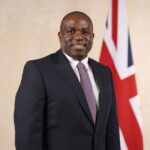
Tag: David Lammy

  • David Lammy – 2025 Speech at London Sudan Conference

    David Lammy – 2025 Speech at London Sudan Conference

    The speech made by David Lammy, the Foreign Secretary, in London on 15 April 2025.

    Two years on from this war starting, with frontlines shifting again, I fear many onlookers feel a sense of déjà vu. The country’s fraught history also means that some conclude that further conflict is effectively inevitable.

    Many have given up on Sudan. That is wrong. It’s morally wrong when we see so many civilians beheaded, infants as young as one subjected to sexual violence, more people facing famine than anywhere else in the world.

    We simply cannot look away. And as I speak, civilians and aid workers in El Fasher and Zamzam IDP camp are facing unimaginable violence.

    With over four million refugees having fled the country, and instability spreading far beyond Sudan’s border, it’s also strategically wrong to forget Sudan. And that’s why, as Foreign Secretary, I refused to turn away. I felt a duty to confront this war’s horrors head on.

    I have been to the Sudanese border and met with survivors. I have called out attacks on civilians and humanitarian workers in the United Nations.

    And I have doubled our aid to Sudan, and today I am announcing a further £120 million worth of support. But the biggest obstacle is not a lack of funding or texts at the United Nations, it’s lack of political will.

    Very simply, we have got to persuade the warring parties to protect civilians, to let aid in and across the country and to put peace first.

    And so we do need patient diplomacy. Bringing together this group today, focusing of course on the areas where we agree and building out from there is very very important today, indeed. Today’s goal is then to do just that. We all want to see Sudan’s sovereignty and territorial integrity upheld.

    We all want to see a united state, with functioning institutions. We all want to see Sudan’s civilians protected, and the millions of displaced people able to return to their homes.

    This is a strong basis to agree the steps needed then to relieve suffering and to end this awful war. I hope across our three sessions, we can agree a set of principles for our future diplomatic engagement.

    When I met with Sudanese refugees in Chad I was frankly humbled by their resilience. In the face of unimaginable trauma, they had not given up on their country or the communities around them.

    For their sake, we cannot resign ourselves to inevitable conflict. We cannot be back here one year from now, having the same discussion. So today, let’s show them and the world we have not given up on them. We have not given up on Sudan.

    I am hugely grateful for the support from the African Union, and to my colleagues from France, Germany and the EU in supporting the shared endeavour.

  • NEWS STORY : UK Pledges £120 Million in Humanitarian Aid to Sudan Amid Escalating Crisis

    NEWS STORY : UK Pledges £120 Million in Humanitarian Aid to Sudan Amid Escalating Crisis

    STORY

    The United Kingdom has announced a new £120 million humanitarian aid package for Sudan, aiming to address the country’s deepening crisis as conflict and famine continue to devastate the region.  The funding, unveiled at an international donor conference in London co-hosted by the UK, France, Germany, the European Union, and the African Union, is part of a broader effort to mobilise support for Sudan, where over 30 million people are in urgent need of assistance.

    Foreign Secretary David Lammy emphasised the UK’s commitment to supporting Sudanese civilians, stating that the aid will provide lifesaving food, nutrition, and emergency support for survivors of sexual violence. The conflict, which began in April 2023 between the Sudanese Armed Forces and the Rapid Support Forces, has led to widespread displacement, with over 12 million people forced from their homes. The UK’s latest contribution brings its total humanitarian support for Sudan and neighbouring countries to over £226 million, reflecting a significant increase in aid amidst the worsening crisis. Despite the substantial aid commitments, challenges persist in delivering assistance to affected populations, with ongoing violence and access restrictions hindering relief efforts.The UK continues to call for an immediate cessation of hostilities and unrestricted humanitarian access to ensure that aid reaches those in need.

  • David Lammy – 2025 Statement Following the Detention of Two British MPs in Israel

    David Lammy – 2025 Statement Following the Detention of Two British MPs in Israel

    The statement made by David Lammy, the Foreign Secretary, on 5 April 2025.

    It is unacceptable, counterproductive, and deeply concerning that two British MPs on a parliamentary delegation to Israel have been detained and refused entry by the Israeli authorities.

    I have made clear to my counterparts in the Israeli government that this is no way to treat British Parliamentarians, and we have been in contact with both MPs tonight to offer our support.

    The UK government’s focus remains securing a return to the ceasefire and negotiations to stop the bloodshed, free the hostages and end the conflict in Gaza.

  • David Lammy – 2025 Statement on Thailand’s deportation of 40 Uyghur Muslims to China

    David Lammy – 2025 Statement on Thailand’s deportation of 40 Uyghur Muslims to China

    The statement made by David Lammy, the Foreign Secretary, on 27 February 2025.

    The UK disagrees in the strongest terms with Thailand’s decision to deport 40 Uyghur Muslims to China. This is despite Thailand’s international obligations in relation to non-refoulement and the well-documented ongoing human rights violations in Xinjiang.

    The UK calls for the human rights of this group to be upheld, and we urge China to implement the wider recommendations of the Office of the High Commissioner of Human Rights in relation to Xinjiang.

  • David Lammy – 2025 Article on Defence Spending

    David Lammy – 2025 Article on Defence Spending

    The article written by David Lammy, the Foreign Secretary, on 25 February 2025. The article was published in the Guardian newspaper and released as a press release by the Government.

    There are moments in history when everything turns, but the extent of change is not perceived until later when the fog has cleared. These are hinge points that require clear leadership and bold action. In the late 1940s, my Labour predecessor and hero Ernie Bevin, alongside Clement Attlee, saw through the fog when they led Britain into Nato and the UN, and secured the development of Britain’s nuclear deterrent.

    In the 1960s, Harold Wilson saw through the paranoia of the cold war, refusing Lyndon Johnson’s request to send British troops to Vietnam. In the 1990s, Tony Blair understood that unless we stopped the president of Serbia, Slobodan Milošević, there would be no peace in the Balkans.

    Three years into Vladimir Putin’s brutal war, this is again a hinge point for Britain. Keir Starmer’s commitment to dramatically raise defence spending in both this and the next parliament shows his leadership through the fog. Putin’s Russia is a threat not only to Ukraine and its neighbours, but to all of Europe, including the UK.

    Over successive administrations, our closest ally, the US, has turned increasingly towards the Indo-Pacific, and it is understandably calling for Nato’s European members to shoulder more of the burden for our continent’s security. Around the world, the threats are multiplying: from traditional warfare to hybrid threats and cyber-attacks.

    The first duty and foundation of this government’s Plan for Change – GOV.UK is our national security. Seven months ago, the public gave us this responsibility, and we hold it with a profound sense of duty. Under the Conservatives, the foundations of our defence were weakened. The UK has not reached a defence spending level of 2.5% of GDP since Labour was last in government. And it falls to a Labour government to restore those foundations once again. We will deliver the biggest sustained increase in defence spending since the cold war because we are the party of defence. So we will hit our 2.5% promise in 2027 and, subject to economic conditions, go further, with defence spending rising to 3% during the next parliament. This is a pledge to safeguard our future – and act as a pillar of security on our continent – in a world plagued by more active conflicts than at any time since the second world war.

    To make this commitment, and stick within our fiscal rules, we have had to make the extremely difficult decision to lower our spending on international development. As the Prime Minister said, we do not pretend any of this is easy.

    This is a hard choice that no government – let alone a Labour government – makes lightly. I am proud of our record on international development. It helps address global challenges from health to migration, contributes to prosperity, and supports the world’s most vulnerable people.

    It grows both our soft power and our geopolitical clout, while improving lives. For all of those reasons, this government remains committed to reverting spending on overseas aid to 0.7% of gross national income when the fiscal conditions allow.

    But we are a government of pragmatists not ideologues – and we have had to balance the compassion of our internationalism with the necessity of our national security.

    As we reduce the overseas aid budget, we will protect the most vital programmes in the world’s worst conflict zones of Ukraine, Gaza and Sudan. But there can be no hiding from the fact that many programmes doing vital work will have to be put on hold. The work of making further tough choices about programmes will proceed at pace over the weeks and months ahead, but our core priorities will remain the same.

    My vision for a reformed Foreign, Commonwealth & Development Office fit for this more contested and dangerous world, in which diplomacy is more important than ever, remains paramount. We are working closely with the Treasury to ensure our diplomatic, intelligence and development footprint will align with our priorities. In a tough fiscal environment, all our spending must be laser-focused on delivering the maximum possible impacts for our national security and growth, equipping the FCDO to deliver the government’s plan for change internationally.

    At the height of the cold war, defence spending fluctuated between about 4% and 7% of GDP. At this moment of fiscal and geopolitical flux, not meeting the moment on defence would mean leaving Britain ill-prepared for a more dangerous world, potentially requiring even tougher choices down the line.

    I have written previously about this government’s foreign policy being founded on progressive realism. Being clear about our values, but treating the world as it is, not as we would wish it to be. These are the principles that guide our choices through these dangerous times. We will always do what is necessary to keep the public safe.

  • David Lammy – 2025 Speech at the G20 in South Africa

    David Lammy – 2025 Speech at the G20 in South Africa

    The speech made by David Lammy, the Foreign Secretary, at the G20 Foreign Ministerial Meeting in South Africa on 20 February 2025.

    Thank you very much Ronald [Ronald Lamola, Minister of International Relations and Cooperation of South Africa] and let me say, my dear brother, what a joy is to see the G20 in Africa at long last. And we thank Brazil for its stewardship last year.

    The challenges that we face are truly global. We will not begin to tackle them unless we harness the potential of this continent, bursting with growth and opportunities and with so many young people, talented young people at its heart.

    The starkest challenge we face is escalating conflict, both between and within nations, driving vicious cycles of grievance, displacement and low growth.

    Your presidency, Ronald, calls for solidarity, and solidarity starts by recognising and naming the victims of war and injustice:

    • innocent Ukrainians enduring bombardment night after night from Odessa to Zaphorizhya
    • the hostages still cruelly held underground by Hamas, 16 months on from the trauma of October the 7th
    • the Palestinian civilians driven from their homes in Gaza and the West Bank
    • the Sudanese refugees flee their burning villages to escape across the border to Chad, the overwhelming majority of them, women and children having endured the most unimaginable and indiscriminate violence

    As I said when I visited Chad, there can be no geopolitical stability, whilst there remains a hierarchy of conflicts, with those on this continent finding themselves at the bottom of the global pile.

    And that’s why, since starting this job, I’ve made a reset with the so called Global South, a central plank of the UK foreign policy, and it’s why I doubled British aid for Sudan, and I prepared a conference in London to push for a political process which will end the fighting and protect civilians.

    And that’s why I’ve called out the Rwandan Defence Force operations in the eastern DRC as a blatant breach of the UN Charter which risks spiralling into a regional conflict, and that’s why I will again make clear to President Kagame, that further breaches of DRC’s sovereignty will have consequences.

    Because at the heart of my government’s approach to foreign policy lies the belief that regional and geopolitical stability can only be delivered through respect for international law and the principles of the UN Charter.

    And as my Canadian, Australian, Japanese colleagues have said, respect for international law must underwrite a free and open Indo Pacific, just as it must underwrite the Euro Atlantic, with the security of those 2 regions ever more closely linked.

    And as we turn to the Middle East, the ceasefire in Gaza is painfully fragile, I’m grateful that so many of us here today are working together to ensure that it holds we must continue to work together tirelessly to secure the release of the remaining hostages, to bolster the Palestinian Authority, and to boost aid into Gaza and to develop a long term plan for governance and security on the strip so that we can advance towards, a two-state solution, which remains the only long-term viable pathway to peace.

    And finally, in Ukraine, the only just and lasting peace will be a peace that is consistent with the UN Charter, and we want that as soon as possible.

    You know, mature countries learn from their colonial failures and their wars, and Europeans have had much to learn over the generations and the centuries.

    But I’m afraid to say that Russia has learned nothing. I listened carefully to Minister Lavrov intervention just now – he’s, of course, left his seat -hoping to hear some readiness to respect Ukraine’s sovereignty.

    I was hoping to hear some sympathy for the innocent victims of the aggression. I was hoping to hear some readiness to seek a durable peace.

    What I heard was the logic of imperialism dressed up as a realpolitik, and I say to you all, we should not be surprised, but neither should we be fooled.

    We are at a crucial juncture in this conflict, and Russia faces a test. If Putin is serious about a lasting peace, it means finding a way forward which respects Ukraine’s sovereignty and the UN Charter which provides credible security guarantees, and which rejects Tsarist imperialism, and Britain is ready to listen.

    But we expect to hear more than the Russian gentleman’s tired fabrications.

  • David Lammy – 2025 Comments on Donald Trump’s Statement that Palestinians Must Leave Gaza

    David Lammy – 2025 Comments on Donald Trump’s Statement that Palestinians Must Leave Gaza

    The comments made by David Lammy, the Foreign Secretary, in Ukraine on 5 February 2025.

    Donald Trump is right. Looking at those scenes, Palestinians who have been horrendously displaced over so many months of war, it is clear that Gaza is lying in rubble. We have always been clear in our view that we must see two states and we must see Palestinians able to live and prosper in their homelands in Gaza, in the West Bank. That is what we want to get to.

    That is why it’s important we move out of phase one of this hostage deal, to stage two and then to phase three and reconstruct Gaza. We will play our part in that support for reconstruction, working alongside the Palestinian authority and Gulf and Arab partners. That’s the guarantee to ensure that there is a future for Palestinians in their home.

  • David Lammy – 2025 Speech on Holocaust Memorial Day

    David Lammy – 2025 Speech on Holocaust Memorial Day

    The speech made by David Lammy, the Foreign Secretary, on 27 January 2025.

    Thank you, Ambassador, for organising this event with us, and I want to echo Hazel’s thanks to Janine Webber.

    I hugely admire the willingness of her and other survivors to continue sharing their stories with the world.

    Many of you will have seen Prime Minister Keir Starmer visiting Auschwitz recently.

    I can distinctly remember my own visit there some years ago, and the many stories on display.

    The raw emotion of seeing a site of such evil. Such suffering. Such loss.

    80 years on from the liberation, we must face up to the reality described so eloquently by Auschwitz survivor, Primo Levi:

    Everyone needs to know that Auschwitz existed…

    Auschwitz is outside of us, but it is all around us, in the air. The plague has died away, but the infection still lingers and it would be foolish to deny it.

    Foolish, indeed.

    As a black man descended from the Windrush generation, as MP for the most diverse constituency in Britain – including, I am proud to say, a thriving Jewish community. And now, as Foreign Secretary, I see all too many signs of that lingering infection.

    Auschwitz did not start in its gas chambers. Genocide does not start with genocide. It starts with denial of rights. With attacks on the rule of law. With a festering resentment of the other.

    And so, as Levi and so many other survivors rightly insisted, it is a duty for us all to reflect on what had happened. ‘Never again’ is a solemn promise which we owe to the victims, but also which we must uphold for our own sake, and for the sake of future generations.

    We need Holocaust remembrance. Holocaust education. Action against antisemitism – it is how we build a better future for us all together.

    That is why it was a great honour to make my first visit as Foreign Secretary to Yad Vashem last July. Why I am proud to host you all in the Foreign, Commonwealth and Development Office on Holocaust Memorial Day and why I have been so glad to come into this job as the UK holds the Presidency of the International Holocaust Remembrance Alliance.

    I want to thank all those involved in running our Presidency, in particular Lord Eric Pickles, whose work as Envoy only reinforces the cross-party nature of our country’s commitment to Holocaust remembrance.

    One of the projects we have been sponsoring during our Presidency has been 80 Objects – 80 Lives. curated by the Association of Jewish Refugees and the UK Holocaust Memorial Foundation, this exhibition connects the testimonies of 80 survivors with 80 objects from before.

    Wedding rings. The pages of a prayer book. A doll. A suitcase. Everyday objects, connecting the courageous survivors to the communities, the families, the lives they have lost forever.   I like this project as well because it charts a path for this work in the years ahead. 80 years on from the defeat of Nazism, the number of survivors still with us is inevitably dwindling.

    The world of the 1930s and ‘40s can feel ever more distant from our high-tech world of today. The next generation risks being distracted, clickbait making it all too easy not to grasp the full horror of the Holocaust.

    We therefore need to find new ways to tell the story.

    To capture people’s imagination – young people’s most of all, and prompt real reflection.

    We need them to understand what a catastrophic moral failure for humanity Auschwitz was, and how the seeds of such a catastrophe are still around us.

    Another Auschwitz survivor, Viktor Frankl, wrote that one lesson he drew was how everything can be taken from human beings. But not our ability to “choose one’s own way”.

    Today, for all the great challenges we face, we are fortunate to live in a very different moment. But it is still up to each of us to choose our own way.

    For this year’s Holocaust Memorial Day, my hope is that people here in Britain, people all over the world, choose to heed the Auschwitz story.

    And I am choosing once again to work with all who share this hope to try to make sure they do.

    Thank you.

  • David Lammy – 2025 Statement on the Release of Three Hostages in Gaza

    David Lammy – 2025 Statement on the Release of Three Hostages in Gaza

    The statement made by David Lammy, the Foreign Secretary, on 19 January 2025.

    We welcome the release of three hostages in Gaza, including British national Emily Damari, and thank Qatar, Egypt and the US for their support in bringing these individuals’ and their families’ horrific ordeal to an end.

    Our thoughts are also with those still waiting to be reunited with their loved ones, including the families of UK linked hostages Eli Sharabi, Oded Lifshitz and Avinatan Or.

    We are clear the deal must be implemented in full; all hostages be returned and aid be allowed to flow into Gaza now.

    This ceasefire must lead to a credible pathway towards a two-state solution in which Israelis and Palestinians can live side by side in peace.

  • David Lammy – 2025 Statement on the Israel-Hamas Ceasefire

    David Lammy – 2025 Statement on the Israel-Hamas Ceasefire

    The statement made by David Lammy, the Foreign Secretary, on 15 January 2025.

    Today’s announcement of a ceasefire agreement is a moment of hope after over a year of agony, following Hamas’s appalling attack on 7 October 2023.

    For the hostages and their loved ones, including British citizen Emily Damari, and Eli Sharabi, Oded Lifschitz and Avinatan Or, this has been an unbearable trauma.

    For the people of Gaza, so many of whom have lost lives, homes or loved ones, this has been a living nightmare.

    For the region, this has brought yet more division and conflict.

    With this agreement, hostages and their families will be reunited and Gazans can begin to rebuild their lives. I pay tribute to the tireless diplomatic efforts of Qatar, Egypt and the incoming and outgoing US administrations.

    Much remains to be done – to implement all phases of the deal in full and establish a pathway to lasting peace and security for Israelis and Palestinians alike.

    From our first day in office, this Government has pressed for an immediate ceasefire, to free the hostages, and to bring relief, reconstruction and hope to civilians who have suffered so much.

    We will play our full part in the coming days and weeks, working alongside our partners, to seize this chance for a better future.