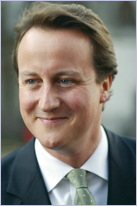
Tag: David Cameron

  • David Cameron – 2007 Speech at Conservative Councillors Association

    davidcameronold

    Below is the text of the speech made by David Cameron, the then Leader of the Opposition, to the Conservative Councillors Association Conference held in Leeds on 23 February 2007.

    We meet here in Leeds with the Conservative Party in better shape than it’s been in for almost 20 years. We have a sustained lead in the polls.

    We have a united shadow cabinet and Parliamentary party.

    And of course, we are the largest party in local government.

    I want to thank you for that – for the hard work you do.

    You are showing the British people that Conservatives are the right party for government – and you deserve a lot of the credit for our success.

    I know that councillors sometimes feel ignored by the national party.
    Well, it’s not true.

    Every Thursday night I get woken up by a text message in the early hours of the morning. It tells me the results of the local government by-elections.

    Those elections are crucial barometers of the nation’s political mood. And as you know, the indicators are pretty good.

    In local elections where all three parties stand, we’re regularly winning twice the number of seats that Labour are getting.

    But we still need far better communication inside our party.

    We need to be one party – not separate little parties of MPs, MEPs, peers and councillors. One party.

    I’m doing what I can. I’ve invited council leaders to the 1922 committee. I have encouraged the shadow cabinet to link up with the LGA.

    And I would like to discuss with the Conservative Councillors Association the idea of a proper system of consultation between us, along the lines of the central-local partnership that the LGA has with the government.

    This would bring Parliamentary frontbenchers together with the leading players in local government, giving us access to your expertise and allowing us to boast of our local achievements on the national stage.

    But we all know more needs to be done.

    And it needs to be done on your side too.

    You can’t always expect the national party to come to you – you’ve got to come to us.

    If there’s some great new initiative you’ve introduced, tell us about it.

    If there’s something we’ve said or done that’s made life more difficult, pick up the phone. If we’re missing opportunities – tell us.

    Labour

    Of course, part of our success has been Labour’s failure.

    Ten years after they said Britain had 24 hours to save the NHS, we’re seeing hospitals closing and jobs cut.

    Ten years after they said they’d be tough on crime and tough on the causes of crime, gun crime’s doubled.

    Ten years after ‘education, education, education’, British children are among the worst educated in the developed world.

    Blair is limping on to an ingracious end.

    The Deputy leadership candidates are all running against his record.

    Cabinet ministers are joining picket lines in protest at Government policy.

    And the Police are knocking on the door of Downing Street.

    Who ever thought it would end like this?

    In 1997 the country felt a great wave of hope and optimism when Labour swept into power.

    That will be nothing compared to the national sigh of relief when they are finally swept out again.

    Conservative councillors

    But it’s not enough for Labour to fail. We have to show that we can succeed.

    And you have a massive part to play in that vital process.

    Across Britain, Conservatives hold power in local councils.

    You demonstrate Conservative government – your values, your achievements, represent our party in action.

    So my point is this: you, Conservative councillors, can show to voters that it is our party which has the ideas and the capability to make a real difference.

    Here in Leeds it was the Conservative Council which has regenerated 33 local parks.

    In Bradford, our councillors have opened five new children’s homes.

    Elsewhere round the country it’s Tory councils leading the way – not least on the issue of the moment, youth crime.

    The free fitness clubs set up in Taunton to give local kids something to do after school.

    The Youth Passport which Westminster council have introduced to give young people discounts on local activities.

    The Scratch project in Leicestershire which teaches basic skills to kids who struggle in school.

    Hammersmith and Fulham’s innovative new policy of paying for 24 hour policing.

    All these schemes which really do tackle crime and its causes.

    I want to be able to point to any Conservative-run council in the country and see excellence in practice.

    I want to see our councillors leading the nation in ensuring there are enough low-cost homes for young families.

    I want to see people voting Tory because of our local record on recycling or energy saving.

    I want to see our councils helping parents of children with special needs – and giving them the choice between special schools and mainstream schools.

    Quality of Life

    I want to explain the what and the how.

    What we want to do in Government, and how we plan to do it.
    And I can tell you that local government – empowered, invigorated, set free – is absolutely central to our vision and our plan.

    My starting point is this. For far too long, we Conservatives have emphasised the economic rather than the social.

    Don’t get me wrong – we must always be the party of sound money, of low taxation, of enterprise and wealth creation.

    But that does not mean pursuing those things without reference to the social, cultural, moral factors which give us meaning in our lives.

    Ultimately the quality of life matters more than the quantity of money.

    So let me say loudly and proudly and clearly: we are the party which respects the Quality of Life. We believe there is more to life than money.

    Most of all, perhaps, quality of life means a healthy natural environment and a healthy social environment.

    We are the stewards of the natural world. We are obliged to pass on the planet to our children in a healthy state.

    We know money can help here – a poor world is not a healthy one. But we also know that the thoughtless pursuit of wealth can damage our environment.

    The same goes for the social environment – the ecology we inhabit as individuals and families.

    Again, there is a dilemma: more wealth can preserve and enrich the social environment – but the relentless pursuit of wealth can damage it.

    I do not have some grand blueprint for how to resolve these dilemmas. But I do have confidence they can be resolved.

    Because it is at the local level that we find the various settlements that enable us to preserve our wealth without damaging our environmental and social wellbeing.

    Every family has to find its own balance between wealth and wellbeing.

    But no family – except the super-rich – can find this balance alone: external factors, like employers and childcare and travel options, all play their part. And that is where the community comes in.

    Labour never really get the quality of life agenda.

    They treat individuals as units of account, not as human beings who find meaning in family relationships and in communal and professional life.

    But it’s not just that we have a distinctive vision of what government should try and achieve, we have a distinct approach for how it should be achieved.

    So when some people say there is no real difference between the parties anymore, they are talking rubbish.

    There couldn’t be a starker difference: Labour believe in top-down state control, Conservatives believe in bottom-up social responsibility. They trust the state. We trust society.

    Social responsibility has various forms.

    The personal responsibility we owe to our families and our neighbours.

    The corporate responsibility of businesses and employers.

    And the civic responsibility of local institutions, not least the council.

    Dismantling Labour’s command state

    But all this means changing the way we work.

    I know opposition leaders have stood in front of their councillors before, and promised to devolve power and lead a new revolution in local government.

    I know you must be pretty fed up of hearing it. I know you’re not going to believe me unless I make it completely clear what I intend to do.

    The revolution I want to lead has three parts.

    First, we need to dismantle Labour’s centralised command state.

    Second, we need to grant further powers to local government.

    And third, we need to go beyond local government. We need to drive power down to community groups and citizens themselves.

    First, then, we have to dismantle.

    The Standards Board regime has become a vast bureaucracy for vexatious complaints from petty-minded councillors who just want to score political points.

    It has damaged the reputation and standing of local government – and so we will abolish it.

    If we believe in local democracy and are going to trust local councillors, how can we allow the crazy rules on pre-determination that prevent councillors and council candidates from speaking out on controversial issues which they may later have to vote on?

    It’s a denial of democracy – and so we’ll stop it.

    Regional assemblies do not represent a devolution of power, as Labour claim, but a centralisation – they suck their powers up from local councils, not down from Whitehall.

    So they must go.

    Next are the complex funding strings that tie councils to central government.

    There’s the web of ring fencing and specific grants – and the drip feed of small funds that are introduced one minute and withdrawn the next.

    The next Conservative government will move towards a simple block grant method of distributing money from the centre to local councils.

    This will be a vital step in delivering real local decision making and real local democracy.

    Best Value and the Comprehensive Performance Assessment have become by words for bureaucratic box ticking and unnecessary interference.

    They mean that 80 per cent of council performance measurements are measuring whether the council has met central targets, rather than whether they’re meeting local priorities.

    And changing the name of the CPA to the CAA isn’t enough. All this needs to go.

    Empowering local government.

    But I don’t want to stop there.

    We can do more than simply reduce central government interference in local government.

    I want to give councils the opportunity to take the initiative themselves, and develop new ways of working which reflect the needs and wishes of local people.

    One of the great traditions of our party is the principle of permissive legislation. In the 19th century Benjamin Disraeli passed laws which permitted local government to clear slums and regenerate our towns and cities.

    I want to do something similar in our own day.

    Last year the Conservative Party published a private member’s bill called the Sustainable Communities Bill.

    This is a truly radical piece of legislation. At the moment, a majority of taxpayer’s money which is spent locally, is not spent by local councils.

    In Kent, for instance, the taxpayer spends around £10 billion a year. Kent County Council controls only a tenth of that.

    The Sustainable Communities Bill will allow a local council to find out how much money central government spends in its area, and to present a plan for taking direct control of that money itself.

    Everything except genuine national priorities should be a local responsibility.

    Beyond local government

    But we need to go beyond merely devolving to local government.

    I want to make a point which I believe is crucial to the future of our country.

    I do not believe that the only civic institutions are statutory ones. There is such a thing as society – it’s just not the same thing as the state.

    We are not just the party of local government. We are the party of local communities – led by local government, but not confined to it.

    A community includes the church and the sports club, the charity and the local business.

    It includes all the private associations that people form for public purposes – to clean up the streets, or look after the elderly, or give teenagers something to do.

    It is these associations which, alongside local government, will repair the torn social fabric of our town and cities.

    No single law or regulation from Whitehall or the town hall can have any effect unless it is part of a broader set of private decisions, taken by people themselves.

    So we should be less arrogant about what we can do as politicians, and more ambitious about what we can do together as parents, professionals, neighbours and citizens.

    All those who want to centralise are wrong. We need to get power as close as possible to the people. Yes, that means more responsibilities and freedoms for local government.

    But it should also mean more opportunities for communities themselves, acting independently of the statutory sector, to make a difference on their own.

    Ultimately it’s only by empowering people, with real freedom and real responsibility, that community life will improve in our most rundown neighbourhoods.

    This is not a threat to local government, but a stimulus to it – it’s the way to engage more people in the business of local civic life.

    Conclusion

    I know that we are heading in the right direction because you are winning council seats across the country.

    And I want you to take heart from the national party too. So go out and fight for more council seats on 3 May.

    Fight on the values of a reinvigorated Conservative Party.

    Fight on the achievements of Conservative councils.

    And fight on the promise of greener, more family-friendly, more local politics under the Conservatives.

    If we combine the traditional values of the Conservative party of good common and good value for money, with our new emphasis on quality of life and local decision making, we – that means you – will be unbeatable.

  • David Cameron – 2007 Speech at Base 33

    davidcameronold

    Below is the text of the speech made by David Cameron, the then Leader of the Opposition, to Base 33 in Witney, on 16 February 2007.

    Sometimes a piece of research is published which goes straight to the heart of the national debate – it holds up a mirror to the whole of society and makes us see ourselves as we really are.
    That happened this week. On Wednesday, Unicef published a report entitled “An overview of child well-being in rich countries”. It brings together comparative research on the material, educational and emotional state of childhood in 21 developed nations.

    Britain comes bottom of the list.

    Of course we can argue about methodology and the timing of statistics, but to do so is to miss the big point. This report shows that our society is deep trouble.

    I am an optimistic person. I love this country. It’s a great place to live, a great time to be alive, and I am enormously positive about the future. But sometimes I simply want to despair – and this is one of those moments.

    Ten years after the current Government was elected on the promise to end child poverty and make education its number one priority, Britain comes 18th out of 21 rich countries on material wellbeing, and 19th out of 21 on educational wellbeing. According to the report, British children are among the poorest and least educated in the developed world.

    But that is not the worst of it. We come at the very bottom – 21st out of 21 – on three other measures which, to me, are even more important.

    First, we come bottom on ‘subjective wellbeing’ – how children themselves rate their lives. Put another way, we have the unhappiest children in the developed world.

    Second, we come bottom on ‘behaviours and risks’. That means, for example, that British children have the highest rates of underage drinking and teenage pregnancy. Our children face some of the greatest risks in the developed world.

    And third – for me, the saddest finding of all, and the main cause of all the others – we come bottom on the measure of ‘family and peer relationships’. Which is to say, we have the loneliest children in the developed world.

    Only the United States has more children living in one-parent families. No other country has a smaller proportion of children – barely 40 per cent – who say their peers (that is, other children) are ‘kind and helpful’.

    These are pretty dreadful findings. To those of us who are parents, our children are quite simply the most important thing in our lives. So what are we to make of the fact that, as a national family, we are treating our children in this way?

    Because I do not accept for a moment that these terrible statistics are the ‘fault’ of children themselves. Above all, the problems we see – the risky behaviour, the loneliness and depression – are principally a response to a lack of adult leadership, a lack of the love and support that is their moral entitlement.

    I’ll tell you what’s going wrong in our society. We have too many children behaving like adults. And too many adults behaving like children.

    Quality of life

    I believe that the Unicef report should represent a turning point in the history of our country. Not a ‘wake-up call’ – we’re already awake: you only have to walk down a street in the afternoon after the schools close to know there’s a problem with some British children. No – this is a call to action: a moment of truth in which we must decide if we have the will to do what is necessary to save our society.

    I want to set out today three areas where I believe we must take urgent steps to restore child wellbeing. The first concerns political priorities in general.

    Much of the debate since the Unicef report was published has concentrated on the first measure – material wellbeing. And I agree it is a disgrace for the fourth richest country in the world to have so many children growing up in poverty. I agree that ending child poverty is central to improving child wellbeing.

    But I do not think that poverty is the only factor. There is more to life than money – and in the case of children that’s especially true. A small child doesn’t know there is such a thing as wealth or poverty. But he or she does know that there are such things as love and stability and support – even if she knows them only by their absence, in the hurt and loneliness that comes from neglect.

    I passionately believe that the quality of life matters just as much as the quantity of money. This is not a belief that guides our current Government. Ask Gordon Brown what matters most, in pretty much any area of life, and he’ll say: “resources”. And of course resources are important. But more important – as every parent knows – is relationships… time… and commitment.

    Family relationships matter more than anything else in Britain. So I want to move beyond the breast-beating and the anguish that the Unicef report has stirred up in all of us, and explain one straightforward principle which will guide my policy-making.
    The first test of any policy is: does it help families?

    So, for instance, if it comes to a collision between our wealth as a nation and the wellbeing of families – I choose families.
    I don’t make this choice lightly. I know that a dynamic economy is essential to create the wealth we need, not least in order to eradicate poverty. Competitiveness, which includes a flexible labour market, is one of the central components of a fair society. But we must not put the cart before the horse. If our working habits are damaging our families, we need to change our working habits.

    Every working parent knows you can’t have it all. There is a natural conflict between hours worked, money earned, and the time you spend at home. I believe that businesses have an overriding corporate responsibility to help lessen this conflict, and make it easier for parents to find the proper balance for their lives.

    By the same token, I recognise the right of adults to conduct their own relationships in their own way. I am not the sort of politician who preaches morality to grown men and women. But I do know that if we are to rebuild our broken society we have to get the foundation right. And the foundation of society is – or should be – the care of children by the man and the woman who brought them into the world.

    So this leads to important conclusions – both for the free-market right and for the liberal left.

    Let us have no more grandstanding about the exclusive importance of competitiveness in business. Nothing matters more than children.
    And let us have no more complaints that supporting marriage means bashing single mothers. It doesn’t. Of course single mothers need support – they do the hardest job in the world. But I want to see more couples stay together, and we know that the best way to ensure this is to support marriage. Not because it matters how adult men and women conduct their relationships. But because it matters how children are brought up. Nothing matters more than children.

    Responsibility

    So that is my first priority – a focus on the quality of life, especially family life. The second priority is this: a culture of personal responsibility.

    Conservatives have sometimes been shy of talking about their vision of the good society. A good society is one in which everyone takes his or her own responsibility – as parents, as professionals, as businesspeople, as neighbours. The good society is the responsible society.

    I need to emphasise a crucial point at the outset. There is a role for government here – there are actual policies that need to be implemented. But the real responsibility for improving children’s wellbeing lies with society – with all of us.

    In the last two weeks, five people have been murdered in South London – three of them teenagers. On the face of it, this is a law and order issue. But surely no-one imagines that we can stop crimes like this simply with better policing or better gun control. The problem lies within families and communities – and so does the solution.

    On the radio yesterday morning two local residents were interviewed about the spate of killings in their area. And I think their remarks illustrate a vital difference in the way that we should approach the problem of teenage crime.

    One said, “the children don’t seem to have anything to do. They just roam the street.” When she was asked who she blamed for that, she said “the Government, really. They’re closing down all the community centres.”

    Now I like to agree when people blame the Government for things that go wrong. And, more seriously, I also agree that there is a problem with the lack of community facilities in our big cities. But surely, on this occasion, that local resident was looking at this problem in the wrong way.

    The fact is that young people have more leisure opportunities than ever before in our history. What they don’t have is the sense of responsibility which is imparted to them at a young age.

    The second woman had a better explanation for the crime and violence in her area. She said, quite simply, “It’s the way they were brought up. If they were brought up that way, they’ll be that way”.
    She’s right. Children learn their morals, no less than their manners, from their parents. And that means both parents – including fathers.

    We urgently need to reform the law, and the rules around child maintenance, to compel men to stand by their families. I do not pretend that parental responsibility comes easily. The fact is that bringing up children is a very difficult job – far harder than anything we do in our professional lives. And it is something we cannot do alone. The nuclear family is not enough. I know this – my wife and I could never manage without the help of our wider family.

    So I believe we need a national effort to support parents. This means grandparents and uncles and aunts rallying round. It means not limiting support for childcare simply to registered childminders. It means tailoring the welfare system so it helps parents stay together, rather than setting up perverse incentives which make a couple better off if they live apart.

    And it means shaping institutions – businesses and public services – to be more child-friendly. I was in Sweden earlier this week. I was hugely impressed with the culture there, which focuses on children as the most important thing in Swedish society. I went to a childcare centre – you know, there were more dads than mums there. I might like to think I’m a hands-on father – but by Swedish standards, I’m right at the back of the class.

    Personal responsibility has an important corollary. If people are to take their responsibilities seriously, they need to be respected for it. And this brings me to an old-fashioned word you don’t often hear these days: authority.

    Authority is the culture of persuasion that operates in a family or a community with settled rules and understandings. It is the system of natural boundaries – what Burke called ‘moral chains upon our appetites’. Acquiring these chains, sounding out these boundaries, is an essential part of the business of growing up.

    The state has a role to play, of course. I believe the police should have authority as well as power – that they should be able to command respect, not simply threaten force. That means setting the police free from the target culture which makes them into box-ticking bureaucrats rather than empowered agents of the community.

    But authority goes far beyond the state. It begins with parents. It includes teachers and, indeed, any responsible adult in the community. We urgently need to encourage a culture of intervention. In a healthy society, children are the responsibility not just of their parents, but of the whole community.

    I’m not talking about taking on a gang of dangerous thugs. I’m talking about treating children and teenagers with respect – with the expectation that, if they are spoken to as reasonable people, they will respond as reasonable people.

    This requires a collective, conscious decision on the part of all of us. I am a great believer in the small things we can do to make the world a better place – like taking your litter home with you or turning the lights off when you leave the house. But if there is one small action I think we should all undertake to do more often, it is to engage directly in the lives of the young people we see around us.

    Common sense

    And finally, the third area for action is this: straightforward common sense. Ultimately, we didn’t need the Unicef report – pages of statistical analysis – to tell us there is a problem with the emotional wellbeing of Britain’s children. And we don’t need a comparable doorstopper of a book, filled with hundreds of minute policy proposals, to address the problem.

    We all know what has gone wrong – and we all know what is needed to put it right. But this does mean some clear-sighted, and hard-headed, changes to the way the law and our public institutions work.
    We need common sense in schools. It is madness for the authority of teachers and heads to be second-guessed by outside evaluators when they want to impose simple discipline in their own classrooms. It is madness for a teacher to fear that if he restrains a child who is violently bullying another child, he will end up in court on charges of abuse. It is madness for schools to have to cancel outdoor trips because their insurance policies won’t cover them in case of mishap.

    Indeed, it is grimly instructive that the only measure in the Unicef report where Britain does not come at or near the bottom – where we come a respectable 12th out of 21 – is (you guessed it) health and safety. Our children might be the loneliest, worst behaved, unhappiest children in the developed world – but at least they are protected from sprains and bruises.

    One of my priorities for government might seem rather remote from the issue of child wellbeing and the happiness of families. I want to replace the European Human Rights Act with a British Bill of Rights. But this is not some obscure constitutional alteration. It goes to the heart of how we live, and how we relate to each other.

    Rather than stridently asserting their rights as free individuals, I want young people to recognise that we’re all in this together. That our freedoms come with responsibilities attached – indeed, that our freedoms are only preserved by our collective commitment to self-restraint and duty. That’s why I set up the Young Adult Trust and why I want to see a national community programme for all 16 years olds that stresses their responsibilities as adult citizens. I am not waiting for a general election – Pilot schemes are running in Croydon this week.

    So those are the things that will guide me in government. You can see the consequences. Backing for marriage in the tax system. Child-care policies that take account of the extended family. A blitz on top-down control and the health and safety culture. And this pioneering programme to engage all young people.

    But this is not about announcing a batch of policies. Much more important, I’m explaining how I will make judgements. I will make judgments based on my belief in the quality of life, in responsibility, and in common sense.

    These are not eye-catching initiatives, headline-grabbing policies designed to suit the next day’s news, rather than the next generation’s lives. They require serious, long-term determination to revive a culture of social responsibility in our country.

    And I hope they illustrate something of what the Conservative Party under my leadership stands for. When we were last in government, in another political era, we stood for economic revival. We now stand for social revival. We used to stand for the individual. Now we stand for the family, for the neighbourhood – in a word, for society.

    We can turn our society around. But only if we do it together. It’s about social responsibility. So don’t just ask what politicians can do about it. Ask yourself, what can you do about it. That is the way to heal our nation.

  • David Cameron – 2007 Speech on Public Services

    davidcameronold

    Below is the text of the speech made by David Cameron, the then Leader of the Opposition, on 26 January 2007.

    A few months ago Britain was told that the Conservative Party was taking its lead from a certain Guardian columnist. I’m very pleased that the Guardian is also prepared to listen to the Conservative Party.

    The public services are at the heart of my vision for Britain. In recent years the Conservative Party has acquired a reputation for indifference to the public services. This was quite wrong – especially given the origin of the public services.

    It was a Conservative, Rab Butler, who introduced free secondary education for all in 1944.  And in the same year it was a Conservative health minister, named Henry Willink, who published a White Paper called “A National Health Service”, outlining a plan for universal, comprehensive healthcare, free at the point of need.

    Lest anyone imagine I don’t admire Winston Churchill’s social policy, let me quite him from the 1945 election: “Our policy is to create a national health service to ensure that everybody in the country, irrespective of means, age, sex, or occupation, shall have equal opportunities to benefit from the best and most up-to-date medical services available.”

    In fact the NHS is a truly non-party institution. It was inspired by a Liberal – William Beveridge – planned by a Conservative – Henry Willink – and introduced by a Labour minister, Nye Bevan.

    Of course the three parties, then and now, have disagreements about how the NHS should be organised.  But we all share an absolute belief in its aims and values. It is one of the institutions – like the monarchy or the BBC – which binds us together as a nation. And the same goes for all our great public services.

    The shape of the public services

    The idea at the heart of the modern Conservative approach is social responsibility. And public services are one of the clearest expressions of what that means. Social responsibility is based on a conviction that we’re all in this together. That government doesn’t have all the answers, and that society is not the same thing as the state. Social responsibility gives us a clear direction in shaping the policy agenda that will address the big challenges Britain faces.

    We need to advance civic responsibility, transferring power and control to people and institutions at the local level. We need to encourage and incentivise greater corporate responsibility, to help tackle issues from climate change to obesity.

    We must promote personal responsibility, recognising that our freedoms come with duties attached, and that we have collective obligations as well as individual rights.

    And perhaps most importantly in respect of public services, we must enhance professional responsibility, trusting in the commitment and expertise of you and all your many thousands of colleagues working in our great public services.

    Public services, open to everyone in the community, governed by rules held in common – these are the institutional manifestations of social responsibility.

    But today I want to question whether the shape of our public services is the right one for this purpose.

    To do this I have to go back to the beginning. We often date the origins of our public services to the end of the second world war sixty years ago.

    In fact, our public services are, in their inspiration, much older than that. I believe that the ideas which went into the design of our public services are now fully a century out of date.

    Let me explain. Ideas take time to germinate. It is often the intellectual theories of an earlier age that influence the practical decisions taken in the present. And so it was that our modern health, housing and education systems were designed, in the middle of the twentieth century, by men and women who were under the intellectual influence of the generation who came before them.

    Britain’s public services owe their origins to the era from Bismarck to Henry Ford. It was Bismarck who, in Germany in the late 19th century, first used the power of the state to create mass welfare services, controlled from the centre. And it was Henry Ford who first mechanised production on a mass scale, using assembly lines to create higher volumes of output.

    The middle years of the 20th century, when our public services were designed, were dominated by the Bismarckian idea of the role of the state, and the Fordist idea of how production should work. Rather than the mutual and self-help traditions of an earlier generation, a new intellectual climate took hold which stressed centralisation, standardisation and scale. Some would argue that these ideas were right for their day but they are wrong for our day.
    Let me start with health.

    Health

    Michael Foot, in his biography of Nye Bevan, explained how Bevan was inspired by the great steps forward in public health made in the 19th century, especially slum clearance and sanitation.

    These were the achievement of government – and Bevan applied that lesson to the design of the new health service. The NHS as it emerged was built on Fordist lines. The conscious or unconscious inspiration behind many of our modern hospitals is an assembly-line, dedicated to producing the highest volume of ‘units’ – that is, patients treated – in the shortest possible time.

    Now I think this was the right model for 1946. In those days ‘healthcare’ usually meant serious, infrequent medical interventions, often surgery. And the factory model is still helpful today in the case of routine treatments such as hips and cataracts. But in general the very meaning of healthcare is different. So the model of delivery needs to change.

    These days healthcare doesn’t always mean one or two visits to hospital in an individual’s life – it often means constant care, often self-managed.

    There are 17 million people in Britain with long-term conditions. For them healthcare is not a passive event, but an active process, depending on personal factors such as relationships with doctors and family as much as medical factors.

    Not just the hospital consultant, but also the GP, the practice nurse, the pharmacist, the care worker… these are the professionals who deliver healthcare.

    In spite of government talk about the importance of primary care and local treatment many see their local health service being dismembered,

    Community hospitals are being closed to make way for new, regional, super-hospitals. I think this runs directly counter to what modern healthcare means, and what people themselves want.

    Prisons

    The same Fordist assumption dominates another of the great public services – the prison system.

    Perhaps ‘public service’ is the wrong word here – we don’t exactly want comprehensive, universal access to prisons. Our prisons are responsible for people and they operate under designs and rules laid down by government.

    Those designs and rules have their intellectual origins in the 19th century. In fact our modern prisons take their very architecture from the Victorian era. Prison design has hardly changed in over 150 years – large buildings on a radial or block model, designed to keep prisoners in physical isolation.

    Again, this was an enlightened and progressive step for the time, and a major improvement on the terrible conditions of pre-Victorian prisons. But today the effect is that 80 per cent of prison manpower is dedicated to security, and only 20 per cent to education, training, drugs treatment or rehabilitation.

    I think that’s the wrong ratio and it reflects an out-of-date understanding of criminality and human motivation. Of course we need to maintain the highest standards of security – that, after all, must always be the top priority of the prison service. And yet I believe that we and maintain security and improve the rehabilitative work that prisons do.

    Instead of institutions designed to keep offenders in isolation and idleness, we need prisons where criminals undertake a full day’s work, education or training.

    Over the last decade, re-offending rates have increased substantially. The current government has shown a failure of planning because they did not build the prison places required. There has been a failure of policy, because re-offending rates have gone up. And there has been a failure of political will because even when they knew there was a problem, nothing was done about it.

    Education

    Then there is education. Again, we take our idea of education from the era of Bismarck and Ford. Our modern secondary school system began with Rab Butler’s Education Act in 1944. This sought to preserve the independence and variety that already existed in education, while arranging for universal access.

    The real change came with Dick Crossman’s comprehensive schools in the 1960s. Universal education is one of the great achievements of modern times. And yet I do not believe that universal education has to mean standardised education. Comprehensive education should not mean all children, of all aptitudes and interests, being taught together in the same classes, studying the same subjects at the same pace.

    Real education involves a recognition of difference among people. Schools should help each child work towards his or her best self – not force every child into the same mould. There is a wealth of evidence and new thinking pointing the way to a better system of educating children. A system based on the individual aptitudes of individual children, yet which recognises the crucial role of sociability and shared endeavour.

    This is why I am committed to an extension of setting and streaming within schools. A more plural understanding of how education works requires a more plural education system itself – one which welcomes a diversity of schools.

    I recently visited a Muslim girls’ school called Feversham College in Bradford. When I first walked in I was rather taken aback by the sight of rows of girls dressed in jilbabs. But those girls were confident, articulate… in a word, well-educated. The experience confirmed the vital importance of schools having a clear ethos – and I see no problem with that ethos being a religious one.

    I am pleased that, after years of preaching the need for standardised education, Labour has come to realise this. That is why I was proud to support the Education Bill that went through Parliament last year.

    We need to go much further, but Labour have made a start.

    Housing

    Next, a word about housing. This was another of Nye Bevan’s responsibilities after the war. And he made great efforts to ensure ‘dignity’ – that key Bevanite word – for the families who would live in the new housing.

    But the demand of the day was volume. That meant standardisation of design and cheap construction. Partly because of his wish for high quality homes, Bevan never built enough of them. Harold Macmillan, by contrast, built 300,000 homes a year – but it was not possible to ensure that each house was comfortable and beautiful, let alone different from its neighbours.

    The principle of mass production and standardisation really took off in the 1960s and 70s, with the results we are all familiar with.

    Architects under the influence of Corbusier, the Henry Ford of architecture, built blocks which resembled not so much factories, as warehouses for the efficient storage of human beings.

    Surely everyone now recognises the need for better housing design – and in many communities across the country, we are seeing real progress.

    And yet we are in danger of reverting to the Macmillanite model: not high-rises, but rabbit hutches – ugly mass produced boxes.

    There is an urgent need for more affordable homes. The Government-funded scheme for low-cost home ownership has helped only 40,000 people to buy a stake in their homes in the past seven years, while the estimated demand is for 60,000 households per year.

    We need to stimulate real innovation in design and the growth of low-cost housing which is nevertheless beautiful to look at and comfortable to live in.

    This requires a great liberalisation of the planning rules and building regulations.

    Professionals

    So that is how our public services are designed and built. The emphasis on volume. The large centres of production, achieving standardisation and economies of scale. The user comes to the producer, and the producer is in charge. All in all, a sense on the part of the individual that public services are something that happens to you, not with you, let alone – God forbid – by you.

    Part of that is the way that the different public services seem to exist in parallel worlds. Because of the focus on large units of production, they tend to operate in silos. The other day I had a meeting with a constituent of mine with very impaired mobility. He always needs someone to help him get out of bed and move around. He explained how if his wife is delayed away from home and he needs to move, he has no option but to call an ambulance, at enormous cost to the taxpayer and at real risk to people in life-threatening situations.

    This is crazy – all he needs is a care worker on call who can come out in an emergency. But social care and health are funded separately and organised separately, and one does emergency call-outs and the other doesn’t.

    He has no power to organise his own emergency cover – he has to take what the public services offer and make the most of it.

    Now, you often hear that public services suffer ‘producer capture’ – that they work according to the convenience of the producers, not the users they actually exist for.

    And in a sense – as my constituent’s story reminds us – that’s true. And yet it is a sad irony that a system which disempowers the user, also seems to disempower the front-line professional as well.

    It is a tragedy that public service professionals are among the least satisfied people in the labour force.

    And why is this? Because the attempt to create standardised units of production reduces producers to assembly-line workers.

    Their vocation is stifled by the demands of a job that rates conformity over innovation. No wonder so many young professionals leave the public services each year.

    The New Jerusalem

    So I hope I have demonstrated that the design of our public services is out of date. They too often reduce the individual user to the status of a unit, and they disempower the professionals whose vocation is all that makes public services work.

    Now I want to briefly sketch the outline of an alternative design.
    This alternative is – if I may borrow from the socialist phrase-book – the New Jerusalem: the liberal-conservative ideal.

    It involves a diversity of independent, locally accountable institutions, providing public services according to their own ideas of what works and their own experience of what their users want.

    It involves a government which acts as a regulator of services, not a monopoly provider – monitoring service standards on behalf of the public, but not always delivering them.

    As George Osborne has said, it involves a Treasury which acts as a department for value for money, rather than trying to run every department and public agency from the centre.

    It involves, most of all, individuals and families who are empowered with choice. Pluralism on the supply side is matched with freedom on the demand side. The public become, not the passive recipients of state services, but the active agents of their own life.

    They are trusted to make the right choices for themselves and their families. They become doers, not the done-for.

    Responsible, engaged, informed – in a word, adult. And out of this messy creativity, this multitude of personal choices, comes what we all – left, right and non-aligned – want for our country.

    Great public services for all. Decent local schools, which everyone, rich and poor, Muslim and Christian, wants to send their children too.

    Housing which leads the world in beauty, in environmentalism, in comfort. Prisons which work, not just at keeping criminals off the streets, but at returning them to the streets reformed and healthy and employable. Local hospitals which are the envy of the world – but not the envy of the neighbouring town, because all hospitals in Britain reach the highest standards.

    And this is the great paradox – out of freedom, comes equality. Those who oppose diversity argue that it will lead to inequalities. Yet surely we must accept that the attempt to eliminate inequality by central planning has failed. True equality is not the formal and oppressive standardisation of Fordism, but the natural balancing-out that comes from diversity.

    The road to the New Jerusalem

    So much for the theory. The most important point I want to make today is this. For some on the right there is nothing easier, or more enjoyable, than describing our New Jerusalem – this paradise of pluralism and freedom and choice.

    Indeed, many of my critics on the right earn a living doing just that – describing paradise, and expressing astonishment that I can’t see it too.

    Well of course I can – but I aspire to lead the country, not just write about it. And that means I have to take the country as it comes. We cannot always reach our goal as the crow flies. We have to walk to Jerusalem, along a difficult and winding road. We need a clear direction and a relentless focus on the destination – but we have to adapt to realities on the ground.

    It will take a long time and it will be difficult – but that is the only way to get there safely. In 1867, after he had secured the passage of the Reform Bill enfranchising working class voters for the first time, Benjamin Disraeli said this:

    “In a progressive country, change is constant; and the great question is, not whether you should resist change which is inevitable, but whether that change should be carried out in deference to the manners, the customs, the laws and the traditions of the people, or in deference to abstract principles and arbitrary and general doctrines.”

    That is the spirit in which I approach the reform of the public services. I take inspiration from an earlier phase of reform – the changes to trade union law in the 1980s. Big bang reform was a failure. One-step-at-a-time trade union reform was a great success. Ferdinand Mount has called this the “long runway approach to political change”, and the alternative “vertical take off followed by crash landing”.

    He talks of “the virtues of slow politics. Like slow food, it tastes better.” So yes to change – urgent change in some cases, change to address serious problems. But change in a way that works – and lasts. And change that is in deference to the manners and customs of the people who work in the public services and the people who use them.

    Because it is people who matter most. This is not political flannel – it is a vital principle of management and reform. Even if the design and the structures of an organisation are imperfect – and I think they often are in the case of our public services – they often work nonetheless, because the people who inhabit those structures make them work. And if we suddenly shifted to a perfect design, a perfect structure, but didn’t bring the people with us – the new system would work less well than the old one.

    That is why I believe there is so much unhappiness in the public services at the moment, and why Mr Blair and Mr Brown are finding that their reforms aren’t working.

    It is not enough for reforms to be right in principle – they have to work with the grain of the professionals.

    Accepting the legacy

    So let me finish by setting out some simple ideas for the sort of change we want to pursue. Overall, we will avoid making the great mistake of Tony Blair and Gordon Brown.

    They came to office with great enthusiasm for the public services – but little idea of what to do with them.

    The first two terms were wasted in first abolishing, then partially reinstating, the reforms the previous Government had introduced.

    We will not tear up the legacy we receive from Labour. In each of the public services I have mentioned, there are reforms Mr Blair and Mr Brown have introduced that we would want to keep and improve.

    In healthcare, we will keep Foundation Hospitals, and move over time to a position in which all hospitals have their freedoms.

    We will keep independent delivery of some NHS healthcare, and Payment by Results, and extend these reforms in a way that enhances the professional responsibility of the NHS workforce.

    We are committed to independence for the NHS, to take politicians out of day-to-day management; and we will improve the way objectives are set.

    We will remove the top-down targets that distort clinical judgments and focus on health outcomes, not medical processes.

    In education, we will keep City Academies and trust schools, and take these reforms further. We want to look at current VAT regulations which discourage City Academies from opening their facilities to the community.

    We believe schools should be allowed to insist that parents sign Home School contracts which reflect the ethos of the school.

    And we will further reform the supply side, so that a greater range of school places are available to parents.

    In housing, we will keep the Decent Homes Initiative and maintain the emphasis on more affordable homes.

    We will go further, changing the planning rules to allow for more affordable homes and more innovation in design.

    We want to see an extension of the right to buy which saw so many families become homeowners in the 1980s.

    And in penal policy, we will keep the purchaser-provider split that has been introduced under NOMS.

    I also think that the Government is right to try to bring the prisons and probation services much closer, and introduce end-to-end management of each offender by a single caseworker. We want to build on these reforms to put rehabilitation at the heart of penal policy.

    System entrepreneurs

    So the challenge for us is not to design some grand new structures for the public services – but to make what we’ve got, work properly; and to put in place the systems which will eventually lead to the natural evolution of structures.

    To use a medical metaphor: just as modern healthcare is less about major surgery and more about health management, so our reforms should be.

    I don’t want to carve up the public services, as if they were laid out unconscious on an operating table.

    I want to introduce antibodies into their bloodstream, antibodies which by natural and organic processes find their target and do their work.

    It’s often the case in large organisations that there is a number of choke-points, places where relationships don’t work properly.

    In the prison service there is often a choke point between prison education departments and the officers responsible for security.

    In healthcare, the consultants often need to communicate more with the nurses, and the GPs need to work more closely with the pharmacists.

    Parents and teachers often seem to have an adversarial relationship in education. And so on.

    I want us to introduce agents into the system to solve these choke-points. I have spoken before about system entrepreneurs – people expert at devising system solutions to organisational and social problems.

    There are many system entrepreneurs in the public sector and civil service already – but I believe we need to widen the pool of talent we can draw on.

    I would like to see public agencies inviting professionals from other disciplines in to help remove the choke points that stop them working effectively.

    Let me give you an example. Earlier this week I visited the Christchurch Family Medical Centre in Bristol. The site includes an NHS surgery and a pharmacy. Now I am convinced that we could see far more co-operation – and co-location – between GP clinics and pharmacies. It is estimated that around half of all GP visits are unnecessary – and the problems in primary and community care often lead to unnecessary hospital visits too.

    Patients with diabetes or asthma should never have to go near a hospital – they could be treated jointly by their GP and a pharmacist.

    As I saw in Bristol, there are already excellent experiments in GP-pharmacy co-operation, and the Government has said it will support such initiatives.

    But it’s not happening on anything like the scale it needs to. There is clearly a system failure – or failures – preventing this. It is as likely to be a cultural problem as a structural one, and the result of a whole set of local circumstances rather than a single national policy.I do not believe we need a huge Whitehall-led reorganisation to make this simple and necessary change take place.

    GPs and pharmacists rarely have the time, or the skills, to sort out system failures themselves. We need to send systems entrepreneurs in, at the local level and in Whitehall, to identify what’s going wrong and put it right.

    This is not about imposing a new blueprint, re-engineering the structures on the drawing board. It is about recognising where the problems are and allowing professionals the opportunity and the incentive to resolve them.

    Community care

    And here’s another idea – an even bigger one. As I have been saying, healthcare is increasingly delivered in primary and residential settings and even in the home.

    It is increasingly ‘owned’ by patients themselves. But there are two major challenges to local care. One is the threat to community hospitals, which ministers tell us are often under-occupied and over-expensive.

    148 community hospitals have closed or downgraded or are threatened with closure. The other is the shortage of affordable places in care homes – since 1997 700,000 people have had to sell their homes to pay for care.So the answer to the problem – over-capacity in community hospitals and under-capacity in care homes – seems straightforward.

    Unite them. Break down the barriers between healthcare and social care at the local level, by combining a community hospital and a care home in one organisation.

    Now, there are practical difficulties here – not least the divide in funding arrangements between NHS and social services.

    And there are structural changes that would need to happen, either immediately or in the future, to facilitate such a reform on a large scale – not least allowing community hospitals to move out of PCT ownership and become charitable trusts or foundation trusts, with proper freedom and local ownership.

    But even in the current system, change is possible.
    I know this combined hospital-cum-care home can work because I got the idea from a real example – in Chipping Norton in my constituency.

    This shows the potential for innovation and change that already exists in the public sector.

    Individual budgets

    There are further measures we can introduce to break down the divide between health and social care. The constituent I mentioned earlier, who finds himself caught between the two services, is perfectly capable of organising his own care.

    He just needs control over the money that is currently spent on his behalf. We have started moving towards this arrangement with the system of direct payments. But I believe we need to go further. We need to simplify Direct Payments by combining an individual’s entitlements to community healthcare and social care into a single budget. That way patients can commission their care from the providers of their choice, on the terms that suit them. These reforms – combining care homes and community hospitals, combining healthcare and social care entitlements – are big ideas.But I believe they can work because they reflect the need that is apparent on the ground, and because they represent the principle of local institutions catering to empowered citizens.

    There are many ideas like this, floating around and waiting for action. We need to free up the supply side in education – why is it so hard for a school to grow, or for a new school to open? What are the technical changes that we need to introduce to stimulate greater diversity in education?

    We need to get probation officers working in prisons, getting to know their clients before they are released. Why isn’t this a widespread practice?

    What cultural or organisational changes are necessary – in national legislation and in local practice?

    We need to involve residents in the maintenance and development of housing estates – why are we still so impressed when this actually happens?

    What are the right mechanisms for encouraging this? Many of these ideas will require major, structural reform – but not immediately, and never in a way which upsets working practices and relationships that work.

    I’d like to see as much ad hoc, local innovation as possible – and I’d like Whitehall and local government actively to sponsor it by assisting with systems enterprise.

    That way, when we do move towards a more liberalised structure, the necessary attitudes and working practices have already taken root.

    I do not pretend there are no tensions to resolve in our thinking about public service reform. There are – not least the essential tension between greater localism and professional autonomy on one hand, and the need to ensure higher standards through national policy on the other.

    One way through is to recognise that with more responsibility and freedom, must come more accountability – accountability not to government but to the users of the service.

    And so we need a new contract with the professionals.
    Government will strip out targets and top-down control – if you put in place proper professional standards.

    We should give front line staff more discretion – but have higher expectations of them too. So as we move forward in our policy review, developing the detailed solutions to the many complex challenges of public service improvement, I hope you can see clearly where the modern Conservative Party is coming from.

    We do not want to arrive in government as Labour did, with good intentions but no clear strategy and no considered reform plan.

    We do not want to waste time, energy, resources and – vitally – the goodwill of those who work in public services, with reforms that go first in one direction and then another.Our guiding principles are clear, based on our belief in social responsibility. In place of manic reform at a pace that does more harm than good, a more patient approach that avoids lurching from one direction to another.

    In place of centralisation, a real commitment to local decision-making. In place of top-down instruction, empowerment of bottom-up innovation. In place of targets that measure processes, a focus on objectives that measure outcomes. Above all, trust in the professionalism of those who devote their lives to serving the public. We will give you the responsibility you deserve, so you can give the people of this country the public services they deserve.
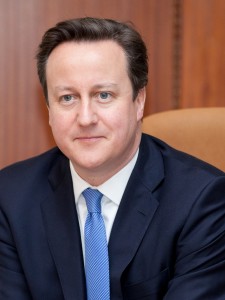
  • David Cameron – 2007 Speech on Farming and the Countryside

    davidcameronold

    Below is the text of the speech made by David Cameron, the then Leader of the Opposition, on 3 January 2007 at the Oxford Farming Conference.

    I’m delighted to be with you today for three reasons.

    First, because the Oxford Farming Conference is a key event for everyone with an interest in British agriculture.

    Not only has it been going for more than sixty years but it also attracts an impressive range of speakers and delegates.

    The second reason is because the future of farming matters for the future of Britain.

    What more vital industry could there be than providing our food?

    And as the British countryside is one of our most precious national assets, what more important role is there than acting as its custodians and guardians?

    And let me make clear straight away that I want to see a living, working countryside, not a museum.

    It cannot be said too often that the fact that our countryside is one of our most precious national assets is not in spite of farming but because of farming.

    I live on the edge of the Cotswolds where both the landscape and the architecture reflect centuries of successful agriculture.

    Farming continues to be one of our hardest working industries and no one who cares about the future of this country can afford to ignore the countryside.

    My third reason is personal.

    I was brought up in the countryside.

    I live much of my life in it.

    I represent a large rural constituency.

    And I want farmers and all those interested in the countryside to know that I care passionately about its future and success.

    The pessimists are wrong

    When it comes to the future of farming we have to defeat the arguments of two groups of pessimists. I’ll call them the protectionists and the metropolitans.

    The protectionists rightly accept that agriculture matters but they have little faith in the ability of farmers to innovate and to compete on any sort of level playing field.

    For them, the only solution is to pull up the drawbridge, inject massive subsidies and adopt the mentality of the siege economy.

    The metropolitans wouldn’t subsidise agriculture.

    They would progressively get rid of it.

    For them, farming represents a sort of bygone era…

    They don’t see the intimate connection between the beauty of the rural landscape and the practical needs of the rural economy.

    Nor do they understand the importance of food security.

    Metropolitans see the housing shortage on the one hand and the decline of farming on the other – and simply believe that the only answer is to ensure that farmers grow nothing but a crop called concrete.

    I’m caricaturing both groups, but that is, by and large, what we are up against.

    And I think that both groups are wrong.

    I think that if we take the right approach, the British countryside can have a productive – and profitable – future.

    Reasons for optimism

    No one can deny that we’ve come through an exceptionally difficult period for farming.

    A sustained period of low commodity prices and rising costs.

    BSE and Foot & Mouth.

    And a government that hasn’t been as understanding or as helpful as farmers deserve.

    Crucially the Government has been guilty of rank inefficiency.

    The saga of the Rural Payments Agency and late payments was a complete disgrace.

    In any other walk of life the person ultimately in charge would have to take responsibility.

    In politics, in this country, under this government, they get made foreign secretary.

    Nevertheless, in spite of this backdrop – difficult economics, market shocks and poor politics – I believe that there are now a number of reasons for real optimism about the future.

    The first reason should give a measure of comfort to our farmers who can sometimes feel marginalised by society.

    In this dangerous world, where we talk about the importance of energy security, we cannot afford to dismiss the importance of food security.

    No one is suggesting that we operate a war economy, but a country like Britain that is blessed with so much fertile land would be foolish not to have the capacity to produce a significant percentage of its food.

    Farming is about food production and, in an increasingly unsettled and dangerous world, this fact alone should ensure a proper recognition of the importance of agriculture.

    The second reason for optimism is the growing concern for the environment.

    Now I know that when some farmers hear politicians talk about the environment, they think of costs and regulations.

    Frankly, given the history of issues like cross compliance, I’m not surprised.

    But look at the opportunities.

    Everyone now understands the importance of combating climate change.

    Farmers have a huge role to play in this and other environmental challenges. The new products and new markets are genuinely exciting.

    I saw many of them at this year’s Royal Show.

    Wool for home insulation.

    Willow coppicing providing fuel for local boilers.

    Hemp turned into breeze blocks.

    There’s also significant scope to grow energy crops to make bio-diesel and bio-ethanol and produce biomass for heat and power.

    Fuel crops have the potential to help meet our environmental objectives, help provide energy security and help provide our farmers with a new source of income.

    That’s a pretty impressive treble.

    We shouldn’t get carried away.

    So far it’s been tough to make profits in these markets.

    And, as sceptics point out, not every farmer can go down this path and, even if they did, we wouldn’t solve all our environmental or security problems.

    But these are new markets.

    And they are an important part of the future.

    And a Conservative Government would do all that it could to remove the obstacles to their development, including looking at the incentives provided by the tax system.

    The third reason for optimism relates to what consumers want from their food.

    Again, some farmers might scoff at the rise of the ethical consumer.

    But, in my view, that would be entirely the wrong reaction. Potentially, this development in our culture, which will grow and grow, is a massive positive for British farming.

    I’m not talking about the obsessive fringe that views every purchase as a masochistic morality test.

    And, of course, cost will always be a serious factor in the minds of most people who buy food – and rightly so – but it isn’t the only consideration.

    I’m convinced that the long term interest of British farming is best served by British consumers demanding quality British produce.

    A vital part of facilitating this shift in priorities is ensuring that this country has far more rigorous and transparent food labelling.

    Today British consumers can find it difficult to back British farmers, because of inadequate labelling.

    Food can be imported to Britain, processed here, and subsequently labelled in a way that suggests it’s genuinely British.

    That is completely wrong.

    I cannot overstate the importance of enabling informed consumer choice.

    Effective marketing can only be achieved if labelling is accurate and clear.

    Britain is experiencing a rise in so-called food patriotism.

    Many people want to eat British wherever possible.

    They’re not just supporting British farmers out of a sense of solidarity or a desire to limit carbon emissions.

    They also realise that food that has been preserved and flown or driven long distances often tastes second rate.

    I know that this may raise issues with the European Union.

    But the role of a Government that cares about British farming is not to sit on its hands and say “there’s nothing we can do”, but instead to test these rules and if necessary challenge and change them.

    In any case, we will take a leaf out of the book of other EU members who have stood up more effectively for their local producers.

    The same principle of active consumerism is driving the increasing popularity of locally sourced produce.

    In the 21st century people are interested in general well being.

    The food that they eat and feed to their families is part of that.

    Farmers Weekly has been running an excellent campaign – “Local Food is Miles Better”…

    …and organisations like the Slow Food movement are gaining new adherents.

    New businesses are springing up to meet the demand.

    For example, in Bedfordshire, Buy-Local.net is putting local producers and shoppers together and creating a market based on consumer demand.

    In Suffolk, where Caroline Cranbrook has so effectively raised the flag of local production, there is an increasingly effective network of farmers and growers selling to an enthusiastic public. The week-enders are taking their local produce to London instead of bringing stuff up from the supermarket!

    Shoppers like to know exactly where their food has come from, even down to the name of the farm.

    That’s why traceability matters.

    The fact that many supermarkets are now emphasising this show that the leaders in retailing have understood just how important it is.

    Another issue of great concern to British consumers is animal welfare.
    Our standards of animal husbandry are among the highest in the world.

    This can bring problems.

    I’ll say something about that later.

    But, thanks to the ethical consumer revolution, it can also bring benefits.

    The more that British shoppers learn about the difference in the quality of life of a pig produced here compared to almost anywhere else in the world the better for British farmers.

    It’s not just the treatment of animals that troubles consumers.

    People are increasingly uneasy about some of the pesticides and antibiotics used in agriculture – especially abroad.

    That’s why we’re witnessing the growth in the organic market.

    Again, I don’t want to overstate the case but there are clearly opportunities.

    There’s a flour mill in my constituency that has gone organic.

    It has to import wheat from abroad because there isn’t enough organic wheat being grown in Britain.

    The organic baby food market has grown exponentially.

    Why? Because it has been driven by consumer demand.

    The growth of active and ethical consumers is a huge opportunity for Britain’s farmers.

    It is a classic example of shared responsibility.

    The Government has its responsibility to ensure a proper labelling system.

    All of us as consumers have our responsibility to try and buy quality produce from British producers, including local producers.

    But farmers must play their part by rising to this challenge. The demand for quality local British produce is there. It is up to farmers to seize the opportunity it represents.

    The economics of farming

    I’ve set out several reasons for optimism but I’m not kidding myself.

    Farming is a business and the raw economics are still daunting. For example, an arable farm of 1,000 acres and just one man working it can struggle to make money. Without farm payments, the situation would be even worse.

    The dairy industry has been through incredible difficulties.

    Government cannot wave a magic wand and change the economics of this or any other industry.

    But Government is a big player and its actions can make a big difference.

    Does it understanding the needs of farming and make good policy?

    Does it work to keep costs and regulations down?

    Does it understand the impact of all its decisions – on planning and on transport for example – on the whole rural economy?

    Does it properly consider the role of the public sector as a procurer of food?

    The answer to all of these questions is currently “no”.

    I am determined that a Conservative government will be different – and will make a difference for farming and the countryside.

    First, policy making.

    The record recently is pretty poor.

    I have mentioned the RPA.

    I could have mentioned endless delays on badgers and TB … chaos on mapping for the right to roam … endless uncertainty about dealing with carcass removal …

    Farmers’ organisations tell me that there seems to be a great deal of consultation going on but they wonder whether anyone actually listens to what is being said.

    We are preparing for Government by putting in place a strong team of shadow ministers. Peter Ainsworth has great experience of both the farming and the environmental portfolios.

    And Jim Paice probably knows more about agriculture than any other member of the House of Commons.

    We are also carrying out a detailed policy review that is open, engaged with all of the industry and transparent.

    Government needs to recognise that the landscape of rural Britain is a priceless national resource and that farmers have a central role in maintaining it.

    Sometimes, ministers give the impression that farmers are unwelcome intruders on the land rather than the custodians of it.

    It’s important that organisations like Natural England work with those who manage the land.

    The next task of government is to stop over-regulating.

    Farms are small businesses and, in recent years, we’ve see farmers burdened with more and more rules and regulations, many of them flying in the face of common sense.

    For example, we need a whole new approach to enforcement and inspection.

    Government should be concerned with outcomes rather than process.

    There is no reason why inspections have to be carried out by the regulator.

    Issues such as cross compliance, multiple inspections, the ban on on-site burial and integrated pollution control will all have to be looked at again.

    We can learn a good deal from other countries in the EU, who would not think of burdening their farmers with the bureaucracy you have to endure.

    On planning too, Government policy needs to reflect the needs of rural Britain.

    Let me give a couple of examples.

    The planning system should make it easier to set up and run farmers markets, and farm shops.

    Policy makers and planners should look at opening up the market for affordable homes.

    Why is it that the only organisations allowed to provide low cost rented homes are registered social landlords?

    In some areas government activity can have an immediate and positive impact on British farming.

    We need a revolution in food procurement.

    The Government spends £1.8bn each year on food for the public sector.

    That gives it a lot of clout in the marketplace.

    Ministers launched the Public Sector Food Procurement Initiative in 2003 to encourage public bodies to procure locally source food.

    But there’s a problem.

    The Government has no way of measuring its progress towards achieving this.

    Therefore, it has no idea if its procurement policies are ignoring British produce and contributing to climate change.

    The Government should be doing everything it can within EU rules to source food for schools, hospitals and other public institutions locally.

    After all, does anyone imagine that the French Army doesn’t take every opportunity to make sure its soldiers are fed on French food?

    At the very minimum, we should move towards a situation where publicly procured food meets the Little Red Tractor standard, as the Conservatives proposed a year ago.

    Whilst it does not guarantee a British source at least the food would be produced to British standards.

    I want to say something about supermarkets.

    I’m a convinced free marketeer.

    That means I am in favour of markets that work.

    When a market has imperfections that mean it does not work, there is a case for intervention to make sure it does.

    Take the relationship between the big supermarkets and farmers.

    It’s not exactly a relationship of equals. The supermarkets have been in the habit of using their market power to squeeze the margins of those they buy from.

    Let’s be honest: in the past there have been some real horror stories.

    Retrospective discounting…

    Making producers pay for promotions…

    …and, according to the NFU, even instances of suppliers being required to supply labour to stack shelves.

    There is evidence that the supermarkets are addressing some of these concerns but there is no room for complacency.

    To me this issue is quite clear. These sorts of practices are completely unacceptable. The competition authorities are there for a purpose. They have the authority and the powers they need. They should feel empowered to act.

    We will be watching to make sure that they do.

    We also need to address the unfairness of asymmetrical regulations.

    Our government often imposes far more onerous standards on British agriculture than exist elsewhere in the European Union.

    This can have perverse consequences.

    Instead of driving standards up we sometimes end up driving farmers out of business.

    Take the example of the British pig industry.

    As I said earlier, we are rightly proud of our tradition of animal welfare.

    But, by introducing higher standards first, Parliament placed our farmers at a disadvantage.

    The irony is that our absolutist approach has had the net effect of lowering the overall standards for pig welfare in the EU.

    I have one the largest egg hatcheries in Britain in my constituency and I’m worried that something very similar could happen to poultry in 2012 when new regulations come in.

    Our aim should be to take our EU partners with us wherever possible but, failing that, to be pragmatic.

    We cannot act to ban imports when other EU countries operate lower standards but we could act, with our EU partners, when it comes to welfare standards in the rest of the world.

    We are committed to free trade agreements but we are also committed to high animal welfare standards.

    Some people might say that this represents a restraint of trade.

    I disagree.

    Just as we insist that every Japanese car imported into the UK meets strict emission standards so we should insist that animal products meet decent welfare standards.

    It’s impossible to talk about the EU without mentioning the Common Agricultural Policy.

    We need to rededicate ourselves to further reform of the CAP.

    We shouldn’t ignore what’s already been achieved but the process must continue. It’s not a threat – it’s an opportunity and we simply can’t afford to be held back by the forces of reaction and inertia.

    Frankly since the mid term review we don’t have a “Common” policy.

    Whilst support for English farming is rightly fully decoupled from production, most countries in Europe still have some production linked support.

    That has to stop, as do ludicrous subsidies on tobacco.

    We also need to start to shift the costs of CAP onto the countries that spend the most by phasing in co-financing.

    Finally we need to ensure it is sustainable in WTO terms by phasing out export subsidies and by shifting funding from pillar one into pillar two.

    So there is much that government can do and a Conservative government will do it.

    When it comes to the agricultural sector, building better businesses isn’t just about government action

    It’s about bringing about a fundamental change in the way we approach farming.

    In the 1940s and 50s, farming became commoditised in order to feed the mass market.

    That model has remained in place ever since.

    It’s time for a paradigm shift.

    Instead of volume, we need to build value.

    Specialist produce and high quality brands.

    This isn’t the muesli-eating fringe.

    This is the future.

    Look at our competitors.

    France never really lost that approach.

    While we were obliterating our local food heritage – often by heavy handed government diktat – countries like France and Italy were preserving theirs.

    People elsewhere in Europe are far more likely to treasure – and eat – food that is produced in their home region.

    Britain needs a revolution in our thinking to recover that habit.

    We have consumers who value high quality, locally produced food.

    Some producers are already meeting that demand but there is far more opportunity for farmers to build relationships with consumers by producing what they want.

    And we need a government that will assist that process.

    We’re all in this together and, if everyone plays his and her part, then British farming can look forward a secure and prosperous future.

  • David Cameron – 2006 Speech to the Centre for Social Justice

    davidcameronold

    Below is the text of the speech made by David Cameron, the then Leader of the Opposition, to the Centre for Social Justice on 18 January 2006.

    Today I want to talk about how we eradicate poverty in Britain.

    And I want to explain how my approach differs from that of Gordon Brown.

    Gordon Brown and I share the same objectives.

    We both want to tackle poverty.

    But we have different solutions to the entrenched problems of multiple deprivation, and the root causes of poverty in Britain today.

    On the one hand, there is a top-down, centralised approach from Labour that means well but fails badly.

    On the other, I want to develop a forward-looking vision which recognises that social justice will only be delivered by empowering people to fulfill their potential.

    The difference is highlighted by Gordon Brown’s claim that “only the state can guarantee fairness.”

    He sees limits on what the voluntary sector, social enterprises and community groups can do.

    I don’t see limits.

    I see endless and powerful opportunities.

    Gordon Brown looks at areas where the state has failed…

    …and thinks the answer is more state intervention…more of the same.

    I look at state failure and say: let’s try something different.

    I look around the country at the people and organisations I’ve met…

    …and the thousands that I haven’t…

    …who have the solutions to the long-term problems of our most deprived communities.

    I look around this room and I see the faces of the poverty-fighters and the social entrepreneurs…

    …people like Camila Batmanghelidj…

    …Adele Blakebrough…

    …Ray Lewis…

    …and I know that if we trust you, if we give you more power and responsibility…

    …you will succeed where the state has failed.

    Our approach: trusting people and sharing responsibility.

    Or Gordon Brown’s approach: creating dependency and removing responsibility.

    That is the central argument about tackling poverty in Britain today.

    This is the right place to be setting out the new Conservative poverty-fighting agenda.

    Iain, you have been a magnificent champion for this cause.

    The Centre for Social Justice has already made a huge contribution to the Conservative Party’s understanding of the nature and causes of poverty in our country.

    And your contribution will be vital in the months ahead as you lead our Social Justice Policy Group.

    In September 2003, you said this:

    “…there are those who say that poverty in Britain simply does not exist. But it does. Many people do not enjoy the opportunities and freedoms that most of us take for granted. I think of children growing up in homes where it’s still hard to make ends meet. I think of pensioners in communities ruled by criminal gangs. Poverty is real today for those children and pensioners.”

    And you concluded that:
    “…unless Conservatives can show that we will govern for the whole nation, we will neither win nor deserve to.”

    Iain, that is my conclusion too.

    Since 1997, Gordon Brown has directed Labour’s efforts to deliver social justice.

    He is absolutely sincere in his commitment to tackling poverty at home and abroad.

    But Mr Brown’s good intentions should not shield his government from serious scrutiny.

    And although some progress has been made, Brown has failed Britain’s most vulnerable people and communities.

    This can be seen most starkly in his native Scotland.  Scotland still has the same tax and benefits system as the rest of the UK.

    In recent decades, health, education and other public services have also been more generously funded north of the border than in the rest of Britain.

    Therefore, if Labour’s anti-poverty strategy is working anywhere, it should be working in Scotland.

    Earlier this month, however, The Scotsman published research which lays bare Labour’s failure.

    The hundred most deprived postcode areas were dubbed ‘Third Scotland’ because of their Third World level of life outcomes.

    If this sounds exaggerated, look at life expectancy.

    In Third Scotland, average male life expectancy is only 64 years – lower than in Bosnia, the Gaza Strip, Iran or even North Korea.

    Shockingly, this trend is actually getting worse.

    Worklessness is also endemic in Third Scotland.

    In Calton, in the east-end of Glasgow, 57% of adults do not work at all, even though only 8% are classed as unemployed.

    Here, two out of every five adults claim incapacity benefit.

    In Hamiltonhill, 61 per cent of children live in workless households.

    And this is true for 58 per cent in Drumchapel.

    Throughout Britain, 2.7 million are claiming incapacity benefit which offers guaranteed payouts for life.

    Together with the associated benefits, this can pay more than an uncertain life of work on the minimum wage.

    For others, the skull-splitting complexity of the tax credit system and the proliferation of means testing has debased the very principle of work.

    Gordon Brown has created a benefits system that gives millions of people little incentive to work.

    Any effort to progress beyond dependency is punished by steep rates of benefit withdrawal.

    And there’s the claw-back of excess payments that leads to ever higher debt.

    Only this week in my constituency surgery, a working single mum told me that she would have a higher income and a better house if she gave up her job.

    She’d done the maths.

    She’d be better off on benefits.

    But she chose to stay working.

    It was a small victory of the human spirit against the vast scale of Gordon Brown’s state machine.

    Frank Field has observed that:

    “There is now no way by which those most dependent on tax credit will be able by their own efforts to free themselves from this welfare dependency… To rip out the mainspring of a free society – the drive to improve one’s own lot and that of one’s family… cannot but harbinger ill for our country.”

    The current welfare system, designed to eradicate the poverty of the last century, is now fuelling the new poverty of the 21st century.

    Labour is creating a new class of decommissioned people.

    Individuals who should have been guided on to paths out of poverty have instead been shunted into life’s sidings.

    As Fraser Nelson put it in the Scotsman:

    “Without a radical change, the Prime Minister’s social legacy may have a damning epitaph: that Labour fought poverty, and poverty won.”

    I am determined to fight poverty and to win.

    We desperately need new thinking if we’re to tackle the problems of multiple deprivation.

    We can’t keep pulling the same levers and hope for different results.

    We can’t keep growing and growing the welfare state.

    We must realise that Gordon Brown’s ever-growing state cannot win the war on poverty on its own.

    Gordon Brown says that only the state can guarantee fairness.

    One look at his record exposes the hollowness of his claim.

    If life in Calton and Drumchapel is his definition of fairness, I suggest he rethinks his guarantee.

    Throughout Britain’s hard-pressed communities there has been a terrible loss of faith in politicians who practice his kind of Whitehall-knows-best politics.

    The state has become a guarantor of means tested dependency, of the status quo, not of a new start.

    Labour’s targets culture has produced a focus on lifting those just below the poverty line to just above it.

    The worst forms of poverty haven’t improved under Gordon Brown.

    …the gap between life expectancy for the richest and poorest in our country is now greater than at any time since Queen Victoria.

    …and almost a third of disabled adults of working age live in poverty.

    That’s higher than a decade ago.

    Conservatives understand the role of government in delivering social justice.

    Modern, compassionate Conservatism understands that spending money…

    …to deliver world class public services…

    …to ensure law and order…

    …and to provide an economic safety net.

    …is a positive good, not a necessary evil.

    But we also understand the true meaning of fairness.

    Fairness is about more than money.

    Fairness means the chance to fulfill your potential.

    That’s why it can never be the sole preserve of the state.

    Any government that sees fairness as a state monopoly lacks the humanity to deliver true social justice.

    True social justice demands equal opportunity for economic empowerment.

    Economic empowerment means giving every single citizen in our country the means to climb the ladder from poverty to wealth.

    And to do that, we have to understand that we’re all in this together – the state can’t do it on its own.

    Good jobs and training opportunities are best provided by dynamic businesses.

    Parents and strong, extended families, including networks of friends, are best placed to provide children with round-the-clock love and discipline.

    And then there are those things that only individuals can do for themselves.

    That much was demonstrated by William Galston, the liberal academic who inspired the Clinton-era welfare reforms.

    His genius was to relate facts and figures to real lives lived by real people in the real world.

    For instance, he found that three questions hold the key to whether an American citizen avoids poverty:

    Did you finish high school?

    Did you marry before having children?

    Did you have children after 20?

    He found that of the people who did all three, only 8% were poor; but of those who failed to do all three, 79% were poor.

    Of course, there will be endless arguments over cause and effect.

    And I’m not suggesting that American tests would be right for Britain.

    But what Galston showed is that two people born into identical circumstances can nevertheless find themselves on different paths.

    Furthermore the paths aren’t fixed. There are turning points in every life that can lead into or out of poverty.

    I have asked Iain Duncan Smith and the Social Justice Policy Group to examine these paths into poverty:

    Family breakdown.

    Poor education.

    Unemployment and dependency.

    Addiction and debt.

    More importantly I’ve asked the Policy Group to look at the exit points from these very paths.

    Four things offer great promise in providing a path away from poverty:

    A loving, stable home life.

    A good education.

    Economic opportunity.

    A life free of substance abuse and serious debt.

    The Policy Group will break out into four working groups, to study these paths.

    THE FOUR WORKING GROUPS

    Home and family

    The first working group will look at the home and family.
    More and more evidence shows that family breakdown causes poverty and poverty causes family breakdown.

    Our prisons are full of people whose homes broke up and they ended up in care.

    The problems of substance abuse and poor educational achievement are rooted in the fact they never knew the constant love of a parent.

    I have said that the tax and benefits system should encourage families to come together and stay together, and to support marriage.

    I invite this group to examine how that might best be done.

    I also hope the working group will examine the potential of relationship education in preventing family breakdown.

    No couple starts a relationship wanting it to fail.

    But many need help.

    The average taxpayer now contributes at least £570 every year to the direct costs of family breakdown, but only 21p is spent on trying to save troubled relationships.

    Paltry sums are invested in helping couples build healthy relationships in the first place.

    Harry Benson of Bristol Community Family Trust, who you saw in the film, runs superb relationship courses in ante-natal clinics, civil registrars and prisons.

    Everyone should be given the best opportunities to form stable, healthy relationships and, especially where children are planned, to develop happy, healthy marriages.

    Education

    The second working group will look at education.

    Fulfilling your potential without a decent education is increasingly difficult.

    Nearly a million children are receiving a sub-standard education in over 1,500 failing schools.

    In some of our most deprived neighbourhoods, the scale of educational under-achievement is staggering.

    Just before Christmas, I was in the Shankill Road area of Belfast, where I met local people involved in training young people who told me only 16 per cent of young people left school with any qualifications.

    Without good education there can be no social justice.

    In my first day as Conservative leader, I visited Eastside Young Leaders’ Academy in Newham.

    It’s an inspirational project for black boys run by Ray Lewis, an ex-prison governor.

    Headteachers refer boys headed for a life of crime to the Academy.

    After school, at weekends and during the holidays, Eastside works intensively with the boys to raise their attainment and build their character.

    Ray’s not just steering them away from crime, he’s allowing them to reach for the stars.

    I want government to give heroes like Ray proper resources to transform young lives.

    Instead, we’re seeing the opposite happen today.

    In another part of the East End that I visited this week, community leaders told me that one of the biggest problems they faced was the lack of opportunities for young people to do something positive and constructive out of school.

    And despite huge investment in their neighbourhood, youth clubs had closed down.

    That’s crazy.

    Working together, schools and community groups can give every child the start that they deserve in life.

    Economic security

    The third working group will look at employment.

    Gordon Brown likes to boast about his record in creating jobs but his record is poor.

    When Labour came to power, 23% of 18-24 years olds were not working.

    This has now risen to 26%.

    A Conservative Government will ensure that it always makes sense to work.

    I am delighted that the vice-chairman of the Social Justice Policy Group is Debbie Scott.

    Debbie runs Tomorrow’s People, a national charity with a remarkable track-record in helping people back to work.

    Their counsellors provide levels of encouragement and help that our Jobcentres around the country are simply not structured and equipped to provide.

    As a result, Tomorrow’s People gets large numbers of people into jobs much more quickly, and at lower cost, than government schemes.

    It’s yet another example of the voluntary sector succeeding where the state has faltered.

    Drugs, alcohol and debt

    The fourth working group will study addiction to drugs, alcohol and debt.

    Britain’s most vulnerable communities have been devastated by drug and alcohol abuse.

    But families in every social class in every part of Britain are suffering.

    More rehabilitation places are clearly needed.
    We have to help addicts get clean and stay clean.
    Kaleidoscope is a fantastic drug rehab centre in Kingston.

    I’ve seen its state-of-the-art detox unit.

    It’s a fantastic resource.

    But it often sits unused because of the failure of statutory bodies to commission from the voluntary sector.

    I want the working group to assess how just how many more rehab places are required, along with the effectiveness of different treatment models.

    For most people in the UK, being in debt has become a way of life.

    Increasingly, many struggle to make the payments on their credit cards and loans.

    Low-income families face cripplingly high interest on their borrowing.

    The debt time-bomb could be triggered by any number of shocks to the economy at any time.

    The working group will also investigate what more can be done to protect people from debt, and to make cheaper borrowing available to the least well-off.

    A NATION OF THE SECOND CHANCE

    But we all know that however much we do to help people forge paths out of poverty, some will be left behind.

    We must never say to those people – ‘You’ve had your chance and you must live with the wrong choices you made’.

    I want to build a nation that never writes any one off. A nation that says that it’s never ever too late to start again.

    Never too late to realise those dreams you once had.

    And so the fifth of our Social Justice working groups will examine ways to make Britain a nation of the second chance.

    For the mum who got pregnant as a teenager the nation of the second chance will enable her to study when she’s 35.

    The nation of the second chance will offer rehab to the man who has frittered away his twenties addicted to drugs.

    The nation of the second chance will find a warm home and a job for the man who has slept rough since he ran away from the father that abused him.

    The nation of the second chance is a different world to Gordon Brown’s decommissioned Britain.

    We will never fulfil our potential as a nation by giving up on our fellow citizens, abandoning them to long-term unemployment, educational failure or addiction.

    So how are we going to build the nation of the second chance?

    Here, I don’t think that the voluntary sector has an important role to play.

    I believe that the voluntary sector has the crucial role to play.

    Iain Duncan Smith and I share that conviction.

    We’ve both seen how the voluntary and social enterprise sectors provide intensive, long-term, holistic care to our vulnerable people.

    Above all, the care is personal.

    The public sector does a great job, but its targets and caseloads make it difficult to provide the necessary level of help for the most needy.

    That is why the fifth Social Justice working group will look at building up the voluntary and community organisations that provide people with a second chance in life.

    I invite the group to develop plans for ‘Social Enterprise Zones’ that will incentivise social action where it’s most needed.

    The nation of the second chance can only be realised if the voluntary sector gets reliable funding that doesn’t come with too much paperwork.

    Small community and voluntary groups who care for broken lives deserve financial support – the use of which isn’t micromanaged by Gordon Brown’s huge army of bureaucrats.

    The nation of the second chance will require each of us to pull our weight.

    And we Conservatives don’t have to wait until we’re in government to make a difference.

    We can start now.

    I’ve proposed a National School Leaver programme and will be meeting leading voluntary groups to develop this idea next week.

    Our national culture of volunteering must be revived.

    I am determined that the Conservative Party should be at the heart of that revival.

    At New Year, I invoked those famous words of Gandhi: “We must be the change we want to see in the world.”

    An increasing number of Conservative candidates are committing themselves not just to canvassing and leafleting but to helping transform communities.

    In Brent recently I saw how Rishi Saha’s work for a community radio station has helped unleash the talents of young people in a deprived community.

    Last summer in Warrington Fiona Bruce co-ordinated inmates from an open prison and high school pupils in giving a grubby ward a much-needed makeover.

    CONCLUSION

    Some say to me that Conservatives should only be interested in small government.

    I agree that a state that grows too large becomes a burden on its hardworking citizens and stifles enterprise.

    But that ambition alone cannot be enough.

    We must raise our horizons.

    You cannot have a smaller state unless you have bigger, more responsible people.

    Growing levels of social breakdown are creating growing demands for welfare and other forms of government intervention.

    Limited government is impossible without renewing the forms of behaviour and social structure that prevent poverty and create community.

    And communities are not created from the top down, but built from the bottom up.

    For me there is much more to this than the economist’s calculator.

    I want the next Conservative Government to care about every Briton’s quality of life.

    One nation Conservatives cannot just define Britain as a nation but also must care for Britain as a people.

    Patriotism is about the crown, the flag and our nation’s institutions but it is also about believing in justice for everyone from Moss Side through to Easterhouse and to Hackney and beyond.

    People here are crying out for a change, for fairness and opportunity.

    These parts of Britain must be every bit as important to us as the greener, leafier Britain surrounding them.

    Conservatives will always promote a nation of enterprise, individual freedom and personal responsibility.

    But we must remember too that personal responsibility must be part of a shared responsibility…

    …that it is neither the state alone which guarantees fairness, nor individuals acting alone…

    …but all of us together.

    All of us together, fighting for the empowerment of all of our citizens.

    That is the way to bring social justice to this land.

  • David Cameron – 2008 Speech on Economic Dynamism

    davidcameronold

    Below is the text of the speech made by David Cameron, the then Leader of the Opposition, on 6 May 2008.

    Clearly Crewe & Nantwich is our top campaigning priority in the next couple of weeks. We’ve got fifteen days to go: fifteen days to overturn Labour’s majority of over 7,000.

    Obviously it’s going to be a tall order but we will give it our best shot. We have a strong local candidate and a real focus from the entire organisation.

    We’ve made a strong start, first out of the blocks, our message being delivered right across the constituency.

    Our message will focus in particular on the 10p tax rate and how Gordon Brown is hurting the people of Crewe with tax increases just as their cost of living is going up. People in Crewe know.

    Later this week, the Mayor of New York will be here, joining the Mayor of London.  I’m sure you will all agree Boris has made a strong start with appointments, announcements on crime and, today, on delivering value for money for London taxpayers.

    In my meetings and discussions with Mayor Bloomberg I will be focusing in particular on education and his strong record in turning around failing schools in New York City.

    After our excellent election results last week people are saying: what next from the Conservatives? How are you going to build on your success?

    And how will you respond to the increased scrutiny you will now receive as the alternative government in waiting? I want to give a clear answer to that question today.

    First let me explain something fundamental about how I see the job of Prime Minister. I don’t think you achieve very much as Prime Minister unless you have an incredibly clear idea about what you want to achieve and how you’ll go about it.

    You’ve got to have a plan, and that plan has to have a sense of focus.
    You can’t do everything at once – and you shouldn’t try.

    You’ve got to focus on what you think is most important, and you’ve got to be pretty stubborn in going for it – and not letting yourself be blown about by events.

    I think the lack of a clear plan, the lack of a proper sense of focus, is why first Tony Blair and now Gordon Brown failed to deliver much in the way of meaningful change. And having seen those failures, people are entitled to ask us: where’s your plan? What’s your focus?

    So let me tell you.

    As you know the NHS comes first, and we’ve set out sensible plans on independence of the NHS, and investment in public health. But the last thing that the NHS needs is another upheaval.

    So, in terms of reform, those things that really need major change – the government I lead will have three areas of policy as its unremitting focus. I have chosen these areas because they are each fundamental to the broader objective I have set, to mend our broken society.

    The three areas are: school reform, welfare reform, and strengthening families.

    If we get those three things right, we will be helping to tackle the causes, and not just the symptoms, of the big social problems that people today really care about:

    Crime, disorder and incivility on our streets.

    Entrenched poverty and inequality.

    The lack of social mobility in Britain. The fact that, for millions, opportunity is stalled.

    The sense that people have that life, despite all the amazing opportunities of modern Britain – can be, frankly, a bit grim.

    The sense that our country may be getting richer, but the quality of our lives is getting poorer. These are the big issues we have to tackle and our plans for radical school reform, welfare reform and strengthening families are the right way to do it.

    But while those three areas of policy – schools, welfare, families – will be our focus for reform, there is no doubt that responsible stewardship of the economy will be the vital foundation of all we hope to achieve.

    And so today I want to focus on the economy. As I said in my speech in the City of London in March, I think we need a new economic strategy in this country. Far from preparing us for tough economic circumstances, Gordon Brown has created an economy that is more vulnerable than most, in the three crucial ways I described in my speech in March:

    First, the terrible state of our public finances. Instead of using the good years to prepare for a rainy day, Gordon Brown has left us with the worst deficit of any country in the developed world

    Second, the narrow base of our recent economic growth. Under Labour, financial services have grown four times as fast as the economy as a whole, while manufacturing has hardly grown at all.

    The size of government has increased a third more than the size of the economy. And rapid and uncontrolled immigration has flattered our growth statistics while disguising slower growth in what really matters: GDP per head.

    The third reason why we need a new economic strategy is that Gordon Brown has presided over a fall in Britain’s competitiveness as a location for international investment.

    And not only are we failing to attract new investment, the companies already here are being driven away.

    Shire Pharmaceuticals and United Business Media have already left. And in the last few days alone there have been reports that WPP, AstraZeneca, Diageo and just today, Brit Insurance, are all looking to leave.

    So we need to turn our economy round. I’ve set out many times what we would do to entrench monetary stability and fiscal responsibility.

    Enhanced independence for the Bank of England. Independent judgement of fiscal rules. A measurable commitment to share the proceeds of growth over an economic cycle.

    But there is another aspect to our plan.

    We need to move away from Gordon Brown’s old-fashioned bureaucratic interventionism, towards a new economic dynamism. Not old-fashioned subsidies for hand picked favourites, but modern support for enterprise and wealth creation.

    What does this mean?

    Transport. Research and innovation. Education and skills.

    These are the things which a modern economy needs to prosper.

    They don’t just happen by magic.

    They need government involvement.

    But it has to be the right kind of involvement.

    Our current Government is completely failing to get this right.

    Where they should be getting out of the way they regulate and tax too much.

    And where they should be intelligently engaged, such as on research and innovation, education and skills and transport infrastructure, they’re not doing nearly enough.

    The next Conservative Government must get this right. Creating a strong economy will be the foundation of everything we hope to achieve.

    So today I’m really delighted to announce that we will be working in the months ahead with one of Britain’s greatest business and export success stories, Rolls Royce.

    We want to understand in detail the factors that contribute to successful science, technology, engineering and manufacturing in the twenty-first century – and what government can do to help put those factors in place for British industry as a whole.

    Members of our policy teams will be embedded within Rolls Royce teams – both in the UK and internationally. We will hold a manufacturing summit later in the year to investigate how to engineer a modern manufacturing revival in this country. And I’m looking forward on a personal level to benefiting from the advice and expertise of this great British company.

  • David Cameron – 2015 Press Conference on EU Council

    davidcameron

    Below is the text of the press conference statement made by David Cameron, the Prime Minister, in Brussels on 18 December 2015.

    This European Council has focused on 3 issues – the UK renegotiation, migration and terrorism.

    I talked about the renegotiation last night and I will come back to it shortly – but first the other 2 issues.

    Migration

    Yesterday afternoon, we discussed the ongoing migration crisis facing Europe.

    Even with the onset of winter, there are still many migrants coming to Europe – with around 5,000 arriving via the eastern Mediterranean route each day.

    Britain has its own strict border controls, which apply to everyone attempting to enter the United Kingdom.

    And every day those border controls are helping to keep us safe.

    But while we are outside Schengen, we are ready to help our European partners secure their borders.

    From the start, the United Kingdom has called for a comprehensive approach that tackles the root causes of this migration crisis – not just the consequences of vast numbers reaching Europe.

    That’s why we have provided £1.2 billion in humanitarian assistance for the Syrian conflict and deployed HMS Enterprise and police officers to the Mediterranean to go after the traffickers.

    And it’s why we have offered practical assistance to help with the registering and fingerprinting of migrants in countries where they land, like Greece and Italy.

    Indeed, we have provided more technical expertise to the European Asylum Support Office than any other country.

    Here at this summit, we discussed the importance of implementing the measures previously agreed.

    Back in the summer, after some very frank discussions, countries committed to resettle 22,000 refugees from Syria over 2 years and to relocate 160,000 migrants arriving in ‘hotspots’ to other participating countries.

    It’s clear from what others have said that very few have been relocated or settled.

    Alongside this I announced that the United Kingdom would resettle 20,000 Syrian refugees during this Parliament.

    And we are meeting the ambition we set out since September, we have resettled over 1,000 Syrian refugees from camps in Turkey, Jordan and Lebanon.

    They are in homes, their children are in schools and they can look forward to the New Year free from the fear of uncertainty and with the prospect of building a new life in Britain.

    And the United Kingdom will continue to play our full part in helping all those affected by the Syrian crisis with the conference we will co-host with Germany, Kuwait, Norway and the UN next February.

    Terrorism

    Turning to terrorism.

    The horrific attacks in Paris last month underline the threat we all face from Daesh.

    What happened on a Friday night last month in Paris could have happened in any European city.

    We face a common threat. No one country can defeat it alone. We have to defeat it together.

    We made important progress last week with provisional agreement between the Council and the European Parliament on new rules to share passenger name records. This is an absolutely vital piece of work.

    But there is more we must do.

    We need more systematic data sharing so we can track down and stop terrorists.

    We must step up our co-operation on aviation security.

    We need to go after Daesh’s finances, choking off the oil and money.

    We should do more to counter the extremists’ propaganda and their poisonous narrative.

    And we must clamp down on firearms and explosives – stopping them from getting into the hands of evil terrorists who are determined to wreak such misery with them.

    And I am pleased that we have got a very clear agreement here to rapidly take forward proposals on all these areas.

    All of this requires closer co-operation, right now.

    Security

    Common to both the challenge of migration and the threat of terrorism is the instability in Libya and Syria.

    That’s why it’s so important that we work together to support strong, stable and inclusive governance in these countries.

    Here today, we have reiterated the EU’s support for the efforts of the International Syria Support Group to end the conflict in Syria through a political process.

    And we welcome the agreement reached in Morocco yesterday that we hope will pave the way for a new united national government in Libya.

    In an unstable world, Britain is playing a leading role in the EU on issues of security – working with other member states so we better protect our people.

    And that underlines why this renegotiation is so important.

    UK renegotiation

    As I said last night, we have made good progress.

    We are a step closer to agreement on the significant and far-reaching reforms I have proposed.

    It is going to be tough and there is lots of hard work to do.

    But I believe 2016 will be the year we achieve something really vital fundamentally changing the UK’s relationship with the EU and finally addressing the concerns of the British people about our membership.

    Then it will be for British people to decide whether we remain or leave.

    It is a choice we will all need to think hard about.

    But I believe if we can get these reforms right – and I believe we can I firmly believe that for our economic security and for increasing our national security, the best future for Britain is in a reformed European Union.

    Happy to take some questions. Let’s start with the BBC.

    Question

    Prime Minister, thank you. Laura Kuenssberg, BBC News. You’ve just given a very clear hint that the vote on our membership of the European Union will be in 2016. Previous major changes in the European Union have taken a long time. The Amsterdam Treaty took 2 years; the Maastricht Treaty took 2 years. How can we be confident that changes you want – if they are a big deal – can be done in 2 months?

    And if I may, on Libya, are UK troops going to be intervening?

    Prime Minister

    Okay, first of all, in terms of changes, I’ve been working on this with a clear mandate from the British people ever since the election back in May. And a lot of work has been done. What matters is that these changes are legally binding and irreversible, and I believe we can find ways of setting that out, demonstrating that, in the coming months. Obviously, I want a deal in February, but I’ve set the deadline for the referendum as the end of 2017. I always wanted to give myself time to get this right. What matters is the substance – is getting it right, rather than the timing. That’s the first point.

    On Libya, what has happened is a good step forward. It’s not perfect, because not everyone involved in these Libyan political discussions has joined the new government, but we’ve always said that we stand ready to support them with resources, with training, with advice, with capacity building. But frankly, the last thing a new Libyan government wants is a lot of foreign troops on its soil. That is not what we’re proposing. It’s about helping them to build the capacity of a government to run that country.

    And why that has a direct impact on us, as it were, back at home, is these 2 reasons. One is, because Libya had become a broken state, the criminal gangs were able to use it as a jumping off point for the migrant boats across the Med, and there weren’t proper authorities for us to work with in Libya to put a stop to that. So the government of Libya is absolutely crucial in being able to deliver an end to that migration route.

    But secondly, and in many ways even more significantly, because there is now presence of Daesh in Libya, we need a government to be our partner and work with us – and we should work with them – to do the right thing for their country, which is to make sure that Daesh cannot have a foothold in that country.

    So it’s early days; it is an agreement signed rather than a government actually in place, but we should do everything we can to back it and support it. ITV?

    Question

    Prime Minister, there were reports this morning that you’re being offered an emergency break on in-work benefits for EU migrants, when Brussels agrees the public services risk being under – overwhelmed. Would that remotely be enough?

    Prime Minister

    Well, what I’ve said is, look, my proposal – the 4-year proposal remains on the table. What happened last night is that the European Commission said that they were looking for solutions, not compromises, but were in a negotiation. And I’m convinced that if we work hard between now and February, we’ll find a good answer. George?

    Question

    George Parker, from the Financial Times. Can I ask another question specific to the renegotiation, about the – your idea of re-designating the EU as a multi-currency union. Are you running into any resistance on that? We hear the President of the European Central Bank is concerned that if you make this explicit that some countries, for example Poland, might see that – decide that they no longer have to join the euro.

    Prime Minister

    Well, there was a lot of discussion about this last night. I think there was a recognition that it’s a statement of fact that the EU has many currencies within it. Now obviously it’s important not just that we say that, but then we go one step further and make sure that you’re not disadvantaged in the single market if you’re outside the single currency. And I think there was a very good discussion about that last night. Of course, countries in the eurozone want to know that they can press ahead with vital integration that they might need without us outside the eurozone stopping them.

    And I’ve said, look, my whole point is, I don’t want to stand in the way of the things the eurozone needs to do to make that currency work well. It’s in our interests that it does work well, but likewise it’s very important that we have a set of principles that Britain and other countries outside the euro can’t be put at a disadvantage. And you know, at the heart of this is this issue of not being liable in any way to have your taxpayers’ money spent on eurozone-related issues.

    Now, there was a risk of that in the summer, as you know, of the European stability – financial stability mechanism being used to bail out Greece. We stopped that from happening, but we shouldn’t have to, you know, make ad hoc efforts to stop that happening. It should be written down, clearly, the principles of no disadvantage, of no discrimination, of eurozone countries having to pay for eurozone issues.

    So it’s – you know, as I said last night, none of the 4 issues are easy to deliver. It’s a mistake to think you’ve got 3 baskets that are progressing towards completion and the fourth is the one with the – all the difficulties in. Each of these areas have problems that need to be resolved. But I felt that in each of the areas there’s sufficient good will to overcome difficulties and come up with a good solution. And in all these areas, as the Commission has said, you know, you’ve got to find answers rather than unsustainable compromises.

    Sky News.

    Question

    Prime Minister, so we now start an 8-week period where Donald Tusk looks for some sort of compromise that meets your needs on migration. Can you guarantee that whatever comes out of this will actually help control EU migration and will lessen EU migration into the United Kingdom?

    Prime Minister

    The whole aim of this is if you stand back from it all why have I chosen these 4 areas? Well they are the 4 things that I think most concern Britain about Europe. People are concerned that it’s becoming a single currency only club and you need guarantees that if you’re outside the single currency you can have the flexibility and the success you need. People want to know, in Britain particularly, that it’s not an ever closer union, that we’re carved out of that. People want to know it adds to competitiveness, not takes away from competitiveness.

    And, yes, people want to know that we can help relieve some of the pressure in terms of the movement of people across Europe. Not because Britain is unwelcoming. We’re an incredibly welcoming country. We have one of the most cosmopolitan countries on Earth and people come to Britain and work hard and make a life for themselves. And that strengthens our country. But the British people, and I totally share this view, feel that in recent years the pressure of new arrivals has just been too great.

    And part of that pressure is caused by the fact that we have a very generous top-up welfare system which means sometimes that you could – you know, you can train as a – a nurse or a doctor in some less well-off European countries and having finished your training it actually pays you to work in an unskilled job in the United Kingdom rather than continue as a nurse or a doctor in your own country. Now that doesn’t make sense for either side in the European Union and actually there’s a lot of recognition of that that, you know, countries in southern Europe they want to keep the – those talented people to help build their countries.

    So while of course there’s a very lively debate and discussion – there was a lively debate and discussion last night. There is an understanding that this is not some unreasonable request. This is a serious issue. It has real impacts for both Britain and for other countries as well. So, yes, as I’ve said, what we’re looking for is a solution rather than just some sort of compromise that won’t have the effect that we want it to – to have. I think the British people fully understand this as well. They know how important the issue of welfare is.

    And if you go back to what I said at the election, you know, I basically said on welfare I said there were 4 things we wanted to achieve. First that people who come to Britain cannot claim unemployment benefit for the first 6 months. Well, we’re well on the way to achieving that with the introduction of universal credit. And that is backed and allowed by the European Union. The second thing I said was that people who can’t find a job after 6 months they have to go home. Again that is now pretty much in place. The third thing was the issue of sending child benefit home. I think we’re making very good – not being able to send child benefit home where there’s good progress made in the discussions last night. And the fourth thing was the 4 – no in-work benefit for 4 years where, yes, there’s the lively discussion. The proposal remains on the table and the European Commission has said they’re looking for solutions not compromises.

    So I think that is good progress, going back to Laura’s question, in terms of what’s been achieved in the 7 months since the election. You know, we said we’d have a referendum. We’ve passed that legislation. It’s now part of the law of the land. We’ve said we’d have a renegotiation. A lot of people said, you know, “You won’t get 27 other countries to sit down and renegotiate with you.” Well, we have. It’s well under way. We’re making progress in all the 4 areas. Now we’ve got a pretty tight deadline, I accept, to bring it to a close by February. But, you know, I think there’s sufficient goodwill to have a really good go at that. But I’ve left myself some room. I want to get the substance right. This is not about artificial timetables and deadlines and all the rest of it. There’s plenty of time to get the substance that the British people need.

    Because this is a massive decision for our country. You think of the terrorists and the security threats that we face. You think of the situation brought about by what Russia has done in Ukraine. You think of the instability in the Middle East, the terrorist threat that that is generating. I think we are better off standing together with our allies and partners in a reformed Europe. But we need to get that reformed Europe in order to make that happen. That’s why if anything this renegotiation has got more important. Because it’s so vital for the future of Britain and I would argue for Europe that we get it right.

    And there was a lot of recognition of that last night, of people starting their speeches not by saying they all believe Britain is better off in Europe. They started their speeches by saying that Europe would be better off with Britain in. So this renegotiation has got more important. It certainly hasn’t been solved or fixed but we are well on the way to a deal. We’ve taken some good steps forward. Now we’ve got to bring it home. Thank you very much.

  • David Cameron – 2015 Speech in Poland

    davidcameron

    Below is the text of the speech made by David Cameron, the Prime Minister, in Warsaw, Poland, on 10 December 2015.

    Thank you Prime Minister for welcoming me here to Warsaw.

    It is an honour to be the first leader to make a bilateral visit to Poland since your inauguration.

    The relationship between the United Kingdom and Poland matters – it matters for our prosperity and for our security.

    It always has. It always will.

    This year we commemorated the 75th anniversary of the Battle of Britain, and it was an honour to do so in St Paul’s Cathedral in London standing alongside President Duda.

    People in Britain never forget how brave Polish pilots played such a critical role in standing up for freedom and in fighting fascism.

    And we will never forget the role that Poland played in standing up to communism and restoring liberty to this continent.

    The images of Solidarity, defying and defeating a repressive government and ultimately helping to tear down the iron curtain – these are the images of my childhood, images which have shaped my entire political outlook.

    Today, in 2015, I believe we are natural partners.

    Partners in trade – the UK is Poland’s second largest trading partner and British companies invested over 3 billion euros here last year.

    Partners in defence – as fellow NATO members, we are steadfastly committed to the security of our allies.

    And as partners in the EU – it is great to see a sister party in the European Conservatives and Reformists Group back in power.

    Together we founded that group, now the third largest grouping in the European Parliament.

    I look forward to building stronger links between our parties – in Brussels but also in Poland and in Britain too.

    We have had very good discussions here, particularly about working together on defence and on EU reform.

    Let me say a word on each.

    Defence and security

    We are both strong members of NATO.

    We are both meeting the target of spending 2% of GDP on defence.

    And Britain is committed to making the next NATO Summit, which will be held here in Warsaw next July, as much of a success as the Wales Summit was.

    The United Kingdom is firmly committed to protecting the security of NATO’s eastern flank.

    The Royal Air Force regularly participates in the Baltic Air Policing mission and we have deployed 3,000 troops on training exercises in Poland in the last 15 months alone.

    But we want to do more, that’s why Britain is one of the first countries to join NATO’s new training and capability initiative that will mean the persistent presence of NATO troops in Poland and its neighbours.

    And we will lead NATO’s high readiness joint action task force in 2017 and provide around 1000 personnel for the task in subsequent years.

    We also want to reinvigorate our bilateral security relationship, so today we have agreed to hold the next meeting of our foreign and defence ministers in the UK early next year, and we’ve to work together on the situation in Ukraine and in countering Russian propaganda.

    We also want to enhance the collaboration between our defence industries, in particular by looking at what more we can do on technology transfer.

    EU reform

    Turning to EU reform.

    We both believe in a Europe of nation states, in a European Union that recognises that its strength comes from diversity, and which has the flexibility to respond to the concerns of member states.

    We have discussed in some detail the reforms I am seeking to address the concerns of the British people about the status quo.

    And there is much on which we agree, as you’ve just said.

    We both want to see a stronger role for national parliaments and an acceptance that ever closer union is not the aim of all.

    We both want new rules to govern the relationship between those inside the eurozone and those like both Poland and the UK who are outside.

    We both think much more should be done to make the EU a source of growth and jobs – cutting back needless bureaucracy and driving forward completion of both the single market and trade deals with fast growing parts of the world.

    Even on the most difficult issue of welfare, we have agreed to work together to find a solution.

    I support the principle of free movement and I greatly value the contribution that many Poles and other Europeans make to Britain.

    The challenge is the scale of the vast movement of people we have seen across Europe over the last decade and the pressure that can put on public services.

    That is the problem we need to address and I believe with the type of political will I have seen here in Poland we can find a way.

    I want Britain to stay in a reformed European Union, and the Prime Minister has made clear that Poland wants Britain to remain in the EU.

    Conclusion

    So I think these have been excellent discussions.

    We are 2 leaders that want to work together to get things done – to create jobs for our citizens and to help keep them safe too.

    The relationship between our countries is already good but I believe we have the opportunity to make it great.

    And I look forward to working together to achieve just that.

    Thank you.

  • David Cameron – 2015 Speech in Romania

    davidcameron

    Below is the text of the speech made by David Cameron, the Prime Minister, in Romania on 9 December 2015.

    Introduction

    Thank you President Iohannis for welcoming me to Bucharest today. It’s a pleasure to be here and to have had good discussions with you, and with Prime Minister Ciolos.

    The United Kingdom and Romania share important ties. We are partners in the EU, partners in NATO – and good trading partners too. Our bilateral trade is growing – up to a record high of €3.5 billion last year.

    The UK is an important energy partner for Romania and a firm supporter of the need to strengthen energy security across Europe.

    We have also worked together, as you’ve just said, in the face of adversity, with British doctors providing specialist burns treatment in the UK for some of the victims of the tragic nightclub fire in October.

    Today, we have talked about how we can strengthen our co-operation further on defence, on migration and on EU reform.

    Defence

    On defence, as a country that is already investing 2% of our GDP on defence, Britain welcomes Romania’s commitment to meet this target by 2017.

    Our armed forces already train together and today we have discussed how we can strengthen our collaboration further.

    Romania is updating its naval fleet, which is a potential opportunity to work together with the United Kingdom.

    And we’re deploying UK military officers to the new NATO headquarters here.

    Imigration

    On migration, on the Middle East and Africa, we have also discussed how together we can pursue a comprehensive approach to tackle the root causes of migration.

    That means doing more to help alleviate the poverty and the conflict that drives people from their homes in the first place.

    And it means doing more to break the business model of the people smugglers. We must break the link between getting in a boat and embarking on a new life in Europe.

    The UK is playing its part. We are the largest European donor to the humanitarian crisis in Syria.

    HMS Enterprise is on deployment in the Mediterranean – helping to save lives and also to detain the smugglers.

    And we are providing practical assistance to European countries on the frontline – with UK border officers helping with the screening and the registering of migrants.

    EU reform

    We have also discussed how we can reform the EU to make it more competitive – and to address the concerns of the British people about our membership.

    The United Kingdom is a vital member – the second largest economy, a significant net contributor and a leading security partner.

    I want Britain to stay in a reformed European Union. That’s why I am seeking important reforms to address the concerns of the British people about the status quo.

    As the President of the European Council said earlier this week, we are making good progress; but I recognise that some areas are more difficult than others, particularly the reforms I have proposed on welfare.

    I support the principle of free movement to work – it is a basic treaty right and a key part of the single market. And Romanians, alongside other Europeans, make a valuable contribution to the United Kingdom in a wide range of fields, from finance to science and medicine.

    But it was never envisaged that free movement would trigger quite such vast numbers of people moving across our continent. And countries have got to be able to cope with all the pressures that it can bring – on our schools, our hospitals and other public services.

    Net migration in the UK is running at well over 300,000 a year and that is not sustainable.

    So we do need to find ways to allow member states to make changes to their social security systems that will help them to deal with this issue.

    At next week’s summit we will have a substantive discussion about all the reforms that I have proposed. And I am confident we can find solutions in each area.

    The EU has shown before it has the flexibility to respond to the concerns of its member states. Now, it needs to do so again starting in December and then with further discussions in February.

    Conclusion

    This has been a very useful meeting.

    I am delighted to be the first British Prime Minister to make a bilateral visit to Romania this century. It shouldn’t be another 15 years before one comes back again.

    And I look forward to strengthening relationships between our 2 countries in the future.

  • David Cameron – 2015 Speech on Climate Change

    davidcameron

    Below is the text of the speech made by David Cameron, the Prime Minister, in Paris on 30 November 2015.

    Thank you very much Mr President and can I start by thanking the French President and the French people for hosting us here in Paris.

    Now we’re at the stage of this conference, after a whole series of speeches, where I think we can safely say that every point that needs to be made has been made, although not by every single speaker.

    We all know exactly what is needed to make a good deal here in Paris.

    We need a deal that keeps 2 degrees alive.

    A deal with a binding legal mechanism.

    A deal that has a 5 year review so we can see how we are doing.

    A deal for the poorest and most vulnerable in terms of finance.

    A deal so that we can measure and verify what happens with the agreement that we make.

    And a deal that transfers technology from the richest countries to the poorest countries.

    So let me take this argument the other way around.

    Not what we need to succeed – we all know that – but what we would have to say to our grandchildren if we failed.

    We’d have to say, “it was all too difficult”, and they would reply, “well, what was so difficult?”

    What was it that was so difficult when the earth was in peril?

    When sea levels were rising in 2015?

    When crops were failing?

    When deserts were expanding?

    What was it that was so difficult?

    Was it difficult to agree on 2 degrees?

    Was it difficult when 97% of scientists the world over have said that climate change is urgent and man-made and must be addressed?

    When there are over 4,000 pieces of literature and reviews making exactly this point?

    Why was, they would ask us, sticking to 2 degrees above industrial levels so difficult?

    Presumably we might have to say: well it was difficult to reach a binding agreement.

    But they would ask us why is it difficult to reach a legally binding agreement when in 2015 there are already 75 countries – including countries across most of the continents of our world – that already have legally binding climate change legislation?

    Countries like Britain.

    And countries that aren’t suffering from having legally binding climate change legislation; countries that are thriving with that legislation.

    Perhaps we’d have to argue it was too difficult to have a review after 5 years.

    Why, they’d ask us, is it difficult to have a review after 5 years?

    No one is being asked to preordain what that review would say.

    No one is being asked to sign up to automatic decreases in their carbon emissions.

    If we are off track in 5 years’ time, a review isn’t difficult.

    Perhaps we’d have to say it was too difficult to reach an agreement about finance, too difficult to get to $100 billion of climate finance by 2020.

    But how could we argue to our grandchildren that it was difficult when we’ve already managed to generate £62 billion by 2014?

    How can we argue that it’s difficult when in London alone there’s 5 trillion of funds under management and we haven’t even really begun to generate the private finance that is possible to help in tackling climate change?

    They’ll ask us: was it really too difficult to agree to a mechanism to measure and verify what we’ve all signed up to?

    How can that be so difficult, that we agree that over time we must make sure that we are delivering on the things that we said we would deliver on here in Paris.

    And finally, would we really be able to argue that it was too difficult?

    Too difficult to transfer technology from rich countries to poorer countries?

    Our grandchildren would rightly ask us: what was so difficult?

    You had this technology, you knew it worked, you knew that if you gave it to poor and vulnerable countries they could protect themselves against climate change – why on earth didn’t you do it?

    What I’m saying is that instead of making excuses tomorrow to our children and grandchildren, we should be taking action against climate change today.

    What we are looking for is not difficult, it is doable and therefore we should come together and do it.

    Thank you.