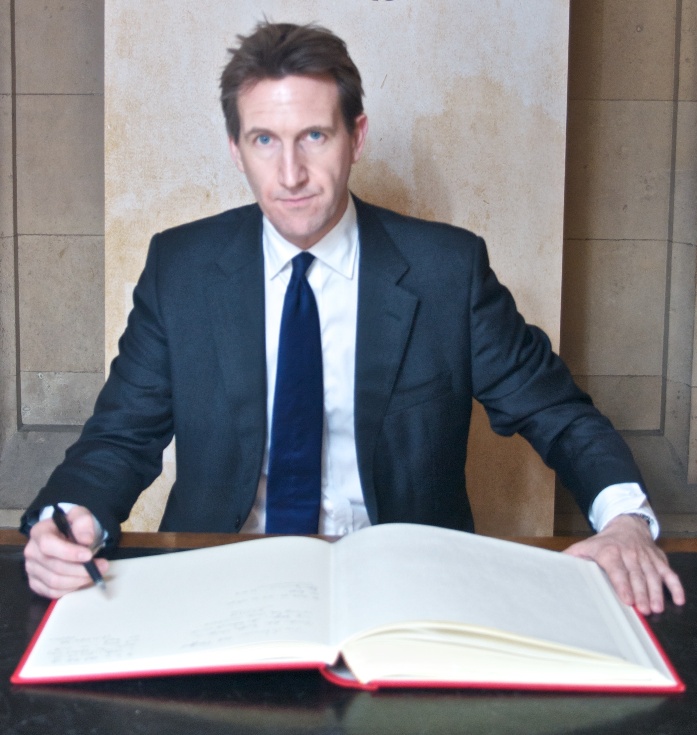
Tag: Dan Jarvis

  • Dan Jarvis – 2014 Parliamentary Question to the Ministry of Defence

    Dan Jarvis – 2014 Parliamentary Question to the Ministry of Defence

    The below Parliamentary question was asked by Dan Jarvis on 2014-06-16.

    To ask the Secretary of State for Defence, what steps he is taking to improve care for veterans suffering with psychological injuries after their service.

    Anna Soubry

    I refer the hon Member to the answer I gave on 8 May 2014, (Official Report, column 277W) to the hon Member for Portsmouth South (Mr Hancock). In addition to the initiatives outlined in that answer, I would also note that the mental health of our personnel and veterans is a top priority for the Government and that is why we have committed £7.2 million to ensure there is extensive mental health support in place for those who need it.

  • Dan Jarvis – 2022 Speech on the Protection from Redundancy (Pregnancy and Family Leave) Bill

    Dan Jarvis – 2022 Speech on the Protection from Redundancy (Pregnancy and Family Leave) Bill

    The speech made by Dan Jarvis, the Labour MP for Barnsley Central, in the House of Commons on 21 October 2022.

    I beg to move, That the Bill be now read a Second time.

    I begin by acknowledging that the House was originally due consider the Bill on Friday 9 September. I was looking over my speech the day before when I learned, with the greatest sadness, that Her late Majesty Queen Elizabeth II had passed away. I am grateful that we can proceed with Second Reading today.

    I welcome the new Minister to his post. I also thank the previous Ministers—the hon. Member for Loughborough (Jane Hunt), who is in her place, and the hon. Member for Sutton and Cheam (Paul Scully)—for their support for the Bill at an early stage. They were both incredibly helpful and supportive and I am grateful to them.

    I pay tribute to the officials at the Department for Business, Energy and Industrial Strategy for their excellent work in supporting the Bill. I also say a big “thank you” to the Clerks of the House, who have done excellent work, as they always do, to ensure that we can proceed with Second Reading today. I put on record my sincere gratitude to the Equality and Human Rights Commission, the TUC, the Royal College of Midwives, my union Unison, Maternity Action, Pregnant Then Screwed, The Fawcett Society and the Chartered Institute of Personnel and Development, all of which have offered invaluable support to the process over the last few months.

    There is no more important or gratifying experience than raising a family. Children provide hope for the future and bring joy to our lives, although I can say as a parent, as I am sure other hon. Members will, that on occasion that has been tested to the full in my household—but that is teenagers. Despite its importance, however, raising a family has never been more challenging. The scarcity of affordable housing, sky-high childcare costs and now soaring inflation make the decision to start or grow a family simply unaffordable for many. This Bill seeks to alleviate some of that hardship by increasing security in the workplace for pregnant women and new parents by extending redundancy protections. I am proud to be bringing forward the Bill in the House today.

    The current safeguards afforded under the Equality Act 2010 and the Maternity and Parental Leave etc. Regulations 1999—the MAPLE regulations—are not being applied correctly, and are sometimes not being observed at all. As it stands under the law, a woman on maternity leave is entitled to be offered a suitable alternative vacancy if her role is at risk, but a lack of clarity coupled with poor compliance means that new mums are often first rather than last to be shown the door. The sheer scale of the problem makes the case for reform irrefutable.

    Each year, there are somewhere in the region of half a million pregnant women in the workplace. A Human Rights Commission survey, commissioned by the Department for Business, Energy and Industrial Strategy and published in 2016, found that a majority—three in four—experience pregnancy and maternity discrimination, while some 54,000 women a year lose their job just for getting pregnant. A few months on from that survey, the Women and Equalities Committee, then chaired by the right hon. Member for Basingstoke (Dame Maria Miller), advocated for a comprehensive ban on redundancies. In response to her inquiry’s report, the Government stated that the situation was “clearly unacceptable”.

    Two years on, the Government launched a consultation, and in reply they pledged to extend existing protections to pregnancy and a period of six months following a return to work. The 2019 Queen’s Speech was set to deliver these commitments through an employment Bill, but that was not brought forward, and then the pandemic hit. As with everything, covid exposed and amplified every pre-existing inequality and prejudice, and expectant and new parents in the workplace were not an exception.

    Analysis by the Institute for Fiscal Studies found that mothers were more likely than fathers to have lost their job or to have quit during lockdown. The Office for National Statistics reported that parents were twice as likely to have been furloughed compared with workers without children. A TUC survey revealed a significant number of pregnant women and new mums had experienced unfair treatment or discrimination at work—findings backed up by two damning reports published by the Petitions Committee.

    Behind those numbers are scores of soon-to-be mums and new parents fighting to keep their jobs, struggling to support a young family and now doing so against the backdrop of a cost of living crisis. This debate is therefore not over the level of injustice—we know what that is—but about how we can correct it.

    Let me explain to the House what the Bill will do. Clause 1 provides a new power to enable provision to be made by regulations about protection from redundancy during and after pregnancy. Clause 2 amends existing powers to make regulations to enable protection from redundancy on return to work from maternity, adoption or shared parental leave.

    Jane Hunt (Loughborough) (Con)

    The hon. Member is making an excellent speech on his excellent Bill. Yes, this is about pregnant women, but it is also about family leave, which is superb news. Could he elaborate a little more on that, please?

    Dan Jarvis

    I am very grateful to the hon. Member for her question. As I said earlier, she was incredibly helpful at the early stages of the Bill, and she is absolutely right to make that point. The benefit of the Bill will be felt across hundreds of thousands of households and families right across the country. Although the focus of my remarks to date has been on the impact it will have on women who are pregnant and new mums, the reality is that the benefits of the Bill extend right across the family unit. We know the official numbers are that 54,000 women lose their jobs every single year just because they are pregnant. As we can all imagine, that has a devastating impact on them, but also of course on the wider family unit. The hon. Member raises a very important question, and I completely agree with what she said.

    I know there are some right hon. and hon. Members here today, and certainly a number of people and campaigners watching the debate, who would like—and this policy was previously advocated by the right hon. Member for Basingstoke—an outright ban on redundancies, as we have seen implemented in Germany. Not everybody will necessarily be familiar with the German model, so let me briefly explain it.

    There are five pillars of the Maternity Protection Act that underwrite the ban in Germany. First, protection from redundancy begins the moment the employer knows that the employee is pregnant. Secondly, if an employer makes a pregnant worker redundant not knowing they are pregnant but then this information is disclosed, they must be reinstated and the protections apply. Thirdly, the local health authority must review each request from an employer to make a pregnant worker or a new mother redundant. This usually takes about three weeks in practice, and while this review takes place the pregnant woman will remain in employment. Fourthly, an employer cannot dismiss a pregnant worker or a new mother without permission from the health authority. Lastly, protections for mothers on maternity and parental leave extend to four months after it has been taken. That also extends to women who, very sadly, have experienced a miscarriage.

    Although it may not be wholly translatable to the British system, there is little doubt over confusion and compliance under those rules. The Government have decided that, for the moment, they do not want to apply similar regulations here.

    Theresa Villiers (Chipping Barnet) (Con)

    I want to express enthusiastic support for the Bill. It will plug an important gap in protection. Looking back at the proposals from my right hon. Friend the Member for Basingstoke (Dame Maria Miller), we want to avoid a situation where, if there was a complete ban on all redundancies under any circumstances, that could mean that employers were having to retain employees when there was no longer work for them to do. The Bill is a reasonable compromise, as it is perhaps more difficult to take forward the previous proposals of my right hon. Friend.

    Dan Jarvis

    I am grateful to the right hon. Lady. She makes a helpful contribution. As she and other right hon. and hon. Members will understand, including the right hon. Member for Basingstoke, there are different views about this matter. In the end we have arrived at a reasonable and sensible compromise. The debate on that particular issue will continue, and if the Bill is successful there will be a further opportunity to debate such matters in Committee.

    Bob Stewart (Beckenham) (Con)

    I thank the hon. and gallant Gentleman for giving way. I have never heard of the German proposals before, and I really like them. I think they are flipping good, if I can say that, and it makes sense that we go some of the way down that road.

    Dan Jarvis

    I am grateful to the right hon. and gallant Gentleman for his intervention. I had not expected us to get into a debate today about what is going on in Germany, but he raises a valuable point. It is always important to look at how things work in different countries. The German model has been looked at closely, and a number of campaign organisations are strongly supportive of it. I have had those conversations with Ministers and a range of organisations, and there is merit in the German model, which, for the record, is my preference. I understand, however, the concerns that have been raised, and I think the Bill has currently got to the right place. I am grateful for the right hon. Gentleman’s support today.

    We are now six years on from the shocking findings by the Equality and Human Rights Commission about the industrial scale discrimination that expectant and new mums face at work. This is a timely opportunity to make progress. I confess that I was taken aback by the level of discrimination faced by pregnant women in the workplace. Perhaps I had made an assumption that such practices had been consigned to history, but that is not the case, and as I said, 54,000 women are directly affected as a consequence, with the wider impact that will have on their families.

    Lee Anderson (Ashfield) (Con)

    This is an excellent debate, and I thank the hon. Gentleman for introducing the Bill. He suggested that more than 50,000 women in this country lose their jobs as a result of being pregnant, which has a terrific impact on family and social welfare. Are employers also missing a trick? They are losing their most valuable resource—those women—who can provide fantastic work in the workplace.

    Dan Jarvis

    The hon. Member makes an excellent point. He is absolutely right that some employers are missing a trick here. As I said, I did not expect to get into a debate about Germany, but he makes an interesting point. There are so many amazing examples of extraordinary women who can excel at what they do—of course there are—so it seems incredibly strange that employers would want to discriminate against women in such a way.

    I am sure the hon. Member will agree that that says something about the nature of our society. All of us recognise the importance of children and families—they are the bedrock and foundation of our society—so it cannot be right that women are treated in such a way and on this scale. That must be consigned to the past. We must move forward, and the Bill provides a really good opportunity to do that. I would be the first to admit that the Bill is not a panacea, but it is a good step in the right direction and I am grateful for the support offered for it.

    Having made some remarks about the example that I referenced and the enforcement mechanism used in Germany, I am sure the Minister agrees that there is merit in us continuing to work closely together through the Bill’s passage to look at how, on a cross-party basis, we can seek to address some of the current safeguards’ shortcomings, namely around the confusion and compliance that I referred to.

    On the former, now is the time to end the inconsistency of when and how regulation 10 of the MAPLE regulations is applied. For instance, when a firm is reducing its number of roles, many employers see their obligations to women on maternity leave as a two-stage process, initially by forcing them to compete for their job against colleagues and only then seeking to find them suitable alternative vacancies if they are unsuccessful in retaining their role. That is deeply unfair. Women on maternity leave are at a massive disadvantage, as they might have been out of the workplace for months—obviously, they have been focused on caring for their newborn child. It is also highly irrational. If a new mum has been selected for redundancy, there is little or no chance of their being offered a suitable alternative vacancy, because they will have been filled. As it stands, many workers do not know their rights under the existing regulations, businesses apply them in different ways, and even case law is conflicting.

    Wendy Chamberlain (North East Fife) (LD)

    I have been reflecting on what the hon. Member has been saying about his very good Bill, which may fill some of the gaps that we have been talking about. I also heard what he said about the evolution of society, and hopefully that—as well as his Bill—will go some way towards helping. My employer before I was elected introduced parental leave allowing both parents to take six months of paid leave. I accept that not every employer can do that, but when we get to the place where, regardless of a person’s gender and their parenting role, they are entitled to rights, employers may stop looking at women as the first place to go when making people redundant. It would no longer be an easy choice for them.

    Dan Jarvis

    The hon. Lady raises a really helpful point, following the one made by the hon. Member for Ashfield (Lee Anderson). The nature of the Bill, and what we seek to achieve through its passage, speaks to the decency that I think we all want to see in our society. In the Bill, we have something in front of the House that is good for pregnant mums, good for new mums and good for families. It is also good for business, as it is in businesses’ own interest to be responsible employers and to make the most of their employees.

    I very much hope that the Bill will get support from across the House. I sense that it will, and I am encouraged by that. I have spent a lot of time thinking about what the critique of the Bill would be and whether any right hon. or hon. Members would have issues or problems with it. I have tried as much as I possibly can to get around as many hon. Members as possible and have those conversations, but nobody has been able to say that they think there is anything wrong with the Bill. The only debate is around the extent of its ambition and whether the protections could be greater and longer. That is potentially a point of debate, but I hope that we now have the basis of a Bill that all decent right hon. and hon. Members will be able to support—fingers crossed.

    Theresa Villiers

    An important potential positive consequence of the hon. Gentleman’s Bill and further protection for women in the workplace is helping us to tackle our productivity problem in this country. If we can monopolise the vast resource of women in the workplace, including pregnant women and new mums, it will make us a more competitive nation, help us to plug skills gaps and make us more productive, which ultimately will raise living standards.

    Dan Jarvis

    The right hon. Lady’s point is spot on and she has made it very eloquently. I can see there is consensus. She is right that for a very long time we have grappled with the productivity challenge, and we are still grappling with it. This is part of how we can seek to address the complicated and difficult productivity challenge that we all know we face as a country. I am grateful to her for that useful intervention.

    It would be helpful at this point to inject some real-life experiences into the debate so that the House can better understand what this Bill, if successful, might mean for women in the workplace. I am in receipt of a number of real-life cases of women who have suffered injustice simply because they were pregnant. There are many, and I must say some of them are genuinely shocking.

    Emily got in touch with me a few weeks ago. She was made redundant from her job more than halfway through her pregnancy and just days before she would have qualified for statutory maternity pay. She is now attempting to appeal the decision on the grounds of pregnancy discrimination and is feeling targeted not only for being pregnant, but for working part time. Her company told Emily it would be making several people redundant, but instead it laid only her off. It did not follow a fair process and she was not offered any alternative employment. Stories such as Emily’s form part of the wider issues surrounding the inconsistent implementation of regulation 10.

    Nickie Aiken (Cities of London and Westminster) (Con)

    I welcome this Bill. Does the hon. Gentleman agree that it is so important because many women are putting off having babies until later in life? When I had my first child at 35, the average age in the Chelsea and Westminster hospital was 39. That means women are further on in their careers, and a Bill of this type will support women who are further into their careers as well as those who may be at the beginning.

    Dan Jarvis

    That is an excellent point that has attracted support from right across the Chamber. The hon. Lady is absolutely right. We must make sure that women are making decisions about their professional careers without having to weigh up all sorts of factors of unfairness. There must be a level playing field and we must make sure that women are not disadvantaged in the workplace, so I completely agree with her and very much hope this Bill will go some way to achieving that ambition.

    I was referring to Emily, whose story highlights the need for consistency and the devastating consequences of what can happen when regulation 10 is not applied correctly. Confusion should never be an excuse for discrimination in the workplace. I have been working closely with the TUC and Unison on the Bill, along with the Chartered Institute of Personnel and Development, which has been incredibly helpful. It has offered to inform all its 160,000 members of the changes that the Bill will introduce, if it is successful. Will the Minister say how, if the Bill is successful, he plans to communicate the changes to workers and how he will clarify to employers their what their legal obligations will be?

    On compliance, some firms simply do not offer an alternative role by falsely claiming that one does not exist. Others engineer situations to force new mums out the door. When a business flouts the rules, the onus is on the woman—who, remember, is on maternity leave—to take the matter to an employment tribunal. That highly stressful and costly decision must be made within three months. However, the 2016 findings showed that less than 1% of women lodged a complaint with an employment tribunal.

    When we look into that worryingly low statistic, it is painfully obvious why the figure is so small. The scale of the challenge that such women face is almost insurmountable. Sarah, for example, was made redundant by e-mail six months into her pregnancy. Not wanting to be saddled with a gruelling legal battle during the final months of her pregnancy, she decided against taking legal action at that point. After her baby was born, she sought legal advice, only to be told that she no longer had a case because she had not raised her unfair dismissal within the three-month window. She told me that she never realised how vulnerable pregnant women are until it happened to her.

    There is also Natasha: after telling her employer that she was pregnant during the pandemic, she was made redundant while other members of her team stayed on. Shortly after, Natasha suffered the heartbreak of a miscarriage. She lost her baby and she lost her job. I know that many across the House have experienced the pain and trauma of a miscarriage and know only too well its profound and devastating impact.

    Lee Anderson

    Those are shocking stories; I cannot believe that is happening in this day and age. Does the hon. Member think that some women are perhaps living in fear when they fall pregnant, and that some ladies’ fear of losing their job may lead to them doing the unthinkable, which is to have an abortion?

    Dan Jarvis

    I think all of us can completely agree that that is not the kind of society in which we want to live. We should value people who do the right thing and step forward to enter the workplace. Collectively, we all have a responsibility to put in place legislation that will provide protections to ensure that people are not treated in that way.

    To go back to the hon. Member’s previous point, there is a big responsibility on business. In my experience, the overwhelming majority of the business community are sensible, decent employers. They want to do the right thing. As he said, it is in their interest to do the right thing, value their staff and invest in their workforce—not least a cohort of the workforce that, in every respect, are effective and efficient, to go back to the point about productivity. We have an opportunity to take a step forward today. As I said, this is not a panacea. There is a debate about whether we should go further and be more ambitious, but this is a good step in the right direction and I very much hope that we take it.

    Bob Stewart

    I thank the hon. Gentleman—my friend—for giving way. It seems to me that in the Bill Committee, we could put in a clause that makes it incumbent on employers to give a sheet of paper to women who are packing up their job because they are pregnant stating what their rights are. That might already be in the Bill—I do not know—but it seems to make sense and that would make it clear to women leaving their jobs exactly what their rights are.

    Dan Jarvis

    That is an excellent suggestion. The right hon. Member mentioned the Bill Committee. If the Bill is successful in its passage today, we will look for Members to sit on the Committee. I have a form here that I can perhaps give to him—I would be incredibly grateful.

    He will remember the expression, “Never volunteer for anything,” even better than I do, but in good faith he may have just volunteered to serve on the Bill Committee. Fingers crossed and touch wood, if we get to that point I will be knocking on his door with the form.

    I was making the point about employment tribunals and about Natasha. When she finally felt able to take her employer to a tribunal, she was told—[Interruption.] That is the office of the right hon. Member for Beckenham (Bob Stewart) calling to make sure they have the date of the Bill Committee in his diary—[Laughter.] Natasha was told that it was too late and that she should have applied within the three-month window. Extending the time limit to bring forward a claim to six months was supported by every single stakeholder I engaged with. That is an important point.

    Nickie Aiken

    The hon. Gentleman is making an excellent point. What has shocked me in the work I have been doing on my own private Member’s Bill on employment rights for those undertaking fertility treatment is that it is not just small and medium businesses that can have questionable policies on pregnant women or women who are trying to get pregnant, but even the larger ones, including some of the biggest businesses in the country and even major banks. I have been appalled by some of the stories that I have heard from women who have had to take their employer to a tribunal. Does he agree that, through his Bill and my Bill—which will come to the Chamber soon—it is important to give women confidence that their job is secure when they are pregnant or trying to get pregnant?

    Dan Jarvis

    I agree with the hon. Lady’s excellent point, to the extent that I wonder whether she might also be available to sit on the Bill Committee. If we are successful today, I may be knocking on her door. There is an absolute responsibility on business to look at their practices and ensure that they are doing the right thing. My overwhelming experience of the business community is that that is what they want to do, but it is clearly not happening everywhere. For all businesses and companies, particularly the larger ones that she referenced, I hope that their minds will be focused on the issue as part of this process.

    Legislation and direction from national Government is an important element, but some of it is cultural. It is about leadership in the business community and senior management looking at their own organisations and satisfying themselves that they are doing the right thing. As parliamentarians, we interact regularly with the business community, and I hope that we will have the conversations with senior business leaders in the weeks and months to come. I hope that those conversations will be well received by business. I am grateful for her intervention and hope to see her in Committee.

    I was just making the point about the support that I have encountered for expanding the time limit. It is widely supported by stakeholders and that reform has also been advocated by the Equality and Human Rights Commission, the Women and Equalities Committee, the Petitions Committee and the Law Commission. The Government have acknowledged the problem and I have had good conversations about it, but so far they have not made a commitment. I hope that will be a further point of debate, because advising women to make an out-of-time application will not cut it.

    I asked the Ministry of Justice how many exceptions had been granted, and in a written answer it said that it did not have that information—I suspect it is very few. Indeed, I have had anecdotal accounts of law firms refusing to represent women if their claim has not been lodged within the current limit, as judges often do not use their discretion. Improving access to justice is an important part of this issue.

    Bad employers must know that there will be consequences to their discriminatory treatment. I would be grateful if the Minister would look at when the Government are planning to implement the Law Commission’s April 2020 recommendations and extend the time limit for all employment tribunal claims to six months.

    I said earlier that there is no more important job than raising a family. It seems only fair that no one should be penalised for doing so by losing their job. I also said that three in four pregnant women in the workplace experience pregnancy and maternity discrimination, and that 54,000 women a year lose their job just for getting pregnant. We have had a good debate about this. By any metric, ensuring that women are treated decently and fairly should be a foundation of a civilised society, rather than just an aspiration. If we are serious about tackling discrimination in the workplace, providing parity and equality and ensuring that employers fulfil their obligation, we need laws to support that ambition that are fit for the 21st century and the modern workplace. The Bill will not fix everything, but if it is passed, it will be an important step towards providing working families with more security and dignity in the workplace, which they both need and deserve.

    Let me say, once again, how grateful I am to all those who have offered support and to all right hon. and hon. Members present. I very much hope that the Bill will have support from the Government and all parties, and I commend it to the House.

  • Dan Jarvis – 2022 Tribute to HM Queen Elizabeth II

    Dan Jarvis – 2022 Tribute to HM Queen Elizabeth II

    The tribute made by Dan Jarvis, the Labour MP for Barnsley Central, in the House of Commons on 9 September 2022.

    It is a solemn honour to pay tribute to Her late Majesty Queen Elizabeth II, and I want to begin by offering my condolences on behalf of my Barnsley constituents and myself to His Majesty the King and all of the royal family in their time of grief.

    It is hard to believe that Her late Majesty the Queen is no longer with us. For nearly all of us in this place and beyond, her presence is all we have ever known. There is a sense of loss in the country so profound that it will take time to mourn and to come to terms with. She was not only our Queen; she was someone embedded in our hearts. This special place was earned by her devotion to each and every one of us. She embodied dignity, dedication, duty and a service that was unwavering throughout. Her long life and remarkable reign saw our country through the best of times, but our late Queen was also a source of strength in the worst of times, not least in recent years during the pandemic. Her address to the nation in April 2020 was the tonic to a fear and hopelessness that seemed almost insurmountable. She said, “we will meet again”, and we did. We will miss her deeply.

    All of those who have had the privilege to serve in our armed forces know there will be a distinct sadness among the armed forces community. This is because, as our head, the late Queen cared about us deeply. Indeed, during the second world war, as a Princess, she chose to serve in the Auxiliary Territorial Service. That closeness to and affection for the armed forces was reciprocated by all who have served. It was not just because we knew she was formidable; it was also because we knew she had a great sense of humour.

    Many of us, and my hon. Friend the Member for Edinburgh South (Ian Murray) nodded to it, have enjoyed the story told during the platinum jubilee celebrations by a former royal protection officer, Richard Griffin. While accompanying Her late Majesty on a walk near Balmoral, a group approached asking, “Have you ever met the Queen?” Her response was, “No”, before pointing to the protection officer and saying, “but he has!” People did not have to be close to the late Queen to appreciate her sense of humour. The world remembers and will always remember the opening ceremony of the 2012 Olympics, when she famously was seen to parachute out of a helicopter with Commander James Bond, and who could forget her double act with Paddington?

    I am certain that history will judge Her late Majesty as an extraordinary monarch adored by her people, but it will also note that, while the world changed at a rapid rate, the Queen struck the balance perfectly between stability and tradition versus change and modernisation.

    A new era now begins, and at this testing moment we must now support the King who is grieving for his mother while leading our nation through a time of mourning.

    He has already lived a life of service to others in so many ways, serving in the Royal Navy and the Royal Air Force, establishing the Prince’s Trust, and being the patron of many, many charities. Just one example is his role as the Colonel-in-Chief of my old regiment, the Parachute Regiment. Recounting the time he took the parachute training course at RAF Brize Norton, he said:

    “I felt I should lead from the front, or at least be able to do some of the things that one expects others to do for our country.”

    It is clear that the King will follow the example set before him: to serve, to lead. The torch has been handed to a new monarch, and that sense of duty will continue to burn brightly. Rest in peace, Queen Elizabeth, and God save King Charles.

  • Dan Jarvis – 2022 Speech on the 40th Anniversary of the Falklands War

    Dan Jarvis – 2022 Speech on the 40th Anniversary of the Falklands War

    The speech made by Dan Jarvis, the Labour MP for Barnsley Central, in the House of Commons on 13 June 2022.

    On 1 April 1982, the Argentine junta launched a full-scale invasion of a then little-known archipelago 8,000 miles from Britain in the south Atlantic ocean. The following day, their forces were in control of the entire islands and so began the Falklands war.

    The Argentine dictatorship believed that Britain would be unwilling to liberate the islands, and the US navy believed any effort to do so would be a “military impossibility.” Despite the received wisdom, the UK assembled a taskforce at breakneck speed—the first since the second world war to use all elements of our armed forces. What followed were 74 days of extreme hardship, intense violence and unspeakable bravery. It is right we remember that collective sacrifice, 40 years on.

    Thirty thousand sailors, royal marines, soldiers, airmen and merchant mariners took the long voyage south. Tragically, 255 of them did not make the return journey home. Many thousands more still live with the mental and physical effects of that bloody struggle. No matter what we think of the decisions that sent our people into conflict down the ages, whether to Gallipoli, Goose Green or Gereshk, we have a duty to support the men and women who step forward to serve in our armed forces and a duty to bear witness to their sacrifice.

    Jim Shannon (Strangford) (DUP)

    We are all indebted to the hon. Gentleman for securing this debate. I have been contacted by two constituents in particular, one lives in Carrowdore and the other in Comber, who served in the Falklands—there are others, too—and who live with the trauma 40 years later. Last night’s television programme gave an example of that.

    Does the hon. Gentleman agree that it is important to note this anniversary not simply for the families of the 258 British personnel who were killed and the 777 who were wounded but as a reminder to the residents of the Falkland Islands that they were and are worth our support? We will continue to support them for as long as they wish to be considered British and entitled to our defence support. We stand as strongly with the Falklands today as we did 40 years ago.

    Dan Jarvis

    I am grateful to the hon. Gentleman for his intervention. I completely agree with the important point he has made, as I am sure all Members of this House will. Further to his point, and in deference to him as a good friend and colleague, I wish to take this opportunity to say that the contribution from our friends in Northern Ireland cannot be understated. I recently read about Sue Warner, a Belfast nurse who received a peace prize in Buenos Aires 40 years after serving on the SS Uganda, where she treated both British and Argentine personnel who had horrific injuries. That is a reminder of just how collective the Falklands effort truly was and of course of the contribution made by those from Northern Ireland.

    There have been considerable recent efforts to ensure that the Falkland Islands conflict is properly commemorated, and I commend everyone who has contributed to that important process. I had the honour of attending a commemoration at Sheffield cathedral to mark the loss of HMS Sheffield and all those who perished aboard it. I was particularly pleased to see that Mr Speaker braved the south Atlantic ice and snow to take the opportunity to remember all of those who fought and died at the battle of Goose Green.

    Fay Jones (Brecon and Radnorshire) (Con)

    I congratulate the hon. Gentleman on securing this debate. He mentions the events being held at the moment to commemorate the Falklands war. Will he join me in paying tribute to all those who have been taking part in the Falklands 40 bike ride, which came through my constituency last week, particularly my constituents Gus and Angela Hayles?

    The ride is 255 miles long and is going from Cardiff to Aldershot. Gus was a Royal Engineer Paratrooper, and Angela served in the Royal Army Nursing Corps. Gus has been a committed campaigner, not just for Falklands veterans, but for veterans’ mental health. Knowing the hon. Gentleman’s experience, I wondered whether he would join me in congratulating them on their achievement.

    Dan Jarvis

    I am very grateful to the hon. Lady for her intervention. Of course I take the opportunity to congratulate all of those who have been involved in what sounds like an epic bike ride. Further to the contribution she has just made, I wish to say something else. I will go on to talk about the character and fighting spirit of all of those who deployed down to the Falklands. That was a very significant element in enabling our being able to secure a victory in very challenging circumstances, but another element underpinned that victory: training. Much of that training will have been conducted in her wonderful constituency, which, as she knows, I hold in the highest regard. I have mostly, though not exclusively, happy memories of my time on the Brecon Beacons and on Sennybridge, in good and bad weather. I am grateful to her for her contribution and for the work she does representing our armed forces community.

    I was just reflecting on the various attempts and contributions that have been made by different organisations to ensure that we properly commemorate this important milestone, not least by the Royal British Legion. It has, in customary fashion, gone to great lengths to organise a service to mark the end of the conflict, and that will be taking place at the national memorial arboretum tomorrow. On Wednesday, Parliament will come together in a remembrance service. I know there have been hundreds of services, tributes and pilgrimages conducted over the past few weeks, both here and on the Falkland Islands.

    Many of us will have our own memories. I think particularly of Brian Hanrahan’s legendary quote:

    “I counted them all out and I counted them all back”.

    That will stay with me forever. However, we reach this milestone when the Falklands is at some risk of becoming a forgotten war, as research from Help for Heroes has recently revealed. Such an outcome would represent a collective failure to ensure the sacrifices made on both sides stand for all time. I truly hope that efforts over the past months will rebuild public awareness.

    James Sunderland (Bracknell) (Con)

    Once again, I commend the hon. Gentleman for bringing this debate to the House. I spent a fair bit of time in the Falklands and I am very familiar with the environment, having served down there. Those who have been to the Falklands know that it is a very austere, difficult, tricky environment, particularly in the winter. It is appalling under foot. Madam Deputy Speaker, we can both recall the images on the screens back in 1982, when I was 12 years old.

    I want to make two points. First, does the hon. Gentleman agree that we should pay tribute to the 255 members of Her Majesty’s forces who were killed, the three islanders who lost their lives and the Argentine fallen, who were just doing what they were ordered to? Secondly, does he agree that the demands we made of our armed forces in 1982 are as applicable today as they were then and that, as we have seen over the years in Afghanistan, Iraq and all the other theatres we have asked our people to serve in, we need to maintain our forces at the very highest readiness, with the best kit and the best training, so that if the Falklands or anything like it happens again, we are ready?

    Dan Jarvis

    The hon. Gentleman has made some incredibly important points, and done so very eloquently. Of course I agree with everything that he has just said.

    There are many chapters of the Falklands story that need to be told. There is the bravery of the Royal Marines on the ground, and that of the pilots and aircrew in the skies above them. There is also the determination of the sailors, without whom no operation, let alone victory, would have been possible.

    Luke Pollard (Plymouth, Sutton and Devonport) (Lab/Co-op)

    The success of our Royal Navy and Royal Marines would not have been possible if not for the work of the civilians supporting the fleet, including the dockyard workers at Devonport, in the constituency I represent. They do not always get their story told in the commemorations, so will my hon. Friend join me in paying tribute not only to the Devonport dockyard workers but to all the civilians in dockyards throughout the United Kingdom who supported the fleet in preparation and on the way back?

    Dan Jarvis

    I am grateful to my hon. Friend. The great ocean city of Plymouth has an important story to tell in the context of the Falkland Islands conflict, and he makes an important point about the huge contribution made by civilians. Those who step forward to serve in the armed forces do so knowing that they are backed by the outstanding efforts of the hundreds of thousands of good men and women who serve as civilians. My hon. Friend is a doughty champion for them and makes an important point, and I am grateful to him for doing so.

    We should also reflect on the terrible suffering endured by the Welsh Guards on the Royal Fleet Auxiliary Sir Galahad, and on the hard-won victory of the Scots Guards on Mount Tumbledown. I am always enthralled by what the Gurkhas, recruited from south Asia, made of their deployment to the south Atlantic. The Special Air Service and the Special Boat Service played a crucial role, but much of their heroism remains untold. As the hon. Member for Bracknell (James Sunderland) rightly said a moment ago, we should also remember and commemorate the hardship experienced by Argentine forces, who lost 649 personnel.

    I hope the House will understand why I now wish to speak primarily about the legacy left by the forefathers in my own regiment—a legacy that my generation and those that followed attempted to live up to. The Paras who went down south occupy a legendary place in the annals of airborne history—none more so than the platoon sergeant of 4 platoon, B company, 3 Para, Sergeant Ian McKay.

    Sergeant McKay was born in Wortley, Barnsley, and his story is still recounted and learned by every single fledging paratrooper to this day. Marica McKay, Ian’s widow, remembers that it began when her late husband sat down for dinner one evening in their home and the phone rang:

    “I put his dinner in a Tupperware container and he went straight away. He just said, ‘I’ve got to go.’”

    With that, Ian and his comrades prepared to set sail. Intensive training was conducted on the voyage: signals, weapons, fitness, medical and fieldcraft over and over again until the battalion arrived six weeks later at Port San Carlos.

    After assuming defensive positions, 3 Para were ordered to move to Teal Inlet— the first leg of a 60-mile gruelling march under brutal conditions. They would then advance to set up a headquarters for the assault on Mount Longdon—part of a three-phase plan to capture Port Stanley and end the war.

    The battle for Mount Longdon was ferocious, chaotic and bloody. The accounts of close-quarter combat are among the most violent ever recorded. The ground had been occupied for weeks by Argentine forces. They were dug-in and well-defended by machine guns, mortars and artillery. All approaches had been mined. Despite the threat, it was an era when body armour was not issued. The only protection provided was parachute helmets—great when a soldier smacked their head after a heavy landing, practically useless in a gun fight or mortar strike. If they did get hit, wounded soldiers might have to wait 10 hours for evacuation. One Army surgeon from the campaign later compared the casualty evacuation procedure of the Falklands to the first world war and even to the Boer war.

    It was not just the enemy with which 3 Para had to contend. The June South Atlantic weather is an unforgiving, unrelenting beast, as Mr Speaker will no doubt recently have observed. The second-hand winter clothing that was issued belonged in the bargain bin of an Army surplus stores, not on the backs of some of our most elite troops. Icy rain and biting wind swept across the barren landscape, quickly forcing temperatures well below zero. Some of the most robust collapsed with exposure and exhaustion. As times go, they were tremendously hard. None the less, overcoming such adversity is what is demanded of those who wear the coveted maroon beret.

    It is impossible to put into words the courage, selflessness and valour displayed by Sergeant McKay in the dark, cold early hours of the morning of 12 June 1982 on Mount Longdon. His citation is as close as we will get, so I would like to take the opportunity to share part of it with the House:

    “The enemy fire was still both heavy and accurate, and the position of the platoons was becoming increasingly hazardous. Taking Sergeant McKay, a corporal and a few others, and covered by supporting machine gun fire, the platoon commander moved forward to reconnoitre the enemy positions, but was hit by a bullet in the leg, and command devolved upon Sergeant McKay.

    It was clear that instant action was needed if the advance was not to falter and increasing casualties to ensue. Sergeant McKay decided to convert this reconnaissance into an attack in order to eliminate the enemy positions. He was in no doubt of the strength and deployment of the enemy as he undertook this attack. He issued orders, and, taking three men with him, broke cover and charged the enemy position.

    The assault was met by a hail of fire. The corporal was seriously wounded, a private killed and another wounded. Despite these losses, Sergeant McKay, with complete disregard for his own safety, continued to charge the enemy position alone. On reaching it, he despatched the enemy with grenades, thereby relieving the position of the beleaguered 4 and 5 platoons, who were now able to redeploy with relative safety. Sergeant McKay, however, was killed at the moment of victory, his body falling on the bunker.

    Without doubt, Sergeant McKay’s action retrieved a most dangerous situation and was instrumental in ensuring the success of the attack. His was a coolly calculated act, the dangers of which must have been all too apparent to him beforehand. Undeterred, he performed with outstanding selflessness, perseverance and courage. With a complete disregard for his own safety, he displayed courage and leadership of the highest order, and was an inspiration to all those around him.”

    Sergeant McKay was an inspiration not just to all those around him, but to every paratrooper who came after him, myself included. The war was over two days later. He was subsequently awarded a Victoria Cross, one of only two recipients in the campaign. The other award, also posthumous, went to Lieutenant Colonel “H” Jones, commanding officer of 2 Para, for his valour at Goose Green days earlier. There were, of course, countless acts of extraordinary bravery that were not formally recognised, not least the actions of Corporal Stewart McLaughlin, also killed in action on Mount Longdon. My hon. Friend the Member for Wallasey (Dame Angela Eagle), who is not able to be with us this evening, has long championed ending that oversight.

    Yesterday marked 40 years since Sergeant McKay relinquished his chance to go home so that others could. On the memorial erected at the spot at which he fell are inscribed the immortal words from the Gospel of John:

    “Greater love hath no man than this, that a man lay down his life for his friends.”

    Never were those words more fitting. While at sea, Sergeant McKay wrote a letter to a friend to say:

    “I have no intention of taking any risks and getting killed. If I do, then it will be to protect my men, to save lives.”

    To write such a thing is one matter; to act when the moment arrives is quite another, but that is exactly what Sergeant McKay did.

    Today, 40 years on, we recognise Sergeant McKay’s sacrifice and the sacrifice of everyone who fell during the Falklands conflict. We pay tribute to all those who went down south, and we stand with the many who still bear the scars of the conflict. It is a debt we can never repay, but one that we must always remember.

  • Dan Jarvis – 2022 Speech on Support for Ukraine

    Dan Jarvis – 2022 Speech on Support for Ukraine

    The speech made by Dan Jarvis, the Labour MP for Barnsley Central, in the House of Commons on 2 March 2022.

    During his abhorrent dictum on the illegal invasion of Ukraine, President Putin used false claims of genocide to justify his callous actions. That is a cruel irony, not least given his appalling track record of international law breaches and human rights abuses. We witnessed his brutality in Georgia and did nothing. We witnessed his brutality in Syria and did nothing. True to form, we are witnessing his brutality once again in Ukraine. This must the last of the suffering that he is allowed to cause.

    We are all inspired by the resolve, determination and spirit shown by the Ukrainian people, but there will be inevitable tragic consequences to their heroism. The more they resist, the worse Putin will react, and those unable to defend themselves will pay the price for his petulance. Standing with Ukraine means delivering economic, military and humanitarian support today, but it also means delivering justice tomorrow; it means ensuring that the man responsible for Ukrainians’ suffering is held to account and made to answer for his crimes. The Prime Minister says, “Putin must fail.” He must, but that alone is not enough. Putin must pay.

    On Monday, the International Criminal Court announced that it would open an investigation into alleged war crimes and crimes against humanity that have been committed in Ukraine since 2013, and any new alleged crimes. That is a very important announcement. Innocent men, women and children are being murdered in schools and hospitals and in their homes. Amnesty International has now verified four attacks on Ukrainian schools, including the cluster bombing of a nursery, which killed a child and civilians. Human Rights Watch reported an attack on a hospital, again with a cluster bomb, which killed and injured civilians, including healthcare workers. The vicious bombardment of Kharkiv on Tuesday, in which homes were targeted, left dozens of civilians dead. According to Ukraine’s ambassador to the US, a thermobaric weapon was used against Ukrainian forces.

    Although Russia is not a signatory to the convention on cluster munitions or to the safe schools declaration, international humanitarian law prohibits the use of indiscriminate attacks with indiscriminate weapons, but it is clear that Putin is already becoming increasingly desperate. As the Ukrainian resistance evolves towards insurgency, civilian deaths will almost certainly surge.

    The UK is a proud state party to the Rome statute, so we must now support the ICC with money and people to aid its investigation; I would be very grateful if the Minister gave an assurance that we will, and if he provided an update on where we have got to on the question of a state party referring the case, as per the prosecutor’s request. We must work with the Ukrainian Government, allies and non-governmental organisations to collect and preserve evidence of war crimes and crimes against humanity; again, I would be very grateful if the Minister gave an assurance that we will. Most importantly, we must do everything within our power to prevent further civilian suffering, including making the necessary preparations to get aid in and people out safely and effectively.

    Putin is safe, a long way away from the frontline, but the blood of the innocent is on his hands. This is his war and it may not end soon, but it is imperative that he pays for what he has done. If he does not, Ukraine will not be the last to suffer.

    When the Ukrainian ambassador to the UN learned of the invasion, he said:

    “There is no purgatory for war criminals. They go straight to hell.”

    It will be difficult—some say impossible—but wherever Putin ends up, the UK must do everything we can to ensure that it is via a court.

  • Dan Jarvis – 2021 Speech on Afghanistan

    Dan Jarvis – 2021 Speech on Afghanistan

    The speech made by Dan Jarvis, the Labour MP for Barnsley Central, in the House of Commons on 18 August 2021.

    It is a great pleasure to follow the hon. Member for Plymouth, Moor View (Johnny Mercer), as it is the right hon. Member for Bournemouth East (Mr Ellwood) and the hon. Member for Tonbridge and Malling (Tom Tugendhat). They all spoke with great eloquence.

    Like many hon. Members, I am wracked with a profound sadness at the catastrophe that has unfolded in Afghanistan. Above all, it is an unspeakable tragedy for the people of that country, who, after generations of conflict, now live under a terrible cloud of fear and repression. Who could fail to be moved by the agonising scenes from Kabul airport just this week? How desperate must someone have to be to want to cling on to the side of a moving aircraft? These past 20 years have been a struggle for peace. We tried to break the cycle of war, and to give hope to women and girls. We tried to give the Afghans a different life—one of hope and opportunity—but the catastrophic failure of international political leadership and the brutality of the Taliban have snatched all of that away from them. The new Administration in Kabul should know that they will be judged not by their words, but by their actions. The world is watching.

    I want to reflect on the service and sacrifice of our brave servicemen and women, who have showed outstanding professionalism and courage throughout. As the hon. Member for Plymouth, Moor View said just a moment ago, recent developments have hit them hard, and they are grappling with the question of whether all the effort and sacrifice was really worth it. They are again grieving for fallen comrades who did not come home. Whatever the outcome in Afghanistan, those men and women, and their families, should be proud of their service, and we must be proud of them.

    Many of us who served in Afghanistan have a deep bond of affection for the Afghan people, and I had the honour of serving alongside them in Helmand. We trained together, fought together and, in some cases, died together. They were our brothers in arms. I shudder to think where those men are now. Many will be dead, and I know others now consider themselves to be dead men walking. Where were we in their hour of need? We were nowhere. That is shameful, and it will have a very long-lasting impact on Britain’s reputation right around the world.

    Mr David Davis (Haltemprice and Howden) (Con)

    The hon. Gentleman—a fellow litigant—is absolutely right in his description of the Afghan armed forces. Will he add that many of them are more heroic and better soldiers than they are given credit for around the world?

    Dan Jarvis

    I am grateful to the right hon. Gentleman, as always, and I completely agree with the point he made. It was particularly distasteful and dishonouring of President Biden to make reference to the lack of courage and commitment from those Afghan soldiers, who have served with such bravery and distinction.

    We have to be pragmatic, and at this difficult point we must think about what our next move will be. We should understand that the character of our country is defined, for better or for worse, by moments such as this. We should also understand that we face a moral and humanitarian crisis of enormous proportions, and the response from the international community and the British Government needs to meet the magnitude of the moment. We must step up the statecraft and engage with international allies and alliances, and with regional partners. Although it is a particularly bitter pill to have to swallow, we must engage diplomatically with the new regime in Kabul. It is in our cold-headed national interest to do so, because right now our armed forces are deployed on an operation to recover UK nationals and other entitled personnel. It is in their interests that we engage to try to ensure the safe passage of those who want to leave.

    We also know that many, many more will want to get out, and with our allies we need to work to establish safe routes to get them to safety. We must show compassion and genuine generosity to refugees, while accelerating and expanding the ARAP scheme to support those who supported us.

    We also need to defend the hard-won progress of the past 20 years or so—girls in school and women in Parliament and the judiciary. We must ensure that Afghanistan does not slide back to where it was pre-9/11. Then, when the dust settles, we need to look at what went wrong and learn the lessons of this failure: why, despite all the effort, could we not build an Afghan state free of corruption, with the legitimacy and competence to balance the competing forces in that country, and what does that now mean for our foreign and defence policy in this country?

    Regardless of all that, we must remain engaged; we must show leadership; we must use whatever influence we have to try to make things better. That is in our own national interest, it is in line with our values, and it is the right thing to do. We owe it to the people of Afghanistan and we owe it to ourselves.

  • Dan Jarvis – 2020 Speech on Organ Donation

    Dan Jarvis – 2020 Speech on Organ Donation

    Below is the text of the speech made by Dan Jarvis, the Labour MP for Barnsley Central, in the House of Commons on 19 May 2020.

    Thank you, Mr Deputy Speaker. It is a pleasure to be called in this debate—and hopefully to be heard.

    From tomorrow, as we have heard, changes to the organ donation system following the implementation of the Organ Donation (Deemed Consent) Act 2019, more commonly known as Max and Keira’s law, come into effect. This means that every adult in England will be considered to be a donor unless they opt out or are excluded. This new law has the potential to save hundreds of lives every year. For all those desperately waiting for a transplant, the efficacy of these changes is literally a matter of life and death. We owe it to them to ensure that it is a success.

    I would like briefly to pay tribute to the constructive spirit in which the Government approached the Bill from the outset, and to all those without whom the campaign to change the law would not have succeeded. First and foremost, my friend and former colleague Geoffrey Robinson, formerly of this parish, showed real leadership in promoting the Bill from the outset. The former Health Minister, the hon. Member for Thurrock (Jackie Doyle-Price), was brilliant throughout the passage of the Bill, as were the right hon. Members for Maidenhead (Mrs May) and for South West Surrey (Jeremy Hunt), my right hon. Friend the Member for Islington North (Jeremy Corbyn), the current Secretary of State, and Lord Hunt of Kings Heath. Alison Phillips, the editor of the Daily Mirror, and her fantastic team also championed this cause and very helpfully raised public awareness. Kidney Care UK provided outstanding support during the campaign and continues to provide outstanding support to ensure that Max and Keira’s law will be a success.​

    Most of all, though, I would like to thank Max Johnson, his mother Emma, and the family of Keira Ball. For those who may not be familiar with it, as stories go there are few more powerful than Max and Keira’s. Keira Ball was nine years old when, tragically, she died. Despite the unimaginable grief, Keira’s parents bravely and selflessly chose to donate her organs, including her heart, to a young boy, Max Johnson, who was in urgent need of a transplant. Max recovered from his operation and has been a tireless champion of the new opt-out system for organ donation. Tomorrow will be a very special day for many people, but for Max it will be especially poignant.

    I am extremely proud to have worked with Geoffrey and with others to take Max and Keira’s law through Parliament. I would like briefly to reflect on the reasons I believe that it is so important. First and foremost, this law is about saving lives. We are all, I know, extremely grateful for the outstanding job that NHS Blood and Transplant does. In the year to this April, there were 3,763 organ transplants from deceased donors, in addition to 970 living donations. Yet despite the incredible efforts made, demand for organs heavily outweighs supply. Last year, as the Minister reflected on, more than 400 people died while waiting for a transplant and hundreds more were suspended from the waiting list after becoming too ill to undergo the operation they so desperately needed. There are currently about 5,000 people in the UK who, just like Max was, are living under a cloud of uncertainty, waiting and hoping for an operation that will save their life.

    One of the many devastating knock-on consequences of the coronavirus crisis is the impact it has had on those in need of an organ transplant. Operations have been postponed and the number of people dying while waiting for a transplant has sharply risen. The coronavirus is putting huge extra strain on a system already under pressure.

    As well as offering hope to families, I believe that Max and Keira’s law will also benefit society by helping to bring people together. The decision that Keira’s parents took was an act of compassion that represents the best of humanity—a lesson in solidarity from which we can all learn. We must be mindful, however, that the new organ donation system will not in itself be a silver- bullet solution. We all still need to play our part. We know that this law will improve the consent rate. The devolved Government in Wales introduced their opt-out system in December 2015. The result was stark: Wales now has the highest consent rate of any UK nation at 77%, up from 58% five years ago.

    However, if we are going to make a success of the new system, NHS Blood and Transplant will require additional capacity to deal with an increase in donors. That means that the Government must ensure that our NHS trusts have the resources they need to perform the operations, to support the donors and their families, and to care for the patients after their transplants.

    This also includes the medical staff, so they understand the new system and encourage bereaved families to talk, understand and support their loved one’s wishes. The Government must also maintain their support for the public awareness campaign, so that the changes are widely understood and everybody knows that the choice to donate is still yours to make. Donors should know that they will be treated with dignity and respect, and the family of the deceased will still be involved.​

    I am very aware of the Department of Health and Social Care’s work, including with the National Black, Asian and Minority Ethnic Transplant Alliance and the launch of the community investment scheme, but it is essential that we continue to direct our efforts into BAME communities, which are often most affected. Nearly a third of those on the active transplant list are from black, Asian or ethnic minority backgrounds, and it is members of that community who also wait longer for operations. Improving education and raising awareness is important so that everyone has an equal chance, regardless of their ethnicity, of having a life-saving transplant.

    We also all have a responsibility to record our choice on the NHS’s organ donor register and, crucially, to tell our loved ones what our intentions are. The coronavirus has left thousands of families in mourning, shattered our economy and upended our entire way of life. Good news is in short supply, but the implementation of Max and Keira’s law affords us a rare glimmer of hope—the hope that more lives will be saved and the hope that we, too, can act with decency and empathy, even in the worst of times. Thank you to all those who made it happen.

  • Dan Jarvis – 2020 Speech on Covid-19

    Dan Jarvis – 2020 Speech on Covid-19

    Below is the text of the speech made by Dan Jarvis, the Labour MP for Barnsley Central, in the House of Commons on 11 May 2020.

    In South Yorkshire, where I am also the Mayor, the coronavirus has infected more than 4,500 people and, tragically, killed 576 people. My thoughts are with all of those who have suffered and lost, and those who are doing so much to keep our people safe and our society functioning. I will always seek to work constructively with the Government, but we do have a duty to test their policies and to hold them to account. One of their most crucial tasks is to keep the confidence of the British people, and without clarity, we will fail. So I have four immediate concerns.

    The first is that “Stay alert” is vague compared with “Stay at home”. I am glad that the Prime Minister provided more detail today, but many people will still be confused, and confusion risks contagion. Secondly, we cannot ask people to go back to work if they cannot get there safely. Social distancing means much lower capacity on our public transport systems, and a switch to cars would mean instant gridlock. That means that getting people to walk and cycle is central to easing the lockdown. To be fair, the Government seem to understand that, but we urgently need to translate that into action together.

    Thirdly, we cannot force people back to an unsafe workplace. The Government must monitor and support businesses to implement rigorous protective measures, in close collaboration with employees and unions. Until that is done, those workers should remain furloughed. Fourthly, the Government must be careful not to create suspicion, justified or not, that they are motivated by any concern other than fighting the disease. Things such as testing targets that are met just on the one day needed to avoid negative headlines inevitably undermine that vital public trust; this is no time for politics as ​usual. So the Government must be utterly transparent about the data, the advice they are getting and the compromises they are choosing. There must be a clear line between the science and the political decisions based on it. That applies right across the UK, and the Sheffield City Region Combined Authority has led in supporting and informing local communities and businesses, in getting them the help they need and in championing their concerns at Westminster. We have kept our businesses and our light rail system running. We have lined up our local industries to supply PPE to the NHS, and we are developing a recovery plan that truly reflects local needs, but the Government must bring us in to the heart of their response, and fund and empower us accordingly.

    Finally, that response must also serve a wider purpose, We clearly need massive—[Inaudible.] This is the moment for a green new deal, for fixing our crumbling infrastructure and for addressing the unacceptable inequality between our regions and nations. History will not forgive us if, as after 2008, we make such sacrifices only to see inequality grow and the planet burn ever warmer. For all our sakes, the legacy we aim for now must not be a return to the status quo; it must be a national renewal.

  • Dan Jarvis – 2020 Speech on the Economy and Jobs

    Dan Jarvis – 2020 Speech on the Economy and Jobs

    Below is the text of the speech made by Dan Jarvis, the Labour MP for Barnsley Central, in the House of Commons on 20 January 2020.

    It is a huge pleasure to follow the outstanding maiden speech by the hon. Member for Kensington (Felicity Buchan). To have delivered it without notes is incredibly impressive, and she has laid a powerful marker for what an articulate champion she will be for her constituents.

    I should declare an interest as a metro Mayor. I want to say at the outset that, as we prepare for the future and for life beyond Brexit, our priority must be to build a collaborative, sustainable and inclusive economy where everyone shares in the benefits of growth. We have one of the world’s largest economies, worth $2.38 trillion, ​accounting for 3.3% of the global economy. That is an important achievement, but for too long the size of our economy has been the overriding measure of success, the overriding driver of investment decisions and the overriding focus in public policy, and that has masked a failure to focus on what matters most.

    It is our people and their communities who matter most. We fail in our mission to improve the lives of all if that connection between people, place and prosperity remains broken. Given that we have five of the economically worst performing regions in northern Europe, that has been the case for too long. It also costs us billions. It must therefore be our collective endeavour to fundamentally rewrite the rules of engagement in how the Treasury decides where and in what we invest, how policy is made in Whitehall rather than in the regions and how people and their communities must be at the heart of our economic model.

    In September, the Prime Minister was in South Yorkshire, where he said that

    “there is no limit to the imagination, innovation, ingenuity and leadership in the North.”

    I do not always agree with the Prime Minister, obviously, but on this we are as one. However, those words mean nothing until we see meaningful action. No amount of imagination, innovation, ingenuity or leadership can offset under-investment or a system that is skewed in favour of already prosperous areas. We need a fiscal programme that delivers transformational levels of resourcing, tackles poverty and inequality, helps us build the homes people need in the places where they want to live, grows an economy that exploits the opportunities of the green revolution, and helps us to build new infrastructure.

    That will not be cheap, and in South Yorkshire hundreds of millions of pounds of investment are needed. That is why I welcome the Government’s commitment to changing the way they make investment decisions through the Green Book methodology. That is something I have long called for, and the Financial Secretary to the Treasury may recall that I have raised the issue with him—I badgered him on a number of occasions when he was a Transport Minister. That change must happen to ensure that we get the additional investment in the north that we need and deserve.

    However, fundamental to all of this is that the Government must make sure that it is local people, empowered through devolution, who join all this up locally, and that means devolution right across our country. I am pleased at the progress we made in Yorkshire just last week, but we must remember that devolution is a process, not an event, so I would like to see the Government commit to working with metro Mayors—obviously—council leaders and communities right across the country to explore the full extent of the powers and resources that currently reside in Whitehall and Westminster that could and should be devolved further. The Government’s first principle in designing their approach must be that it is not in the halls of Westminster or the corridors of Whitehall that decisions over many of the issues that affect our communities are best made.

    I think there is agreement that we are at a critical political and economic juncture. We must work to build an economy that works for all— an economy in which ​all our communities feel they have a stake. The anger that many of our communities feel at being left behind should serve as a warning to the Government that they will be judged on what they do, not on what they say.

  • Dan Jarvis – 2016 Speech on Inequality

    ????????????????????????????????????

    Below is the text of the speech made by Dan Jarvis at Demos in London on 10 March 2016.

    Thank you Phil and thank you Demos for inviting me to join you today.

    I recently celebrated – if that’s the right word – five years since I was elected to Parliament in the Barnsley Central by-election.

    I suppose it would be impossible to swap the trenches of Helmand for the green benches in Westminster and not experience a few surprises.

    The working conditions for a start. When you once spent two weeks in which every single meal consisted of the same British Army ration pack – what was described – somewhat optimistically – on the packet as ‘pork casserole’ – you can find it hard to sympathise with complaints about the food in Westminster!

    Or the hours, for that matter.

    Or the cramped offices.

    Trust me, it could be worse…

    But hey – at least in the modern dynamic institution that Parliament is, I still have somewhere to hang my sword!

    But there has been one way in which my civilian life has proved harder than the military life.

    The training in the Army prepares you to deal with the emotional impact of what you see.

    There is a job to be done and you get on and do it.

    I went to war three times in three different places and managed to do it without shedding a tear… other than on the 14th day of being handed pork casserole rations!

    But I don’t mind telling you that when I first heard the Barnsley Youth Choir sing, I struggled to hold it together.

    It wasn’t just the music that got to me, although it was amazing.

    It was the thought of those talented young people, full of the joy of life, full of hope, full of ambition.

    It was the sorry thought that at least some of these young people, or others like them, will be let down.

    It was a sense of shame that we do not do more to secure the future for the kids in Barnsley.

    More than half of the youngsters in my constituency leave school without five good GCSEs. And my constituency is by no means unique.

    All over the country there are people getting little or nothing from the political process.

    It sounds hollow to these people when we talk about how prosperous Britain has become, what a great recovery it has made.

    I do not wish to suggest that it is not true or indeed to begrudge anyone their success.

    But the purpose of my party, the Labour party, is to give a voice to those who have not yet seen their fair share of the rewards.

    Those who feel no one is listening.

    Now, I do not have as good a voice as those in the Barnsley Youth Choir, but I will do my best.

    ROOTING OUR POLITICS

    The Labour party was founded to improve the lot of working people. There is no mystery to what it was about.

    Labour. Work.

    Keir Hardie said that the British are a practical people, not given to chasing bubbles.

    The people I meet, the people I am talking about, don’t attend economic seminars.

    They don’t follow the doctrinal discussions of the Labour party.

    They want to vote for a party that doesn’t just oppose the government. They want a party that beats the government.

    A party that gets into power for a purpose: to work on their behalf.

    Because make no mistake they are working hard themselves.

    I know a woman called Catherine in Barnsley whose story is distressingly common.

    Catherine is a cleaner and housekeeper. She juggles six different jobs in six different locations. She works more than 50 hours a week on the minimum wage.

    Despite working very hard, Catherine struggles to make ends meet.

    When I asked her how she was getting on she said she’d cut down on what she described as “luxuries.”

    But by “luxuries”, what she actually meant was things like new clothes.

    “I just work to exist,” she said.

    I know for a fact that Catherine doesn’t have the time to take much notice of what we do here.

    But the government we choose will shape her life more than most.

    This is why I became an MP. To listen to people like Catherine, to talk her language, and to act on her behalf.

    One of the most painful experiences in the 2015 election campaign was talking to people on the doorstep who didn’t really know what we stood for.

    Work. Family. Community.

    Those are the three ways in which most of us think about our lives.

    What did Labour have to say about those three things?

    What story did we have that combined the three?

    Even when people knew what our policies were they did not trust us to deliver them.

    We were talking a language from another planet.

    So that is why I am rooting my remarks today in a place and an experience 175 miles from here.

    THE ECONOMY UNDER GEORGE OSBORNE

    George Osborne is quick to take credit for economic growth.

    But look behind the headline figures and you see that this growth is a mirage for many people.

    To understand why, you just need to ask two questions.

    First, where is the growth coming from?

    The Chancellor promised an export-led recovery. He talked about the ‘march of the makers’.

    But as Iain Wright, Labour’s Chair of the BIS Select Committee has pointed out, George Osborne’s exports target to hit £1tn by 2020, is simply “pie in the sky”.

    Exports as a share of our national income have actually fallen from 29% to 27%.

    And rather than a regional rebalancing, we remain too dependent on financial services in the south east.

    Second, who is benefiting from the growth?

    Working people are not gaining. Their real wages fell by £1,600 a year in the last parliament.

    Recent research from the Centre for Cities found that only one in four British cities are delivering on Osborne’s plan for a ‘higher wage, lower welfare’ economy.

    And let’s be clear, whilst we welcome any increase, this is not a Living Wage which is being introduced this year; it’s a new Minimum Wage.

    Mr Osborne is fond of telling us he has fixed the roof while the sun is shining.

    Well, it’s not the roof I’m worried about, it’s the foundations.

    People talk about Westminster politics.

    Well this Chancellor gives us Westminster economics.

    Budget gimmicks. Deficit reduction targets missed. Promises broken.

    When you hear George Osborne say ‘long term economic plan’, what he really means is ‘short term political gain’.

    That is why people across the country, regard politics as a trade in illusion and self-interest.

    Cabinet Ministers who want David Cameron’s job are lining up to blame the European Union for every conceivable economic problem.

    But rather than his scare tactics on the EU, Boris Johnson might have a quicker route to No10.

    Because it’s not the EU that is leading the country into an economic mess it’s his leadership rival, George Osborne.

    With the Budget looming, I’m going to give him some advice:

    Stop gazing at the stars and start focusing on the foundations.

    And deliver a budget that’s in the National interest not your own.

    LABOUR AND THE CRISIS

    Now, the Tories have made things worse, no doubt about it. But let’s not pretend that all was well until 2010.

    It wasn’t.

    Labour dealt well with the immediate crisis of 2008 but it did not begin to get to grips with the longer term economic crisis that affects Britain.

    That is why, when we get back into power – we will need to be more radical than anything that went before.

    I became an MP less than a year after the Labour government left office.

    Many in our party felt passionately about defending the record of the last Labour government, others less so.

    And of course the Tories sought to blame that government for everything that was wrong in the country.

    And they did so with a ruthless clarity.

    The 2008 crisis was, in the words of the Treasury Permanent Secretary, Nick Macpherson,

    “a banking crisis pure and simple.”

    Labour did not cause the crash. But the place I represent suffered the consequences.

    A crisis, which began in the Deep South of America had deep effects in every corner of Britain.

    Small businesses found it harder to get credit.

    Employers began laying off workers.

    Homeowners struggled to pay the mortgage.

    The queues at the Jobcentre got longer.

    Families struggled to pay for food or fuel.

    I defy anyone to tell me it was wrong for Labour to step in and help those people.

    Of course it was the right thing to do.

    THE DEEPER CHALLENGE

    But if we keep fighting the battle of the 2008 crash we are in danger of missing the central point.

    To understand where Labour needs to change, I think we need to look more closely at what was going on before the crisis.

    In the good years. When the economy was growing, when inflation was low and when home ownership was up.

    Even in the good years the benefits weren’t being shared equally.

    Because the economy was changing in ways that at the time we didn’t fully understand.

    People in Barnsley saw on the news that Britain was booming but they didn’t notice it in their own lives.

    In too many cases, work didn’t pay – despite the minimum wage.

    For the average worker, their earnings growth was slowing four years before the crisis hit.

    Too often they had to rely on debt to get that car or new kitchen – unaware that more difficult times were round the corner.

    That was for people who were lucky enough to be in work.

    People who previously held steady, often skilled, jobs in manufacturing or mining have struggled to find employment as good since.

    In my part of the world, the Coalfield Regeneration Trust found that there are only 50 jobs for every 100 working age adults in the old coalfield communities.

    And what are the jobs? To many people in Barnsley, it can feel as if the growth industries are call centres or care homes.

    The pay was and is too low. The opportunity to develop skills is too rare.

    MOVING ON FROM NEW LABOUR’S APPROACH

    New Labour didn’t ignore these problems. In government, their approach had three elements.

    The first was flexible labour markets. By keeping regulation as light as possible, it would be easier for jobs to be created in Britain, rather than overseas.

    The second was skills so that workers could compete.

    Just down the road from my constituency in Orgreave where the old coking plant used to sit, there is now an Advanced Manufacturing Park.

    The fruit of partnerships between Boeing, Rolls-Royce, the University of Sheffield and others.

    It is one of the leading hubs for hi-tech manufacturing – trialing new technologies, taking on apprenticeships and training a highly skilled workforce.

    The third was tax credits. Even if people could only find jobs that were low paid, they would benefit from a top-up to their income.

    I am not saying this approach wasn’t without its successes, because it was.

    You will be glad to hear that I am going to spare you the usual litany of statistics setting out the investment the Labour government made in the public realm.

    However, if anyone thinks that government did nothing, I can certainly do it for you.

    But let’s be frank. It wasn’t enough.

    It didn’t get at the root causes.

    New Labour were intensely relaxed about things they shouldn’t have been intensely relaxed about.

    New Labour didn’t see – with sufficient clarity – the downsides of globalization.

    They knew it meant cheap consumer goods. But, they didn’t recognize that too often, it meant cheap labour too.

    Research from the TUC found that although we boosted the incomes of the poorest, the wage gap between the top and the bottom continued to rise in the years before the crisis.

    And today the average income in Barnsley is still over £100 a week less than the average income in Barnes in London.

    I believe this gap matters.

    It’s bad for our economy.

    It’s bad for our communities.

    And it’s bad for our politics too. If people feel the system works against them, they will turn away from us, or from politics altogether.

    To think otherwise reflects a poverty of ambition for a progressive party.

    It’s a false choice to say we must either champion Labour’s record in government or denounce it.

    The truth is we should defend our achievements and learn from our mistakes. To anyone outside Westminster, that’s common sense.

    LABOUR: THE PARTY OF WORK

    But another truth is that insecurity and inequality on the scale we see today do not help our economy.

    If businesses are not prepared to invest, it does not matter how cheap the labour is. If firms can’t raise the capital, even skilled young people will struggle to find work.

    And if businesses want to invest in one industry, but the local workforce is skilled in another, the investment and jobs will go elsewhere.

    And that is why the next Labour government must take a more radical economic approach – more radical than we had under Tony Blair, Gordon Brown and Ed Miliband.

    Labour must always be the party of work and jobs, so that nobody is left behind.

    If we do not share the proceeds of growth fairly then the moral foundations of our economy are called into question.

    Put simply, Labour needs to be tough on inequality, tough on the causes of inequality.

    So our challenge now is to turn this into the practical action that people outside Westminster want to see.

    That means many things and I cannot cover all of them today.

    But I do want to make three suggestions to contribute to this debate:

    We need a government that is more active.

    We need businesses that look to the long term.

    And we need trade unions that stand up for our workers.

    ACTIVE GOVERNMENT

    The first change relates to the role of government.

    In 2009, the Labour government of Gordon Brown led the way in coordinating action through the G20 and in a fiscal stimulus at home. The case for a more active government could not have been stronger.

    But there are areas where we weren’t ambitious enough. Take capital investment, which was due to fall as the last Labour government left office.

    At a time when borrowing costs are so low, this is the right time to make productive investments.

    Not least in the Northern Powerhouse, which will struggle to get off the ground without a proper transport infrastructure.

    A worker in the North on average has to work 18 months to generate the same economic growth that a worker in London produces in a year.

    And recent research from Demos found that three in five English towns are falling behind their neighbouring city on socioeconomic indicators.

    Overcoming these regional challenges is not a provincial question – it should be a national priority.

    Part of the answer may lie in greater devolution of both powers and investment.

    That’s why I commend the work our Labour Councillors are doing to fight for devolved power to address this inequality.

    Industrial strategy cannot be limited to, or made purely by people within, the M25.

    Part of the answer undoubtedly lies in greater R&D. The Institution of Mechanical Engineers, where we are today, was founded in Birmingham with the following mission statement:

    ‘To give an impulse to invention likely to be useful to the world’.

    I am not sure we are yet living up to that ambition.

    At the moment, Britain spends less than France, less than Germany, and less than half of what South Korea spends on R&D.

    And part of the answer will be found in supporting and nurturing our home grown talent and industries.

    British businesses and entrepreneurs lead the world in many areas – from the Creative Industries, to car manufacturing, to aerospace.

    These are industries we can be proud of. Industries we should back so that they can compete and win in the global market.

    Industries where we can be proud to say:

    ‘Made. In. Britain.’

    And when it comes to infrastructure, I know that political realities often make big infrastructure decisions extremely difficult.

    Let’s be honest – MPs who represent areas along the HS2 route or in the Heathrow flight path have a tough call about whether to vote for these schemes.

    So let’s take out the politics.

    Let’s look at new powers that allow the government to refer major infrastructure decisions to the National Infrastructure Commission for an independent decision on whether projects should go ahead.

    BUSINESS FOR THE LONG-TERM

    The second change relates to the role of business.

    People in Barnsley know they won’t get a pay rise if the company isn’t doing well.

    So I want businesses to do well. I want them to make profits. I want them to be able to use those profits to pay dividends to their shareholders – including employee owners.

    Where that system works well, we all benefit. As customers, we benefit from the production of new goods that we want to buy.

    As employees we benefit from higher wages. And as savers we benefit from the dividends being paid into our pensions.

    That is how the capitalist system should work.

    As servant, not as master.

    With a deep-rooted moral imperative, supplying goods that people want.

    In Britain today, that is not how the system works. In particular, too many companies are focusing on the short-term buck rather than long-term value.

    Fifty years ago the average share in a British company was held by an investor for 8 years. By the crisis it was down to 8 months. With high frequency trading, it could be just 8 seconds.

    In this environment, shareholders aren’t long-term investors. They’re more like ‘punters at the races’.

    They aren’t putting in patient capital in the hope of a steady income or a long-term reward. They’re looking for a quick rise in the share price.

    And if that is what investors want, that is what CEOs will find themselves pressured to deliver.

    In that situation it’s no surprise what happens. Businesses cut back on long-term investment so they can manage the short-term numbers instead.

    That is why we must act to encourage long termism in business.

    That means considering some radical options – like rebalancing our corporate tax system, which favours risky debt over equity.

    And it might mean looking at the rights of shareholders, so that those who own the shares for longer have greater rights and those who buy in during a takeover bid don’t get an unfair say.

    Rachel Reeves has argued persuasively for these and other measures to be considered to encourage long termism.

    I think she is right and I think we need to make this debate a priority.

    ROLE OF TRADE UNIONS

    The third and final change relates to the role of trade unions.

    At a time when workers feel weak, those who stand up for them must be strong.

    This does not mean a return to the 1970s.

    You only need to look at my constituency, the headquarters of the National Union of Mineworkers, to see that the world has moved on.

    And even the remaining super unions are bound by ever-tighter legislation as a result of successive trade union reforms – not least the undemocratic Trade Union Bill currently going through Parliament.

    A Bill, which if passed under this Tory government, should be repealed by the next Labour government.

    Today the nature of work and the types of jobs available are changing.

    A labour market which has changed beyond recognition in my lifetime, will change again as a result of automation.

    Our Deputy Leader, Tom Watson, is leading important work on how we address the challenges this creates. As he told the EEF last month, 35% of today’s UK jobs have a high chance of being automated.

    Jobs we often take for granted as being there – jobs like checkout assistants, cleaners and truck drivers – may no longer exist.

    That’s where I believe the trade union movement can play a pivotal role. Because since their foundation, trade unions have both protected and educated workers.

    That work continues today across the trade union movement.

    In my own town, Northern College works with Unison, the Bakers, Food & Allied Workers Union, the RMT and UNITE to provide education and training to adults wishing to learn new skills.

    One of the best and most recent examples refers to the steel industry.

    The trade union Community has fought relentlessly in recent years to save Britain’s steel industry and to protect those working in it.

    But with significant job losses now taking place across the country, Community aren’t just shrugging their shoulders and giving up.

    They’re working with the people who have lost their jobs to retrain them so that they can reskill and secure a bright future for themselves and their families.

    And they’ve recently launched The Changing Work Centre in partnership with The Fabian Society.

    Chaired by Yvette Cooper this will look at how we can create a progressive agenda in the modern world of work – one that has the interests of workers at its heart.

    And we must put the interests of workers at the heart of the most important economic decision facing this country in a generation.

    Alan Johnson is brilliantly leading Labour’s campaign. He is making clear that the UK’s continued membership of the European Union is vital to British jobs, investment and exports.

    And the Trade Unions are working hard to defend important workers’ rights that would be at risk if we left the union.

    As Tim Roache, General Secretary to the GMB stated:

    “Does anybody actually believe that the European laws on things like maternity and parental leave, health and safety protections, equal rights for part time workers, TUPE, paid holidays and so much more would be protected by the Conservatives…Dream on if you do.”

    Trade unions can help us make the modern economy work.

    That’s going to involve government working in partnership with trade unions – not punishing them.

    It’s going to mean expanding collaboration between government and unions in the areas of learning, skills and education; adopting a culture of lifelong learning.

    CONCLUSION

    That culture is what I want for the young people in the choir who brought a tear to my eye.

    I want them to go out into the world charged not just with the hope that they can make a difference but the expectation.

    Our country is not set up to receive them at the moment.

    Our task is to make it so.

    To provide the dignity of work.

    Support for the family.

    Prosperity for the community.

    We are a practical people, not given to chasing bubbles.

    We are a party of work. A party of Labour.

    I think about the young voices that moved me and I realize that I have fought many battles in my life, but none so important.

    Thank you very much.