
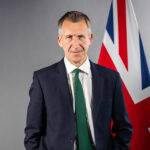
Tag: Dan Jarvis

  • Dan Jarvis – 2026 Comments on Defence Spending

    Dan Jarvis – 2026 Comments on Defence Spending

    The comments made by Dan Jarvis, the Secretary of State for Defence, on 30 June 2026.

    I know first-hand the importance of our Armed Forces having the kit and technology they need to do the difficult job we ask of them.

    I have secured more money and made different choices for defence. We will invest £298 billion over the next four years. That includes an additional £15 billion, of which most is extra day-to-day spending for training and improving availability of ships and aircraft to increase our war-fighting readiness. 

    By choosing to embrace new technology, I am equipping our forces with the autonomous systems which will give them the edge. 

    This extra money and these choices send a clear signal to our allies and our adversaries alike: Britain is stepping up on security.

  • Dan Jarvis – 2026 Comments on Commando Force

    Dan Jarvis – 2026 Comments on Commando Force

    The comments made by Dan Jarvis, the Defence Secretary, on 28 June 2026.

    Our elite Commando Force is respected around the world, conducting operations that help to keep the nation and our allies safe.  

    We’re investing in new lethal strike drones, high-speed boats and amphibious transport ships to give our Commandos the equipment they need to stay ahead of adversaries and defend us.  

    The Defence Investment Plan will prioritise getting the latest kit into the hands of our frontline forces, so they can continue their vital work in an increasingly dangerous world.

  • Dan Jarvis – 2026 Comments on Armed Forces Day

    Dan Jarvis – 2026 Comments on Armed Forces Day

    The comments made by Dan Jarvis, the Secretary of State for Defence, on 27 June 2026.

    Armed Forces Day is an extraordinary opportunity for our nation to come together to thank the people who keep this country safe, and all those who support them.

    It’s an honour to join the celebrations in Aldershot alongside thousands of people to pay tribute to the exceptional courage and dedication of all our personnel.

    Southport already hosts the largest Armed Forces event in their region, and as community that knows about resilience and coming together, it is fitting that they will host the 2027 national day. I congratulate all those involved in the successful bid.

  • Dan Jarvis – 2026 Speech at the RUSI Land Warfare Conference

    Dan Jarvis – 2026 Speech at the RUSI Land Warfare Conference

    The speech made by Dan Jarvis, the Secretary of State for Defence, on 23 June 2026.

    Almost a fortnight – time flies when you’re having fun. Thank you, Conference.

    My foremost responsibility is to our service personnel. As I speak, members of our armed forces are deployed on dozens of operations across the globe in every domain. All are serving at an increasingly dangerous moment in history. It’s now my duty to make sure that we rise to meet that moment. So while people’s attention is understandably focused elsewhere, my focus today, tomorrow and beyond will be dedicated to the job in hand.

    Twelve days ago, I was at Sandhurst on a visit to meet with cadets, thirty years after I marched into the place, awkwardly clutching a rifle and pining for a memory that will be familiar to a number in the room. The instructors’ faces had long changed; somehow the same dread that they inspired had not. Again, a feeling I’m sure is also familiar to many. Being in the company of those cadets was an inspiring experience; being in the company of those who step forward to serve always is.

    That evening I was asked to serve as the Defence Secretary. Now some people want to know why I accepted. The answer is because I was asked and it’s not my nature to back away. I crossed over the river from Downing Street into the Ministry of Defence, and honestly, it felt like I was coming home after fifteen years away. Soon afterwards, I was receiving briefings confirming what I already knew. But in those intervening years, tactics, technology and threats had changed beyond all recognition. The one thing, however, that had remained constant is the professionalism, courage and extraordinary skill of our servicemen and women.

    I should probably admit – and I think it’s fair to say – that I haven’t spent all of my professional life in uniform. People will always be our most important asset in the end. No doctrine, no technology, no plan, however sophisticated it might be, can succeed without the determination of the men and women whose experience and excellence is built from the ground up, shaped by history, hardened by experience. We produce the finest soldiers in the world. Those uncompromising standards develop exceptional NCOs who demand nothing less than the very best from their senior leaders, a truth borne out in the middle of the South Atlantic just last month, when our personnel deployed to Tristan da Cunha to help someone in desperate need of medical attention. As the then Security Minister, I worked with COBR on that operation. I did so with the utmost confidence, knowing that despite the complexity of the task, those involved would execute with precision and success.

    I think we will ask much of our service personnel in the years ahead. I know the immense weight of responsibility for every single member of the armed forces and their families that I now carry, and I know that I need to get them what they need, and I am utterly determined to make sure that I do.

    Now, it is of course a matter of public record why my predecessor and friend, John Healey, is not delivering these remarks. I accepted this job with full awareness of the task before me, and my priority is to get the Defence Investment Plan done, but not at any cost. I have a responsibility to get it right. There will be a change of Prime Minister. There will be no change in the urgent need to produce the Defence Investment Plan. The DIP is a significant and vast piece of work. The department has been working on it for twelve months. I’ve had twelve days, but I’ve made the most of all of them. I am now working to finalise and publish it before I travel to Ankara with the Prime Minister.

    And today I want to talk to you about where we are and where we’re going. This is a learned audience, but let me tell you what this government inherited: almost every single major programme behind schedule, delayed upgrades to our nuclear deterrent, and an army at its smallest size in centuries. There is no overnight remedy. There is no single defence review or funding settlement that can erase the legacy of accumulated neglect. Our armed forces and the British people they are sworn to protect deserve honesty when it comes to our national security.

    Given recent commentary, a casual observer would be forgiven for believing defence spending is somehow going down. Under this government, defence spending is going up. In fact, it’s going up by more than anyone currently in uniform has known before. To date, there is eleven billion more in the annual defence budget than there was when we entered office. Last year, we will invest two hundred and seventy billion in defence over the course of this Parliament. The DIP will mean more money added on top. We will have another spending review next year in which I expect defence to be the number one priority.

    Don’t get me wrong – the DIP will shape how our armed forces fight, direct what our industry builds and deepen the strength of our alliances and partnerships. It is important, but it is not yet complete.

    Now, the measure of Britain’s security is the strength of those who defend it. The purpose of the DIP is to ensure that our armed forces are strong in the coming years. We made a promise to our allies as they did to us: 3.5% by 2035. I told the NATO Secretary General last week that promise will be met, and a credible plan will be produced to ensure that it is. I said the same to Secretary Hegseth in our first meeting — or, as Pete put it, just a couple of majors getting together to talk about defence.

    NATO has been the foundation of our security for seventy-seven years. Everyone is familiar with Article 5 — but that famous promise is only made real by the hard principle of Article 3: that we can only stand up for each other if we are able to stand up for ourselves. Britain has always met NATO’s spending commitments; under this government, we always will. Britain has always stood with our allies; under this government, we always will.

    Last week, I gave President Zelensky my personal guarantee that the UK would stand in full support with his people — today, tomorrow and for the long term. The first UK interdiction of a Russian vessel, followed by the funding of one hundred and fifty thousand Ukrainian-made drones, were a seven hundred and fifty-two million pound expression of that promise.

    The most profound change in defence during my time away has undoubtedly been the pace of innovation — where once it was measured in years, now it is measured in months. It is of course a cliché to say that we only ever prepare for the last war. What is not a cliché is doing something about it. Putin’s brutal war of aggression altered everything — from NATO’s assumptions on collective defence, to attitudes on defence spending, and not least, the way of war. The conflict in Ukraine began with troops in Soviet-era tanks. Today, it is waged with drones that think for themselves. Conflict always forces us to reach into the future. But these four years have accelerated military technology in a way that we have never seen before. A drone rules the battlefield. It would be reckless to ignore the lessons of Ukraine. Artificial intelligence, autonomy and uncrewed systems are no longer capabilities of the future. They will receive investment that reflects their strategic importance.

    There are some who hold the view that we should trade everything in the locker for drones. I understand the temptation, but there are important distinctions to make. For as long as we remain a member of NATO, we won’t fight alone. And for as long as we maintain our independent nuclear deterrent, we will always command our own destiny. Even in Ukraine, amid extraordinary advances in technology, it is still a war fought in the trenches where ground is held street by street, and where the reach of artillery and deep precision strike has proven invaluable.

    Just this year, our armed forces have been called on to protect the seabed in the High North and the skies in the Middle East. They are now readying themselves for the prospect of regenerating Ukraine’s forces and reopening the Strait of Hormuz. All the while, they protect our island home and retain the ability to respond to crises in dangerous and distant lands. Britain needs a flexible, hybrid, integrated force that can deter and fight across every domain.

    The land forces which prevail tomorrow will be those who combine high-end platforms with mass, agility and considerable expertise. General Walker has achieved this. He has done more to modernise the British Army than any other Chief of the General Staff in living memory. You heard his vision earlier. The DIP will make real those ambitions — and that includes investing in the uncrewed ground vehicles the Army requires to build the next generation of land forces.

    And let me say this: all of the Chiefs have my full support, not just during this process, but way beyond it.

    Now, I’d like to take just a moment, if I may, to address our friends from industry. Because to say recent months haven’t been easy would perhaps be an understatement. But I’m grateful to you all, and I will be relying on you to implement the DIP and to make it a success. Though my life has been spent in public service, I have never mistaken where prosperity comes from. Our defence industrial base represents a commitment to excellence and to entrepreneurialism – hallmarks of the British spirit. You are a source not only of a pay check for many, but of pride for communities across our country. Most of all, you exist to equip the finest armed forces with the most advanced technology — kit they can rely on, operate with confidence and employ with precision. Something I saw during my first engagement in this role, at the opening of the Pulsar Systems Centre in Swindon.

    The problems with how we spend money in defence are well known and long established. So too is the ritual of every Defence Secretary promising to fix them. I’ll skip that particular ritual and just ask to be judged on what I do rather than what I say. I know that I have a unique responsibility, given what Cabinet colleagues have foregone from their budgets to support mine. My commitment to them, and indeed to the British public, is that with the need to spend more comes the duty to spend wisely. The DIP will lay out significant savings, and I will continue to scrutinise every line of spend to make every pound count.

    Look, I’m acutely conscious that there is something far more important that many of you would rather be watching. I don’t want to deprive anybody of a good vantage point. So I will draw my words to a close.

    Before I do, let me say this. Above all, we must never lose sight of what service in our armed forces can demand. It can be bloody hard. It asks more than any profession ever will. I tell those considering it to think about it carefully – but in return, you have the opportunity to serve your country in a way which no other profession can offer. Purpose, responsibility and belonging. You become part of something bigger – a force which secures the safety, values and interests of every person in our nation.

    My only real ambition when I arrived through the gates of Sandhurst all those years ago was to survive the place. Not for one moment did I think that one day I would be accountable for every member of our armed forces. To do so is a privilege and a responsibility beyond measure. This moment calls for leadership, and it calls for action. That is what I will provide. And I promise every single member of our armed forces that I will seek to serve them as well as they serve us.

  • Dan Jarvis – 2026 Comments on the Drone Facility in Swindon

    Dan Jarvis – 2026 Comments on the Drone Facility in Swindon

    The comments made by Dan Jarvis, the Secretary of State for Defence, on 12 June 2026.

    The character of warfare is changing, and it is changing fast. From Ukraine to the Middle East, we are seeing right now how uncrewed systems are rapidly evolving and reshaping conflicts – on land, in the air and at sea

    Our new DroneTEX facility at the heart of our Uncrewed Systems Centre is Europe’s largest drone test and development facility, and will help us ensure the UK embraces technologies that are redefining warfare.

    Where once new technology could take years from inception to reaching our Armed Forces, we will now be able to develop and field new tech in a matter of weeks – because in this new era, those who innovate fastest will win.

  • Dan Jarvis – 2026 Statement on the Disorder in Northern Ireland

    Dan Jarvis – 2026 Statement on the Disorder in Northern Ireland

    The statement made by Dan Jarvis, the Minister for Security, in the House of Commons on 10 June 2026.

    I am grateful for the opportunity to respond to this question, which I am answering on behalf of my right hon. Friend the Secretary of State for Northern Ireland, who this morning met the Chief Constable of the Police Service of Northern Ireland to receive an update on the situation.

    Let me start by saying that my thoughts, as I am sure the thoughts of the whole House, remain with the victim of the horrifying knife attack in north Belfast earlier this week and with his family. The House will be aware that a man has been charged in relation to that incident, and I can confirm that he is a 30-year-old Sudanese national who received refugee status in 2023 and was granted five years’ leave to remain. We must now allow justice to take its course.

    The attack on Monday evening has understandably caused anger and profound concern. However, there is a line between concern and disorder, and we must never allow it to be crossed. Let me be absolutely clear: there is no excuse for the disgraceful scenes of violence and disorder that occurred in Northern Ireland last night. Houses and vehicles were set on fire, placing lives at risk, terrifying law-abiding citizens and forcing residents to flee their homes. Reports that ethnic minorities were targeted are sickening.

    I wish to pay tribute to the police and the other emergency services for their work last night. Faced with an extraordinarily challenging situation, they responded with great courage and they are owed our thanks.

    Our message to those responsible for last night’s disorder is altogether different. To them we say this: you will be caught and you will face the consequences of your actions. As of this morning there had been three arrests, but more will surely follow. To those considering joining further disorder, my message is clear: do not do it—you will be held accountable for your actions, and you will feel the full force of the law.

    As hon. Members are aware, policing is a devolved matter, but the Home Office is of course monitoring the situation closely, and we are working with operational partners to understand and act on any implications for public order across the United Kingdom.

    Finally, I recognise that tensions are running high. At times like this, there is an even greater onus on us all, as the custodians of our democracy, to respond with unity, to choose our words and actions with care, and to uphold the first duty of the state, which is to maintain order on the streets and to keep the public safe, because the shameful scenes that we saw last night are not who we are, and they never will be.

    Claire Hanna

    It has been a shocking two days in Northern Ireland. The horrific knife attack in north Belfast has left a man fighting for his life, and an entire community distressed by what they have seen. Justice must of course take its course and deliver for that victim, whose family have asked for calm.

    Last night brought further outrage. Children in my constituency, and in others, were lifted out of their beds as their homes burned. Masked men roamed the streets, going from door to door, menacing and setting fire to cars, buses and homes, terrorising people on the basis of the colour of their skin or the sound of their voice—people from Sudan, people from India, people from Ukraine, and people from Belfast. Today, businesses are shuttered, medical appointments are cancelled, and schools are being closed for fear of getting young people home. So many people are frighted to walk the streets and to be in their own homes tonight. And when all the online agitators who stoke this stuff move on to their next target, we will be the ones left to pick up the pieces.

    People are of course entitled to their views on immigration, and of course Government policy is not perfect, but this has not been a debate or conversation. There have not been proposals, and there has not been honesty about the trade-offs. There has been mob justice, and some of the same-old, same-old proposals for a hardened border on the island of Ireland. Political leaders have a duty to lead, not to lean into people’s worst fears and anxieties. That video of the awful crime in north Belfast was unusual in its brutality, but the cycle of deflection and disorder has not been unusual. We have seen this movie too many times before.

    In Belfast we know all about blaming an entire community for the actions of others, we know all about scapegoating and tit-for-tat violence, and we know all about street justice. Violence creates division. It is affecting our economy, and undermining the vast majority of people in Northern Ireland who want to work together to build a better future. What support will the Government provide to those who have been harmed by this awful violence? Will they ensure swift justice for all the perpetrators of the last few days, and what will they do to bring to heel the online platforms that drive this madness?

    Dan Jarvis

    The hon. Lady describes with great clarity the impact of the scenes that we have seen in Northern Ireland over the past number of hours. Let me be absolutely clear: the scenes of disorder that we witnessed in parts of Northern Ireland last night are not only damaging communities, but literally putting lives at risk. Like her, I utterly condemn the attacks on property and vehicles, and the other related violence that we have seen. There is no justification at all for that type of thuggery, and no place for it in Northern Ireland or anywhere else.

    The hon. Lady will agree that it is now vital that the Police Service of Northern Ireland is given the time, space and full support that it needs to continue with its investigation. The rule of law must, and will, prevail; justice must, and will, be served.

    Violence is never a justified response, and this disorder only causes pain and suffering for those living in the area, as the hon. Lady eloquently described. Those involved need to take a step back and consider the consequences of their actions. I strongly urge anyone who has information, no matter how small it might seem, to come forward and contact the PSNI urgently in order to assist it with its inquiries.

    The hon. Lady specifically asked what support is being offered. She will understand that the Secretary of State for Northern Ireland is in Belfast today, and I know that he will be working with colleagues there to ensure that they have the support and resources they need to deal with this very troubling situation.

  • Dan Jarvis – 2026 Statement on National Security and Threat Level

    Dan Jarvis – 2026 Statement on National Security and Threat Level

    The statement made by Dan Jarvis, the Security Minister, in the House of Commons on 14 May 2026.

    With permission, Mr Speaker, I will make a statement on recent national security developments, including the increase in the national terrorism threat level.

    The events of the last few weeks have illustrated the breadth and seriousness of the national security threats that we face, from both terrorists and foreign states.

    In responding to these threats, they have also highlighted the strength and resilience of our world leading law enforcement and intelligence agencies.

    Over recent weeks we have seen…

    A series of arson attacks and incidents against British Jews and opponents of the Iranian regime, including the horrifying terror attack in Golders Green, which seriously injured two members of the Jewish community.

    We’ve seen the recent conviction of a 21-year-old man who planned to commit a terrorist attack to further his extreme white supremacist agenda.

    And convictions last week against two individuals under the National Security Act for surveilling and intimidating dissidents on behalf of China.

    And we are seeing record levels of investigative casework on terror plots, espionage, and state-linked threats to individuals.

    Mr Speaker, on 30 April, the Joint Terrorism Analysis Centre (JTAC) raised the UK national terrorism threat level from ‘substantial’ to ‘severe’. The decision to change the UK’s terrorism threat level is taken independently of ministers, based on the very latest intelligence.

    ‘Severe’ means that a terrorist attack is highly likely in the next six months. The threat level was last at severe from November 2021 until February 2022.

    This increase in the threat from terrorism follows the recent stabbing attack in Golders Green, but it is not solely as a result of that attack.

    The terrorism threat in the UK has been gradually increasing. It is driven primarily by the broader Islamist and extreme right wing terrorist threat from individuals and small groups based here in the UK.

    While the UK national threat level reflects JTAC’s assessment of the terrorist threat in the UK, it comes against a backdrop of increased state-linked physical threats which is encouraging acts of violence, including against the Jewish community.

    In response, we have announced £25 million of immediate funding to strengthen policing, protect Jewish communities and provide reassurance.

    This brings the total protective security funding to £58 million this year – the largest investment a government has made in protecting Jewish communities.

    Now Mr Speaker, I have also initiated a review of the national threat level system, which currently captures only the threat from terrorism, to ensure that it remains fully relevant, and that we are communicating as clearly as possible with the public about the national security threats that we face today.

    Mr Speaker, CONTEST, the government’s counter-terrorism strategy, sets out a clear framework – Prevent, Pursue, Protect and Prepare – which aims to ensure people can go about their lives freely and with confidence.

    We are broadening our intervention capabilities to better support those at risk of being drawn into terrorism through the PREVENT programme.

    We have improved training and guidance for frontline professionals and practitioners to better spot the signs of radicalisation.

    And we are working with technology companies, international partners and Ofcom to tackle online content used to radicalise, recruit and incite terrorism.

    Coordinated intervention is crucial to reduce the terrorist risk. So we are providing children and individuals with the right support with our Interventions Centre of Expertise, which brings together MI5 and Counter Terrorism Policing with expertise from wider public services.

    MI5 and CT Police work tirelessly to stop terrorist attacks, with 19 late-stage attack plots disrupted since 2020 including a chilling ISIS-inspired plot to target Jewish communities in Manchester using firearms.

    We have delivered our manifesto commitment to improve the security of public events and venues across the UK through Martyn’s Law, and free expert advice, guidance and training is available to owners and operators of venues and public spaces through the ProtectUK website.

    Through closer working across the emergency services, we are maintaining strong, multi-agency working capabilities to respond to a range of different scenarios. We keep our preparedness under constant review, and the response is exercised regularly, ensuring that our emergency services can respond immediately to terror attacks – as we saw in their brave response to the violent antisemitic attack in Golders Green.

    Now Mr Speaker, terrorism and state threats are sometimes interrelated, as we have seen with threats from states such as Iran, and the wider use of both terrorist groups and proxies by state actors including Russia.

    We face a sophisticated and persistent challenge in responding to China, which presents a unique set of threats to the United Kingdom.

    The case last week demonstrates that we have the tools to successfully respond to that challenge.

    And Members of this House will know that a jury delivered its verdict following the nine-week trial of Bill Yuen and Peter Wai.

    The jury found both individuals guilty of assisting a foreign intelligence service – which, in this case, was the Hong Kong Police Force – this was done under the National Security Act. Wai was also found guilty of misconduct in public office.

    The verdict represents the first convictions under the National Security Act related to China – and sends a strong message that the full force of the law will be applied to anyone who carries out hostile acts in the UK on behalf of any foreign state.

    Both individuals held positions of power, leveraging these to conduct hostile activity on UK soil on behalf of China. It is simply unacceptable that an employee of a foreign power was conducting a shadow policing operation in the United Kingdom.

    That is why the Chinese Ambassador has been summoned, and the Foreign Secretary will be making clear to Hong Kong’s Chief Executive that this type of activity was, and will always be, unacceptable in the United Kingdom. The Foreign Office have also made it clear that Yuen’s employment at the Hong Kong Economic Trade Office must be terminated immediately.

    Now Mr Speaker, this trial has understandably caused considerable concern within the UK amongst the Hong Kong community.

    The safety and security of Hong Kongers in the UK is paramount. That is why my officials have been working closely with the National Security Protective Authority, to deliver new guidance on transnational repression. This guidance provides examples of what transnational repression might look like and what to do if anyone feels under threat from any state.

    Transnational repression from China however, is just one type of state threat activity. That is why the government is taking decisive action across a much broader range of state threats.

    We are…

    Rolling out new training for police officers and staff to increase their understanding of state threats.

    Driving forward the Counter-Political Interference and Espionage Plan to protect the UK’s democratic institutions and processes.

    Bringing forward fast-track legislation in the coming weeks which will clamp down on individuals and groups carrying out hostile activity for foreign states, including those who act as their proxies. This legislation will include new proscription-like powers to ban the activities of state-backed organisations who pose a threat to the UK’s national security.

    And we are implementing all the recommendations made last year by Jonathan Hall KC, the Independent Reviewer of State Threats Legislation.

    So we are responding to state threats in all their forms.

    Now Mr Speaker, national security is the first duty of government. As this House knows, that duty includes being able to respond to a range of threats.

    So we are giving our police and intelligence services the resources they need for that vital role. Last year we provided an extra £140 million for Counter Terrorism Policing, plus nearly £600 million more for our intelligence services. This takes their funding to record levels.

    And Mr Speaker, protecting our communities and standing up to hatred and intolerance is a shared responsibility of every person in the UK.

    So I urge the public to remain vigilant and report any concerns they have to the police. Their contribution is a vital part of our efforts to keep our country safe.

    And Mr Speaker, support to the victims of terrorism is a moral duty, and I would like to acknowledge the profound and enduring impact on the survivors and families of those affected by Golders Green, and all terrorist attacks, whose lives have been forever changed.

    I want to close by thanking those individuals serving in our police and security services for their dedication to keeping our country safe, and the public for their continued vigilance. We owe them all a debt of gratitude.

    Mr Speaker, I commend this statement to the House.

  • Dan Jarvis – 2025 Speech on Cyber Threats

    Dan Jarvis – 2025 Speech on Cyber Threats

    The speech made by Dan Jarvis, the Security Minister, in London on 24 November 2025.

    It’s great to be here with you all today. 

    I’m also really pleased that the invitation for today’s conference actually reached you, and didn’t fall into your email’s junk folder. 

    But if you are here because you picked up this invitation in your spam, I just want to be crystal clear – we are not giving away a free Lamborghini at today’s event.

    Hopefully everybody is connected to the wifi, and if you’re not, the password is very simple to remember.

    It’s the full text of the Magna Carta in Latin.

    Anyway, it’s great to be able to welcome you all to the House of Commons. 

    But at first glance, it may seem like Parliament and Cyber are two mutually exclusive concepts. 

    Our democracy has – historically – been very wary of new technologies.

    There was a Parliament Technology Gap from when an innovation was created until it was introduced in Parliament. 

    First, the printing press.

    From the 1480s, printing became more common in this country. Thomas Hansard began printing Parliament’s debates independently in 1811 and it took a select committee in 1909 to adopt Hansard’s innovation as a legitimate part of their service. 

    A Parliament Technology Gap of about 400 years. Not a great start.  Next, broadcast cameras and microphones, which came into use in the early 1900s.

    Initially, the BBC couldn’t broadcast anything said in either House until two weeks after it had been discussed.  But eventually, cameras entered Parliament by 1989. A Parliament Technology Gap of about 90 years – so something of an improvement.  

    Finally, the personal computer and the internet – which became commonplace from the late 1970s. Parliament was again slow to take up the benefits of IT. 

    One MP, during a debate in 1988, said “the technological revolution – of which we are so proud in Britain – seems to have passed Westminster by”.

    From 1994, every MP with a personal computer was given internet access. A Technology Gap of only 20 years – the best yet. 

    And what about the technology of the future?

    Now, much like Steve Jobs and black rollnecks, Parliament and tech are now becoming inseparable.

    Parliament is more proactive. Its ‘Information and Technology Strategy’ faces the future stating how Parliament must continually adapt to the evolving landscape. 

    This is exactly the right approach to take. 

    The pace of change is only accelerating and the speed in which new technology is introduced and adopted is becoming shorter and shorter. So, we must protect ourselves against the threats of tomorrow. 

    Because cyber-attacks taking place across the world are only getting worse.

    If cybercrime were a national economy, it would be the third largest in the world.

    Microsoft’s Digital Defence Report said that – by 2027 – scams are expected to cost the world $27 trillion a year.

    As a joint Minister between the Cabinet Office and the Home Office, I have heard from my policing colleagues about the sometimes unseen cyber offending. Some that are central to truly awful online crimes.

    Like those that hack into accounts to steal and then trade intimate images mostly of women and children. 

    Or the community groups that blur boundaries between cyber and violence in the most despicable way. 

    These are growing trends and of deep concern, all of which show that our collective exposure to serious impacts is growing at an unprecedented pace.

    This is especially true when it comes to our world-leading business sector. It is essential for every organisation to operate in a way that minimises the risks of a cyber incident.

    The mindset for businesses should not be ‘if’ we get attacked but ‘when’ we get attacked. That means our cyber defences and technical resilience must evolve to cope with the threat.

    Which is why we’re doing more than ever before to keep our businesses and society safe from cyberattacks and cybercrime. 

    And we’re doing that through the building we’re all in today.

    Just a couple of weeks ago, the Cyber Security and Resilience Bill was introduced to Parliament.

    It will boost cyber protections for the services that people and businesses rely on every day. And it will ensure any breaches in cyber security are dealt with quickly.

    This is a vital piece of work, as is our Counter Political Interference and Espionage Action Plan.

    Because we know that Parliament is also a target, which is why we are taking this decisive action against foreign interference and espionage operations.

    The Action Plan will strengthen our legislation to disrupt the threat, help those who work in politics to recognise, resist and report the threat, and help break down the ecosystem of proxy organisations used by foreign powers to target our democratic institutions.

    We’re also giving more direct support to businesses to make sure they remain safe.

    The new tools we have created through the National Cyber Security Centre will help every kind of business, from the SME with a handful of employees, to larger corporations with hundreds of staff. 

    Our ‘Cyber Action Toolkit’ that we launched last month is designed to empower sole traders and small businesses to take their first steps toward cyber protection. 

    Our ‘Cyber Essentials’ certification proves your organisation is protected against common cyber threats.

    And over 13,000 organisations are part of the free ‘Early Warning’ service, giving them exclusive access to information on potential cyber-attacks. 

    All of this work will be enhanced next year when we publish the new National Cyber Action Plan. 

    It will outline how we will continue to build resilience and combat the technological threats facing us to secure economic growth.

    And, of course, it’s vital that the police, National Crime Agency, and our security services continue to work together so we can ruthlessly pursue and disrupt these cyber threats. 

    These criminals need to know we will use all of the tools at our disposal to counter their activity.

    We must support our businesses in any way we can. But businesses cannot be protected by the government alone. 

    Which is why last month, a letter was sent to the CEOs of the FTSE 350 companies that implored those business leaders to recognise the threat that is facing them.

    Now, today I’m talking to some great leaders from our tech sector – a sector that knows the importance behind rigorous security. 

    And I believe we are staring at a potential win-win situation for us if our business leaders increase their cyber security, working alongside the innovative UK cyber industry that brings in over £13billion in revenue. 

    Because this should be a priority for everyone driven at board-level, and I implore any business leader who thinks they may be exempt from gripping cyber risks to think again.

    Perhaps the Parliament of the past was right. 

    They could more or less evade utilising technology and, by doing so, they could keep their discussions mostly private and keep the country running. 

    That is not an option open to any of us today. Technology enhances everything we do. 

    It keeps our democracy transparent, it keeps our businesses successful, it keeps people connected and safe. 

    But this interconnection between technology and society can be exploited by those who seek to cause us harm.

    Many of you in this room lead by example.

    Our tech sector is one of the most crucial chips in the economy’s motherboard. One that takes its cyber security seriously.

    I hope that, through Government support and their own initiative, that the rest of our business leaders follow in your footsteps. 

    Thank you very much.

  • Dan Jarvis – 2025 Speech at the International Security Expo

    Dan Jarvis – 2025 Speech at the International Security Expo

    The speech made by Dan Jarvis, the Home Office Minister, on 1 October 2025.

    Good morning. It’s good to see everyone. This is slightly more people than I was expecting but I hope that’s a good thing.

    I can’t quite believe it’s been a year since I was last at this event.

    If a week is a long time in politics, then a year is… well, a very, very long time in politics!

    Last year, I was relatively new in post.

    And this year, I’m relatively new in another post, but back with more experience, more insight, and – unfortunately – much more grey hair!

    One thing is the same though – I’ve had to dash back from my Party Conference to be here with you this morning!

    But rightly so.

    There are many reasons why I wanted to ensure I was here with you this morning.

    This event showcases the very best that our security sector has to offer, and I learn a lot from the collective wisdom in this room and in the hall out there.

    And there’s also the added bonus that I feel like I’m less likely to be heckled here than at the Labour Party Conference!

    So far, this has proved to be the case. We’ll see where we get to.

    And as with last year, I’ve not yet been lobbied by anyone dressed as a badger, but let’s see what the rest of the morning brings!

    Seriously, though, it’s a great pleasure to join you all at ISE 2025.

    Looking back at my speech a year ago, I was struck by how much has changed.

    Twelve months ago, I was talking about building my policy knowledge based on watching Spooks, Narcos and Line of Duty.

    You’ll be pleased to hear that I’ve come a very long way since then.

    For one thing, I’ve now watched Slow Horses!

    So that’s helped – not to mention all the briefings, meetings and visits.

    And in that vein, can I take the opportunity to thank Peter and Rachel from the NineteenGroup, for inviting me to speak here this morning.

    Now I told last year’s expo that the threats and challenges we face are more complex and interchangeable than ever before.

    And it is an assessment that bears repeating.  

    We are living through a period of deep global instability and volatility.

    And the sources of danger are broader and more connected. 

    Fraud. Border security risks. Hostile state activity. Terrorism. Cyber crime.

    All pose acute risks to our democracy, our economy and our society.

    Just recently, criminal cyber gangs targeted our critical national infrastructure at Heathrow and other European airports.

    This has followed similar attacks on Marks & Spencer and Jaguar Land Rover.

    These incidents serve as a stark reminder why so many of the companies that we see here today are vital to defending our thriving industrial base.

    And of course, the government is taking concerted action to repel the many different threats we face.

    For example, we are ramping up enforcement activity and returns agreements to tackle border security challenges at source, introducing tougher offences for espionage, sabotage and foreign interference and improving our domestic sanctions regime to target terrorist-linked groups.

    On cyber, earlier this year, I announced a new package of measures to tackle ransomware, and we are boosting police powers through the Crime and Policing Bill.

    And during the recent government reshuffle, which is quite a nerve-wracking experience I can tell you, my role has expanded to be shared across the Home Office and the Cabinet Office.

    This is a recognition from the Prime Minister that we did not need separate spheres of activity when it comes to national security, and a single minister working with all the key agencies and individuals, driving forward a single vital agenda across government and beyond.

    More broadly, our recently published National Security Strategy sets out a historic commitment to invest 5% of GDP on national security by 2035.

    This transformative uplift in funding underscores the government’s unshakeable commitment to protecting our country and all those who live here.

    And it is also about backing ourselves…

    …developing our sovereign capabilities…

    …rebuilding our industrial base and supporting UK plc.

    It is about recognising that industry is not just another supplier, but is absolutely fundamental to our national security.

    That is why the National Security Strategy sits alongside the Strategic Defence Review.

    Taken together, they map out for a vision for a ‘whole-of-UK’ approach to national security, delivered through partnerships across government, industry and society.

    And we strive to make this vision a reality, the security sector will undoubtedly have a vital role to play.

    The numbers bear that out: the security sector alone directly employs 148,250 people in the UK over the last 10 years, turnover has grown by 176%, and exports by 244%.

    In 2024, the UK Security Industry achieved £24 billion in turnover and contributed £11.7 billion in value added to the UK economy and the most recent statistics show £11 billion in security export sales.

    These are big numbers and this success funds innovation in increasingly crucial strategic capability areas, including AI, cyber, communications, digital forensics, border screening, counter drone capabilities and many others.

    They span across many of the IS-8 sectors highlighted in the Industrial Strategy – specifically Defence and National Security, Advanced Manufacturing, Professional and Business Services, and Digital and Technologies.

    These strategies mark a clear shift towards embedding SMEs into national security innovation, with funding, procurement reform and eco-system building all designed to support their growth.

    Understanding threats and developing strategies to mitigate them is only one part of the mission.

    As we move into the second year of this government, my focus is on implementation and delivery.   

    When I visited Intersec Riyadh last year – one of the Middle East’s leading exhibitions for safety, security and emergency response – I saw first-hand just how highly UK expertise is regarded on the global stage.

    For my part, I want to amplify your success every opportunity I get.

    To that end, I will shortly be chairing a briefing with all of the government’s trade envoys.

    These roles are held by senior parliamentarians who support the government’s growth mission by engaging with key markets right around the world. I am determined to raise their awareness of the innovation and world leading capabilities the UK security sector has to offer.

    I am also writing to every UK ambassador and high commissioner across our diplomatic network – asking for their direct support in driving UK security exports at source, including identifying market opportunities for UK companies to access.

    I have engaged with international counterparts to promote what UK security industry has to offer, including countries as diverse as Poland, Columbia, Morocco and Saudi Arabia. 

    But I also repeat the ask I made of you a year ago.

    You are the experts grappling with the challenges of maintaining competitive advantage and driving the industry forward.

    I therefore need you to tell me what more we can do to secure our sovereign capabilities and access market opportunities, both here and abroad.

    Because we are here to back you.

    UK SMEs, particularly those operating in the security sector, now have access to a diverse range of government-backed funding opportunities designed to support innovation, growth and export potential.

    These include Innovate UK, which offers grants and innovation loans for Research and Development and commercialisation and the British Business Bank, which provides loan guarantees, equity investment, including the Cyber Seed Fund, and startup support.

    UK Export Finance can help SMEs secure international contracts through guarantees and insurance.

    And Sector-specific programmes such as the Defence and Security Accelerator (DASA) and the UK Defence Innovation Fund offer targeted funding for emerging technologies like AI, autonomous systems and cybersecurity.

    Strategic initiatives like the Defence Industrial Strategy, Defence SME Action Plan, and the National Security Strategic Investment Fund further embed SME support into national security and industrial policy, promoting access to procurement, partnerships and regional growth.

    Alongside all the work we are doing to support industry, strengthen resilience and supply chains and build up our security ecosystem, we must also make sure our laws are fit for purpose.

    And that brings me on to the Terrorism (Protection of Premises) Act, which became law earlier this year.   

    The Act is more commonly known as ‘Martyn’s Law’ after Martyn Hett, who alongside 21 other victims, was killed in the horrific Manchester Arena attack of 2017.

    Martyn’s mother Figen Murray, who is here today, has campaigned heroically for the changes we are now implementing.

    The Act will ensure the public are better protected from terrorism by requiring certain public premises and events to be prepared and ready to keep people safe in the event of an attack.  

    We intend for there to be an implementation period of 24 months before the act comes into force. 

    This is to give those responsible for premises and events time to understand their new obligations, and to plan and prepare accordingly.

    Over the summer, officials from the Home Office and the SIA have briefed over 1,000 people on the implications of the act through their webinars. 

    And we will continue to engage far and wide with those in scope of the legislation to adopt good protective security practices support stakeholders in different ways.

    For example, we heard yesterday from Jon Savell from CT Policing about the launch of ACT for local authorities. This Home Office sponsored project is designed to provide local authorities and partners with specialist support to embed good CT practice into their everyday activity.

    Since taking over the oversight for the SIA, I am overseeing a substantial programme of work to enhance it and deliver the government’s ambitious agenda.

    This includes strengthening the SIA’s approach to past criminality, tackling training malpractice and delivering on the Manchester Arena Inquiry Monitored Recommendations 7 and 8.

    The SIA’s public consultation on its stricter approach to past criminality by applicants received strong support and I have asked the SIA to begin implementation.

    This will improve the SIA’s approach to public safety, as it will mean there is a presumption to refuse anyone with sexual, child abuse or serious offending, and a broader range of offences will be considered when assessing applicants.  

    To improve this further, my officials are considering options to introduce higher level criminal record checks for certain security roles across the UK.

    On tackling training malpractice, the SIA is developing a joint strategic approach whilst scaling up enforcement activity.

    The government also remains committed to delivering the intended outcomes of the Manchester Arena Inquiry. 

    My officials have carefully reviewed Monitored Recommendations 7 and 8, and have worked with the SIA to develop practical proposals for implementation.

    I am keen to ensure a wide range of views are included on the significant changes proposed, and that the cost and regulatory burden from the changes is proportionate.

    I am also keen that, if necessary, this government will deliver primary legislation in support of these ambitious changes to the SIA. This will be one of the few times any government has delivered primary legislation for the SIA to increase better public safety.

    I am very pleased to announce the formation of the S12, a new industry led initiative to bring together various parts of the private security industry and speak to the government with one voice.

    Earlier this morning we had a good and constructive meeting with the elected leaders who make up the S12 and listened to how they will organise to improve standards in the security industry. I am keen for the government and the SIA to work closely with them.

    And before I finish, I want to take the opportunity to encourage everyone here to visit the government zone, speak to officials and explore ways how we can deepen our collaboration.

    We have a team within the Home Office called the Joint Security and Resilience Centre who are here to support, listen and feed back.

    JSaRC is a bridge between government and industry. Tell them about your company, the sectors you operate in and the challenges and opportunities where we can deepen collaboration.

    The Accelerated Capability Environment or ACE, a name you might recognise, are also showcasing their innovation expertise in the government zone. Engage with them to explore collaboration opportunities and how we can come together to unlock the potential of data, technology and AI for government.

    Finally, the Home Office will also be hosting, alongside our ADS partners the Security and Policing event in Farnborough next March to showcase UK industry solutions across the world.

    This year’s event was the biggest and best ever with just under 10,000 visitors across the 3 days and over 400 exhibitors in attendance. I would encourage you all to sign up for what is a truly flagship event for the UK security sector and for the UK government.

    I will wrap up with a word of thanks and a challenge.

    First, the thanks.

    Whatever sector, field or discipline you work in, you are part of the most important mission for any society – namely keeping people, organisations and institutions safe from harm.

    So, please know that your efforts matter, they are making a difference, and they are appreciated by me, by the Home Secretary and by the whole government.

    Finally, the challenge – and this applies to the public and private sectors alike:

    Let’s set our sights even higher, let’s break new ground in our quest for new and better solutions to the challenges we face and let’s make the partnerships we already depend on stronger than ever.

    That is I think the way forward, and it is the way we will build a stronger, more secure country for us all.

    Thank you.

  • Dan Jarvis – 2025 Statement on Counter Terrorism Policing Arrests

    Dan Jarvis – 2025 Statement on Counter Terrorism Policing Arrests

    The statement made by Dan Jarvis, the Minister for Security, in the House of Commons on 6 May 2025.

    With permission, Mr Speaker, I will make a statement on the series of national security-related arrests that took place on Saturday 3 May. Protecting our national security is the first duty of Government, and it is a testament to our world-leading law enforcement and intelligence services that, through their tireless commitment, so many plots against the UK have been thwarted. I pay tribute to them again today for the work that they have done not just this weekend, but in recent weeks and months, on these important operations.

    The two operations that took place across multiple locations this weekend were significant and complex. They were some of the largest counter-state threats and counter-terrorism actions that we have seen in recent times, and I am sure the whole House will want to join me in thanking the police, the security services and other partner agencies across the country, who showed their professionalism and expertise in carrying out these operations to keep our country safe.

    Right hon. and hon. Members will understand that these are complex investigations. The police and the security services need time and space to be able to pursue their investigations, and our first priority must be to protect the integrity of that work so that we do not cut across those investigations and operations at a crucial time. However, these are serious matters, and the House will rightly want to remain informed. I will therefore outline as much detail as I am able, and I hope that right hon. and hon. Members will understand that there is a strict limit to what I can say at this stage, given that investigations are now ongoing.

    I will first outline the facts around the events on Saturday 3 May. Throughout the day, counter-terrorism police undertook a series of arrests relating to two separate investigations. In total, eight men were arrested by the Metropolitan police’s Counter Terrorism Command. Five men were arrested on suspicion of preparation of a terrorist act, contrary to section 5 of the Terrorism Act 2006, as part of a proactive investigation in the areas of west London, Swindon, Rochdale, Stockport and Manchester. All five men are Iranian nationals. While four of the individuals remain in police custody, the fifth has now been bailed with strict conditions.

    As part of the investigation, police officers carried out searches at a number of addresses in the Greater Manchester, London and Swindon areas. Investigations continue, with searches and activity still under way at multiple addresses across the country. The investigation relates to a suspected plot to target specific premises. Police officers have been in contact with the affected site’s representatives to make them aware and provide relevant security advice and support. However, the police have also been clear that for reasons of operational security and public safety, they are not—and I am not—able to provide further information on the target at this time, and I urge Members not to speculate about the site.

    In a separate police investigation, two men were arrested at two different addresses in north-west London, and one man was arrested at an address in west London. All three were arrested under the National Security Act 2023. These three men are also Iranian nationals, and remain in police custody. I can confirm to the House that these are the first Iranian nationals arrested under the National Security Act.

    The operations to execute these eight arrests under both counter-terror and counter-state threat powers—in different parts of the country, and in the space of 24 hours—were intensive. They involved a range of different organisations, including different police forces, counter-terror police, the National Crime Agency, and our security and intelligence services. These operations were co-ordinated through the world-leading Counter Terrorism Operations Centre, which brings together and co-ordinates the UK’s agencies, alongside the agencies of our Five Eyes partners, to detect and tackle national security threats. I welcome the work of the previous Government to establish CTOC in 2021, and this Government have continued to support it and invest in it since taking office.

    The significant point about both counter-terrorism and counter-state threats powers is that they allow the police to intervene early to prevent and disrupt threats, not just respond after events have taken place. This is crucial for public safety, but it also makes the investigations more complex, and that is why the police need the time and space to pursue them now, so we will not be providing a running commentary on the work that they are doing. However, what now follows is an incredibly complex set of investigations, involving hundreds more officers carrying out forensic searches, collecting vital evidence across different sites across the country and securing witness statements, backed up by the continued efforts of our security and intelligence agencies. This is careful, painstaking work.

    At this stage in the operations and investigations, it would not be appropriate for me to speculate on or comment further on the details of these two cases and the motivations behind any of the threats that were posed. However, the House will be aware that these operations come against a backdrop of complex, interconnected threats to the UK, where state threats and counter-terrorism as well as serious and organised crime are intertwined together.

    For 20 years, the greatest focus of our national security work was on terrorism—primarily from Islamist terrorism, with additional threats from Northern Ireland-related terrorism and other areas—and those threats have not gone away. Fifteen terrorist attacks have taken place since 2017, and there have been 43 late-stage disruptions of terrorism plots, but alongside that we have seen a serious, growing and complex challenge from state threats. Last year, Sir Ken McCallum, the director general of MI5, said that MI5 state threat investigations had increased by 48% in the previous 12 months. He added that, since January 2022, the police and MI5 had responded to 20 Iran-backed plots presenting potentially lethal threats.

    In March, I told Parliament that the UK is facing a growing and evolving threat from malign activity carried out by a number of states. My statement in March outlined the Government’s response to the unacceptable threat that we face from the Iranian state, and the steps we are taking to ensure that our intelligence and law enforcement agencies have the tools they need to disrupt and degrade Iran’s malign activity on UK soil. We have delivered on the commitments made. I announced that the whole of the Iranian state, including the Islamic Revolutionary Guard Corps and the Ministry of Intelligence and Security, would be placed on the enhanced tier of the foreign influence registration scheme. I laid the regulations to make this happen in the House on 1 April and committed to bring the scheme into force on 1 July. I trust that all Members will vote in favour when those regulations are debated shortly.

    Let me be clear: anyone in the UK who works for the Iranian state must declare it or they will be committing a serious criminal offence. We will also go after the criminal networks and enablers that Iran uses to carry out its work. Last month, the Government sanctioned the Foxtrot network—a network involved in violence against Jewish and Israeli targets in Europe on behalf of the Iranian regime. Training and guidance on state threats activity is now being offered by Counter Terrorism Policing to all 45 territorial police forces across the UK.

    The independent reviewer of terrorism and state threats legislation, Jonathan Hall KC, was asked by the Home Secretary to review the parts of our counter-terrorism framework that could be applied to modern-day state threats such as those from Iran. The Home Secretary specifically asked the reviewer to look at a state threats proscription tool, so we are not held back by limitations in applying counter-terrorism legislation to state threats. Jonathan Hall has now completed his review and will publish it shortly, and the Government will not hesitate to take action in response to Mr Hall’s advice.

    As we continue to support the police and the security services in their investigations, I can also tell the House that the Home Secretary has instigated a series of security assessments that are being done or refreshed in the light of the cases this weekend and the further information surrounding them, which will ensure that the Government can respond robustly and comprehensively to any wider national security issues raised by these cases.

    Working alongside our international allies to counter state threats is central to our success. The Foreign Office is engaging with our closest allies to outline the disruptive action that has taken place and will be considering potential future response options as the investigation progresses. The Home Secretary remains in close contact with my right hon. Friend the Foreign Secretary, who is committed to doing everything necessary to protect the country from these threats and to bring to bear all the diplomatic tools at our disposal.

    The Home Secretary and Ministers will provide an update on the national security position when we are able to do so, following both these operations and investigations and the wider security assessments that are under way. The Government will not hesitate to act robustly to respond to these plots at the appropriate time, but first, we must allow the investigations to continue. Our police, security and intelligence agencies are the best in the world and stand ready at all times to take action to keep our country safe. I am sure they will have the support of the whole House as they continue this vital work. I commend this statement to the House.