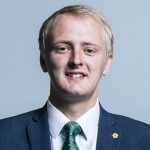
Tag: Ben Lake

  • Ben Lake – 2022 Speech on the National Food Strategy and Food Security

    Ben Lake – 2022 Speech on the National Food Strategy and Food Security

    The speech made by Ben Lake, the Plaid Cymru MP for Ceredigion, in the House of Commons on 27 October 2022.

    It is a pleasure to follow the hon. Member for The Cotswolds (Sir Geoffrey Clifton-Brown). I agreed with a great deal of what he said, and I should like to elaborate on some of the themes of his speech, particularly his exhortation for us to grow more of our own food in the United Kingdom. That is not only good for UK farmers and growers, but good for the health of people across these islands. It will also help us to reduce our climate footprint when we lessen our dependence on imports and global supply chains.

    I do not want to labour the point, but this will be the focus of my speech. I believe that self-sufficiency plays an important part in food security, and we need to concentrate on that. A DEFRA report on food security published in 2021 stated that the UK was about 75% self- sufficient in foodstuffs that could be produced domestically. The actual consumption of UK-produced food was about 54%, which means that we were importing some 46% of the food that we consumed. When I first came across that statistic, I was interested and, indeed, shocked by the discrepancy between the two figures, but it makes much more sense when we recognise that there is a considerable variance in the level of self-sufficiency in different types of food. For example, we are 100% self-sufficient in oats and barley and lamb. That is an important statistic for me, as a proud Member for a Welsh constituency. It then goes up to 90% self-sufficiency in wheat—we heard from the hon. Member for Hendon (Dr Offord) about the real contribution that wheat growers on these islands have made in the past year—and 80% in oilseed. However, the figure stands at only 54% for fresh vegetables and 16% for fresh fruit. In discussing food security, we need to consider the foodstuffs—fruit and vegetables in this particular example—of which we clearly need to grow more.

    The dependence on global supply chains for so many of our imports means that, as the hon. Member for The Cotswolds (Sir Geoffrey Clifton-Brown) explained, we are vulnerable and exposed to shocks—be they geopolitical, climate, production or logistical—that are completely beyond our control. This Parliament has perhaps experienced a few unprecedented global shocks, the first being the covid pandemic, which wrought havoc on a lot of our food production and imports, and then, more recently, the Russian invasion of Ukraine, which has had a significant impact not only on grains, wheat and sunflower oil, but on many of the import costs for domestic production—I will talk more about that.

    When we look to the future of our food security, increasing climate change poses a significant risk. I mentioned that we are self-sufficient to the tune of only 16% of the fruit that we consume. DEFRA’s food security report notes that:

    “There are concerns about water availability for fruit and vegetable production in many of the countries on which the UK currently depends”,

    particularly on the equator, but also in the Mediterranean region.

    When we discuss food security, we need to think about growing more of our own. Other Members have mentioned the shocking impact that food inflation is having on families across the country. I do not wish to labour that point further, but for a number of foodstuffs, the problem could be alleviated to some extent if we had greater self-sufficiency in the categories that they relate to.

    The hon. Member for The Cotswolds, who I hope will forgive me for referring to him so often—I thought he made an excellent speech—mentioned the Groceries Code Adjudicator and the power of the supermarkets. It is not right for them to balance their books, or indeed to profit, on the backs of the nation’s poorest families. We know that some of their increasing costs are not being fed back to the primary producers. As we have discussed this afternoon, rising import costs—particularly for fertiliser and feedstock—and high fuel and energy costs are having an impact on primary producers, who are not getting higher prices for their goods from the supermarkets and their suppliers. The Government need to look again at how they can make the system fairer.

    Personally, I think there is much to be said for moving away from the more globalised food system to a more local one. In that regard, I recognise that a great deal of work needs to be done to reinvest in the processing facilities that were once very local but have now been lost, such as mills, abattoirs and the like. They were once a feature of every village in rural areas; now, they are seldom found.

    The rising costs on farmers are being fed through the system and, in turn, into shopping bills, but are not being recompensed by the major supplier and supermarkets. That is a serious issue that could be addressed by greater self-sufficiency. The food strategy is an opportunity to consider a holistic way of ensuring that more of the food that we consume is produced on these islands.

    Jo Gideon

    Does the hon. Gentleman agree that consumers also need to be re-educated on the fact that strawberries do not grow for 12 months of the year, for example, and supermarkets will inevitably have different offers of our own produce at different times of the year?

    Ben Lake

    I entirely agree. We should set an ambition not only to be self-sufficient in the food that we produce, but to move down to a more local and seasonal food system. One of my peeves is that it is still possible to buy fresh strawberries on Christmas Eve—consider the environmental cost, if nothing else. We as a society are sadly ignorant to that, and we need to learn it again.

    I am conscious that I am running out of time, so I will finish with a warning to the Government: in our move—I hope—to becoming more self-sufficient in our food production, we must remember that we need producers to do the work on the land and, as the right hon. Member for Orkney and Shetland (Mr Carmichael) said, in our seas. I am afraid that in a recent survey, NFU Cymru found that of the 700 farmers it spoke to, 71% intended to reduce production in the next year, and a significant number of them were also questioning whether to continue farming in the years to come, as a result partly of higher costs, yes, but also of the cumulative impact of many years of not getting a fair deal from some of the larger supermarkets for the price of the goods that they grow and rear.

    Finally, I am very concerned—I think the Government can return to this—about the need for proper land-use planning and consideration. I know that the administrative burden would cross the four nations of the United Kingdom, but we know exactly the types of land that we have, down to the field level. At the moment, I fear that when it comes to certain carbon-offsetting schemes, prime agricultural land is being sold, often to corporations that intend to greenwash their own emissions rather than contributing to the nationwide effort to reduce our carbon footprint.

    Even the Green Finance Observatory has expressed concerns about the current UK emissions trading scheme system. It states:

    “The elephant in the room is that offsets are fundamentally not about mitigating climate change, or even about removing past emissions, but about enabling future emissions, about protecting economic growth and corporate profits.”

    Too often—and, I am afraid to say, in Ceredigion—too many farms that were prime agricultural productive land have been bought by such corporations not to reduce their emissions, but to greenwash them so that they can continue business as usual. In so doing, they reduce our own productive capacity.

  • Ben Lake – 2022 Speech on Channel 4 Privatisation

    Ben Lake – 2022 Speech on Channel 4 Privatisation

    The speech made by Ben Lake, the Plaid Cymru MP for Ceredigion, in the House of Commons on 14 June 2022.

    It is a pleasure to follow the right hon. Member for Maldon (Mr Whittingdale), and I agree with much of what was said by the Father of the House and the hon. Member for Cardiff West (Kevin Brennan). I do not feel that the case for privatisation has been made.

    As the hon. Member for Cardiff West so eloquently conveyed in his imagined conversation between the Secretary of State and the permanent secretary, Channel 4 is in rude financial health and there is a danger that many of its commercial competitors look on with envy at its digital innovation, so I do not think the case has been made for privatisation in the interest of preserving the future of Channel 4.

    I have previously raised concerns that privatisation would jeopardise Channel 4’s valuable investment and contribution in communities across the UK as part of its public service remit, and particularly its contribution to production companies and content producers in the nations and regions of the UK thanks to the quotas set by the Government as part of its remit and the voluntary quotas it has decided to exceed.

    When I asked the Secretary of State and the Department how the Government would ensure that such a valuable contribution continues following privatisation, I was told to wait for the White Paper for further details. I have waited, but I am afraid the White Paper offers little by way of reassurance.

    The Government made a commitment in the White Paper to maintaining Channel 4’s mandatory obligations on regional production and commissioning outside England, which at first glance is very welcome but is by no means an improvement on the status quo. In fact, it risks falling below the current level because Channel 4, as I mentioned, exceeds its mandatory requirements.

    Channel 4’s mandatory quota for content produced outside London is currently 35%. That is much lower than its voluntary quota, which exceeds 50%. If a private owner aligned spending in the nations and regions with the mandatory quota alone, Channel 4’s contribution to gross value added through its supply chains in the nations and regions would reduce by some 43%, or £1.2 billion, over 10 years.

    The independent report by Ernst and Young suggests that the creative industries in Wales will be disproportionately hit, noting that a private owner would likely choose to shift commissioning spend to London’s more concentrated production market. Perhaps in response to the inflationary pressures in the sector, a private owner might want to consolidate and concentrate its operations to save on costs, which would have a very serious impact on jobs in Wales and in the other nations and regions of the UK.

    The jobs supported by Channel 4 in the nations and regions each year, both directly and through its supply chain, would reduce by some 60%. Channel 4’s investment in Wales has amounted to more than £77 million in the past 10 years, supporting more than 200 jobs in 2019 alone. The White Paper, I am afraid to say, fails to offer the reassurance I was hoping for that such a contribution would continue under privatisation, let alone explain how it might increase due to the supposed benefits of privatisation.

    In evidence to the House of Lords Communications and Digital Committee, Teledwyr Annibynnol Cymru, the Welsh independent producers group, said it

    “cannot see any benefits of privatising Channel 4.”

    Indeed, TAC expressed a fear that privatisation will have a negative impact on the Welsh production sector, and it detailed concerns about the future of Channel 4’s training programmes, including its flagship production training scheme, which is completely focused on the nations and regions and has already placed trainees with Welsh companies such as Bad Wolf, Yeti and Chwarel, and with the Welsh factual fast-track scheme that addresses skills gaps in developing executive producers in the factual sector.

    Reduced spending on such schemes will not only affect current jobs but undermine the long-term development of the creative producers and journalists of the future. It is patently obvious that the Government’s proposals to remove Channel 4’s publisher-broadcaster model, which ensures that the vast majority of its content spend goes on original UK programming, will only damage the sector in Wales. Rather than delivering a public service remit, Channel 4 would instead have to act solely with a direct profit motive. That would mean that future investment will be ever more driven by market forces. Let us consider for a moment that the Netflix production hub is in Surrey’s Shepperton studios and that Disney has a long-term lease for Pinewood studios. If the Government wish Channel 4 to follow in the footsteps of those companies, we will almost certainly see production concentrate and consolidate in the south-east of England, contrary to the Government’s levelling-up agenda. The White Paper and the proposals for Channel 4 have failed to reassure me that the privatisation will deliver any other outcome. They are then failing not only the future of the cultural sector in Wales and other parts of the UK, but the Government’s own levelling-up objectives.

  • Ben Lake – 2022 Speech on the Cost of Living Crisis

    Ben Lake – 2022 Speech on the Cost of Living Crisis

    The speech made by Ben Lake, the Plaid Cymru MP for Ceredigion, in the House of Commons on 17 May 2022.

    It is a real pleasure to follow the hon. Member for Barnsley East (Stephanie Peacock), who made a powerful speech. Her constituents’ accounts sadly chime with those of many in Ceredigion. I also add my voice to those of others who have spoken of the pain that rising energy bills are causing to households the length and breadth of the UK.

    Sadly, the impact of the rises is being felt acutely in Wales, where even before the current crisis a third of children and a quarter of working-age adults lived in poverty. I regret to note that reports suggest that as many as 45% of households in Wales could now be in fuel poverty following the latest energy price cap increase. The experience of rural areas underlines the urgent need for action. In addition to the increases arising from a higher energy price cap, rural areas have seen large increases to already high standing charges. For example, the daily rates for households in my constituency of Ceredigion are on average 50% higher than those levied in London.

    Compounding the crisis for my constituents is the fact that some 35% of households are not connected to the mains gas grid, so rely on heating oil. On average, they have seen a 150% increase in the cost of their fuel deliveries—that is, when they are able to receive deliveries—as they are not protected by the energy price cap. Rising energy prices not only squeeze household budgets; coupled with higher fuel prices, they threaten the rural economy and risk stoking a wider social crisis. I take no pleasure in noting that Wales is the most car-dependent nation in the UK. We need significant investment in our public transport infrastructure.

    We sometimes forget that rising petrol and diesel prices have a severe impact on public services. When those prices increase, maintaining rural bus routes and school transport services becomes harder. Perhaps more worryingly, crucial workers, such as social carers, find it difficult to afford to work. In constituencies such as mine, with a higher-than-average number of retired and elderly people, that is a particular concern. Some short-term relief could be gleaned from the rural fuel duty relief scheme, which I urge the Government to extend to Wales.

    The crisis is having a real and immediate impact on people across the UK, and is among the most pressing issues requiring Government action. As chair of the all-party parliamentary group on fuel poverty, I urge the Government seriously to consider National Energy Action’s proposals for a new social tariff to enhance protection for the most vulnerable customers. Such a proposal should be accompanied by efforts to increase the visibility of, and support offered through, schemes such as the discretionary assistance fund, and by an extension of the warm home discount and winter fuel payment to all low-income households. That would address the short-term pressures emanating from higher energy prices.

    A long-term solution would be a significant increase in funding for energy-efficiency measures. In particular, the Government should bring forward ECO4—the energy company obligation—legislation without delay to ensure that insulation measures are installed for the poorest households as soon as possible. Reports, and the discussion this afternoon, suggest that the Chancellor may well be contemplating a one-off windfall tax on energy companies as a means of partly funding such a support package. I want to let him know that he would enjoy the support of many Members on both sides of the House should he decide to do that, because families in my constituency quite simply cannot afford the price of continued inaction.

  • Ben Lake – 2020 Speech on Covid-19

    Ben Lake – 2020 Speech on Covid-19

    Below is the text of the speech made by Ben Lake, the Plaid Cymru MP for Ceredigion, in the House of Commons on 11 May 2020.

    Diolch, Mr Deputy Speaker. Let me begin by reflecting for a moment on those who have sadly lost their lives to covid-19. I extend my sincere condolences to the families and friends who have lost loved ones. One of the most moving scenes of ​the past few weeks has been the custom of standing on doorsteps to bid farewell to loved ones as the funeral procession progresses through towns and villages. I cannot think of a more solemn reminder of the importance of protecting people’s lives in this pandemic. I believe that this must, first and foremost, be the priority of any Government.

    The impact that lockdown is having on the mental well-being of so many, especially those who live alone, should not be underestimated, but I do not think that anyone will disagree that it was necessary. In Wales, people are still asked to stay at home in order to save lives. These restrictions will remain in place for at least the next three weeks, but many constituents have contacted me overnight to convey their serious concerns about the impact that an easing of lockdown restrictions in other parts of the UK might have on Ceredigion. In particular, their concerns have centred on the suggestion made by the Prime Minister that, from this Wednesday, people in England may drive to outdoor open spaces, irrespective of distance.

    Although the change applies to England alone, it is understandable that people are worried that this distinction will not be widely understood. After all, such concerns are well founded. During the UK-wide lockdown, we sadly witnessed a significant number of individuals attempting to travel to Ceredigion and other parts of west Wales, contrary to official advice. As such, the UK Government have a responsibility to emphasise, in all their public announcements and interviews to the press over the coming days, that travel restrictions remain in place in Wales for at least the next few weeks.

    I would like to associate myself with the arguments made by other hon. Members that the Government should ensure that economic support measures are extended to cover the period of covid-19 restrictions and are adapted to be more flexible, particularly for sectors such as tourism and agriculture, which depend on such seasonal demand.

    Others, including the hon. Member for Burnley (Antony Higginbotham), have made valuable contributions this evening about the importance of establishing an intensive testing, tracking and contact tracing regime, in the mould of that implemented in South Korea, so that we can detect, track, isolate and treat new cases quickly and effectively. I would like to end by associating myself with those arguments and paying tribute to the work conducted by Ceredigion County Council, in collaboration with Hywel Dda university health board and Aberystwyth University, on community testing and contact tracing. This work offers a solution by which lockdown restrictions can be lifted safely and in a way that gives our communities confidence. Until such a strategy is in place, however, we must act with caution, to protect lives as much as possible.

  • Ben Lake – 2017 Maiden Speech in the House of Commons

    Below is the text of the maiden speech made by Ben Lake, the Plaid Cymru MP for Ceredigion, in the House of Commons on 13 July 2017.

    Diolch, Madam Deputy Speaker. Thank you for affording me the opportunity to make my maiden speech this afternoon.

    It is a pleasure to follow the hon. Member for Heywood and Middleton (Liz McInnes) and, in particular, the hon. Members for Glasgow North East (Mr Sweeney) and for Bedford (Mohammad Yasin), who both made excellent maiden speeches. Indeed, they set an exacting standard. They spoke from the heart and I have no doubt that they will be a credit to their party, their constituencies and this House.

    I welcome the opportunity to remember the third battle of Ypres in the House and to commemorate the first world war. As the years go by, it becomes increasingly important that we remember the conflict and especially the sacrifice of all those who lost their lives. We must ensure that we learn the lessons of the past and strive never again to subject people to such suffering and horror. While visiting one of the many Commonwealth war cemeteries that pepper the Flemish countryside, it was heartbreaking to stumble across seemingly never-ending rows of young lives cut short by the conflict.

    As has already been mentioned this afternoon, perhaps the most famous of the casualties from Wales was Ellis Humphrey Evans, or Hedd Wyn, a son of Trawsfynydd, in the neighbouring constituency of my hon. Friend the Member for Dwyfor Meirionnydd (Liz Saville Roberts). Hedd Wyn was a talented poet who, tragically, was killed before learning of his greatest literary triumph. Just a few weeks before winning the most prestigious prize for poetry at the National Eisteddfod, the bardic chair, he was killed at the battle of Passchendaele at the young age of 30.

    A manuscript of the winning ode, “Yr Arwr”, or “The Hero”, in Hedd Wyn’s own hand, is one of the many precious treasures housed at the National Library of Wales in Aberystwyth. This sentinel of our nation’s heritage is perched on Penglais hill, overlooking Cardigan bay, a jewel of the Welsh coast, which I now have the privilege of representing as the Member for Ceredigion. I am truly humbled that the people of this great constituency have put their faith in me to speak for them in this place. I am looking forward to working hard on their behalf and serving them well, and I will strive to be worthy of this trust.

    My immediate predecessor, Mark Williams, was elected in 2005. He gained the respect of this House and the affection of the constituency, thanks to over 12 years of tireless service. Thousands of people from across the county have benefited from his advice and assistance, and I hope to continue with his good work. I wish him and his family the very best for the future.​
    Ceredigion is my home. From the peak of Pen Pumlumon Fawr to the tranquillity of the Teifi estuary, its hills and valleys rarely fail to speak to its sons and daughters. It is no surprise that hiraeth should be such a common affliction of Cardis who find themselves absent from the county for too long. As the second most sparsely populated county in Wales, Ceredigion is largely a rural area. Agriculture is the backbone of many of our communities. Farming not only supports a significant proportion of the workforce, but also sustains a range of social activities and events that are the lifeblood of the county.

    Ceredigion stretches from the banks of the Dyfi in the north to Cardigan Island in the south. It is bounded in the east by the magnificent hills of the Elenydd, and flanked to the west by spectacular coastline. Indeed, this year blue flags proudly fly above the pristine beaches at Aberporth, Aberystwyth, Borth, Llangrannog, New Quay and Tresaith. Tourism plays a vital economic role in the area, which is unsurprising given that Ceredigion is widely acknowledged to be the most beautiful constituency in Wales.

    Ceredigion’s natural beauty is complemented by the diverse nature of her settlements, from the picturesque Georgian harbour town of Aberaeron to the historic mustering point of the drovers at Tregaron, which continues to hold a thriving livestock market to this day.

    Although predominantly a rural constituency, we boast two university towns. The university at Aberystwyth was established in 1872, thanks to the pennies of the people—thousands of individual donations from across Wales; and Lampeter is home to the oldest degree-awarding institution in Wales, founded in 1822.

    We can also justifiably claim to be the capital of Welsh culture. In addition to housing the National Library of Wales and two universities, Ceredigion has two thriving publishing houses in Talybont and Llandysul, and the recently restored castle in Cardigan played host to the first National Eisteddfod in 1176. The most famous of Welsh bard, Dafydd ap Gwilym, was born in Penrhyncoch, and my hometown of Lampeter is the birthplace of Welsh rugby, with the first recorded match being played there in 1866.

    That rich mix of rural and urban defines Ceredigion—a tapestry of communities woven tightly by the emphatic landscape and the famous quick-witted humour of the Cardi.

    Although we must speak to our strengths, we cannot be blind to the reality that the uncertainty surrounding our departure from the European Union poses a daunting challenge to the very fabric of our community. During my time in this place, I will strive to ensure that the best interests of the rural economy and higher education are at the forefront of the minds of Government Ministers as they conduct Brexit negotiations.

    Madam Deputy Speaker, we cannot allow ourselves to be forgotten. Decisions taken in London have long overlooked the rural economy, with public investment too often bypassing the hinterland. For too long, amenities considered essential to the urban economy are dismissed as mere luxuries in more rural areas.

    Several of my predecessors in this House have pointed to the tragic irony that Ceredigion bestows upon its youth an unrivalled education, but offers them a paucity of job opportunities and affordable housing. For decades, ​our county has lost the potential and the vitality of her youth. Around half her young people leave the county by the time they reach 25 years of age.

    Many of the young who have left are Welsh speakers, which has meant that in my lifetime—which, I am sure hon. and right hon. Members will agree, is not particularly long—the percentage of people living in Ceredigion that can speak the language has declined from around 60% to just 47%. This steady, silent haemorrhage saps the life of nearly every town and village the length and breadth of the county.

    During my time in this place, I look forward to working with those across the political divide to refocus the Government’s attention on the challenges facing rural areas, and to encourage greater efforts at developing our economy.

    Madam Deputy Speaker, we are a proud people in Ceredigion, and we possess an historic resolve to buck national trends. We are also of independent spirit—over the years we have seen fit to elect Members to this House from across the political spectrum. I am particularly proud to follow in the footsteps of my distinguished Plaid Cymru predecessors, Simon Thomas and Cynog Dafis. They worked tirelessly for Ceredigion and were passionate about guarding rural areas from the negligence of a remote Government. Twenty-five years after the election of the first Plaid Cymru MP for Ceredigion, I am committed to building on this legacy. It is the greatest of honours to have been entrusted by the people of our county during this critical time. As we come together today to remember the sacrifice of those who gave their lives during the first world war, we can all be inspired by their deep sense of duty. It is that sense of duty and service that I will seek to embrace.

    I would like to finish by quoting one of Ceredigion’s greatest sons and a founding member of Plaid Cymru, Prosser Rhys. He wrote:

    “Deued a ddêl, rhaid imi mwy

    Sefyll neu syrthio gyda hwy.”

    Whether I am faced by opportunities or obstacles, the best interests of my county and my constituents will be at the very heart of all my endeavours. Diolch yn fawr.