Tag: Alistair Darling

  • Alistair Darling – 1998 Speech to Ernst and Young Network Dinner

    Alistair Darling – 1998 Speech to Ernst and Young Network Dinner

    The speech made by Alistair Darling, the then Chief Secretary to the Treasury, on 14 January 1998.

    “OUR ECONOMIC APPROACH”

    Introduction

    UK Economy

    The world has been transformed over the last few years.  We live in a global economy.  We are moving towards a single global economy in many respects.  Industries typically span geographical and political boundaries.  No country can go it alone, in economic terms.  Our objective is to ensure Britain is equipped to rise to the challenge of the world’s new and fast changing economies.

    The key objective of our economic policy is to achieve high and stable levels of growth and employment, to allow everyone to share in higher living standards.

    The need for stability

    Over the past  forty years, our economy has had an unenviable history of boom and bust.  Stop-go has meant higher interest rates, less investment, fewer successful companies and lost jobs. It has been the inevitable result of a failure to take a long-term view, and to bow to short term pressures – political and economic.

    The economy we inherited in May was in danger of over-heating, with unsustainable growth in demand and a threat of inflation rising well above its target.  And despite five years of upswing, public borrowing was too high for the point in the economic cycle.  The national debt doubled in the six years from 1990.  And at this stage of the cycle the we should not be adding to that problem.  This year alone the taxpayer will pay out 25 billion Pounds in interest payments on debt – more than we spend on our schools.

    So we need to address the fundamental weaknesses in the economy. Instability, under-investment, the need to improve education and skills and the need for welfare reform – all of which have been neglected for too long.

    In the eight months since we took office we have begun to put in place the building blocks we need:

    • first, the need to achieve stability and to raise the  rate of sustainable growth;
    • second, to increase productivity; and
    • third the need to remove barriers to growth, invest in education and modernise the   welfare state, and tackle the need to expand markets.

    In the short time since the election, we have begun to lay the foundations to secure Britain’s long-term economic future.

    Openness and transparency

    Stability will of course depend, to a large extent, on markets having confidence in the commitment of Government to prudent and sound management of the economy.  So economic policy must be open and transparent.  Openness builds confidence and credibility. It is essential in today’s global economy.

    And in our fiscal and monetary policies, we have set out open and transparent frameworks that have clearly enhanced our credibility.

    The Government will now publish a Pre-Budget consultation document each year setting out the economic issues we face.  Operational independence for the Bank of England.  The new code for fiscal stability.  All these measures add to openness and transparency, and will enhance credibility in our determination to look to the long term.

    So the building blocks are there.  Firstly stability.

    Stability

    Long-term stability – in monetary and fiscal policies, low inflation and sound public finances – is an essential pre-condition for high levels of growth and employment.

    Monetary policy

    That is why one of our first acts in office was to establish a wholly new monetary policy framework for the UK.

    This framework gives operational independence to the Bank of England for setting interest rates to meet the Government’s inflation target, while enhancing accountability and ensuring policy is conducted in an open way.  We now have one of the most open procedures for making monetary policies decisions in the world.  Since the new monetary framework was announced, long-term interest rates have fallen by more than a full percentage point, partly reflecting a fall in inflation expectations.  Clear evidence that anti-inflation credibility has been enhanced.

    Fiscal policy

    As with our approach to monetary policy, so in fiscal policy we have established clear rules, a new discipline, openness and accountability.

    A key element of the new fiscal framework is the adoption of two strict fiscal rules:

    • first, the golden rule, that on average over the economic cycle, the government will borrow only to finance its investment;
    • and second that, as a proportion of national income, public debt will be held at a prudent and stable level on average over the cycle.

    Our tough approach to public borrowing, embodied in a five-year deficit reduction plan, means, from public sector borrowing of 7 per cent of GDP four years ago, we are now set  to cut the deficit to 1 1/4 per cent in the current financial year and just 1/2 per cent next year.

    And the new Code for Fiscal Stability will require the Government to produce estimates of the cyclically-adjusted fiscal position and long-term projections, so that past policy mistakes are not repeated.  We are determined not to repeat the mistakes of the late 1980s, where the signals were misread.  Over-optimistic assumptions led to an unsustainable boom, followed by one of the deepest recessions this country has ever seen.

    We will maintain strict discipline in public spending, rooting out waste and inefficiency as part of the Comprehensive Spending Review.  This review will not only achieve discipline in the public finance but it will also set our spending priorities for the rest of this Parliament and beyond.

    Together these tough fiscal rules, the deficit reduction plan and a root and branch review of public sector efficiency will ensure a break from the short-termism and expediency of the past.  And our fiscal policy will be more credible for being open and accountable and will ensure new long-term stability for the public finances.

    Productivity

    The second key challenge is to raise productivity.

    Government and industry must work together to remove systematically all barriers to raising productivity:  in product markets through encouraging competition and innovation;  in capital markets through measures to enhance growth and investment, not least for innovative small businesses;  and in the workplace through encouraging the creativity and flexibility of inventors, managers and workforces.  We need to rediscover our capacity to invent and see that there is profitable production.

    We are examining how, to improve productivity, we can help leading-edge businesses gain funds to develop new technologies; how we can improve Britain’s poor record of investment in research and development; and how we can make it easier for small businesses to draw on venture capital to create jobs and a more entrepreneurial culture.

    We have taken measures to tackle long-term under-investment in both capacity and skills, including a cut in corporation tax to its lowest ever level.  We are determined to increase investment in education – the key to our future.

    But we still need further structural reforms if we are to encourage a more dynamic economy through increased competition and through reforms in welfare and employment policy. We are committed to a wholesale modernisation of the welfare state.

    Employment

    And to achieve high and stable levels of growth and employment we must ensure that people are skilled and employable and making work pay.  Today sees further reports of skills shortages, which constrain our ability to expand.

    We are addressing the obstacles that prevent people taking up and benefiting from work:

    • the absence of marketable skills;
    • the failure of the tax and benefits system to make work worthwhile;
    • the poverty and unemployment traps that for far too many mean that work does not pay;
    • the lack of employment opportunities;
    • and the scarcity of affordable child care.

    Reform to both the tax and benefit system is needed as part of the modernisation of the welfare state, that has remained largely unreformed since its foundation in the 1940s.

    And the Government’s welfare to work initiative will get the young and long-term employed from welfare into work.

    Since May we have made a start by announcing a New Deal worth almost 4 billion Pounds,  providing jobs for young unemployed, the long-term unemployed, and to lone parents [and the long-term sick and disabled].

    Helping lone parents into work is one of the most effective long-term ways to tackle  family poverty.

    We are also introducing a plan to extend out-of-school childcare clubs to every community in Britain.  Funds will be available to set-up as many as 30,000 new out-of-school clubs, which will provide places for nearly 1 million children.

    Last week we launched the New Deal for the young and long-term unemployed. There will be 12 pathfinder projects to give those under the age of 25 and unemployed for more than 6 months the skills to get them back to work and give them the skills they need.

    All these measures are focussed on getting the young and long-term unemployed from welfare to work.  And they are all part of our strategy to meet the challenge of increasing employment opportunities for all.

    Europe

    Key to our economic approach is our European strategy.  In October the Chancellor declared for the principle of the single currency.  There is no constitutional bar to entry.

    But any decisions to join must be based on a hard headed assessment of the economic benefits of joining.  We must have satisfactory answers to these questions:

    • would joining EMU create better conditions for firms making long-term decisions to invest in Britain?;
    • how would our financial services be affected?;
    • would there be sufficient convergence between economies so Britain could live comfortably with Euro interest  rates?;
    • is our economy sufficiently flexible to deal with any emergent problems?;
    • and will joining Europe promote higher growth, stability and a lasting increase in jobs?

    On the basis of these fives tests, the Government has decided that it would not be in our economic interest to join in the first wave in 1999.  We need a settled period of convergence before we can make a decision on membership.

    So we will join a single currency when and if it is in our economic interest.  But we believe there are potentially clear benefits for business and that is why we have begun making extensive preparations, helping and advising business with the euro.

    Pay

    The Government is taking the long term view. Our strategy is based around building a stable framework for fiscal and monetary policy, encouraging investment in our economic infrastructure, the education and skills of our workforce and rebuilding the welfare state around the work ethic.

    The challenge is to steer a long-term course towards sustainable growth.  Where prosperity can increase year on year, where public finances can deliver the public services we want and need.

    We have put the policies in place to bring this about.  But if we are to succeed we must maintain the strict discipline necessary to put the public finances on a sound footing and keep them there.

    We are not going to repeat the mistakes of the past, where the economic signals were misunderstood and an unsustainable boom led to bust – with all the consequences that brought about.

    Central to this aim is the need to ensure that pay increases are affordable right across the board, from boardroom to the shop floor, in both the public and private sectors.  People have to understand that to bring about long-term stable growth, pay increases must be fair and affordable.

    For its part, the Government will be applying these principles to public sector pay.  We are determined to deliver long-term growth and prosperity.  It is essential, if we are to succeed in rebuilding this country and increasing prosperity for all the people in a sustainable way.

    Conclusion

    We are governing for the long term.  The building blocks are being put in place to bring the long term prosperity we all want to see.  This means we have to take tough decisions now.  But it is right that on pay, as with every other issue, we avoid measures that bring short term gain but long term pain.  This is the approach the British people expect of us.  It is what we promised at the election.  And we are delivering on our promises.

  • Alistair Darling – 1998 Speech at the Securities Institute

    Alistair Darling – 1998 Speech at the Securities Institute

    The speech made by Alistair Darling, the then Chief Secretary to the Treasury, on 6 February 1998.

    Introduction

    3.   Tonight I want to talk about three things.  First, our overall economic approach. Second, I want to say a brief word about Europe and EMU.  Finally, our reforms to financial services.  I also want to say a word about the future of the Stock Exchange.

    Our Macroeconomic Approach

    4.   So let me start by looking at the Government’s economic objectives.

    5.   We won the election because we promised to look to the long term.  To end the short-termism that had characterised so much of the past.

    6.   In the nine short months since we took office we have put in place the building  blocks we need to deliver the long term project.  Our objective is to raise the rate of sustainable growth to increase the prosperity of the country so that everyone can share in higher living standards.

    7.   First, we have introduced the platforms for monetary stability and low inflation – the essential precondition for growth.  This is good for business, for savers and for those on low incomes.

    8.   Within days of entering office, we announced that we would give operational independence to the Bank of England to set interest rates in order to achieve the  Government’s target of low inflation.  And the Bank of England Bill which delivers  this reform has now received its third reading.

    9.   We now have a central bank with the most open and accountable set of procedures anywhere in the world.  And already long term interest rates, and  inflation expectations, have fallen.

    10.  Second, fiscal stability.  The Chancellor in his Budget last July put in place a  deficit reduction plan to reduce the huge burden of debt left by the last  government.  The national debt doubled in the six years after 1990.  We spend  25 billion Pounds a year servicing public debt:  more than we spend on schools.  At this  stage in the cycle we should not be adding to the country’s debt.

    11.  Third, stability in public spending.  The Comprehensive Spending Review of  public expenditure now under way is a root and branch examination of the 320 billion Pounds the Government spends.  Over 5000 Pounds for every man, woman and child.

    It will ensure we have affordable and sustainable public finances and will set the  spending priorities for this Government for the rest of this Parliament and  beyond.  And we have already started to do that with new money for schools and  hospitals.  And of course we are committed to modernising the Welfare State.  Making work pay.  Improving skills.

    12.  And stability depends on removing barriers to growth.  We are determined to expand our economic capacity and to create the right climate for high levels of  investment.  That is why we have reformed the corporation tax system, for  example, removing the distortions that hinder long term high quality investment.

    EMU

    13.  This Government is committed to open markets in Europe and elsewhere.  We are outward looking.  We have to be and that has driven our policy in Europe as elsewhere.

    14.  Our relationship with Europe has changed.  We are now engaging. constructively  in Europe.  We are putting place the necessary preparations which will allow  Britain to decide to join EMU if economic conditions justify it.

    15.  We’re one of the most open economies in the world – trading 25 per cent of our GDP compared with America’s 10 per cent.  And nearly 60 per cent of our  exports are to mainland Europe and an astonishingly high level of international investment into Europe – 30 per cent of it – comes to the UK.

    16.  In less than a year from now the German business selling products to France  and the Netherlands will be able to do so without exchange rate risk, with lower  transaction costs and with more transparent prices, something that in itself will  be a big challenge to a British competitor hoping to supply the same order.

    17.  So EMU will lead to fiercer competition for trade and for future investment across  Europe.  And the time to prepare is now long overdue.

    18.  I know that this will be a major challenge for the securities market.  And we are working with business to prepare for the introduction of the Euro in 1999.  The Euro will affect each and every one of us.

    Our approach to the reform of the UK regulatory system

    19.  And if we are to achieve stability we need a regulatory environment that  commands the support and respect of the industry and public alike.

    20.  We promised reform at the election.  And three weeks after the election  we set  out how we would deliver the radical overhaul to the regulatory system we promised.

    21.  And in October the new Financial Services Authority was launched.  It will take over the work of nine existing regulators.

    22.  In the global economy where markets are changing every day, where innovation and diversity are an essential part, it is vital that we have a new regulator that  has both power and flexibility.

    23.  The draft financial services Bill, updating and replacing the various pieces of legislation covering financial services, will be published this year for consultation.

    24.  And lets not forget the role of management which sets the ethos and the ethics  of its business.  Management is an essential part of good business and good  practice.  That’s good for them and its good for business.  Good regulation must  be complimentary to the business process.

    25.  The FSA will cover the whole of the industry – domestic and global;  wholesale  and retail.  So let me say a word about the future of the London Stock Exchange  and where its role as the Competent Authority for Listing in the UK should  properly lie.

    26.  Discussion about financial regulation has often concentrated on the need of investors.  But we should not forget the needs of those seeking to raise capital.

    27.  Firms, public bodies and governments all use the UK’s capital markets to provide  funds for enterprise growth and efficient financing of public services.  Investors  clearly need reliable and timely information about the capital markets.  This is  where the regulation of public offers and listing of securities has a vital part to  play.  There is a clear public interest here.

    28.  However, we must recognise that the environment in which the Stock Exchange operates has changed radically, and will continue to do so.  This  gave us a  strong reason to look again at the regulatory structure in this area.

    29.  Ten years ago, the Stock Exchange was the only practical option for UK companies seeking to raise equity capital.  Now, in the world of electronic  markets and cross-border trading, they have a wider choice.

    30.  The other major change is regulation itself, and the creation of the Financial Services Authority as the central body with the legal clout and scope to cover the full range of financial services effectively.

    31.  We have had to decide whether the London Stock Exchange should continue to be the UK competent authority for listing.  Or whether this function should be transferred to the FSA.

    32.  The London Stock Exchange enjoys a substantial reputation throughout the world.  However, whilst listing is a distinct function, it is closely related to the regime for which the FSA is to become responsible for.

    33.  As I announced today in Parliament.  Having considered the matter we have decided that the balance of the argument is for continuity in practice with the  Stock Exchange continuing with its current role.

    34.  While we wish the Stock Exchange to carry on the good job they have been doing, we also recognise that circumstances may change and that we need to be prepared for it.

    35.  We will therefore take a power in the bill reforming financial services regulation so that we could transfer all or parts of the competent authority function to another body, in practice most likely to be the FSA.

    36.  Treasury Ministers will remain accountable to Parliament for this decision. Before such a significant change in the structure of UK financial regulation were made, we would need to be sure that it was fully justified on the balance of arguments and that arrangements for satisfactory transition were in place.

    Conclusion

    37.  We have been in Government for nine months.  In that time we have put in place the building blocks which will see us through not just this Parliament but beyond.

    We said that we would modernise Britain and we are doing that.

    38.  We are building the foundations for the future.  Low inflation.  Stability. Reforming and modernising the Welfare State.  We are building monetary and fiscal stability to provide a platform for the future.  We have started to rebuild the education and health services.  Building alliances in Europe where we can influence and shape our destination.  Building together long term prosperity for this country.

  • Alistair Darling – 1998 Speech at the Convention of Scottish Local Authorities

    Alistair Darling – 1998 Speech at the Convention of Scottish Local Authorities

    The speech made by Alistair Darling, the then Chief Secretary to the Treasury, on 24 April 1998.

    Introduction

    The Chief Secretary is usually as welcome as the grim reaper. And we usually come with the same message.

    Today I want to set out how we must build a stable economic platform to provide sound public finances in the future. And how it is essential that we take a new approach to Government. How the process of modernisation in Government and economic management has to continue.

    We were elected to government just under a year ago. The night of 1 May last year saw a complete change in the political landscape – not just in Scotland but throughout the whole of the United Kingdom.

    We are very conscious of the faith invested in us. People right across the country give us their trust. And we are determined to return that trust – delivering our election pledges – doing what we said we would do.

    The People voted for change – not just for a new Government but for a new political approach. Not for a return to old fashioned corporatism any more than a misplaced faith in neo-Liberal individualism. They voted for a new approach which recognised the complimentary role of government and individual effort.

    And they voted for a Government that would look to the long-term.

    We said that rebuilding the country would take time. And it will. But in this, the first year of the new Government, we have begun to put in place the building blocks we need.

    Economic Stability. Sustainable public finances to provide high quality public services. Modernising the Welfare State. Encouraging work and making work pay. Promoting enterprise. Encouraging investment. Building a fairer society. Supporting families with children. Tackling poverty.

    And of course constitutional change – handing power to the people.

    Constitutional Change

    Constitutional change. A year ago many people said it would never happen. Now – less than a year after we were elected – the Scotland Bill has almost completed its passage through the House of Commons. And elections to Holyrood will take place next year.

    The Welsh Assembly Bill will shortly be going to the House of Lords with elections in Wales next year too. And that’s not all.

    We’ve incorporated the European Convention on Human Rights. A Freedom of Information Act will be introduced. Abolition of the right of the Hereditary peers to sit in the House of Lords is on its way.

    But people will judge those constitutional reforms not as an end in themselves but by what they do to improve the quality of our lives.

    The Scottish Parliament will be judged by the calibre of its members, the quality of its decision making and above all by what it does to deliver a first class education system, an NHS we can rely on, a business environment that encourages job opportunities. It will be judged by its actions.

    That’s why we are determined to ensure, for our part, that candidates for Holyrood are of the highest possible standard. People expect nothing less.

    Partnership between Holyrood and Westminster

    And Scotland will expect Holyrood to work in partnership with Westminster. Last September we voted for partnership not conflict. We voted for a Scottish Parliament within the United Kingdom. We voted for change – not for the sake of change but in the justifiable expectation of better Government to Scotland.

    And just as Westminster will have to work closely in partnership with Holyrood, so too will Holyrood have to work in partnership with Councils across Scotland. After all it is Councils that deliver many of the services we all rely on.

    And preparations are already in hand to ensure that this partnership works.

    Donald Dewar and his team are already working up proposals to allow the Scottish Parliament to get into its stride as quickly as possible.

    Scottish Office and Welsh Office officials are already working with Treasury officials and other departments to ensure a smooth working relationship which is essential if Holyrood and Westminster are to work together effectively and efficiently.

    And arrangements are already in hand to ensure that Ministers work closely together in the interests in the people they serve.

    But we will only get what we voted for if Westminster and Holyrood work together. Because if you stop anyone in the street in Aberdeen, Glasgow or Stornoway and ask them what they want they will say exactly the same thing.

    Constitutional change, yes. But now let’s see what you can do.

    An education system we can be proud of. That provides opportunity and a first class education for all.

    A National Health Service – in this it’s 50th year – that we can rely on. A Health Service that not only cures but prevents illness. A Health Service that is efficient and effective.

    Quality housing, better transport. Safer streets.

    Constitutional change is being put in place. Holyrood will soon open its doors. Now is the time to prepare to deliver what the people want.

    The New Agenda

    And it’s to that new agenda that I now want to turn.

    Delivering that agenda will depend upon Westminster, Holyrood and councils working together. There can be great changes in the next few years but it depends on us all being engaged in the same common endeavour in the interests of the new Scotland.

    The setting up of a Scottish Parliament represents a radical vision. But delivering that vision depends on the determination to work towards the same goal. A dynamic vibrant economic environment. Improving our quality of life. A country of optimism and ambition. Building a new Scotland. Where Government and business work together in partnership.

    But that ambition must be built on a secure and lasting foundation.

    Delivering that agenda depends on a secure and sound economic platform.

    Planning for the long-term

    A year ago, this Government came to power because of the failure of the last Government.

    We said we would inherit a mess. And we did. Years of underachievement and underperformance.

    We said that it would take time to sort it out. And it will. There are no quick fixes.

    We said that we would rebuild and modernise this country. And we are.

    But rebuilding will take time. This is a Government that is planning for the long-term. For that we need stability.

    An end to the boom and bust that destroyed so many business in the past and undermined public services.

    A commitment to low inflation – an essential pre-condition of long-term sustainable economic growth.

    Without that stability, that long-term sustainable growth, we cannot provide the public services we need. Good quality schools and hospitals need stable public finances.

    We are determined to avoid the mistakes of the past. Where the economic miracle of the 1980s became the economic disaster of the 1990s. Where unsustainable booms ended in damaging bust.

    There are some who are telling us today that our troubles are behind us. Just like Nigel Lawson in the 1980s. Then he set off on a spending spree where in two years inflation doubled and interest rates soared to double figures.

    We will not heed those siren voices. We will not repeat those mistakes for which so many people paid with their jobs and homes.

    We will not repeat the mistakes of the late 1980s. Or the mistakes of 1964 and 1974 where the incoming government tried to deliver its promises before sorting out the problems they inherited. That path leads to both political and economic failure.

    There are no short-term fixes. That’s why we unashamedly take a long term view. We are determined to be put in place a stable economic platform on which to build for the future. Anything less would be to betray the trust of those who voted for a new approach: a Government that would act in our best long term interests.

    Our objective is to raise the rate of sustainable economic growth in this country so that everyone can share in rising levels of prosperity.

    After 18 years the people voted for a new start. Not just the same as before. And deliver our commitments we will. And built on a secure foundation.

    That’s why we said at the election we would take the tough decisions necessary. That’s why we said would to stick to existing spending limits for the first two years while we sorted out the mess we inherited.

    Stability

    We can only deliver the economic growth, job opportunities and stable public finances if we keep our attention firmly fixed on the prize of long term sustainable growth and stability. Because that is the only way to provide the schools and hospitals and other services we all want and need.

    So I make no apology for the need to repair and rebuild our economy. We are determined to provide stability for the future. It’s in all our interest that we succeed. That is why Gordon Brown in his two Budgets has set about the job of rebuilding and modernising the British economy.

    We inherited a situation where the national debt doubled in just 6 years. We spend over 25 billion Pounds a year servicing that debt – more than we spend on schools in the whole country. We inherited a situation where the last Government planned to spend some 19 billion Pounds more than it was going to get in.

    The deficit reduction plan will mean that public finances will come into balance over the next two years.

    Modernisation in economic approach

    We have introduced radical reforms which will build long term sustainable growth.

    Firstly, a commitment to economic stability. Our reforms to the Bank of England – giving it operational independence – creates one of the most open and transparent central banks in the world. It has already begun has already begun to deliver. We now have the lowest long term interest rates for 33 years.

    The last time they were this low was when Willie Ross was Secretary of State for Scotland – the first time around!

    Secondly, we have introduced new measures to help business. To encourage investment and innovation.

    Corporation tax is at its lowest level ever. And we have introduced measures to help small businesses and to encourage innovation and research and development. A new fund to convert good University research into good business prospects – helping business and education work together for the benefit of all.

    Measures that generate wealth and create new job opportunities.

    We are modernising the Welfare State. We have introduced one of the most radical reforms to the tax and benefits system. To make work pay. And to provide opportunities for all, to a whole generation excluded for too long.

    We inherited a situation where one child in three grows up in poverty. Where poor families bring up children who themselves become poor when they grow up. A second generation of people without experience of work – denied opportunity, denied hope.

    And the tax and benefit reforms will provide for those who need it most.

    Making Work Pay

    The new Working Families Tax Credit is the most radical reform of the tax and benefits system for a generation. It will make work pay.

    For families where someone works full-time, there is now a guaranteed income of at least 180 Pounds per week.

    And to that same working family a second guarantee, that no income tax at all will be paid on earnings below 220 Pounds a week.

    We inherited a system whereby a family with two children paid tax even when they earned only 25% of average earnings.

    Now they will pay no income tax until they earn over 50 % of average earnings.

    And we have taken other steps to remove barriers from work for parents.

    That is radical reform. A radical transformation that makes work pay.

    And as part of that reform we have introduced the new childcare tax credit as part of the Working Families Tax Credit. It will pay up to 70% of the cost of childcare, up to a limit of eligible costs of 100 Pounds per week for one child or 150 Pounds for two children ormore.

    We are introducing a National Childcare Strategy thoughout the country. An extra 25m Pounds of money for Scotland will help set-up new out-of-school provision.

    This is major and radical reform of the system. Modernising the Welfare State. Putting the emphasis on work. Helping people into work. Making work pay.

    This is essential to increasing the capacity in our economy. You all know that people are better off in work than they will ever be on the dole.

    Child Benefit will increase next year by the largest single amount ever. We are determined to channel resources to where they are needed most – to children.

    And the Government’s Welfare to Work initiative – the Pathfinder Project for 18-24 year olds – was piloted in Tayside. And it has been successful in Tayside. Over 1000 people have entered the New Deal in the first 14 weeks and over 420 employers have signed up to the programme.

    The New Deal is a flagship programme which shows how Government, public and private sectors can and work together. There is a common cause in getting people into work. Its good for them and its good for the country. The New Deal has already seen thousands of people sign up. Employers and employees coming together.

    For years now we’ve campaigned against unemployment. Now we are delivering real jobs. Good training. New opportunities..

    We have set up a new Employment Zone in Glasgow. This will pilot a range of initiatives to get people off benefit and into work. It will put us on the road towards the creation of Personal Job Accounts.

    These Accounts will allow unemployed people to move resources between benefits, training and part-time employment to help them get back into work. Glasgow will be at the forefront of new developments – it will be an example of our new approach. It will strike at the heart of the problem. It will link these without work, with the work that needs to be done.

    A Government that helps provide opportunity where there was none.

    And we recognise that the local government settlement in Scotland, England and Wales was tough this year. But it was tough for everyone. However, it was better than it would have been under the Tories. And it was necessary if we are to build for the future.

    So these reforms underpin our approach. Economic stability. Reform of the Labour Market. Modernising the Welfare State. Helping families with children. A fairer and therefore a more efficient society. And there are more reforms to come. The modernisation will continue.

    All these measures will build the economy and with it long-term sustainable growth. And that growth is necessary to generate the wealth we can depend on.

    Public Spending

    So we are building a platform for the future. And as we promised we are conducting a root and branch examination of all Government spending. Started last year, immediately following the election, the Comprehensive Spending Review, will be completed this Summer.

    We said that we would conduct a root and ranch examination of every penny spent by central Government – all 350 billion Pounds of it. And not just the amount spent, but the policies that underpin that spending. A radical Government must be prepared to reject failed policies of the past and embrace the changes needed for the future. A radical Government – like local government – has to make choices and set priorities.

    The conclusions of the Review will be published in the summer. It will set out the priorities of this Government for the rest of this Parliament and beyond.

    The Government will deliver its promises. But we will do so on a prudent sustainable basis. Hard choices do have to be made to meet our priorities. We will maintain rigorous control of public spending because that is necessary to achieve sustainable long- term growth.

    And we’ve already shown how choices can be made. How our priorities are different from the last Government. In the last year we have made significant changes to spending priorities because we maintained rigorous control over spending. We have redirected existing resources to meet our objectives.

    New Priorities

    We have invested an extra 2.5 billion Pounds to improving schools, including 1.3 billion from the windfall tax to improve school buildings and equipment. That would not have been done but for the change in Government.

    We introduced the Bill to abolish the assisted places scheme. A scheme under which the last Government unashamedly backed the few at the expense of the many. This money has instead been ploughed into public education. We abolished the nursery voucher scheme. Our priority is for the many and not for the few.

    We have invested an extra 2 billion Pounds in the National Health Service. We have scrapped the wasteful and inefficient Tory internal market. Sam Galbraith’s White Paper on the future of the Health Service has been widely welcomed.

    And all pensioners are getting cash payments to cope with winter fuel bills on top of the cut in VAT to just 5 per cent. The poorest pensioner households in income support are receiving 50 Pounds.

    And there’s more.

    We’ve introduced extra targeted funding to improve literacy for young children. A total of 24 million Pounds for the early intervention programme over the next three years.

    We’ve introduced 3 million Pounds alternative to exclusion grants scheme to develop additional alternatives to children being excluded from school.

    We’ve tackled the crisis in higher education funding with new plans for the funding of student maintenance and tuition. In the long term these will release funds to widen access to agreed standards at the universities and colleges.

    We have ensured that there will be an addition 8 million Pounds for further education institutions next year.

    And next year we’ll make an additional 17 million Pounds available to higher education institutions.

    And housing – we provided an extra 15 million Pounds this year and an extra 51 million Pounds next year to be spent on new housing partnerships – covering energy efficiency and other housing initiatives.

    The empty homes initiative gets 2 million Pounds this year and 7 million Pounds next year.

    The rough sleepers initiative will get 16 million Pounds in total across Scotland.

    And we have delivered many other measures in that short time. This is just the start. The CSR will set out our priorities for the rest of this Parliament and beyond.

    But we will only be able to deliver the high quality public services that we need if we have a stable foundation on which to build them.

    Scotland and the Global Economy

    And that stability is essential for the whole country.

    Westminster, Holyrood, local authorities have the same long-term interest. We are all part of the same economy. And increasingly not just the British and European economy but the global economy. It isn’t possible to go it alone – create an economic island in isolation from the problems that everyone has to deal with.

    There is no room for opting out. Pretending that fundamental problems are for others.

    We recognise that the global economy has changed everything. We are interdependent. As we know, what happens on the other side of the world affects us here. And in the global economy what will mark us out are the skills, adaptability and employability of the workforce.

    We now have economic objectives which are open and clear – which look to the long term. And we have a new approach where Government – at levels – needs to work with business and individuals in partnership – recognising each others strengths. Finding new ways of working together.

    A New Approach

    As we prepare for the new Parliament at Holyrood, we realise that modernisation, not just of institutions, but of approach must continue.

    We must examine our approach right across the board.

    This Government is committed to increasing investment. But investment accompanied by reform – whether its in education, welfare to work, childcare or health. The successful economies are those which can adapt at every level. Where change is embraced.

    Scotland is rightly proud of its education system. But we cannot rely on reputation alone. We must examine our schools and universities and ask ourselves how standards can be improved.

    We cannot shy away from change and innovation. It was our ability to innovate that made Scotland in the past. And the same spirit of innovation will make Scotland in the future. But we can only do that if we embrace change – look at new ways of doing things.

    People don’t want the new Scottish Parliament to cling to the past. To seek refuge in the old ways. They voted for change.

    I want people to come to Scotland not just to see our heritage, but to praise our innovation. In business. In education. That’s what made us in the past and that’s what will make us in the future.

    We’ve put in place a new system for funding higher education with student tuition. Because aspirations for improvement are not enough. Aspirations have to be accompanied by reform if we are to ensure stable funding in the future.

    In the Health Service – there are far too many hospitals in desperate need of replacement and renewal.

    The public sector alone cannot meet all the problems we inherited in an acceptable timescale. And new forms of management -getting the best of both public and private sector – can deliver a better service. What matters is the quality of service that the patient receives.

    That’s why we are working in partnership with the private sector – to bring forward investment that would never otherwise have taken place. And why we have set up the new Business Forum – so that business and Government works closely together.

    And in local authorities too – where a substantial amount of innovation has taken place over the years.

    At its best the public service provides excellent service. But we all know that that service can and does fall below standards we deserve. Second best isn’t good enough.

    The people deserve better. Councils should be the champion of the people who elect them and not the defenders of institutions where they know they could do better. It is the quality of service that matters.

    For us – as it should be for you – what counts is what works. Public and private sectors in partnership.

    And that must be the approach for the Scottish Parliament.

    We must change – not just the procedures – how members address each other – where they sit. But fundamentally we need to look at the way in which services are delivered. If we don’t reform and modernise, we will not build a new Britain or a new Scotland. Not a doctrinaire approach – but a practical one. What counts is what works.

    Conclusion

    The people voted for change, not just in structures and procedures but for a better quality of life.

    This Government has a different economic approach. We are a radical reforming Government.

    So too must the Scottish Parliament embrace change. It starts with a clean slate.

    New ideas to be examined.

    Partnership between Westminster and Holyrood. Between public and private sector. Setting the old conflicts behind us. Pursuing new objectives shared in common. All of us – Government – Business – Education – Councils – working together.

    In May last year the people of Scotland voted, in large numbers, for change.

    And they voted in large numbers for constitutional change last September.

    It is now up to all of us – wherever we sit – Westminster, Holyrood or in Council chambers – to show what we can deliver that new modern confident Scotland.

    It is on that that we shall be judged.

  • Alistair Darling – 1998 Speech to the FSA European Conference

    Alistair Darling – 1998 Speech to the FSA European Conference

    The speech made by Alistair Darling, the then Chief Secretary to the Treasury, to the FSA European Conference on 1 June 1998.

    Introduction

    1. The Financial Services industry is of immense importance, not just to the United Kingdom but throughout the world. It is a global industry with millions of people depending on it. It transcends political and geographical boundaries. It has brought immense benefits. And because of its nature, it brings new risks every day. That’s the nature of the industry. And that is why the way in which we regulate and supervise the Financial Services industry is so important. In a world where the markets are continually changing, we need a regulatory system that can develop with them.

    The Financial Services Industry

    2. Here in the UK, the industry accounts for 7% of our GDP. It employs over 1 million people. Many towns and cities depend on it for employment. Not just London, but throughout the country – Leeds and Manchester for example. And in terms of funds under management, Scotland ranks fourth in Europe. Edinburgh is the UK’s second financial centre. And of course millions of people rely on its services. The industry is an example of how the UK can compete on quality and excellence at home and throughout the world.

    3. Of course, at the heart of the UK’s financial services industry is the City of London, one of the world’s three leading financial centres. The London Stock Exchange is the largest trade centre for foreign equities in the world. The Foreign Exchange market here is the largest and most important in the world, with an average daily turnover of $464 billion. Net overseas earnings of the UK financial services industry amounted to 23 billion Pounds (in 1996) – equivalent to 3.5% of national income.

    4. The City has a critical mass of expertise. It is home to 520 foreign banks. It is a major insurance centre with Lloyd’s and the London Insurance Market. The Baltic Exchange is here, trading throughout the world.

    5. Their presence has built up a formidable range of expertise, attracting investment from all over the world. There are brokers, loss adjusters, risk managers, accountants, actuaries and of course lawyers. All of them providing quality employment and generating significant earnings. And supporting considerable expertise and skills.

    6. London’s success has been built on individual flair and innovation. No Government can do that – but it is for Government to complement that process. To create an environment where business can flourish. Where business can expand and where the public has confidence in the integrity of the system. That’s why getting the supervisory and regulatory regime right is so important. Not just in the UK – but in Europe and indeed throughout the world. Before I turn to our proposals here, I want to say a word about Europe, and its implications.

    Europe

    7. The introduction of the euro on 1 January next year will also have significant implications for the financial services industry.

    8. In October last year we became the first British Government to declare that in principle, a successful single currency, like the Single European Market, would be of benefit both to Europe and to the United Kingdom. We don’t believe there is any constitutional bar to membership: the test for us is what is in Britain’s best economic interest. That’s an important point. We are the first Government to declare in principle for support for the single currency.

    9. The fact is of course that it would not be in our economic interests to join next January as there is not the necessary convergence with the rest of Europe. To join now would be to accept a monetary policy which suited other European economies but not our own. Our official interest rate is 7.25% (base rate), while in Germany and France it is 3.3% (repo rate), reflecting the different stage of the economic cycle we are at compared with them.

    10. We need a period of stability and settled convergence before we can join, and our policies are designed to achieve that. And in order to ensure a genuine choice in the future, we must also make the necessary practical preparations now. We are working closely with business to do just that.

    11. The existence of the Euro will present a huge challenge to the Financial Markets. Not just in preparation but also because of increase competition for business.

    12. The industry and the City of London must maintain its competitive advantage. We cannot be complacent. There is a lot of business in Europe. There are plenty of people and institutions that would love to get some of the business now conducted in London. We need to anticipate that competition. Business comes to London because of our competitive advantage. But no one – no institution – can rest on its laurels. The Government is determined to do everything it can to enhance London’s reputation as one of the world’s foremost financial institutions.

    13. That is why we’re preparing Britain for the euro. Indeed, why we’re modernising the governance of London itself. Modernising the Underground system. And why we’re determined to put in place a regulatory environment fit for the 21st Century. London and the UK must be the market of choice for the global industry. All of us – Government and industry need to do what we can to achieve that goal.

    The Single Market in Financial Services

    14. I said that the Financial Services market was global. It needs to be. And the Government is committed to pursuing open markets in Europe and throughout the world. The European Single Market in financial services is not complete, but its evolution has been significant. Banks, investment firms and insurance companies now have a “passport” to sell across borders on the basis of their home state authorisation.

    15. But local rules, differences in implementation, and gaps in legislation mean that further action is needed to consolidate what has been achieved.

    16. Some new and amending legislation has been identified as necessary. For example, the Commission intends to update the UCITS directive and bring forward a new directive reducing the restrictions on investments by pension funds.

    17. The Prospectus Directive has been identified as a candidate for updating to enable firms to raise capital more easily and cheaply. Something that is particularly important for small firms.

    18. But legislation alone will not complete the single market. It has to be implemented in a consistent way across the Union if we are to benefit consumers and businesses that rely on financial markets to provide the dynamic which leads to higher growth and more employment.

    19. One of the most significant changes we have seen in recent years is the recognition that regulators need to exchange information with each other all the time. The industry is global. So must be the regulators.

    20. That cooperation will be key in completing the single market in financial services. We need to ask ourselves how we are facilitating the single market, breaking down barriers, and ensuring that the regulatory system complements this process, and that it doesn’t simply add another layer of bureaucracy.

    21. Within the UK, bringing together existing regulators will mean that rules and practices will be re-examined. In many areas the rules will be similar, in others they will be very different, but the objectives will be the same. There may be a logic to some rules being different to reflect sectoral or cultural differences but in many areas best practice can be identified and a common approach agreed. National legislation, including implementation of European legislation, will be updated. That process is going on here now.

    22. The same must apply in Europe. We have the bulk of the single market directives in place. The framework is in place but differences remain. We need to examine those differences, and ask ourselves how we can simplify the system and make it more effective.

    23. The Commission is well placed to facilitate consensus without the need for new legislation, although in examining implementation in member states and developments in financial markets it may identify areas where legislation needs to be updated through amending directives.

    24. The regulators will have to talk and exchange best practice, explain problems and accept change. Accepting change should be much easier when it is offered rather than imposed.

    25. Following the informal ECOFIN at York we are examining our implementation of the Prospectus Directive. The directive includes options which permit member states to review and update their implementation to meet tomorrows challenges. But that may not be enough and a new directive introducing the concept of a passport may be necessary.

    26. Over time we will need to examine other directives to ensure implementation keeps pace with developments in the markets and the demands of users of financial services. This is something all member states will need to do if their financial institutions are to prosper in the global marketplace.

    27. Global competition is intense but within Europe we are moving into a period of consolidation in the single market. But we must face up to the need to change and adapt if Europe as a whole is to remain competitive. It is in all our interests that the European as well as the UK market is as efficient as possible.

    The UK regulatory system – the case for reform

    28. Let me now turn to our approach here. We have in the front of our minds not just the global changes to the nature of the market I talked about but also the problems and failures of the regulatory system at home. We wanted to build a new modern regulatory system. One that would be designed for both our domestic and international needs. And we were determined that any reform would be managed efficiently and effectively.

    29. For some years now, a consensus has been developing for change. There is a recognition that change is necessary, both in terms of structure and, importantly, in terms of the nature of the regulatory system, at every level.

    30. Both the industry and the public have recognised that the present system, underpinned as it is by the somewhat misleading concept of “self regulation” could not continue. The system was not self-regulating in the proper sense. And serving two masters – the trade interest and the public interest – proved to be too difficult in many cases. The system pleased neither the industry or the consumer and general public.

    31. And reform is necessary not just because of the domestic needs of industry. As I have said, the need for international cooperation and a regulatory system that can deal with complex international dealings has become increasingly urgent.

    32. So, in the UK, it was clear that we needed a new system. One that had sufficient clout, and stature to command respect both in the domestic and international markets. One that enhanced the credibility of our financial services industry.

    33. There have been, of course, substantial changes in the structure of the industry here and elsewhere. The distinction between banks, insurance companies, building societies and other institutions is becoming so blurred that a regulatory system that is modelled on an old industrial structure that no longer exists is inappropriate.

    34. We have nine financial regulators at the moment. It isn’t uncommon for large institutions to find that they are regulated by many or most of them usually requiring several different systems to cope with their demands. The distinction between regulators, especially for consumers has become especially confusing. And the costs escalated.

    35. Many firms are currently subject to a range of statutory regimes, for insurance, investments and deposit taking. In many cases equivalent provisions relating to different kinds of business are subtly different – in some cases radically so. It is not in anyone’s interests for firms to have to consider in each case which regime they are operating under. Neither in theirs nor their customers.

    36. Also, the current system is riddled with many anomalies. Firms supervised by different regulators receive different disciplinary sanctions for similar offences. And perversely, punishment depends not on the offence but on the regulator. These anomalies are unfair and blatantly damage the credibility of the financial regulation.

    The case for a single regulator

    37. The case for a single regulator is clear. A single regulator will be able to provide effective and consistent regulation across the traditional financial services sectors. It can get away from outdated and increasingly irrelevant distinctions between business sectors.

    38. Firms will no longer be regulated by multiple bodies and have to deal with overlapping regulatory demands.

    39. A single regulator will be more effective because there will be no duplication of effort and no doubt about which body is responsible. There can be no passing the buck.

    40. Consumers will benefit because a single regulatory structure will be able to provide single points of access for the public for enquiries, complaints and compensation.

    41. Providers will benefit because bringing different regulators together should make regulation more cost effective.

    42. A single, efficient, transparent regulatory regime which commands the confidence of the industry and its customers will be of competitive advantage to the UK’s financial services industry in the global financial services market. The global market place is ever more sophisticated, changing ever more rapidly. Right regulatory structure will enhance prospects for growth in this global marketplace.

    43. But the new system will succeed only if it works in partnership with the financial services industry. And the new system of regulation must reflect the diverse nature of the industry.

    44. We promised reform at the election. And three weeks after the election we set out how we would deliver the radical overhaul to the regulatory system we promised.

    45. And in October the new Financial Services Authority was launched. It will take over the work of nine existing regulators – assuming responsibility for the supervision of banking, insurance (including Lloyd’s), investments and securities firms, investment exchanges and clearing houses, building societies and friendly societies.

    46. This is radical reform. The City of London and the UK market will be the only major financial centre in the world with a single supervisor.

    47. It will put the UK at the cutting edge of financial supervision. It will offer huge competitive advantages for us.

    48. I recognise that bringing together the supervision of banking, building and friendly societies, securities and insurance is a formidable challenge. The existing supervisors each have their own rules and culture.

    49. But the creation of a single body is the only answer to the challenge of supervising the modern financial services industry.

    The role of the regulator and the role of management

    50. It’s important to remember that regulation must be seen as a complement to business. It isn’t a substitute for individual judgement or good management. Far from it. It’s management that sets the ethos of a business. It’s management that should know the risks to which it is exposed.

    51. I have said many times before that it is not the Government’s job, nor it is the job of the regulators, to sit in the boardroom and try to run a business. Good regulation should be a complement to business and should create a climate where the industry and individuals can deal with each other with confidence and trust. That’s our objective.

    52. It’s also important to remember that the industry itself benefits from a decent regulatory system. It’s in the interests of the industry that investors, both domestically and internationally have confidence in the financial system to bring in their money.

    Flexibility

    53. It is important for the regulator to be flexible. Markets are changing rapidly and the statutory framework that underpins the regulatory system has to allow for continuous development and changes in the future. Development of over the counter products and derivatives, for example, have transformed the market. Selling to consumers has changed, with more telephone sales and direct selling.

    54. Regulation shouldn’t drive changes in the market. The market should provide what the consumer wants. And it is the job of the regulator to complement that and ensure that it doesn’t distort that process in harmful ways.

    55. One of the key functions of the regulator is to reconcile the balance of the cost of the regulatory regime and the perceived benefit. The cost of the regulatory system is borne by the industry, but ultimately of course, by the consumer. And the cost therefore must be clearly related to the benefit of the regulatory system.

    56. There is a balance between what is reasonable for the regulators to require and what becomes unreasonable because of the excessive cost compared to the gain.

    Single Regulator – what we’ve done so far

    57. For the first time ever, the regulator will have statutory objectives covering market confidence, consumer protection, consumer awareness and financial crime. The FSA will be required to pursue them in an efficient and economic way, which facilitates innovation and takes account of the international dimension.

    58. The Government is committed to strong consumer protection. But caveat emptor is an essential part of any regulatory system. It is no part of the regulator’s job to stand in the shoes of the consumer. But the regulatory system can ensure that the customer has sufficient information to make an informed decision. Customers should be aware of the risks attached to different products. And they should know what their investment will cost. And it is in the interests of the economy, the industry and the public that people have the confidence to buy the products they need.

    59. A vital part of the new single regulator’s job is to sustain confidence in the market, and assist in the detection and prevention of financial crime. We are determined to ensure that the financial markets remain open and clean places to do business.

    60. That is why we have announced a number of measures, including civil fines for market abuse and new prosecution powers, which will help ensure that those who abuse the markets, including insider dealers, do not get away with it.

    61. The powers of intervention and discipline given to the regulator will be tough and effective – and they will be exercised fairly. The Bill will create a new single Tribunal, which will be entirely independent of the FSA, to consider appeals against the exercise of its regulatory powers.

    62. Having a strong and effective regulator will further enhance the UK’s reputation as one of the best regulated and attractive financial markets in the world. We are determined to maintain the UK’s position as one of the world’s foremost centres. We value our reputation as a clean market to do business.

    Phase I – Bank of England

    63. Reform is being implemented in a manageable way. The first stage of reform, is already complete. The reforms to the Bank of England come into force today. The Bank of England Act which gave the Bank operational independence in monetary policy as well as moving banking supervision from the Bank to the FSA comes into force today. And as you know, the FSA has already started work – publishing a number of consultation documents following its launch last October. The progress that it has made and the ready acceptance of its very existence is due to a large extent to the work of Howard Davies and his colleagues not just in the FSA but in the existing SROs who are all working hard to make the new system work.

    Phase II – New Financial Services Legislation – moving on from here

    64. The next stage is the new Financial Services legislation which we will publish in draft in the summer. We will publish draft legislation in the summer. There is now consensus over the broad framework for financial regulation, but it is important to get the detail right. We are committed to reform and have set out our approach. But we are also committed to consulting as widely as possible. We want a system that will endure, and time listening is time well spent.

    65. Getting the detail right is as important as getting the overall framework right. The period of consultation on the Bill will allow us to get the detail right.

    66. There remains much work to be done to ensure the single regulator works. The Government and the FSA are determined to put in place long overdue reform, and to get it right. The consultation period for the Bill is one way in which the industry can help us make it work.

    Conclusion

    67. I have covered a wide field. But that is inevitable. Regulation of the financial markets – and the pursuit of open markets are, by their very nature, objectives which are no longer domestic concerns.

    68. The rationale for change is clear. The first stage in our reforms is already complete, and we will be publishing the new financial services legislation in the summer. It is important to get this right. We are creating a new regulator for the new millennium. A single regulator to replace the outdated divisions of responsibility in the past. A regulator capable of adapting to change – adapting to a single market and a single currency in Europe and a rapidly changing global industry beyond. A regulator that is outward looking and as international in outlook as the markets themselves. And a regulator which commands the respect of the industry and enhances public confidence.

    69. There’s a lot of work to do in the meantime. But we’re making good progress. I am confident that the FSA will become a role model for the future.

  • Alistair Darling – 1997 Speech to the Proshare Annual Awards Dinner

    Alistair Darling – 1997 Speech to the Proshare Annual Awards Dinner

    The speech made by Alistair Darling, the then Chief Secretary to the Treasury, on 3 December 1997.

    Introduction

    1.   This is the fourth Proshare award ceremony that I have attended.

    2.   I am under no illusions about my fate.  The day that I entered the Treasury my attention was drawn to the rogues gallery – the portraits of my predecessors dating back to the early 1960s, when the ancient office of Chief Secretary was established.

    3.   An examination of the photographs revealed that my five immediate predecessors had all lost their seats at the election two days earlier.

    4.   In its short five years existence, Proshare has been enormously successful.  I have always thought that the 1980s rhetoric of the “shareholding democracy” was misplaced.  It was a political slogan.  It wasn’t real.  Indeed it was counter productive rhetoric.

    5.   The fact is that more and more people do shares directly or indirectly.  That’s all to the good.  People should know the relationship between the Stock Market and their shares. And individual shareholding has worked for many but it isn’t for everyone.  Lets be realistic about it.

    6.   But the more people understand share holding the better.   We want to encourage people to save and to invest.  And Proshare has played a vital part in promoting that wider understanding.

    7.   And of course, the best and most successful businesses are those where everyone in the enterprise from boardroom to the shop floor is fully engaged in its success.  Everyone should have a stake in the enterprise in which they are engaged.  It brings out the best in people.

    8.   And encouraging employee share ownership is a important part of that – nearly 2 million employees now belong to one of  the approved schemes.  We want to see employee share ownership expand.  Shareholding should encourage participation and responsibility.

    9.   And Proshare has been active promoting wider understanding of share holding and financial services  generally.  This award ceremony helps that process.

    10.  Indeed Proshare is something of a pioneer in promoting the use of plain English – helping demistify the world of finance.

    Share holding and saving

    11.  We want to encourage saving which is why yesterday we launched the new Individual Savings Account.

    12.  We believe that everyone should have the opportunity to provide for themselves – whether they are saving for their future, for their retirement or simply for a rainy day.

    13.  ISAs are aimed at encouraging everyone to save.  They will be simple, flexible and accessible – something everyone wants and will get.

    14.  Our objective is to develop a tax system for savings which benefits the many and not just the few. Half the population don’t save. So everyone should have the opportunity to save in a tax-favoured environment, however small the amounts they are able to put aside.

    15.  As we promised in our manifesto, the ISA builds on the experience of PEPs and TESSAs. That is why investments in ISAs will be tax-free – up to 50,000 – and 100,000 Pounds for couples.

    16.  We spend 1.3 billion Pounds on tax relief under the present system – rising to 1.7 billion Pounds in 2001-02.   Much of this goes to those who can already afford to save significant amounts and to tie their savings up for long periods of time.  That isn’t an efficient use of public money.  Our objective is to bring in new savers.

    17.  Far better and fairer to use the existing provision to bring the benefits of ISAs to a much wider population of savers – possibly encouraging 6 million new savers.  That is right in principle and it is fair.

    18.  Two weeks ago we published our consultation paper on stakeholder pensions.  The consultation document we published yesterday on ISAs builds upon this.  More and more people want to make provision for themselves and we want to encourage them
    to do that.

    Supervision and regulation

    19.  And if we are to encourage saving we need a regulatory environment that commands the support and respect of the industry and public alike.

    20.  We promised reform at the election.  Four days after the election we gave operational independence to the Bank of England.  And three weeks later we set out how we would deliver the radical overhaul to the regulatory system we promised.

    21.  And, just over a month ago the new Financial Services Authority was launched.  It will take over the work of  nine existing regulators.

    22.  In the global economy where markets are changing every day, where innovation and diversity are an essential part, the need for a new regulator that has power and flexibility is essential.

    23.  For the first time the regulator will have statutory objectives clearly set out.  And the authority will to promote a greater understanding of the benefits and risks associated with financial products.  The draft financial services Bill, updating and replacing the various pieces of legislation covering financial services, will be published next year for
    consultation.

    24.  If we want to encourage people to save and invest we have to make sure they have the information they need.To have confidence in the regulatory system.  That’s good for them and its good for business.  Good regulation should be complimentary to the business process.

    The savings culture

    25.  We want to build the savings culture. That is good for individuals. It is good for businesses and is therefore good for the country as a whole.

    26.  But of course the Government has also to foster  the right economic climate to enable businesses and individuals to plan for the long term.

    The Government’s economic approach

    27.  The world has been transformed over the last few years.  We live in a global economy.  Industries typically span geographical and political boundaries.  No country can go it alone.  Our objective is to ensure Britain is equipped to rise to the challenge of the world’s new and fast changing economies.

    28.  We are determined that this country, the first industrial nation, should be ready and equipped to seize the opportunities and a new global economy where its skills creativity and adaptability will mark us out.  And there is a new confidence in Britain today.

    29.  It’s not the job of the Government to pick winners or to second guess management.

    30.  But Government must address the fundamental weaknesses  that have held us back for too long.  Economic instability. Boom and bust. Underinvestment.  Productivity up to 20% below that of our competitors. Unemployment and the waste of talent of too many people.

    The Government’s economic objectives

    31.  In the six months since we took office, we have begun to  put in place the building blocks we need.  To raise the rate of sustainable growth to increase the prosperity of the country, so that everyone can share in higher living standards and greater job opportunities.

    32.  First, monetary stability and low inflation – the essential precondition for growth.  Good for business, for savers, for those on fixed incomes.

    33.  We have given operational independence to the Bank of England to set interest rates to achieve the Government’s target for inflation.  We have put in place the most open and accountable set of procedures in the world.  And already long term interest rates have fallen.

    34.  Second, fiscal stability.  The Chancellor in his Budget in July put in place a deficit reduction plan, cutting the huge burden of debt left by the last Government.  We spend 25 billion Pounds a year servicing public debt.  More than we spend on schools.  And at this stage in the cycle we should not be adding to the country’s debt.

    35. Thirdly, the Comprehensive Spending Review which I announced earlier this year will conduct a root and branch examination of the 320 billion Pounds the Government spends:  5000 Pounds for every man, woman and child.  It will ensure affordable and sustainable public finances and which will set the spending priorities of this Government, for the rest of this Parliament and beyond.

    36.  And fourthly, removing barriers to growth.  We must expand our economic capacity and create the right climate for high levels of investment.  That is why we have reformed the corporation tax system, removing the distortions that hinder long term, high quality investment.

    37. In the last Budget we cut corporation tax to the lowest level ever.  And we intend to cut the main rate again when ACT is abolished in 1999.  This further enhances our position as the country with the lowest rate of corporation tax of any major industrialised country and one of the lowest tax burdens on business.

    38. And modernising the welfare state, getting more people back into work.  Investing in skills and training.  Removing the inflationary pressures that have undermined growth in the past. We have taken the tough decisions.  Putting the funding of higher education on a sustainable footing for example.  All for the long term good of the country.

    39.  So the building blocks are there.  Stability, sound public finances, removing barriers to growth and a commitment to open markets.

    40.  This Government is outward looking.  We have to be and that has driven our policy in Europe as elsewhere.

    41.  We are determined to open markets and engage constructively in Europe.  Both the Chancellor and the Prime Minister have made it clear that we are determined to put in place the necessary preparations which will allow Britain to decide to join EMU if economic conditions justify it.

    42.    We’re one of the most open economies in the world – trading 25 per cent of our GDP compared with America’s 10 per cent.  And nearly 60 per cent of our exports are to mainland Europe and an astonishingly high level of international investment into Europe – 30 per cent of it – comes to the UK.

    43.    In less than 14 months from now the German business selling products to France and the Netherlands will be able to do so without exchange rate risk, with lower transaction costs and with more transparent prices, something that in itself will be a big challenge to a British competitor hoping to supply the same order.

    44.    So EMU will lead to fiercer competition for trade and for future investment across Europe.  And the time to prepare is now long overdue.

    45.  We are working with business to prepare for the introduction of the Euro in 1999.  The Euro will affect each and every one of us.

    Preparing for the future

    46.    In Europe and at home are objectives to obtain long-term stability.  Stability in policy making.  Stability in the economy.

    47.    Our pre-Budget report last week marks another innovation.   It sets out the major economic issues facing the UK in the run-up to the Budget in the Spring and beyond.

    48.    In the modern economy, demand for more openness and transparency than in the past.  Openness builds confidence in the Government’s ability and determination to maintain economic stability.

    49.    And we set out clear choices for the country.  There is the opportunity now for sustainable growth.  Growth that will create job opportunities and generate the wealth this country needs.

    Conclusion

    50.  Tonight sees awards for individuals and business on whose success we all depend. Government’s job is to compliment business effort.  To prepare the country for the future. To maintain economic stability.  To ensure a skilled and adaptable workforce.To open markets in Europe and elsewhere.

    51.    But no Government can ever take the place of individual flair.  It is that innovation and enterprise that we celebrate tonight.

  • Alistair Darling – 1997 Comments on the Barnett Formula

    Alistair Darling – 1997 Comments on the Barnett Formula

    The comments made by Alistair Darling, the then Chief Secretary to the Treasury, in the House of Commons on 27 November 1997.

    The Government have made it clear that they intend to keep the existing arrangements. The Government’s position was clearly set out in the two White Papers on which the referendum campaigns in Scotland and Wales were fought and won.

  • Alistair Darling – 1997 Speech on Pension Reform

    Alistair Darling – 1997 Speech on Pension Reform

    The speech made by Alistair Darling, the then Chief Secretary to the Treasury, in the House of Commons on 9 July 1997.

    I beg to move, To leave out from “House” to the end of the Question, and to add instead thereof: condemns the failure of the last Government to foster security in retirement for either today’s pensioners or pensioners of the future; supports the present Government’s objective of a decent income for all in retirement; believes that the best way to achieve this is by developing second pensions building on the foundation of the basic state pension; commends the Government’s decisive action on the past mis-selling of private pensions; endorses the measures taken in the Budget, particularly the reforms to corporation tax, which will help to create a climate encouraging higher investment and a higher sustainable growth rate increasing the capacity of the economy to support decent pensions; supports the Government’s welfare-to-work proposals, which will improve the employment opportunities for thousands of people, enabling them to save for their own retirement; and welcomes the Government’s commitment to review pensions and achieve security in retirement for all. I shall deal in turn with each point of substance raised by the right hon. Member for Hitchin and Harpenden (Mr. Lilley).

    The motion mentions misselling. The right hon. Gentleman said at numerous points during his speech that he would come to the subject of the misselling of pensions that took place, to a large extent, while the last Government were in power, but unfortunately he did not get around to addressing that central point. Rather like his right hon. Friend the Member for Cities of London and Westminster (Mr. Brooke)—who is here now, and who said the other night that the business of pensions misselling was something of a “hare in another field”— the shadow Chancellor ignored the fact that misselling is a running sore which, sadly, has yet to be cleared up.

    Mr. Peter Brooke (Cities of London and Westminster)

    I hope that the Chief Secretary will accept that the point that I sought to make was that his intervention on misselling was not a defence of what the Government were doing, although I acknowledge that it was a fair debating point.

    Mr. Darling

    I shall return to Government policy, but first I should like to deal with misselling, especially as the Opposition have referred to it in their motion. That reference demonstrates the Tory party’s brass neck because, over the 10 years between the start of misselling and the time that they left office, they did little to sort out the problem.

    It is ironic that, on the day my hon. Friend the Economic Secretary to the Treasury publishes a further list showing what little progress has been made by many pension companies to solve the problem, the Opposition should choose to use the term “misselling”. Many of the 700,000 people who were affected will wonder why the Conservatives, who were in power for so long, did nothing to prevent the problem in the first place and, when it arose, did little to resolve it. It was not until a few weeks before the election that there was the slightest flicker of interest in the Conservative Government in clearing up the problem.

    It was obvious to us on taking office that the Conservative Government had done precious little to put pressure on the companies that were guilty of misselling. I wonder why. Perhaps the Opposition could do with a lesson in history. Let us look at Conservative Government policy in the late 1980s. Their hostility to public provision is well documented, and it extended to the public provision of pensions. Their policy was designed to get people out of occupational pensions and into private schemes.

    My hon. Friend the Member for Northampton, North (Ms Keeble) drew attention to advertisements—which, I may say, were paid for by the public—which the Government promoted not just in text but on television. They wanted people to believe that the very act of going private was spiritually and materially enriching. People were persuaded that, if they took out a private pension, they would be better off, almost by definition. It is interesting to recall the name of the junior Social Security Minister at the time that policy was promoted—it was the shadow Chancellor. The other Minister, although perhaps now it is a matter of historical interest, was the man who was Prime Minister for some six years.

    Mr. Lilley

    That is not true. I was never a junior Social Security Minister. I was only ever Secretary of State.

    Mr. Darling

    It has nothing to do with the right hon. Gentleman. Is that not typical of the Conservative party?

    Mr. Lilley

    On a point of information, Mr. Deputy Speaker. Is it not customary for someone who makes a false accusation to apologise rather than, after recognising that the person accused is not guilty, letting it be a matter for further derigration?

    Mr. Deputy Speaker

    That is purely a matter for debate.

    Mr. Darling

    A former Minister complains that he has been falsely accused of being a Minister. I can understand why he feels guilty about that. If he thinks that it is an insult to say that he was a junior Social Security Minister, of course I am sorry for insulting him. I did not realise that it was insulting to say that someone was a member of a Government.

    Mr. Tim Boswell (Daventry)

    My right hon. Friend was a junior Minister in the Treasury at that time.

    Mr. Darling

    He cannot deny that he was a member of the Government when these problems arose, or is that an insult, too? Is it insulting to say that someone was a member of the Conservative Government? It may be; I do not know.

    The Conservative Government created the climate in which it was possible for unscrupulous salesmen to go into communities, especially former mining communities, and persuade people to leave their occupational schemes and enter private ones that were wholly unsuitable. People who should never have been allowed to sell pensions were let loose among some extremely vulnerable people and, sadly, the managements of some companies turned a blind eye to the problem.

    When we add to that the problem of lax regulation—Tory self-regulation—and the far too many vested interests that were quite happy to turn a blind eye to what was happening, it is not surprising that many people were wrongly sold personal private pensions. The Conservative Government were culpable, collectively and in some cases as individuals, because, during all the time they were in power, they did nothing about that.

    It is to the credit of Sir Andrew Large, the outgoing chairman of the Securities and Investments Board, that he brought the matter to public attention in the early 1990s. His battle, along with other regulators, was fought largely by the regulators on their own, without help from the Government, in the new climate that began to prevail in the past three or four years. Despite the misselling over the past 10 years, little progress has been made. My hon. Friend the Economic Secretary today published a report showing a lamentable lack of progress by the 24 firms that have most cases to review. Of course, there are others.

    Mr. Geraint Davies

    In many cases, the commission charged on pensions was 25 per cent. That is more than the 20 per cent. tax credit about which the Opposition complain. They complain about the withdrawal of the tax credit, which is good for the public Exchequer. Will they condemn the massive commissions that were paid to people who missold thousands of personal pensions?

    Mr. Darling

    For a long time, I have said that the regulator should look at the impact of commission on selling. It can put undue pressure on people who sell pensions, and that can have unfortunate consequences.

    Mr. Campbell-Savours

    I was a member of the Committee that examined the Financial Services Bill. Four years before the rows about misselling broke out, we moved amendments about the disclosure of commission and the hon. Member for Bournemouth, West (Mr. Butterfill), who was also a member of that Committee, and some people who have now left the House, opposed such disclosure. The public should know that, if our amendments had been accepted, the great misselling scandal of pensions in the 1980s might not have occurred, because people would have known that they were being ripped off.

    Mr. Darling

    My hon. Friend is right. If there had been the transparency that now exists, many of the problems that occurred in the late 1980s would have been avoided.

    Mr. Butterfill rose—

    Mr. Darling

    The hon. Gentleman is desperate to intervene. According to the Register of Members’ Interests, he is well qualified to intervene on this matter. No doubt he will draw the attention of the House to that if he makes a speech.

    Mr. Butterfill

    The hon. Gentleman is right: I advise the Independent Financial Advisers Association and the British Insurance and Investment Brokers Association. However, that is not the point that I wish to make. Will the hon. Member for Workington (Mr. Campbell-Savours) reconsider what he said? I did not at any time oppose the disclosure of commission. In 1986, I opposed purely the disclosure of commission when it was often necessary to disclose all the other costs of direct selling companies. In many cases, such costs were much higher than those incurred by companies that employed independent financial advisers. I urged the Committee to legislate to disclose all the costs of all companies and not single out one area, as the hon. Gentleman wished to do.

    Mr. Darling

    It is interesting to note that Opposition Members, whether on the Front Bench or the Back Benches, are trying to disclaim all knowledge of what went on in the 1980s. I am intrigued that hon. Members such as the hon. Member for Bournemouth, West, who opposed the disclosure of commission, always said that such opposition was for the greater good and that many other things needed to be known as well. I would not have minded if they had argued at that time in favour of disclosing not just commission but all other factors in the make-up of the sale of a product. That is important.

    Mr. Butterfill

    Will the Minister give way?

    Mr. Darling

    The hon. Gentleman should contain himself. I may give way to him later. I was about to be nice to him, so perhaps he will sit patiently. In debates on the Finance Bill and in other debates, he can make helpful suggestions. In debates on a Bill on financial services, which we propose to introduce during this Parliament, I am sure that his comments will be helpful.

    Mr. Butterfill

    The right hon. Gentleman is completely distorting the facts and what I said. I urged the Committee to disclose all costs, including commission paid to salesmen, but it was the Labour party and the hon. Member for Workington who did not want all costs disclosed—the hon. Gentleman wanted only insurance salesmen’s commission costs disclosed. It was precisely because I felt that all costs should be disclosed that I made a principled stand on the entire subject.

    Mr. Darling

    I can see now why the hon. Gentleman is retained at such generous rates. He clearly does his best for the industry.

    Mrs. Teresa Gorman (Billericay)

    Will the right hon. Gentleman give way?

    Mr. Darling

    Perhaps I could deal with one point at a time; at some point, I should like to get on to the matters raised by the right hon. Member for Hitchin and Harpenden.

    I was making the point that many people, including the hon. Member for Bournemouth, West (Mr. Butterfill), used to argue against disclosure of commission simply 968because they did not want that aspect disclosed. The House may remember that we are discussing this matter because my hon. Friend the Member for Croydon, Central (Mr. Davies) raised the impact of commission on the selling of financial products. I think that all of us agree that the regulators need to examine the matter. I am all in favour of giving incentives to sales forces to sell products, but we have to watch the impact of those incentives and their propensity for encouraging the misselling of pensions.

    Mrs. Gorman

    Is it not a fact that the people about whose plight the right hon. Gentleman is agonising, shedding some crocodile tears along the way of course, are the very people whose individual pension funds are to be raided by the Government—about 5 million of them? They are paying modest amounts of around £1,000 a year, and they will have to find another £100 to £150 a year to keep their savings intact—because of the depredations that the Government are about to inflict on them.

    Mr. Darling

    The answer is no.

    The point that I was drawing to the attention of the House is that many people who were missold pensions have still not received the compensation that is due to them. I say this in response to the point that the right hon. Member for Hitchin and Harpenden made, at which the hon. Member for Billericay (Mrs. Gorman) may have been hinting. Frankly, I have little time for the argument that is now advanced by some pension companies that they could be making great progress, if only there had not been any change to the corporation tax regime. That might have been a statable case had they been making any progress, but many of them have not.

    When hon. Members read the parliamentary answer of the Economic Secretary to the Treasury, which will now be published, of course, they will find that the progress has been lamentably slow. In nearly every company, the percentage of cases that has been dealt with is in single figures, and that cannot be satisfactory. I hope that the pension companies that follow these proceedings will understand that the public will not tolerate such lamentable progress, when so many people are awaiting redress and cannot understand why on earth there is a delay.

    Mr. Oliver Letwin (West Dorset)

    Will the right hon. Gentleman give way?

    Mr. Darling

    In a moment.

    We will continue to publish regularly companies’ progress, or lack of progress, because we believe, unlike the Conservative party—presumably, if it had believed that openness was a good idea, it would have done something about it—that openness is essential. I should like to move on to some of the other points raised, but, as the hon. Gentleman seems desperate to intervene, let him do so.

    Mr. Letwin

    I was merely going to inquire whether, after some 15 minutes of eloquence, the right hon. Gentleman intends to move to the subject of the debate.

    Mr. Darling

    If the hon. Gentleman had sat quietly, I would have got to the points about which he asks some 96930 seconds sooner. I have been asked questions and, as a member of the Government, I thought that it was my duty to answer them. Ministers are accountable to the House, and some important points have been made. The performance so far has been unacceptable, and I hope that the National Association of Pension Funds and the Association of British Insurers can find time, when they are not criticising the Government, to put some pressure on their members to resolve the matter.

    The other step that the Government are taking, which the previous Government would not take, despite being pressed to do so, is substantially to reform the Financial Services Act 1986, to ensure that we have a proper regulation system, an end to self-regulation and regulation in the public interest, which will benefit both the industry and the public. We are committed to doing that, and legislation will be introduced during this Parliament, but Conservative Members, despite this debate, still cannot answer this question: why did they so nothing about the problem when they had all the time in the world to do so?

    Let me deal with another point to which reference is made in the Opposition motion but to which, although I may be wrong about this, the right hon. Member for Hitchin and Harpenden, the Opposition spokesman, did not refer—the windfall tax. I am interested in this because, when the shadow Chief Secretary to the Treasury summed up for the Opposition at the end the Budget debate, he did not mention the windfall tax either. Over the past year or two, and certainly during the general election campaign, I got the impression that the Conservative party thought that the tax was so bad that it would form the centrepiece of its opposition to us in government, yet, in two major speeches, Opposition spokesmen did not mention the tax.

    Mr. Bernard Jenkin (North Essex)

    Will the right hon. Gentleman give way?

    Mr. Darling

    Not just now. I do not want to be accused of taking up the valuable time of the House answering Conservative Members’ questions.

    It is interesting that, in the Opposition motion—never mind Conservative Members’ speeches—the Conservatives are no longer defending the privatised utilities, and no wonder, because they have accepted the Budget proposals. I notice that their shares have increased since the Budget, which suggests that what we are doing is reasonable, but the new line from the Opposition is that the tax is an attack on pension funds.

    I want to make a basic point. The reason we have implemented the windfall tax is to fund a programme to get people back into work, which will enable them to make a contribution for themselves and their families, to save for their retirement and to contribute towards their pensions, so the tax is a sensible step. The Government have raised a windfall tax that will get people into work. Instead of paying increased social security bills, about which the right hon. Member for Hitchin and Harpenden certainly knows something, we can give people the opportunity to contribute. The windfall tax is entirely justified for that reason, and is widely accepted to be so. Given the strength of feeling on the Conservative Benches over the past few years, I am surprised that the tax was not referred to, although it was in the Opposition motion.

    One matter was mentioned: the allegation that there was an absence of consultation. The Opposition motion contains the words shoddy, hastily prepared and ill-thought-out”. I have heard those words before and not too long ago. I heard them in March when the then Government introduced basic pension plus, which I do not remember being introduced with much consultation. In fact, there was not even a statement in the House.

    Mr. Jenkin

    Will the right hon. Gentleman give way?

    Mr. Darling

    In one moment.

    The right hon. Member for Hitchin and Harpenden, in a sotto voce exchange with the Minister for Welfare Reform, said that the proposal was prepared in secret. If that is true, the Conservative party is in no position to criticise us. I also caution the Conservative party about dressing up in new, ill-fitting clothes as the pensioners’ friend. We have to remember what we are dealing with here. The Tories’ record as the pensioners’ friend does not bear close examination. If one considers the central plank of basic pension plus, one will remember that the tax changes that the then Government were going to make would have cost a person on average income with an occupational pension some £600 extra a year.

    Mr. Jenkin

    Will the right hon. Gentleman give way?

    Mr. Darling

    In one moment.

    Talking about consultation and openness, I think that basic pension plus was the first pensions policy ever to be announced without a Government Actuary’s report, which is unusual in relation to social security, so for the Conservative party to accuse us of doing something that was “ill-thought-out” and without consultation simply does not stand up.

    Mr. Iain Duncan Smith (Chingford and Woodford Green)

    The right hon. Gentleman is busy comparing the Budget to proposals that preceded a Green Paper from the previous Government. Is he suggesting that this section of the Budget will be pushed out to a Green Paper? If he is not suggesting that, he should stop this ludicrous comparison.

    Mr. Darling

    I am simply drawing attention to the fact, that just before the election, the then Government—that is what they were, despite sometimes appearing not to be so—put forward major proposals for the reform of pensions. The then Prime Minister and Ministers—I hope that I am not being rude to Opposition Members by accusing them of being Ministers—all gave the impression that that was their policy and that that was what they intended to do. When we are discussing an Opposition motion, I am entitled to draw attention to the fact that they had a proposal that would have cost someone on an average income about £600 extra a year.

    In addition, the previous Government could never say how their proposals were to be funded. At one point, over the next 20 to 30 years, the cost was rising to about £7 billion a year.

    Mr. Bernard Jenkin rose—

    Mr. Darling

    I will give way in a moment.

    It was not just we who criticised the Government or got the wrong idea about their policy—if that is what they are now telling us. Many newspapers were critical of it. The Financial Times said: look at the fine print and it is clear that the scheme will involve either higher borrowing or higher taxes for 45 years”. In The Times, Graham Searjeant said: Privatising the basic state pension … will raise the tax burden.

    The Consumers Association pointed out: Young people will be paying for their own pension, to meet their retirement needs, but at the same time they will be paying for their parents pension. My point is that the Conservative Government put forward proposals just before the election which would have hammered pensioners. They cannot stand before us today and pretend somehow to be the pensioners’ friend.

    Mr. Jenkin

    Basic pension plus would have given pensioners a better rate of return on their money than the present basic state pension. Will the right hon. Gentleman bear in mind the fact that we are spending time discussing his Budget proposals on advance corporation tax because the tax raised by that measure makes the windfall profit tax look rather modest by comparison? If we had followed the example that he has set with these proposals, we would have kept basic pension plus a secret until after the election.

    Mr. Darling

    Some of the hon. Gentleman’s hon. Friends may have some sympathy with that point.

    Before I turn to the central point raised by the shadow Chancellor, I want to talk about the pensions industry. Despite the fact that we are rightly critical of the performance of some of these companies in clearing up the misselling of pensions problem, it is sometimes easy to lose sight of the importance of the industry as an employer, a wealth creator and a service provider.

    Mr. Letwin

    Will the right hon. Gentleman give way?

    Mr. Darling

    Not just now.

    It is the purpose of the Government to encourage people to save and invest and to make provision for themselves. We intend to create an economic climate where we have growth and investment that will create the wealth that will enable everyone to enjoy a higher standard of living now and in their retirement. The pensions industry plays an important part in that.

    I want to return to our proposals on corporation tax—[Interruption.] Conservative Members are always complaining that we are being high-handed and are not responding to their questions: now they are complaining because I have been answering their questions.

    I shall start with an important point. The shadow Chancellor said that when Norman Lamont introduced the changes in his Budget in 1993, it was simply a matter of bringing tax rates into line. I notice that the Opposition motion opens by saying: this House condemns the Government’s assault on pension funds through the removal of tax relief on dividend income of pension funds in direct betrayal of their election pledges”. It reminded me that that accusation could more properly be applied to what happened in 1993. The shadow Chancellor told us that it was a matter of bringing tax rates into alignment, but I wonder whether he would refresh his memory and see what Norman Lamont said in his Budget speech. When talking about the reforms, Mr. Lamont said: they are central to the strategy of this Budget, and they raise significant amounts of revenue. He went on to say that it would save the Exchequer

    no less than £1 billion a year.”—[Official Report, 16 March 1993; Vol. 221, c. 185–86.] At that time, the Conservative Government were not proposing to reduce the rates of corporation tax, but were simply taking that money into the Exchequer. We have to rely on the words of the then Chancellor, Norman Lamont, as I do not remember any Minister denying that that was the Government’s intention. Therefore, the shadow Chancellor’s assertion that all that was happening in 1993 was a minor adjustment to ensure that the rates were the same for corporation tax as for other taxes does not stand up.

    Mr. Andrew Tyrie (Chichester)

    Will the right hon. Gentleman give way?

    Mr. Darling

    The hon. Gentleman was not a Minister at the time, but I think he knew something about it. I will give way, as long as he does not accuse me of taking too long.

    Mr. Tyrie

    Does the right hon. Gentleman have the end of the 1993 speech? He will find that the then Chancellor confirmed that the intention was to align all the rates at 20 per cent., that there was no intention to bring the rate to below 20 per cent. and certainly no intention ever to consider abolition.

    Mr. Darling

    The point is that the then Chancellor told the House in clear terms that the purpose of his adjustments in the taxation of dividends was to raise money for the Exchequer—£1 billion of it. [Interruption.] I am just about to come to another passage which Opposition Members might find illuminating.

    Mr. Caplin

    I was not in this place in 1993, but I wonder whether my right hon. Friend can refresh my memory as to whether anyone on the Treasury Front Bench at that time or the now shadow Chancellor criticised the then Chancellor for the tax change.

    Mr. Darling

    I believe that, at the time, there was great criticism among members of the Government, but it involved Europe rather than tax changes. Two of the Opposition Members on the Front Bench will recall that.

    I shall press on in case Opposition Members are in any doubt about what their Government were doing. I know that they were not all on the Committee considering the Finance Bill in 1993, and they may not know what went on. I thought that I would see whether the Government ever threw any more light on why they changed the taxation of dividends. The then Financial Secretary, the right hon. Member for Charnwood (Mr. Dorrell), told the Committee: We needed to raise revenue in a way that did least economic damage … my right hon. Friend decided that to collect extra revenue he would do so from pension funds

    from a group of people with taxable capacity, but who are not taxpayers, in a way that does minimum economic damage, recognising the substantial tax benefits available to pension funds as collective savings vehicles. I wonder whether Opposition Members would like me to read that again. It tends to suggest that what the then Government were about was a raid on pension funds and that they were not proposing any other measures to compensate for that. [Interruption.] I see that the shadow Secretary of State for Social Security wants to intervene but is being held back by the shadow Chancellor, and no wonder.

    Mr. Duncan Smith rose—

    Mr. Darling

    I will let the hon. Gentleman have his moment.

    Mr. Duncan Smith

    In line with his point about the taxation of dividends, I wonder whether the right hon Gentleman can explain what he said on 31 May 1996. He said: Britain lives in a global economy and the minute you even suggested taxing dividends people would go out and invest in other parts of the world. The right hon. Gentleman has just agreed with his Chancellor that he has taxed dividends. How does he explain his volte face?

    Mr. Darling

    If I remember rightly, I believe that I was being asked about the taxation of investment income at a different rate. If the hon. Gentleman will allow me to see the article, I will be able to confirm that I made the remark in that context.

    The argument from Conservative Members that they were simply aligning tax rates does not stand up. If all I could produce in evidence was the quotation from Mr. Norman Lamont, they might have got by, but the quotation from the Financial Secretary in the comparatively quiet waters of the Standing Committee must be borne in mind. I shall repeat it. He said: We needed to raise revenue in a way that did least economic damage. He said that he was raising money from pension funds

    from a group of people with taxable capacity, but who are not taxpayers in a way that does minimum economic damage, recognising the substantial tax benefits available to pension funds as collective savings vehicles”.—[Official Report, Standing Committee A, 15 June 1993: C. 377.] It is worth bearing it in mind—although listening to the right hon. Gentleman, one would not have been aware of it—that pension funds have been paying tax since 1993. Our proposed changes will not alter the fact that pension funds will continue to be free of tax on income in the form of capital gains and ordinary shares, as well as on other sources of investment income. That has a net cost to the Exchequer, but one that we feel is justified.

    It is wrong to suggest that what we are proposing is new. In fact, the Conservative party started the process. It is equally wrong to suggest that pension funds will be left without tax advantages.

    Mr. Campbell-Savours rose—

    Mr. Darling

    I will give way, but I want to make some progress.

    Mr. Campbell-Savours

    Should not my right hon. Friend circulate to all Members a copy of the 1993 quote by Mr. Lamont? Many hon. Members would like to see it, and might wish to use it extensively in their constituencies.

    Mr. Darling

    I am happy to make arrangements to do that, subject, as always, to the public expenditure implications. I might even pay for it myself and send it to the National Association of Pension Funds and Mrs. Robinson.

    I want to explain our proposals. We believe that it is necessary to reform the system of tax credits because it contains a major distortion, under which shareholders are better off if companies pay out profits as dividends than if they retain them for reinvestment. It is right in principle to remove that distortion. The principle that underpins our changes to the corporation tax system is absolutely right. It is for the management of companies and the shareholders to make the decisions, not for the tax system to provide an inbuilt bias.

    In the United States, where a similar system exists, pension funds take decisions on their economic merits. An important point to note is that they are as keen on the capital appreciation that then results as they are on dividends. Greater emphasis on capital growth is important. It will help companies and offer them high, long-term growth. It will ensure that they are not starved of capital by the tax system. Indeed, the importance of capital growth is something on which actuaries and others in this country might want to reflect further.

    I was pleased to note that, after the Budget, the Daily Telegraph—which I do not think is yet converted to the cause of new Labour; it certainly was not during the election, but it may be about to turn—said in its business section: The quality of life in retirement … depends on the growth in the economy, reflected in the prices of shares where the contributor’s money is invested. This is the point of the Brown Budget that the pension funds would do well to grasp. That is absolutely right. I want to emphasise that the reason we have taken this decision is right in principle. I wait to hear whether the Conservative party would repeal it were that party ever to return to power.

    The American experience is worth bearing in mind. The central thrust of the Budget is to create a climate in which the level of investment is raised. It is important to keep our eyes on that fact. Currently, the level of investment is lower than it should be at this stage of the economic cycle.

    I was interested in the speech delivered by Sir David Cooksey a few days ago, when he looked at some emerging US companies in 1975 and compared their position then with their current position. He noted that they had expanded dramatically, which is a common feature of the American economy. He said: It is also notable that very few of those companies pay dividends to their shareholders who prefer to benefit from growth in capital value as the companies reinvest all of their profits in the business. He said that that contained a lesson which we should learn.

    The value of a pension depends, to a large extent, on the value of the fund available when someone retires. Someone retiring at the height of the recession would have done less well than someone retiring now because the value of the stock market has increased; indeed, it has increased quite a bit since we came to power. It is important that those who follow these proceedings bear in mind the fact that, at the end of the day, the value of a pension depends largely on the prospects for the economy.

    I very much hope that when actuaries assess the results of our decisions, they will remember that capital growth is an important matter to take into account. When considering our proposals, they should remember that the well-being of the economy as a whole is the most important feature. Not only have we reduced corporation tax for large and small companies, but we have doubled capital allowances.

    Our goal is a long-term one—to improve this country’s investment performance. For many years, our performance has lagged behind that of our major competitors, and continues to do so despite the current recovery. That may be because, in the past, there was so much concentration on the short term. Investment for the long term and for better growth will greatly benefit companies and, therefore, pension funds, which will gain in the long term. Many of those who have commented on the impact of the corporation tax changes have ignored the long term. Indeed, that is far too common a tendency in Britain. The long term is the central point of the Government’s economic strategy.

    Actuaries, who often value shares largely on the basis of prospective income and take relatively little account of market values, should begin to think long and hard about what they have been doing. They have tended to inflate the effect of the loss of tax credits. Over the past few weeks, there has been much comment in the press about that. Actuaries should change their approach. In the United States, actuaries pay much more regard to market values. That is beginning to happen with some funds in this country, but it is necessary for both pension schemes and actuaries to sit down and take a long, hard look at the real effect of the loss of tax credits and to understand the Government’s strategy in the long term.

    Sir Nicholas Lyell rose—

    Mr. Darling

    I will not give way, because I have been speaking for too long already. We have had four days’ debate on the Budget. We are now having an Opposition day, which is substantially on the Budget. Tomorrow, there will be Second Reading of the Finance Bill, and there are further days of debate in the House next week. No one could say that we are curtailing debate on these matters.

    Mr. Lilley

    This is an Opposition day.

    Mr. Darling

    It is an Opposition day, and I am replying to the right hon. Gentleman’s points.

    The steps that the Government are taking will stand this country and its economy in good stead in the years to come. For the first time in many years, Britain has a Government who are looking to the long term and who will create an environment in which there is growth and investment. That will be good not only for companies and pension funds but for all the people of this country.

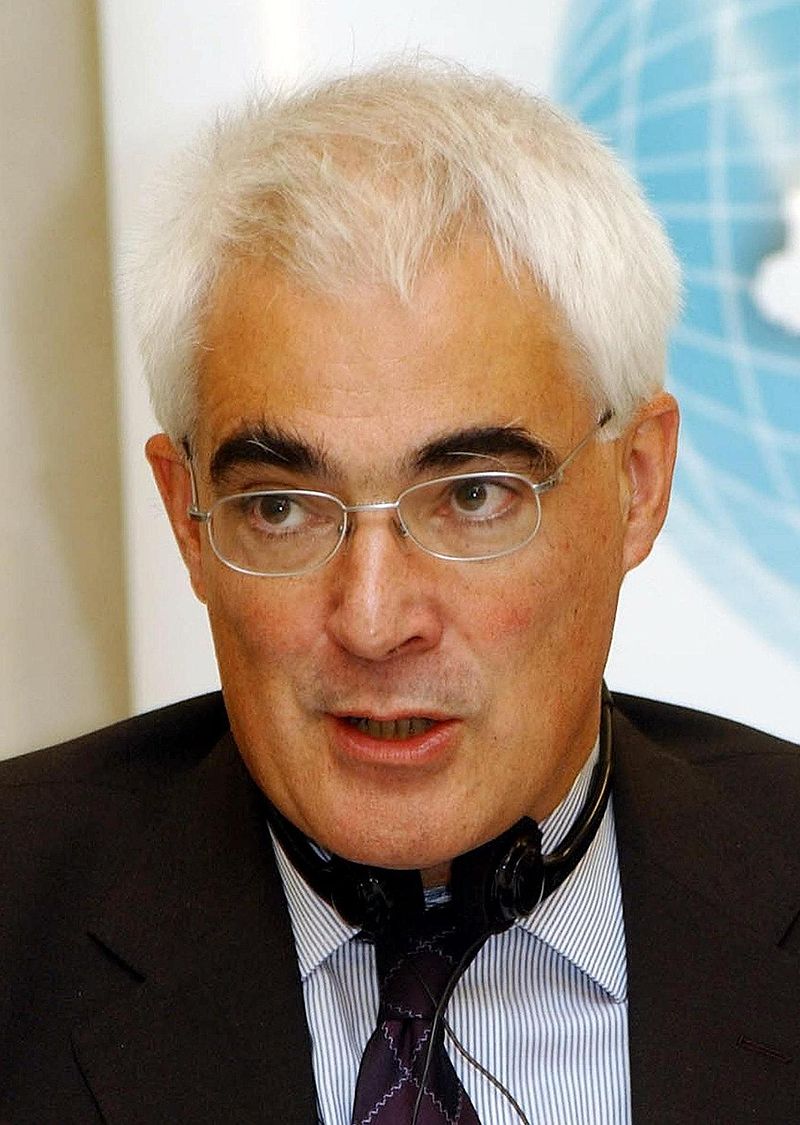
  • Alistair Darling – 1997 Statement on the Spending Review

    Alistair Darling – 1997 Statement on the Spending Review

    The statement made by Alistair Darling, the then Chief Secretary to the Treasury, in the House of Commons on 11 June 1997.

    With permission, Madam Speaker, I should like to make a short statement about our approach to public spending in the medium term and to the comprehensive spending review promised in our manifesto.

    We set out our spending plans for this year and next in our manifesto. We made it clear that tough decisions would be needed, but that such an approach was essential. We shall maintain that approach. This statement looks beyond the next two years to the medium term.

    We will deliver prudent and sound management of the public finances to provide a stable platform for investment and growth; and we will ensure that public spending achieves the objectives that we have set ourselves—objectives which are based on our key principles of opportunity, fairness, employment and investment. To achieve that, we must put the public finances into proper shape.

    Since 1990, public sector debt has almost doubled as a proportion of national output. In 1994, we were told there would be a Budget balance in 1998–99; in 1995, we were told it had slipped a year to 1999–2000; and last year, it slipped again to 2000–01. As a result, after five years of growth, we are still borrowing to cover our current spending: the current deficit was about £20 billion last year and the last Budget forecast that we would stay in deficit for the next two years, despite making some questionable assumptions. In order to rebuild public trust in the management of the public finances, my right hon. Friend the Chancellor has asked the National Audit Office to review the forecasting assumptions he set out in the House on 20 May.

    The public have a right to know not only that total spending is affordable and prudent, but that their money is being spent on their priorities, that it is being spent efficiently and that the spending is effective. The Government spend more than £300 billion, equivalent to over £5,000 a year for every man, woman and child in the country. We will reorder that £300 billion to meet our objectives, which were endorsed by the people on 1 May.

    Public spending needs to be clearly focused, and we will achieve that objective. There is no better time for a root-and-branch reappraisal of public spending priorities than at the start of a new Government.

    We showed the way when we were in opposition. We said that we would provide nursery places for all four-year-olds, and we will find the money by scrapping nursery vouchers. We promised to cut waiting lists in the national health service, and we will release the funds by releasing savings from red tape and bureaucracy. We promised to reduce class sizes for five, six, and seven-year-olds, and we will find the money to pay for it by abolishing the assisted places scheme.

    We have already made a start in delivering those promises, within weeks of the election. We will continue this approach in government, stripping out ill-targeted programmes that benefit only the few, and redirecting spending towards the priorities of the many.

    The comprehensive spending review I am announcing today will carry on that process. It will set out clear objectives for all Departments. It will examine how we can achieve our objectives of improving standards in education, modernising the welfare state and getting people into work—in short, delivering our manifesto commitments as efficiently and effectively as we can.

    Every Department will scrutinise its spending plans in detail from a zero base, and ask, how does each item of spending contribute to the Government’s objectives as set out in our manifesto? Why are we spending this money? Do we need to spend it? What is it achieving? How effective is it? How efficiently are we spending it?

    Every objective will be costed and Departments’ effectiveness in achieving them will be scrutinised. We will make sure that we know how much we are spending on each objective, and that we can demonstrate to the public what we have achieved as a result.

    We will consider how best to provide services. What should be provided by the public sector, the private sector, or a combination of both in public and private partnerships? As my right hon. Friend the Prime Minister has said, what counts is what works.

    As well as looking at spending in each Department separately, we will look at issues that cross departmental boundaries. Those cross-departmental reviews will ensure that we are not hidebound by the existing structure of government. The review will be co-ordinated by the ministerial committee on public expenditure, which will look at spending across Departments.

    We will look in particular at Departments’ efficiency in making the best use of their assets. We have asked Departments to draw up an inventory of their assets—something that no Government have ever achieved before. We need to know what the Government own, and whether they need those assets. If not, we shall reallocate the proceeds where they are needed most.

    The review will be thorough and far reaching. All Departments and all Ministers will be involved. It will take 12 months to complete and its conclusions will inform a new set of public spending plans for the rest of this Parliament—a set that reflects our priorities and meets the country’s needs beyond that. It will take the long-term view.

    The review process is already under way. Terms of reference for the departmental reviews will be published shortly. The Government have already shown their determination to achieve their objectives. The comprehensive spending review will provide us with a clear sense of direction and the long-term view that every Government need. We will ensure that the Government spend public money wisely and fairly, so that public spending matches the people’s priorities.

  • Alistair Darling – 2013 Speech to Scottish Labour Party Conference

    alistairdarling

    Below is the text of the speech made by Alistair Darling to the Scottish Labour Party Conference on 19th April 2013.

    Thank you very much for your warm welcome.

    One of things I have noticed in the three years since I stood down from frontline politics is just how nice people are about you when they are absolutely certain they are not coming back. But I am back, back for this referendum because it is one of the most important decisions that we will take at any time in our lifetime. Where Scotland will take one of the biggest decisions that has taken in the last 300 years.

    Remember this, we are not electing another government for five years, where if you don’t like it you can kick it out. You are voting on something that – if we decide to vote for independence – is irrevocable. There is no way back. They only have to win once and by one vote. And there is no going back.

    Now, as people have said in the last debate: this isn’t just about constitutions or intuitions they are there to serve us. This is about values. And we believe that we are better, we are stronger when we stand together. That’s why we joined the Labour Party. That’s why we joined trade unions because we can achieve so much more together than we can as individuals. And look at some of the things that we have set up that have given effect to that belief. The NHS – there when you need it no matter where you are in the United Kingdom. Or the minimum wage –avoiding a race to the bottom where workers in Dundee are pitted against workers in Durham. Or as some people have just been saying in relation to corporation tax – we do not want to get in to a race to the bottom where the Scottish Government might cut corporation tax then the rest of the UK does it and it gets lower and lower. The losers in that are the people in this country who would have to pay the taxes to make up the difference. We are better and stronger, when we stand together.

    We are proud to be both Scottish and British. We don’t have to choose. We do not want to choose between the two of them.

    And there is another element too – the influence we have to shape the world to be a better place. In the first debate that we had this morning we talked about developments in the world. Why walk away from the influence the UK has in the World Bank, in development, and the United Nations when we can be a force for good. We are better and stronger, when we stand together.

    But of course, the key to this debate will be the economy. It’s about standards of living. It’s about the money that we could afford to spend on health and education.

    It’s about jobs. It’s about what we are leaving to our children and their children.

    Now, Douglas Alexander when he spoke earlier this morning talked about the changes that are taking place across the globe – where people are coming together, rather than breaking apart.

    We are part of the single market of the United Kingdom – tens of thousands of jobs in Scotland depend on their firms being able to sell goods and services in to the rest of the UK. So we are sharing opportunities, and yes, we are also sharing risks. Anas just mentioned what happened four years ago. I know from my own experience that when I heard that RBS was within three hours of closing its doors and switching off its cash machines I had the strength of the United Kingdom to say: we will not let that happen.

    Now, I don’t argue that Scotland couldn’t go it alone. Most countries can. I do think though that we would be very heavily dependent and very exposed to North Sea oil. Nobody is saying that the oil is going to run out tomorrow. We are not saying that. But it does not go on forever and we know that that its price is volatile and if you are dependent on nearly 20 per cent of your tax revenues from one source you are very exposed if something goes wrong. And it’s no wonder that John Swinney in his private moments told the Scottish Government cabinet that he was worried about the volatility of the North Sea oil price and the fact that ultimately it will decline. It’s no wonder that he was having to question how much he could spend on public services and the sustainability of the state pension. The only problem was that what they are saying in private. In public, they are saying something quite different. And when they were confronted with this, rather than saying to the people of Scotland: let’s be honest about the choices we have to make, let’s be honest about the realities that we are so dependent on North Sea oil. What did they do? They cooked the books and inflated the oil price – something their own financial advisers told them they shouldn’t do.

    Now, central of course to the economic argument is the question of currency. But you know there is a pattern emerging with the nationalists – the more you ask questions, the more you find their arguments fall apart. Look at Europe, when they told us hand on heart they had a legal opinion that said that we would automatically remain members of the European Union. What happened? When we pressed, we found there was no legal opinion. Scotland had been quite deliberately deceived in to believing that nothing would change when of course the reality is that we would have to apply again to become members of the European Union. The same thing with NATO. And critically, when we came to the question about currency they are being evasive – they are not being straightforward with the people of Scotland. In the last 12 months alone, they have gone from being in favour of the euro (which is as popular in Inverness as it is in Essex), to using the pound (like Panama uses the dollar, where you would have no central bank which would completely undermine the financial services industry in this country), to now saying they will have a currency union.

    And when you think about it, the practicalities of this – if we have actually vote to leave the UK we would actually then have left the bank that prints the currency that we presently use. The pound sterling is the currency of the United Kingdom. That is what it is at the moment – it’s not a currency union. In order to keep the pound, what the nationalists now say we would have to enter in to a currency union. Now yesterday Nicola Sturgeon was saying that of course within a currency union you could do what you want, there would be no constraints, you could spend money on what you want. That is utter nonsense. Imagine what would happen.

    Just look at what has been happening in the Eurozone for the last four or five years. We know that in a currency union it is the large economies that call the shots.

    We also know that a currency union would mean that another country – which would then be a foreign country – would have to approve our budget, our tax, our spending and our borrowing. That is not freedom. If you vote for independence you are voting yourself into a straightjacket from which you can never escape and the consequences of that would be very bad for Scotland.

    It’s no wonder, when this squeeze comes on, and we start facing the challenges of an ageing population in Scotland or if you suddenly had a drop in oil prices, or if you had another banking crisis sometime in the future – you’re on your own. The burden, far from being shared across the United Kingdom, falls on six million people living in Scotland. Where is the sense in that? We are better and stronger, when we stand together.

    Now of course some nationalists have twigged this. Some nationalist supporters and some academics now realise exactly the blind alley they are going down and what they are saying is lets have our own separate Scottish currency. Well let’s just think about that for a moment. Every time you go and visit somebody south of the border you would have to change your currency. Every time your granny, or your uncle or your auntie came up here they would have to get their currency in order to come and visit you. Or business is trying to trade with the rest of the UK would have to factor in the cost of the exchange rate. And of course, launching a new currency now in arguably the most turbulent economic times we have seen in modern times – that is what they would say in Yes Minister terms is “truly courageous”. You would be asking people to take a gamble on a currency that is wide open to manipulation and open to speculation as oil prices rise and fall. It is an absolutely ridiculous policy that would be gambling with Scotland’s future in a way that I think is totally unacceptable.

    Now, of course, Alex Salmond has said that he won’t debate the currency issue with me. The reason for that is that he does not have the answers to these questions but he cannot hide for the next 17 months. Scotland is entitled to an answer. What currency would we use? What will the consequences be?

    And Scotland will be entitled, as I suspect it will, believe that the nationalist stance on this is – as on so many other things – is incredible and is falling apart.

    I believe there is a much better choice for our future than separation. The last thing we need at the present time is more uncertainty and divisions.

    If we walk away from the UK, we give our children a one way ticket to a deeply uncertain destination and that to me is totally unacceptable.

    You know, as Scots, we know that there is nowhere better but we understand that there is something bigger.

    That is why we are better and stronger together.

  • Alistair Darling – 2009 Speech to Labour Party Conference

    alistairdarling

    Below is the text of the speech made by Alistair Darling, the then Chancellor of the Exchequer, to the 2009 Labour Party conference.

    Within months, the country faces a big choice.

    A choice not just about who’s in Government, but about the values that will shape our country and the opportunities for our people.

    A choice that will affect every area of our lives, every aspect of our future.

    If we didn’t know a year ago the difference governments can make, we certainly know it now.

    When I spoke at last year’s conference, I talked about the scale of the global economic crisis and warned that we may not yet have seen the worst.

    Within weeks, the international financial system was in meltdown, the world economy on the edge of the abyss.

    There was a real prospect of a repeat of scenes not witnessed since 1929.

    Banks unable to give savers their cash. Firms unable to pay their staff.

    In the face of such unprecedented global turmoil, no one government could hold back this economic tidal wave.

    But I also said last year that the choices made by governments could reduce the severity and the length of the crisis – and help people through it.

    That was the challenge.

    And when the history of this period is written, this country and this party will be proud.

    Proud that the people who led the way in stopping recession turning into global depression were our Government and our Prime Minister Gordon Brown.

    We intervened to stop the banks failing.

    Not for the sake of the banks themselves.

    But because the alternative would have been an economy in paralysis and employment in freefall.

    Let me assure the country – and warn the banks – that there will no return to business as usual for them.

    So in the next few weeks we will introduce legislation to end the reckless culture that puts short-term profits over long-term success.

    It will mean an end to automatic bank bonuses year after year.

    It will mean an end to immediate pay-outs for top management.

    Any bonuses will have to be paid over years, so they can be clawed-back if not warranted by long-term performance.

    We won’t allow greed and recklessness to ever again endanger the whole global economy and the lives of millions of people.

    Over the last 12 months, we’ve also acted to help businesses keep afloat and people stay in jobs and in their homes.

    By cutting VAT, we put an additional £1billion each month into the pockets of shoppers and retailers.

    Through the car scrappage scheme, we will continue to support jobs in the car and wider manufacturing industries.

    Through targeted tax cuts for business and more time to pay, we have helped them weather the storm.

    We knew that to have cut investment would have worsened the recession.

    So instead of cutting, we brought forward planned capital projects, modernising schools, homes and hospitals.

    Countries across the world have followed the same course and co-ordinated action through the G20 in a way which has never been seen before.

    I can tell you, having been at every one of these meetings, that ministers around the world recognise this would not have happened without Gordon Brown’s leadership.

    The results of this global intervention, led by the UK, is now beginning to come through.

    Germany, France and Japan are showing signs of growth.

    Many independent forecasters now believe the UK too is coming out of recession.

    I think it is too early to say so with total confidence.

    But I stick with my Budget prediction that, as long as we continue to support the economy, recovery will be underway in the UK by the turn of the year.

    I also expressed my confidence in the underlying strength of the British economy and the skills and energy of its people.

    And I believe that confidence will prove to be correct.

    For if we continue to make the right choices as a country and the right investment for the future, we are ideally placed to make the most of the opportunities the global recovery will bring.

    Investing in the new industries of the future, helping Britain lead the way in the move to a low-carbon economy, supporting the research and innovation at which this country shines.

    But had we made different choices – Tory choices – the UK and global economy would be in a very different place.

    So too would our prospects for the future.

    For as well as being a test of leadership for the Government, this crisis was a test of judgement for the Conservatives.

    It was a test they failed at every turn.

    Every step to limit the severity of this recession and the damage to families, they opposed.

    When the crisis began in the global mortgage markets, they thought the answer was less regulation, not more.

    When we stepped in to save Northern Rock – protecting the savings of millions – they wanted to leave it all to the markets.

    When we acted to prevent the widespread collapse of the banks, they protested we were wasting money.

    As the financial crisis turned into the deepest global recession since the 1930s, they alone said we should do nothing to support the economy.

    At every stage, the Tories have misunderstood the causes of the crisis. Underestimated its severity. And opposed the measures to limit its impact.

    And why did they get it wrong? Because the natural response of the Tories is always to step back, not step in.

    In this party, we believe it is our responsibility to make a difference, to help people help themselves.

    People sometimes talk about the invisible hand of the market, but the last year has underlined how it must go alongside the enabling hand of government.

    The Tories in their hearts believe the answer is always for the government to do less, leaving people to fend for themselves.

    So just as the support we have put in place is getting the economy back on its feet, they want to withdraw this helping hand.

    Having just come back from the G20 summit in Pittsburgh, I can tell you that no other government is following their lead.

    Whether right or left, in Beijing or Berlin, they know that withdrawing support before recovery is secured risks plunging us back into recession.

    We can’t sit back and relax.

    Many businesses and families are still struggling to keep their heads above water.

    If we followed the Tory route now recovery would be put at risk, prospects for growth damaged, borrowing would, in the long-run, be greater.

    We cannot – must not – let that happen.

    And we cannot – must not – repeat their mistakes of the 80s and 90s when short-term job-loss became long-term unemployment for a whole generation.

    The result was the scandalous loss of potential and talent – and a huge welfare bill for the country.

    And why? Again a deliberate choice by a Tory party to step aside and let people sink or swim.

    It is why a key priority for us has been, and remains, to help people off welfare and into work.

    And, of course, to make sure they were paid fairly, for the first time, through the minimum wage.

    Introduced by this Government, and again opposed by the Tories.

    The success of our approach was seen in record employment over the last decade.

    And it continues to show its worth even as the global recession hits our economy.

    Unemployment is rising here and across the world. Every job lost is a serious blow to that family.

    But thanks to the support already in place, more than half of those who lose their jobs come off Job-Seekers Allowance within three months, and almost three-quarters within six months.

    Since November, we have helped over two and half million people leave the claimant count.

    It explains why unemployment here, although too high, is lower than in the euro area and in America.

    But even when we begin to see growth in the economy again, unemployment is likely to keep rising for some time.

    It is not within the power of any Government to protect every job.

    But we believe it is our responsibility to support people in every way possible to find new employment.

    To stop help now – as the Tories want – would be callous and counter-productive.

    So rather than stepping back, we have stepped up our efforts.

    Investing £5bn to provide high quality assistance and advice to those who have lost their jobs.

    A guarantee for 18 to 24 year-olds of work or training – already 47,000 jobs have been agreed for take-up when needed.

    A guarantee, too, for every school leaver of a college place or apprenticeship.

    The difficult decisions we have taken – the choices we have made – have been driven by our belief in what Government can do, and our values of opportunity and social justice.

    Yes, debt has risen.

    Not just here, but across the world, as tax revenues have fallen as the global recession takes hold.

    But had we not borrowed, we would have made a very difficult situation far worse.

    The recession would have turned into depression, and debt would have been more, not less.

    And this increased debt would be spent not in supporting jobs and families now but on long-term welfare bills.

    It would have been irresponsible to walk away when the economic shock waves hit our country.

    It will be equally irresponsible, once recovery is secured, not to take tough action so we can live within our means.

    I welcome the chance of a mature debate on how we achieve this goal – even if it is hard to see the Shadow Chancellor playing much part.

    There has, after all, been little that is grown-up about his performance so far.

    And again, this country and this Government have set the lead – the first to set out firm plans to put our finances on a sustainable footing.

    In the Budget, I laid out how we will halve the deficit over four years.

    We are raising revenue by removing unfair pensions relief for higher earners.

    And raising the top rate of tax for the very highest incomes.

    Because it is right that those who earn the most should shoulder the biggest burden.

    And to make sure people can’t avoid paying their fair share, we and other countries are cracking down on offshore tax havens.

    We’ve already demanded details of over 100,000 offshore accounts.

    And this will mean billions of extra unpaid tax returning to our country, with an expected £1bn from our agreement with Lichtenstein alone.

    In contrast, what are the Tories doing? What’s their priority? Their priority is to cut inheritance tax for some of the richest families in the nation.

    This cannot be the priority at a time like this.

    But the steps we’ve taken to raise revenue are not enough.

    In order to get borrowing down, spending will have to be tighter in the years ahead, against a background where public investment has tripled over the past decade.

    I believe the public understand that difficult decisions will be needed.

    The public know that adjusting to this new reality won’t be quick, it won’t be easy

    They are right. But this makes it even more important that these difficult decisions are taken for the right reasons.

    For just as there was a choice over tackling the recession and helping the recovery, so there is on public spending.

    A choice between a Labour Government which believes passionately that front-line public services are vital to support everyone to meet their ambitions.

    And a Tory party which has reverted to type and is relishing the chance to swing the axe at the public services millions rely on.

    Cuts driven by ideology – not by what’s right for families and for the country.

    We have already seen the damage such an approach inflicts on the fabric of our nation.

    After 18 years of Tory neglect of our public services, the question was not whether every classroom had a computer, but whether every school had a proper roof.

    In healthcare, the question for far too many was not whether you could get your operation in weeks, but whether you could get it at all.

    A legacy of disdain and underinvestment, of shaming poverty among the young and old, a lack of hope among millions of families.

    The result of a Tory party which deep down sees public services as essential only for those who have failed to do well enough to go private for their health care or education.

    It was a legacy we have worked hard to put right.

    Half a million children lifted out of poverty thanks to increased child benefit and tax credits.

    Practical support for families through Sure Start Children’s Centres – like the one I visited today.

    The best ever exam results for our children.

    Average time on an NHS waiting list down from 13 to just four weeks.

    Helping families through support for childcare and dramatically improved maternity leave and pay.

    We won’t put these improvements at risk. We intend to build on them.

    Tighter spending doesn’t mean a return to the Tory dark ages.

    It does mean a determination to cut waste, cut costs – and cut lower-priority budgets.

    This will require difficult decisions.

    I haven’t shirked them in the past, I won’t shirk them now.

    We must keep the public finances on a sustainable path.

    The long-term health of our economy depends on it.

    That is why we will introduce a new Fiscal Responsibility Act to require that the Government reduces the budget deficit year on year, ensuring that the national debt remains sustainable in the medium term.

    But we need to do that rationally, in a way that is right for the economy, not driven by dogma.

    The Tories’ approach is wrong, is naïve, and down right dangerous.

    It will damage our economy now and in the future.

    In the next few weeks, I will set out in the Pre-Budget Report how we will protect front-line public services, bring the deficit down, and invest in the country’s future.

    We will invest to make our economy grow.

    Growth is the best way of reducing debt, creating jobs, and raising living standards.

    The low-carbon economy will create tens of thousands of new jobs.

    But this won’t happen on its own – government must work with business.

    High-speed rail links will help us tackle climate change and boost our economy.

    Again, they won’t happen without government support.

    We need thousands of new homes for families – we will work with the industry to ensure they are built.

    We are world leaders in innovation and technology – we will continue to invest, to harness this ingenuity and create new industries and new jobs.

    Extending opportunities to all, removing the barriers which stop people playing their full role in our economy and society.

    Fairness, opportunity and responsibility will underpin everything we do.

    The last 12 months, more than any time in recent history, has demonstrated the difference Government can make.

    The Tories have been wrong on tackling the recession. They are wrong on how to ensure recovery. And they will make the wrong decisions on our public services.

    They are wrong because on every question, the Tory answer is to step back, to walk away, to leave people on their own.

    So that will be the choice in the next few months.

    Maturity and experience against the politics of the playground.

    Investment in the future against a return to the past.

    I am proud of the difference we’ve made to this country over the past 12 years.

    Proud of our judgement and determination over the last 12 months.

    And we should be confident we can win the support of the country to keep taking Britain forward.

    We have a good story to tell.

    It’s time for all of us to go out and tell it.