Tag: 2022

  • Chris Bryant – 2022 Speech on Referring Boris Johnson to the Committee of Privileges

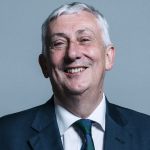
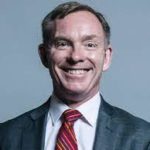
    Chris Bryant – 2022 Speech on Referring Boris Johnson to the Committee of Privileges

    The speech made by Chris Bryant, the Labour MP for Rhondda, in the House of Commons on 21 April 2022.

    I warmly commend the hon. Member for Hazel Grove (Mr Wragg) for the speech he just gave. He did so with great courage and honesty and, frankly, with the integrity that a lot of us have seen him show in his chairmanship of the Public Administration and Constitutional Affairs Committee. This House knows that serving on and chairing Select Committees is not always easy, because quite often people come to Select Committee meetings with fixed views. They are not all that interested in the evidence that is presented to them and resolutely hold the same view after the meeting that they held at its beginning, even though everything has been proved to be quite the opposite of what they thought. I know from those who serve on the hon. Gentleman’s Committee that he listens to the evidence, and he is a very good parliamentarian as Chair of the Committee.

    It all got a bit religious earlier and I felt like I was back at theological college. Being, I think, the only person in the House who can actually pronounce absolution on anybody, I thought I was suddenly going to get a new job!

    I also warmly commend the work that the Chief Whip has done this week, because he has got us into a much better place today than the House would have been in if he had not made the decisions that, doubtless advised by others, he has made today.

    I had not expected to speak in this debate. I will be very straight with the House—if you see what I mean—in saying that it is sometimes difficult being the Chair of the Committee on Standards and of the Privileges Committee, because one is asked to comment on literally every single Member of the House at some point. I am absolutely scrupulous in making sure that I never comment, in public or in private, on anything that might possibly come to either of the Committees. I did not think this matter would come to the Privileges Committee, which is why I commented on it. Consequently, it is quite right that I recuse myself: I will not take part in the deliberations of the Committee on this matter if this motion is passed in any shape or form. I think I could have done it fairly—I chaired the Standards Committee when we had the Prime Minister before us in respect of a different matter and we disagreed with the Commissioner for Standards and found in the Prime Minister’s favour—but I understand that the House needs to know, absolutely for certain, that the process will be fair. In a strange way, that means that I can actually say something today.

    Joanna Cherry (Edinburgh South West) (SNP)

    Will the hon. Gentleman give way on that point?

    Chris Bryant

    Oh, all right.

    Joanna Cherry

    I commend the hon. Gentleman for his speech and thorough sense of decency. Does he think the same principle should apply to other members of the Privileges Committee?

    Chris Bryant

    I will say something about the Privileges Committee later but, having recused myself, I do not think it is really for me to tell its members what to do or how to behave.

    One thing I am very keen on is this: I passionately care about Parliament. I believe in Parliament. I believe in democracy. The only way that I can get change for my constituents is through the democratic process. Anything that undermines trust and confidence in Parliament damages my opportunity to do anything useful in my life at all. That is why I always want to urge the House to be extremely careful in these matters of standards and privileges. Each generation of MPs has a responsibility to burnish, not tarnish, the reputation of this House, because we hand democracy on to a future generation, and if we have undermined it, it may not last.

    I draw to the House’s attention the fact that in this Parliament, two MPs have been found guilty of serious offences in a court of law, and another two are awaiting trial; four MPs have been suspended for one day; a Minister was suspended for seven days; seven MPs have been required to apologise to the House for breaches of the code of conduct; three MPs have resigned their seats in the face of convictions; and the Independent Expert Panel has suspended a Member for six weeks for sexual harassment, made another apologise for bullying staff, and found another guilty of such terrible sexual harassment that he resigned his seat before he was sanctioned. All that is without any consideration of whether any right hon. or hon. Member has lied to the House. And it is not yet six months since the Owen Paterson saga, which I do not think covered the House in glory.

    In a very short period of time, two of our colleagues have been murdered, and others are wearing stab vests. We have to take the reputation of the House extremely seriously. We have to burnish it, not tarnish it.

    I have heard Ministers argue, quite rightly, that there must be due process. I say to the House that this is the due process. It always has been the due process. When there has been a claim that a member of the public or a Member of the House might have committed a contempt of Parliament by lying to the House, breaching the confidentiality around a Select Committee report or whatever, the standard process is that it is sent to the Committee of Privileges—or, as it used to be, the Standards and Privileges Committee, and before that the Committee of Privileges—so this is the due process.

    I have absolute confidence in the other members of the Committee and that they will do a good job. They will think very carefully about, as the hon. Member for Stone (Sir William Cash) said, making sure that there is a fair hearing. The court of public opinion is not very good at providing a fair hearing, I find; the House should do a great deal better than the court of public opinion. We try to uphold the rule of law—that is one of the duties for all MPs—so it is particularly important that we make sure that there is a fair process. I am sure that the other Committee members will do that.

    Hannah Bardell (Livingston) (SNP) rose—

    Mr Steve Baker rose—

    Chris Bryant

    I am not sure where that came from. I give way to the hon. Member for Wycombe (Mr Baker).

    Mr Baker

    The hon. Gentleman is making a powerful and important contribution. This mostly relates to Members of Parliament, but he will know that occasionally somebody feels it necessary to use parliamentary privilege to say in the House things over which those outside the House might otherwise sue for defamation. Will the hon. Gentleman confirm that he will consider whether the public ought to have a right to reply, so that if we use privilege, they have some chance to put their side of the story?

    Chris Bryant

    The hon. Member makes a good point. We have had some discussions about that issue outside the Chamber. The difficulty is that I am not sure that is a matter for the Standards Committee or the Privileges Committee; I think it is a matter for the Committee on Procedure. There is a good argument for putting something in place so that there is a right of reply. I cannot go further, for reasons of which the hon. Gentleman may be aware—

    Mr Speaker

    Order. I do not want to open up that area of debate. I know exactly what is going on—we can leave that part of it there.

    Chris Bryant

    Thank you very much, Mr Speaker.

    My second point about fair process is that it is actually quite a high bar that the Privileges Committee will have to consider. As the Leader of the Opposition said earlier, I do not think it is debated that the House was misled. I think even the Prime Minister admits, in effect, that the House was misled. It was said that rules were not broken and it is self-evident that rules were broken, so the House was misled—it got a false impression. The question is whether that was intentional. The Committee will have to devise ways to investigate whether there was an intention.

    Hannah Bardell rose—

    Sir William Cash rose—

    Chris Bryant

    I think I ought to give way to the hon. Lady first.

    Hannah Bardell

    The hon. Gentleman is making an excellent and poignant speech. Does he not find it strange and deeply worrying that we seem to be in a position in which the Prime Minister seemed unable or incapable of following his own rules and his own laws, yet he is using the rules and processes of this place to frustrate the course of, as the hon. Member for Stone (Sir William Cash) said, natural justice?

    Chris Bryant

    I would normally agree with the hon. Lady on these kinds of things, and I sort of would have agreed with her last night, but I think we are getting to a better place now. In a sense, sometimes the Back Benchers persuade the Front Benchers of a better course of action—I am looking intently at the Government Chief Whip at the moment.

    As the Clerk advised in the case of whether Stephen Byers had misled the House on a single occasion in 2001:

    “In order to find that Mr Byers committed a contempt in the evidence session of 14 November 2001, the Committee will need to satisfy itself not only that he misled the Sub-Committee, but that he did so knowingly or deliberately.”

    As I said, that is quite a high bar, but it is for the Privileges Committee to decide that.

    Sir William Cash

    I am grateful to the hon. Gentleman, because what he just said is what I was going to raise with him. The “Ministerial Code” says that it is open to a Minister to correct

    “any inadvertent error at the earliest opportunity. Ministers who knowingly mislead Parliament will be expected to offer their resignation to the Prime Minister”.

    The question rests on “knowingly”, and I am grateful to the hon. Gentleman for making that point clear.

    Chris Bryant

    I think the hon. Gentleman is agreeing with me, so—

    Mr Speaker

    We will leave it at that.

    Chris Bryant

    The only difference I have with the hon. Gentleman is that he was talking about the “Ministerial Code”. The “Ministerial Code” is for the Prime Minister. This House adjudicates on its rules, its code of conduct and contempts of Parliament, so they are different matters. This is about upholding a simple principle around making sure that Ministers speak honestly.

    I will say one other thing about the Committee: it is very important that the six members of the Committee are not pressurised by anybody. Members may not be aware of this, but the Attorney General and the Solicitor General can attend those meetings and take part in the deliberations, but they are not allowed to move amendments or to vote. It is very important that the Committee is able to do its business without being leaned on by anyone.

    My final point is why I think all of this is important. I care far more about what is happening in Ukraine and on the cost of living crisis than about this—far more. I have constituents who are in tears about their finances at the moment. They have absolutely no idea how they will pay their bills, how they will pay the rent, and how they will be able to provide school uniforms and things such as that. They are in tears. All of us have seen the horror in Ukraine. In 2014, I said that if we did not take Putin far more seriously and if we did not impose far stricter sanctions, he would end up coming for the rest of Ukraine. I care far more about those things than I do about this motion today, but they are not alternatives. I would argue that, in the coming months, the Prime Minister may have to come to this House and say that we will have to change our strategy on Russia. We may have to consider offensive weaponry. We may have to consider British troops being put in a place of danger. Similarly, the Prime Minister may have to come to this House and say, “I have to ask the British people to make further sacrifices because the economy is in a very difficult place, and the public finances are in a very difficult place.” At a moment of national and international crisis, we need a leader of completely and utterly unimpeachable moral authority. We do not have that at the moment, not by a long chalk, but that is why these two things are intimately connected and not separate. It is why I believe that this must be referred to the Committee of Privileges.
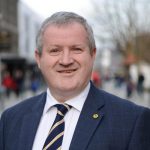
  • William Wragg – 2022 Speech on Referring Boris Johnson to the Committee of Privileges

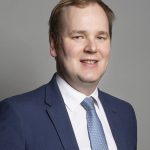
    William Wragg – 2022 Speech on Referring Boris Johnson to the Committee of Privileges

    The speech made by William Wragg, the Conservative MP for Hazel Grove, in the House of Commons on 21 April 2022.

    Thank you for calling me so early in this debate to deliver my sermon, Mr Speaker. If I may, by means of parish notices, let me wish Her Majesty a happy 96th birthday.

    My intention was to vote against the Government’s amendment and that would still be my intention were it to be moved. I appreciate the efforts by my right hon. Friend the Chief Whip to find a way through—he is somebody we are lucky to have in his role—but we were at risk of making a mistake. The original motion is perfectly acceptable and allows for much of the spirit of the amendment. For example, the publication of the Gray report would be automatic upon the conclusion of the Metropolitan police’s work. There was no need to complicate matters.

    The Ukraine situation is of huge importance, but the invasion of a sovereign nation by a dictatorial aggressor should not be a reason why we should accept lower standards ourselves. I have told the Prime Minister to his face that I think he is doing a good job in robustly supporting the Ukrainian Government. Her Majesty’s Government, along with our nation, can be proud of their role and generosity. Let us give credit where credit is due. However, much as I may have tried, I cannot reconcile myself to the Prime Minister’s continued leadership of our country and the Conservative party. I say this by means of context, so that everyone, particularly my constituents and colleagues, can understand my position, without hiding my views with ever more elaborate disguises. To those constituents who disagree with me, I say that I appreciate their anger, just as I can appreciate the anger of colleagues. However, say what you mean and mean what you say.

    I submitted my letter of no confidence to my hon. Friend the Member for Altrincham and Sale West (Sir Graham Brady) in December last year. I did so for the following reason. It followed the leak of the Allegra Stratton mock press conference video. I believe that in that video she did nothing wrong. She nervously laughed and sought to make light of an embarrassing situation. To see her crying on her doorstep, feeling the full weight of responsibility and anger of a country, was deeply moving and I felt immensely sorry for her. I hope that she is well and will be able to continue her distinguished career. But what alarmed me most was that, later that evening, a press preview of the winter covid plan B measures was brought forward to try to move matters on. We debated those measures at length, but we can agree, if not on their extent or importance, that they none the less sought to compel or restrict what people in this country could do. I therefore thought to myself: if a Government were prepared to bring such measures forward earlier in order to distract from their own embarrassment, the Prime Minister was no longer fit to govern.

    I care deeply about my colleagues. I know that a number are struggling at the moment. We have been working in a toxic atmosphere. The parliamentary party bears the scars of misjudgments of leadership. There can be few colleagues on this side of the House who are truly enjoying being Members of Parliament at the moment. It is utterly depressing to be asked to defend the indefensible. Each time, part of us withers.

    I have questioned my place in this party in recent months and perhaps that is symptomatic of a swathe of our voters in the country, but I tell them firmly that I am not going anywhere and I urge them to stick with us in the forthcoming elections. But for us to maintain their trust and confidence, we must be seen to do the right thing. It is our responsibility—it is the Conservative parliamentary party’s responsibility. We must stop delegating and delaying our political judgment. We each only have our own limited and imperfect integrity. We cannot keep spending it on others whom we cannot be sure will not let us down.

    I have great empathy for all those who worked at No. 10 and in the Cabinet Office. They bore an immense burden and worked under the most intense pressure. They worked hard and made sacrifices. I extend that same empathy to my right hon. Friend the Prime Minister, who knows more than most the personal challenges and personal battles that came from the pandemic. But the matter before us is one at the heart of this institution, of our Parliament.

    I love this place, believing it to be a place of high ideals and purpose. What is said here matters. Quite apart from the Facebook clips about roundabouts and drains in our constituencies, or indeed the confected anger to wind people up, it should be a place venerated by those of us given the singular honour of being sent here. Of course it can be a pantomime, a farce, turgidly boring and obscure, but it should always be reasonably honest. It is for that, I hope not naive, principle that I cannot support the amendment and I will vote for the motion.

  • Ian Blackford – 2022 Speech on Referring Boris Johnson to the Committee of Privileges

    Ian Blackford – 2022 Speech on Referring Boris Johnson to the Committee of Privileges

    The speech made by Ian Blackford, the Leader of the SNP at Westminster, in the House of Commons on 21 April 2022.

    On a day like this, we think of all those who made so many sacrifices over the covid pandemic and those who lost so many loved ones. Our thoughts and our prayers today are with each and every one of them. There is one reason why it is so important that this motion be debated and passed today. At the very heart of the scandal, there is one thing that needs to be said and heard, and it is the very reason why we all need to act. The reason is this: the Prime Minister of the United Kingdom is a liar. I genuinely do not say that lightly, and I do not say it loosely. I honestly believe that it is right that we are slow to use that word, but equally, I consider it right that we should never be slow to say it, and to call it out, when it is so obviously true. Members across this House know it to be true, and the public have long known it to be true. That is why it needs to be said today, and why we all need to act.

    Every single day, motions come before this House that are complex and nuanced. There are usually two sides to the argument, and valid reasons for any position that is proposed, but I think we can safely say that this definitively is not one of those debates. The evidence in the motion speaks for itself. It is as clear as day. If there ever was an open-and-shut case, this is it.

    Last December, the Prime Minister came to this House and denied that there were any parties in 10 Downing Street during the long covid lockdowns. Typically, and tellingly, he hid behind his staff in saying that. He told us that he was given firm reassurances that no parties had happened, and that no rules had been broken. Every Member of this Parliament witnessed that; the public saw it with their own eyes; and, shamefully, to this very day, it is still on the record of this House. But we know the truth, and the truth contains no ifs, buts or maybes. The House was misled, and so were the public. We were all misled deliberately, because the Prime Minister knew the truth. Not only were parties happening, and not only was the law broken, but the Prime Minister was at the very parties that he denied had even happened. The truth is simple: he lied to avoid getting caught, and once he got caught, he lied again. There is no other way to describe it. There is no other word for it.

    I can understand that this may be a terrible truth for those on the Government Benches to hear, but it is a truth that they need to hear, and that they need to live with. I say to the Father of the House, for whom I have the utmost respect, that this has nothing to do with any elections. This is about the behaviour of a Prime Minister in office. Much more importantly, the uncomfortable truth that the Prime Minister of the United Kingdom is a liar is exactly why those on the Government Benches finally need to act and remove him from office. Other Prime Ministers, including all his predecessor Conservative Prime Ministers, would have been long gone by now. Members on the Government Benches put the Prime Minster in power; they have the power to remove him, and the public expect them to act. We have reached this point. A motion of contempt for a sitting Prime Minister is shocking, but unfortunately it is no surprise.

    Drew Hendry (Inverness, Nairn, Badenoch and Strathspey) (SNP)

    My right hon. Friend makes an important point about Conservative Members being here to listen and watch. Regardless of the number of flushed or drained faces on the Conservative Benches, what does he say to those who previously called for the Prime Minister to resign, but who, as things got worse, changed their position, and are not here today?

    Ian Blackford

    I will come on to that in a little more detail, but the Tory MPs who are here, and those who are not here for whatever reason, should show some moral fibre and show a backbone. They should recognise what this Prime Minister is doing to the very fabric of our democracy. Today of all days, they should do the right thing and support this motion in the name of the Leader of the Opposition and of the leaders of so many other parties in this House.

    We should not forget that, when the Tories put this Prime Minister into Downing Street nearly three years ago—[Interruption.] Actually it was the Conservatives who elected Boris Johnson as their leader. The important fact is that the Tories knew exactly the kind of person they were putting into the highest office in the land. They knew his track record; they knew his character; they knew who he was and what he was; and they still chose him as their leader. Conservative Members know better than anyone else in the House that a trail of scandal and lawbreaking was always going to define his time in office.

    In three short years, those who made those predications have unfortunately not been disappointed. The sleaze and the scandal has been ten a penny. From lying to the Queen to illegally proroguing Parliament—

    Mr Speaker

    Order. We have to be careful. I have asked for moderate, more temperate language. I am not having the Queen brought into it. Withdraw that point.

    Ian Blackford

    In deference to you, Mr Speaker, I will do so.

    Let us not forget the fact that the Prime Minister was found by the highest court in the land to have illegally prorogued this Parliament.

    Mr Speaker

    Order. I said this at the beginning, and I know the right hon. Gentleman will want to stick to what I said. We cannot go beyond the terms of the debate. I know he is very good and can stick to the script that I have explained.

    Ian Blackford

    I will happily take your guidance, Mr Speaker. Of course, we will reflect on the Supreme Court’s judgment.

    Stuffing the House of Lords with Tory party donors, VIP lanes for covid contracts, and even dodgy donations to decorate Downing Street—this is who the Prime Minister is. It is who he has always been. As Prime Minister, he has done exactly what it says on the tin. The real point is that as the days pass with him staying in power, it is who the entire Conservative party has become.

    Martyn Day (Linlithgow and East Falkirk) (SNP)

    My right hon. Friend is making a very measured and powerful speech that will strike a chord with the electorate in my area, where people of all political persuasions have been writing to me calling for the Prime Minister’s resignation. They are not surprised by his repeated pattern of behaviour and the lame excuses, but they are surprised that Conservative Members are keeping him in office. Why does my right hon. Friend think that is?

    Ian Blackford

    I hope Conservative Members listen very carefully to what my hon. Friend says, because the power to remove the Prime Minister rests with them. They can submit letters to the 1922 committee, and they can recognise the damage that the Prime Minister is causing to the fabric of our democracy—and, yes, to the integrity, honesty and decency of this House.

    Mr Steve Baker (Wycombe) (Con)

    Will the right hon. Gentleman sit down?

    Ian Blackford

    Here we go. Once again, the Conservatives want us to sit down and shut up. They do not wish to hear the voices of those of us, here to represent our constituents, who are frankly appalled at the way the Prime Minister has laughed at the people of these isles with his behaviour during covid. If Conservative Members vote down this motion, not only will they be endorsing all those scandals and all that sleaze, but they will be handing the Prime Minister a blank cheque to do it all over again. I would be surprised if the hon. Gentleman accepts the scandals, the sleaze and the corruption and is prepared to give the Prime Minister a blank cheque. I do not want to do that. If he does, he can explain why.

    Mr Baker

    The right hon. Gentleman is right to be surprised, because of course I am appalled; that is why I encouraged him to sit down. If he would let us speak, he might advance his own cause. Some of us are actually extremely disappointed. The right hon. Gentleman heard what I said on Tuesday. He is a brother in Christ. Does he not believe in redemption?

    Ian Blackford

    I believe in truth and justice, and I believe that a Prime Minister who has misled the House should face the appropriate sanctions.

    Martin Docherty-Hughes (West Dunbartonshire) (SNP)

    The hon. Member for Wycombe (Mr Baker) talks of contrition. Does my right hon. Friend think that, when the Conservative party attacks the very foundations of the Church of England—the Conservative party at prayer—we should take no lectures from them on being contrite or reconciled sinners?

    Ian Blackford

    We have had the usual deflection from the Prime Minister over the past few days. To see the Archbishop of Canterbury, the leader of the established Church of their nation, being traduced in the way he was by the Prime Minister, my goodness. How utterly shameful.

    Emma Hardy (Kingston upon Hull West and Hessle) (Lab)

    I wonder whether it is worth pointing out to the House that, before we can have Christian forgiveness, we must first have confession and contrition, neither of which we have seen from the Prime Minister.

    Ian Blackford

    How we get confession from a Prime Minister who denies everything, I just do not know.

    Mr Speaker, I know you will understand that I cannot let this moment pass without a special word for the spineless Scottish Tories. In fairness, the Scottish Tory leader is probably the only person in the Conservative party who finds himself in a deeper hole than the Prime Minister. In fact, he is so far down a political hole that he obviously found it impossible to dig his way out and make it down to London to vote his boss out tonight. I understand that plenty of people back home are looking forward to the Scottish Tories being given a straight red in the council elections in a few weeks. [Interruption.] There we go again. I hope people in Scotland are watching, because what we see is the Conservatives trying to shout down parliamentarians in this House. That is what is happening.

    For most people, it is very understandable—[Interruption.] There is Scotland’s answer from the Tories: “Let’s shout Scotland down.” That is what they are doing this afternoon. [Interruption.]

    Mr Speaker

    Order. Can we just calm down? I want to hear the right hon. Gentleman, and I know he wants to get back on track. He does not want to distract from this important debate.

    Ian Blackford

    Thank you, Mr Speaker.

    It is understandable that most people’s main reaction to the flip-flopping Scottish Tory leader and his support for the Prime Minister is disbelief and justified anger. I have to admit that, when I reflect on the position of the Scottish Tory leader, my main reaction is something I know he will appreciate far less. I actually feel sorry for him, because he is by no means the first person to have his career ruined by the Prime Minister. That pile of people is a mountain high. Everybody, and I mean everybody, is eventually thrown under the Boris bus. As we saw yesterday, not even the Archbishop of Canterbury is safe. Clearly, the days of the Church of England being the Conservative party at prayer are long gone. The Prime Minister’s party is obviously praying to another god these days, although no doubt even that will not guarantee its salvation.

    But in all seriousness, that unjustified attack on the archbishop gives another toxic insight into the thinking and methodology of this Prime Minister. His modus operandi is very simple: when he finds himself under political pressure, he finds someone else to blame—anyone else, just as long as he never takes responsibility himself, because nothing and nobody else matters. The only thing that does matter is that this Prime Minister will stop at nothing to save his own skin. That is why Conservative Members should not save him today. Think about it: he would not even lift his finger to help them. So if they have any self-respect, they need to ask themselves why they should even be contemplating walking through the Lobby for him.

    Let me end on this point. It might surprise hon. Members to hear, from a party that is unapologetically seeking out of this very institution and out of this Parliament, that I actually do care how it acts and operates, and about the values it holds. I care deeply for this reason. Today’s motion is not just about this Parliament or about this place. We should all know by now that democracy and decency are under assault the world over. If we fail to defend these values in every single institution we are part of, these values will decay and decline. It was George Orwell who famously said:

    “Political chaos is connected with the decay of language”.

    I know that people are deeply fearful about just how real that prophesy has felt in the last few years because, when language decays, so does the truth and so does trust in our politics. A Prime Minister who cannot be trusted with the truth marks the end of that dangerous decline. So if today is about anything, it has to be about finally ending that decline.

    That decline did not start with this Prime Minister, but it needs to end with him. We should all be very clear as to what the consequences are if this House fails to act today. If we don’t act—if we don’t stop—this Parliament will be endorsing a new normal in this Parliament and across our politics: a new normal where no one is held responsible, no one is held to account and no one ever resigns. That is exactly why this motion matters, because it can and it will only ever become a new normal if we put up with it. It only becomes normal if those responsible are not held to account and are not made to answer for their actions. So I genuinely say to Members from across the House, but especially those Members opposite: if they have any interest in maintaining some dignity and decency in public life, they should finally hold this Prime Minister to account for his actions and remove him from office. They should support this motion, they should submit their letters of no confidence and they should finally show this Prime Minister the door.

  • Keir Starmer – 2022 Speech on Referring Boris Johnson to the Committee of Privileges

    Keir Starmer – 2022 Speech on Referring Boris Johnson to the Committee of Privileges

    The speech made by Keir Starmer, the Leader of the Opposition, in the House of Commons on 22 April 2022.

    Thank you, Mr Speaker. I beg to move,

    That this House

    (1) notes that, given the issue of fixed penalty notices by the police in relation to events in 10 Downing Street and the Cabinet Office, assertions the Rt hon Member for Uxbridge and South Ruislip has made on the floor of the House about the legality of activities in 10 Downing Street and the Cabinet Office under Covid regulations, including but not limited to the following answers given at Prime Minister’s Questions: 1 December 2021, that “all guidance was followed in No. 10”, Official Report vol. 704, col. 909; 8 December 2021 that “I have been repeatedly assured since these allegations emerged that there was no party and that no Covid rules were broken”, Official Report vol. 705, col. 372; 8 December 2021 that “I am sickened myself and furious about that, but I repeat what I have said to him: I have been repeatedly assured that the rules were not broken”, Official Report vol. 705, col. 372 and 8 December 2021 “the guidance was followed and the rules were followed at all times”, Official Report vol. 705, col. 379, appear to amount to misleading the House; and

    (2) orders that this matter be referred to the Committee of Privileges to consider whether the Rt hon Member’s conduct amounted to a contempt of the House, but that the Committee shall not begin substantive consideration of the matter until the inquiries currently being conducted by the Metropolitan Police have been concluded.

    The motion seeks to defend the simple principle that honesty, integrity and telling the truth matter in our politics. That is not a principle that I or the Labour party have a special claim to. It is a British principle. It is a principle that has been cherished by Conservatives for as long as their party has existed. It is embraced by Unionist and nationalist parties alike and still guides members from every political party in this House.

    Mr John Baron (Basildon and Billericay) (Con)

    I lost my mother to covid in the first lockdown. It was a very painful experience because she was in a hospital bed and, as we obeyed the rules, we could not be by her side when she passed. I have made my disquiet known to the Prime Minister a couple of times, and he has taken that on board. I am deeply unhappy about how No. 10 performed over the period in question. However, I suggest to the right hon. and learned Member that it is perfectly natural in this country to weigh all the evidence before deciding on intent. As the central issue is whether the Prime Minister misled Parliament, does he agree that, in us all accepting that the matter should be referred to the Privileges Committee, that Committee needs to weigh all the evidence before coming to a decision, and that that includes the Sue Gray report?

    Mr Speaker

    Order. May I say to Members that interventions are meant to be short? If you are on the list to speak and you intervene—I know that the hon. Member for Basildon and Billericay (Mr Baron) is not and would not want to be as he has made his speech—you will go down the list.

    Keir Starmer

    I am sorry for the loss in the hon. Member’s family. We all send our condolences. I know how difficult it has been for so many during this period. In relation to the substantive intervention, I have two points, which I will develop later. First, there is already a clear case before the House: the Prime Minister said “no…rules were broken”, and 50 fines for breaking the rules and the law have already been issued, so there is already a reasonable case. Secondly—I understand the sentiment behind the intervention—if the motion is passed, the Committee will not begin its substantive work until the police investigations are complete, so it will have all the evidence before it, one way or the other, to come to a view. That is within the body of the motion and is the right way; the way it should work. I hope that addresses the concerns raised.

    Jim Shannon (Strangford) (DUP)

    Further to the point made by the hon. Member for Basildon and Billericay (Mr Baron), many of us in the Chamber have lost loved ones in the last period of time and feel greatly aggrieved that we have not had our day in court, if that is perhaps the way to put it. We feel the need to have justice seen for all those who have lost loved ones—those who passed away and whom we miss greatly. Does the right hon. and learned Gentleman feel that, when it comes to justice, while we do need to see all the evidence, there must be accountability in the process, and accountability means that people have to answer for their actions?

    Keir Starmer

    Again, I express my sadness at the loss that the hon. Member and his family have endured. I was particularly struck—I think we all were—by how he spoke about that in this House just a few months ago.

    On the substantive point, which is the point of the motion, this is about honesty, integrity and telling the truth in this place. It is an important principle, and one that we all share—as I say, I do not claim it as a Labour party principle—because we know the importance of it. That is why it is a matter for the House to consider. But it is a principle under attack, because the Prime Minister has been accused of repeatedly, deliberately and routinely misleading the House over parties held in Downing Street during lockdown.

    That is a serious allegation. If it is true, it amounts to contempt of Parliament. It is not, and should never be, an accusation made lightly. Nor should we diminish the rights of Members to defend each other from that accusation. But the Prime Minister’s supporters do not seek to do that. Instead, many of them seek simply to dismiss its importance. They say, “There are worse crimes,” “He didn’t rob a bank”, “He only broke the rules for 10 minutes” and, “It was all a long time ago.” Every time one of those arguments is trotted out, the status of this House is gradually eroded and our democracy becomes a little weaker. The convention that Parliament must not be misled and that, in return, we do not accuse each other of lying are not curious quirks of this strange place but fundamental pillars on which our constitution is built, and they are observed wherever parliamentary democracy thrives. With them, our public debate is elevated. When Members assume good faith on behalf of our opponents, we can explore, test and interrogate our reasonable disagreements about how we achieve our common goals. Ultimately, no matter which Benches we sit on, no matter which Whip we follow, fundamentally we are all here for one reason: to advance the common goals of the nations, of the peoples, that make up our United Kingdom.

    Layla Moran (Oxford West and Abingdon) (LD)

    I am grateful to the Leader of the Opposition for giving way. He mentioned some of the arguments around, “Well, it was just nine minutes.” I met a woman, the daughter of a serviceman who lost his life the week before that birthday party. She said to me, “What I wouldn’t give for just nine more minutes with him.” I congratulate the right hon. and learned Gentleman on the way he is rising above party politics here. To diminish nine minutes as just anything diminishes us all across both sides of the House. Would he not agree?

    Keir Starmer

    I am grateful for that intervention, because it goes to the heart of the matter. Some have tried to suggest equivalence between these fixed penalty notices and speeding. That just does not understand the enormity of the difference. It is very rare that the whole nation goes through something together—a trauma together, that was covid. There are awful cases of funerals, of weddings that were missed, of parents who did not see the birth of their children. They are awful cases, but I think almost every family was marked during this period, including my own, by things we did not do that we would have liked to have done—usually visiting elderly parents and seeing children. There was a huge sense of guilt that we did not do it, including in my own family: guilt that because we followed the rules, we did not do what we thought was actually right by our elderly relatives. That is why it hurts so much. That is why anybody trying to say, “This is just like a speeding ticket” does not understand what this goes to politically and emotionally.

    Going back to the principles, I want this debate to be about the principles, because that is where I think the debate should be. The Committee will be charged, if the motion goes through, with determining whether there was any misleading. But this is about the principles we all care about. That is why I think everybody should simply vote for the motion this evening to uphold those principles. Those principles, that we do not mislead the House and in return we do not call each other liars in this House, ensure that we make good decisions and avoid bad ones. It is what makes our democracy grow in ways that reflect the hopes and tackle the fears of those we represent. It is what makes our democracy thrive. It is what makes this House thrive. It is what makes Britain thrive.

    Mr Speaker, we do not have to look far to see what happens when that faith is lost and there is no hope of reason resolving disagreements. When nations are divided, when they live in different worlds with their own truths and their own alternative facts, democracy is replaced by an obsession with defeating the other side. Those we disagree with become enemies. The hope of learning and adapting is lost. Politics becomes a blood sport rather than a quest to improve lives; a winner-takes-all politics where, inevitably, everyone loses out.

    Sir Edward Leigh (Gainsborough) (Con)

    The Leader of the Opposition was big-hearted enough to say that he unwittingly misled the House. I am sure he would agree that it is very important to stick to the convention that we do not call each other liars, and there is a good reason for that. Two of our colleagues have been killed and there have been a lot of attacks on colleagues. In this debate, can we just accept that everybody here is an honourable Member and that when they speak here, although they may unwittingly mislead the House, they think that they were, for instance, abiding with the rules? Can we tone down the whole nature of this debate?

    Keir Starmer

    I thank the right hon. Gentleman for that intervention; I will try to keep within those parameters and elevate this debate to the principles that we apply when we debate in this Chamber.

    Mr Toby Perkins (Chesterfield) (Lab)

    I am grateful for what my right hon. and learned Friend said about the fact that we do not want Opposition Members to have a monopoly on truth. He makes a very important point, but does he agree that the fundamental point is about whether we as Members of Parliament are fit to hold our powers to hold people to account or whether politics will always get in the way? It was disturbing to hear that Conservative Members might vote against the motion because a Labour Chair was involved, and it is disappointing that my hon. Friend the Member for Rhondda (Chris Bryant) felt that he had to step down. The principle of whether we either have an independent process or do it ourselves is very important.

    Keir Starmer

    That is very important. We have these procedures to hold us all to the rules of the House, and it is very important that they are applied in the right way with the right principles.

    Caroline Lucas (Brighton, Pavilion) (Green)

    The right hon. and learned Member is making a very powerful speech. On procedures, does he agree that there is a bigger point about Parliament’s governance structures? Our whole system of checks and balances is completely out of date. It is beyond ludicrous that the arbiter of whether the ministerial code has been broken is the person who is accused of breaking it—in this instance, the Prime Minister. Does the Leader of the Opposition agree that we also need a wider look at those governance structures, which are simply not fit for purpose?

    Keir Starmer

    I am grateful for that intervention, because it raises a very serious point. A lot of our conventions, rules and traditions are based on the principle of honour and on the fact that Members of this House would not, other than inadvertently, mislead the House. That is why the rules are set, and they are set on that proposition. If a Member of the House—whoever that is—does not abide by those honourable principles, we have that stress test of the rules.

    Several hon. Members rose—

    Keir Starmer

    I will take one more intervention and then I will make some progress.

    John McDonnell (Hayes and Harlington) (Lab)

    I understand completely the point made by the right hon. Member for Gainsborough (Sir Edward Leigh) about toning down the rhetoric—[Interruption.] I understand that position, but let me make this point, because I have known him over the years: we cannot tone down the seriousness of this matter. I was in the Prime Minister’s constituency earlier this week; it is the neighbouring constituency to mine and we are campaigning for the London Borough of Hillingdon in the election. There is some shift in the vote from Tory to Labour because of this issue, but that is not the significant point. What is significant is the number of people we found who were totally disillusioned, who had had enough of the system and who were blaming the system itself. That is what we are fighting and campaigning for. We are campaigning to restore the credibility of our country’s democratic processes.

    Keir Starmer

    That is a really important and powerful point, because if we do not pass this motion and take this opportunity to restate the principles, we are all complicit in allowing the standards to slip. We are all complicit in allowing the public to think that we are all the same, that nobody tells the truth and that there are alternative sets of facts.

    Jacob Young (Redcar) (Con)

    Will the right hon. and learned Member give way?

    Keir Starmer

    I will in a minute; I have given way a lot and I want to make some progress, but I will try to come back to the hon. Member.

    Felicity Buchan (Kensington) (Con)

    Will the right hon. and learned Member give way?

    Keir Starmer

    I will make some progress and try to come back to hon. Members when I can.

    The conventions and the traditions that we are debating are not an accident. They have been handed down to us as the tools that protect Britain from malaise, extremism and decline. That is important, because the case against the Prime Minister is that he has abused those tools, that he has used them to protect himself rather than our democracy, and that he has turned them against all that they are supposed to support. Government Members know that the Prime Minister has stood before the House and said things that are not true, safe in the knowledge that he will not be accused of lying because he cannot be. He stood at the Dispatch Box and point-blank denied that rule breaking took place when it did, and as he did so he was hoping to gain extra protection from our good faith that no Prime Minister would ever deliberately mislead this House. He has used our faith and our conventions to cover up his misdeeds.

    Mike Wood (Dudley South) (Con)

    Will the right hon. and learned Gentleman give way?

    Keir Starmer

    I will just finish this point. After months of denials, absurd claims that all the rules were followed and feigned outrage at his staff discussing rule breaking, we now know that the law was broken. We know that the Prime Minister himself broke the law, and we know that he faces the possibility of being found to have broken it again and again and again.

    As the police investigation is ongoing, we do not need to make final judgment on the Prime Minister’s contempt of Parliament today. When the time comes, the Prime Minister will be able to make his case. He can put his defence—of course he can. He can make his case as his defence that his repeated misleading of Parliament was inadvertent; or that he did not understand the rules that he himself wrote, and his advisers at the heart of Downing Street either did not understand the rules or misled him when they assured him that they were followed at all times; or that he thought he was at a work event, even while the empty bottles piled up. He can make those defences when the time comes.

    Sir William Cash (Stone) (Con) rose—

    Keir Starmer

    I will give way in just a minute.

    We already know that he has a case to answer. The Prime Minister said that no rules were broken, but more than 50 fines for breaching the rules and the law have now been issued, including to the Prime Minister. Anybody who denies that simple fact has their head in the sand or has given up any interest in the truth and in the traditions of our nation in order to prop up a lawbreaking Prime Minister.

    Today’s motion would refer the matter to the Privileges Committee, a Committee that has a Government majority. No one can say that the Prime Minister is not being judged by his peers. The Committee would investigate the Prime Minister for contempt only once the police had concluded their investigation. No one can say that there is prejudice to the rest of the inquiry. And, of course, any findings the Committee comes to and any sanctions it might propose would then come back before the House as a whole, so no one can say that it is too soon for the House to decide. It is a system of self-governance, and it should be, because with the great privilege that comes from sitting in this place comes the great responsibility to protect the conventions that underpin our democracy.

    Jacob Young

    On conventions, does the right hon. and learned Gentleman agree that language is equally important? Will he therefore take this opportunity to distance himself from the right hon. Member for Hayes and Harlington (John McDonnell), who said that he wanted to lynch another hon. Member, and from the right hon. Member for Ashton-under-Lyne (Angela Rayner), who is sitting right next to him and who called Members on this side of the House Tory scum? He should distance himself from them.

    Keir Starmer

    That is a shame. I thought that we were having a reasonably serious debate—[Interruption.]

    Mr Speaker

    Order. The hon. Member for Kensington (Felicity Buchan) needs to sit down. In fairness to the right hon. and learned Member for Holborn and St Pancras (Keir Starmer), he has taken a lot of interventions, but I certainly do not need her standing up and waiting to catch somebody’s eye.

    Keir Starmer

    If the debate descends into a shouting match, Mr Speaker, we lose the principle that is there to defend all of us, including all the Conservative Members. We are not claiming a principle to support those on the Opposition Benches and not those on the Government Benches; it is a principle that supports us all. If we fail—

    Sir William Cash rose—

    Keir Starmer

    I will take the intervention from the hon. Gentleman.

    Sir William Cash

    The Leader of the Opposition has just said, quite rightly, that this issue affects everyone in the House. Does he accept that at this moment there is a complication, namely that the Committee on Standards is conducting a report, under the aegis of Sir Ernest Ryder’s recommendations, which raises questions about whether a fair trial and natural justice are possible at this juncture? That is currently under discussion in the House. The same rule applies with regard to the question of the Committee of Privileges, which has already been criticised. I was on the Joint Committee on Parliamentary Privilege, and I can assure the Leader of the Opposition that serious problems arise in relation to the need to rectify those omissions in procedural fairness.

    Keir Starmer

    I have heard the hon. Gentleman put his case on natural justice a number of times, and of course he has every right to do so. I disagree, but that is the point of the debates we have. However, a debate about natural justice, or due process, need not hold up the current process. This motion can and should be passed today, and everyone should support its being passed today to uphold the principles to which I have referred. There is a discussion to be had about natural justice—an interesting debate, in which we will take different views—but it need not hold up this process.

    Mr Alistair Carmichael (Orkney and Shetland) (LD)

    The right hon. and learned Gentleman is entirely correct to prosecute the case on the basis of principle, but there is still an amendment on the Order Paper, even if the Government will not move it, which would indicate that not everyone in the House shares his view of the importance of these principles. Does he share my view that at the conclusion of this debate there should be a Division, so that we know where every single Member of this House stands on the principles? At a time like this, on an issue like this, there should be no hiding place for anyone.

    Keir Starmer

    I agree. We have a duty here today, in relation to this motion and these principles. If we fail in that duty, the public will not forgive and forget, because this will be the Parliament that failed—failed to stand up for honesty, integrity and telling the truth in politics; failed to stand up to a Prime Minister who seeks to turn our good faith against us; and failed to stand up for our great democracy.

    It is not just the eyes of our country that are upon us. There will also be the judgment of future generations, who will look back at what Members of this great House did when our customs were tested, when its traditions were pushed to breaking point, and when we were called to stand up for honesty, for integrity and for truth.

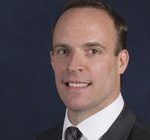
  • Dominic Raab – 2022 Comments on Nightingale Courts

    Dominic Raab – 2022 Comments on Nightingale Courts

    The comments made by Dominic Raab, the Secretary of State for Justice, on 21 April 2022.

    Getting the courts backlog down is a key priority for this Government so that we can ensure victims get the swift access to justice they deserve.

    Alongside the extension of Nightingale Courts, digital hearings and investing significantly in criminal legal aid, we are removing the limit on sitting days for a second year to boost capacity and help drive down the Crown Court backlog of cases.

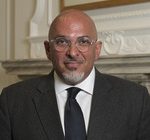
  • Nadhim Zahawi – 2022 Comments on Climate Education

    Nadhim Zahawi – 2022 Comments on Climate Education

    The comments made by Nadhim Zahawi, the Secretary of State for Education, on 21 April 2022.

    We are delivering a better, safer, greener world for future generations and education is one of our key weapons in the fight against climate change. The entrepreneurial, can-do spirit of this country makes me confident that we will win this fight.

    It shouldn’t come as a surprise to anyone that young people are already very committed to a more sustainable planet. We should be proud of this, and I want to do everything I can to encourage this passion so they can be agents of change in protecting our planet.

    The new natural history GCSE will offer young people a chance to develop a deeper knowledge and understanding of this amazing planet, its environment and how we can come together to conserve it.

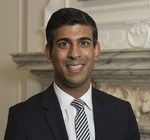
  • Rishi Sunak – 2022 Comments on Sanctions Against Russia

    Rishi Sunak – 2022 Comments on Sanctions Against Russia

    The comments made by Rishi Sunak, the Chancellor of the Exchequer, on 21 April 2022.

    We are steadfast in our support for the people of Ukraine and these new significant sanctions against Putin will bring the total import tariffs and bans on Russian goods to over £1 billion – imposing further economic pain on Putin’s economy for his barbaric and unjustified attacks on a sovereign nation.

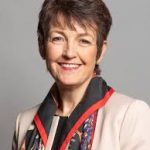
  • Jo Churchill – 2022 Speech at Agri-Tech and Environmental Sustainability Conference

    Jo Churchill – 2022 Speech at Agri-Tech and Environmental Sustainability Conference

    The speech made by Jo Churchill, the Minister for Agri-Innovation and Climate Adaptation, on 21 April 2022.

    Good morning,

    Thank you for the warm welcome. It gives me great pleasure to be here with you all today at the Agri-Tech Centres conference.

    As the Minister for Science and Innovation at Defra, I am so excited about the potential for technology across the agri-food sector, and I really believe that the opportunities are endless.

    I have travelled around the country I have been to events such as today and indeed travelling across to Dubai and across the world we do lead and we need to be brave and we need to shout about it. If we can take that and our enthusiasm and drive the sector forward we have something quite fantastic to offer the world.

    I’m particularly pleased that so many of you are here today – so that we can share that knowledge and collaborate because there is no point in having bright ideas if we don’t actually expand them within our own networks but more broadly. Now those challenges we face, some of the most pressing challenges that we face are omnipresent in all our lives and I’d argue as we design the solutions everybody has sustainability at the forefront.

    Just recently, I attended Expo 2020 in Dubai – it was absolutely phenomenal to discover a whole range of projects with international partners, from the reduction of methane emissions in livestock, and feed alternatives, to deregulation in the genetic technologies space.

    I want to start by taking a moment to reflect. Recent events in Ukraine, and the impact of the Covid pandemic, are a stark reminder, if we need one, that domestic food production matters. It gives us national resilience. We do have a high degree of self-sufficiency, but I want to say here and now that we will always support our farmers and growers, and importantly our innovators.

    Of course, food production and environmental protection go hand in hand. They are two sides of the same coin. The steps we are taking to encourage a more sustainable model of agriculture are also helping the resilience and profitability of farm businesses – but innovation is crucial. And, for fear of repeating myself, super exciting.

    I am proud that the UK is playing a leading role when it comes to innovation. Whether it’s the Hands Free Hectare, now Hands Free Farm at Harper Adams, agricultural technology at the John Innes Centre – who knew that peat could be so interesting, The National Institute of Agricultural Botany with its work on climate resilient crops, the James Hutton Institute in Scotland and its work on vertical farming they are doing, or the work of Rothamsted Research on genetic technology, we have an awful lot to shout about in relation to R&D and we also have so many dynamic farmers and growers adopting these technologies, but we need to help them trust them and adopt quicker.

    But, as we look to the future, that need to go further and faster to address the challenges that we all face – is obvious. Whether it’s food production in a changing climate, how we meet net zero by 2050, and even how we address some of the challenges we face around issues like labour supply – and I look forward to publishing the automation review and our response shortly. No single thing is the answer, we need to look and make sure though, that we have the right pieces.

    We are making significant investments to unlock innovation and translate our world-leading research into practical, farmer-led solutions that help them invest in their businesses, improve productivity and profitability, and boost environmental sustainability and resilience, and move towards net zero emissions.

    We have just increased the Farming Investment Fund for small technology grants from £17 million to more than £48 million – supporting over 4,500 farmers with their investment plans this year. But I would argue demand is outstripping supply. There is so much energy and so many bright ideas out there. Alongside that boost in funding, we have also provided £25m for round one of the large technology grant offer – Improving Farm Productivity, which supports farmers and growers to invest in robotics and automation technology to increase farm productivity and efficiency. Last month, we opened applications for a further £20.5 million from our Farming Innovation Programme.

    The Farming Futures Research & Development Fund will provide up to £12.5 million for innovation projects that help boost a climate-smart farming sector.

    And the Large Research & Development Partnership competition will offer up a further to £8 million for collaborative, business-led R&D projects, benefiting farmers and growers across England, and importantly the innovators thinking of ideas to support them, benefitting everyone, with a focus on the future commercialisation of new solutions. Like last October’s opening rounds, both will be delivered in partnership with Innovate UK.

    We are therefore making a significant investment and this support will continue over the coming months and years, but in building on our food security, resilience and ambition for net zero we need to ensure that our funding trajectory offers best value and that all parts of the innovation jigsaw, which currently feels like all the little pieces in a box without the picture, is really put together in a way which really allows people to understand what that picture and what that opportunity gives us.

    There is a wide world out there full of opportunity for our innovators, but they also need proof of concept, so our farmers need to help.

    I have never met so much excitement, enthusiasm, bravery, great ideas, but kept so quiet. Please shout, please tell everyone how good you are at what you do. Because I am one voice, and if you can amplify that voice and explain to people why we might change, how we can use innovation, why science matters.

    It is part of that broader picture for helping our customers on the journey, but also to helping to inspire young people to look at Agri-Tech and everything it offers, as far as reading the world, and being inspirational.

    I visit a lot of schools and very rarely do young people say “oh I want to go into Agri-Tech”, they should, and I often, coming from a rural part of the country, tell them they should. Because it is one of the most exciting parts of science, and it does so much good.

    It not only looks after the welfare of animals, but you have that combination of the health of humans. You have really large challenges out there, whether it is climate change, challenges with obesity, we can change the way we do things, we can innovate because we are good. And I want you to help me amplify that message about why we need to do this.

    Now we are looking to unlock the potential of gene editing in England, which will allow us to breed drought and disease resistant crops which perform better and with fewer inputs. Reducing the cost to farmers as well us reducing impact on the environment, as well as helping us develop crops that can adapt to the challenges of climate change.

    Water scarcity, I know that better than most coming from the East of England, will be a major impact not only in this country though. This is where we can look across the world.

    Recently on the trip to Dubai, understanding that their food security is about 15%. Looking at them trying to grow things and the challenges that face the nation, and breeding crops that can help them overcome those challenges.

    How water scarcity will be that major impact on climate change, and it will mean that land in some parts of the world that can currently be farmed, will no longer be viable unless we can get that breeding technology right, and keep pace with both the challenge of climate change and also the challenge of delivery.

    Elsewhere, we are currently supporting and investing in research and engaging with partners to develop a robust evidence base on the soil carbon market, including considering several robust methodologies and techniques for monitoring, and verifying and reporting on changes in soil health. This would cover carbon storage and maintenance in natural and farmed landscapes.

    Today’s event is a great chance for us to come together – government, industry, in all its various forms, and academia – and consider the opportunities that agri-tech and innovation can bring, not only to this room, not only to your businesses, but to the broader and wider society, both in this country, but across the world. Because, together, I feel certain that we can foster the potential that exists and we can nurture it, because that is what many of you in this room do. We can watch it grow and we can send it out into the world to say look at what we can do. So, I wish you a very good conference, and a power to your elbows to keep on doing what you are doing. Thank you.

  • Lindsay Hoyle – 2022 Statement on Referring Boris Johnson to the Committee of Privileges

    Lindsay Hoyle – 2022 Statement on Referring Boris Johnson to the Committee of Privileges

    The statement made by Lindsay Hoyle, the Speaker of the House of Commons, in the House on 21 April 2022.

    Before we begin, I believe it would assist the House if I remind Members of the decision in question and the procedure on this motion. The decision before the House is whether or not to refer the matter to the Committee of Privileges at this time. It will be for the Committee to report back on whether it considers there has been a contempt. While it is perfectly in order for hon. Members to question the veracity of the Prime Minister’s responses to the House cited in the motion, it is not in order to challenge more generally the truthfulness of the Prime Minister or any other hon. or right hon. Member. Good temper and moderation must be maintained in parliamentary language.

    Much of what might be said today has already been said in response to the Prime Minister’s statement on Tuesday. Previous debates on such motions have been relatively short. Since 2010, the longest such debate has been for one hour and 29 minutes, and debates have been as short as seven minutes. That said, an amendment has been selected and the motion is of great importance. The debate may continue for as long as it takes unless either there is a successful closure motion to bring the debate to an end or we reach 5 o’clock, in which case the debate will be adjourned to a future day. I would also say that if the debate becomes very repetitive, we may have to consider whether to do closure earlier, but I will leave that to how the debate develops. Any Members who wish to speak need to stand to ensure that they catch my eye at the beginning of the debate.

    The right hon. and learned Member for Holborn and St Pancras (Keir Starmer) has tabled a motion for debate on the matter of privilege, which I have agreed should take precedence today. I inform the House that although I have selected the amendment in the name of the Minister for the Cabinet Office, I understand that it is now the Government’s intention not to move it. I call Keir Starmer to move the motion.

  • Christian Matheson – 2022 Speech on Human Rights in Colombia

    Christian Matheson – 2022 Speech on Human Rights in Colombia

    The speech made by Christian Matheson, the Labour MP for City of Chester, in Westminster Hall on 20 April 2022.

    It is a great pleasure to serve under your chairmanship, Ms McDonagh. Seven months would be me just getting warmed up. I congratulate my hon. Friend the Member for Liverpool, Wavertree (Paula Barker) on securing the debate and on her fantastic introduction.

    Like many, I suspect, my involvement and interest in Colombia started when I was a trade union official. As we have heard from colleagues, Colombia was the most dangerous place in the world to be a trade unionist 20 years ago, and my message for the Minister is that we must not take our eye off that ball.

    There are two harsh realities in Columbia. No. 1 is that the peace process does not enjoy universal support. It did not at the time; when ex-President Santos put it to the vote, it was narrowly rejected. There is still a large, residual resentment at the peace process and at the fact that the Government and the state made peace with FARC. We heard that in the intervention from my hon. Friend the Member for Rochdale (Tony Lloyd), who talked about the pressures to revert to the previous state of civil war, which was the longest-running civil war in the world at the time.

    That is one harsh reality. The other, for those who oppose the peace process in Colombia, is that it is the only show in town; it is the only way forward. Peace cannot be established and won just because a document was signed at Cartagena in 2016; it has to be a long and ongoing process. That is why it is so important to see colleagues here from Northern Ireland—my good friend the hon. Member for Strangford (Jim Shannon) and the hon. Member for Belfast South (Claire Hanna). I pay tribute to our representatives in the UK from Northern Ireland, including the right hon. Member for Lagan Valley (Sir Jeffrey M. Donaldson), who chairs the all-party parliamentary group on Colombia, and Lord Alderdice, and to all the parties in Northern Ireland, who are going—not have been—through a peace process, which is difficult at times for all of them. They demonstrate to the people of Colombia that peace must be invested in day after day, month after month and year after year. Peace cannot be achieved simply by signing a piece of paper—and then we all go home. Peace is difficult. It may not be as difficult as conflict, although some in the large cities of Colombia who have been insulated from the violence might be happy to go back to that situation. We have to continue to give that message and support the people of Colombia.

    One big problem the people of Colombia face is that the Government—the state—still do not control large areas of territory in Colombia. Chapter 1 of the peace agreement foresaw comprehensive rural reform, giving people a stake in their own land and life. It also gave them security to carry on their lives without the threat of paramilitaries from either side. That section on rural reform has fallen badly behind in areas where there is no state presence. One set of paramilitaries has been replaced by another. As my hon. Friend the Member for Liverpool, Wavertree said, they are narco-traffickers or former right-wing paramilitaries, or they sit in the middle bit of the Venn diagram and might be a mixture of them all.

    I am pleased to say that the number of armed combatants has fallen. The rough guess of the independent Bogotá think-tank Indepaz is that there are about 5,200 to 5,500 armed, organised paramilitaries, which is lower than the combined total of 50,000 20 years ago. If we include all the different armed groups, there are probably about 17,000 in total, so progress is certainly being made. However, as my hon. Friend said, the number of murders of social leaders and human rights defenders jumped in 2020 and remains stubbornly high.

    Four main sources keep count of the numbers of social leaders, human rights defenders and trade unionists murdered in Colombia: the UN High Commissioner for Human Rights; a Colombian Government agency, the human rights ombudsman, Defensoría; and two non-governmental organisations, Somos Defensores and Indepaz. Of those, even the organisation with the lowest confirmed count, the UN high commissioner, still finds that a social leader has been murdered in Colombia every 3.2 days since the peace accord came into effect in December 2016.

    A further consequence of the lack of peace and the failure to control territory is illegal deforestation and attacks on the environment. I pay tribute to British groups, such as the Earlham Institute and Kew Gardens, that are doing extremely important work with Colombians and Colombian academics in support of biodiversity programmes. However, deforestation continues, with a 36.9% increase in deforestation in Colombia’s Amazon basin between 2019 and 2020.

    The second chapter of the peace accord focuses on political participation and seeks to establish guarantees for people to petition the state or to practise opposition politics. Before and during the decades of the armed conflict, people with reformist or leftist views participated in politics at great personal risk. Thousands were killed, including much of the membership of a political party originally linked to the FARC, the Patriotic Union, in the ’80s and ’90s.

    Political participation guarantees still do not go much further than a few nominal changes in the law. My hon. Friend the Member for Liverpool, Wavertree mentioned the Kroc Institute’s monitoring report, which found that there is still stagnation on the commitments that would allow progress towards structural reforms of democracy, due to the absence of a political consensus for their substantial and comprehensive progress.

    Spending on the peace process in Colombia fell by 18% from 2020 to 2021 and the Colombian Comptroller General argues that that contributes to increasing the lags in the implementation of the comprehensive security system for political participation. Peace is expensive—we know that, and we also know that Colombia has spent a lot of money supporting Venezuelan refugees, and has also had to deal with the pandemic—but it is so fundamental to social progress in Colombia that it is not an area where budgets can be cut.

    Chapter 5 of the peace accord covers the processes that could deliver peace. It sets up a comprehensive system for truth, justice, reparations and non-recurrence. The Special Jurisdiction for Peace is a transitional justice tribunal that is prosecuting the most serious human rights abusers. Again, it does not enjoy full support, but something that enjoyed full support from one side or the other probably would not be the compromise that a peace deal would bring. A unit to search for the disappeared is working with victims and communities in an attempt to locate some of the 80,000 people who went missing during the years of the conflict. Again, that is similar to what happened in Northern Ireland.

    We cannot have peace without justice, we cannot have justice without peace, and we cannot have environmental protection without peace. All are absolutely essential, but let us not forget the trade unionists and civil society leaders who are being murdered.