
Tag: 2022

  • Kevin Brennan – 2022 Speech on UK Songwriters and Composers

    Kevin Brennan – 2022 Speech on UK Songwriters and Composers

    The speech made by Kevin Brennan, the Labour MP for Cardiff West, in the House of Commons on 18 May 2022.

    I draw the House’s attention to my entry in the Register of Members’ Financial Interests and my membership of the Musicians’ Union and the Ivors Academy. I also take this opportunity to announce to the House that I was elected as chair of the all-party parliamentary group on music earlier today. I look forward very much to using that platform to campaign further for our great musicians and music industry.

    I am delighted to have this opportunity, ahead of the 67th annual Ivor Novello awards tomorrow, to pay tribute to our world-renowned songwriters and composers. Hon. Members may have seen early-day motion 35, which I tabled this week to celebrate Ivors Week and the work of the Ivors Academy:

    “That this House notes that 16 to 20 May 2022 is Ivors Week, and joins the Ivors Academy in celebrating this country’s world-leading songwriters and composers, culminating in the Ivor Novello Awards which honour the best in British and Irish songwriting and composing; further notes that the success of the UK music industry is founded upon the talent and creativity of world-leading composers and lyricists; and calls on the UK music industry and the Government to ensure that a business and public policy framework exists to nurture future songwriting talent and to properly reward those whose creativity helps generate the £5.2 billion annual economic contribution that music makes to UK plc as well as furnishing people with the soundtracks of their lives.”

    May I take this opportunity to thank all our songwriters and composers? I also thank the Ivors Academy’s chief executive Graham Davies, its chair Tom Gray, its former chair Crispin Hunt and all its members for their work championing our great songwriters and composers. I pay tribute to the chair of the Ivors Academy Trust, Cliff Fluet, whose work helps to support, educate and nurture the songwriters, composers and creators who need it most. The Ivors Academy is using this Ivors Week of celebration to launch TheWRD, a new further education diploma in creative entrepreneurship, to offer career-defining arts education, widen opportunity for young people and open access to a career in music and the creative industries.

    I also want to highlight Credits Due, the Ivors Academy’s excellent joint initiative with the Music Rights Awareness Foundation, and give a mention to songwriter Fiona Bevan, who is helping to promote it. Its purpose is to increase knowledge of music rights through education and other forms of support. It can go some way towards recovering some of the estimated £500 million of annual missing income that is not paid to songwriters from global streaming revenues because of inaccurate or incomplete metadata attached to recordings.

    As you know, Mr Deputy Speaker, in these debates I always emphasise creativity’s value in and of itself, not just its economic value. We all understand that music is inherently good for us. Whether we sing tunelessly in the shower, belt out a chant at the football or tap our foot to the radio, music is our common human therapy.

    Jim Shannon (Strangford) (DUP)

    I thank the hon. Gentleman for all he does for the music business. I congratulate him on being elected chair of the APPG— there is no better person than him for it. Does he agree that each region of this wondrous United Kingdom of Great Britain and Northern Ireland has so much to offer in cultural expression? Does he know that there are members of the world-class Ulster Orchestra who began their long learning journey in Orange halls across the Province of Northern Ireland? Together, all these cultural expressions make a wonderful musical symphony that makes us all very proud to be British.

    Kevin Brennan

    I know that the hon. Gentleman is quite a keen musician himself. I agree that music is incredibly important in England, Wales, Scotland and Northern Ireland—all the countries of our United Kingdom. I also completely agree that music can bring people together in harmony. We should remember that power at all times.

    Sir Greg Knight (East Yorkshire) (Con)

    I declare an interest similar to the hon. Gentleman’s. Is he aware that the views that he is expressing are not unique to the Opposition, because many Government Members share his appreciation for composers and his passion for music?

    Kevin Brennan

    Yes, I am, not least because I have written a couple of songs with the right hon. Gentleman that we have recorded down the years with our band MP4—legends in our own imagination. As we say in these groups, he is not only a drummer, but a musician: he has written songs himself, some of which have cult status on the internet.

    UK Music’s recent “Power of Music” report sets out in clear terms the enormous and extensive benefits that music provides for health and wellbeing, with notable effectiveness in regulating and improving the mental health of so many people during the pandemic and in offering particular emotional respite for those with dementia. What is beneficial is not just playing and singing, but creating music. Organisations such as the Songwriting Charity empower young people and communities through the art and craft of songwriting to boost their confidence, self-esteem and mental health.

    Some Members may not be aware—although you may be, Mr Deputy Speaker, given your origins—that Ivor Novello, the Welsh songwriter, playwright, composer and actor, was born on Cowbridge Road East in my constituency in 1893. Christened David Ivor Davies, he took the name Novello from his mother, Clara Novello Davies. I was particularly pleased when, three years ago, the former British Academy of Songwriters, Composers and Authors—BASCA—rebranded itself as the Ivors Academy in his memory, and in acknowledgment of the world-famous Ivor Novello Awards, which it runs.

    In economic terms, songwriters and composers contribute substantially to the value of our music, performing and visual arts ecosystem, which generates an enormous £10 billion domestically, with music exports constituting £2.9 billion in value to the UK economy. UK Music points out that one in 10 songs streamed globally were produced here in the UK. That is a lot of globally popular UK songs and music.

    This past week—and I know that you were watching, Mr Deputy Speaker— exemplified the joy and excitement that songs can create, with the immense talents of a diverse range of musicians and composers from across Europe and beyond brought under the Eurovision roof in Turin. Congratulations, of course, to Ukraine’s Kalush Orchestra, the deserved winners on the night, but also to the UK’s Sam Ryder, who came second. Writing great songs is a Great British tradition, from Ivor Novello’s “Keep the Home Fires Burning”, through Lennon and McCartney’s “I Want To Hold Your Hand”, David Bowie’s “Life on Mars” and Joan Armatrading’s “Love and Affection”, to Adele and Dan Wilson’s “Someone Like You”; but we must not take it for granted that that will go on forever.

    I am happy to inform those who are not aware of it that the UK’s Eurovision song, “Space Man”, was co-written by the incredibly talented former student of Cardiff’s Royal Welsh College of Music & Drama and Radio Wales presenter, Amy Wadge. Many had assumed that Britain’s recent lack of success in Eurovision was political, but it turns out that what is needed—as well as a talented artist, good presentation and good production—is, above all, a great song. I am old enough to recall a time when Eurovision was known as the Eurovision Song Contest, and the writers were featured on camera to take a bow for their part in the creation of the music. There is no singer without the song and no song without songwriters, so perhaps that recognition should be resurrected. When I was growing up with vinyl records, which are now popular again, I used to study the labels intently to see who had written the songs. I want people to do that again, so that the art of songwriting is once again given its proper due rather than being hidden away somewhere deep in the metadata.

    Esther McVey (Tatton) (Con)

    The hon. Gentleman is a great champion for the music industry, and he has done much to secure a better deal for musicians, particularly from music streaming. He has also worked with the former chair of the Ivors Academy, Crispin Hunt. It is true that we need great songwriters, but we must ensure that they receive a fair share from the music that they have written and performed. I should like to know what more we can do, on both sides of the House, to ensure that musicians receive that better payment.

    Kevin Brennan

    The right hon. Lady is absolutely right. She has been a tremendous advocate on behalf of songwriters and composers, and although we sit on opposite sides of the House and may differ on many subjects, this is a subject on which she has been a passionate advocate for creators to get their just rewards. Later in my speech I will refer to some of the issues that she has mentioned, all of which featured in the private Member’s Bill of which she was a sponsor and which I introduced in the last Session. Ongoing work on parts of the Bill will, I hope, bear fruit in the near future.

    We need to improve the wealth of research and development opportunities available to British creatives. Talent pipelines have been left to fracture and decay over the last decade, with cuts in education and local authorities’ services under consecutive Conservative Governments. It is vital that meaningful opportunities exist for the songwriters and composers of the future from all backgrounds, regardless of their genre and of their means and connections. This must be a key test for the DCMS, and particularly for the Secretary of State in the context of her professed desire to level up in her role.

    I draw the House’s attention to this week’s very welcome announcement from the Welsh Labour Government in Cardiff of the trebling of funding for music education and the launch of Wales’s new national music service, which will ensure that all pupils between three and 16 years of age can access and borrow musical instruments through a national instrument library. It will also expand creative opportunities to pupils of all backgrounds through the offer of half a term’s tuition for free.

    The challenge for UK Government Ministers is clear. In a survey conducted on behalf of the Ivors Academy’s TheWRD—the further education diploma that I mentioned earlier—it was found that:

    “70% felt that starting a career in music would be difficult, citing barriers such as not having contacts, being too much of a financial risk, lack of opportunities, and the industry not being open to people from their background. When asked about the barriers young people faced in accessing further education, almost 50% of those surveyed felt they were unable to afford it, and 1 in 4 said they do not have access to courses near where they live.”

    I hope that the Government will follow the Welsh Government’s initiative when they review their national music plan, and also that they will support the Ivors Academy’s TheWRD initiative that was announced this week.

    At this point, I remind the House of the vital role that our public institutions play in nurturing songwriting talent. The BBC sometimes comes under criticism in this House, but I remind hon. Members of the vital role that it plays in underpinning, promoting and paying our musicians, songwriters and composers. BBC Introducing is an excellent example of research and development from our national public service broadcaster. It has supported almost 300,000 artists on its platform and gone on to achieve 23 UK No. 1 hit singles and 146 Brit award nominations. Every day, music is playing somewhere on the BBC. When music is playing, musicians should be getting paid. On the BBC, they are. It is generating royalties for musicians, songwriters and composers. There is, I am afraid, an increasing trend in the new digital media to try to avoid paying composers, and insisting on taking from them what Parliament intended they should have—that is, royalties when their music is used. The BBC has been a helpful bulwark against that trend, and changes in the way in which programmes are now commissioned at arm’s length must not be used to deny composers their full remuneration.

    There has rightly been a lot of coverage recently of the cost of living crisis, and sadly, for too many talented and successful musicians, songwriters and composers, getting by on their meagre royalties has been a struggle for years. When we held our Select Committee inquiry, one of our witnesses was a Mercury prize-nominated artist who was struggling to pay their rent because of problems resulting from the pandemic and the lack of reward from streaming.

    The Minister will recall that a major provision in my private Member’s Bill, which was sponsored by Members in the House and introduced in the last Session, placed a transparency obligation on those who have had rights transferred or licensed to them, requiring them to supply timely and comprehensive information to the songwriter, composer or artist about where and how their music is being played, so that they can be sure that they are being paid what they are due. The Select Committee recommended this after hearing evidence during its inquiry into the economics of music streaming, which found that it is often difficult for artists and songwriters to gain any clarity or to audit their works. We heard about money that should have been paid disappearing into what are known in the industry as black boxes. It is clear that songwriters suffer particularly because of poor data standards.

    On the subject of the value of streaming to songwriters, the Committee expressed concern about how the big three record labels also own large parts of the music publishing business, and about how that might influence the way in which revenue from streaming is distributed. If the big three make more profit from their rights in the recording than they do from their rights in the publishing, there is a disincentive for them to pay songwriters a competitive share of the streaming revenue. The publishing right ought to be competing for more value against the recording, but it appears to be stifled by that problem of joint ownership. I praised the Government at the time for noting the concerns, expressed in the Committee’s report, about the impact of monopoly power and cross-ownership in the music industry and for referring the matter to the Competition and Markets Authority for a study of potential market failure. I keenly await its conclusions.

    The issue of streaming remuneration has not gone away. There is a real danger, particularly in the current economic context, that we will make no progress on recovering the artists lost to the industry during the pandemic if more is not done to support our songwriters and composers. Last November’s survey by the Help Musicians charity found that 80% of professional musicians had been unable to return to full-time work since the pandemic struck.

    The live industry, as one of the sectors forced to shut for the longest period during multiple lockdowns, has also faced an uphill battle in its recovery from the pandemic. The VAT reduction on ticket sales introduced in July 2020 was a vital lifeline for struggling venues and events across the country, and it recognised the sector’s high up-front costs and significant preparatory time. Abandoning the reduction too soon prevented a further £765 million of investment over a three-year period and held back the sector’s post-pandemic recovery. These are the venues and events upon which the creative ecosystem relies. Songwriters get paid by PRS for Music when their compositions are played live, so I ask the Minister to use this Ivors Week to remember that the vibrancy and success of the UK’s music industry are built on the creative activities of songwriters and composers, and that it is not achieved in a vacuum. The pandemic compounded the everyday struggles of our talented artists and exposed the cracks in the industry’s infrastructure.

    In classrooms, music venues, festivals and, of course, the money that musicians should be paid, the need for reform and investment is evident. A career in music can be viable, but there is work to be done to ensure that those who have the talent, from whatever background, have a chance at success.
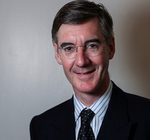

  • Jacob Rees-Mogg – 2022 Speech on Achieving Economic Growth

    Jacob Rees-Mogg – 2022 Speech on Achieving Economic Growth

    The speech made by Jacob Rees-Mogg, the Minister for Brexit Opportunities and Government Efficiency, in the House of Commons on 18 May 2022.

    It is a pleasure to close this debate on behalf of Her Majesty’s Government. I thank right hon. and hon. Members on both sides of the House who have contributed; they made many important points, quite rightly holding the Government to account in the best traditions of this House, which made for an excellent debate to follow Her Majesty’s Gracious Speech. That speech set out the Government’s plans to grow our economy, ease the cost of living and drive our levelling-up agenda.

    My right hon. Friend the Chief Secretary to the Treasury set out earlier today the ambitious plans for accelerating economic growth in this country. I echo his comments that there are reasons to be optimistic. Last year the United Kingdom was the fastest-growing economy in the G7. Employment has fallen back to 3.7%, below pre-pandemic levels, the lowest in nearly 50 years—since, I think, before you were even born, Mr Deputy Speaker, assuming that you were not born in 1974. However, as in 1974, inflation is once more on the prowl. It is a global issue, because of wars and rumours of wars, as well as, of course, the covid pandemic. Energy prices have risen globally. Other supply chains are disrupted, and China’s biggest cities are in lockdown. Container shipping is in the wrong place in parts of the world. The monetary policy prescripts that were necessary to deal with the global financial crisis and the pandemic risk of economic inactivity have also taken their toll. All that presents challenges not just to the Government in this country, but to Governments across the world. Fortunately, this Government—Her Majesty’s Government—have plans to deal with them.

    The areas under my direct responsibility are some crucial, essential, fundamental supply-side reforms in the Brexit freedoms Bill and the Procurement Bill. Those two Bills, along with a host of others in the Queen’s Speech covering data reform, gene editing, future transport technology, financial services reform and more, provide exactly the sort of meaningful policy—supply-side reforms that Opposition Members always oppose because their answer is always more regulation and more interference— which will truly open up the bottlenecks in our economy and give the British people the plenty and prosperity that they deserve. Once again, it is Conservatives who are willing to make proper, long-term, well-thought-through policy decisions to the benefit of the British people.

    Before I talk about the Bills in more detail, I want to refer to some of the comments that have been made during today’s excellent debate—and what a pleasure to start with the hon. Member for Leeds West (Rachel Reeves). Her speech was a beautifully crafted and elegant audition for the leadership of the Labour party, but she has set out her stall, and having always been thought of as being quite moderate—she was, I believe, an economist for the Bank of England at one point—she is now red in tooth and claw. The prescripts of socialism came spewing forth: higher tax, higher regulation, more spending. The fuel for the inflationary fire was piled up as if she were looking for a veritable bonfire.

    The hon. Member for Leeds West was only to be outdone by the hon. Member for Nottingham East (Nadia Whittome), who, if the other hon. Lady was Solomon, was Rehoboam. If it was whips from the shadow Chancellor, it was scorpions from the hon. Member for Nottingham East. The scorpions of socialism have lashed this country before, and we will not be stung by their like again. But I must now move on to the very distinguished hon. Member for Glasgow Central (Alison Thewliss).

    There is a phrase that comes to mind, because the hon. Lady was looking around for something with which to attack this Government, an extraordinary thing for her to do. She found that one item, which was of course the obsession of the Scottish National party, who want to be free from the United Kingdom only to be in thrall to the yoke of Brussels. She found a few pounds that used to come from Brussels but do not come from the United Kingdom, but she forgot the £41 billion that will go from the UK taxpayer to Scotland each year for the next three years; the £170 million from the levelling-up fund for eight Scottish projects; the £52 million to support the establishment of two green freeports; the £42 million for Scottish fisheries and the £1.9 billion for farmers and land managers; and the £1.5 billion for 12 city growth deals. The hon. Lady sat there elegantly straining at a gnat, when camel after camel had been greedily swallowed by the Scottish Government previously.

    Let me turn to the inspired and helpful interventions from this side of the House. I am not saying that there is a monopoly of wisdom on this side of the House, although it does sometimes look that way. We started with my right hon. Friend the Member for Ashford (Damian Green), who pointed out that productivity had been a challenge for this economy for some time. He is absolutely right, and that is why supply-side reforms are so important.

    My right hon. Friend the Member for Epsom and Ewell (Chris Grayling) mentioned shale gas. I recall an occasion when a much more distinguished speaker at this Dispatch Box decided that the argument coming from the Back Bench was so strong that he could not rise to answer it and remain within the confines of collective agreement. My more distinguished predecessor was, as it happens, Robert Peel, and the argument was over free trade. Although I was not entirely won over by my right hon. Friend’s argument, I am nonetheless glad that Her Majesty’s Government are reviewing the position on shale to ensure that we maximise safely the resources that lie under the feet of the people of this nation.

    Chris Bryant

    Several Members on this side and on the other side spoke today in favour of a windfall tax on windfall profits. As I understand it, the right hon. Gentleman is wholeheartedly opposed to this socialism, so if and when the Government introduce it, will he resign?

    Mr Rees-Mogg

    Unfortunately, as so often, the hon. Gentleman has not been paying proper attention to the day’s debate. If he had, he might have heard an authority greater than I am answering half a dozen questions on that very issue from the Leader of the Opposition slightly earlier. The authority in Her Majesty’s Government is obviously the Prime Minister, of whom I am a humble servant.

    My hon. Friend the Member for Harwich and North Essex (Sir Bernard Jenkin) raised the issue of disruption in supply chains. This is a fundamental problem, and until supply chains are restored, inflation is likely to be difficult. The contributions have ranged widely. We heard from my hon. Friends the Members for West Worcestershire (Harriett Baldwin) and for Rugby (Mark Pawsey), as well as from my hon. Friend the Member for Burton (Kate Griffiths), whom I was pleased to visit last week. We had the pleasure of going to the Elkes Biscuits factory. If you want a better biscuit, buy Elkes biscuits. They are absolutely delicious. I helped—I was not very good at helping, but I did help—and they sent me home with a packet of Bourbon creams, which have never been devoured faster than they were by my children. I thank my hon. Friend for having me on that visit.

    We heard from my hon. Friends the Members for South West Bedfordshire (Andrew Selous) and for Reigate (Crispin Blunt), and from my right hon. Friend the Member for Gainsborough (Sir Edward Leigh), who insisted that we stick to the title of the debate, which is “Achieving economic growth”. He is almost always absolutely right, but on this occasion he was particularly absolutely right. We want to stick to the issue of economic growth. We also heard from my hon. Friend the Member for Thirsk and Malton (Kevin Hollinrake).

    I do not know whether to be delighted or somewhat miffed at my hon. Friend the Member for Hertford and Stortford (Julie Marson), because in one short speech she made a point that I have been trying to make for about 20 years and she made it more pithily and better than I have ever done. She used a cricketing metaphor, which is that the Government are the groundsmen, and the most they can do is to prepare the pitch for the bowlers and batsmen—the businesses across the country who provide the economic activity. We are not the players in the game; we are the groundsmen. As I say, that is a point that I have been trying to make for a long time, and I am going to steal my hon. Friend’s pithy aphorism shamelessly. I hope that I have her permission to do so.

    We heard from my hon. Friend the Member for Bolsover (Mark Fletcher), and also from my hon. Friend the Member for South Cambridgeshire (Anthony Browne), who said that growth was everything, agreeing with my right hon. Friend the Member for Gainsborough. I think that my hon. Friend the Member for Milton Keynes North (Ben Everitt) might need to contact the Boundary Commission, because during his speech he decided to rename his constituency the “Silicon Valley of Europe”. For that to be officially approved, I think it would have to go through the proper processes, but it seems to me a jolly good idea that we should have the Silicon Valley of Europe in Milton Keynes, with robots going around showing how modern and technologically sophisticated they are.

    I was also delighted by the contribution from my hon. Friend the Member for West Dorset (Chris Loder). I visited his constituency recently, and he generously provided me with the most excellent cake. Hon. and right hon. Members will think that wherever I go I am provided with confections of the most delicious kind, but that is not compulsory, and I would happily go without the cake to visit Poundbury, which is the most amazing success of planning in providing the things that people want. It is beautiful and elegant, and it achieves a density that other places do not achieve.

    I also listened to my hon. Friend the Member for North Norfolk (Duncan Baker) with pleasure.

    Geraint Davies

    Will he give way?

    Mr Rees-Mogg

    How could I refuse such an eloquently phrased request?

    Geraint Davies

    I am listening to this very amusing after-dinner speech, but does the right hon. Gentleman agree that the serious issue here is that, had we continued on the growth trend of the last Labour Government, people would have an extra £11,000 to work with? We have the highest tax rate since world war two, the highest inflation rate for 40 years and 2.6 million people going to food banks. Does he agree that is a complete catastrophe? He is making a big joke out of it, which shows he should not be in office.

    Mr Rees-Mogg

    The hon. Gentleman must think there has been a collective outbreak of amnesia not just in the House but across the nation. He seems to forget that the country was bankrupt when the coalition came to office in 2010, and it had been bankrupted by the “spend now, find the money later” approach of the socialists. Was it not Margaret Thatcher who so rightly said that, ultimately, they run out of other people’s money? They ran out of other people’s money.

    Growth has been lower because of the utter irresponsibility of the socialists prior to 2010, and the then Chief Secretary to the Treasury left a little billet-doux, did he not, saying:

    “I’m afraid there is no money.”

    [Hon. Members: “It was 12 years ago.”] Yes, it was more than 12 years ago, but we will not let them forget because socialism always leads to economic failure. Every socialist Government there has ever been has led to economic failure, devaluation, high taxes and low economic growth, and then the Conservatives come in to clear things up.

    Andrew Selous

    I have not had the pleasure of visiting Poundbury, but I have visited the Prince of Wales’s other development at Nansledan near Newquay, where a wonderful, large doctors surgery is being built. Many of us have a serious issue with large new developments, as we do not have quite the same prowess at putting in general practice capacity. When my right hon. Friend is next round the Cabinet table, will he forcefully represent that point, which concerns many of us on both sides of the House?

    Mr Rees-Mogg

    My hon. Friend is wise, and this is part of the reason why Poundbury has been a success, because it provides basic services, including a primary school. That is part of the planning requirement, so I agree with him very much.

    I was delighted by the contribution of the right hon. Member for Leeds Central (Hilary Benn), which are not words I thought I would use nor words he probably thought I would utter. I always thought he was the high priest of remain, yet I could have delivered most of his speech on the intransigence and stick-in-the-mud-iness of the European Union.

    I am glad to say that, in the UK, we are being much more flexible. We are recognising that the EU has not suddenly become dangerous. We may not like the EU, we may not think it is the best construct and we may not want to belong to it, but we do not think it has suddenly become rabid. That is why I was delighted to announce in April that the remaining import controls on EU goods will no longer be introduced. This is not a delay but a change in policy, because we recognise that goods produced in other parts of the world—not just the EU—can be produced safely, and it therefore makes sense to have unilateral recognition if others will not give us mutual recognition. Between now and the end of 2023, we will look to see how far we can extend that with other friendly nations that have high standards, as it cuts costs for consumers.

    The right hon. Gentleman probably has better relations with highfalutin EU figures than I do, and he may be better placed than I am to persuade them that reciprocation would be more in their interest than ours.

    Martin Docherty-Hughes

    On open trade, will the Minister give us some clarification on “friendly nations”? Does that include India shipping cheap Indian whisky to the UK?

    Mr Rees-Mogg

    This will have to be a risk-based assessment. If the hon. Gentleman can say that this whisky is dangerous or poisonous, or it is breaking a trademark—

    Martin Docherty-Hughes

    Cheap.

    Mr Rees-Mogg

    Do we really have a Scotsman in the House who does not like his whisky to be cheap? Does he want to pay higher prices for whisky? Is he calling for this for the good people of Scotland? This is news. This is a newsflash, and I hope the PA is reporting it carefully, along with Hansard: the SNP wants higher prices for whisky. It wants higher prices for an evening tipple. I look forward to that being a good and successful slogan at the next general election: “Vote SNP for higher whisky prices”.

    David Linden (Glasgow East) (SNP) rose—

    Mr Rees-Mogg

    How can I refuse the hon. Gentleman?

    David Linden

    Indeed, the Minister cannot. On whisky in India, can he update the House on progress towards reducing the punitive 150% tariff on Scotch whisky, which has an impact on approximately 400 jobs in my constituency?

    Mr Rees-Mogg

    This Government are a free-trading Government, which is why we are negotiating around the world to improve access to other markets. That is a very important part of what Her Majesty’s Government are doing.

    I wish to mention briefly one of the other things that came up in debate, which was on the issue of public sector fraud.

    Ian Paisley (North Antrim) (DUP)

    Before the Minister moves on, will he take the opportunity to welcome from the Dispatch Box the first overseas deal that was cut between Northern Ireland and Australia? Wrightbus, in my constituency, and Volgren, in Australia, are now going to put hydrogen buses on the streets of Australia. That has come directly as a result of our new ability to cut free trade deals.

    Mr Rees-Mogg

    That is particularly good news. It is welcome that Northern Ireland, where there are difficulties over the protocol, is seeing genuine benefit from our free trade agreements.

    I wish to make a point about fraud, which was an issue raised during the debate. Two years ago, it was of fundamental importance to get money out to businesses quickly. That was the right thing to do and it was supported across the House. It is now right to follow up to make sure that all that money was used honestly, and that if people did not use it honestly, they are subject to proper processes. So £750 million of taxpayers’ money is being committed to following up on fraud. We are setting up a public sector fraud agency and we are working with the banks, who own the loans, to ensure that the bounce back loans are repaid properly and honestly. But it was right to get the money out quickly two years ago and everybody wanted to do it.

    Mr Dhesi

    Does the Minister think it was right for more than £4 billion to already have been written off as unrecoverable fraud? Does he also think that the Minister who resigned at that point in time, on a matter of principle, was wrong to resign?

    Mr Rees-Mogg

    I would correct the hon. Gentleman, as the money has not been written off. In addition, Lord Agnew has been in touch with me, and I have spoken to him and been seeking his advice on how to ensure that our anti-fraud efforts are as effective as possible. He highlighted the issue very effectively. May I also thank the hon. Gentleman for his contribution, along with the hon. Members for Bolton South East (Yasmin Qureshi) and for Paisley and Renfrewshire South (Mhairi Black) for theirs? In my humble opinion, they are three of the most sensible and civilised Opposition Members, but I think they decided that the Queen’s Speech was an occasion for them as it is for the heralds: they put on their tabards and their fine show in order to have a theatrical display, rather than to say something that they normally say, in well-rounded and moderated tones. All three of them went to the wildest fantasies of excessive criticism of the Government.

    Mr Dhesi rose—

    Mr Rees-Mogg

    I have already given way once. As I was saying, it was splendid but it was not really what the debate was about. I admire the heralds as well. They are a great addition to the state opening and I hope that the three of them will make this a traditional part of Queen’s Speeches in future, being able to over-egg the pudding when it comes in front of them.

    I have a feeling that you, Mr Deputy Speaker, and the many others who are now assembling for the vote may be glad to hear that I am coming to my—[Hon. Members: “Hear, hear!”] It is so easy to win cheap popularity. The Government see this post-Brexit world as an historic chance to seize the opportunity for innovation and regulatory reform now that we are free of Brussels diktats. Our future is one of innovation and enterprise, spurred by competition. Following the end of the transition period and the beginning of the UK’s new trading relationship with the EU, many businesses have prepared for and adapted to the new environment. It has been a period of change made all the more extraordinary by the need to tackle a global pandemic at the same time.

    The cost of business regulation is too high. Too much EU regulation has been written at the expense of consumers and entrepreneurs with new ideas. Many of the EU’s regulations—such as Solvency II or the rules on general data protection regulation—benefit big incumbents rather small competitors and deprive consumers, including Members of the House, of new technologies or better products and services.

    Our future is in building on our competitive advantage as a knowledge economy. Our success will be based on the quality of our ideas, on working hard to turn those ideas into new industries, on reforming and enhancing our old ones, and on exporting those ideas. Now that we are outside the EU, we have the opportunity to think boldly, to conceive and implement rules that put the UK first, and to get rid of things—the nonsense, the folderol, the port services directive and such like—that do not help or benefit us.

    We are going to have a Brexit freedoms Bill that will make it easier to get rid of bad EU law. It will be deregulatory in principle, remove the supremacy of EU law and ensure that our statute book is one of Scottish, English, Welsh and Northern Irish law, rather than one of EU law. Even the leader of the Scottish National party in Westminster, the right hon. Member for Ross, Skye and Lochaber (Ian Blackford), is looking chirpy at the thought of having that degree of control.

    Our Procurement Bill will make life easier for small businesses. I think it was my hon. Friend the Member for Thirsk and Malton who said in the debate that small and medium-sized enterprises are the lifeblood of our economic activity. They are the ones that create the jobs, defeat the monopolists and help to bring down prices.

    Ultimately, there is a clear choice on this Queen’s Speech. It is a choice brought into sharper relief by the inflation that we currently face and a choice faced by previous generations in this House and in this country: do we wish to go down the false path of socialism? Do we want to follow the hon. Member for Leeds West with higher taxes, higher regulation and wasteful spending? Or do we want freedom and liberty and enterprise? I commend freedom, liberty and enterprise.

  • Jonathan Reynolds – 2022 Speech on Achieving Economic Growth

    Jonathan Reynolds – 2022 Speech on Achieving Economic Growth

    The speech made by Jonathan Reynolds, the Labour MP for Stalybridge and Hyde, in the House of Commons on 18 May 2022.

    It is a real privilege to close the final debate on the Queen’s Speech tonight after more than 30 contributions from colleagues on all sides.

    I want to start with a candid admission of jealousy. Every time I see a Government present a Queen’s Speech I am envious of the right they have to lay out not just one Bill or one measure but a full, comprehensive programme, a chance to address the many issues our country faces. What an opportunity that is. For this Government, with their large majority and now in the delivery stage of this Parliament, what a moment this should be after 12 years in power. The Queen’s Speech should be the crowning glory of everything the Government are about, but can any reasonable person say that it matched that moment, that it seized the opportunities of the future?

    In a list of 38 Bills, we should all be able to find one or two things we like, but can we say that it lives up to the fundamental challenges being faced in homes across the country? Like many Members today, I am moved to ask: is this really it? We selected this debate to outline a vision for the future, but the Government have quite literally sent a vision of the past. The test for the Queen’s Speech was whether it could deliver both the short-term relief and the long-term plan for growth that this country needs, but it has surely failed on both counts.

    Many colleagues mentioned the news that inflation has hit a 40-year high, rising to 9%. It is the highest one-year increase in consumer prices since records began. People are grappling with impossible decisions and they are rightly looking to this place for action. The average energy bill has gone up by more than £1,000 this year. The food shop has gone up by 5%, and the Bank of England has warned of further “apocalyptic” food price rises. Putting petrol in the car has jumped up by £20 a time. Since January, 2 million people in our country have a gone a whole day without eating because they simply cannot afford to do so.

    Those are not just statistics and headlines; they are about real people—our friends, neighbours and constituents. We can do something about it, because these are all symptoms of a much deeper problem. At the heart of the difficulty we face is the fact that our economy has not grown as it should have done since the Conservatives came to power. That is not a contested argument; it is a fact. Economic growth under the Conservatives has been slower than the historical average, and slower than under the last Labour Government. Sadly, this Queen’s Speech showed that the Government cannot, or will not, take the action needed to rectify that.

    In contrast, our position is that our economy can and must do better. We believe that the UK needs greater investment in net zero. We believe that we need a real reform agenda on such things as business rates. We believe that we need a modern industrial strategy that provides a route for every business and worker in this country to fulfil their true potential.

    That ambition, that hunger for change, was shown in my hon. Friends’ contributions. My right hon. Friend the Member for Leeds Central (Hilary Benn) talked about the urgent need to overcome the problems that UK businesses are having exporting into the single market. My hon. Friends the Members for Nottingham East (Nadia Whittome) and for Slough (Mr Dhesi) talked about job security being essential to wellbeing, yet the employment Bill is nowhere to be seen. My hon. Friend the Member for Aberavon (Stephen Kinnock) talked of the new opportunities available to manufacturing and the need for private investment in the UK to capitalise on them. My hon. Friend the Member for Batley and Spen (Kim Leadbeater) called for transformational, bold thinking and gave examples from her constituency about what the contemporary situation means. My hon. Friend the Member for Rhondda (Chris Bryant), in perhaps the phrase of the debate, called this more of a “gracious intervention” than a Gracious Speech, and he is surely right.

    Even among Government Members, the frustrations were evident. The right hon. Member for Ashford (Damian Green) raised legitimate points about the media Bill and the creative industries. The hon. Member for Rugby (Mark Pawsey) asked why the audit reform Bill is just in draft form when it is supposed to be a priority. The hon. Member for Thirsk and Malton (Kevin Hollinrake) again admirably raised points about small business lending, and he was right to do so. Lots of Government Members, including the right hon. Members for Gainsborough (Sir Edward Leigh) and for Epsom and Ewell (Chris Grayling) and the hon. Member for South Cambridgeshire (Anthony Browne), pointed out that taxes on working people are too high. They are very high under this Government.

    From listening to the whole debate, it seemed to me that with the Government having had a policy to cut corporation tax, which they have now abandoned; having tried an embryonic industrial strategy, which has now been abandoned; having tried austerity, which was originally a growth policy, not just a necessity, and has since been recognised as having gone too far; and having had the super deduction, which has been and gone, there are no big ideas left on the Conservative side of the House at a time when we really need them.

    The first line of the Queen’s Speech could, and should, have been: “We will introduce an emergency Budget to offer relief to families and firms struggling with the cost of living crisis.” Instead, we have the Prime Minister saying that he is neither in favour of nor against a windfall tax, and the Business Secretary saying that he is ruling it out, but that everything is still on the table; then we have the Prime Minister telling us to expect action on the cost of living soon, and the Treasury telling us to expect action on the cost of living never. The truth is that families and households across this country do not need lessons in budgeting or cookery classes. They need help dealing with challenges that are too big for individuals to have to deal with alone.

    All Opposition Members are asking for is action commensurate with the scale of the challenge. That means an emergency Budget with a one-off windfall tax on oil and gas profits to cut household bills; a tax cut for small businesses, saving pubs and shops up to £5,000 this year; and a contingency fund to keep energy-intensive industries competitive, so that for instance we could keep open fertiliser factories that are currently closed, meaning that we would not see further food price inflation into next year because of inaction now. These are real proposals for real action now, because if we wait until October, and if business confidence continues to fall and inflation continues to rise, already hard decisions will become even harder.

    What frustrates me is that despite all this, we are a country with such incredible potential. We have an amazing, cutting-edge business sector, with industries up and down the country. As shadow Business Secretary it is a privilege to go and see those firms for myself. In the past few months, I have had the opportunity to see electric cars being manufactured in Sunderland and green hydrogen in Sheffield. I was with a new generation of entrepreneurs at Leeds Business School last week: they were buzzing with ideas and innovations that would boost our economy.

    Britain is a great country to work and do business, so why should we accept projections of weak growth and poor productivity, with ever higher taxes as a result? We know how good Britain can be, but over the past 12 years the Conservatives have failed to capture that potential, and future projections are no better. In this debate, several Conservative MPs said that international forces beyond their control, such as global commodity prices or the conflict in Ukraine, were to blame. That claim just does not stand up to scrutiny. Conservatives have been in power for 12 years. Low growth took hold long before the international events that we are concerned about, which is why the Government have had to raise taxes on working people to historic levels. The IMF says that the only country in the G20 that will grow at a slower rate than us is Russia, yet all the Government have to offer is more of the same.

    The Opposition are clear that a plan for economic growth must offer good jobs—high-skill, high-wage, secure jobs across the country, jobs that people can raise their family on. Hon. Members rightly raised the absence from the Queen’s Speech of the employment Bill, which was a general election promise in 2019 and has since been promised an additional 20 times. What is it about flexible working rights, banning fire and rehire and sorting out sick pay that the Government are so afraid of? I still have not heard from anybody an explanation for why the employment Bill was not included. The treatment of people at P&O Ferries was not just a scandal; it was immoral. As a pro-business, pro-worker party, we stand proud in saying that better employment rights are a key part of our economic plan for Britain.

    This country is crying out for a serious plan to break the cycle of low growth, low productivity and high taxes. We have that plan: an industrial strategy built on a partnership between employers and workers; catalytic public investment of £28 billion every year to build the industries and jobs of the future; reform of business taxation to encourage long-term, sustainable growth; increased investment in research and development; and buying, making and selling more in the UK. That is the action needed to grow our economy, drive up living standards and fund the public services that this country so desperately needs.

    The Queen’s Speech just does not meet the moment. We have to ask: if this Government have so little to offer in the face of such tumultuous events, what is the point of this Government? Away from all the bluster and boosterism, the fact is that they have wasted the mandate that they received, and frankly the British people will not forgive them for it. Leadership, vision and optimism are what is required.

    The opportunity to present a Queen’s Speech is an immense privilege, and the circumstances that we live in made this Queen’s Speech a particular responsibility. It required nothing less than short-term relief and hope for the future, but the Government have been unable to provide either. It is clear that this country will not get the Queen’s Speech that it really deserves until Labour has the chance to write it.

  • Tahir Ali – 2022 Speech on Achieving Economic Growth

    Tahir Ali – 2022 Speech on Achieving Economic Growth

    The speech made by Tahir Ali, the Labour MP for Birmingham Hall Green, in the House of Commons on 18 May 2022.

    The Queen’s Speech clearly comes from a beleaguered Government who have run out of ideas and lost the ability to show leadership in a time of acute crisis. As several of my colleagues have made abundantly clear, the lack of measures to address the cost of living is an indictment of the Government and demonstrates their complete disregard for everybody struggling and working in the UK. Inflation continues to rise, and the Bank of England is warning of an imminent recession. With wages stagnant, my constituents in Birmingham, Hall Green and consumers across the country are cutting back on spending as the cost of essentials such as energy and food skyrockets. While energy companies amass record profits, small and medium-sized businesses in my constituency, in high streets and in local centres, struggle with rising costs and less income. The cost of living crisis threatens to become a vicious cycle, whereby working people struggle to make ends meet, small and medium-sized businesses struggle to stay afloat and people’s jobs are put at risk. Rather than levelling up, this crisis threatens a downward spiral.

    Bereft of ideas, the Government have not even done what they usually do and stolen Labour policies. The Government have ignored our calls for a windfall tax on oil and gas companies, as demonstrated in last night’s vote, which would help to raise significant revenue to assist those struggling to pay their energy bills. Nothing has been said about low pay and stagnant wages, nothing on how rising interest rates will increase mortgage costs and rents, nothing on the scourge of insecure work and fire and rehire, and nothing on child poverty and the staff retention crisis in our hard-hit primary and secondary schools.

    The new Brexit freedoms Bill threatens to further undermine parliamentary scrutiny of important legislation —yet another attempt by this Government to avoid accountability. Where positive measures have been announced, such as ending no-fault evictions for renters, the Government have accompanied them with draconian nonsense such as criminalising the homeless for rough sleeping.

    The missed opportunities do not end there. The new proposals for street votes on extensions and conservatories provide a compelling model for local democracy, but one sadly wasted on relatively minor matters. The Government have been made well aware of the problems with exempt accommodation in my city of Birmingham and in my constituency. Local people are demanding a voice in decision making on whether Government Departments establish so-called exempt accommodation in their neighbourhoods. That would be a far more suitable issue around which to develop street votes and local democracy than whether someone wants a conservatory or an extension on their street.

    The real achievement of the Queen’s Speech was to use so many words to say so little of substance. The people of this country were looking to this Government to show courage and leadership at a time of great need. Instead, all they got were more missed opportunities and hot air.

  • Martin Docherty-Hughes – 2022 Speech on Achieving Economic Growth

    Martin Docherty-Hughes – 2022 Speech on Achieving Economic Growth

    The speech made by Martin Docherty-Hughes, the SNP MP for West Dunbartonshire, in the House of Commons on 18 May 2022.

    There is something liberating about coming in at nearly the end of the debate, Mr Deputy Speaker. Knowing that you do not have much time to get your points across, you tend to get right to it, so I will.

    I want to talk about not only economic growth, which we all understand the importance of, but the sustainability of that growth and the type of economy that it seeks to create, which is similar to what the hon. Member for Norwich South (Clive Lewis) was talking about earlier in the debate.

    The cost of living is the order of the day, as it should be, but for all the talk of economic shocks and external factors that we cannot avoid, many of the largest price rises have come in areas where the Government on these islands have decided they no longer have a role to play, abdicating their national responsibility. I think in particular of energy storage and transportation—I say that as my attention has been to the news that Russia has decided to stop energy exports to Finland the day after it announced its intention to join NATO. That decision was met with a shrug by the Finns, who had been planning for such an eventuality and have avoided the Russian energy trap that so many other European states have sleepwalked into. Resilience is built into Finnish society, and its economy plays as much of a role in the defence of the homeland as its military. That is key to avoiding the temptation to fall back on the easy gains of what some call balance-sheet capitalism.

    If the House will indulge me, I will quote a paragraph from the introduction to Brett Christophers’ excellent overview of the modern UK economy, “Rentier Capitalism”, which nicely encapsulates the quandary that this place will find itself in when trying to legislate for inclusive and sustained growth:

    “A form of capitalism geared principally to doing pays heed to the balance sheet only to the extent that assets facilitate and liabilities mitigate profitable making or providing, or whatever else a business does. For a form of capitalism structured by contrast around ‘having’—rentier capitalism, in other words: a mode of economic organisation in which success is based principally on what you control, not what you do—the balance sheet is the be-all and end-all.”

    In this political state, as successive Governments—blue and red—have sought to keep the City of London onside, unthinking deregulation has been the order of the day, and a rentier capitalist system has been created. That may have kept stakeholders happy, but as we stare down the barrel of massive utility price rises, I am not sure that our constituents, including mine in West Dunbartonshire, always have been. A Government who own and maintain the fundamental pieces of infrastructure that allow entrepreneurs to proliferate and thrive is one who can keep an eye on the horizon and ensure that our fundamental national interests are upheld, and the temptation to put shareholder interests ahead of citizen interests is avoided.

    My contribution to this area is a paper published with Stuart Evers by the Progressive Policy Research Group last year regarding the ownership and regulation of telecoms infrastructure. As we get our head around the challenges that have been mentioned and the opportunities presented to us by the new digital economy, it is imperative that the keystone industries of the economy are kept principally in public hands, not only because extracting private rents from them is unfair but because that allows us to get back to focusing on an economy that actually does things. It will surprise no one in the House if I say that I cannot see a way in which this political state can extract itself from under the dead hand of the UK’s rentier economy, so I draw the conclusion that so many of my fellow Scots increasingly do: it is only through independence that Scotland can create an economy that is fairer for all of us, in which growth is sustainable and whose foundations are resilient enough to face the economic headwinds we are heading into. I only hope that the Government will allow us to make that decision for ourselves.

  • Duncan Baker – 2022 Speech on Achieving Economic Growth

    Duncan Baker – 2022 Speech on Achieving Economic Growth

    The speech made by Duncan Baker, the Conservative MP for North Norfolk, in the House of Commons on 18 May 2022.

    I rise to support the Queen’s Speech, its 38 Bills and its broad legislative agenda. I thought the opening paragraph of my speech would not be too disagreeable, but after listening to some of the comments this afternoon, I still firmly believe that efficiently managing our economy and stimulating growth is absolutely a key priority that this Government should be helping us through, in what will undoubtedly be one of the most challenging scenarios of the last 75 years.

    I think we are all in absolutely no doubt about the challenges ahead, but rather than dwell on those challenges, what we need to be doing when we debate achieving economic growth is talking about confidence—confidence in our economy and confidence in our businesses—because that is what they absolutely need. As constituency MPs, we have a fundamental duty, I feel, to be talking about confidence in our own representative communities, including confidence to invest and confidence to recruit into a market where opportunities are plentiful. We have heard many times this afternoon that we have more jobs than we have ever had before for people. We have the lowest unemployment since the 1970s. We have to have the confidence that people can go out there and that businesses can match them with the skills they are looking for. Then we will drive the growth agenda that we need. That is what is expected, and what is indeed happening, in my rural constituency of North Norfolk.

    Rather like with buses, Mr Deputy Speaker, you sit here for nearly five hours and nobody talks about the rural economy, and then my hon. Friend the Member for West Dorset (Chris Loder) comes along—not that I would ever liken him to a bus. When we stimulate local growth, we foster and support thriving communities. That does not just apply to towns and cities; it also applies to rural areas and North Norfolk is just one of those areas set to benefit. What better place can Members think of than somewhere with swathes of glorious rolling countryside, sprinkled with picturesque towns and villages? Businesses are making a significant contribution to local and national economic growth, and the east is a net contributor to the economy—to the Chancellor and the Treasury. We should not forget that.

    We should also recognise that the pandemic has taught us many things. Remote working has changed everything. Places such as my beautiful constituency have never before provided the kind of work-life balance that the pandemic has opened our eyes to. It is estimated that rural businesses across the country make up 28% of England’s firms and contribute at least 19% of gross value added to the English economy. Rural areas have more business start-ups per head of population than many urban areas, and most have enormous amounts of manufacturing businesses. Those businesses can be small, medium or large, but all of them contribute immensely to the surrounding areas and the national economy.

    Whenever I have talked about levelling up, I have said that we must not forget our rural areas. I want to show that there is confidence in the future, and so does a serial entrepreneur called William Sachiti, who is the real leader here—I notice that my hon. Friend the Member for Milton Keynes North (Ben Everitt) has disappeared, but it is interesting that this issue has been brought up twice in the space of half an hour. William Sachiti is a tech entrepreneur who is relocating the headquarters of his robotics company, Academy of Robotics, to a former military base in my constituency in quite literally the middle of nowhere. In doing so, he is placing the vanguard of driverless vehicle technology and development in my county. Many have already described the company as the closest thing we have to Tesla in the UK.

    If there is a better way of demonstrating that we can achieve economic growth through the suite of Bills in the Queens’ Speech than the businesses opening in my constituency, I do not know what it is. This business, which has already been valued at $100 million, will deliver the benefits of high-skilled jobs and bring real talent into my constituency.

    I hope that goes some way towards showing how integral rural areas are to our economy. They are quite often the economic drivers of growth. As we move out of the pandemic, it is vital that we recognise that and the inherent potential of businesses in the rural economy, and realise that there are no barriers any more to where people can start a business and enable it to thrive. Just like levelling up, economic growth is not the preserve of metropolitan areas any more but for the whole country. I know that the Government will deliver on this.

  • Sarah Green – 2022 Speech on Achieving Economic Growth

    Sarah Green – 2022 Speech on Achieving Economic Growth

    The speech made by Sarah Green, the Liberal Democrat MP for Chesham and Amersham, in the House of Commons on 18 May 2022.

    Like the hon. Member for Batley and Spen (Kim Leadbeater), this is my first Queen’s Speech debate. For a Queen’s Speech delivered during a cost of living crisis, this year’s address was regrettably notable for its lack of urgency or solutions. As we have all been hearing, inflation is now at 9%—the highest in over 40 years—and people are struggling to imagine how they can make ends meet, let alone make it. The notion that people can solve the crisis by taking cookery classes or working longer hours is as tone deaf as it is offensive.

    The Government talk a lot about levelling up, but in my constituency we see vital local services disappearing before our eyes. I could talk about the loss of multiple bank branches locally, or about protracted postal delays due to Ofcom’s failure to hold Royal Mail to its universal service requirements, but as I only have a short amount of time, I will focus my remarks on questions that cannot afford to be ignored.

    With their commitment to making streets safer, I had hoped that the Government would pay some attention to local policing. They talk a good game about their commitment to recruit extra police officers, yet in our local force—Thames Valley police—we were promised an additional 609 officers by the end of May 2023; instead, they were down 29 officers in 2021. This is why I was particularly disappointed to hear that, rather than focusing on provision to improve local policing, the Home Office plans to spend this parliamentary Session attempting to force through draconian legislation that was so recently rejected during consideration of the Police, Crime, Sentencing and Courts Bill.

    On future development, my constituents made no secret of their distaste for the Government’s previous planning White Paper. As such, I am glad that the Government appear to have heard the voices of the people of Chesham and Amersham and dropped those proposals. Having been made to think again, the Government are now looking to give communities more say over developments in their area. I only hope that the results live up to the billing.

    I am pleased to see that there will be more emphasis on environmental considerations within that legislation. Without a doubt, the planning system plays a big part in protecting our natural environment. However, I am disappointed at the lack of stand-alone environmental legislation. In the UK, some areas of outstanding natural beauty are in decline, yet we are continuing to destroy unique and precious habitats, ancient woodlands and globally scarce chalk streams in my constituency alone. If we are to halt this decline and protect our environment for future generations, we need specific protections to do so. I have previously suggested a special designation and enhanced protection for chalk streams, and I again urge the Government to consider that.

    Finally, on transport, the Government have committed to improve reliability for passengers, but I am sure fellow Buckinghamshire Members will share my disappointment that our local council received no funding for bus service improvement plans. I ask the Government what their plan is to improve transport connectivity in regions such as ours which were overlooked. The neglect of Chesham and Amersham’s transport services is particularly ironic given that our community is obliged to watch as ever-increasing amounts of money are poured into the HS2 project, which brings nothing to our area but pollution, congestion and destruction. The Government’s blinkered approach means they are simply ploughing on ahead, despite spiralling costs and an environmental impact far greater than estimated. I urge the Government, before the High Speed Rail (Crewe—Manchester) Bill is brought before this place, to please pause, assess the damage already done and undertake a fresh cost-benefit analysis of the project that takes into consideration the many changes that have occurred since hon. Members regrettably consented to it.

  • Rishi Sunak – 2022 Comments on Financial Support for Ukraine

    Rishi Sunak – 2022 Comments on Financial Support for Ukraine

    The comments made by Rishi Sunak, the Chancellor of the Exchequer, on 19 May 2022.

    I remain steadfast with my G7 partners in standing with Ukraine. I am pleased to confirm up to $50million in UK guarantees for EBRD critical support in Ukraine. This will help Ukraine continue to provide electricity to its citizens as they fight for their freedom.

    It’s clear that Putin’s barbaric and illegal invasion of Ukraine has not only had a devastating humanitarian impact on Ukraine; it is also causing significant disruption to the global economy, the impacts of which are being felt across the G7, including here at home in the UK.

    I am determined to work with my G7 partners to confront these shared challenges.

  • Priti Patel – 2022 Comments on Rwanda and UK Asylum

    Priti Patel – 2022 Comments on Rwanda and UK Asylum

    The comments made by Priti Patel, the Home Secretary, on 19 May 2022.

    All nations and international agencies must work together to address the issue of illegal migration collectively and urgently save lives.

    Rwanda and the UK stand together in promoting a new, fairer, more effective global asylum system. Our Migration and Economic Development Partnership will deter criminality, exploitation and abuse, while supporting the humane and respectful treatment of refugees.

    It was incredibly useful to discuss the partnership in detail with UN partners in Geneva today and assuage any concerns. We pay tribute to the UNHCR for their tireless efforts to support some of the most vulnerable people around the world.

  • Suella Braverman – 2022 Speech at Chatham House

    Suella Braverman – 2022 Speech at Chatham House

    The speech made by Suella Braverman, the Attorney General, at Chatham House in London on 19 May 2022.

    It is fantastic to be standing here today in Chatham House to speak to you all about cyber and international law.

    In 1982, on a visit to Japan, Margaret Thatcher presented a ZX Spectrum to the Japanese Prime Minister. “This is a Small. Home. Computer,” she told the bemused premier, before purposefully pressing a button on the keyboard which changed the screen to reveal a game of chess. Although by the end of the decade the British entrepreneur Sir Clive Sinclair had sold two and half million units of his ZX in the UK, for most people the personal computer was always just a bit of fun. Why would you painstakingly key in your contacts when you already had an address book?

    40 years on, it’s hard to understate our reliance on computers. Just imagine how Margaret Thatcher would have reacted in 1982 if you had told her that the small electronic box in front of her would require defence from a dedicated state agency with a budget running into billions of pounds! As a sound fiscal conservative, she may have been tempted to knock it off the table, rather than showcase the British creation across the world.

    Once-novel uses of cyber technology, like making a medical appointment or shopping online, have now become routine and sometimes unavoidable. And since an event occurring in cyberspace can have real world consequences, it’s clear that it requires increasing levels of international co-operation, as can be seen in the India-UK cyber statement agreed during the Prime Minister’s recent visit there. Such agreements help States to trade goods, services and ideas. Cyber activity is also now part of how some disputes or tension between countries play out.

    Our reliance on cyber has, of course, created huge challenges. Events over the past 10 years, in particular, have demonstrated the vulnerability of critical sectors to disruptive State cyber activity. Perhaps most notoriously, the 2017 NotPetya cyber-attack, which masqueraded as ransomware but served principally to disrupt, affecting in particular Ukraine’s financial, energy and government institutions. But its indiscriminate design also caused wider disruption across the globe, costing firms in sectors of industry as varied as shipping, food production, pharmaceutical research and advertising, hundreds of millions in recovery costs. More recently, Microsoft reported that shortly before Russian’s illegal invasion of Ukraine, the Russian Main Intelligence Directorate (the GRU) targeted destructive malware against hundreds of systems across Ukraine affecting the IT, energy and financial sectors.

    The ongoing conflict in Ukraine has demonstrated, on the part of Russia, a callous disregard for established international rules. However, the unprecedented and united international response in support of Ukraine has also reinforced the value of having a framework that makes clear when State action is unlawful.

    Cyber is part of the conflict. As Sir Jeremy Fleming recently noted, we have seen cyber in this conflict, and lots of it. The UK, US, EU and other allies announced last week that Russia has been behind a series of cyber-attacks since the start of its illegal invasion. The most recent attack on communications company Viasat in Ukraine had a wider impact across the continent, disrupting wind farms and internet users in central Europe. Putin is also waging a dangerous disinformation war, hiding the truth from the Russian people.

    Shaping the international order

    Commentators often talk in hushed tones of cyber weapons, with little understanding of what they are, or of the rules which govern how they are used. This misunderstanding means we can see every cyber incident as an act of warfare which threatens to bring down the modern world around us and it’s not uncommon for even seasoned observers to think in this way, as they speak of cyber as a new battlespace where no rules apply. But cyberspace is not a lawless ‘grey zone’. International law governs and plays a fundamental role in regulating cyberspace.

    Which is why today I would like to set out how the UK considers international law applies in cyberspace during peacetime, against the backdrop of the Prime Minister’s Integrated Review and the Government’s National Cyber Strategy. With particular focus on the rule on non-intervention, its application to key sectors, and avenues for response.

    I’m focusing on the law applicable in peacetime because the UK has already set out that cyber operations are capable of breaching the prohibition on the threat or use of force, and that the law applicable in armed conflict applies just the same to the use of cyber means as other means of waging war. And I want to be clear that in the same way that a country can lawfully respond when attacked militarily, there is also a basis to respond, and options available, in the face of hostile cyber operations in peacetime.

    The UK was one of the very first States to articulate publicly its views on the application of international law in cyberspace. I will build on what one of my predecessors, Jeremy Wright QC, said when he was Attorney General in May 2018, here in Chatham House. At that time, it was considered necessary to set out the fundamentals of the UK view – that the rules-based international order extends to cyberspace, and that there are boundaries of acceptable State behaviour in cyberspace as there are anywhere else.

    More recently, in June 2021, the UK published a statement as part of the United Nations ‘Group of Governmental Experts’ process, setting out the ways in which international law applies in cyberspace. And the UK continues to attach importance to States clearly setting out their views like this. Significantly, that UK statement concluded by noting the importance of moving “beyond discussion of general concepts and principles, and to be clear about what constitutes unlawful conduct in those sectors which are most vulnerable to destructive cyber conduct”.

    One of the Integrated Review’s stated goals is for the United Kingdom to “shape the international order as it develops in future frontiers”. Cyberspace stands out among these future frontiers. The National Cyber Strategy priorities include promoting a “free, open, peaceful and secure cyberspace”. International leadership and partnerships will be essential aspects of shaping and strengthening the international cyber governance framework to deliver these objectives. Partnerships like the ‘Quintet’ of Attorneys General, with my counterparts from Australia, Canada, New Zealand and the United States.

    The United Kingdom’s aim is to ensure that future frontiers evolve in a way that reflects our democratic values and interests and those of our allies. We want to build on increasing activism by likeminded States when it comes to international cyber governance.

    This includes making sure that the legal framework is properly applied, to protect the exercise of powers derived from the principle of State sovereignty – to which this Government attaches great importance – from external coercion by other States.

    The law needs to be clear and well understood if it is to be part of a framework for governing international relations and to rein in irresponsible cyber behaviour. Setting out more detail on what constitutes unlawful activity by States will bring greater clarity about when certain types of robust measures are justified in response.

    The rule on non-intervention

    Turning to the law – one of the rules of customary international law which is of particular importance in this area is the rule on non-intervention.

    Customary international law is the general practice of States accepted as law. As such, it is not static. It develops over time according to what States do and what they say. It can adapt to accommodate change in the world, including technological advances. Customary international law is a framework that can adapt to new frontiers and which governs States’ behaviour.

    A well-known formulation of the rule on non-intervention comes from the International Court of Justice in its Military and Paramilitary Activities judgment. According to the Court in that case, all States or groups of States are forbidden from intervening –

    …directly or indirectly in internal or external affairs of other States. A prohibited intervention must accordingly be one bearing on matters in which each State is permitted, by the principle of State sovereignty, to decide freely. One of these is the choice of a political, economic, social, and cultural system, and the formulation of foreign policy. Intervention is wrongful when it uses methods of coercion in regard to such choices, which must remain free ones.

    The UK’s position is that the rule on non-intervention provides a clearly established basis in international law for assessing the legality of State conduct in cyberspace during peacetime.

    It serves as a benchmark by which to assess lawfulness, to hold those responsible to account, and to calibrate responses.

    This rule is particularly important in cyberspace for two main reasons.

    First, the rule on non-intervention lies at the heart of international law, serving to protect matters that are core to State sovereignty. As long ago as 1966, the UK made clear its position that:

    …the principle of non-intervention, as it applied in relations between States, [is] not explicitly set forth in the United Nations Charter but flow[s] directly and by necessary implication from the prohibition of the threat or use of force and from the principle of the sovereign equality of States…

    Four years later, in 1970, the UK set out its view that “non-intervention reflected the principle of the sovereign equality of states.” And that these principles were equally valid and interrelated. More colloquially, we might say that sovereignty and non-intervention are two sides of the same coin.

    States have expressed different views on the precise significance of sovereignty in cyberspace. The UK reiterated its own position on this point as recently as June 2021. Namely, that any prohibition on the activities of States, whether in relation to cyberspace or other matters, must be clearly established in international law. The general concept of sovereignty by itself does not provide a sufficient or clear basis for extrapolating a specific rule of sovereignty or additional prohibition for cyber conduct going beyond that of non-intervention.

    What matters in practice is whether there has been a violation of international law. Differences in legal reasoning must not obscure the common ground which I believe exists when it comes to certain types of unacceptable and unlawful cyber behaviours. I think that common ground also extends to an appreciation that we must carefully preserve the space for perfectly legitimate everyday cyber activity which traverses multiple international boundaries millions of times a second.

    Second, the rule on non-intervention is also of increasing relevance due to the prevalence of hostile activity by States that falls below the threshold of the use of force or is on the margins of it. In such circumstances, the rule on non-intervention becomes particularly significant as another benchmark by which States can define behaviour as unlawful.

    Threshold for a prohibited intervention

    Having identified the importance of the rule on non-intervention, I will now turn to the threshold for its application. The fact that behaviour attributed to another State is unwelcome, irresponsible, or indeed hostile, does not mean that it is also unlawful. A core element of the non-intervention rule is that the offending behaviour must be coercive.

    Coercion was rightly described in the Military and Paramilitary Activities case as “the very essence” of a prohibited intervention. It is this coercive element that most obviously distinguishes an intervention prohibited under international law from, for example, more routine and legitimate information-gathering and influencing activities that States carry out as part of international relations.

    But what exactly is coercion?

    Some have characterised coercion as forcing a State to act differently from how it otherwise would – that is, compelling it into a specific act or omission. Imagine, for example, a cyber operation to delay another State’s election, or to prevent it from distributing tax revenues to fund essential services. To my mind, these are certainly forms of coercion.

    But I want to be clear today that coercion can be broader than this. In essence, an intervention in the affairs of another State will be unlawful if it is forcible, dictatorial, or otherwise coercive, depriving a State of its freedom of control over matters which it is permitted to decide freely by the principle of State sovereignty. While the precise boundaries of coercion are yet to crystallise in international law, we should be ready to consider whether disruptive cyber behaviours are coercive even where it might not be possible to point to a specific course of conduct which a State has been forced into or prevented from taking.

    Of course, in considering whether the threshold for a prohibited intervention is met, all relevant circumstances, including the overall scale and effect of a cyber operation, need to be considered. But I believe that we can and should be clearer about the types of disruptive State activity which are likely to be unlawful in cyberspace.

    Illustrative examples

    It is therefore important to bring the non-intervention rule to life in the cyber context, through examples of what kinds of cyber behaviours could be unlawful in peacetime. To move the focus to the types of coercive and disruptive behaviours that responsible States should be clear are unlawful when it comes to the conduct of international affairs in peacetime.

    And being clear on what is unlawful means we can then be clearer on the range of potential options that can lawfully be taken in response. That is, the kinds of activities which would require legal justification, for example, as a proportionate response to prior illegality by another State. This is crucial in enabling States to act within the law whilst taking robust and decisive action.

    With that in mind, today I will set out new detail to illustrate how this rule applies. A non-exhaustive list, to move this discussion forward. I will cover four of the most significant sectors that are vulnerable to disruptive cyber conduct: energy security; essential medical care; economic stability; and democratic processes.

    Ensuring the provision of essential medical services and secure and reliable energy supply to a population are sovereign functions of a State. They are matters in respect of which international law affords free choice to States. The Integrated Review highlights the interconnected nature of the global health system, and the importance of building resilience to address global health risks. Covid is a clear example. Likewise, energy security is recognised as including protection of critical national infrastructure from cyber security risks.

    Covert cyber operations by a foreign State which coercively restrict or prevent the provision of essential medical services or essential energy supplies would breach the rule on non-intervention.

    Of course, every case needs to be assessed on its facts, but prohibited cyber activity in the energy and medical sectors could include:

    disruption of systems controlling emergency medical transport (e.g., telephone dispatchers);
    causing hospital computer systems to cease functioning;
    disruption of supply chains for essential medicines and vaccines;
    preventing the supply of power to housing, healthcare, education, civil administration and banking facilities and infrastructure;
    causing the energy supply chain to stop functioning at national level through damage or prevention of access to pipelines, interchanges, and depots; or *preventing the operation of power generation infrastructure.

    Turning to economic stability, covert cyber operations by a foreign State that coercively interfere with a State’s freedom to manage its domestic economy, or to ensure provision of domestic financial services crucial to the State’s financial system, would breach the rule on non-intervention.

    Such cyber operations could include disruption to the networks controlling a State’s fundamental ability to conduct monetary policy or to raise and distribute revenue, for instance through taxation. Or disruption to systems which support lending, saving and insurance across the economy.

    Lastly, democratic processes. Free and open elections, using processes in which a population has confidence, are an essential part of the political system in democratic States. All States have the freedom to make their views known about processes in other countries – delivering hard, sometimes unwelcome messages, and drawing attention to concerns. This is part and parcel of international relations. However, covert cyber operations by a foreign State which coercively interfere with free and fair electoral processes would constitute a prohibited intervention.

    Again, every activity needs to be assessed on its facts, but such activities could include:

    operations that disrupt the systems which control electoral counts to change the outcome of an election; or
    operations to disrupt another State’s ability to hold an election at all, for example by causing systems to malfunction with the effect of preventing voter registration.

    I hope that these illustrative examples will assist in the future when considering what is unlawful in cyberspace.

    I should also add that the nature of cyberspace means that it may not be evident, at least at first, whether a State is responsible for a particular action. This is also a space in which criminal gangs operate for financial profit. To be clear, State direction or control of non-State actors who undertake cyber operations of the kind I have described today would also represent unlawful conduct by that State, in line with international law on State responsibility. Cyber is no different from other spheres of activity in this sense. Provided that it is exercising the requisite degree of direction or control, a State is no less responsible for internationally unlawful cyber operations conducted by a ransomware gang than it would be for the unlawful actions of an armed group, or a corporation.

    Response options

    If a State carries out irresponsible, hostile, or unlawful cyber activity, what then are the options available to the victim State?

    There are a wide range of effective response options available to impose a cost on States carrying out irresponsible or hostile cyber activity, regardless of whether the cyber activity constitutes an internationally unlawful act. These kinds of measures, referred to as acts of retorsion in international law, could include economic sanctions, restrictions on freedom of movement, exclusion from international groupings and wider diplomatic measures. So, there are always options available to stand up to unacceptable behaviour. And you do not have to look far to see how the impact of taking these kinds of measures is amplified when acting alongside other like-minded States.

    Let me be clear. This means that when states like Russia or China carry out irresponsible or hostile cyber activity, the UK and our allies are always able to take action, whether or not the activity was itself unlawful. Today that might be in response to hostile cyber activity occurring in Ukraine, tomorrow it could be a response to hostile activity in Taiwan.

    Where a State falls victim to unlawful cyber activity carried out against it by another State, it may also be appropriate to pursue remedies through the courts. Current events in Ukraine have demonstrated the continued relevance of forums like the International Court of Justice (ICJ) in the context of a wider response. The UK has accepted the compulsory jurisdiction of the ICJ, and we encourage others to do likewise.

    Beyond this, under the international law doctrine of countermeasures, a State may respond to a prior unlawful act, in ways which would under normal circumstances be unlawful, in order to stop the offending behaviour and ensure reparation. The UK has previously made clear that countermeasures are available in response to unlawful cyber operations by another State. It is also clear that countermeasures need not be of the same character as the threat and could involve non-cyber means, where it is the right option in order to bring unlawful behaviour in cyberspace to an end.

    However, some countries simply do not have the capability to respond effectively by themselves in the face of hostile and unlawful cyber intrusions. It is open to States to consider how the international law framework accommodates, or could accommodate, calls by an injured State for assistance in responding collectively.

    Free, open, peaceful and secure cyberspace

    I’ve focused today on the application of international law to cyberspace, but I also want to touch on the broader context. Applying the international law framework to this new frontier is just one part of a wide-ranging international effort, by the UK and other like-minded States, to promote a free, open, peaceful and secure cyberspace.

    There are a range of additional measures currently being taken domestically and internationally to counter harmful behaviour in cyberspace. Improving cyber resilience is central to reducing cyber-attacks and their real-world impact. Over the last decade the UK has delivered a wide range of interventions aimed at strengthening the UK’s cyber resilience, including through the creation of the National Cyber Security Centre (NCSC). Resilience is a core element of the UK’s National Cyber Strategy. My colleague the Chancellor of the Duchy of Lancaster spoke last week at the annual CYBER UK conference about the importance of resilience – how this is something we all need to take responsibility for, across the public and private sectors, to ensure that the benefits of technology are felt by the whole of society.

    States have always had a duty to protect their external border from foreign attack but cyber has, in a sense, increased the size of that border, by an unimaginable factor. Viewed this way, the UK’s external border is no longer just around the corners of Great Britain and around Northern Ireland. It is located in every household and business in the country. But just because the scale of the challenge has increased, it does not change our fundamental duty to protect citizens, families and businesses from the array of threats present in cyberspace.

    The UK has also developed a cutting-edge capability to carry out cyber operations to keep ourselves and our friends and allies protected from those who seek to harm us – the National Cyber Force. The National Cyber Force draws together personnel from intelligence and defence in this area under one unified command for the first time. It can conduct offensive cyber operations – flexible, scalable measures to meet a full range of operational requirements. And, importantly, the National Cyber Force operates under an established legal framework. Unlike some of our adversaries, it respects international law. It is important that democratic States can lawfully draw on the capabilities of offensive cyber, and its operation not be confined to those States which are content to act irresponsibly or to cause harm. This goes to the heart of how the UK operates as a responsible cyber power.

    The role of law enforcement is also important. The police and National Crime Agency are focused on addressing the cybercrime threat here in the UK. Our domestic legislation such as the Computer Misuse Act enables the prosecution of criminals attacking our computer systems, and I have no doubt we will ensure that the law here in the UK will continue to evolve as the threat does. Law enforcement authorities are also working together across the globe, including on the basis of international agreements such as the Budapest Convention. This encourages a common approach to cybercrime, adopting appropriate domestic criminal law frameworks and fostering international cooperation. And closer cooperation in the criminal justice space means that ransomware gangs cannot act with impunity.

    Coordination between States, in a more general sense, is also crucial in responding to hostile State activity in cyberspace and imposing a cost on those who seek to abuse the freedom and opportunity that technological progress has provided them. States are developing more sophisticated and coordinated diplomatic and economic responses. This can be seen in the response to the recent operation targeting Microsoft Exchange servers, where 39 partners including NATO, the EU and Japan coordinated in attributing hostile cyber activity to China. It can also be seen in the response to the Russian SolarWinds hack which saw coordinated US, UK and allied sanctions and other measures.

    Working with States to reach shared agreement on prohibited behaviours for key sectors, like those I have set out today, will help us move beyond theoretical discussions around sovereignty and non-intervention. To help define what responsible cyber power means in practice.

    When taken in collaboration with other efforts – improving resilience, promoting cyber security, international cooperation, and having the operational capability to respond effectively to those seeking to harm us – international law can help us all to realise this vision of a free, open, peaceful and secure cyberspace.

    Closing

    In closing, I will make a few final remarks.

    International law matters in cyberspace because if we don’t shape the rules here, if we don’t have a clear framework to counter hostile activity in cyberspace, and if we don’t get cyber security right, the effects will be likely to be felt more often and in hugely disruptive ways by ordinary people.

    For example, a single cyber breach in 2020 cost a local council here in the UK an estimated £10 million in recovery costs and significantly disrupted services provided to the local population for months by shutting down IT systems and stopping the council from carrying out property purchases within the borough.

    Championing a cyber governance framework that is founded in international law means we can also provide a secure foundation for international partnerships on technology. To unlock the potential of fields such as Artificial Intelligence and quantum computing.

    The UK and its allies are at the forefront of this work. Earlier this year, the Foreign Secretary concluded a Cyber and Critical Technology Partnership with her Australian counterpart to strengthen global technology supply chains and promote the UK’s positive technology vision.

    Providing further detail on how international law applies in cyberspace, as I have sought to do today, will help us to more effectively ‘call out’ the most egregious hostile State behaviour as unlawful. The UK will continue to call out behaviour – both irresponsible and unlawful.

    Our approach will also encourage more agile and decisive international action in response to specific threats, using our full freedom of manoeuvre within the law. It will help all States understand the parameters and thresholds of lawful or unlawful action. It will serve to avoid inadvertent or damaging escalations. And our approach will enable us to do these things in close partnership with the many other States who share our ambition to shape and strengthen the international order in future frontiers.

    Thank you.