Tag: 2022

  • Ian Mearns – 2022 Speech at the Sir David Amess Summer Adjournment Debate

    Ian Mearns – 2022 Speech at the Sir David Amess Summer Adjournment Debate

    The speech made by Ian Mearns, the Labour MP for Gateshead, in the House of Commons on 21 July 2022.

    I beg to move,

    That this House has considered matters to be raised before the forthcoming adjournment.

    I am delighted to have the opportunity to lead the first Sir David Amess Summer Adjournment debate ahead of the summer recess. It has been and, having been recently re-elected, continues to be a great privilege to chair the Backbench Business Committee since 2015.

    Like many colleagues across the House, I will pay tribute to Sir David Amess, a distinguished and respected Member who served on the Backbench Business Committee between 2012 and 2015. Those of us who worked closely with Sir David will know how passionately he felt about Back-Bench issues, and it is entirely fitting that today’s debate and future debates of this kind will carry his name. While we must not forget the tragic circumstances that led to his death, it is right that we remember his positive impact on this House and how enthusiastically he represented his constituents in both Basildon and Southend West throughout his parliamentary career. Like Sir David, I seek to represent the constituents of my hometown of Gateshead in this House and, frankly, to anyone anywhere who will listen.

    Last week, it was with some dismay, but not with any great surprise, that I read research published by End Child Poverty in conjunction with the North East Child Poverty Commission. It found that 38% of children across the north-east are growing up poor. In my constituency, that rises to 42%—over four in 10 children living in poverty. The north-east is no stranger to child poverty, but we now have another unenviable award in having the highest rate of child poverty in the UK. The reasons are many, not least the stripping back of the social security safety net, which has worsened poverty across my constituency, the effective £20 cut to universal credit, the two-child cap on universal credit, and the failure to increase payments in line with inflation for much of the past decade.

    The apparent attitude across Departments seems to be to spend more effort looking for reasons not to give a positive response than actually tackling vital issues. In addition, we have seen over a decade of cuts to local authority budgets. Perhaps coincidentally, some areas with the greatest deprivation, such as Gateshead, have been subjected to proportionally much greater funding reductions. My own authority in Gateshead has seen its annual budget reduced by £170 million since 2010, even before increased population, greater levels of need and inflation are taken into account. That is £170 million a year extracted from my authority’s budget since 2010.

    This Government’s funding model gives vague initiative funding which councils can bid for, only to find that much of the pot wends its way to favoured areas in, I am afraid to say, a pork barrel process. Even if some of that funding finds its way to us, it does relatively little to combat more than a decade of service cuts. Cuts to adult social care, children’s social care, youth services, early intervention proposals, special educational needs and family support all contribute to the situation we now face. Many families are in crisis.

    The current cost of living crisis for many households in Gateshead is just acidic icing on an already bitter cake. Many families in Gateshead have spent a decade living from one week to the next, shaving ever more from their weekly shop, depriving themselves of food so they can feed their families, and going to bed early on winter evenings to save heating their homes. That is absolutely shameful and unsustainable. The fact that over 40% of children in my constituency live in poverty is unforgivable.

    Gateshead is proud of taking an active role in Government resettlement schemes for families from Syria, Afghanistan and Ukraine. These additional people are all being welcomed, but it is already a relatively poor community. While I welcome the wraparound support offered as part of those schemes, I draw the House’s attention to the hundreds of legitimate refugees from around the world outside these schemes who reside in Gateshead, many of whom are stuck in the Home Office processing backlog.

    I want to raise the case of a lad called Victor—I call him a lad, but he is now over 60—who has been living in my constituency since 2006. Originally from Russia, Victor arrived in the UK after fleeing Russia and Putin due to his public criticism of the Russian regime—free speech is something we talk about so much in this House. Victor applied to the Home Office and has spent much of the last 16 years waiting for decisions. He still does not have leave to remain. Having spent much of his recent life in Gateshead, supported briefly by the Home Office and, after that, compassionately by Gateshead Council, sustaining him on just £30 a week, Victor is no further forward after 16 years.

    The Home Office continues to refuse to grant him the right to stay in the UK, but at the same time recognises that Russia is not a safe place to deport him to, especially for those who are critical of the regime. It is not right that people like Victor, who come to the UK with a legitimate right to apply for asylum here, are left in limbo, not to say abject poverty, unable to work, unable to settle here and unable to build a home for fear of removal, yet left for nearly two decades in no man’s land. The recent illegal and brutal invasion of Ukraine by Putin has thrown into stark relief the systematic suppression of human rights, civil liberties and freedom of speech in Russia. The circumstances in Russia were never good, but they have changed for the worse. Let Victor stay in Gateshead.

  • Nigel Evans – 2022 Statement on the Sir David Amess Summer Adjournment Debate

    Nigel Evans – 2022 Statement on the Sir David Amess Summer Adjournment Debate

    The statement made by Nigel Evans, the Deputy Speaker, in the House of Commons on 21 July 2022.

    As I will not be in the Chair at the end of this debate, which is a great shame, I wish a very good recess to everybody here and to all the staff—from the cleaners to the Clerks and all our own staff—who do amazing work to keep parliamentary democracy going in this country. Have a great recess.

    It is an honour for me to introduce the first ever Sir David Amess summer Adjournment. If David were still alive today, he would be here, and in the six-minute time limit he would have raised 35 issues, at least. We remember Sir David and his family with fondness today.

  • Michael Ellis – 2022 Statement on the UK Commission on Covid Commemoration

    Michael Ellis – 2022 Statement on the UK Commission on Covid Commemoration

    The statement made by Michael Ellis, the Paymaster General, in the House of Commons on 21 July 2022.

    My noble Friend the Minister of State, Lord True CBE, has made the following written statement:

    Today, I am establishing a UK Commission on Covid Commemoration to secure a broad consensus across our whole United Kingdom on how we mark and commemorate this very distinctive period in our collective history.

    I have appointed the right hon. Baroness Morgan of Cotes to chair the Commission. She will be supported by 10 members from across the UK who have knowledge and understanding of some of the issues experienced by those affected by covid-19 and are well respected in their fields of expertise.

    Working together with the Administrations in Scotland, Wales and Northern Ireland, the Commission will recommend how those who have lost their lives should be remembered in our communities and across the UK. It will also consider how we can commemorate the service of critical workers, recognise the experience of those who were seriously affected by covid-19, celebrate the advances in UK science and remember the national spirit which led to so many people volunteering to support their neighbours and communities.

    The Commission will engage individuals, particularly those who have lost loved ones, and organisations across the UK, to inform its recommendations. I have asked the Commission to submit its report to the Prime Minister by the end of March 2023.

    I have today placed a copy of the list of the Commissioners and terms of reference for the Commission in the Libraries of both Houses in Parliament and published them on gov.uk.

  • Suella Braverman – 2022 Statement on the Serious Fraud Office and the Unaoil Case

    Suella Braverman – 2022 Statement on the Serious Fraud Office and the Unaoil Case

    The statement made by Suella Braverman, the Attorney General, in the House of Commons on 21 July 2022.

    I wish to provide details of the findings of an independent review I commissioned into the Serious Fraud Office (SFO) failings identified by the Court of Appeal in the case of R. v. Akle and Anor (2021). I committed to this in my written statement of 9 February 2022.

    The objectives of the review were to consider and provide recommendations in relation to the following matters:

    1. What happened in this case and why? In particular, assessing the two key failings identified in the judgment: a) What occurred as regards SFO contact with third-parties and why; and b) Why did the SFO disclosure failures identified in the Court of Appeal judgment occur?

    2. What implications, if any, do the failings highlighted by this case have for the policies, practices, procedures and related culture of the SFO?

    3. What changes are necessary to address the failings highlighted by the judgment and any wider issues of SFO policies, practices, procedures or related culture identified by the reviewer?

    I am grateful for Sir David Calvert-Smith’s work on leading this review. His findings fall into two categories: thematic failings and events. Sir David found five recurrent themes that were fundamental to the Court’s judgment, some of which indicate general organisational issues within the SFO’s control and where failures occurred. These themes are: record-keeping; compliance with casework assurance processes; resourcing; understanding about priorities; and distrust between the case team and senior management resulting from the latter’s contact with David Tinsley. Sir David highlights a sequence of 17 events or mistakes that led to the Court’s judgment.

    Following these conclusions, Sir David makes eleven recommendations which the Attorney General’s Office (AGO) and SFO accept. They broadly cover:

    1. Case assurance—all cases should have sufficient resources, all members of case teams should comply fully with case assurance processes and all contact with defendants, suspects and their representatives should be recorded as necessary. Superintendence should be revised and considered further.

    2. Disclosure—all cases should have effective disclosure strategies and management, and the Attorney General’s Office and SFO should work together to identify any necessary changes to the Attorney General’s disclosure guidelines.

    3. Personnel—all staff should be able to raise concerns about cases, the relationships between investigators and prosecutors should function as envisaged under the Roskill model, and there should not be “interregnum periods” between Directors or General Counsel.

    Building on work already undertaken by the SFO a clear plan of action to respond to the review recommendations has been developed. I will be closely monitoring the SFO’s progress and delivery of that plan and will provide an update to Parliament in November 2022 and February 2023.

    I will place a copy of the review and the response in the Libraries of both Houses so that they are accessible to Members. Junior officials’ names have been redacted from the published review in line with standard Government practice. The SFO has waived legal privilege in relation to legal advice referred to in the review only for the purposes of this review.

    The documents will also be available on gov.uk.

  • Sajid Javid – 2022 Speech on the Women’s Health Strategy for England

    Sajid Javid – 2022 Speech on the Women’s Health Strategy for England

    The speech made by Sajid Javid, the Conservative MP for Bromsgrove, in the House of Commons on 20 July 2022.

    There was a time when I would follow right after the shadow Secretary of State, but not any more. However, I am very pleased to follow my right hon. Friend the Secretary of State, and I welcome him to his new role. He has the privilege of running a fantastic Department that is so important to the British people. He has excelled in every role he has held in Government so far, and I know he will do so again.

    I strongly welcome the women’s health strategy—as we heard, it is the first published by any Government. I congratulate everyone involved, including all the officials and especially the excellent Minister of State, Department for Health and Social Care, my hon. Friend the Member for Lewes (Maria Caulfield), who is sitting on the Treasury Bench, and the previous Minister of State, my right hon. Friend the Member for Mid Bedfordshire (Ms Dorries).

    Does the Secretary of State agree that, when it comes to women’s health, early diagnosis is essential? I absolutely welcome the commitment in the strategy on mandatory training in women’s health issues for new doctors, but will my right hon. Friend say a little more about what can be done on training for existing doctors and clinicians?

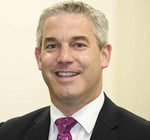
    Steve Barclay

    The work on this strategy was done before I arrived in the Department, so it was down to my right hon. Friend and to the Minister of State, my hon. Friend the Member for Lewes (Maria Caulfield). It is great to have this opportunity to pay tribute to my predecessor for all that he did to drive this agenda forward. He is absolutely right about the importance of training and early diagnosis. That is why addressing the issue of fragmented services is so important. As a respondent said, where women raise concerns, they often feel like a lone voice in the wind—that was a phrase in the strategy that really resonated with me. Having hubs, centres of excellence and the ability to look at that data and identify it early, alongside the other initiatives in which he played a major role as Secretary of State, such as the diagnostic hubs, are all a key part of the delivery of this strategy.

  • Wes Streeting – 2022 Speech on the Women’s Health Strategy for England

    Wes Streeting – 2022 Speech on the Women’s Health Strategy for England

    The speech made by Wes Streeting, the Labour MP for Ilford North, in the House of Commons on 20 July 2022.

    Let me begin by thanking the Secretary of State for advance sight of his statement and adding my thanks to the Minister of State, to his predecessor as Secretary of State, the right hon. Member for Bromsgrove (Sajid Javid), who is sat opposite, and to officials in the Department for the work they have done. I am genuinely glad that this work is out of the door when so much else has been in hiatus because of the wider political change afoot in the Government. I join the Secretary of State in recognising the campaigning efforts of his constituent Kath Sansom, as well as the efforts of my hon. Friend the Member for Swansea East (Carolyn Harris), who has campaigned tirelessly to raise awareness of the menopause and has been a driving force for change on behalf of women everywhere.

    For too long, women’s health has been an afterthought, and the voices of women have been at best ignored and at worst silenced. Four out of five women who responded to the Government’s survey could remember a time where they did not feel listened to by a healthcare professional, and that has simply got to change. In recent years, we have seen a string of healthcare scandals primarily affecting women: nearly 2,000 reported cases of avoidable harm and death in maternity services at Shrewsbury and Telford; more than 1,000 women operated on unnecessarily by the rogue breast surgeon Ian Paterson; thousands given faulty PIP— Poly Implant Prothèse—breast implants; and many left with traumatic complications after vaginal mesh surgery. Meanwhile, every woman who needs to use the NHS today faces record high waiting times. The NHS is losing midwives faster than it can recruit them. Gynaecology waiting lists have grown faster than those for any other medical specialty. The number of women having cervical screening is falling. And black women are 40% more likely to experience a miscarriage than white women. That is the cost for women of 12 years of Conservatives mismanagement, so I want to address each part of the strategy in turn.

    The strategy promises new research, which is of course important. Studies suggest that gender biases in clinical trials are contributing to worse health outcomes for women. There is evidence that the impact of women-specific health conditions such as heavy menstrual bleeding, endometriosis, pregnancy-related issues and the menopause is overlooked. So of course what the Secretary of State has said today about improving data is so important, but will he also set out how exactly the Government intend to make use of this new data to improve outcomes for women?

    Improving the education and training of health professionals is essential, because when we do not do that, there are consequences. Almost one in 10 women has to see their GP 10 times before they get proper help and advice about the menopause, and half of medical schools do not teach doctors about the menopause, even though it affects every woman. I challenge the Secretary of State to go further than the proposal he outlined to train incoming medical students and incoming doctors. What plans do the Government have for clinicians who are already practising? We need to upskill the existing workforce, not just the incoming workforce. However, let us be clear: informing clinicians is no good if we do not also improve access to hormone replacement therapy, so where is the action in the strategy to end the postcode lottery for treatment?

    Breast cancer is the most common cancer in the UK, and the NHS offers regular breast cancer screening to women aged between 50 and 70. That can prevent avoidable deaths by identifying cancer early, when it is more treatable and survival is more likely. Yet, fewer women in the most deprived areas than in the most affluent areas receive regular breast screening. Even before the pandemic too many women with suspected breast cancer were waiting more than the recommended two weeks to see a specialist. How will the programme announced today make a difference to outcomes for patients if, once diagnosed, they just end up on a waiting list that is far too long and they cannot access the treatment they need?

    I welcome what the Secretary of State said about removing barriers to in vitro fertilisation for women in same-sex couples. For far too long they have faced unnecessary obstacles to accessing IVF, for no other reason than that they love another woman. It is high time that we put that right.

    I also want to mention endometriosis. Tens of thousands of women provided testimony to the Government about the issues they face with diagnosis and treatment. Will the Secretary of State give the House an assurance that every woman who is treated for this disease will have equal access to specialist services from day one? Will he make sure that they do not have to fight to get the diagnosis in the first place?

    On polycystic ovary syndrome, what will the Secretary of State do to make sure that we equalise access to a range of treatments, not least for women for whom the pill is simply inappropriate? We must make sure we end the division between those who receive a prescription on the NHS and those who go private, receiving better treatment.

    I also want to raise some points about what has not been mentioned today. In addition to the appalling figures on black maternity deaths, a quarter of black women surveyed by Five X More felt that they received a poor or very poor standard of care during pregnancy, labour and post-natal care. Women who live in deprived areas are more likely to suffer a stillbirth than their richer counterparts. My hon. Friend the Member for Oxford East (Anneliese Dodds), the shadow Secretary of State for Women and Equalities, has pledged a new race equality Act to tackle the structural inequalities in our society, including in healthcare. However, the Government are more interested in stoking culture wars than in acknowledging that these inequalities even exist. Surely that has to change when there is a new leadership of the Conservative party.

    In conclusion, the reality that faces women in this country is this: breast cancer waiting times are through the floor, half a million women are waiting for gynaecology treatment, black women are four times more likely to die in pregnancy and childbirth, and too many women still cannot get HRT when they need it. This strategy simply will not solve the depth of the crisis in women’s healthcare after 12 years of Conservative mismanagement. Every day this Conservative Government remain in office is another day when women will have to wait far too long for the care they desperately need.

  • Steve Barclay – 2022 Statement on the Women’s Health Strategy for England

    Steve Barclay – 2022 Statement on the Women’s Health Strategy for England

    The statement made by Steve Barclay, the Secretary of State for Health and Social Care, in the House of Commons on 20 July 2022.

    With permission, Mr Speaker, I will make a statement on the women’s health strategy for England.

    I know that many hon. and right hon. Members will agree that, for too long, women’s health has been hampered by fragmented services and women being ignored when they raise concerns about their pain. On too many occasions, we have heard of failures in patient safety because women who raised concerns were not heard, as with the Ockenden review into the tragic failings in maternity care and the independent inquiry into the convicted surgeon Ian Paterson. I also remember the outstanding work of my constituent Kath Sansom and her Sling the Mesh campaign where, once again, the response was too slow when women raised issues with their care.

    We are embarking on an important mission to improve how the health and care system listens to women’s voices and to boost health outcomes for women and girls, from adolescence all the way through to later life. This is not only important for women and girls; it is important for everyone. This work is already well under way.

    Last month we announced the appointment of Professor Dame Lesley Regan, one of the country’s foremost experts in women’s health, as the first ever women’s health ambassador for England. On top of this, we are investing an extra £127 million in the NHS maternity workforce and neonatal care over the next year, and we are creating a network of family hubs in local authorities in England.

    Today we are announcing the next step. We are publishing the first ever women’s health strategy for England, which sets out a wide range of commitments to improve the health of women and girls everywhere. I take this opportunity to pay tribute to the almost 100,000 women who took the time to share their stories with us, as painful as it may have been. Your voices have been heard and were vital in shaping this strategy.

    I will now set out the key components of the strategy. First, we are putting in place a range of measures to ensure that women are better listened to in the NHS. Indeed, 84% of respondents to our call for evidence recounted instances where they were not listened to by healthcare professionals. We need to do more to tackle the disappointment and disillusionment that many women feel. We are working with NHS England to embed shared decision making where patients are given greater involvement in decisions relating to their care, including when it comes to women’s health.

    Secondly, we want to see better access to services for all women and girls. Women and girls have told us that the fragmented commissioning and delivery of health services can impact their ability to access them. That means they have to make multiple appointments to get the care they need, adding to the NHS backlog. There are better ways to deliver women’s health through centres of excellence in the form of women’s health hubs, designed specifically to holistically assess women’s health issues and where specialist practitioners can be more attuned to concerns being raised. We are encouraging the expansion of those hubs, and indeed I visited Homerton University Hospital this morning to see the benefits these local one-stop clinics bring, enabling women to have all their health needs met in one place.

    Thirdly, it is essential that we address the lack of research into women’s health conditions and improve the representation of women’s data in all types of research. Currently, not enough is known about conditions that only affect women, as well as about how conditions that affect both men and women impact them in different ways. The strategy sets out how we will tackle the women’s health data gap to make sure that health data is broken down by sex by default.

    Fourthly, we will provide better information and education on issues relating to women’s health. Our call for evidence showed that fewer than one in 10 respondents feels they have enough information about conditions in areas such as the menopause and that many people wanted trusted and accessible information about women’s health. The NHS website is currently a trusted source of health information for many people, and we will transform the women’s health content to improve its existing pages and add new pages on conditions that are not currently there. But we know that the NHS will not be everyone’s first port of call for health information, so we will expand our partnerships, such as the one between YouTube and NHS Digital, who are working together to make sure that credible, clinically safe information appears prominently for UK audiences. It is also important that medical professionals have the best possible understanding of women’s health, and I am pleased that the General Medical Council will be introducing specific assessments on women’s health for medical students, including on the menopause and on gynaecology.

    Fifthly, our strategy sets out how we will support women at work. In the call for evidence, only one in three respondents felt comfortable talking about health issues with their workplace, and we also know that one in four women has considered leaving their job as a result of the menopause. So we will be focusing our health and wellbeing fund over the next three years on projects to support women’s wellbeing in the workplace, and we will be encouraging businesses across the country to take up best practice such as the menopause workforce pledge, which was recently signed by the NHS and the civil service.

    Sixthly, we will place an intense focus on the disparities in women’s health. We know that although women in the UK on average live longer than men, they spend a significantly greater proportion of their lives in ill health and disability than men. Even among women there are marked disparities and our strategy shows our plans to give targeted support to the groups who face barriers accessing the care they need, for example, disabled women and women experiencing homelessness. It also shows how we are putting an extra £10 million of funding towards 25 new mobile breast screening units that will target areas and communities with the greatest challenges on uptake and coverage.

    Finally, as well as these cross-cutting priorities, the responses to our call for evidence also highlighted a number of specific areas where targeted action is needed. Those include fertility care, where we will be removing barriers that restrict access that are not health-based but based, for example, on whether someone has had a child from a previous relationship, and making access to fertility services much more transparent. Another of our priority areas is improving care for women and their partners who experience the tragedy of pregnancy loss. At the moment, although parents whose babies are stillborn must legally register the stillbirth, if a pregnancy ends before 24 weeks’ gestation there is no formal process for parents to legally register their baby, which I know can be distressing for many bereaved parents. So we will be accepting the interim update of the independent pregnancy loss review and introducing a voluntary scheme to allow parents who have experienced a loss before 24 weeks of pregnancy to record and receive a certificate to provide recognition of their tragic loss.

    This is a significant programme of work but we cannot achieve the scale of change we need through central Government alone. We must work across all areas of health and care. We will need the NHS and local authority commissioners to expand the use of women’s health hubs; the medical schools, regulators and Royal Colleges to help us improve education and training for healthcare professionals; the National Institute for Health and Care Research to help make breakthroughs that will drive our future work; and many others to play their part. I would like to finish by thanking everyone involved in the development of this important strategy, including the Minister of State, Department for Health and Social Care, my hon. Friend the Member for Lewes (Maria Caulfield), who is on the Front Bench with me today, for the determination she has shown in taking this strategy forward. I would also like to pay tribute to my predecessors, my right hon. Friends the Members for West Suffolk (Matt Hancock) and for Bromsgrove (Sajid Javid), the latter of whom is in his place, for their commitment to this important issue, even during the pressures of the pandemic. This is a landmark strategy, which lays the foundations for change and helps us to tackle the injustices that have persisted for too long. I commend this statement to the House.

  • Brendan O’Hara – 2022 Speech on the Heatwave

    Brendan O’Hara – 2022 Speech on the Heatwave

    The speech made by Brendan O’Hara, the SNP MP for Argyll and Bute, in the House of Commons on 20 July 2022.

    Thank you, Mr. Speaker, and

    I thank the Minister for prior sight of this statement.

    Let me begin by paying tribute to those in all the emergency services who, once again, have gone above and beyond to help their fellow citizens in a time of crisis. Let me also extend our sympathy to the people whose homes and businesses have been destroyed in the fires that raged across parts of England.

    We may not have known anything like this before, with record temperatures being set in three of the four nations of the UK and the symbolic 40°C barrier being broken in England, but, sadly, I predict that this—or something like it—is here to stay. We are all going to have to live with it, and Governments are going to have to prepare for it in the future. Climate scientists have been warning us for decades that this day was coming, and it would be disingenuous in the extreme for anyone to claim that it was a one-off freak event or dare to compare it with the summer of 1976. This is the climate emergency. This is exactly what we were told would happen if we did not change our ways. This is what COP26 was all about, and that is why those who are still part of the Tory leadership race cannot, and must not, renege on the commitment to achieving net zero in return for securing votes from the party’s base.

    Can the Minister tell me where is the plan to increase and bolster resilience so that the Government’s response to the guaranteed future heatwaves is more co-ordinated and strategic than what we have witnessed on this occasion? Given the melting roads, buckling rail tracks and dissolving runways, what plans are being considered to make our critical infrastructure more resilient to this type of heat? Finally, does the Minister agree with me—and, I suspect, the vast majority of the country—that the optics of the Prime Minister’s decision to party while parts of the UK literally burned showed a complete lack of self-awareness and a complete dereliction of duty?

  • Angela Rayner – 2022 Speech on the Heatwave

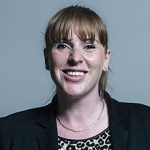
    Angela Rayner – 2022 Speech on the Heatwave

    The speech made by Angela Rayner, the Deputy Leader of the Labour Party, in the House of Commons on 20 July 2022.

    The events of the last few days have been incredibly traumatic for communities across Britain. Individuals and families have had their homes destroyed and, as the Minister said, lives have been lost. As the mother of teenagers, I reiterate that they must not swim in our rivers—it is too dangerous.

    Farmers and businesses have seen their livelihoods go up in smoke. We saw horrifying images of the A2 on fire yesterday. I join the Minister in paying tribute to the incredible bravery of our fire services and those whose job it is to head straight into danger as the rest of us escape it. Sadly, four firefighters have been hospitalised in South Yorkshire and over a dozen have been injured in London. I know that the whole House will give them our gratitude and wish them well, but for too long our public servants have been underappreciated and undervalued by this Government. The Minister mentioned our fire services; over the last 10 years, the funding and staffing of fire and rescue services has been cut, and response times have gone up by 8%. Yesterday, no mutual aid was available to services facing literal firestorms.

    Mr Speaker, this statement is far too late. The impact of this heatwave was completely predictable, so why the delay in coming to this House? It has literally taken the country going up in flames for the Minister to turn his focus to this emergency. Climate change will cause more and more national emergencies like this, from heatwaves to fires, floods and pandemics, but as we have seen over the past week, the leadership contenders are doing their hardest to outbid each other on how they would cut action on climate change. They will leave us vulnerable to more freak natural disasters.

    The caretaker Minister says that it is his job to chair Cobra meetings, but it should be the job of the Prime Minister to lead. Yesterday, the remaining Cabinet gave the Prime Minister the complete volumes of Sir Winston Churchill as a leaving gift—but he is no Churchill. He has been missing in action. Can the Minister tell us where the Prime Minister was as the country burned? Where was he when Cobra was called last weekend? Has he attended any talks with Ministers or senior officials in the days since? Is the truth not that the Prime Minister and his entire Government have gone missing while Britain burns?

    We might have cooler temperatures today, but another heatwave is inevitable as our climate heats up. Britain cannot continue to be so unprepared. The Minister tells people to drink water and wear a hat. It is just not good enough. We need a long-term emergency resilience plan for the future, so can the Minister answer these questions? Where is the plan for the delivery of essential services? How will people be kept safe at work, on transport, in hospitals and in care homes? Where is the guidance for safe indoor working temperatures?

    The Minister now says that the Government’s national resilience plan will be published in due course, by the new Administration. It is already 10 months overdue. Why should the British people be forced to wait for a whole year? It is the primary duty of any Government to keep the public safe, and Britain deserves much better than this. Labour already has a resilience plan for the long term. We would implement a Department-wide approach and appoint a Minister for Resilience. We would give local government the resources that it needs to plan and prepare for emergencies. Local government has been on the frontline, and I pay tribute to its response to this crisis—and to what it did during the pandemic—but its resilience has been eroded by 12 years of cuts and austerity at the hands of this Government.

    Finally, Labour would empower businesses and civil society organisations to strengthen our response. Homes have been destroyed, our brave firefighters have been hospitalised, and lives have been ruined and lost. Enough is enough. If the Minister is not willing to take the action that is needed, we on this side of the House are.

    Kit Malthouse

    What a shame that—notwithstanding the loss of some homes and some tragic deaths in water-related incidents—the right hon. Lady did not take the opportunity to recognise that by and large the system worked, and that, owing to our planning and the resilience that we built into all the public services and, indeed, public servants whom she lauded, the country got through this particular extreme weather event in pretty good shape. We obviously recognise that there were some unfortunate incidents—as I said, a number of homes were set on fire—but the fact that we kept the damage to a minimum and the vast majority of the population got through this difficulty well was not recognised by the right hon. Lady at all, and I think that that is a real shame.

    The right hon. Lady claimed that no mutual aid was available. That is not correct. One fire and rescue service, Norfolk, called for national mutual aid, and mutual aid was provided from other parts of the country. The system that we have for flexing the use of the fire service throughout the country worked extremely well, as the chair of the National Fire Chiefs Council was able to confirm to the Prime Minister last night and, indeed, this morning.

    The right hon. Lady seemed to claim that this was the first time I had turned up in the House to discuss this issue. It is not; it is the second time I have done so, and we have been working on this since the weather forecasters notified us that an extreme weather event was likely to occur. It is, however, the first time the right hon. Lady has turned up in the House. [Interruption.] You were doing a radio interview.

    Angela Rayner

    I was in my office.

    Kit Malthouse

    Being in your office is not being on the Front Bench. “Present but not involved” is, I believe, the claim from the Labour party. Before the right hon. Lady starts flinging stones and claiming that others are not doing their job, perhaps she should polish the glass in her house.

    As for the involvement of the Prime Minister, he has been kept in touch with our work throughout, either through personal briefings from me or, last night and this morning, through briefings from the chair of the National Fire Chiefs Council and the Civil Contingencies Secretariat. As the right hon. Lady will, I am afraid, never know—because, I hope, she will never be in the Government—No. 10 and the Cabinet Office work together very closely when emergencies such as this arise and we need to establish plans and specific co-ordination work to ensure that we all understand what the picture is.

    As I have said, the resilience plan is in progress and will be launched as soon as we have a new Administration in No. 10, but the right hon. Lady should not mistake the question of the publication of a national resilience plan for our not having any plans at all. As we saw in all manner of elements of the function of our country, the plans that we had in place worked well, the capacity that we stood up flexed, often brilliantly, to deal with an ever-changing situation, and, as I have said, most of the country got through it in good shape.

    As for the appointment of a Minister for Resilience, I am afraid that we already have one: it is me. The job of the Chancellor of the Duchy of Lancaster is to look after the Civil Contingencies Secretariat, whose purpose is to deal specifically with issues of resilience and ensure that the system works, as it did—largely—yesterday.

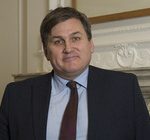
  • Kit Malthouse – 2022 Statement on the Heatwave

    Kit Malthouse – 2022 Statement on the Heatwave

    The statement made by Kit Malthouse, the Chancellor of the Duchy of Lancaster, in the House of Commons on 20 July 2022.

    I would like to make a statement on this week’s heatwave. Coningsby in Lincolnshire broke records yesterday when it registered a provisional reading of 40.3°C. According to the Met Office, no fewer than 34 locations around the United Kingdom exceeded the country’s previous highest temperature of 37.8°C, which was set in 2019.

    We have seen a collective national endeavour to prepare for and manage the effects of the heat, from town hall to Whitehall and across various industries, to keep people safe and infrastructure functioning. From water companies and rail engineers to public servants across the land, everyone has pulled together, with members of the public responding in a responsible way that took the pressure off vital public services.

    Our national resolve has been exemplified by our fire and rescue services, for many of which yesterday was the busiest day since world war two. They were undoubtedly stretched, but coped magnificently. The systems in place to make sure that the fire services can operate nationally as well as locally worked well. In tinderbox conditions, they have dealt with dozens of wildfires around the country over the past 24 hours. Fifteen fire and rescue services declared major incidents and handled emergency calls the length and breadth of the country.

    Sadly, at least 41 properties have been destroyed in London, 14 in Norfolk, five in Lincolnshire and smaller numbers elsewhere. On behalf of the Prime Minister, the Cabinet and, I am sure, the whole House, I would like to pass on our sincere condolences to those who have lost their homes or business premises. I know that my right hon. Friend the Secretary of State for Levelling Up, Housing and Communities is working closely with local authorities to provide support to them.

    Throughout recent days, the Prime Minister has monitored our work and has been specifically briefed on a number of occasions; we briefed him again this morning. The Prime Minister was briefed during the wildfires by Mark Hardingham—the chair of the National Fire Chiefs Council—and the civil contingencies secretariat. He has passed on his thanks to all the brave firefighters who have sought to control the flames in such debilitating conditions. I would also like to pay my tribute to the fire control staff, officers and support teams for their essential work and to the other agencies that have made such tremendous efforts in recent days: the NHS, our emergency call handlers, the police and the Maritime and Coastguard Agency, among many others.

    Hon. Members will be relieved to know that some pressure on these services will now ease as the fiercest heat has subsided. Many incidents are now being scaled back. Thunderstorms are likely this afternoon, but for much of the country, more clement, dry conditions are the pattern for the coming days. The Met Office, however, stresses that the summer is likely to bring further hot weather and wildfire risk remains elevated. That is why we are treating this heatwave as an exacting test of our national resilience and contingency planning. As always, there is no room for complacency.

    We have seen over the past few days what we can achieve when we prepare properly and then work closely together. Owing to the technical expertise of the weather forecasters who predicted with admirable precision the peak of the heatwave and how high the temperatures would be, the Government were able to launch an advance campaign of comprehensive public advice. Our early data shows how, well before the heatwave arrived, people were taking on board that advice from the UK Health Security Agency, the NHS, the chief and deputy chief medical officer, emergency services and key agencies on the ground.

    Because of our established local networks and colleagues in the devolved Administrations, we had people spread across the UK ready to step in when it mattered. I am particularly grateful for the co-operation and support that we received from the Scottish Government, the Welsh Government and the Northern Ireland Executive. We all need to manage these events together.

    I would like to give some examples of how people taking the right action helped to mitigate the effects of the extreme weather, starting with the heeding of advice. Fully five times as many people accessed NHS England internet pages on how to manage the symptoms of heat exhaustion in the critical week beginning 11 July. We had feared that our vital 999 call services would come under untold pressure, yet as the mercury climbed inexorably on 18 July, fewer 999 calls but more 111 calls were made than the week before. That suggests that the public had heeded the advice to avoid 999 except in emergencies.

    With travel, once again people were playing for the team. The public stayed at home to avoid the heat, not venturing far. The data bears that out: on Monday, footfall at major London stations was at approximately 35% of normal post-pandemic levels. Network Rail reports that passenger train numbers yesterday were approximately 40% down on the previous week. We did not forget those who cannot easily leave their homes; we asked people to look out for the elderly and for vulnerable family members and neighbours.

    Tragically, 13 people are believed to have lost their lives after getting into difficulty in rivers, reservoirs and lakes while swimming in recent days; seven of them, sadly, were teenage boys. I would like to pass on our sincere condolences and those of the whole House to the families of the victims for their terrible loss.

    Of course, we have still to work through the longer-term consequences of the heatwave. The true picture will not come until all incidents are analysed, all emergency teams are debriefed and all incident logs and data are reconciled. A great deal of data has yet to come in from colleagues in the devolved Administrations and from local authorities and agencies around the country. We recognise that we are likely to experience more of these incidents, and that we should not underestimate their speed, scope and severity. Britain may be unaccustomed to such high temperatures, but the UK, along with our European neighbours, must learn to live with extreme events such as these.

    The Government have been at the forefront of international efforts to reach net zero, but the impacts of climate change are with us now. That is why we have a national adaptation programme under the leadership of the Department for Environment, Food and Rural Affairs. As we have seen in recent days, we will continue to face acute events driven by climate change. It is the responsibility of Cabinet Office Ministers to co-ordinate work across Government when those events take place.

    The Government will continue to build our collective resilience. To that end, the national resilience strategy, about which I was asked on Monday, will be launched at the earliest possible opportunity by the incoming Administration. In the meantime, I will continue to co-ordinate the work of teams across Government in building resilience to make sure that the country is ready to meet the challenges of the autumn, the winter and beyond. In that spirit, I commend this statement to the House.