Tag: 2022

  • Robert Largan – 2022 Speech at the Sir David Amess Summer Adjournment Debate

    Robert Largan – 2022 Speech at the Sir David Amess Summer Adjournment Debate

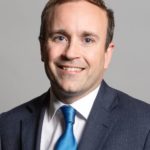
    The speech made by Robert Largan, the Conservative MP for High Peak, in the House of Commons on 21 July 2022.

    I will use the limited time available to outline some of the many challenges that this House and the next Prime Minister must face when we return from the summer recess. The No.1 issue facing the country is inflation, which hit 9.4% in June—the highest in 40 years—and is expected to climb even further. It strips away the value of the pound in our pocket, hitting every aspect of our economy. People’s savings are eroded, pushing home ownership out of reach, and the value of pensions that people have worked long and hard for is reduced. Our export market is made less competitive, limiting investment, jobs and growth. I am particularly concerned about those on fixed and lower incomes, because their real-term take-home pay is getting hit the most.

    We all know what is driving this pressure: rising demand in China and the Russian invasion of Ukraine, compounded by covid and disruption to global supply chains. As a result, the energy price cap is due to rise 65% in October, taking typical bills to around £3,240 a year, with another rise in January. I welcome the Government’s package of measures to mitigate those price rises, with a third of households each set to receive £1,200, but tough choices lie ahead. It is incumbent on Members across the House to be honest with the public and with ourselves.

    During the recent heatwave, many reflected on the similarities with 1976—not just the weather, industrial strife, nationalist demands for a referendum, a prime ministerial resignation, a leadership contest, and energy prices soaring following conflict, but the real risk of a wage/price spiral and stagflation. At the same time, our fiscal room for manoeuvre is increasingly small. Quantitative easing and pump priming the housing market are no longer viable options, if indeed they ever were.

    Moreover, we are facing a demographic crunch, with an ageing population and fewer people of working age. That means that the demands of the state grow, while raising tax revenue becomes more and more difficult. If we are not careful, we will end up with Scandinavian levels of taxation for Mediterranean levels of public services.

    Now is not the time for telling people what they want to hear; we must put pragmatism ahead of ideology. We need a functioning state, not an ever smaller one. I encourage any Members who disagree with that to talk to their constituents and to check their inboxes. They will find that those inboxes are full of emails from people who are struggling to get driving licences or passports, or whose GP appointments or routine medical procedures have been delayed. This requires hard-headed, mature judgment and grown-up politics, not pandering to nostalgia.

    I am also increasingly alarmed about the failure of investigative policing. According to a recent report, police have failed to solve a single burglary in nearly half the country’s neighbourhoods over the past three years. Other police forces have been found to have wilfully neglected to investigate reports of child abuse and grooming gangs for fear of stoking racial tensions, and we learn of botched murder investigations due to officers’ homophobia. Meanwhile, mild-mannered comedians are being investigated for telling jokes. In Britain, policing is by consent, and it is dangerous for democracy and the rule of law when this trust breaks down. The next Prime Minister urgently needs a plan to rebuild investigative policing and confidence in our police. That, too, will require serious, pragmatic leadership and a willingness to face facts and level with the British people.

    We are facing high inflation, anaemic growth, disrupted supply chains, a dysfunctional energy market, a demographic crunch, alarming shifts in climate, a national child exploitation scandal, national security threats at home and abroad, an increasingly divided society, and declining trust in our politics. On a brighter note, however, rain is forecast for the weekend.

    I thank you, Madam Deputy Speaker, all my colleagues, and all the amazing staff in this place. I also thank my own amazing staff, both here and in the constituency. Since I was elected two and a half years ago, we have taken up more than 40,000 individual cases and responded to more than 75,000 emails. They do an amazing job, and I am proud to have them working for me. Have a lovely summer, everyone.
  • David Johnston – 2022 Speech at the Sir David Amess Summer Adjournment Debate

    David Johnston – 2022 Speech at the Sir David Amess Summer Adjournment Debate

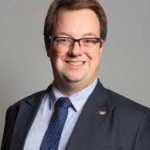
    The speech made by David Johnston, the Conservative MP for Wantage, in the House of Commons on 21 July 2022.

    I join colleagues in paying tribute to the fact that this debate is called the Sir David Amess summer Adjournment debate. It is a fitting tribute to him and a fitting reminder to us that however good or entertaining we think our speeches are this afternoon, none of them will be as good as the one he would have given were he with us.

    The first thing I want to talk about is a man called Merv. He is an 86-year-old man in my constituency who lost his wife after 56 years of marriage in 2014, meaning he was on his own. Thanks to a fantastic local organisation called the Didcot Good Neighbour Scheme, run by a fantastic woman called Sandy Sparrowhawk, I have been matched with him to go round and see him every week, which I have been doing since last September. It is supposed to be for him, but it is the highlight of my week, because whatever is going on here—heaven knows lots of things go on here—when I go to have my cup of tea with him on a Friday after all my visits, he never fails to cheer me up with his stories of being in the Army and of driving coaches.

    He is a great football fan—a misguided Chelsea supporter—and we have a real laugh. We now know that loneliness affects not just mental health but physical health, and it only takes up a small amount of my time. I would encourage everyone here and outside to do it, because it makes a huge difference to both people.

    I have passed up no opportunity since my maiden speech to raise the infrastructure issues in my constituency. We still need Grove station reopened, we still need the A34 and A420 improved, and we still need more GP surgeries. The two districts I cover are in the top 10 areas for house building relative to their size, and we have not had any new GP surgeries. I hope what we can do through the Levelling Up and Regeneration Bill is get to a position where we start to put this infrastructure in first, rather than promising it after the houses have been built, because it never arrives. The other thing I hope we might do with that Bill is require new houses to be built to the latest environmental standards set by Government, rather than the one that existed when planning permission was granted, often five or six years earlier. We are building thousands of houses that we know will need retrofitting.

    While on the subject of the environment, I am currently the lead sponsor of the Local Electricity Bill, which now has 309 MPs supporting it. If Members are not yet backing it, please do so. People argue whether to have fracking or nuclear or oil and gas or onshore wind, but they do not argue about having more community energy, with local communities able to sell it to local people. That would help to achieve our net zero goals and promote competition while offering vast environmental benefits.

    Finally, when we come back, we will understandably focus on the economy, the cost of living and Ukraine, but there are two other issues that I hope will receive some focus. One is the reform of public services. We all get too many complaints about visas, driving licences, passports and planning applications. It is not just that it takes too long to get a response, but that the response is not human enough. The second is an increased focus on social mobility. It is a decades-long problem, but we slightly lost focus during covid, which made it harder. We all need to do more if background is to be no barrier to people achieving their potential.

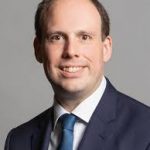
  • Greg Smith – 2022 Speech at the Sir David Amess Summer Adjournment Debate

    Greg Smith – 2022 Speech at the Sir David Amess Summer Adjournment Debate

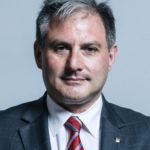
    The speech made by Greg Smith, the Conservative MP for Buckingham, in the House of Commons on 21 July 2022.

    It is a pleasure to follow the powerful and thoughtful contribution of my hon. Friend the Member for Newcastle-under-Lyme (Aaron Bell). I start by raising a number of issues on all things rail. We know that rail numbers are down by a fifth since the pandemic, and yet the Government persist in building High Speed 2, a topic on which I have spoken in opposition on multiple occasions since my election to this House. Indeed, it is good to see my hon. Friend the Member for Wellingborough (Mr Bone) on the Front Bench. He was with me in the Lobby the other day when we voted against HS2 going further north.

    The reality on the ground, accepting that the thing is being built, is that HS2 Ltd continues to be anything but a good neighbour. I have spoken in the Transport Committee, in this Chamber and in Westminster Hall giving countless examples of where HS2 is making people’s lives a misery. It is bringing in HGV movements through villages where they simply should not be going. It is closing roads at a moment’s notice. It is not dealing with landowners in a fair or proportionate way when it takes their land. The latest complaint to reach me over the past 24 hours is about land that HS2 has taken but done nothing with, where poisonous weeds such as ragwort are being allowed to take hold and bleed across as seed moves into land where cattle, sheep and other animals can be affected by it. HS2 has been apprised of that time and time again, and yet it has done nothing. I urge the Government to clamp down on HS2 Ltd and ensure that it becomes the good neighbour it purports to be.

    Likewise, the construction of East West Rail continues to be a nightmare for my constituents. It is the railway we want—it will bring greater connectivity to Buckinghamshire with a new station at Winslow—but its construction brings similar misery to that of High Speed 2. It looks as though East West Rail will launch with entirely diesel rolling stock, to boot. I urge the Government to reconsider that urgently and to look at hybrid options, hydrogen or a newer, greener technology. It is simply preposterous in this day and age for a new railway to be built with diesel- only stock.

    Likewise, I urge the Government to give us some clarity, because there has been some speculation in recent days that perhaps the whole of East West Rail will not be completed, and that the part that goes beyond Bletchley towards Cambridge may not be built. This House needs urgent clarity on that when we return in the autumn.

    Moving on to a planning matter, the Ministry of Justice had proposed building a mega-prison in my constituency adjacent to HMP Grendon and HMP Springhill, on land that it partially owns but that also involves the compulsory purchase of a farm. Buckinghamshire Council’s strategic sites committee wisely rejected the proposal. It was not a technical rejection at planning; the proposal in fact breached policies BE1, BE2, I2, NE1, NE4, NE5 and S1 of the local plan, as well as paragraphs 7, 8, 57, 58, 99, 105, 174, 180 and section 16 of the national planning policy framework. It was by no means a technical refusal, yet unfortunately the Ministry of Justice is seeking to appeal that and to cost taxpayers probably hundreds of thousands of pounds in legal fees. It is simply not right or fair that that project continues to hang over my constituency and the villages of Edgcott, Grendon Underwood, Steeple Claydon and others around. I urge the Government to reconsider and to pull that appeal.

  • Aaron Bell – 2022 Speech at the Sir David Amess Summer Adjournment Debate

    Aaron Bell – 2022 Speech at the Sir David Amess Summer Adjournment Debate

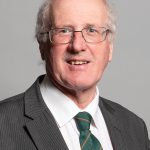
    The speech made by Aaron Bell, the Conservative MP for Newcastle-under-Lyme, in the House of Commons on 21 July 2022.

    It is a pleasure to follow my hon. Friend the Member for Dudley South (Mike Wood), and an honour to be participating in the first Sir David Amess Adjournment debate. This is a very fitting tribute indeed for a great champion and an enthusiast for the format. He was someone to whom service of his constituents, his party and his country was of the utmost importance. There is so much inspiration for us newer Members in his example. I welcome his successor, my hon. Friend the Member for Southend West (Anna Firth), to her place today. I also welcome five other Members who have joined us since last summer. A few of them came in on the back of by-elections that were quite painful for my party, but it is important that we remember the people who sent us here, and by-elections are a way to do that, and perhaps they have given this party a wake-up call over the past year as well.

    I have spent the past few weeks trying to argue for a clean start in Government, but I think we also need a clean start in Parliament when we come back. When we come back, we will have a new Prime Minister, and that is an opportunity for us all to reflect on the way that we conduct ourselves in this Chamber and in the estate more widely. I have come to feel that Parliament is perhaps suffering from a bout of long covid of its own—some bad habits that are antithetical to the good working of this place as well as contrary to some long-standing culture and practice. Some of these things have taken hold and are not serving ourselves, our constituents or the reputation of this House well.

    If I have the time, I want to cover four particular points: the debate itself; the tone in which we speak to each other; standards; and the culture around the estate. Some of it is a hangover literally from covid. The new intake of 2019 participated in debates where there was no back and forth. We were basically recording clips from the comfort of our own living rooms. The May 2020 report of the Procedure Committee, on which I now sit but did not at the time of the report, said that

    “debates have become recitals of prepared texts rather than lively exchanges of view.”

    I wholeheartedly concur, and I fear that this tendency has been slower to depart than some of the other arrangements that we had during covid.

    Although it is of course vital that our constituents can see what we do here, I do not think that it is necessarily wise that what we do here is simply for our constituents to see—whether it is on our Facebook pages or on Twitter, the echo chamber for the retweets and likes. I will, of course, concede that today’s debate is a noble exception and that we should all go for it in the way that Sir David used to do. But that is not really what we are here for. We are legislators. We are here to scrutinise legislation. We are here to hold the Government to account, whether we are supporters of the Government or members of the Opposition. We are not here to make viral clips only tangentially related to the legislation that we are supposed to be considering. I think that all of us, including me, probably need to do a little bit better. What we need is genuine debate. We should refer to previous speakers in the debate. We should take interventions—I am willing to take one now—and we should take on and win arguments with other people.

    We also need a clean start on tone in September. During the confidence debate, there were flashpoints. I do realise that the past few months have been tough and fraught, and that is just on the Conservative side of the Chamber. The temperature has literally risen over these past few days, but what we say in this place really matters. We should all remain moderate and collegiate. We should argue and disagree with each other, but in good faith and with good humour and respect. We should set an example. We heard only the other day in points of order from my hon. Friends the Members for Rother Valley (Alexander Stafford), for Wolverhampton North East (Jane Stevenson) and for Hyndburn (Sara Britcliffe) that if that tone gets out into the country, it could be really, really damaging. It could threaten our security and it could threaten our families, so we must set an example in this place.

    I will touch on standards briefly, because I made my views known on this in the debate that we had after the Owen Paterson affair. We cannot have one rule for us and another for everybody else. We must do better.

    We need a clean start on estate culture. There have been exposés in the papers about staffers getting drunk and sleeping in offices, to say nothing of the behaviour of some MPs that has been well documented recently. We really must address that when we come back in September. We must have a clean start.

    On the Speaker’s Commission, which is part of the solution, I am not at all convinced that the right solution is for MPs not to employ their own staff. Some may have noticed that, over the past few months, my support for the Prime Minister has been open to question. If, for example, my staff had been employed by the Conservative party, they would have faced a huge conflict of interest; they owe their job to the Conservative party, but they owe their judgment to me. Who would they be beholden to? There would be an unacceptable conflict. I have discussed this with my staff, and I know that they would have found it extremely difficult to navigate these past few months had their loyalty been split. It is not a small concern to them. They need to know who they are working for and whose interests they are employed to pursue—obviously our constituents, but ourselves as Members as well.

    Moreover, that would not fundamentally solve the issue of the worst behaviour of MPs towards their staff, other Members’ staff, Clerks, House staff and so on. What we need to do is grapple with bad behaviour and stamp it out. No human resources policy in the world can mitigate some of the terrible behaviours that we have seen reported about former Members of this House.

    Finally, because it is Sir David’s debate, we need a clean start in Newcastle as well. We need levelling up. We need the money coming through from the towns fund. We need to clean up the antisocial behaviour. Most of all, as I have said in this debate previously, we need to clean up that landfill at Walleys quarry. [Interruption.] We need to stop the stink—thank you very much. We need a clean start in Parliament, in Newcastle and in the country.

  • Mike Wood – 2022 Speech at the Sir David Amess Summer Adjournment Debate

    Mike Wood – 2022 Speech at the Sir David Amess Summer Adjournment Debate

    The speech made by Mike Wood, the Conservative MP for Dudley South, in the House of Commons on 21 July 2022.

    While the media’s focus may be on the comings and goings in Westminster, local community groups make a huge difference to the lives of people in Dudley South week in, week out. The last recess covered the platinum jubilee celebrations, and it was a real pleasure to join the events at Oakfield community centre in Brierley Hill, St Mary’s church in Kingswinford and the Dudley Hindu Cultural Association to mark the incredible service that Her Majesty has given during seven decades as our Queen.

    We are fortunate in having many amazing community organisations in Dudley. I shall not try to match Sir David, but I would like to mention just a few I have encountered in recent weeks. Harry’s Café is run by the Top Church Training charity and helps disadvantaged jobseekers into work in catering and hospitality, as well as providing free food packages and online cooking classes. There is also Kingswinford British Legion, who I supported over Armed Forces Weekend as they raised funds to help ex-service personnel and their families.

    As a former scout, it was a pleasure to join Dudley District Scouts to thank leaders and volunteers for everything they do to make sure that local young people have opportunities that otherwise just would not be available. It was a privilege to meet and support Stuart Bratt, whose Tough Enough to Care charity tackles male suicides by encouraging men to be open about mental health. The £80,000 lottery funding it has received will allow it to do even more to support even more people, and we want more local good causes in Dudley to get funding. That is why I organised a national lottery funding workshop last week. I thank Sinead from the National Lottery Community Fund for explaining to dozens of local groups how they can get funding and give themselves the best chance to succeed and do more for our community.

    As we look forward to the Commonwealth games coming to Birmingham, it was great that Stuart was one of the local heroes, as well as Jennie Bimson and Councillor Shaz Saleem, taking part in the Queen’s baton relay; I look forward to it coming to Brierley Hill on Sunday evening. One of the baton bearers is from Pens Meadow School. I was pleased to see its amazing new forest school, which is an exceptional facility for its special needs pupils aged three to 19. I am delighted that Dudley Council has committed the funding for a new school building that will allow them to combine their two sites into one, providing better education and care on a single site for vulnerable pupils.

    I also thank Dudley Council’s cabinet for blocking plans to build on precious green spaces at Lapwood Avenue, Bryce Road, Severn Drive and Bent Street. I hope that the Association of Black Country Authorities will also safeguard green-belt sites at Holbeache and the Kingswinford triangle when it meets next week, and that the Government’s Levelling Up and Regeneration Bill will further strengthen green-belt protection.

    Our green spaces are important to us in the Black Country, and it was heartbreaking to see large fires at the Fens Pool nature reserve and Ridgehill Woods during this week’s extreme temperatures. Disgracefully, some of them might even have been started deliberately. I join our community in sending a big thank you to everybody from West Midlands Fire and Rescue Service for their bravery in fighting and containing those fires.

    Mr Deputy Speaker, as you know, last week marked Black Country Day—the anniversary of Newcomen’s engine. We are proud of our industrial heritage and it was wonderful to join pupils from Brierley Hill Primary School at Brierley Hill library as they unveiled the displays on our local history that they had created for the public to enjoy. It is now a decade since Gracie Sheppard designed the Black Country flag, which has become one of the biggest selling and most recognisable regional flags in the country. She designed it as a 12-year-old at a local school and it is now literally seen around the world—whether at The Ashes, the Indy 500 or Glastonbury.

    Alicia Kearns

    My hon. Friend rightly raised the importance of local flags. Leicestershire was the only county in the country without a flag until last year, when I secured the first ever flag for Leicestershire. It flies proudly outside Parliament this very day. I congratulate my hon. Friend on raising the importance of flags, given their pride of place and the message that they send of unity in our communities.

    Mike Wood

    My hon. Friend is proud of her local area and flies her flag proudly.

    As we look at the ongoing Conservative leadership contest, I shall be pressing whoever wins to keep levelling up right at the centre of their agenda, and to make sure that my constituents in Dudley South can have opportunities every bit as good as those enjoyed in other parts of the country. Finally, Mr Deputy Speaker, I wish you and all the staff of the House a very happy and, I hope, restful and peaceful summer.

  • Jack Lopresti – 2022 Speech at the Sir David Amess Summer Adjournment Debate

    Jack Lopresti – 2022 Speech at the Sir David Amess Summer Adjournment Debate

    The speech made by Jack Lopresti, the Conservative MP for Filton and Bradley Stoke, in the House of Commons on 21 July 2022.

    It is a privilege and an honour to speak in the first Sir David Amess summer Adjournment debate. David always exuded such joy and compassion, and it was difficult not to smile whenever you saw him. I am sure we all miss him.

    I will begin by highlighting a particularly significant issue in my constituency, which I have raised many times in the Chamber: the M49 junction, which would link the motorway directly to the Severnside enterprise and distribution area. The area is home to GKN, Amazon, Tesco, Royal Mail and many other companies. When completed, the junction will not only help to bring thousands of new jobs to the area but help to reduce heavy goods traffic and pollution in small surrounding villages such as Pilning and Easter Compton.

    It seems remarkable to me that the project was started without the means to complete it and connect it to the link road. There is essentially a 160 metre-long privately owned strip of land between the newly built motorway junction and the road connecting it to the distribution centre. How was £50 million of taxpayers’ money spent on a motorway junction without the land to connect it up to the link road?

    Since 2019, I have had meetings with the Secretary of State for Transport, roads Ministers, South Gloucestershire Council, Highways England and the West of England Combined Authority, but we still seem no closer to getting the project completed and connecting the road to the motorway. I will continue to meet Ministers, South Gloucestershire Council and Highways England, and I will urge them all to get a grip of the situation and get the project completed as quickly as possible.

    I turn to the bid for local levelling-up funding to regenerate world war one Hangar 16U, an exciting and substantial project by developer YTL located alongside the Brabazon and Charlton Hayes mixed-use developments. The restoration and reuse of that historic building will achieve the following aims. First, it will secure the restoration of a world war one hangar that contributes significantly to the unique and important heritage of the area, making the building accessible to all. Secondly, it will support the wider regeneration aims of the north fringe masterplan, which in turn will address issues of deprivation in some of the nearby communities of Patchway and Filton.

    Thirdly, the project will support visitor and tourist attractions while meeting the needs of existing and newly emerging communities. Fourthly, it is in a highly accessible location by foot, cycle and public transport. Fifthly, its community focus supports community cohesion and wellbeing. Having always supported the evolving north fringe development area, I have no doubt that when it is completed, it will be a truly fantastic place to live, work, visit and be entertained. I look forward to the result of the funding bid and very much hope that Ministers will look favourably upon it.

    As well as its historic links with aviation, demonstrated fantastically by the Aerospace Bristol museum and science, technology, engineering and maths learning centre—home to the last Concorde to land at Filton airfield, where the British Concordes were designed and built—my constituency in the south-west of England is at the centre of the largest aerospace cluster in Europe. There are 800 companies and 57,000 people in the south-west working in the aerospace supply chain for companies such as Airbus, Rolls-Royce, GKN and Leonardo.

    The Farnborough international air show is taking place this week. Not only does it serve as a showcase for the UK’s aerospace sector, but it is a great platform for exports. The UK’s aerospace sector represents more than 110,000 jobs. In my constituency of Filton and Bradley Stoke, more than 20,000 jobs are directly dependent on the aerospace and defence sectors, with many more involved in the broader supply chain. In 2019, the aerospace sector contributed £34 billion to UK exports. It was good to see my right hon. Friend the Prime Minister supporting the air show on Monday.

    This week, the Government announced £155 million of joint industry and Government funding, through the Aerospace Technology Institute, to help the industry invest in the technology of tomorrow, such as solar cells that can be used in electrically powered aircraft, low-weight electric motors, and the extra high-performance wing led by Airbus. Of course, we also look forward to increasing activity in the space sector.

    Let me conclude by thanking you, Mr Deputy Speaker, and the staff who look after us here. I hope everybody manages to take some time out and get some rest, recuperation and quality time with loved ones over the summer.

  • Jim Shannon – 2022 Speech at the Sir David Amess Summer Adjournment Debate

    Jim Shannon – 2022 Speech at the Sir David Amess Summer Adjournment Debate

    The speech made by Jim Shannon, the DUP MP for Strangford, in the House of Commons on 21 July 2022.

    I am very pleased to speak in this debate. I am also pleased that it is called the Sir David Amess Summer Adjournment debate. I have probably taken part in every one of these debates since I came here in 2010, and Sir David would sit there where the hon. Member for Southend West (Anna Firth) is sitting now and he would tell us many, many things in a rush of words—just as I do, but he would do it better. In the five minutes that he had he would tell us about all the many things that he wanted to get done. Listening to him was something I particularly enjoyed.

    I want to talk about something those in this House may or may not know about: the Orange parade we have every year on 12 July. I want to say how proud I am to walk on 12 July. This year, we walked in my home village of Greyabbey. As Ulster Scots, we called it the Great Greba 12th and it was, and I stand here taking pride in that. I am a member of the Kircubbin LOL 1900, true blues. I am also a past master and a master in the House of Commons lodge, which sits here. I want to take the time just to say what it is really all about and why it is so important not just to me but to a five-year-old in Belfast and to an 18-year-old from Londonderry.

    It is a family day designed to remember and celebrate the victory of religious freedom for all in this United Kingdom of Great Britain and Northern Ireland. The battles in the then Ireland were not the story of the troubles, but the history of this nation: the glorious revolution that is taught in history classes throughout the United Kingdom. The celebration of wearing the Orange sash in honour of King William of Orange by parading the streets reminds us all that having religious freedom is worthy of the historic bloodshed and worth celebrating.

    My parliamentary aide had coffee with my mum, who was 91 years old on 14 July, before enjoying the parade with her six and seven-year-old girls. They felt happiness as the men and women they knew walked past with their heads held high. They enjoyed the pipe bands from Scotland, the accordion bands from Portaferry and the silver bands that accompanied the lodges. As they share their packed lunch with friends made on the day, the community comes together in the open air and celebrates a tradition that is as meaningful today as it was when the first Orange lodge was formed in a rural village in Loughgall in the late 1700s to commemorate the battle of the Boyne in 1690.

    I am so thankful that the Orange Order did what it sought to do for hundreds of years and led by example during covid. It promoted the 12th at home in 2020, and in 2021 it advocated for public safety and asked for a localised 12th in small areas. It could have done no more, yet the BBC this year declined to give it the coverage it once had. The parade was carried out by tens of thousands of participants, and watched by hundreds of thousands more, with decency and order in the most part, even when there were some attacks on occasions from nationalist bands against children. In the face of adversity, they marched with pride. I am very thankful to GB news, which stepped into the breach, and my former party leader Dame Arlene Foster, who ably explained and highlighted the positive aspects of this family event.

    What does it mean to be an Orangeman in Ulster? It means the opportunity to provide a welcoming environment for a street party enjoyed by hundreds of thousands in the Province, and to feel a part of the community no matter the political persuasion. It means being part of a community with members from Canada to Australia, New Zealand to Togo, and Ghana to Nigeria, people who believe that our history and the battles fought then can still provide lessons today. It means being allowed to continue the privilege of peacefully and respectfully walking traditional routes because the message matters. It means being part of a family day out, meeting those we see daily and those we see rarely, and enjoying laughter and friendship. It means standing on the shoulders of the Ulster Division who fought in the battle of the Somme in 1916. They wore the sash with pride on the battlefield, a rallying cry as they fought for the continued freedom, liberty and democratic process that we enjoy today. It means the opportunity to teach my grandchildren —I have five, with a sixth on the way—how their ancestors fought and died to ensure that every religion had a place in this nation.

    On the banners as we march, they say “Civil and religious liberty for all”. We mean that and we act that out. It means so much more than you may ever see in the media, which focus only on the negative. To some of us, it is the foundation of who we are: the children of God, the children of Northern Ireland and the Union, and the children of our fathers who are unashamed of our heritage of faith, family and religious freedom for all.

    I thank you, Mr Deputy Speaker, and the other Deputy Speakers, Mr Speaker and all colleagues in this Chamber for their friendship and comradeship over the last year. I thank my constituents, whom I have the privilege to serve as the hon. Member for Strangford, and all my staff, who really make my job much easier.

  • Alicia Kearns – 2022 Speech at the Sir David Amess Summer Adjournment Debate

    Alicia Kearns – 2022 Speech at the Sir David Amess Summer Adjournment Debate

    The speech made by Alicia Kearns, the Conservative MP for Rutland and Melton, in the House of Commons on 21 July 2022.

    I arise with Sir David Amess’s smile, cheek and kindness very much in my heart, and hoping to drive the reason why all of us come here, which is love of constituency, love of country and love of that sense of duty and what we can achieve in this place.

    I love Rutland, Melton, the Vale and Harborough villages. I represent 180 villages and three towns. We are the place where rugby was truly invented. They used to tackle a solid wooden beer barrel over different fields. The priest from Rugby School came over, saw the game being played and took it back to the school, where it was then supposedly invented. We are also where Sir David Attenborough discovered his love of fossils. Members are all very welcome to come fossil searching in my constituency. It is where those involved in the gunpowder plot had some of their meetings, in Stoke Dry. I have taken no inspiration from them myself, of course. It is also the home of Stilton and pork pie and Rutland bitter and so many other great foods and drinks of this country. It is home to Belvoir castle, where “The Crown” was filmed. It is also home to an ichthyosaur—the greatest discovery of what is not a dinosaur but many people believed was a dinosaur over the centuries. It is the home of the Rutland mosaic, which has changed our view and understanding of Roman Britain, and of the Hallaton hoard, which has changed our understanding of iron age Britain. It is also the place where the phrase “paint the town red” comes from.

    There is nowhere quite like the Rutland, Melton, The Vale and Harborough villages, and I am truly blessed to be able to live and raise my children there, but we do have some pressing problems. Rurality is at the core of the issues that I am going to raise today and of the pressures that we face. The first is transport. The A1 goes up the east of my constituency and it is one of the worst accident hotspots in the country. We urgently need it to be made into a full motorway, and we need safety improvements up and down the stretch from Peterborough to Blyth to reduce the number of casualties and deaths. Some parents in my constituency are lobbying me on graduated driving licences, because of the deaths of young children. The understanding is that introducing graduated driving licences would give new learners a little bit longer to gain the confidence they need to reduce accidents.

    The A52 has an accident hotspot outside the village of Bottesford at the Belvoir junction. This is a real problem, but Highways England says that it cannot put in place the improvements we need at the junction because there are not enough accidents. I would argue—I ask the Deputy Leader of the House to put a letter in to the Transport Secretary about this—that we should take into account the rurality of villages when we calculate these things. If this same dangerous junction were outside Loughborough or a more dangerous area, there would be significantly more accidents. Rurality should be factored into these calculations, because how rural somewhere is can hide just how dangerous a junction is. I have also been meeting constituents recently about the Rutland TT in Thorpe Satchville and Twyford. They are concerned about noise pollution. I am really keen for the Government to do more to tackle this as it is a blight on our rural areas.

    Turning to crime, a few years ago I secured the creation of the first ever Rutland rural crime team across Leicestershire and Rutland and they are doing a fantastic job of reassuring residents. I am pleased to be able to meet them so often. I have also managed to secure more than £500,000-worth of CCTV across Melton, Oakham and Uppingham, and we are now looking at where we can put them to support people. When I talk to my police, however, their main concern is vehicles. I have urged our police and crime commissioner to provide more vehicles for Rutland and Melton. It is not acceptable to give us cast-offs from Leicester city that have done many miles and cannot race down the long stretches of road that we have. I have more than 460 square miles in my constituency, and we cannot be getting second-hand vehicles if we are to protect our communities.

    When it comes to rural health, my GP surgery in Melton serves over 40,000 people. One surgery for 40,000 people is unacceptable. It is driving down health rates and people are not getting the care and support they need. We urgently need a new GP practice in Melton. Also, there is not one dental practice in the whole of those 460 square miles that is taking on pregnant women or children, which they are legally required to do. The Government must step forward and do something about dentistry. Concerningly, our practice in Oakham was recently found to be inadequate, and we must also look at what we can do about that.

    When it comes to the economy, we need more fair funding for Rutland and Leicestershire. Leicestershire is the worst funded county council and Rutland the worst funded unitary authority in the country. We need a social mobility grant to look at those areas that have the worst social mobility in the country. Turning briefly to Mallard Pass, I have spoken a great deal about the attempt to build a 2,100-acre solar plant in my constituency using a company that has been found guilty of being complicit in Uyghur slave labour. We must do something to tackle that.

    I do not have time to raise the many other things that I would like to raise, so I will wrap up by saying an enormous thank you to my team: Lisa, Helena, Harry and Alex—I think that is everyone; I am having a moment of stupidity. Lisa, Helena, Harry, Emma and Alex, I love you all very much but I am clearly having a moment and losing my mind. I thank you for all you do and the difference you make for constituents every single day.

  • Margaret Ferrier – 2022 Speech at the Sir David Amess Summer Adjournment Debate

    Margaret Ferrier – 2022 Speech at the Sir David Amess Summer Adjournment Debate

    The speech made by Margaret Ferrier, the Independent MP for Rutherglen and Hamilton West, in the House of Commons on 21 July 2022.

    It is very touching to see today’s summer Adjournment debate bearing the name of our late colleague, who always stole the show in these debates. The renaming of the debate is a fitting tribute.

    Much of January was spent on tenterhooks, and Russian forces finally invaded Ukraine in February. This produced a mountain of new casework for my office. My team and I have had some successes, such as in the case of Natalia, a 15-year-old Ukrainian girl. Last month I was able to visit her and her aunt in their new home in Hamilton. It was emotional but a wonderful reminder of the impact of what we do in this place on real lives.

    Another humbling experience was taking through a private Member’s Bill in the previous Session. I was incredibly proud to see it gain Royal Assent just before Prorogation in May, becoming the Pension Schemes (Conversion of Guaranteed Minimum Pensions) Act 2022. I once again place on record my gratitude to the team at the Department for Work and Pensions, who provided such excellent support.

    The cost of living crisis is the biggest challenge the UK faces right now. Like many colleagues, I have spent many hours in debates and question sessions raising fuel prices, household energy bills and affordability of food to highlight some of the biggest concerns that my constituents have. It is a shame that we will break for recess without having lined up other support for the autumn and winter months. I hope that work will continue in Government Departments so that new measures can be presented swiftly in September.

    On another challenge this term, just the word “passport” elicits a visceral reaction from Members and staffers alike. I am very proud of my team, who have managed to secure a positive result in every case they have handled so far. There is some valid criticism that the crisis could have been foreseen and planned for, but I have to say that some of our cases have received excellent support.

    Mims Davies

    The hon. Lady’s comments are a pertinent reminder of the work of our caseworkers. I am sure you will agree, Mr Deputy Speaker, that this has been an incredibly hard period, with the challenges including covid grants, business reopening and passports. We have had over 60 cases. It has been very challenging, and we must thank all of our casework teams, because their work matters so much to our constituents.

    Margaret Ferrier

    I could not agree more. The staffers are the people behind us as we do our jobs. I thank the hon. Lady for that intervention.

    One of the greatest things about this job is the variety. No two days are ever the same. I feel so honoured to represent my constituents during debates on topics such as animal welfare, which so many contact me about, the child maintenance service and energy prices. I feel honoured to make sure that their voice is heard when legislation is scrutinised and during important announcements covering crucial policy such as immigration and asylum, defence, and community access to cash, and to do casework helping people with their driving licences, visas and community projects. It is so important to me that every email that a constituent writes is read and, where possible, that that information is translated into action on their behalf.

    It has been an absolute pleasure to see at first hand the brilliant community spirit in my constituency. People have really pulled together. I want to give honourable mentions to the community councils in my constituency—Rutherglen, Burnside, Cambuslang, Halfway, Blantyre, Hillhouse and Meikle Earnock—which take so much pride in their communities and work to support them.

    I also give my deepest thanks to all staff here in Parliament, who do so much to make sure that we are all supported. We could not function without you all. Thanks also to my staff: Kim, Gillian, Laura, Lynne, Natalie and John.

    What has struck me most this term is how difficult a time it is in politics in the UK and in the world. Colleagues, staff and constituents are all feeling the pressure. That is why it is so important that we are able to work together, across these Benches, for the benefit of our constituents. On any given day, this Chamber is full of people with strong political beliefs. Naturally, we will not all agree on everything, and in some cases we may not all agree on much at all.

    I put on the record my thanks to a number of Ministers, because they have genuinely endeavoured to help me in some of the most complex cases that my team have been dealing with. Although it is tempting to take all the credit, I have to acknowledge that those cases would likely not have been resolved without their input. I am glad that they have on occasion sought to work across these Benches. Only this week, the Home Secretary and her officials assisted me and my team in resolving a complicated case. I put my thanks to them on the record.

    We need to see more such collaboration next term. Some might disagree, but regardless of our political differences, we are all here for the same reason, and that is to help our constituents, and I am always willing to work with whoever I need to in order to get the right resolution.

  • Dean Russell – 2022 Speech at the Sir David Amess Summer Adjournment Debate

    Dean Russell – 2022 Speech at the Sir David Amess Summer Adjournment Debate

    The speech made by Dean Russell, the Conservative MP for Watford, in the House of Commons on 21 July 2022.

    I refer the House to my entry in the Register of Members’ Financial Interests, because I am a trustee of one of the charities that I will mention. I also want to say thank you to all the staff, to you, Mr Deputy Speaker, and to everyone across the House for the incredible work they do. Of course, I want to pay tribute to Sir David, who is still hugely missed by us all.

    I also want to thank my community in Watford. Across my town we have such an incredible wealth of community volunteers and supporters. Our charities include is One Vision, with Enoch and Harjit, who are friends and colleagues when it comes to working for the local community; Small Acts of Kindness; Goods for Good; Hand on Heart; Sewa Day; New Hope, which is a fabulous homelessness charity; the Peace Hospice; the Salvation Army; and the Rotary Club, with the most magnificent lady called Actar, who is an incredible force for good.

    There are also the volunteers who are working to deliver my mental health first aid initiative, which aims to train 1,000 mental health first-aiders across Watford. The team at Watford and West Herts chamber of commerce have helped deliver almost half of that target, which I am incredibly proud of and very grateful to them for.

    When I talk about mental health, of course I cannot fail to mention health services. My biggest ask of the past two and a half years, since being elected, is to get Watford General Hospital rebuilt and to have the shovel in the ground as soon as possible—as I told the Prime Minister recently, during Prime Minister’s questions, I will even go and buy the shovel myself. That brings me to an important point about frontline services.

    Earlier today, during business questions, I said that I would love to have a debate to say thank you to all our frontline emergency services. We have seen them do so much over the past week in response to fires, but just last week in my constituency, in the Meriden ward, there was an awful fire at the Abbey View tower block. Had the frontline services not got there as quickly as they did, the situation could have been a lot worse. Thankfully, there were no fatalities or serious injuries.

    I am so proud to be able to support our local services, and that includes our police. I have been working with the local police and crime commissioner to make sure we get a new Watford police station, which will be coming later this year. I look forward to cutting the ribbon—I hope I will not get into trouble with the police through that act of vandalism.

    On work with veterans, huge respect and thanks are due to Luther Blissett, the former Watford Football Club legend and England player, his partner Lauren, Liz and Norman, who have been working with veterans in Watford for a long time now. They have been setting up the former players club through which they are creating a tailor-made organisation. I say “tailor” because of the impact Graham Taylor has had and the inspiration he has been in creating Forces Reunited, which I believe will be launched today as a forces’ forum to help veterans.

    There are lots of things I would like to cover about infrastructure. I am doing work to look at bus and train infrastructure, and also, as I have mentioned in this place before, to fix Woodmere Avenue, which is an absolute nightmare. The width restriction scratches very many cars and has become almost legendary in the challenges that it has brought to local residents. I hope there is some movement to get that sorted.

    Over the past two years, I have seen how we have all come together to work together from an inter-faith perspective. The inter-faith community across Watford is truly incredible. At places like the Peace Garden where we are close to nature, all the different faiths across Watford come together for the good of our community. That ties into the environmental message and how we are trying to tackle waste in Watford. I set up my Dean’s green team, and I am very grateful to the young people who have been involved to help to make it a success. We have lots more to do, but listening to young people about the environment is critical.

    Mims Davies

    My hon. Friend makes a really important point about environmentalism. I presume that the green team does litter-picking and other interventions. When young people want to help their environment, that is one of the most positive things that they can do. They really benefit when we visit schools and then follow up with a litter-pick, as I have seen in my own constituency, because they have seen that direct action in their community.

    Dean Russell

    I thank my hon. Friend for her intervention. Absolutely—we are planning litter-picks and all sorts of things, but also looking at how we can tackle waste and food waste across the area, especially with organisations such as Random Café doing amazing work.

    Culture is at the heart of our community. We have the “Harry Potter” studio tours, but also Leavesden studios, which makes what would be Hollywood movies but are Watford movies. During the pandemic, I worked with Tom Cruise’s team to open up the global film industry. That is a story for another time, but I was very proud to be able to do that from Watford and Leavesden studios. Watford culture is incredible. On the High Street we have places such as the Pump House theatre, which recently celebrated its 50th anniversary and has the Watford Fringe coming up later this year. Please do all buy tickets; there are some fabulous acts. We also have the Electric Umbrella doing cultural work with people with disabilities. I recently pushed a yellow piano up the High Street to promote its work and support it. The Watford Workshop works with people with disabilities as well to support them. We have fantastic clubs such as the Deaf Club, which also celebrated its 50th anniversary a few months ago, and I was proud to be there.

    A few weeks ago in this place, I presented a petition to save the local Pryzm nightclub. The night-time economy is absolutely critical, and we need to support it. I was very pleased that last week we had the Second Reading of my private Member’s Bill to make sure that workers could keep their tips in hospitality and elsewhere.

    Thank you to all, have a fantastic summer, and I look forward to seeing you back in September.