Tag: 2022

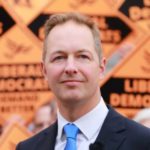
  • Neale Hanvey – 2022 Speech on an Independence Referendum for Scotland

    Neale Hanvey – 2022 Speech on an Independence Referendum for Scotland

    The speech made by Neale Hanvey, the Alba MP for Kirkcaldy and Cowdenbeath, in Westminster Hall, the House of Commons on 30 November 2022.

    I beg to move,

    That this House has considered Government policy on a further independence referendum for Scotland.

    Today is St Andrew’s day, and on this national day there is a particular significance and imperative. Last week, the UK Supreme Court told the Scottish Government that they could not exercise their democratic mandate to hold an independence referendum. But there was something else in that judgment—something that simply cannot be tolerated. There was the suggestion that, somehow, Scotland as a nation does not possess a right to self-determination. In suggesting that, the London Supreme Court overturned what has been the accepted legal, historic and political position that the UK is a voluntary Union.

    Scotland’s separate constitutional tradition is perhaps best summed up in the view expressed by Lord Cooper, in the case of MacCormick v. Lord Advocate,

    “The principle of the unlimited sovereignty of Parliament is a distinctively English principle, which has no counterpart in Scottish constitutional law.”

    The Supreme Court seems to have repudiated that. Last week’s judgment rendered the UK a state of glaring contradiction. There are contradictions in our shared history, and contradictions of equality, politics, and representation.

    The UK enthusiastically claims it seeks to preserve democracy the world over, yet moves to block Scotland at each and every turn. Can the Minister imagine the circumstances where, having entered the common market and ratified every subsequent treaty—leading to the European Union—the EU Parliament moved to block his party’s Brexit vote, or set a limit on when and if such a vote could be heard? The notion is, of course, ludicrous, because democracy is not a single event but an evolving and continuous process. That is how civilised people behave, and how freedom of thought and expression are peacefully demonstrated. Those are the foundations of inalienable human rights.

    I will consider the contradictions, concluding with a commentary of the Supreme Court’s judgment. We are often told in this place that Scotland must be proud of our shared history as part of the most successful political union ever. I will test that narrative and ask the Minister to consider our shared history through a Scottish prism.

    Before the Union, the English Alien Act 1705 threatened economic sanctions if Scotland did not settle the royal succession, or negotiate for a political union. The treaty was met with vociferous opposition both inside and outside Scotland’s parliamentary chamber but, given threats and enticements, a majority of Scottish parliamentarians were persuaded. The people were never consulted.

    It so often goes that this is all ancient history and irrelevant to a modern Scotland in a respectful union of equals. Last week’s judgment challenged that previously understood narrative. What of that modern Scotland? In my lifetime, the political complexion of Westminster rule has rarely reflected the polity of Scotland. We have endured repeated Tory Governments that Scotland did not vote for, or Labour Administrations that took us into illegal wars that we wanted no part of.

    Socioeconomic policies have destroyed our communities, exploited our resources and worked against the utility of the people of Scotland, contrary to the Articles of Union. The pursuit of such social and economic policies has driven a stake through the heart of once proud communities. As noted in the pleadings of the hon. and learned Member for Edinburgh South West (Joanna Cherry), in her prorogation case to the UK Supreme Court, the 1707 parliamentary Union between England and Scotland may have created a new state but it did not create one nation.

    Scotland was an independent nation for millennia before its coerced incorporation. It remains a distinct and internationally recognised people and country. No clearer is that evidenced than by the much earlier and continuing Union of the Crowns, where our shared monarch does not accede to a single throne of Britain, but takes the separate crowns of the realms of Scotland and England.

    As a member of the EU, the UK possessed and exercised a veto, yet claimed its sovereignty was impeded by membership. Scotland has no such mechanism in this place, and is always subject to the wiles of the policy of its larger neighbour, exemplified by Brexit. How does that constitute access to meaningful political process, as claimed by the UK Supreme Court judgment?

    In signing the Atlantic charter of 1941, wartime Prime Minister and hero of the Conservative party, Winston Churchill, brought into being the principle of self-determination of peoples, as now set out in the United Nations charter, in article 1(2), article 73 and article 76. Margaret Thatcher in her memoirs said of Scotland:

    “As a nation, they have an undoubted right to national self-determination.”

    John Major, when Prime Minister, said of Scotland:

    “No nation could be held irrevocably in a Union against its will.”

    Angus Brendan MacNeil (Na h-Eileanan an Iar) (SNP)

    The hon. Gentleman is making a fantastic speech. He started by raising the point about the Supreme Court and self-determination. I found paragraph 88 of the judgment particularly interesting:

    “The people in question are entitled to a right to external self-determination because they have been denied the ability to exert internally their right to self-determination.”

    The judgment did exactly that; it did limit that right. The reason the judgment did not give the referendum was because, if it happened—even if it had limited legal effect—as it says in paragraph 81, it

    “would possess the authority, in a constitution and political culture founded upon democracy”—

    and that is all over western Europe. Ultimately, the concession has been made by the Supreme Court that the ballot box rules supreme. Indeed, the ballot box made the Supreme Court because the Supreme Court is a creature of the UK Government, which in turn was made at the ballot box.

    Neale Hanvey

    I thank the hon. Gentleman for that intervention. I will consider the blurred boundaries of legal and political, as I move through my speech. In 1989, this place reaffirmed and acknowledged the sovereign right of the Scottish people to determine the form of government best suited to their needs. In May 1997, in an exchange with the right hon. Alex Salmond during the passage of the Bill that became the Referendums (Scotland and Wales) Act 1997, the late Donald Dewar responded that he should be the last to challenge the sovereignty of the people, accepting the right of the Scottish people to a choice, including independence, should that be their wish. None of these senior politicians ever placed a limit on or sought to constrain that democratic right to self-determination. Indeed, in the wake of the 2014 referendum, the Smith commission agreement was signed by all of Scotland’s main political parties and it stated:

    “It is agreed that nothing in this report prevents Scotland becoming an independent country in the future should the people of Scotland so choose.”

    Of course, the Good Friday agreement sets out a reasoned and internationally considered timescale of every seven years to consider constitutional change. A political generation of seven years is not unreasonable, but Scotland is now a year beyond and no further forward. It is therefore imperative; if there is a consented, legal and democratic route by which the people of Ireland —north and south—can choose their own constitutional future in a border poll every seven years, what is the consented, legal and democratic route by which the people of Scotland’s sovereign right to determine their own constitutional future can be respected? That is a right underpinned by Scots law, which rests on the claim of right that asserts that it is the people who are sovereign.

    The Supreme Court’s rejection of the argument that Scotland has the right to self-determination in international law was described last week as “problematic”—very problematic—by Michael Keating, emeritus professor of politics at the University of Aberdeen. He states:

    “The way is now open for the UK Government to say that there is no time or way for Scotland to exercise its acknowledged right of self-determination”.

    He has quite rightly pointed out that in invoking the Canadian court’s ruling on Quebec, the UK Supreme Court failed to mention or consider a further aspect of that Canadian judgment—namely, that if Québec or any other province did vote for independence by a clear majority on a clear question, the Government of Canada would be bound to negotiate. That aspect of the Canadian court’s ruling is significant and in essence reflects a situation where legality meets politics.

    Angus Brendan MacNeil

    The hon. Gentleman is making a great speech, and I am grateful to him for giving way again. The Holyrood Standing Orders perhaps possess a way, and the Supreme Court has, unwittingly perhaps, opened up every election from now on for people to speak at the ballot box. Under rule 11.10 of the Standing Orders for Holyrood, “Selection of the First Minister”, paragraph 5 mentions what happens when there is one candidate, paragraph 7 when there are two candidates, and paragraph 8 when there are more than two candidates. That, with a combination of no-confidence votes, surely leaves the way open, if it was chosen, for Scotland to determine its own future—if Holyrood decides to do that.

    Neale Hanvey

    The hon. Gentleman will probably not like my answer, but that is a matter for the Scottish Government to consider.

    In addition to the point that I was making about political reality, Professor Keating goes on to argue that not going beyond the letter of the law to look at broader constitutional issues

    “risks undermining the conventions and understandings on which”

    the UK’s “largely unwritten constitution depends.” Those are wise reflections that both the UK Government and the UK Supreme Court would do well to consider.

    With regard to Kosovo, the UK has stated, in its submission to the International Court of Justice:

    “The United Kingdom considers that the Declaration of Independence of Kosovo was not incompatible with international law. It was not made in haste or in a political vacuum. Rather, it flowed from the failure of the two sides, and of the international community, after long and sustained effort, to secure any other framework”.

    Further, the UK

    “considers that developments since 17 February 2008 have crystallised Kosovo independence and cured any deficiency that might initially have existed. As the 1776 Declaration of Independence of the United States”—

    David Duguid (Banff and Buchan) (Con)

    I want to ask a question of clarification on the comparison to Kosovo. Is the hon. Gentleman really comparing the situation that Scotland finds itself in within the United Kingdom with Kosovo in the literally war-torn former Yugoslavia?

    Neale Hanvey

    I am referring to the petitioners’ arguments, the Supreme Court’s response and the UK Government’s judgment on the Kosovan situation. I am pursuing a line that was submitted by the petitioner and responded to by the UK Supreme Court.

    As the 1776 declaration of independence of the United States of America—a declaration of independence that the United Kingdom opposed at the time—illustrates, many states emerge to independence in what, at the time, were controversial circumstances. That does not vitiate their subsequent emergence into full statehood.

    These developments are succinctly crystallised by Robert McCorquodale, a professor of international law and human rights who has himself appeared as an advocate before the International Court of Justice and the UK Supreme Court. The dissolution of the USSR and its influence on the development of the right to self-determination has been examined, and Robert McCorquodale states, “Lithuania’s declaration of independence had substantial impacts on the understanding and application of the right to self-determination. The right to self-determination, which is a human right acknowledged by all states, changed from being limited to people with traditional colonial territories to applying to all states, including to peoples within states. This development has profound effects today, such as enabling people in all states worldwide to seek to exercise their right to self-determination.”

    That directly challenges a key assertion of the UK Supreme Court, which led it to conclude that the Scottish Government could not independently consult the Scottish people about independence and that it was in the gift of Westminster. Yet a public petition entitled, “The Treaty of Union 1707 is no longer fit for purpose and Dissolve The Union”, was submitted to this place in 2019 and was rejected by this place for the following reason:

    “We can’t accept your petition because this would be a decision of the people of Scotland and not the UK Government or Parliament.”

    On that, I wholly agree. For all the reasons given above, the UK Supreme Court’s position cannot stand unchallenged, particularly on our national day.

    Today I invite others to sign the declaration of St Andrew’s day, published in my name as early-day motion 633, which asserts the following:

    “we the people, elected members and civic organisations of Scotland assert that our nation has the right of self-determination to freely determine our political status and to freely pursue our economic, social and cultural development, mindful of the Scottish constitutional tradition of the sovereignty of the people, we will democratically challenge any authority or government which seeks to deny us that right.”

    On Wednesday 23 November 2022, it became clear that the wrong case had been argued at the wrong time and in the wrong court. Just as Westminster and the United Kingdom’s Supreme Court are part of the British state apparatus, so too is the Scottish Parliament, but if Scotland’s Parliament is denied agency over the future of its people, where stands democracy for the Scottish people?

    In Scots law, there is no sovereignty higher than that of our people, and here today I have asserted that right into the record. Neither Scotland’s claim of right nor the aspirations of the Scottish people to be a normal, outward-looking, independent nation are the sole purview of any one political party or any individual party leader. We now learn, the UK’s Secretary of State intends to act as a territorial viceroy, banning the Scottish civil service from advancing the democratic will of the Scottish people. Well, I give him fair warning: the independence movement extends far beyond the Scottish civil service. If anything, such an undemocratic move will simply galvanise and liberate the movement by decoupling our ambition from the daily trials of government. We are the nation of the Enlightenment, and our movement possesses minds with more ambition and vision than any Government or civil service that is subject to diktats from London.

    At the start of my contribution, I said that this was an issue of contradictions. Let me say today, on St Andrew’s day, that there is no contradiction in Scotland. Scotland is a proud and ancient nation that goes back millennia, and no one but the people of Scotland shall impede, limit or restrict our right to self-determination. It is precisely a week since the Supreme Court gave its judgment on the right of the Scottish Parliament to hold a referendum on Scottish independence. Let me be clear: Charles Stewart Parnell said about another nation that was once a part of the United Kingdom:

    “No man has a right to fix a boundary of the march of a nation…no man”—

    no court, no Government—has the right to say to another country

    “thus far…and no further.”
  • Will Quince – 2022 Speech on Accountability in the NHS

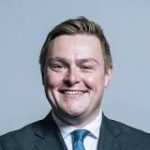
    Will Quince – 2022 Speech on Accountability in the NHS

    The speech made by Will Quince, the Minister of State at the Department for Health and Social Care, in Westminster Hall, the House of Commons on 30 November 2022.

    It is a pleasure to serve under your chairmanship, Sir George. I congratulate my right hon. Friend the Member for Hemel Hempstead (Sir Mike Penning) on bringing this important debate to the House today. I know from our numerous conversations over the years that he is a tireless champion of healthcare provision, not just within his own constituency, and an advocate for instilling accountability and a learning culture throughout the NHS as a whole. Today, he has raised some difficult cases, albeit anonymised. I know the Under-Secretary of State for Health and Social Care, my hon. Friend the Member for Lewes (Maria Caulfield), who is responsible for patient safety, looks forward to receiving more information and will be happy to meet our right hon. Friend to discuss the cases further.

    I assure my right hon. Friend that this Government share his commitment to ensuring that the NHS delivers excellent care to all of its patients. We will never tire in striving to ensure that patient safety and high-quality care are at the heart of all patient care in our country. I am of the firm view that accountability for excellence applies at all levels of patient care, from the individual clinician caring for an individual patient through to Parliament’s role, as my right hon. Friend set out, in ensuring accountability for healthcare delivery by the NHS. It is essential that the commitment to excellence is central.

    My right hon. Friend rightly says that we love our NHS. Of course we do. However, we recognise that on rare occasions—not as rare as I would like—patient care falls short of the very high standards that we expect. He talked about getting answers for his constituents as a Member of Parliament. That is hugely important. I apologise that ministerial responses have not been as full as he hoped they would be. I will certainly look into that, because those responses are important. As a constituency MP, I too have cases from constituents who have raised concerns, either about their GP or their acute trust, and the level of service provided.

    My right hon. Friend rightly raises questions about why the NHS as an organisation does not more often simply say “sorry” when things go wrong. It is, as he says, a human business and things do go wrong.

    I hear what he said about ministerial responses. He is also right to say that Ministers are unable at present to respond to individual cases. There are reasons for that. As the hon. Member for St Albans (Daisy Cooper) and the hon. Member for Westmorland and Lonsdale (Tim Farron) said, the NHS is a complex organisation. We have NHS England, integrated care boards, integrated care systems, primary care networks, acute trusts, mental health trusts and ambulance trusts, and there is a question about whether Ministers or bodies such as NHS England and individual trusts should hold a level of operational accountability or delivery responsibility. That is a fair question, raised by the hon. Member for Westmorland and Lonsdale, but it is a tricky balance to reach.

    Ultimately, who is responsible for any failings within the NHS? Well, that is me. Who is responsible for delivery of services through the NHS? Not me. That position presents some challenges. Ministers have the ability to set the strategy at national level, but there is a big difference between the strategy, the approach, the culture and the leadership set in Whitehall and what actually happens at grassroots level at individual trusts. However, although I do not have direct operational responsibility, trust me when I say that every single day I am thinking about every single case where an ambulance is delayed and people have to wait too long; about all the 7.1 million people in our elective backlog, and about all those who do not get the excellent care that they rightly deserve and expect through our NHS. That is because I am the one who is responsible for that. I get the letters, and sometimes the responses are not as full as we would want, because I do not have at my fingertips all the information I need to be able to respond in the way I would like. We need to look at that.

    My right hon. Friend rightly says that most people do not want to sue or take legal action against our NHS. They are desperately sad about what has happened, and they may be disappointed or even angry, but that does not mean that they want to seek financial redress or sue a hospital trust. They know the implications of that—the money comes out of operational budgets.

    Having been the responsible Minister, I am acutely aware that we have an annual clinical negligence bill of £2.6 billion, which is huge. Understandably, I would rather spend that £2.6 billion on NHS frontline services. I have huge sympathy with my right hon. Friend’s view that we should collectively put our hands up, explain what went wrong and why, demonstrate how we are learning from that as an organisation, and clearly explain the steps that we are taking to put it right. We collectively as Ministers have a role to play in that. I will reflect on his comments and explore what more we can do.

    The Government have made significant strides to advance patient safety over the last decade. As I said, it remains a top priority not just for the Government but for me personally. We are creating a transparent learning culture across health systems. That is key to avoiding tragedies in the first place, and essential to driving the improvements that we want to see. As my right hon. Friend pointed out, patient feedback has to be at the heart of that. Patients have to have the opportunity to share their experiences.

    It is vital that clinicians reflect upon the lessons learned and translate them into opportunities to improve their practice. That is vital for not just the individual consultant, doctor, nurse or allied health professional, but the NHS as a whole. We have to listen and learn from individual patient stories. Accountability is a thread that has to run through every single level of the NHS—from individual patient complaints and the learning they generate to organisational responsibility for the standard of patient care, through to integrated care boards and the delivery of high-quality outcomes and access to care for their populations.

    The accountability owed to partner organisations and local patients is just as important as accountability to national bodies. As my right hon. Friend pointed out, that is why we passed the Health and Care Act 2022, which embeds the principle of accountability throughout the NHS and our health and care system.

    Sir Mike Penning

    The Minister is being generous in his comments to myself and to colleagues. The issue for colleagues and patients is that the over £2 billion bill, the delayed operations and the waiting lists would be remarkably smaller problems if we had addressed them right at the start. The biggest point, going back to my constituent, is that the wrong operation was done in 1986. That gentleman has been back and forth with the NHS, with help from myself and others, which must have cost the NHS a small fortune in legal fees. Instead of addressing the individual issue to stop it getting bigger, the NHS fobbed and fobbed it off and passed it back around.

    I know we are short on time and the Minister wants to conclude. My final point is that when Ministers send out letters, it is often the trust that we are complaining about that has drafted the letter to their officials, which actually ends up coming to us. In a classic example the other day, I was thanked for being so supportive of the refurbishment of Watford General Hospital, when actually I have opposed it for the last 20 years. The trust wanted to send that message to the Minister, rather than address what we needed to address, which is patient safety. The stress on patients in this particular case is huge.

    Will Quince

    My right hon. Friend is right that there is a lot more that we can do. Reflecting what he has just said, I will touch on some of the measures that have been put in place over recent years.

    In 2019 there was the NHS patient safety strategy. We introduced, for the first time ever, a patient safety commissioner. There is the Health Service Safety Investigations Body, which will be an arm’s length body from April 2023 and which was the brainchild of the Chancellor when he was Secretary of State for Health and Social Care. As my right hon. Friend pointed out, there has also been huge investment in maternity services following those awful cases, not just to boost staff numbers, but to improve leadership and culture. There have also been changes to the Care Quality Commission, with the single framework coming in from January next year.

    My right hon. Friend is absolutely right that some cases take far too long, especially some of the neonatal cases. Those are often the cases that result in the largest payments made, but it can take many years before patients and families get the redress they needed. The Health Services Safety Investigations body is designed to be far more upfront about where something goes wrong. It is much better to learn the lessons in the period immediately after something has gone wrong than several years after the event, looking back retrospectively on what could have been done differently. We need to learn the lessons now and ensure that as few patients as possible go through the same experience. Clinicians, not just within that trust but across the integrated care board, or, where appropriate, across our NHS, should learn those lessons.

    My right hon. Friend the Member for Hemel Hempstead has hammered home the point again about ministerial responses. I hear him, and I will speak with my hon. Friend the Member for Lewes to see what more we can do in that space. Those points are well made. However, it is difficult because of the number of NHS acute trusts and the fact that we rely on information about what happened on the ground. It is a huge and complex organisation, but I understand, recognise and take his point that ministerial responsibility and oversight is important.

    We need to know the facts, and not just the facts as they are presented by a trust, in whose interest it might be to paint a rosier picture than it actually is on the ground—or to not paint the full picture. That is why it is so important that Ministers engage with local Members of Parliament to get the facts. They are the ones who are meeting with the trust executives and the board, as well as their constituents and the clinicians and health professionals on the ground delivering care, who will often—for want of a better word—whistleblow about what is actually happening in a trust, and not give the rose-tinted view that the executives of a trust may want.

    This has been a hugely important debate. It speaks to issues that are at the heart of our NHS. It is about getting it right first time and the excellent and consistent patient care that we rightly expect from our NHS. I hope, to some extent, that I have assured my right hon. Friend the Member for Hemel Hempstead of the importance that the Government place on quality, excellent patient care and accountability. His points have been well made. I will reflect on them, as will my hon. Friend the Member for Lewes. I look forward to working with him to improve the situation across our NHS.

  • Mike Penning – 2022 Speech on Accountability in the NHS

    Mike Penning – 2022 Speech on Accountability in the NHS

    The speech made by Mike Penning, the Conservative MP in Hemel Hempstead, in Westminster Hall, House of Commons, on 30 November 2022.

    I beg to move,

    That this House has considered accountability in the NHS.

    It is a pleasure to serve under your chairmanship, Sir George. I called this debate on accountability in the NHS. As a nation, we love our NHS which does a fantastic job for us, day in, day out. However, like any human being or organisation, sometimes it makes mistakes. When the NHS makes mistakes, the process of trying to get an apology or a mistake rectified is invariably a bureaucratic nightmare.

    I have a couple of examples I would like to raise. I have permission from one to use their name, but I probably will not do so, because I will yet again pass correspondence to the Minister. I appreciate that the Minister here, my hon. Friend the Member for Colchester (Will Quince), is not responsible in the Department for this subject. The relevant Minister, my hon. Friend the Member for Lewes (Maria Caulfield), is on the Floor of the House answering questions, and I thank this Minister for explaining why she is not here.

    We in Parliament are here to speak up for those who sometimes cannot speak up for themselves. When something goes wrong, Sir George, you would think we could get answers for constituents and get matters rectified, but within the NHS there is a lack of ministerial accountability, which I will come to in a moment. The complaints procedure eventually ends up with the ombudsman, but it takes for ever. There is a feeling in my constituency that, when things go wrong, the longer the process can be delayed, the more people will just accept what has happened. In some cases, they will sadly not be around any more. For their families and loved ones, this short debate is very important.

    Probably the most dramatic example for me, not of the physical effects of surgery but of the effect on someone’s life, concerns one of my constituents. The NHS decided in 1986 that he needed an operation on his nose, but the operation that took place was not the one that was supposed to. I will use the language: it was botched. It was probably not intentional; it was a mistake but, to this day, that has had detrimental effects on his quality of life.

    My constituent tried to go through the process of getting it rectified. I have tried to find out what was going on. He has pushed from pillar to post by different trusts: University College London and West Hertfordshire. I have written to previous Ministers over the years, only to be told that Ministers do not interfere in individual cases. I accept that but, when we reach a situation where there is nowhere else to go, ministerial accountability is important.

    Tim Farron (Westmorland and Lonsdale) (LD)

    I am grateful to the right hon. Gentleman, not least for the sensitivity of the issues he is raising. Ministers under Governments of all colours have sought to keep NHS operational matters at arm’s length. Does he agree that that reduces accountability and effectiveness? I am thinking more generally about the current huge backlog in cancer diagnosis and treatment. I do not see any direct and urgent Government intervention. Does the right hon. Gentleman think that is partly the result of the lack direct operational accountability for Ministers to the service?

    Sir Mike Penning

    I thank the hon. Member for his intervention. We have seen during covid that, actually, when things get really bad, Ministers can step in and Prime Ministers can step in, but when we talk about individual cases, they cannot.

    In the case I am referring to, I ended up writing to the Minister, to be told to go to the ombudsman. I got fobbed off by the ombudsman, after we had been to the trust three or four times. I then wrote to the Minister again—this is over the course of years—to be told to take legal advice. This particular person has now been told, “Go back to your GP and get them to re-refer you if you’ve still got problems.” He has problems because they did not do the operation properly in the first place, and it has had a massive long-term effect on this gentleman’s quality of life.

    That is not the only case. I have been here for nearly 18 years, and I worked for a Member of Parliament for many years before that. In every constituency, this sort of case is brought before the MP. I have another example. Last summer, in the middle of heatwave in July, when the temperatures were unbelievably high, a very vulnerable young lady was brought in for a scan at my local hospital. She is the most vulnerable young lady. Her mother cares for her 24/7. She has carers in. She is a wheelchair user or bed-bound. She was left on a trolley in the heat for five hours when her ambulance did not arrive.

    When I contacted the trust and said, “What happened there?” it blamed the ambulance trust. When I contacted the ambulance trust, it said, “No, it was cancelled by the trust—it was their fault.” I do not care whose fault it was. It was the NHS’s fault that this happened to a very vulnerable young lady. She had no drink and no food. She was very, very ill. The ambulance trust said that the return journey was cancelled because she was so poorly on the trolley—well, she was so poorly because she had been left there for five hours!

    Trying to get to the bottom of what happens within the NHS when something goes wrong is so difficult. We have seen terrible situations in maternity services and in trusts around the country. These problems need to be addressed early on, instead of the drawbridge being brought up and people having to go through a massive complaints procedure where they have to complain three times before going to the ombudsman, and then the ombudsman will say it is out of time, and if they are not careful, they cannot go to court because that is out of time too. Is that the way we want our NHS to be seen by the public, who love the NHS?

    The NHS sees the NHS as a single entity. As MPs—and I was a shadow Health Minister for four and a half years—we understand that it is not a single entity. It is a set of silos where everybody passes the buck back and forth. What we need is joined-up thinking. When Members like myself write to Ministers about these issues, the answer is not to say, “Nothing to do with me, guv” and pass it down the line to the ombudsman or a lawyer. That surely costs more money and does not put the NHS in a particularly good light with my constituents who have had their operations botched

    Jim Shannon (Strangford) (DUP)

    I congratulate the right hon. Gentleman on securing the debate. He talks about silos, and I want to give him an example of that in my constituency. Many people await their care packages in order to be released from hospital and get better at home. On the other hand, there are people waiting urgently for hospital beds who cannot get one. Does he agree that there must be greater communication between trust managers and social care workers to ensure efficiency of care in the community, which would free up hospital beds and allow people to be treated quicker? In other words, we should do away with the silos and get things co-ordinated.

    Sir Mike Penning

    I completely agree with the hon. Gentleman. I know that right next to my constituency, my hon. Friend the Member for Watford (Dean Russell) goes to Watford General Hospital and looks at the boards to see whether people can medically be discharged, but they cannot because there is a lack of joined-up thinking.

    This is different. This is about the need for the NHS, when it may or may not have made a mistake, to address it full-on at the start. It should not draw up the drawbridge, with people having to go through the long, drawn-out procedure of making complaints and going to the ombudsman. For a Minister to say to a colleague and fellow MP, “Perhaps this person needs to take legal advice,” is not the attitude we should have towards people who have done the right thing. The NHS has said that they should have an operation, and the NHS has mucked up and botched—I use that word under privilege. At the same time, the person’s life has been detrimentally affected for years and years to come.

    I know the Minister is not the Minister responsible, but because we are all constituency MPs, I guarantee that before he was in his position, people were at his surgeries or wrote to him to say, “This happened to me within the NHS. What can you do to help me do something about it?” Somewhere along the line, perhaps the short debate we are having today will nudge the Department of Health and Social Care and the Government —I was a Minister in several Departments—to look at ministerial oversight.

    Daisy Cooper (St Albans) (LD)

    The right hon. Gentleman is making a fantastic speech. In the light of this week’s shocking reports from Byline Times about the amount of sexual abuse and rapes that have occurred in hospital settings, does he agree that to improve accountability, we need the Government not only to urgently repeal the five-year rule, which limits some people from making complaints to the NHS, but to have clear, systematic and consistent data collection on all sexual misconduct across all hospital settings?

    Sir Mike Penning

    As usual, I agree with the hon. Lady. We do not agree on everything, but we agree on 99% of things.

    This is the crux of the matter, and there are two real issues here. In the case that I spoke about earlier, which goes way back to the ’80s, the gentleman’s mental and physical health has not been great. Other people, including the extreme examples alluded to by the hon. Lady, may be mentally affected in a way that I and many of the people in this room probably cannot understand. To have a block exclusion post five years seems so arbitrary in the modern world. The Government really must look at whether there should be an arbitrary rule and perhaps leave it to others to decide, rather than setting down in regulation the exceptional circumstances that might well have been in place. Trusts do have delegated powers—many more powers than I think they should have—and I know the new Act will help that, but it does not take into consideration the points that we have tried to raise in this morning’s debate.

    If we had this debate on the Floor of the House, I think we would have a full Chamber of colleagues. Rather than talking down the NHS, they would be saying, “When things go wrong, we need to address them.” When I was Police Minister, there was a big mistake under my portfolio, and I went before the House, explained that mistakes were made on the funding formula and put my hands up. I took a lot of flak for that, but it was a way to address things going forward. With the NHS being such a massive organisation, and an organisation that the public want to be able to trust, it must be better for us to address the issues at the start of a complaint.

    The Under-Secretary of State for Health and Social Care, my hon. Friend the Member for Lewes, did not write the letter that I mentioned; it was written by her officials, who desperately want to defend the NHS. The complaint was not about the NHS in general; it was about a specific issue that we need to address. We are all here as Members of Parliament because we are supposed to represent the taxpayer—representation through taxation. I should be able to represent my constituents in that way without being told to go to the ombudsman. I know I have to go to the ombudsman, because I have been here a very long time, so I am capable of working that out. I am also capable of working out that we are outside the time limit, given the five-year rule.

    We need a change of mindset. I do not want individual Ministers to say, “This operation should take place, that one shouldn’t, and the hospital should have this number of wards”, but there has to be ministerial oversight when things go well, and when things go wrong.

    My constituent has given me permission to raise his case. I think it would be more useful not to put his name on the record here, but I will pass another letter to the Minister, which I hope might get a little more positivity when the Minister responsible writes back to me, rather than a response that fobs us off and says, “Please go away.”

  • Mark Spencer – 2022 Speech on the Avian Influenza Outbreak

    Mark Spencer – 2022 Speech on the Avian Influenza Outbreak

    The speech made by Mark Spencer, the Minister for Food, Farming and Fisheries, in Westminster Hall, the House of Commons on 30 November 2022.

    It is a pleasure to serve under your chairmanship, Sir George. I thank my right hon. Friend the Member for Maldon (Sir John Whittingdale) for securing the debate. The debate has been positive, and many Members have made similar points. I shall try to address as many of those points as I can over the next 10 minutes.

    My hon. Friend the Member for Torbay (Kevin Foster) was probably an outlier in talking about Paignton zoo, which is a matter that he has raised with me in private before. There are many zoos up and down the country that face specific and challenging circumstances. Highly valuable birds have to be protected, and many are quite difficult to manage. I am told that penguins, in particular, are of significant value, and that it is difficult to vaccinate and manage birds such as flamingos and ostriches, which are difficult to physically handle and are very wild in their nature. I can perhaps pick up some of those comments with him afterwards.

    Kevin Foster

    I thank the Minister for his response so far. I am very happy to meet him, perhaps with a representative of the Wild Planet Trust, so that we can go into those areas in more detail.

    Mark Spencer

    I am grateful for my hon. Friend’s supportive comment.

    DEFRA’s avian influenza disease control measures aim to minimise the economic burden of the current outbreaks. We are working closely with industry to address the impact on the sector and protect public health and the wider economy. We recognise that the poultry industry is under serious pressure, and we also recognise the impact of avian influenza on wild bird populations. Outbreaks of avian flu in both the kept and wild bird populations are at an unprecedented scale: for the first time, significantly, new cases have been confirmed for the second year of the outbreak.

    October saw a massive escalation in the number of cases confirmed. Although the number of confirmed cases in poultry and captive birds is slowly reducing, which is good news, there were 124 cases in England, nine in Scotland, three in Wales and one in Northern Ireland as of last night. That compares to a total of 158 cases between October 2021 and September 2022, and 26 cases in winter 2020-21.

    In responding to avian flu in kept birds, our priority has always been to get as quickly as possible to the farm where the disease is suspected, and to get on with the issue of compensation. Despite the unprecedented scale of the challenge, the APHA is staying on top of it. I thank the people working at the APHA and DEFRA; they are working day and night to deal with the pandemic, in very difficult circumstances. I know that they will continue to respond effectively as long as the outbreak continues. They are taking steps to improve the operational and policy response, even as it is under way, to support our vital food sector.

    We produce approximately 11 million turkeys in the UK every year, so the numbers of them affected are relatively small. We believe that the outbreak will not affect the overall supply of Christmas turkeys, which is a huge credit to the industry. Its response has been robust, and it is keeping us well fed and supplied at Christmas.

    Wild birds have also been hard hit over the summer for the first time, and breeding sea birds have been particularly badly affected. DEFRA and the Welsh Government have joined forces to produce a mitigation strategy that provides practical guidance for land managers, the public and those involved in environmental organisations, so that they can work alongside the Government to monitor the disease. Together with the Scottish and Welsh Governments, DEFRA is working closely with the APHA, Natural England, NatureScot, the Joint Nature Conservation Committee and other non-governmental organisations, such as the Royal Society for the Protection of Birds and the British Trust for Ornithology, to monitor and respond to the effect of avian flu on wild birds.

    I turn specifically to compensation. We recognise the significant financial pressure and emotional impact that the outbreak can have on producers. Current rules are designed to encourage good biosecurity standards, which means being careful about every single movement on and off farm and into poultry sheds. I cannot underestimate the importance of good biosecurity. The hon. Member for Leeds North West (Alex Sobel) mentioned my comments about housing orders; my direct answer is that they help. It is not a silver bullet, but housing poultry helps. As I indicated during that statement, it has a twofold impact, but biosecurity can have a 44-fold impact. We must not underestimate the importance of biosecurity.

    Jim Shannon

    I took the liberty of passing to the Minister’s PPS the BEIS request forms on compensation and vaccination. There is an argument that the compensation system, as it is now, does not respond to the help needed. Has the Minister had a chance to look at that, and is he able to reply?

    Mark Spencer

    Let me try to address that directly now. What we cannot do as a Government, which is much more challenging, is to underwrite the whole poultry production system; UK taxpayers would find that too much of a challenge. Of course, we want to try to support the industry and ensure that it is there for the future. That is why we changed the rules, so that we start the conversation process from the second that the APHA vets recognise there is an outbreak of avian influenza. We have become much better and quicker at getting those APHA vets on to site—within 24 hours, in most cases—to identify the disease and start the conversation process from that moment.

    My right hon. Friend the Member for Maldon made reference to four-legged animals—that is almost identical to the compensation scheme for foot and mouth disease, for example, whereby the Government pay compensation for animals that are not diseased that are being culled to stop the spread of the infection. We are working day and night to ensure that this system works. We have improved. People in the industry recognise that that is a better place than we were in at the beginning of this terrible disease, but it still brings huge financial and emotional challenges to the people working in the sector.

    We have also moved to assist with defrosted products. They will be properly labelled and accompanied by in-store signage, along with the online information for customers, and this option will give producers certainty over business planning. There have been a number of calls, including from my right hon. Friend the Member for Maldon, to extend that scheme to next season, and to give producers the confidence to step back into the marketplace. The Department is genuinely open to a conversation about whether to roll that forward to next year. We do not want to allow competition from overseas to undercut our sector. We are genuinely open to a conversation on what producers see as the best route forward, as we want to support them into next season and next Christmas. Our work with the sector has shown that, in the past, there has been too much uncertainty about the compensation schemes, and we are keen to engage and work with it moving forward.

    I return to biosecurity, which is an essential defence against avian influenza, and, when done extremely well, can reduce the risk of infection by 44-fold. Despite a legal requirement for an avian influenza prevention zone as a baseline for the industry, veterinary investigations at infected premises continue to reveal unacceptable lapses in biosecurity in some cases. The industry must play its part in helping to prevent further outbreaks. That means maintaining buildings properly, ensuring biosecurity is done as robustly as health and safety with senior leadership in companies, and effective training for all staff. One small lapse can have a devastating effect, allowing this terrible disease to enter into a poultry house.

    The measures legally require birdkeepers to keep their birds indoors and to follow stringent biosecurity measures to help protect their flocks from the disease, regardless of type or size. I urge all birdkeepers, from those who keep large commercial flocks to those who have one or two birds in their back garden, to adopt the best practice biosecurity advice measures that are required in law.

    Any future decisions on disease control measures, including the use of vaccination, will continue to be based on the latest scientific and veterinary advice. A lot of work is going on in the background internationally to develop that vaccine and make sure it works. As many Members have identified, the covid pandemic has given us much more professionalism and put much more of a system in place to develop those vaccines, and we will call on that expertise to try to find a vaccine that is effective, in order to prevent this disease internationally. That will also require a lot of co-operation in terms of trade, making sure that the markets we export to are willing to receive vaccinated meat products and eggs in future. That has to be an international agreement, because we do not want to damage our ability to export products.

    We have seen a tightening in the egg sector, as some Members have referenced. The UK supply chain is resilient: there are currently 38 million laying hens across the country. Avian flu is not having an impact on the overall supply, with only 2% of the national flock having died or been culled due to avian flu. The disruption to the supply of eggs we have seen recently is mainly due to the commercial decisions that businesses are taking as a result of the rising costs of feed and energy over the past year, mostly caused by Putin’s illegal invasion of Ukraine.

    We welcome the announcements made by some retailers that they will provide additional financial support to the egg sector in recognition of the challenges that the sector faces, and we encourage those retailers to continue to support the egg industry. We are working closely with devolved Administrations to keep the egg market under close review, and will continue to do so. We have also been keen to work closely with the egg industry; we have done so in recent weeks, and I will chair a roundtable on 6 December with representatives from across the UK egg supply chain to discuss the challenges that the sector is facing and determine how we can assist.

    This has been a very positive debate. Lots of Members have identified the way out of this challenge in the long term, which of course will be vaccination. I sincerely hope that our scientists can find a solution that will solve our challenges. I express my extreme sympathy with those people who have been caught up with this terrible disease, and we will continue to work closely with the sector to make sure we have a thriving poultry industry moving forward.

  • Alex Sobel – 2022 Speech on the Avian Influenza Outbreak

    Alex Sobel – 2022 Speech on the Avian Influenza Outbreak

    The speech made by Alex Sobel, the Labour MP for Leeds North West, in Westminster Hall, the House of Commons on 30 November 2022.

    It is a pleasure to serve under your chairmanship, Sir George. I join other Members in congratulating the right hon. Member for Maldon (Sir John Whittingdale) on securing this crucial and timely debate. Like me, Members are rightly concerned about the impact of this virus, and they have made excellent points. I thank the hon. Member for Westmorland and Lonsdale (Tim Farron), my hon. Friend the Member for Lancaster and Fleetwood (Cat Smith), the hon. Member for Tiverton and Honiton (Richard Foord), the right hon. Member for Witham (Priti Patel), the hon. Member for Torbay (Kevin Foster), and the esteemed Chair of the Environmental Audit Committee, the right hon. Member for Ludlow (Philip Dunne). Of course, no debate could exclude the hon. Member for Strangford (Jim Shannon), who shared an egg anecdote.

    I am delighted to be stepping in for my hon. Friend the Member for Cambridge (Daniel Zeichner), who is addressing farmers at the Norfolk Farming Conference and therefore could not be here. Norfolk and the east in general have suffered acutely from this crisis. He is disappointed not to be here himself to continue to press the Minister on this important matter. He has been asking repeated questions of the Minister in recent weeks at the Dispatch Box and in this Chamber, often not receiving direct answers, but we will try again—never fear. On my hon. Friend’s behalf, I am more than happy to keep the pressure on. Hopefully, we will get more answers today to the questions we have posed.

    The UK is currently experiencing its worst outbreak of bird flu, which is impacting the wild bird and farm bird populations. As the chief vet said in a DEFRA statement on 31 October,

    “We are now facing, this year, the largest ever outbreak of bird flu and are seeing rapid escalation in the number of cases on commercial farms and in backyard birds across England.”

    According to data provided by the Minister’s Department last week in response to a written question, 2.8 million farm birds have either been culled or died because of bird flu in 2022. Just under 2 million of those were since September. That figure is made up exclusively of chickens, ducks and turkeys. That relates to the many points that Members have made about Christmas.

    The rate of the spread has been alarming, with wild bird populations severely affected, and the problem has been known about for months. The RSPB, which gave evidence to the EFRA Committee yesterday, is helping to remove wild bird carcases, and I want to put on the record my thanks to it for that vital work. Some 65 species of wild bird have so far tested positive for avian flu in the UK, and population-level effects have been seen in seabirds including guillemots, kittiwakes, terns, great skua, gannets and barnacle geese, as other Members, including the hon. Member for Torbay, mentioned.

    The Government’s response has been criticised for being reactive instead of proactive in spite of early warning signs that there was a worsening problem. However, in the past month we have finally seen action from the Government, which we welcome. A full housing order was implemented on 7 November, which legally required all bird keepers to keep their birds housed, regardless of type or size. The Government altered their compensation process so that farmers could be compensated from the outset of planned culling, rather than at the end, and some regulatory liberalisation was introduced to allow poultry producers to freeze and then defrost birds between 28 November and 31 December to limit any supply issues in the run-up to Christmas, but has that been too little, too late?

    When the Minister delivered the Government’s statement on the housing order to the House of Commons, it was clear that he thought biosecurity was the most effective tool in tackling bird flu. I am sure he recalls what he said:

    “It is fair to say that the housing order has a twofold impact on the spread of avian influenza, whereas biosecurity can have a 44-fold impact on the spread, which is why our focus has been completely on biosecurity.”—[Official Report, 1 November 2022; Vol. 721, c. 806.]

    We accept that biosecurity is crucial to preventing the spread of bird flu, but the industry was calling for a full housing order weeks before one finally arrived.

    Will the Minister tell us what impact the housing order is having on the spread of avian flu? Is it proving successful in stemming the spread? As we have heard—I join the criticism from other Members—some devolved nations have not yet implemented full housing orders, so what can the Minister tell us about the situation there? I am sure he will want to comment on that, considering the debate we have had. Does the evidence suggest that, in England, the housing of birds has been successful?

    On support for farmers, we need to ask whether the Government are doing enough. The evidence provided yesterday to the Environment, Food and Rural Affairs Committee by the chief executive of the British Poultry Council, Richard Griffiths, and poultry farmer Paul Kelly of KellyBronze Turkeys, who was mentioned by the right hon. Member for Maldon and is from the right hon. Gentleman’s area, showed that they argue that the compensation scheme laid out in legislation from 1981 is out of date and does not reflect the consequences of the disease in 2022. With compensation being issued for healthy birds culled, smaller producers might see all their flock die before the APHA is able to arrive to cull, and be left without compensation.

    The growing worry is that financial loss, coupled with the trauma and mental strain of losing an entire flock—we heard from the hon. Member for Westmorland and Lonsdale about the historical effects of previous crises on other types of farming—might lead to producers deciding not to restock for next winter, so that they effectively leave the sector. It is not hard to understand why after hearing what Paul Kelly said yesterday during the Select Committee hearing after detailing the £1.2 million hit his farm has taken as a result bird flu this year: “Could we take the risk to produce Christmas poultry based on what we’ve seen this year? We couldn’t.” That is pretty telling.

    The Department issued £2.4 million in compensation in the six weeks from 1 October. Will the Minister put that in context? How many birds does that involve? I appreciate that the compensation scale is complex, and I hear that there are 13 different documents just for turkeys, but are farmers getting enough support to be able to restock and continue in business next year? To put it frankly, will they have confidence that the Government have a grip on the situation such that they stay in the sector?

    Avian flu has been returning year on year, as was stated by the esteemed Chair of the Environmental Audit Committee, the right hon. Member for Ludlow, so it seems as though there is no long-term strategy. Are discussions being had in the Department on vaccinations? Is consideration being given to speeding up the development of an effective vaccine? What discussions are being held with trading partners to ensure that vaccination becomes a viable proposition?

    Can we hear from the Minister about capacity in the APHA? We have heard many speeches here discussing that and capacity in the Environment Agency, but the recent report from colleagues on the Public Accounts Committee hardly inspires confidence. Do those agencies have the capacity to respond to another disease outbreak? The Public Accounts Committee doubts that. When my hon. Friend the Member for Lancaster and Fleetwood put that issue to the Secretary of State during EFRA questions just two weeks ago, the Secretary of State ducked the question. I hope we get a better response today.

    Crossing one’s fingers and hoping it does not happen does not constitute a plan. That is what Labour is concerned about—DEFRA’s long-term strategy for our agriculture sector. The Government seem content for the public to believe that bird flu is the cause of egg shortages and worries about Christmas turkeys, but we all know that farmers face more fundamental problems, and there have been warnings of egg shortages for months because producers could not make a return. Avian flu should not be used as cover for wider systemic problems and failings.

    Avian flu is a horrible disease that is dreadful for wild birds and harrowing for farmers and their flocks. Overall, the advice is that numbers lost should not cause supply problems on the shelves, but the Government need to keep on top of the outbreak. For individual farmers who lose their flocks, the impact is dreadful, and they deserve our support, not least because we need them to farm in the future. Across the country, staff at the APHA and other agencies, including local authorities, are doing everything they can to keep the country safe and our food system secure. We thank them for that. They are doing their job. The Government must support them, and enable them to do what they need to do.

  • Steven Bonnar – 2022 Speech on the Avian Influenza Outbreak

    Steven Bonnar – 2022 Speech on the Avian Influenza Outbreak

    The speech made by Steven Bonnar, the SNP MP for Coatbridge, Chryston and Bellshill, in Westminster Hall, the House of Commons on 30 November 2022.

    It is a pleasure to see you in the Chair this morning, Sir George. I thank the right hon. Member for Maldon (Sir John Whittingdale) for securing this important and timely debate, and for informing us all so well about the current avian influenza outbreak in the UK and further afield. I thank all hon. Members for their contributions to the debate.

    The latest outbreak of avian flu, commonly known as bird flu, is the largest and most invasive we have seen in the UK to date. The highly virulent H5N1 strain of the disease has meant that the virus has lingered persistently in wild and farmed birds since October 2021, even during the summer months, with no slowing down or dissipation of the virus due to its high pathogenicity. It is affecting wild bird populations as well as commercial or farmed birds and, of course, backyard flocks as well.

    Each member nation of the United Kingdom has handled the epidemic similarly, with avian influenza prevention zones being declared across the four nations to mitigate the risk of the disease spreading among poultry and other farmed birds. From Monday 17 October, it became a legal requirement for all bird keepers in the United Kingdom to follow strict viral security measures to help protect their flocks from the threat of avian flu. In early November, DEFRA and its Irish counterpart introduced a mandatory requirement to house all farmed birds in England and in the Republic of Ireland. We in the SNP welcome continued cross-border collaboration on both islands of Britain and Ireland to mitigate the risk of bird flu. The outbreak emphasises the need for pan-European and international co-operation on pandemic issues, now and in the future.

    Turning to the Scottish perspective, in July, the Scottish Government agency, NatureScot, announced it was setting up a taskforce to respond to bird flu. That followed outbreaks over the spring and summer months among our wild bird populations around Scotland’s coastlines. The main birds affected at that point were gannets, skuas, geese and gulls. Shetland was one of the worst affected areas, with carcases also found from the Mull of Galloway to St Kilda and East Lothian. The number of contact zones in place in Scotland has risen from six to nine as the risk of exposure increases.

    Scottish Government veterinary advice is that the current risk from avian influenza in Scotland does not justify mandatory housing of commercial birds, as has been announced in England, Wales and Ireland. Scotland’s chief veterinary officer, Sheila Voas, states that the evidence in Scotland does not currently justify a housing order being imposed:

    “Whilst we are keeping the situation under review we don’t believe the evidence, as yet, justifies mandatory housing here. We are keeping an eye on number of cases, we’re keeping an eye on wild bird results coming through and if the position substantially changes here then we may choose to go to a housing order as well.”

    Ms Voas added that keeping birds indoors should not be seen as a silver bullet for tackling avian flu and that other measures, such as keeping feed and bedding away from wild birds, can also be effective. I reiterate that the situation is being monitored and kept under constant review, and all breeders should be concerned and take whatever precautions they can to keep their flocks safe.

    Jim Shannon

    I am not being critical of what the hon. Gentleman is saying, but I do have some concerns. Scotland has decided not to house its birds in the way that has been decided in the rest of the United Kingdom, and indeed in the Republic of Ireland, but it seems to me to be logical that we all work together, as the hon. Member for Lancaster and Fleetwood (Cat Smith) said. The hon. Gentleman knows that I am not being critical, but we need to have a policy that we can all agree on for the betterment of us all.

    Steven Bonnar

    I thank the hon. Member for his intervention and I appreciate the points he has made. I think that DEFRA and the Scottish Government have an excellent working relationship, and work collaboratively across all areas to ensure the safety of our industries at all times. However, I must say that I think it is extremely rich, considering that we are coming off the back of a human pandemic that has seen hundreds of thousands of lives lost across the UK, when the Government were putting people back to work and telling people to eat out to help out, against the wishes of the Scottish Government. There was no such collaborative working then and there was no such good will coming forth from the UK Government.

    David Duguid

    I was about to ask to intervene just before the hon. Member for Strangford (Jim Shannon), so I will not comment on the most recent comments made by the hon. Member for Coatbridge, Chryston and Bellshill (Steven Bonnar), but I welcome his remarks about how the situation is being kept under review. I plan to meet—hopefully very soon—the chief veterinary officer for Scotland, Sheila Voas, who he mentioned. Does he share my concern, particularly as the most recent outbreaks are in my constituency and are very concentrated—although across Scotland it may look like there are not a lot of outbreaks on average, there is such a highly concentrated and focused series of outbreaks in one area—that housing orders, perhaps even in one location, may be required?

    Steven Bonnar

    I have a lot of sympathy with the hon. Gentleman’s point. This is a concern for every Member of Parliament, across all four nations of the UK. Of course there are specific outbreaks in his area. I am glad that he is meeting our chief veterinary officer. I am always quite willing and able to take the advice of the experts on these matters. The current advice from the Scottish Government is that mandatory housing is not yet required in Scotland, and I am quite happy to maintain that position.

    Cat Smith rose—

    Sir George Howarth (in the Chair)

    Order. Before the hon. Lady intervenes, can I just point out that I will call the Opposition spokesman shortly and I think the hon. Gentleman is about to run out of time?

    Cat Smith

    Thank you, Sir George; I will be brief.

    I do see a contradiction between the hon. Gentleman’s party’s approach to the human pandemic of covid and the approach it is taking now, by which it is trying to protect farmers in Scotland. I draw his attention to the fact that his party is in government in Scotland and the hon. Member for Banff and Buchan (David Duguid) has pointed out that many of his constituents have had outbreaks. Frankly, it seems that there needs to be a little bit more compassion from the hon. Member for Coatbridge, Chryston and Bellshill (Steven Bonnar) about the devastation that this disease is having on the livelihoods of Scottish farmers.

    Steven Bonnar

    I take the hon. Lady’s comments on board. I disagree with her comments about compassion; I am very compassionate about animal welfare right across the board, and of course I have compassion for anybody’s constituents in Scotland who are affected by this situation.

    I will move quickly on. Sadly, more than 100,000 birds have had to be culled at three Scottish farms so far. The National Farmers Union of Scotland has revealed that 72,000 birds had to be taken out at two farms in Aberdeenshire, while down in Ayrshire farmer Billy Robb has lost 32,000 hens in the past week. This is devastating for all those concerned with the keeping of animals and it has a profound effect on people in the farming community. As we heard at the EFRA Committee yesterday, livelihoods have indeed been lost due to the outbreak.

    Of course, it can also be concerning for members of the general public when they come across dead birds Just last week, 23 swans were found dead in and around Hogganfield Loch—a well-renowned and much-loved nature reserve, which borders my constituency and is frequently utilised by my constituents in the Stepps area. The severity of the outbreak has limited public access to the surrounding paths and advice has been given to people to avoid bringing dogs to the area, as they can also be at risk of infection.

    The risk of incursion to wild birds of highly pathogenic avian influenza has remained very high. NatureScot launched a surveillance network in October to track migrating geese and wintering waterbirds arriving in Scotland. Alastair MacGugan of NatureScot said:

    “As we head into the winter months, we are still very concerned about the potential impact of avian flu on our wild bird populations and we remain vigilant to ensure we can respond to the evolving situation. We’re monitoring wintering goose populations very closely for avian flu and are working with colleagues in Iceland and Norway to identify cases in migrating populations. Here in Scotland, we’ve set up a network of site managers and volunteers to provide real-time reporting on what is happening out in the field, helping us take swift and targeted decisions.”

    I will turn briefly to consumption. It is important to stress that the risk to the general public’s health from avian influenza is extremely low. Food Standards Scotland advised that bird flu poses only a very low food safety concern for consumers, and does not have an effect on the human consumption of any poultry products, including eggs. The Scottish Government are aware of a number of issues affecting egg supply; some shops, including Asda and Lidl, are starting to ration the number of eggs that customers can buy due to supply issues. Although the impact of avian influenza on all commercial flocks is a consideration, the cost of living increases and a number of other issues, such as labour shortages across all sectors of the industry, feed into that. It was refreshing to hear a Conservative MP identify that Brexit has caused a severe shortage in the workforce, and that a fuller workforce would have helped to combat the outbreak.

    As we head towards the Christmas period, people might be wondering whether any of the 10 million turkeys, 200,000 geese and 100,000 ducks, which are sold to some of the highest standards in the world each year, will be available as normal. The answer to that is yes. Of course there concerns, but about 50% of those tasty festive dinners are sold frozen, and the industry has managed the situation very well by carrying out early plucking, and using industry standard freeze and thaw processes.

    We can all play our part in combating this outbreak of bird flu. I will finish with some advice for my constituents in Coatbridge, Chryston and Bellshill and people across Scotland. If they encounter any dead birds, they should not touch them, but should report the findings of the following: a single dead bird of prey, three dead gulls or winter waterfowl, such as swans, geese or ducks, or five or more dead wild birds of any other species at the same time and in the same place. Any such findings should be reported to DEFRA’s UK-wide telephone number, which is 0345 9335577. In addition, although wild birds of high-risk species cannot be taken directly to Scottish Society for Prevention of Cruelty to Animals animal rescue centres, sick or injured wild birds in Scotland should be reported to the SSPCA via its telephone number, which is 0300 099 9999.

  • Philip Dunne – 2022 Speech on the Avian Influenza Outbreak

    Philip Dunne – 2022 Speech on the Avian Influenza Outbreak

    The speech made by Philip Dunne, the Conservative MP for Ludlow, in Westminster Hall, the House of Commons on 30 November 2022.

    I congratulate my right hon. Friend the Member for Maldon (Sir John Whittingdale) on securing the debate and everyone who has spoken to highlight not only the real and practical challenges the poultry industry is facing as a result of this incident, but the impact on our wild bird population.

    I alert the Minister to an incident that happened in my constituency last week. Members of the public reported to me and, as they should have done, to Shropshire Council and the Environment Agency sightings of dead geese around the River Severn near the bridge in Bridgnorth. I immediately contacted Shropshire Council, which promptly sent an animal health officer to investigate. By the time the animal health officer had arrived, the birds in question were in the river and not on public land, as had been thought. They were therefore inaccessible to the animal health officer. The council contacted the APHA, which did not have a watercraft available to assist. There was therefore a delay. The next time there was an inspection, three days later, the birds had not surprisingly disappeared—it is a fast-flowing river.

    There is a question over resourcing and the capacity in the EA’s workforce to respond to incidents. I appreciate that it is difficult to do this right across the country, but there is no doubt that this disease is becoming endemic in the wild bird population, in particular in migratory wildfowl, which can travel all over the country, as we have heard from hon. Members.

    On the poultry industry, my constituency in south Shropshire has a significant number of poultry farmers of several types. I pay tribute to my constituent James Mottershead, who is present in the Public Gallery today. He is a poultry farmer and happens to be chairman of the National Farmers Union poultry board. He has been engaging well with the Minister’s officials in DEFRA, and I pay tribute to their efforts in trying to find a resolution.

    I will mention a couple of challenges, building on what has been said by other hon. Members. On compensation, as my right hon. Friend the Member for Maldon said, given the speed with which this disease can take hold in a shed that has become infected, it is simply no good to pay only for birds that remain alive, because the vast majority may have been killed by the disease before the approval was granted. We need to look at the compensation mechanism. One of the knock-on effects of having inadequate compensation for farmers is that the insurance has now been withdrawn because the insurer did not expect there to be a contribution towards the loss. That means that sheds will not be restocked in the event of an incident, even once biosecurity efforts have been completed, because insurance is not available. Even if it were to be available, the cost would be far too heavy. A more realistic compensation payment would help to resolve that problem. That applies to layers as well as broilers.

    Finally, as I am conscious that I need to conclude, clearly the solution will be an effective vaccination. I encourage the Minister to pick up on the observations made by Members across the Chamber today that that has to be given the same level of priority as we gave to vaccinating against covid, if we are to have a poultry industry in this country and wild birds flourishing, as we would all like.

  • Richard Foord – 2022 Speech on the Avian Influenza Outbreak

    Richard Foord – 2022 Speech on the Avian Influenza Outbreak

    The speech made by Richard Foord, the Liberal Democrat MP for Tiverton and Honiton, in Westminster Hall, the House of Commons on 30 November 2022.

    It is a pleasure to serve under your chairmanship, Sir George. I will make some comments about compensation and timescales for restocking.

    On compensation, although the Government have made some moves in the direction of valuing the destroyed birds earlier following the avian flu outbreak, it is still not good enough. I want to describe the situation for one of my constituents. The birds that she and her family keep were infected in spite of being inside. Perhaps the avian flu got in via some fresh straw, but over 30,000 birds were destroyed. The valuation of the stock by the APHA was made promptly but, despite the outbreak occurring in early August, they have still not received any compensation for the second of their two sites. It was only last week that they received compensation for the first. This is entirely unacceptable given that their incomes ceased at the point of the cull and compensation was needed to ensure that bills were paid. Speedier payment of compensation is critical.

    Secondly, I will comment on restocking timescales. The secondary cleaning and disinfection protocol, as described by DEFRA, is not fit for purpose. It provides three options for restocking the farm. The quickest restocking option is unavailable to many small and medium-sized farms and free-range producers, which means that they are forced to choose restocking the poultry, and that cannot be carried out until 12 months after the avian flu outbreak. That is catastrophic for farm businesses whose main income is from poultry. They are stopped from trading for an entire year because of this legislation. It is causing otherwise viable businesses to go to the wall. In one case in my constituency of Tiverton and Honiton, when the bank became aware of this requirement for a 12-month pause in the farm being restocked, the lender requested that the constituent’s banking facility be removed.

    In addition to the volume of avian flu cases expected this winter, this legislation means that there will be shortages lasting well over a year, especially in the seasonal Christmas turkey market. Many farms, if stuck with the 12-month restocking option, will be unable to produce turkeys not only this Christmas, but next Christmas. I have not read any scientific evidence that backs up the 12-month restocking rule. Professor Ian Brown, head of virology at the APHA, confirmed at a conference this week that the virus can live during the winter period for six weeks. If the longevity of the virus is only six weeks, I see no reason why a farm should be forced to cease trading for a whole year.

    The secondary cleansing and disinfecting requirements, which must be achieved to restock a farm with poultry, are not fit for purpose. That is especially the case for a small, family-run and free-range farm, for seasonal poultry producers and for those operating on earth or stone floors. My hon. Friend the Member for Westmorland and Lonsdale (Tim Farron) is absolutely right that any enforced shutdown of a farm needs to be based on science. At the moment, there seems to be little or no scientific justification relating to the longevity of the virus that requires a 12-month shutdown.

    Sir George Howarth (in the Chair)

    Order. I remind the hon. Gentleman that there is one more speaker to be called and I will be calling the Front Benchers at 10.28 am.

    Richard Foord

    Thank you, Sir George; I will be brief.

    My constituents and I suggest that the current 12-month period should be reduced to six months, and the onerous and expensive cleansing and disinfecting requirements should be reduced. We propose that no differentiation should be made between the treatment of earth, stone or concrete floors. Having farms out of production for two Christmas turkey-producing seasons is catastrophic for small, family-run businesses. To summarise, the Government should think again about the payment of compensation and the timescales for restocking.

  • PRESS RELEASE : Historic £360 million devolution deal transfers building and skills powers to level up Cornwall [December 2022]

    PRESS RELEASE : Historic £360 million devolution deal transfers building and skills powers to level up Cornwall [December 2022]

    The press release issued by the Department for Levelling Up, Housing and Communities on 2 December 2022.

    A landmark devolution deal will transfer new money and power into the hands of local leaders in Cornwall.

    • Levelling Up Minister Dehenna Davison in Cornwall today to sign historic £360 million devolution deal at Spaceport Cornwall
    • The proposed deal gives Cornwall Council a locally elected Mayor and greater control over transport budgets, building, skills delivery, and greater influence with government to tackle challenges of second homes
    • The deal now sees almost 50% of England covered by a devolution deal

    A landmark devolution deal, which transfers new money and power into the hands of local leaders in Cornwall, will be signed by Levelling Up Minister Dehenna Davison later today.

    If approved, Cornwall will be devolved control over the Adult Education budget, so they can shape provision in a way that best suits the needs of residents and the local economy and will get immediate support to build new affordable homes on brownfield sites. Cornwall will also directly elect a Mayor who will sit as leader of Cornwall Council, giving them a stronger local voice in discussions with central government and others. A uniquely important issue locally, the deal also commits central government to work more closely with Cornwall Council when considering any changes to alleviate the challenges of second homes and short-term lets.

    This is an important first step towards devolution for Cornwall. The deal is subject to local consultation, and a council resolution and the transfer of powers will require local consent and parliamentary approval.

    Government funding worth £360 million will also be guaranteed to Cornwall over the next 30 years and this will enable the region to plan for the long-term, boosting levelling up across the region and unleashing its full economic potential, as well as addressing unique challenges it faces as a rural area.

    Levelling Up Minister Davison will attend a signing ceremony at the iconic Spaceport Cornwall later today, to officially sign the deal with Cornwall Council. The signing continues the government’s devolution revolution with England moving closer to being 50% covered by bespoke regional devolution deals. What’s more, the new agreement reaffirms the government’s commitment in the Levelling Up White Paper to offer a devolution deal to any area wants one by 2030.

    The proposed deal sets out the government’s plans to devolve more power to Cornwall Council through:

    • Housing: the deal provides £8.7 million for delivering more homes on brownfield land as well as closer working between government and the council on second homes policy and identifying opportunities to deliver new affordable homes. On top of this, it includes up to £10 million to support delivery of locally determined housing and heritage priorities in Cornwall.
    • Transport: Cornwall Council will receive £500,000 to improve transport planning across the region, as well as collaboration on new smart ticketing systems
    • Culture and heritage: Recognising Cornwall’s diverse and unique heritage, the deal includes a further £500,000 to support Cornish distinctiveness, including the protection and promotion of the Cornish language.
    • Tourism: The deal sets out that Government will work with Cornwall Council on ways to encourage more tourists throughout the year and support the supply of safe and sustainable short term holiday accommodation.
    • Education: Government will fully devolve the Adult Education Budget from 2025, giving the council control over how best to support adult learners.

    Ahead of the signing ceremony, Levelling Up Minister Dehenna Davison said:

    Cornwall is a beautiful area of the UK with a rich heritage, a renowned coastline and a fantastic array of businesses. But for too long it has not received the levers it needs to level up and address the unique challenges it faces.

    I am proud to sign the devolution agreement today and empower local leaders here who know best the issues that most affect the region.

    I look forward to working with Cornwall to turbo-charge levelling up, spread opportunity and unleash this great area’s full economic potential.

    Cllr Linda Taylor, leader of Cornwall Council, said:

    This is a big deal for the whole of Cornwall, and provides the certainty required to tackle the challenges we face. This gives us the opportunity to secure more decision-making powers as well as bringing in millions of pounds of extra investment which will allow us to shape the future of Cornwall for the benefit of residents for many years to come.

    The proposed deal provides clarity in uncertain times and would allow us to make future plans with confidence, enabling us to deliver on our priorities to create a carbon neutral Cornwall where everyone can start well, live well and age well.

    The government has made it clear that the proposed deal is conditional on making our governance change. I am appealing to one and all to carefully consider this huge opportunity for Cornwall to receive more funding, powers and influence – and have your say on the deal that will help shape Cornwall’s future when the consultation begins next week.

    Mark Duddridge, Chair of the Cornwall and Isles of Scilly Local Enterprise Partnership, said:

    The devolution of the Adult Education Budget (AEB) from central Government to Cornwall Council is welcomed as it will enable more tailored support to be provided to thousands of Cornwall’s residents every year to develop the skills they need for life and work. That will also allow employers to access a better skilled workforce they need for businesses to grow and thrive, particularly in Cornwall’s foundation and growth sectors.

    These deals are just the first steps in transferring power away from Whitehall into areas that want them. Since their first deal with government in 2014, Greater Manchester has done a further five deals with government, on areas covering planning, transport and health and social care, and is now negotiating with government for a further ‘trailblazer’ deal which will see deeper devolution.

    Cornwall joins York and North Yorkshire and the East Midlands who have already signed devolution deals this year, with further talks continuing with Suffolk, Norfolk and councils in the North East.

    Cornwall Council will move to change from its current leader and cabinet executive governance model to a directly elected Mayor and cabinet executive governance model via full council resolution under the Local Government Act 2000. Cornwall Council will make this decision following a local public consultation and consideration of its results.

    Further information:

    • The deal builds on the previous 2015 devolution deal for Cornwall and marks another major step in the Government’s pledge in the Levelling Up White Paper to offer devolutions deals to any area that wants one by 2030. It follows devolution deals already announced for York and North Yorkshire and the East Midlands.
    • It is anticipated that election for Cornwall Council’s new Mayor will take place in May 2024.
  • PRESS RELEASE : More than £70 million to turbocharge the future of clean transport [December 2022]

    PRESS RELEASE : More than £70 million to turbocharge the future of clean transport [December 2022]

    The press release issued by the Department for Business, Energy and Industrial Strategy on 2 December 2022.

    • More than £70 million in joint government and industry funding to develop clean transport technology
    • projects expected to support 3,300 jobs and drive economic growth across the UK over the next decade
    • innovations required for hydrogen-powered HGVs, a tractor powered by farmyard waste and more efficient methods of manufacturing electric motors among those awarded funding

    A world-first heavy tractor powered by farm waste is just one of the game-changing projects benefitting from £73 million in new funding for the development of clean transport technologies announced today (Friday 2 December).

    The joint government and industry investment will support projects right across the UK, from Burnaston to Bridgwater, in support of ambitions to build an end-to-end supply chain for zero-emissions vehicles (ZEVs) in the UK. The five successful projects are set to support 3,300 jobs across the UK, working on new ways to harness renewable fuels, electric motors that are both powerful and highly efficient, and new materials that’ll reduce the auto industry’s carbon footprint.

    The funding has been awarded through the Advanced Propulsion Centre (APC) Collaborative Research and Development programme, which supports the development of innovative low and zero-carbon automotive technology, with £36.4 million coming from government. This is backed by a further £36.6 million from the automobile industry – taking today’s total to £73 million.

    Business Secretary Grant Shapps said:

    “Our automotive industry is a world-leader, creating jobs whether in Essex, Somerset or Glasgow. Seizing the potential from new technologies will be a key part of its future success, while also making our roads cleaner, greener and more affordable.

    “Today’s multi-million-pound boost – created by government working hand-in-hand with industry – will put these firms in pole position to pioneer these innovations, staying at the cutting edge of the global race for decades to come.”

    Joint government and industry funding winners are:

    HVS, Glasgow
    Receiving £30 million to develop a hydrogen fuel cell-powered HGV cab and tractor unit to replace the highly polluting diesel-powered vehicles currently used to transport road freight.

    CNH Industrial, Essex
    Receiving £15.6 million to develop the world’s first liquid fugitive methane-powered, off-road, heavy tractor. It makes use of methane gas produced by waste from farms, that would otherwise escape into the atmosphere.

    Toyota, Derbyshire
    Receiving £11.3 million to develop a hydrogen-fuel cell version of the Hilux pickup truck, ideal for use in isolated settings where electric vehicle charging is impractical.

    Constellium, Slough
    Receiving £10 million to provide new sources of recycled aluminium that could massively reduce the auto industry’s carbon footprint.

    Electrified Automation, Somerset
    Receiving £6 million to up-scale a market-disrupting new method for manufacturing electric motors that are more cost-effective, powerful and efficient than much of the competition.

    Chief Executive at the APC Ian Constance said:

    “Supporting vital research and development in the UK, now more than ever, provides an opportunity to invest in transport decarbonisation as well as boost growth in the automotive sector.

    “The £73 million of funding announced today furthers world-leading innovation in net-zero technology for the automotive sector and beyond. These five fantastic projects are all collaborative by design, led by high-profile companies with innovative SME and academic partners, representing the best of UK industry.”

    Today’s announcement comes on top of funding also being invested by the government through the Automotive Transformation Fund (ATF) to develop a high-value end-to-end electrified automotive supply chain in the UK.

    This includes unlocking private investment in gigafactories, battery material supply chains, motors, power electronics, and fuel cell systems. The ATF is being delivered by the Department for Business, Energy and Industrial Strategy in partnership with the Advanced Propulsion Centre.

    The government has committed a record £211 million to battery research and innovation through the Faraday Battery Challenge, to help the sector deliver 100,000 jobs in battery gigafactories and the battery supply chain by 2040. The funding will be delivered by UK Research and Innovation (UKRI) with support from the Faraday Institution, Innovate UK and the UK Battery Industrialisation Centre (UKBIC).

    The UK Hydrogen Strategy sets out how government, working with industry, is aiming to develop 10GW of hydrogen production capacity by 2030, for use across the economy. This forms a part of the British energy security strategy for delivering secure, clean and affordable British energy for the long term.