Tag: 2022

  • PRESS RELEASE : OSCE Group of Friends of Georgia – joint statement to the OSCE Ministerial Council [December 2022]

    PRESS RELEASE : OSCE Group of Friends of Georgia – joint statement to the OSCE Ministerial Council [December 2022]

    The press release issued by the Foreign Office on 2 December 2022.

    Canadian Ambassador Jocelyn Kinnear gave a statement at the 2022 OSCE Ministerial Council closing session, reaffirming full support for Georgia’s sovereignty.

    This statement is delivered on behalf of Bulgaria, Canada, Czech Republic, Denmark, Estonia, Finland, Iceland, Ireland, Latvia, Lithuania, Norway, Poland, Romania, Slovakia, Sweden, Ukraine, the United Kingdom, and the United States of America.

    We reaffirm our full support for Georgia’s sovereignty and territorial integrity within its internationally recognised borders.

    We condemn Russia’s aggression against Georgia in 2008 and express our deep concern over Russia’s ongoing military occupation of Georgia’s Abkhazia and South Ossetia regions. We also reiterate our condemnation of Russia’s ongoing war of aggression against Ukraine.

    Fourteen years since the Russian Federation’s military invasion of Georgia, we remain deeply concerned over the continued occupation of parts of the territory of Georgia and underline the need for the peaceful resolution of the conflict based on full respect for international law and commitments, including the UN Charter and the Helsinki Final Act.

    We welcome Georgia’s compliance with the EU-mediated 12 August 2008 ceasefire agreement. We call upon Russia to fulfil immediately its clear obligation under the ceasefire agreement to withdraw its forces to pre-conflict positions, as well as its commitments to allow unfettered access for the delivery of humanitarian assistance and not to impede the creation of international security arrangements on the ground. We call upon Russia to reverse its recognition of the so-called independence of Georgia’s Abkhazia and South Ossetia regions.

    We condemn Russia’s actions, which appear intended to unilaterally establish the Georgia-Russia state border on the segments of the occupied territories and incorporate a part of Aibgha village of Georgia into Krasnodar Krai. In the same vein, we express concern over Russia’s seizure of 180 hectares of land in the Gagra district of Abkhazia, Georgia. We are also concerned with ongoing activities within the framework of implementation of the so-called ‘programme’ on creation of a common socio-economic space between the Russian Federation and the Abkhazia region of Georgia as well as the so-called agreement on dual citizenship with the South Ossetia region of Georgia, as another step toward attempted illegal annexation. We urge Russia to reverse this process. We condemn the holding of so-called parliamentary elections in Abkhazia region as well as so-called presidential elections in South Ossetia in 2022 as a blatant violation of Georgia’s sovereignty.

    We note the January 2021 judgment of the European Court of Human Rights in the case concerning the armed conflict between the Russian Federation and Georgia in August 2008 and its consequences, including its findings that Russia has exercised effective control over Georgia’s regions of Abkhazia and South Ossetia following the 12 August 2008 ceasefire agreement, including through its military presence. The Court also ruled that Russia, in violation of the European Convention on Human Rights, tortured Georgian Prisoners of War; arbitrarily detained and killed Georgian civilians, and was responsible for their inhuman and degrading treatment; prevented the return of ethnic Georgians to their homes; and failed to conduct investigations into killings of civilians. We call on Russia to fully comply with the judgment, including by allowing internally displaced persons (IDPs) to return to their homes in safety and dignity. We also note the decision of the International Criminal Court (ICC) of June 2022 that issued arrest warrants for alleged war crimes committed during Russia’s invasion in 2008. We call on Russia to cooperate with the ICC.

    We are concerned over the continuous discrimination against Georgians on the grounds of ethnicity in Georgia’s Abkhazia and South Ossetia regions and abuses, including severe restrictions on rights related to freedom of movement, education, residence and property, particularly in connection with the destruction of the houses of IDPs. We call on those in control to enable full and unhindered access by international human rights organisations to the Georgian regions of Abkhazia and South Ossetia. We condemn the decision to replace instruction in the Georgian language with Russian in schools of the ethnic-Georgian-inhabited Gali and Akhalgori districts in the Abkhazia and South Ossetia regions of Georgia, respectively. We also condemn the obliteration and alteration of Georgian features from the Georgian cultural heritage monuments in both regions.

    We are particularly concerned over the ongoing installation of barbed wire fences and other artificial barriers along the occupation line, and by the closure of so-called ABL crossing points in the South Ossetia region of Georgia for over 3 years. The partial and temporary re-opening of the so called ABL crossing points along South Ossetia at Odzisi and Karzmani, cannot be viewed as satisfactory. All crossing points with Abkhazia and South Ossetia regions of Georgia must be reopened for all Georgian citizens residing on both sides of the dividing lines.

    Isolation and continuous restrictions on freedom of movement have destabilised the situation on the ground and severely impacted the security, safety, well-being, and humanitarian conditions of civilians in conflict-affected areas, particularly in Akhalgori district, where reports suggest the local population suffers from shortages of medicine and food, and is denied access to pensions and essentials, including the free healthcare services available in Georgian Government controlled territory. This creates a risk for further depopulation of the Akhalgori district.

    We remain deeply concerned by ongoing arbitrary detentions around the ABLs and call for the immediate and unconditional release of Irakli Bebua and all those under arbitrary detention. We condemn the detentions of Kristine Takalandze, Asmat Tavadze, Mamuka Chkhikvadze and Kakhaber Natadze.

    We condemn the killing of Georgian citizens Archil Tatunashvili, Giga Otkhozoria, and Davit Basharuli, and urge Russia to remove any obstacles to bringing the perpetrators to justice. In this context, we reiterate our support for Georgia’s preventive steps aimed at eradicating impunity and note the Otkhozoria-Tatunashvili List adopted by the government of Georgia.

    We support the Geneva International Discussions (GID), as an existing format with the Russian Federation to address fulfilment of the EU-mediated 12 August 2008 ceasefire agreement, as well as the security, human rights, and humanitarian challenges stemming from the unresolved Russia – Georgia conflict. We underline the necessity of progress on the core issues of the discussions, including on the non-use of force, establishing international security arrangements in Georgia’s Abkhazia and South Ossetia regions and ensuring the safe, dignified, and voluntary return of IDPs and refugees in accordance with international law. We strongly support applying the Women, Peace and Security agenda in the GID in order to facilitate inclusive and sustainable peace and security on the ground.

    We express our support for the Incident Prevention and Response Mechanisms (IPRMs) in Ergneti and Gali and emphasise that the six meetings were held in Ergneti in 2022. The IPRMs can play important role in preventing the escalation of the conflict and in helping to protect the safety and security of people on the ground. We express our great concern over the lengthy suspension of the Gali IPRM and urge its resumption without further delay or pre-conditions, in line with the ground rules.

    We reaffirm our unwavering support for the EU Monitoring Mission (EUMM) and call upon Russia to allow the EUMM to implement its mandate in full, including by enabling the EUMM’s access on both sides of the ABLs.

    We welcome the multi-stakeholder process for developing a comprehensive ‘State Strategy for de-occupation and peaceful conflict resolution’ by the government of Georgia, as well as the strategic review of the reconciliation and engagement policy. We support the Georgian government’s ‘A Step to a Better Future’ peace initiative, aimed at improving the humanitarian and socio-economic conditions of people residing in Georgia’s Abkhazia and South Ossetia regions and at fostering confidence building among divided communities. We urge active work on reconciliation and engagement programs and stand ready to support.

    We encourage the OSCE’s engagement in the process of finding a peaceful resolution to the Russia-Georgia conflict. We regret that due to Russia’s refusal to join consensus, the mandate of the OSCE mission to Georgia was discontinued in 2009. We encourage the OSCE Participating States to decide on the reopening of the OSCE cross-dimensional mission in Georgia, including with a monitoring capacity that would enable the mission to operate without restrictions across the ABLs. The reopening of the mission would strengthen considerably the OSCE’s engagement in the GID and IPRMs. Furthermore, re-establishment of a field mission would support OSCE’s work in every phase of the conflict cycle.

    The Group of Friends of Georgia will continue to raise awareness of the conflict and of developments on the ground, hold Russia accountable for its obligations and commitments, and advocate for the conflict’s peaceful resolution.


  • Chi Onwurah – 2022 Parliamentary Question on Restoration of the Tyne Railway Bridge

    Chi Onwurah – 2022 Parliamentary Question on Restoration of the Tyne Railway Bridge

    The parliamentary question asked by Chi Onwurah, the Labour MP for Newcastle upon Tyne Central, in the House of Commons on 1 December 2022.

    Chi Onwurah (Newcastle upon Tyne Central) (Lab)

    As well as being a global icon of the north-east, the Tyne bridge is a critical part of our transport infrastructure. We are all the more reliant on it given the atrocious levels of service on the railways and buses, and given the lack of investment in our northern infrastructure, such as Northern Powerhouse Rail. The much-needed restoration of the Tyne bridge from its current dilapidated state will lead to further disruption to our transport links, which really cannot get any worse. Will the Minister meet me urgently to see what can be done to mitigate the impact on our transport links of restoring our great Tyne bridge to its full glory in time for its 100th birthday?

    Huw Merriman

    As I said, I am keen to meet as many hon. Members as require it—no doubt my officials will be tearing their hair out—and I am happy to meet the hon. Lady. We certainly know that, because our railways were built by our pioneering Victorians, much of the infrastructure needs renewal, some of which can be particularly complex and expensive to deliver. Ownership can have an impact on that as well. I am keen to meet her to find out more and see what we can do.

  • Ian Liddell-Grainger – 2022 Parliamentary Question on Taunton Railway Station

    Ian Liddell-Grainger – 2022 Parliamentary Question on Taunton Railway Station

    The parliamentary question asked by Ian Liddell-Grainger, the Conservative MP for Bridgwater and West Somerset, in the House of Commons on 1 December 2022.

    Mr Ian Liddell-Grainger (Bridgwater and West Somerset) (Con)

    If we are talking about service level, Taunton station is an example of what we have got wrong in this country. We spent an enormous of amount of money on redoing the station, but the parking is inadequate; cars queue back to the road to get in; people cannot get in if they are disabled or have heavy bags; and people have to walk 100 yards to get a bus to go anywhere. The service level of our stations is not right, so how on earth can the service level of our trains be right? If the first points of call for people—the ticket offices, the staff who work in the stations and the type of stations we have—are not there, we have a fundamental problem. Can we please look at the way that stations are run in this country?

    Huw Merriman

    My hon. Friend is right that we need to ensure that the entire experience attracts passengers and brings them back. It is about not just the service level, but the station experience. I travelled through Taunton station on Monday on my way to the reopened Okehampton line from Exeter. I am afraid that I did not stop off, so I was not able to experience what he has described, but I am happy to look at that further and discuss it with him. We have a station modernisation fund and the Access for All programme that is delivering more accessibility to passengers, which is vital. I will have a chat with him about it.

  • Ian Mearns – 2022 Parliamentary Question on Rail Services in Northern England

    Ian Mearns – 2022 Parliamentary Question on Rail Services in Northern England

    The parliamentary question asked by Ian Mearns, the Labour MP for Gateshead, in the House of Commons on 1 December 2022.

    Ian Mearns (Gateshead) (Lab)

    First and foremost, the train operators need to recruit and train more staff more quickly, and that would help to alleviate some of the strains we are working under. However, even when trains are working to timetable, travel times between cities and towns in the north of England are unacceptably slow—for instance, one hour and 20 minutes from Newcastle to Middlesbrough, which is 40 miles, and two hours from Newcastle to Carlisle, which is 60 miles. That is unacceptably slow due to antiquated infrastructure. When is something going to be done about this antiquated infrastructure in the north of England, so that we can travel as quickly as anyone anywhere else in the country?

    Huw Merriman

    We are about to enter the next five-year control period where we will look at renewal. Where we have assets that have become tired, we will look at replacing them and moving away from some of the older forms of working to, say, digital signalling, which would allow more trains to enter blocks. I am happy to meet the hon. Gentleman to discuss that further, as he may have indicated that he would like. He is right that trains are a lot slower in certain parts of the country than others; I experience that in the south-east. It takes two hours to get to London from Bexhill, but the exact same distance in miles to Milton Keynes takes 32 minutes. There are parts of the country that do not get the same deal as others and we need to work even harder for them to make sure that their trains arrive.

  • PRESS RELEASE : Extremely rare 700 year old ivory casket at risk of leaving the UK [December 2022]

    PRESS RELEASE : Extremely rare 700 year old ivory casket at risk of leaving the UK [December 2022]

    The press release issued by the Department for Digital, Culture, Media and Sport on 2 December 2022.

    A temporary export bar has been placed on a French Gothic ivory casket.

    • Export bar is to allow time for a UK gallery or institution to acquire the piece

    A French Gothic ivory casket worth more than £1.5 million is at risk of leaving the UK unless a buyer can be found to save it for the nation.

    The casket is one of just nine known 14th century French composite caskets that depict scenes from mediaeval romance tales. It includes a detailed and early depiction of wild men, mythical creatures appearing in mediaeval European art and literature that symbolise people living outside ‘civilised’ society. The casket shows them assaulting a castle in a rare variation on the popular theme of the storming of the Castle of Love.

    The Castle of Love was a commonly depicted scene on secular ivories in the 14th century in which women and girls are shown defending a castle attacked by knights. The scene was so popular at the time that there are records of re-enactments where castles were built and defended by women and girls of the town while men attacked them with fruits and flowers.

    On the lid of this casket, wild men and knights are shown engaged in a battle for the castle and its female occupants. Meanwhile the back panel depicts the outcome: a victorious knight kneeling in front of a king with a procession of knights and ladies leading the captured wild men in chains.

    Arts Minister Lord Parkinson of Whitley Bay said:

    This incredibly rare French ivory casket shows romantic and chivalric scenes as fascinating today as they were seven centuries ago.

    I sincerely hope a buyer comes forward so that we might continue to learn more about this remarkable casket and its long history in the UK.

    The Minister’s decision follows the advice of the Reviewing Committee on the Export of Works of Art and Objects of Cultural Interest. The Committee noted that the casket is exceptional and enlarges the collection of ivory caskets, particularly given the important secular iconography of the wild men.

    Committee member Stuart Lochhead said:

    This French 14th-century carved ivory casket is adorned with scenes of chivalry and romance including depictions of wild men – ranging from the rescue of a lady from one such assailant to a procession of knights and ladies who lead the captured wild men in chains. Similar iconography exists on some of the other nine known mediaeval caskets of this type, but it is the present one that illustrates some of the earliest and rarest type of images.

    Furthermore, its provenance indicates that it was continuously owned by the same family in Scotland for about four hundred years which is a remarkable and significant provenance for a mediaeval object.

    The casket is an exciting addition to a rare group of secular mediaeval ivory carvings, and with a long history of Scottish ownership that needs further in-depth research, its loss to an overseas buyer would be very regrettable.

    The Committee made its recommendation on the grounds that the casket met the third Waverley criterion for the study of provenance and the history of early collecting in Britain, and of secular mediaeval art.

    The decision on the export licence application for the ivory casket will be deferred for an initial period ending on 1 March 2023 inclusive. At the end of the first deferral period owners will have a consideration period of 15 business days to consider any offer(s) to purchase the casket at the recommended price of £1,506,000. The second deferral period will commence following the signing of an Option Agreement and will last for four months.

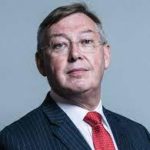
  • Sajid Javid – 2022 Statement Confirming Not Standing at the Next General Election

    Sajid Javid – 2022 Statement Confirming Not Standing at the Next General Election

    The statement made by Sajid Javid, the Conservative MP for Bromsgrove, on 2 December 2022.

  • PRESS RELEASE : Russia has violated OSCE’s core principles – UK closing statement at OSCE Ministerial Council [November 2022]

    PRESS RELEASE : Russia has violated OSCE’s core principles – UK closing statement at OSCE Ministerial Council [November 2022]

    The press release issued by the Foreign Office on 2 December 2022.

    Ambassador Neil Bush condemns Russia’s invasion of Ukraine, and stresses that the OSCE and the European security architecture are worth fighting for.

    Thank you Mr Chair, to you and your talented, committed team. And for your hospitality here in Łódź. In this testing year, we are grateful for your outstanding leadership and that of the Secretary General, the institutions and the hard working OSCE staff. You have all stood up for this institution. You have all stood up for the values and principles we have freely signed up to. And you have rightly realised that those who violate those principles and commitments should not be able to hide behind consensus or rules of procedures.

    Russia’s unprovoked and barbaric invasion of Ukraine – supported by the Belarusian regime – has attempted to break the foundations of European security. Russia has violated the UN Charter and the Helsinki Final Act’s core principles of sovereignty, territorial integrity and the non-use of force. As the vast majority of OSCE States have expressed here in Łódź – these principles matter, this organisation matters and we will stand up to defend both. The OSCE and the European security architecture are worth fighting for.

    As my Foreign Secretary said – if the OSCE was irrelevant or ineffectual it would not have been so systematically attacked by Russia. Russia forcibly ended the mandates of the Border Observation Mission, the Special Monitoring Mission, and the Project Co-ordinator in Ukraine. This unilateral and destructive behaviour was designed to blunt the tools of the organisation. But, Mr Chair, we have united under your leadership. We have innovated. And we have ensured the OSCE’s toolkit – designed to make us all safer and more secure – has remained both relevant and effective. By using the OSCE’s military transparency measures, we exposed Russian and Belarussian lies, false promises and ill-intent towards their sovereign neighbour. We deployed the Moscow Mechanism to shine a spotlight on the atrocities committed by Russian forces in Ukraine and to support accountability. We are proud to contribute to the OSCE’s Support Programme for Ukraine – an innovation which shows that the OSCE will not be held to ransom.

    As we stand united with Ukraine, we must not forget the state of human rights within the Russian Federation and Belarus. Internal repression and external aggression are two sides of the same coin – when a State places a stranglehold on the freedoms of its own people – it sets the conditions for, and enables, aggression abroad. Mr Chair, we should thank our predecessors for understanding that human rights and fundamental freedoms sit at the core of our collective security. They were right. Our job – day in and day out – is to continue to defend and advance those crucial rights and freedoms.

    Yesterday Russia spoke about confrontation. Ironic for a country which has invaded Georgia in 2008, illegally annexed Crimea in 2014 and then launched a full-scale invasion of Ukraine on 24 February this year. In parallel, Russia has vainly tried to frustrate and disrupt the work of the OSCE. We have shown once again in Łódź – that no one is fooled. We will uphold the rules because they are the foundation of the security of every State in this room.

    We offer our full support to North Macedonia as incoming Chair. We are under no illusions. Their task will also be a challenging one, but we are fully committed in our support. We stand by Ukraine. We stand by the OSCE. And we stand by the foundations and values of the European security architecture. That is why we are here.

  • Sara Britcliffe – 2022 Parliamentary Question on Avanti West Coast

    Sara Britcliffe – 2022 Parliamentary Question on Avanti West Coast

    The parliamentary question asked by Sara Britcliffe, the Conservative MP for Hyndburn, in the House of Commons on 1 December 2022.

    As someone who travels on the Avanti West Coast service on a weekly basis, I know that delays and cancellations are the norm. Customers are being charged unreasonable prices for a very poor service. Can my hon. Friend confirm that he is meeting Avanti regularly to discuss its performance, as well as giving it six months to roll out a recovery plan and deliver long overdue reliability for passengers?

    Huw Merriman

    I am sorry for the experiences that my hon. Friend and her constituents have experienced, and that goes to all Members of this House, too. With regard to Avanti, from December it plans to operate 264 daily train services on weekdays, which is a step up from the 180 daily services at present. That would also be greater than the number prior to the refusal on rest day working, which has triggered this issue over the past six months. Of course, that is all contingent on having that co-operation, which I am keen to seek to get into place. The Office of Rail and Road has looked at the plans and signed them off, and we and officials meet Avanti on a weekly basis to hold it to account. We will continue to do so. As my hon. Friend points out, a shorter-term contract is in place. We need performance improvements to go beyond that stage.

  • Gavin Newlands – 2022 Speech on Rail Cancellations

    Gavin Newlands – 2022 Speech on Rail Cancellations

    The speech made Gavin Newlands, the SNP spokesperson on rail, in the House of Commons on 1 December 2022.

    Over the past two days, TransPennine Express has managed to run a total of 42% of its timetabled cross-border services from Glasgow Central. That is from a timetable that was already slashed, as TPE struggled to provide even a basic service to passengers. Add to that the Avanti shambles and cross-border services are a disaster. It simply is not good enough, and there are real implications for the cross-border economy.

    Two separate industrial disputes involving ScotRail and the Scottish Government have been resolved this year, in contrast to the ongoing disputes across talks that have dragged on for months and are only now involving Government Ministers. The RMT’s general secretary Mick Lynch said yesterday:

    “In Scotland and Wales, RMT has settled similar disputes with the support of the governments there but where companies are controlled by the DfT, time is running out.”

    Previous Ministers have stood at the Dispatch Box and told us that disputes were for the talks and Network Rail to resolve, but clearly that stance is no longer fit for purpose. This Government are letting down Scotland and the north of England, and it is now well past time for rail to be fully devolved to Scotland. Will this welcome new and shiny team at the DFT meet me to discuss how we advance that?

    Huw Merriman

    This shiny rail Minister will always happily meet the hon. Member. I have always enjoyed working closely with him in our previous roles, so I am happy to discuss matters with him. He talks about the ministerial approach, and I think it should be put on the record. Yesterday, the Secretary of State for Transport travelled up to the north to meet the northern mayors to discuss these issues. We want to work collaboratively with all those who can influence change. The Secretary of State’s trip yesterday demonstrates that we do not just talk about it—we actually want to deliver on it, as well. Both the Secretary of State and I have talked of the need to reach some form of agreement. We have not used the language that might have been expected or heard in the past. We want to work closely. We have both met Mick Lynch and his counter at the Transport Salaried Staffs Association. I am due to meet again with Mick Lynch, the trade unions, the train operators and Network Rail, so that will be the employers and the trade unions, with a Minister in the room, not to negotiate, but to try to facilitate some form of end and to allow this change to come through. I will happily meet the hon. Gentleman and all across the piece so that we can make a difference and get this settled.

  • Edward Leigh – 2022 Parliamentary Question on Trains from London to Cleethorpes

    Edward Leigh – 2022 Parliamentary Question on Trains from London to Cleethorpes

    The parliamentary question asked by Sir Edward Leigh, the Conservative MP for Gainsborough, in the House of Commons on 1 December 2022.

    Sir Edward Leigh (Gainsborough) (Con)

    London North Eastern Railway seems to have been less affected than other services. Does that not underline that importance of the campaign by my hon. Friend the Member for Cleethorpes (Martin Vickers) and me to get the through service from London via Market Rasen to Cleethorpes, so that we can take the pressure off TransPennine Express? Can we get on with the through train, which has been promised again and again? Action this day!

    Huw Merriman

    My right hon. Friend makes a great bid that is linked into this matter. I am happy to meet him and my hon. Friend the Member for Cleethorpes (Martin Vickers) to discuss that further. He is absolutely right that we see a knock-on effect. Take Northern, for example. It has been less impacted by the matters I have referenced than TPE and Avanti, but the knock-on from those operators—particularly TPE—has caused it to fall in parts as well. He is absolutely right to point out that contagion can pass from one part of the network to another. I will happily meet him.