Tag: 2021

  • John Baron – 2021 Speech on the British Council

    John Baron – 2021 Speech on the British Council

    The speech made by John Baron, the Conservative MP for Basildon and Billericay, in the House of Commons on 18 November 2021.

    First, may I thank the Speaker and indeed you, Mr Deputy Speaker, for choosing and allowing this debate to take place? I also thank the Minister for the Middle East and North Africa, my right hon. Friend the Member for Braintree (James Cleverly), for fielding the debate on a Thursday afternoon. While I am in this mode, I should also like to thank the all-party group on the British Council for its support, guidance, diligence and expertise when it comes to trying to ensure that there is no disconnect between government and the British Council, and for playing its part. Above all, I wish to thank the staff and the teams at the British Council itself, and I know that my right hon. Friend will concur with that, because they have done a tremendous amount over the past few years in flying the flag for the cause of better understanding between this country and others. They have been flying the flag in such an astounding manner, given the challenges they have faced.

    My right hon. Friend will know that the British Council has huge cross-party support in both Houses. Some Members in this place have worked for the British Council prior to being elected as an MP, and others have worked closely, as I have done on occasion, with the British Council in the past in trying to ensure that there are no misunderstandings and in furthering the good work of the British Council. There is huge affection for the organisation across Parliament.

    The UK is often termed a “soft power superpower”—that phrase is reasonably well known. We rank very highly indeed and we usually top that table. That is down to our country’s extensive and impressive assets of attraction and influence, which include world-renowned arts and cultural bodies, world-class universities and research, and our sporting prowess, along with our respected national and international institutions. The British Council is one of those great institutions. Since the 1930s, it has been promoting British culture and the English language abroad, as well as facilitating cultural exchanges and, crucially, building trust between the UK and other countries. There are few Government Departments that do not directly benefit from its work.

    The British Council also represents excellent value for money. In normal times, it receives only 15% of its income from the state, whereas many of its international counterparts receive much more. For example, its French, German and Japanese equivalents receive 48%, 62% and 65% respectively. That is in large part because the British Council has a commercial element, in the teaching of English abroad. It is tremendous value for money given the influence it exerts and the trust it builds between us and other nations.

    As the chairman of the all-party parliamentary group on the British Council, it was my pleasure to oversee the production and publication last July of our report on opportunities for global Britain. I thank all those who contributed to the report, including the officers of the all-party parliamentary group, who contributed to such effect. The report highlights the importance of showing not telling and of persuading rather than being more forceful, thereby ensuring that our values of openness and tolerance are there for all to see around the world, and the important fact that soft-power institutions such as the British Council and the BBC World Service are at their most effective, innovative and entrepreneurial when they have operational independence from the Government. I have no doubt that the Government get that, but it is important to reiterate that there must be an element of operational independence.

    Our report also highlighted the Government’s short-sighted decision to curtail British Council activity in 20 countries because of its failure to close the £10 million shortfall between the amount of pandemic support given to the organisation and the costs of maintaining its international network. The 20 closures are already in train—the decision was largely taken last July—and represent the largest single set of closures in the British Council’s history. Our report particularly recommended that there should be no further closures among the British Council’s overseas network, and we received an assurance on that from the Minister in charge at the time.

    The APPG is concerned that the British Council faces the closure of a further 20 country operations, which would result in 40 closures in total. This idea stems from discussion between the British Council and the Foreign, Commonwealth and Development Office on cutting the British Council’s funding allocation still further over the coming three-year spending review period, despite the FCDO’s budget increasing by 21% over the same three-year timeframe.

    Bob Stewart (Beckenham) (Con)

    I thank my good and hon. Friend for allowing me to intervene. I am a huge fan of the British Council and have seen it operating abroad. Does my hon. Friend agree that when we withdraw something like the British Council from a country, the image given is that Britain does not care about that country? The soft power that we gain from having the British Council firmly in place in a capital or major city is a huge influence on how a country looks at the United Kingdom.

    Mr Baron

    My right hon. Friend is absolutely right: when the Government are quite rightly talking about the importance of global Britain, it sends completely the wrong message to the world to close, in many countries, an organisation that represents the very best of British.

    The irony of the situation is that the additional closures can easily be prevented, without any new money from the FCDO, by allowing the British Council to retain a share of the savings that it is currently making through cuts that are already in train. That is something to reflect on. As my right hon. Friend said, once the British Council ceases to have an office in a given country, it is unlikely that a presence will be easily re-established. It also leaves the way clear for others to fill the vacuum. The closure of 40 offices worldwide will not go unnoticed. Will the Government urgently review the situation and provide clarity?

    Is it the Government’s intention, at a time when the FCDO’s expenditure is, courtesy of a very generous Budget, going up by more than 20% over the comprehensive spending review period, that the British Council’s funding should be cut? Is that the Government’s intention, or is there simply a disconnect? Is this cock-up, frankly, rather than conspiracy? Clarity is needed; uncertainty helps no one, not least the British Council, when it comes to planning. If that is the Government’s intention, I urge them to rethink their decision to require the additional 20 closures and ideally, if I am being somewhat presumptuous—and why not?—rethink their decision to close the 20 offices as announced in July. These mass closures will do enormous damage to our soft power, as my right hon. Friend has alluded to. They will be viewed as an unwelcome retreat from the international stage and will leave the door open to our competitors. This simply does not fit with the concept of global Britain.

    I make no excuse for raising this issue now given what happened last time when the first set of 20 closures were announced. As soon as we got wind of it, being a proactive all-party group, we made every effort to communicate with Government through the normal channels. I had meaningful conversations with the then Foreign Secretary, a meaningful conversation with the Chancellor of the Exchequer, and two decent conversations with the Prime Minister. They all got it. They all accepted that the British Council was a valued organisation, helping to build trust. They got its worth; there was no need to persuade them. So what happened? There seemed to be a disconnect in Government. The clunky levers of the bureaucracy still manufactured a £10 million shortfall that was desperately required. It was desperately required because, over the past 18 months, the British Council has been unable to be proactive in commercialising its operation—its teaching of the English language—simply because the pandemic closed down its major markets in the far east, but still there was a £10 million shortfall, and still to this day, they are in the process of closing 20 country operations at a time when we are espousing the principles of global Britain. It simply does not make sense. There is a disconnect.

    The reason for holding this Adjournment debate—I ask the forgiveness of the House because I am keeping it here late on a Thursday, at the end of the business day—is that if we do not make noises now, given what happened last time, we will get a repeat, and 40 closures—the 20 in train and the 20 now being rumoured—would be a disaster not just for the British Council, but for the country as well.

    I could go on, Mr Deputy Speaker, but I know that perhaps I should not. In summing up, I want to raise very briefly something that is connected to the British Council, and I know that the Minister also takes it to heart. I reiterate the all-party group’s urgent concern for those 200 Afghans who worked for the British Council and who are still in Afghanistan, fearing for their lives and unable to leave. I had a heartrending email from a former British Council employee—I will not read it again because I have already paraphrased it in Defence questions—who literally said that they were in fear of their lives. They were in hiding from the Taliban. They had run out of money, but for some reason the bureaucracy was getting in the way. It seems that slow-moving bureaucracy in Britain is preventing them from receiving the documents they urgently require. We owe these people a debt of gratitude.

    As I said, I raised this issue at the last Defence questions. The Secretary of State agreed with the need for urgency, but suggested that this was more of a responsibility for the FCDO. He did, however, suggest a meeting for MPs involving all relevant Departments. In addition to the questions that I have already posed my right hon. Friend, I ask him to ensure that the FCDO, once it is invited, participates in this meeting fully. If it is not invited, it should ask questions why it is not. My understanding is that the Ministry of Defence is co-ordinating this. We, as Members of Parliament, need better sight of the system in order to play our part in ensuring that there is clarity, less bureaucracy and more action when it comes to helping these people. I look forward to hearing the answers to my questions from my right hon. Friend.

  • Andrew Adonis – 2021 Comments on Government Announcement of Scrapping Rail Projects

    Andrew Adonis – 2021 Comments on Government Announcement of Scrapping Rail Projects

    The comments made by Andrew Adonis on BBC News on 18 November 2021.

    This east-west divide will have very serious consequences for England in the next generation. It means that businesses, social activity, enterprise is all going to move to the south and the west of the country. The great county of Yorkshire, the East Midlands and the whole of the North East of England around Newcastle, Durham and going north into Edinburgh, which was also going to be part of the HS2 line, but will no longer get fast trains, it’s seriously bad news. I don’t think it’ll be sustainable, I think it’ll have to be reversed. When people realise that this east-west chasm is being introduced into the country, the equivalent of the Victorians having chosen to build railways to the western part of the country, but leaving the east with canals. Once that becomes clear, HS2 will be completed, I think all the way through to Edinburgh and it will just be done much more slower, 20 to 30 years late and more expensively.

    …..

    I’m strongly in favour of improving local transport, introducing new tram systems, better bus systems, more cycle lanes and that’s all very important. But that can’t be at the expense of intercity travel, particularly when getting the fast and long-distance trains off the existing rail lines creates a lot of additional capacity, so you can introduce more local and regional services. When HS2 goes to Birmingham and Manchester, this will free up huge capacity on the existing old Victorian lines going into Birmingham and Manchester for new local and regional services. The whole eastern side of the country, Sheffield, Leeds, Durham and Newcastle will no longer have that opportunity so they will lose both the long-distance fast trains which they need to be well-connected with the rest of the country and then also a massive penalty to pay for better local services too.


  • Gavin Newlands – 2021 Comments on Government Announcement of Scrapping Rail Projects

    Gavin Newlands – 2021 Comments on Government Announcement of Scrapping Rail Projects

    The comments made by Gavin Newlands, the SNP MP for Paisley and Renfrewshire North, in the House of Commons on 18 November 2021.

    I thank the Secretary of State for advance sight of his statement, although I did read most of it in a newspaper beforehand.

    I do admire the Secretary of State’s chutzpah for the most bullish U-turn I have yet seen in this place. He talks of Beeching reversal; this is nothing but an HS2 reversal. Bit by bit, HS2 and its grand vision for a rail network that might actually belong in the 21st century rather than in the 19th century is being salami-sliced until all that is left is a Birmingham to London shuttle with a few token services to Manchester, benefiting few, but costing us all.

    Perhaps the Secretary of State should ask for some tips from the French Government, whose high-speed rail network is now 2,800 km long, or from the Germans, who have over 3,000 km. Denmark is building high-speed rail to link with Germany’s network, including an 11-mile tunnel under the Baltic sea. Meanwhile, the UK cannot even manage linking itself.

    On electrification, the 2015 manifesto promised electrification to Windermere, south Wales and the midlands, and they were ditched, so forgive me if we are sceptical about today’s promises not meeting the same fate. For a country that started the railway age and produced Brunel, Stephenson and Joseph Locke, England is now badly served by its transport leadership—a leadership that no number of glossy reports and reviews can paper over.

    Can I ask the Secretary of State what implications this will have for Barnett consequentials for both Wales and Scotland? Will Wales now receive its fair share of funding if HS2 money is being redeployed elsewhere? Can he confirm that Barnett will also apply to Scotland’s funding? Given that the Scottish Government are miles ahead of the UK on decarbonisation, electrification and active travel, at least we know something useful will be done with that cash.

    Perhaps it is time that levelling up applied to the DFT. Move the Department up to Newcastle, Carlisle or Doncaster, and quickly find out at what level the rest of England operates when given a shoestring to run a public transport network that is in the 21st century in theory only. Experiencing the third class network the north of England is expected to endure every day as compared with that in Greater London might sharpen a few minds in the DFT as to where their priorities lie in the future.

  • Jim McMahon – 2021 Comments on Government Announcement of Scrapping Rail Projects

    Jim McMahon – 2021 Comments on Government Announcement of Scrapping Rail Projects

    The comments made by Jim McMahon, the Shadow Secretary of State for Transport, in the House of Commons on 18 November 2021.

    I thank the Secretary of State for advance sight of his statement. We will be going out shortly to collect the plan and scrutinise it. I am frankly staggered by how this statement started, with the Secretary of State saying he was “proud” to present it to the House—proud of what? Is he proud of the betrayal of trust, the betrayal of promises and the betrayal of the investment that the north of England and the midlands deserve?

    We have all seen the reports over the weekend, each one setting out the betrayal being put forward today. There is no amount of gloss or spin that can be put on it. The Secretary of State promised HS2 to Leeds. He promised Northern Powerhouse Rail. He promised that the north would not be forgotten, but he has not just forgotten us; he has completely sold us out.

    As someone who lives in Greater Manchester, I am not going to take lectures on what Northern Powerhouse Rail means. We know exactly what it means. We were committing to a new line connecting Manchester and Leeds, and within a month of becoming Prime Minister, Boris Johnson said:

    “I am going to deliver on my commitment with a pledge to fund the Leeds to Manchester route.”

    We were promised a new line. He has broken that promise, and he has not even got the decency to admit it.

    Let us be clear: the scaling back of Northern Powerhouse Rail, coupled with the scrapping of the eastern leg of HS2, is a massive blow for our regions. The schemes would have created 150,000 new jobs, connecting 13 million people in our major towns and cities in our industrial heartlands. The then-Chancellor George Osborne first announced plans for Northern Powerhouse Rail in 2014. Since then, the Conservatives, including the Prime Minister and the Transport Secretary, have recommitted and re-promised 60 times.

    This is a once-in-a-generation chance to transform opportunity across the whole country, to rebalance the economy and make it work for working people, but that opportunity now looks set to be lost. They are the very same working people who will likely face a record increase when rail fares go up next year. They will be paying 50% more to get to work than they did a decade ago, relying on a crumbling, unreliable and overcrowded system that prioritises profit above passengers. It is the same with buses, with fares up 70%, use down and not a single one of the 4,000 zero-emission buses promised by the Prime Minister three years ago having been delivered.

    What is on offer? Some £96 billion that we should be grateful for, but let us unpack that £96 billion, £40 billion of which has already been committed from London to Crewe, but is being labelled as investment across the north of England. Of the £56 billion that remains, if we compare that with what the north of England would have got over the past decade had it had the same investment as London and the south-east, we are still £10 billion short. We are not going to accept crumbs off the table.

    Labour would reform our transport networks so that they work for working people, with investment spread more evenly across the country so that parents are not forced to see their children leave the places where they were raised to find opportunity that is denied on their doorstep. Most importantly, Labour would put working people first, using the power of Government and the skill of business to ensure good-quality jobs are created here and in every single region of Britain.

    The Prime Minister was elected on a promise to level the playing field and make things better for households across the country. We were promised a northern powerhouse. We were promised a midlands engine. We were promised that we would be levelled up, but what we have been given today is the great train robbery—robbing the north of its chance to realise its full potential, robbing the next generation of the hope and opportunity they are due and robbing 15 million people across the north of the investment they have been denied for 11 years under this rotten Government.

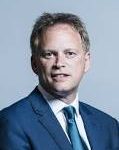
  • Grant Shapps – 2021 Statement on Scrapping of Rail Projects

    Grant Shapps – 2021 Statement on Scrapping of Rail Projects

    The statement made by Grant Shapps, the Secretary of State for Transport, in the House of Commons on 18 November 2021.

    With permission, Mr Speaker, I would like to make a statement about the future of the railway.

    Today I am proud to announce our integrated rail plan. It is a £96 billion programme that will transform rail services in the north and the midlands—the largest single rail investment ever made by a UK Government, and an investment that, rather than being felt decades into the future, will arrive much, much sooner. This unprecedented commitment to build a world-class railway that delivers for passengers and freight, for towns and cities, and for communities and businesses, will benefit eight of the 10 busiest rail corridors across the north and the midlands, providing faster journeys, increased capacity and more frequent services up to 10 years sooner than previously planned.

    When I became Transport Secretary in 2019, the HS2 project was already about 10 years old. I was concerned that costs were rising and newer projects such as the midlands rail hub and Northern Powerhouse Rail had not been fully factored into the plans. Under the original scheme, the HS2 track would not have reached the east midlands and the north until the early 2040s. Clearly, a rethink was needed to ensure that the project would deliver as soon as possible for the regions that it served, and that is how the integrated rail plan was born—through a desire to deliver sooner.

    The Prime Minister and I asked Douglas Oakervee to lead the work and make recommendations on the best way forward. One of his key criticisms was that HS2 was designed in isolation from the rest of the transport network. The original plans gave us high-speed lines to the east midlands, but did not serve any of the three biggest east midlands cities. For example, if someone wanted to get to Nottingham or Derby, they would still have had to go to a parkway station, and change on to a local tram or train. Oakervee made a clear and convincing case for considering HS2 as part of an integrated rail plan, working alongside local, regional and national services, not just those travelling between our biggest cities. We accepted those recommendations and asked the National Infrastructure Commission to develop options.

    The commission came back with two key suggestions: first, that we adopt a flexible approach, initially setting out a core integrated rail network, but that we remain open to future additions as long as expectations on costs and timing are met; and secondly, that strengthening regional rail links would be most economically beneficial for the north and midlands—connecting towns with the main railway networks, and bringing hope and opportunity to communities that have felt left behind for too long—and that we should bring these benefits to passengers and local economies as soon as possible. Those are the guiding principles behind the integrated rail plan that I am announcing today. It is an ambitious and unparalleled programme that not only overhauls intercity links across the north and midlands, but speeds up the benefits for local areas and serves the destinations that people most want to reach.

    This new blueprint delivers three high-speed lines: first, Crewe to Manchester; secondly, Birmingham to the east midlands, with HS2 trains continuing to central Nottingham, central Derby, Chesterfield and Sheffield on an upgraded main line; and thirdly, a brand new high-speed line from Warrington to Manchester and the western border of Yorkshire, slashing journey times across the north. [Laughter.] Well, I know that Opposition Members will want to hear the detail of those journey times and also to explain why their constituents would wish to wait decades more to deliver a journey almost no faster at all than under these plans.

    I have heard some people say that we are just going about electrifying the TransPennine route. That is wrong. We are actually investing £23 billion to deliver Northern Powerhouse Rail and the TransPennine route upgrade, unlocking east-west travel across the north of England. In total, this package is 110 miles of new high-speed line, all of it in the midlands and the north. It is 180 miles of newly electrified line, all of it in the midlands and the north. I remind the hon. Member for Oldham West and Royton (Jim McMahon) of Labour’s 63 miles of electrified line in 13 years. We will upgrade the east coast main line with a package of investment on track improvements and digital signalling, bringing down journey times between London, Leeds, Darlington, Newcastle and Edinburgh, and bringing benefits to the north-east much, much sooner than under the previous plans. This adds capacity and speeds up services over more than 400 miles of line, the vast majority of it in the midlands and the north. We will study how best to take HS2 trains to Leeds as well. We will start work on a new West Yorkshire mass transit system, righting the wrong of that major city not having a mass transit system, probably the largest in Europe not to have one. We commit today to supporting West Yorkshire Combined Authority over the long term to ensure that this time it actually gets done.

    In short, we are about to embark on the biggest single act of levelling up of any Government in history. [Interruption.] Listen to the numbers. It is five times more than what was spent on Crossrail and 10 times more than what was spent on delivering the Olympics, but Opposition Members still think it is a small package. It will achieve the same, similar or faster journey times to London and on the core Northern Powerhouse Rail network than the original proposals, and will bring the benefits years earlier, as well as doubling, or in some cases tripling, the capacity.

    Let me set out a few of these investments. Rail journeys between Birmingham and Nottingham will be cut from an hour and a quarter to 26 minutes, city centre to city centre. Journeys between York and Manchester will be down to 55 minutes, from 83 minutes today. Commuters will be able to get from Bradford to Leeds in just 12 minutes, almost half the time it takes today. There will be earlier benefits for places such as Sheffield and Chesterfield. Trips from Newcastle to Birmingham will be slashed by almost 30 minutes, and passengers in Durham and Darlington will benefit from smoother, more reliable trains. The IRP delivers not just for our largest cities but for smaller places and towns. For example, Kettering, Market Harborough, Leicester, Loughborough, Grantham, Newark, Retford, Doncaster, Wakefield, Dewsbury, Huddersfield and Stalybridge could all see improvements, electrification or faster services, benefiting in ways they would not have done under the original HS2 programme.

    We are not stopping there. Today’s plan is about those places that connect and interact with HS2 and Northern Powerhouse Rail and the scale of ambition, with many of these projects lying outside the scope. Only yesterday, I opened the first reversal of the Beeching axe. We will be doing the same in Northumberland for the Ashington-Blyth-Newcastle line and many others. We are investing £2 billion in cycling and walking, £3 billion in turn-up-and-go bus services, and tens of billions in our country’s roads. After decades of decline, with constrained capacity and poor reliability, this plan will finally give passengers in the north and the midlands the services they need and deserve.

    It is not just about infrastructure; we are going to make train travel much easier as well. Today I can confirm £360 million to reform fares and ticketing, with the roll-out of contactless pay-as-you-go ticketing for 700 urban stations, including 400 in the north.

    This is a landmark plan, by far the biggest of any network improvement and focused on the north and the midlands. With more seats, more frequent services, and shorter journeys, it meets the needs of today’s passengers and future generations.

    We are getting started immediately with another £625 million for electrification between Liverpool, Manchester and Leeds, bringing the total on the TransPennine route upgrade to £2 billion and counting, and £249 million to further electrify the midland main line between Kettering and Market Harborough, with work starting on the integrated rail plan by Christmas.

    Communities of every size will benefit, right across the north and midlands, in many cases years earlier than planned. By taking a fresh look at HS2, and how it fits with the rest of the rail system, we will be able to build a much-improved railway that will provide similar or better services to almost every destination than the outdated vision drawn up for HS2 over a decade ago. This plan will bring the north and midlands closer together, fire up economies to rival London and the south-east, rebalance our economic geography, spread opportunity, level up the country and bring benefits at least a decade or more earlier. I commend this statement to the House.

  • Keir Starmer – 2021 Comments on Government Announcement of Scrapping Rail Projects

    Keir Starmer – 2021 Comments on Government Announcement of Scrapping Rail Projects

    The comments made by Keir Starmer, the Leader of the Opposition, on 18 November 2021.

    Yesterday Boris Johnson admitted he crashed the car when it came to sleaze.

    Today he has derailed the trains.

    He’s taking the country absolutely nowhere.

  • Mick Whelan – 2021 Comments on Government Announcement of Scrapping Rail Projects

    Mick Whelan – 2021 Comments on Government Announcement of Scrapping Rail Projects

    The comments made by Mick Whelan, the General Secretary of ASLEF, on 18 November 2021.

    This government is not levelling up – as it has repeatedly promised to do – but levelling down. This is not the green, efficient, modern railway of the future we were promised. But a dodgy decision based on bad advice that means millions of people will not benefit from this project.

    HS2 was meant to be a world-beater, and put Britain, the country which gave the railway to the world, back on the industrial and economic map. Instead, the Tories are letting us down. Not levelling up, but punching down on the north.

    This government is a government of broken promises. It has announced Northern powerhouse rail an incredible sixty times – and I know because we’ve counted – and now it puts the project in the bin.

    They have tried today to claim their new plans will deliver comparable benefits more quickly and cheaply. But that’s not true. It’s smoke and mirrors from a government which won’t, we now see, deliver for people in the north.

    HS2 was never only a high speed rail link. Detractors like to say it only shaves a few minutes off the time between Birmingham and London. But HS2 was meant to make it quicker and easier to travel the length and the breadth of our country and to free up pathways on the East and West Coast main lines for more passenger services and for more freight trains. This decision means that lots of people will not enjoy the benefits of HS2 and the project will no longer free up routes for other services.

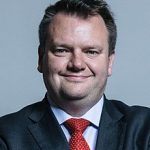
  • Nick Thomas-Symonds – 2021 Comments on Processing of Migrants in Albania

    Nick Thomas-Symonds – 2021 Comments on Processing of Migrants in Albania

    The comments made by Nick Thomas-Symonds, the Shadow Home Secretary, on 18 November 2021.

    Instead of chasing headlines about unconscionable offshore processing, the Government should address its own failures.

    There is no effective deal in place with the French Authorities, and, instead of providing properly managed safe and legal routes, the Government closed the Dubs Scheme that helped unaccompanied children.

    The Government’s incompetence is dangerous, with ever-increasing numbers of people risking their lives in the English Channel.

  • Liz Kendall – 2021 Comments on the Social Care Cap

    Liz Kendall – 2021 Comments on the Social Care Cap

    The comments made by Liz Kendall, the Shadow Social Care Minister, on 17 November 2021.

    This small print, sneaked out today under a cloud of Tory sleaze, shows Boris Johnson’s so-called cap on care costs is an even bigger con than we initially thought.

    We already knew most people won’t hit the cap because it doesn’t cover board and lodging in care homes, and that at £86,000 the cap would still mean many people will have to sell their homes to pay for their care – against everything Boris Johnson promised.

    It has now been revealed that the poorest pensioners will have to pay even more, something Andrew Dilnot – who proposed the cap – explicitly ruled out because it was so unfair. That this Tory Government has failed to be straight with those who’ve given so much to our country is a total disgrace, but utterly unsurprising. Our elderly people deserve better.

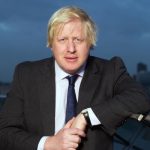
  • Boris Johnson – 2021 Statement on COP26

    Boris Johnson – 2021 Statement on COP26

    The statement made by Boris Johnson, the Prime Minister, in the House of Commons on 15 November 2021.

    Before I begin today’s statement, I would like to say a few words about the sickening attack that took place yesterday morning outside Liverpool Women’s Hospital. On behalf of the whole House, I want to pay tribute to the swift and professional response by the extraordinary men and women of the emergency services, who, once again, showed themselves to be the very best among us.

    The Joint Terrorism Analysis Centre has today raised the nationwide threat level from substantial to severe, meaning that an attack is highly likely. The police are keeping both myself and the Home Secretary informed on developments and we will, in turn, keep the House updated on the investigation as it continues.

    And now, Madam Deputy Speaker, with your permission I should like to make a statement on the United Nations Climate Change Conference, better known as COP26, which took place in the magnificent city of Glasgow over the past two weeks. It was the biggest political gathering of any kind ever held in the United Kingdom. One hundred and ninety four countries were represented. We had around 120 heads of state and heads of government, 38,000 accredited delegates, and countless tens of thousands more in the streets, parks and venues outside.

    It was a summit that many people predicted would fail, and a summit, I fear, that some quietly wanted to fail. Yet it was a summit that proved the doubters and the cynics wrong, because COP26 succeeded not just in keeping 1.5 alive, but in doing something that no UN climate conference has ever done before by uniting the world in calling time on coal. In 25 previous COPs, all the way back to Berlin in 1995, not one delivered a mandate to remove so much as a single lump of coal from one power station boiler. For decades, tackling the single biggest cause of carbon emissions proved as challenging as eating the proverbial elephant—it was just so big that nobody knew quite where to start. In Glasgow, we took the first bite. We have secured a global commitment to phasing down coal. As John Kerry pointed out, we cannot phase out coal without first phasing it down, as we transition to other cleaner energy sources. We also have, for the first time, a worldwide recognition that we will not get climate change under control as long as our power stations are consuming vast quantities of the sedimentary super-polluter that is coal. That alone is a great achievement, but we have not just signalled the beginning of the end for coal; we have ticked our boxes on cars, cash and trees as well.

    The companies that build a quarter of the world’s automobiles have agreed to stop building carbon emission vehicles by 2035, and cities from São Paulo to Seattle have pledged to ban them from their streets. We have pioneered a whole new model—an intellectual breakthrough —that sees billions in climate finance, development bank investment and so forth being used to trigger trillions from the private sector to drive the big decarbonisation programmes in countries such as South Africa. And we have done something that absolutely none of the commentators saw coming, by building a coalition of more than 130 countries to protect up to 90% of our forests around the world—those great natural soakers of carbon.

    None of this was a happy accident or inevitability. The fact that we were there at all, in the face of a global pandemic, is in itself the result of a vast and complex effort involving countless moving parts. Right until the very end, there was the real prospect that no agreement would be reached. What has been achieved has only come about thanks to month after month of concerted British diplomacy—the countless meetings; the innumerable phone calls; the banging of heads at the United Nations General Assembly, the Petersberg dialogue, President Biden’s climate summit, the Security Council, the G7 and the G20—and the setting of several examples by the UK, because again and again the task of our negotiators was made easier by the fact that the UK was not asking anyone to do anything that we are not doing ourselves.

    We have slashed our use of coal so much that our last two coal-fired power stations will go offline for good in 2024. We have more than doubled our climate finance, providing vital support for poor and vulnerable nations around the world. We have made a legally binding commitment to reach net zero—the first major economy to do so. We have set a date at which hydrocarbon internal combustion engines will reach the end of the road. We have shown the world that it is possible to grow an economy while cutting carbon, creating markets for clean technology, and delivering new green jobs that reduce emissions and increase prosperity.

    Every one of those achievements was not just great news for our country and our planet, but another arrow in the quiver of our fantastic team in Glasgow—a team led by the COP26 President, my right hon. Friend the Member for Reading West (Alok Sharma). From the moment that he picked up the COP reins, he has been absolutely tireless in his efforts to secure the change that we need. Although I am pretty sure that what he really needs now is a well-earned break, I do not think that any of us here is going to be able to hold him back as he sets off pushing countries to go further still, and ensuring that the promises made in Glasgow are delivered and not diluted.

    But success has many parents, so I want to say a huge thank you to the officials—in our own COP unit, in Downing Street and across Government, in UK embassies around the world and at the United Nations—who pulled out all the stops to make the event work and to shepherd through the agreements that have been reached. I also thank everybody on the ground at the Scottish Event Campus in Glasgow—security, catering, transport, the relentlessly cheery volunteers, the police from across the whole country who kept everybody safe from harm, the public health authorities who kept us safe from covid—and everyone in the Scottish Government. Above all, I want to say a big, big thank you to the people of Glasgow, who had to put up with so much disruption in their city and who welcomed the world all the same. I say to them: we could not have done it without you.

    Is there still more to do? Well, of course there is. I am not for one moment suggesting that we can safely close the book on climate change. In fact, I can think of nothing more dangerous than patting ourselves on the back and telling ourselves that the job is done—because this job will not be complete until the whole world has not only set off on the goal to reach net zero but arrived at that destination: a goal that, even with the best of intentions from all actors, cannot be achieved overnight. While COP26 has filled me with optimism about our ability to get there, I cannot now claim to be certain that we will, because we have seen some countries that really should know better dragging their heels on their Paris commitments. But if—and it is still a massive if—they make good on their pledges, then I believe that Glasgow will be remembered as the place where we secured a historic agreement and the world began to turn the tide. Before Paris, we were on course for 4° of warming. After Paris, that number fell to a still catastrophically dangerous 3°. This afternoon, after the Glasgow climate pact, it stands close to 2°. It is still too high—the numbers are still too hot, the warming still excessive—but it is closer than we have ever been to the relative safety of 1.5°, and now we have an all-new roadmap to help us get there.

    Aristotle taught us that virtue comes not from reasoning and instruction but from habit and from practice. So the success of the Glasgow climate pact lies not just in the promises but in the move that the whole world has now made from setting abstract targets to adopting the nuts-and-bolts programme of work to meet those targets and to reduce CO2 emissions. We are now talking about the how rather than the what, and getting into a habit of cutting CO2 that is catching on not just with Governments and businesses but with billions of people around the world. It is for that reason that I believe that COP26 in Glasgow has been a success and that 1.5° is still alive. That is something I believe that every person in our United Kingdom can and should take immense pride in, and I commend this statement to the House.